# One Man & His Blog > Digital journalism, audience strategy & the creator economy. By Adam Tinworth Public Ghost content for AI and LLM tooling. This file includes a bounded export of public pages first, then recent public posts. Append `.md` to any post or page URL to get the content in Markdown (for example, `/example-post.md`). ## Pages ### About URL: https://onemanandhisblog.com/about-this-blog/ Last updated: 2022-11-09T14:47:39.000Z *One Man & His Blog* is the personal weblog of [Adam Tinworth](http://en.wikipedia.org/wiki/Adam%5FTinworth?ref=onemanandhisblog.com "Adam Tinworth"). I’ve been using it to explore the intersection of digital technology, publishing and journalism for well over 18 years – and it’s where I continue to think out loud as part of my consultancy work. ## About Me I’ve been a journalist for 25 years and a blogger for nearly two decades. Since 2006 I’ve been working-full time in digital journalism and publishing development, and I have extensive experience of change management, workflows, and technology implementation. I also deliver training of journalists, publishers and other content-centric people from students up to senior management level. Since 2012, I’ve been working independently as a consultant on: - publishing strategy - digital journalism - mobile - social media. My clients have ranged from international magazine publishers, to national newspapers like the *Financial Times* and *The Telegraph*, to small businesses. I’m more interested in the challenge of the work than the size of the client. I’m also a visiting lecturer at City, University of London where I teach digital journalism and [audience engagement skills](https://www.city.ac.uk/prospective-students/courses/postgraduate/interactive-journalism?ref=onemanandhisblog.com) to Masters students, including video strategy, social media, community management, SEO and audience strategy. You can see more about my [career to date on LinkedIn](http://www.linkedin.com/in/adamtinworth?ref=onemanandhisblog.com). If you think I might be able to help you, please [drop me a line](mailto:adam@onemanandhisblog.com) and we can discuss working together. ## Contact Me Good ways to get ahold of me: - **Email:** [adam@onemanandhisblog.com](mailto:adam@onemanandhisblog.com) - **Twitter**: [adders](http://www.twitter.com/adders?ref=onemanandhisblog.com) - **LinkedIn**: [Adam Tinworth](http://www.linkedin.com/in/adamtinworth?ref=onemanandhisblog.com) - **Mastodon**: [Mastodon](https://follow.onemanandhisblog.com/@oneman?ref=onemanandhisblog.com) ### FAQ URL: https://onemanandhisblog.com/faq-2/ Last updated: 2015-04-08T14:29:51.000Z #### \*\* Who are you? \*\* I’m Adam Tinworth, a digital journalist, blogger and publishing strategist living on the West Sussex coast, and loving it. I’m married, have a delightful young daughter, Hazel, and enjoy a range of things from good whiskies, through writing and photography to gardening. #### \*\*Are you the guy that used to edit \*\*\*\*\*Cub \*\*\* **/ write RPG stuff / go to school in Scotland / fence / be VP: Welfare / run the school darkroom / work on *Felix* / work at RBI / teach digital journalism?** Yeah, that’s me. #### \*\*How long have you been blogging? \*\* I first started blogging with a [Livejournal](http://adders.livejournal.com/?ref=onemanandhisblog.com) back in late 2001, in the aftermath of my Dad’s death. I started *One Man & His Blog* in March 2003 because I wanted to try something different from the “group of friends chatting” feel of my Livejournal. I started on [Blogger](http://www.blogger.com/?ref=onemanandhisblog.com) and then moved to [Movable Type](http://www.movabletype.org/?ref=onemanandhisblog.com) a few months later. If I was starting again, I’d probably go with [WordPress](http://www.wordpress.org/?ref=onemanandhisblog.com), but for now, MT suits me just fine.\*\* \*\* #### ****Why One Man + His Blog?** It’s a rather lame pun on an old British TV show called [One Man & His Dog](http://www.isds.org.uk/society/connections.htm?ref=onemanandhisblog.com), which was essentially televised [sheepdog trials](http://www.workingsheepdog.org/?ref=onemanandhisblog.com). #### But uses the name! may well use the name and, last time I checked, there were five different blogs using the name “One Man & His Blog” or some variation thereof. As far as I can establish I was the first blogger using it by a good few months, so I have no intention of giving it up. #### \*\*Is this blog connected to ****RBI or any of its titles, including *Estates Gazette***? \*\* Only inasmuch as I worked for the company for 15 years, a relationship which concluded at the end of 2011\. This is my personal blog, and all the opinions here are expressly my own and should not be construed as being those of any employer or colleagues, or my wife, family or friends. They’re mine. All mine. *My precious*. #### \*\*So, who’s the blog aimed at? \*\* Honestly? It used to be just me. I spend my working life writing for a known audience. I write this stuff because I want to, and anyone who reads and likes it is a bonus. Magazines I’ve worked for shift in the region of 28,000 copies a week, so I have no insecurities about reader numbers to prop up. If five people a week get pleasure from this blog, so much the better. However, I’m increasingly conscious that there is an audience out there of people who are interested in the intersection of blogging, technology, digital evolution, content and journalism, and this is very much for them, too. ### Digital Journalism Training URL: https://onemanandhisblog.com/digital-journalism-training/ Last updated: 2026-02-05T20:37:22.000Z Over the last 20 years, I’ve trained countless journalists, editors, writers, PRs and marketers in the core skills of online content creation and strategy. I’ve worked with everybody from senior leadership teams of national newspapers, to students preparing for the beginnings of their career in journalism. I offer a range of courses to help you do better journalism or publishing – and can create bespoke courses to suit your organisation’s needs.Many of these courses are run online on a regular basis. Check out [my online journalism training site](https://www.journalismskills.com/?ref=onemanandhisblog.com) for details. Here’s a sample of what I offer: ## Core Digital Journalism Skills The strategies, skills and formats of digital publishing are changing all the time, and you have to learn to adapt. These baseline courses are designed to give you the core skills you need to work in the online environment, to customise what you do to your target audience, and to learn to adapt as changes happen. These are the essential skills that all online content producers should have: ### Current Courses [Training: Digital Journalism BootcampThe ideal and affordable way to get all your digital skills up-to-date.![](https://storage.ghost.io/c/36/d8/36d823b7-59a1-4c8b-91bd-a54c64552596/content/images/icon/journalism-skills-logo.png)Journalism Training & SkillsAdam Tinworth![](https://storage.ghost.io/c/36/d8/36d823b7-59a1-4c8b-91bd-a54c64552596/content/images/thumbnail/Gemini_Generated_Image_b1daamb1daamb1da.png)](https://www.journalismskills.com/digital-journalism-bootcamp/?ref=onemanandhisblog.com) [Course: SEO skills for journalists and content creatorsAn online training course delivering the practical SEO skills you need![](https://storage.ghost.io/c/36/d8/36d823b7-59a1-4c8b-91bd-a54c64552596/content/images/icon/COV-1638-3865-16.png)One Man & His BlogAdam Tinworth![](https://storage.ghost.io/c/36/d8/36d823b7-59a1-4c8b-91bd-a54c64552596/content/images/thumbnail/photo-1674027001838-09e049c47212)](https://onemanandhisblog.com/seo-skills-for-journalists-and-content-professionals/) [Web Analytics for Journalists and EditorsAn online course to demystify online analytics and allow your to understand your audience better.![](https://storage.ghost.io/c/36/d8/36d823b7-59a1-4c8b-91bd-a54c64552596/content/images/icon/journalism-skills-logo-1.png)Journalism Training & SkillsAdam Tinworth![](https://storage.ghost.io/c/36/d8/36d823b7-59a1-4c8b-91bd-a54c64552596/content/images/thumbnail/ChatGPT-Image-Jan-22--2026-at-02_29_44-PM.png)](https://www.journalismskills.com/web-analytics-for-journalists-and-editors/?ref=onemanandhisblog.com) ## Digital, Audience and Content Strategy Courses These courses are targetted at people at a slightly higher level in their organisation, and explore the latest thinking in two critical fields: - **content strategy** — what you publish, where you publish it and how you choose the best platforms for your audience - **audience engagement strategy** — which deals with finding and building deeper relationships with the audience you need to business your business. ### Current Courses [Training: Online Content Strategy for JournalistsA six session online course, to give journalists the skills they need to effectively plan, commission and publish online.![](https://storage.ghost.io/c/36/d8/36d823b7-59a1-4c8b-91bd-a54c64552596/content/images/icon/journalism-skills-logo-3.png)Journalism Training & SkillsAdam Tinworth![](https://storage.ghost.io/c/36/d8/36d823b7-59a1-4c8b-91bd-a54c64552596/content/images/thumbnail/Adam_Tinworth_An_illustration_of_a_diverse_group_of_journalists_36ce4edd-2865-4ff4-9f16-2b0201629c9c.png)](https://www.journalismskills.com/online-content-strategy-for-journalists-and-editors/?ref=onemanandhisblog.com) [Training: audience engagement strategies for journalismA training course to get you or your organisation up to speed on the latest techniques for building deep, lasting relationships with your audiences.![](https://storage.ghost.io/c/36/d8/36d823b7-59a1-4c8b-91bd-a54c64552596/content/images/icon/COV-1638-3865-29.png)One Man & His BlogAdam Tinworth![](https://storage.ghost.io/c/36/d8/36d823b7-59a1-4c8b-91bd-a54c64552596/content/images/thumbnail/photo-1588856122867-363b0aa7f598)](https://onemanandhisblog.com/audience-engagement-strategies-for-journalists/) ## Specific Digital Journalism Creation Skills The newest addition to my range of training are a couple of new courses designed to give you the technical and creative skills to make the most of two major new formats in digital: - **Social video** — short videos designed explicitly to be watched in people's social media feeds, and which have very different characteristics from traditional video - **Newsletters** — now going through a renaissance as both a product offering and as a critical part of our audience engagement infrastructure. ### Current Courses [Training: newsletter skills for journalistsLearn how to create exceptional newsletters. A training course for journalists and editors.![](https://storage.ghost.io/c/36/d8/36d823b7-59a1-4c8b-91bd-a54c64552596/content/images/icon/journalism-skills-logo-2.png)Journalism Training & SkillsAdam Tinworth![](https://storage.ghost.io/c/36/d8/36d823b7-59a1-4c8b-91bd-a54c64552596/content/images/thumbnail/Adam_Tinworth_an_illustration_of.a_two_journalists_one_male_and_aa10c1a8-52e5-4a11-b92c-f41f72202e89-1.png)](https://www.journalismskills.com/creating-compelling-newsletters-2/?ref=onemanandhisblog.com) [Training: Social Video skills for JournalistsLearn hoe to plan, edit and shoot journalistic video for social platforms.![](https://storage.ghost.io/c/36/d8/36d823b7-59a1-4c8b-91bd-a54c64552596/content/images/icon/journalism-skills-logo-4.png)Journalism Training & SkillsAdam Tinworth![](https://storage.ghost.io/c/36/d8/36d823b7-59a1-4c8b-91bd-a54c64552596/content/images/thumbnail/Adam_Tinworth_An_illustration_of_a_diverse_group_of_journalists_e03b1a47-e73a-4dc2-b2cb-ae467afffc15.png)](https://www.journalismskills.com/social-video-skills-for-journalists/?ref=onemanandhisblog.com) [![Social Media in Use](https://i0.wp.com/www.onemanandhisblog.com/content/images/2016/01/IMG_0473.jpg?resize=960%2C541)](https://i0.wp.com/www.onemanandhisblog.com/content/images/2016/01/IMG%5F0473.jpg?ref=onemanandhisblog.com) ## Bespoke and In-House Training I’ve provided bespoke in-house training for organisations as diverse as: - *The Telegraph* - *The Times* - *The Financial Times* - *Autotrader* - *The Straits Times* - *Nursing Standard* - Emap - Amnesty International - The Institute of Physics Publishing If you want to discuss your particular in-house training needs, please [feel free to drop me a line](mailto:adam@onemanandhisblog.com), and we can discuss further. I’m always happy to build bespoke courses for any other publishing need. ### Social video exercise resources URL: https://onemanandhisblog.com/forest/ Last updated: 2021-11-03T10:47:11.000Z ### Forest Bathing Here are some articles to inform your video production: - NatGeo — [The secret to mindful travel? A walk in the woods](https://www.nationalgeographic.com/travel/article/forest-bathing-nature-walk-health?ref=onemanandhisblog.com) - Quartz – [The Japanese practice of ‘forest bathing’ is scientifically proven to improve your health](https://qz.com/804022/health-benefits-japanese-forest-bathing/?ref=onemanandhisblog.com) - The Herald — [Why Scottish GPs are presecribing a walk in the woods](https://www.heraldscotland.com/news/15986716.scottish-gps-prescribing-walk-woods/?ref=onemanandhisblog.com) - The Atlantic – [‘Forest Bathing’: How Microdosing on Nature Can Help With Stress](https://www.theatlantic.com/health/archive/2017/06/forest-bathing/532068/?ref=onemanandhisblog.com) - NPD – [Forest Bathing](http://www.npr.org/sections/health-shots/2017/07/17/536676954/forest-bathing-a-retreat-to-nature-can-boost-immunity-and-mood?ref=onemanandhisblog.com) - The Guardian - [Getting back to nature: how forest bathing can make us feel better](https://www.theguardian.com/environment/2019/jun/08/forest-bathing-japanese-practice-in-west-wellbeing?ref=onemanandhisblog.com) - Lifehacker - [How Japanese Forest bathing can save your life](https://lifehacker.com/how-japanese-forest-bathing-can-save-your-life-1835376395?ref=onemanandhisblog.com) ### COP26 Deforestation Agreement - BBC — [COP26: World leaders promise to end deforestation by 2030](https://www.bbc.co.uk/news/science-environment-59088498?ref=onemanandhisblog.com) - The Conversation — [Deforestation: why COP26 agreement will struggle to reverse global forest loss by 2030](https://theconversation.com/deforestation-why-cop26-agreement-will-struggle-to-reverse-global-forest-loss-by-2030-170902?ref=onemanandhisblog.com) - FT — [COP26 deforestation deal criticised over lack of detail on enforcement](https://www.ft.com/content/29ffdef8-9b83-47ce-b2d6-e40b5aaffc2d?ref=onemanandhisblog.com) - The Guardian — [What is deforestation, and can it be stopped?](https://www.theguardian.com/environment/2021/nov/01/cop26-what-is-deforestation-and-is-stopping-it-really-possible-aoe?ref=onemanandhisblog.com) ### Media [Photos and Videos for exercise](https://www.dropbox.com/sh/rn0afal0lu5mowh/AAC3DQSb1y2QIxOqTE3sPNZYa?dl=0&ref=onemanandhisblog.com) ### Training Resources URL: https://onemanandhisblog.com/training-resources/ Last updated: 2017-07-26T09:12:31.000Z _No content available._ ### Video Software & Hardware URL: https://onemanandhisblog.com/video-software-hardware/ Last updated: 2024-11-21T14:05:30.000Z ## Shooting & Editing Software Here’s some useful software and supporting guides for working on video in a quick and efficient manner: ### Cross-Platform - [Adobe Premier Rush](https://www.adobe.com/products/premiere-rush.html?ref=onemanandhisblog.com) \- a fast and mobile-friendly slimmed down version of Premiere Pro that's everything most people need. An impressive product from Adobe that's being improved quickly. ### Web-based - [Wotchit ](https://www.wochit.com/?ref=onemanandhisblog.com)— commercial product, designed especially for social video production. Worth checking out if you’re serious about it. - [Adobe Spark](https://spark.adobe.com/home/?ref=onemanandhisblog.com) – also available on iOS - [Vimeo Create](https://vimeo.com/create?ref=onemanandhisblog.com) \- a realtively new, online social video creator. Very promising. ### Desktop/Laptop - [iMovie](https://support.apple.com/en-gb/imovie?ref=onemanandhisblog.com) — free with Apple devices. Quite a powerful editor, but limited in its captioning options. - [GoPro Quik ](https://shop.gopro.com/EMEA/softwareandapp/quik-%7C-desktop/Quik-Desktop.html?ref=onemanandhisblog.com)— surprisingly versatile free editor from GoPro - [Final Cut Pro ](https://geo.itunes.apple.com/gb/app/final-cut-pro/id424389933?mt=12&at=11lLfX&ref=onemanandhisblog.com)— Apple’s pro-level editor. An easy step up from iMovie when you get frustrated by its limitations. - [Adobe Premiere Elements](http://amzn.to/2g6O69l?ref=onemanandhisblog.com) — probably the best low-cost PC video editor. (Also available on Mac) - [Adobe Premiere Pro](http://www.adobe.com/uk/products/premiere.html?ref=onemanandhisblog.com) — The industry standard video editor. Often it’s a sledgehammer to crack a pistachio nut — but there are times when you appreciate the depths of its toolset ### iOS - [iMovie](https://itunes.apple.com/gb/app/imovie/id377298193?mt=8&at=11lLfX&ref=onemanandhisblog.com)— great app for getting started on video editing. - [LumaFusion](https://itunes.apple.com/gb/app/lumafusion-pro-video-editing-and-effects/id1062022008?mt=8&at=11lLfX&ref=onemanandhisblog.com) — pro-level video editing on your phone (or, better, iPad) – highly recommended. - [FiLMiC Pro](https://itunes.apple.com/gb/app/filmic-pro/id436577167?mt=8&at=11lLfX&ref=onemanandhisblog.com) — a great video capture app if you want more control than the built-in app offers - [ProCamera](https://itunes.apple.com/gb/app/procamera/id694647259?mt=8&at=11lLfX&ref=onemanandhisblog.com) — an alternative if FilmicPro isn’t to your taste. - [Adobe Express](https://www.adobe.com/express/?ref=onemanandhisblog.com) \- quick and easy social video (and graphic) creation - [Splice](http://spliceapp.com/?ref=onemanandhisblog.com) \- recently completely revamped, and now a powerful little social video editor, albeit at a subscription price. ### Android - [Kinemaster](https://kinemaster.com/?ref=onemanandhisblog.com) – this seems to be the preferred Android editor amongst the mobile journalism community ## Hardware ### Cameras ![The DJi Osmo Pocket](https://storage.ghost.io/c/36/d8/36d823b7-59a1-4c8b-91bd-a54c64552596/content/images/2019/06/DJI-OsmoPocket_LS_friends_31_rgb_72.jpg) - **[The DJi Osmo Pocket 2](https://click.dji.com/AMcqSm1E6xffPQAuoSwKiw?pm=link&ref=onemanandhisblog.com)** — Not cheap (at over £300), but a handy gimbal-based complement to your pobile phone. High quality — and very unobtrusive — which can be very useful. Exptensive range of accessories, incluidng a mic adaptor for using a lavalier mic is and, with version 2, a wireless microsphone acessory. ### Stabilisation ![The Glif in use](https://i2.wp.com/www.onemanandhisblog.com/content/images/2016/08/glif-revised.jpg?resize=960%2C611&ssl=1) - **[Glif](http://amzn.to/2xv4bJe?ref=onemanandhisblog.com)** — a great product, Kickstarted a few years ago, that I highly recommend. Can be anything from a tripod adaptor to a full MoJo rig. Also [available with a wooden grip](http://amzn.to/2wAH4AQ?ref=onemanandhisblog.com). Go for that, if you have the budget. - **Shoulderpod** — this has been displaced by the Glif for me, but some people prefer the physical[ robustness of the R2](http://amzn.to/2xv4bJe?ref=onemanandhisblog.com) - [Gorillapod](http://amzn.to/2wAQs7w?ref=onemanandhisblog.com) – this is the best and most versatile small tripod they produce, I think. - [MicRig](http://amzn.to/2yz7oLV?ref=onemanandhisblog.com) – a new microphone and grip combination, funded via Kickstarter. Usable with phones, DSLRs, CSCs and GoPros. - [The DJi OM5](https://click.dji.com/AKEu-6EztFikjndx7le5%5FA?pm=link&ref=onemanandhisblog.com) – astonishing bit of kit for just £139 – a fully featured smartphone gimbal that’s really easy to use and suprisingly portable.This product line is improving year after year. ### Microphones ![Røde VideoMic Go](https://i1.wp.com/www.onemanandhisblog.com/content/images/2017/07/710TfsVX8lL._SL1500_.jpg?resize=960%2C507&ssl=1) - [**Røde VideoMic Go**](http://amzn.to/2wB2EoP?ref=onemanandhisblog.com) — fantastic value for money. Small, light and self-powered. A perfect “throw in the bag and go” mic for use with cameras or smartphone. You’ll need [this cable](http://amzn.to/2w0Chaj?ref=onemanandhisblog.com) to attach it to a smartphone, though - **[Røde SmartLav+](http://amzn.to/2wAAoCy?ref=onemanandhisblog.com)** — Great little smartphone lav mic, for attaching to lapels or people’s clothes. ### Lights - [Manfrotto Lumimuse 6](http://amzn.to/2wANfoz?ref=onemanandhisblog.com) — also available in [3](http://amzn.to/2xeXrjr?ref=onemanandhisblog.com) and [8 LED](http://amzn.to/2vrBiML?ref=onemanandhisblog.com) versions, but I think the 6 is the best balance of price and output. ### All Purpose ![The Sevenoak SmartCine](https://storage.ghost.io/c/36/d8/36d823b7-59a1-4c8b-91bd-a54c64552596/content/images/2020/02/smart-cine.jpg) - [The SmartCine by Movo](https://amzn.to/3c0LbHD?ref=onemanandhisblog.com) \- and all in one combination grip, tripod mount, microphone and ringlight. Perfect for shooting interviews with your smartphone. Superb value for money. ## Other resources This is a useful set of suggested gear from Robb Montgomery: [Gear - Robb MontgomeryThe best gear for mobile journalism, smartphone video production and professional mobile filmmaking. From low cost and DIY solutions to gimbals and high-end mics.![](https://i2.wp.com/robbmontgomery.com/wp-content/uploads/2017/12/cropped-Robb-Mug-Cliffs-1080-1.jpg?fit=192%2C192&ssl=1)Robb Montgomery![](https://robbmontgomery.com/wp-content/uploads/2020/02/MOjo-Kit-Basic-Universal-126x300.jpg)](https://robbmontgomery.com/gear/?ref=onemanandhisblog.com) *Last Updated: November 29th 2021* [Back to the Social Video resource page](https://onemanandhisblog.com/social-video-resources/) ### Interesting Social Video Examples URL: https://onemanandhisblog.com/interesting-social-video-examples/ Last updated: 2023-10-24T08:56:39.000Z I'm giving [TikTok its own page](https://onemanandhisblog.com/good-tiktoks/). And I'm also starting to build out a page of [interesting series concepts](https://onemanandhisblog.com/themed-videos/). ### Vox: How China is changing Hollywood Interesting example of using social techniques, coupled with feature-style story structure, to drive a longer social video. ### Quartz: The Millennial Whoop Sound is essential to this one, but again, see how social storytelling techniques are used. ### The Economist: Rwanda’s Eternal President Great example of how you can tell a complete story in just a few minutes. ### World Economic Forum: Forest Bathing The video we set out to beat… ### Mail Online: Daddy & Baby dance classes Emotional heart-string tugging… ### Tasty: Cheesburger onion rings Tasty (part of Buzzfeed Entertainment) are just masters of consumer social video ### Insider: Underwater case for your phone Nice tech review in 60 secs ### WEF: Wind Turbines ### WEF: Contact Lenses ### Quartz: Instagram your food ### Sky News: Inside the Congo mines that exploit children Long and serious subject matter. But very effective. ### BBC: Meet the millennials fighting food waste [Back to the social video resources](https://onemanandhisblog.com/social-video-resources/) ### Multimedia Feature Examples URL: https://onemanandhisblog.com/multimedia-feature-examples/ Last updated: 2021-11-09T21:53:35.000Z [The Long View](https://www.newyorker.com/magazine/2016/12/19/edward-burtynskys-epic-landscapes?ref=onemanandhisblog.com) — sparse but effective use of multimedia elements, as you might expect from *The New Yorker*. [Lessons from Hurricane Harvey](https://www.nytimes.com/interactive/2017/11/11/climate/houston-flooding-climate.html?ref=onemanandhisblog.com) — nice uses of galleries and interactives [Everything Water Touches](https://www.newyorker.com/news/news-desk/the-fear-of-water-in-flint?ref=onemanandhisblog.com) [M29 – Berlins Buslinie der großen Unterschiede](https://interaktiv.morgenpost.de/m29/?ref=onemanandhisblog.com) – A really complete interactive mix, You need to speak German to really appreciate it, though. [Rise of the MegaFarm](https://www.thebureauinvestigates.com/stories/2017-07-17/megafarms-uk-intensive-farming-meat%20?ref=onemanandhisblog.com) — nice example of a simpler multimedia feature from the Bureau of Investigative Journalism [How to Fix a Toilet](http://how-to-fix-a-toilet.com/?ref=onemanandhisblog.com) — Better than it sounds. Honest. [Shrinking cities - Stories from China’s former boomtownsChina is well known for its megacities, and we’re used to thinking of the country’s urban areas in the context of growth, but is that the whole story?![](http://image4.sixthtone.com/images/favicon_64.png)Sixth ToneSixth Tone![](http://interaction.sixthtone.com/feature/2018/shrinking-cities/wxshare.jpg)](http://interaction.sixthtone.com/feature/2018/shrinking-cities/?ref=onemanandhisblog.com) [Life after slaveryThree survivors, three countries, three struggles. Follow the journeys of Nasima, Mbarka and Moises in #LifeAfterSlavery http://news.trust.org/shorthand/life-after-slavery/ via @TRF\_Stories![](http://news.trust.org/application/assets/shorthand/life-after-slavery/assets/favicon.png)![](http://news.trust.org/application/assets/shorthand/life-after-slavery/assets/PsetfWuDde/first-2560x1440.png)](http://news.trust.org/shorthand/life-after-slavery/?ref=onemanandhisblog.com) [The end of our innocenceA Stuff special report on the Christchurch mosque shootings![](https://www.stuff.co.nz/etc/designs/ffx/nz/stuff/clientlibs-all/images/apple-touch-icon--precomposed.png)StuffStuff![](https://interactives.stuff.co.nz/2019/03/end-of-our-innocence/assets/7aexItU1d0/chch-shooting-title-social-1080x608.jpeg)](https://interactives.stuff.co.nz/2019/03/end-of-our-innocence/?ref=onemanandhisblog.com) [Fifty years on, the Aberfan disaster told by the people who were thereMany are telling their stories publicly for the first time.![](https://aberfan.walesonline.co.uk/favicon.ico)logo![](http://aberfan.walesonline.co.uk/media/clock-lr_noty61i.jpg)](https://aberfan.walesonline.co.uk/?ref=onemanandhisblog.com) [How China Turned a City Into a PrisonChildren are interrogated. Neighbors become informants. Mosques are monitored. Cameras are everywhere.![](https://static01.nyt.com/images/icons/ios-default-homescreen-57x57.png)The New York Times World The New York Times WorldChris Buckley![](https://static01.nyt.com/images/2019/04/04/world/asia/2019-04-04-xinjiang-tap-promo-1554362076029/2019-04-04-xinjiang-tap-promo-1554362076029-facebookJumbo-v3.jpg)](https://www.nytimes.com/interactive/2019/04/04/world/asia/xinjiang-china-surveillance-prison.html?utm%5Fcampaign=Big%20Revolution&utm%5Fmedium=email&utm%5Fsource=Revue%20newsletter) [Reading Boris Johnson’s mind: unique analysis reveals what the PM really thinksWe know what politicians say in soundbites and speeches, but it can be harder to know what they really think, and more importantly what they used to think before they reached high office. In Boris...![](https://www.thetimes.co.uk/d/img/icons/icon_1_5x-a13ee0bf9a.png)The TimesDaniel Clark, Interactive Journalist | Matt Chorley, Red Box Editor | Sam Joiner, Interactives Editor![](http://www.thetimes.co.uk/imageserver/image/methode%2Ftimes%2Fprod%2Fweb%2Fbin%2Fd7aa8240-f5c5-11e9-afe0-18e11653b68e.png?crop=1600%2C900%2C0%2C0&resize=685)](https://www.thetimes.co.uk/article/d3e55808-f3f2-11e9-afe0-18e11653b68e?ref=onemanandhisblog.com) [How Does the Human Soul Survive Atrocity?After the horror of ISIS captivity, tens of thousands of Iraqis — many of them children — are caught up in a mental-health crisis unlike any in the world.The New York TimesJennifer Percy![](https://static01.nyt.com/images/2019/11/03/magazine/03mag-iraqmentalhealth/03mag-iraqmentalhealth--facebookJumbo-v2.jpg)](https://www.nytimes.com/interactive/2019/10/31/magazine/iraq-mental-health.html?te=1&nl=the-new+york+times+magazine&emc=edit%5Fma%5F20191031%3Fcampaign%5Fid%3D52&instance%5Fid=13488&segment%5Fid=18392&user%5Fid=c17f9d5db8f756060e4f050fdd99cea3®i%5Fid=71464641&ref=onemanandhisblog.com) [How Scientology doubled its downtown Clearwater footprint in 3 yearsThe mysterious deals could reshape downtown Clearwater.Tampa Bay TimesTRACEY McMANUS![](https://projects.tampabay.com/projects/2019/investigations/scientology-clearwater-real-estate/socialcard.jpg)](https://projects.tampabay.com/projects/2019/investigations/scientology-clearwater-real-estate/?ref=onemanandhisblog.com) [Thirty Years of Game BoyWe celebrate the Game Boy’s 30th anniversary with Andy RobertsonGameBoyLogo![](https://www.alessandromascellino.com/GameBoy/resources/css/images/consoles.jpeg)](https://www.alessandromascellino.com/GameBoy/game%5Fboy%5Fanniversary.html?ref=onemanandhisblog.com) Work done by a former City student. [A closer look at the ravaged Notre Dame CathedralThe fire at the Notre Dame Cathedral damaged its roof and spire, but some of its treasures survived. Here’s an up-close look.![](https://nodeassets.nbcnews.com/cdnassets/projects/ramen/favicon/nbcnews/all-other-sizes-PNG.ico/android-icon-192x192.png)NBC News![](https://media3.s-nbcnews.com/j/newscms/2019_16/2825446/04172019-notre-dame-fire-2x1_74d025e2cb6c60f21f65bfc191887c94.nbcnews-fp-1200-630.jpg)](https://www.nbcnews.com/news/world/notre-dame-fire-what-was-damaged-n995371?ref=onemanandhisblog.com) [Manchester Arena bombing: The agonising missed chances to stop a killerA devastating breakdown of the countless errors and near misses before, during and after the 2017 attack, and whether 22 deaths could have been prevented![](https://www.telegraph.co.uk/etc/designs/telegraph/core/clientlibs/core/icons/mstile-310x310.png)The Telegraph![](https://www.telegraph.co.uk/content/dam/news/2021/06/11/6f3f03c5-0fb7-4e98-a732-6f01d4299396.jpg?impolicy=logo-overlay)](https://www.telegraph.co.uk/news/manchester-arena-bombing-attack-inquiry-victims/?ref=onemanandhisblog.com) [How Singapore built one of the world’s biggest floating solar farmsThe Sembcorp Tengeh Floating Solar Farm spans 45 ha - or the size of 45 football fields - and is one of the world’s largest inland floating solar photovoltaic systems. Constructed on the surface of Tengeh Reservoir, the system’s 122,000 solar panels will soon help power Singapore’s clean energy ambi…![](https://www.straitstimes.com/multimedia/graphics/assets/favicon/favicon-192x192.png)The Straits TimesAlexis Gabrielle![](https://www.straitstimes.com/multimedia/graphics/assets/facebook_images/2021/05/singapore-largest-solar-farm-water/singapore-largest-solar-farm-water.jpg)](https://www.straitstimes.com/multimedia/graphics/2021/05/singapore-largest-solar-farm-water/index.html?ref=onemanandhisblog.com) [The climate disaster is here – this is what the future looks likeEarth is already becoming unlivable. Will governments act to stop this disaster from getting worse?![](https://static.guim.co.uk/images/favicon-32x32.ico)the GuardianOliver Milman, Andrew Witherspoon, Rita Liu, and Alvin Chang![](https://i.guim.co.uk/img/media/3e5f638a51315b7c94cc1ce7a28d41d7f41da701/0_0_1920_1152/master/1920.jpg?width=1200&height=630&quality=85&auto=format&fit=crop&overlay-align=bottom%2Cleft&overlay-width=100p&overlay-base64=L2ltZy9zdGF0aWMvb3ZlcmxheXMvdGctZGVmYXVsdC5wbmc&enable=upscale&s=2d6006ccb42688894d4564ef4360edbb)](https://www.theguardian.com/environment/ng-interactive/2021/oct/14/climate-change-happening-now-stats-graphs-maps-cop26?utm%5Fcampaign=Vincent%20Peyregne%27s%20Newsletter&utm%5Fmedium=email&utm%5Fsource=Revue%20newsletter) ### Social Video Resources URL: https://onemanandhisblog.com/social-video-resources/ Last updated: 2020-02-24T16:11:14.000Z This is a new version of my training notes. Rather than the usual PDFs and eBooks I create, I’ve built this as a series of webpages that I can continually update. This field is changing so fast that just putting up a set of static files will render them obsolete too quickly. So, please bookmark this page for future reference — and check back periodically, to see what’s been added. ## Social Video is NOT TV Because this is what TV is: ### Course Slides **[Creating Social Video](//www.slideshare.net/secret/FiOzCwwzREx4rJ "Creating Social Video")** from **[Adam Tinworth](https://www.slideshare.net/adders?ref=onemanandhisblog.com)** ## Resources - [Interesting examples of social video](https://onemanandhisblog.com/interesting-social-video-examples/) - [Software and Hardware recommendations](https://onemanandhisblog.com/video-software-hardware/) - [Further Reading](https://onemanandhisblog.com/social-video-further-reading/) \- useful articles and guides *(under construction)* *Last updated: 24th Feb 2020* ### Social Video: further reading URL: https://onemanandhisblog.com/social-video-further-reading/ Last updated: 2020-09-14T12:37:32.000Z A regularly updated resource on social video. _This page is for subscribers only._ ### Course: Creating Social Video URL: https://onemanandhisblog.com/creating-social-video/ Last updated: 2018-12-19T11:48:30.000Z The past few years have seen a dramatic rise in the importance of social video for both marketing, communications and news organisations - and in jobs for creators skilled in producing it. Social video drives huge engagement on social channels - and is a vital method of reaching the mobile phone native, whose news and information flows to them through feeds. No wonder many publishers are making it a major priority in the coming months. However, it’s a very different format to the video we’ve seen (and produced) in the past. It’s less an abbreviated form of TV video and more an evolution upwards of Gifs and other short internet visuals, and that means a whole new set of skills and approaches are needed to make compelling social videos that readers want to watch - and to share. This intensive course in social video is led by Adam Tinworth, a visiting Lecturer at City, University of London, whose students have gone on to lead social video from Mail Online, The LAD Bible and the World Economic Forum. The course does NOT presume previous video editing experience - it will walk you through the basic skills needed using freely available tools. At the end of the day you’ll have the confident - and practical experience - to start producing your own social video quickly and efficiently. *This course can be delivered in-house over one or two days. It is also available periodically as an [open course through journalism.co.uk](https://www.journalism.co.uk/vocational-skills-study/s43/?ref=onemanandhisblog.com).* ### The course will: - Provide practical guidance on what sorts of stories work for social video - and which don’t - Grabbing viewer’s attention in the all-important first 3 seconds - Explore when to use horizontal, square and vertical video formats - How to tell stories effectively through storytelling - How to make narrative captions that “pop” - How to edit user generated content for social - How to plan and shoot video specifically for social - How to create social videos from static elements, like photos and charts - Help you measure the impact of your social videos - Choosing hardware and software to get the most out of your videos. ### To book this course: [Contact Me.](https://onemanandhisblog.com/contact-me/) ### Current Open Journalism Training Courses URL: https://onemanandhisblog.com/current-open-training-courses/ Last updated: 2019-02-19T12:07:41.000Z Here's the current courses I'm running through [journalism.co.uk](https://www.journalism.co.uk/vocational-skills-study/s43/?ref=onemanandhisblog.com). All of them are one day courses, held in a training facility near London Bridge station in (unsurprisingly) London. Lunch is provided as part of the ticket price. --- ## Essentials Analytics for Media Professionals ### 27th March 2019 If I have one course that changes the way people work - it's this one. Understanding how to use analytics well is a critical part of making the most of digital journalism. Without those skills - you're working in the dark about what your readers really care about, and how well you're meeting that demand. This intensive course assumes no prior knowledge, and aims to get you confident and comfortable using analytics in your day-to-day work. [Book now](https://www.journalism.co.uk/vocational-skills-study/analytics-for-journalists/s43/a555836/?ref=onemanandhisblog.com). --- ## Online Content Strategies ### 24th April 2019 One of my most popular courses — and one that gets consistently excited feedback. This is an all-too-rare opportunity to step away from the grind of producing journalism day-to-day and actually think about what sort of content is right for your audience - and how to plan it. We'll dive deep into the complexities of the web, and how it changes content. We'll spend some time looking at workflows, and also at content planning and platform publishing. Attendees often feel it transforms their confidence in planning digital content — and manifestly improves their job. [Book now](https://www.journalism.co.uk/vocational-skills-study/digital-content-strategies/s43/a698180/?ref=onemanandhisblog.com). --- ## Essential SEO Skills for Media Professionals ### 20th May 2019 After the major change in the Facebook algorithm early in 2018, SEO has become the biggest single referrer to sites, displacing Facebook after five years. Search Engine Optimisation is firmly back on everyone's radar. However, search has changed dramatically over the last few years, and this one day course will get you right back up to speed. [Book now](https://www.journalism.co.uk/vocational-skills-study/seo-for-media-professionals-a-practical-guide-to-getting-your-work-found/s43/a554202/?ref=onemanandhisblog.com). --- ## *New dates coming…* ## Audience Engagement Strategies ### TBC **NEW COURSE!** The Facebook algorithm change early in 2018 and its dramatic impact on traffic to many websites has many publishers rethinking their audience strategies. We’ll cover the major referrers — search and social media — as well as ways of engaging more directly with your potential audience through tools like newsletters, podcasts and more. We’ll also explore the risks of depending entirely on social and search, and the new opportunities opening up in more direct approaches. This is a great companion course to the Online Content Strategies course. [Book now](https://www.journalism.co.uk/vocational-skills-study/audience-engagement-strategies-/s43/a729370/?ref=onemanandhisblog.com). --- Interested in bespoke or in-house training? [I can help!](https://onemanandhisblog.com/digital-journalism-training/) ### Live Event Coverage URL: https://onemanandhisblog.com/live-event-coverage/ Last updated: 2026-03-12T13:48:36.000Z Back in 2006, I started liveblogging conferences on *One Man & His Blog,* starting with the first Le Web that December, and in the years since have refined the skill to an artform. I now offer this as a service to event organizers, looking to make the most of their content. In particular, I often work in partnership with other businesses to provide a range of event live capture services, using the latest digital tools to help amplify the message you are trying to get to attendees, clients or staff. ![](https://storage.ghost.io/c/36/d8/36d823b7-59a1-4c8b-91bd-a54c64552596/content/images/2019/02/Drawnalism_Buikding_Together_withhand_drawing_C_Drawnalism_Ltd-2.jpg) Words alone are rarely enough and, while I often produce my own photos to support the liveblogging, I'm also lucky enough to work alongside the [leading real time graphic recording company](https://drawnalism.com/?ref=onemanandhisblog.com), to provide a full-service live event capture service. ## In the moment Event Live Capture ![](https://storage.ghost.io/c/36/d8/36d823b7-59a1-4c8b-91bd-a54c64552596/content/images/2019/02/IMG_1202.jpg) In partnership with the talented folks at [Drawnalism](https://drawnalism.com/?ref=onemanandhisblog.com), we produce near real-time capture of the content of conference sessions, both with full posts capturing the content and pieces of drawnalism creating a graphic record of the event. We'll commit to capturing up to six sessions a day per pair of graphic and textual recorders, usually publishing the work at a high level of accuracy and quality within minutes of the session ending and then further improving the quality of the work during the evening. This allows you to maximise the attention on your event while it is in progress, as well as creating a high-quality long term record. We can work on-site or remotely, and the drawnalists can work digitally or on paper, creating a visual point of interest through the conference. The advantage of having both a graphic and textual live capturer working in concert is that we capture the entire breadth of the session, giving attendees and other interested parties a long-term record of the session for later reference, discussion or revision. Elements of the drawnalism can easily be reused for social media channels, and our live capture team are happy to work alongside your own social media team, or we can provide our own experienced in-the-moment social media producers. ### Examples of work: - Paper Drawnalism: [Open Data Camp Example](https://www.odcamp.uk/category/liveblog/?ref=onemanandhisblog.com) - Paper Drawnalism: [WinchBiz Example](https://web.archive.org/web/20230609111747/https://winchbiz.org/tag/liveblog/) - Digital Drawnalism: [IFS World Congress](https://web.archive.org/web/20230207015941/https://blog.ifs.com/2016/10/digitalizing-business-internet-things-industrial/) ### Additional Services ![](https://storage.ghost.io/c/36/d8/36d823b7-59a1-4c8b-91bd-a54c64552596/content/images/2019/02/IMG_0357--1-.jpg) ### Pre-Event Support We can assist with a range of pre-event material including: - Branding - Visual provocations - Textual provocations - Pre-event videos - Social media support ![](https://storage.ghost.io/c/36/d8/36d823b7-59a1-4c8b-91bd-a54c64552596/content/images/2019/02/IMG_5158.jpg) ### Post-Event Support We can also help you maintain interest and create deeper relationships with attendees post event, through a range of services, including: - Creation of post-event ebooks - Creation of summary and reference content - Videos derived from in-the-moment capture ### Contact Interested? [Drop me a line](https://onemanandhisblog.com/contact-me/), or contact the good folks [at Drawnalism](https://drawnalism.com/contact/?ref=onemanandhisblog.com). ### Analytics: further reading URL: https://onemanandhisblog.com/livenotes-analytics-further-reading/ Last updated: 2019-04-03T12:40:29.000Z This is where I'll be sharing links to useful or interesting material about editorial analytics. Please bookmark the page, and check it periodically! ### Themed videos URL: https://onemanandhisblog.com/themed-videos/ Last updated: 2020-02-24T16:28:21.000Z Here's some examples of themed video series that some publications are using: ## British GQ - Action Replay ### Audience Engagement URL: https://onemanandhisblog.com/audience-engagement/ Last updated: 2024-05-03T16:06:33.000Z Living notes for the Audience Engagement courses I run. These will be updated over time, to keep them as current as I can. _This page is for subscribers only._ ### Content Strategy — supporting notes URL: https://onemanandhisblog.com/content-strategy-supporting-notes/ Last updated: 2020-01-09T12:48:33.000Z Information and links supporting my content stagey course. _This page is for subscribers only._ ### Content Strategy — basic concepts URL: https://onemanandhisblog.com/content-strategy-basic-concepts/ Last updated: 2020-01-09T12:52:26.000Z Some of the basic concepts integral to good content strategy _This page is for subscribers only._ ### Content Strategy — the arc of content URL: https://onemanandhisblog.com/content-strategy-the-arc-of-content/ Last updated: 2020-01-29T10:04:40.000Z We can now conceptualise the idea of the new range of publishing tools available to us as an arc of content. At the beginning we have **social media**. It is inevitable that stories will break on social media. There’s no way we can have a journalists on site at every breaking news event as it happens (unless you have a handy time machine, in which case you probably have better things to be doing with it…). This has been clear since the advent of the mobile phone put the power to report via social media in the pocket of pretty much *everyone.* And so we have to adapt to that. And then we flow through “real time” modes of publishing, like **liveblogging** and **living articles**, which take advantage of the updatable nature of web pages. Our “traditional trio” of news, analysis and features still have a role to play, but behind them come the **evergreen articles** and **explainers**, which, in some ways, have more in common with book publishing than with traditional journalistic publishing. --- ## Social media participation Sometimes, before we put finger to keyboard on an articles, we want to participate on the online discourse around a breaking news event. That allows us to both establish that we know about it - and that articles are coming (this is especially important for sites with a periodic publishing model, or a focus on stock content) and also establish ourselves as a trusted authority on the subject. Of course a focus on social media verification or original reporting is vital here. --- ## Aggregation Aggregation – the act of bringing together material from social media (once [appropriately verified](https://firstdraftnews.com/?ref=onemanandhisblog.com), of course) – is a now well established way of creating content from social media embeds. From the trivial (comic reactions to a celebrity event) to the serious (eyewitness media from a tragedy or disaster), they are both relatively quick and cheap to create and, if done well, useful to the reader, because it pre-filters the vast amount of potential relevant material on social media for them. With most social media service offering the ability to embed posts, they have become a staple of fast-reacting media. --- ## Liveblogging The liveblog has become a staple of many newspaper websites. They are built of short updates, sorted chronologically, with the newest update at the top. Contrary to popular misconception, people rarely sit with liveblogs open “watching” them. They tend to come back and visit them multiple times during their life. The reverse chronological ordering means that once they have hit an update they recognise, the reader can be confident they are up-to-date. They tend to be huge traffic drivers during the event, but dead afterwards. In many ways, they are the ultimate flow content. --- ## Living articles The next stage on from liveblogging are Living Articles, which take the base principles of liveblogging but give them a more stock-friendly focus. These are updated in place on a periodic basis to summarise everything that is known about a particular topic at a moment in time: “Everything we know about the London Bridge attacks this afternoon” for example. These are designed to be more accessible than a traditional news story to the casual reader, because they summarise everything, not just the latest events - but are also more accessible than a liveblog, which works on the expectation that you will check back fairly regularly to read it. But they require regular updating in place, to keep them relevant. They tend to perform very well in search - and can do well on social media, too. --- ## The traditional stretch Beyond that we move into the more traditional stretch of journalism - the regular cycle of news stories, the news analysis pieces and finally the features. These all have their place. For example, the traditional news model of publishing a new story every time there’s a development in the event works really well for SEO purposes - if you’re a Google News publisher. Equally, news analysis is still valued by many readers - but understanding *when* to deliver it should be part of your content planning. Some years ago, the *Financial Times* did some analytics work that suggested that their readers actually valued analysis most in the early evening. That led to them experimenting with deeper pieces of analysis delivered later in the day. And timely features are still a big draw, especially when people feel they have time to indulge in longer reads, in the “lean back” way we discussed above. But the glory of features is they are often timeless in nature, which leads us to the back end of out curve, as we move into the stock content area. --- ## Explainers Explainer journalism takes a step beyond the news cycle to create articles that are one-stop shops for a story. If you want to know both everything that happened, and get the context to understand the story, then explainer journalism is for you. Here’s another definition for you: > “Explainer journalism gives users the background knowledge they need to understand the stream of updates to a story. Another way to say it: explainer journalism specializes in the “why” and “how,” so that the “who, what, when, where” make more sense. The aim is not just to deliver the latest news but to increase the number of people who understand the story well enough to follow future developments in it.” This has clear uses during the phase of the story when it’s still part of the news story, allowing readers to quickly catch-up on events, without reading their way through multiple individual news stories. It’s also a handy article for journalists to link to in those news stories, stopping them having to always repeat that background information in every story. - [What is explainer journalism?](http://www.fipp.com/news/opinion/what-is-explainer-journalism?ref=onemanandhisblog.com) --- ## Evergreen articles Evergreen articles — stock content — is one of the areas many journalists struggle with. After all, we’re often news junkies, always keen to know what’s news, to move on, to keep reporting. Yet, again and again, we see old articles resurfacing in our analytics, and tracking into the most read articles. Why? Well, as it turns out, for most people *new to them* can be as important as *new.* Often a good feature, piece of analysis or interview can be a compelling read months or years after the event. It turns out that yesterday’s newspaper is not tomorrow’s fish and chips wrapping, it’s tomorrow’s long term traffic-magnet. One client wrote an article about the physics of football, thinking of it as little but a bit of fun, and found it one of its most-read stories over a decade. More and more titles are realising the value locked up in their archives: - Recipes, gardening and pet advice often don’t age - they’re relevant for years to come - Reviews can be repackaged into guides: the annual resort review becomes an on-going resort guide. Reviews of telephoto lenses can be compiled together into a guide to the best lenses on the market, that just needs to be updated, not rewritten - Obituaries are being supplemented with the best historical articles, images and cartoons about the deceased person of note - Readers using the website for research value having information arranged by company, or market, or subject, in a way that makes it easy for them to find everything they need. For SEO reasons, good evergreen content needs to be updated - not continuously, but on a regular basis. And you need to give thought to the language - wherever possible you should use **time-specific language** “April 2015”, “in early 2017”, rather than **time-relative language** “last month”, “at the beginning of the year”. That makes the piece so much more comprehensible when it’s discovered by a reader in the future. In essence, it’s a small expenditure of effort in rewriting, or editing, a piece written in the moment, to make it valuable over the long-term. And a piece which delivered good traffic for years is a good investment of your precious time. --- [](https://onemanandhisblog.com/content-strategy-supporting-notes/)[previous](https://onemanandhisblog.com/content-strategy-basic-concepts/) — [menu](https://onemanandhisblog.com/content-strategy-supporting-notes/) — [](https://onemanandhisblog.com/content-strategy-the-arc-of-content/)[next](https://onemanandhisblog.com/content-strategy-making-choices/) ### Content Strategy — making choices URL: https://onemanandhisblog.com/content-strategy-making-choices/ Last updated: 2020-01-09T12:54:59.000Z You can't do everything — choose wisely. _This page is for subscribers only._ ## Posts ### Maximising audience yield – and engagement URL: https://onemanandhisblog.com/2026/09/maximising-audience-yield-and-engagement/ Last updated: 2026-09-10T14:18:05.000Z 👨‍💻 **These are live-blogged notes from a session at the Future of Media Technology conference. Prone to error, inaccuracy and howling crimes against grammar and syntax. Post will be improved in the coming days (and this part of the warning removed).* ### Panel - [Dan Rua](https://www.linkedin.com/in/danrua/?ref=onemanandhisblog.com), CEO, Admiral - [Anna Sbuttoni](https://www.linkedin.com/in/anna-sbuttoni-60679925/?ref=onemanandhisblog.com), deputy head of digital, *The Times* and *The Sunday Times* - [Liz Wynn](https://www.linkedin.com/in/lizwynn/?ref=onemanandhisblog.com), chief support officer, *The Guardian* - **Chair**: [Sarah Ebner](https://www.linkedin.com/in/sarahjebner/?ref=onemanandhisblog.com), editorial and strategy consultant --- ## How do we define visitor yield? ![](https://storage.ghost.io/c/36/d8/36d823b7-59a1-4c8b-91bd-a54c64552596/content/images/2026/09/IMG_9024.jpeg) **Liz Wynn**: I think visitor yield sounds very reductive. I think it means maximising the engagement and support potential of the audience. What really matters is to get back to the fundamentals of how you deliver for your audience. **Anna Sbuttoni**: The whole conversation is moving away from volume, views and reach – and to value. But also the value we give to a subscriber? It’s not necessarily just about volume. It’s about find ways of measuring engagement — both in terms of how often they’re coming to us, and what actions they’re taking. Not only that, but it’s a good discussion because it incentivises quality and good journalism. Getting them to download the app is the key thing. Over 70% of the readers use the app. **Dan Rue:** What’s the next thing you can do to move that visitor along the chain of engagement. There are dozens of steps — and you can cultivate that process over time. When you start a relationship in real life, you don’t jump straight to marriage. You introduce yourself, you have a date, a meal, a holiday. **LW**: We think a lot about shared goals — how can all parts of the business work towards that relationship. We think a lot about frequency, about triggering habit. We have a shared goal are community. The moment of departure can be a trigger for return. You need the habit, the impulse to return. These things really matter: the newsletter, visitors signing in, and finally the app. All roads lead to the app. ## Areas of focus in audience growth **AS**: We’ve introduced a new metric called the daily return rate. What is the key thing we want to drive? Daily habit. And we made that a north star we’re all driving towards. The metric is daily active users divided by monthly active user expressed as a percentage. It incentivises quality, and that has to be the message for everyone, including the newsroom. We have a whole new emphasis on community, and we have a new head of community, Rachel Duffy. **LW**: The Guardian is investing in more innovation around our editorial — particularly multimedia and community building. It’s not purely an off-platform thing, but it enriches the core community. The return of community is really important. **DR**: There are a couple of things that are almost implied in what you’ve discussed. Firstly, there’s a commitment to the overall journey. That’s really critical — and it needs to come from the top. You also need unifying metrics and the teams aligned about the idea that it’s a single visitor journey. If we’re going to have a relationship with that person, we require a caretaker of that journey. ## How is AI impacting what you do? **LW**: We’re invested to make sure we have better visibility of the audience data. The possibilities that technology and AI lend to this space are really exciting. I think there is a force for change there. Looking after the plumping as well as the intent is critical. ![](https://storage.ghost.io/c/36/d8/36d823b7-59a1-4c8b-91bd-a54c64552596/content/images/2026/09/IMG_9028.jpeg) **AS**: We’re testing using AI to recommend next actions. A lot of the community team’s time used to be comment moderation — but AI has brought that workload down. It’s a really clear win — it’s solved a hard, horrible job and freed up time to innovate. **LW**: We’ve been super powering our predictive models with AI. We’ve had some very successful pilots of ML-enabled predictive model techniques. **DR**: AI is infused in everything we do across the journey — it’s journey optimisation, but we also use it in engagement and conversation with visitors. The newest thing they do is the visitor copilot, which tunes the content into a conversational experience. ## Is there a danger that publishers are focusing on existing readers over acquiring new ones? **LW**: We have a significant and valuable advertising business alongside our supporter revenue. It’s always a balance about how heavily you go for an intervention to deepen the relationship, like a sign-in request. As traffic trends change, we need to be present wherever our audiences want us to be. That has a dual purpose — it’s powerful in the upper funnel, but it does also drive engagement in of itself. **AS**: Reach is still important when it’s meaningful reach — when you’re consciously thinking about who you are going over with this piece, when you’re targeting people who are more likely to subscribing to *The Times*. A lot of our off-platform work is about brand consideration. There’s a complete switch and change in how we approach our social video formats — putting the journalists front and centre in that. We’re “heroing” our people for the right audiences. Social is essential still at *The Times*. **DR**: There’s an ongoing risk of just renting audiences on platforms rather than investing in your existing ones. ![](https://storage.ghost.io/c/36/d8/36d823b7-59a1-4c8b-91bd-a54c64552596/content/images/2026/09/IMG_9018.jpeg) ## Audience Q&A ### The Guardians stopped asking audiences to support a particular beat. Why? **LW**: We do some of that still, but we want our audiences to understand why we’re different and why our funding is so different, so we do choose elements of our coverage to foreground. Our messaging has been tested quite throughly, and we have the scale to do A/B test quite quickly. ### How many Times subscribers come for the games, and move to the content? **AS**: Our puzzles are an important part of driving habit. We’ve switched into quick play games — we’ve recently [launched Picle](https://www.thetimes.com/puzzles/quizzes-and-teasers/picle?ref=onemanandhisblog.com), which you should play. We use images from *The Times* archive, and you have to guess the year and the location. But you learn something new every time. ### One actionable takeaway? **AS**: Distinctiveness and personality, and focus on what’s worth paying for and what you can’t get anywhere else. **DR**: We have free tag to [size the revenue leakages](https://blog.getadmiral.com/the-revenue-leakage-monetization-gap?ref=onemanandhisblog.com) that normal analytics don’t pick up — do that. **LW**: Foreground your direct connections with your audience. Everything you can do there is important. ### How the Financial Times is putting audience at the heart of its strategy URL: https://onemanandhisblog.com/2026/09/how-the-financial-times-is-putting-audience-at-the-heart-of-its-strategy/ Last updated: 2026-09-10T11:28:30.000Z ## Jon Slade, CEO, *Financial Times* 👨‍💻 **These are live-blogged notes from a session at the Future of Media Technology conference. Prone to error, inaccuracy and howling crimes against grammar and syntax. Post will be improved in the coming days (and this part of the warning removed).* Jon’s talk started with a lot of very familiar notes: this shift away from pure reach metrics, a more sophisticated understanding of our relationships with subscribers. Nothing, in fact, that we haven’t been hearing for a while from conferences like this. But then he said something that would have actually made me cheer, if I’d finished my first cup of coffee: “It all starts from the audience.” Oh, what sweet words to hear. Not “it all starts from the story”, or “it’s all about the news.” It’s all about the audience. This, my friends, is my song, and it’s becoming a chorus. But what does that look like in practice? Dominic Ponsford pointed out that the *FT* has an unusually high number of younger readers. And that’s no accident. “We have put a lot of time and effort into building our younger audiences,” said Slade. ## How the FT woos younger audiences He explained that he tries to speak at a school or university once a month. He talks to them about where they get their news, and what websites they trust. It’s clear from those conversations that they won’t default to coming to you – you have to give them a reason to head to a product. There were numerous micro efforts around the company on attracting young audiences, so they brought them together, with a target of 350,000 recognised readers under 35\. Not necessarily subscribers, but registered and identifiable individuals. They recognise that they won’t convert to subscribers immediately, and certainly not in this calendar year. And that was a mindset shift for them. So the Future Audiences intuitive was born. There’s a range of projects, raging from work on social content to a Substack for Alphaville, which has grown really fast, and which converts really well. FT Schools make the FT free for anyone under 18 if the school registers for it. Their aim is, as Slade, puts it, to build relationships “from schoolroom to the boardroom”. “People are drawn to quality journalism because they trust it,” said Slade. “Usually, they start because someone in a position of authority told them they should trust it. But today young people are more looking horizontally for signals of trust, from social platforms.” ## Surviving the AI age The *FT*’s approach to Ai? Slade sums it up as “we think we can be both the data and the destination in the AI age”. But how? “Invest in journalism, and focus on things that can’t be replicated in a chat window,” he said. Oh, he knows how to say things I’ll like. On the data side, they want a big red button to pull the live feed from the AI companies if they misuse it, or fail to attribute — and licensing agreements give them to do that. Uncontrolled theft of the content is a different matter. “So there’s defence – how do you stop them stealing content? We’ve built their tools to do that.” ## Fighting content theft with tools and deals A startling figure: In one eight-hour window their tools detected 1.23 million access request from one trial account, from a range of IP addresses and countries. “That’s unlicensed crawling. That’s theft,” said Slade. “We need a regulatory regime to stop this happening”. That’s the stick they want — but ether’s also a content carrot in play. “We want to develop marketplaces where the FT can be the destination as well as the data.” And the AI companies voracious desire for content is the carrot. He points out that they require fresh data to keep their product current. And that means they need to provide a financial incentive to people to create that fresh content. They’ve already done many deals with AI companies, but they take a lot of time, and there are no standards in this space yet. “There is a safe way to be a supplier, if we get the terms right,” he said. > “Everyone’s really good with change — until it’s them who needs to change” ## Audience Q&A ![](https://storage.ghost.io/c/36/d8/36d823b7-59a1-4c8b-91bd-a54c64552596/content/images/2026/09/IMG_8994.jpg) ### Does FT Edit work? It was originally aimed at a younger audience. What they found was that creating a single stand-alone app is really hard and expensive, and discoverability is tough. So, it’s now integrated it into the main app. It works well both as a downgrade product to keep existing subscribers, or as a starter product. ### How are the FT’s one chatbot experiments going? This is Ask FT, built on top of 25 years of FT journalism. You have to work really hard to make sure that the answers are accurate. You should introduce prompts to the audience — suggesting the starts of questions people should ask because they often don’t know where to start. But it’s working well. ### Does social long form work for reader acquisition? “I don’t tink I can give you a good answer to that. I don’t think it’s just an off-platform experience — homepage video is working well. The longer form? It’s an upper funnel development tool.” ### 14 Years of My Work Just Vanished From the Web URL: https://onemanandhisblog.com/2026/09/14-years-of-my-work-just-vanished-from-the-web/ Last updated: 2026-09-10T11:28:41.000Z When [I wrote yesterday](https://onemanandhisblog.com/2026/09/im-back-heres-what-changed-while-i-was-away/) that I felt that I was on the cusp of a new era in my working life, I wasn’t expecting that to be confirmed so very quickly. Earlier on, I discovered that the Next Conference site, which I contributed to for over 14 years, was now redirecting to the homepage of Accenture in Germany. Given that the site only stopped publishing back in April, when a strategic change of direction led to the cancelling of this year’s event, that was much sooner than I expected. My work isn’t lost – I have multiple back-ups of my writing there over the decade or so I worked with them, over 1000 posts, in all – but it is gone from the web. I survived my “strategic realignment” [courtesy of a lamp post](https://onemanandhisblog.com/2026/04/a-personal-note/). My work didn't survive one decided by a budget-setter. And that really hammers home that this feels like the end of an era — and reminds us how fragile online archives are. ## My post-full time journalism career Since I went self-employed in 2012, the vast majority of my writing has only appeared in a few places: this site, [my more personal blog](https://adders.blog/?ref=onemanandhisblog.com) – and the [NEXT Insights blog](https://web.archive.org/web/20260804184920/https://nextconf.eu/blog/). The latter was my first client when I left RBI in 2011, and I worked with them for 14 years, with a small slow down in the early pandemic. To see much of that body of work just gone from the main internet is slightly shocking. Some of it can still be found on the [conference’s Medium account](https://medium.com/@nextconf?ref=onemanandhisblog.com). And, of course, the Wayback Machine has just about the whole site. But a body of work, swept away by (presumably) a corporate cost/branding decision. The internet is both remarkably robust — you can still read almost everything I've written on this site over 23 years — and shockingly ephemeral, since a single decision can wipe work out entirely. Many of the blogs I launched at RBI back in the 2000s now only exist via the Wayback Machine. Years of work, by dozens of people, abandoned and scrubbed from the record. And, unlike with paper publications, there won’t be copies stored in the [legal deposit libraries](https://www.bl.uk/services/legal-deposit?ref=onemanandhisblog.com) for future generations to look back at. ## Preserving the journalistic record I’m a natural archivist. I think we should keep our journalism online and accessible for as long as we can – because we never know when that old story, that old quote, that old revelation could become relevant again. But, all too often, the closure or merger of a title leads to the loss of the archives. My work for my first two journalism jobs only existed in paper copies, but would be findable with enough time in the libraries. The same would apply to my decade on *Estates Gazette* — but all of my work there was also posted online. Does that online content still exist given the sale of the title a year or so back? Difficult to tell, given that much of the content is behind a paywall, but I can find articles of mine going back to the 1990s, including what [might well have been my first piece there](https://www.estatesgazette.co.uk/news/the-quay-to-success/?ref=onemanandhisblog.com), so I suspect it does. It saddens me that publishers are [withdrawing from having their work archived by the Internet Archive](https://help.archive.org/help/faq-publishers-blocking-the-wayback-machine/?ref=onemanandhisblog.com), because of worries over AI using it as a training backdoor. It makes the legacy of our online work all the more fragile. Keeping good digital archives is a service to the future of journalism. I wish more people paid attention to it. For example, I wonder how many of today’s Substack users keep regular backups of their content there. How much of today’s discourse from the internet will be lost as \*.substack.com sites evaporate at some future date, just as all [the \*.typepad.com ones did last year](https://arstechnica.com/gadgets/2025/08/one-time-wordpress-competitor-typepad-ends-its-slide-into-obscurity-by-shutting-down/?ref=onemanandhisblog.com)? As one poster on the Facebook Archivists Think Tank group [put it](https://www.facebook.com/groups/archiviststhinktank/posts/4100276463543543/): > I was browsing online tonight and found out that Typepad is defunct when I clicked on a link in an article. Typepad was the hosting service for my late friend Marianna's blog. How much of it is archived and how much is lost forever I don't know. But it's a reminder not to assume that "the Internet is forever." No, the internet certainly is not forever. ### I'm back. Here's what changed while I was away. URL: https://onemanandhisblog.com/2026/09/im-back-heres-what-changed-while-i-was-away/ Last updated: 2026-09-04T14:12:39.000Z I’m back. My six-week break from the site wasn’t planned, but it proved to be necessary. After my accident, back in March, I just didn’t stop. Sure, I had a week recuperating, but then I carried on working, around the follow-up appointments, and the surgery, and all the rest of it. And that then plunged me into my daughter leaving primary school, and the summer marking season and… … and I realised I needed to slow down, or I was going to burn out massively before Christmas. So, I did. I did the work I *needed* to do – and no more. I disconnected from the web, and social media, and my email as much as I could afford to. Carefully, I fit in the work I *had* to do around spending time with my daughters, and generally tried to decompress from the internet firehose. It was hard at first. Part of me was still panicking about losing my two longest-established streams of work: my training via journalism.co.uk and my writing work for NEXT Conference, both killed by a change of ownership (one in a matter of months, one took years…). But, it was clearly the end of an era, I had money in the bank, and I’d had a serious injury. Some R’n’R was needed. ## My plans for 2026 and beyond So, I’ve had a slow, digitally light summer, and feel much the better for it. Or, at least, I would if the family hadn’t managed to catch ‘flu in the last week. (And I mean ‘flu, the proper “wouldn’t get out of bed for £50”-type, not a cold). But here’s what’s next: --- ## Lecturing I’m upping my hours at City St George’s. The new head of department, the ridiculously supportive [Karen](https://www.citystgeorges.ac.uk/about/people/academics/karen-fowler-watt?ref=onemanandhisblog.com), had been hinting at it for a while, and the wonderful [Kath](https://www.citystgeorges.ac.uk/about/people/academics/katherine-melandri?ref=onemanandhisblog.com), who runs the undergraduate courses and the podcasting masters, had been rather more direct about it. I’ll now be working for CSG four days a week, and myself for one. I was reluctant to give up my independent consultancy entirely, but the prospect of a more stable income source as my girls get older and more expensive, but also the chance to build some things at the university — well, it was too tempting. ### Consultancy That shift in my working balance means I will be more selective about the clients I work with on a consultancy and training basis. Now I don’t *need* the work, I can throw my passion into those I care about. ### Training There will be more training courses coming from me in the near future – but in different ways than in the past. More on that in the upcoming weeks. --- One side-benefit of all of this, is that I truly hope I’ll have a bit more time to work on this blog. I desperately miss it as both a place to work out what I’m thinking by forcing myself to write it down, and as an outboard brain, a backup of the links and ideas I’ve gathered from elsewhere in my work. As my shifting role at City St George’s focuses my work, so I can focus my writing here to match. Look, I know that’s a bit vague. There’s a lot of moving pieces to sort out (including official confirmation of my hours shift…). But as soon as they land, and I can talk more about what I’ll be doing, you will all be the first to know. So, anyway, great to see you again. How’ve you been…? ### GEO for OM&HB? URL: https://onemanandhisblog.com/2026/07/geo-for-om-hb/ Last updated: 2026-07-17T10:33:59.000Z Interesting, and not unexpected, move from the team at Ghost, the CMS I use to run this site. [John O'Nolan](https://ghost.org/changelog/geo/?ref=onemanandhisblog.com): > Ghost now includes built-in GEO tools that generate the files AI systems expect and provide Markdown versions of your public content, which you can activate in your admin panel under **Settings → Meta data** If you're wondering what the hell GEO is, it's “generative engine optimisation” – making your site more likely to be found and process by AIs for use in their responses. Some people know it as AEO: “answer engine optimisation”. Both are basically the same thing. So, should I turn it on? ![The interface for turning on GEO features in the Ghost settings panel](https://storage.ghost.io/c/36/d8/36d823b7-59a1-4c8b-91bd-a54c64552596/content/images/2026/07/ghostly-GEO.png) The Ghost team acknowledge the dilemma indirectly: > We understand that not everyone wants to engage with AI, so this feature is off by default for existing sites. If you'd like to enable it, simply toggle it on in Settings. Otherwise, there's nothing you need to do; it will remain switched off. I'm tempted, on a experimental basis, just to see it it makes any discernible difference to the dribble of traffic I do get from LLMs already. The paid content on the site isn't exposed to the crawlers: > Only publicly available content is included. Members-only and paid posts are listed with their public title and excerpt, but their protected content is not. Private sites don’t serve these files at all. So, I wouldn't be exposing anything that isn't already freely accessible for the AI trainers to crawl. I'd just be making it easier for them. I suspect I will end up turning it on. I've always used this site for experiments, some successful, some much less so. But I thought I'd canvas some opinions first… ### Does Meta have the “stink of death” about it? URL: https://onemanandhisblog.com/2026/07/does-meta-have-the-stink-of-death-about-it/ Last updated: 2026-07-17T14:39:37.000Z Is Meta treading the path followed by Yahoo, MySpace and even AOL into cultural irrelevance? [Julia Angwin thinks so](https://www.nytimes.com/2026/05/08/opinion/meta-facebook-zuckerberg.html?unlocked%5Farticle%5Fcode=1.yVA.DSmk.gVNJJHu960nK&smid=url-share&ref=onemanandhisblog.com), in a piece from a couple of months ago: > I believe the company — one of the most powerful media organizations in the world and one of the most valuable members of the S&P 500 — is at the start of a long, slow decline that will trigger aftershocks to our economy and our society. There's much to think about in her piece - but also some things to argue with. The lack of mentions of Instagram, a Meta property highly used by people of all generations, is a significant weakness in her argument. Still, this is a fair point: > Death is different on the internet. Lifeless companies like AOL and Yahoo are still technically with us. You can visit their websites. They have customers. They may even be profitable, as they cut staff and monetize their last remnants of traffic. But they are, as the kids say, peak cringe. Many teenagers wouldn’t be caught dead with an AOL account, a Yahoo email address — or a Facebook profile. When I ask our year one undergraduates who uses Facebook, tow hands going up is a big number these days. Those that do use it, only use it for Facebook Marketplace. It feels like Meta is slowly losing its position of cultural dominance – and that tends to be a one-way journey. ## Meta's pervert glasses Rather more recently, one of Meta's attempts to move into the mainstream, of tech again seems to be backfiring. Meta Glasses – the hot product for the forward-thinking geek last Christmas – [are developing the “ick” factor](https://www.engadget.com/2212604/the-meta-glasses-backlash-is-changing-how-or-if-people-use-them/?ref=onemanandhisblog.com): > I saw all these comments about if you wear those glasses you're basically a predator or a creep, and I was like, 'oh, maybe it's not a good idea to have those,'" \[Will Kujawa, a freelance video producer\] told Engadget. But he says he understands why people have concerns. "I didn't really think that through all the way ... there are a lot of times where it's not appropriate to wear cameras on your face. And even though I would have no intention of do\[ing\] anything creepy with them, it didn't even occur to me \[that\] other people just assume that automatically." *Futurism* is even [more direct about it](https://futurism.com/future-society/backlash-meta-pervert-glasses-afraid?ref=onemanandhisblog.com): > The wearables have become so alienating that many people have taken to simply referring to the shades as “[pervert glasses](https://futurism.com/future-society/meta-ray-ban-smart-pervert-glasses?ref=onemanandhisblog.com).” For years, *Daring Fireball*'s John Gruber has characterised Facebook as [a company with little taste](https://daringfireball.net/linked/2020/08/18/nguyen-reels-tiktok?ref=onemanandhisblog.com), but I think it runs deeper than that. Its senior leadership are now so disconnected from the average human being, that they have very little understanding of how their products will be received in the world. And, as a result, it's speed running the same curve that Google Glass went through, with their users eventually shunned as “[Glassholes](https://www.theverge.com/podcast/839712/google-glass-smart-glasses-version-history?ref=onemanandhisblog.com)”. Facebook is in no danger of shutting down – but unless something changes at the top of Meta, irrelevance feels like its long-term fate. A “me, too” AI product will not save it. And, frankly, [given how toxic it has become](https://onemanandhisblog.com/2026/06/read-careless-people-fight-facebook/), that might be a good thing. ### Three months on URL: https://onemanandhisblog.com/2026/07/three-months-on/ Last updated: 2026-07-17T10:30:57.000Z Three months ago today, I tripped up a kerb while crossing a roundabout, and smashed my head on a lamppost. The time since has been something of a journey, from the initial stay in hospital, to my initial recuperation in Bristol, to eye surgery, and now working with the optician to get my sight as close to it was before the accident as they can. It has not been an easy process. Having surgery on a traumatised eye is tricky. The sort of laser surgery I had is normally done with only a topical anaesthetic and a lens pressed onto the eyeball — but my traumatised eye couldn’t tolerate that. So, oil the end, [oral sedation and local anaesthetic were needed](https://adders.blog/2026/06/01/they-fired-frikin-lasers-at.html?ref=onemanandhisblog.com). Although I’ve been [discharged from the care of the eye hospital](https://adders.blog/2026/06/30/all-clear-on-the-eye.html?ref=onemanandhisblog.com), my left eye will never be quite the same again, and is at a (very) slightly increased risk of retinal detachment. We’re experimenting with contacts lens power to find out what will give me the best vision they can. And, of course, I will always have very visible scars on my forehead. ![](https://storage.ghost.io/c/36/d8/36d823b7-59a1-4c8b-91bd-a54c64552596/content/images/2026/07/IMG_7152.jpeg) ![](https://storage.ghost.io/c/36/d8/36d823b7-59a1-4c8b-91bd-a54c64552596/content/images/2026/07/IMG_7193.jpeg) ![](https://storage.ghost.io/c/36/d8/36d823b7-59a1-4c8b-91bd-a54c64552596/content/images/2026/07/IMG_6372.jpeg) ![](https://storage.ghost.io/c/36/d8/36d823b7-59a1-4c8b-91bd-a54c64552596/content/images/2026/07/IMG_7373.jpeg) ![](https://storage.ghost.io/c/36/d8/36d823b7-59a1-4c8b-91bd-a54c64552596/content/images/2026/07/IMG_7375.jpeg) ![](https://storage.ghost.io/c/36/d8/36d823b7-59a1-4c8b-91bd-a54c64552596/content/images/2026/07/IMG_7659.jpeg) ![](https://storage.ghost.io/c/36/d8/36d823b7-59a1-4c8b-91bd-a54c64552596/content/images/2026/07/IMG_7696.jpeg) Scenes from a recovery I’ve kept working through it all as best as I can. No workshops for clients were cancelled – I’ve done [three](https://adders.blog/2026/07/07/preparing-for-a-workshop-tomorrow.html?ref=onemanandhisblog.com) [in the last](https://adders.blog/2026/06/17/grabbing-a-coffee-before-spending.html?ref=onemanandhisblog.com) [few weeks](https://adders.blog/2026/06/25/funny-how-life-history-reconnects.html?ref=onemanandhisblog.com) – and the worst that happened at City St George’s is that some marking was a week late (with approval). I suspect that this is the last time I’ll write about this. I’m accepting the scars and the eye issues as my new normal. Sometimes I forget about the eye problems, as my brain gets better at editing out the floaters, and sometimes I can see them clearly. Sometimes I forget about the scars, and sometimes they feel uncomfortably tight, or I catch a glimpse of myself in the mirror and do a double take. But most of all, it has me thinking about how fragile our existences are. I could easily have been brain-damaged, split my skull or lost an eye. It has me thinking a lot about what I want to accomplish in how many years I have left. I wouldn’t say I had an encounter with mortality, as much as caught its eye across the street, and was reminded of an imprecise appointment in the future. [Change has happened, change is coming](https://adders.blog/2026/06/04/things-change-things-end-the.html?ref=onemanandhisblog.com). That’s been the lesson of the last three months. Onwards! ### Community on news sites: 2006 versus 2026 URL: https://onemanandhisblog.com/2026/07/community-on-news-sites-2006-versus-2026/ Last updated: 2026-07-03T12:59:30.000Z Exciting news from [the Audiencers Festival](https://theaudiencers.com/the-audiencers-festival-london-2026/?ref=onemanandhisblog.com), which I’ve always wanted to attend, but never had my applications accepted, about a project one of my former students is involved with – although not everyone agrees, as you’ll see. 🚨 ****UPDATE**: I've heard from [Madeleine](https://www.linkedin.com/in/madeleinewhite123/?ref=onemanandhisblog.com) at [The Audiencers](https://theaudiencers.com/?ref=onemanandhisblog.com) – apparently my applications haven't, for whatever reason, made it into their platform. So, fingers crossed, I'll be there next time they do [a London edition](https://theaudiencers.com/the-audiencers-events/?ref=onemanandhisblog.com). Over to [Charlotte Tobitt at *Press Gazette*](https://pressgazette.co.uk/paywalls/wired-launching-forum-style-app-as-added-subscriber-benefit/?ref=onemanandhisblog.com): > Wired is launching a new forum-style app which lets readers interact with its editorial team. > The app, said to be launching “very soon”, is set to feature forums on which subscribers can interact with Wired journalists about the title’s key coverage areas across tech and politics. > Arielle Goldstein, audience development manager at Wired, said the app will serve as a “community power play” and is one of several ways the brand is aiming to keep readers on its own platforms rather than social media. This is an interesting experiment. Another step forwards in the news business’s careful return to owned community building, rather than handing everything over to the social platforms, right? Well, journalist and former *Guardian* technology editor Charles Arthur [doesn’t think so](https://theoverspill.blog/2026/06/18/news-reuters-trust-falling-start-up-2688/?ref=onemanandhisblog.com#6fc5ae268676fe6cbfab00433a9a9e9f): > Oh, sure, the thing every journalist absolutely wants more than anything else in the world is to have readers directly contacting them in a forum to tell them what they thought of what they wrote, and interacting with each other to discuss the content. More. Than. Anything. So, yeah, not universally welcomed as an idea. ## The community backlash I’m a dedicated reader of Charles’s (mostly) daily newsletter, [*The Overspill*](https://theoverspill.blog/?ref=onemanandhisblog.com). It’s an invaluable source of compelling links with some analysis. But, for once, I’m going to take issue with his commentary. Why? Well, to give you an idea, he asks some questions which I can answer, in part: > And has the Audience Development Manager (who one suspects has not done a lot of direct interacting with that audience) considered how the forum is going to be moderated and who is going to pay for that? Arielle has spent a couple of years as [a community editor at *The Telegraph*](https://www.linkedin.com/in/arielle-goldstein-2b439053/?ref=onemanandhisblog.com), which has pivoted hard into community as part of its membership revenue strategy. So yes, she’s worked in an environment where professional moderation is needed, and the costs and tech involved are known. Has she spent as long interacting with the *WIRED* audience? No. She’s relatively new to the position. But Condé Nast’s audience strategy is under the aegis of [Sarah Marshall](https://www.linkedin.com/in/sarahmarshall3/?ref=onemanandhisblog.com), who has been in the trenches for the best part of 20 years, so knows what she’s doing… > Does she not know the history of what happened to comments on news sites? She should do. She’s had to sit through several of my lectures on this topic, and survived to tell the tale. Arielle is a graduate of one of our journalism Masters at City St George’s, and she took my Audience Strategy elective, which goes into the history and challenges of community management at scale, as part of the module. ## Community versus comments ![](https://storage.ghost.io/c/36/d8/36d823b7-59a1-4c8b-91bd-a54c64552596/content/images/2026/07/ChatGPT-Image-Jul-2--2026-at-01_47_03-PM-1.png) > This is a terrible idea. How long do we give it to survive from launch – six months? Nine? Maybe. Certainly, there is a chance it will fail. But there is a big – not transformative, but still big – difference between the community efforts of 20 years ago and those of today. And it's that today’s efforts usually prioritise paying members over free “drive by” commenting. To go back to the *Press Gazette* piece: > “So you might be thinking to yourself, can’t people just go to Reddit for that? The answer is no, because our journalists aren’t hanging out on Reddit. They will be in the app, they will be able to answer your questions in the app, and really drive discussion.” > She added that this means a paid subscription will offer a “rapport with the subject matter expert who you’ve been reading for years, and who you want to continue to build a relationship with”. So, yes, this is a community offer for paid members. That’s a very different ball game from the old days of comments, when it was open to anyone with an email address. This is an increasingly common approach. You’ll often find sites like *404 Media* adopting this approach. They even tout it as a benefit of membership: ![Pricing comparison table for 404 Media subscription tiers: Free ($0/year), Supporter ($100/year, 17% discount), and Superfan ($1,000/year, 17% discount), each listing included benefits. Access to commenting and access to a forum are key parts of the paid tiers. ](https://storage.ghost.io/c/36/d8/36d823b7-59a1-4c8b-91bd-a54c64552596/content/images/2026/07/404-media-subs.png) ## The problem of pay-to-access community In essence, you swap one problem for another. With “open to all” community building, you tend to get the difficulties of scale. The volume and toxicity of comments are difficult to manage. With “paid members only”, you have the issue of getting *any activity at all*. You’re working with a much smaller pool of potential community members, and that means you have fewer conversations starters and regular users. Success or failure comes down to the efforts of the team in developing and building *community*, not just commenting. So this effort could fail: but it’s just as likely to fail through a lack of interaction than a surfeit of it… ### The passing of Om Malik URL: https://onemanandhisblog.com/2026/06/the-passing-of-om-malik/ Last updated: 2026-07-02T13:08:42.000Z When you’re flicking through your RSS reader, this is [not the sort of thing you want to see](https://om.co/2026/06/24/1966-2026/?ref=onemanandhisblog.com): > Om Malik passed away on June 24, 2026, at Stanford Hospital after a long health journey with his heart. He was surrounded by family and friends. I didn’t really know Om, but I’ve been reading him for the best part of a quarter of a century. I've regularly linked to his work from here. His original blog, *GigaOm* was one of the first blogs I followed regularly, and early in my blogging career, a link from him was one of the first taste I had of how much traffic a power blogger could send. And that wasn’t even his main blog, it was a side-project that he ran for the non-resident Indian community, linking to a photo post of mine that featured an (attractive) NRI woman. We had a brief email exchange after that. And never communicated again. But I kept on reading him, happy to know that he was, sometimes at least, reading me too. And in the decades since, he remained a consistent voice, finding the narrow path between tech boosterism and tech cynicism. He’s precisely the sort of voice we need in the midst of the AI shift – and we’ve lost him. I’ll leave more detailed celebrations of the man to those who knew him better (I’ve linked to a couple below), but my reading time will be so much poorer for the lack of his insights. Thank you, and rest in peace. --- [John Gruber](https://daringfireball.net/2026/06/om?ref=onemanandhisblog.com): > Om and I often sat next to each other at Apple keynotes. This was not at all surprising or odd, insofar as we’d been friends for 20 years. Folks at Apple PR knew that we were close, and would often pair us together in post-keynote media briefings. I always enjoyed being paired with him. He asked keen questions. He saw through bullshit. He found holes in arguments. He took everything in. When I felt overwhelmed, he seemed serene. Om always seemed serene, period. His own photography reflects his presence. --- [Mathew Ingram:](https://torment-nexus.mathewingram.com/om-malik-1966-2026/?ref=onemanandhisblog.com) > Some of my best memories are sitting with Om at a conference or at the Indian place he loved, or on one of our trips to Amsterdam or London for conferences, and talking about what was happening in tech and who was worth watching or listening to. He did not suffer fools gladly, and he knew everyone — and he knew where a lot of the bodies were buried, and who was just a lot of hot air in a suit jacket, and he was not afraid to say so (longtime friend Matt Mullenweg says he wants to organize an OmFest to celebrate Om). ### What happens if you take the fear out of AI? URL: https://onemanandhisblog.com/2026/06/what-happens-if-you-take-the-fear-out-of-ai/ Last updated: 2026-07-02T15:36:03.000Z Can you remember the last time a technology was sold to you purely through fear? If you exempt AI, I can’t remember the last time one was marketed to us not through its benefits, but through the downsides of *not* adopting it. But that’s *precisely* what we’re getting with AI: fear-based marketing. If you don’t adopt AI, you’re screwed, or so we’re being told. And that’s a problem. New technologies need an exploration phase, a period of time when people muck around with them and see what works. And we’re being denied that as we’re chased into mass adoption by the fear of mass-unemployment or business failure. ## Fear is an effective marketing strategy The reason for this is clear. As Kevin Indig [put it on *Search Engine Land*](https://searchengineland.com/stop-replacing-people-with-ai-480865?ref=onemanandhisblog.com): > Fear sells. Tapping into our primal fight-or-flight response is a sure way to get attention. And layoffs act as a double agent in this environment: They make companies that underperform or overhired look good (“Look, we don’t need as many people anymore because we’re so innovative!”) and feed the substitution positioning narrative. And AI companies *really* need to sell their products in a way that previous disruptive technologies didn’t. OpenAI is [losing money hand-over-fist](https://www.wheresyoured.at/exclusive-openai-financials/?ref=onemanandhisblog.com): > 2025 — OpenAI Had $13.07 Billion In Revenue, $34 Billion In Costs and Expenses, and $20.92 Billion In Losses, with a net loss attributable to the company of $38.53 Billion These are almost unimaginable numbers, purely subsidised by investors, to keep the costs of AI to consumers and businesses low. ## Paying the true cost of AI And when those consumer costs start to approach the reality, [then suddenly panic starts hitting users](https://www.404media.co/the-tokenpocalypse-is-here-companies-are-scrambling-to-stop-spending-so-much-on-ai/?ref=onemanandhisblog.com): > Consulting giant Accenture is trying to figure out how to stop non-technical workers from blowing through companies’ AI token budget on trivial tasks like converting PDFs to presentation slides, according to leaked audio obtained by 404 Media. Across the industry Accenture is seeing “soaring token spend,” according to the audio. It was only a few months ago that Accenture was [*requiring* senior staff to use AI](https://www.cnbc.com/2026/02/19/accenture-ai-orders-senior-staff-lose-out-promotions.html?ref=onemanandhisblog.com): > An Accenture spokesperson told CNBC the report was correct. They added: “Our strategy is to be the reinvention partner of choice for our clients and to be the most client-focused, AI-enabled, great place to work. That requires the adoption of the latest tools and technologies to serve our clients most effectively.” The sudden reversal of that shows how much we are all, collectively, shoving our head deep in the warm, comforting sand about the true costs of AI. And even todays successful projects might look less appealing if we have to pay what AI compute *actually costs*. *(Full disclosure: Accenture was a client, until a month ago.)* ## Hello inflation, my old friend We won’t be able to hide from those costs for much longer, even if we don't use AI. The second order impacts are hitting. After years of tech getting cheaper and more accessible, AI is causing a rapid reversal. Need a new Mac, [like I do](https://onemanandhisblog.com/2026/04/it-never-rains/)? [I have bad news](https://www.bbc.co.uk/news/articles/c3ryj81ywlro?ref=onemanandhisblog.com): > The iPhone maker has hiked the prices of some laptops and tablets by almost 20%, saying the electronics industry is facing an "unprecedented challenge" due to an "extraordinary surge" in demand for chips to power AI data centres. And don’t think you can escape the bad news through playing on your gaming console: > Not long after Apple's announcement, Xbox said it had decided to significantly raise the price of its popular gaming console for the second time in less than a year due to the current "components crisis". The Microsoft-owned company said on Thursday that the price of its basic console will go up by $100 (£75) to $499, while the price of a console with more memory will go up by $150, to $749\. New prices will take effect from August. AI's insatiable need for more and more computing power is sucking out the RAM and chips needed for our digital lifestyles, making them massively more expensive. And all that’s before we even start touching on the [environmental costs of all this](https://www.slowboring.com/p/should-data-centers-pay-a-carbon?hide%5Fintro%5Fpopup=true&ref=onemanandhisblog.com). ## We need to slow down on the AI panic I think it’s clear that the power of AI is being massively over-hyped right now. I’m hearing from more and more sources that the majority of their first wave AI projects are failing because the results aren’t good enough, or the time needed to check its work negates any gains. The upwards pressure on AI token cost is only worsening that. We need to step back and remember that we *know how to do this*. Fear is blocking us from seeing what to do. We have to stop panicking, stop trying to rewire our businesses overnight, and start *playing*, cheaply and experimentally, until we understand what this technology is – and isn’t. Then, and only then, can we rewire our businesses based on what we learn. And I’d bet a significant chunk of cash that was AI is good for will turn out to be new different things we weren’t doing before, rather than just replacing existing processes. Because that’s what technology *always* does. Play, learn, integrate. Think, analyse, share experiences. There’s reasons to be afraid, but they should weight more heavily on the heads of the AI company CEOs with the unimaginable burn rates and the insignificant incomes than it does on us. If they fail, their technology will survive. And we will find economic, effective and useful ways of using it. But only if we stop being afraid, and start playing. ### Read Careless People, fight Facebook URL: https://onemanandhisblog.com/2026/06/read-careless-people-fight-facebook/ Last updated: 2026-07-02T14:08:13.000Z [Carole Cadwalladr](https://www.thenerve.news/p/carole-cadwalladr-sarah-wynn-williams-tim-wu-hay-festival-careless-people-gagging?ref=onemanandhisblog.com): > “Welcome to a Hay first,” I said. “An author in a hostage situation. Blink once if you can hear us, Sarah, twice if Mark Zuckerberg is an arsehole.” The stage was at this year’s Hay Festival. And the “Sarah” in question is Sarah Wynn-Williams, author of the book about the early years of Facebook *Careless People*. The reason for the hostage situation? Facebook has a legal injunction to stop her, a former high-level employee, talking about the book. As the other panelist, [Tim Wu](https://www.penguin.co.uk/authors/289178/tim-wu?ref=onemanandhisblog.com), put it: > “This is censorship,” \[…\] “This is a demonstration that some of the worst abuses in our time are not confined to kings, emperors, governments … but to a class of companies that have assumed the sovereign affect, and seek to assert their power the same way that some of those despotic nation states do.” [I read *Careless People* last year](https://onemanandhisblog.com/2025/03/the-humour-and-morality-void-at-the-heart-of-meta/). I could barely put it down. I read it in the sofa in the journalism office between lectures. I read it on the train home, rather than my preferred activity on that train (napping). It was compelling in the way that a horrible accident is compelling: you have to look, even thought you know what you’re seeing is horrible. It is the story of one woman’s loss of faith in a company that she, rightly, thought could change the world. And her horror in the way it did so. As Carole explains: > But the strength of the book is not the details drawn from documents about Facebook’s relationship with China. That’s what made headlines at the time of publication. Far more revelatory, in my view, is the gossip: it’s seeing who these people really are, up close, mask off. The title is bang on: these are careless people. ## Let everybody know about the Careless People So, here’s what you can do: read the damn book. And then we can all [create the “Wynn-Williams Effect”](https://lessig.substack.com/p/lets-create-the-wynn-williams-effect): > Activist arbitrators (and courts) may well have the power to issue orders to Wynn-Williams to tell her she can’t promote her book. But they can’t order me — or you—not to promote her book. And if such improper orders triggered 10,000 others to promote her book in response, such orders would become self-defeating. > So, inspired by the Streisand Effect, let us launch the Wynn-Williams Effect: > **If a whistleblower is ordered by a court or arbitrator not to discuss or promote or explain a published work, then we all should discuss and promote and explain that published work for her. At least, any of us not employed by or profiting from that promotion.** That’s Lawrence Lessig, American law professor and founder of Creative Commons. And I could not agree with him more. We, as journalists, should absolutely not stand by while this kind of censorship is imposed. And, for those of you on the social platforms beat, there’s more you can do, just as Carole is doing: > My message to other present and former employees is: where are you? Your silence is complicity. Find a backbone. Speak up. Email me or another journalist. What’s the worst that these tech companies can do? Some absurdist theatre in the rolling Welsh hills? Grab your copy from [Bookshop.org](https://uk.bookshop.org/a/5008/9781035065967?ref=onemanandhisblog.com), [Amazon](https://amzn.to/3SXQKk2?ref=onemanandhisblog.com) or [Apple Books](https://apple.co/3SF7XPg?ref=onemanandhisblog.com). ### Cuttings: AI in court, and defining podcasts URL: https://onemanandhisblog.com/2026/06/cuttings-ai-court-germany-podcasting/ Last updated: 2026-06-19T14:45:37.000Z ## A German court rules that Google is liable for the content of AI overviews This came up in the discussions at [OphCon last week](https://onemanandhisblog.com/2026/06/notes-from-ophcon-6/), and I think it's absolutely worth paying attention to. One German court has [decided that Google “creates“ AI overviews](https://www.dw.com/en/german-court-holds-google-liable-for-fake-ai-answers/a-77527661?ref=onemanandhisblog.com), so is liable for the content within them: > A court in the Bavarian capital of Munich on Friday ruled that [search engine operator Google](https://www.dw.com/en/artificial-intelligence-openai-google-chatgpt-big-tech-silicon-valley-sam-altman/a-75035755?ref=onemanandhisblog.com) can be held directly liable for incorrect answers generated by its "AI overview" feature. As soon as you see that question, you realise how much it makes sense. An AI overview is literally a *generative* answer. It has been created. And if it's something Google has created, rather than just a link to other people's material, shouldn't Google be held liable like any other publisher that creates their own content? > Because the AI summarizes results in its own words, evaluates their content, and presents them in a structured format, the judges ruled that Google creates entirely new, independent statements that go beyond mere links. > The court also rejected Google's line of defense, namely, that users could verify the sources themselves via the links and knew anyway that "AI-generated information should not be trusted blindly." > Judges said the AI overview constituted "a self-contained statement with independently comprehensible content." The reader was given no indication of any unreliability in the content, the court found. Of course, Google will appeal, so this one has a long distance to run. But it could set a very interesting precedent that could change how with think about liability and AI. 🍿 --- ## Quick Links - 🚪A [UK government department quits X](https://observer.co.uk/news/politics/article/first-government-department-quits-x-over-racism-and-violence-concerns?ref=onemanandhisblog.com). The drift is slower than I expected, but it is real. - 🦋 Meanwhile, [Russia's propagandists are targeting Bluesk](https://www.nytimes.com/2026/05/21/business/bluesky-russia-hacking-accounts.html?ref=onemanandhisblog.com)[y](https://www.nytimes.com/2026/05/21/business/bluesky-russia-hacking-accounts.html?smid=url-share&ref=onemanandhisblog.com). - 🦣 Mastodon is borrowing Bluesky's Starter Pack idea and [reincarnating it as Collections](https://techcrunch.com/2026/06/17/mastodon-looks-to-newsletters-to-help-revive-the-open-social-web/?ref=onemanandhisblog.com). - ✉️ You can also let people who aren't Mastodon users [subscribe to your posts via email](https://blog.joinmastodon.org/2026/06/mastodon-4.6/?ref=onemanandhisblog.com). Yup, it's a form of newsletter. They get *everywhere*. You can see the signup form [on my Mastodon profile](https://masto.onemanandhisblog.com/@adders?ref=onemanandhisblog.com). --- ## What is a podcast? Well, to me, as an old school kinda guy, the answer to “what is a podcast?” is “an audio file delivered to a device via an enclosure in an RSS feed”. But apparently, that technical definition no longer holds. *The* [*Media Leader* asked six “experts” to define the term](https://uk.themedialeader.com/what-is-a-podcast-six-specialists-have-their-say/?ref=onemanandhisblog.com). And the answers are… interesting. > **Dan Box, *The Times* and *The Sunday Times*:** “What defines a podcast is its informality and authenticity. A good podcast should feel like the conversation with your friends in the pub, that’s so engaging you just want to lean into it. That’s true whatever the format – audio, video, social, live show or all of those at once. The general consensus seems to be that we're shifting from a technical definition, to a content style one. My problem with that, is that once you take that definition, and apply it to something that's primarily delivered via video, you've just reinvented the talk show… We're in a kind of liminal point with podcasting, but if we assume that all podcasts are a video-driven medium, we lose its primary advantage: it's a secondary medium, which you can consume while doing something else. In my case it's usually showering, commuting, cooking or washing up. I'd like to think that the original definition might hold up. But then look at how the word “blog” has drifted from being the abbreviation for “weblog”, which is a type of website, to the name for a short opinion piece. --- ## Listen to the future of journalism Talking of podcasts, two of this year's talented MA Podcasting cohort, [Jackie Imas](https://www.linkedin.com/in/jackie-imas/?ref=onemanandhisblog.com) and [Julie Béguin](https://www.linkedin.com/in/julie-b%C3%A9guin-98037754/?ref=onemanandhisblog.com), have just launched a new podcast called, with startling clarity, [*The Future of Journalism*](https://podcasts.apple.com/gb/podcast/the-future-of-journalism/id1896896397?ref=onemanandhisblog.com). They've got a trailer you can listen to here: Rather flatteringly, they invited me on as the first guest on the podcast, which you can listen to here: [Is Journalism Dying? Making sense of an industry in transitionPodcast Episode · The Future of Journalism · 11 June · 30min![](https://storage.ghost.io/c/36/d8/36d823b7-59a1-4c8b-91bd-a54c64552596/content/images/icon/favicon-180-ef17ffc8-a660-4e40-8689-7bde0ef109a3.png)Apple Podcasts![](https://storage.ghost.io/c/36/d8/36d823b7-59a1-4c8b-91bd-a54c64552596/content/images/thumbnail/1200x1200ECA.PESS01-60-290fb839-e43c-4165-9ee9-4c139c7ca03b.jpg)](https://podcasts.apple.com/gb/podcast/is-journalism-dying-making-sense-of-an-industry/id1896896397?i=1000772206778&ref=onemanandhisblog.com) Perfect weekend listening! See you all next week. ![](https://static.klipy.com/ii/39f2394ae36df6e199be9eb7c9fa1012/56/21/kqb5ThmL.gif) ### Digital News Report 2026: the year that everything changes URL: https://onemanandhisblog.com/2026/06/digital-news-report-2026-the-year-that-everything-changes/ Last updated: 2026-06-18T14:27:17.000Z Earlier this week, the annual Reuters Institute *Digital News Report*, and so I dragged myself out of my bed at an ungodly hour to get to Canary Wharf for 9am. But it was worth it. Hearing the discussion around a report that proves that we have crossed a tipping point on how people find their news is a good trade for the couple of hours of sleep I lost. ![](https://storage.ghost.io/c/36/d8/36d823b7-59a1-4c8b-91bd-a54c64552596/content/images/2026/06/IMG_7542.jpeg) ![](https://storage.ghost.io/c/36/d8/36d823b7-59a1-4c8b-91bd-a54c64552596/content/images/2026/06/IMG_7544.jpeg) ![](https://storage.ghost.io/c/36/d8/36d823b7-59a1-4c8b-91bd-a54c64552596/content/images/2026/06/IMG_7548.jpeg) Jo Webster, Rebecca Vincent and Mitali Mukarjee After the usual scene setting from Reuters employees like Joanna Webster, global editor, agency news strategy and Rebecca Vincent, director of innovation and insight, as well as Mitali Mukarjee, director of the Reuters Institute, the new lead author Jim Egan took the stage to talk about the core changes in the report. ## Jim Egan: the platformisation of news ![A middle-aged man with short grey-brown hair and light eyes, wearing a dark navy suit jacket, white dress shirt, and purple tie, speaks at an event. A small lapel microphone is visible on his lapel. The background is a plain grey textured surface.](https://storage.ghost.io/c/36/d8/36d823b7-59a1-4c8b-91bd-a54c64552596/content/images/2026/06/IMG_7559.jpeg) Jim Egan, lead author of the Digital News Report It’s easy to get lost in the details of the data of the report, but as lead author Jim Egan pointed out as he introduced the findings, there’s lots of instability in the data this year. And that underpins it as a year of some dramatic changes after a more stable few years preceding it. However, he was clear on the key message: the platformisation of news. Indirect discovery of reporting via third-party social media platforms is now the dominant vector. I suspect that will a surprise for most people reading this, but for different reasons. It was only a few years ago that I felt compelled to write about the fact [that social media isn’t dead](https://onemanandhisblog.com/2022/11/social-media-isnt-dead-its-regenerating/) because that seemed to be the received wisdom in the industry. And indeed, it isn’t. It’s dominating news discovery. Our perspective was skewed by the shift in platforms and the drop in referral traffic from social media. For others – probably the younger readers, it’s a surprise that it hasn’t been the dominant mode of discovery until now. And, of course, one clear result of this that the younger generation will be most attuned to is the rise of what we’re calling “news creators” as a major force in the journalism world. ### The declining web As Egan went on to explain, this in is the context of *another* significant drop in trust in journalism after a few more stable years. And news is becoming less central to people’s lives. They’e abandoning websites as they once abandoned newspapers. “There’s a drift away from traditional sources to platforms – shifting away from owned digital properties, which are now behaving like traditional formats,” said Egan. “They are no longer the preferred sources of news for any age group.” However, interestingly, and revealingly, trust in individual news brands is holding up quite well. Understanding *why* and which brands are making this work for them is like to be a critical skill for navigating the next decade in journalism. ### Podcasts, TV, and AI News podcasts are not growing significantly (apart from Australia). That’s not podcasts generally — just news ones. Is that a question of saturation, or of formats? Something to watch. The pivot point between TV and social media as key sources of news appears to be around 35, with the older cohort more likely to get news from the TV. Worryingly, news disengagement is growing, particularly among the younger generation. More people under 35 were not consuming any Iran news at all than were following it. And ⅓ of under-35s in the US are not using TV or web-delivered news at all. Use of chatbots has gone from 7% to 10%, and usage of chatbots in the UK is among the lowest in the world- 4%. Audiences not really found a single use they love for news from AI chatbots. The reach of UK news brands hasn’t changed much. But in the US, there are big drops for some news brands. ### Trust 29 of 48 markets are seeing drops in trust. And there are other indications of a nervous audience in the data, including growing concerns about fake news. News avoidance is up — 48% globally, 50% in the UK. It’s more marked among women. “People are more concerned about the trustworthiness of the general news ecosystems, but still trust existing news brands — even if their relationship is more elongated,” said Egan. Trust in news generally is higher than that that found on social media or AI. UK trust levels in brands have barely changed. In the US, trust in some major news brands has gone down more than general trust events have – a symptom of the very charged political environment of the US right now. ### Video Pretty much all growth in online video is going to third-party platforms. Publishers are losing both market share and seeing absolute terms decline in video traffic. And it’s not all about short form and mobile-friendly video. Younger people are doing more longer form consumption on YouTube. And the TV set is taking on a new role — as container for YouTube or other apps. Linear, broadcast TV might be dying as a format, but the device itself might have a bright future ahead. ### Creators I think myself pretty close to this space, but even I was surprised to hear that a quarter of respondents globally are using news creators as part of their regular news diet. In some countries, the percentage is much higher. For example, in Thailand, that’s nearly half of people using news creators. Reassuringly, only 13% of people globally are finding news creators to meet all their news needs. But they seem to be playing a complementary role in the news diet: creator usage seems to drive people to use the established brands more. Thankfully, only 3% of people globally are relying exclusively on creators. Creators are easier to understand and more entertaining — but less trusted. But the more people use them, they prefer them. So we can’t ignore this emerging trend. ### News Values One unexpected piece of good news from Egan: the percentage of people who prefer news to support their point of view has gone down! However, UK audiences are very unhappy with how we are covering stories — and that’s not true of every country. In Norway, people are generally happy about stories. I’m genuinely beginning to wonder if we’re reaching the limit of tricking traditional wine into new digital bottles, and the UK media needs to more throughly reinvent itself. Public service news? Only 37% of people thought it was positive for society. Political leanings play a big role. Mostly, the left are more positive about public service news, than the right. Not a surprise — but good to see it clearly in the data. ### Paying for news Some quick figures: - 17% pay for online news globally. - 10% in the UK. - ⅔ are doing so via recurring payments rather than other methods. Why do they pay? Unique, distinctive content is still the fundamental attraction. But it’s not just about personal benefit — there’s a strong signal that people will pay to support outlets that share their values. --- ## Panel Discussion !["A woman with short dark hair and dark eyes, wearing a bold red blazer, speaks at an event while glancing to one side. She has small stud earrings and a lapel microphone clipped to her jacket. The background is a plain grey textured surface.](https://storage.ghost.io/c/36/d8/36d823b7-59a1-4c8b-91bd-a54c64552596/content/images/2026/06/IMG_7620.jpeg) Mitali Mukarjee, director of the Reuters Institute for the study of Journalism The launch event concluded with a panel discussion, chaired by [Mitali Mukarjee](https://reutersinstitute.politics.ox.ac.uk/people/mitali-mukherjee?ref=onemanandhisblog.com). #### The Panel - [Simon Robinson](https://www.linkedin.com/in/simon-robinson-31a4534/?ref=onemanandhisblog.com), executive editor, Reuters - [Emily Kent Smith](https://www.linkedin.com/in/emily-kent-smith-8b590044/?ref=onemanandhisblog.com), editorial director, Goalhanger - [Jim Egan](https://reutersinstitute.politics.ox.ac.uk/people/jim-egan?ref=onemanandhisblog.com), lead author, *Digital News Report* - [Kamal Ahmed](https://www.linkedin.com/in/kamal-ahmed-85008a5/?ref=onemanandhisblog.com), executive editorial director, *Fortune* UK & Europe 👨‍💻 **These are live-blogged notes. Prone to error, inaccuracy and howling crimes against grammar and syntax. These are my summaries of what was said, not the speakers' exact words.* ### On the platformisation of news ![A middle-aged man with grey hair, short stubble, and black rectangular-framed glasses, wearing a navy blazer over an open-collar white shirt, with a lapel microphone clipped to his collar. He is seated and gazing forward with a thoughtful expression. Behind him is a dark screen displaying the partial text 'DNR26' with a green polka dot pattern.](https://storage.ghost.io/c/36/d8/36d823b7-59a1-4c8b-91bd-a54c64552596/content/images/2026/06/IMG_7572.jpeg) Simon Robinson, executive editor, Reuters **Simon Robinson**: Many websites saw this coming. Most large traditional newsrooms produce content for the platforms. The content remains theirs. But this has massive implications for revenue — if you’re not driving audiences to your platforms, it’s harder to make money. The industry has seen this coming and has adapted — but it’s not perfect. **Kamal Ahmed**: It’s about understanding our audience and what creates value for them. The *Fortune* 500 index started in 1955 — it was a really clear proposition to our audience and an example of full-service provision. We see newsletters as a way of giving our communities specific material for them specifically. It’s a tool that allows us to differentiate our audiences. And we’re emphasising that it’s human made: journalists spend time meeting people, talking to people. And we have an understanding of how our audiences want to consume. Social media is just one channel — but it’s a very difficult one to monetise. But events, newsletters, and magazines are where real value is. And that events part… is *really* where value is created. **Robinson**: The great hope is that is you build audiences on platforms, and when they get a job they’ll subscribe. I don’t think that will happen now in the way it has traditionally. They won’t start watching the evening news — so we need to figure out how to deliver for them in a way that works for the companies, too. ### Redefining journalism ![Emily Kent Smith, representing Goalhanger, seated at a panel event. She has long blonde hair and blue eyes, and is wearing a black jacket over a dark red top, with a gold necklace. She holds an event lanyard in her hands and gazes to one side with an attentive expression. Behind her is a screen displaying the word 'Goalhanger' alongside a blue and green polka dot pattern.](https://storage.ghost.io/c/36/d8/36d823b7-59a1-4c8b-91bd-a54c64552596/content/images/2026/06/IMG_7595.jpeg) Emily Kent Smith, editorial director, Goalhanger **Emily Kent Smith**: What *is* journalism? People listening to *The Rest is History* are incredibly informed — but are not news junkies. A lot of the ideas behind Goalhanger podcasts are offbeat — they probably won’t be commissioned by traditional companies. Goalhanger is making money with membership models, and other things like the members-only [*Rest is History* festival](https://therestishistory.com/festival?ref=onemanandhisblog.com) and t-shirts. One of their (highest tier) Athelstan members said that they support the podcast because it “feels like I’m having a pint with two great professors”. She joined partially to launch their newsletter strand. Their success has come from bringing experts together to comment on things, including news events. The key is depth, expertise, and intimacy. ### Responding to news creators ![Kamal Ahmed, representing Fortune, speaking at a panel event. He has short salt-and-pepper hair and is wearing clear-framed glasses with green reflections visible in the lenses, a dark grey suit jacket, and an open-collar white shirt with a lapel microphone. He holds one hand raised to his chin in a thoughtful gesture. The background is a plain grey textured wall](https://storage.ghost.io/c/36/d8/36d823b7-59a1-4c8b-91bd-a54c64552596/content/images/2026/06/IMG_7580.jpeg) Kamal Ahmed, executive editorial director, **fortune* UK & Europe **Ahmed**: We have a very specific audience — c-suite, or those aspiring to be them. We do get deep engagement via the written word. But it would be silly to ignore video. We do have video podcasts. We are looking at different ways of creating value for the audience. But it’s also about expertise and how you want it and when you want it. Our audiences are very PC-based — and are not really scrolling for news when they’re on their phone. We’re about high-value moments when they come to *Fortune*. How do we transfer the engagement on short form on their phone into engagement with long form conversations? And how do we do it in a way that gets more than 50 views a week… **Robinson**: It’s particularly challenging for a newsroom like Reuters that was a B2B operations and has only moved into the consumer approach in the last few years. How do we do it without undermining our values, when there are individuals, who are out there in this space, who are much more opinionated? We really need to get better at that consumer space — but we’re moving pretty quickly. There is an absolute tension between the way creators approach news — often building off the reporting of mainstream organisations. They’re not in Iran, but they’re using video created by journalists there. They’re doing it in a more entertaining way — but the audience trusts it less. So, the challenges are to maintain our own journalistic standards, but to be more entertaining and relatable. ![Jim Egan, seated and speaking at a panel discussion at the DNR 26 event. He has short grey-brown hair and light eyes, and is wearing a dark navy suit jacket, white dress shirt, and purple tie with a lapel microphone. A water bottle and glass are on the table in front of him, and he wears a watch and wedding ring. Behind him is a screen partially displaying the text 'DNR 26' with a blue graphic design, alongside grey panelled walls.](https://storage.ghost.io/c/36/d8/36d823b7-59a1-4c8b-91bd-a54c64552596/content/images/2026/06/IMG_7612.jpeg) Jim Egan, lead author, **Digital News Report* **Jim Egan**: Such strong polarisation of views is making life harder and harder for public service media. They don’t have the luxury of focusing on a niche — they need to serve everybody. It is extremely hard as you see these polarising forces starting to tear countries apart. ### Leaning into humanity in an age of AI **Robinson**: Reuters benefits from being part of Thompson Reuters, which has heavily invested in AI. You’ll see a bifurcation between news which is easily scrapeable — like financial reporting, where we should invest in AI to deliver that, and more human-centred news reporting, which we’ll have the human time freed up to invent in. Our broad strategy is to use AI to automate as much as possible and then invest in the human stuff. **Kent Smith**: We’re human-led, based on personalities and depth, and there’s no intention of using AI in an audience-facing way. And audiences are looking for authenticity and depth from us in a way they can’t elsewhere. They want to see Rory Stewart work out what his thinks about something in real time. “News” is used as too broad a term. We need to rethink about what “news’ is versus what being informed is. ![Four panellists seated in teal chairs on a raised stage at the launch event for the Reuters Institute Digital News Report 2026. From left to right: Mitali Mukherjee, Director of RISJ, wearing a red trouser suit; Simon Robinson, Executive Editor at Reuters, in a navy blazer and open-collar white shirt; Emily Kent Smith, Editorial Director of Goalhanger, in a black jacket and dark red top; and Jim Egan, Lead Author of DNR 26, in a dark navy suit with a purple tie. Small side tables with water bottles are placed between the panellists. Behind them, a large screen displays the title 'Digital News Report 2026' alongside the Reuters Institute and University of Oxford logos, and headshots and titles of all five panellists including Kamal Ahmed, Executive Editorial Director of Fortune UK and Europe.](https://storage.ghost.io/c/36/d8/36d823b7-59a1-4c8b-91bd-a54c64552596/content/images/2026/06/IMG_7582.jpeg) **Robinson**: Do Goalhanger employees count as journalists? I think they should be. **Kent Smith**: People do want to spend time being informed — but not necessarily with “news”. **Egan**: The data tells a tough story. People are nervous and worried. We should remember that people are concerned - and they are alive to what is happening. They need news organisations to make sense of it all. Given the hyper-competitive environment on social media, you could argue that news is actually doing quite well despite the range of more entertaining options so easily available. **Kent Smith:** People are finding news on one platforms, and coming to us for analysis. The sense of authenticity is important — as well as the sense of what they know and don’t know. Creators are good at this, whereas traditional media reaches too quickly for the answer. People do feel let down, and that leaves a space for alternative media. --- ## Explore the Report [Digital News Report 2026![](https://storage.ghost.io/c/36/d8/36d823b7-59a1-4c8b-91bd-a54c64552596/content/images/icon/favicon-fe0ed2e6-5dae-462a-ad28-dea5570a3123.ico)Reuters Institute for the Study of Journalism![](https://storage.ghost.io/c/36/d8/36d823b7-59a1-4c8b-91bd-a54c64552596/content/images/thumbnail/DNR-20image_0-6cc070b2-1560-4e9f-9107-6280bfafbe5a.jpg)](https://reutersinstitute.politics.ox.ac.uk/digital-news-report/2026?ref=onemanandhisblog.com) ## Watch the launch event ### Notes from OphCon 6 URL: https://onemanandhisblog.com/2026/06/notes-from-ophcon-6/ Last updated: 2026-06-18T14:27:28.000Z Last week, I had the delight of talking to a group of journalists and coders at OphCon, an annual get-together of people interested in the use of audience data in the newsroom. So, why didn't I liveblog it? Simple: it was held under the [Chatham House Rule](https://www.chathamhouse.org/about-us/chatham-house-rule?ref=onemanandhisblog.com). So I can talk a little about what was said, but not who said it. And I'm certainly not going to betray some of the confidential information sharing that was going on. As the threats from outside gather around journalism, I find myself increasingly drawn to smaller events like this; ones where practitioners share experiences and successes, rather than the more grandstanding “big names talking at you” style events. For example, the first section of the day was an [unconference](https://en.wikipedia.org/wiki/Unconference?ref=onemanandhisblog.com), where attendees pitch session titles on post-its and then vote on each others' suggestions using little stickers. ![](https://storage.ghost.io/c/36/d8/36d823b7-59a1-4c8b-91bd-a54c64552596/content/images/2026/06/IMG_7485.jpeg) ![](https://storage.ghost.io/c/36/d8/36d823b7-59a1-4c8b-91bd-a54c64552596/content/images/2026/06/IMG_7511.jpeg) ![](https://storage.ghost.io/c/36/d8/36d823b7-59a1-4c8b-91bd-a54c64552596/content/images/2026/06/IMG_7513.jpeg) The unconference pitching ## Unconferencing attention The two sessions I joined were about: 1. Maintaining editorial integrity while chasing the algorithm 2. How do we cope as search traffic tends towards zero ### Chasing the algorithm This was a really interesting discussion. There was a clear awareness that we needed, more than ever, to be visible, active and successfully on social media platforms, but that this work comes with significant reputational risks. The consensus emerged that it's important to keep your focus on *why* you're using the platform, and what your editorial mission is. Viral content that does big numbers feels satisfying, but doesn't inherently serve the needs of the business or our audience. From people most active in the space, there was a clear message that you certainly can “borrow” the formats of viral content, but use them as a container for something with journalistic value. But there was also a strong suggestion that we shouldn't be too wedded to the idea that we *have* to take the “dad dancing” approach of following the trendy formats. Ruthless experimentation, where you analyse what works and what doesn't via attention to the metrics, allows us to create formats that can be both journalistically valid and deliver good engagement. It was a surprising hopeful discussion. ### What happens when Google stops ending traffic? This was a less cheery discussion. Most people attending had seen significant drops in traffic from Google as it pivots towards providing more answers directly via AI. The interesting element was that not everyone is being hit equally – and that some topics are suffering more than others. There was a strong hunger for a little more careful data sharing amongst publishers, so we can build a stronger picture of exactly how the changes are impacting us. Honestly, I found myself wondering if this was something we could facilitate at City St George's for the benefit of the whole industry. There was also a strong streak of anger and fear about the way Google, and the tech industry in general is approaching this. The contract that was implicit in search historically has been completely destroyed by the advent of AI, with Google keeping more and more queries within its own site, answered by AI from our data and reporting. And there was a clear feeling that we need to fight back, not meekly accept this. ## Bring me my tools ![](https://storage.ghost.io/c/36/d8/36d823b7-59a1-4c8b-91bd-a54c64552596/content/images/2026/06/IMG_7489.jpeg) ![](https://storage.ghost.io/c/36/d8/36d823b7-59a1-4c8b-91bd-a54c64552596/content/images/2026/06/IMG_7481.jpeg) ![](https://storage.ghost.io/c/36/d8/36d823b7-59a1-4c8b-91bd-a54c64552596/content/images/2026/06/IMG_7495.jpeg) ![](https://storage.ghost.io/c/36/d8/36d823b7-59a1-4c8b-91bd-a54c64552596/content/images/2026/06/IMG_7497.jpeg) ![](https://storage.ghost.io/c/36/d8/36d823b7-59a1-4c8b-91bd-a54c64552596/content/images/2026/06/IMG_7499.jpeg) ![](https://storage.ghost.io/c/36/d8/36d823b7-59a1-4c8b-91bd-a54c64552596/content/images/2026/06/IMG_7504.jpeg) ![](https://storage.ghost.io/c/36/d8/36d823b7-59a1-4c8b-91bd-a54c64552596/content/images/2026/06/IMG_7512.jpeg) ![](https://storage.ghost.io/c/36/d8/36d823b7-59a1-4c8b-91bd-a54c64552596/content/images/2026/06/IMG_7515.jpeg) ![](https://storage.ghost.io/c/36/d8/36d823b7-59a1-4c8b-91bd-a54c64552596/content/images/2026/06/IMG_7521.jpeg) The tools session, with presentations from The FT, the BBC, the Guardian, the Mail and the Telegraph The next session was a series of short presentations on newsroom tools. I have to be very vague here, for confidentiality reasons, but the two things that were of most note: - a fascinating example of how Ai can be used for fact-checking, automatically, but with the human writer and editor having to approve any change before it happens. There was a general mood of *extreme* caution about using AI for anything audience facing – and some examples of failed experiments, simply because AI could not be made reliable enough. - Everyone is building data tools to better understand how their platform activity actually impacts the reach of their journalism. As an audience and social media person, this obviously pleases me. But just as interesting were the platforms different titles were choosing to monitor. Oh, how I hate the Chatham House Rule right now, for I can say no more… ## Closing keynotes ![](https://storage.ghost.io/c/36/d8/36d823b7-59a1-4c8b-91bd-a54c64552596/content/images/2026/06/IMG_7526.jpeg) ![](https://storage.ghost.io/c/36/d8/36d823b7-59a1-4c8b-91bd-a54c64552596/content/images/2026/06/IMG_7537.jpeg) ![](https://storage.ghost.io/c/36/d8/36d823b7-59a1-4c8b-91bd-a54c64552596/content/images/2026/06/IMG_7531.jpeg) The closing speakers Finally, after a lovely lunch and network session, we had the closing keynotes. Three subjects covered: - What mainstream newsrooms can learn from the tools independent journalism outlets are using - [C2PA](https://c2pa.org/?ref=onemanandhisblog.com) \- a technical approach to embedding provenance into digital media, and one step towards an ecosystem that can rebuild trust in news. - How to make real, lasting newsroom change happen, and why so many innovation and change projects fail at the final hurdle. ## More like this, please I ended up at OphCon because I left a comment on former student [Sophie Murray-Morris's LinkedIn post](https://www.linkedin.com/posts/sophiemurraymorris%5Fit-was-an-absolute-pleasure-to-host-the-ophcon-activity-7300457971422023680-iyMX?utm%5Fsource=share&utm%5Fmedium=member%5Fdesktop&rcm=ACoAAAABidUB7eTk%5F5oOh44CiZGCkcXNeP-ZjzA) about it last year, saying I would give at least a portion of my left arm to attend. The BBC's Alfie Gerrard took me up on that. I'm glad that the cost wasn't quite that high (thanks, Alfie!), but I'm also convinced we need more low key, focused, knowledge-sharing events like this in journalism. We need ones that bring related disciplines together, cross-company. And we need ones that allow big and indie journalism to come together. The OphCom team are doing.sterling job, and I hope they let me attend the next one. But where else can we bring journalists and support teams together like this? ### Two examples of why publishers need to own their audience relationships URL: https://onemanandhisblog.com/2026/05/two-examples-why-publishers-need-to-own-their-audience-relationships/ Last updated: 2026-05-30T12:59:53.000Z If you’ve been reading me for any length of time, you’ll know I’m obsessed with publishers, publications, and journalists owning their relationships with audiences, not “borrowing” them from platforms and other businesses. I usually frame that in terms of the benefits – but how about the threats of not doing it? Right now, there are two swords of Damocles dangling over publishers – one physical, one digital; one UK-based, one global – that could destroy titles and businesses that haven’t truly absorbed this idea. And the publishers have no impact on the chances of that sword falling. Let’s go physical and local first. ## UK Magazines after TG Jones This first came to my attention because, of all things, a recommended post on Facebook. This may be the first time the Facebook algorithm has delivered me something unexpected and useful. It was from a group (which I’m not a member of) called The Mighty World of British Comics, and it seems to be where aging fans and creators of UK comics from the *Beano* to things like *2000AD* hang out. And [they’re *worried*](https://www.facebook.com/groups/33130887535/permalink/10162335560332536/): > Does anyone realise that if TG Jones, goes under in the UK.........magazines and comics, will collapse? They are the only UK retailer for mags and comics left in the UK. For non-UK readers, TG Jones is the new name for the high street branches of the venerable newsagents WH Smiths. A couple of years ago, the original company [sold off everything bar the transport hub shops](https://www.bbc.co.uk/news/articles/cj3n3en7gppo?ref=onemanandhisblog.com), and the new venture capital owners rebranded it to the mind-numbingly generic TG Jones. ![](https://storage.ghost.io/c/36/d8/36d823b7-59a1-4c8b-91bd-a54c64552596/content/images/2026/05/tempImage62GfI7.gif) ![](https://storage.ghost.io/c/36/d8/36d823b7-59a1-4c8b-91bd-a54c64552596/content/images/2026/05/tempImageKuKCXs.gif) ![](https://storage.ghost.io/c/36/d8/36d823b7-59a1-4c8b-91bd-a54c64552596/content/images/2026/05/tempImage8M16Ox.gif) TG Jones in Worthing and Shoreham-by-Sea ### Magazine discovery under threat That acquisition [hasn’t gone well](https://www.thebookseller.com/news/tg-jones-will-go-bust-at-end-of-june-if-restructure-not-sanctioned?ref=onemanandhisblog.com): > TG Jones will likely go into administration at the end of June if a wide-scale restructuring plan, involving the restructuring of its financial, leasehold and supply obligations, is not legally sanctioned, The Bookseller understands. This could be a serious blow for the UK magazine industry. Supermarkets have been reducing their selection of mags for years. ![Magazine and greeting card display in a supermarket or newsagent, with shelves packed with colourful magazines, puzzle books, children’s activity packs and cards stretching along a wide aisle.](https://storage.ghost.io/c/36/d8/36d823b7-59a1-4c8b-91bd-a54c64552596/content/images/2026/05/IMG_7356.jpeg) The limited selection of magazines in my local supermarket The number of newsagents that still have a significant range of titles is vanishingly small — most are basically convenience stores these days. The major discovery channel for UK magazines might be about to implode. If the company does go down – or even if they drastically decrease their number of shops – publishers face both short-term hits from the loss of sales, and longer-term declines as discovery erodes. Magazines can survive and throve as subscription businesses, but that’s only going to get harder if their major discovery channel all but disappears from physical shops. Frankly, many magazine publishers need much, much better digital presences than they do now, if they want to survive a TG Jones collapse. And they may only have a month. ## Google breaks its contract with the web “Google Zero” is the latest panic gripping the publishing industry, in its endless oscillation from sticking its head in the sand over new tech, and then completely over-reacting when it does pay attention. It’s the idea that, as Google gets ever more focused on AI as the core mode of its search engine, traffic to websites will crash. I’m skeptical that things will be that extreme, but let’s assume, for now, that this is a major risk. In that case, if you still reply on SEO as a major component of your discovery, you [might need a change of underwear](https://techcrunch.com/2026/05/19/google-search-as-you-know-it-is-over/?ref=onemanandhisblog.com): > The era of the “ten blue links” is officially over. See? I’ll wait while you change. OK, here’s some detail: > Instead of returning a simple list of links, Google Search will drop users into AI-powered interactive experiences at times. Google is also introducing tools that can dispatch “information agents” to gather information on a user’s behalf, along with tools that let users build personalized mini apps tailored to their needs. Here’s a Google video outlining the change: Now, look, the smart money has already been reducing reliance on [SEO as a major audience acquisition vector](https://www.searchenginejournal.com/conde-nast-ceo-plan-as-if-search-traffic-will-be-zero/574786/?ref=onemanandhisblog.com), let alone a key monetisation approach. But this is only going to increase the downwards pressure on traffic from search. ## Publishers need to own their audience relationships We’re always going to use other channels – ones we don’t own – as part of the discovery mechanism of our publications. But we need to be incredibly careful when one vector becomes dominant. The slow collapse of the UK newstrade has left TG Jones on outsized player – and this is a threat. And the monopolistic power of Google over search has made it equally dangerous. Where are the vulnerabilities in your audience acquisition model? ### Reasons to be skeptical about (total) Zero Click Search URL: https://onemanandhisblog.com/2026/05/reasons-to-be-skeptical-about-total-zero-click-search/ Last updated: 2026-05-30T12:35:59.000Z One of the current bogeymen of publishers is what's variously called “zero click search” or “Google zero”. It's the idea that, as Google introduces more and more Ai into their search engine, traffic from search will trend to zero – or maybe even disappear altogether. Right now, I'm of the opinion that this is overblown. I think traffic from search *will* drop, but different types of content will be more impacted than others. But I don't think the fundamental "search for something to read/watch/listen" element will ever entirely disappear. But for future linking purposes, I've decided to create this little living article where I can add thoughts and links to support my skepticism – or acknowledge that I was wrong, if we do end up in a zero click world. ## Why am I skeptical? - Google has said that the [links are not going away](https://blog.google/products-and-platforms/products/search/search-io-2026/?ref=onemanandhisblog.com#powerful-ai). In essence, you’ll get different search experiences based on your search intent. - The whole business model for AI (such as it is) collapses if there isn’t a steady supply of fresh material to train on. Disincentivising the creation of new original content is literally starving the AI businesses. - There’s consumer resistance to AI-driven search, with other search engines like [DuckDuckGo](https://www.macrumors.com/2026/05/29/duckduckgo-no-ai-search/?ref=onemanandhisblog.com) benefiting, as people shift to [AI-light or AI-free alternatives](https://futurism.com/artificial-intelligence/duckduckgo-installs-spike-google-search-ai?ref=onemanandhisblog.com). - Fundamentally, zero click search assumed that the *only* reason people use search is for commodity information – and that's not borne out by the reality of search patterns. ### Listen: Journalism's painful rebirth URL: https://onemanandhisblog.com/2026/05/listen-journalisms-painful-rebirth/ Last updated: 2026-05-29T07:19:06.000Z Have I got an aural treat for you this morning. I'm on this week's episode of the *Stop The Press!* podcast, talking about the future of journalism – a topic that will be of interest to most people reading this. It all came about because my piece *Journalism isn't dying* from February went viral: [Journalism isn’t dyingThe crumbling edifice of traditional media means the growth of emerging media is more important than ever.![](https://storage.ghost.io/c/36/d8/36d823b7-59a1-4c8b-91bd-a54c64552596/content/images/icon/COV-1638-3865-fb86f374d2d3b8171339140a39607b64bac911aa731328047c7ded1b15c80411.png)One Man & His BlogAdam Tinworth![](https://storage.ghost.io/c/36/d8/36d823b7-59a1-4c8b-91bd-a54c64552596/content/images/thumbnail/ChatGPT-Image-Feb-9--2026-at-01_22_29-PM-dd7425d52aeec2c26e809492cd8d050b2e9608f2c34bd9654b91a675fcb639b1.png)](https://onemanandhisblog.com/2026/02/journalism-is-not-dying/) It caught the attention of Nick Copson from the podcast. It took a wee while to get a date in the diary, but I think the conversation is worth your time. Here it is: And it's on YouTube, too, for those who like their podcast that way: Do pop back and let me know what you think. ### Reporting America: journalism in the US under the shadow of Letter from America URL: https://onemanandhisblog.com/2026/05/alistair-cooke-rage-bait/ Last updated: 2026-05-19T14:20:09.000Z These are my (rather belated) notes from [a panel discussion](https://www.citystgeorges.ac.uk/news-and-events/events/2026/march/reporting-america?ref=onemanandhisblog.com) held at City St George's two months ago, about [the legacy of Alistair Cooke](https://www.bbc.co.uk/historyofthebbc/researchers/alistair-cooke-and-letter-from-america?ref=onemanandhisblog.com) and the challenges of reporting on Trump's America. ### Chair ![Dr Glenda Cooper](https://storage.ghost.io/c/36/d8/36d823b7-59a1-4c8b-91bd-a54c64552596/content/images/2026/05/IMG_6768.jpeg) Dr Glenda Cooper - [Dr Glenda Cooper](https://www.citystgeorges.ac.uk/about/people/academics/glenda-cooper?ref=onemanandhisblog.com) ### Panel - [Jonathan Freedland](https://www.theguardian.com/profile/jonathanfreedland?ref=onemanandhisblog.com), journalist and author - [Professor Inderjeet Parmar](https://www.citystgeorges.ac.uk/about/people/academics/inderjeet-parmar?ref=onemanandhisblog.com), Professor of International Politics - [Jon Sopel](https://x.com/jonsopel??ref=onemanandhisblog.com), journalist, author, and podcaster - [Marianna Spring](https://www.linkedin.com/in/marianna-spring-279439b6/?ref=onemanandhisblog.com), BBC social media investigations correspondent - [Katie Tarrant](https://www.thetimes.com/profile/katie-tarrant?ref=onemanandhisblog.com), news reporter --- 💻 These are live-blogged notes from a public event, captured quickly during the session. While the gist should be correct, these are not the speakers' words, just my interpretation of what they were saying. --- ## The legacy of *Letter from America* **Glenda**: In the archives, we found an early 40s memo, where Cooke argued that the BBC should employ a USA correspondent. It wasn’t warmly received at the time. But six year later, Cooke got his way, with *Letter from America*. Cooke was a real innovator, not just in reporting on America, but also in how he did it. Arguably, he was the first podcaster in the way he eschewed the “voice of God” narrator style of the time. We forget how different it was because he’s had so many imitators since. The media landscape was very different then: the BBC set the agenda, and most people had never visited America and had no expectation of ever doing so. Cooke often reflected on the responsibility of the journalist in his work. His work highlights the importance of experience: he could draw parallels between current events and the past, because of his long run on that one show. ![Jonathan Freedland](https://storage.ghost.io/c/36/d8/36d823b7-59a1-4c8b-91bd-a54c64552596/content/images/2026/05/IMG_6793.jpeg) ****Jonathan Freedland** **Jonathan Freedland**: His delivery gives a sense of calmer, more placid days. But he reported on a turbulent time: McCarthyism, the Cuban Missile Crisis, and the 1968, [the year of assassinations](https://www.smithsonianmag.com/history/timeline-seismic-180967503/?ref=onemanandhisblog.com). The media is much different — and more turbulent — now. Then, he was the singular voice from America. Even in the 1990s, it was difficult to see what was on the front page of the *NYT* from London. Now, with social media, everyone has a voice – a cacophony of voices. Amongst that is disinformation and AI slop. And, of course, the other big change is the partisanship of the media. Brits were used to newspapers of the left and right slugging it out, but there was no real equivalent of that in the US. The newspapers worked strenuously to avoid any sign of bias – to an almost ridiculous degree. That’s all changed; the US media wears their politics on their sleeve now. There is a greater need for outsiders like Cooke, a British eye on America. It was a luxury in its day, but now it’s essential. The US public can’t “get it straight” from the US media. ## The need for Cooke-style reporting now ![Marianna Spring](https://storage.ghost.io/c/36/d8/36d823b7-59a1-4c8b-91bd-a54c64552596/content/images/2026/05/IMG_6798.jpeg) ****Marianna Spring** **Marianna Spring**: Having a specialist in the worlds of social media, algorithms, and trolling has been vital. These are controlled by big companies, powerful and rich, who are very hard to hold to account. [*Inside the Rage Machine*](https://www.bbc.co.uk/programmes/m002sw4z?ref=onemanandhisblog.com) on BBC2 explored the impact of politics on what is happening on social platforms. Decisions are being made about what is politically expedient, not what will make people safe. The memification of war is entirely different to what you would have had a decade ago. Rage-bait is shaping and impacting politics — because it impacts on how different politicians communicate. Understanding and holding to account the social media companies, the AI companies, are so pertinent. For me, reporting America is about accountability for these companies, and the power of the algorithm to shape politics. ![Katie Tarrant](https://storage.ghost.io/c/36/d8/36d823b7-59a1-4c8b-91bd-a54c64552596/content/images/2026/05/IMG_6824.jpeg) ****Katie Tarrant** **Katie Tarrant**: I spent four months travelling in the US last year. I saw Trump deploy the national guard in DC, strikes on boats in the Caribbean, the longest shutdown in US history. Trump’s Big Beautiful Bill. Charlie Kirk was assassinated. Lots happened in four months. Trump’s presidency is about flooding the zone — so the challenge for reporters is sifting through all this and choosing what the audience need to see. There’s an illusion of access to power through social media — but that’s an illusion, based on what I saw on the ground. Access to power for professional journalists is diminishing. How much would Cooke’s journalism be consumed today? Would he get the same listeners? Would he be trusted in the same way? ## The changing role of the US in the world ![Professor Inderjeet Parmar](https://storage.ghost.io/c/36/d8/36d823b7-59a1-4c8b-91bd-a54c64552596/content/images/2026/05/IMG_6844.jpeg) ****Professor Inderjeet Parmar** **Professor Inderjeet Parmar**: I have been studying the relationship of the US and the world for decades. One of the things that has struck me is how close the US/UK relationship is — and how much the “special relationship” formulation conceals. “American exceptionalism” is a belief in their superiority — it’s a hegemonic belief. “Special relationship” is an invention of Winston Churchill, and is an elite to elite dialogue. And we are viewed by many as the UK as the US’s poodle, following wherever they follow. The “Special relationship” is a drug UK elites take to cope with the fact that they are the inferior power. The British foreign policy establishment still holds to the idea of imperial level power. But the “special relationship” is the marking of the passing of power from the British Empire to the USA. It was a decision of the 40s that an Anglo-American alliance would allow the UK to maintain world power — but it would mean following the US into places they didn’t want to go. The UK is a class-dominated society — the old school tie still does a lot of work today. The UK national interest is an elite interest, not a whole nation one. And so we need to report it accurately, with regard to its origins. Legacy media has to reflect on the role it has played in the past 80 years to bring us to the point we are now. ## Doing journalism now ![Jon Sopel](https://storage.ghost.io/c/36/d8/36d823b7-59a1-4c8b-91bd-a54c64552596/content/images/2026/05/IMG_6869.jpeg) ****Jon Sopel** **Jon Sopel**: When CBS was great, Leslie Stott reported a conversation with Donald Trump, in which she asked why he kept attacking the press. He said he did it to discredit and demean you all — so nobody will believe you when you write negative stories about him. You have a war on truth being waged by the administration — and he’s having astonishing success with that. I’ve seen an awful lot of that: where people don’t believe a word you’re saying. At a Trump Kennedy Centre board meeting, he told stories about European leaders that weren’t true. He claimed that he predicted 9/11, that he predicted the problem in the Straits of Hormuz. None of it true. We can’t surrender to misinformation — so what tone can we adopt when reporting on Trump? Constantly accusing him of lying gets boring, but *he keeps lying*. If you believe in the mechanisms of democracy, you have to say that what Donald Trump is saying is without foundation. We have to calmly, resolutely say “this is not true” from time to time. It’s uncomfortable because it looks like we’re putting a thumb on the scale — but we’re not. If we are to retain the trust of our audience, we have to be credible in what we do. There has never been a more difficult time to be a journalist. But there has never been a more important time to be a journalist. Democracy relies on a well-informed electorate. ## What do we do? ![](https://storage.ghost.io/c/36/d8/36d823b7-59a1-4c8b-91bd-a54c64552596/content/images/2026/05/IMG_6856.jpeg) ![](https://storage.ghost.io/c/36/d8/36d823b7-59a1-4c8b-91bd-a54c64552596/content/images/2026/05/IMG_6861.jpeg) ![](https://storage.ghost.io/c/36/d8/36d823b7-59a1-4c8b-91bd-a54c64552596/content/images/2026/05/IMG_6893.jpeg) ![](https://storage.ghost.io/c/36/d8/36d823b7-59a1-4c8b-91bd-a54c64552596/content/images/2026/05/IMG_6911.jpeg) **JF**: There are so many people invested in the idea that Trump would revert to normality. You could even see it back in 2016\. It never happened. There was this desire for a return to normality. That includes journalists — they know that world, and how to report on it. The people who reported on it accurately were accused of Trump Derangement Syndrome. But they were right. Nixon lied like someone who was aware of the truth. Trump doesn’t recognise a lie. You see the same in world leaders, an impulse to try to pull Trump back to normality. It’s been a huge institutional shift to report that the president has “baselessly said”. There is a role for those professional outsiders — and they have developed a traction they never had because they’re not sucked into that. The era of TWA journalism — those wacky Americans — is done. **MS**: You have to understand trolling and rage-baiting. Trump is the rage-bait king. I still see huge numbers of journalists resharing this to say it’s not true. You need to step back and understand the thinking and tactics behind it. Politicians across the spectrum, but the populists in particular, are much better at using and understanding this. There’s an increasing gulf between traditional media versus social media on etiquette and rules. We need to better understand the tactics and how this works. **JS**: We’re seeing a big difference in Trump’s second term – all these institutions which were quite bold in standing up to him in the first terms are now bending the knee. **KT**: What happened two weeks ago? Two months ago? What should we go back and assess the impact of? In the first weeks of the second term, he signed more executive orders than in the whole of his first term. We need to investigate the impacts of these. As a newsroom, you have to work out your resources between relating the crazy things said, and reporting the impact on people. **JS**: One of the things is the normalisation of corruption. Trump has accepted a jumbo jet — where do we go from there? The Swiss president gave him a gold bar with 47 on it — and a gold Rolex clock. And it worked. They negotiated down their tariff. When this becomes normalised, something is missing. **JF**: Our readers have limited bandwidth and attention. We have a say in this — we don’t always have to follow him, but we can pull back and choose what we say. ## Insights from the Q&A ![](https://storage.ghost.io/c/36/d8/36d823b7-59a1-4c8b-91bd-a54c64552596/content/images/2026/05/IMG_6904.jpeg) ![](https://storage.ghost.io/c/36/d8/36d823b7-59a1-4c8b-91bd-a54c64552596/content/images/2026/05/tempImagefiOigh.gif) ![](https://storage.ghost.io/c/36/d8/36d823b7-59a1-4c8b-91bd-a54c64552596/content/images/2026/05/tempImagelSdder.gif) ![](https://storage.ghost.io/c/36/d8/36d823b7-59a1-4c8b-91bd-a54c64552596/content/images/2026/05/IMG_6813.jpeg) ### Twitter / X **MS**: There was a time when Twitter was, while imperfect, a credible place. But since Elon Musk took over, it has completely transformed. The prevalence of certain type of hate, of disinformation and AI content is clear. But parts of the media still treat X like it was what it used to be. That needs to change. ### Fear and power **JS**: In the UK, we don’t stand up when the PM comes in — he’s not the head of state. However, in the US, Trump is. He uses intimidation. If Donald Trump mobilises against you, it can turn your life upside down. Nobody dares do it because Trump comes after you. And his social media trolls come after you. ### The four pillars of modern media URL: https://onemanandhisblog.com/2026/05/the-four-pillars-of-modern-media/ Last updated: 2026-05-19T12:12:33.000Z Yesterday, I was a guest on a recording of the [*Stop the Press!* podcast](https://www.buzzsprout.com/2425882?ref=onemanandhisblog.com). *(If you read* [*yesterday’s post*](https://onemanandhisblog.com/2026/05/post-accident-recovery-update/)*, you know I very much have a face for podcasting right now.)* They invited me on to expand and defend my thesis that [journalism isn’t dying.](https://onemanandhisblog.com/2026/05/post-accident-recovery-update/) in an episode due for release early next week. While I was deep into expounding my theory of how journalism is changing, one of the hosts put it to me that maybe this is a process without end; that the ongoing change in tech means that journalism will have to keep evolving. He was absolutely bang on. Short of some unforeseen factor hitting the brakes on tech innovation, we are In for a long, long ride of disruption. (Mind you, the [growing shortage of tech components caused by the AI boom](https://wapo.st/4nzCARn?ref=onemanandhisblog.com) could be exactly that sort of brake…) But we’re not always very good at spotting how much technology has *already* changed journalism. There’s an interesting streak of small “c” conservatism in journalism, a deep nostalgic attachment to the formats of the past. I’m prone to it. I had a deep burst of nostalgia for my old magazine days when I got my hands on the latest issue of [*XCity*](https://issuu.com/xcitymag/docs/xcity%5F2026?ref=onemanandhisblog.com), the magazine produced by our MA Magazine Journalism students. But nostalgia is not a business model, and we need to look at the reality of how people get news and information now. And, online, that’s changed. Even the web is a somewhat nostalgic product now. ## The true face of media distribution in 2026 A [recent issue of Casey Newton’s *Platformer* newsletter](https://www.platformer.news/threads-bluesky-x-usage-utopia-twitter-clones/?ref=onemanandhisblog.com) \[£\] made an offhand remark that I think both sums up how the modern media word operates — and which I know many media businesses haven’t completely assimilated as an idea yet: > The mass audience has now moved fully to video; the personal audience now lives in the group chat. Professionals are getting their information from newsletters and podcasts. The information landscape has changed almost completely from even a decade ago. The social platforms function very differently, and how people choose to get their information has gone through a slow revolution. The four points that dominate today’s media ecosystem are: - Video-based social media - Closed chat communities - Newsletters - Podcasts So, what of the web? It’s still there. We still visit it. But, increasingly, we only do so when prompted by *something else* to do so — or when a specific need (in SEO terms, an “intent”) drives us there. ## The new shape of editorial products This is important to grasp because so many media businesses I work with still see the website as the main and default part of the business, and these other elements as, essentially, promotional tools. But they’re not. They’re products within your portfolio of publications; they’re editorial products in their own right. To use a personal example, I mainly interact with *Prospect* and the *New Statesman* through their podcasts. I occasionally buy an issue, or catch something on the web, due to my interest being piqued by the podcast. But for me, personally, their podcasts are their main product. And that’s good news – because that’s a direct relationship, unmediated by AI or SEO or social algorithms. Well, good news as long as they can make money off my listening, of course… Many of you reading this post now will be doing so in your inbox, even though *OM&HB* is also a website that’s existed for 23 years. With a few exceptions, it’s an editorial product that is more consumed as a newsletter than as a website. ## Persuading people that change is here One of my personal failures over the last 18 months has been failing to convince my colleges and students at City St George’s about the critical importance of newsletters to modern journalism. We’ve got it on podcasting; we have an entire Masters pathway devoted to it. We’re pretty close to being there on social video. But we don't, yet, have a module, or a pathway, or even consistent teaching around newsletters. So, we need to take the form much more seriously than we do, and I occasionally feel like I’m screaming into the void on this one. Only last summer, I was told that newsletters were an “emerging” form. Reader, I did not take that well. But here, all we’re seeing is not some failing of my excellent colleagues, but an accurate reflection of the industry’s mixed understanding of where we are now – and a damning critique of my own persuasive abilities. And something I suspect that addressing will be on my workload allocation for next year… This challenge is faced right across the industry. The media world has changed around us. If you don’t understand and believe the paragraph from Casey above, you’re not ready for that. ## From content strategy to product strategy I used to run [a content strategy course](https://www.journalismskills.com/online-content-strategy-for-journalists-and-editors/?ref=onemanandhisblog.com), but haven't done so for a few years. I need to resurrect it, but also almost entirely rebuild it, with more of a focus on editorial product thinking. It might even need a new name. We're already running a version of what this should be for our undergraduate students, in their second year. And they produced some truly excellent products this term. The module is going into the labs for expansion and upgrade to be a bigger year three module in the 27/28 academic year. But media businesses that want to survive can't wait for our grads to come save them. We need to reset our mindsets. The web, and podcasts, and newsletter and video are co-equal tools we can use to get our journalism in front of our readers. Which we choose, and how we use it, will be determined by a mix of audience need, the nature of the story, and the business model of the title. Ready? --- ## About those video figures There is one other paragraph from that *Platformer* newsletter that I want to highlight, but for entirely different reasons: > And the bigger picture is that text-based social networking is a rounding error compared to video. Telecom provider Ericsson estimated that by the end of 2025, 76 percent of all mobile data traffic was video. Aargh. I’ve seen variations of this figure for *years*, and yes, the percentage keeps ticking up. But it needs context; otherwise it’s meaningless. A text-only post to a social network is usually only a few kilobytes in size, and certainly less than 1 MB. Add a photo, and you’re looking at a few megabytes, up to maybe 15 MB. A video post on any network? It *starts* at 20 MB, and can go up from there to the 100s of megabytes. So yes, video posts might account for 76% of all mobile data traffic — but each video can be up to 1000 times the size of a text post. This is not a like-for-like comparison. This is not to argue that video isn’t the dominant medium — it is — but that this figure is meaningless without some form of context and explanation. It doesn’t imply that 75% of all social media activity is on video. ### Post-accident recovery update URL: https://onemanandhisblog.com/2026/05/post-accident-recovery-update/ Last updated: 2026-05-18T10:38:46.000Z I'm not going to lie to you, it has been a tough month since my last update. For the first couple of weeks after my accident I was relentlessly upbeat. “Heal, keep going, heal, keep going, get back to normal as soon as possible” was very much my mantra. I'm now realising that I was hiding from myself just how serious the accident was. My brain is slowly letting me accept that I won't be “back to normal” any time soon - and I may be dealing with some permanent changes to my body. One colleague has suggested that I might look into counselling to help with the trauma and depression that I've been suffering on and off, but we'll see. I suspect it's just part of the natural healing process, both physically and psychologically. ![Close-up portrait of a man with short grey hair and stitches running across his forehead after an injury, looking directly at the camera indoors.](https://storage.ghost.io/c/36/d8/36d823b7-59a1-4c8b-91bd-a54c64552596/content/images/2026/05/IMG_7152.jpeg) Not, in fact, Frankenstein's Monster cosplay ## Health Update What I now know: - It will be months before my left eye returns to normal, as the fracture heals and the eye settles back into place. - I may always be dealing with floaters in my vision from some damage to the back of the eye, although my brain will “edit” them out over time. - I will need a small amount of surgery on my eye in the coming months. ![Rows of empty turquoise chairs in a hospital or clinic waiting room, viewed from a seated person’s perspective with crossed legs and dark trainers visible in the foreground.](https://storage.ghost.io/c/36/d8/36d823b7-59a1-4c8b-91bd-a54c64552596/content/images/2026/05/IMG_7150.jpeg) Waiting at the Southland Eye Clinic for more tests on my left eye - My forehead is healing well, but it may be years before I regain full sensation there – if I ever do. - I'm still largely wearing my glasses - contacts are still uncomfortable in my left eye. This is certainly the most I've worn my glasses since I was 18\. But they do end up serving as a visual reminder that things aren't “normal”. Talking of which… ## Work This has been one of the toughness starts to the working year I can remember, and not just because of the accident. Luckily, my colleagues at City St George's have been both understanding and helpful, and are supporting me on staying on top of that part of my work as we move into marking and final project season. I'm profoundly glad that this didn't happen during lecturing season, as that would have been much harder to manage. As for the rest of my work, well that's more challenging. Illness and accidents are the bane of the freelancer – and that's what I'm dealing with now. I have workshops and training courses with existing clients coming up over the next couple of months, which I'm more than well enough to deliver, which is a relief and takes some of the financial pressure off. However, as some of you are aware, my working relationship with my long term business partner on training, which had been strained for a while, collapsed completely at the beginning of the year, and in spectacularly unpleasant fashion. It's still astonishing to me that my second-longest working relationship in my time self-employed (only beaten by [NEXT Conference](https://nextconf.eu/blog/?ref=onemanandhisblog.com)) ended in such a toxic way. But it has, and that's the new reality I'm dealing with. ### New beginnings for my training business Endings are the chance for fresh starts. The upside of that was the opportunity to rebuild my training work on my own terms, and under my own control. Sadly, thanks to the accident, those plans have had to, inevitably, slow down. There's some positives to that. We're starting a small house refurbishment next week, which will create a brand new home office for me, which I'll be better able to set up for online training. ![Cluttered garage or storage room filled with stacked boxes, tools, shelves, cleaning supplies, books and household items, with a ladder leaning against shelving on the right.](https://storage.ghost.io/c/36/d8/36d823b7-59a1-4c8b-91bd-a54c64552596/content/images/2026/05/IMG_7101.jpeg) Future deluxe online training suite I have the money in hand for new equipment, and the new setup will allow a direct wired link from the training computer to the fibre modem, which should give me a fast and stable connection. I was having some very interesting conversations about pricing models and approaches with some trusted friends and mentors before the accident, and I'm really looking forwards to unveiling what I'm planning in the coming months. I intend to start putting time into developing the website to support that, which is already [online in rudimentary form](https://www.journalismskills.com/?ref=onemanandhisblog.com), in the coming months. But that will have to wait until the marking hump is out of the way. And, I've suddenly realised, I'll need a new profile photo with the scars on my forehead in place. If you want to keep updated on that side of my work, then you can [sign up for emails](https://www.journalismskills.com/?ref=onemanandhisblog.com#/portal/signup/free). ## And how about this site? This blog has really been neglected, hasn't it? I really want to get going on it again. It's been part of who I am for 23(!) years. But the accident isn't the only reason it's been quiet. I've been thinking about what I want to do with it. When it started, I was very much a contrarian voice talking from the outside of the mainstream journalism world, I drifted more into the mainstream through the 2010s, but now I feel like I'm being pushed back out of the mainstream debate. The space I once had largely to myself has become noisy, with more and more people clamouring to make their voices heard in the future of journalism discussion. But that's OK. Too much of the mainstream debate is just plain wrong. Some of it is deeply ill-informed. Some of it is too rooted in the past. The vast majority is too inwards looking, and focusing on the *wrong* threats (and opportunities) from outside journalism. I'm actually looking forwards to being a contrarian voice again. As I've just been brutally reminded by a lamppost, life is short and unpredictable. And it's just too damn short for me to carry on holding my tongue just to be “accepted”. The audience might not be vast. But they're open-minded, welcoming of new ideas and just good people. And so, I'll write for them, and for myself. I have Things To Say. And I will say them. Onwards! ### It never rains… URL: https://onemanandhisblog.com/2026/04/it-never-rains/ Last updated: 2026-04-22T16:35:01.000Z First, the good news. I'm home. With my vision more than good enough to drive, despite the fact I have some healing left to do, I was able to make my way slowly back to Sussex with the car. I took my time, largely sticking to A and B roads, over the weekend, and it was a lovely drive, once I relaxed into it. And, as an extra special treat, I got to spend the night in a Travelodge on the way, too… ![](https://storage.ghost.io/c/36/d8/36d823b7-59a1-4c8b-91bd-a54c64552596/content/images/2026/04/tempImagekkOrVT.gif) ![](https://storage.ghost.io/c/36/d8/36d823b7-59a1-4c8b-91bd-a54c64552596/content/images/2026/04/tempImageF4BIt2.gif) ![](https://storage.ghost.io/c/36/d8/36d823b7-59a1-4c8b-91bd-a54c64552596/content/images/2026/04/IMG_7038.jpeg) Behold, my fabulous life! I was welcomed home with a dairy-free coffee cake, which was lovely and touching. And it was nice to sink back into the routine of family life, as far as I can in my somewhat damaged state. Well, it was until my wife lobbed a casual problem my way. “Oh, the iMac upstairs is playing up,” she said. “It's shut down unexpectedly once or twice.” Uh-oh. So, on Sunday evening, I ran Disk Utility across it, and found a whole bunch of unfixable errors. Time to make sure my Time Machine backup was up-to-date, and do a wipe and reinstall. So, I set the backup going, and went to bed. ## Farewell, old SSD Two things happened overnight: 1. The backup finished. 2. The internal SSD gave up the ghost. And so my first day back “working” was largely consumed by finding a fast external SSD I had, clearing it down, and using Internet Restore to install a new version of MacOS on it. ![A Samsung T7 2Tb SSD](https://storage.ghost.io/c/36/d8/36d823b7-59a1-4c8b-91bd-a54c64552596/content/images/2026/04/IMG_7046.jpeg) My SSD saviour, so far… What I'd forgotten is that an internet restore puts back the original OS that the computer originally came with. In this case, as it was an early 2020 purchase (to support a rapid shift to online training), it was 2019's Catalina: ![A 2019 iMac running MacOS Catalina. ](https://storage.ghost.io/c/36/d8/36d823b7-59a1-4c8b-91bd-a54c64552596/content/images/2026/04/IMG_7045.jpeg) Ah, Catalina. It's been a while. I'd also completely forgotten quite how much the visual style of macOS has changed over six years: ![](https://storage.ghost.io/c/36/d8/36d823b7-59a1-4c8b-91bd-a54c64552596/content/images/2026/04/IMG_7047.jpeg) ![](https://storage.ghost.io/c/36/d8/36d823b7-59a1-4c8b-91bd-a54c64552596/content/images/2026/04/tempImageZWTZdQ.gif) Kickin' it Catalina-style So, next step was to get it updated to the newest version it can run, which is macOS Sequoia. Again, a fairly painless process. ![An iMac running macOS Catalina and downloading macOS Sequoia. ](https://storage.ghost.io/c/36/d8/36d823b7-59a1-4c8b-91bd-a54c64552596/content/images/2026/04/IMG_7044.jpeg) Back to the (near) present. And then, I was able to restore it from a Time Machine backup. As of now, it's all working. ## My Mac future Why am I going to so much effort to resurrect a 2020, pre-Apple Silicon computer rather than just buying a new one? Well, I had already planned to replace this iMac with a Mac Mini and a new screen sometime this year. The problem is that you can't get hold of a Mac Mini for a couple of months, due to what is probably a combination of [demand from AI folks](https://www.techradar.com/computing/macs/mac-mini-shortages-are-starting-to-happen-and-the-openclaw-ai-boom-is-a-key-reason?ref=onemanandhisblog.com), and a production rundown before the launch of the M5 version. So, if I can keep this machine working for a few months, I will. My back-up plan is to just get the new screen now, and use my MacBook Pro with it. And it might yet come to that. Fingers crossed… ## Recovery check-in For the interested, this is how I'm looking now, a week after the accident: ![Adam Tinworth, one week after his facial trauma](https://storage.ghost.io/c/36/d8/36d823b7-59a1-4c8b-91bd-a54c64552596/content/images/2026/04/IMG_7041.jpeg) Luckily, I didn't have any good looks to ruin. ### A personal note URL: https://onemanandhisblog.com/2026/04/a-personal-note/ Last updated: 2026-04-22T12:21:15.000Z Hello, folks, I just wanted to give a quick admin update on why things have been a little quiet around here. Originally, it was because we were in the final weeks of teaching at City St George's, and that tends to consume all my time, as students prepare for important assessments. I was planning on coming back strong after the Easter weekend, but then something rather unfortunate happened. I argued with a lamppost, and lost convincingly. I tripped over a kerb, windmilled into said lamppost. taking the brunt of the impact on my forehead and left eye. I ended up in the Bristol Royal Infirmary with part of my skull showing, being patched up by the very skilled maxillofacial team there. Up until the last 24 hours, any extended screen work hasn't really been possible, as my left eye slowly recovers from the damage done. I'm also getting used to routinely wearing glasses again, as contact lenses are only going to be feasible again once my eye heals fully. I do have a very small fracture in the orbit around the eye, but the trauma team have concluded that it is minor enough to be safe to let heal on its own. I am now able to spend time on the screen, and hopefully I'll post as and when I can. I certainly need distraction from the slow and somewhat painful healing process. So, my apologies for the silence. I hope you'll understand. And I advise not picking fights with lampposts. Turns out they're complete bastards. As you can see, I'm not exactly what you'd call a pretty picture at the moment: ![](https://storage.ghost.io/c/36/d8/36d823b7-59a1-4c8b-91bd-a54c64552596/content/images/2026/04/tempImageeIxnWD.gif) ![](https://storage.ghost.io/c/36/d8/36d823b7-59a1-4c8b-91bd-a54c64552596/content/images/2026/04/tempImagennojhn.gif) ![](https://storage.ghost.io/c/36/d8/36d823b7-59a1-4c8b-91bd-a54c64552596/content/images/2026/04/tempImageXJJ6Ik.gif) Some glamour photos of your humble blogger. ### Cuttings: neologisms, Reddit and more URL: https://onemanandhisblog.com/2026/04/cuttings-neologisms-reddit-and-more/ Last updated: 2026-04-01T18:39:42.000Z ## More on journalism and AI The *NYT* have binned a freelancer they caught using AI. [From *The Guardian*](https://www.theguardian.com/books/2026/mar/31/the-new-york-times-drops-freelance-journalist-who-used-ai-to-write-book-review?ref=onemanandhisblog.com): > The New York Times has cut ties with a freelance journalist after discovering he used artificial intelligence to help write a book review that echoed elements of a review of the same book in the Guardian. > It came after a New York Times reader flagged similarities between the paper’s January review of Watching Over Her by Jean-Baptiste Andrea, written by author and journalist Alex Preston, and an August review of the same book written by Christobel Kent in the Guardian. It’s about a year since I first heard editors on an in-house training course talking about dropping freelancers because they were clearly using AI. And it makes sense. After all, an editor can prompt an AI themselves – they don’t need you to do it. They’re paying you for your journalistic skills, not your AI ones. Friend of the blog David Mattin had a thoughtful response on LinkedIn: > An LLM is emphatically not a person. But as a rough guide, if a writer would ask another person to perform a task and we'd all think that was okay, then it is okay to ask an LLM to perform the same task. Well worth [reading the whole thing](https://www.linkedin.com/feed/update/urn:li:activity:7445028533011234816/?originTrackingId=0ZE%2BYhiaQqTVkFJhwV96%2BQ%3D%3D&ref=onemanandhisblog.com). --- ## The best neologism since “slop” is… _This post is for subscribers only._ ### Why OpenAI abandoned Sora – and the elephant in the GenAI room URL: https://onemanandhisblog.com/2026/03/why-openai-abandoned-sora-and-the-elephant-in-the-genai-room/ Last updated: 2026-03-31T16:37:53.000Z The question I’ve been asked most over the past week, by students and clients alike, is “why has OpenAI dropped Sora?” If you’re not aware, OpenAI is winding down its consumer-facing generative AI video app, the first time we’ve seen a major retreat by the AI company. The most honest answer would be “I don’t know why” – and few even within OpenAI probably know *exactly* what happened. After all, just days before they canned Sora, they published a blog post about [creating safely with it](https://openai.com/index/creating-with-sora-safely/?ref=onemanandhisblog.com). ## Follow the AI money But I can take an informed guess, and that would be “cost”. We talk a lot about the energy and water cost of AI, usually in an environmental context. But, of course, those costs come with a financial cost, too. And the price of energy is spiking thanks to Trump’s war on Iran. A standard ChatGPT query [costs 100 times that of a Google search](https://knowledge.wharton.upenn.edu/article/the-hidden-cost-of-ai-energy-consumption/?ref=onemanandhisblog.com). So, think how much more energy a video clip creation costs… This is a phenomenally expensive business for OpenAI – and one with no clear route to monetisation. Adobe, meanwhile, has bundled it into Creative Cloud — [with limits](https://helpx.adobe.com/uk/creative-cloud/apps/generative-ai/generative-credits-faq.html?ref=onemanandhisblog.com). One of the elephants in the room of AI – and there are several – is that almost nobody, at a consumer level at least, is actually paying the true cost of the AI inference they’re using. Essentially, the price (business or consumer) we’re paying is being heavily subsidised by the VCs who are betting on a company to win the AI race. ## The true cost of generative video That situation won’t last forever – and it’ll be interesting to see how many people will stay as keen to use AI as they are now if they have to pay the full price. But that’s the future’s problem – we’re not there yet. And efficiencies in AI and changes in our power supply might alleviate that. If nothing else, the current situation with oil has made renewables look ever more attractive… Today’s problem is that the cost of video generation is, in all probability, vastly out pf proportion to the potential revenue – and so OpenAi, mindful of the likely energy cost spiral, and the need to extend their runway of investment money, are pulling back. The *Wall Street Journal* is reporting that [Sora was costing OpenAI *$1m a day*](https://www.wsj.com/tech/ai/the-sudden-fall-of-openais-most-hyped-product-since-chatgpt-64c730c9?ref=onemanandhisblog.com) to keep running. There was zero chance they could recoup that any time soon – especially with [use of the app dropping](https://kotaku.com/openais-video-plagiarism-app-sora-was-reportedly-losing-1-million-a-day-2000683277?ref=onemanandhisblog.com). There are persistent rumours of an [OpenAI pivot towards a business customer model](https://www.axios.com/2026/03/25/openai-pivots-from-consumer-hype-to-business-reality?ref=onemanandhisblog.com) – on the basis that businesses are far more likely to be willing to pay the real cost *and* a profit margin – of AI than consumers. And this might be the first indication that there’s some truth to those rumours. It’ll be worth watching what (if anything) emerges from OpenAI’s hardware [collaboration with Sir Jony Ive](https://openai.com/sam-and-jony/?ref=onemanandhisblog.com). ## Is this the AI bubble bursting? Is this the first sign of the AI bubble starting to deflate? Perhaps. There are other signs, too, including [a decline in RAM prices](https://hothardware.com/news/ddr5-prices-moving-in-the-right-direction?ref=onemanandhisblog.com), as demand from the AI companies cools. Make no mistake: we are in a bubble. To whatever degree AI is a transformative technology (and I don’t believe it’ll drop from our radar [like the metaverse did](https://nextconf.eu/2026/03/the-metaverse-why-it-ended-up-as-yesterdays-tomorrow/?ref=onemanandhisblog.com)), the promises being made of it cannot be supported by the reality of the technology. We’ll adjust, we’ll reset our expectations, and in time, we’ll use the technology for the things it’s *actually* good at. Maybe video will *eventually* be part of that – but it’s exponentially more complex and expensive than images, so it could be a while. Meanwhile, we get to laugh at, for example, Matt Goodwin, once an academic, now a failed Reform candidate, writing his book with AI, [and getting busted](https://www.thenewworld.co.uk/rats-in-a-sack-now-even-matt-goodwins-own-colleagues-are-laughing-at-him/?ref=onemanandhisblog.com): > Suicide of a Nation lacks citations, elementary facts are incorrect and quotes appear to have no basis in reality – a classic sign of AI hallucination. What’s more, on those occasions where the failed Reform candidate has bothered to list a citation, he has sometimes left ChatGPT in the URL, making it clear where his research had come from. This is another good reminder that AI is, essentially, a text comprehension and next word guessing machine (at least, LLMs are). It’s terribly misnamed because there’s no real “intelligence” as we humans would understand it there. It’s all about probabilities. There are places where it makes perfect sense to use it. (Being able to get Ghost to do what I want [by just asking](https://john.onolan.org/i-built-a-cli-for-ghost/?ref=onemanandhisblog.com)? Yes, please!) But trusting it as a research assistant and co-writer for your book is not one of them. Personally, I’d say *exactly* the same about letting it write your journalism for you – and I bet we’ll see more journalists and publications embarrassed by doing so in the coming months. ## Advice for AI in newsrooms So, the Sora news doesn’t fundamentally change my basic AI advice, apart from adding a new line. The original: - Experiment and understand this new technology - Deploy it where it demonstrably brings speed, efficiency or creativity benefits, once checking is taken into account - Be very wary of putting AI content in front of audiences — hostility to it is only growing And the new one: - Don’t build anything mission-critical that would become unsustainable if AI costs spike. Because, you know what? Sooner or later, they’re going to… --- ## An AI trilogy If you want a deeper picture of my thoughts about AI, I’ve recent completed an “AI trilogy” of posts for my long-term client NEXT Conference (a small outpost of the mighty Accenture Song). It’s written for a very different audience than you people reading me here, but you might find them of interest: [We can’t predict our AI future, we can only live itWe’re hitting peak prediction in the AI hype cycle. But are predictions what we really need?![](https://storage.ghost.io/c/36/d8/36d823b7-59a1-4c8b-91bd-a54c64552596/content/images/icon/cropped-FAVICON_NEXT3-1-270x270-3.png)NEXT ConferenceAdam Tinworth![](https://storage.ghost.io/c/36/d8/36d823b7-59a1-4c8b-91bd-a54c64552596/content/images/thumbnail/We-cant-predict-our-AI-future_ali-kazal-UU69D-_nwPI-unsplash-scaled.jpg)](https://nextconf.eu/2026/02/we-cant-predict-our-ai-future-we-can-only-live-it/?ref=onemanandhisblog.com) [What is post-AI?Understand the journey to a post-AI reality and how emerging technologies will shape our lives in the coming years.![](https://storage.ghost.io/c/36/d8/36d823b7-59a1-4c8b-91bd-a54c64552596/content/images/icon/cropped-FAVICON_NEXT3-1-270x270-4.png)NEXT ConferenceAdam Tinworth![](https://storage.ghost.io/c/36/d8/36d823b7-59a1-4c8b-91bd-a54c64552596/content/images/thumbnail/What-is-Post-AI_AdobeStock_574937307-scaled.jpeg)](https://nextconf.eu/2026/03/what-is-post-ai/?ref=onemanandhisblog.com) [Keeping the human in the machine: navigating towards the post-AI futureWe need to question the purpose of AI. Does it truly benefit humanity, or are we merely servicing the technology?![](https://storage.ghost.io/c/36/d8/36d823b7-59a1-4c8b-91bd-a54c64552596/content/images/icon/cropped-FAVICON_NEXT3-1-270x270-5.png)NEXT ConferenceAdam Tinworth![](https://storage.ghost.io/c/36/d8/36d823b7-59a1-4c8b-91bd-a54c64552596/content/images/thumbnail/Keeping-the-human_AdobeStock_1712347638-scaled.jpeg)](https://nextconf.eu/2026/03/keeping-the-human-in-the-machine-navigating-towards-the-post-ai-future/?ref=onemanandhisblog.com) ### YouTube's first video upload is in the V&A Museum URL: https://onemanandhisblog.com/2026/03/youtubes-first-video-upload-is-in-the-v-a-museum/ Last updated: 2026-03-23T10:10:17.000Z Believe it or not, this is one of the most significant videos every recorded: Why? Well, that's one of the co-founders of YouTube, in the first video ever uploaded to the platform, nearly 20 years ago. The cultural significant of this has been recognised, two decades on, [by the V&A museum in London](https://blog.youtube/news-and-events/va-museum-youtube-first-video/?ref=onemanandhisblog.com): > The Victoria and Albert Museum (V&A) is helping preserve and document the history and culture of the internet with its latest landmark acquisition: a reconstruction of an early YouTube watch page, featuring the first-ever upload, "Me at the zoo.” The exhibit's been live a little over a month, and is part of the [V&A's ongoing efforts to record digital culture](https://www.vam.ac.uk/articles/acquiring-an-early-youtube-watch-page-and-its-first-ever-video?ref=onemanandhisblog.com): > The V&A is no stranger to the challenges of collecting and displaying digital objects, having previously acquired examples such as the reproductive health app [Euki](https://collections.vam.ac.uk/item/O1724809/euki-mobile-application/?ref=onemanandhisblog.com) in 2019 and the social media platform [WeChat](https://collections.vam.ac.uk/context/organisation/AUTH339854/wechat?ref=onemanandhisblog.com) in 2017\. The acquisition of the earliest available YouTube watch page featuring ‘[Me at the zoo](https://www.youtube.com/watch?v=jNQXAC9IVRw&ref=onemanandhisblog.com)’, dated 8 December 2006, captures a significant moment in the history of the internet and web design – the shift from a read-only internet to one centred on user-generated multimedia content, social interaction and collaboration, otherwise known as Web 2.0. It's slightly alarming to me, as someone only in his mid-50s, that I'm becoming an elder of the internet. This blog, for example, is about three years older than YouTube. But knowledge of – and understanding from – the early days of the internet is being lost. Digital history, like all history, has a tendency towards cycles. We need to understand this past to take lessons from it. In journalism, we're looping back to managing communities around our journalism – the exact same work I and my colleagues were doing as YouTube launched. Everything old is new again. ### Can local news act as democratic defence? URL: https://onemanandhisblog.com/2026/03/can-local-news-act-as-democratic-defence/ Last updated: 2026-05-19T12:12:52.000Z It's not a co-incidence that the collapse in local news has seen a collapse in the trust in journalism. Removing the only journalists most people would see with any frequency in the flesh from the ecosystem has done untold harm to the public's understanding of who and what journalists are. But is the harm much, much deeper than that? A panel on the last afternoon of the [UK Media Freedom Forum](https://mediafreedomforum.co.uk/?ref=onemanandhisblog.com) set out to explore the potential of a revitalised local news sector – or media literacy education – to reverse democratic backsliding. --- #### **Chair:** ![Professor Mel Bunce, hosting a panel at the UK Media Freedom Forum](https://storage.ghost.io/c/36/d8/36d823b7-59a1-4c8b-91bd-a54c64552596/content/images/2026/03/IMG_6602.jpeg) Professor Mel Bunce Professor [Mel Bunce](https://www.citystgeorges.ac.uk/about/people/academics/mel-bunce?ref=onemanandhisblog.com), director, [Centre for Journalism and Democracy](https://jdem.org/?ref=onemanandhisblog.com), City St George's, University of London #### Panel: - [Katja Pehrman](https://um.fi/documents/20152/125473137/katja%5Fpehrman%5Fbio%5Fx%5F1002095%5F277628%5Fcv.pdf/356cbb5e-bfe6-5743-e254-38ad163f82ec?version=1.0&t=1771324507665&ref=onemanandhisblog.com), ambassador for Human Rights and Disability Inclusion of Finland, co-chair of the [Media Freedom Coalition](https://mediafreedomcoalition.org/?ref=onemanandhisblog.com) - [Meera Selva](https://www.linkedin.com/in/meera-selva-2b759872/?ref=onemanandhisblog.com), chief executive, [Internews Europe](https://internews.org/?ref=onemanandhisblog.com) - [Franz Wild](https://www.linkedin.com/in/wildfranz/?ref=onemanandhisblog.com), CEO and editor-in-chief, [The Bureau of Investigative Journalism](https://www.thebureauinvestigates.com/?ref=onemanandhisblog.com) - [Rebecca Whittington](https://www.linkedin.com/in/rebeccalucywhittington/?ref=onemanandhisblog.com), online safety editor, [Reach PLC](https://www.reachplc.com/?ref=onemanandhisblog.com) --- 💻 These are live-blogged notes from a conference session, captured quickly during the event. While the gist should be correct, these are not the speakers’ words, just my interpretation of what they were saying. ## Katja Pehrman: the Finnish path to media literacy ![Katja Pehrman, ambassador for Human Rights and Disability Inclusion of Finland, speaking at the UK Media Freedom Forum](https://storage.ghost.io/c/36/d8/36d823b7-59a1-4c8b-91bd-a54c64552596/content/images/2026/03/IMG_6608.jpeg) [Katja Pehrman](https://um.fi/documents/20152/125473137/katja%5Fpehrman%5Fbio%5Fx%5F1002095%5F277628%5Fcv.pdf/356cbb5e-bfe6-5743-e254-38ad163f82ec?version=1.0&t=1771324507665&ref=onemanandhisblog.com), ambassador for Human Rights and Disability Inclusion of Finland. **Katja Pehrman** kicked off by talking through the [Finnish system for media literacy](https://www.fesin.fi/media-literacy-in-finland-a-model-for-raising-an-informed-society/?ref=onemanandhisblog.com). This has its roots in the 1970s, and is a systemic approach to creating a media literate society. But it needs to be constantly updated. It’s not just an educational programme, it’s a democratic defence. Media literacy is now a requirement for democratic societies. ## Meera Selva: informed citizens are empowered citizens ![Meera Selva talking at the UK Media Freedom Forum](https://storage.ghost.io/c/36/d8/36d823b7-59a1-4c8b-91bd-a54c64552596/content/images/2026/03/IMG_6621.jpeg) Meera Selva of Internews Europe **Meera Selva** works for a non-for-profit that has been engaged for 40 years in non-democracies, or back-sliding democracies. They have a concept of the seven things citizens need to make good decisions in democracy or in life. These are: - Good information - Safe access to that information - Legal protection of that - Plurality of providers of information - Safety of the information providers - Critical thinking - Sustainable media sector Internews have a number of technology programmes, all of which have their roots in ways of keeping women safe in digital spaces. It’s crucial that it is seen as normal that women can participate in digital life. The withdrawal of funding from the US is leading to the slow death of some independent media organisations globally. Where they die, more politically motivated replacements rise, funded by Russia, Turkey, and their ilk. So, they’re trying to figure out how to do this work with less money, and how to make the most of the donors they do have. It’s important to get people to understand the digital information spaces they’re operating in — inlacing journalists and content producers themselves. ## Franz Wild: Audiences are seeking niche communities ![Franz Wild of the Bureau of Investigative Journalism speaking at the UK Media Freedom Forum](https://storage.ghost.io/c/36/d8/36d823b7-59a1-4c8b-91bd-a54c64552596/content/images/2026/03/IMG_6634.jpeg) Franz Wild of the Bureau of Investigative Journalism **Franz Wild** published a story about how London PR firms [were using paid Wikipedia editors on behalf of their clients](https://www.thebureauinvestigates.com/stories/2026-01-14/london-pr-firm-rewrites-wikipedia-for-governments-and-billionaires?ref=onemanandhisblog.com). Elon Musk’s fans on X picked this up, and used it to denigrate Wikipedia, and praise Musk’s Grokipedia – and Musk noticed: > Yeah [https://t.co/x3NaRWc5uG](https://t.co/x3NaRWc5uG?ref=onemanandhisblog.com) > > — Elon Musk (@elonmusk) [March 4, 2026](https://twitter.com/elonmusk/status/2029267012254625883?ref%5Fsrc=twsrc%5Etfw&ref=onemanandhisblog.com) The media landscape is fragmenting, and consumers are becoming more interested in niche outlets. Audiences are clustering around them — that’s kind of a good thing, as long as those organisations have the technical and legal support to do it. Local media is a huge part of that. Much as we’re all absorbed in this online world, we want to come back to reality. Outlets that give a sense of community are flourishing. If you’re focused around a city or a location, you’re far more able to engender that sense of community. They used to have a network of local journalists — but it collapsed during COVID as the funding disappeared. So, they’re trying to rebuild the whole thing. They just did a project in Southwark, where they turned community concerns into an investigation — but it’s really resource intensive. We’ve seen the rise of the Substack generation — hyperlocals run by one or two people. They will grow. There is hope there. ## Rebecca Whittington: The local news death spiral ![Dr Rebecca Whittington of Reach talking at the UK Media Freedom Forum](https://storage.ghost.io/c/36/d8/36d823b7-59a1-4c8b-91bd-a54c64552596/content/images/2026/03/IMG_6647.jpeg) Dr Rebecca Whittington **Rebecca Whittington**’s PhD in 2020 was around digital tools and how that impacted journalistic and brand identity in local news. It identified real challenges: the people who were doing real local reporting were focused on print, while the digitally focused journalists were looking at the viral, and that was often more national or international stories. The lack of digital skills for the print-focused local journalists meant that when their stories went online, they never had the chance to thrive and grow. That led to a decreasing value and relevance of these formerly local sites to the areas they actually served. In other words, we need to give local news the same sort of treatment we do more national news. Increasing that insider information – the single journalist in court, in council meetings – recognises the real value to audiences via local news remains challenging. But the challenges are bigger than they were in 2020\. And AI stealing information and giving it to audiences for free is a real problem. Personal abuse of [journalists online is commonplace](https://onemanandhisblog.com/2026/03/the-tipping-point-the-chilling-escalation-of-online-violence-against-women/). Much of it is mindless, but it is exhausting. Not all media freedom threats happen on the world stage. Keeping attention on how abuse, defamation, doxxing and misogyny impact on the dissemination of information is a real challenge. For far too long, the industry has seen this as “just part of the job”. When abuse is being delivered anonymously online by people who could be at the school gates, or in the supermarket with them…no wonder journalists are looking over their shoulders. Councils are blocking journalists from access to meetings. The admirable part of this is that journalists keep going. AI is being used to make misinformation look as if it came from major news brands. FOIs are increasingly being ignored or rejected without good reasons. Overall, the picture is pretty bleak. ### Hope in the bleak media landscape There is hope: the growing hyperlocals are one example, as is the BBC’s local democracy reporter scheme. Their reporting is being made available to all participants in the schemes. There has been real pushback from councillors to journalists giving them scrutiny. But increasingly, councillors are expecting them to be there again, and even welcoming their presence. And audiences are starting to recognise the value of local news in different formats. ## Q&A ### Is AI all bad? “It’s not a for or against situation. It’s about each newsroom figuring out where it’s useful — it’s great at processing huge amounts of data,” said Franz. Meera points out is that can be very useful in small newsrooms, particularly in terms of translation and other pinch points. ![Aidan Raynor of The Concordian asking a question at the UK Media Freedom Forum](https://storage.ghost.io/c/36/d8/36d823b7-59a1-4c8b-91bd-a54c64552596/content/images/2026/03/IMG_6670.jpeg) Aidan Raynor of **The Concordian* ### When giants fall, they create a news vacuum. What can we do? “Established media has failed to maintain their traditional role, so the hope is more in the startups,” said Franz. “The overheads can be very low. How do you ensure that these participants are also upholding the standards we expect? But then, there are big, big outlets also failing there.” ### The Tipping Point: The Chilling Escalation of Online Violence Against Women URL: https://onemanandhisblog.com/2026/03/the-tipping-point-the-chilling-escalation-of-online-violence-against-women/ Last updated: 2026-03-12T16:29:39.000Z The boundary between digital and physical harassment of female journalists is not just blurring— it is collapsing entirely. At least, that’s what the research presented by [Professor Julie Posetti](https://www.linkedin.com/in/julieposetti/?ref=onemanandhisblog.com), director of [The Information Integrity Initiative](https://thenerve.co/story/the-information-integrity-initiative?ref=onemanandhisblog.com) (a project of TheNerve) and chair at the [Centre for Journalism and Democracy](https://jdem.org/?ref=onemanandhisblog.com) at City St George’s, University of London suggested. Speaking at the [Media Freedom Forum](https://mediafreedomforum.co.uk/uk-media-freedom-forum/?ref=onemanandhisblog.com), she outlined the deeply concerning findings of the research. [*Tipping Point: The chilling escalation of violence against women in the public sphere in the age of AI*](https://www.unwomen.org/en/digital-library/publications/2025/12/tipping-point-the-chilling-escalation-of-violence-against-women-in-the-public-sphere-in-the-age-of-ai?ref=onemanandhisblog.com), paints a bleak picture. For women journalists, human rights defenders, and writers, the internet has become a deeply hostile environment, fuelled by algorithmic impunity and accelerated by the rise of generative AI. Here are my key takeaways from her talk. 💻 These are live-blogged notes from a conference session, captured quickly during the event. While the gist should be correct, these are not the speaker's words, just my interpretation of what they were saying. ## The Data: A Worsening Global Crisis of Journalistic Safety The research builds on [a 2020 study](https://unesdoc.unesco.org/ark:/48223/pf0000377223?ref=onemanandhisblog.com) that surveyed over 700 women journalists across 15 countries and analysed 2.5 million case studies. Five years later, the scope of the research has expanded massively, polling individuals across 119 countries in multiple languages. The findings show that the crisis is deepening: - 75% of respondents have experienced online violence as part of their work (up from 73% in 2020). - This abuse is highly pervasive across different public-facing fields, affecting **7**2% of human rights defenders and 76% of other writers. ### The Pipeline from Online Hate to Offline Harm Perhaps the most alarming trend highlighted in the *Tipping Point* research is the trajectory from digital to physical. Online violence is no longer confined to the web or social media. According to the data, 41.6% of journalists have now experienced offline violence in some form. Julie noted a "greater than doubling" of online violence translating directly into offline harm. This is driven by a culture of zero accountability: impunity for gendered online violence directly aids and emboldens impunity for physical violence against women. ### AI’s weaponisation against journalists ![Prof Julie Posetti presenting her research into online harassment of female journalists](https://storage.ghost.io/c/36/d8/36d823b7-59a1-4c8b-91bd-a54c64552596/content/images/2026/03/IMG_6590.jpeg) The crisis has been supercharged by the advent of generative AI. Nearly 1 in 5 journalists in the sample (19.4%) have already been targeted by clearly AI-generated harassment. Tech platforms and developers are minimising the friction between the generation, publication, and distribution of abusive content. Julie pointed to the severe brutalisation and humiliation of women enabled by these tools, which have been used to easily generate horrifyingly graphic, non-consensual synthetic media depicting severe acts of sexual and physical violence. She stressed that this ecosystem of abuse is heavily driven by profit. When faced with the threat of UK legislation, certain tech leadership — such as Elon Musk at X — have historically turned the threat of legislation [into monetisation opportunities](https://www.wired.com/story/x-didnt-fix-groks-undressing-problem-it-just-makes-people-pay-for-it/?ref=onemanandhisblog.com). ### A Call for Radical Action Can we allow the tech "broligarchy" to proliferate this dangerous technology while actively rolling back safety guardrails? . To combat this erosion of society, Julie insists that we need to work proactively and in radically different ways. We can no longer rely on fragmented solutions. It requires a unified, creative response across multiple sectors: - **Legal & Policy Interventions:** Demanding accountability and strict regulations for tech platforms. - **News Organisations:** Committing to reporting robustly on these issues rather than sweeping them under the rug. - **Civil Society & Academia:** Continuing to fund, research, and expose the deeply gendered aspects of this crisis. ### Defending Democracy: how does journalism play its part? URL: https://onemanandhisblog.com/2026/03/defending-democracy-how-does-journalism-play-its-part/ Last updated: 2026-03-12T14:33:56.000Z Last week, City St George’s hosted the [Media Freedom Forum](https://mediafreedomforum.co.uk/uk-media-freedom-forum/?ref=onemanandhisblog.com) over the 5th and 6th March. I was only able to dip in intermittently on the second day, but I focused on the two panels that most interested me. Below are my notes from the panel on democracy and disinformation that seemed very keen to talk about democracy, and a lot less interested in talking about disinformation. The reasons why are worrying, to say the least. Buckle up. This is not a cheerful one, my friends. --- ### Panel #### Chair: [Rebecca Vincent](https://www.linkedin.com/in/rebeccajvincent/?ref=onemanandhisblog.com), Media Freedom Expert #### Speakers: - [Peter Geoghegan](https://bsky.app/profile/petergeoghegan.bsky.social?ref=onemanandhisblog.com), founder and editor, [*Democracy for Sale*](https://democracyforsale.substack.com/) - [Carole Cadwalladr](https://bsky.app/profile/carolecadwalla.bsky.social?ref=onemanandhisblog.com), investigative journalist, [*The Nerve*](https://www.thenerve.news/?ref=onemanandhisblog.com) - [Mark Stephens](https://www.howardkennedy.com/people/mark-stephens-cbe?ref=onemanandhisblog.com) CBE, partner at the UK law firm [Howard Kennedy,](https://www.howardkennedy.com/?ref=onemanandhisblog.com) and co-chair of the [International Bar Association's Human Rights Institute](https://www.ibanet.org/IBAHRI?ref=onemanandhisblog.com) Council - [Hannah Perry](https://demos.co.uk/people/hannah-perry/?ref=onemanandhisblog.com), director of digital policy, [DEMOS](https://demos.co.uk/?ref=onemanandhisblog.com) --- 💻 These are live-blogged notes from a conference session, captured quickly during the event. While the gist should be correct, these are not the speakers' words, just my interpretation of what they were saying. ## Carole Cadwalladr: a time of dangers ![Carole Cadwalladr speaking at the Media Freedom Forum 2025](https://storage.ghost.io/c/36/d8/36d823b7-59a1-4c8b-91bd-a54c64552596/content/images/2026/03/IMG_6464.jpg) Carole’s role, she declared, was to set context. “These conferences are vital — but can become a talking shop. And there’s a danger of creating a sense of normalcy — we are *not* in normal times. We are in a particular, particular time of dangers. We are seeing a global fascist resurgence. And that is coming to Britain in just a couple of years.” However, she argued, the biggest source of disinformation in the UK right now is the mainstream media — owned by offshore oligarchs who have a political agenda and are trying to bounce us into an illegal war And she’s uniquely positioned to comment on that, after the [legal harassment she went through](https://antislapp.uk/project/carole-cadwalladr/?ref=onemanandhisblog.com) for her reporting on the influence campaigns behind Brexit. “What happened to me is going to happen to other journalists,” she said, echoing the [predictions of Jodie Ginsberg](https://onemanandhisblog.com/2026/03/jodie-ginsberg-the-urgent-need-to-protect-journalists/) from 48 hours earlier. No wonder she attacked the sheer ignorance of journalists in understanding the threats against them – particularly female journalists, particularly female journalists of colour. Publishers need to protect them. And, of course, technology is accelerating this. “AI-fuelled disinformation will be used against individual journalists,” she said. She also attacked the self-capture of media companies by tech companies. “They are signing up for this shady deals with these tech companies, legitimising the theft of their data and copyright,” she said. “It’s like going into a strategic partnership with Trump.” ## Peter Geoghegan: tech, money and politics ![Peter Geoghegan speaking at the Media Freedom Forum 2026](https://storage.ghost.io/c/36/d8/36d823b7-59a1-4c8b-91bd-a54c64552596/content/images/2026/03/IMG_6491.jpg) Peter, like Carole, has now entered the world of media startups with [his award-winning newsletter *Democracy for Sale*](https://pressgazette.co.uk/newsletters/peter-geoghegan-democracy-for-sale-investigative-journalism-substack-newsletters-slapps/?ref=onemanandhisblog.com) hosted on Substack. “We’re really interested in dark money, hidden influence,” he said. “We’ve been doing a lot of reporting on tech, trying to understand how big tech intersects with our democracy. We’re trying to understand how big tech is able to exert influence. Where is the narrative that AI is going to change everything coming from?” However, they are coming at the story from the political and business angle, not the technology one. “We’re not tech reporters, none of us at *Democracy for Sale* are,” he said. 💡 ****My comment:** We’re long past the point where tech is a specialist beat — it infuses and interacts with every industry, with our politics, with our social lives. In effect, nearly every reporter is to some degree a tech reporter now. Through their investigations, it’s become clear that the Tony Blair Institute was a big part of the emergent AI narrative. Larry Ellison, of Oracle, is now a big player. Big tech is becoming a big, big media player. “They have remembered something a lot of people have forgotten: the power of media.” said Peter. “We’re a tiny news organisation. But we were one of the few organisations looking at the impact of the Tony Blair Institute.” And the links are substantial: Larry Ellison has donated or [pledged £257m to the TBI](https://democracyforsale.substack.com/p/inside-the-tony-blair-institute-larry-ellison-peter-kyle-starmer). “We’re seeing this bleeding between oligarch interests and politics,” he said. “It’s not just money — it’s using their platforms. Musk was able to turn X into effectively a recruiting tool for Donald Trump.” He suggested that we’ve misread tech companies as essentially libertarian – and they’re not, they’re *very* interested in state monopoly power. “We’ve left tech reporting to tech experts too much -*WIRED* have done good work, *404 Media* are doing great work.” We still need journalism, but we need to find better ways of talking about it, he suggested. We tend to talk about “public interest” – and it’s become a boring term that puts people off. And we need to accept that damage has been done to our reputation by things like phone hacking. > “Free people need a free media”. ## Mark Stephens, CBE: the chilling effect of lawfare against journalism ![Mark Stephens CBE speaking at the Media Freedom Forum at City St George's in March 2026](https://storage.ghost.io/c/36/d8/36d823b7-59a1-4c8b-91bd-a54c64552596/content/images/2026/03/IMG_6520-1.jpg) Peter’s [reporting on Labour Together](https://democracyforsale.substack.com/p/exclusive-morgan-mcsweeneys-labour-together-investigators-journalists) made Mark aware they weren’t just profiling journalists, they had a profile on me. “They’re interested in gobby lawyers, too,” he laughed. The most effective form of control of journalists isn’t censorship — it’s legislation. And it’s the weaponisation of the legal system to exhaust and intimidate the people who come through. It’s lawfare with better tailoring. SLAAPs are about winning space, time and fear, not cases. The common feature of these tactics is an asymmetry of power. It’s about attrition and abuse of power. These cases rarely reach judgement — they don’t need to. This is the chilling effect that Julie Posetti has documented. In the use, “Biden failed to put in place the protection democracy needed”, Mark suggested. “Look at the [Project 2025 Tracker](https://www.project2025.observer/en?ref=onemanandhisblog.com), monitoring the implementation of a plan to break down civil society. How do we prepare for a Farage government, and protect against the abuses of power that could occur?” Elections are the inflection point of maximum democratic vulnerability, he suggested. We saw that in Brexit. Authoritarians don’t need to ban journalism, they just need to make it too expensive, too risky, too lonely. > “The rule of law should protect journalism, not bury it.” ## Hannah Perry: a democratic emergency ![Hannah Perry speaking at the Media Freedom Forum 2026 at City St George's, London](https://storage.ghost.io/c/36/d8/36d823b7-59a1-4c8b-91bd-a54c64552596/content/images/2026/03/IMG_6531.jpeg) Hannah started off bluntly: “We are living in a democratic emergency.” Why? There’s an emerging democratic doom loop of disengagement and distrust leading to a reduced appetite to understand, seek connection, and debate with one another. What we need epistemic security: protecting and defending our knowledge as citizens. “By protecting our information environment, we’re protecting our democratic health,” she said. Instead, we’re seeing the increasing concentration of power in unaccountable hands. So what are they doing? Well, they’re tabling amendments to the Online Safety Act, targeting harassment, deepfakes, and critical incident responses. There are a number of MPs supporting them on this. They are hoping they can set a precedent that if we can get these protections for MPs and candidates, that can be extended to other democratic players. Then there are the threats to the BBC: both financial and to its independence. Trust in it has faltered — but it is still uniquely trusted by *both* the left *and* the right. It acts as an informational safety net. Demos has [prepared a number of responses](https://demos.co.uk/research/our-bbc-a-blueprint-for-a-more-independent-and-future-proofed-bbc/?ref=onemanandhisblog.com), including: - Remove the 10 years charter expiry date - End political appointments to BBC board - An independent BBC funding commission - Embedding citizen participation in the governance of the BBC — an alternate form of democratic legitimacy. ## Discussion: the role of disinformation ![Peter Geoghegan, Mark Stephens and Hannah Perry at the Media Freedom Forum](https://storage.ghost.io/c/36/d8/36d823b7-59a1-4c8b-91bd-a54c64552596/content/images/2026/03/IMG_6560.jpeg) Peter Geoghegan, Mark Stephens and Hannah Perry **Mark:** > We don’t allow foreign money into our elections, but we do allow foreign disinformation. One of Musk’s former partners gave evidence that he suppressed some voices and promoted others. We’re not just dealing with bots and artificial content, but also amplification and algorithms. If something is causing a harm, we should have disclosure and accountability. **Peter**: > The sorts of ads we saw in Brexit can now be done at scale with AI. On scale influence operations. Elon Musk is not the only player in this game. It’s an existential issue. Why is the British Government still on Twitter? If you look at their tweets, they get no interaction. We need to signal that we care about this. We have no oversight over them. **Carole**: > I’m exhausted by panels on disinformation. That discussion is over, we missed that boat. There was a moment when we could have regulated. Now? It’s a crime to talk about disinformation in the US. It’s no longer about what’s happening on the platforms — we need to go up a level. It’s about the relationships between the tech companies and the government. The government have signed a huge number of deals with these companies, and that’s what’s making it ineffective. > “The Labour government is asleep at the wheel.” Earlier in the morning, Emily Thornberry had given a talk. But, as Carole pointed out, “she pissed off and didn’t listen to this”. How do we elevate this up the political agenda? If you report on this, you become first in the firing line. > “We are utterly, utterly vulnerable, and we need to change the conversation.” **Mark** pointed out that the Russians and the crypto world have switched from funding the Tories to funding Reform and the right-wing organisations. However, one point of disagreement was over the big media companies doing deals with the big AI companies. **Hannah** thought that the [Spur Coalition](https://pressgazette.co.uk/news/uk-news-giants-form-nato-for-news-group-to-defend-against-ai/?ref=onemanandhisblog.com) was encouraging. **Carole**? Not so much. > “They’re legitimising the stealing of our work. It’s fine for big organisations, but smaller ones can’t make these deals. It’s gangsterism. “ **Hannah** did acknowledge that there was work to be done. We need an AI bill that doesn’t give the AI companies an opt-out from copyright law because it’s making journalism fundamentally unsustainable. > The government isn’t leading on this. ## Q&A ![Rebecca Vincent and Carole Cadwalladr at the Media Freedom Festival](https://storage.ghost.io/c/36/d8/36d823b7-59a1-4c8b-91bd-a54c64552596/content/images/2026/03/IMG_6543.jpeg) Rebecca Vincent and Carole Cadwalladr at the Media Freedom Festival ### Q: We don’t talk enough about funding in these conversations. Financial independence = editorial independence. How do you have serious conversations about funding? **Peter** thinks there isn’t really a conversation. His outlet is funded by readers. Britain has a weak network of non-traditional mainstream journalism. We don’t have medium-sized online-only outlets. This conversation needs to happen. We’re small, we do good work, but we don’t have the resources to do this at scale. **Hannah** points out there is an independent local news strategy that has been moving through government for 18 months now. They’re calling for a fund to support independent media. There’s also an opportunity to reform the local democracy reporting service — and not have all those contracts go to the big three local news companies. 💡 ****My comment**: I clapped at this. I was the only one. I don’t care. It bothers me that the BBC money is being used to prop up big commercial businesses, albeit struggling ones, rather than giving innovative news startups a boost. She also asked if defence funding move into supporting the world service? Carole was adamant that we have to do this ourselves. “Not even the big liberal news organisations supported us.” ### Q: How to cope with AI? Peter thinks politicians seem very incurious about understanding AI and the platforms. “Democracy doesn’t collapse in a coup, it erodes in the face of bots and disinformation,” said Mark. “Journalists get drowned out by these other things — the means of distribution are not fairly addressed. Addressing it through “free speech issues’ won’t get us anywhere — that boat has sailed.” His conclusion is that we need to go via a health and safety route — does this technology have flaws? If so, it is harmful? ### Jodie Ginsberg: the urgent need to protect journalists URL: https://onemanandhisblog.com/2026/03/jodie-ginsberg-the-urgent-need-to-protect-journalists/ Last updated: 2026-03-11T16:16:11.000Z *This year's* [*James Cameron Memorial Lecture*](https://www.citystgeorges.ac.uk/news-and-events/events/2026/march/james-cameron-memorial-lecture-with-jodie-ginsberg?ref=onemanandhisblog.com) *was delivered by* *Jodie Ginsberg* *, Chief Executive Officer of the Committee to Protect Journalists.* 💻 These are live-blogged notes from the lecture, captured quickly during the event. While the gist should be correct, these are largely not the speaker's words, just my interpretation of what they were saying. The James Cameron Memorial Lectures often manage to shift my perspective on the role of journalism in the world, but this year’s one, delivered by Jodie Ginsberg, felt both important and deeply, deeply urgent. “To control a population, you need to control the flow of information to them,” she said. And attacking the press is the first step. Anyone who has been watching the attitude towards the press in countries drifting towards – or already in – authoritarianism will be familiar with the playbook: smear, harass, attack, kill. ![Jodie Ginsberg giving the James Cameron Memorial Lecture at City St George's, London](https://storage.ghost.io/c/36/d8/36d823b7-59a1-4c8b-91bd-a54c64552596/content/images/2026/03/IMG_6387.jpeg) Smearing might just sound like playground bullying, Ginsberg said. But it works, from Trump to Orbán. She points to Pete Hegseth in the US, [talking about journalists roaming the halls of the Pentagon](https://www.bbc.co.uk/news/articles/cwywwjevprwo?ref=onemanandhisblog.com) as if they were a threat to security. > “Journalism is being rebranded as a subversive act.” The fundamental problem with this is that national leaders behaving in that way creates a permission structure for harassment. ## From smearing journalists to harassing them Harassment of journalists can take financial form, for example by cutting funding. The Trump administration has all but eliminated financial support for media. And then there’s harassment via the courts. The next step? Actually criminalising journalism. The previous steps soften the public up for this, by sewing doubt in the minds of the public about journalists and their reporting. And then, the authorities can take steps to silence individual reporters, thereby acting as a warning to others not to step out of line. She gives some familiar examples: [Jimmy Lai in Hong Kong](https://www.bbc.co.uk/news/articles/c8d5pl34vv0o?ref=onemanandhisblog.com), Isreal [smearing journalists as terrorists](https://rsf.org/en/israeli-politicians-call-journalists-gaza-be-killed?ref=onemanandhisblog.com). And, in some cases, those attacks lead to the [deaths of the journalists](https://www.bbc.co.uk/news/articles/cq688qz3rlro?ref=onemanandhisblog.com). > “Killing journalists is the ultimate form of censorship. “ Of the 129 journalists killed last year, [86 were killed by Isreal](https://cpj.org/special-reports/record-129-press-members-killed-in-2025-israel-responsible-for-2-of-3-of-deaths/?ref=onemanandhisblog.com). The Isreal Gaza war is the deadliest on record for journalists. “Journalists are civilians,” said Ginsberg. “Deliberately targeting them is a war crime.” ## We need good information for healthy societies This matters because good information is a prerequisite for free and open societies. Attacks on journalists are a warning sign that attacks on our rights will follow. Conversely, a free press should protect our rights. “In the UK, it is journalists who repeatedly expose political scandals,” she pointed out. We need a standing, independent international task force investigating crimes against journalists, Ginsberg suggests. But, equally, we can all help – with our wallets. How? By spending money — and investing it in local or niche media. > “Subscribe to your local news outlet.” Those of us in academia can help by building modules for all; our courses that teach journalists how to keep themselves safe both online and offline. ## Journalism requires courage ![Jodie Ginsberg answering questions after giving the James Cameron Memorial Lecture at City St George's, London](https://storage.ghost.io/c/36/d8/36d823b7-59a1-4c8b-91bd-a54c64552596/content/images/2026/03/IMG_6418.jpeg) But most of all, we need to earn our place. “The job of a journalist is not to be a parrot,” she said. “We don’t just ask questions are report what is said — that’s stenography. We need to find and report the facts.” And that requires courage. She called upon George Orwell’s idea that the chief enemy of freedom of speech is journalists who are frightened of the public opinion. Each capitulation weakens the ecosystem. After all, “facts are our superpower.” Killing the messenger does not kill the message. We have to keep spreading it. ## Q&A *Some points from the Q&A that followed the lecture.* - There’s a tendency of some governments to investigate journalists — the job of finding things out is painted as something to be mistrusted. Ginsberg pointed out the shift of the Overton Window, where “the act of journalism itself is seen as a dubious practice.” - Funding? The ad model is broken — and the money that flooded in from tech companies, is unlikely to flow back. “That’s not necessarily a bad thing.” We need new sources of funding — including reader support. - What did they do to brace for another Trump administration? “We were expecting a second Trump administration to be highly critical of journalists, and to use legal actions. What we didn’t expect was the speed with which it happened.” ![](https://storage.ghost.io/c/36/d8/36d823b7-59a1-4c8b-91bd-a54c64552596/content/images/2026/03/IMG_6391.jpeg) ![](https://storage.ghost.io/c/36/d8/36d823b7-59a1-4c8b-91bd-a54c64552596/content/images/2026/03/IMG_6397.jpeg) ![](https://storage.ghost.io/c/36/d8/36d823b7-59a1-4c8b-91bd-a54c64552596/content/images/2026/03/IMG_6414.jpeg) ![](https://storage.ghost.io/c/36/d8/36d823b7-59a1-4c8b-91bd-a54c64552596/content/images/2026/03/IMG_6431.jpeg) ![](https://storage.ghost.io/c/36/d8/36d823b7-59a1-4c8b-91bd-a54c64552596/content/images/2026/03/IMG_6420.jpeg) - “We know what authoritarianism looks like — we have been trying to prepare people covering protests. But there remains a ’it couldn’t happen here’ aspect in the US.” People have been moving fast to get safety training out there, to help reporters understand their legal situation, to make sure their devices are safe. - “We journalists don’t tend to prepare well. We’re good in a crisis, but…” - Public media and state media *are not the same thing*. There’s disdain for the idea of public media in the US. But the ability for people around the globe to access good information around the globe has real value. She worries about the narrative, where “it’s not important”. The US – and possibly the UK – disinvesting in the soft power of public media is a massive, massive mistake. ### Full Transcript *InPublishing* has published the whole transcript of the lecture: [Hostile environment: the urgent need to protect journalistsJodie Ginsberg, CEO of the Committee to Protect Journalists, gave this year’s James Cameron Lecture at City St George’s, University of London on the 4th March. This is the transcript of the lecture.![](https://storage.ghost.io/c/36/d8/36d823b7-59a1-4c8b-91bd-a54c64552596/content/images/icon/favicon-180.png)InPublishingJodie Ginsberg![](https://storage.ghost.io/c/36/d8/36d823b7-59a1-4c8b-91bd-a54c64552596/content/images/thumbnail/jodie-ginsberg-james-cameron-lecture-30818.jpg)](https://www.inpublishing.co.uk/articles/hostile-environment-the-urgent-need-to-protect-journalists-26344?ref=onemanandhisblog.com) ### The (Siren) Song of LinkedIn URL: https://onemanandhisblog.com/2026/03/the-siren-song-of-linkedin/ Last updated: 2026-03-04T17:19:54.000Z I’ve been [quiet on LinkedIn](https://www.linkedin.com/in/adamtinworth/?ref=onemanandhisblog.com), which has largely replaced Twitter/X as the place for metajournalism discussion. Why? Well, partially, because I’ve been really busy, between lecturing, a great mentoring project, and sorting out the details for some forthcoming in-house training and workshops. Oh, God. That sounds like one of those humble-brag LinkedIn posts now, doesn't it? I'm deeply self-conscious about them, thanks to reading Robin Rendle’s *Song of LinkedIn*, and now I just can’t take the place seriously: > The song confirms your existing beliefs with words that are brave and controversial because, man, they just don’t get it. They’re so dumb! Their whole business is lagging behind! Whose business? Behind whom? Whom knows! The Song of LinkedIn doesn’t care. All it cares about is making you feel like insights are happening to you when really I’m just being a dick by making you feel like a dick for not being as big a dick as me. > > Synergy! [Read the whole thing](https://robinrendle.com/notes/the-song-of-linkedin/?ref=onemanandhisblog.com)– and never look at LinkedIn quite the same way again… ### Journalism’s return to community is necessary – but risky URL: https://onemanandhisblog.com/2026/02/journalisms-return-to-community-is-necessary-but-risky/ Last updated: 2026-03-04T17:49:13.000Z This morning, I was on a mentoring call with a client for a new newsletter project they’re launching. (The trial goes live next week, and to say I’m excited would be an understatement. But then, I don’t do consulting unless I believe in the product…) One of the things we ended up discussing was the community element that’s inherent in newsletters, but which all but the best practitioners tend to forget. It’s easy to see newsletters as a marketing tool, a way of getting readers back to our “main” thing, whatever that thing tends to be. But as long as you have a human voice opening the newsletter, and a reply email address on the newsletter that *actually works*, newsletters can be a great tool for community building. They can develop their own in-jokes, shared concepts and interests – and the potential of the recipient to also become a contributor, cementing the relationship. We specifically talked about how readers can become sources of leads, and experiences I've had around that. Communities around journalism can be valuable in all sorts of non-obvious ways. But communities need nurturing to development. They are built on relationships, and you require expertise to manage them. Community management is a skill, one that requires training and experience. Even the big platforms have realised this, and end up hiring Trust and Safety teams. (If you want insight into all that entails, well, you should be subscribed to Ben Whitelaw’s [*Everything in Moderation*](https://www.everythinginmoderation.co/?ref=onemanandhisblog.com) because there is truly no better source.) But I’ve found myself thinking extensively about smaller scale community management again because, 20 years on, the journalism world is finally realising its power. Here are some notes you might find useful. --- ## The one thing you need to understand about community As journalism re-embraces community as a core component of audience work, we’re going to see publishers make the cardinal sin of community management: *Believing they own the community.* You can never own the community. You can host it, sure. You can — and should — serve it. But you never own it. I experienced this first hand back in the 2000s, when we were actively building community around the B2B brands I was working with. A decision by the company’s IT department to enforce a platform move on a highly successful community cost us the relationship with that community. And that created a competitor for advertising and attention, as they relocated to their own platform, and sought sponsorship to cover the costs. ([First published in part on LinkedIn](https://www.linkedin.com/posts/adamtinworth%5Fas-journalism-re-embraces-community-as-a-activity-7426566468546396160-GH9c?ref=onemanandhisblog.com)) --- ## Communities aren’t fungible The experience I described above was the best part of 20 years ago. This was published this week: > When a platform migrates its user base to a new architecture, the implicit promise is that the community will survive the move. When a city demolishes a public housing block and offers residents vouchers for market-rate apartments across town, the implicit promise is that they'll rebuild what they had. > These promises are always broken, and the people making them either don't understand why, or they're relying on the rest of us being too blind to see it. That’s JA Westenberg. And there’s plenty of [useful community hosting insight in the post](https://www.joanwestenberg.com/communities-are-not-fungible/?ref=onemanandhisblog.com): > The internet has run this experiment dozens of times now, and the results are consistent. When a platform dies or degrades, its community does not simply migrate to the next platform, it fragments, and the ones who do arrive at the new place find that the social dynamics are different, the norms have shifted, and a substantial number of the people who made the old place feel like home are gone. LiveJournal's Russian acquisition scattered its English-speaking community across Dreamwidth and eventually Twitter. Each successor captured a fraction of the original user base and none of them captured the culture. The community that existed on LiveJournal in 2006 is extinct and cannot be reassembled. The specific conditions that created it, a particular moment in internet history when blogging was new and social media hadn't yet been colonised by algorithmic feeds and engagement optimisation, no longer exist. This is something to bear in mind, as community becomes a buzzword in the journalism and audience space again. There is a deep, 30 year plus, experience of what makes online community work, and much of it lies outside journalism. If we’re going to host communities again within the world of journalism, we need to start tapping into that history. And that history shows us that community is challenging to build – but easy to destroy. It’s easy to mouth the platitudes about relationships and support, but much harder to put the time and work into managing and providing what the community needs. And one bad mistake can destroy that community. Once you see the community as *your* community, you lose the host mindset, and adopt the owner one. And that's a dangerous route. If you want a recent journalism-specific example, remember that one action that the *Washington Post* readership considered a betrayal cost the title [10% of its paying subscribers](https://www.theguardian.com/media/2024/oct/29/washington-post-subscriber-cancellations?ref=onemanandhisblog.com). Back to Westenberg: > Communities are not resources to be optimised and they're not user bases to be migrated. They're the accumulated residue of people choosing, over and over again, to remain in a relationship with each other under specific conditions that will never, ever recur in exactly the same way. And the keyword there is *relationship*. Hosting a community is entering into a relationship. And with that comes commitment and effort to maintain it. We have the financial incentive now: community members have a great propensity to becoming *paying* members. We just need to be ready to commit to the work. And community management is a skill, an area of expertise in its own right. 👨‍🏫 I'm busy reworking [my training course offering](https://onemanandhisblog.com/digital-journalism-training/), ready for a relaunch in the next few weeks. Perhaps unsurprisingly, given the above, I'm musing on the idea of launching a community management course, as an adjunct to the existing [audience strategy course](https://onemanandhisblog.com/audience-engagement-strategies-for-journalists/). If that's the sort of thing you might be interested in – [drop me a line](mailto:adam@onemanandhisblog.com). I'd be interested to hear what you'd like out of something like that. ### Journalism right in your lughole URL: https://onemanandhisblog.com/2026/02/journalism-right-in-your-lughole/ Last updated: 2026-02-12T19:03:54.000Z The last week has been an abundant one in my podcast listening. In particular, three episodes of some of my regular listens are abolustely worth you devoting some time to this week, because they all give really useful insights into the factor reshaping online media and journalism right now. And, as I have a hellaciously busy day at City St George's today, please enjoy these episodes in lieu of insights from me… --- ## Some comments on comments The ever-excellent *Ctrl Alt Speech* podcast, hosted by friend-of-the-blog [Ben Whitelaw](https://www.linkedin.com/in/benwhitelaw/?ref=onemanandhisblog.com) and *Techdirt*'s [Mike Masnick](https://bsky.app/profile/masnick.com?ref=onemanandhisblog.com) strays into familiar territory, with Ben's thoughts on newspaper comments sections. He's something of an expert, having once run them at *The Times*, and taught community management with me at City, as it was back then. Well worth a listen: Here are the pieces referred to: [💬🗞️ Why newsrooms are taking comments seriously againThree lessons from running comments at The Times of London![](https://storage.ghost.io/c/36/d8/36d823b7-59a1-4c8b-91bd-a54c64552596/content/images/icon/https-3A-2F-2Fsubstack-post-media.s3.amazonaws.com-2Fpublic-2Fimages-2F0741a63b-eb43-4553-b724-104f2c389c5f-2Fapple-touch-icon-180x180.png)New\_ PublicBen Whitelaw![](https://storage.ghost.io/c/36/d8/36d823b7-59a1-4c8b-91bd-a54c64552596/content/images/thumbnail/https-3A-2F-2Fsubstack-post-media.s3.amazonaws.com-2Fpublic-2Fimages-2Fa35da669-fc98-4fe3-ba86-1274e58dd666_1456x1048.png)](https://newpublic.substack.com/p/why-newsrooms-are-taking-comments) [Whoops, Websites Realize That Killing Their Comment Sections Was A MistakeSo for years we pointed out how the trend of news websites killing off their comment section (usually because they were too cheap or lazy to creatively manage them) was counterproductive.…![](https://storage.ghost.io/c/36/d8/36d823b7-59a1-4c8b-91bd-a54c64552596/content/images/icon/cropped-techdirt-square-512x512-1-1.png)TechdirtKarl Bode![](https://storage.ghost.io/c/36/d8/36d823b7-59a1-4c8b-91bd-a54c64552596/content/images/thumbnail/td-rect-logo-white-1.png)](https://www.techdirt.com/2026/02/03/whoops-websites-realize-that-killing-their-comment-sections-was-a-mistake/?ref=onemanandhisblog.com) --- ## Open source investigations in 2026 The latest addition to my media podcast diet is *Prospect*'s [*Media Confidential*](https://www.prospectmagazine.co.uk/podcasts/media-confidential?ref=onemanandhisblog.com), hosted by Alan Rusbridger and Lionel Barber, two ex-newspaper editors of note. This episode, though, is an interview with [Eliot Higgins](https://www.bellingcat.com/author/eliothiggins/?ref=onemanandhisblog.com) of [*Bellingcat*](https://www.bellingcat.com/?ref=onemanandhisblog.com), one of the leading open source investigations organisations. A fascinating look into this critical 21st century journalism skill… --- ## The internet: what went wrong Lastly, Ezra Klein interviews [Cory Doctorow](https://pluralistic.net/?ref=onemanandhisblog.com), the coiner of the word “enshittification” and [Tim Wu](https://www.law.columbia.edu/faculty/timothy-wu?ref=onemanandhisblog.com), another of many essential books, including [*The Age of Extraction*](https://amzn.to/4tFte9B?ref=onemanandhisblog.com) talk about the web we lost to the big tech companies, what went wrong, and how we take it back. Essential. ### Journalism isn’t dying URL: https://onemanandhisblog.com/2026/02/journalism-is-not-dying/ Last updated: 2026-03-04T17:49:25.000Z Less than a week after massive layoffs at the *Washington Post* which have sent shockwaves through the media world, this seems like a strange thing to say, but journalism is not dying. In fact, it’s in no danger of dying. It's being reborn all around us, right now. What *is* happening is that a lot of the old journalism businesses are failing, the *Washington Post* among them. That is, unfortunately, inevitable. We are still living through the biggest revolution in media since the invention of the printing press. It was always going to be the case that some businesses wouldn’t be able to adapt what they do fast enough or well enough to survive this era of [exponential change](https://onemanandhisblog.com/2025/06/digital-news-report-2025-exponential-media-change-is-here/). If you’re one of the people “downsized” that is little comfort. Believe you me, [I’ve been there](https://onemanandhisblog.com/2011/11/wanted%5Fnew%5Fchallenges/). And, hard though this may be to swallow, this culling is a *good* thing – or will be, in the long term. We need some old journalism businesses to burn down to create room for new ones to thrive. Their deaths will create room in people’s attention, and availability in people’s wallets. ## The zombie of local journalism Much of the traditional local press in the UK, for example, is in a dreadful state. Trying to read a story on my local news site is an exercise in frustration because of the sheer volume of ads on the page. For example: ![](https://storage.ghost.io/c/36/d8/36d823b7-59a1-4c8b-91bd-a54c64552596/content/images/2026/02/IMG_6649.png) ![](https://storage.ghost.io/c/36/d8/36d823b7-59a1-4c8b-91bd-a54c64552596/content/images/2026/02/IMG_6650.png) ![](https://storage.ghost.io/c/36/d8/36d823b7-59a1-4c8b-91bd-a54c64552596/content/images/2026/02/IMG_6651.png) ![](https://storage.ghost.io/c/36/d8/36d823b7-59a1-4c8b-91bd-a54c64552596/content/images/2026/02/IMG_6652.png) That this ad-encrusted mockery of what was once the *Shoreham Herald* still lurches through the web like a content zombie is not doing anything for local democracy or my understanding of what’s happening where I live. I can learn more about the political life of coastal Sussex from going to a local Facebook group – but there I have to dig through the political disinformation and unfounded opinions that foul that space. Both are occupying attention that could be more usefully given to a local news start-up that experiments with new business models off a low cost base. ## Why some existing news brands need to burn Maybe because I’m a tree-hugging hippie at heart, but I like the metaphor of natural forest fires for this process. They are existing, well-established phenomena that [allow for cycles of rebirth](https://education.nationalgeographic.org/resource/ecological-benefits-fire/?ref=onemanandhisblog.com): > Small, low-intensity fires help rejuvenate forests and are overall beneficial for conservation. Sure, if these fires get out of control, we get wildfires. They're increasingly common, due to poor forestry management, monocultural commercial growing and, of course, the climate crisis. They are a serious problem to the environment, not a boon to a natural rebirth cycle – and yes, that is a danger in the context of journalism, which has its own dead wood in the shape of a proliferation of legacy titles with failed business models, unwisely propped up for political gain. Let's not lose sight of that. But there are *already* signs of that regrowth happening, where we have had these small fires. I've been watching the growth of the site now called the [*Greenwich Wire*](https://greenwichwire.co.uk/?ref=onemanandhisblog.com) for over a decade, for example. In the UK, we often cite the range of local city titles created by [Mill Media](https://millmediaco.uk/?ref=onemanandhisblog.com) as a leading example, and we can cast our eyes over the Atlantic ocean at what’s happening there. Ghost consultant (the publishing platform – she’s not advising from beyond the veil of death) Cathy Sarisky just blogged about how some of her clients are funding their local news sites: [Funding local news on GhostI wrote this thing, and I thought others might find it useful, too.![](https://storage.ghost.io/c/36/d8/36d823b7-59a1-4c8b-91bd-a54c64552596/content/images/icon/witch-hat-icon_rev-1-01-3.png)Spectral Web ServicesCathy Sarisky, Ghost Expert![](https://storage.ghost.io/c/36/d8/36d823b7-59a1-4c8b-91bd-a54c64552596/content/images/thumbnail/ghost-with-newspaper-01.png)](https://www.spectralwebservices.com/blog/funding-local-news-on-ghost/?ref=onemanandhisblog.com) ## Rebuilding the mainstream media But small local sites will not be enough on their own. We’ll need to grow larger businesses to join those that survive the transition to truly fulfil all the roles journalism needs to perform. One of the key points my colleague Ayala Panievsky makes in [her book](https://amzn.to/4tqYJ73?ref=onemanandhisblog.com) (and in the [talk she gave here at City St George’s](https://onemanandhisblog.com/2025/11/fighting-the-new-censorship-emily-maitlis-and-dr-ayala-panievsky/)) is that the emergent media cannot support the sorts of investigations that the big organisations do - and we need both still. Moreover, the emergent media organisations are vulnerable to external financial pressure. Mill Media, for example, is facing [a potentially ruinous lawsuit](https://pressgazette.co.uk/publishers/digital-journalism/mill-media-journalist-sued-libel-faces-10000-county-court-bill-after-expose/?ref=onemanandhisblog.com) from someone they’ve written about: > Freelance journalist Cormac Kehoe is also being sued personally for £250,000 in libel damages alongside editor Joshi Herrmann and publisher Mill Media Ltd. > The publisher of newsletter-based local news website The Londoner has been hit with a flurry of legal letters since writing about the alleged activities of Claudio De Giovanni. But that doesn’t mean that small local outlets are doomed. To the untrained eye, Mill looks like a group of small-time newsletters. But there’s a parent company in the background that [has raised money from investors](https://millmediaco.uk/2023/08/31/the-story-behind-our-fundraise/?ref=onemanandhisblog.com), and hired some people who know exactly [what they’re doing on investigations](https://millmediaco.uk/2025/09/04/cameron-barr-joins-mill-media-as-investigations-editor/?ref=onemanandhisblog.com): > Mill Media is delighted to announce Cameron Barr, the former Senior Managing Editor of The Washington Post, has joined the company as Investigations Editor. His appointment signals our ambition to become a leading centre of investigative journalism in the UK. ![A screenshot of Mill Media's joint investigation into people behind the "Raise the Flag" movement in the UK. ](https://storage.ghost.io/c/36/d8/36d823b7-59a1-4c8b-91bd-a54c64552596/content/images/2026/02/Screenshot-2026-02-09-at-12.56.57.png) The Mill's version of the Mill Media co-operative investigation into the UK's raise the flag movement. We’ve already seen Mill Media start to build a new form of national newsroom. They did a joint investigation across many of its titles late last year that gave us a hint of what [a distributed national newsroom might look like](https://manchestermill.co.uk/the-men-who-raised-the-flags/?ref=onemanandhisblog.com): > Editor’s note: Today’s weekend read is a bit unusual: a collaborative effort with our colleagues at our sister Mill Media publications across the country. It pulls together the reporting we’ve all done on a big topic: the appearance of flags up and down the land. We thought it would be interesting to pool the in-depth local reporting we’ve done in five UK cities to try to give you a better picture of the people behind an influential movement. Rather than a centralised newsroom, probably in London, they have distributed newsrooms in regional cities, largely focusing on local news, but pooling their resources on national stories. That doesn’t mean that this court case won’t be nerve-wracking for the team. But it does mean that the company isn’t quite the minnow that can be frightened into silence by someone with a bit of cash to spend on lawyers. ## Here comes emerging media I don’t know about you, but I find that *exciting*. This is emerging media starting to grow into *established* media: the potential for it to become one of the big players of the future is apparent, if far from guaranteed. And that’s not the only way a new media ecosystem might emerge. We might well see smaller businesses start to clump together for protection and efficiencies. Damon Kiesow explored this future in a [post about journalism shrinking](https://kiesow.net/journalism-is-going-to-get-smaller-before-it-gets-bigger-again/?ref=onemanandhisblog.com), with themes similar to this one: > And what happens as soon as collaborators start pooling funds to protect against a shared risk? They are going to want to get aligned on a few editorial standards, maybe a shared copyeditor, or some other editorial review process—not as a means of control but of mutually assured economic survival. > At that point, sharing other front- and back-office functions is just sensible: fundraising, ad sales, marketing, maybe HR if revenues increase enough to have staff. Next thing you know, there is a group of five news organizations (née independent journalists) operating as one (not entirely traditional) newsroom. If you watch the fallout of decaying established media brands, you start to see how this regenerative process happens. Shoots emerge, some thrive, and together, they start to create a new ecosystem in the ashes of the old. The wildfire creates the fertile ground for new businesses to thrive. ## From emerging media to established media As Carole Cadwalladr, late of *The Observer*, and now part of the team behind [*The Nerve*](https://www.thenerve.news/?ref=onemanandhisblog.com), put it [in a piece for *Press Gazette*](https://pressgazette.co.uk/comment-analysis/a-letter-to-the-300-axed-washington-post-staffers-from-carole-cadwalladr/?ref=onemanandhisblog.com): > You can’t rebuild the Washington Post overnight but you can try. Beehiiv, the newsletter platform we use, put us on their media collective programme which includes paying for our monthly legal cover (in the US it also provides a medical insurance stipend). Mostly, we’re excited and proud to be part of a growing independent network that’s led by journalists and that understands why a free and independent press matters now more than ever. *The Nerve* team were all at *The Observer*, and left during its sale to Tortoise. Not quite as dramatic a change in an established media brand as the *Washington Post* one, but still one that has birthed new independent media. *The Nerve*, while having taken some support from donors and Beehiiv to get going, is aiming for reader revenue as a core source of its income, as are so many titles in this space. And that’s at the heart of this change. The old revenue models are broken. The internet has completely disrupted ad revenue. Having a big money sugar daddy ([or mommy](https://www.thewrap.com/laurene-powell-jobs-atlantic-praise-signalgate/?ref=onemanandhisblog.com)) is a gamble that hasn’t worked out well for the *Washington Post*. To quote Cadwalladr again: > Solidarity on a terrible day. A craven tech bro has sold you out. In the end, we need new business models, and a big part of that will be audience support. And that's the crucial element: the tech is there, ready, waiting. Beehiiv, Ghost, Substack ([ick](https://www.theguardian.com/media/2026/feb/07/revealed-how-substack-makes-money-from-hosting-nazi-newsletters?ref=onemanandhisblog.com)) *et al* all provide you with cheap and easy ways to publish, and to take money from subscribers. Let a thousand flowers blossom in the garden of journalism. ## Journalism from the ashes And so, I reiterate that journalism isn’t dying: it’s rebuilding in the ashes of the digital wildfire that has swept through the business model of the old, established media businesses. Emerging media will take a while to find its feet. The business models that will allow it to both thrive and survive external attacks are still being worked out. Journalism *isn’t* dying. It’s just become a more fluid, more experimental, more ground-level business than ever before. And that’s both exciting, and terrifying, as those old assurances of corporate jobs slowly fade away. This is a remarkable time to be in journalism, if you’re excited about the very process of journalism as a service provided to readers, as that link is closer than it has been in centuries. But it’s going to be a terrible time for you if you want to deliver journalism down to the masses from your corporate tower of power. Those towers are crumbing faster than ever. ### Life is not a football game URL: https://onemanandhisblog.com/2026/01/life-is-not-a-football-game/ Last updated: 2026-01-28T15:02:44.000Z Brilliant post from [the wise Om Malik](https://om.co/2026/01/26/does-evidence-even-matter/?ref=onemanandhisblog.com): > Federal agents shot an American citizen, and it was caught on video. It is the sickening outcome of virulent tribalism sweeping our world, enabled by the internet. We have forgotten that life is not a football game. Pick your team. Defend your side. Ignore evidence if it contradicts your tribe. > > We think democracy is the flag, the ability to vote, or words in the Constitution. It is not. Democracy is an idea, an ideal, an agreement. Once you decide evidence does not matter if it hurts your team, you have already lost the thing you think you are defending. We are not seeing what is happening to us. One of the bits I do when training or lecturing about online communities is this: *The wonderful thing about the internet is that it allows you to find people like yourself.* *The terrible thing about the internet is that it allows you to find people like yourself.* The way that the tech companies have used algorithms makes the latter more likely than the former. But we, in journalism, are also guilty of playing the polarisation game, and stacking the balance towards the negative side of online community. ## The polarisation trap As the industry shifts back to community building as the heart of audience work, we really need to consider how we do it in a way that doesn't increase tribalism and polarisation. Why? Well, there are both social arguments, which Om outlined above, but also business ones. From the [equally wise Greg Piechota](https://www.inma.org/blogs/reader-revenue/post.cfm/new-research-polarising-news-is-a-trap-for-reader-funded-media?ref=onemanandhisblog.com): > Value-destroying content: Professor Shunyao Yan of Santa Clara University and Professor Klaus Miller of HEC Paris analysed data from “a major European news Web site” (62,000+ articles, 40 weeks of user-level clickstreams and conversions), used LLMs to score content, and isolated causal effects. > They found that polarising, and especially emotionally charged, “us-vs-them” content, increased time spent but reduced the likelihood of subscribing, particularly during politically charged moments like elections. Another truism of audience work: engagement on its own is not a unalloyed good. The type and quality of that engagement matters. There's a useful infographic in Greg's piece: ![Infographic titled “Polarising news: More attention, fewer subs”. It explains that emotional and political polarisation increases clicks and time spent, but reduces trust and willingness to subscribe, especially for emotionally charged political stories.](https://storage.ghost.io/c/36/d8/36d823b7-59a1-4c8b-91bd-a54c64552596/content/images/2026/01/Readers_First_JAN26_Greg_Subscription_Playbook-760-3.jpg) Food for both strategic and social thought… ### The real AI Opportunity URL: https://onemanandhisblog.com/2026/01/the-real-ai-opportunity/ Last updated: 2026-03-04T17:49:39.000Z In between marking, tax return work and planning a shift in direction for some of my work, I've been trying to deepen my knowledge of AI and how it can fit into workflows, practically and without undermining our reader relationships. This matters. AI is here to stay, we can't uninvent it, so we need to figure how and where it can be useful. But sometimes, the focus on the technology can blind us to the true opportunity of the moment. Chris Sutcliffe, co-founder of *Media Voices*, managed to perfectly sum up the [opportunity being missed by so many publishers](https://www.linkedin.com/posts/chrismsutcliffe%5Fbeen-disappointed-by-how-few-businesses-activity-7414263650049302528--0Oh?utm%5Fsource=share&utm%5Fmedium=member%5Fdesktop&rcm=ACoAAAABidUB7eTk%5F5oOh44CiZGCkcXNeP-ZjzA) right now: > Trust in news producers is still low across the board. Now is the perfect time for news businesses to shout about how they're still doing shoe leather journalism, writing it all up manually, and how that shows how much they value their audiences. It's a selling point! 'We value you enough to take the time to do this properly, so please value us enough to pay for it'. ![](https://media.tenor.com/j3956YuKDZsAAAAC/look-what.gif) That this opportunity is being squandered baffles me. AI is neither expensive nor hard to use. It is borderline ubiquitous, as the tech companies force it down users' gullets, like *foie gras* producers force-feeding geese. So, using it gives you no competitive edge on its own. Indeed, by using AI to generate content, all you're doing is training your readers to think of your content as something generic that anyone can produce. Just as the Internet, blogging and social media unleashed a torrent of content unlike any humanity had seen before, AI will turn that torrent into a Tsunami. Why the hell would you join in? This is the point I was making with the “[reverse centaur](https://onemanandhisblog.com/2026/01/navigating-the-shifting-sands-of-audience-strategy/)” reference last week. Use AI to enhance your USP, not to replace it. Be a centaur, not a reverse centaur. And, for most journalistic publishers, your people, their research, their adherence to facts and their writing skills remain what sets you apart from the endless sea of content out there. Other industries are grasping this point. ## Content for the content god, slop for the slop throne If I might make a slightly offbeat point of comparison (but one Chris will probably appreciate), Games Workshop – you know, the Warhammer people – get this. At their results a couple of weeks ago, [the massive miniature company announced this](https://www.ft.com/content/82bf41f4-7020-4c41-9ca6-f5b7390e9198?ref=onemanandhisblog.com): > Games Workshop has banned its employees from using AI in its content or designs as the fantasy games specialist seeks to protect the intellectual property that has propelled its rise to the FTSE 100. > The group, which makes games and miniatures based around the tabletop fantasy Warhammer, said on Tuesday it was taking a “very cautious” approach to the technology and had set an internal policy limiting its use. > Kevin Rountree, chief executive, said he was not an artificial intelligence expert but added: “We do have a few senior managers that are: none are that excited about it yet.” What that company understands is that a company whose business is based around *creativity* – building, painting, kitbashing models – tends to attract people who appreciate *creativity*. And those people are unlikely to value raw materials generated by AI in the way that they do the work of human creators. The *FT* [comments section gets it](https://www.ft.com/content/82bf41f4-7020-4c41-9ca6-f5b7390e9198?commentID=639dba84-9065-46b0-97ca-18d597af2f92&ref=onemanandhisblog.com), too: > This is surely the way of the future: firms that value human creativity will command a premium over slop factories. Well done GW and may more firms make similar proclamations. [And](https://www.ft.com/content/82bf41f4-7020-4c41-9ca6-f5b7390e9198?commentID=c3d635df-5c8c-4cd7-8f92-7975e3a2c7cf&ref=onemanandhisblog.com): > The God Emperor of Mankind abhorred AI, who are we to disagree? Jokes aside and given the strong feelings among GW’s fanbase on this issue, this feels like an eminently sensible move, and a bold one. God bless you, fellow *FT*\-reading geek. ## The human as competitive differentiator Now, apply that back to journalism. AI is already so ubiquitous there are, for examples, whole subreddits devoted to figuring out [if things are AI](https://www.reddit.com/r/isthisAI/?ref=onemanandhisblog.com). > [Fiance's coworker showed her this photo of her boyfriend. We think she is getting scammed.](https://www.reddit.com/r/isthisAI/comments/1qnjxgi/fiances%5Fcoworker%5Fshowed%5Fher%5Fthis%5Fphoto%5Fof%5Fher/?ref=onemanandhisblog.com) > by[u/ColeIsRegular](https://www.reddit.com/user/ColeIsRegular/?ref=onemanandhisblog.com) in[isthisAI](https://www.reddit.com/r/isthisAI/?ref=onemanandhisblog.com) (I'm considering setting “two hours browsing this subreddit” as a task for students on a new module next year, as the verification skills on show are often truly impressive.) By generating your core content with AI, you start to erode your relationship with your audience. It's a truism of audience strategy work that people form relationships with people, not with brands. So, for example, Warhammer or *The Rest Is History* are brands, which are social objects that people gather around to form relationships with each other. But the presenters of the podcast are real people that audiences form parasocial relationships with. In the case of Warhammer, the social relationships (as I've discovered, having been dragged back into the hobby by my younger daughter) are with fellow players, and the shop staff who run events and give lessons. ![A young girl assembles a free Citadel miniature of the month at a Warhammer shop in Worthing](https://storage.ghost.io/c/36/d8/36d823b7-59a1-4c8b-91bd-a54c64552596/content/images/2026/01/IMG_6251.jpeg) My younger daughter assembling a free miniature in our local Warhammer shop. By generating journalistic copy with AI, you are breaking the core bond between creator and audience. You're turning your core product into a commodity. Now, for a while people might treat your (lessened) brand as a social object, and gather around it as a community. But the bonds between each other will be stronger than those between the community and the brand. And they can head off and do their own thing, without you. And then your audience is gone. ## The Climate Change comparison In many ways, I see publishers' rush into AI generated content as being like tech companies and their rush into AI technology. LLMs and diffusion models are hungry for energy and water, and are making it far less likely that the tech giants will [hit their climate goals](https://www.bloomberg.com/features/2025-corporate-climate-broken-promises/?ref=onemanandhisblog.com). Similarly, just as the publishing industry is waking up again to the value of community and audience, we're in danger of squandering the good work done and the relationships we're building on the altar of AI. We're so scared of screwing up another technology transition, that we're screwing up our audience relationships instead. That's not to say that we should ignore AI. That would be equally stupid. But we need to be smarter about where it delivers value, and where we can safely find efficiencies with it. And, having had a frustrating few days trying to work some new AI tools into my own workflows, that might take more work than people are prepared for. ### Navigating the shifting sands of audience strategy URL: https://onemanandhisblog.com/2026/01/navigating-the-shifting-sands-of-audience-strategy/ Last updated: 2026-01-22T13:17:39.000Z One thing I do with my audience strategy students every year is to devote the first part of our three hour workshop to sharing and discussing stories that impact audience work in and around podcasting and journalism. This helps both embed the teaching in the reality of practice, but also trains the students to keep on top of the shifting online environment we're playing in. On weeks 2 to 10, an ever-rotating group of students lead this. On week 1, I start the ball rolling by presenting a selection of what's caught my eye over the week. I suspect many of you will find this as interesting and useful as many of them did. ## The PA pivots to vertical video If you're still sceptical of “pivot to video” after the mid-2000s Facebook video mess, then you need to pay attention to this: [PA Media goes ‘video-first’ to meet demand for live and social-ready contentNews agency launches social media ready vertical video feed.![](https://storage.ghost.io/c/36/d8/36d823b7-59a1-4c8b-91bd-a54c64552596/content/images/icon/cropped-Press-Gazette_favicon-270x270-17.jpg)Press GazetteFreddy Mayhew![](https://storage.ghost.io/c/36/d8/36d823b7-59a1-4c8b-91bd-a54c64552596/content/images/thumbnail/pa_vertical-e1765785983457-800x418.png)](https://pressgazette.co.uk/publishing-services-content/pa-media-goes-video-first-to-meet-demand-for-live-and-social-ready-content/?ref=onemanandhisblog.com) The PA is building a stream of social media-ready vertical video footage for them to construct TikToks / Reels / Shorts from. Why? Because there's significant chunks of audiences who want it. It's one of two things: - Their main form of news consumption - Their front end on the internet, through which they discover other things. The PA knows this. Does your business? ## Don't you take that tone with me This was the trigger for an interesting discussion on social media tone: > [ View on Threads](https://www.threads.com/@channel4/post/DTs0dsAjORi?ref=onemanandhisblog.com) Does this piece of satire work for Channel 4? I think so, and so did the students. It's within the voice of what we expect from the broadcaster. Would it work for Channel 4 News? Probably not. Would it work for the BBC? *Absolutely* not. Finding your social media tone is a critical point of making it work for your publication. But shifting tones is not an easy skill to master. ## Top of the Social Media Pops ![An AI-generated variation of the 1980s Top of the Pops logo, reading "Top of the Social Media"](https://storage.ghost.io/c/36/d8/36d823b7-59a1-4c8b-91bd-a54c64552596/content/images/2026/01/Image.png) Hello, pop pickers. *(Throughly confusing anyone who is under the age of 40 or not British there. Sorry, not sorry.)* OFCOM have released the annual [*Online Nation*](https://www.ofcom.org.uk/siteassets/resources/documents/research-and-data/online-research/online-nation/2025/online-nations-report-2025.pdf?v=409837&ref=onemanandhisblog.com) report, and the top five social platforms in the UK by visitors are… 1. YouTube 2. Facebook/Messenger 3. Instagram 4. Reddit 5. TikTok I think it's fair to say that there was some surprise about that, and in particular how used Facebook still is, even though it's largely dropped off the radar of some chunks of the population. The other, of course, is the sheer strength of Reddit. Now, the smart social and audience teams have been on top of this for a while, but it's nice to see the evidence backing up their intuition. However, there's some nuance in the details, which I hope to come back to in a later post (no promises, mind), which makes taking time to [check out the whole thing](https://www.ofcom.org.uk/siteassets/resources/documents/research-and-data/online-research/online-nation/2025/online-nations-report-2025.pdf?v=409837&ref=onemanandhisblog.com) worthwhile. [Reddit overtakes TikTok in UK thanks to search algorithms and gen ZPlatform is now Britain’s fourth most visited social media site as users seek out human-generated content![](https://storage.ghost.io/c/36/d8/36d823b7-59a1-4c8b-91bd-a54c64552596/content/images/icon/apple-touch-icon-512-5.png)The GuardianMichael Savage![](https://storage.ghost.io/c/36/d8/36d823b7-59a1-4c8b-91bd-a54c64552596/content/images/thumbnail/6880.jpg)](https://www.theguardian.com/technology/2026/jan/03/reddit-overtakes-tiktok-uk-search-algorithms-gen-z?ref=onemanandhisblog.com) ## Are you a centaur – or a reverse centaur? I don't read Cory Doctorow as much as I should, but I caught a post from him earlier in the week that nicely encapsulated something that had been in my head for some time. He's the man who coined the term “enshittification”, so he knows how to turn some fairly abstract tech idea into something that we can easily discuss. Here he's talking [about the interaction of AI and professionals](https://pluralistic.net/2026/01/20/i-would-prefer-not-to/?ref=onemanandhisblog.com) (which includes journalists): > Sure, there are instances in which professionals may choose to make use of some AI tools, and I'm happy to stipulate that when a skilled professional chooses to use AI as an adjunct to their work, it might go well. This is in keeping with my theory that to the extent that AI is useful, it's when its user is a centaur (a person assisted by technology), but that employers dream of making AI's users into reverse centaurs (machines who are assisted by people). What the metaphor here? A centaur is mainly human, but a human whose capabilities are enhanced by the horse body. A reverse centaur is a horse head on a human being, which doesn't make the horse bit or the human bit any better. Let me illustrate that for you, via the medium of AI: ![An illustrated scene of a bearded man whose lower body is a horse, standing upright with folded arms on a rocky hillside path, while ahead of him walks a tired-looking man with a horse’s head, slumped and downcast. The landscape is mountainous and sparse, suggesting a role-reversal ‘reverse centaur’ concept.](https://storage.ghost.io/c/36/d8/36d823b7-59a1-4c8b-91bd-a54c64552596/content/images/2026/01/the-cuirse-of-the-reverse-centaur.jpg) In journalism terms, if you're letting AI do the writing, and you're editing it, you're the chap on the right. If you're using AI carefully to improve the quality of your work, or to help you find more sources or information, or to interrogate reports more deeply, you're a centaur. *One Man & His Blog* remains proudly human-written, with occasional AI research and illustration assistance. And if you're going the other way, I think you're setting yourself up for some serious problems. ## Reverse Centaur Podcasting The great thing about podcasting is the relationships you build, parasocially, with the regular voices in your ears, right? Well, one startup is destruction testing that theory by going in completely the opposite direction: > Already, there are at least [175,000 AI-generated podcast episodes](https://www.thewrap.com/ai-podcasts-hosts-inception-point-ai/?ref=onemanandhisblog.com) available on platforms like Spotify—thanks to startup Inception Point AI. The company, with just eight employees, is churning out a whopping 3,000 AI-generated podcast episodes a week. > But is anyone actually listening to this content? You might be surprised. Inception Point AI’s podcasting network, Quiet Please, has generated 12 million lifetime episode downloads and 400,000 subscribers. I do find the idea of people listening to AI-generated audio, with minimal human input, rather chilling. But we're cruising towards a reality in which audiences bifurcate, with a significant chunk happy with essentially disposable AI slop, and a smaller, but more demanding, audience group who want and demand human content. But then, loyal audiences have *always* been smaller, more demanding – and more profitable. Any publication needs to find ways of minimise its exposure to income from casual audiences, who may well be bled off into AI slop, and deepen its relationship with that core audience, who value the human in your publication. Case in point, as one student pointed out: [The Rest is History Festival](https://podnews.net/press-release/trih-festival?ref=onemanandhisblog.com) --- ## The ones I missed Other stories that would have been worth talking about that slipped my mind: ### Goalhanger's hitting goals Goalhanger's podcasts now have over ¼ of a million paying subscribers, [totalling around £15m per year](https://pressgazette.co.uk/paywalls/goalhanger-subscribers/?ref=onemanandhisblog.com). (It's worth noting that nearly half of those subscribers are for one show: *The Rest is History*. Y'know. The one with the festival from a paragraph back. When I first wrote about [paid podcast models](https://onemanandhisblog.com/2019/01/chinas-paid-podcast-model/) seven years ago, it felt like something that B2B publishers should try. In much less than a decade, it's swiftly mutated from an idea one group of podcasts should try, to a fundamental new business model for all podcasting. ### Catching up on creators Guilty admission: I've had the Reuters Institute annual predictions and trends in my in-box since before it was released. But a feral mass of marking lay between me and it, and I've only just tamed it. But I think the idea that publishers are now piling into creator-like content to be worth some analysis. (*How long has "and the creator economy” been part of the tagline of this blog? Literally years.)* This I will commit to coming back to. [Publishers prepare to be “squeezed” by AI and creators in 2026Newsrooms will prioritize on-the-ground reporting, YouTube, and something called “liquid content” this year, according to a global survey of news executives.![](https://storage.ghost.io/c/36/d8/36d823b7-59a1-4c8b-91bd-a54c64552596/content/images/icon/faviconV2-2)Nieman LabSarah Scire![](https://storage.ghost.io/c/36/d8/36d823b7-59a1-4c8b-91bd-a54c64552596/content/images/thumbnail/AdobeStock_343141365-700x467.jpeg)](https://www.niemanlab.org/2026/01/publishers-prepare-to-be-squeezed-by-ai-and-creators-in-2026/?ref=onemanandhisblog.com) ### What is a podcast? [From Netflix](https://www.netflix.com/tudum/articles/pete-davidson-podcast-news-release-date?ref=onemanandhisblog.com): > When *Saturday Night Live* alum Pete Davidson heads into his garage, turns on some cameras, and starts talking to his friends, you might think he’s fixing his car or trying to find a hammer. Not in Davidson’s case: He’s filming a podcast for Netflix, which will feature candid, no-holds-barred conversations. > *The Pete Davidson Show*, a new video podcast, will be exclusively available on Netflix starting Friday, Jan. 30 at 12:01 a.m. PST with episodes dropping every week. So: - It's video - It's on the Netflix app - It's not available anywhere else This is *not* a podcast. It is, if anything, a cheapo chat show, which is not a new format. They were on TV when I was a kid in the 80s… There's a dangerous semantic drift in progress where “podcast” shifts from meaning an audio file delivered via RSS to an app, to an online chat show. If we indulge that shift, we're going to muddle audience understanding of podcasts even further. ### The Top 10 posts on OM&HB in 2025 URL: https://onemanandhisblog.com/2026/01/the-top-10-posts-on-om-hb-in-2025/ Last updated: 2026-01-06T15:43:44.000Z If you've ever done any strategy or analytics training with me, you'll know that I bang on about looking at your analytics over the long term, not just a week or a month. Why? Because it shows you the long-term trends, not just the short-term hits. And so, happily eating my metaphorical dogfood, this year, as every year, I start January by looking back on what worked here on *One Man & His Blog*. And then I turn a list of the top 10 most read into a blog post. (I also look at what didn't work, but that is not for public consumption…) So here, pop-pickers, is the 2025 top 10 in reverse order. --- ## 10: Dunning-Kruger ❤️ Mark Zuckerberg *May 2025* The Facebook founder once described Twitter as “a clown car that drove into a gold mine”. Mark, sometimes it takes one to know one. Thanks to the amazing book *Careless People* I spent a lot of time thinking about the early days of Facebook back in the spring, with the insights I got from it allowing me to complete a jigsaw in my head of what Facebook actually is, and was. And how sometimes people don't take into account the role of luck and timing in success. #### Key quote: > Mark is, essentially, a dictator within Facebook, thanks to the unique shareholding structure, but he has little to no understanding of how normal human relationships operate, as he’s led a profoundly unusual life since his late teens. [Mark Zuckerberg doesn’t know what he’s doingNowhere does the heroic myth of the founder look more tarnished than in the tattered remnants of the Facebook creator’s reputation.![](https://storage.ghost.io/c/36/d8/36d823b7-59a1-4c8b-91bd-a54c64552596/content/images/icon/COV-1638-3865-35.png)One Man & His BlogAdam Tinworth![](https://storage.ghost.io/c/36/d8/36d823b7-59a1-4c8b-91bd-a54c64552596/content/images/thumbnail/photo-1568378780196-a9a0444a9151)](https://onemanandhisblog.com/2025/05/mark-zuckerberg-doesnt-know-what-hes-doing/) --- ## 9: Trust in me, just in me… *April 2025* This was an interesting one to find in the top 10, given a piece I'm working on for later in the week. It's been a consistent theme for years now that people *do not trust* journalists and journalism. And the profession, as a whole has its head in the sand about the problem. And that's one reason why some people are choosing to listen to AI slop over us… #### Key quote: > Journalists *presume* trust. Creators *establish* it. [Trust me, I’m a journalistWe’re labouring under the illusion that the public trust us. Time to wake up.![](https://storage.ghost.io/c/36/d8/36d823b7-59a1-4c8b-91bd-a54c64552596/content/images/icon/COV-1638-3865-31.png)One Man & His BlogAdam Tinworth![](https://storage.ghost.io/c/36/d8/36d823b7-59a1-4c8b-91bd-a54c64552596/content/images/thumbnail/trust-me.jpg)](https://onemanandhisblog.com/2025/04/trust-me-im-a-journalist/) --- ## 8: Are Substackers the baddies? *January 2024* Context for the headline: Substack has been both an incredible engine for written and audio culture, and a source of much controversy. I've been cautious about them since [at least 2020](https://onemanandhisblog.com/2020/12/why-substacks-evolution-is-beginning-to-worry-me/), and I'm not getting any less so. The company made [some moves](https://www.isabelleroughol.com/how-substack-delivered-its-users-onto-apple/?ref=onemanandhisblog.com) that annoyed many in 2025\. But this piece wasn't actually about that. It was about the power dynamics of external forces trying to decide who should be allowed to publish on a platform. #### Key quote: > At least some of the people who are defending Substack aren’t doing it because they are like or are defending Nazis. They have the much more reasonable concern that they might be next. Substack has become a comfortable and profitable home for professional journalists and others who have been forced off other platforms for views or reporting that are considered unacceptable by certain political groupings. [Substack really has a Nazi problem nowIn the couple of months since an Atlantic piece suggested Substack has a Nazi problem, the normally PR-savvy newsletter company has dropped the ball repeatedly. And both publishers and subscribers are quitting.![](https://storage.ghost.io/c/36/d8/36d823b7-59a1-4c8b-91bd-a54c64552596/content/images/icon/COV-1638-3865-32.png)One Man & His BlogAdam Tinworth![](https://storage.ghost.io/c/36/d8/36d823b7-59a1-4c8b-91bd-a54c64552596/content/images/thumbnail/substack-in-trouble.jpg)](https://onemanandhisblog.com/2024/01/substack-really-has-a-nazi-problem-now/) --- ## 7: The haunting of the Fediverse *August 2025* This is a pleasant surprise. Ghost 6.0 was a major upgrade to the publishing platform I use right here, with built-in analytics and, more significantly, the ability to integrate with the Fediverse. Right now, most of you will have no idea what that final clause means. And that's something I want to change in 2026. Spoilers. #### Key quote: > If you want a vague point of reference, think of the social ecosystem Substack has built around publications on that platform – but built on open standards instead, with the potential to reach much bigger audiences. [Ghost 6.0 is hereThe new version of the CMS gets social and analytical…![](https://storage.ghost.io/c/36/d8/36d823b7-59a1-4c8b-91bd-a54c64552596/content/images/icon/COV-1638-3865-33.png)One Man & His BlogAdam Tinworth![](https://storage.ghost.io/c/36/d8/36d823b7-59a1-4c8b-91bd-a54c64552596/content/images/thumbnail/ghost-6-0.jpg)](https://onemanandhisblog.com/2025/08/ghost-6-0-is-here/) --- ## 6: The exponential wave is coming for you and your job *June 2025* Ah, my annual analysis of the *Reuters Institute Digital News Report.* Seven months on, Icompletely stand by this piece. As 2026 dawns, it's clear that we'll look back on 2025 as the end of the transitional era of journalism, and the beginning of its complete transformation. And, as ever, the *DNR* captured that moment in time perfectly. #### Key quote: > News is not an abstract art. It is a service performed for the benefit of a population. If they don’t find it beneficial, *we are at fault, not them*. This, coupled with us failing to adapt to format shifts, is the most difficult challenge lurking at the heart of the report. And it’s been there for some years. But, it seems, we would rather not focus on it because it involves reworking the way we think about the journalistic process. [Digital News Report 2025: exponential media change is hereThe era of incremental media change is over, and the emerging media tsunami is upon us. It’s exponential all the way from here on out.![](https://storage.ghost.io/c/36/d8/36d823b7-59a1-4c8b-91bd-a54c64552596/content/images/icon/COV-1638-3865-34.png)One Man & His BlogAdam Tinworth![](https://storage.ghost.io/c/36/d8/36d823b7-59a1-4c8b-91bd-a54c64552596/content/images/thumbnail/digital-tsunami.webp)](https://onemanandhisblog.com/2025/06/digital-news-report-2025-exponential-media-change-is-here/) --- ## 5: All hail Shrimp Jesus *April 2024* Oh, how I miss the innocent days of 2024, when ridiculous slop was the main thing AI was bringing to the content table. It's easy to forget how fast both the uses and the threats that AI brings to the table have proliferated and magnified in the past 18 months or so, and it's interesting to see this time capsule still bringing in the traffic. Why? SEO, baby, SEO. It's not – yet – dead, and has still been a signifiant source of traffic for me through 2025, as you'll see as we climb the dizzy heights of the top 5. #### Key quote: > The more I look, the more convinced I am that we need to be taking a *much* more sceptical look at the claims for AI, scything through the breathless Silicon Valley hype, to find where the value might actually be. And, of course, where the threats are. [Shrimp Jesus and other unexpected results of the AI boomAI is at once more ubiquitous and less useful than people think. Navigating the coming flood of generated content is going to be a challenge.![](https://storage.ghost.io/c/36/d8/36d823b7-59a1-4c8b-91bd-a54c64552596/content/images/icon/COV-1638-3865-36.png)One Man & His BlogAdam Tinworth![](https://storage.ghost.io/c/36/d8/36d823b7-59a1-4c8b-91bd-a54c64552596/content/images/thumbnail/shrimp-jesus-at-work-1.jpg)](https://onemanandhisblog.com/2024/04/shrimp-jesus-and-other-unexpected-results-of-the-ai-boom/) --- ## 4: The salty path to Mumsnet *July 2025* It's not often I get traffic from forums these days. But if you're going to get eyeballs from one, Mumsnet sends the numbers. The relaunched, *Tortoise-*owned *Observer* broke this great story about the lies behind the book (and now film) *The Salt Path*, and I promptly used it as an excuse to expound on my favourite subject, attention. And somebody who posts on Mumsnet noticed, and posted a link to it in a long discussion thread on the topic. #numbers followed, making this my most read piece written in 2025\. The top 3 are all older than that… #### Key quote: > It’s also a clear example to me of the public appetite for a story that’s new and interesting, rather than breaking news (in the traditional sense) in its own right. I remain convinced that we, as an industry, still overvalue the new in the sense of “breaking news” and don’t understand how compelling “new to me and fascinating” can be to the audience. [The Observer, The Salt Path and the secret roots of attentionThere are untold thousands of memoirs based on lies. So why did this one catch such widespread attention?![](https://storage.ghost.io/c/36/d8/36d823b7-59a1-4c8b-91bd-a54c64552596/content/images/icon/COV-1638-3865-37.png)One Man & His BlogAdam Tinworth![](https://storage.ghost.io/c/36/d8/36d823b7-59a1-4c8b-91bd-a54c64552596/content/images/thumbnail/sinking-salt-path-1.webp)](https://onemanandhisblog.com/2025/07/the-observer-the-salt-path-and-the-secret-roots-of-attention/) --- ## 3: Traffic reLoaded *February 2023* A wee bit of nostalgia for my early days in journalism as a student magazine editor, and a young journalist trying to stir things up (a tendency I've never quite escaped), is still doing good numbers, having become an evergreen SEO hit. However, this placing was no thanks to Kathleen Stock, who quoted from the piece in [an *Unherd* article](https://unherd.com/2024/03/how-lads-mags-went-soft/?ref=onemanandhisblog.com), without actually linking to it. Bad form, Kathleen, bad form. Especially as you were rather rude: > One enthusiastic blogger describes it as “swashbuckling, provocative, exciting writing … aimed at men, but not in a patronising, lowest common denominator way”. (Inspired by *loaded*, he also describes himself as having gone on “to create the gonzo school of property journalism during my time at *Estates Gazette*”.) I haven't seen the word “blogger” used in that patronising way in a *long* time. #### Key quote: > So, I went the other way with *Cub*: scurrilous, provocative and often downright silly: it was a fun magazine, rather than a self-important newspaper. I was once threatened with court action (and more) by a kebab shop owner thanks to our reporting. Many of the union sabbaticals openly hated it and, in one memorable incident, actually intercepted it on the way to the printers, and replaced a story with one of their own. We intercepted it on the way back, put a leaflet in each copy with the missing story and an explanation of the censorship… [How Loaded made me the journalist I am todayIn 1994, Loaded kickstarted a men’s magazine revolution. It also helped shape how I see journalism.![](https://storage.ghost.io/c/36/d8/36d823b7-59a1-4c8b-91bd-a54c64552596/content/images/icon/COV-1638-3865-38.png)One Man & His BlogAdam Tinworth![](https://storage.ghost.io/c/36/d8/36d823b7-59a1-4c8b-91bd-a54c64552596/content/images/thumbnail/loaded-1-cover-1.jpg)](https://onemanandhisblog.com/2023/02/loaded-and-the-early-days-of-the-lads-mags/) --- ## 2: Audience Engagement: two words that still matter *November 2024* Oh, I'm happy to see this so near the top. It gives me the tiniest spark of hope that the journalism world can avoid destroying its audience relationships yet again by chasing the AI rabbit down the hole into the tech bros' Dystopialand. I'm still having problems persuading students that Audience Engagement matters, but the industry is getting the idea - and the students do, too, once they start looking at the job market… #### Key quote: > And to loop back to Isabella’s justified outrage, if you’re filling your site with AI-generated content, without talking to your readers, without asking them what they want, and how they feel about it, you're making that relationship harder to maintain. Too many of the sites who complain about their collapse in Google traffic have got sucked into the trap of thinking about SEO as an entity in its own right. Instead, they should be thinking of it as a branch of audience work built on the idea of thinking your way into the head of the searcher, and delivering what they’re looking for. [Audience Engagement: two words, both matterIf you’re taking about audience growth in journalism, you might be forgetting a crucial, human element in the process.![](https://storage.ghost.io/c/36/d8/36d823b7-59a1-4c8b-91bd-a54c64552596/content/images/icon/COV-1638-3865-39.png)One Man & His BlogAdam Tinworth![](https://storage.ghost.io/c/36/d8/36d823b7-59a1-4c8b-91bd-a54c64552596/content/images/thumbnail/auidence-engagement-1.webp)](https://onemanandhisblog.com/2024/11/audience-engagement-two-words-both-matter/) --- ## 1: Bluesky good, Substack bad *November 2024* Another SEO win, bringing in three times the traffic of the nearest competitor. Why? It picks up search traffic from both halves of the headline, which I'd be incredibly smug about if I'd actually done it intentionally. But never mind. I'll still take the accidental win. A year on, not much has changed. Bluesky is still growing, but hasn't completely broken out into the mainstream yet. And people are still worried about Substack. But what's most interesting to me, given the current AI shift, is the question of 2026's top post. Will that be driven by search, or are the days of the big Google hit as dead as the days when we prayed for a Slashdot link…? #### Key quote: > The last exodus like this I remember was people “leaving” Facebook wholesale for Google+. Friends put “moved to G+” banners on their Facebook accounts — and then took them down months later as they crawled back. Will this be similar? Perhaps — but I doubt it. [The Bluesky explosion and the Substack trapThe Twitter offshoot is edging towards becoming an X replacement — and two old school web thinkers critique Substack![](https://storage.ghost.io/c/36/d8/36d823b7-59a1-4c8b-91bd-a54c64552596/content/images/icon/COV-1638-3865-41.png)One Man & His BlogAdam Tinworth![](https://storage.ghost.io/c/36/d8/36d823b7-59a1-4c8b-91bd-a54c64552596/content/images/thumbnail/bluesky-escapes.jpg)](https://onemanandhisblog.com/2024/11/the-bluesky-explosion-and-the-substack-trap/) ### AIs have no sense of humour URL: https://onemanandhisblog.com/2025/11/ais-have-no-sense-of-humour/ Last updated: 2025-11-27T17:01:44.000Z I've been exploring the limitations of AI, as my first course on it comes to an end. (It sold really, really well, so it won't be the last…) We know some things about AI with a great deal of certainty now. For example: - LLMs aren't reliable for facts - They're good at synthesis and predicting patterns from data - They can be reliable when given constrained data sets to work with ([RAG approaches](https://onemanandhisblog.com/2025/09/oreilly-media-use-ai-to-increase-discoverability-dont-serve-sloppy-ai-hamburgers/)) But their limitations are slowly becoming more apparent. And the more I experiment with image generative models, the more I become convinced that one thing they're going to be bad at is humour. ## ChatGPT can't cartoon I generated the above image in ChatGPT during a training course, from a prompt suggested by one of the attendees. And, you know what? It's done a pretty good job of meeting the prompt. (I couldn't test it against Midjourney or Google Gemini - both refused to accept the prompt, because of its political nature.) But it's done nothing more than that. There's no sense of nuance here, nor a sense that editorial cartoons are fundamentally humorous in nature, even when making a serious point. An editorial cartoonist would create something from this that would prick the pomposity of Farage's claim that he would ride to the rescue of the farmers, not just create a literal rendering of it. What ChatGPT has done is produce something that looks, frankly, like a piece of propaganda for Farage and Reform. Even with some serious work on iterating on the image and the prompt, I was struggling to get anything worthwhile. Case in point: ![A less sycophantic attempt at a political cartoon about Nigel Farage from ChatGPT.](https://storage.ghost.io/c/36/d8/36d823b7-59a1-4c8b-91bd-a54c64552596/content/images/2025/11/satire.png) ## Can AIs perform multiple skills? Fundamentally, the skill of an editorial cartoonist is to examine a situation, find some absurdity in it that can be captured visually, and then execute on it. (I ran this past [a cartoonist friend of mine](https://drawnalism.com/about?ref=onemanandhisblog.com), and he raised no objections to this description.) The nature of imagine generative models is to split that process in two: - Come up with the idea for the cartoon - Prompt the AI to generate the image But, in reality, it usually ends up as a three stage process: 1. Come up with the idea for the cartoon 2. Work hard at writing a prompt that generates what you want 3. Finally generate the finished image when you (after many interactions) create the prompt that works - or you give up and accept something subpar. At what point does it just become easier and more time efficient to pick up the phone and commission a real, human cartoonist? There's an issue here around scale, speed and cheapness, versus quality, time and cost. Do you want throw-away visual dressing for something else, or do you want something that adds meaning to the product? I suspect that cartooning in current models will be hard to replicate. Humour is based on exaggeration, unpredictability and twists. AIs are based on probability and averages. These seems like uneasy bedfellows. ## With AIs, expect the expected Honestly, I'm not quite sure where I'm going with this; but it feels like there's something important in this insight. Perhaps it's this: AIs are very, very good at doing the expected. That's what they been trained for: to create something based on existing works. They're not good at doing something that's *meaningfully* unexpected. Sure, you can set parameters for them to go a bit wilder, to be a bit more unpredictable. But that's just creative spaghetti-throwing. You're hoping that it will unexpectedly form a compelling pattern on the wall… We are living in a world where AI technology exists, and the technology won't be uninvented. So we have to live with it. And to do that successfully, we have to: 1. Understand what AIs are good at 2. Then understand what's left for us to be good at And, I suspect, humour will be part of that. ### Cuttings: Breadth, Depth and WhatsApp URL: https://onemanandhisblog.com/2025/11/cuttings-breadth-depth-and-whatsapp/ Last updated: 2025-11-26T18:44:07.000Z ## Lucy's guide to the flabby middle Lucy Küng, quoted by Jacob Granger, reporting from today's News Rewired conference: > - Newsletters are the breadth. They are a launchpad for direct, owned channel to build initial awareness and trust, helping publishers carve out a niche and bypass the algorithms that dominate social platforms. In a world where audience attention is fragmented, newsletters offer a rare opportunity for consistent, high-engagement touchpoints. > - Podcasts provide depth. They foster strong one-sided relationships, allowing news organisations to tell richer stories and build more loyal, engaged communities. While podcast audiences may be smaller, their engagement is deeper – making them a powerful tool for brand building and audience retention. > - Events are the conversion engine. Live and in-person experiences turn passive followers into active fans, dramatically increasing ARPU (average revenue per user) and opening up high-value sponsorship and partnership opportunities. However, Küng cautions that events require significant investment, new competencies, and a willingness to experiment outside traditional newsroom comfort zones. This is a *beautiful* expression of what Sarah Marshall called the “[flabby middle of the audience funnel](https://www.niemanlab.org/2024/12/focus-on-the-flabby-middle-of-the-audience-funnel/?ref=onemanandhisblog.com)”. This is the area we should have been working on all last decade: not just accepting search and social traffic, but converting it into direct relationships using these tools. It's not too late to start now. But tomorrow, it might be. [Lucy Küng: How publishers can thrive in the creator economyWhere do news organisations fit in to a landscape dominated by creators and fuelled by generative AI? ‘Stop being bystanders and gatecrash the party’![](https://storage.ghost.io/c/36/d8/36d823b7-59a1-4c8b-91bd-a54c64552596/content/images/icon/Untitled-design--6--1.png)Journalism UKJacob Granger![](https://storage.ghost.io/c/36/d8/36d823b7-59a1-4c8b-91bd-a54c64552596/content/images/thumbnail/Logo-Large-2-1.png)](https://www.journalism.co.uk/lucy-kung-how-publishers-can-thrive-in-the-creator-economy/?ref=onemanandhisblog.com) --- ## Building newsletter audiences with WhatsApp _This post is for paying subscribers only._ ### Playing the algorithm game URL: https://onemanandhisblog.com/2025/11/playing-the-algorithm-game/ Last updated: 2025-11-25T11:31:32.000Z A post by media analyst Thomas Baekdal on LinkedIn triggered an intriguing discussion about LinkedIn, its algorithm, and how to work it to get traffic back to your site. Clearly, I was all over it. This is not only one of my main areas of teaching and research (I've been training journalists on social media use for nearly two decades…), but also LinkedIn is now the single biggest social referrer to this very blog. Here’s [what Thomas asked](https://www.linkedin.com/posts/baekdal%5Fim-confused-why-do-so-many-people-post-activity-7395964323015200768-YFUd/?ref=onemanandhisblog.com): > I'm confused. Why do so many people post something here and then say “link in the comments”. Why the heck don't they just put the link in the actual post? Am I missing something?!? Well, yes and no. This is an example of platform drift: an idea from one platform drifting to another, and then another, borne on the currents of received wisdom. And it started, as so many things did, on Twitter. In the immediate pre-Musk period of Twitter, it became increasingly common practice to put the link you wanted to share in a reply to your original post. The theory was that by doing so, you’d avoid the first post getting the lower weighting of link posts in the Twitter algorithm. If you put good enough content in the first post, the second tweet would travel with it as a thread, and you’d end up with more click-throughs than if you'd posted a native link. It worked, for a while, until Elon reshaped the algorithm into something bizarre and inexplicable that mainly serviced his desires. ## Link in comment: From Twitter to Facebook But, by then, the concept had already drifted into Facebook, where people were also seeing the link downranking effect, and were seeking ways around it. The whole concept is something of a roll of the dice. You’ll get a smaller clickthrough rate from a comment than a post. But if the main post goes further, a smaller percentage of a bigger number can be more than you would have had in the first place. Again, I’ve seen responsibly convincing proof that it works on Facebook. Or, at least, that it works *for now*. Remember, every time that you’ve found a way to “cheat” the algorithm, and it’s become a widely used approach, you run the risk of the platform just changing their algorithm to compensate. There have been multiple approaches that have come and gone in the last decade, as Facebook eventually catches on and quashes the “growth hack”. ## And now, Link in LinkedIn comments The drift continues, and as LinkedIn started deprioritising links both visually (by shrinking the share card in the feed) and algorithmically, people have started using this technique there. Is it just a cargo-cult like attempt to work the algorithm, or is there something more at play? Jacob, at *Journalism UK* (still not used to that), explored this [in the site's daily newsletter](https://www.journalism.co.uk/email/bb7ad60b-daa0-4515-9a41-86330f26b0b5/?ref=journalismuk-newsletter). He ran some of his own experiments which seemed to confirm the link deprioritisation effect. Then he started reading: > But then I went back to Thomas' post and one of his commentators pulled out an answer from the horse's mouth. A top LinkedIn exec says the problem isn't the links, but that posts are usually boring. Don't skimp out on the insights and advice, and you'll give yourself a fighting chance. Hmmm. I am sceptical because generally one thing you can guarantee about top platform execs is that they aren’t ever going to give you a clear answer about their algorithm. Why? 1. The more they tell us, the more we can manipulate it 2. It’s competitive information, and so sensitive 3. The algorithm is being *constantly* tweaked, so it’s likely even they don’t know *exactly* what it does at any point. ## LinkedIn “insights“ from top execs But let’s look at the quote. From the [LinkedIn post Jacob mentioned](https://www.linkedin.com/posts/jasonfeifer%5Fcan-you-put-links-in-linkedin-posts-yes-activity-7340725105754341377--snQ/?utm%5Fsource=share&utm%5Fmedium=member%5Fdesktop&rcm=ACoAACAlJ3MBL0u8MVbhcchvLSPlFgXGU8IZ%5FOY): > **𝗟𝗶𝗻𝗸𝘀 𝗮𝗿𝗲𝗻’𝘁 𝘁𝗵𝗲 𝗽𝗿𝗼𝗯𝗹𝗲𝗺. 𝗕𝗼𝗿𝗶𝗻𝗴 𝗽𝗼𝘀𝘁𝘀 𝗮𝗿𝗲.** > Most people drop a link and basically write: “𝘊𝘩𝘦𝘤𝘬 𝘪𝘵 𝘰𝘶𝘵!” No value. Just promotion. > But LinkedIn’s algorithm rewards **𝘂𝘀𝗲𝗳𝘂𝗹 𝗰𝗼𝗻𝘁𝗲𝗻𝘁** — so it ignores your empty promo. Again, hmm. Let’s note two things: 1. This isn’t a direct quote 2. She doesn’t actually say that links aren’t down-ranked in the feed. She’s talking around this issue, not attacking it head on. (And I’ve listened to the interview — she clearly avoids saying that.) However, the core point is accurate. Just dumping “read my stuff” with a link is pretty much always a failed technique. Winning attention in a social feed is normally a combination of three things: 1. A compelling visual to stop people scrolling 2. Some copy that brings value to readers even if they don’t click through 3. That copy written is such a way as it stimulates discussion – because comments are a strong signal in most platform algorithms. So, these things can both be true: - LinkedIn gives links lower weight in the algorithm - Great copy or images can help alleviate that. And that brings us to something important: by the time executives from a platform are being questioned about a hack, it's probably already dead. And, indeed, the smart conversation has already moved on from this. ## What’s actually working on LinkedIn As soon as you start looking at publishers who are doing decent numbers on LinkedIn, it becomes clear that the “link in comments” discussion lags the reality on the (platform) ground. Because publishers who are *really* good at LinkedIn are doing something different. Look at this post from the *Financial Times*: This is a post with: - Some copy - A link - A specially designed share graphic The thinking here is either that LinkedIn is most likely to classify it as a photo post, and give it that weighting in the algorithm, or that by putting something visually compelling in the feed, you’re generating enough engagement that the post spreads. *(I did drop an email to a former student who is head of social media at the FT for some insight, be she has rather inconveniently gone on holiday…)* Here’s a rule of thumb: if you want to see what techniques are *actually* working on social, look at what’s working for publishers with decent-sized audience teams. They’re the ones doing the constant, iterative testing to keep shifting their approach to deal with algorithm updates. That’s going to be much more productive that listening to the many competing ideas that are circulating as “received wisdom”. If you want to know more, the link's in the comments… ### Cuttings: The true face of X political influencers URL: https://onemanandhisblog.com/2025/11/cuttings-the-true-face-of-x-political-influencers/ Last updated: 2025-11-24T12:57:33.000Z Plus Meta's alleged killing of harmful research, and AI workers' worries about their own product _This post is for paying subscribers only._ ### Getting AI in perspective URL: https://onemanandhisblog.com/2025/11/getting-ai-in-perspective/ Last updated: 2025-11-19T09:55:28.000Z I can’t help but note the irony in [quoting this by Barry Adams](https://www.linkedin.com/posts/barryadams%5Fthe-news-industry-is-too-focused-on-ai-activity-7396221202379198464-F%5FRU?utm%5Fsource=share&utm%5Fmedium=member%5Fdesktop&rcm=ACoAAAABidUB7eTk%5F5oOh44CiZGCkcXNeP-ZjzA) (from LinkedIn): > The news industry is too focused on AI. > Every industry event is dominated by AI talks and tracks. Every media pundit column is about AI (and yes I've contributed my fair share). Every talking point about the future of news starts with AI. Yup. Here I am, a media pundit, delivering another column about AI. So, yes, I know, it seems like I’m adding to the problem right now. But I swear I’ll reverse that before we’re done. Anyway, enough self-flagellation. Let’s get back to Barry: > With all this talk about AI, there isn't space to talk about everything outside AI. You know, the actual stuff that matters. The unique value a publisher can bring that binds audiences to you, that builds loyal readerships, that immunises you against whatever the tech bros dream up next. Yup. Lots I agree with here. Admittedly, a cynic might note that somebody whose best known area of expertise is SEO might have a vested interest in downplaying AI talk, given the risk it poses to search traffic. But this particular cynic rather agrees with him, plus is also inclined to think that the hype about “Google Zero” is just that – hype. It would take a profound change in behaviour for traffic from search to be eliminated entirely, even if AI overview got good enough to be entirely trustworthy – which they’re a long way from being. Significantly diminished? Sure. Already happening. Completely eliminated? I doubt it. ## The tech over-correction in journalism The problem leading to this AI over-saturation isn’t difficult to see. As I’ve noted before, today’s managers are people who watched the last generation of managers completely botch the transition to the digital age, by being too sceptical and slow to embrace it. They are now, as is so often the case, over-correcting. They’re being too credulous about the potential of a new technology, too willing to throw all their attention at it. And they’ll end up regretting it just as badly. I’d bet a serious amount of money on some of today’s AI experts finding themselves trying to quietly erase some of their more ebullient prognostications from the record in a few years’ time… This, to be fair, is hardly an issue unique to journalism. We are seeing classic bubble-like behaviour, with companies across all sectors trying to re-orient themselves around this emergent tech. Watching the tech companies’ commitment to environmental goals crumble in the face of AI’s insatiable demand for energy and water is teaching us a lot about how seriously you can take their word on anything. And is a mix of infuriating and depressing. ## The audiences do not love AI But what *is* unique to journalism is that we have clear signals that audiences are really not happy about AI-generated journalism – and that they’re getting more unhappy over time. [Reuters Institute Research, I choose you](https://reutersinstitute.politics.ox.ac.uk/generative-ai-and-news-report-2025-how-people-think-about-ais-role-journalism-and-society?ref=onemanandhisblog.com#header--7)! See? The great irony here is that everyone wants to use AI, but pretty much nobody wants to consume its output. That dilemma will haunt all content creation businesses for the foreseeable future, as will the overblown hype about the technology, which is [an open secret even in Silicon Valley](https://onemanandhisblog.com/2025/11/your-sceptical-ai-reader/). And that loops us nicely back around to Barry’s post: > AI is here and yes it is having an impact, but we should talk less about it and more about what we can do *outside AI* to grow our brands, grow our audiences, grow our presence on the web and beyond. Ah, yes. *Audiences*. A much more important word starting with “A”. ## Putting the tool into perspective I was running my [Audience Engagement Strategies course](https://onemanandhisblog.com/audience-engagement-strategies-for-journalists/) this afternoon, and it was refreshing to be able to focus on just that: starting with the audiences, and then working out which tools to deploy to give them the journalism they want, when they have time for it, in the format they need it in. And when you view things in that context, AI is just another tool in the toolbox, rather than the centre of the universe. Some of the rest of our competition is already ahead of us on this. I attended an excellent talk at NEXT in Hamburg earlier in the year, about the future of the website. The marketing folks in the orbit of Accenture Song were talking about how critical your own website remains in building relationship with customers, even in the AI age. They even discussed the [idea of websites operating at two levels](https://nextconf.eu/2025/11/what-comes-after-the-website/?ref=onemanandhisblog.com): - one level for human consumption - another for the AI crawlers to ingest In the months since, that has been playing on my mind. There must be some variation of that approach that would work for journalism businesses – but I haven’t cracked what it would look like just yet. But the idea won’t leave my mind. But, my friends, when *marketing people* are doing better than we are on keeping the focus on the audience, not the technology, then we are going very seriously astray. ## Asking the right questions about the capabilities of AI So, it’s time to rewind. It’s time to put on our journalist’s big person pants, and start applying the same level of rigour to analysing the claims of the tech bros we would to any other subject. Yes, AI will be a tool in our toolbox, and a powerful one. I am not an AI sceptic. I'm teaching my first course [about it right now](https://www.gaj.org.uk/article/ai-training-with-adam-tinworth/?ref=onemanandhisblog.com) – and will be [doing so in future](https://onemanandhisblog.com/practical-ai-for-journalists/). Nevertheless, it’s not going to be the centre of the universe, and we shouldn’t let it monopolise our attention. We made this mistake 15 years ago. We handed our audience relationships over to Google and Facebook, and have been trying to undo the damage that did for the last seven years. Could we, just for once, actually learn the lesson of the past, and get some sort of perspective on this technology, before we shit all over some hard-won audience relationships? Here’s how to get started (and it’s a fun game to play). Next time you see an “AI expert“ listed on a conference schedule, check their posting history. Were they a Metaverse expert a few years ago? And a blockchain/crypto one a few years before that? If so, you can safely ignore them. They have no more insight into the way the world is going than you do. They’re just really good at spotting today’s trendy topic and persuading conference organisers to cough up for a speech on it. Not only that, but they rarely have any useful insight, but perform the questionable role of making senior executives feel confident that they can go back to the office and tell people what to do. The snake oil was never so slick, so well-packaged, so well-supported by a beautifully designed slide deck. I know some of these people of old. And I remember when they were e-commerce gurus, or social media experts. They’re not and never were, They’re just expert surfers of the trendy conference waves. ## Seek the voices of AI experience On the other hand, if you look at a schedule and see that they've been working for years with AI in a particular context relevant to your work, then by all means pay attention. One good example were the people from [O’Reilly Media at the Future of Media Technology](https://onemanandhisblog.com/2025/09/oreilly-media-use-ai-to-increase-discoverability-dont-serve-sloppy-ai-hamburgers/) conference a couple of months ago. Look, there’s plenty of great work happening in AI and journalism. [Go and look at this post](https://www.linkedin.com/posts/sofiavdelgado%5Fjournalismai-activity-7395455024044077056-uRhw?utm%5Fsource=share&utm%5Fmedium=member%5Fdesktop&rcm=ACoAAAABidUB7eTk%5F5oOh44CiZGCkcXNeP-ZjzA) from *Metro*’s Sofia Delgado (an audience expert, of course) on LinkedIn: > My favourite part of #JournalismAI festival earlier this week was experiencing a space with global diversity running through the core of it. I may be a little biased, but the case studies speak for themselves… the global south, with its melting pot of needs, creativity and lean teams, is coming up with highly valuable solutions. Yeah, that’s more like it. A whole list of practical experiences in a real context, not the normal stage bullshit. Let’s keep the conversations about AI real, focused – and in their place. There are plenty of other things we should be talking about, too. And all of those start in one place: audience needs. Now, shall we see if I can get to the end of the week without posting about AI again? ### Fighting the new censorship: Emily Maitlis and Dr Ayala Panievsky URL: https://onemanandhisblog.com/2025/11/fighting-the-new-censorship-emily-maitlis-and-dr-ayala-panievsky/ Last updated: 2025-11-20T12:39:03.000Z It’s not often that you get to see one of your colleagues interrogated by [Emily Maitlis](https://en.wikipedia.org/wiki/Emily%5FMaitlis?ref=onemanandhisblog.com), but that’s precisely what happened last week. [Dr Ayala Panievsky](https://www.citystgeorges.ac.uk/about/people/academics/ayala-panievsky?ref=onemanandhisblog.com), presidential fellow in the journalism department, has just published a book: *The New Censorship: How the War on the Media is Taking Us Down*, and Maitlis, who knows Ayala from when she was preparing to deliver the [2022 James MacTaggart lecture](https://www.youtube.com/watch?v=e0dRBtSAvLM&list=PL4D9E2326D33F2C84&index=6&ref=onemanandhisblog.com), was here to interview her. Ayala’s research became a key part of that talk, and [a friendship was born](https://www.citystgeorges.ac.uk/news-and-events/news/2025/november/journalism-under-attack?ref=onemanandhisblog.com). But that doesn’t mean Maitlis was going to go easy on her. “I can’t understand why so many people are shocked and surprised by the actions and languages of populist politicians,” she said. “They’re very familiar. Why are journalists so bad at coping with this?“ Those familiar techniques include defining the conversation so that there are only two groups: the people and enemies of the people. You can tell which groups journalists are in. And there’s no room for nuance of opinion in this framing. ## The power of the mainstream media ![](https://storage.ghost.io/c/36/d8/36d823b7-59a1-4c8b-91bd-a54c64552596/content/images/2025/11/IMG_5660-1.jpeg) Panievsky pointed out that institutional media is still very powerful. Despite the advent of social media, much of the time online it’s harder for the ordinary person to get their ideas out there, because of the sheer volume of content. Winning attention is *hard*. “But sometimes the institutional media is playing straight into the hands of politicians like Trump. They are giving them massive exposure before they’re popular.” Nigel Farage is another good example: the medium through which most people are exposed to these figures is the institutional media. And that’s spreading: “Just having lots of followers on TikTok is not a good reason to bring people into the studio,” said Ayala. ## How Strategic Bias Harms Journalists — and Pushes Newsrooms Off Balance Emily has been on the receiving end of some of these techniques. “When people accuse you of bias, then you can lose your sense of balance and impartiality,” she said. “You start trying to prove your understanding of that person.” You, in essence, move towards their position because you’re trying to counter their accusation of bias. “Things can change quickly, and we need to be serious about how we protect our journalists and journalism,” said Ayala. “There’s clear targeting by the populist right, leading to fear, trauma, exhaustion. It seems to be some kind of strategy.” > Partisanship is not the problem. Lies and conspiracy theories are the issue. People are using the look and feel of journalism to spread horrific lies. “Journalists see their profession as being about objectivity and balance. These campaigns say journalists are biased — not because they made a mistake — but because they are bad people and bad citizens,” she said. “They are doing it on purpose because they are part of the ‘liberal media‘. The language varies, but the ides is that you are not just a bad professional, but a bad citizen.” She suggested we call it strategic bias — because it *is* strategic, designed to stop media criticism and attention. And journalists end up trying to find ways to signal that they are not leftie traitors. So you end up leaning further and further to the right to appease this imaginary critique. You stop using certain words or covering certain topics. And over time, the conversation also shifts further and further to the right. These efforts are supported by a growing pool of hyper-partisan media, which could be considered an anti-media media. 🧨 It’s amusing to note that scurrilous political bog turned Brexit believers’ Pravda, **Guido Fawkes*, had [a pop at this event](https://order-order.com/2025/10/23/emily-maitlis-to-host-talk-on-impartiality-in-journalism/?ref=onemanandhisblog.com) before it even happened. ## Is there an anti-media media? Emily then probed into the idea that there’s anti-media media. “What is wrong with media that comes from the right? What is wrong with challenging liberal bias in the mainstream media?” she said. “You can’t just call it anti-media media — that’s ridiculous.” “There is wonderful right-wing media,” answered Ayala. “This is different. This is the populists attacking the media because it doesn’t share their position. But it’s very easy to use the facade of journalism to do something very different.” That was a critical point to me: the internet has made it really easy for what are essentially propaganda outlets, with no aspiration to unbiased journalism, to dress themselves in the clothes of the news media, and piggyback on that assumed authority. ## Who is a journalist? “We need to come up with a new way to evaluate media organisations that’s not based on their idealogical position,” said Ayala. “Partisan Media can be great. Imagine a newspaper that supports a particular cause, but still does journalism — debunks misinformation, does reporting. They are transparent about their allegiances. Like *The Guardian*. Partisanship is not the problem. Lies and conspiracy theories are the issue. People are using the look and feel of journalism to spread horrific lies. Sometimes they even know that is what they are doing.” ![](https://storage.ghost.io/c/36/d8/36d823b7-59a1-4c8b-91bd-a54c64552596/content/images/2025/11/IMG_5655-1.jpeg) “So, who is to judge who is a journalist and who is not?” asked Emily. “For a long time, journalists and academics have been reluctant to discuss this. Do we want it to be the government? No. Do we want it to be corporations? No.” ⌨️ This gave me flashbacks to the discussions about who is a blogger and who is a journalist 20 years ago. I’m not sure that we ever came to a good answer then – and the need for it seems more pressing now. There was general agreement that, in the UK, GB News needs to be held to the same standard as other broadcasters — when they spread lies misinformation or hate, they need to be held to account. “Too much regulation has been weakened by politicians,” said Ayala. ”The current state of our information environment is not sustainable. Will there be enough string journalism in the next pandemic to keep us safe? There’s research in the US that showed that Fox News viewers died more in COVID.“ ## Regulating the influencers That said, the online space is increasingly the influencers’ world. “There’s something so convenient about getting your news online, and it feels the same as other forms of journalism,” said Ayala. “Journalism delivered information — but also monitoring of those in power. The powerful are more powerful than ever.” Elon Musk can intervene in elections in so many countries without us knowing, with no accountability whatsoever, thanks to his ownership of X and financial resources. “We will have to regulate big tech,” she said. “There is no other way.” ### Supporting institutional media ![](https://storage.ghost.io/c/36/d8/36d823b7-59a1-4c8b-91bd-a54c64552596/content/images/2025/11/IMG_5653-1.jpeg) And that’s why the power of the mainstream media is still so important. “There is no way the most brilliant person with a TikTok account can hold these people to account,” she said. “It requires time and resources to do investigative journalism. We can’t give up on the institutional media.” But the shift towards reader revenue was an issue, suggested Emily. “A spectre is opening up of only the few percent of people who pay for media being in a ring of truth, and everyone else isn’t.” Some polarising figures who freely spread misinformation are proving resilient. Alex Jones is back, for example. “The things that we used to think would shut them down — like paying for news, aren’t working,” said Emily. “Is there an argument that we need a post-paywall space, or only 0.01% will know what was going on?” ## Regaining the power of the media The pair explored the idea that media is so democratised now, there is no longer a sense that the media is in charge because they are the ones with the cameras and the lights. We need to recalibrate: where is the power now, and how do you counter it? Emily cited the example of her interview with Kari Lake, which she described as like being in a video game: “It was like somebody throwing tin cans at me the whole time. If she says that you need your head examined, don’t answer that. Keep asking the question. People get personal in an interview to lead you down a track they’re more comfortable on. Your job is not to say that you don’t need your head examined, it’s to get your question answered.” And, she said, you should be aware “when you’re being told complete shite”. Ayala raised an issue that’s hit the headlines again since: should we just broadcast the words of known liars? “So you just broadcast live?” she said. “Or do you record and edit and add context and talk about what was wrong or omitted?” ## Normalising the dictator Emily pointed out that we’re seeing a breakdown in the rule of law in the US. “Dictators are not what’s terrifying — it’s the people around them normalising it,” she said. “Once you start normalising it, you become complicit in it. The crazy thing about the Epstein scandal is how many people think it is normal for 15-year-olds and 17-year-olds to be wandering around a millionaire’s mansion.” > Dictators are not what’s terrifying — it’s the people around them normalising it But Ayala brought us back to the role of the institutional media. “What do you do when institutional media lets us down?” she said. “I am worried that young people and researchers choose to avoid the battle. They choose to go and do their podcast with a few thousand listeners. I’m all for niche media, but we cannot give up the fight over the mainstream, the institutional media. “It’s difficult, and it’s challenging to stand up to people, and to fight this big machine — but it’s important. A tiny percentage of people knowing what’s going on is not enough.“ 🕵️ The debate and book launch was the first event hosted by the City St George's newly launched [Centre for Journalism and Democracy](https://jdem.org/?ref=onemanandhisblog.com). Go, pay them a visit! ![](https://storage.ghost.io/c/36/d8/36d823b7-59a1-4c8b-91bd-a54c64552596/content/images/2025/11/the-new-censorship.png) #### Buy The New Censorship Available on [Amazon](https://amzn.to/3WCW7E4?ref=onemanandhisblog.com), [Apple Books](https://books.apple.com/gb/book/the-new-censorship/id6743822612?itscg=30200&itsct=books%5Fbox%5Flink&mttnsubad=6743822612&at=11lLfX&ct=omhb&ref=onemanandhisblog.com) and [Bookshop.org](https://uk.bookshop.org/a/5008/9781804441121?ref=onemanandhisblog.com) ### 24 years later URL: https://onemanandhisblog.com/2025/11/24-years-later/ Last updated: 2025-11-03T23:22:27.000Z In 2001, in a world still reeling from the events of 9/11, and still personally suffering the aftershocks of my Dad’s death a few days later, I put finger to keyboard and typed my first blog post. It was one of the most consequential decisions of my life. It changed the entire direction of my career. I would not be a university lecturer, nor a digital trainer, nor a consultant, if it hadn’t been for that decision. The [post itself is](https://adders.livejournal.com/2001/11/03/?ref=onemanandhisblog.com), as the young folks say, cringe. But I’ll never forget that moment of typing something *I* wanted to write, and pressing publish, and seeing it online for the world to read. Every single thing I’d published since my student days had been through layers of editors, deciding what I could and couldn’t write. The magazine I was working for had a website, but you could only “push to live” – publish – twice a day. Oh, and us print folks weren’t allowed anywhere near it. ## The power of one click publishing And that dawning realisation that I was using a tool which had more publishing power than the big, expensive website we were charging people for, was dizzying. I *love* publishing, and have done since my first photos were published in my school magazine a decade or so before. That I could do it myself, that I could choose what I wrote, and have it stand or fall by its own quality was, frankly, intoxicating. It would change my life. And, as I wrote last week, that same technology [would change the world](https://onemanandhisblog.com/2025/10/2001-the-year-blogging-changed-the-world/). Admittedly, it wasn’t this blog – that would follow 16 months later. But I couldn’t let the day slip by without marking the occasion, even if my wife is mocking me mercilessly for doing so. But I’m only a year away from having blogged for *a quarter of a century*. That’s almost incomprehensible. My Dad died when I was 29\. In five years, blogging will have been part of my life longer than my father was. It will, probably, be the thing that defines my working life more than anything else. And, you know what? I can live with that. ### Your Sceptical AI Reader URL: https://onemanandhisblog.com/2025/11/your-sceptical-ai-reader/ Last updated: 2025-11-03T14:50:41.000Z I'm teaching my first AI in journalism course [starting this week](https://www.gaj.org.uk/cpd-event/ai-training-with-adam-tinworth/?ref=onemanandhisblog.com). I've had one ready to go for a couple of years now, but my normal training partner wanted to work with someone else on AI. I contemplated bringing it to market directly myself, or via City St George's, but I found myself vacillating backwards and forwards on the wisdom of moving into this space. Why? Well, like more people than are prepared to admit it, I have serious reservations about the all-out enthusiasm for AI in some circles. Anil Dash summed up this reticence even [amongst the tech industry beautifully](https://www.anildash.com/2025/10/17/the-majority-ai-view/?ref=onemanandhisblog.com): > And what \[knowledgeable people in the tech industry\] all share is an extraordinary degree of consistency in their feelings about AI, which can be pretty succinctly summed up: > > Technologies like LLMs have utility, but the absurd way they've been over-hyped, the fact they're being forced on everyone, and the insistence on ignoring the many valid critiques about them make it very difficult to focus on legitimate uses where they might add value. If I was to run a course, it needed to stare that reality hard in the face. Unflinchingly. ## The AI realist I am not an AI doomer, but nor am I an AI booster. I believe it *is* a transformative technology, that will have profound implications for society, but equally I believe that people are too willing to ignore the problems hallucinations bring, as well as the overwhelming environmental cost of using this tech. I am all but certain that we are in for [an AI crash](https://www.ft.com/content/a76f238d-5543-4c01-9419-52aaf352dc23?ref=onemanandhisblog.com), both in terms of the economy and in perception of AI, in the near term, and some people will be quietly trying to “disappear” their more bullish statements, much as they had to about blockchain and the metaverse. But, unlike those two, I do think AI will come through the slough of disillusionment into something useful. Thankfully, the British Guild of Agricultural Journalists were completely understanding of my desire to find a very careful intersection point between understanding AI, protecting yourself against AI, and using AI. And that's what the course will be doing. All of this is by way of warning. AI is likely to be high in my mind for the next few weeks, and that's equally likely to be reflected here on the blog. Like, for example, in today's selection of reading, which is informing my course prep. --- ## Workslop is killing your business This is a great example of the problems I discussed above. *Harvard Business Review* on why AI projects can kill productivity: > As AI tools become more accessible, workers are increasingly able to quickly produce polished output: well-formatted slides, long, structured reports, seemingly articulate summaries of academic papers by non-experts, and usable code. **But while some employees are using this ability to polish good work, others use it to create content that is actually unhelpful, incomplete, or missing crucial context about the project at hand**. The insidious effect of workslop is that it shifts the burden of the work downstream, requiring the receiver to interpret, correct, or redo the work. In other words, it transfers the effort from creator to receiver. Emphasis mine. We absolutely want to be focusing on the former, not the latter. But the latter (getting AI to generate copy) feels more attractive, because of the cost saving involved. Saving cost, at the cheap, cheap price of destroying your reputation and relationship with your audience… The problem is that the output of AI *looks* good. AI is very good at creating things with the veneer of professionalism, but of little or no real insight or value. Fill your site with it, and you drift towards being a snake oil salesman. Sure, it *looks* like medicine… [AI-Generated “Workslop” Is Destroying ProductivityDespite a surge in generative AI use across workplaces, most companies are seeing little measurable ROI. One possible reason is because AI tools are being used to produce “workslop”—content that appears polished but lacks real substance, offloading cognitive labor onto coworkers. Research from BetterUp Labs and Stanford found that 41% of workers have encountered such AI-generated output, costing nearly two hours of rework per instance and creating downstream productivity, trust, and collaboration issues. Leaders need to consider how they may be encouraging indiscriminate organizational mandates and offering too little guidance on quality standards. To counteract workslop, leaders should model purposeful AI use, establish clear norms, and encourage a “pilot mindset” that combines high agency with optimism—promoting AI as a collaborative tool, not a shortcut.![](https://storage.ghost.io/c/36/d8/36d823b7-59a1-4c8b-91bd-a54c64552596/content/images/icon/android-chrome-512x512.png)Harvard Business ReviewKate Niederhoffer![](https://storage.ghost.io/c/36/d8/36d823b7-59a1-4c8b-91bd-a54c64552596/content/images/thumbnail/Sep25_22_AIslopmid.jpg)](https://hbr.org/2025/09/ai-generated-workslop-is-destroying-productivity?ref=platformer.news) --- ## AI is destroying what it needs to grow Emanuel Maiberg for *404 Media*: > Ironically, while generative AI and search engines are causing a decline in direct traffic to Wikipedia, its data is more valuable to them than ever. Wikipedia articles are some of the most common training data for AI models, and Google and other platforms have for years mined Wikipedia articles to power its Snippets and Knowledge Panels, which siphon traffic away from Wikipedia itself. The giant, trumpeting elephant in the room of any AI discussion is how the industry is going to be able to keep training on freely available digital data when its use is destroying the economic model for the very stuff it trains on. AI is literally destroying its own food source. There is a huge head-in-the-sand attitude to this, although the AI industry is desperately hoping they're find a way of training models on synthetic data without creating [model collapse](https://www.nature.com/articles/s41586-024-07566-y?ref=onemanandhisblog.com). That's wishful thinking. [Wikipedia Says AI Is Causing a Dangerous Decline in Human Visitors“With fewer visits to Wikipedia, fewer volunteers may grow and enrich the content, and fewer individual donors may support this work.”![](https://storage.ghost.io/c/36/d8/36d823b7-59a1-4c8b-91bd-a54c64552596/content/images/icon/favicon-3-2.svg)404 MediaEmanuel Maiberg![](https://storage.ghost.io/c/36/d8/36d823b7-59a1-4c8b-91bd-a54c64552596/content/images/thumbnail/photo-1657256031790-e898b7b3f3eb-1)](https://www.404media.co/wikipedia-says-ai-is-causing-a-dangerous-decline-in-human-visitors/?ref=onemanandhisblog.com) Worth noting that Wikipedia editors have had to [adopt a new speedy deletions policy](https://www.404media.co/wikipedia-editors-adopt-speedy-deletion-policy-for-ai-slop-articles/?ref=onemanandhisblog.com) to stop the site being overwhelmed by AI slop, too. Which, if it was allowed to go unchecked, would corrupt the very thing AI is training on. 🤦🏼 --- ## What you need to use AI well: restraint When we last had a major technological revolution (the advent of Web 2.0 and then social media, which was accelerated by the smartphone), publishers had to be dragged into it kicking and screaming. 20 years later, they're rushing into AI like those urban legend lemmings off a cliff. Maybe, one day we'll learn a sensible balance, but today is not that day. And so, Pete Pachal's take on AI matters: > And that’s the reality check: your time. Generative AI’s tendency to hallucinate means anything that touches public-facing content requires human verification. Having an AI intern do all your research and data visualizations sounds magical until it imagines some data and your attempt to creatively illuminate a critical fact turns into fiction. And, of course, that might cost more than having a human do it in the first place. [Good AI work starts with knowing its limitsAI keeps improving, but it’s never been more important to know its boundaries. Also: Claude learns about money, Argentina forgets it, and more.![](https://storage.ghost.io/c/36/d8/36d823b7-59a1-4c8b-91bd-a54c64552596/content/images/icon/https-3A-2F-2Fsubstack-post-media.s3.amazonaws.com-2Fpublic-2Fimages-2F55f3c031-cfda-4839-b859-d7cd01588a47-2Fapple-touch-icon-180x180.png)The Media CopilotPete Pachal![](https://storage.ghost.io/c/36/d8/36d823b7-59a1-4c8b-91bd-a54c64552596/content/images/thumbnail/https-3A-2F-2Fsubstack-post-media.s3.amazonaws.com-2Fpublic-2Fimages-2Fb6d179e8-1bab-4a13-9cd1-5ff35424ea57_1152x864.jpeg)](https://mediacopilot.substack.com/p/good-ai-work-starts-with-knowing-limits) --- ## Claude vs ChatGPT for media analysis: Fight! A fun, but technical post, from Mr Thomas Baekdal, on a long, crafted prompt he uses to analyse pieces of journalism, and how [which AI model performed better for him](https://baekdal.com/newsletter/what-are-the-overriding-trends-for-magazines-and-lets-try-claude-as-a-journalistic-tool/?ref=onemanandhisblog.com). Happily, it was the one he considered more ethical… > Can you imagine if something like this was directly integrated into your newsroom CMS? Imagine if this form of automatic classification could be used to define, rank, and show your news? And also imagine if this could be used as a news story evaluation for editors to get a quick summary of each article submitted? If you want to know what he's talking about, [you know what to do](https://baekdal.com/newsletter/what-are-the-overriding-trends-for-magazines-and-lets-try-claude-as-a-journalistic-tool/?ref=onemanandhisblog.com)… --- ## Prompt Crafting Full disclosure: the lead image of this post was created with Midjourney. This was the prompt I used: > An illustration of a group of journalists, of mixed age, gender and race, looking down at a laptop, with a smiling AI face on the screen. The journalists are looking quizzical and sceptical, although a few are exited. The AI face is looking over-eager, to the point of creepiness. Lesson: the tool couldn't generate exactly what I was looking for. The closest versions had one of the journalists looking on with a robot face. I would have rewritten the prompt, but I was happy with the version I've chosen. ### 2001: the year blogging changed the world URL: https://onemanandhisblog.com/2025/10/2001-the-year-blogging-changed-the-world/ Last updated: 2025-10-31T18:01:05.000Z Richard MacManus has made me overwhelmingly nostalgic [via a post on his excellent *CyberCultural* blog](https://cybercultural.com/p/blogs-rss-2001/?ref=onemanandhisblog.com): > At the beginning of 2001, most popular weblogs were a combination of personal journal and linkblog — a format encouraged by [early blogging tools](https://cybercultural.com/p/blogs-rss-1999/?ref=onemanandhisblog.com) like Blogger, LiveJournal and Diaryland. But by the end of the year, blogging had become a real-time reporting tool too; most notably in the form of the “warblogs” that became popular after 9/11, like Talking Points Memo, Instapundit and Andrew Sullivan’s The Daily Dish. The October launch of Movable Type was also a key moment in the professionalisation of blogging. This was the era that drew me into blogging. The month after Movable Type launched, I [started blogging at Livejournal](https://adders.livejournal.com/2001/11/03/?ref=onemanandhisblog.com). Within 18 months, this [very blog was launched](https://onemanandhisblog.com/2003/03/and%5Fso%5Fit%5Fbegin/?ref=onemanandhisblog.com), initially on Blogger, and then on Movable Type. Some of those early bloggers – [Andrew Sullivan](https://andrewsullivan.substack.com/), for example – were huge sources of inspiration for me. This was the point that weblogs became blog; a shift from publishing links to cool internet shit, to a general personal publishing revolution. But it wasn't really in personal publishing that this moment would have its biggest impact. As MacManus points out: > During the final few months of 2001, journalists, academics and web designers began adopting Movable Type. It quickly became the platform of choice for serious bloggers, setting the standard for blogging software at least until WordPress arrived in 2003. A stumble by Six Apart, the company behind Movable Type, would propel WordPress to the front of blogging evolution. And it would, in turn, move away from being a tool for personal publishing to being a general-purpose website publishing service. Within a decade, an ordinary person could be publishing using the exact same tech as a major international newspaper. And that flattening would unleash the problem of the ability of any publisher – including propagandists and misinformation merchants – to dress themselves in the clothes of journalism, and pollute the information ecosystem online. The democratising of publishing that started in the late 90s but built its real momentum in the early 2000s has had a huge impact on the world. In 2003, I was positive about its impact. 22 years later, I think it's fair to say that the jury is still very much out. I attended an event by the newly-launched [Centre for Democracy and Journalism](https://jdem.org/?ref=onemanandhisblog.com) at City St George's last night, that I'll write up when I get a moment, that addressed this problem head on. But that critical confluence of technology that MacManus explores, blogging platforms becoming widely available just as the world order changed as two planes flew into the World Trade Centre, was an inflection action point, the beginning of a paradigm shift, that only seems clear in retrospect. --- The post on *Cybercultural* that inspired this is one of a series of posts MacManus has been writing charting the emergence of the new media in the late 90s and early 2000s that's well worth following: ### **The history of blogging and RSS series:** 1. [1999: Blogs Burst Onto the Scene, but RSS Is Slow To Settle](https://cybercultural.com/p/blogs-rss-1999/?ref=onemanandhisblog.com) 2. [2000: Bloggers Make Friends, but RSS Format Wars Kick Off](https://cybercultural.com/p/blogs-rss-2000/?ref=onemanandhisblog.com) ### The siren song of AI scale URL: https://onemanandhisblog.com/2025/10/the-siren-song-of-ai-scale/ Last updated: 2025-10-31T18:38:48.000Z Well, this is deeply alarming. Charlotte Tobitt, for *Press Gazette*: > Researchers from the University of Maryland used AI detector Pangram to analyse 186,000 articles published online by 1,500 national and local newspaper brands between June and September 2025. > They concluded that “approximately 9% of newly-published articles are either partially or fully AI-generated”. I think my full, professional and learned opinion on this is: [FFS](https://dictionary.cambridge.org/dictionary/english/ffs?ref=onemanandhisblog.com). Really? *Really*? We’re rushing into using an early-stage technology, with [major inherent flaws](https://arxiv.org/abs/2401.11817?ref=onemanandhisblog.com), to great our central product? As ever, I’m not arguing against the use of LLMs. I’m arguing that we need to be cautious about *where* and *how* we use them. ## Killing trust in journalism, one prompt at a time And, right now, the evidence is that using them to generate journalism is going to become a big problem really fast. Trust in journalism is at a deeply problematic low, if a stable one, according to the latest *Digital News Report*: > One more relatively positive sign is that overall trust in the news (40%) has remained stable for the third year in a row, even if it is still four points lower overall than it was at the height of the Coronavirus pandemic. Still, 40% is not a passing grade, and doing anything to erode that trust will only hurt the profession. So, how do people feel about AI-written news? Oh. Oh, dear. 12% of people are comfortable with AI-written news – and *that number is falling*. Well, doesn't this seem like the perfect way to make our trust problem much, much worse? ## The seductive lure of AI scale But, some details further down the *Press Gazette* piece might give us a sense of the context of the issue: > AI use was found to be “much higher” in smaller local outlets compared to large national newspapers. Some 1.7% of articles at papers with a circulation above 100,000 were labelled as AI-generated or mixed, versus 9.3% at smaller titles. So, the issue is more prevalent at small outlets, possibly ones still looking at scale as their key business model, rather than audience relationship. But I’m not sure sacrificing the latter in the quest for the former will solve their problems. Trust is precious. It’s hard won, and easy to lose. The FOMO of not pushing hard enough and fast enough will make some small publishers make terminal mistakes. Don’t be one of them. ### One Man on a Podcast URL: https://onemanandhisblog.com/2025/10/one-man-on-a-podcast/ Last updated: 2025-11-03T15:34:27.000Z Friend-of-the-blog Charlotte Henry invited me back onto her podcast last week, to talk about my [manifesto for survival in the AI age](https://onemanandhisblog.com/2025/10/report-and-connect-a-manifesto-for-the-survival-of-journalism-in-the-ai-age/). It was her first time using Riverside – rapidly becoming the default remote podcast recording tool – and, unfortunately, a mistake in her settings means that her side of the conversation comes across as a little hot, microphone-wise. I'm fine, but when has anyone ever described me as hot? It was a great conversation, You can enjoy it here on YouTube: Or here in more traditional audio style: [How to Save Journalism From the AI Apocalypse, With Adam Tinworth — The Addition — Overcast![](https://storage.ghost.io/c/36/d8/36d823b7-59a1-4c8b-91bd-a54c64552596/content/images/icon/logo-black.svg)Overcast![](https://storage.ghost.io/c/36/d8/36d823b7-59a1-4c8b-91bd-a54c64552596/content/images/thumbnail/logo.svg)](https://overcast.fm/+AA4UpzahJoU?ref=onemanandhisblog.com) You could even [subscribe to her newsletter](https://newsletter.theaddition.net/?ref=onemanandhisblog.com)… ### Cuttings: Facebook, The Nerve and the Butcher URL: https://onemanandhisblog.com/2025/10/cuttings-facebook-the-nerve-and-the-butcher/ Last updated: 2025-10-21T19:02:48.000Z ## Bad news: Facebook is back I come with grim tidings: Facebook is driving [more social traffic again](https://www.newswhip.com/2025/10/facebook-dominates-news-engagement-again-in-q3/?ref=onemanandhisblog.com). We can't, yet, escape the empathy-free chokehold of the Zuck empire: > Facebook was the only platform to see an increase in news engagement in Q3, rising 17% while all others declined. This rise builds on its growth in Q2, and highlights Facebook’s strengthening position as a key driver of news engagement in 2025. *The Guardian* had a particularly good time of it: > The Guardian experienced an impressive rise in Facebook engagement this quarter, jumping from 1.85 million in Q2 to more than 8 million in Q3\. After seeing growth towards the end of last quarter, engagement truly took off in July, with several major spikes. Their post about [John Lennon's killer being denied parole](https://www.facebook.com/100064447883826/posts/1196499035841681/) got levels of engagement we thought were long gone. Interesting to note that the link to the article is in the comments… --- ## The Nerve of these women! This is the kind of thing that gets me all excited: five former *Observer* journalists, rather than making the move with the title to Tortoise, have set up their own publication, *The Nerve*. _This post is for paying subscribers only._ ### The ever-evolving face of social video URL: https://onemanandhisblog.com/2025/10/the-ever-evolving-face-of-social-video/ Last updated: 2025-10-21T12:00:11.000Z One of the useful aspects of spending half my week as a journalism lecturer is the way it forces me to keep abreast of current developments across digital journalism. Take, for example, social video. We're working on it with our first year undergraduates right now, and will be exploring it in a podcast context with the [MA Podcasting](https://www.citystgeorges.ac.uk/prospective-students/courses/postgraduate/podcasting?ref=onemanandhisblog.com) students soon. That forces me to look around at the current state of the art. And it's impressive how far we've come in only a few short years. For example, this is from *The Times*, and their columnist, Fraser Nelson, late of the *Spectator*'s editor's chair (which is now being warmed by one Michael Gove.): A simple idea: - Get your columnist to narrate a condensed version of their column on camera, with good lighting - Use stock footage as B-roll to illustrate the points - Add some animated data visualisations *Et voilá* \- a short, compelling and very visual social video on a news theme. We're an awfully long way from the early days of the *Washington Post*'s very interesting, but often painfully Dad dancing in tone, TikTok experiments. We have several years of proof right now that you *can* do more serious pieces in vertical video formats. And that shouldn't be a surprise - we saw very much the same with the square social video formats in the mid- to late-2010s. They started light and trivial but, as the format developed, got more serious. ## What does social video “quality” mean? There's a good piece from *DW*'s Erika Marzano riffing on the new [Pew Research Centre Social Media & News Factsheet](https://www.pewresearch.org/journalism/fact-sheet/social-media-and-news-fact-sheet/?ref=onemanandhisblog.com). This, in particular, caught my eye: > At Deutsche Welle (DW), we've seen this shift firsthand. When a major event breaks, an attack, a court verdict, a global protest, the first post isn't a polished video. It's often a still image, or a short carousel summarising what's happening, sometimes with a link for more context. > > That first post isn't about production quality. It's about presence. > > If your newsroom isn't visible in the first hour, you're invisible in the conversation that follows. Data shared by TikTok itself during one of its News Summits organised for media outlets consistently shows that audience interest peaks between 30 and 120 minutes after an event. Miss that window, and the algorithm will push someone else's version of the story. This a new manifestation of an old idea: that there's more than one form of journalism, depending on where you are in the news cycle. What Erika is describing here is the classic “breaking news” moment, where speed and accuracy are more important than classic production values. You spend an hour editing something to perfection? You just missed the attention window for that story. The Fraser Nelson video embedded above is very different — that's more of a explainer/opinion piece, where the potential window for attention is much longer. And which might, for example, gain more traction as a YouTube short than on TikTok or Reels. He's not convinced that he'll be doing videos regularly, but I heartily endorse what Fraser said [in his newsletter](https://frasernelson.substack.com/p/falling-violent-crime-the-movie): > But I don’t think the format is inherently inane: you have 200 words, 90 seconds, and you have to hone your argument and use them well. If you can reduce the Bible to a word, you can fit an op-ed into a TikTok. So in a era where arguments or our day are made or lost in the medium of short-form video, I thought it worth entering the arena - to see how columns adapt (or don’t). ## Format, not platform Vertical video is a *format* which needs to be customised to both *platform* and to *audience attention availability*. And, after half a decade, we're finally beginning to get that message. I'm really looking forward to seeing what our students, for whom this is a central format in their media consumption, produce, when they start bringing their growing journalism skills to bear on their videos… [TikTok didn’t mean to become a breaking news platform - but it didPrioritise presence over perfection when a major story breaks on TikTok - audience interest peaks within the first two hours, writes Deutsche Welle’s Erika Marzano![](https://storage.ghost.io/c/36/d8/36d823b7-59a1-4c8b-91bd-a54c64552596/content/images/icon/favicon-11.png)Journalism.co.ukErika Marzano![](https://storage.ghost.io/c/36/d8/36d823b7-59a1-4c8b-91bd-a54c64552596/content/images/thumbnail/Untitled_design.6.png)](https://www.journalism.co.uk/news/tiktok-didn-t-mean-to-become-a-breaking-news-platform-but-it-did/s2/a1291688/?ref=onemanandhisblog.com) --- ## Need more insights on social video? My colleague, Matt Capon, produces an excellent newsletter (yay!) on social video, which you can [subscribe to via LinkedIn](https://www.linkedin.com/newsletters/7342992398282571777/?ref=onemanandhisblog.com) (boo!). Should you need more persuasion than my recommendation alone, you could try these sample issues: - Journalist or Creator? [Increasingly, that is not the question](https://www.linkedin.com/pulse/journalist-creator-increasingly-question-matt-capon-gw7ze/?trackingId=gh1tOtUlTli6FWgLd4ufQQ%3D%3D&ref=onemanandhisblog.com)… - Trump’s TikTok Deal: [Is Gen Z’s Newsfeed Now in the Hands of Media Moguls?](https://www.linkedin.com/pulse/trumps-tiktok-deal-gen-zs-newsfeed-now-hands-media-moguls-matt-capon-nlfqe/?trackingId=2wPbg6EtTCa4PkKxy%2Fa3qw%3D%3D&ref=onemanandhisblog.com) - TikTok, Trust and the Newsroom: [Young People Don’t Hate News — They Just Want It to Make Sense](https://www.linkedin.com/pulse/tiktok-trust-newsroom-young-people-dont-hate-news-just-matt-capon-6er8c/?trackingId=C9KbddBhRyeb%2BkPRZ1iNSw%3D%3D&ref=onemanandhisblog.com) ### Report and Connect: a manifesto for the survival of journalism in the AI age URL: https://onemanandhisblog.com/2025/10/report-and-connect-a-manifesto-for-the-survival-of-journalism-in-the-ai-age/ Last updated: 2025-11-03T15:34:11.000Z What happens when a new technology starts changing all your old assumptions? We should be used to that question by now. We’re on our fourth or fifth go-round on it in my lifetime. This time, it’s AI, but it’s been computers, and the internet, and smartphones, and social media in previous waves. Here’s the lesson we need to cling to: *technology changes, people don’t*. David Mattin even named his newsletter after the idea: [*New World, Same Humans*](https://newworldsamehumans.com/?ref=onemanandhisblog.com), because it’s the lens through which he views *everything*. So, as AI starts munching on the work we used to do, as it threatens our businesses and our audience approaches, what do we do? We turn to our base humanity, and we look at how we can serve fundamental human needs, that AI simply cannot do with anywhere near the same effectiveness. ## We don’t *need* news Let’s be clear about this, painful though it might be: news is *not* a fundamental human need. Is it useful? Yes. Does societies function better with good, unbiased reporting? Unquestionably yes. But it’s not a *need*. It’s a “nice to have”. Or, possibly, a “*very* nice to have”. So, what is the human need that underpins news, and journalism more generally? It’s something we’ve lost sight of, as we focus on the product – journalism – itself, without understanding the context within which that product operates. The need for news is underpinned by the need for *connection*, or perhaps, *community*. Without community, humans do not thrive. With it, we become more than we are individually. We are fundamentally social creatures. Loneliness is associated with both [mental and physical health problems](https://www.bma.org.uk/news-and-opinion/my-loneliness-is-killing-me-the-devastating-health-effects-of-social-isolation?ref=onemanandhisblog.com). Arguably, it’s comparable with cigarette use and alcohol abuse [as a threat to your health](https://pubmed.ncbi.nlm.nih.gov/20668659/?ref=onemanandhisblog.com). From its very earliest days the internet has been used as an expression of that profound need for human connection, from email discussion lists, to newsgroups, from forums to blog, and through into social media. ## News as social object News — communication about and for the social group — is an expression of the need for community. If you look back to the pre-digital forms of publishing, they were all, to a greater or lesser extent, community focused: - Trade press: *professional communities* - Local press: *geographic communities* - Consumer press: *passion communities* - National press: *political communities* We, as journalists, facilitate human social thriving through enabling information exchange. But communities require something to gather around. We often call this the “social object” that is at the centre of that community. If you look back at the history of journalism, as we just did, titles that thrived tended to serve communities that gathered around particular kinds of social objects. But the modern era offers us something more: the potential for journalism itself to become a social object. The oft-discussed “flight to niche” is just an expression of our sorting ability to serve more targeted communities through the internet’s nack of allowing us to find others like ourselves. We’re no longer dependent on there being enough people in a particular community for it to be worthwhile for WH Smith (or should I say [TG Jones, these days](https://www.theguardian.com/business/2025/mar/28/what-does-wh-smith-new-high-street-name-tgjones-actually-mean-modella?ref=onemanandhisblog.com)?) to stock a magazine for that group. If like-minded people can find you through a search or social media, there’s the potential to build a content business serving them. And then to deepen that relationship by not just serving them content, but facilitating connection between the people in that community. ## The content conundrum The challenge, of course, is that AI is starting to eat away at the content businesses. AI can produce “content” far faster and cheaper than humans can. The internet unleashed a total wave of human-created content, and that’s become a tsunami with the advent of AI-generated slop. Content is not the differentiator we think it is. The original sin of the 2010s was letting tech companies take community away from us. We provided the content, the formal media platforms provided the community tools. Turns out that the community tools were more valuable, and people stayed there, even as Facebook pushed more and more of our content out. (And, ironically, allowed disinformation to have a level playing field with us.) But we only truly have an audience when that audience feels they are in community with us, and we are with them. Emergent media understands this much more deeply than we do. They’re all “hey, guys” on YouTube, and talking directly to the camera on TikTok, while we stand above it all, with our neutral tone of voice and slight disdain for our readers. One of the sources of our deep and growing trust problem with audiences is this: in an era where so much of the media they consume prioritises connection, community and personality, we so often go the other direction. ## Reconnecting with our audiences And this is what we need to reverse. We can’t afford to have “local” news journalists that have never been seen at local events in their patch because they’re slaving away at an impossible story count target in some regional “content hub”. We can’t afford to keep mocking and mismanaging the comment section. Why? Because those maligned commenters are some of the people who care enough about what we’re doing that they will take the time to interact on *our* platform, rather than the innumerable social media ones. Not only that, but we need to accept that we don’t have a *right* to exist, we have to keep proving our value again and again and again to each new generation, even as media shifts around us. And we can only do that by connecting to the communities we serve. And, as AI devalues content generally, we can shore up the value of our journalism, by building connections between the people who produce it and the people who consume it. ## Serving your communities Every journalist serves at a minimum two communities: - The people they report *on* - The people they report *for* In some cases, these are largely identical. For example, in the trade press, the people you are reporting *on* are largely the people you are reporting *for*. It tends to keep those journalists remarkable honest and ethical because that overlap makes it really difficult to get away with bad behaviour and still have a business… On the other hand, they can be quite distinct. The national news sites tend to report *on* politicians, business people and celebrities *for* a generalist audience. Too often, journalists prioritise their connections with their sources – the people they’re reporting *on* – over their connections with their audiences, the people they serve. We need to reset this orientation. ## Content + Connection = Viable Business In an age where people can extract information (albeit of dubious accuracy) from AI chatbots, you need to give them more than just information to have a sustainable business. You can do that by giving them context, analysis, and even opinion. But for that to be effective, you also have to win their trust – something we’re struggling with right now. And to rebuild trust, we must rebuild connection. The social platforms ate our lunch in the 2010s because they offered connection, and then let us pipe our content into the connections they’d let users build. Building a toolset for connection turned out to be more powerful than providing the information that fuels that connection because it speaks to the more profound need in humanity, rather than an expression of that need. What we now call “audience work” is really just a refocusing of journalism around what it always was: a service performed for a community. I sometime use this phrase in my training and lecturing work: > Journalism is not an abstract art, it is a service provided for communities of interest, to improve their lives. We need to fully assimilate that fact, and stop worshipping news as an abstract value. It’s time to learn to ignore the seductive whispers of its high priests, the exclusive, the angle, and the clickbait. And we need to spend less time looking at our competitors for validation, and more time looking at our audience and what they want and need. If we do this, many of the challenges we face look less intimidating. ## Flighting the future with connection We survive “Google Zero” by proving to our audiences that they don’t *need* Google. Think it can’t be done? I’ve worked with one medical title where a considerable chunk of their traffic comes direct to their clinical search page. They’ve built connection and trust with their readers over years and decades such that they will go there first for the information they require. And I don’t see AI rushing to get in the way of that. “I asked ChatGPT, and it told me to use this drug” will not be a useful defence in a clinical malpractice hearing… We can start to depower dis- and misinformation by drawing our core audiences away from social platforms, and into community spaces under our control, where they can find both connection and the journalism that enriches that connection. In fact, this seems like a moral obligation at this point, given how fluid a vector the mainstream tech companies’ platforms are for toxic content. And we make the human, fact-check, researched nature of our journalism a feature. No, more than that, a *selling point*. Through trust between our journalists and our audience, we become islands of quality connection and information in a sea of cheap content, shallow relationships and toxic misinformation. ## Reskilling the newsroom This is a tough job. It requires bringing new skills into the newsroom, ones we abandoned over 15 years ago. But, if you look around, you can see newsrooms doing this already. I had this screenshot in my slides for welcome week at City St George’s: ![Two LinkedIn posts by Philippa Law, Head of Community at The Telegraph. Left post (5 days ago): Hiring a Community Editor to strengthen reader relationships and develop the online community. Job is on-site in London. 38 reactions, 3 comments, 16 reposts. Right post (2 weeks ago): Hiring a Community Moderator as two moderators were promoted to Editors. Looking for early-career journalists with media law knowledge. Job is on-site in London. 21 reactions, 4 reposts.](https://storage.ghost.io/c/36/d8/36d823b7-59a1-4c8b-91bd-a54c64552596/content/images/2025/10/DraggedImage.png) Why? To open their eyes to the fact that there are other ways of doing journalism, and making that journalism matter, than the traditional ways. I’m increasingly thinking of the 2010s as the decade of delusion for our industry. After starting to adapt to the challenges of the internet in the 2000s, we retreated to our comport zone in the following decade. We ended up growing lazy about our relationships with audiences, as the social platforms and the search engines fed us a steady flow of soporific traffic. But they’ve choked that off, and are in the process of strangling what’s left. We’re halfway through the 2020s now, but there’s still time to make it the decade of reawakening and reinvention. We need to stop letting the winds of tech blow us off course, and set ourselves a firm course, towards connected journalism, with audiences that trust us, and who see us as part of their community. If we can get there, we can build a stage for a new renaissance of journalism in the 2030s. ### People still misuse AI URL: https://onemanandhisblog.com/2025/10/people-still-misuse-ai/ Last updated: 2025-10-07T14:59:15.000Z How many people are going to die, or get fired, before we realise that AI does not di what we think it does? If [this cock-up](https://www.bbc.co.uk/travel/article/20250926-the-perils-of-letting-ai-plan-your-next-trip?ref=onemanandhisblog.com) was the result of a travel publication competitor making an error, we’d think that it was in big trouble: > The couple used ChatGPT to plan a romantic hike to the top of Mount Misen on the Japanese island of Itsukushima earlier this year. After exploring the town of Miyajima with no issues, they set off at 15:00 to hike to the montain's summit in time for sunset, exactly as ChatGPT had instructed them. > "That's when the problem showed up," said Yao, a creator who runs a [blog about traveling in Japan](https://danayao.com/?ref=onemanandhisblog.com), "\[when\] we were ready to descend \[the mountain via\] the ropeway station. ChatGPT said the last ropeway down was at 17:30, but in reality, the ropeway had already closed. So, we were stuck at the mountain top." But because it’s the New Big Thing, we just shrug and move on. We are being persistently mis-sold AI as answer engines. They’re not. They’re guessing engines. Yet, people are entrusting their lives to a guess, because OpenAI markets it as a machine to deliver answers. Failing to understand this is [putting businesses’ reputations](https://on.ft.com/4h1rrpd?ref=onemanandhisblog.com) on the line: > Deloitte will partially refund payment for an Australian government report that contained multiple errors after admitting it was partly produced by artificial intelligence. The Big Four accountancy and consultancy firm will repay the final instalment of its government contract after conceding that some footnotes and references it contained were incorrect, Australia’s Department of Employment and Workplace Relations said on Monday. I’m not arguing that AI isn’t a transformative technology. I am arguing that it is being misused and missold. And it’ll ever achieve its potential until we start looking at the reality of these tools. ### Three glimpses into the future of journalism URL: https://onemanandhisblog.com/2025/09/three-glimpses-into-the-future-of-journalism/ Last updated: 2025-09-26T13:42:50.000Z Still in the midst of a fiendishly busy week, so here are three quick links for your edification… --- ## Five years of Platformer, and the newsletter economy Casey Newton marks five years of going solo with a thoughtful retrospective: > At the same time, my media diet feels as rich and varied as it ever has, thanks to the rise of the newsletter economy and the resurgence in amateur blogging that it has inspired. Core members of the *Motherboard* team launched [the incredible *404 Media*](https://www.404media.co/?ref=platformer.news), and now deliver scoops at a forbidding pace. Oliver Darcy left CNN barely a year ago, started with nothing, and now [his media newsletter *Status*](https://www.status.news/p/status-newsletter-brian-lowry-natalie-korach?ref=platformer.news) is a four-person operation and similarly dominant in its field. Publishers have never known how to make profitable journalism about video games, despite their cultural dominance; longtime gaming reporter Stephen Totilo left *Axios* and now has a stable, profitable, [scoopy publication called *Game File*](https://www.gamefile.news/?ref=platformer.news) that he can do for as long as he wants, and on his own terms. And: > Sometimes, you just want to know what happened. More often, though, what’s more interesting is what prominent people are *saying* about what happened. The death of Twitter and fragmenting of the media ecosystem across a half-dozen major social platforms has made following those conversations much more difficult. Part of **Platformer**’s future is figuring out how to bring that to you in ways that make you smarter. Look for two experiments in this vein in coming weeks. And, possibly most interesting to me: > The one place where I feel like **Platformer** has failed on basically every level is in cultivating a community. Our audience of tech executives and rank-and-file employees has never felt safe posting comments or interacting with each other in our Discord. For the most part, people who work on tech policy would rather gather in spaces where they can talk off the record. And for my part, I haven’t invested enough energy in cultivating a community among those of you who would be willing to share your thoughts. In the coming weeks, we’re going to overhaul our Discord to create dedicated forums for submitting questions to a mailbag. We’re also going to experiment with a live ask-me-anything session on Discord based on your questions. Community is back, baby, [it's back](https://onemanandhisblog.com/2025/09/from-traffic-to-trust-publishers-response-to-ai/). [What I learned in the first five years of PlatformerAnd where we go from here![](https://storage.ghost.io/c/36/d8/36d823b7-59a1-4c8b-91bd-a54c64552596/content/images/icon/Logomark_Blue_800px.png)PlatformerCasey Newton![](https://storage.ghost.io/c/36/d8/36d823b7-59a1-4c8b-91bd-a54c64552596/content/images/thumbnail/Platformer_CoverPhoto_Right_Platinum_Slate.png)](https://www.platformer.news/platformer-year-five-lessons/?ref=onemanandhisblog.com) --- ## The SEO apocalypse explodes Less cheerily, Mark Sweney, for *The Guardian*, rounds up the escalating crisis in Google traffic: > “It is a two-pronged attack on publishers, a sort of pincer movement,” says Chris Duncan, a former News UK and Bauer Media senior executive who now runs a media consultancy, Seedelta. “Content is disappearing into AI products without serious remuneration, while AI summaries are being integrated into products so there is no need to click through, effectively taking money from both ends. It is an existential crisis.” [‘Existential crisis’: how Google’s shift to AI has upended the online news modelMedia sites are taking action on several fronts as traffic referrals dry up and AI companies plunder their content![](https://storage.ghost.io/c/36/d8/36d823b7-59a1-4c8b-91bd-a54c64552596/content/images/icon/apple-touch-icon-512-3.png)The GuardianMark Sweney![](https://storage.ghost.io/c/36/d8/36d823b7-59a1-4c8b-91bd-a54c64552596/content/images/thumbnail/6440.jpg)](https://www.theguardian.com/media/2025/sep/06/existential-crisis-google-use-ai-search-upended-web-publishers-models?ref=onemanandhisblog.com) I do wonder if the day will come where I think teaching SEO is no longer useful. But I also wonder if people might start seeking other search engines, if Google continues to force AI on us, whatever our preferences. --- ## US business publications withdraw from Europe I was extensively quoted (alongside friend of the blog Nic Newman) in this *Media Operator* piece about some of the key digital business news sites pulling out of Europe: > Newman speculates that another reason U.S. business publications might have struggled to break into Europe and the UK is the strong existing B2B presence across niche industries in the region. Tinworth predicts niching down is likely the way forward for business and tech coverage while keeping costs “razor thin.” > “If we were having this conversation 10 years ago, you would have talked about those three titles really as the example of the new wave of tech journalism because they were doing it off a lower cost base,” Tinworth said. > “What I suspect we’re seeing is the burn down of the Web 2.0 generation of tech and B2B sites, and what we’re seeing is the rise of the newsletter-era tech sites,” he said, noting how these platforms, like Substack and Ghost, offer low overheads. [Failure to Land: TechCrunch, BI, Fortune Struggle in Europe, UK - A Media OperatorMajor U.S. business and technology publications are capitalizing on the summer slowdown to rethink their business strategies in Europe and the UK.…![](https://static.ghost.org/v5.0.0/images/link-icon.svg)A Media OperatorKari McMahon![](https://storage.ghost.io/c/36/d8/36d823b7-59a1-4c8b-91bd-a54c64552596/content/images/thumbnail/AdobeStock_328894875-scaled.jpeg)](https://www.amediaoperator.com/analysis/failure-to-land-techcrunch-bi-fortune-struggle-in-europe-uk/?ref=onemanandhisblog.com) ### Where do journalism students get their news? URL: https://onemanandhisblog.com/2025/09/where-do-journalism-students-get-their-news/ Last updated: 2025-09-26T13:06:51.000Z The world has changed since the days when you had a class full of MA Newspaper students whose dream was to be ink-stained wretches, working on the print edition. I had first contact with the latest cohort of them this afternoon, and as part of the session I did a quick online poll about how they got their news. The result is above. Print, you're not doing great. The prevalence of apps is interesting, with Apple News, the BBC and *The Guardian* all mentioned. I suspect I don't talk enough about apps in the audience strategy module - one to address next term. Interestingly, I specifically asked about “news”. I now find myself wondering if this would look different if I'd asked about “journalism”. One for another session, perhaps? Anyway, here's some further reading for them (and you!) about the way journalism is shifting. --- ## The Observer & The Salt Path [The real Salt Path: how a blockbuster book and film were ...Penniless and homeless, the Winns found fame and fortune with the story of their 630-mile walk to salvation. We can reveal that the truth behind it is ve…![](https://storage.ghost.io/c/36/d8/36d823b7-59a1-4c8b-91bd-a54c64552596/content/images/icon/apple-touch-icon-12.png)The Observer![](https://storage.ghost.io/c/36/d8/36d823b7-59a1-4c8b-91bd-a54c64552596/content/images/thumbnail/35202.jpeg)](https://observer.co.uk/news/national/article/the-real-salt-path-how-the-couple-behind-a-bestseller-left-a-trail-of-debt-and-deceit?ref=onemanandhisblog.com) [The real Salt Path | The Observer

The truth behind the blockbuster book and film

![](https://storage.ghost.io/c/36/d8/36d823b7-59a1-4c8b-91bd-a54c64552596/content/images/icon/apple-touch-icon-13.png)The Observer![](https://storage.ghost.io/c/36/d8/36d823b7-59a1-4c8b-91bd-a54c64552596/content/images/thumbnail/observer-og-image.webp)](https://observer.co.uk/collections/the-real-salt-path?ref=onemanandhisblog.com) [The Observer, The Salt Path and the secret roots of attentionThere are untold thousands of memoirs based on lies. So why did this one catch such widespread attention?![](https://storage.ghost.io/c/36/d8/36d823b7-59a1-4c8b-91bd-a54c64552596/content/images/icon/COV-1638-3865-28.png)One Man & His BlogAdam Tinworth![](https://storage.ghost.io/c/36/d8/36d823b7-59a1-4c8b-91bd-a54c64552596/content/images/thumbnail/sinking-salt-path.webp)](https://onemanandhisblog.com/2025/07/the-observer-the-salt-path-and-the-secret-roots-of-attention/) ## 404 Media [We’re Suing ICE for Its $2 Million Spyware Contract404 Media has filed a lawsuit against ICE for access to its contract with Paragon, a company that sells powerful spyware for breaking into phones and accessing encrypted messaging apps.![](https://storage.ghost.io/c/36/d8/36d823b7-59a1-4c8b-91bd-a54c64552596/content/images/icon/favicon-3-1.svg)404 MediaJoseph Cox![](https://storage.ghost.io/c/36/d8/36d823b7-59a1-4c8b-91bd-a54c64552596/content/images/thumbnail/54295734800_3aa4deeb9d_k.jpg)](https://www.404media.co/were-suing-ice-for-its-2-million-spyware-contract/?ref=onemanandhisblog.com) ## Mill Media [Mill Media![](https://storage.ghost.io/c/36/d8/36d823b7-59a1-4c8b-91bd-a54c64552596/content/images/icon/cropped-mill-media_final-logo_mill-media-logo-white-bg-black-text.png)Mill Media![](https://storage.ghost.io/c/36/d8/36d823b7-59a1-4c8b-91bd-a54c64552596/content/images/thumbnail/cropped-mill-media_final-logo_mill-media-logo-white-bg-black-text.png)](https://millmediaco.uk/?ref=onemanandhisblog.com) [The MillManchester’s quality newspaper, delivered via email.![](https://storage.ghost.io/c/36/d8/36d823b7-59a1-4c8b-91bd-a54c64552596/content/images/icon/Untitled-design--25-.png)The MillMollie Simpson![](https://storage.ghost.io/c/36/d8/36d823b7-59a1-4c8b-91bd-a54c64552596/content/images/thumbnail/the-mill-social.jpg)](https://manchestermill.co.uk/?ref=onemanandhisblog.com) [The BellGlasgow’s new quality newspaper. Join our free mailing list.![](https://storage.ghost.io/c/36/d8/36d823b7-59a1-4c8b-91bd-a54c64552596/content/images/icon/the-bell-final-icon-2.png)The BellThe Bell![](https://storage.ghost.io/c/36/d8/36d823b7-59a1-4c8b-91bd-a54c64552596/content/images/thumbnail/image--2---1--5.png)](https://www.glasgowbell.co.uk/?ref=onemanandhisblog.com) [The DispatchBirmingham’s new quality newspaper, delivered straight to your email inbox![](https://storage.ghost.io/c/36/d8/36d823b7-59a1-4c8b-91bd-a54c64552596/content/images/icon/Untitled-design--34-.png)The DispatchKate Knowles![](https://storage.ghost.io/c/36/d8/36d823b7-59a1-4c8b-91bd-a54c64552596/content/images/thumbnail/B02--1--2.jpg)](https://www.birminghamdispatch.co.uk/?ref=onemanandhisblog.com) [The LondonerLondon’s new quality newspaper![](https://storage.ghost.io/c/36/d8/36d823b7-59a1-4c8b-91bd-a54c64552596/content/images/icon/bookmark-icon.png)The LondonerHannah Williams![](https://storage.ghost.io/c/36/d8/36d823b7-59a1-4c8b-91bd-a54c64552596/content/images/thumbnail/Artboard-1-3.jpg)](https://www.the-londoner.co.uk/?ref=onemanandhisblog.com) [From Washington Post to Manchester’s Mill Media for new investigations editorEx-Washington Post managing editor Cameron Barr hopes to help “restore and revive investigative accountability” at Manchester-based Mill Media![](https://storage.ghost.io/c/36/d8/36d823b7-59a1-4c8b-91bd-a54c64552596/content/images/icon/cropped-Press-Gazette_favicon-270x270-13.jpg)Press GazetteCharlotte Tobitt![](https://storage.ghost.io/c/36/d8/36d823b7-59a1-4c8b-91bd-a54c64552596/content/images/thumbnail/shutterstock_11809070293-e1758723183616-800x418.webp)](https://pressgazette.co.uk/the-wire/media-jobs-uk-news/mill-media-washington-post-cameron-barr-investigations-editor/?ref=onemanandhisblog.com) ## The Free Press / CBS [The Free Press: Honest. Independent. Fearless.A new media company built on the ideals that were once the bedrock of American journalism. Click to read The Free Press, by Bari Weiss, a Substack publication.![](https://storage.ghost.io/c/36/d8/36d823b7-59a1-4c8b-91bd-a54c64552596/content/images/icon/https-3A-2F-2Fbucketeer-e05bbc84-baa3-437e-9518-adb32be77984.s3.amazonaws.com-2Fpublic-2Fimages-2F4418840a-9b89-4c7d-bc80-3f112aefd080-2Fapple-touch-icon-180x180.png)The Free PressBari Weiss![](https://storage.ghost.io/c/36/d8/36d823b7-59a1-4c8b-91bd-a54c64552596/content/images/thumbnail/https-3A-2F-2Fsubstack.com-2Fimg-2Fthefp-2Fthefp-preview-card.png)](https://www.thefp.com/?ref=onemanandhisblog.com) [Disgruntled NYT journalist to ‘anti-woke’ power grab: how far can Bari Weiss go?After leaving the New York Times, she turned her Substack into an unshakable pro-Israel voice. Now as Paramount eyes acquisition of her company, Weiss is poised to become Trump’s ally among media elites![](https://storage.ghost.io/c/36/d8/36d823b7-59a1-4c8b-91bd-a54c64552596/content/images/icon/apple-touch-icon-512-2.png)The GuardianDavid Klion![](https://storage.ghost.io/c/36/d8/36d823b7-59a1-4c8b-91bd-a54c64552596/content/images/thumbnail/2400.jpg)](https://www.theguardian.com/media/ng-interactive/2025/sep/10/bari-weiss-cbs?ref=onemanandhisblog.com) ## The Pravda Network [The Pravda NetworkDFRLab’s groundbreaking investigations, in collaboration with CheckFirst, uncover how the Russian Pravda network leverages cross-platform, multilingual influence operations and manipulates Wikipedia, large language models, and X to amplify pro-Kremlin narratives.![](https://storage.ghost.io/c/36/d8/36d823b7-59a1-4c8b-91bd-a54c64552596/content/images/icon/cropped-DFRLab-Thumbnail-Circle-border-300x300.png)DFRLab{{ searchResult.author }}![](https://storage.ghost.io/c/36/d8/36d823b7-59a1-4c8b-91bd-a54c64552596/content/images/thumbnail/Pravda-Network-WP-1.png)](https://dfrlab.org/the-pravda-network/?ref=onemanandhisblog.com) [Russia’s Pravda Network: AI-Driven Disinformation on a Global Scale — Bloomsbury Intelligence and Security Institute (BISI)Mejreme Asllani | 14 May 2025![](https://storage.ghost.io/c/36/d8/36d823b7-59a1-4c8b-91bd-a54c64552596/content/images/icon/AppleLogo.png)Bloomsbury Intelligence & Security Institute (BISI)Analyst![](https://storage.ghost.io/c/36/d8/36d823b7-59a1-4c8b-91bd-a54c64552596/content/images/thumbnail/Russia-map.png)](https://bisi.org.uk/reports/russias-pravda-network-ai-driven-disinformation-on-a-global-scale?ref=onemanandhisblog.com) [Nina Jankowicz: AI and Great Power Competition: from Exploitation to ResilienceAI is accelerating the spread of misinformation – and people are trying to corrupt LLMs. How do we fight back?![](https://storage.ghost.io/c/36/d8/36d823b7-59a1-4c8b-91bd-a54c64552596/content/images/icon/cropped-FAVICON_NEXT3-1-270x270-1.png)NEXT ConferenceAdam Tinworth![](https://storage.ghost.io/c/36/d8/36d823b7-59a1-4c8b-91bd-a54c64552596/content/images/thumbnail/MG_4841-scaled.jpg)](https://nextconf.eu/2025/09/nina-jankowicz-ai-and-great-power-competition-from-exploitation-to-resilience/?ref=onemanandhisblog.com) ## David Knowles / Ukraine: the latest [Ukraine: The LatestBreadcrumbs list![](https://storage.ghost.io/c/36/d8/36d823b7-59a1-4c8b-91bd-a54c64552596/content/images/icon/mstile-310x310.png)AOP![](https://storage.ghost.io/c/36/d8/36d823b7-59a1-4c8b-91bd-a54c64552596/content/images/thumbnail/AOP25_Social-CFE@2x.png)](https://www.ukaop.org/digital-publishing-awards/winner-case-studies/ukraine-the-latest?ref=onemanandhisblog.com) [David Knowles: Telegraph journalist who made huge impact in a short lifeRemembering the life of journalist David Knowles who inspired many with his daily Ukraine podcast.![](https://storage.ghost.io/c/36/d8/36d823b7-59a1-4c8b-91bd-a54c64552596/content/images/icon/cropped-Press-Gazette_favicon-270x270-12.jpg)Press GazetteFreddy Mayhew![](https://storage.ghost.io/c/36/d8/36d823b7-59a1-4c8b-91bd-a54c64552596/content/images/thumbnail/david_knowles-e1726573143464-800x418.webp)](https://pressgazette.co.uk/the-wire/obituaries/david-knowles-telegraph-journalist-who-made-huge-impact-in-a-short-life/?ref=onemanandhisblog.com) ### FT Strategies: the path to resilient content in an AI world URL: https://onemanandhisblog.com/2025/09/ft-strategies-the-path-to-resilient-content-in-an-ai-world/ Last updated: 2025-09-26T11:55:50.000Z Closing out the 2025 [Future of Media Technology](https://onemanandhisblog.com/tags/future-of-media-technology/) conference was a session on content resilience in an AI world. Or, to put it more simply, how to survive the AI attention apocalypse… 👨‍💻 **These are live-blogged notes from a session at Future of Media Technology conference. A bit more brief than normal - it was the end of the day, and I think I was flagging…* ## Adriana Whiteley, director, FT Strategies ![](https://storage.ghost.io/c/36/d8/36d823b7-59a1-4c8b-91bd-a54c64552596/content/images/2025/09/IMG_4685.jpeg) How do you increase business resilience in the world of AI? It is quite interesting how the British see the word “resilience”. In most places people think about sandbags, batteries for troches and bottled water. In Britain, it’s as much about the attitude in the face of it: the “keep calm and carry on” thing. That’s great for a t-shirt, but not if you’re trying to do anything about it. The armada is coming, so you need to make your business resilient. But we are at the beginning of the curve, and a painful point is coming, when revenue is down and there is cheaper competition. Suddenly, a publisher in Estonia can publish in English at scale. Automated personalisation is coming at scale. A lot of content isn’t unique and will be replaced. ![](https://storage.ghost.io/c/36/d8/36d823b7-59a1-4c8b-91bd-a54c64552596/content/images/2025/09/IMG_5629.jpeg) You have a window of opportunity to build new products and relationships while you have an audience. Once you lose the audience, you’ll find it much harder to get it back. So, look at how replicable your content is. But you also need to keep working on a healthy top end of the funnel. ## Sam Gould, AI lead, FT Strategies ![](https://storage.ghost.io/c/36/d8/36d823b7-59a1-4c8b-91bd-a54c64552596/content/images/2025/09/IMG_4712.jpeg) The previous panel made a clear case for blocking. But now is a good time to prepare for what might unfold in the future. AI interfaces are disrupting how readers find our content. Stack Overflow traffic [has collapsed](https://blog.pragmaticengineer.com/stack-overflow-is-almost-dead/?ref=onemanandhisblog.com). All the queries that I would have once taken to Stack Overflow are fully solved by ChatGPT. More and more people are taking queries to chat interfaces. But we *are* seeing rises in referrals from AI sources. It’s a small but growing channel. But, it’s hard to build a strategy around this, as any tweak in the product could impact referrals. Younger audiences are going to AI interfaces — but clicks from AI can be higher value. There could be some very interesting segments coming from these channels. ![](https://storage.ghost.io/c/36/d8/36d823b7-59a1-4c8b-91bd-a54c64552596/content/images/2025/09/IMG_5634.jpeg) Publishers should look into the user perspective. What are the user needs being addressed by your current content? What are the searches that lead to people landing out your content? What’s the intent? And to what degree can AI do that? That tells you what content is most exposed to AI risk. And then you need to work out how to optimise for AI-SEO if it makes sense. But you need a feedback loop to monitor if these tactics are working. Publicly available structured data for general audiences will be the first impacted. They’ll get there on unstructured data. Think about what is *unique* data. ### Should publishers block the AI bots? URL: https://onemanandhisblog.com/2025/09/should-publishers-block-the-ai-bots/ Last updated: 2025-09-26T11:28:47.000Z This was a panel of fighting’ talk. Publishers, after a couple of years of indecision, are aggressively blocking the AI training bots, and demeaning better deals and more data from the AI companies. And, in the meantime, exploring strategies that reduce their risk. Is the industry getting its act together? --- ### Panel ![](https://storage.ghost.io/c/36/d8/36d823b7-59a1-4c8b-91bd-a54c64552596/content/images/2025/09/IMG_4628.jpeg) [Charlotte Tobitt](https://www.linkedin.com/in/charlotte-tobitt-31b95969/?ref=onemanandhisblog.com), UK editor, **Press Gazette* • [Martin Ashplant](https://www.linkedin.com/in/martinashplant/?ref=onemanandhisblog.com), product development & operations director, PA Media • [Stuart Forrest](https://www.linkedin.com/in/stuartforrest/?ref=onemanandhisblog.com), global audience director, Bauer Media • [Dan Rua](https://www.linkedin.com/in/danrua/?ref=onemanandhisblog.com), CEO Admiral, The Visitor Relationship Management Company • [Carly Steven](https://www.linkedin.com/in/carlywilkiesteven/?ref=onemanandhisblog.com), director of SEO and editorial e-commerce, Mail Online • **Chair:** [Charlotte Tobitt](https://www.linkedin.com/in/charlotte-tobitt-31b95969/?ref=onemanandhisblog.com), UK editor, *Press Gazette* --- 👨‍💻 **These are live-blogged notes from a session at* [**Future of Media Technology*](https://onemanandhisblog.com/tags/future-of-media-technology/) *conference.* **Dan**: He invested in Napster, and Grooveshark. It gave him a front-row seat on what happened to the music industry. Two decades later, music revenues are higher than they were before disruption. Why? He thinks it comes down to three things that the journalism world will have to adopt, too: - Copyright Access Control - Value Exchange - Industry Solidarity That’s how the music industry got its revenues back. ![](https://storage.ghost.io/c/36/d8/36d823b7-59a1-4c8b-91bd-a54c64552596/content/images/2025/09/IMG_4666.jpeg) [Carly Steven](https://www.linkedin.com/in/carlywilkiesteven/?ref=onemanandhisblog.com), director of SEO and editorial e-commerce, Mail Online **Carly**: Clickthrough rates on AI overviews are low, but by virtue of being a big breaking news site, where AI doesn’t really compete yet, the impact on the *Mail* is negligible. “It matters, but we’re in the very fortunate position of over 50% of our traffic being direct, and much of their search traffic is branded search.” Her biggest plea to Google is to let us see the data, in the same way they let us see search data in Google Search Console. **Stewart**: We have a very diverse portfolio across the UK and Germany. Zero click search has been a challenge for years, AI Overviews are just the next step in that. We’re seeing an impact on our Autos site — car specification data, for example. But our business isn’t built on that data, but on the insights we provide. The other thing we’e looking at is new information surfaces replacing Google — like ChatGPT. But that appears to be additive, rather than replacing Google. **Martin**: What we’re seeing is a need to not reply on Google any more. For the last 20 years, it was largely seen that Google were the good guys out there. That’s clearly changed. This isn’t just about AI, it’s about how the Google interface has changed over the last few years. ![](https://storage.ghost.io/c/36/d8/36d823b7-59a1-4c8b-91bd-a54c64552596/content/images/2025/09/IMG_4630.jpeg) [Dan Rua](https://www.linkedin.com/in/danrua/?ref=onemanandhisblog.com), CEO Admiral, The Visitor Relationship Management Company **Dan**: Across the network, they’re not seeing overall drops in referral traffic – but look at the pattern by vertical, and you see patterns. ![](https://storage.ghost.io/c/36/d8/36d823b7-59a1-4c8b-91bd-a54c64552596/content/images/2025/09/IMG_5625.jpeg) Which types of content are seeing the biggest hits? [Download the full deck](https://web.getadmiral.com/ai-impact-charts-future-of-media-2025?utm%5Fcampaign=13298552-2025%20Press%20Gazette%20Content&utm%5Fsource=referral-conference&utm%5Fmedium=conference-presentation&utm%5Fcontent=ai-charts). You are seeing escalating referrals from AI site — but it’s extremely small. The loss from search will not be compensated for by the rise from AI. ## To block the AI training bots or not? **Stewart**: There is no value exchange for us in AI scraping — and the bot scraping is costing us money as publishers. The sheer volume of bots… It’s now one in fifty web visits. **Carly**: We block bots at robots.txt and at a web level. The referrals are so small, we don’t see the value. Plus, we’ve signed a deal with [an equity stake in ProRata](https://pressgazette.co.uk/platforms/prorata-ai-dmg-media-guardian-sky-news/?ref=onemanandhisblog.com). They understand that there is a need for quality journalism to train the models on. **Dan**: Step one is blocking the bots. Start there, but look for more creative ways of working with the ecosystem in future. It’s playing defence. And then start playing offence, working out how to offer AI features on the site. People are getting used to a chat UX. **Martin**: Go and get the original content that can’t be indexed and trained on yet. ## Give us the data, AI companies ![](https://storage.ghost.io/c/36/d8/36d823b7-59a1-4c8b-91bd-a54c64552596/content/images/2025/09/IMG_4645.jpeg) [Stuart Forrest](https://www.linkedin.com/in/stuartforrest/?ref=onemanandhisblog.com), global audience director, Bauer Media **Stewart** Google needs to give us the ability to see what’s happening, and to chose to opt out of AI overviews, without losing search visibility. The bots are starting to disguise themselves by mimicking human behaviour, typically as a Chrome mobile user. We have to bring them under control. It’s not helpful to malign the bots — that leads to an arms race of detection and evasion. As publishers, we need to raise the price of scraping, so they come to us with a value exchange. We need regulation — it should be illegal for bots to imitate humans. And we have to work together as an industry. We require a common approach as an industry to bring the bots under control. **Carly**: We need that data to differentiate AI Overviews and AI Mode in GA and Search Console. Google can do it. And we need more transparency around the algorithm. We need more transparency about what the big updates are targeting — more forewarning and insights would help. And better attribution and signposting when our content is used in AI. People don’t click on the links, and we think there needs to be better labelling and signposting. ## Is there an AI upside? ![](https://storage.ghost.io/c/36/d8/36d823b7-59a1-4c8b-91bd-a54c64552596/content/images/2025/09/IMG_4672.jpeg) [Martin Ashplant](https://www.linkedin.com/in/martinashplant/?ref=onemanandhisblog.com), product development & operations director, PA Media **Martin**: Despite the negative take, I’m really bullish about AI. It enables us to do some interesting thing from a publishing point of view. We have an amazing archive, but we haven’t been able to do much with it. Could we go back into it and pull out the right content in the right way? Can we use AI to convert our content into other formats? Can we use Ai to create video out of still images on the fly? But I think we’ll see a premium placed on human-created content. **Carly**: We want to do everything possible to give our engaged, loyal reader a great experience every time they come. Building on that brand and loyalty is our main priority. **Stewart**: We’re reducing our dependence on Google search traffic. Authentic, real brands are becoming more important. Brand searches are becoming more important. We’re doing a lot of work around agentic workflows — can we put AI around people to help them make decisions? We’re also doing a lot of work on content lifecycle for SEO freshness reasons. That could free up valuable time to do new journalism. **Dan**: The days of tracking people around the internet and shooting ads at them are gone. Publishers need to build relationships with their audience, and take an anonymous visitor and take them to maximum relationship, be it a newsletter relationship or a subscription relationship. If you want a conversation about sports, do you want to have that with an LLM or a sports expert? ### Delfi Meedia: making AI a newsroom tool URL: https://onemanandhisblog.com/2025/09/delfi-meedia-making-ai-a-newsroom-tool/ Last updated: 2025-09-26T10:13:29.000Z 👨‍💻 **These are live-blogged notes from a session at* [**Future of Media Technology*](https://onemanandhisblog.com/tags/future-of-media-technology/) *conference.* Here’s a figure many of us would love to be able to claim about our own countries: about 21% of the population of Estonia subscribe to Delphi Meedia. They have what chief AI & innovation officer Ivar Krustok calls “One subs package to rule them all”. This applies across their 12 brands, 4 newspapers, 7 magazines and all the audio and video content. All the subs are monthly — they don’t do annual subs. “We *should* be creating a lot of content,” he says. “The goal is to provide everyone with something they care about.” That translates to: - 216 articles daily - 45% of which are behind the paywall ## Delphi Media’s AI goals ![](https://storage.ghost.io/c/36/d8/36d823b7-59a1-4c8b-91bd-a54c64552596/content/images/2025/09/IMG_4616.jpeg) The company has two goals with its AI rollout: - Optimising workflows - Creating long product bets “GenAI is the rising tide that floats all boats,” says Krustok. By way of an example, he cites the lack of use of their multiple dashboards — he even has a dashboard for dashboard viewers. “It’s the same for everyone — nobody pays enough attention to them to get insights,” he says. So, for the last eight years they’re been working on a single data store, so they can now access it via a chatbot. ### Newsroom adoption This focus on using AI to make data more accessible emerges in other projects. For example, they also have an archive tool., that allows the journalists to interrogate the entire archive in an AI-assisted way. Automated polls and summaries and translation tools to allow them to quickly move content between the four languages they serve. What’s next? They’re testing a knowledge bot. Krustok sees the same multi-speed newsroom adoption many have encountered. ”Some editors have problem with the basic CMS, and some are summarising the latest parliamentary session in Notebook LLM,” he says. ”It’s more complex than just giving everyone a ChatGPT subscription. It takes time.” Some other examples of AI use: - They’re crawling Estonian court cases as they come in. They’re summarised and pushed to Teams, so the journalists can check them for stories. - Translation and transcription are the most successful tools — they take a complex and time-consuming task and make it fast and easy. ## Q&A Session ![](https://storage.ghost.io/c/36/d8/36d823b7-59a1-4c8b-91bd-a54c64552596/content/images/2025/09/IMG_4627.jpeg) - Have they been hit by AI Overviews? “We’ve always had a huge percentage of direct traffic. Losing 60% of Google traffic would hit us, but not stop us. We have a really active user base.” - How is growth? Growth has slowed down. They’re happy — but it could be better. - AI personalisation? “It’s not cheap. Is there a really good, cost-efficient way of delivering something for the user?” ### From Traffic to Trust: Publishers’ response to AI URL: https://onemanandhisblog.com/2025/09/from-traffic-to-trust-publishers-response-to-ai/ Last updated: 2025-09-25T20:12:52.000Z Another Future of Media Technology panel, this time exploring how we start acquiring — and building relationships with — readers when social traffic is waning, and search traffic is in steep decline thanks to, you guessed it, AI. ### Panel: ![](https://storage.ghost.io/c/36/d8/36d823b7-59a1-4c8b-91bd-a54c64552596/content/images/2025/09/David-Buttle.jpg) David Buttle - [David Buttle](https://www.linkedin.com/in/davidjbuttle/?ref=onemanandhisblog.com), Founder, DJB Strategies **(Chair)** - [Caroline Fenner](https://www.linkedin.com/in/caroline-fenner-7a091742/?ref=onemanandhisblog.com), Chief Revenue Officer, *PinkNews* - [Pietro Lambert](https://www.linkedin.com/in/pietrolambert/?ref=onemanandhisblog.com), Vice President of Products, *Livescore* - [Tom Rolfe](https://www.linkedin.com/in/tom-rolfe-97749358/?ref=onemanandhisblog.com), Director of Publisher Development, Open Web - [Anna Sbuttoni](https://www.linkedin.com/in/anna-sbuttoni-60679925/?ref=onemanandhisblog.com), Deputy Head of Digital, *The Times* and *The Sunday Times* 👨‍💻 **These are live-blogged notes from a session at Future of Media Technology conference.* ## Is search trending towards zero? **Anna**: Google search is fluctuating but steady for us now. We’re working hard on growing referrers from other sources — Reddit has been a big focus. ChatGPT in the top five for refers, and conversations, too. But these volumes are *much* smaller than Google. Live coverage is consistent. **Caroline**: We rely on social more than search, so we haven’t seen as much impact. But it is a concern, and you need to look at other ways of bringing in traffic. What happens to your business if Google Zero happens? **Pietro**: We’re seeing 5 to 10% decline from Google, but seeing an uptick in traffic to post-match analysis. And we’re using Ai to help contribute to that. ## What types of journalism are being hit? **Anna**: it’s very much lifestyle and evergreen content that has taken a hit on traffic. Exclusive big investigations, the comment pieces, that remains steady, with high engagement. We have to revisit that — what does evergreen strategy look like now? What do our subscribers need from that now? **Caroline**: AI isn’t real time, so that’s where we’re seeing it holding up. **Pietro**: We try to create a daily habit for the users. Scores, fantasy games, and those sorts of things. Some sort of daily habit-forming activity. ## And how do we respond to AI? ![Caroline Fenner of Pink News](https://storage.ghost.io/c/36/d8/36d823b7-59a1-4c8b-91bd-a54c64552596/content/images/2025/09/caroline-fenner.jpg) Caroline Fenner of Pink News **Caroline** For us, it’s polls, competitions and encouraging UGC. Our brand *is* a community — we have so much engagement. We look at likes, comments, shares, comments and dwell time on the website, repeat users. Keeping people in the ecosystem is increasingly important — and that means WhatsApp channels and Facebook communities, and subReddits. **Tom**: For a long time, publishers were focused on the top end of the funnel, “free traffic”. And now they’re working on the middle of the funnel: engagement, commenting, driving more page views. **Pietro** Scores is still our core offering, but we are adding community features, across web and app. But the context is critical, everything has to be real and trusted. **Anna**: Everything is about getting readers into the app. Once they’re there, they read more and more deeply. It’s a better experience for them. Having the app and having all those features is part of the feeling of belonging, comments are part of that, as are newsletters. ## The rebirth of community ![Tom Rolfe of OpenWeb](https://storage.ghost.io/c/36/d8/36d823b7-59a1-4c8b-91bd-a54c64552596/content/images/2025/09/tom-rolfe.jpg) Tom Rolfe of OpenWeb **Tom**: Community is the bridge between content and engagement. It’s capturing the audience by extending the article with what the audience are thinking in a safe and non-toxic way. **Pietro**: We’re adding a social and emotional layer with our community features. **Tom**: Publishing has a massive opportunity in this space. Social almost encourages of toxicity. Publishers can offer an environment where audience can come and be safe. Publishers can own that safe community space. ## Managing communities **Caroline** There are some horrible people out there. They have relied on community moderation in the past, and now are fully human with two or three people working on it. **Tom**: we exist to help do this. All comments pass through 30 to 40 AI models, like attack on author, and the publisher can choose how those models react. And the users are informed in realtime if they’ve breached policy. 40% of user will rewrite their comments. **Anna**: We switched to real name comments two years ago. It was a positive step for us and reduced toxicity. There’s no mask — it’s your name on your comment. Anything you can do to improve the quality of the discussion, even if you get fewer comments. **Pietro**: It’s a never-ending job. You have to keep tweaking the model. It might be too tight, it might be too loose, and let in too much toxicity. It’s really important to have a community manager who really cares about this. **Tom**: Reddit is a competitor, but it has led to us releasing a forum product. ## The evolving role of SEO ![Anna Sbuttoni](https://storage.ghost.io/c/36/d8/36d823b7-59a1-4c8b-91bd-a54c64552596/content/images/2025/09/anna-sbuttoni.jpg) Anna Sbuttoni **Anna** AI traffic is an extension of the SEO team’s role — that’s where we see it. **Caroline**: ChatGPT isn’t an important source of traffic for us. We’re keeping an eye on it, but we’re not experts by any means on it. . **Anna**: What’s the point of SEO? People ask. The role has been evolving for years. This is a new world that’s in their space. What’s best practice? What’s going to happen? They’re leading us on this, as they should be. The Washington Post had a job add for the had of AI discovery. ![Pietro Lambert](https://storage.ghost.io/c/36/d8/36d823b7-59a1-4c8b-91bd-a54c64552596/content/images/2025/09/pietro-lambert.jpg) Pietro Lambert **Pietro**: We’re clustering content to answer more complex questions, and concentrating on fresher content. They send out billions of notifications each week — and they monitor click-through rate and depth of engagement. **Anna**: The Times is lucky that it has that 240-year history. It’s something we need to protect — the legacy and authority we have. It’s something we talk about every day in the newsroom. One step is putting our reporters at the heart of what we do? How do we show our working, and the many hours that have gone into our investigations? **Caroline** Our community is built in lived experience, emotions, and understanding. “You know what, they’ve gone through what I’m going through”. This is why we’re here and why we’re doing it. ## So, what’s exciting now? **Tom**: Forums. I’m quite excited about it. I saw a demo of our forums products this week, it’s going to be great. It’ll be another string for publishers to engage with the community, and will help SEO and AI discovery. **Caroline** Events. People want to meet up and talk about things. **Pietro**: I’d like to volunteer to be a beta tester of forums! **Anna**: Our newsletters. We’ve got 25 — but we need to revisit them, everything from on-boarding to unsubscribing. ### Mediahuis: from zero to 100k subs in five years URL: https://onemanandhisblog.com/2025/09/mediahuis-from-zero-to-100k-subs-in-five-years/ Last updated: 2025-09-25T14:10:57.000Z 👨‍💻 **These are live-blogged notes from a session at* [**Future of Media Technology*](https://onemanandhisblog.com/tags/future-of-media-technology/) *conference. These are more bullet points than my usual live-blogged notes – this talk was interesting, but outside my normal wheelhouse.* [Mediahuis Ireland](https://www.mediahuis.ie/?ref=onemanandhisblog.com) launched its paywall in 2020, which [Sheena Peirse](https://www.linkedin.com/in/sheena-peirse-5837822/?ref=onemanandhisblog.com), chief customer officer (and [now CEO](https://www.mediahuis.com/en/mediahuis-ireland-appoints-sheena-peirse-as-new-ceo-peter-vandermeersch-becomes-inaugural-mediahuis-fellow-journalism-and-society/?ref=onemanandhisblog.com)), admits was probably behind the times. The Irish publisher is best known for the *Irish Independent*, the *Sunday Independent*, *Sunday World* and *Ireland’s Own*. Plus the *Belfast Telegraph*. Bullet points from the talk she and [Paul McCarthy-Brain](https://www.linkedin.com/in/paul-mccarthy-brain-6b5824/?ref=onemanandhisblog.com), CEO and founder of [Flip-Pay](https://www.flip-pay.com/?ref=onemanandhisblog.com) gave: - Don’t underestimate the value of our brands and journalism - No point in dipping your toe in the water; move quickly - Create a culture of data-informed experimentation and agility - The B2C/B2B revenue trade off is real in the short term but don’t avoid it - Collaboration across the new room, product, and marketing teams is critical - Paid social is a worthwhile acquisition vector. - Analytics? “All attention-led, but we probably gather too much data.” - Useful to look at historic data to explore the right offers to people willing to pay - Overall customer base is older than Irish average. But acquisition has younger cohorts in proportion to their population density, so that changing over time. ![](https://storage.ghost.io/c/36/d8/36d823b7-59a1-4c8b-91bd-a54c64552596/content/images/2025/09/IMG_4502.jpg) ![](https://storage.ghost.io/c/36/d8/36d823b7-59a1-4c8b-91bd-a54c64552596/content/images/2025/09/IMG_4521.jpg) ![](https://storage.ghost.io/c/36/d8/36d823b7-59a1-4c8b-91bd-a54c64552596/content/images/2025/09/mediahius-schedule.jpg) ### How to win at journalistic video in 2025 URL: https://onemanandhisblog.com/2025/09/how-to-win-at-journalistic-video-in-2025/ Last updated: 2025-09-25T13:48:43.000Z Many newsrooms have been burnt by video in the past. But it remains a vast part of online content consumption, and if we ignore it, we lose an opportunity to connect with potential audiences. What’s working for customers and publishers today? A Future of Media Technology panel set out to explore that. ### Panel ![Richard Headland chairing a panel at the Future of Media Technology conference](https://storage.ghost.io/c/36/d8/36d823b7-59a1-4c8b-91bd-a54c64552596/content/images/2025/09/richard-headland.jpeg) Richard Headland chairing a panel - **Chair**: [Richard Headland](https://www.linkedin.com/in/richard-headland-55776645/?ref=onemanandhisblog.com), founder & editorial director of RSS Media - [Connie Krarup](https://www.linkedin.com/in/connie-krarup-b39338a8/?ref=onemanandhisblog.com), Media Lead, Q5 - [Jonathan Levy](https://www.linkedin.com/in/jonathanlevy4/?ref=onemanandhisblog.com), managing director and executive editor, Sky News - [Jonny McGuigan](https://www.linkedin.com/in/jonnymcguigan/?ref=onemanandhisblog.com), executive editor, growth, social & weather, BBC - [Brian Whelan](https://www.linkedin.com/in/brian-whelan-66185737/?ref=onemanandhisblog.com), director of video & audio, Hearst ## The new pivot to video ![](https://storage.ghost.io/c/36/d8/36d823b7-59a1-4c8b-91bd-a54c64552596/content/images/2025/09/brian-whelan.jpeg) Brian Whelan 👨‍💻 **These are live-blogged notes from a session at* [**Future of Media Technology conference*](https://onemanandhisblog.com/tags/future-of-media-technology/)**.* **Bryan**: A year ago, he started talking to Hearst about the fact that video was the language of the internet. Hearst has a legacy of video, but it has never been a primary focus. But they’re now pushing into the multimedia space, with studios for audio and video. A good magazine should have a great YouTube channel, or an in-depth interview strand. **Connie**: The “pivot to video” is something that’s brought up all the time in newsrooms. This rise of video feels different to the earlier ones. They’re taking it more seriously, taking a step back, thinking about what their strategy is. Is video purely a means to an end? Or is it a way of driving deeper engagement with audiences? What do you want the behaviour and responses of the audiences to be? **Jonathan** : It used to be that TV was the video platform and digital was the text platform. That’s changed — video is now at the heart of digital. That’s our expertise, that’s our heritage. There’s been a reluctance from broadcasters to think of digital video — the challenge for us is thinking of video in the digital context. **Jonny**; The sift from horizontal to vertical video is a big a change, as from print to digital. But it’s also an opportunity — because the best pictures still tell the best story. ## The audience/presenter relationship **Jonathan**: Personality has always been a big thing in the broadcast industry. Presenters have always had a connection with the audience. What is new is the influencer economy, and the connection with that. There’s no point in us trying to beat them at their own game. But some of the ways they present their form of news is seeping back into how we present ours. ![](https://storage.ghost.io/c/36/d8/36d823b7-59a1-4c8b-91bd-a54c64552596/content/images/2025/09/connie-krarup.jpeg) Connie Krarup **Connie**: We are seeing newsrooms rethinking their operating models, and upending them to such a degree that they aren’t recognisable any more. There are lots of models emerging, and each will require a slightly different setup in terms of the teams. We want to encourage as much cross-pollination of skills as possible. Journalists today should be expected to produce for the web, and shoot things on their phones and upload them to the relevant channel. But we also see an increased need for motion graphics designers and visual storytellers. Mapping their video workflows can be illuminating — you can spot repeated or duplicated effort. But it also shows the hotspots where you need specific expertise. **Bryan**: Specific people will do specific things and built a parasocial relationship with the audience through video or podcasts. You have someone the audience know and trust — we are aiming to create more pairings like that. ## Money matters ![](https://storage.ghost.io/c/36/d8/36d823b7-59a1-4c8b-91bd-a54c64552596/content/images/2025/09/jonathan-levy.jpeg) Jonathan Levy **Jonathan**: In revenue terms, digital video is about five times more valuable than display advertising. We’re seeing great success with long-form video on YouTube, both editorial and commercially. Are we more likely to win telling stories in video, where we have the most experience, or in other formats? **Bryan**: As a starting point, a good YouTube channel should be making £1m per year per channel. And that’s before you get into sponsorships, ad reads on podcasts, and so on. You could make as much from one well-sold series sponsorship as from YouTube from a year. But you need both. **Jonny**: In the last six months, the BBC is being more directional about meeting its audience on the platforms where they are. But video journalism is not cheap. It’s cheaper than it was, but it requires specialist knowledge and tools. ## AI and video ![](https://storage.ghost.io/c/36/d8/36d823b7-59a1-4c8b-91bd-a54c64552596/content/images/2025/09/Jonny-McGuigan-.jpeg) Jonny McGuigan **Jonny**: Can we use AI to take away some of that grunt work in video production? Where can we be smarter about spotting the links between the universally interesting stories, and how can AI help us spot that and link it? And then there’s standardisation and discovery of footage. Think about naming conventions — it’s really hard to get journalists to name things in the same way. **Bryan**: There aren’t many tools that try to replace the creative process of video. But we’re block recording podcasts now, and AI is transcribing them, auto-cutting between the speaking people, and clipping emotional moments for social. But there’s still a lot of room for good, creative human storytelling. **Jonny**: Vertical is critical for us. We saw huge amounts of traffic from young people to the Charlie Kirk story — how do we package that in the right format for the audience in the right way in a timely way? ## Shifting formats for new generations **Jonathan**: What we don’t know is how the generation in their early 20s are going to consume news. They’re not watching telly, they’re not buying newspapers, they’re moving round social platforms. Sure, we’re finding that audience where they are — but not many of them are coming back to our platforms where we can make money from them. That’s a huge challenge, and we don’t know what that generation will do as they age. **Jonny**: TikTok? There needs to be a value exchange if we’re using it. How do we build awareness while still getting attribution back to the source? And we’ve all seen these platforms shift their approaches over time. **Jonathan**: YouTube feels quite different: the monetisation is different. There’s been a rush onto platforms, but their strategies change, and you’re in their hands. YouTube is different — their fastest growing device is the TV set! Is it becoming the new TV? But, again, you need to think about where the value is. **Connie**: The importance of local and regional journalism cannot be overstated. It’s fantastic that they’re moving into video. That’s where audiences are. Over-55s are migrating to YouTube. Look at what you’ve got already. Look at everything in your organisation that you do really well — and look at what you don’t really need to do. Look at the return on investment of everything you do. And yes, in a smaller newsroom you’ll be working across multiple things. ## Key tips for journalistic video **Bryan**: I wouldn’t expect someone joining *Esquire* as a writer to shoot and edit video — but I would expect podcast appearances, *ad-hoc* videos, that sort of thing. That should probably be baked into contacts. But we do need elite video skills, and those people can draw on the expertise of the newsroom around them. People need to be testing a lot, and there needs to be a low barrier to entry to that experimenting. **Connie**: Story always wins, audience knows best. Double down on building communities, rather than destinations. Finally, be ready to upend your operating model. **Jonathan**: We are video-first, not video only., But we do want our journalists to think about video in everything they do. Can podcasts be shot? Can articles include video? **Jonny**: Be there and be in the moment. The scale and speed with which we can deliver news has only grown. But the expectation is that people are watching video on their phones, shot on phones. ### O’Reilly Media: Use AI to increase discoverability, don’t serve sloppy AI hamburgers URL: https://onemanandhisblog.com/2025/09/oreilly-media-use-ai-to-increase-discoverability-dont-serve-sloppy-ai-hamburgers/ Last updated: 2025-09-25T12:41:26.000Z 👨‍💻 **These are live-blogged notes from a session at Future of Media Technology conference.* What do the oldest tech media company and a firm named after the founder’s dog have in common? Another panel at the Future of Media Technology explored this… O’Reilly (the oldest tech media company) has been publishing tech books for 45 years, ran the famous [Web 2.0 ](https://onemanandhisblog.com/tags/web-2-0-expo/)[expos](https://onemanandhisblog.com/tags/web-2-0-expo/), and has evolved into a tech learning platform, with over 2.8 million users. By 2019, it was becoming obvious that the sheer volume of content on [oreilly.com](https://www.oreilly.com/?ref=onemanandhisblog.com) — from books, videos, audio and live courses — was overwhelming the existing search tools. At the time, the founders of Miso (the company named after a dog) were starting to explore deep learning models, the ancestors of today’s LLMs. They built a model to find research papers for them. They showed it to a friend at O’Reilly, who saw the potential for it to solve the content overwhelm problem. ## Search content, naturally Miso’s challenge was to build a natural language search engine for content. And so, weeks of white-boarding ensued, as they started to explore what was needed. They built prototypes, they integrated on them, and eventually landed on both a model and an interface. But to get there, they had to stop seeing books as containers, but think of it as an assemblage of useful information — and that meant thinking of information snippets as the basis of the experience. And that meant a new royalty model, too. They didn’t want their publishers partners and creators to miss out on the value. Could the snippet value be more than an ineffective scroll? The models never regurgitate author works for the searchers — they’re there to help the users find their way to the right content. They had to “liquify” the book content for machines to consume. Preparing content for AI is *very* different from preparing content for search, said Lucky Gunasekara, co-founder and CEO of MISO AI. The machine needs to understand the context of the content, not just the content itself. This is the process they call “vectorisation”: “It doesn’t need to be perfect, but it needs a baseline of quality to do the work,” he said ## O’Reilly’s AI Answers ![Julie Baron, Chief Product officer at O’Reilly Media talking at the Future of Media Technology 2025 conference ](https://storage.ghost.io/c/36/d8/36d823b7-59a1-4c8b-91bd-a54c64552596/content/images/2025/09/Julie-baron-oreilly.jpg) Julie Baron, Chief Product officer at O’Reilly Media The result is their [Answers product](https://www.oreilly.com/online-learning/article-answers.html?ref=onemanandhisblog.com), which is on its 2.0 iteration right now. “ChatGPT is, if you like, a phantom of the original content,” said Julie Baron, Chief Product officer at O’Reilly Media. In Answers 2.0 they highlight the *sources* of the information in a way that allows discovery and then use of the originals. And it’s led to greater usage of their service, with more titles being accessed more often. “The long tail is something you need to nurture — that depth of archive you have can be making money for you, if you use tools like this,” she said. And they’re exploring new interaction models, including the ability to highlight sections of text, and ask for an expiation of it. ## Bringing AI into the back-end ![](https://storage.ghost.io/c/36/d8/36d823b7-59a1-4c8b-91bd-a54c64552596/content/images/2025/09/lucky-gunasekara-profile.jpg) But they’re also using Studion — an internal LLM built on O’Reilly content to enhance and streamline content production work. Being able to play with different models is an important learning experience, as people figure out what models are good for what tasks. The forthcoming Answers 2.5 adds more generative abilities — creating lists, for example — but maintaining the link to the original sources. It adapts content into step-by-step processes, or rewrites it for lay people. And it can translate languages on the fly. O’Reilly want to encourage an ecosystem of participation that rewards creators for use of their work in AI. And that’s why they’re not doing deals with the big Ai companies. Their founder, Tim O’Reilly, has been very clear on that. ## The sticky-fingered AI trainers Just because they don’t do deals with the AI companies, doesn’t mean that their content – even their paywalled material – have been used for training. They’ve found evidence that some of OpenAI’s models *have* been trained on O’Reilly’s paywalled content — which raises the question of exactly how they got access? And OpenAI is far from the only culprit. There are hundreds of bots out there trying to train on premium content. The AI companies are renaming their bots, they’re introducing new ones: it’s an arms race between the blocking services and the bots. They published the reproach in the paper [*Beyond Public Access in LLM Pre-Training Data*](https://www.ssrc.org/publications/beyond-public-access-in-llm-pre-training-data-non-public-book-content-in-openais-models/?ref=onemanandhisblog.com): [Copyright-Aware AI: Let’s Make It SoOn April 22, 2022, I received an out-of-the-blue text from Sam Altman inquiring about the possibility of training GPT-4 on O’Reilly books. We had a call a few days later to discuss the possibility. As I recall our conversation, I told Sam I was intrigued, but with reservations. I explained to him that we could …![](https://storage.ghost.io/c/36/d8/36d823b7-59a1-4c8b-91bd-a54c64552596/content/images/icon/cropped-favicon_512x512-300x300.png)O'Reilly MediaTim O’Reilly![](https://storage.ghost.io/c/36/d8/36d823b7-59a1-4c8b-91bd-a54c64552596/content/images/thumbnail/tim_and_sam.png)](https://www.oreilly.com/radar/copyright-aware-ai-lets-make-it-so/?ref=onemanandhisblog.com) “You should be crawling and scraping them, finding evidence they’ve used your content, and talking to your lawyers and sending cease and desist letters,” Gunasekara said. ## Content hamburger versus content steak This is where the hamburger law comes into place. Tim has said that you can turn steak into hamburger, but you can’t turn hamburgers back into steak, said Gunasekara. ChatGPT is the hamburger in this example, and O’Reilly content is very much the steak. “They’re serving hamburgers, you should be serving Michelin-starred meals,” he says. “We provide citations, quotes, and links. They can’t.” --- [ChatGPT is ‘ghost’ of what publishers provide directlyO’Reilly Media and Miso Technologies discuss their Answers tool, which responds to prompts, at the Future of Media Technology Conference.![](https://storage.ghost.io/c/36/d8/36d823b7-59a1-4c8b-91bd-a54c64552596/content/images/icon/cropped-Press-Gazette_favicon-270x270-11.jpg)Press GazetteAlice Brooker![](https://storage.ghost.io/c/36/d8/36d823b7-59a1-4c8b-91bd-a54c64552596/content/images/thumbnail/MisoTechXOReillyMedia-800x418.jpg)](https://pressgazette.co.uk/press-gazette-events/chatgpt-is-ghost-of-what-publishers-provide-directly/?ref=onemanandhisblog.com) ### Unlocking paywall growth with AI URL: https://onemanandhisblog.com/2025/09/unlocking-paywall-growth-with-ai/ Last updated: 2025-09-12T14:06:45.000Z 👨‍💻 **These are live-blogged notes from a Case Study session at Future of Media Technology conference. Prone to error, inaccuracy and howling crimes against grammar and syntax.* ## Johanna Suhonen, VP of Content Business, Alma Media [Kauppalehti](https://www.kauppalehti.fi/?ref=onemanandhisblog.com) is a business title with 700,000 readers looking for reliable, in-depth reporting — and willing to pay for it. The site’s been on a journey with its paywall, moving through different models over time. COVID was a boon for their subs, but since then, growth in subscriptions has flattened. They’ve experimented with content, paywall design and pricing, but with no real impact: ![Timeline of Kauppalehti’s paywall evolution, from 2012 launch to 2025 smart paywall with stricter access limits.](https://storage.ghost.io/c/36/d8/36d823b7-59a1-4c8b-91bd-a54c64552596/content/images/2025/09/IMG_5615.jpeg) And then they started applying a propensity paywall — but they lacked the conversion data to make it work. This year, they’re publishing 65 articles a day, 15 of them premium, and an archive paywall that locks everything after four days. The free content was available through a metered registration system, which kicks in after two free articles. It still wasn’t working, so they started talking to [Mather](https://www.mathereconomics.com/?ref=onemanandhisblog.com) about applying their AI tools. ## Sophi-stication In partnership with Mather, they applied the [Sophi AI propensity system](https://www.mathereconomics.com/about-sophi/?ref=onemanandhisblog.com) to their content. The results? - Subs 37% up - Registrations 153% up - Logins up 269% But they’ve also got useful insights into content strategy and paywall process — leading to streamlined newsroom workflows. At the moment, they’re in a test phase, when Sophi recommends paywall decisions, and they are manually implemented. But that’s moving to automated as they bring the system into production. They’re building on this start with more ongoing testing, some adaptive modelling to target special paywall cases, adding more data to the model — and rolling it out to other titles in the group. ## Getting buy-in from the team Was there pushback from the organisations? Yes — the organisation always wants to build it themselves first, and only goes to vendors when they struggle. And there were worried about vendors’ ability to support niche titles in small countries with language issues. “Does it speak Finnish?” was a key question. ![ A woman with long blonde hair, wearing a white blouse and black trousers, stands at a podium with two microphones. She holds her hands together while speaking, wearing a smart watch and necklace. The backdrop glows with purple and blue lighting, suggesting a conference or keynote presentation.](https://storage.ghost.io/c/36/d8/36d823b7-59a1-4c8b-91bd-a54c64552596/content/images/2025/09/IMG_4443-1.jpeg) The newsroom was used to AI experimentation, and were open to the idea of an AI-driven paywall, but were more concerned about the impact on their workflow. They do have an editorial team that is engaged with the sales targets, which helped. But they were worried about being blamed for a failure from Sophi. But the results have convinced them… ## Content & Data The content strategy hasn’t fundamentally changed. However, they can see more clearly the value of articles to different segments of the audience — including smaller ones. It’s likely to change the strategy in the long-term, and make it more focused on readers’ expressed content needs. The data project was the biggest challenge. There was a lot of work needed to put that into a form they could work with. Collecting first party data is crucial for us and everyone. It was one of the big goals for implanting Sophie to get more registrations. > “This is not the final phase of paywalls, but we are building something new.” ### Can reader data drive revenue for publishers? URL: https://onemanandhisblog.com/2025/09/can-reader-data-drive-revenue-for-publishers/ Last updated: 2025-09-26T12:12:47.000Z A panel discussion from the Future of Media Technology 2025 conference. 👨‍💻 **These are live-blogged notes from a session at Future of Media Technology conference. This is not a transcript – just my sense of what was most significant. Prone to error, inaccuracy and howling crimes against grammar and syntax.* ### The Panel - **Mark Edwards**, Group Digital Director, Reach - **Andy Morley**, Chief Revenue Officer, *The Independent* - **Stewart Robinson**, Founder, Full Fat Things - **Fiona Spooner**, Managing Director of Consumer Revenue, *Financial Times* - **Chair**: **Charlotte Tobitt**, UK Editor, *Press Gazette* ## How much does reader data matter? ![Fiona Spooner, Managing Director of Consumer Revenue, Financial Times speaking at the Future of Media Technology conference](https://storage.ghost.io/c/36/d8/36d823b7-59a1-4c8b-91bd-a54c64552596/content/images/2025/09/IMG_4434.jpeg) **Fiona**: Is reader data important? Yes, but deep customer relationships and understanding of them is more important. We now have deep, integrated audience segmentation, based on five main groups, which we can offer personalised experiences to. Examples include Weekend Explorers and Perspective Seekers. **Mark**: Breadth of data is very easy to get, but going for deeper data points is harder, takes time, and involves more value exchange to get that data. **Andy**: We’re doing deep analysis using a range of tools, including Adobe “like most premium publishers”. It should allow us to decide how we land a story. The big story was the French government collapsing, yesterday. We know from the data that those stories don’t resonate with the audience — but doing it through the prism of Brexit does, which is what we did. **Stewart**: Publishers are mapping their audience data into their taxonomic view of content, and they’re mapping that against audience interest, to make product decisions. ## Is data shared between editorial and commercial? **Mark**: From a business and team perspective, there is a divide, and a necessary one. But the data? That’s not two separate things. Editorial and commercial data is one big pile of information that’s used bilaterally among teams. For example, we can see that one bucket of content does really well — but we don’t do much on it. Should we do more? **Fiona**: Less a divide, more a mutual respect. And we share data in a very transparent way. For example, we used data to prove that a registered – recognised – *free* user can be worth £250 to the organisation. **Andy**: Our editorial team are very inquisitive about what readers want. For example, they went heavily into EV coverage because the data showed there was an appetite there. ## Delivering personalised experiences through data ![Stewart Robinson, Founder, Full Fat Things speaking at the Future of Media Technology Conference](https://storage.ghost.io/c/36/d8/36d823b7-59a1-4c8b-91bd-a54c64552596/content/images/2025/09/IMG_4421.jpeg) **Stewart**: Publishers are leaning into comparing and contrasting segments of consumers. They’re moving from looking just at topics, but topics matched against segments of audience. We can make these product decisions from the data collected by your demographics. **Andy**: We’ve always leaned into the platforms. Some premium publishers had that frenemy relationships — but we always thought our job was to publish to as many people globally as we can. But we’re driving towards these more personalised experiences. We knew there was an appetite for shorter, more punchy journalism. We launched [Bulletin](https://pressgazette.co.uk/publishers/digital-journalism/independent-bulletin-ai-written-audiences-prefer-works-commercially/?ref=onemanandhisblog.com), which is written by journalists, but curated and edited by AI. It’s created jobs. **Mark**: There’s a balance to be struck between personalising, and trapping people into a category. It’s a fine line to walk. **Fiona**: We have more products than people imagine, so we built our audience segmentation to make sure that the right people get the right product at the right price — and using Ai to create personalised offers, which has increased conversion and lifetime value — and now we’re looking at this for retention, too. One thing we know drives engagement and habit is the comments section. People read the *FT* for both the journalism and access to other people’s thoughts on why things are happening. We’re building custom competent to encourage people to join the conversation. ## The right offer for the right reader **Stewart**: In B2B, the good publishers are trying to build habits where they can. They’re also building good data slowly — so they can provide better services for their customers rather than audiences. In B2C, some more flexible system of converting people when they’re ready to convert is happening — there are some great examples out there. That all comes from the data we’re getting from customers. **Andy**: We’re seeing increasing demand from our advertising partners. It used to be all top funnel, reputation stuff. But that’s not enough now. It’s data-led, full-service all down the funnel. **Mark**: Attention is a very popular metric right now — but I quite like it because it translates editorial into commercial outcomes. If someone scores higher on the attention scale, it does translate into clicks, views, and ROI. Reader data, if you have enough of it at high enough quality, it allows you to create new revenue opportunities. For example, the back-to-school content allows you to identify a cohort of parents which can be useful for e-commerce offers. ![Andy Morley, Chief Revenue Officer, The Independent talking at the Future of Media Technology conference](https://storage.ghost.io/c/36/d8/36d823b7-59a1-4c8b-91bd-a54c64552596/content/images/2025/09/IMG_4420.jpeg) **Andy**: Working with *Buzzfeed* and *HuffPo* has shoed us how important influencer and creators are, and how they can work with our journalists. We have influencers working on our football coverage now. That collaboration, that cross-pollination, is exciting. **Fiona**: Some people love the serendipity of *FT Edit*, some people want a personalised version for them. Editorial are open to using AI for providing customer experiences — so that’s a work in progress. ## Gathering data **Stewart**: I’ve never met anyone who likes Google Analytics 4\. People are doing more in their web system to track this activity. It’s not that complicated. For many years, the most complicated piece of technology on your website is its integration with the ad products. All publishers should be doing that. Lots of publishers gravitate towards WordPress, but it’s time to take a little financial step up from that. **Mark**: Joining up data from other services is where most of the value is. You can pay people to do it, but we’re doing it in house. Search and social is slowly going away. For us, then, we’re thinking about other channels of distribution. And about converting users to direct and loyal. It’s all about constantly building that connection with users. --- ## Analysis Some interesting points here: - It's really good seeing data being used to inform content strategy. Understanding what's resonating with readers, and what isn't is the first step to getting your balance of content right and, as suggested above, sometimes to finding the angle that will make individual stories work. Of course, make sure you understand *why* – don't just act on the data in isolation. - Everyone hates GA4\. It's true. - One of the few explicit references to the journalism/influencer intersection at the conference, even if it was [referred to implicitly in an earlier session](https://onemanandhisblog.com/2025/09/the-economist-in-the-age-of-ai/). But this will be an important theme going forwards. - Comments! That most-maligned of community features is making a comeback. The equation often didn't stack up when people were using comments merely to drive page views. Moderation costs would wipe out the benefit. But, with sensible community management strategy, that can be part of your retention approach. ### Harnessing AI for audiences at the Washington Post URL: https://onemanandhisblog.com/2025/09/harnessing-ai-for-audiences-at-the-washington-post/ Last updated: 2025-09-12T13:17:48.000Z 👨‍💻 **These are live-blogged notes from a session at the Future of Media Technology conference. Prone to error, inaccuracy and howling crimes against grammar and syntax.* ## Matthew Monahan, president Arc XP Monahan thinks we have plenty of challenges ahead. We’re not seeing young people becoming direct customers as they age, as we used to be able to rely on. And we’re not seeing AI sending significant traffic. Our entire future looks perilous. So, what *do* young people want? The answer seems clear: multimedia experiences, interactive experiences. There’s a disconnect between our existing user experiences and what audiences actually expect. In fact, many newsrooms are stuck at what he calls the Audience 1.0 view of the audiences — but we’re about to hit the Audience 3.0 world, and it’s a big leap to hit that world. Here’s how he breaks that down: ![A presentation slide titled “Audience 3.0: The Tipping Point” with the heading “Audiences have changed — and to grow, we must follow.” It compares three stages: Audience 1.0 (passive consumer, one-size-fits-all, media-controlled, attention), Audience 2.0 (interactive, personalized, shared control, engagement & data), and Audience 3.0 (co-creator, predictive & immersive, user-owned, ownership & influence). A note reads “We’re almost here,” pointing to Audience 3.0.](https://storage.ghost.io/c/36/d8/36d823b7-59a1-4c8b-91bd-a54c64552596/content/images/2025/09/IMG_5608.jpg) ## Using AI to give audiences what they want AI isn’t the competition, he argues, it’s companies using AI strategically to help them accelerate. Can you use AI to empower and amplify journalists, rather than replacing them? If you look across the industry, most AI is being used for internal functions, rather than in creating new audience experiences. Can AI unlock new interactive audience experiences? The *Washington Post* is exploring that, using their tech platform. The key is to build something that you can be confident in the results from, he suggests. In other words, something which minimises or eliminates hallucinations. They’re using [Retrieval Augmented Generation](https://en.wikipedia.org/wiki/Retrieval-augmented%5Fgeneration?ref=onemanandhisblog.com) (RAG) to do that, based on the LLM referring back to their own content. Language Models are a good way to understand what audiences want, and give them responses — but there are other ways of pulling their information from the archives. This is the heart of the RAG approach — which seems to be an LLM interaction layer on top of more traditional information retrieval. Use the LLM to understand the question, to format the response, but use other tech to create it. Fascinating. ## The Incomplete Experience of Chatbots He thinks chatbots are pretty incomplete experiences when it comes to journalism. They’re aiming for something more interactive, which is focused on audience questions. This is emerging as an “Ask” tab in the app, where readers can explore stories in their own way. Based on the examples cited, it’s more like an article is built for you based on your queries. So, still a chat-style interface, but with a focus on different outputs. They’re relying quite heavily on both source transparency and video in these generated quasi-article experiences — they’re not just impersonal chat experiences. ![Matthew Monahan in a blue suit jacket and open-collared shirt sits on a dark leather sofa, holding a microphone in one hand. He wears a red lanyard and a wedding ring, speaking against a backdrop lit with purple light and abstract horizontal patterns, suggesting a conference or panel discussion.](https://storage.ghost.io/c/36/d8/36d823b7-59a1-4c8b-91bd-a54c64552596/content/images/2025/09/IMG_4403.jpeg) The technology allows story-level personalisation, which is fascinating as an idea, but which he didn’t really have time to explore — but which alarms some in the audience. Does this mean the death of the article? There will still be articles? What’s the difference between a story and an article? All typical questions from the audience. His response? > “There will be some amazing stories we create, but they will be told in a lot of different formats. It’s a way to bring the journalism we spend so much time, money, and effort on to people in the formats they want.” Another question: Have we reached peak LLM? > ”Language model development is slowing down, for sure. It’s likely that they will become libraries developers use in future, like machine learning is now. “ --- ### Testing the Washington Post's Ask I tested this new functionality in the *WP* app, on a story with both UK and US interest. The results weren't great. Initially, the AI got it wrong. Or, at least, gave me an out of date answer, referring to a previous incident with a UK ambassador to the US. Rephrasing to be more specific got me a more useful answer, but my attempts to dig deeper on the story had mixed results: ![](https://storage.ghost.io/c/36/d8/36d823b7-59a1-4c8b-91bd-a54c64552596/content/images/2025/09/IMG_5638-1.png) ![](https://storage.ghost.io/c/36/d8/36d823b7-59a1-4c8b-91bd-a54c64552596/content/images/2025/09/IMG_5639-1.png) ![](https://storage.ghost.io/c/36/d8/36d823b7-59a1-4c8b-91bd-a54c64552596/content/images/2025/09/IMG_5641-1.png) ![](https://storage.ghost.io/c/36/d8/36d823b7-59a1-4c8b-91bd-a54c64552596/content/images/2025/09/IMG_5642.png) It worked rather better on a more US-centric story, but it sometimes fails to “remember” who we're talking about: ![](https://storage.ghost.io/c/36/d8/36d823b7-59a1-4c8b-91bd-a54c64552596/content/images/2025/09/IMG_5643.png) ![](https://storage.ghost.io/c/36/d8/36d823b7-59a1-4c8b-91bd-a54c64552596/content/images/2025/09/IMG_5644.png) ![](https://storage.ghost.io/c/36/d8/36d823b7-59a1-4c8b-91bd-a54c64552596/content/images/2025/09/IMG_5645.png) ![](https://storage.ghost.io/c/36/d8/36d823b7-59a1-4c8b-91bd-a54c64552596/content/images/2025/09/IMG_5646.png) I like the underlying idea, but between the time take to generate the answers (some seconds in each case) and the problems I had getting the answers I wanted, this feels like an inferior approach to just pointing someone to a well-written explainer. Of course, that could change over time – but, right now, this feels like another AI experiment pushed live before it's ready. ### The Economist in the age of AI URL: https://onemanandhisblog.com/2025/09/the-economist-in-the-age-of-ai/ Last updated: 2025-09-12T10:14:59.000Z ## Luke Bradley-Jones, president, The Economist 💻 **Bradley-Jones gave a great opening talk to the 2025 edition of the Future of Media Technology. As ever, these are my notes from the session, captured as live and lightly edited. Prone to error, inaccuracy and howling crimes against grammar. But at least they’re human generated, not AI…* The theme hanging over the whole conference was the impact of AI on both journalism and, most significantly, on our business models. And the first session dived right into that, with *Press Gazette* editor-in-chief Dominic Ponsford asking Bradley-Jones about it. He replied that the evidence suggests that publishers in general are seeing a fall in traffic from Google worldwide — although, he suggests, *The Economist* is less exposed to this than most. “It’s not been a big part of our customer acquisition,” he said. “But we are preparing for the post-search world regardless.” ## The Economist’s survival strategy Bradley-Jones outline his “three Bs” strategy for surviving the AI age: - **Differentiation** — what they offer is unique, and can’t be found elsewhere. The human-curated “artisanal” journalism — including the video product. - **Direct** relationship with customer — “create good reasons for people to interact with us”. And they’re blocking the AI crawlers. How do you ensure that the customer leave wanting more? AI can help with that. - **Discovery** — creating bridges and entry points into the brand. Increasing brand marketing. They’re investing in their social presence. And they’re looking at distribution partnerships, for example with Notebook LLM. And they’ve launched a newsletter on Substack. “We’re not the first, but we’re part of the early wave of publishers using Substack,” he said. “We see it as an opportunity to nurture a niche audience.” It’s a newsletter on data journalism, and they see an audience for that sort of reporting on Substack. As none of their existing readers *only* read that style of article, so they believe that there’s no risk of cannibalisation. The last two weeks’ issues will be free, everything older will be paywalled, via Substack’s own system. The hope is that it will draw in new audiences and become its own, separate revenue stream. Substack does offer a direct relationship with those customers — but we have their email addresses. > “Yes, we lose 10% to Substack, but we lose money to subscribers that come through Apple and Android.” ## The named Economist journalist ![](https://storage.ghost.io/c/36/d8/36d823b7-59a1-4c8b-91bd-a54c64552596/content/images/2025/09/IMG_4392.jpeg) Luke Bradley-Jones in a dark blazer and shirt sits on a black leather sofa, holding a microphone in one hand and gesturing with the other. He appears to be speaking during a panel or discussion. The background is lit with purple light and abstract horizontal patterns. They’re also using the other classic mid-funnel play, podcasts, as a tool for building deeper and habitual engagement from their audience. And they’re now looking at expanding that to video, with their experts giving a human take on core subjects. > “It’s an interesting space for us because we’ve never had bylines on our print product, but now we’re creating strong relationships between our senior journalists and our customers.” He’s not trying to build personalities that are bigger than *The Economist* brand — he still very much believes in the “hive mind” view of the title. But he does think you can add nuance, flavour and colour through these direct relationships. What’s stopping their key journalists just leaving and setting up their own newsletter? It’s partly a matter of time. Their core journalists are already writing newsletters, doing video, appearing on podcasts, as well as their core journalism work. They only have so much time. ## The AI-conomist What he’s not doing is licensing *Economist* content to the big AI companies: > “Why would you licence your content to a competitor? If you look at these AI platforms, they’re end destinations, they’re not looking at sending links onwards. We’re not under any illusions that AI is going to be a source of traffic.” However, they are working with Notebook LLM. He suggests that isn’t really an LLM in the way we think of it — it’s a useful research tool, and which can allow people to access their journalism in another way now it’s been trained on their work. “It’s shifting the way people access our journalism,” he said. And they have a lab internal looking at how, in the agentic AI future, *The Economist* remains one of the few apps people will still have on their phones. ### Discovery beyond digital As for discovery — they’re finding *very* traditional brand marketing approaches working for them. Linear radio and TV are delivering better results than podcast marketing, for example. And they use out-of-home advert marketing in a targeted way. Right now, traditional channels are performing better for them. ### Creating compelling propositions Bradley Jones thinks we have sacred cows to kill. We need to be taking a hard look at our output, and think about what is unique, and what will be easy for AI to replicate: > “You have to look at your proposition and take a really hard, brutal look at what you continue doing, and what you don’t. Just because it worked in the past, doesn’t mean it will continue to do so.” --- ### Background - *Press Gazette* piece on [The Economist and AI](https://pressgazette.co.uk/publishers/magazines/economist-president-luke-bradley-jones-ai-suing-signing-deal/?ref=onemanandhisblog.com) - The Economist Group [appoints Luke Bradley-Jones President](https://www.economistgroup.com/press-centre/the-economist-group/the-economist-group-appoints-luke-bradley-jones-president-the-economist?ref=onemanandhisblog.com), The Economist ### Cuttings: AI in court and Telegraph trauma URL: https://onemanandhisblog.com/2025/08/cuttings-ai-in-court-and-telegraph-trauma/ Last updated: 2025-08-14T11:45:01.000Z ## Tricky times at the Telegraph Fraser Nelson, defenestrated editor of *The Spectator* and now *Times* columnist and documentary maker, has, inevitably, a Substack newsletter. And he‘s using it to explore something he has very personal experience of: a title once owned by the Barclays brothers, but which is up for sale. Not *The Speccie* in this instance, but *The Telegraph*. And he thinks cuts are bing made to make it a more attractive sales prospect: > Last week, Daily Telegraph staff found out that their editorial budget has been secretly slashed bym £5.3m (from £77m to £71.7m). This includes a £2.2m cut for editorial staff and £2.7m for other editorial costs. This was just two weeks after the House of Lords vote, and two months after Cardinale’s promise of investment. In particular, I endorse this from Fraser: > The journalists there have been making an incredible success of the paper under the most difficult circumstances imaginable; only to find the fruits of that success should be confiscated rather than invested. It seems that RedBird have not quite worked out how crucial it is for the owner of a newspaper to have the confidence of editorial. As even Jeff Bezos has found with the Washington Post, it’s harder to manage a newspaper once such confidence is lost. There are some incredibly talented journalists at *The Telegraph* right now, including some of my former students and some people who are subscribers to this very newsletter. Their use of newsletters, their pivot to a member-supported business with a strong focus on community development, have been exemplary. That deserves to be supported, not cut. [The Secret Budget Cuts That Telegraph Editors Weren’t Meant to SeeIt’s (very) profitable. So why has the editorial budget been slashed by £5.3m?![](https://storage.ghost.io/c/36/d8/36d823b7-59a1-4c8b-91bd-a54c64552596/content/images/icon/icon-1.svg)Fraser Nelson's notebookFraser Nelson![](https://storage.ghost.io/c/36/d8/36d823b7-59a1-4c8b-91bd-a54c64552596/content/images/thumbnail/https-3A-2F-2Fsubstack-post-media.s3.amazonaws.com-2Fpublic-2Fimages-2F32a73aa0-c278-485a-a759-36e7d9a92f03_1510x862.jpeg)](https://open.substack.com/pub/frasernelson/p/the-secret-budget-cuts-that-telegraph) Meanwhile, over at *Press Gazette:* > Calls to block the Telegraph’s acquisition over its buyer’s alleged Chinese links have been sent to the UK Government, alongside demands for an investigation into the owner. Yikes*.* Trying times indeed. My sympathies to everyone there. [Press freedom groups flag China links of new prospective Telegraph ownersA letter has called for Redbird’s acquisition of the Telegraph to be blocked as the former has alleged Chinese influence.![](https://storage.ghost.io/c/36/d8/36d823b7-59a1-4c8b-91bd-a54c64552596/content/images/icon/cropped-Press-Gazette_favicon-270x270-9.jpg)Press GazetteAlice Brooker![](https://storage.ghost.io/c/36/d8/36d823b7-59a1-4c8b-91bd-a54c64552596/content/images/thumbnail/ipso-2023-scaled-e1724765912771-800x418.webp)](https://pressgazette.co.uk/news/press-freedom-flag-china-links-of-new-telegraph-owners/?ref=onemanandhisblog.com) --- ## Trying not to laugh *Ars Technica*'s Ashley Belanger: > AI industry groups are urging an appeals court to block what they say is the largest copyright class action ever certified. They've warned that a single lawsuit raised by three authors over Anthropic's AI training now threatens to "financially ruin" the entire AI industry if up to 7 million claimants end up joining the litigation and forcing a settlement. So, it's OK for AI to destroy other fields, but not OK for the people whose work they used without permission to fight back? I recognised techbro entitlement when I see it… [AI industry horrified to face largest copyright class action ever certifiedCopyright class actions could financially ruin AI industry, trade groups say.![](https://storage.ghost.io/c/36/d8/36d823b7-59a1-4c8b-91bd-a54c64552596/content/images/icon/cropped-ars-logo-512_480-300x300.png)Ars TechnicaAshley Belanger![](https://storage.ghost.io/c/36/d8/36d823b7-59a1-4c8b-91bd-a54c64552596/content/images/thumbnail/GettyImages-165852910-1152x648.jpg)](https://arstechnica.com/tech-policy/2025/08/ai-industry-horrified-to-face-largest-copyright-class-action-ever-certified/?ref=onemanandhisblog.com) There's also an interesting piece over at *Unherd* about the possibility that AI investment is a bubble right now: > With all that money pouring into AI, investment in the rest of the economy has [begun to decline](https://www.bea.gov/news/2025/gross-domestic-product-2nd-quarter-2025-advance-estimate?ref=onemanandhisblog.com), slowing growth. That helps to explain the rapid deceleration in the US economy now underway, a marked contrast to the recent good fortune of the “Magnificent Seven” tech companies. [Is the AI bubble about to burst?think again![](https://storage.ghost.io/c/36/d8/36d823b7-59a1-4c8b-91bd-a54c64552596/content/images/icon/cropped-favicon-1.jpg)UnHerdJohn Rapley![](https://storage.ghost.io/c/36/d8/36d823b7-59a1-4c8b-91bd-a54c64552596/content/images/thumbnail/Bubble-bursting-no-icons.jpg)](https://unherd.com/2025/08/is-the-ai-bubble-about-to-burst/?ref=onemanandhisblog.com) --- ## The new generation of New Labour fans Let me make you feel old. New Labour fandom is a growing thing on, of all places, TikTok: > Many of the New Labour edit creators are aged between 17 and 21, and did not directly experience the New Labour era. Often A-level politics students, their introduction to that period of government comes from documentaries or archived footage shown in classrooms. A reminder of my favourite maxim: “new to me” can be as important as “new” in journalism. [‘I became obsessed’: New Labour psychodrama grips TikTok teenagersNostalgic social media videos detailing Blair-Brown rivalry elicit cult following among young political fans![](https://storage.ghost.io/c/36/d8/36d823b7-59a1-4c8b-91bd-a54c64552596/content/images/icon/apple-touch-icon-512-1.png)The GuardianPriya Bharadia![](https://storage.ghost.io/c/36/d8/36d823b7-59a1-4c8b-91bd-a54c64552596/content/images/thumbnail/1922.jpg)](https://www.theguardian.com/politics/2025/aug/10/i-became-obsessed-new-labour-psychodrama-grips-tiktok-teenagers?ref=onemanandhisblog.com) 🎓 An aside: two months ago I was tutoring Priya through the final project of her MA in newspaper journalism, examining a different TikTok/Instagram cultural movement. Now, she's using the same techniques and writing stuff like this for **The Guardian*. Feels good. --- ## Who goes MAGA? And finally, Mike Masnick has an amusing and worrying post about the sort of people who align with authoritarian rulers, riffing on a format from the early 20th Century. He breaks down these people into categories. From one of those categories, the legacy media reporter: > He’s not quite MAGA yet, but he’s already doing their work for them. He frames voter suppression as “election integrity measures” and describes anti-trans legislation as “parental rights bills.” He gives equal weight to climate scientists and oil industry propagandists because “balance” is more important than truth. Ouch. [Who Goes MAGA?With apologies to Dorothy Thompson, whose 1941 essay in Harper’s, “Who Goes Nazi?” remains a worthwhile read on the cultural archetypes of who is drawn to fascism, and who would never go down such …![](https://storage.ghost.io/c/36/d8/36d823b7-59a1-4c8b-91bd-a54c64552596/content/images/icon/cropped-techdirt-square-512x512-1.png)TechdirtMike Masnick![](https://storage.ghost.io/c/36/d8/36d823b7-59a1-4c8b-91bd-a54c64552596/content/images/thumbnail/td-rect-logo-white.png)](https://www.techdirt.com/2025/07/08/who-goes-maga/?ref=onemanandhisblog.com) ### Cuttings: YouTube, education and Ghost URL: https://onemanandhisblog.com/2025/08/cuttings-youtube-education-and-ghost/ Last updated: 2025-08-11T16:30:44.000Z ## TV now lags YouTube for a generation This won't be a surprise anyone with children, but it's worth noting: > YouTube is the most popular first TV destination for [generation Alpha](https://www.theguardian.com/society/shortcuts/2019/jan/04/move-over-millennials-and-gen-z-here-comes-generation-alpha?ref=onemanandhisblog.com), according to a comprehensive survey of the UK’s viewing habits by Ofcom, the communications regulator. One of this interesting sides of this is that they're talking about what happens when they turn on the TV, not on their tablets or phones: > One in five young TV viewers aged from four to 15 turned straight to the platform last year. The survey showed Netflix close behind. While BBC One was in the top five first destinations, children were just as likely to choose BBC iPlayer. I see this with my daughters. They love movies and they love YouTube. Conventional TV is a hard sell. And as for “terrestrial TV” the connection between our aerial and our TV broke at some point over the last decade, but we have no idea when. We *always* stream, children and adults alike. And, talking of adults: > YouTube’s increasing presence on televisions is not just down to the very young. In a gradual cultural shift, viewers aged 55 and over watched almost twice as much [YouTube](https://www.theguardian.com/technology/youtube?ref=onemanandhisblog.com) content last year as they did in 2023, up from six minutes a day to 11 minutes a day. An increasing proportion of that – 42% – is viewed through a TV set. One of my worries about the rise of Creator Economy-derived journalism is that most of the industry hasn't figured out YouTube yet. And my bigger one is that YouTube is becoming a massive gatekeeper of video content. We should be alarmed by this. [YouTube most popular first TV destination for children, Ofcom findsOne in five young viewers go to platform first when they turn on TV, as older people also watch more of its content![](https://storage.ghost.io/c/36/d8/36d823b7-59a1-4c8b-91bd-a54c64552596/content/images/icon/apple-touch-icon-512.png)The GuardianMichael Savage![](https://storage.ghost.io/c/36/d8/36d823b7-59a1-4c8b-91bd-a54c64552596/content/images/thumbnail/4451.jpg)](https://www.theguardian.com/technology/2025/jul/30/youtube-tv-destination-children-ofcom-survey?ref=onemanandhisblog.com) --- ## 25 years of journalism teaching I hit my [20 last month](https://onemanandhisblog.com/2025/08/20-years-of-digital-journalism-training/), so Andy Dickinson has five years on me. This is a mix of reflections on universities in the 21st Century – as my wife put it “you could replace ‘journalism’ with ‘biomedical science’ and it would all still be true” – and journalism. While Andy critiques the approach of universities to journalism, he also has some words for the industry: > But we can’t let industry off the hook here. For everyone but those in it and around it, the perception of journalism and its value is measured by its output and impact. Over 25 years, there have been times when I have honestly despaired at what the industry leaves us to work with. The times I’ve looked at some coverage and thought, "this has just made my job teaching and defending journalism harder" *How can we get students and colleagues in academia to respect journalism for what it is and how we do it if the industry throws that against the wall for short-term gain?* Encore, maestro. [25 years of journalism teachingThis coming academic year will be my 25th academic year. Here are a few observations on universities and journalism at university.![](https://storage.ghost.io/c/36/d8/36d823b7-59a1-4c8b-91bd-a54c64552596/content/images/icon/newProfilePhotoSquare.png)andydickinson.netAndy Dickinson![](https://storage.ghost.io/c/36/d8/36d823b7-59a1-4c8b-91bd-a54c64552596/content/images/thumbnail/Gemini_Generated_Image_pc34kopc34kopc34.png)](https://www.andydickinson.net/2025/08/04/25-years-of-teaching-journalism/?ref=andydickinson-net-newsletter) --- ## Modern hauntings There's been some great and thoughtful reactions to the [launch of Ghost 6.0](https://onemanandhisblog.com/2025/08/ghost-6-0-is-here/). Ben's one is worth reading for its focused clarity. He highlights two points: the ActivityPub integration giving reach without platform lock-in, and amount of money being generated by publishers using the platform: > It’s also worth noticing that publisher revenue is increasing far faster than Ghost’s take, which is an indication of how good the deal is. You can see why many successful Substack publishers end up migrating to Ghost. [Ghost 6.0The new version of Ghost connects every site to an open social network that provides built-in reach without losing independence.![](https://storage.ghost.io/c/36/d8/36d823b7-59a1-4c8b-91bd-a54c64552596/content/images/icon/thumb.webp)Werd I/OBen Werdmuller![](https://storage.ghost.io/c/36/d8/36d823b7-59a1-4c8b-91bd-a54c64552596/content/images/thumbnail/photo-1548192746-dd526f154ed9)](https://werd.io/ghost-6-0/?ref=onemanandhisblog.com) ### 20 years of digital journalism training URL: https://onemanandhisblog.com/2025/08/20-years-of-digital-journalism-training/ Last updated: 2025-08-06T11:56:12.000Z I had to double-check this earlier, when I wrote in an email that I've been training journalists for 20 years. But it's true. In [early summer 2005](https://onemanandhisblog.com/2005/07/and%5Fa%5Fbeginning/), I started training journalists in blogging, in the first step towards leaving day-to-day journalism, and moving into editorial development full-time. I was still working as the features editor of *Estates Gazette*, but looking for a new challenge after the closure of [*GRID*](https://onemanandhisblog.com/tags/grid/), which I'd edited. I'd been blogging for four years, and the business was looking for people with that skill. (Bear in mind that, in 2005, four years of blogging was ⅔ of the time the medium had existed…) I leapt at the opportunity, and the trajectory of my working life changed for good. It started off very casually, in *ad-hoc* sessions in the main office, but it would become more formal the following year, when I was seconded to the business development team to run a new network of blogs. 0:00 /0:06 1× I was a little more constrained back then, as I had to navigate the politics of office life. SEO training was *only* delivered by the SEO team, for example. And, occasionally, I had to hire others to do training I could deliver myself, simply because sometimes people will listen more attentively to someone from outside the organisation, rather than one of their colleagues. For example, I had [Ewan](https://www.ewanspence.co.uk/?ref=onemanandhisblog.com) in to talk podcasting and [Graham](https://bsky.app/profile/grahamholliday.bsky.social?ref=onemanandhisblog.com) to talk social media. I'd benefit from that myself in later years. ![RBI journalists in an informal training session in Quadrant House](https://storage.ghost.io/c/36/d8/36d823b7-59a1-4c8b-91bd-a54c64552596/content/images/2025/08/IMG_0185.jpeg) But I enjoyed it, and always enjoyed the coaching/mentoring aspects of the work. When you're training in-house, you get the opportunity to work with people to develop and implement those skills over months, rather than a few hours or days. ## Going independent The next big shift would come six years later. I was newly freelance, and still havering over getting a new job, or staying self-employed. [John Thompson](https://www.linkedin.com/in/johncthompson/?ref=onemanandhisblog.com) (founder and owner of journalism.co.uk at the time) had encouraged me to stay independent. But it was a member of his staff — Sarah Marshall, [now VP, Audience Strategy at Condé Nast](https://www.linkedin.com/in/sarahmarshall3/?ref=onemanandhisblog.com) — who sealed the deal, with a phone call asking if I could do [SEO training](https://onemanandhisblog.com/seo-skills-for-journalists-and-content-professionals/). That one call led to the training career I've had since, and – indirectly – to my lecturing work. Astonishingly, 20 years is probably the longest I've done anything except for blogging and being married. If I carry on, that trifecta (plus parenthood, I suppose) will pretty much define my life. ## So, what next? So, now is a good time to pause and say “how do I move forwards?” A good portion of my training has been delivered through journalism.co.uk, but [Marcela](https://www.linkedin.com/in/marcela-kunova/?ref=onemanandhisblog.com), as the new owner, is exploring [new visions of training](https://www.linkedin.com/posts/marcela-kunova%5Fcalling-all-learners-and-curious-minds-activity-7353427847106961408-NBvA?utm%5Fsource=share&utm%5Fmedium=member%5Fdesktop&rcm=ACoAAAABidUB7eTk%5F5oOh44CiZGCkcXNeP-ZjzA) for the business, and it's not yet clear if I will fit into that – or if I want to. The courses have not been selling particularly well of late, so certainly something needs to change. I'm also conscious that much of my work has been focused on the traditional journalism sector. But my interests have always lain in the *emerging* journalistic world. In fact, you could characterise much of my work over the past 20 years as looking outwards from journalism, working out what would impact journalism, and bring that knowledge back into the traditional publishing businesses. How does that change — how *must* that change — as we enter an age of [exponential media shifts](https://onemanandhisblog.com/2025/06/media-ai-exponential-change-is-here/)? ## Training in the creator age I don't — yet — have an answer to that. What sorts of support and training do the new wave of online creators need? How can I teach core skills in a cost-effective way for independent creators? How can I better help existing businesses adapt to the rapidly changed landscape? One answer: more agility. The courses need to change faster. I need swifter ways of bringing new offers to market. And new models which blend online and face-to-face learning. As I said, I don't have the answers, but I'd be really interested to [hear from any of you](mailto:adam@onemanandhisblog.com) reading this who have thoughts – or needs – about how this aspect of the profession needs to evolve in the coming years. ### Ghost 6.0 is here URL: https://onemanandhisblog.com/2025/08/ghost-6-0-is-here/ Last updated: 2025-08-04T15:52:30.000Z Well, this was a pleasant surprise to wake up to: [Ghost 6.0 has launched](https://ghost.org/changelog/6/?ref=onemanandhisblog.com): > In Ghost 6.0 we're introducing another new distribution channel: The social web. Now, millions of people can discover, follow, like and reply to your posts from any supported social web client - including Bluesky, Mastodon, Threads, Flipboard, Ghost, WordPress, Surf, WriteFreely, and many more. That's big news for the independent publishing ecosystem, because Ghost and its ilk are the backbone of the new, emergent form of journalism that's been steadily growing for some months now. The better this underlying technology gets, the better it is for the whole journalism ecosystem. And the more we understand our audiences, and the easier we can connect with them without an intermediating layer of platforms, the better. So, what's in the new version that's facilitating this? ### What's in Ghost 6.0? 0:00 /0:05 1× There's a bunch of new features, but the two big ones are: - Fediverse social integration, using ActivityPub to connect Ghost with many other platforms and tools. - Built in web analytics The first I'm more familiar with, as I've been using it since the early alpha. I think it changes things dramatically, and in an important way for publishers. If you want a vague point of reference, think of the social ecosystem Substack has built around publications on that platform – but built on open standards instead, with the potential to reach much bigger audiences. This is like catnip for me, and to say I'm excited would be an understatement. But I'll save a deeper dive on what this could mean for a future post. ![](https://storage.ghost.io/c/36/d8/36d823b7-59a1-4c8b-91bd-a54c64552596/content/images/2025/08/Screenshot-2025-08-04-at-13.26.05.png) ![](https://storage.ghost.io/c/36/d8/36d823b7-59a1-4c8b-91bd-a54c64552596/content/images/2025/08/Screenshot-2025-08-04-at-13.26.25.png) The new version of Ghost in action. The second is both great, and slightly amusing, as it *finally* fulfils Ghost co-founder [John O'Nolan](https://john.onolan.org/?ref=onemanandhisblog.com)'s [original vision for a Ghost Dashboard](https://onemanandhisblog.com/2012/11/ghost%5Fblogging/) from 13 years ago… I gather that he was constantly asked about it for literally years after Ghost was released. To his blessed relief, I’m sure, that pestering can go away. I need to spend a while with the features I didn't get to use in the ActivityPub beta before I can write more intelligently about the new version. But I'm certainly excited to see it live, and will be updating my various Ghost sites to it as quickly as I can. --- ## A little surprise The [marketing page for 6.0](https://ghost.org/6/?ref=onemanandhisblog.com) has the usual list of high-profile users: ![](https://storage.ghost.io/c/36/d8/36d823b7-59a1-4c8b-91bd-a54c64552596/content/images/2025/08/Screenshot-2025-08-04-at-12.01.41.png) [Platformer](https://www.platformer.news/?ref=onemanandhisblog.com). [Tangle](https://www.readtangle.com/?ref=onemanandhisblog.com). These are *serious* publications. ![](https://storage.ghost.io/c/36/d8/36d823b7-59a1-4c8b-91bd-a54c64552596/content/images/2025/08/Screenshot-2025-08-04-at-12.01.53.png) [*The Lever*](https://www.levernews.com/?ref=onemanandhisblog.com) looks like exactly the sort of exciting journalism outlet that platforms like Ghost facilitate. And is that MG Siegler's [*Spyglass*](https://spyglass.org/?ref=onemanandhisblog.com)? ![](https://storage.ghost.io/c/36/d8/36d823b7-59a1-4c8b-91bd-a54c64552596/content/images/2025/08/Screenshot-2025-08-04-at-12.01.16.png) Ah, yes. But wait… that last one… ![](https://storage.ghost.io/c/36/d8/36d823b7-59a1-4c8b-91bd-a54c64552596/content/images/2025/08/Screenshot-2025-08-04-at-12.01.19.png) Well, that's flattering. And something that feels challenging to live up to… I really better [get back to it](https://onemanandhisblog.com/2025/08/and-back/), hadn't I? Given that I'm on the marketing page, you might guess that *OM&HB* is now running on Ghost 6.0\. And you'd be right. *(Thanks to* [*Alberto*](https://mstdn.social/@albertocblanco?ref=onemanandhisblog.com#.) *for* [*flagging up my presence*](https://mstdn.social/@albertocblanco/114969735969267017?ref=onemanandhisblog.com) *on the page.)* ### And…back URL: https://onemanandhisblog.com/2025/08/and-back/ Last updated: 2025-08-04T11:22:00.000Z I’ve just taken a few weeks of quasi-holiday. And, boy, was it needed. I’ve grabbed little bits of holiday here and there, but there hasn’t been a single week since early September 2024 when I haven’t done a significant amount of work. And it finally caught up with me. I was tired and very burnt out. So, as the girls hit their summer holidays from school, I’ve been trying to minimise my work. I’ve finished off a couple of online courses, done a few academic misconduct panels at [City St George’s](https://www.citystgeorges.ac.uk/about/schools/communication-creativity/journalism?ref=onemanandhisblog.com), and done some writing and editing for [Next Conference](https://nextconf.eu/?ref=onemanandhisblog.com), and a few other bits and bobs. And I’ve been out and about in nature with my daughters, watching movies, and painting Warhammer figures with my youngest. Oh, and celebrating [my eldest](https://onemanandhisblog.com/2012/08/one%5Fman%5Fhis%5Fdaughter/) hitting 13\. Yes, I have a teenager in my life. Wish me luck. This has given me some useful headspace to think about where I want to take my work next, both here and in my training and consulting practice. So, apologies for the break in service here — but it was all in a good cause. I’m coming back refreshed and excited, and hopefully with some new things to say. ### The Observer, The Salt Path and the secret roots of attention URL: https://onemanandhisblog.com/2025/07/the-observer-the-salt-path-and-the-secret-roots-of-attention/ Last updated: 2025-07-09T19:25:44.000Z The weekend’s [incredible *Observer* exclusive](https://observer.co.uk/news/national/article/the-real-salt-path-how-the-couple-behind-a-bestseller-left-a-trail-of-debt-and-deceit?ref=onemanandhisblog.com) is fascinating. First up, it’s *precisely* the sort of boost the new Tortoise-owned incarnation of the paper needs. *The Observer* finally has its own website, and I’d bet a small amount of cash that it just saw its best ever traffic day. It’s a nice, clear flag in the sand of what the new *Observer* will be. *CJR*’s Jon Allsop did a good take on the [wider media implications of the story](https://www.cjr.org/the%5Fmedia%5Ftoday/grains-salt-raynor-winn-moth-britain-scandal-publishing-nonfiction.php?ref=onemanandhisblog.com). But I’m ever more fascinated by the way the attention it has generated defies some standard shibboleths about how “news” operates. For the uninitiated, *The Salt Path* is a 2018 book of the emerging genre of nature memoir. In it a husband and wife, buffeted by the twin winds of financial adversity and a terminal illness diagnosis, go for a walk around the coast of southwest England, wild camp, and discover a better way of living. And manage to alleviate the husband’s symptoms. Hope! Rebirth! Connection with nature! People lapped it up, with over 2 million copies shifted. A couple of months ago, this best-selling, genre-exploding book hit the cinemas in movie form, starring Gillian Anderson and Jason Isaacs. ## The hidden origin of the Salt Path The problem, as it turns out, is that the ill-defined financial problems that kick off the book appear to have been the author embezzling her employer. And then having to use their home as collateral for a family loan to avoid the courts. And then the relative’s business that gave the loan collapsed, causing repossession of the home. That they obscured that sequence of events would be bad enough. I really enjoyed a similar memoir, [*Finding Hildasay*](https://amzn.to/466NGXD?ref=onemanandhisblog.com), where the author has the decency to point out in that the horrible state he finds himself in at the beginning of the book was all his own fault. But there are *also* serious questions about the husband’s exact diagnosis. Oh, and the “homeless” couple owned land in France. Quite the scoop. It’s well worth reading [the whole thing](https://observer.co.uk/news/national/article/the-real-salt-path-how-the-couple-behind-a-bestseller-left-a-trail-of-debt-and-deceit?ref=onemanandhisblog.com). What’s fascinating to me is the attention dynamics of this. It’s an exposé on a *seven-year-old* book. “OK,” you might say, “but the movie just came out”. Well, yes, but it was released nearly six weeks ago, and actually premiered back in September. The news cycle has passed it by – but the power of a good investigation has re-ignited it. ## Media theory ahoy! Putting my pretentious media theorist hat on (it’s very ornate, and has something that’s vaguely reminiscent of a press card tucked into the side), this worked for two reasons: 1. There’s a vast sea of *ambient attention* available for this book. It was a genuine cultural phenomenon, and so this kind of exposé taps into that latent interest. 2. It’s also the ambient attention of the sorts of readers *The Observer* is targeting: middle-class, middle-aged, left of centre folks. People much like me, in fact. And yes, *The Salt Path* was on my to-read list, but I’m feeling slightly smug now that I never got around to it. It’s targeted squarely at the interests and passions of a target audience, who already have a reserve of available attention for the story. This is the sort of journalism/audience strategy intersection that gets me up in the morning. It’s just *delicious.* ## Journalism, news, and attention It’s also a clear example to me of the public appetite for a story that’s new and interesting, rather than breaking news (in the traditional sense) in its own right. I remain convinced that we, as an industry, still overvalue the new in the sense of “breaking news” and don’t understand how compelling “new to me and fascinating” can be to the audience. Once more, with feeling: “news” is a subset of “journalism”, and sometimes damn good journalism can trigger a “news” event all by itself, without any external timely factors at play. So, congratulations to *The Observer* and Chloe Hadjimatheou in particular. Let’s hope they’ve reaped the rewards in traffic and subscriptions. They’ve almost certainly got a nice wee SEO boost from all the follow-up articles linking to it. Right, off on a tour of bookshops, to do some guerrilla reshelving of books from the non-fiction or nature writing categories into fiction… ### 20 years ago URL: https://onemanandhisblog.com/2025/07/7-7-london-bombing-20-years-ago/ Last updated: 2025-07-07T22:43:33.000Z It was only when I arrived in Charing Cross that I realised something was wrong. The station was near-deserted, and all trains out had been cancelled. Something was going on – but what? ![](https://storage.ghost.io/c/36/d8/36d823b7-59a1-4c8b-91bd-a54c64552596/content/images/2025/07/24229398_4d806ffb17.jpeg) ![](https://storage.ghost.io/c/36/d8/36d823b7-59a1-4c8b-91bd-a54c64552596/content/images/2025/07/DSCF1207.jpeg) This was 2005\. I had a mobile phone, but it was an old Nokia, and I certainly couldn’t look up the news on it. No iPad and no mobile broadband. I had a laptop in my bag, but I’d have to hunt down Wi-Fi. As I wandered down the Strand, the atmosphere was weird. There were more people on the street than normal, and the tubes were shut. Eventually, I peered into the window of a Dixons, trying to see the news stories on the TV. I tried to get inside — but I couldn’t. It was *packed*. ![](https://storage.ghost.io/c/36/d8/36d823b7-59a1-4c8b-91bd-a54c64552596/content/images/2025/07/DSCF1209.jpeg) ![](https://storage.ghost.io/c/36/d8/36d823b7-59a1-4c8b-91bd-a54c64552596/content/images/2025/07/DSCF1211.jpeg) I gave up, walked further along the Strand to a coffee shop, and opened my laptop. Over the sluggish Wi-Fi, the story emerged. Bombs on the underground. Bombs on buses. The details were scarce yet. But there was only one thought on my mind: Lorna. She’d been on the tube to St George’s where she was a postdoc. Was she OK? I tried calling her work phone, but couldn’t get through. (I later learned that the hospital had gone into emergency mode, shutting non-essential things down and preparing to receive mass causalities. My wife was fine, just incommunicado.) With nothing else to do, I headed to the office. But as I approached the Holborn base of *Estates Gazette*, it was clear that London was still in the throes of dealing with the crisis. There were police cars *everywhere*. ![](https://storage.ghost.io/c/36/d8/36d823b7-59a1-4c8b-91bd-a54c64552596/content/images/2025/07/DSCF1212.jpeg) ![](https://storage.ghost.io/c/36/d8/36d823b7-59a1-4c8b-91bd-a54c64552596/content/images/2025/07/DSCF1213.jpeg) ![](https://storage.ghost.io/c/36/d8/36d823b7-59a1-4c8b-91bd-a54c64552596/content/images/2025/07/DSCF1214.jpeg) By the time I got to my desk, the wider picture was emerging. News travelled more slowly in those pre-smartphone days, and we didn’t yet have social media or smartphones to provide today’s volume of eyewitness media. I still hadn’t heard from Lorna, and couldn’t concentrate. So, I went out again with my camera (yes, a compact digital camera. My Nokia wasn't up to the job), as I knew that a bus explosion had happened just around the corner. ![](https://storage.ghost.io/c/36/d8/36d823b7-59a1-4c8b-91bd-a54c64552596/content/images/2025/07/DSCF1215.jpeg) ![](https://storage.ghost.io/c/36/d8/36d823b7-59a1-4c8b-91bd-a54c64552596/content/images/2025/07/DSCF1216.jpeg) ![](https://storage.ghost.io/c/36/d8/36d823b7-59a1-4c8b-91bd-a54c64552596/content/images/2025/07/DSCF1217.jpeg) I couldn’t get anywhere near, of course, as the police had the whole area sealed off: ![](https://storage.ghost.io/c/36/d8/36d823b7-59a1-4c8b-91bd-a54c64552596/content/images/2025/07/DSCF1220.jpeg) ![](https://storage.ghost.io/c/36/d8/36d823b7-59a1-4c8b-91bd-a54c64552596/content/images/2025/07/DSCF1221.jpeg) But what I could catch with *my* camera were the professional photographers on the same hunt I was: ![](https://storage.ghost.io/c/36/d8/36d823b7-59a1-4c8b-91bd-a54c64552596/content/images/2025/07/DSCF1218.jpeg) ![](https://storage.ghost.io/c/36/d8/36d823b7-59a1-4c8b-91bd-a54c64552596/content/images/2025/07/DSCF1219-1.jpeg) And the police, commandeering a hotel opposite the office as a base of operations. ![](https://storage.ghost.io/c/36/d8/36d823b7-59a1-4c8b-91bd-a54c64552596/content/images/2025/07/DSCF1222.jpeg) ![](https://storage.ghost.io/c/36/d8/36d823b7-59a1-4c8b-91bd-a54c64552596/content/images/2025/07/DSCF1223.jpeg) ![](https://storage.ghost.io/c/36/d8/36d823b7-59a1-4c8b-91bd-a54c64552596/content/images/2025/07/DSCF1224.jpeg) ![](https://storage.ghost.io/c/36/d8/36d823b7-59a1-4c8b-91bd-a54c64552596/content/images/2025/07/DSCF1225.jpeg) ![](https://storage.ghost.io/c/36/d8/36d823b7-59a1-4c8b-91bd-a54c64552596/content/images/2025/07/DSCF1226.jpeg) ![](https://storage.ghost.io/c/36/d8/36d823b7-59a1-4c8b-91bd-a54c64552596/content/images/2025/07/DSCF1227.jpeg) Eventually, I returned to my desk. We had a weekly issue to fill, whatever was happening. I eventually got hold of my wife, learned she was safe, and the need for displacement activity evaporated. But the journey home was to prove difficult. The tubes were shut. The buses were packed. And most of the central London terminuses were shut. ![](https://storage.ghost.io/c/36/d8/36d823b7-59a1-4c8b-91bd-a54c64552596/content/images/2025/07/DSCF1228.jpeg) ![](https://storage.ghost.io/c/36/d8/36d823b7-59a1-4c8b-91bd-a54c64552596/content/images/2025/07/DSCF1229.jpeg) ![](https://storage.ghost.io/c/36/d8/36d823b7-59a1-4c8b-91bd-a54c64552596/content/images/2025/07/DSCF1230.jpeg) ![](https://storage.ghost.io/c/36/d8/36d823b7-59a1-4c8b-91bd-a54c64552596/content/images/2025/07/DSCF1231.jpeg) ![](https://storage.ghost.io/c/36/d8/36d823b7-59a1-4c8b-91bd-a54c64552596/content/images/2025/07/DSCF1232.jpeg) I headed home via London Bridge, hoping that the station would be open and running trains. And it was. However, that was a strange, strange journey, through an unsettled, but determined London. ![](https://storage.ghost.io/c/36/d8/36d823b7-59a1-4c8b-91bd-a54c64552596/content/images/2025/07/DSCF1233.jpeg) ![](https://storage.ghost.io/c/36/d8/36d823b7-59a1-4c8b-91bd-a54c64552596/content/images/2025/07/DSCF1234.jpeg) ![](https://storage.ghost.io/c/36/d8/36d823b7-59a1-4c8b-91bd-a54c64552596/content/images/2025/07/DSCF1235.jpeg) ![](https://storage.ghost.io/c/36/d8/36d823b7-59a1-4c8b-91bd-a54c64552596/content/images/2025/07/DSCF1236.jpeg) ![](https://storage.ghost.io/c/36/d8/36d823b7-59a1-4c8b-91bd-a54c64552596/content/images/2025/07/DSCF1237.jpeg) A London that was both closed, but trying to keep going: ![](https://storage.ghost.io/c/36/d8/36d823b7-59a1-4c8b-91bd-a54c64552596/content/images/2025/07/DSCF1238.jpeg) ![](https://storage.ghost.io/c/36/d8/36d823b7-59a1-4c8b-91bd-a54c64552596/content/images/2025/07/DSCF1239.jpeg) ![](https://storage.ghost.io/c/36/d8/36d823b7-59a1-4c8b-91bd-a54c64552596/content/images/2025/07/DSCF1240.jpeg) --- It wasn’t my first terrorist attack. Years before, when in the student halls room of my then-girlfriend, I’d felt the [Bishopsgate bomb](https://en.wikipedia.org/wiki/1993%5FBishopsgate%5Fbombing?ref=onemanandhisblog.com) go off. But this was on a different scale, and it marked the cusp of a profound change in the way news spreads. My photos, [uploaded to this very blog](https://onemanandhisblog.com/tags/0707/), were among the first “eyewitness media” in the pre-social media age. ![](https://storage.ghost.io/c/36/d8/36d823b7-59a1-4c8b-91bd-a54c64552596/content/images/2025/07/Screenshot-2025-07-07-at-23.40.52.png) This blog, as it looked in 2005\. I ended up appearing in academic papers and one book, looking at the phenomenon. (Much to my chagrin, they skirted around the fact I was a professional journalist, albeit a business one, as it muddied the waters of the citizen journalism narrative they were exploring). If, God forbid, an attack like this were to happen today, we’d all know in minutes. The news would rip around the city, the country, the world, in a matter of minutes. Social media and messaging apps would see to that. We all have a broadcast quality camera in our pockets these days. We would no longer spend those long, long minutes in ignorance, trying to understand what was happening. But, perhaps, the fear would be magnified, and the reaction stronger, just because of the speed of the news and the immediacy of the imagery. 7/7 was a tragedy that rocked the City. But it was also a liminal moment, right on the cusp of the slow news and smartphone eras, when how we learn about and react to tragedy would change forever. It was an experience that changed me, and changed the vector of my life. Those events of two decades ago somehow feel like both only a few years back, but also something from a different life. And, perhaps, both feelings are true. ### Media & AI: exponential change is here URL: https://onemanandhisblog.com/2025/06/media-ai-exponential-change-is-here/ Last updated: 2025-08-11T13:42:32.000Z A couple of weeks ago, on the train home, I winced when I saw [a notification from a former student](https://www.linkedin.com/posts/will-martin-202539a5%5Fsending-all-my-thoughts-and-solidarity-to-activity-7334120606654726144-rEwi?ref=onemanandhisblog.com), expressing sympathy for the latest wave of colleagues laid off from *Business Insider*. [One-fifth](https://www.reuters.com/technology/business-insider-cuts-21-workforce-memo-shows-2025-05-29/?ref=onemanandhisblog.com)[ of its staff are going](https://www.reuters.com/technology/business-insider-cuts-21-workforce-memo-shows-2025-05-29/?ref=onemanandhisblog.com) — and yes, AI is the culprit: > The New York-based company joins several digital media companies in restructuring operations as consumers increasingly depend on artificial intelligence for news synopsis, which is eating into web traffic. We once characterised the shift in media as a battle between the emerging digital pure-play brands and the legacy media. But now, even the digital players have struggled. *Business Insider* is preoccupied with preparing for sudden, unpredictable traffic drops. *Buzzfeed* is a pale shadow of the era-defining site it used to be. Vox Media is [disposing of once market-leading sites](https://www.avclub.com/polygon-sale-vox-media-valnet-layoffs?ref=onemanandhisblog.com). Perhaps most shockingly for those of us who have been deeply involved in digital for the past two decades, *Techcruch’s* new owner just [laid off Mike Butcher](https://www.linkedin.com/posts/mikebutcher%5Fan-announcement-after-18-years-techcrunch-activity-7335196526203363329-W7Or/?utm%5Fsource=share&utm%5Fmedium=member%5Fdesktop&rcm=ACoAAACcRxIBobifScO-Hpp%5F70Yr4CHROJQGwww): > The backstory: Recently, Regent LP, a US private equity firm, acquired TechCrunch and its staff in the US, from Yahoo. During this process, my colleagues in Europe and I were, unexpectedly, rendered redundant. We’ve been talking about digital disruption in media for two decades now, and some were predicting it a decade before that. And yet, a generation into this change, it’s still happening – and companies are still being taken unaware. One friend of mine once characterised this as the “attack of the snails”. You could see the change coming from a long way off, but nobody reacted until it was far too late. And, while media companies had few excuses in the 2010s, they do have one in the 2020s: those snails can now leap to hyperspace. ## Snails with hyperspace drives Ah, do you remember the balmy days of 2021 and 2022? We were emerging from the pandemic lockdown, and media sites were writing serious articles about how the [metaverse was going to impact their businesses](https://rjionline.org/news/can-journalism-get-ahead-of-the-metaverse/?ref=onemanandhisblog.com). (Yes, yes, I know we were [guilty of that](https://nextconf.eu/2022/01/another-framework-for-the-metaverse/?ref=onemanandhisblog.com), too. But, in our defence, we also [sounded caution](https://nextconf.eu/2022/08/metaverse-future-ar-vr-games/?ref=onemanandhisblog.com)…) Then in 2023, ChatGPT charged into the marketplace, and changed everything. All of a sudden, AI has been the focus of every business plan, every startup needs to have an AI angle. And it’s iterating at a frightening pace. It was the final straw for existing media businesses. Digital disruption has regenerated into exponential change. The last two decades of media change look like a warm-up for the big event. It’s clear that this latest wave of change has taken the media industry largely by surprise. And that’s true of the few years *before* the rise of AI, too. While eyeing the threat from emergent digital media brands, too often we fail to spot the rise of new forms of media. From the Substack-style newsletter industry that’s eating away at traditional newspapers and magazine subscriptions, to YouTubers and TikTok Influencers stealing away precious minutes of visual attention, even as the traditional media fights over a limited streaming pot of money. All too frequently, the media industry doesn’t spot its true competition until it’s too late. But to explain and understand that, we need to take a step backwards. ## Media is just the Attention Economy The fundamental resource that the media targets [is your *attention*](https://nextconf.eu/2021/03/subprime-attention-crisis-or-a-trillion-dollar-industry-up-in-the-air/?ref=onemanandhisblog.com). Each of us only has so much free attention each day, and all forms of media are competing for that. There’s nothing new about that idea – the crucial thing is that its importance has grown. Even as recently as the 1990s, media was (relatively) scarce compared to attention. In the late 1990s, I used to spend a lot of time on trains, travelling to parts of the UK to profile the commercial property market there. I’d often buy a magazine and a newspaper to read on the train, but it wasn’t uncommon for me to finish them before I arrived. How to entertain myself? My mobile was a Nokia, and perhaps I could play Snake for a bit. My laptop was a brick, with infinitesimal battery life. And, besides, Wi-Fi on trains was a decade or more away. I ended up doing a lot of staring out of windows… In the decades since, we have created, in ever-increasing quantities, media to soak up your attention. And given that so much of it is mediated through our smartphones, everything on that device is a competitor for attention. When I was in the newsagents in the 1990s, I could choose between a handful of (say) photography magazines. Now, *every single app* on my phone is competing for that attention. And that includes everything from what we’d recognise as “media” – podcasts, newsletters, websites – to other forms of attention harvesters, like social media and games. If I have a news app on my phone, it’s not just competing with other news apps; it’s competing with Reddit and Bluesky, too. ## The rise of influencer media 0:00 /0:05 1× A few weekends ago, I was driving home from dropping one of my daughters at a [Guiding](https://www.girlguiding.org.uk/?ref=onemanandhisblog.com) event, and I saw three people, in full hiking gear, walking along the green not far from my house. They were arranged in an odd pattern, and it was only when I spotted the lead hiker holding up a phone that I realised they were filming hiking content for social channels. (The phone was held vertically, so I’m presuming Reels, TikTok or YouTube Shorts.) Technology has both made the tools to create media massively cheaper, and made it much easier to publish. I named my personal site [*One Man & His Blog*](https://onemanandhisblog.com/) in recognition of that insight over two decades ago, even if I was a little off on the media form that would become dominant… But now a more fundamental threat hangs on the horizon: AI. Sure, some media businesses see it as a massive opportunity. Can AI cut costs and change workflows to make media businesses more profitable? There are [long-term projects](https://www.lse.ac.uk/media-and-communications/polis/JournalismAI?ref=onemanandhisblog.com) devoted to exploring this idea. But there are challenges, too. The public remains [resistant to the idea of consuming AI-created journalism](https://reutersinstitute.politics.ox.ac.uk/digital-news-report/2024/public-attitudes-towards-use-ai-and-journalism?ref=onemanandhisblog.com), for example. > Our survey data show that, across all countries, only a minority currently feels comfortable using news made by humans with the help of AI (36%), and an even smaller proportion is comfortable using news made mostly by AI with human oversight (19%). That, at least, should be a warning to publishers. At best, using AI-generated content is a race to the bottom, as literally *everyone* can do it. At worst, it drives a wedge between you and your potential audience. ## The new AI gatekeepers We can’t rely on consumer resistance forever, though. The bigger challenge is that many of our means of discovery are also being mutated through the ever-present touch of AI. For example, search, a major source of traffic and the top end of a conversation funnel for many publishers, is becoming AI-driven, with Google expanding its [AI Overviews and adding a separate AI mode](https://blog.google/products/search/ai-mode-search/?ref=onemanandhisblog.com). That means the key problem for many forms of media is that our old gateway to traffic is declining. Some publishers are seeing [up to a 50% loss in traffic](https://pressgazette.co.uk/publishers/digital-journalism/google-ai-overviews-leads-to-dramatic-reduction-in-click-throughs-for-mail-online/?ref=onemanandhisblog.com), thanks to AI overviews. We’ve been here before. The old gatekeepers used to be printing presses and broadcast antennas. And then they became social platforms and search engines. But those gateways are turning the traffic taps off. Facebook has been declining as a traffic source since 2018 (although there are [some signs of that reversing](https://digiday.com/media/some-news-publishers-see-resurgence-of-facebook-referral-traffic-but-arent-sure-what-to-make-of-it/?ref=onemanandhisblog.com)), and the social networks are already [filling with AI slop](https://theconversation.com/what-is-ai-slop-why-you-are-seeing-more-fake-photos-and-videos-in-your-social-media-feeds-255538?ref=onemanandhisblog.com). Quite where we go from here remains to be seen. Could we see the same customer resistance to Google trying to answer everything on its own site? What are the incentives for publishers to create content for them to train the models on, if those models never send traffic back to those publishers? If the last 20 years have taught us anything, it’s that societies need to be asking these questions – but so do the companies involved. The current direction of travel could be an existential threat to media businesses – and then an extinction event for AI companies as they run out of new content and other material to create new products from. ## Emerging media in an extinction event That said, the media industry is not doomed. There will always be new forms of media. People have the urge to create, and will use new tools to find emerging ways of doing it. And people will always have spare attention they want to fill. The media business as a whole is not under threat. It’s the existing businesses that have to worry. There’s a parallel here with the climate crisis: the planet will survive, and so will many ecosystems. The big question is: Will they be ones that can support human life? And, interestingly, the solutions are mostly the same: we move forwards, not back. We re-engineer our world to create better lives more sustainably, or we re-engineer our businesses to capture our slice of attention in a way that makes sense in the 2020s and beyond. We can’t uninvent AI, but we can figure out how to make our businesses more effective using it, without alienating our customers with AI slop. But equally, we can pivot to the human. At least three of the boom forms of media in the past decade have been centred on parasocial relationship: the identification of the audience and the creator. It’s true of newsletters. It’s *really* true of podcasts. And it’s at the very heart of the influencer economy. Mike Butcher probably has more knowledge of the European tech scene than any other working journalist. *TechCrunch’s* new owners might not value that depth of knowledge, but it’s certain that others will. And Mike has… plans: > So, I am excited to tell you what’s next. But not quite yet… ;-) The reality is that it’s never been easier for someone like Mike to monetise his knowledge and reporting skills. He could set up on [Substack](https://substack.com/?ref=onemanandhisblog.com) or [Ghost](https://ghost.org/?via=adam36&fp%5Fsid=ext&ref=onemanandhisblog.com), and be earning within weeks. I hope, though, that he has bigger plans than that. Technology changes, humans do not. We still have limited attention. We still want to be entertained and informed. And we are still social creatures. In an age of abundant synthetic media, human connections become scarce. Figure out how to factor that into your media business. Or watch it eroded by people who have. --- *First published at* [*NEXT Insights*](https://nextconf.eu/2025/06/media-ai-exponential-change-is-here/?ref=onemanandhisblog.com)*, and republished with permission.* ### Six insightful reactions to the Digital News Report 2025 URL: https://onemanandhisblog.com/2025/06/six-insightful-reactions-to-the-digital-news-report-2025/ Last updated: 2025-06-19T17:27:47.000Z Two or three years ago, if you wanted insightful commentary on the [annual *Digital News Report*](https://onemanandhisblog.com/2025/06/digital-news-report-2025-exponential-media-change-is-here/), you went to Twitter. It’s a clear signal of how the world has changed that I found *all* the good commentary on this year's edition either on, or via, LinkedIn. The metajournalism discussion has clearly exited X, and is largely found on the revitalised professional social network. That said, I spent yesterday in the company of a room full of journalists who were forthright in their absolute hatred of the platform… Anyway, whether you’re on LinkedIn or not, here’s some worthwhile commentary for you: ## Missing the audience target [Lea Korsgaard](https://www.linkedin.com/posts/lea-korsgaard-27728196%5Fat-zetlands-staff-meeting-this-morning-activity-7340674778543894528-mKdi/?utm%5Fsource=social%5Fshare%5Fsend&utm%5Fmedium=member%5Fdesktop%5Fweb&rcm=ACoAAAABidUB7eTk%5F5oOh44CiZGCkcXNeP-ZjzA), editor-in-chief and co-founder of *Zetland*, on audiences and formats: > Unsurprising conclusion: Around the world, consumption of traditional news is in free fall, but people still find themselves to have access to reliable information. In other words: traditional journalism is missing its audience – but the audience isn’t missing traditional journalism. Beautifully concise summary of the problem: what we’re doing has strayed so far from user needs that they’re moving on from us, and fast. Unless we address this, the industry in its current form deserves to die. ## Distribution > Production [Matt Capon](https://www.linkedin.com/pulse/reuters-institute-digital-news-report-2025-scroll-why-matt-capon-duzze/?trackingId=nsmiH1S8pyrbG1H%2Bhd8%2F4A%3D%3D&ref=onemanandhisblog.com), a fellow lecturer here at City St George’s, as well as an all-round insightful guy on the future of video: > The bottom line from the Reuters Digital News Report: distribution now outranks production. A generation that wakes up scrolling expects stories built for the scroll—short, clear, explain-first, and on demand. Publishers that learn the language of vertical video, alert craft and data-driven distribution will stay in the conversation. The rest risk watching the audience drift into someone else’s For You feed. That’s a theme taken up by [Sophia Smith Galer](https://www.linkedin.com/posts/sophiasmithgaler%5Fnews-anchors-today-are-joe-rogan-an-ai-agent-activity-7340634498717396992-K0WW/?utm%5Fsource=social%5Fshare%5Fsend&utm%5Fmedium=member%5Fdesktop%5Fweb&rcm=ACoAAAABidUB7eTk%5F5oOh44CiZGCkcXNeP-ZjzA) on the news influencer: > This DOES NOT MEAN your news publisher needs a TikTok or IG account. It means *your reporters* do. Are they amplifying themselves on video; if not, why not? When that’s how audiences have told us for years now that this is one of the most accessible ways we can reach them? ## Pivot, pivot back, realign… [Nikita Mandhani](https://www.linkedin.com/posts/nikita-mandhani-b541b156%5Fthe-2025-digital-news-report-from-the-reuters-activity-7340662723153711104-RtR8/?utm%5Fsource=social%5Fshare%5Fsend&utm%5Fmedium=member%5Fdesktop%5Fweb&rcm=ACoAAAABidUB7eTk%5F5oOh44CiZGCkcXNeP-ZjzA) explores this necessary pivot *back* to video, which many publishers might be wary of, given what happened last time: > Only this time, the shift is toward personality-led, platform-native, creator-driven video. I wouldn’t call this a new pivot — it’s a realignment. And it’s urgent. Because the audience isn’t adapting to legacy formats. We need to adapt to them. Do you spot a consistent message here at all? 😇 ## Local news for local people Here's [Jonathan Heawood](https://www.linkedin.com/posts/jonathan-heawood-205b7625%5Flocal-news-how-publishers-can-still-provide-activity-7340698849914630144-0r4C/?utm%5Fsource=social%5Fshare%5Fsend&utm%5Fmedium=member%5Fdesktop%5Fweb&rcm=ACoAAAABidUB7eTk%5F5oOh44CiZGCkcXNeP-ZjzA) on the future of the part of journalism most desperately in need of reinvention – local news: > Once again, this highlights how local news providers MUST find a way to provide something different and valuable to win their community’s attention, engagement and trust. It’s hard to see local news ever recapturing a majority of local audiences but there is a path to a significant minority (30%+) that are interested in things that only news can provide. So much of what people used to get from local newspapers is better handled by social media and messaging apps. *Journalism.co.uk*’s own [Jacob Granger has similar thoughts](https://www.linkedin.com/posts/jacob-granger%5Fone-of-my-favourite-things-about-the-reuters-activity-7341377526914498560-nbUj?utm%5Fsource=share&utm%5Fmedium=member%5Fdesktop&rcm=ACoAAAABidUB7eTk%5F5oOh44CiZGCkcXNeP-ZjzA): > Some stats: Social media and search engines are now seen as better sources for local activities (-6 net preference), services like transport information (-11), and buying/selling locally (-23). What local news excels at should not be any surprise (local politics, crime, notices). > It's eerily reminiscent of what Joshi Herrmann said at our last Newsrewired conference back in May: "People get micro updates from group chats and social media now — what readers really want is help navigating society and emotional resonance rather than being bombarded with news." Much to think on. ### Digital News Report 2025: exponential media change is here URL: https://onemanandhisblog.com/2025/06/digital-news-report-2025-exponential-media-change-is-here/ Last updated: 2025-06-17T13:52:38.000Z Today is *that* day. If you’re interested in journalism, the [Reuters Institute Digital News Report 2025](https://reutersinstitute.politics.ox.ac.uk/digital-news-report/2025?ref=onemanandhisblog.com) is out. The metamedia websites, newsletters and podcasts will be abuzz with [stories](https://www.niemanlab.org/2025/06/for-the-first-time-social-media-overtakes-tv-as-americans-top-news-source/?ref=onemanandhisblog.com) or commentary about it. And I’m certainly no exception. Do I have thoughts? Oh, do I. I’ve had access to an early copy for the best part of a week, and so this is less a hot take, than a well-baked and tastefully seasoned one. Rather than digging too much into the individual detail of the report (which I might come back to, time permitting) I’d like to take a more high-level approach. What does the data in the report tell us about how journalism need to change if it wants to survive? I don't want to give you the details of the report – I want to explore what you can *do* with the information within. There's a very good reason for that which will become apparent… And, make no mistake, what this report makes very clear is that the digital disruption of media is not over. In fact, it’s just getting going. We’ve entered the exponential age of media change. Buckle up. ### The two big themes Perhaps the most surprising thing about this year’s report is how little is actually surprising. It paints an accurate, data-driven picture of the way the world of news is now, one that was clear to anyone paying attention. But having that in front of us in stark clarity is *incredibly* valuable. I want to focus on the two most important themes I see in the report: - News media has reached an inflection point, and has now entered exponential change - We’re still focusing on the wrong threats and opportunities That idea – that we’re in an era of exponential media change, has been floating in my head since the US election last year. What Nic and team have done with this report is provided that evidence that backs it up. ## The exponential era of media change The media world is unrecognisable from the way it was when I started doing digital development professionally two decades ago. But, if you just look around at what other publishers are doing, you won’t see that. You need to zoom out, and see where the competition for news attention is. Let’s have a look at this graph: ![](https://storage.ghost.io/c/36/d8/36d823b7-59a1-4c8b-91bd-a54c64552596/content/images/2025/06/IMG_0999.jpg) The only traditional media form that makes it into double figures as a main source of news is TV. And it’s clear that that market is aging out badly. I have serious problems imagining my daughters *ever* seeing “TV“ as a main source of news in any traditional sense, when they enter the survey cohort in half a decade’s time. The three major media types that are genuinely mainstream are: - Social media - News websites/app - TV Now, unless something fundamental changes in the next few years, the third category is going to increasingly blend into the other two. I quite genuinely can’t remember the last time I watched BBC news on the TV, rather than via the app or the web. We’re looking at a world where the majority of people get their news first via social platforms, but the most engaged audiences will still find their way to “owned” media forms like websites and apps. That’s our future. If we don't get this right, we cease being the mainstream media. Indeed, there's evidence in the report that, for some strata of society in some countries, we have *already* been displaced as the mainstream. Print isn’t dead, but it’s becoming a niche, valuable badge of commitment to a particular brand or cultural identity. It is no longer, in any meaningful sense, mainstream media. Broadcast isn’t dead, but the boundaries between “broadcast” TV and radio and their digital expressions will become increasingly meaningless. If you’re still doing the TV news package first, and then thinking about doing “a social”, you’re not just putting the cart before the horse, you’re feeding the cart the horse’s hay, too… ## The balance of media Print might be a niche product now, having followed the path of theatre after the arrival of film and then TV, but text itself is far from dead. If you like writing, there’s good news for you: ![](https://storage.ghost.io/c/36/d8/36d823b7-59a1-4c8b-91bd-a54c64552596/content/images/2025/06/IMG_1006.jpg) Globally, more people prefer to *read* news than in other formats, although there’s significant global variance in those figures. But, if we were to do a headcount audit of most UK newsrooms, would we see 73% of staff on written news, 16% on video and 11% on podcasts? If you were to run a content audit of those organisations, how closely would it match that ratio? I can’t prove it – and would love to be proved wrong – but my gut instinct is that every single UK newsroom that derived from print media is heavily over weighted on text. Still. 30 years after the dawn of digital, 20 years after the rise of YouTube, we’re still trapped in our text ghetto, while our brand and relationship development is going to happen everywhere else. The audience actually coming to the text and reading it is the reward we'll earn – but also part of the relationship deepening process. Text is here to stay — even if our story formats and approaches need to change (see below). But we need to be more aggressively rebalancing our newsroom skill bases. ## Video killed the textual star And how do things look in the video world? Well, here’s an indictment of our neophilia: ![](https://storage.ghost.io/c/36/d8/36d823b7-59a1-4c8b-91bd-a54c64552596/content/images/2025/06/IMG_1003.jpg) ![](https://storage.ghost.io/c/36/d8/36d823b7-59a1-4c8b-91bd-a54c64552596/content/images/2025/06/IMG_1004.jpg) Yup, YouTube is still *much* bigger than TikTok. But how much have you read about publisher’s YouTube strategies of late? And how much about their vertical video strategies? Both matter. However, YouTube, and online video formats generally, are absolutely mainstream. And they are dominated by emergent, influencer-led content, not anything that looks like traditional media companies. We have, and have had for over a decade, a window of opportunity to take our traditional brand reputation, and transfer it into this massive pool of attention. That window is now closing. You are running out of time. Yes, vertical video is part of that equation. But it’s not the whole of it. ## Rebuilding our relationship with audiences OK, let’s follow that up with something more positive. One piece of *good* data is that news avoidance has stabilised over the past three years. That’s fantastic news because it gives us a platform to build off. Now that has arrested, how do we bring people back into a better relationship with us? The report (obviously) doesn’t have an answer, as it focuses on the present. I don’t have an answer, either – but I know how we get there. We need *more* experimentation with both styles of journalism and formats. Take a wee peek at this: ![](https://storage.ghost.io/c/36/d8/36d823b7-59a1-4c8b-91bd-a54c64552596/content/images/2025/06/IMG_1008.jpg) In fact, don’t just look. Print it out. Put it prominently on a wall somewhere. And point anyone who mouths the cliché “if it bleeds, it leads“ at it. Look at how closely some of these statement match up to that style of reporting. Yes, there’s lots of bad news in the world. But both the style of our reporting on it, and the balance of it versus other news is putting people off. Sure, tragedy, and war, and conflict generate the eyeballs. But it does so *at the expense of loyalty and relationships*. We shouldn’t avoid hard and difficult news because it’s critical to the job of journalism. But we need to go further with what we do with it than we do now. We need to be better at contextualisation and reporting of solutions, *if we want people to read what we do*. News is not an abstract art. It is a service performed for the benefit of a population. If they don’t find it beneficial, *we are at fault, not them*. This, coupled with us failing to adapt to format shifts, is the most difficult challenge lurking at the heart of the report. And it’s been there for some years. But, it seems, we would rather not focus on it because it involves reworking the way we think about the journalistic process. Back in my B2B days, we had a big focus on *“news I can use“*. Drawing a clearer connection with what I’m reading, and what could address these problems, is more likely to make me feel better about the journalism, and make me more likely to keep coming back to your reporting. #### A note of caution Remember, the report focuses on two things: - ****News, rather than journalism.** (News is a subset of journalism.) - ****Mainstream, rather than niche.** (The more niche your audience, the more their behaviours will vary from these baselines.) I would hesitate, for example, to apply these findings directly to a B2B publishers, whose trade audiences might vary wildly from these base figures. (It’s been years since I worked with **Farmers Weekly*, but I’d be **really* interested in the balance of video versus text that works for that audience, given that my experience, back in the day, was that farmers were a surprisingly visually orientated audience.) That said, it makes a really useful starting point. The trick involves working out how, why and to what degree **your* audience deviates from the baseline. ## And what about the wrong threats? ![](https://storage.ghost.io/c/36/d8/36d823b7-59a1-4c8b-91bd-a54c64552596/content/images/2025/06/exponential-change.webp) Right now, *everyone* is talking about AI. It *is* a threat, and a future issue, but we’re rushing ahead in trying to solve tomorrow’s problem *without* addressing today’s problems. That’s an all-too-common mistake. AI mediation of news is *almost* certainly coming. But it’s only in the single figures as a percentage for most generations, and even among the young, the figure is around 15%. There’s strong audience wariness of AI-generated news, and growing real-world experiences of AI just being plain wrong in many situations. So, yes, of course we need to pay attention to it. But if our AI efforts are an order of magnitude larger than our exploration of how to make video work better for our newsrooms, or how to translate engagement on vertical video platforms into more profound relationships with our brands, or finding better formats for more solutions-oriented reporting, then maybe our priorities are askew. One of my great unwritten articles, that exists as one of a series of part-finished drafts, is about the fact that there is no profound threat to journalism. *Journalism will survive*. What is under threat are the current jobs, companies and formats we use to disseminate journalism. The only way to preserve the first two, is to focus on the last one. Fundamentally, many news outlets still produce the majority of their output in formats that were designed for either the printed newspaper or the TV broadcast slot, or as optional social “add-ons” to those. The report makes it *very* clear that reading newspapers for news is now an *incredibly* niche activity. That doesn’t mean that it’s time for us to abandon the 350 word inverted pyramid story, but it does mean that we shouldn’t consider that as both the main and the default format we communicate news. ## Building a new toolbox Tomorrow, I’m off to do an in-house training course for a publisher, and I’ll be talking to their staff about the audience strategy toolbox; the range of engagement tools we can deploy to deepen our relationship with our audiences. It’s time for any news-focused organisations to think about a content strategy tool box; about the range of tools we have to communicate a news story. And it might well be that those formats don’t yet exist. That’s literally what news influencers are doing on social platforms: running experiments, figuring out how to make it work, figuring out how to monetise it. That’s what we should be doing. Now, to be sure, some places *are* doing that. But not enough. And those are the businesses – and the jobs – that are under threat. Ask yourself this: as you look around the news organisation you work for (if you do). Are you confident that it understands this fundamental shift in how people consume news (and, by extension, all journalism)? If not, and you have no ability to shift that, you need to acknowledge that your time there will be limited, one way or another. We’re in the [exponential change era](https://nextconf.eu/2025/06/media-ai-exponential-change-is-here/?ref=onemanandhisblog.com) for media. We don’t survive exponential change by incremental improvements in what we do. The digital transformation of media is *accelerating*. We have to keep up, or be supplanted by a whole new breed of journalism… ![](https://storage.ghost.io/c/36/d8/36d823b7-59a1-4c8b-91bd-a54c64552596/content/images/2025/06/IMG_1011.jpg) #### Download this year's report [Download from the Reuters Institute](https://reutersinstitute.politics.ox.ac.uk/sites/default/files/2025-06/Digital%5FNews-Report%5F2025.pdf?ref=onemanandhisblog.com) ### Walking the tightrope between AI and audiences URL: https://onemanandhisblog.com/2025/06/walking-the-tightrope-between-ai-and-audiences/ Last updated: 2025-08-11T13:42:48.000Z It’s somewhat blindsided me that one of my favourite media podcasts these days is [Media Confidential](https://www.prospectmagazine.co.uk/podcasts?ref=onemanandhisblog.com), from *Prospect* magazine. It’s two voices from the fading establishment of journalism, discussing its changes. At first glance, not where you’d expect to find insights about emerging tech. Its hosts are, well, on the more *experienced* side of the industry. Alan Rusbridger is a former editor of *The Guardian* and now editor of *Prospect*, and his counterpart Lionel Barber once edited the *Financial Times*. It’s perhaps my own agism that led me to expect too little of the podcast, a dangerous mistake for a man the wrong side of 50 to make. But week after week, they’ve proved compelling and insightful on not only what’s happening in the mainstream of journalism, but also the external factors influencing it. And the latest episode was a bit of a banger, as the young folks say: ## I, for one, spurn our new AI overlords On it, they chat with [Karen Hao](https://www.linkedin.com/in/karendhao/?originalSubdomain=hk&ref=onemanandhisblog.com), a former journalist at the *WSJ* and *The Atlantic*, and author of a new book: [*Empire of AI*](https://amzn.to/4mRl3Dw?ref=onemanandhisblog.com). She spent a while “embedded” with OpenAI, the folks behind ChatGPT, which was clearly an eye-opening experience. The way they controlled her access, pushed her out of some things, and the cult-like way they behave makes me eager to dive into the book. It also puts me uncomfortably in mind of the revelations in [*Careless People*](https://onemanandhisblog.com/2025/03/book-recommendations-drax-meta/), the Facebook exposé from earlier in the year. These are quite alarming people to be allying ourselves with. If the senior staff at Facebook were careless, then the ones at OpenAI seem almost fanatical, based on her accounts. They are True Believers in AL, and in particular the holy grail of [artificial general intelligence](https://en.wikipedia.org/wiki/Artificial%5Fgeneral%5Fintelligence?ref=onemanandhisblog.com), human-level machine intelligence. In other words, the tech tool that can do everything we can. And they believe this, even though the path from where we are now to there is far from clear. The red flags are all there. Why aren’t more people heeding them? The answer is simple, sadly. The deep and abiding fear of the current generation of managers — that they’ll repeat the failure of their predecessors and not adapt to digital quick enough — is bringing them to a deeper danger. A tool is a tool. The good or harm is in how you use it. A thoughtless, desperate use of a tool you don't really understand is *dangerous*. Yes, we're in the toddler-with-a-chainsaw stage of AI adoption. There's literally [years of prior art](https://www.lse.ac.uk/media-and-communications/polis/JournalismAI?ref=onemanandhisblog.com) on machine learning and its use in journalism. But how many people tasked with implementing it now are aware of it? 20 years ago, we could have used social media to build deeper relationships with our users. But, instead, too many went into broadcast mode, and built unsustainable traffic levels, rather than audiences. The deep reluctance of many of the industry to embrace social as a medium of communication rather than of marketing showed up with a spike in unsubscribes after [my post earlier in the week](https://onemanandhisblog.com/2025/06/when-did-you-last-reply-to-someone-on-a-social-network/). As long as we were building clicks, not relationships, it was traffic the platforms owned, not us. And then they took it away. ## When you stare into AI, AI stares into you… Unless we start approaching AI with a wee bit more wariness, we’ll make mistakes just as bad as we did with Facebook and its ilk – but they’ll hit us faster and harder this time. As I [mentioned on LinkedIn this morning](https://www.linkedin.com/posts/adamtinworth%5Fidle-thought-about-ai-and-journalism-largely-activity-7339197714015903745-TKv7?utm%5Fsource=share&utm%5Fmedium=member%5Fdesktop&rcm=ACoAAAABidUB7eTk%5F5oOh44CiZGCkcXNeP-ZjzA), to use AI in journalism now is to walk a very narrow tightrope. On one side there lies the risk of falling behind competitors who are adapting to it more quickly. That’s the risk that’s most clear in most people’s eyes. But on the other side lies a deeper chasm, one of absolutely destroying user trust in our journalism. The evidence is still that the majority of our [audiences are deeply sceptical about AI-generated journalism](https://onemanandhisblog.com/2025/04/how-are-audiences-feeling-about-ai-in-2025/). I sometime use generative AI illustrations to head these pieces. I do it because I do feel the need to be *au fait* with these tools. Likewise, I also do it because generative AI gives the tools I need to create visuals I want, at a price that I can afford. Despite that, I always worry that my very use of them is alienating potential members of my audience. (Tell you what, if lots more of you [subscribe](https://onemanandhisblog.com/#/portal/account/plans), I’ll start [hiring Matt Buck to do cartoons](https://drawnalism.com/?ref=onemanandhisblog.com) instead…) Every time we put generative content in front of our audiences, we run the risk of undermining our trust in them. Every time we do it without throughly vetting and fact-checking what they produce, with increasing that risk exponentially. Remember: [LLMs are probability engines](https://onemanandhisblog.com/2025/06/the-problem-isnt-ai-the-problem-is-humans/), not answer machines. ## Swapping Audience for AI is a bad deal We’re only just getting mainstream journalism to truly take audience work seriously. But that work is in danger of being thrown aside and lost in the race to integrate journalism into our workflows. There’s a *really* uncomfortable parallel here with the climate crisis. A few years ago, tech companies were making marketing capital out of their net-zero plans. Today, the hungry maw of AI demands to be fed with so much energy [that demand is up](https://www.bloomberg.com/professional/insights/artificial-intelligence/ai-energy-demand-to-climb-in-2025-26-despite-efficiency-gains/?ref=onemanandhisblog.com), and [Meta is funding nuclear power](https://www.theguardian.com/technology/2025/jun/03/meta-nuclear-power-ai?ref=onemanandhisblog.com). No wonder that [communities are fighting back](https://www.context.news/ai/as-ai-fuels-growth-of-data-centres-critics-fight-back?ref=onemanandhisblog.com). Throwing away our sustainability goals for the sake of AI is swapping something we know we *need* to do for our survival as a species, for something we *want* to do because we fear being left behind. Equally, swapping cheaper production costs for audience trust is not a good bargain. It’s the sort of deal that only a company, an industry, that knows it is in trouble makes. Yes, AI is here to stay. But its existence is not, in itself, an argument for its use, or for our acceptance of it. As [Alan Jacobs put it recently](https://social.ayjay.org/2025/06/10/a-useful-mental-exercise-when.html?ref=onemanandhisblog.com): > A useful mental exercise: when people say “AI isn’t going anywhere” or “AI is here to stay,” substitute for “AI” the word “cancer.” A great many things that are here to stay are really bad and should be resisted as energetically as possible. Maybe AI isn't as bad as many fear. But the not-going-anywhere assertion is a way to avoid asking the key questions. ## Charting a way forwards on newsroom AI Luckily, that podcast episode was *very* interested in asking those key questions. And Hao’s solution is twofold: 1. **Push AI use into the back end**. Use it to make sense of large data sets, to find the stories within them, that we can then go to do actual journalism about. 2. **Spend more time reporting on the societal impacts of AI**, than we do on integrating it into our businesses. She suggested in the podcast that the ratio of talks about using AI as opposed to reporting on it was about 3:1 at the International Journalism Festival in Perugia this year. That is, my friends, very much the wrong way around. Now, sure, this is self-serving on Hao’s part. A journalist who does well-researched and appropriately skeptical reporting on AI wants us to do more of that. But, dammit, she’s right. One can be both self-serving and correct… We need to do more reporting on the true impact of this technology on our cultures and societies. The form and nature of its use is not pre-defined for us. We can still choose, and need to start doing so. We don’t need the start-up founder fluff journalism of the early 2010s reborn in AI boosterism, we need genuine investigations. And we need to be reporting the harms much sooner than we did with social media. ## Making smart choices about using AI And, back here in our future of journalism circles, we have to spend at least as much time reading – and writing about – the case studies where AI went wrong and hurt the journalism business using, as we do circulating the case studies of those who made it work. You can learn as much from failure as you can success – and often more In using AI, we may not be making a deal with the devil, but we’re certainly treating with someone with a fondness for horns and pitchforks, and a certain predilection for all red outfits… I’ve spent a lot of time over the last couple of years experimenting with how AI can improve workflows and improve the accessibility of our sites, without its use being audience-facing. I’ve been thinking about how it can help us inform audience strategy, and be a useful brainstorming companion, testing our assumptions, and opening up other ways of telling our stories. In fact, I even have a training course outline ready to go. But I’m reluctant to send it through to [Ophelia at journalism.co.uk](https://www.journalism.co.uk/vocational-skills-study/s43/?ref=onemanandhisblog.com). I’m not — yet — sure I’ve rigged up my tightrope in the right place. However, I suspect the answer is, as is so often the case with anything audience-related, that there is no one safe spot. That narrow cord we need to walk is going to sit in very different places for different audiences. But to work that out, we need to experiment, and experiment *carefully*. Audience trust is difficult to win and oh, so easy to lose. The benefits of AI do not – yet – seem so clear that we can afford to really take the big risks. But plenty of small ones are a necessity. ### Cuttings #1 URL: https://onemanandhisblog.com/2025/06/cuttings-1/ Last updated: 2025-06-10T09:59:22.000Z ## Why Cuttings? In my long-ago days as features editor of *Estates Gazette*, when we came into the office in the morning, there was a stapled bundle of A3 sheets, photocopies of all the real estate-related stories from the national and trade press that day. Initially it was done by the librarian, when the magazine had one, and later by the new desk on a rotating basis. It was all very analogue. Obviously, *Cuttings* is a digital aggregation version of that, a living example of [Jeff Jarvis's old maxim](https://www.theguardian.com/media/2007/apr/30/mondaymediasection.internet?ref=onemanandhisblog.com): > do what you do best, link to the rest. Welcome to the first *Cuttings* newsletter, exclusively for paying subscribers to *One Man & His Blog*. --- ## The AI/SEO doom is upon us Barry Adams shares his thoughts of the likely impact on search traffic of Google's new AI mode. It's not good news: > As an educated guess, the clickthrough rate from AI Mode answers to their cited sources is expected to be at least as low, and probably lower, as the CTR from AI Overviews. This means publishers could potentially see their traffic from Google search decline by 50% or more. This is a clear emerging pattern. AI isn't going to kill search traffic, but it is going to decrease it. It's just accelerating the trend towards “zero click” searches - ones that never leave Google. If you've been reading me long enough, you *know* what I'm going to say next. _This post is for paying subscribers only._ ### When did you last reply to someone on a social network? URL: https://onemanandhisblog.com/2025/06/when-did-you-last-reply-to-someone-on-a-social-network/ Last updated: 2025-06-09T12:52:42.000Z Too many of us have forgotten the “social” part of social media. It's long been a fundamental part of my social media training and lecturing work that journalists use social platforms in three distinct ways: 1. **Promotion** — “read my stuff”. 2. **Story-finding** — research, source discovery and UGC sourcing/verification. 3. **Networking** — working the beat, building a network of readers and contacts. Not all social networks are equally good for all three. For example, I imagine that the majority of people reading this might use [Truth Social](https://onemanandhisblog.com/2025/06/is-trump-a-blogger-or-a-social-object/) for story-finding, if they're reporting on US politics and culture, but would be unlikely to use it for promotion or networking. ## A social media imbalance However, the reality is that the vast majority of publishing businesses spend more time — often many times more — on **Promotion** than the other two put together. And that's not just a missed opportunity, it also makes their time invested in promotion less effective. However, almost always, they're worst at the last bit: **Networking**. You might be, too. So, here's a question to ask yourself: *When did you last reply to a post on a social network?* When did you last use it as a place to interact and discuss, rather than as a place to promote and sell? When did you last use it as a place for personal contact and relationship, rather than as a marketing tool? Are you paying lip-service to the idea of community, or are you putting the effort into developing a real relationship with your audience? This is also the only true antidote to the rise of [the dead internet](https://theconversation.com/the-dead-internet-theory-makes-eerie-claims-about-an-ai-run-web-the-truth-is-more-sinister-229609?ref=onemanandhisblog.com). As algorithmic services reward posts with the most “engagement”, more social networks full up with AI slop, purpose-created to be algorithmically effective. The counter to that is to reject simplistic “engagement” as a metric, and think of value: - If I get thousands of likes on a low-effort piece of content, how does that help me to build a community around my content? It doesn't. - Conversely, if I get a small number of people engaging around some more personal posting, isn't that helping develop an actual, emotional bond? 💡 As an aside, rethinking the value metrics in this way is the first step to figuring out how you should response to the social media diaspora we're going through right now. But that, my friends, is another post. ## The relationship effect > the network effect Social platforms are capable of being places where we develop true relationships, with genuine emotional bonds. Yes, this comes with risk. I was surprisingly upset when I realised that an old friend, one of the critical people in my decision to go self-employed 13 years ago, has unfriended me on Facebook at some point over the last year. That was a connection that I valued, and having it cut off hurt. It's probably my own fault: I've been far too lax at maintaining relationships over the past decade, to my own detriment as much as anyone else's. But it still hurt. But that feeling applies the other way around, too. And that's why it matters to true audience work, not [just the stats-and-conversions](https://onemanandhisblog.com/2024/11/audience-engagement-two-words-both-matter/) version. The more we build social (or parasocial) relationships, with our audience, with the community we're writing and reporting for, the more valuable we become to them. The more valuable those relationships are, the more people want to preserve them, because *they're emotionally invested in them*. And, then, the harder it is for them to unfollow or to unsubscribe from them. Nowhere is that more evident than in the growth of podcasting. So many shows owe their growth to the emotional impact of hearing the same voices in your ear, every single week. The parasocial relationships that result, our attachment to the hosts of the podcast we love the most, is a valuable part of their audience strategy. But the same applies to many of the best newsletters. The *person* whose byline (and photo) at the top becomes our trusted curator, or commentator. We enjoy the parasocial impact of hearing a person's voice in our heads as we read their words. ## The intellect needs the emotion Many people in journalism overweight the intellectual need for our work, and undervalue the emotional connection it can build. Journalism is not an abstract art; it is a service performed for *people*. Our audiences can – and should – value both the information that we deliver, and the people that deliver that reporting. That last link has been too deeply severed in recent decades, and the [astounding decline in trust in journalism](https://reutersinstitute.politics.ox.ac.uk/news/people-are-turning-away-news-heres-why-it-may-be-happening?ref=onemanandhisblog.com) is the result. There's no easy solution to the problem. Relationships are hard to form and easy to break. It's going to take a lot of work to rebuild them. But you can start right now. You can log into your favourite social platform, and interact with somebody, just for the joy of conversation. You could leave a comment here. You could share someone else's work, with a thoughtful comment. Anything that you can do to bring human relationship back into the world of journalism takes us another step in the right direction. Try it. ### Is Trump a blogger or a social object? URL: https://onemanandhisblog.com/2025/06/is-trump-a-blogger-or-a-social-object/ Last updated: 2025-06-09T11:20:36.000Z [John Gruber](https://daringfireball.net/2025/06/truth%5Fsocial%5Fis%5Fjust%5Ftrumps%5Fblog?ref=onemanandhisblog.com) on Trump’s preferred (and owned) social media platform, Truth Social: > What I’ve realized is that Truth Social is essentially just Trump’s blog. Truth Social is exceedingly unpopular when judged as a social network; but it’s exceedingly successful as a blog. All the other people using Truth Social are effectively reading his blog and shitposting comments and memes in response to his posts, trying to get his attention. I’ve been thinking about this for a few weeks, and in that time, Trump’s own posts on Truth Social have made the news on a near-daily basis. I’ve never once, ever, seen a post from anyone else on Truth Social make the news. Trump is not just the one and only person of consequence using it, his is the one and only account on Truth Social that you ever, ever hear about. John’s take is amusing, and makes a certain amount of sense. But it’s not quite accurate. There’s no doubt that Trump is the dominant personality on Truth Social, and that it orbits around him. But there are many other posters and communities on there, and many of them are getting decent traction within the network itself. It’s just that those discussions and posts aren’t considered newsworthy. So, they don’t make it into the media. ## Life on Truth Social However, it doesn’t take much poking around to see that the reality is a little more complex than that. I, like many journalists, have a burner account there, just to keep an eye on what’s happening. And this is just a random selection of posts from my For You feed: ![](https://storage.ghost.io/c/36/d8/36d823b7-59a1-4c8b-91bd-a54c64552596/content/images/2025/06/IMG_0982.jpeg) ![](https://storage.ghost.io/c/36/d8/36d823b7-59a1-4c8b-91bd-a54c64552596/content/images/2025/06/IMG_0983.jpeg) ![](https://storage.ghost.io/c/36/d8/36d823b7-59a1-4c8b-91bd-a54c64552596/content/images/2025/06/IMG_0986.jpeg) ![](https://storage.ghost.io/c/36/d8/36d823b7-59a1-4c8b-91bd-a54c64552596/content/images/2025/06/IMG_0987.jpeg) ![](https://storage.ghost.io/c/36/d8/36d823b7-59a1-4c8b-91bd-a54c64552596/content/images/2025/06/IMG_0988.jpeg) Click to embiggen. This is the completely untrained feed — I never interact with anything on the platform, so I’m just seeing the algorithmic base. It’s clear that what gets traction there are posts that sing to the choir, while dunking on their enemies. It’s a classic niche political community, a space where the MAGA faithful can go, and spend time with like-minded folks, with little chance of being confronted with opposing views on any subject. It’s a bubble, a hermetically sealed community of a particular slice of US political life. ## Trump as social object Where does Trump fit in? Well, online communities tend to form around *social objects*, something (like a hobby, fandom, sports team or profession) that is their common point of reference and reason for engaging. In this context, Truth Social is a social network whose social object is Trump himself. It is quite genuinely the most cult-like social media platform I’ve ever encountered. For all the current discourse about Bluesky and X, I suspect you’ll learn a lot more about the MAGA faithful by looking at what’s getting engagement on Truth Social. ### The problem isn't AI, the problem is humans URL: https://onemanandhisblog.com/2025/06/the-problem-isnt-ai-the-problem-is-humans/ Last updated: 2025-06-03T10:08:46.000Z I blame *Star Trek*. It's made it [a cultural expectation](https://nextconf.eu/2025/03/guessing-machines-not-fact-engines-why-ai-isnt-what-star-trek-promised/?ref=onemanandhisblog.com) that we can speak to a computer and get accurate answers out. The current wave of AIs looks like that sci-fi staple: we ask them questions, and they confidently give us authoritative answers back. But it's an illusion. Those answers [are often wrong](https://onemanandhisblog.com/2025/03/ai-take-a-guess/). Unless we start understanding the tool we've created, we're going to keep making mistakes. And, soon, that's going to cost people their lives: > In a recent case, Calkin and his team were called to Unnecessary Mountain after two hikers used ChatGPT and Google Maps to select a trail, unaware they would encounter snow. Wearing flat-soled shoes, the men soon realized their mistake and turned around, but became unsteady on the descent. Experienced, well-prepared people die when hiking and mountaineering. These are [invigorating but risky](https://www.coffeeandcomplexity.com/banff-mountain-film-festival-brighton-a-quick-review/?ref=onemanandhisblog.com) experiences. So why the hell would you put your life in the hands of a guessing machine, rather than people who actually know what they're talking about? As one rather angry mountain rescuer put it: > Calkin said Facebook groups and Reddit hiking forums can be one of the best places to get current information. It’s common to see people asking for updates on trail conditions or whether a trail is appropriate given their fitness level. You *really* want a human for this: [After a ‘really horrible month,’ B.C. search-and-rescue groups warn about relying too much on AI and appsTechnology is a tool, not a substitute for trip planning and training before venturing into the B.C. backcountry.![](https://storage.ghost.io/c/36/d8/36d823b7-59a1-4c8b-91bd-a54c64552596/content/images/icon/icon-vs.png)Vancouver SunGlenda Luymes![](https://storage.ghost.io/c/36/d8/36d823b7-59a1-4c8b-91bd-a54c64552596/content/images/thumbnail/0516-hiking-w.jpg)](https://vancouversun.com/news/c-search-and-rescue-groups-warn-about-relying-on-ai-and-apps?ref=onemanandhisblog.com) ## Case Law or Case Lies? Another example of a terrible misuse of AI for you: > A former solicitor presented dozens of false cases to the High Court to support his appeal against strike-off, it has emerged. > The Solicitors Regulation Authority, the respondent in the [**appeal**](https://caselaw.nationalarchives.gov.uk/ewhc/admin/2025/1167?ref=onemanandhisblog.com), identified 27 cases presented by Venkateshwarlu Bandla which appeared not to exist. Mr Justice Fordham accepted that two were misspelt and could be linked to real cases, but said the remainder were false and amounted to an abuse of process. With my academic hat on, fake citations are one of the giveaways we often find in AI-generated student submissions. [Ex-solicitor loses appeal after Google search spewed out fake casesJudge says court needs to take ‘decisive action’ to protect integrity of its processes from fake citations.![](https://storage.ghost.io/c/36/d8/36d823b7-59a1-4c8b-91bd-a54c64552596/content/images/icon/mstile-144x144.png)Law GazetteJohn Hyde![](https://storage.ghost.io/c/36/d8/36d823b7-59a1-4c8b-91bd-a54c64552596/content/images/thumbnail/123067_stockid502558343_704441.jpg)](https://www.lawgazette.co.uk/news/ex-solicitor-loses-appeal-after-google-search-spewed-out-fake-cases/5123295.article?ref=onemanandhisblog.com) If you're a lawyer, people are literally paying for your expertise, not just to have you prompt ChatGPT in exactly the same way they could themselves. The more you use LLMs at the heart of your workflow, the more you make yourself inherently disposable. And, in this case, open yourself up to a lawsuit from an angry client… ## Brought to (non-existent) book Right. Let's bring this back to journalism. As we cruise towards the summer break, lots of publications start producing summer reading lists. Last month, *The Chicago Sun-Times* published one that was extremely notable because the books on the list were, shall we say, challenging to obtain: > One problem: The authors are real, but the books they supposedly wrote are not. Turns out, the list was generated by artificial intelligence. Of the 15 books, only five are real. The rest? Made up by AI. To give the team at the newspaper a break, it wasn't their doing. This was in one of the licensed sections: > Now, to be clear, the Sun-Times and Inquirer newsrooms were not responsible for the summer reading list. Victor Lim, marketing director for the Chicago Sun-Times’ parent company, Chicago Public Media, [told NPR’s Elizabeth Blair](https://www.npr.org/2025/05/20/nx-s1-5405022/fake-summer-reading-list-ai?ref=onemanandhisblog.com) that the list was licensed content provided by King Features, a unit of the publisher Hearst Newspapers. Read more: [How two major newspapers published a summer reading list with books that don’t exist - PoynterOf the 15 books in a list published by the Chicago Sun-Times and Philadelphia Inquirer, only five were real. The culprit? AI, of course.![](https://storage.ghost.io/c/36/d8/36d823b7-59a1-4c8b-91bd-a54c64552596/content/images/icon/favicon-9.png)PoynterTom Jones![](https://storage.ghost.io/c/36/d8/36d823b7-59a1-4c8b-91bd-a54c64552596/content/images/thumbnail/unnamed-2025-05-20T202455.869.jpg)](https://www.poynter.org/commentary/2025/chicago-sun-times-summer-reading-list-ai/?ref=onemanandhisblog.com) If you think journalism has a trust problem now (and it does), just think how much worse it's going to get when we're publishing ever more easily-checkable falsehoods as our publishers force us to use AI slop instead of researched copy. It's going to be incredibly hard to claw back any credibility from that at all. ## AI = Assistive Intelligence I'll keep banging this drum until people grasp it fully: AI is *assistive* intelligence, not truly *artificial* intelligence. It has no inherent reasoning capability. It just makes guesses based on patterns derived from vast qualities of data. If you don't understand that, if you mistake a *guessing engine* for an *answer engine*, you'll going to end up as a case study like the ones above. In short: - Don't use it to plan a route in the mountains – use it to find guides from people who have - Don't use it to prepare a court case – use it to help you find relevant case law that you wouldn't have discovered on you own - Don't use it to write copy – use it to help you research that copy, but for God's sake, check what it outputs Tony Elkins, a member of Poynter’s faculty who co-authored [Poynter’s AI ethics handbook](https://www.poynter.org/ethics-trust/2024/how-to-create-newsroom-artificial-intelligence-ethics-policy/?ref=onemanandhisblog.com), was quoted in the piece about the imaginary reading list: > Generative AI has a lot of potential use cases, but we’re still in the experimentation phase. The technology simply hallucinates too much to grant it any amount of autonomy. What seemed to happen here, based on the reporting, is a human failure by a freelancer, and an organizational failure to ensure it knew how AI tools are being used. Twenty years ago, both students and journalists had to learn to use Wikipedia. Don't just cite it, or rely on it for facts, use it for its referencing to original sources. But it took students failing essays for improper citations and journalists being caught out publishing incorrect “facts” direct from Wikipedia to hammer this home. We're going through this again with AI – but the stakes are so much higher now. Let's get it right. ### Why is media so… conservative? URL: https://onemanandhisblog.com/2025/05/why-is-media-so-conservative/ Last updated: 2025-08-11T13:43:19.000Z UK media can be a mess of contradictions. The perception is that most newspapers lean right, but that most [journalists lean left](https://pressgazette.co.uk/media-audience-and-business-data/who-are-uk-journalists-2025-age-gender-class-ethnicity-politics/?ref=onemanandhisblog.com). This is a useful generalisation from my point of view – although I have very deep respect for those journalist friends I have whose political leanings I have no idea about, even after knowing them for a couple of decades. That's an impressive commitment to impartiality… But, subject-wise, I find journalists to be, on the whole, very conservative. One of the difficult things for me about this time of the academic year — final project time — is that students come up with the most fascinating and intriguing subjects for their final projects. The sort of things I would *love* to read about in the mainstream press, but rarely see. And then they go off into good jobs, and slowly have that wide-ranging vision of what journalism *could* be squeezed out of them. I'm not sure [we're taking gaming seriously enough](https://nextconf.eu/2025/05/games-the-huge-cultural-catalyst-were-all-downplaying/?ref=onemanandhisblog.com) as a subject for reporting and criticism yet, for example, despite the fact that's it's considerably bigger than Hollywood. And other emerging forms of culture barely get a look-in. ## Reporting on immersive theatre Here's a very good question on exactly that topic: > [ Post by @philgyford@mastodon.social View on Mastodon ](https://mastodon.social/@philgyford/114053173303862818?ref=onemanandhisblog.com) Adrian Hon had [some good thoughts](https://mssv.net/2025/02/25/why-dont-newspapers-have-immersive-reviewers/?ref=onemanandhisblog.com) in response to that question: > Outlets can and do rely on freelancers and contractors to review immersive art. However, the instability of income makes it hard to find someone who can dedicate their time to have the breadth of knowledge and experience to properly contextualise what they’re seeing. The same problem exists for film and books and TV and games, but at least it’s easier for people to sample the canon from voluminous online libraries – less so for immersive art. So, there's two distinct parts to this: - Publications' willingness to cover these emerging forms - Their ability to support developing expertise in their coverage Obviously, the latter is a more complex issue. As news organisations shrink, the ability for them to hire specialists in some fields evaporates. And, even if you *can* develop subject specialism, that often leads to your departure from journalism… ## The poacher turned gamekeeper Adrian also makes a link back to games and games journalism here: > The same applies to games too, of course. Games, like immersive experiences, suffer from a revolving door issue where critics often end up being hired into the industry. Some of the best game developers are former academics and journalists! It’s hard to blame critics for taking a steady job and a pay increase, but it does mean that the most experienced writers are also conflicted. One of my best friends, the sadly deceased [Andy Butcher](https://www.linkedin.com/in/andy-butcher-games/?ref=onemanandhisblog.com), followed exactly this path. From university, he became [a games journalist](https://magazinesfromthepast.fandom.com/wiki/Andy%5FButcher?ref=onemanandhisblog.com) at Dennis and then Future, before moving into games community management and then finally [games design](https://www.pcgamer.com/how-to-pilot-a-battlestar-in-battlestar-galactica-online-today/?ref=onemanandhisblog.com). I'm (mildly) guilty of that myself. I used to review TTRPGs for Future's [*Arcane* magazine](https://dmmagazine.blogspot.com/2018/05/interview-with-steve-faragher-first.html?ref=onemanandhisblog.com) (which Andy was deputy editor of), and when that closed, ended up writing a load of them myself. However, that branch of gaming paid *terribly*, and I had no incentive to leave journalism for it… And so, as in so much of journalism today, we find ourselves in a bind. We desperately need to grow our audiences, and adapt to the times. But we no longer, in most places, have the resources to experiment with new reporting beats without a sense that it will reap an immediate commercial benefit. ## The reality of the mainstream news economy And perhaps that's where the central premise of the original question is flawed. In the current media economy, we're far more likely to see a couple of journalistically-trained immersive art enthusiasts set up something new on Substack or Ghost than are ever likely to see the mainstream titles turn their eyes that way. Not, perhaps, what the artists want to hear; it won't bring swift mainstream attention to them. But it's probably the reality of 2020s publishing. But, lurking behind all that is the reluctance of mainstream media to spread its reporting — or reviewing, in this case — into new areas. Perhaps it's foolish to wonder if expanding our beats earlier might have done something to stave of the decline we're seeing now. But I can't help wondering. Still, that time is long gone. There's only a handful of titles left with the resources to even contemplate this. And that leaves a gap in the market for the independent its to rise. ### Sit quietly and read time: AI, Meta, money and… Tintin? URL: https://onemanandhisblog.com/2025/05/sit-quietly-and-read-time-ai-meta-money-and-tintin/ Last updated: 2025-05-08T19:03:43.000Z ## Good AI: Finding what needs to be fact checked If I was to sum up my attitude in AI in journalism right now, it's this: - AI to create reader-facing journalism: bad - AI to help investigation and reporting: good This article is a great example of how AI can be used to pre-filter a vast sea on content, to spot what's worth human investigation. Choice quote: > AI helps “in the process of identifying what we should fact check each day. It’s really good at that. We use it to find repeats of things that we previously fact checked because we want to understand our impact, we want to understand the media information ecosystem”. [How Full Fact Uses Generative AI to Find Harmful Health AdviceFrom multimodal misinformation detection to harm rating and ranking![](https://storage.ghost.io/c/36/d8/36d823b7-59a1-4c8b-91bd-a54c64552596/content/images/icon/10fd5c419ac61637245384e7099e131627900034828f4f386bdaa47a74eae156-1)Generative AI in the NewsroomClare Spencer![](https://storage.ghost.io/c/36/d8/36d823b7-59a1-4c8b-91bd-a54c64552596/content/images/thumbnail/0-Qzb1m5dmsaM0Cx1g)](https://generative-ai-newsroom.com/how-full-fact-uses-generative-ai-to-find-harmful-health-advice-b0e05382ab90?ref=onemanandhisblog.com) Love it. --- ## One last mention of Careless People, honest I've finally finished the Facebook exposé *Careless People*. Having torn through the opening chapters, I slowed down toward the end, simply because what the senior Facebook staff were doing was so damn grim, there was only so much I could stomach in one sitting. But the ever-excellent Cory Doctorow devoted it much more quickly, and his thoughts on it are just spectacular. Choice quote: > But Wynn-Williams was a lot closer to three of the key personalities in Facebook's upper echelon than anyone in my orbit: Mark Zuckerberg, Sheryl Sandberg, and Joel Kaplan, who was elevated to VP of Global Policy after the Trump II election. I already harbor an atavistic loathing of these three based on their public statements and conduct, but the events Wynn-Williams reveals from their private lives make them out to be beyond despicable. There's Zuck, whose underlings let him win at board-games like Settlers of Catan because he's a manbaby who can't lose (and who accuses Wynn-Williams of cheating when she fails to throw a game of Ticket to Ride while they're flying in his private jet). There's Sandberg, who demands the right to buy a kidney for her child from someone in Mexico, should that child ever need a kidney. And wait until you hear about Kaplan… [Pluralistic: Sarah Wynn-Williams’s ‘Careless People’ (23 Apr 2025) – Pluralistic: Daily links from Cory Doctorow![](https://storage.ghost.io/c/36/d8/36d823b7-59a1-4c8b-91bd-a54c64552596/content/images/icon/cropped-guillotine-French-Revolution-1.jpg)Cory Doctorow![](https://storage.ghost.io/c/36/d8/36d823b7-59a1-4c8b-91bd-a54c64552596/content/images/thumbnail/23Apr2025.jpg)](https://pluralistic.net/2025/04/23/zuckerstreisand/?ref=onemanandhisblog.com) --- ## Leave Substack, make more money? Turns out some big newsletter publishers who left Substack for competitors like [Ghost](https://ghost.org/?via=adam36&ref=onemanandhisblog.com) and [Beehiiv](https://www.beehiiv.com/?ref=onemanandhisblog.com) started making more money, just because of the different prising structures. Choice quote: > “I was paying like $10,000 or so a year to Substack to host my blog. Even if you don’t disagree with them on politics, what are some of these bloggers 5 or 10 or 100 times bigger than me doing here, man?” said O’Neil, who said that he would still pay a lower fee to Ghost even if his newsletter had five times the subscribers under the service’s flat rate pricing model. “Paying someone $100,000 a year to host your blog. Come on buddy. I said I hate being a businessman, but even I know that’s fucking stupid.” [Former Substack creators say they’re earning more on new platforms that offer larger shares of subscription revenueFormer Substack writers who exited the platform in early 2024 are making more money on Beehiiv and Ghost thanks to their fixed pricing models.![](https://storage.ghost.io/c/36/d8/36d823b7-59a1-4c8b-91bd-a54c64552596/content/images/icon/apple-touch-icon-180x180-1.png)DigidayAlexander Lee![](https://storage.ghost.io/c/36/d8/36d823b7-59a1-4c8b-91bd-a54c64552596/content/images/thumbnail/money-pile-gif-2.gif)](https://digiday.com/media/former-substack-creators-say-theyre-earning-more-on-new-platforms-that-offer-larger-shares-of-subscription-revenue/?%5Fbhlid=3b8a7eab349f09f89930dffe92b08a6e2138c68f&ref=onemanandhisblog.com) Charles Arthur [raises a good objection](https://theoverspill.blog/2025/04/10/ofcom-investigation-suicide-forum-start-up-2423/?ref=onemanandhisblog.com#71553e17a782ad540a0da1e64a129ca5): > That’s fine, but these tend to be people who had a substantial audience already, and took them along on their exit. The bigger question is how those with much smaller audiences can build a presence, and whether it’s easier or harder than on Substack. I don't think there's much doubt about that currently: it's easier to build an audience on Substack and then move it elsewhere, than build it out on the open web. But that [could be changing](https://activitypub.ghost.org/archive/?ref=onemanandhisblog.com)… --- ## And finally… the aesthetics of Tintin Some branches of my family are deeply obsessed with *Tintin* albums. Why? It's all in the surname. “Tinworth” leads to nicknames like “Tinribs” (my dad), “Tinbrain” or “Tinners” (me) and “Tinpot” (my brother). And, yes, Tintin. And so, yes, we're all quite familiar with his adventures including the, uh, racially insensitive early ones. But it's the incredible visual aesthetic that leaps out, and this is a lovely exploration of that. Choice quote: > Tintin longingly gazing at the skyline of New York City offers a familiar whimsy. The sense of adventure in the Shanghai presented in *The Blue Lotus* is the same one we may feel simply wandering around a new city, especially in a foreign country. Even the natural settings in Hergé’s work offer recognizable immensity and awe. [Celebrating the Timeless Allure of Tintin’s AestheticsThe Adventures of Tintin officially entered the public domain in 2025\. We now all own the alluring aesthetics of this timeless classic.![](https://storage.ghost.io/c/36/d8/36d823b7-59a1-4c8b-91bd-a54c64552596/content/images/icon/https-3A-2F-2Fsubstack-post-media.s3.amazonaws.com-2Fpublic-2Fimages-2Fdea2cd0e-8100-4a4c-be04-a080570cca13-2Fapple-touch-icon-180x180.png)College TownsRyan M Allen![](https://storage.ghost.io/c/36/d8/36d823b7-59a1-4c8b-91bd-a54c64552596/content/images/thumbnail/https-3A-2F-2Fsubstack-post-media.s3.amazonaws.com-2Fpublic-2Fimages-2Fc68b0804-3f30-461d-8f71-8a03a745591d_1342x956.png)](https://www.collegetowns.org/p/celebrating-the-timeless-allure-of?ref=onemanandhisblog.com) ### Mark Zuckerberg doesn’t know what he’s doing URL: https://onemanandhisblog.com/2025/05/mark-zuckerberg-doesnt-know-what-hes-doing/ Last updated: 2025-05-01T12:44:39.000Z Mark Zuckerberg is not a tech genius. He’s a man whose one lucky hit has provided him with so much money that he’s been able to extend his influence without actually creating anything new that’s had any significant success. Just look at Meta’s other products: - Instagram? Bought. - WhatsApp? Bought. - Meta Quest? Bought — and arguably not a success. (It’s a VR headset, if you’re wondering.) - Llama? “Me too” AI product, riding the coattails of innovators like OpenAI. This is not a great list of tech innovations. Indeed, all he has really done is take core functionality that has existed elsewhere – Livejournal, Friendster, MySpace – and created a version of it that people liked. And then he built a ruthless, amoral data collecting business that relentlessly monetised that data. That’s it. ## Can you faceplant in the Metaverse? His big new initiatives? Failures. Just a few years ago, the parent company of Facebook renamed itself Meta, and charged headfirst into the Metaverse. How’s that going? [Not well](https://www.reuters.com/business/world-at-work/meta-cuts-jobs-its-reality-labs-division-2025-04-24/?ref=onemanandhisblog.com): > Facebook owner Meta Platforms is laying off an unspecified number of employees from its Reality Labs division amid ongoing restructuring efforts, the company said on Thursday. The job cuts affect teams within Oculus Studios, Meta's in-house game development arm for Quest virtual reality headsets. Employees working on titles such as Supernatural, a VR fitness game, are among those impacted. Other reports put that at [over 100 people](https://www.bloomberg.com/news/articles/2025-04-24/meta-lays-off-more-than-100-staff-across-reality-labs-unit?ref=onemanandhisblog.com), and the division is [deeply loss-making](https://www.businessinsider.com/meta-q1-2025-earnings-reality-labs-layoffs-losses-2025-4?ref=onemanandhisblog.com). But here’s Mark back at the [announcement of the name change](https://www.bbc.co.uk/news/technology-59083601?ref=onemanandhisblog.com) in 2021: > "Over time, I hope that we are seen as a metaverse company and I want to anchor our work and our identity on what we're building towards," he told a virtual conference. Yeah, well done, Mark. So visionary. Much insight. Much meta. ## Facebook, the misunderstood success [John Gruber](https://daringfireball.net/linked/2025/04/28/meta-reality-bites?ref=onemanandhisblog.com) couldn’t help himself when he linked to the news: > I’m so old I remember when Facebook renamed itself Meta because the “metaverse” was supposedly the future of the company and, so said Mark Zuckerberg, the future of computing itself. Now, when Zuck goes on Joe Rogan’s podcast and chats for three hours, the metaverse thing doesn’t come up once, not even once, even in passing. [Om Malik](https://blog.om.co/2025/04/28/no-gruber-this-is-why-facebook-renamed-itself/?ref=onemanandhisblog.com) couldn’t let that stand: > Some of us are old enough to remember that the reason Mark renamed the company is because the Facebook brand was becoming toxic, and associated with misinformation and global-scale crap. It was viewed as a tired, last-generation company. Meta allowed the company to rebrand itself as something amazing and fresh. Why has Facebook become so toxic? Well, for one thing, it has allowed itself to become the favoured tool of everyone from local bullies to national autocrats to spread lies, disinformation, and aggression. But, as some level, it’s because Zuckerberg has lost all sight of what makes Facebook so compelling: friends. ## Defriending Facebook From *Techspot*’s [reporting of the current FTC case against Facebook](https://www.techspot.com/news/107551-mark-zuckerberg-considered-deleting-everyone-facebook-friends-2022.html?ref=onemanandhisblog.com) in the US: > The Facebook feed, once filled with posts and images from people you know, is now an algorithmic sea of sponsored content, group posts, and other recommendations from various pages and accounts. In Zuckerberg's words, the feed "has turned into more of a broad discovery and entertainment space." I just scrolled through my Facebook feed. My first post from a friend, not a group, brand (often ones I’m not following) or advertiser, was the fifth piece of content. The next was the tenth. Yeah, not a space for friends any more. Mark. *Mark*. The *only* thing that keeps me using Facebook personally is connection with my friends. The more you deprioritise that, the less value the platform has for many of us. But it’s very clear that you *don’t understand that*, based on other information exposed during the court process: > The hearing also revealed that Zuckerberg had a "crazy idea" in 2022 that sounds like it would have been universally hated: wiping everyone's friend connections. He basically wanted to reset it into a more Instagram/TikTok-like model of following creators. That is, he wanted to turn the dominant *social network* into yet another *social media* app. This is a man who doesn’t understand the core addictive proposition of his one big success. ## No dogfooding at Meta ![Mark Zuckerberg meme](https://images.unsplash.com/photo-1565343486601-d7d14d24557c?crop=entropy&cs=tinysrgb&fit=max&fm=jpg&ixid=M3wxMTc3M3wwfDF8c2VhcmNofDF8fHp1Y2tlcmJlcmd8ZW58MHx8fHwxNzQ2MTAyNzcxfDA&ixlib=rb-4.0.3&q=80&w=2000) Photo by [Snowscat](https://unsplash.com/@snowscat?ref=onemanandhisblog.com) / [Unsplash](https://unsplash.com/?utm%5Fsource=ghost&utm%5Fmedium=referral&utm%5Fcampaign=api-credit) This shouldn’t be a surprise. One of the less reported insights from Sarah Wynn-Williams' [*Careless People*](https://www.amazon.co.uk/Careless-People-explosive-memoir-doesnt-ebook/dp/B0DZD18WRP?crid=3UGZNDY0LNCB6&dib=eyJ2IjoiMSJ9.zEt3nZcUH-BXGenYEii-1lmGmls4KR2DsdDmAAQn2vH6Ry5UQbIi4wpQeFZMUbrKwQOXkWYJ7cxH8FMO6cRUvdWS-jjxevD0rQK%5FVWqs2h2y4zQS0jvgD3PswmaSsg3G%5FREpUQkQHMUPul5-U3VLWmLW4vZrN0kpXi3Bvtq2PirTiZPuQOQWb8dcfS2d9NunUBpI5qBBtrsij3jduYBvOA.kODUOA-b%5F3US48vp8vZrC-oGgX4DrL5pohIQwMRY1MQ&dib%5Ftag=se&keywords=careless+people&qid=1746103410&sprefix=careless+%2Caps%2C115&sr=8-1&linkCode=ll1&tag=omhb-21&linkId=bf1ac67f4cf65f03cf281e9f067cfa35&language=en%5FGB&ref%5F=as%5Fli%5Fss%5Ftl&ref=onemanandhisblog.com) (see [posts](https://onemanandhisblog.com/2025/03/the-humour-and-morality-void-at-the-heart-of-meta/) [*passim*](https://onemanandhisblog.com/2025/03/book-recommendations-drax-meta/)) is that the vast majority of Meta’s senior staff don’t actually use Facebook. Their posts are written by comms teams — and their friendships are largely conducted in person, and in chat groups, not on Facebook. If they ever started as “normal” users of Facebook, that has long passed. Mark is, essentially, a dictator within Facebook, thanks to the unique shareholding structure, but he has little to no understanding of how normal human relationships operate, as he’s led a profoundly unusual life since his late teens. The following extract from *Careless People* is illustrative… *For context, Zuckerberg is discussing with his team a way to make PR hay from his project to create an AI to run his home. He intends to make a video about it, and is thinking about one from another perspective. His team jump to the conclusion that he means his wife, Priscilla.* > "I was going to say the Al's perspective, but that could be funny. > Maybe Priscilla would learn that the Al only listens to my voice. Like she's trying to command it in different places around the house and it just ignores her." > I have thoughts on "Priscilla not having her voice heard" in her own home but I know enough about expectations of women at Facebook to keep silent. Mark thinks it's hilarious. This is not a man who understands the normal dynamics of human interaction. ## The Zuckerberg Legacy Just before that passage, Wynn-Williams says something very interesting: > Mark has become increasingly obsessed by his own legacy in recent years. Things he can be remembered for besides Facebook. This is what's occupying him so much of the time I'm around him, and fills his conversations, not new products he wants to launch or new places he wants to drive Facebook. The best part of a decade on from that, he has still not achieved that. He once, famously, described Twitter as a “[clown car that drove into a gold mine](https://www.huffingtonpost.co.uk/entry/zuckerberg-twitter%5Fn%5F4256014?ref=onemanandhisblog.com)”. Yet, if you look at the key founders of Twitter, you see a very different picture. Ev Williams had launched and sold Blogger to Google before Twitter, and went on to found Medium, which is still a significant player today (even if it has been somewhat eclipsed by Substack). Jack Dorsey also founded [Square](https://squareup.com/gb/en/about?country%5Fredirection=true&ref=onemanandhisblog.com), a transactions platform. They’ve had two or more acts. Zuckerberg? He’s the toxic Facebook guy. And, unless something dramatic changes, he always will be. --- ## Why are you writing about Facebook again, Adam? I spent most of the 2010s hoping for Facebook to drop off in relevance for journalism. I never liked the platform, and its decline has brought me nothing but joy. It’s clear from Wynn-Williams’ book, again, that many of the better initiatives they implemented around journalism were against Mark’s wishes. This is from the immediate aftermath of Trump’s first election: > Mark's still bothered by the Facebook post Elliot made him write about the election. He doesn't want to move the company closer to the media industry or allow it to assume more media-like functions, such as editing or fact-checking. It’s clear that Mark’s recent, Trump-pleasing, [Oversight Board-distressing announcements](https://www.theguardian.com/technology/2025/apr/23/meta-hastily-changed-moderation-policy-with-little-regard-to-impact-says-oversight-board?ref=onemanandhisblog.com) are just a reversion to his true feelings. But… A couple of guest speakers I had in this academic year mentioned that their titles were starting to see an uptick in traffic from Facebook again. Because this was disclosed in off-the-record circumstances, I kept my gob shut publicly, like a good host. ## Facebook’s back, baby. It’s back. But now [*Press Gazette* has picked it up](https://pressgazette.co.uk/media-audience-and-business-data/media%5Fmetrics/facebook-referral-traffic-news-social-2025/?ref=onemanandhisblog.com#:~:text=In%20May%20last%20year%20Press,more%20likely%20to%20highlight%20videos.): > Similarweb data estimating Facebook’s share of total social referral traffic in March 2024 versus 2025 appears to confirm the change in strategy is having a positive effect on many of the biggest news websites. The share of total desktop social referral traffic coming from Facebook increased at 75% of the 68 biggest news websites in the world in March. I’m not sure if I should praise Charlotte for bringing the story to light, so I can talk about it, or curse her for exposing one of the useful little facts I could bring into conversations with clients… But the truth is that we should, perhaps, be looking at Facebook again. Warily, sure. We’re never going to have the same level of trust for it that we did before (if any). But nobody can afford to ignore what is still a potentially powerful source of traffic. This time, let’s do it with our eyes open, and with full knowledge of the sort of man that’s actually calling the shots at this company. And he’s driving a high-spec clown car that fell into a gold mine. ### Friday night's fine for linkin' URL: https://onemanandhisblog.com/2025/04/friday-nights-fine-for-linkin/ Last updated: 2025-04-25T18:06:50.000Z So, it's Friday evening. I should be down the pub, or out with my wife. But, instead, I'm sat at my desk, winding up the week. cleaning down some interesting tabs I've been saving… ## Selling journalism, not news **Axiom**: “news” and “journalism” are not synonyms. In fact, “news” is a subset of “journalism”, as many publishers are discovering as they explore what makes a membership model work. In an era of active news avoidance, finding other ways of seducing people into consuming our journalism is vital. This is a key idea to hold in your head when building audiences: > [DMG Media](https://pressgazette.co.uk/subject/dmg-media/?ref=onemanandhisblog.com) has launched a subscription podcast product, The Crime Desk, offering paying listeners exclusive episodes and adding a paywall around its older true crime series. > Jamie East, the head of podcasts at the [Daily Mail](https://pressgazette.co.uk/subject/daily-mail/?ref=onemanandhisblog.com) and Metro publisher, told Press Gazette the launch capitalised on the “juggernaut” success of Mail true crime podcasts like The Trial of Lucy Letby. Not news, but definitely journalism, and an interesting way of growing revenue. --- ## Subscriptions in the coming Trump recession A fascinating and illuminating look at the [economics of running an indie website](https://www.404media.co/how-404-media-is-navigating-economic-headwinds/?ref=onemanandhisblog.com) in 2025 from *404 Media*, and – alarmingly – a precautionary pulling back on subs: > We know this is what people are thinking and doing because many of them tell us why they are canceling their subscriptions to 404 Media. The notes we get about this are very generous and heartbreaking. People tell us that they really appreciate the work we do and that they will continue to support us when they can, but that at the moment they feel like they have to cut costs. We have all been there, are grateful for the kind words, and will always be grateful for anyone who is or was willing to support us to any degree. The good news is that *404* is in a robust position to weather the “headwinds”: > The good news is that while we’re definitely seeing the impact of all this economic chaos, we are still in a very strong, resilient position. Our growth has slowed for the moment, and it might level off or shrink if the economy keeps going off a cliff, but we still have a ton of support thanks almost entirely to thousands of individual subscribers that make up the vast majority of our revenue and a few other streams of revenue like [advertising](https://www.404media.co/advertise-with-404-media/?ref=onemanandhisblog.com) and [merchandise](https://404media.myshopify.com/?ref=404media.co). --- ## Listen: City Uni Sounds ![The "Absolute Cinema" meme - but for Podcasting. ](https://storage.ghost.io/c/36/d8/36d823b7-59a1-4c8b-91bd-a54c64552596/content/images/2025/04/IMG_0948.jpeg) Our MA Podcasting students are doing some great work building and developing their audiences. I particularly enjoyed this episode: --- ## ChatGPT is more fun than Google Om Malik used ChatGPT to (successfully) [brainstorm a colour palate](https://om.co/2025/03/29/when-ai-whispers-in-ink/?ref=onemanandhisblog.com) for some art. What's notable is the fun he had with the experience: > What surprised me most was not the machine’s intelligence (which is easy enough to marvel at), but the quiet way it handed back a piece of the world. Its palette didn’t describe April in grand terms. Instead, it was poetic and almost literary, taking cues from the light, the soil, and the ordinary shapes of change. In doing so, it reminded me that the season is not something we wait for but something to observe and experience. Which raises some interesting questions: > You could never have this kind of interactive fun with “search” as we have known it. And that is why, the [new way is going to be a problem for Google](https://om.co/2025/03/20/has-search-become-just-a-feature/?ref=onemanandhisblog.com). Of course, what makes this work is that Om is looking for *ideas* not *answers*. That's the right way to use a guessing machine. --- ## Read XCity online A couple of weeks back, I wrote about the latest issue of [*XCity* arriving in the office](https://onemanandhisblog.com/2025/04/xcity-2025-is-here/). Well, now you can read a digital version of it online: --- ## Readin' Not much to say about these, they're just worth your time: [The Pure Street Photography Competition Spotlights Humor and Chance Amid the OrdinaryCoincidental timing, uncanny interactions, and moments that are stranger-than-fiction figure prominently in the inaugural contest.![](https://storage.ghost.io/c/36/d8/36d823b7-59a1-4c8b-91bd-a54c64552596/content/images/icon/icon-crow.png)ColossalGrace Ebert![](https://storage.ghost.io/c/36/d8/36d823b7-59a1-4c8b-91bd-a54c64552596/content/images/thumbnail/psp-6.jpg)](https://www.thisiscolossal.com/2025/04/pure-street-photography-competition/?ref=onemanandhisblog.com) Love me some street photography. [What news audiences can teach journalists about artificial intelligence - PoynterGenerative AI is changing journalism. Audiences have clear expectations for how it’s used.![](https://storage.ghost.io/c/36/d8/36d823b7-59a1-4c8b-91bd-a54c64552596/content/images/icon/favicon-8.png)PoynterT.J. Thomson, Ryan J. Thomas, Michelle Riedlinger, Phoebe Matich![](https://storage.ghost.io/c/36/d8/36d823b7-59a1-4c8b-91bd-a54c64552596/content/images/thumbnail/shutterstock_2433784859.png)](https://www.poynter.org/ethics-trust/2025/want-news-readers-want-ai/?ref=onemanandhisblog.com) If you **don't* listen to audiences about their feelings on AI, our trust problem will only get worse. [AP Adds AI-Powered Search to Its Vast Content LibraryThe AI will offer up relevant recommendations.![](https://storage.ghost.io/c/36/d8/36d823b7-59a1-4c8b-91bd-a54c64552596/content/images/icon/apple-touch-icon-180x180.png)PetaPixelMatt Growcoot![](https://storage.ghost.io/c/36/d8/36d823b7-59a1-4c8b-91bd-a54c64552596/content/images/thumbnail/AP-Newsroom-Redesign.jpg)](https://petapixel.com/2025/04/10/ap-adds-ai-powered-search-to-its-vast-content-library/?ref=onemanandhisblog.com) Now this feels like a good use of AI. [‘An Overwhelmingly Negative And Demoralizing Force’: What It’s Like Working For A Company That’s Forcing AI On Its Developers - Aftermath‘I have had conversations about AI in a professional context that make me want to walk into the sea’![](https://storage.ghost.io/c/36/d8/36d823b7-59a1-4c8b-91bd-a54c64552596/content/images/icon/cropped-favicon3-1.png)Aftermath homeLuke Plunkett![](https://storage.ghost.io/c/36/d8/36d823b7-59a1-4c8b-91bd-a54c64552596/content/images/thumbnail/robotboss.jpg)](https://aftermath.site/ai-video-game-development-art-vibe-coding-midjourney?ref=onemanandhisblog.com) Journalism isn't the only business having a bad time with AI. Sucks to be a game developer now… --- Right. That's me. Have a good weekend, folks, and catch you next week. One man out. ### A new threat for newsletters? URL: https://onemanandhisblog.com/2025/04/a-new-threat-for-newsletters/ Last updated: 2025-04-23T16:25:07.000Z One of the problems of spending too long in a profession like journalism is that, eventually, you stop being normal. I’m trying not to be rude to you, my beloved readers, but, well, the fact you signed up for a newsletter about journalism and tech and online culture suggests something. And it’s that you’re sitting up the far end of at least one bell curve, and possibly more. Here’s why I’m thinking about this: Yesterday was my (quasi) first day back after the Easter break. I was part working, and part keeping an eye on my younger daughter, whose school had an inset day, much to my elder daughter’s disgust. And, as is often the way, I spent much of it scything through email. This year, my in-box has got *seriously* out of hand. People are not hearing back from me, and I miss important emails because the sheer volume is overwhelming. In a mix of may acute awareness of a need for desperate measures, and sheer post-bank holiday procrastination, I’ve been using [Apple’s new mail categorisation](https://support.apple.com/en-gb/guide/mail/mlhl64d76621/mac?ref=onemanandhisblog.com) to try to make sense of things. That’s meant investing some time in teaching it what’s promotional emails, what’s transactional – and what’s what they call “updates”. And it’s the latter that’s most interesting to me because it’s where my newsletters live now. And this is where I get to be a reader again, rather than a publisher. ## The newsletter problem people don’t talk about I *love* email newsletters, both as a reader and a publisher. But, as a reader, sifting them out of my inbox has always been a challenge. One of the things I explore when I [do newsletter training](https://www.journalism.co.uk/vocational-skills-study/creating-compelling-newsletters-online-course/s43/a761215/?ref=onemanandhisblog.com) is that a key skill in creating a great newsletter is that you have to find a way of shifting the reader’s mindset from *triage* to *reading*. And, speaking as somebody who spent much of yesterday triaging email, that’s a challenge not to be under-estimated. Now, could Apple [following Gmail into this categorisation](https://workspace.google.com/blog/productivity-collaboration/how-gmail-sorts-your-email-based-on-your-preferences?ref=onemanandhisblog.com) approach actually help us? Yes, I know this seems counter-intuitive. More than a few people have been predicting a newsletter apocalypse, as our finely-honed missives disappear into a different tab, never to be read again. But, this afternoon, I’ve found myself switching into the updates tab **as a reward**. Once I’ve cleared down a chunk of emails-I-have-to-action, a painful task at the best of times, I reward myself with a bit of time in the updates tab. I've made the switch from triage to reading *before* I open a single email. This could — *could* — be good. If it works. And people use it. It's certainly been working for me. ## The email folder of doom To be fair, I’ve tried to do this manually in the past. I have a folder in my email called “To Read”. It’s the worst named folder I’ve ever created because nothing in there *ever* gets read. It’s where email newsletters go to die. There are — no joke — 3,264 issues of newsletters in there as I write this. It’s clear my old system wasn’t working. Maybe this new one will… So, here’s where that lack of normalcy comes into play. As a newsletter consumer, the “normal” end of the spectrum, I’m gasping for tools like this. As a newsletter publisher, the less “normal” end, I’m profoundly worried. A substantial number of my subscribers use Apple devices. Are my open rates and click-throughs about to take a dive? However, we need to accept that whatever we might like readers to do, they will act in their own best interests. And so, we have to adapt to the world they create, rather than wishing really, really hard that the old days come back. This site of mine hasn't survived 22 years by not changing along the way. The same will be true of the newsletter boom. It'll flatten out, it'll change, and it'll evolve. But I don't think the underlying principle of seeking direct connection with our audience without mediation through the tech platforms is a flawed one. I think it's essential. ## Finding our way to our audience And so, we once again find ourselves at the mercy of tech companies and their users. First Google, then Apple, started pushing our newsletters out of the “main” inbox and into a secondary one. And then their users start adopting these tools. Newsletters have been such a strong theme of the past decade simply because they have given us that glorious direct connection with our readers. But, now, a form of algorithm is sneaking its way into that relationship. And that’s without even considering the way Substack is quite trying to turn “newsletters” into a thing that happens in their app, not in your mail client. The simplicity of newsletters is being eroded even as they become more important. And so, we have to do what we always have to do in this ever-shifting digital landscape: work with what we’re given, while keeping our eyes out for what happens next. And, as ever, what happens next won’t be taken seriously, until long after we should have done so. As one frustrated fediverse evangelist put it from Perugia: This is our reality: - make the most of what’s in front of us - try to avoid falling into the traps of the past (looking at you, here, Facebook) - keep a constant look out for what’s next, even if it’s not fully baked just yet. And maybe we should be listening a little harder to people like Saskia. ### XCity 2025 is here URL: https://onemanandhisblog.com/2025/04/xcity-2025-is-here/ Last updated: 2025-04-11T17:23:08.000Z Our MA Magazine students at City St George's finish the second tier by, well, making a magazine. It's a mag about journalism for journalists, with a particular focus on ex-City students – hence the name. In the absence of the might Lords of the magazine course, [Ben Falk](https://www.citystgeorges.ac.uk/about/people/academics/ben-falk?ref=onemanandhisblog.com) and [Jason Bennetto](https://www.linkedin.com/in/jason-bennetto-28925721/?ref=onemanandhisblog.com), I got to help bring the issue into the department, in a two decade flashback to when the office copies of the last mag I worked on arrived. Ah, the wonderful smell of newly-printed magazines. Love it. Here's a wee taste: ![](https://storage.ghost.io/c/36/d8/36d823b7-59a1-4c8b-91bd-a54c64552596/content/images/2025/04/IMG_4312.jpeg) ![](https://storage.ghost.io/c/36/d8/36d823b7-59a1-4c8b-91bd-a54c64552596/content/images/2025/04/IMG_4313.jpeg) ![](https://storage.ghost.io/c/36/d8/36d823b7-59a1-4c8b-91bd-a54c64552596/content/images/2025/04/IMG_4314.jpeg) ![](https://storage.ghost.io/c/36/d8/36d823b7-59a1-4c8b-91bd-a54c64552596/content/images/2025/04/IMG_4315.jpeg) ![](https://storage.ghost.io/c/36/d8/36d823b7-59a1-4c8b-91bd-a54c64552596/content/images/2025/04/IMG_4316.jpeg) ### Trust me, I’m a journalist URL: https://onemanandhisblog.com/2025/04/trust-me-im-a-journalist/ Last updated: 2025-04-11T18:03:08.000Z Journalists *presume* trust. Creators *establish* it. That, at least, is the idea [behind a discussion](https://www.theatlantic.com/technology/archive/2024/12/julia-angwin-media-trust/681164/?utm%5Fsource=feed) (from last December — I missed it at the time) between Charlie Warzel of *The Atlantic* and Julia Angwin, founder of the news organisations *the Markup* and *Proof News*. Here’s how Angwin expresses it: > Any little bit of credibility they have, they tell you up front. Even if it’s a makeup artist on TikTok who’s huge, she’ll tell you her bona fides, like that she’s worked at Ulta or some beauty store. They like to lead with credentials, and then they demonstrate their expertise: I’ve tried seven different eyeshadows so you can figure out which one is the best one. This is a key distinction from journalism. What journalism often does is, it tells you in the beginning which eyeshadow is the best. The headline will be like X Is the Best Eyeshadow, and the lead spells out the conclusion and what the piece will argue—you don’t get to the evidence until closer to the bottom. That’s an intriguing idea to me. We, in journalism, have a reflexive expectation of trust because we’re typically working for long-established brands. The brand grants trust to the journalist, as long as it holds trust in the eyes of the reader – or so we assume. But we *know* that we have lost that trust. The Reuters Institute has been [banging on about this](https://reutersinstitute.politics.ox.ac.uk/digital-news-report/2024/public-perspectives-trust-news?ref=onemanandhisblog.com) for *years*. And quite rightly. Angwin’s insight is that we need to invert our thinking, and learn from the new publishers on the block: > Creators flip it. They start with the question: Which one’s the best? And then they show people, trotting out the evidence. They don’t always draw a conclusion, and sometimes that is more engaging for an audience. It builds credibility. And so it is just an entirely flipped model that I think journalism really has to start thinking about. ## The trust problem we’re avoiding I’m not convinced that, as an industry, we’ve completely assimilated how bad the trust situation has got. The reason I stumbled across this older piece is that another blogger, Alan Jacobs, [highlighted a different quote](https://blog.ayjay.org/standards/?ref=onemanandhisblog.com) from the piece, this time one from Warzel: > There is a palpable anger and skepticism toward corporate media, and many have turned to smaller publications or individual creators whom they feel they can trust, even if these groups are not bound to the rigor and standards of traditional outlets. To which Jacobs responds: > I think Warzel’s framing of the issue is telling. Anyone skeptical of contemporary American journalism would instantly flag the phrase “the rigor and standards of traditional outlets”: “Hey Charlie, I think you mean ‘the rigor and standards that traditional outlets claim to uphold but in fact do not.’” And that had me flashing back to discussions two decades ago as [bloggers emerged](https://onemanandhisblog.com/2007/01/bloggers%5Fvrs%5Fjo%5F1/). One of the arguments often made was that journalists were more professional, trustworthy and accurate than bloggers. And even back then, the evidence people encountered was that sometimes that was the case, but far from the whole time. ## One last chance on trust We have failed to learn that lesson. Perhaps that’s because blogging withered under siege from the social platforms. Maybe it's because the industry has been great at assimilating the best bloggers into the very heart of mainstream, journalist. [Ezra Klein](https://en.wikipedia.org/wiki/Ezra%5FKlein?ref=onemanandhisblog.com#Career) feels like the canonical example of that. The issue became a non-issue. But all the time, trust in journalism was desiccating. We can’t botch this again. As the media landscape explodes, and [AI further erodes trust](https://onemanandhisblog.com/2025/04/how-are-audiences-feeling-about-ai-in-2025/) in journalism, we can no longer presume that people trust us simply because we’re attached to an established brand. And we need to lose any hesitation about displaying our *bona fides* prominently – and exposing our processes when necessary. ## Show credentials, earn trust It seems likely that highlighting authors, their experience, and their expertise in explorable ways – links that you can follow – is one response to making human content stand out [from AI slop](https://onemanandhisblog.com/2024/05/stop-the-slop/). As the amount of fake content – and [fake “experts”](https://pressgazette.co.uk/publishers/digital-journalism/virtual-reality-the-widely-quoted-media-experts-who-are-not-what-they-seem/?ref=onemanandhisblog.com) as *Press Gazette* has [mercilessly exposed](https://pressgazette.co.uk/publishers/digital-journalism/fake-experts-delete/?ref=onemanandhisblog.com) this week – grows, trust and authority is likely to become a major battleground in the coming years. (The sheer fact that multiple publishers are pulling pieces where the quoted non-existent experts rather reinforces Jacobs’ point about “the rigor and standards that traditional outlets claim to uphold but in fact do not”, doesn’t it?) Unlink 20 years ago, this time we’re coming from behind on the issue of trust because there’s a whole industry of creators out there that have been practicing this for *years*. We’re playing catch-up on trust, and it’s not going to get any easier. ### How are audiences feeling about AI in 2025? URL: https://onemanandhisblog.com/2025/04/how-are-audiences-feeling-about-ai-in-2025/ Last updated: 2025-04-11T15:10:28.000Z Many Americans have a lot to worry about right now. But, among those things, AI remains an issue, especially when it comes to news. From [a piece by Alex Mahadevan for Poynter](https://www.poynter.org/ethics-trust/2025/news-audience-feelings-artificial-intelligence-data/?ref=onemanandhisblog.com): > Nearly half of Americans say they don’t want news from generative artificial intelligence, according to a wide-ranging study from Poynter and the University of Minnesota on how audiences feel about AI. Twenty percent of people say publishers shouldn’t use AI at all. These are significant numbers, and reinforce the idea that we should be taking a careful, strategic approach to AI in our work. It feels like all the pressure is on us “keep up”, and that’s an unsurprising response, given how often the industry has been blindsided by new tech. But the *audience* resistance to AI-created news experiences is something we should be wary of. ## The Bad Egg AI problem We already have a trust problem, as this finding makes clear: > Large swaths of news audiences think publishers are using AI to write articles or create photos. More than a quarter of those surveyed think newsrooms are using AI to write the text of stories often or all the time. Unfortunately, this is a case of a few bad eggs making life harder for the rest of us. We’re already seeing all journalism lumped together as “the media” or, worse, the “mainstream media” (typically shortened to MSM). So, t only takes a few negatives reports about shoddy AI-written content to taint the whole industry. But that’s not to say we should *ignore* AI. That’s a mistake — because we can use it to build products with a clear value proposition to the audience seems to be working, as another example in the *Poynter* piece makes clear: > An EU election chatbot developed by Swedish publisher Aftonbladet answered more than 150,000 questions from the audience, and a content marketing virtual assistant deployed by Ringier Axel Springer in Poland to boost German tourism generated 33,000 unique travel plans for users. ## Trust and transparency And so, as is so frequently the case, this is about trust. And trust is about transparency. And, again, that’s picked up by the research: > Of the most engaged news consumers — those with high levels of news literacy — more than 90% want disclosures for AI-generated text and photo editing. Those “most engaged news consumers”? They’re the ones most likely to pay. They are our core audience. Mess with their trust in you at your peril. 🤖 A couple of people have asked me of late where I am on the AI booster to AI doomer spectrum? As with so many things in life, I’m in the middle; an AI centrist, if you like. I’d prefer to think of myself as an “AI realist” rather than anything else: alive to the possibilities, wary of the consequences. How about you? ### Quartz finally burns out URL: https://onemanandhisblog.com/2025/04/quartz-finally-burns-out/ Last updated: 2025-04-09T14:28:47.000Z A decade ago, I was fielding concerned questions from editors at the *FT* about the rise of *Quartz*, an upstart financial news site. Times have changed. I haven't written about it [in five years](https://onemanandhisblog.com/tags/quartz/), reflecting its slow retreat from mainstream attention, as it was passed from owner to owner. The shattered shell of the publication [has been sold](https://www.axios.com/2025/04/04/quartz-sold-redbrick-go-media?ref=onemanandhisblog.com), with all but two members of staff gone. Whatever remains is *Quartz* in name only. In some ways, this is heart-breaking. At its peak, it was doing innovative stuff. Its *Daily Briefing* email was one of the pioneers that helped kickstart the editorial newsletter resurgence we’ve seen over the past decade. The (also now defunct) *Folio Mag* [wrote about this back in 2016](https://web.archive.org/web/20170920081038/https://www.foliomag.com/quartz-reinvented-email-newsletter/): > "We thought that an email product shouldn’t just be headlines to drive you back to the website," Lauf says. "Rather, we asked, 'What would we want from an email product? How could an email we receive every morning make us smarter?'" That seems like obvious wisdom today, but was revolutionary in an era when most editorial newsletters were just vomits of everything published that day/week/month. But even that newsletter is a shell of what it once was. ## Memorialising Quartz *Quartz* co-founder Zach Seward has [blogged an obituary](https://www.zachseward.com/what-was-quartz/?ref=onemanandhisblog.com) for the title he owned for a while: > But Quartz never made money. We grew, between 2012 and 2018, to nearly 250 employees and $35 million in annual revenue. The dismal economics of digital media meant losing more than $40 million over that stretch just to grow unsustainably large. This is a variation on the tale of so many 2010s pure-play digital innovators: they want for scale, and never managed to find the revenue to support that scale. The economics of start-up apps just don’t work for start-up media. The less is, clearly, that innovation needs to be supported by a sustainable business model. I hope, as we look back at the 2010s, *Quartz* will be remembered for its innovations others built on, not for its imprudent expansion. Seward again: > I think, in all those respects, we succeeded. Nothing about what ultimately transpired makes me regret the choices we made or the fun that we had. Quartz produced a lot of [great journalism](https://blog.qz.com/quartz-awards-2019-edition-ab067db5b1a9?ref=zachseward.com), served [our readers](https://www.zachseward.com/presumed-audiences-in-digital-media/?ref=onemanandhisblog.com) well, and [widely influenced](https://www.nytimes.com/2019/10/07/business/media/quartz-delaney-out.html?ref=zachseward.com#:~:text=%E2%80%9CI%E2%80%99m%20really%20proud%20of%20how%20Quartz%20has%20helped%20to%20fundamentally%20redefine%20the%20media%20industry%E2%80%99s%20approach%20to%20journalism%2C%20product%2C%20and%20advertising%20%E2%80%94%20and%20connected%20with%20tens%20of%20millions%20of%20readers%20around%20the%20world%20along%20the%20way%2C%E2%80%9D%20Mr.%20Delaney%20said%20in%20a%20statement.) the rest of our industry. If that's all Quartz was in the end, I'll take it. ### Book recommendations: Drax & Meta URL: https://onemanandhisblog.com/2025/03/book-recommendations-drax-meta/ Last updated: 2025-03-27T14:08:12.000Z ![](https://storage.ghost.io/c/36/d8/36d823b7-59a1-4c8b-91bd-a54c64552596/content/images/2025/03/IMG_2440.jpeg) ## Drax of Drax Hall *Drax of Drax Hall* is not, despite the name, a *Guardians of the Galaxy* ti-in novel, but a seriously long-form piece of investigative journalism by my colleague Dr Paul Lashmar. *Drax of Drax Hall* tells the story of how one family made money hand over fist from the slave trade in the Caribbean — and how that still impacts us today. The latest scion of the Drax family, [Richard Drax](https://en.wikipedia.org/wiki/Richard%5FDrax?ref=onemanandhisblog.com), was a Tory MP until the last election, and [contributor to the pro-Brexit European Research Group](https://www.parallelparliament.co.uk/mp/richard-drax/expenses?ref=onemanandhisblog.com). Paul held a launch for the book at City St George's journalism department last week, and was joined by [Luke Daniels](https://www.linkedin.com/in/luke-daniels-92908181/?ref=onemanandhisblog.com), president of Caribbean Labour Solidarity, who talked about the long-term impacts on the Caribbean community of slavery. He made an interesting and compelling argument for targeted reparations, not as a form of punishment, but as a practical measure to directly address the long-term harms done. ![](https://storage.ghost.io/c/36/d8/36d823b7-59a1-4c8b-91bd-a54c64552596/content/images/2025/03/IMG_2419.jpeg) ![](https://storage.ghost.io/c/36/d8/36d823b7-59a1-4c8b-91bd-a54c64552596/content/images/2025/03/IMG_2409.jpeg) ![](https://storage.ghost.io/c/36/d8/36d823b7-59a1-4c8b-91bd-a54c64552596/content/images/2025/03/_MG_2398.jpeg) ![](https://storage.ghost.io/c/36/d8/36d823b7-59a1-4c8b-91bd-a54c64552596/content/images/2025/03/_MG_2393.jpeg) Luke Daniels and Dr Paul Lashmar talking about the long-term impact of the sugar and slave trades. The gathering of the great and the good from two distinct communities made for a fascinating evening — and powerful reminder of how impactful journalism can be in whatever from it's published. ![](https://storage.ghost.io/c/36/d8/36d823b7-59a1-4c8b-91bd-a54c64552596/content/images/2025/03/IMG_2438.jpeg) ![](https://storage.ghost.io/c/36/d8/36d823b7-59a1-4c8b-91bd-a54c64552596/content/images/2025/03/IMG_2434.jpeg) ![](https://storage.ghost.io/c/36/d8/36d823b7-59a1-4c8b-91bd-a54c64552596/content/images/2025/03/_MG_2382.jpeg) ![](https://storage.ghost.io/c/36/d8/36d823b7-59a1-4c8b-91bd-a54c64552596/content/images/2025/03/_MG_2386.jpeg) ![](https://storage.ghost.io/c/36/d8/36d823b7-59a1-4c8b-91bd-a54c64552596/content/images/2025/03/_MG_2377.jpeg) ![](https://storage.ghost.io/c/36/d8/36d823b7-59a1-4c8b-91bd-a54c64552596/content/images/2025/03/_MG_2376.jpeg) ![](https://storage.ghost.io/c/36/d8/36d823b7-59a1-4c8b-91bd-a54c64552596/content/images/2025/03/_MG_2373.jpeg) ![](https://storage.ghost.io/c/36/d8/36d823b7-59a1-4c8b-91bd-a54c64552596/content/images/2025/03/_MG_2368.jpeg) Many journalism worthies celebrating the launch of Paul's book. ![](https://storage.ghost.io/c/36/d8/36d823b7-59a1-4c8b-91bd-a54c64552596/content/images/2025/03/IMG_4200.jpeg) #### Drax of Drax Hall Buy from [Amazon](https://amzn.to/41L7sUG?ref=onemanandhisblog.com), [Bookshop.org](https://uk.bookshop.org/a/5008/9780745350516?ref=onemanandhisblog.com) or [Apple Books](https://books.apple.com/us/book/drax-of-drax-hall/id6711329917?itscg=30200&itsct=books%5Fbox%5Flink&mttnsubad=6711329917&at=11lLfX&ct=ohms&ref=onemanandhisblog.com). --- ## Careless People 📗 I briefly [touched on this book last week](https://onemanandhisblog.com/2025/03/the-humour-and-morality-void-at-the-heart-of-meta/). But here's a bit more detail… It's astonishing that people who have worked in digital as long as the senior leadership at Meta have, apparently managed to avoid learning about the [S](https://en.wikipedia.org/wiki/Streisand%5Feffect?ref=onemanandhisblog.com)[treisand Effect](https://en.wikipedia.org/wiki/Streisand%5Feffect?ref=onemanandhisblog.com). Yet, by trying *incredibly* hard to shut down a memory by a former staffer, they've managed to propel it into the bestseller lists. Sarah Wynn-Williams spend years as, effectively, Facebook's diplomat to the countries of the world, until she was eventually fired in 2017\. But that job? She campaigned long and hard to get it, to persuade the company that they needed somebody in the role. The picture she paints is of someone consumed by the techno-utopianism of the early 2010s, but with enough practical experience to see the political roadblocks ahead. And, nearly a decade after she left, she's chosen to write a memoir of her experiences, much to Meta's anger and, it appears, panic. As soon as I hear about it, a grabbed an ebook, and have been (largely) loving it. There are a couple of quite difficult moments of body horror (a shark attack and a birth), but the deeply unsettling experience of seeing the scales dropping from the eyes of a Facebook True Believer as she realises quite how little her fellow senior leadership care about the impact of their work on society as a whole is really what the book is about. ### The Cold and the Hypocritical As for the careless people of the title? (Yes, it's an allusion to a quote from *The Great Gatsy* that reproduced at the beginning of the book.) The portrait of Mark Zuckerberg as a distant, coding-focused dictator shouldn't surprise anybody, but the picture Wynn-Williams paints of Sheryl Sandberg is probably the most shocking — someone whose *Lean In* book is deeply hypocritical, a lecture to other women from someone whose extreme wealth is able to isolate her from any of the difficult bits of childrearing. If you ever thought that the company whose self-declared mission was connecting people was oddly inhuman — this book will explain why. As journalism — and journalists — get into bed with other platforms owners, be they Bytedance or Substack — this book is a timely reminder of how little their interests align with ours. *The News Agents* did a great interview with the author: ![](https://storage.ghost.io/c/36/d8/36d823b7-59a1-4c8b-91bd-a54c64552596/content/images/2025/03/IMG_4203.jpeg) #### Careless people Buy on [Amazon](https://amzn.to/4kQySRR?ref=onemanandhisblog.com), [Bookshop.org](https://uk.bookshop.org/a/5008/9781035065929?ref=onemanandhisblog.com) or [Apple Books](https://books.apple.com/gb/book/careless-people/id6742833065?itscg=30200&itsct=books%5Fbox%5Flink&mttnsubad=6742833065&at=11lLfX&ct=omhb&ref=onemanandhisblog.com). ### Meta pirated books — and trained AI on them. URL: https://onemanandhisblog.com/2025/03/meta-stole-books-and-trained-ai-on-them/ Last updated: 2025-03-25T12:07:45.000Z Somewhere, deep in Meta’s AI models, there’s a good chance that there are patterns learned from my creativity. But more than that, in the same data hoard are patterns learned from my wife and my sister-in-law’s research. And Meta paid not a penny to any of us – or to the publishers who put out those books and academic papers. How do I know this? I typed my surname into [the search engine *The Atlantic* created](https://www.theatlantic.com/technology/archive/2025/03/search-libgen-data-set/682094/?ref=onemanandhisblog.com) to show what books are in LibGen, the pirated books store that Meta used to train its AI model. The advantage of having an unusual surname, is that it’s easy to find the family in the results. A search for “Tinworth” throws up 49 results: ### Tinworths as authors in LibGen | Tinworth | Number of publications | | ----------------------------- | ---------------------- | | Kellie | 15 | | **Adam** (me) | 11 | | **Lorna** (my wife) | 10 | | H | 4 | | Christopher | 3 | | S | 2 | | **Joanna** (my sister-in-law) | 1 | | Sue | 1 | | Kathleen | 1 | | D | 1 | *Although my wife seems behind me on this list, she’s actually ahead: there’s at least two papers she co-authored under her maiden name in there, too. If you’re interested, none of the books attributed to me are journalistic – they’re all from my days writing TTRPG books a couple of decades ago. (Check out* [*most of my Wikipedia entry*](https://en.wikipedia.org/wiki/Adam%5FTinworth?ref=onemanandhisblog.com#Role-playing%5Fgames) *for details.)* ## A product built on uncompensated labour What this does mean is that my family’s labour has been used as part of Meta’s new LLM product, without any recompense. And they clearly knew this was the case, as *The Atlantic*’s reporting make clear: > Meta employees spoke with multiple companies about licensing books and research papers, but they weren’t thrilled with their options. This “seems unreasonably expensive,” wrote one research scientist on an internal company chat, in reference to one potential deal, according to court records. And: > In a message found in another legal filing, a director of engineering noted another downside to this approach: “The problem is that people don’t realize that if we license one single book, we won’t be able to lean into fair use strategy,” a reference to a possible legal defense for using copyrighted books to train AI. Now, is this a bad thing? Possibly not. I’m certainly amenable to the argument that using publications like this does count as fair use: LLMs are a derivative work of the original content, not a straight copy. Does it sting that Meta, a company of vast wealth, didn’t even pay for individual copies of the works it trained, choosing to use a pirate dataset instead? Yes, of course. That’s just cheap — and it betrays a deep sense of entitlement to the work of others. But the fundamental legal case remains untested, although that’s sure to change. For example, the Society of Authors is [actively looking to get recompense for its members](https://societyofauthors.org/2025/03/21/the-libgen-data-set-what-authors-can-do/?ref=onemanandhisblog.com). ## The liminal space of AI copyright and use Let’s be honest: nobody really knows how this is going to pan out. Yes, there’s a wave of AI “gurus” out there, but most of them were metaverse gurus 10 minutes ago, and blockchain gurus 15 minutes before that. Some of them date right back to the Web 2.0 gurus of 20 years ago, and have never found a technology bandwagon they won’t ride until the grift runs out. I think we can safely ignore their bullshit. We don’t know exactly how AI will be used. We don’t know what the legal structures around it will look like. And so, we’re in unexplored territory here, and the best strategy is to keep talking to each other to figure out how to make the most of this tech, while minimising the potential harm. If the last 20 years has taught us anything, it is that “minimising harms” needs to be as important as “maximising benefits”. As [I’ve been exploring recently](https://onemanandhisblog.com/tags/ai/), AI is an emergent and transformative technology we haven’t really figured out the use cases for yet. But we will. But, while that process happens, we’re left with difficult choices. For example, should you block AIs from crawling your online content? ## To block or not to block If you’re a big publisher, the answer is probably “yes”. You have a good chance of being able to strike a deal with the AI companies to get some money – and possibly access to technology – in return for your content. For small, indie and individual publishers – like myself – that’s a more challenging question. Unless we band together in some way and exert collective bargaining power, we’re never going to be able to extract cash from the big AI companies. So, for us – for me – the question is: should I block AIs from training on my content, knowing they’ll never recompense me for that, or do I allow it, on the chance that their service will send traffic my way? I’m starting to get a little bit of traffic from ChatGPT, for example. Here’s the list of rearers to my site over the last month, in decreasing size: ![](https://storage.ghost.io/c/36/d8/36d823b7-59a1-4c8b-91bd-a54c64552596/content/images/2025/03/omhb-traffic-sources.png) As you can see, there’s traffic — but it’s a tiny fraction of what I get from Google right now. 🤖 Cloudflare released an interesting tool that attempts to ruin things for bots that don’t follow the tags instructing them not to use this content for training. It's called [the AI Labyrinth](https://blog.cloudflare.com/ai-labyrinth/?ref=onemanandhisblog.com). ## One Man’s decision on blocking AI crawlers For now, I’m choosing not to block, but keeping a watching brief. I think what I’m offering here – analysis, opinion, and aggregation from somebody with two decades studying this stuff – is not directly susceptible to attack by AI. In essence, you’ll become a reader, a subscriber, and maybe even [a site supporter](https://onemanandhisblog.com/#/portal/account/plans), if you trust *me*. And if you’re the sort of person who would rather get that from an over-confident guessing machine, then you’re probably not my target audience. I am tempted to block Meta’s crawler, just out of spite. I don’t like the company, I have *never* liked the company, and every year that goes past [proves my initial impressions correct](https://onemanandhisblog.com/2025/03/the-humour-and-morality-void-at-the-heart-of-meta/). To go back to that *Atlantic* piece: > Meta employees acknowledged in their internal communications that training Llama on LibGen presented a “medium-high legal risk,” and discussed a variety of “mitigations” to mask their activity. One employee recommended that developers “remove data clearly marked as pirated/stolen” and “do not externally cite the use of any training data including LibGen.” Another discussed removing any line containing ISBN, Copyright, ©, All rights reserved. A Llama-team senior manager suggested fine-tuning Llama to “refuse to answer queries like: ‘reproduce the first three pages of “Harry Potter and the Sorcerer’s Stone.”’” One employee remarked that “torrenting from a corporate laptop doesn’t feel right.” This is not a company with respect for the law or other creatives. ## The longer-term danger to AI companies Here’s where I worry, though. The AI companies are in serious danger of biting the hand that feeds them. Just think though the scenario that’s already playing out: 1. Companies train LLMs on online and digital content for free 2. Companies build paid products that supplant the sources of the original data for a significant number of people 3. The companies producing the original data’s business models collapse, and so they stop creating new content 4. What the fuck do AI companies train their models on now? There is a symbiotic relationship to be had here – but the AI companies are too rooted in the old mindset of Silicon Valley creative destruction and a failure to work about the consequences of their actions to create it. They either need to support the publishers whose work they're using – or think seriously about their products, and how much risk there is that they will choke off the flow of training material they need. Rough times ahead, for all concerned. ### Seeking refuge from the technofeudalist attention economy – in print URL: https://onemanandhisblog.com/2025/03/seeking-refuge-from-the-technofeudalist-attention-economy-in-print/ Last updated: 2025-03-24T14:04:22.000Z [Alex Roddie](https://www.alexroddie.com/2025/01/2024-in-review-as-a-professional-outdoor-writer-and-editor/?ref=onemanandhisblog.com) in his year-end review (yes, I’m very behind in my newsletters): > If you're picking up a print magazine in the year 2024, you're making a statement – a political statement – about how you intend to spend your time and direct your attention. We live in a technofeudalist attention economy in which giant corporations try to dominate your entire being and convert it into shareholder value. If you're reading a magazine, you're taking time away from screens – and you're choosing to engage with depth and quality rather than skimming over the infinite shallow surface of the internet. You're choosing to cultivate your inner life rather than participate in the nihilistic collective oblivion of cyberspace. While I might not agree with the more hyperbolic aspects of his language, I thoroughly agree with the general thrust of his argument. You *can* have depth and quality in digital. But there is also an inherent value in making conscious choices to step away from digital, especial as it has become so dominant in our lives. I know I have a reputation as a digital type. It’s what I teach, it’s what I’m known for. I’ve been painting this site for over 22 years (!). But I’ve always hated the false binary that you are print or digital, but not both. That was a seductive idea in the 2000s, when the biggest problem was getting people to take digitals seriously, where you could clearly see that its days were numbered as the dominant form of information exchange. But, just as the print fundamentalists of those days were making a mistake, so too are the digital fundamentalists of today. ## Media forms rarely die New forms of media rarely displace old forms – they just shift them. Cinema didn’t kill theatre, just as TV didn’t kill cinema. And streaming hasn’t killed any of them. Theatre is no longer a mass-market form of entertainment, as it was centuries ago. But it still exists, increasingly as a luxury form. Sure, books have largely replaced scrolls and cuneiform tablets, but that’s just evolution of the same media type, not replacement. Print is heading in the direction of theatre, not of wax tablets. Anecdote is, of course, not data. But please indulge me for a moment. My daughters are both pre-teen, and fully digital, as are the rest of their generation. Yet, give them the choice between a print book and an ebook, they’ll choose the former nearly every time. They have Kindles, but they *prefer* print. Many of the magazines I subscribe too I could consume digitally. But I *prefer* reading them in print. And that’s because print is now an escape from the dominance of digital in our lives. ## The digital escape route The tipping point was, for me, the pandemic. When my entire working and social life suddenly came through screens, print became a blessed escape. The sheer joy of turning off the computer or tablet, with all its noise distractions and notifications, and replacing it with a print magazine was so needed in these dark days. As we all try to figure out the right balance of digital technology in our life, that often involves looking back at what we lost — and bringing it back into play. If you’re building a journalism brand, these days you’re *probably* going to default to digital. But it’s always worth thinking about what role print might play in the wider brand – a luxury upgrade, as a badge of membership, even as a form of merch. As we finally, finally embrace the digital dominant world (what you might call the post-digital era), it’s time to seriously re-evaluate print. And that’s not re-evaluate in the euphemistic sense of “get rid of”, but the literal sense – evaluating what role it plays in the wide concept of the brands we’re building. ### The AI trap has closed around Apple. Don’t be next. URL: https://onemanandhisblog.com/2025/03/the-ai-trap-has-closed-around-apple-dont-be-next/ Last updated: 2025-03-21T17:03:38.000Z Apple has fumbled it. Not words we get to write all that often, but it’s true. Apple has completely blown it over AI. A little under a year ago, they announced a raft of new AI features coming to its platform. They ranged from the trivial — AI-generated emoji — to the transformative, like a brand-new Siri, that understood all your personal data and contexts, and could answer questions about any of it for you. The trivial bits have shipped. For example, what the Image Playgrounds AI image generation app produced when I asked it for a picture of me writing on my laptop: ![An image of Adam Tinworth at work, generated by Apple's Image Playgrounds app. ](https://storage.ghost.io/c/36/d8/36d823b7-59a1-4c8b-91bd-a54c64552596/content/images/2025/03/image.png) That’s flattering. But not great. The improved, AI Siri? [Delayed — to an unknown date](https://daringfireball.net/2025/03/apple%5Fis%5Fdelaying%5Fthe%5Fmore%5Fpersonalized%5Fsiri%5Fapple%5Fintelligence%5Ffeatures?ref=onemanandhisblog.com). ## Apple’s AI anguish This is… unusual. Apple very rarely announces something that never ships. And pretty much never something this big. John Gruber, not normally someone to be harsh on Apple, put it perfectly in an excoriating piece, the tone of which you can get from the name: [Something Is Rotten in the State of Cupertino](https://daringfireball.net/2025/03/something%5Fis%5Frotten%5Fin%5Fthe%5Fstate%5Fof%5Fcupertino?ref=onemanandhisblog.com) > What Apple showed regarding the upcoming “personalized Siri” at WWDC was not a demo. It was a concept video. Concept videos are bullshit, and a sign of a company in disarray, if not crisis. The Apple that commissioned the futuristic “Knowledge Navigator” concept video in 1987 was the Apple that was on a course to near-bankruptcy a decade later. Modern Apple — the post-NeXT-reunification Apple of the last quarter century — does not publish concept videos. They only demonstrate actual working products and features. Apple “demonstrated” something last year, that they’re not confident they can do a year later. This is not good. ## The seduction of the AI trap Now — I’m in danger of repeating myself here. I’ve made the point for both [NEXT Insights](https://nextconf.eu/2025/03/guessing-machines-not-fact-engines-why-ai-isnt-what-star-trek-promised/?ref=onemanandhisblog.com) and [this very site](https://onemanandhisblog.com/2025/03/ai-take-a-guess/) that LLMs are, fundamentally, guessing machines, not answer engines. With this Siri project, Apple is trying to use an LLM as an answer engine. Ooops. Now, let’s be fair: in theory, it’s guessing off a much smaller set of data: your one, personal data. And that should, in theory, make it less likely to make bad guesses. But it *will* make bad guesses. And maybe that’s Apple’s problem here. They’re trying to make LLMs do something they’re just not good at: giving you the right answer from a set of data 100% of the time. And perhaps the underlying reason for the delay is less that Apple is bad at AI (which it probably is), but that AI can’t *actually* do what they’re asking it to, at the standard they require. ## The news summary warning signal They’ve already been burnt on this once. Remember the news notifications summaries? Apple had to suspend them, after *they kept making things up*: > The BBC was among the groups to complain about the feature, after an alert generated by Apple's AI falsely told some readers that Luigi Mangione, the man accused of killing UnitedHealthcare CEO Brian Thompson, had shot himself. > The feature had also inaccurately summarised headlines from Sky News, the New York Times and the Washington Post, according to reports from journalists and others on social media. One of the biggest companies in the world has fallen into the trap of thinking LLMs are answer engines, and it is paying the reputation price for doing so. How much worse would that damage be, if that company putting out the product that was too inaccurate, too often was one that depends on its reputation for truth and accuracy to survive at all? Apple’s fumble is a great, big warning light we should be paying attention to. AI is not going away — but businesses that rush to implement it inappropriately might well do. ### The humour and morality void at the heart of Meta URL: https://onemanandhisblog.com/2025/03/the-humour-and-morality-void-at-the-heart-of-meta/ Last updated: 2025-03-21T16:30:48.000Z Over the weekend, inspired by Meta’s campaign to silence the author, I picked up the new Facebook whistleblower book [*Careless People*](https://amzn.to/41OoaT3?ref=onemanandhisblog.com), by former executive Sarah Wynn-Williams. And it’s bloody great. So well-written, so well paced, and laugh-out-loud funny in places. (I have a strong sense that it will get darker, though.) Even in the early stages, the quotes are just *killer*: > Javi’s my favourite of the coworkers here tonight; Javier Olivan, in charge of “growth” at Facebook, which means he’s the person responsible for getting the billions who still aren’t on the platform to sign up. Javi’s a laid-back Spaniard and one of the few people in top management with a sense of humour. Yeah, the fact that it has a management board with no sense of humour explains an awful lot about the company. I hate to play to the stereotype of Zuckerberg, but sometimes you just have to: “humour is illogical”… > But most days, working on policy at Facebook was way less like enacting a chapter from Machiavelli and way more like watching a bunch of fourteen-year-olds who’ve been given superpowers and an ungodly amount of money, as they jet around the world to figure out what power has bought and brought them. Zuckerberg once famously described Twitter as [a clown car that drove into a goldmine](https://www.huffingtonpost.co.uk/entry/zuckerberg-twitter%5Fn%5F4256014?ref=onemanandhisblog.com). Facebook is a clown car that’s smashed its way through the world’s social and political systems. ## Why Careless People matters Books like this are important. We *need* these insights into the tech behemoths that have reshaped the world. Understanding how they operate matters, for reasons John Naughton [outlined in *The Observer* over the weekend](https://www.theguardian.com/commentisfree/2025/mar/15/whistleblowers-cult-zuckerberg-power-tech-bros?ref=onemanandhisblog.com): > … perhaps the most useful thing about her whistleblowing is that it provides an intimate picture of what a major tech company is really like. . What strikes the reader is that Meta and its counterparts are merely the digital equivalents of the oil, mining and tobacco conglomerates of the analogue era. And they’re all US companies that have cosied up to Trump, which means that their interests are now inextricably intertwined with those of the American state. > This has major implications for the UK. It means, for example, that any attempt by the government to regulate Meta, X (née Twitter), Amazon et al will be regarded by Trump as an act of economic warfare. The time has come for Starmer & Co to grow some backbone and stop drinking the Kool Aid about AI so liberally dispensed by the Tony Blair Institute. And to recognise that the servile cringing of the technology secretary, Peter Kyle, when in the presence of US tech bros has become a national security issue. Right, back to the book… ### The federated One Man & His Blog URL: https://onemanandhisblog.com/2025/03/the-federated-one-man-his-blog/ Last updated: 2025-03-19T12:18:32.000Z The biggest challenge for digital media has always been discovery: how do people find your journalism? For most of the 2010s, the answer to that was two-fold: search and social. But both of those have changed beyond all recognition in the 2020s, and the rise of the audience team — and audience as a discipline with journalism — is a reflection of that. We're exploring both new ways of connecting with our audiences, and older ways, too. The rebirth and dramatic growth of newsletters has been one sign of that. But it has raised it's own challenges. If you're an independent newsletter creator, how do you find your audience? And how do they find you? Substack has tried to solve that problem by turning itself into a platform. But, to me at least, this looks like an old trap in a new disguise. Think of all the businesses that built their audience presence on Facebook, only to be severely rug-pulled years later. As a VC-backed business, what's to stop Substack doing the same down the line? The fundamental problem is that being social on the web is something you go to a place/platform/app to do. What if the web itself is social? What if there was an underlying protocol that allowed you to follow and reach to other people's content, and also publish your own, and have people read and react to it? That's the underlying promise of ActivityPub. You've probably not heard of it. If you have, it's probably associated in your head with Mastodon, the geeky Twitter alternative the tech world has moved to *en masse*, but few other communities. But it's capable of much more than that. ## Getting on the ActivityPub beta train As of today, *One Man & His Blog* is part of [Ghost's ActivityPub public beta](https://activitypub.ghost.org/social-web-beta/?ref=onemanandhisblog.com). I've, personally, been involved for some months, with a smaller site of mine – [*Coffee & Complexity*](https://www.coffeeandcomplexity.com/?ref=onemanandhisblog.com) – in the private beta. That means that you can now follow this site (and that other one) on any Fediverse-equipped service, from Mastodon, to Flipboard, to WordPress (with the ActivityPub plugin activated). I'll write more about what this could mean, and how it works, in the coming weeks. But if your work intersects with audience development or growth, this is something you should be paying attention to. It's not yet ready for prime time. But if it does work, it could transform how we reach and maintain contact with audiences, without that relationship being owned and mediated by one of the big tech platforms. And that could be a very significant shift indeed. ### Follow One Man & His Blog in the Fediverse You can now follow the site at @index@onemanandhisblog.com. Search for that in Mastodon, or Flipboard, or other Fediverse service, and you'll be hooked up. ### More information on the beta: [Social web (beta)💡Currently in public beta on Ghost(Pro) This feature is in active development, and is not yet complete. We’re welcoming early testers to give it a try and share their feedback, as we work on finalizing this experience for inclusion in Ghost 6.0\. Since 2013, Ghost has made it![](https://storage.ghost.io/c/36/d8/36d823b7-59a1-4c8b-91bd-a54c64552596/content/images/icon/favicon-11.ico)Ghost Help CenterGhost![](https://storage.ghost.io/c/36/d8/36d823b7-59a1-4c8b-91bd-a54c64552596/content/images/thumbnail/help-site-cover-1.png)](https://ghost.org/help/social-web/?ref=activitypub.ghost.org) ### More about why this matters: [The web just got a little bit more socialWhy Ghost’s ActivityPub Beta matters, even if you don’t undertand the first half of this sentence.![](https://storage.ghost.io/c/36/d8/36d823b7-59a1-4c8b-91bd-a54c64552596/content/images/icon/coffee-complex-icon.png)Coffee & ComplexityAdam Tinworth![](https://storage.ghost.io/c/36/d8/36d823b7-59a1-4c8b-91bd-a54c64552596/content/images/thumbnail/the-ghost-the-pug.jpg)](https://www.coffeeandcomplexity.com/the-web-just-got-a-little-bit-more-social/?ref=onemanandhisblog.com) [Ghost Connects Creators Across the Social WebThe Internet is evolving, and Ghost is at the forefront of an exciting new shift. On 17 March, the content management and blogging platform announced the public beta of its social web – a ground-breaking move that allows creators and publishers on the paid Ghost(Pro) platform to seamlessly connect and![](https://storage.ghost.io/c/36/d8/36d823b7-59a1-4c8b-91bd-a54c64552596/content/images/icon/favicon-7.png)Studio6 by Neville HobsonNeville Hobson![](https://storage.ghost.io/c/36/d8/36d823b7-59a1-4c8b-91bd-a54c64552596/content/images/thumbnail/thesocialweb.webp)](https://www.nevillehobson.io/ghost-connects-creators-across-the-social-web/?ref=onemanandhisblog.com) ### AI: Take a guess URL: https://onemanandhisblog.com/2025/03/ai-take-a-guess/ Last updated: 2025-03-11T10:47:07.000Z *Let me tell you a story about AI. The story is true, and the only bits generated by an AI are the direct quotes from one…* I had an appointment in town yesterday. I wondered if I could get another job crossed off my list. Lately, I’ve been testing Google Gemini — the latest version of its AI assistant — partly prompted by the wall-to-wall podcasting advertising they’ve been doing. A simple enough query, really. I asked it if the shop I was considering visiting was open. Monday’s a funny one; some shops shut that day to make up for working the weekend. It was worth checking. “Yes, is open today. It is located about 0.4 miles away from you,” it chirpily replied. Great, I thought, and started putting my coat on. And then a little doubt crept into my mind. “Gemini, what are its opening hours today?” “I am unable to find the opening hours using the extension. I will try to find the opening hours for using a search engine. is closed today, Monday. Here are the opening hours for the rest of the week…” Wait, what? It’s Schrödinger’s Shop: both open and shut. So, I asked again: “Is open today?” “ is closed today, Monday. I provided the opening hours for the rest of the week in my previous response. Is there anything else I can help you with?” “Why did you tell me it was open when I asked initially?” “You're absolutely right to call me out on that, and I sincerely apologize. It appears there was an error in my initial response. Here's a breakdown of what likely happened:” And there followed a long list of explanations/excuses. ## AI’s trust problem So, am I going to trust Gemini answers in future? I am not. And it only takes one or two experiences like this to undermine faith in a tool. Now, in part, this was my fault. I know enough about the modern wave of AI — about LLMs — to know that I shouldn’t use them as search engines. They’re not search engines, and it doesn’t matter how much Google tries to force AI into its search, it’s not going to deliver what we need. LLMs are NOT answer machines. They’re *guessing* machines. And any guess has the potential to be wrong. AIs upend our experience of using digital technology. We’re used to our computers being horribly literal: they do *exactly* what we ask, without any element of creativity or imagination. AIs, however, make shit up. And we’re just not used to that. There error here is as much user error — incorrect expectations — as a technology problem. Gemini guessed that the shop was probably open. But, in this instance, the guess was wrong. But it’s *designed* to be a guessing engine. I used the wrong tool for the job. Gemini gave me the wrong answer because it provided what its algorithms thought was the most probable answer: that the shop was open. It was only when it turned from its main model to looking at actual information on the web, that it was able to extract the right answer. Now, this should give us a steer on how we should think about using the current wave of LLMs: not as answer providers, but as useful assistants when guessing is part of the process. Or, more specifically, when *informed* guessing is what you’re doing. ## A new tool isn’t better just because it’s new If you use the wrong tool for a job, you’re often wasting time and usually doing a worse job. Yes, you can hammer a nail in with a screwdriver, but it’s gonna take a lot longer than using a hammer, and will probably do a worse job. Equally, you can get an LLMs to write an article, but if you care about little things like facts and truth, as I hope anyone reading this does, then you’re going to spend as much time fact-checking as you might have done writing. Thus, your time savings are minimal, if any, for a worse product. In particular, when you’re writing about news, about something that is new, and which the LLMs have probably not been exposed to in their training, you are stacking the deck against the guessing machine. A form letter? Sure, give that to an LLM. A breaking news story? No. So, do AIs have no place in journalism? Have I finally become so middle-aged I’ve moved over to the Luddite side of the fence? Also no. ## AI is transformative — but transformative of what? AI is clearly a transformative technology, in perhaps the same way that the arrival of the web was in the mid-90s. But, when the art director of the title I was working on back then went to buy the company’s first modem, we had no conception of what the web would bring to the world. We’re very much at the same point with AI right now. But the *big* difference is that, in the mid-90s, most people dismissed the web as a fad, leaving the rest of us to experiment quietly, and figure things out over time. Now, *everyone* is jumping on the AI train, which isn’t giving us the time we really need to figure out what the best uses of these technologies might be. Google is trying to ram AI into search as an almost panicked measure: “is this where we lose our dominance?” they’re asking. “Will AI allow us to keep it?” The problem is that embracing it like they have might be accelerating their decline. [Research from the Tow Centre](https://www.cjr.org/tow%5Fcenter/we-compared-eight-ai-search-engines-theyre-all-bad-at-citing-news.php?ref=onemanandhisblog.com) makes this clear: > Overall, the chatbots often failed to retrieve the correct articles. Collectively, they provided incorrect answers to more than 60 percent of queries. Across different platforms, the level of inaccuracy varied, with Perplexity answering 37 percent of the queries incorrectly, while Grok 3 had a much higher error rate, answering 94 percent of the queries incorrectly. Likewise, I *do* think publishers rushing to put AI-generated copy on their sites are sacrificing something valuable — trust — for short-term cost advantages. But those cost savings are not unique: anyone with access to an LLM can have them. There’s no competitive advantage there — and little evidence that the public have any enthusiasm for AI-written copy. [Quite the reverse](https://reutersinstitute.politics.ox.ac.uk/digital-news-report/2024/public-attitudes-towards-use-ai-and-journalism?ref=onemanandhisblog.com), in fact. Because there are lots are parts of journalism that are about ideas, inspiration, and even a wee bit of art. And there our new guessing machines can help supplement our own guessing abilities. ## AI as a brainstorming and research buddy If you’re brainstorming ideas for a headline, or for a social post, or for a cluster of content on a topic you want to “own” in search or social, I’ll embrace my little LLMs buddy. Why? To use its output to challenge and push my own thinking. Likewise, *Neiman Lab* had an interesting story yesterday about an LLM being used as [a tool to speed laborious research](https://www.niemanlab.org/2025/03/this-ai-tool-could-give-newsrooms-eyes-and-ears-where-they-dont-have-them/?ref=onemanandhisblog.com): > Roganbot works on a simple premise: it listens to Rogan for you, creates a searchable transcript linked to timestamped audio, and breaks episodes down into key topics, notable quotes, potential controversies, and suggested fact-checks. It can, in essence, be extremely online for you, and then you can ask it questions about what it found in its internet rabbit hole. An AI that listens to Joe Rogan for me? Bliss. He’s a media and cultural touchpoint we probably should be aware of now, but having to expose myself to all of his “content” is not my idea of fun. We’re still at the very beginning of the AI journey. Very few companies are making the mistake of treating it like they did the web in the 90s: as something to be wary of. But too many are in danger of making an equal and opposite mistake, of being too credulous about an emerging technology whose use we haven’t completely figured out yet. Now is a time for experimentation — but cautious experimentation. Oh, and to stop trying to use AI as a search engine. ### Media mutatis URL: https://onemanandhisblog.com/2025/02/media-mutatis/ Last updated: 2025-02-28T19:46:12.000Z *Ooh, get me. A sorta Latin headline. That ain’t optimised for SEO, is it?* Fridays are interesting days here in the journalism office at City St George’s in London. Most of the lecturing staff aren’t here – but those who are tend to be frantically busy. So, most of my conversations with some of my colleagues – [Matt](https://www.linkedin.com/in/mcapon/?ref=onemanandhisblog.com), [Sandy](https://www.linkedin.com/in/sandy-warr-3744574/?ref=onemanandhisblog.com), [Lara](https://www.linkedin.com/in/larawhyte/?ref=onemanandhisblog.com), [Kath](https://www.linkedin.com/in/kath-melandri-5a4a2722/?ref=onemanandhisblog.com) — have been rather brief. But they’ve had a very consistent tone. The students’ expectations are changing. They come from a media world where podcasts, YouTube and TikTok are as valid a form of news media as print and the web. And, at the same time, as we watch the Trump administration deliver shockwave after shockwave to US society, and the US media, too, we can’t help but see that the way society processes and deals with events has profoundly altered. (As I write this, [the extraordinary confrontation between Trump, Vance, and President Zelenskyy](https://www.bbc.co.uk/news/videos/cdel2npwe50o?ref=onemanandhisblog.com) of Ukrainian in the White House is all over social channels, with video clips circulating virally. It’s quite something to see two of the most powerful people in the world attacking Zelenskyy with the language of Boomers arguing in a Facebook group.) ## Emergent media eclipses established media The media ecosystem is changing. Or, perhaps, more accurately, it has already changed. The world of media we knew and understood is over. Relics of it will pass into the new age in new forms, and may well thrive there, but the media landscape I knew when I entered the industry back in a year that started with a “1”, is forever gone. It is not coming back. What follows is something mutant, something unrecognisable. And which will new skills to navigate, even as we fight to preserve the best aspects of the old media world. We will have to change – and are changing. But so, too, will every business that wants to survive. It feels like we’ve been saying that for 20 years – and it’s because we have. But the one-off digital transition idea is dead and buried. We’re living in an era of constant, rapid evolution, and it’s far from done. Anybody who tells you they know what the internet will do to society is a lier and a grifter because we’re all, as a species, sorting that out. And we may be for decades to come. Nonetheless, journalism *must* have a role in this. The one thing that is abundantly clear is that the incredible volumes of poor information, misinformation and outright disinformation out there are a threat to peace and stability. And we need to find a way of preserving the practice of reliable, thick and authoritative journalism far more than we need to preserve the old structure we used to deliver it. ## Finding the new mainstream Those of you who read via newsletter rather than RSS will be unaware of that, but I’ve been quietly starting to explore that this week, through [links](https://onemanandhisblog.com/2025/02/your-coffee-reading-or-the-monday-linkdump-2/), through commentary on [a UK select committe](https://onemanandhisblog.com/2025/02/caught-between-a-musk-and-a-hard-place/)e, through a look at [aspects of Musk and Trump’s media outputs](https://onemanandhisblog.com/2025/02/we-are-become-meme/) and things [I’m sharing with my students](https://onemanandhisblog.com/2025/02/audience-strategy-further-reading-listening/). This is me warming up, giving myself a stretch and a quick jog around the track before the race. Last year, I said I was moving to [a seasonal model here](https://onemanandhisblog.com/2024/09/seasonal-publishing/). Well, the second season is about to begin. And, unless something dramatic happens, I’m looking to explore what the “media” actually *is* these days. To look outside the bubble of the established news media brands, and look at both the technologies and the emergent media that’s reshaping our information landscape. And how we can take those tools, and make something new, something flexible, and something sustainable. ### Audience Strategy: further reading (listening?) URL: https://onemanandhisblog.com/2025/02/audience-strategy-further-reading-listening/ Last updated: 2025-02-28T17:29:24.000Z Things that emerged from yesterday's Audience Strategy session with newspaper and podcast students at City: ## What did the printing press do to society? A fascinating — and alarming — Ezra Klein interview with [Martin Gurri](https://www.mercatus.org/scholars/martin-gurri?ref=onemanandhisblog.com), who points out that the printing press was a contributory factor in the 30 years war, as the printing press fundamentally changed society in Europe. Could the impact of the internet be even more dramatic? --- ## Journalism in the age of Trump *Prospect*'s *Media Confidential* podcast has rapidly established itself as one of my must-listens. This was a particularly interesting one, as the hosts are grilled by students about the changing face of journalism — and Alan Rusbridger pulls out an interesting old Jeff Jarvis quote: > Everything is media Never has that been truer. [Q&A: What’s the role of journalism in the age of Trump?In this special episode, young journalists from Oxford Brookes put their questions to Alan and Lionel. Plus, Lionel attempts a cockney accent, with li…![](https://storage.ghost.io/c/36/d8/36d823b7-59a1-4c8b-91bd-a54c64552596/content/images/icon/prospect-180x180.28f7f41c97f38c37354794d5f60f9389.png)masthead logo![](https://storage.ghost.io/c/36/d8/36d823b7-59a1-4c8b-91bd-a54c64552596/content/images/thumbnail/4582e9d41f3a-landingpagefeatured.jpg)](https://www.prospectmagazine.co.uk/podcasts/media-confidential/69345/qa-whats-the-role-of-journalism-in-the-age-of-trump?ref=onemanandhisblog.com) --- ## Inside the mind of Steve Bannon This was a really interesting podcast about the influence Steve Bannon (late of *Brietbart* and now the *War Room* video show/podcast) on today's MAGA. Well worth a listen: [Steve Bannon wants to take Maga to 2028 and beyondDespite falling out of favour with Trump in 2017, he’s maintained great influence over the movement.![](https://storage.ghost.io/c/36/d8/36d823b7-59a1-4c8b-91bd-a54c64552596/content/images/icon/cropped-TNS-favicon-1-300x300.png)New StatesmanPodcast![](https://storage.ghost.io/c/36/d8/36d823b7-59a1-4c8b-91bd-a54c64552596/content/images/thumbnail/bannonpodcastimage-800x418.png)](https://www.newstatesman.com/podcasts/insight-podcast/2025/02/steve-bannon-wants-to-take-maga-to-2028-and-beyond?ref=onemanandhisblog.com) And the podcast itself was promoting this piece in the latest *New Statesman* issue: [The godfather of the Maga rightSteve Bannon on a US-Russia alliance, kinship with Blue Labour, and his war on modernity.![](https://storage.ghost.io/c/36/d8/36d823b7-59a1-4c8b-91bd-a54c64552596/content/images/icon/cropped-TNS-favicon-1-300x300-1.png)New StatesmanFreddie Hayward![](https://storage.ghost.io/c/36/d8/36d823b7-59a1-4c8b-91bd-a54c64552596/content/images/thumbnail/202509SteveBannonNOCC-800x418.jpg)](https://www.newstatesman.com/international-politics/2025/02/steve-bannon-interview-godfather-of-maga-right?ref=onemanandhisblog.com) --- 👍 I should also credit Podcasting MA students [Manav Pallan](https://www.linkedin.com/in/manavpallan1/?ref=onemanandhisblog.com) and [Finlay MacRae](https://www.linkedin.com/in/finlay-macrae-275b47339/?ref=onemanandhisblog.com) with introducing me to the two piece of video that featured [in yesterday's post](https://onemanandhisblog.com/2025/02/we-are-become-meme/). --- ## Sarah Ebner on newsletters This is interesting: > What has really changed is the rise of the personality-driven newsletter, showcasing someone who’s really good and making it an extra vehicle for them. They offer massive added value. > > I do think there’s still a place for those traffic-driving ones, but for us, I would say our most successful newsletters are the big personality newsletters that our readers really value. The metrics for those are not traffic to the site or traffic at all. They are read in your inbox, with amazing bespoke exclusive content. And I think that’s what’s really changed. [FT head of newsletters on how title quadrupled email subscribers in four yearsPublisher newsletter strategies: A masterclass interview with Financial Times head of newsletters Sarah Ebner.![](https://storage.ghost.io/c/36/d8/36d823b7-59a1-4c8b-91bd-a54c64552596/content/images/icon/cropped-Press-Gazette_favicon-270x270-3.jpg)Press GazetteDominic Ponsford![](https://storage.ghost.io/c/36/d8/36d823b7-59a1-4c8b-91bd-a54c64552596/content/images/thumbnail/ebnerft-800x418-2.jpg)](https://pressgazette.co.uk/newsletters/publisher-newsletter-strategies-financial-times/?ref=onemanandhisblog.com) ### We are become meme URL: https://onemanandhisblog.com/2025/02/we-are-become-meme/ Last updated: 2025-02-28T17:33:26.000Z Well, here's something I never thought I'd do. Yes, it's an embed from Truth Social. ⚠️ Warning: astonishing levels of bad taste and political insensitivity. So, let's break this down: - Obviously AI generated. It couldn't be more obvious if they were waving six-fingered hands on three arms at the “camera”. - If you think conspicuous consumption capitalism is the only solution to deeply engrained racial and religious conflict, this is for you. - Trump is meant to be a Christian. I'm sure there's something in the Bible about worshipping golden idols. If only I could remember… - Did Trump actually *watch* this? The gender queer dancers don't seem like they're his thing, given the current run of executive orders. This is AI-generated shit posting, as an official communication from one of the most powerful men in the world. This is our new reality. One of the criticisms levelled at the media in the wake of Trump's first election was the degree to which they were unaware of the combination of online activism and Russian interference critical to that result shouldn't have been a surprise. That style of activism had its [roots in Gamergate](https://www.theguardian.com/technology/2016/dec/01/gamergate-alt-right-hate-trump?ref=onemanandhisblog.com), and the [Russian disinformation operation](https://www.nytimes.com/2015/06/07/magazine/the-agency.html?ref=onemanandhisblog.com) had been reported in the tech section of the *NYT*, but hadn't made it into the mindset of the politics reporters. Now, the whole of the US ruling party is infused with the culture of the worst parts of the Internet. This is shitposting as policy. Goatse as government. ## The Musk of Elon Meme And, Trump's… right hand man? Boss? Real vice president? Elon Musk is deeply aware of this: (Yes, that was a *Mail* embed. It was the only embeddable video of the clip I could find…) This is no surprise, as this is the man who named his government “department” after [a decade-old meme](https://www.newyorker.com/culture/infinite-scroll/what-doge-taught-me-about-the-internet?ref=onemanandhisblog.com). There was a time when the internet culture beat was just that — a separate beat. Only those of us who were immersed far too deep in it had to know what goatse was (or is). *(*Don't* Google it. I MEAN IT.)* That time is long over. Internet culture is deeply interwoven with society and culture in general. If you're reporting on politics now, and you don't understand both the last decade of internet culture, and the alternative media developing in podcasts, newsletters and forums, you're reporting with only half the story. We had a warning that this was the case over eight years ago — and as an industry, we failed to act. Maybe we were lulled into a false sense of safety by the return to normality that the election of Biden in the US suggested. Certainly, in the UK, the Starmer government, for all its faults, is a much more conventional one that recent Tory administrations. ## Who is the mainstream media now? But now the US established media is paying the price of that complacency. And, indeed, one question that's been playing on my mind for the last few months is this: What is the mainstream media now? For all the political motivations between Trump's [reshaping of the press access to briefings](https://www.theguardian.com/us-news/2025/feb/26/white-house-journalists-trump?ref=onemanandhisblog.com), the fact he's bringing in more people from the [podcasting](https://www.barrons.com/news/podcaster-debut-marks-new-era-for-white-house-press-room-9a9e4a83?ref=onemanandhisblog.com) and [influencing side](https://theconversation.com/trump-inviting-influencers-to-white-house-press-briefings-is-likely-to-usher-in-a-new-era-of-fake-news-247410?ref=onemanandhisblog.com) of media is a real reflection of the way the public's attention is shifting. \[**Update**: the influencers are [getting more access than I expected](https://www.cbsnews.com/news/right-wing-influencers-get-binders-labeled-the-epstein-files-but-downplay-revelations/?ref=onemanandhisblog.com)…\] If you don't understand meme culture, if you haven't explored some of the darker corners of the internet, and even the communities that have been driven onto the darknet, can you really understand what's happening in politics now? I have a lecture on memes and memetic culture that only a tiny fraction of our Masters' students get every year — and none of our undergraduates. Perhaps I should make it open to all. 💡 Thanks to Podcasting MA students [Manav Pallan](https://www.linkedin.com/in/manavpallan1/?ref=onemanandhisblog.com) and [Finlay MacRae](https://www.linkedin.com/in/finlay-macrae-275b47339/?ref=onemanandhisblog.com) with introducing me to the two pieces of video above… ### Caught between a Musk and a hard place URL: https://onemanandhisblog.com/2025/02/caught-between-a-musk-and-a-hard-place/ Last updated: 2025-02-28T17:33:09.000Z You can tell what sort of geek I am by how I spend my “free” time. And today, I spent far too much time watching a (UK) parliamentary committee. Why? The Science, Innovation and Technology Select Committee had representatives from TikTok, X and Meta in to talk about misinformation and harmful algorithms. Oh, yeah, this is *good living*. The most interesting element was the guy from X: Wifredo Fernandez, senior director for government affairs, X. Of all the jobs I'd least like to have, it's defending the worst excesses of the new, improved “free speech friendly” Twitter in front of parliamentary scrutiny. Watching him squirm and squirm again as horrific, disturbing messages were read out, knowing that he had to defend the lack of action on them otherwise Musk would fire him, but also that what was being read out was unacceptable to any human with an ounce of decency was riveting stuff. > **Emily Darlington MP:** "This c\*nt is openly screwing everyone and he doesn't care why we rise up and openly shoot Kier Starmer as he needs to step down or the people of the UK will force to if not I will uh 🤬🤬🤬". Blue tick account. Is that within your rules? > **Fernandez**: Uh, I would have our teams review that > \*laughter from the audience\* The serious point here, of course, is that by allowing statements like this without consequence, Musk's service is changing the tone of civil discourse in the country. And we're feeling the impact of that already – but not as strongly as our friends in the US. Social media is not operate from culture. It is part of culture. By controlling part of social media,. Musk now has control over parts of the culture. A sobering thought. Anyway, you can watch the whole thing here: ### Your coffee reading, or the Monday linkdump URL: https://onemanandhisblog.com/2025/02/your-coffee-reading-or-the-monday-linkdump-2/ Last updated: 2025-02-28T18:02:02.000Z ## It's 2025\. Do you know where your servers are? Watching the Trump administration go to work, and its, um, tenuous relationship with legality. should have publishers thinking very carefully about where they host their sites… > Not only is it scary to have all your data available to US spying, it is also [a huge risk for your business/government continuity](https://berthub.eu/articles/posts/publicspaces-digitale-autonomie-7-juni-2024/?ref=onemanandhisblog.com). From now on, all our business processes can be brought to a halt [with the push of a button in the US](https://berthub.eu/articles/posts/digitale-soevereiniteit-rijksoverheid-13-februari-2025/?ref=onemanandhisblog.com). And not only will everything then stop, will we ever get our data back? [Or are we being held hostage](https://berthub.eu/articles/ransom-cloud.jpeg?ref=onemanandhisblog.com)? This is not a theoretical scenario, [something like this has already happened](https://berthub.eu/articles/posts/servers-in-de-eu-eigen-sleutels-helpt-het/?ref=onemanandhisblog.com#wat-als-er-ruzie-is). This site is hosted in Amsterdam. Where's yours? --- ## The price of Substack [This is eye-opening](https://micahflee.com/not-only-is-substack-right-wing-broligarchy-garbage-its-way-more-expensive-than-ghost/?ref=onemanandhisblog.com). Figures for an independent publication with 9,500 free subscribers and 500 paid subscribers, paying $60/year. > - If you host on Substack, Substack will take a $3k cut, and you'll end up with $27k. > - If you host on Ghost, you'll get the whole $30k, but you'll have to pay $99/month for hosting a newsletter with 10,000 subscribers, or $1,188/year. > - With this modest publication, Ghost is $1,812 cheaper. The differences are more stark at higher levels of subscribers. The question you have to ask is: are Substack's discovery and growth mechanisms worth the extra cash? [Mill Media decided they weren't](https://pressgazette.co.uk/newsletters/mill-media-leaves-substack-ghost/?ref=onemanandhisblog.com). --- ## Is Gen Z changing social media? [Cause for hope](https://unherd.com/2025/02/the-instagram-girls-are-alright/?ref=onemanandhisblog.com)? > But there has been a colossal sea-change in Gen Z culture since then. It’s been like turning a huge ship on the sea, slow, but there is now momentum behind its critical mass, and it doesn’t look like it’s going to change course. It is now decidedly lame to be mentally fragile, an “iPad kid”, someone who spends all their time online, who has followed the trends of trauma-dumping, and of being non-conforming. This is now “cringe”. Interesting. This could be wishful thinking — and I'm certainly hoping it's true as my eldest approaches 13… --- ## Some prompt assistance A typically useful guide to writing better AI prompts, from Paul Bradshaw. If, of course, prompting AI is something you want to do… [7 prompt design techniques for generative AI every journalist should knowTools like ChatGPT might seem to speak your language, but they actually speak a language of probability and educated guesswork. You can make yourself better understood — and get more professional r…![](https://storage.ghost.io/c/36/d8/36d823b7-59a1-4c8b-91bd-a54c64552596/content/images/icon/webclip-1.png)Online Journalism Blogpaulbradshawuk![](https://storage.ghost.io/c/36/d8/36d823b7-59a1-4c8b-91bd-a54c64552596/content/images/thumbnail/prompt-design-techniques-1.png)](https://onlinejournalismblog.com/2025/02/19/7-prompt-design-techniques-for-generative-ai-every-journalist-should-know/?ref=onemanandhisblog.com) --- ## The Audience and The AI Interesting research into audience perception of AI: > Overall, our participants felt most comfortable with journalists using AI for brainstorming or for enriching already created media. This was followed by using AI for editing and creating. But comfort depends heavily on the specific use. > > Most of our participants were comfortable with turning to AI to create icons for an infographic. But they were quite uncomfortable with the idea of an AI avatar presenting the news, for example. I still think we should be *very* careful about filling our sites with AI content. Audience trust in us is fragile at the best of times. Let's not make it worse. [Generative AI in journalism, and what people think about its impactGenerative artificial intelligence (AI) has taken off at lightning speed in the past couple of years, creating disruption in many industries. Newsrooms are no exception. A new report published today finds that news audiences and journalists alike are concerned about how news organizations are – and could be – using generative AI such as chatbots, image, audio and video generators, and similar tools.![](https://storage.ghost.io/c/36/d8/36d823b7-59a1-4c8b-91bd-a54c64552596/content/images/icon/apple-touch-icon-9.png)International Journalists' NetworkT.J. Thomson, Michelle Riedlinger, Phoebe Matich, and Ryan J. Thomas![](https://storage.ghost.io/c/36/d8/36d823b7-59a1-4c8b-91bd-a54c64552596/content/images/thumbnail/mohamed-nohassi--0xMiYQmk8g-unsplash.jpg)](https://ijnet.org/en/story/generative-ai-journalism-and-what-people-think-about-its-impact?ref=onemanandhisblog.com) ### Audience Strategy: further reading URL: https://onemanandhisblog.com/2025/02/audience-strategy-further-reading/ Last updated: 2025-02-20T10:03:39.000Z A few links and posts I mentioned in today's workshop: ## Ryan Broderick on the changing media landscape Broderick explores how much the US Democrats failed to understand the shifting media landscape: > Which is how Democrats ended up sleep-walking into the election last year, assuming they were still selling a product — former Vice President Kamala Harris — to consumers, i.e., us. While Trump and the Republicans correctly understood that they were platforming an influencer — Trump — to either other, smaller influencers or parasocial audience members (who, of course, would probably love to be influencers, themselves). And I know, first hand, exactly how unprepared many Democrats were for the eventual blood bath at the polls last year. In December 2023, I was invited to the White House to meet with former President Joe Biden’s digital team. The meeting was off the record, which I’ll honor, (and I paid my own way) but I can tell you that while some in the administration were beginning to worry, I did not leave with the sense that Democrats, as a whole, really understood the way the wind was blowing. **Read**: [You can never truly go back](https://www.garbageday.email/p/you-can-never-truly-go-back?ref=onemanandhisblog.com) --- ## The FT’s Sarah Ebner on newsletters (and personalities) Fascinating interview on both their growth, and how their strategy has changed: > What has really changed is the rise of the personality-driven newsletter, showcasing someone who’s really good and making it an extra vehicle for them. They offer massive added value. > I do think there’s still a place for those traffic-driving ones, but for us, I would say our most successful newsletters are the big personality newsletters that our readers really value. The metrics for those are not traffic to the site or traffic at all. They are read in your inbox, with amazing bespoke exclusive content. And I think that’s what’s really changed. **Read**: [Interview with Sarah Ebner](https://pressgazette.co.uk/newsletters/publisher-newsletter-strategies-financial-times/?ref=onemanandhisblog.com) --- ## Anil Dash’s Substack theory > Okay, now that we're thinking about Substack and both its cultural influence and its business model, can I walk you all through the economics? Because they make no sense, and we can use that to predict how things are going to go... (Caution:🧵) > > [\[image or embed\]](https://bsky.app/profile/did:plc:sg2e2kqdsdp2q2zl44txadbp/post/3lbdskhywms2i?ref%5Fsrc=embed&ref=onemanandhisblog.com) > > — Anil Dash ([@anildash.com](https://bsky.app/profile/did:plc:sg2e2kqdsdp2q2zl44txadbp?ref%5Fsrc=embed&ref=onemanandhisblog.com)) [20 November 2024 at 01:32](https://bsky.app/profile/did:plc:sg2e2kqdsdp2q2zl44txadbp/post/3lbdskhywms2i?ref%5Fsrc=embed&ref=onemanandhisblog.com) --- ## RSS - some getting started advice Here’s some of the tools I use: - [NetNewsWire](https://netnewswire.com/?ref=onemanandhisblog.com) — a free RSS readers across Apple‘s platforms - [Feedbin](https://feedbin.com/?ref=onemanandhisblog.com) — where I “store” the feeds I follow - and which provides me with an email to RSS service *(Paid)* ### A little newsletter scepticism URL: https://onemanandhisblog.com/2025/02/a-little-newsletter-scepticism/ Last updated: 2025-02-13T16:44:55.000Z Beehiiv is [doing a journalism thing](https://www.axios.com/2024/11/14/beehiiv-newsletter-journalism-fund?ref=onemanandhisblog.com): > [Beehiiv](https://www.axios.com/2021/10/05/morning-brew-substack-competitor-newsletter?ref=onemanandhisblog.com), a newsletter startup taking aim at Substack, says it's making a "multi-million dollar investment" to create a new "beehiiv Media Collective" of journalists on its platform. This sounds oddly familiar. [Ghost in 2017](https://ghost.org/changelog/journalism/?ref=onemanandhisblog.com): > Our goal is to find three fantastic new publishers to work with and help them grow their audiences throughout 2017, as we build out these features (and others) explicitly around their needs. In addition, we'll be offering up $45,000 in Ghost(Pro) credit, along with access to our internal tools, data, and technology partners. (I even wrote about it, [back then](https://onemanandhisblog.com/2017/01/ghost-journalism-partnership/).) [Substack in 2021](https://on.substack.com/p/why-we-pay-writers): > With Substack Pro, we pay a writer an upfront sum to cover their first year on the platform. The idea is that the payment can be more attractive to a writer than a salary, so they don’t have to stay in a job (or take one) that’s less interesting to them than being independent. In return for that financial security, a Pro writer agrees to let Substack keep 85% of the subscription revenue in that first year. After that year, the deal flips, so that the writer no longer gets a minimum guarantee but from then on keeps 90% of the subscription revenue – which, if we’ve made our bet well, will be a larger overall dollar amount. A variety of models, but the same basic idea: an emerging platform will help fund journalists to get going on its platform. Every four years, a platform has a shot at this. Ben Werdmuller [asks the obvious question](https://werd.io/2024/newsletter-platform-beehiiv-launches-multi-million-dollar-journalism-fund?ref=onemanandhisblog.com): > The real question is how long this fund will last, and whether the journalists who take advantage of it will sink or swim when it inevitably comes to an end. Hopefully everyone who takes part uses the time to become self-sufficient. I'm… sceptical. You don't hear much about the Ghost and Substack efforts do you? There's a reason for that… ### TikTok made me love it URL: https://onemanandhisblog.com/2025/02/tiktok-made-me-love-it/ Last updated: 2025-02-13T11:15:12.000Z Flora Joll reports for *The Times* [on the rapid rise of “Romantasy” novels](https://apple.news/AAG2THPkRQteSRPBSzL9Hrw?ref=onemanandhisblog.com), the precocious spawn of the fantasy and romance genres of literature: > Romantasy is the hybrid of two genres serious readers love to sneer at: romance and fantasy. Populated by fairies, goblins, shapeshifters and sorcerers, these novels turn up the charm with fantasy’s high stakes and epic tropes. > Sarah J Maas and Rebecca Yarros have become its dominant authors and their readers take the genre pretty seriously: an estimated £27 million worth of romantasy books were sold in 2023, according to The Bookseller, up from £15 million in 2022. Wow. But why *now*? Two decades ago, in the wake of the *Lord of the Rings* trilogy, I could see. What else has happened that would make this mainstream? I don’t think the [mainstreaming of *Dungeons & Dragons*](https://www.empireonline.com/movies/features/how-dungeons-dragons-went-mainstream/?ref=onemanandhisblog.com) is enough. Perhaps the [dominance of computer games like *Baldur’s Gate 3*](https://www.gamesradar.com/baldurs-gate-3-passes-elden-ring-and-breath-of-the-wild-to-become-first-game-to-win-all-five-major-goty-awards/?ref=onemanandhisblog.com) and other fantasy games might be. But could there be another factor in its rise? > Much of the genre’s popularity is being driven by “BookTok”, TikTok’s thriving literary ecosystem, and one of the most popular titles on BookTok last year, The Villain, by LJ Shen, involves a masked protagonist breaking into the heroine’s house and concealing cameras to watch her without her knowledge. (They soon embark upon consensual sexual adventures plus a few murders, for texture.) So, thank you, TikTok. You’ve unleashed a new genre for us, with a vanilla fantasy romance mainstream tip of the iceberg, with a dark hidden mass underneath: > As someone who reads widely, some might say indiscriminately, I have devoured hundreds of romantasy titles, including much of the “dark romance” sub-genre, which goes beyond the slightly more vanilla sagas of Yarros and Maas. > Dark romance tends towards kink and can feature nefarious villains, predatory behaviour such as stalking, the blurring of sexual consent and taboo relationships involving transgressive age gaps or family members. Yet more evidence of the fact that social platforms are not some “other” virtual thing, but a mainstream form of cultural influence. The question I keep asking myself: what is the “mainstream media” now? ### Five telling quotes URL: https://onemanandhisblog.com/2025/01/five-telling-quotes/ Last updated: 2025-01-17T13:38:30.000Z ## You are not your audience Sarah Scire, quoting Fernanda Braune Brackenrich, U.S. audience engagement editor at the *Financial Times* for *Nieman Lab*: > “Journalists have assumptions about their readers,” Brackenrich noted. “One of them that is very common is that they think their readers are as obsessed with the news cycle as they are. They cannot fathom why that explainer — with ‘such basic questions’ — did so well.” [Read on](https://www.niemanlab.org/2025/01/audience-editors-offer-advice-for-dispiriting-times-in-social-and-search/?ref=onemanandhisblog.com). ## Social Media ≠ The World Yascha Mounk, reviewing his predictions for 2024: > Today, social media retains a key role in society—but the recognition that the posts that get the most likes on Twitter, Instagram or (yes) TikTok don’t necessarily represent the views of most Americans has thankfully spread far and wide. [Read on](https://yaschamounk.substack.com/p/help-me-understand-what-will-happen). ## Just say no to the AI chum Users have found some of Meta’s experimental AI-created profiles. And they are… underwhelmed: > “What the fuck does an AI know about dating?????” reads one recent comment on the AI dating coach bot’s profile. “This isn’t only virtual blackface, but it’s just all around weird,” a commenter wrote on a post on Liv’s page. I keep saying it, but using AI to create things people don’t want is not a smart use of the tech. [Read on](https://www.theverge.com/2025/1/3/24334946/meta-ai-profiles-instagram-facebook-bots?ref=onemanandhisblog.com). ## Imagine all the people, created by an AI Nick Heer, on the same story: > Imagine opening any of Meta’s products after this has taken over. Imagine how little you will see from the friends and family members you actually care about. Imagine how much slop you will be greeted with — a feed alternating between slop, suggested posts, and ads, with just enough of what you actually opened the app to see. Now consider how this will affect people who are more committed to Meta’s products, whether for economic reasons or social cohesion. [Read on](https://pxlnv.com/linklog/meta-ai-generated-social/?ref=onemanandhisblog.com). ## Digital is IRL Ed Zitron in a marvellous end of year rant: > There is no digital world and physical world — they are, and have been, the same for quite some time, and reporting on tech as if this isn’t the case fails the user. It may seem a little dramatic, but take a second and really think about how many little digital irritations you deal with in a day. It’s time to wake up to the fact that our digital lives are rotten. [Read on](https://www.wheresyoured.at/never-forgive-them/?ref=onemanandhisblog.com). --- ## Quick Links - 🥇 Lovely to see my old colleague [Rebecca Thompson in the New Years Honours](https://pressgazette.co.uk/news/new-year-honours-2025-computer-weekly/?ref=onemanandhisblog.com), for her early work on breaking the Horizon / Post Office scandal in her *Computer Weekly* days. That story had its roots in the community building work we were doing back then… - 😠 The WordPress situation is… not getting any better. Matt Mullenweg is now [deleting the accounts of people doing things he disagrees with](https://techcrunch.com/2025/01/11/matt-mullenweg-deactivates-wordpress-accounts-of-contributors-planning-a-fork/?ref=onemanandhisblog.com)… - 💲 This is [an interesting decision from Alamy](https://pressgazette.co.uk/publishers/photography/alamy-sends-journalist-460-bill-for-posting-link-to-their-own-story/?ref=onemanandhisblog.com). If this invoice is enforceable, the way we do social media literally changes forever. - 🕵🏻 Google is squaring up for a [dispute with the EU over fact-checking](https://www.axios.com/2025/01/16/google-fact-check-eu?ref=onemanandhisblog.com). - 🍆 And finally… [explainers on Porn Hub. Uh-huh](https://www.404media.co/why-this-onlyfans-model-posts-machine-learning-explainers-to-pornhub/?ref=onemanandhisblog.com). ### Rule 1: Never trust Facebook URL: https://onemanandhisblog.com/2025/01/rule-1-never-trust-facebook/ Last updated: 2025-01-15T12:27:22.000Z The only surprise about Facebook’s recent moves is that anybody is surprised at all. Facebook has always been a toxic, manipulative company, run by a CEO-as-dictator that is utterly assured of the fact that he is cleverer than anyone else, and will win. Zuckerberg founded Facebook while he was still a student, and has done nothing else but run it in the two decades since. And why should he? It has made him one of the most powerful men in the world. The first sign that something was brewing was the [departure of former UK deputy prime minister Nick Clegg from Facebook](https://www.bbc.co.uk/news/articles/cgrw785585wo?ref=onemanandhisblog.com). Clegg was leader of the Liberal Democrats, a UK centre left party. Given the general difference between UK politics and its US equivalents, that would make him solidly left wing by US standards. His replacement? > He will be replaced by his current deputy and Republican Joel Kaplan, who previously served as deputy chief of staff in the White House during President George W Bush's administration, and is known for handling the company's relations with Republicans. OK, then. Meta is going MAGA. ## Meta is running to the right Meta is still a US company, and aligning itself with the incoming administration, which has already made some threatening noises towards the company, and [Zuckerberg personally](https://www.independent.co.uk/news/world/americas/us-politics/trump-mark-zuckerberg-prison-election-facebook-b2603963.html?ref=onemanandhisblog.com). Alongside many other tech leaders, Zuckerberg is kissing the Trumpian ring, but he’s reshaping chunks of his company around it too. [Fact-checkers are going](https://www.bbc.co.uk/news/articles/cjwlwlqpwx7o?ref=onemanandhisblog.com), community notes are in (which [might not be a terrible thing](https://www.techdirt.com/2025/01/08/the-good-the-bad-and-the-stupid-in-metas-new-content-moderation-policies/?ref=onemanandhisblog.com)), and certain [forms of hate speech are allowed again](https://www.theguardian.com/technology/2025/jan/08/permitted-hateful-conduct-what-users-can-now-say-on-meta-platforms?ref=onemanandhisblog.com). Facebook is quietly [removing explicit support](https://www.404media.co/meta-deletes-trans-and-nonbinary-messenger-themes/?ref=onemanandhisblog.com) for some marginalised communities. From mouthing [“free speech” platitudes](https://foreignpolicy.com/2025/01/10/mark-zuckerberg-meta-fact-check-hate-speech-trump/?ref=onemanandhisblog.com) to [ending DEI programmes](https://www.axios.com/2025/01/10/meta-dei-programs-employees-trump?ref=onemanandhisblog.com), it’s like Zuck is working his way down the current right-wing talking points list, and ticking them off. Often, in fact, by reversing decisions he made when the left wing viewpoints dominated. And we all know why. ## Kissing the Trumpian ring Late last year, Zuckerberg went to the court of President Trump in Florida, and came back determined to change the company, as [the *New York Times* reports](https://www.nytimes.com/2025/01/10/technology/meta-mark-zuckerberg-trump.html?unlocked%5Farticle%5Fcode=1.pU4.E3iG.ZM-NKch6ijgd&smid=url-share&ref=onemanandhisblog.com): > The entire process was highly unusual. Meta typically alters policies that govern its apps — which include Facebook, Instagram, WhatsApp and Threads — by inviting employees, civic leaders and others to weigh in. Any shifts generally take months. But Mr. Zuckerberg turned this latest effort into a closely held six-week sprint, blindsiding even employees on his policy and integrity teams. Remember, Zuckerberg has [a controlling stake in Facebook](https://www.businessinsider.com/why-mark-zuckerberg-cant-be-fired-as-meta-facebook-ceo-2022-11?ref=onemanandhisblog.com). He is, in essence, its dictator for life. And, as *404 Media*’s Jason Koebler reports, employees there are finding out [just how little their views matter](https://www.404media.co/its-total-chaos-internally-at-meta-right-now-employees-protest-zuckerbergs-anti-lgbtq-changes/?ref=onemanandhisblog.com): > “It’s total chaos internally at Meta right now,” one current employee told 404 Media.“ The entire thread of comments shared is dissent toward the new policy, save for one leader repeating Zuckerberg talking points. I’d call the mood shock and disbelief,” they added. “It’s embarrassment and shame that feels self-inflicted, different than mistakes the company has made in the past.” Meta *really* doesn’t like *404 Media*’s stories — to the point of [censoring them](https://www.404media.co/facebook-is-censoring-404-media-stories-about-facebooks-censorship/?ref=onemanandhisblog.com), just like it’s doing to [links to Instagram competitor Pixelfed](https://www.404media.co/meta-is-blocking-links-to-decentralized-instagram-competitor-pixelfed/?ref=onemanandhisblog.com)… As John Gruber [put it](https://daringfireball.net/linked/2025/01/13/meta-pixelfed-links?ref=onemanandhisblog.com): > True free speech is the freedom to avoid seeing alternatives to Instagram. ## Zuckerberg’s eye on the TikTok prize So, Zuck is reinventing himself and his company, to align better with a new dominant cultural zeitgeist in the US. He even [went on Joe Rogan’s podcast](https://www.theverge.com/2025/1/10/24341117/mark-zuckerberg-facebook-joe-rogan-lies?ref=onemanandhisblog.com) and bro’ed it up to the max. (More “[masculine energy](https://fortune.com/2025/01/13/zuckerberg-says-companies-need-more-masculine-energy/?ref=onemanandhisblog.com)”? FFS.) That gives him a measure of protection as the new administration moves into place. Trump certainly [seems happy with his moves](https://www.businessinsider.com/trump-mark-zuckerberg-threats-meta-political-content-changes-2025-1?ref=onemanandhisblog.com). Of course, these self-same changes are unlikely to help Meta in the European Union, for example. It’s perhaps predictable that the abandonment of fact-checkers is contained to the US initially — EU legislation will make it [very hard for them to do the same](https://www.washingtonpost.com/technology/2025/01/08/meta-facebook-fact-checking-europe-us/?ref=onemanandhisblog.com) and keep operating there. But maybe Zuck has his eye on a bigger prize: the TikTok audience. If the US TikTok ban goes ahead, there are two likely winners: YouTube, with its Shorts, and Meta with Instagram Reels. (The shift to Chinese app RedNote is unlikely to last, as it can be banned in the US just as easily, and for exactly the same reasons, as [I pointed out to *Sky News*](https://news.sky.com/story/american-tiktokrefugees-flood-chinese-social-media-app-ahead-of-ban-13288537?ref=onemanandhisblog.com).) These were the winners in India [when it banned TikTok](https://www.nytimes.com/2024/03/22/business/tiktok-india-ban.html?unlocked%5Farticle%5Fcode=1.pU4.ko1B.9cPJYuhVJEAd&smid=url-share&ref=onemanandhisblog.com). If Zuck can pull that off, he solves Meta’s biggest problem: young people just aren’t using its apps as much older people are. If he gets this right, he might have assured Meta’s dominance for another generation — even if he takes a short-term reputation hit. ## Why Zuckerberg doesn’t fear criticism If and when the political tide changes in the US, so too will Facebook. You might think that people won’t forgive the site — but you’d be wrong. Zuck has plenty of evidence that he can piss off users — and they’ll keep coming back. H made their [private posts public](https://www.independent.co.uk/tech/facebook-posts-public-private-settings-personal-data-scandal-privacy-a8388801.html?ref=onemanandhisblog.com), he [ran experiments on their moods](https://www.zdnet.com/article/facebook-unethical-untrustworthy-and-now-downright-harmful/?ref=onemanandhisblog.com#google%5Fvignette), he [let misinformation run rampant](https://www.theguardian.com/technology/2016/dec/12/facebook-2016-problems-fake-news-censorship?ref=onemanandhisblog.com) two electoral cycles ago. Zuck is very much of the opinion that people, in general, are “[dumb fucks](https://www.businessinsider.com/embarrassing-and-damaging-zuckerberg-ims-confirmed-by-zuckerberg-the-new-yorker-2010-9?ref=onemanandhisblog.com)”. They’ll keep using his products. Are you feeling superior right now? Have you quit Facebook and Instagram? Well done. Now, how about WhatsApp? That’s a Meta product, too. Yeah, thought not… He has decades of experience in pissing people off, and seeing them continue using his products, going right back to the [introduction of the news feed](https://techcrunch.com/2006/09/06/facebook-users-revolt-facebook-replies/?ref=onemanandhisblog.com), 19 years ago. ## The dangers of autocratic tech billionaires Of course, it’s merely a coincidence that easing up on the moderation and fact-checking will save the company a bunch of cash. No more funding independent fact-checkers. No more internal DEI costs and staff. Irrelevant to the company, surely? Facebook isn’t trying to control its costs as it pivots ways from its failed metaverse initiative towards AI. It’s not, say, cutting 5% of its workforce. [Oh, wait](https://www.reuters.com/technology/meta-lay-off-5-lowest-performers-plans-hire-impacted-roles-2025-01-14/?ref=onemanandhisblog.com). Meta/Facebook is Zuckerberg and Zuckerberg is Meta/Facebook. He will do anything he needs to do to keep that company at the top, Ibecasiue his whole life is invested in it. He isn’t following the path Musk has blazed at Twitter/X. Zuckerberg *made that path*. And other autocratic tech billionaires are merely following. In the very first meeting I had about Facebook, around 2008/2009 I said that I thought it was dangerous, and risky for the publishing business. I don’t think I’ve even been so conclusively and comprehensively right in my life, before or after. ### Why this matters 1. Facebook’s products are likely to become more polarised and toxic in light of these changes. Not to the extent of Musk’s X, sure, but certainly less pleasant for many, even as engagement and use amongst people whose opinions will now be given freer amplification. You need to monitor the return you’re getting on time invested on Facebook, Instagram, and Threads. And don’t forget that WhatsApp is a Meta product, too. 2. Make sure any future audience acquisition/engagement plans you have don’t reply on Meta products. 3. It’s *possible* that the loosening of the controls on political content on Meta products might benefit audience work. My gut feeling is not: the depression of reach on link posts will stop it having much impact on us. But it’s certainly worth trying. 4. Never, ever trust Meta. ### More on the Facebook changes - dana boyd: [The Ministry of Empowerment](https://made-not-found-by-danah-boyd.ghost.io/the-ministry-of-empowerment/?ref=onemanandhisblog.com) - John Battelle: [When tech gets too big to fail](https://battellemedia.com/archives/2025/01/when-tech-gets-too-big-to-fail?ref=onemanandhisblog.com) - The Mastodon Team: [The people should own the town square](https://blog.joinmastodon.org/2025/01/the-people-should-own-the-town-square/?ref=onemanandhisblog.com) - David Wilding: [Some background on Twitter’s community notes](https://www.linkedin.com/posts/drwilding%5Fa-couple-of-things-on-metas-decision-to-activity-7282651638333378561-FjUP/?ref=onemanandhisblog.com) - Alexios Mantzarlis: [Let’s fact-check Mark Zuckerberg’s fact-checking announcement](https://www.niemanlab.org/2025/01/zuck-chucks-fact-checkers-to-cosplay-as-elon-musk/?ref=onemanandhisblog.com) --- ## Why you need your own website Gita Jackson, co-owner of *Aftermath*, a website about gaming and internet culture: > To me, having my own website, even one I run as a business with my friends, gives me a degree of freedom over my own work that I’ve never had before. If you look at my work on Kotaku, there’s so many garbage ads on the screen you can barely see the words. Waypoint and Motherboard are both being run like a haunted ship, pumping out junk so that Vice’s new owners can put ads on it. I don’t have to worry about that anymore—I don’t have to worry about my work being taken down or modified or sold, or put in an AI training set against my will. I have my own website, and it is mine, and I get to own it completely. I hope someday soon I can visit your website. If you build your future on someone else’s platform, they own your future. Do [read the whole thing](https://aftermath.site/website-musk-twitter-facebook-internet?ref=onemanandhisblog.com). \[[via Ben Werdmuller](https://werd.io/2024/for-love-of-god-make-your-own-website?ref=onemanandhisblog.com)\] --- ## Quick Links - 📱 Vertical video is breaking out of the app and [taking up home on webpages](https://www.niemanlab.org/2024/12/news-outlets-push-vertical-video-to-the-homepage/?ref=onemanandhisblog.com) - 🔍 Google Discover [is having a traffic moment](https://newsletters.adrianalacyconsulting.com/p/google-discover-is-having-a-moment?ref=onemanandhisblog.com). What can you do to optimise for it? Almost nothing. - 💰 Beehiiv follows [Ghost and Substack with a “grants for journalists” scheme](https://www.niemanlab.org/2025/01/beehiiv-is-the-latest-platform-to-try-to-lure-independent-journalists-with-perks/?ref=onemanandhisblog.com). I suspect these end up being cheap marketing rather than genuine business -starters… - 👹 There’s a problem with [fake social media accounts of big publishing brands](https://www.dailydot.com/news/vogue-people-billboard-fake-accounts-instagram-facebook/?ref=onemanandhisblog.com), including *Vogue*. ### The newsletter inquisition URL: https://onemanandhisblog.com/2025/01/the-newsletter-inquisition/ Last updated: 2025-01-10T07:55:34.000Z This afternoon, I participated in [a Smartocto webinar](https://smartocto.com/webinar/5-media-trends-you-shouldnt-ignore-in-2025/?ref=onemanandhisblog.com) about emerging trends for 2025, alongside four other experts. My particular beat was newsletters, and so I did a short (for me, at least) 10 minute talk on some of the key things I think publishers need to be focusing on to make their newsletters stand out in an increasingly crowded market. We only had time for one of the questions the attendees asked, so I promised to answer any I saw in the chat right here on my blog/newsletter. So, let’s get into it… --- ### Newsletter Metrics **Aleksandr Amzin**: > Goodhart's law states: "When a measure becomes a target, it ceases to be a good measure.” What good metrics would you propose to use and monitor in the first place, given for instance open rate heavily depends on technicalities and delivery platform? Well, the simple answer is “try to avoid making them targets”. Later on in the webinar, Smartocto CEO [Erik van Heeswijk](https://nl.linkedin.com/in/erikvanheeswijk?ref=onemanandhisblog.com) likened use of metrics to the dashboard in a car. They’re there to help you do something else (get somewhere safely and in a timely manner), not as a goal in themselves. I don’t aim to drive at 70mph or to get the maximum mileage out of one charge of my car. I aim to get to work, or to a nature reserve, or to the preview of a play… It’s the same with newsletters. Their aim is to deepen relationships with readers, to drive traffic to key stories, to build loyalty, to build a community. Metrics are the tools you use to spot when there’s a problem, and to adjust your driving. So, if my open rates are dropping, I need to consider some changes. If clickthroughs are clustered near the top of the newsletter, I ay have a structure or length problem. But clickthroughs or open rates are not my target: reader engagement is. As I often say: metrics are the beginning of wisdom, not the end of it. --- ### Newsletter Tech **Jeremy Walters**: > What newsletter tech is currently impressing you? Oh, hello, can of worms, my old friend. ![](https://media.tenor.com/UYOjdSWbYocAAAAC/chandler-bing.gif) The facetious answer to this is [Ghost](https://ghost.org/?via=adam36&ref=onemanandhisblog.com), as it’s the platform I’m using to publish this right now. It’s simple, powerful and open source. It has great, robust APIs, so you can connect it to other systems. And they’re doing some really [interesting stuff with ActivityPub](https://activitypub.ghost.org/?ref=onemanandhisblog.com) that, I think, will be *really* important in a few years. More generally, though, I think the new breed of newsletter platforms are worth paying attention too. [Beehiiv](https://www.beehiiv.com/?ref=onemanandhisblog.com), [Substack](https://substack.com/home?ref=onemanandhisblog.com) and their ilk are all progressing rapidly, but all in slightly different directions. And more importantly, they all support the idea of a newsletter as a social object around which a community ecosystem can develop, something I think publisher underestimate as part of the power of newsletters. Unless you have the in-house resources to build your own newsletter platform integrated with your other systems, it’s difficult to argue against going with one of these for editorial newsletters. And even if you do have those resources, you should be watching these platforms carefully for features you might want to co… take inspiration from. --- ### Me Me Me Newsletters **Rob Taylor**: > Me, me, me newsletters are hugely successful. Not sure what your criticism is of them. I wasn’t criticising them! If nothing else, it would be the height of hypocrisy, given that this is a “me me me” blog and newsletters… I merely mentioned them as an example of the industry’s tendency to think more about the supply side than the demand side of newsletters. I divided publisher newsletters into three main camps: - Desk newsletters — the latest stories and insights from a desk. - Bucket newsletters — everything we’ve done in the last period of time (or a selection of same) - Me Me Me Me newsletters — newsletters centred around a personality or individual These are all supply side definitions, rather than demand side. Me Me Me Newsletters can be incredibly successful when the supply side — the individual expert or journalist — knows and understands the demand side — what readers care about — deeply. Or, as **Dana Harris-Bridson** put it in the comments: > I love my 'me me' newsletters, but so much depends on the “me”. Bingo. **Piet Penninx**: > It can also work the other way around. Wouter van Noort (Dutch Journalist) had a personal email with a big fanbase. NRC ‘claimed’ his newsletter which means he is now publishing not from his own name but for NRC. A comment more than a question, but a good one. The emergence of the newsletter celebrity is just an evolution of the journalist as personal brand we saw in the 2000s, particularly through journalist bloggers (think: Ezra Klein, Andrew Sullivan). The current discussion around “news influencers” on social platforms is another example of that. In some ways, big publishing brands become meta brands, which aggregate value from individual journalist brands within their structure. Ezra Klein’s move from *Vox* to the *NYT*, only enchanted his personal brand, but transferred its benefit from one publication to the next. Or look at the way the *FT* has benefitted with Stephen Bush transferring to them from the *New Statesman*. They’ve created a newsletter within the FT brand that [you can pay for separately](https://www.ft.com/newsletter-signup/inside-politics?ref=onemanandhisblog.com). There’s probably a football metaphor about star players and transfers I could use here, but I know very little about football, so… --- Any more questions for me? ### The top 10 posts of 2024: the top 5 URL: https://onemanandhisblog.com/2025/01/the-top-10-posts-of-2024-the-top-5/ Last updated: 2025-01-08T22:25:31.000Z Welcome back, pop pickers, to the final part of our Top 10 countdown. It's late and yes, I *am* channeling the spirit of the ancient TV show [*Top of the Pops*](https://en.wikipedia.org/wiki/Top%5Fof%5Fthe%5FPops?ref=onemanandhisblog.com). And yes, I *am* indeed old, thanks for asking. What offerings from my thinkmeats attracted the most traffic in the late, unlamented year-of-our-Lord 2024? And why did a well-known gender critical feminist and philosopher mildly irritate me? Read on to find out… --- ## 5: The Media Inflection Point: a manifesto for audience centricity There are two pieces in the top 5 which are basically me dumping out long-held theories about the future of the media from my head, and into the internet. This was an exploration of my thesis that we're going through a profound transformation of the publishing ecosystem, which will leave us with a handful of massive international publishers and a swarm of smaller publishers, from one-person Substack/Ghost publishers upwards. But the only way those smaller publishers will survive is by putting audience needs right at the heart of what they do. The first contact with a new reader might be via search and social, but if you don't start building a relationship with them *that you control* from day one, your business will always be dependent on others. I'm still a believer in this theory. And events since I wrote this have only firmed up my opinion. [A manifesto for audience centricity in journalismThe doomsayers are out in force. Journalism is dead, they say. Just look at the job losses, the titles closing. But we’re just paying the price of bungling the last digital transition. Let’s not repeat that mistake with the coming one.![](https://storage.ghost.io/c/36/d8/36d823b7-59a1-4c8b-91bd-a54c64552596/content/images/icon/COV-1638-3865-7.png)One Man & His BlogAdam Tinworth![](https://storage.ghost.io/c/36/d8/36d823b7-59a1-4c8b-91bd-a54c64552596/content/images/thumbnail/digital-ship-in-the-storm.jpg)](https://onemanandhisblog.com/2024/02/the-media-inflection-point-a-manifesto-for-audience-centricity/) ## 4: What the hell is happening at Automattic (part 2)? This caught me by surprise — shows how much I've been paying attention — but the next two stories are about WordPress. Matt Mullenweg, CEO of Automattic and, is it transpired, in much more personal control of WordPress in all its forms that most of us realised, launched a blistering attack on WPEngine, a major supplier of WordPress hosting. But the story wouldn't stop there… [What the hell is happening at Automattic (part 2)?The CEO of Automattic has declared war on WP Engine as a bad citizen of the WordPress ecosystem. What the hell is going on?![](https://storage.ghost.io/c/36/d8/36d823b7-59a1-4c8b-91bd-a54c64552596/content/images/icon/COV-1638-3865-8.png)One Man & His BlogAdam Tinworth![](https://storage.ghost.io/c/36/d8/36d823b7-59a1-4c8b-91bd-a54c64552596/content/images/thumbnail/The-war-for-wordpress.jpg)](https://onemanandhisblog.com/2024/09/what-the-hell-is-happening-at-automattic-part-2/) ## 3: WordPress just lost its default status for publishers As WP Engine failed to capitulate to Matt's demands, he started using the infrastructure he controls to punish them. He cut them off from the plugin and themes installing and updating systems hosted on wordpress.org, and then took control of one of their plugins. But, of course, that didn't just affect the host — it affected all the businesses hosting with WP Engine. And suddenly one of the most widely used CMSes in journalism looked a lot less like the secure, safe platform we'd all assumed it to be. The conflict is now wending its way through the courts, and the WordPress community is split. If your publication is on WordPress, you *need* to be watching this. (Don't worry, I love a bit of drama, and I'll be tracking what happens in the coming months.) [WordPress just lost its default status for publishersThe battle between Automattic and WP Engine has exposed an unexpected vlunerability of the WordPress ecosystem — and it’s one publishers should be wary of.![](https://storage.ghost.io/c/36/d8/36d823b7-59a1-4c8b-91bd-a54c64552596/content/images/icon/COV-1638-3865-9.png)One Man & His BlogAdam Tinworth![](https://storage.ghost.io/c/36/d8/36d823b7-59a1-4c8b-91bd-a54c64552596/content/images/thumbnail/wordpress-burns.jpg)](https://onemanandhisblog.com/2024/10/wordpress-just-lost-its-default-status-for-publishers/) ## 2: Audience Engagement: two words, both matter This was a surprise: a piece written in the dying weeks of the year was able to claim the #2 spot. In essence, this was pointing out that whenever a major new trend emerges in journalism, so too does a cargo cult version of it. And there's very much a cargo cult version of audience work emerging now, which is all about numbers and bundling and conversion rates and things that are important — but are not actual audience work. They're ways of measuring audience work, or capitalising on it. But at the heart of audience is people, and that really matters, if you want a genuinely engaged relationship. [Audience Engagement: two words, both matterIf you’re taking about audience growth in journalism, you might be forgetting a crucial, human element in the process.![](https://storage.ghost.io/c/36/d8/36d823b7-59a1-4c8b-91bd-a54c64552596/content/images/icon/COV-1638-3865-10.png)One Man & His BlogAdam Tinworth![](https://storage.ghost.io/c/36/d8/36d823b7-59a1-4c8b-91bd-a54c64552596/content/images/thumbnail/auidence-engagement.webp)](https://onemanandhisblog.com/2024/11/audience-engagement-two-words-both-matter/) ## 1: Loaded and the gonzo early days of the Lads Mags This, which I wrote in 2023, has become a classic evergreen piece of content. A regular trickle of traffic every single week, adding up to something substantial over the year. There was a big spike of traffic in the autumn, when *Loaded* was back in the news in its reborn form, but the majority of this placement comes from gold old fashioned search traffic. The one thing that *didn't* contribute to this was Kathleen Stock's piece about *Loaded* for *Unherd*, where she quoted, but mischaracterised, me: > One enthusiastic blogger describes it as “swashbuckling, provocative, exciting writing … aimed at men, but not in a patronising, lowest common denominator way”. (Inspired by *loaded*, he also describes himself as having gone on “to create the gonzo school of property journalism during my time at *Estates Gazette*”.) Rather glossing over the whole “journalist and journalism lecturer” thing there, aren't you Dr Stock? I mean I *am* an enthusiastic blogger, but I like to think I'm a bit more than that… And, of course, she didn't link to the piece she was quoting from. So, I'm returning the non-favour. If you really want to read it, Googling “Kathleen Stock Unherd Loaded” will do the trick. [How Loaded made me the journalist I am todayIn 1994, Loaded kickstarted a men’s magazine revolution. It also helped shape how I see journalism.![](https://storage.ghost.io/c/36/d8/36d823b7-59a1-4c8b-91bd-a54c64552596/content/images/icon/COV-1638-3865-11.png)One Man & His BlogAdam Tinworth![](https://storage.ghost.io/c/36/d8/36d823b7-59a1-4c8b-91bd-a54c64552596/content/images/thumbnail/loaded-1-cover.jpg)](https://onemanandhisblog.com/2023/02/loaded-and-the-early-days-of-the-lads-mags/) --- And there, we close the door on 2024\. It was a very difficult year for me personally, for reasons I may or may not go into at a later point. I really, profoundly hope that 2025 will be better. But the one consistently bright spot in it, aside from my family, has been you: my readers. And for all of you, the ones who pay to support the site, the ones who just read, the ones who email me, and the ones who comment: thank you. I don't make a lot from this site – certainly if I analysed the time I spend on it against the amount I make, I'd quit tomorrow. But, while I nurture hopes that one day it'll be a bigger part of my income, I'm here for the very long term. *One Man & His Blog* turns 22 this year. It's finally becoming an adult… ### My top 10 posts of 2024: the bottom half URL: https://onemanandhisblog.com/2025/01/my-top-10-posts-of-2024-the-bottom-half/ Last updated: 2025-01-07T18:18:25.000Z I bang on to my clients and students about the importance of looking at your analytics in the long term, endlessly. It's the only good way to separate out your evergreen content from the short-term attention hits, and any digital business needs to know that. So, every year, I take the time to understand the dynamics of my own site, [amongst others](https://nextconf.eu/2025/01/the-most-important-next-insights-of-2024/?ref=onemanandhisblog.com), and see which of the year's posts have really resonated. Here, in the first of two posts, is the bottom half of the most trafficked posts in 2024, annotated with some perspective (and a little snark…). I hope you find it interesting. --- ## 10: What comes after Twitter? Now, isn't that a good question? Months after I published this, it's still far from being answered. I suspect we'll never get a clear answer. It's not going to be “Bluesky has replaced Twitter” or “Threads has replaced Twitter”, but different answers for different people, depending on the community they're part of. That's a harder environment for us to navigate. But it's much, much more healthy as an ecosystem. Today's [announcement from Zuckerberg](https://www.nbcnews.com/tech/social-media/meta-ends-fact-checking-program-community-notes-x-rcna186468?ref=onemanandhisblog.com) shows how dangerous a social media ecosystem dominated by one or two players actually is… [What comes after Twitter?And are we wordsmiths doomed to be replaced by the video stars?![](https://storage.ghost.io/c/36/d8/36d823b7-59a1-4c8b-91bd-a54c64552596/content/images/icon/COV-1638-3865-15.png)One Man & His BlogAdam Tinworth![](https://storage.ghost.io/c/36/d8/36d823b7-59a1-4c8b-91bd-a54c64552596/content/images/thumbnail/after-x-bluesky-mastodon.webp)](https://onemanandhisblog.com/2024/10/what-comes-after-twitter/) --- ## 9: Shrimp Jesus and other unexpected results of the AI boom Welcome to this year's unexpected SEO success. I rank well for “shrimp Jesus”, which is probably not something I'm going to be admitting to [Rev'd Jane](https://ontheshoreline.com/?ref=onemanandhisblog.com) anytime soon. There's still something interesting in here about how any new tech can be turned into a way of hacking attention on social platforms through engagement bait. But mainly, this is the power of a silly headline. Also, as people who have been on the internet far too long know, [God hates shrimp](http://www.godhatesshrimp.com/?ref=onemanandhisblog.com). [Shrimp Jesus and other unexpected results of the AI boomAI is at once more ubiquitous and less useful than people think. Navigating the coming flood of generated content is going to be a challenge.![](https://storage.ghost.io/c/36/d8/36d823b7-59a1-4c8b-91bd-a54c64552596/content/images/icon/COV-1638-3865-14.png)One Man & His BlogAdam Tinworth![](https://storage.ghost.io/c/36/d8/36d823b7-59a1-4c8b-91bd-a54c64552596/content/images/thumbnail/shrimp-jesus-at-work.jpg)](https://onemanandhisblog.com/2024/04/shrimp-jesus-and-other-unexpected-results-of-the-ai-boom/) --- ## 8: Stop the slop Talking of AI… …I sincerely hope that 2025 turns out to be the year that publishers who have thrown themselves into AI generation of copy get seriously burnt. Using the word “slop” to describe low-value AI output thrust into the audience's attention stream seems to have stuck. Are you proud of publishing slop? Do you want to work for a publishers that's dishing out slop? These are questions we need to ask… [Stop the AI SlopThe perfect word to describe thoughtless, rude use of AI has emerged. Let’s hope it sticks…![](https://storage.ghost.io/c/36/d8/36d823b7-59a1-4c8b-91bd-a54c64552596/content/images/icon/COV-1638-3865-13.png)One Man & His BlogAdam Tinworth![](https://storage.ghost.io/c/36/d8/36d823b7-59a1-4c8b-91bd-a54c64552596/content/images/thumbnail/addersuk_a_cartoon_of_a_protestor_holding_a_placard_that_reads__45c75d26-310a-4abd-a714-105961ca5dd7-1.png)](https://onemanandhisblog.com/2024/05/stop-the-slop/) --- ## 7: The second age of digital journalism is over OK, getting a bit more serious now. 2024 was the year that the big beasts of the previous decade finally fell. Sites like *Vice* and *Buzzfeed* are shells of their former selves. It's clear, as I explore in this post, that the business model of taking lashings of VC cash, building a big but unengaged audience and hoping that money will magically follow is done. While some people want to characterise this as a failure of the digital world, I think it's more useful to see it as the end of an experiment, that clarifies that we need to take very different approaches to building sustainable online publications. [The second age of digital journalism is overVice is the latest digital player to collapse. But the phoenix of the third era of digital media is being birthed in the ashes of the social web age.![](https://storage.ghost.io/c/36/d8/36d823b7-59a1-4c8b-91bd-a54c64552596/content/images/icon/COV-1638-3865-12.png)One Man & His BlogAdam Tinworth![](https://storage.ghost.io/c/36/d8/36d823b7-59a1-4c8b-91bd-a54c64552596/content/images/thumbnail/digital-media-phoenix.jpg)](https://onemanandhisblog.com/2024/02/new-media-will-rise-from-the-ashes-of-vice/) --- ## 6: Facebook is done with our shit, frankly And, while we're on the subject of failed business models, building an audience on Facebook, and enjoying the traffic from it, looked like a dodgy proposition by the true of the decade, and it seemed dead and buried by the middle of 2024\. That said, [old sugarmountain's announcement today](https://www.threads.net/@zuck/post/DEhgaa9J06Q?xmt=AQGzuAYCYgsw9IHY1KbooAS%5FBlDqB7cLYOfYsHqUUbDDlQ&ref=onemanandhisblog.com) makes me wonder if there's a zombie-like reanimation coming: > [ View on Threads](https://www.threads.net/@zuck/post/DEhgaa9J06Q?ref=onemanandhisblog.com) Could this be a way back in as “civic content” feels awfully like a euphemism for politics? Or will the suppression of links prevent that? [Meta is done with journalism. It’s time to move on.It’s never easy being dumped. But Meta has dumped us good and hard. We need to accept that — and move on.![](https://storage.ghost.io/c/36/d8/36d823b7-59a1-4c8b-91bd-a54c64552596/content/images/icon/COV-1638-3865-6.png)One Man & His BlogAdam Tinworth![](https://storage.ghost.io/c/36/d8/36d823b7-59a1-4c8b-91bd-a54c64552596/content/images/thumbnail/facebook-breakup-journalism.jpg)](https://onemanandhisblog.com/2024/03/facebook-divorce-journalism-broken-heart-plenty-fish-in-the-sea/) --- Come back tomorrow for the top five most read posts from last year. Oh, and maybe sign up for the (free!) Smartocto webinar where I'll be talking about newsletters… [Signup for the Webinar](https://smartocto.com/webinar/5-media-trends-you-shouldnt-ignore-in-2025/?ref=onemanandhisblog.com) ### Journalism is a social process: we need to connect with our audience URL: https://onemanandhisblog.com/2024/12/journalism-is-a-social-process-we-need-to-connect-with-our-audience/ Last updated: 2024-12-05T17:53:45.000Z Apparently, I need to get triggered more often. [Last week’s piece](https://onemanandhisblog.com/2024/11/audience-engagement-two-words-both-matter/) has done, as they say, #numbers — and also has triggered a good number of very interesting discussions. That’s good. Starting conversations is fun — and at the heart of much audience work. However, there’s one common response to my piece that I think misses the point I was trying to make. Some people have characterised it as a blast against revenue and analytics. For example, when the American Press Institute linked to my piece, [this is what they said](https://americanpressinstitute.org/newsrooms-are-being-influenced-by-influencers/?ref=onemanandhisblog.com): > Adam Tinworth argues that too many people focused on “audience” in journalism are concerned with metrics and revenue rather than the people who make up that audience. That wasn’t quite my point because I think both revenue and analytics are vital. But others have taken it the same way. For example, here’s [David Clinch on LinkedIn](https://www.linkedin.com/feed/update/urn:li:activity:7267908063003652096?commentUrn=urn%3Ali%3Acomment%3A%28activity%3A7267908063003652096%2C7268038864466808832%29&dashCommentUrn=urn%3Ali%3Afsd%5Fcomment%3A%287268038864466808832%2Curn%3Ali%3Aactivity%3A7267908063003652096%29&ref=onemanandhisblog.com): > Engagement without revenue is not a sustainable strategy. The real metrics are monetization of attention time and conversion to reader revenue and loyalty. To which, the only response is “well, yes; these things are the baseline you need to make engagement meaningful”. Look, if you build engagement without revenue, you don’t have a business. VC-backed media startups can do this for a while — and then they evaporate in a cloud of debt, and we’ve seen that happen too often. The more common danger is not what he’s outlining, it’s that you try to build revenue from a membership model, *without engaging the audience*. The metrics he’s suggesting can help measure that, sure. But any serious engagement strategy can be thought of as a three-way dialogue between the journalistic instinct, the analytics of displayed user behaviour, and the conversation with the audience about what they *care* about. ## Audience: MAU or person? I am a big believer in the use of analytics and the *appropriate* metrics. But they are tools in the service of engagement, they are not an end in of themselves. In some ways, that’s what separates us from companies like Meta: *all* they care about is users as numbers, as MAUs (monthly active users). We don’t have the scale or the technology to match that, sure revenue models don’t generally support that approach, so we need to do things differently. There is a weird undercurrent to a lot of journalism discussions about audience. On one hand, people are keen to downplay the role of metrics, which is an error. If you don’t use them, you don’t understand the success — or failure — of what you’re doing. But equally, there’s a marked reluctance to actually engage — talk — with the audience. And that sometimes manifests as a desire to see social media disappear. And the current travails of X and Facebook have birthed a type of article that celebrates that possibility. For example, I think [Ian Bogost’s piece for *The Atlantic*](https://apple.news/A4rTmb-RvR8-mmVhG%5FrnAHA?ref=onemanandhisblog.com) is a classic of the genre: > I have written before in The Atlantic about a problem that I see as superordinate to all of these others: People just aren’t meant to talk with one another this much. The decline of X is a sign that we may soon be free of social media, and the compulsive, constant attention-seeking that it normalized. Counterintuitively, the rise of Bluesky is also a good sign, in that so many people are still trying to hold on to the past. Giving up on social media will take time, and it will inspire relapse. This isn’t an argument, it’s journalistic wish-casting. The fundamental issue with Bogost’s piece is that, well, humans are inherently social creatures. We are a communal species, who live, and have always lived, in extended groups, often family based. We survive and thrive by communicating with one another and co-operating. As soon as we got hold of the internet, we started making it a social place, in long-forgotten ways like email discussion lists and [Usenet](https://en.wikipedia.org/wiki/Usenet?ref=onemanandhisblog.com). As I’ve said before, social media isn’t dying: [it’s regenerating](https://onemanandhisblog.com/2022/11/social-media-isnt-dead-its-regenerating/). ## Social media is returning to social networking However, where Bogost is correct is that this is a matter of scale (and his [earlier piece on the subject](https://apple.news/A8yE5Jdo9SfWWUwe6l97STw?ref=onemanandhisblog.com) makes that clearer). The idea of the single, monolithic social platform where everyone congregates is eroding because we have seen the downsides. We won’t give up on social media — but we will use it more mindfully. I’ve seen a marked generational shift in this. Over the past decade, my students at City St George’s have gone from being big users of Facebook and X, to barely any of them having accounts. The number of users of those once dominant platforms has steadily dropped intake by intake. At the other end of the scale, my 12-year-old is desperate for access to social media. In the six to nine years that separate the two groups, they learn the downsides of social media, and withdraw from wide-scale use of it. Instead, they use more controlled, focused groups of interaction. Or, they use it as entertainment: as social *media* rather than as a social *network*. ## Social media versus social network I think it’s really useful to separate these two ideas, that we’ve tended to dot use interchangeably: - **Social media**: a platform where anyone can publish and possibly acquire and audience - **Social network**: a platform where people can develop and maintain relationships Social media is largely about *consumption* for the many, and *creation* by the few. Social networks are about *interaction* and *connection*. YouTube and TikTok are social media, LinkedIn and (for now) Bluesky are social networks. What we’re seeing is a rejection of social media as the dominant paradigm of online social interaction, and a rebuilding of the idea of social networks. And this is being driven by users, not platforms. Meta is becoming a social media company, as its platforms move inexorably towards a creator/audience model. Yet people are taken its neglected third leg, WhatsApp, and building their own micro networks on there. ## The next social age of the internet ![The three pillars of audience: numbers, instinct and conversations](https://storage.ghost.io/c/36/d8/36d823b7-59a1-4c8b-91bd-a54c64552596/content/images/2024/12/the-three-pillars-of-audience.jpg) This is no unwinding of the past 30 years of digitally mediated social interaction. We are not about to give up our phones, and start communicating by letter again. Crucially, and I think this is the secret desire behind some of these arguments, we will never go back to a handful of people having a megaphone — printing presses, broadcast antennas — and the rest being a passive audience. There will always be an element of that. We all want to switch our brains off and just consume, sometimes. TikTok has done very well out of understanding that. But the social networking side of online social activity will not go away. Why? Well, people are used to having a voice now. But also because that nostalgic vision of an old, traditional media separate from social activity was never really true. People always discussed and challenged our work — they just did it in more closed, private interactions we couldn’t easily see. And now they’re returning to that. Rather than performatively fighting in the comments of a Facebook post, they’re discussing the pieces that matter to them in WhatsApp groups, or on Reddit. And, indeed, that’s where audience work is heading. I don’t think there will ever be a single TwitterX replacement. We’re seeing a clear and dramatic fragmenting of social media into other places. The discussions that once took place on X are now spread across Bluesky and Threads and Mastodon, and also on LinkedIn and Tumblr — and even on Reddit. (I’ve been surprised at how much of my idle Twitter time has been sucked up by Reddit instead. *The Telegraph* is [well ahead on this one](https://www.journalism.co.uk/podcast/rachel-duffy-senior-social-media-editor-of-the-telegraph-on-using-reddit-for-news/s399/a1177797/?ref=onemanandhisblog.com), and you’d be wise to pay attention.) ## What does engagement really mean? In the end, if we’re to build our businesses on member revenue, we need to embrace those members. Engagement needs to mean something. The problem is that “engagement” has become a buzzword; publishers ask for engagement without thinking what it actually means in the context of their audience, their business model. So, what is engagement? ### Audience as contributors Well, it might mean taking your conversations with readers, and [turning it into content](https://www.journalism.co.uk/news/how-the-telegraph-turns-community-into-content/s2/a1199534/?ref=onemanandhisblog.com): > "Due to the extraordinary amount of comments, and also the detail that some readers went into, we ended up producing a read around that piece where we listed some of the best comments that weighed in on the telltale signs and showed how split our readers were and how much of a debate they were having in the comments section," Whittington said. "It’s a great example of an easy win because this is content and comments that are already freely available on your site." Bringing the voice of the readers into the publication in this way creates a virtuous circle: you turn the audience into advocates (brand promoters, to borrow the language of marketing), drawing more people into the community. ### Consulting the audience It might mean considering the impact of a new technology on the audience, and not just your bottom line, before you implement it. As Mattia Peretti [put it at news:rewired](https://www.journalism.co.uk/news/reinventing-journalism-new-ideas-for-a-people-centric-sustainable-future/s2/a1198934/?ref=onemanandhisblog.com): > "Especially with the generative AI boom, we have been experimenting with a lot of different things and yet the audience is largely missing from the conversation." Research has shown a marked lack of enthusiasm from the audience about AI content. Best check with them before you rush into using it for cost-savings, as the lost revenue might be greater than you anticipated… ### Answering your email It can even be as simple as [just answering your email](https://edwalker.substack.com/p/audience-engagement-and-whether-its): > It’s very old school, but on Blog Preston, we try to email back and respond to every person who tips us off about a story, sends us in a story or engages with us. Yes, sometimes that means doing it at 10pm on a Saturday, but to me anyone who takes the time to engage with and write to a brand at that community level deserves a response. Even if the response is, we hear you but we’re not able to do anything about it at this time. And a reminder not all audience engagement happens in public. There’s no, one, simple off-the-shelf model of engagement. It’s a dialogue, a relationship, and like all good relationships, it’s a living one that shifts over time. A relationship that doesn’t evolve, doesn’t survive. --- ### Want to learn more about audience engagement? Check out this course: [Audience engagement strategiesThis online course taking place over five 90-minute Zoom sessions will bring you the latest thinking on audience development from across the journalism world — and beyond — in order to build a sustainable and realistic growth strategy for your publication![](https://storage.ghost.io/c/36/d8/36d823b7-59a1-4c8b-91bd-a54c64552596/content/images/icon/favicon-5.png)Journalism.co.uk![](https://storage.ghost.io/c/36/d8/36d823b7-59a1-4c8b-91bd-a54c64552596/content/images/thumbnail/engagement.png)](https://www.journalism.co.uk/vocational-skills-study/audience-engagement-strategies-/s43/a729370/?ref=onemanandhisblog.com) ### Audience Engagement: two words, both matter URL: https://onemanandhisblog.com/2024/11/audience-engagement-two-words-both-matter/ Last updated: 2024-12-05T17:53:12.000Z Journalism doesn’t exist if we don’t have an audience. We’re not an abstract profession, but one that exists for the service of society as a whole. And that’s why I call the work I do “audience engagement” rather than “audience development” or “audience growth”. That’s because there are two schools of audience work. There’s the one I favour, and then there’s the one so [beautifully summed up by Isabelle Roughol](https://www.linkedin.com/posts/iroughol%5Fim-at-a-news-industry-conference-right-now-activity-7267506524573388804-RKXM?utm%5Fsource=share&utm%5Fmedium=member%5Fdesktop): > I'm at a news industry conference rn & I am ANGRY. I've now heard six people talk about the impact of AI and how to adapt. They talk about changing SEO tactics, striking deals with platforms, dialling up the outrage (I swear!)... everything but actually talking to PEOPLE & learning what they need. > > — Isabelle Roughol ([@isabelleroughol.com](https://bsky.app/profile/did:plc:n7fd3cmvdti4qtwm4piccq75?ref%5Fsrc=embed&ref=onemanandhisblog.com)) [27 November 2024 at 12:07](https://bsky.app/profile/did:plc:n7fd3cmvdti4qtwm4piccq75/post/3lbwjbjaenk2p?ref%5Fsrc=embed&ref=onemanandhisblog.com) Those two schools I mentioned? One is what Isabelle just described: it sees the “audience” largely in terms of numbers, of strategies and tactics and of revenue. Now, don’t get me wrong, these are important. But, to me (and Isabelle, it would appear), that misses the core point: they are *people* first. People with lives, passion, information needs and routines. ## Frameworks for talking to people That’s why the form of audience work I think is most essential can be summed up in initiatives like Sarah Marshall’s take on the [Audience Canvas](https://www.journalism.co.uk/news/audience-canvas-/s2/a748048/?ref=onemanandhisblog.com). It takes the idea of personas and develops it into something more audience-centric for journalism. Add to that the [Reuters Institute’s idea of News Moments](https://www.niemanlab.org/2020/01/the-year-to-learn-about-news-moments/?ref=onemanandhisblog.com), and mix in Dmitry Shishkin’s [User Needs Model](https://smartocto.com/research/userneeds/?ref=onemanandhisblog.com), and you have something compelling. They allow us to build strategies that are deeply people-focused, while using data, analytics, and strategies to respond to those needs and test our success in addressing them. Audience “development” and “growth” are about numbers. Audience “engagement” is about that — and conversations and relationships. In the 2000s, news organisations invested heavily in community development skills, and then gave away all that work to the social platforms — and Facebook in particular. And now we’re doing the hard work of rebuilding it all over again. But it’s vital, especially as we, as an industry, switch more to membership models to support our journalism. Even the choice of language matters here: “membership” is a relationship, community-focused word. However, “paywall” is all about access and money. Becoming a member sounds so much more attractive than becoming a subscriber — but for people to feel like “members”, you need to provide them with both community, and a sense of access to, and relationship with, the journalists. ## Members > Audience > Subscribers ![Engaged members talking to each other](https://storage.ghost.io/c/36/d8/36d823b7-59a1-4c8b-91bd-a54c64552596/content/images/2024/11/member-models.webp) I’m not saying anything dramatic or new here: *The Times* clocked the membership thing very soon after its paywall went up, and it’s been a substantial part of the way it’s worked. But Isabelle’s experience at the conference yesterday shows that this thinking is far from universal in the industry. Too many of us sit in our offices in big cities, with infrequent contact with actual readers. We don’t reply to social media posts, we don’t engage with commenters. Little glimpses of “audience” emerge through the work of the market research or social media teams. But there’s a whole breed of emergent media that has made this central to their way of thinking. People often cite examples like [*De Correspondent*](https://membershipguide.org/case-study/how-de-correspondent-keeps-serving-members-as-it-scales/?ref=onemanandhisblog.com) or [*Zetland*](https://membershippuzzle.org/articles-overview/zetland-ambassadors?ref=onemanandhisblog.com), but I’m really interested in the new startups like [*404 Media*](https://www.404media.co/?ref=onemanandhisblog.com), which makes community access [part of its paid offering](https://www.404media.co/signup/?ref=onemanandhisblog.com): ![](https://storage.ghost.io/c/36/d8/36d823b7-59a1-4c8b-91bd-a54c64552596/content/images/2024/11/Screenshot-2024-11-28-at-13.46.55.png) Think of this as a triple incentive: - Supporting the journalism you want - Gaining access to a community of like-minded folks - Feeling that the journalists are part of that community, too ## The battle for members is fiercer than you think This isn’t just about traditional media brands, or word-based media either. Podcasts are increasingly developing their own communities around their listeners, both to build loyalty and to aid discovery in a crowded market by turning listeners into advocates. One of the most compelling — [and dangerous](https://www.anildash.com/2024/11/19/dont-call-it-a-substack/?ref=onemanandhisblog.com) — aspects of Substack is the considerable range of community features it offers, from Notes (its Twitter clone), to live chats, to comments that can be restricted to paying members. And the smarter media titles are figuring this out. Next week, *The Telegraph*’s *Daily T* podcast will be [engaging with its listeners (and potential listeners) on Reddit](https://www.linkedin.com/posts/activity-7267173975435141120-oI7Z?utm%5Fsource=share&utm%5Fmedium=member%5Fdesktop): ![The Telegraph advertising its Reddit AMA with the Daily T podcast team on LinkedIn](https://storage.ghost.io/c/36/d8/36d823b7-59a1-4c8b-91bd-a54c64552596/content/images/2024/11/daily-t-reddit.jpg) (*The Telegraph*’s social team have been doing [very impressive work on the platform](https://www.journalism.co.uk/news/the-telegraph-gears-up-to-cover-the-us-election-on-reddit/s2/a1190844/?ref=onemanandhisblog.com).) And to loop back to Isabella’s justified outrage, if you’re filling your site with AI-generated content, without talking to your readers, without asking them what they want, and how they feel about it, you're making that relationship harder to maintain. Too many of the sites who complain about their collapse in Google traffic have got sucked into the trap of thinking about SEO as an entity in its own right. Instead, they should be thinking of it as a branch of audience work built on the idea of thinking your way into the head of the searcher, and delivering what they’re looking for. Audience engagement is the skill of taking a reader, and making them more than a subscriber. It's the art of making an engaged member, and keeping them. And doing it again, and again, and again. Because, without them, we don't have a business. --- ## Want to learn more about audience engagement? Check out this course: [Audience engagement strategiesThis online course taking place over five 90-minute Zoom sessions will bring you the latest thinking on audience development from across the journalism world — and beyond — in order to build a sustainable and realistic growth strategy for your publication![](https://storage.ghost.io/c/36/d8/36d823b7-59a1-4c8b-91bd-a54c64552596/content/images/icon/favicon-5.png)Journalism.co.uk![](https://storage.ghost.io/c/36/d8/36d823b7-59a1-4c8b-91bd-a54c64552596/content/images/thumbnail/engagement.png)](https://www.journalism.co.uk/vocational-skills-study/audience-engagement-strategies-/s43/a729370/?ref=onemanandhisblog.com) ### The post X-battle: Threads is down, but not out URL: https://onemanandhisblog.com/2024/11/threads-bluesky-sill-social-media/ Last updated: 2024-11-26T17:02:42.000Z ## Threads verses Bluesky: Fight! In light of the stunning growth of Bluesky over the last few weeks, Meta has suddenly woken up and realised that they might be blowing the massive lead they had with Threads. For those who are sensible enough not to follow these things as closely as me, Threads is Meta’s Twitter clone, that saw explosive growth off the back of the Instagram social graph. Join Threads, and you’re already connected with everyone you’re connected with on Instagram. But that’s not all that they took from Instagram: the algorithm came too. And regular Threads users slowly realised that they weren’t seeing the people that they’d chosen to follow, but random attention farmers, who treated the algorithm as a game to be won. That’s not why many of us go to microblogging platforms (as they were known in the early days of Twitter), and has led to it being a frustrating experience for many users. Add to that an algorithmic bias towards older, highly engaged posts, rather than current ones, and a brutal purging of news and politics from the feed, and you had a service that looked a bit like Twitter, but behaved a lot like Instagram. ### Respooling the Threads A sudden flurry of announcements suggests that Meta has realised its mistake, and is rapidly trying to curse correct: - Threads Announced [Updates To Search, Video Viewing and Trends](https://www.socialmediatoday.com/news/threads-announced-updates-search-video-viewing-trends/733833/?ref=onemanandhisblog.com) - Threads tests the ability for [users to choose their preferred default feed](https://techcrunch.com/2024/11/25/threads-tests-the-ability-for-users-to-choose-their-preferred-default-feed/?ref=onemanandhisblog.com) The latter of the two is the most telling: custom feed is one of Bluesky’s defining features. As *Lifehacker* put it: [Threads is trying to make itself more like Bluesky.](https://lifehacker.com/tech/threads-wants-to-be-bluesky?ref=onemanandhisblog.com) ### Social media competition at last This is a good thing. For a while, it looked like Meta was just going to waltz in, take the majority of the ground that Twitter once covered, and leave us with a further consolidation of social media power. After all. Threads, Instagram, Facebook, and WhatsApp all sit under the same Meta roof. Instead, we have Bluesky emerging as heir apparent to Twitter, and Threads trying to be a viable competitor. Competition is good. It’ll drive innovation on both platforms. “Pick your feed” is an innovation we should have seen years ago, but with a single platform owning each type of network, there was less drive to innovation. With multiple players in the same space, creativity is happening. This doesn’t make things easy, of course. If Threads course corrects, we’re looking at another fragmenting of the social media world, and more places to check to see if our audience are congregating there. But a fragmented social media ecosystem gives less power to any one player — and that has to be good for society. --- ## Two handy tools for the Bluesky age Looking to make more use of the emergent networks? Try these: ### Bluesky network analyser Shows you the most followed people among the people you’re following: [Bluesky Network AnalyzerFind accounts that you don’t follow (yet) but are followed by lots of accounts that you do follow.![](https://static.ghost.org/v5.0.0/images/link-icon.svg)](https://bsky-follow-finder.theo.io/?ref=onemanandhisblog.com) Leans towards the obvious social media celebs, but can be useful ### Sill, the link finder Once upon a time, there was a superb tool called Nuzzel, that showed you the most shared links among people you followed on Twitter. It was great, and I used it religiously, until Twitter acquired it. [And shut it down](https://daringfireball.net/linked/2021/05/05/nuzzel?ref=onemanandhisblog.com). The idea’s back in the form of Sill, which surfaces the most-shared links on your Bluesky and Mastodon accounts. Still in public beta, but already useful. I’m looking forward to giving them money as soon as possible so it stays alive. [SillSill streamlines your Bluesky and Mastodon feeds to give you a clear picture of what’s happening.![](https://storage.ghost.io/c/36/d8/36d823b7-59a1-4c8b-91bd-a54c64552596/content/images/icon/apple-touch-icon-6.png)](https://sill.social/?ref=onemanandhisblog.com) ## More on Threads versus Bluesky I’m back in the press again, being quoted in a *Financial Times* piece on the clash between the two platforms. [Meta loses ground to Bluesky as users abandon Elon Musk’s XSocial media giant’s Threads app makes changes as smaller competitor to X surges![](https://storage.ghost.io/c/36/d8/36d823b7-59a1-4c8b-91bd-a54c64552596/content/images/icon/ftlogo-v1-3Abrand-ft-logo-square-coloured)Financial TimesHannah Murphy![](https://storage.ghost.io/c/36/d8/36d823b7-59a1-4c8b-91bd-a54c64552596/content/images/thumbnail/https-3A-2F-2Fd1e00ek4ebabms.cloudfront.net-2Fproduction-2F4883c9cb-1793-4d49-a539-06dc40a05cae.jpg)](https://on.ft.com/3OoQDbM?ref=onemanandhisblog.com) (Hannah's a former student — I taught her on City's MA Financial Journalism some years ago. What did I teach her? Social media, of course…) --- ## Quickies These are the most shared stories in my Bluesky and Mastodon accounts, taken from my Sill (see above) daily email: - [Inside Bluesky’s growth surge](https://www.platformer.news/bluesky-growth-content-moderation-trust-safety-interview/?ref=onemanandhisblog.com) — in-depth reporting from Casey Newton - [A note about the Knight Institute, X and Bluesky](https://knightcolumbia.org/blog/a-note-about-the-knight-institute-x-and-bluesky?ref=onemanandhisblog.com) — the freedom of the press-defending institution eXits - Donald Trump’s return [sends shivers through the anti-misinformation world](https://on.ft.com/497N8Qt?ref=onemanandhisblog.com) — government by misinformation misbecoming the norm… - [Why I have resigned from the Royal Society](http://deevybee.blogspot.com/2024/11/why-i-have-resigned-from-royal-society.html?ref=onemanandhisblog.com) — hint: there’s a strange Musk inside. --- ## Always own the space you publish to From the “recurring theme in these parts” dept: a good piece from MG Siegler, marking his 20 years [writing for the web](https://spyglass.org/writing-on-the-web/?ref=onemanandhisblog.com). > A lot of what I have written over the two decades – thousands of posts – remains online, but a lot also doesn't. Publications come and go. And platforms come and go. Only the web remains. And while I wasn't savvy enough to recognize that in 2004 when I was just a bored young person living by myself in a new city, I do now. It saddens me that much of the first decade of my professional career is unavailable to me. The first half was never on the web at all, and if it still exists, it will only be in copyright deposit libraries. And my professional writing romance between 1997 and 2005 is locked up behind a very expensive paywall. But that’s the publisher’s prerogative: it’s their content. My own work? It’s always been on a platform I know I can get it off easily if I need to move. --- ![A dying Twitter bird](https://storage.ghost.io/c/36/d8/36d823b7-59a1-4c8b-91bd-a54c64552596/content/images/2024/11/dead-twitter-bird.jpg) ## And finally… Ewan Spence on [what we lose when we leave Twitter](https://ewanspence.co.uk/blog/2024/11/what-we-must-leave-behind-when-we-join-bluesky/?ref=onemanandhisblog.com): > Yet, I can’t help but feel the loss of connections, emotions, and real life. So many things happened on Twitter. Sure, there are the big moments that history will record elsewhere, but the smaller moments that mean so much to smaller groups of people, be they communities around websites, local groups, or even close groups of friends, will have been lost. > And it’s not our fault. It’s the fault of Elon Musk. He held our connections and information hostage, thinking that no one would ever leave because the switching cost would be too high and he could carry on grifting. I joined Twitter in 2006, and met Ewan within a month of that (in Paris, ironically, given that he's Scottish and I was raised in Scotland). Those first few years on the platform were an incredibly friendly, creative and experimental time. I miss them. But those times were on their way out even before Musk got involved. ### The Bluesky explosion and the Substack trap URL: https://onemanandhisblog.com/2024/11/the-bluesky-explosion-and-the-substack-trap/ Last updated: 2024-11-21T15:58:51.000Z The growth of Bluesky has been quite something since I [wrote about it last week](https://onemanandhisblog.com/2024/11/bluesky-is-having-a-moment-time-to-pay-attention/). It was all over the traditional media by the weekend, fuelling the growth further. I was quoted on the migration and the reasons behind if for a piece on the Sky News website on Saturday: [The X exodus - could Bluesky spike spark end of Elon Musk’s social media platform?Even Google appears to trust X less, with one expert telling Sky News the search engine treats X competitor Bluesky as 10 times more important than Elon Musk’s platform.![](https://storage.ghost.io/c/36/d8/36d823b7-59a1-4c8b-91bd-a54c64552596/content/images/icon/apple-touch-icon-5.png)SkyMickey Carroll, science and technology reporter![](https://storage.ghost.io/c/36/d8/36d823b7-59a1-4c8b-91bd-a54c64552596/content/images/thumbnail/skynews-elon-musk-x-bluesky_6749164.jpg)](https://news.sky.com/story/the-x-exodus-could-bluesky-spike-spark-end-of-elon-musks-social-media-platform-13254722?ref=onemanandhisblog.com) Why should we pay attention? With well over 20m people now there, network effects are beginning to kick in. If you go there, you’re likely to find people you want to follow. And want to have conversations with. Once the network turns that corner, it becomes self-sustaining. If Bluesky isn’t there already, it’s getting pretty close. This is the point I was trying to make in the interview with Sky News: > “The value of social networks to the user is based on the number of people there,” says Mr Tinworth. “Networks have to reach a critical mass of users before they actually manage to take off. > “Bluesky is picking up waves of users and the community is pushing it towards a level of sustainability.” What makes a platform a TikTok rather than a Google+? A critical mass of users. ### What makes a social media exodus work? The last exodus like this I remember was people “leaving” Facebook wholesale for Google+. Friends put “moved to G+” banners on their Facebook accounts — and then took them down months later as they crawled back. Will this be similar? Perhaps — but I doubt it. The momentum is there, and the longer it continues, the more established Bluesky will become. (You can [watch the user numbers grow in real time](https://bcounter.nat.vg/?ref=onemanandhisblog.com) — currently adding users at the rate of 5.92 a second as I write this.) Social networks do die, and others do take off. Witness the decline of MySpace and the rise of Facebook two decades ago. The switch is happening for me personally. I’ve reached the point where my old muscle memory of opening the Twitter app in a bored moment has been replaced by Bluesky, although I’m still spending time in Ivory, too (for Mastodon). The network effect works both ways: as people leave X, it becomes less valuable. And so people spend less time there. And others leave. And so it becomes less valuable… ### The servers cannae take it, Captain They’re seeing some growth pains: they now have fewer than one member of staff per 1m users, and the server capacity is creaking a little. > To be clear, we do have plans for scaling, we just kinda expected more than a couple days notice before getting blasted with a million new users a day. The team is rapidly deploying fixes and new software to adapt. More servers in the mail. > > — Uai ([@why.bsky.team](https://bsky.app/profile/did:plc:vpkhqolt662uhesyj6nxm7ys?ref%5Fsrc=embed&ref=onemanandhisblog.com)) [20 November 2024 at 21:22](https://bsky.app/profile/did:plc:vpkhqolt662uhesyj6nxm7ys/post/3lbfuzcrehc2z?ref%5Fsrc=embed&ref=onemanandhisblog.com) But that’s a good sign: their growth is outpacing their plans. That said, there are reasons to be wary of too much investment in Bluesky as your one true X replacement — but I’ll come back to that tomorrow. ## Filling your Bluesky Here are some places to get started: - *Press Gazette* has a [list of titles that have opened official accounts](https://pressgazette.co.uk/social%5Fmedia/news-publishers-bluesky/?ref=onemanandhisblog.com) - If local account for local people are more your thing, [*Hold the Front Page* has you sorted](https://www.holdthefrontpage.co.uk/2024/news/regional-newsbrands-join-rush-to-join-bluesky/?ref=onemanandhisblog.com). - The Reuters Institute have a [good starter pack](https://go.bsky.app/6r1SGfR?ref=onemanandhisblog.com) [![](https://storage.ghost.io/c/36/d8/36d823b7-59a1-4c8b-91bd-a54c64552596/content/images/2024/11/9fc20c7d-d5e5-4764-a6e1-945f2bdb9a15.png)](https://go.bsky.app/GnNKFHr?ref=onemanandhisblog.com) Oh, and the [OM&HB Starter pack is ready](https://go.bsky.app/GnNKFHr?ref=onemanandhisblog.com). If you want to be on it, just hit reply and let me know! --- ## Don’t call it a Substack ![Two Substack writers trapped in an orange cage](https://storage.ghost.io/c/36/d8/36d823b7-59a1-4c8b-91bd-a54c64552596/content/images/2024/11/the-substack-trap.jpg) Substack gets generally good press in the media world, and some commentators are [almost cultish in their admiration for it](https://substack.com/@simonowens/note/c-77745565?r=2hwy&utm%5Fmedium=ios&utm%5Fsource=notes-share-action). But pushback is coming. For example, here’s OG Blogger and digital media thinker Anil Dash [on excoriating form](https://www.anildash.com//2024/11/19/dont-call-it-a-substack/?ref=onemanandhisblog.com): > Email's been here for years. But the reason Substack wants you to call your creative work by their brand name is because they control your audience and distribution, and they want to own your content and voice, too. You may not think you care about that today, but you will when you see what they want to do with it. Preach it! This is not my Ghost, this is my blog and newsletter. And it wasn’t my WordPress, my Movable Type or my Blogger before that. This is also a great quote: > Links are powerful — that's why Instagram and Twitter and Threads punish and limit them, and why Substack tries to take credit for them. And that's why "wherever you get your podcasts" is such a radical concept — like email, it's a medium that the tech tycoons don't, and can't, own. People can read your writing "wherever they get their email". Links *are* powerful — and the journalism game consistently underestimates that. ### The Substack trap John Gruber [followed up on Dash’s post this morning](https://daringfireball.net/2024/11/regarding%5Fand%5Fwell%5Fagainst%5Fsubstack?ref=onemanandhisblog.com): > Substack, very deliberately, has from the get-go tried to have it both ways. They say that publications on their platform are independent voices and brands. But they present them all as parts of Substack. They all look alike, and they all look like “Substack”. I really don’t get why any writer trying to establish themselves independently would farm out their own brand this way. It’s the illusion of independence. Substack started as a newsletter service. The delight of newsletters is that they’re just email — an open standard with no attention algorithm in the way. But step by step, feature by feature, Substack is making itself a closed platform, with more and more features locked into the app or the website. You *can* leave — you can take your content, subscribers and paid subs — but if you’ve come to depend on Substack-exclusive features for engagement, you start degrading the reader experience. As Gruber puts it: > My advice to any writer looking to start a new site based on the newsletter model would be to consider Substack last, not first. Not because Substack is a Nazi bar, which I don’t think it is at all, but simply because there are clearly better options, and the company’s long term goal is clearly platform lock-in. I have a lot of sympathy for John’s position. There’s a reason I’m [on Ghost](https://ghost.org/?via=adam36&ref=onemanandhisblog.com). --- ## Quickies - 📹 Instagram crushes your video quality [if it’s not popular](https://9to5mac.com/2024/10/28/instagram-might-make-your-video-look-terrible-if-its-not-popular/?ref=onemanandhisblog.com). It’s no longer a social network — it’s a social **media** app, for creators and audiences. - 💩 I fail to understand why, over two decades into the attention crisis (content is abundant, attention is scarce), some publishers insist [on upping the story volume further](https://pressgazette.co.uk/comment-analysis/reach-race-to-publish-more-stories-does-not-put-audience-or-reporters-first/?ref=onemanandhisblog.com). - 🙈 Social media [first startup realises it needs its own site](https://uk.themedialeader.com/why-the-news-movement-wants-to-counter-temperamental-social-media-model/?utm%5Fcampaign=The%20Media%20Leader%20Daily&utm%5Fmedium=email&%5Fhsenc=p2ANqtz--kgaG90j6dmBFM2Sxdc5N%5FWaSsc8TSNHrwUy8hU2gFfEKddzi54iILZjWNiJa7bCal3kWoQwAhXOYwNFHYoflGebpp-0WjkNwGfIOxm3L8heMFciE&%5Fhsmi=330079942&utm%5Fcontent=330079942&utm%5Fsource=hs%5Femail). Who could have predicted? (Anyone who has watched this play out again and again for a decade…) - 💬 Amazing [visualisation of the Reddit communities](https://anvaka.github.io/map-of-reddit/?x=18239&y=12514&z=46488.09635705631&v=2&ref=onemanandhisblog.com) - 🐘 A pre-print paper (off, admittedly, a limited sample) suggests that Musk [skewed the X algorithm towards Republicans](https://werd.io/2024/elon-musk-algorithmically-boosted-republican-accounts-on-x-from-the?ref=onemanandhisblog.com) after he endorsed Trump. --- ## And Finally… ![A Fail Mushroom supported Bluesky butterflies ](https://storage.ghost.io/c/36/d8/36d823b7-59a1-4c8b-91bd-a54c64552596/content/images/2024/11/bafkreicxf55exq2lbtjlci3uznbuhhs24dmn4562nd7tmkewlezret36au.jpg) ### The Fail Whale for a new generation Back in the early days of Twitter, when its servers struggled, you used to get the Fail Whale image. And now it's back, in a more fungi form for Bluesky… > Congratulations on being over capacity, @bsky.app! A throwback to a bygone era, updated for our new home, made by me as requested by @edfff.com. > > [\[image or embed\]](https://bsky.app/profile/did:plc:kkuq2kmwb5hndyp3mhqpusab/post/3lbgbl3sjwc27?ref%5Fsrc=embed&ref=onemanandhisblog.com) > > — Dallas Nagata White ([@dallasnagata.bsky.social](https://bsky.app/profile/did:plc:kkuq2kmwb5hndyp3mhqpusab?ref%5Fsrc=embed&ref=onemanandhisblog.com)) [21 November 2024 at 01:06](https://bsky.app/profile/did:plc:kkuq2kmwb5hndyp3mhqpusab/post/3lbgbl3sjwc27?ref%5Fsrc=embed&ref=onemanandhisblog.com) ### Bluesky is having a moment. Time to pay attention. URL: https://onemanandhisblog.com/2024/11/bluesky-is-having-a-moment-time-to-pay-attention/ Last updated: 2024-11-14T15:41:34.000Z A few weeks ago, Anil Dash wrote an interesting piece called [It feels like 2004 again](https://www.anildash.com//2024/10/15/its-2004-again/?ref=onemanandhisblog.com). He argued that, back then, there was a growing frustration with the big, monolithic platforms of the day — AOL, Yahoo, Friendster — and that led to a burst of creativity. That unleashed what we initially called Web 2.0, then social networks, and finally social media. And now people are in the same place; they’re tired and frustrated with Google and Facebook and their ilk. And new things will be born of that frustration. They will. I’m peripherally involved in a project to tie the ActivityPub standard to publishing that could be *really* exciting in a few years, for example. But the current year is also reminiscent of the mid-2000s because, for the first time in a long time, we’re starting to see social media platforms decline. In the 2000s it was MySpace, Bebo and Orkut. Today, it’s Facebook and X *(formerlyknownasTwitter)*. ## Twitter degenerated into X X has been a very different place since it was acquired by Elon Musk. We’ve seen waves of exits, initially [to Mastodon](https://onemanandhisblog.com/2023/04/whats-your-mastodon-strategy/), and increasingly to Bluesky and [Threads](https://onemanandhisblog.com/2023/12/better-threads-than-dead/). However, two things have tipped the balance very much in Bluesky’s favour for journalists. The first was that the US election made it *really* clear that Meta is serious about it not being a platform for news. As [Casey Newton reported on *Platformer*](https://www.platformer.news/bluesky-threads-growth-2024-election/?ref=onemanandhisblog.com): > Threads also has come under fire several times over the past year for aggressively removing even the most benign discussions of news. The Washington Post’s Will Oremus said he was “about done with this platform” last week after Threads removed one of his posts linking to a Substack piece analyzing election results. (It was later restored.) “This is the fourth time in a month I’ve been blocked from posting links to journalism for absolutely no defensible reason,” he wrote. “Literally all my post said was ‘some helpful context’ and linked to an essay that compared last night’s election results to recent outcomes in the UK, France and Germany.” Many journalists have given up on Threads as a result — and that’s made them take Bluesky more seriously as a drop-in replacement for Twitter. And they’re looking for one because of the other thing that’s tipped the balance in favour of Bluesky: Musk’s alliance with Donald Trump. ## Musk ❤️ Trump Musk has been [a major backer of Trump](https://www.theguardian.com/technology/2024/oct/16/elon-musk-donald-trump-donation-america-pac?ref=onemanandhisblog.com) in recent months, investing big money in his campaign, and is now reaping the rewards of his loyalty. Not only was he, bizarrely, called into a call between [Trump and Ukraine’s President Zelensky](https://www.axios.com/2024/11/08/musk-trump-zelensky-ukraine-call?ref=onemanandhisblog.com), he’s also got a role in the new administration, helping [run the new Department of Government Efficiency](https://www.nytimes.com/2024/11/12/us/politics/elon-musk-vivek-ramaswamy-trump.html?unlocked%5Farticle%5Fcode=1.Z04.3idC.OsoMfnnZ8iYR&smid=url-share&ref=onemanandhisblog.com). The astute amongst you will have noticed that this is another example of Musk’s shitposter tendencies: the acronym for the new agency is DOGE. Yes, like the meme: ![A version of the classic Doge meme around Musk's role in the second Trump administration ](https://storage.ghost.io/c/36/d8/36d823b7-59a1-4c8b-91bd-a54c64552596/content/images/2024/11/doge-musk.jpg) (Admittedly, Musk is more [enamoured of the cryptocurrency Dogecoin](https://www.rollingstone.com/culture/culture-features/elon-musk-doge-meme-history-trump-1235165004/?ref=onemanandhisblog.com), but it *was* named for the meme…) And that’s led to quite the exodus, as people flee a platform that is now on the edge of becoming, essentially, a government aligned social media tool. > This post is aging like a fine wine. > > [\[image or embed\]](https://bsky.app/profile/did:plc:ioysj26hxqutqzwz7geimcu5/post/3laszg7qykc2a?ref%5Fsrc=embed&ref=onemanandhisblog.com) > > — Adam Tinworth ([@adders.blog](https://bsky.app/profile/did:plc:ioysj26hxqutqzwz7geimcu5?ref%5Fsrc=embed&ref=onemanandhisblog.com)) [13 November 2024 at 09:20](https://bsky.app/profile/did:plc:ioysj26hxqutqzwz7geimcu5/post/3laszg7qykc2a?ref%5Fsrc=embed&ref=onemanandhisblog.com) ## The eXodus to Bluesky By the 13th November, a week after Trump’s convincing victory, Bluesky had picked up [over a million new users](https://www.theguardian.com/technology/2024/nov/12/us-election-bluesky-users-flee-x-twitter-trump-musk?ref=onemanandhisblog.com): > Social media platform Bluesky has picked up more than 1 million new users since the US election, as users seek to escape misinformation and offensive posts on X. The influx, largely from North America and the UK, has helped Bluesky reach nearly 15 million users worldwide, up from 9 million in September, the company said. Putting on 6 million users in less than two months, for a platform a couple of years old, is something we need to pay attention to. The more people on a social network, the more likely that it will become a sustainable home for online communities. At the time of writing, less than 24 hours later, the post-election bump is up to [1.25 million](https://dataconomy.com/2024/11/14/bluesky-gains-1-25-million-users-post-election-surge/?ref=onemanandhisblog.com). People are starting to discuss the [death of academic Twitter](https://www.insidehighered.com/news/tech-innovation/digital-publishing/2024/11/13/more-academics-flee-x-after-election?ref=onemanandhisblog.com), for example, although it has been noted that this has [been predicted before](https://morganpolikoff.com/2024/01/19/academic-twitter-is-dead-and-that-sucks/?ref=onemanandhisblog.com)… This is following a well-established pattern. Platforms die by losing too many communities. Many techies were the first to leave, exiting Twitter for Mastodon, where they can still be found. Now, we’re seeing progressives and general folks on the political left leave, particularly in the anglophone world. I always thought that journalists and politicians would be the last ones left as Twitter descended into a hellish wasteland of shitposter engagement. But maybe I’m wrong. Journalists are beginning to leave… ## The Guardian leaves X Notably, *The Guardian* has now [exited the platform in an official capacity](https://www.theguardian.com/media/2024/nov/13/why-the-guardian-is-no-longer-posting-on-x?ref=onemanandhisblog.com): > We think that the benefits of being on X are now outweighed by the negatives and that resources could be better used promoting our journalism elsewhere. > This is something we have been considering for a while given the often disturbing content promoted or found on the platform, including far-right conspiracy theories and racism. The US presidential election campaign served only to underline what we have considered for a long time: that X is a toxic media platform and that its owner, Elon Musk, has been able to use its influence to shape political discourse. This is a big, public moves. And it will trigger people to follow suit. And that’s when the network effect really starts kicking in, on both sides of the equation. And it's not just the news sites leaving. We've seen everyone from the [Clifton Suspension Bridge](https://www.bbc.co.uk/news/articles/cx24y547xl3o?ref=onemanandhisblog.com) to [Dionne Warwick](https://bsky.app/profile/dionnewarwick.bsky.social/post/3laufuwuwxk2y?ref=onemanandhisblog.com) quit X. And now football teams are following: > St Pauli become first major football club to leave X The German Bundesliga club has moved to Bluesky and urged fans to follow St Pauli was concerned X may influence German election > > [\[image or embed\]](https://bsky.app/profile/did:plc:7z4ltizautaw5i2sknpx47st/post/3law4li5cqk2n?ref%5Fsrc=embed&ref=onemanandhisblog.com) > > — Matt Navarra ([@mattnavarra.com](https://bsky.app/profile/did:plc:7z4ltizautaw5i2sknpx47st?ref%5Fsrc=embed&ref=onemanandhisblog.com)) [14 November 2024 at 14:55](https://bsky.app/profile/did:plc:7z4ltizautaw5i2sknpx47st/post/3law4li5cqk2n?ref%5Fsrc=embed&ref=onemanandhisblog.com) ## So, what do we do? Any publisher still dependent on Twitter/X now needs a long-term detachment plan from it. Beyond the political issues, X is going through the downside of the network effect — the idea that the value of a social network tends to grow exponentially with the number of users on it. The reverse also holds true: the value of the platform also decreases as people leave. There has been a steady exodus from X, with burst of acceleration around particular events: [Brazil](https://www.theverge.com/2024/8/30/24232561/brazil-x-ban-sending-people-bluesky?ref=onemanandhisblog.com), [changes to blocking](https://www.socialmediatoday.com/news/bluesky-gains-momentum-wake-xs-blocking-changes/730371/?ref=onemanandhisblog.com). All sensible audience teams have been reducing their exposure to X for a while and, for all but the most highly political publishers, it was never a great source of traffic anyway. We should be, at the very least, paying attention to developing a presence on Bluesky and Threads, as they’re on the other end of the network effect, the value of the networks growing as people join: the “Twitter in 2007/8” stage, before the numbers of people reached a critical mass across multiple communities. Meta has tried to hack that by linking Threads with Instagram, but its algorithmic choices for the platforms are proving incompatible with the many people use these microblogging services, hence the engagement issues people are having there. Bluesky is the most direct drop-in replacement for X, which isn’t a surprise, as it was initially a project within Twitter in the Jack Dorsey days to create an open-source version of the platform. 🐘 While I haven't talked much about it here, ****Mastodon** is worth keeping an eye on — it’s a bit geeky right now, but is part of a larger effort to [build a ****Fediverse**](https://socialwebfoundation.org/?ref=onemanandhisblog.com "https://socialwebfoundation.org/") based on the ActivityPub standard, that some key players are involved with, including Meta with Threads, Flipboard, some CMSes like Ghost and so on. This could be very important over a five-year scale. ## X: Shall I stay or shall I go? The Guardian may be stopping promoting its work on X — but this isn’t a complete eXit: > Our reporters will also be able to carry on using the site for news-gathering purposes, just as they use other social networks in which we do not officially engage. That’s the right call, and I’m glad they’re making that explicit. We’re seeing a distinct fragmenting of online communities. The 2010s era of a few main platforms is being replaced by something more like we had in the early 2000s: different communities living in different places online. And that means we need to know both where the people we are reporting *for* are, and also where the people we are reporting *on* spend their time. And these may be different places. Personally, I do very little promotion of my work on X these days because the traffic no longer justifies the time. But I will retain an account there because I need to know how the platform is changing, what communities remain there, and what its current dynamics are. But I won’t be active there, just as I’m not active on the many, many online platforms I retain accounts on for research purposes. Unless we do this, we’re likely to get even more trapped into self-reinforcing bubbles of like-minded folks. And this time it won’t be the algorithms to blame, but our own decisions. --- ## A Bluesky starter pack One lovely little innovation from BlueSky is the creation of Starter Packs: groups of people you can follow on a single subject, to immediately populate your feed with interesting discourse. Here’s a few: - I’ve created one for my colleagues in the [City St George’s journalism department](https://go.bsky.app/ECwCuTE?ref=onemanandhisblog.com) - There a much bigger one for [journalism academics generally](https://go.bsky.app/B6ZayQf?ref=onemanandhisblog.com) - And here’s one for [UK politics journalists and commentators](https://go.bsky.app/B6ZayQf?ref=onemanandhisblog.com). And if you’ve *really* missed Tweetdeck since Musk locked it behind the paywall, then I have good news for you: [deck.blue](https://deck.blue/?ref=onemanandhisblog.com). ![A screenshot of the deck.blue Bluesky tool in use.](https://storage.ghost.io/c/36/d8/36d823b7-59a1-4c8b-91bd-a54c64552596/content/images/2024/11/deckblue.jpg) It’s very much like the old days of Tweetdeck, currently free. 🦋 Do you have a Bluesky account? I’m going to make a **OM&HB* community starter pack: drop me a line with your handle (or let me know on Bluesky), and I’ll add you, and promote the pack next week. Oh, and if you have some useful starter packs, let me know… ### Listening is greater than talking in journalism URL: https://onemanandhisblog.com/2024/11/listening-is-greater-than-talking-in-journalism/ Last updated: 2024-11-08T15:38:55.000Z It’s one of those days, isn’t it, when *every* newsletter hitting our inbox has something to do with one subject: the new US president-elect? I even saw a *travel* newsletter riff on the theme: “America remains a great place for a holiday!” OK. Sure. And, let’s be honest here, this blog is not immune. But I don’t really want to talk about the orange man, his victory, what he will or won’t do to the media, and what the Democrats did wrong. Pretty much everybody else will be doing that, and I've been deleting predictable hot takes out of my inbox for the last 48 hours. I have other metaphorical fish to fry. For example, I *am* interested to see if we’ll get a “Trump Bump 2” in media subscriptions, but we’ll have to wait and see on that one. (Investors [seem to ](https://pressgazette.co.uk/north-america/donald-trump-media-share-prices/?ref=onemanandhisblog.com)[be expecting one](https://pressgazette.co.uk/north-america/donald-trump-media-share-prices/?ref=onemanandhisblog.com)…) ## New Media > Old Media But really, I’d like to riff a little on a couple of tweets or X posts or Musk droppings, or whatever we’re calling them today. One is from a British comedian and writer: > Also that new media is more powerful than old. It just is. And, as it happens, really thrives on hate. > > — David Baddiel (@Baddiel) [November 6, 2024](https://twitter.com/Baddiel/status/1854125173852512617?ref%5Fsrc=twsrc%5Etfw&ref=onemanandhisblog.com) And the other from a young Democratic activist. > My takeaway from the results. > > It looks like America has shifted right… a lot. Some of this has to do with frustrations over inflation, sure, but I think there’s more here. > > Democrats have been running campaigns the old-fashioned way, and I think we need to acknowledge that… > > — Micah Erfan (@micah\_erfan) [November 6, 2024](https://twitter.com/micah%5Ferfan/status/1854048409113493542?ref%5Fsrc=twsrc%5Etfw&ref=onemanandhisblog.com) They both have a similar theme, don’t they? This is the key passage from the second twee… X post (I will *never* get used to calling them that): > Most voters get their news through social media, and on social platforms, we are getting washed. Since 2015, Republicans have been building up their infrastructure to control the airwaves, and right now, they do. Their content gets more impressions on nearly every platform, and on YouTube and Spotify, it’s not even close. > The only way to fix this problem is huge investments in our digital apparatus. We need more creators and lots of them. We need our own Daily Wire, TPUSA, Prager U, equivalents, etc. It's a good point. This wasn't the social media election, as Charles Arthur [pointed out this morning](https://theoverspill.blog/2024/11/08/trump-tariffs-smartphones-prices-start-up-2329/?ref=onemanandhisblog.com#5011e5032e911b8e2561d3c486eed9d3). If anything it was [the podcast election](https://www.poynter.org/reporting-editing/2024/podcast-role-presidential-election-results-trump-rogan/?ref=onemanandhisblog.com) — or possibly [the creator one](https://www.hollywoodreporter.com/news/politics-news/trump-wins-influencer-election-1236055439/?ref=onemanandhisblog.com). The kerfuffle around the *Washington Post*’s non-endorsement of Kamala Harris, thanks to proprietor intervention, has been playing on my mind. Why? Well, firstly, because it highlights the failure of too many traditional media outlets to find a sustainable business model without a tech billionaire sugar daddy supporting them. You serve who pays you, and if your ultimate paymaster is a billionaire, at some point your interest and his will diverge. And then we find out how rigorous your editorial standards are. But, secondly, I think it massively over-estimates how much power a newspaper endorsement carries these days. Would a *Washington Post* endorsement have swung it for Harris? Doubtful. The media industry is obsessed with size. We’re still paying a disproportionate amount of attention to the big traditional media organisations, even those who are deeply unprofitable. And we’re not paying nearly enough attention to the vast shoal of mini-sites, of varying levels of audience and income, but whom are a principal source of information for many people. And that’s because examining that feels *difficult*. These sites are diffuse, challenging to track, and lacking in, well, prestige. And we hate to admit it, but we're a bit status-obsessed in journalism. I might have trained people on many national newspapers globally — but I've never worked on one. And occasionally I'm reminded of that… ## The New Media is not what we think it is ![](https://storage.ghost.io/c/36/d8/36d823b7-59a1-4c8b-91bd-a54c64552596/content/images/2024/11/podcasters.jpg) And once you *do* start looking at the vast ocean of independent media, you realise that it’s not just about websites, it’s about podcasts and newsletters and streamers and reels creators and so many other things, too. But this cornucopia of content providers is where new movements are born, and we’ve learnt that lesson multiple times. And then, we've promptly forgotten it again just as quickly. Repeatedly. We learnt it with [Gamergate](https://onemanandhisblog.com/tags/gamergate/), and Brexit, and Trump 1, and now Trump 2. Eight years ago, there was some [great work done](https://www.cjr.org/analysis/breitbart-media-trump-harvard-study.php?ref=onemanandhisblog.com) on [the use of memes](https://www.cjr.org/tow%5Fcenter/memes-trump-articles-on-breitbarts-facebook-page.php?ref=onemanandhisblog.com) and other content designed for sharing. And what did we, as an industry, do with that research? Very little. I put it in my lecture slides, some students probably learned something from it. But beyond that? It’s time for a change in the conversation around what journalism *is*. This isn't navel gazing. If you think resisting the global populism surge is a valid thing to do with your reporting, you need to make sure your publication — whatever its size — is connecting with people in the way those small, hyper-partisan sites, podcasts, and newsletters are. And that’s not going to be as easy for us as it is for them. It’s much harder to create that same sort of emotional bond, when you’re restricted by talking about what’s actually true. ## Forging the bond And, of course, if you want to forge those bonds, you need to actually connect with people again. The problem with the consolidation of traditional media into a handful of national or international players is that vast swathes of the population almost never meet a journalist. There may well be more journalists in a few square miles around London than there are in the rest of the UK put together. The collapse of local media in the rest of the UK, and critically in the much-derided “flyover” states in the US (a term that has largely vanished from the lexicon in the past eight years, but whose underlying reality most certainly has not) has left us with a largely urban journalistic class, whose interests are often very different from those of the public at large. There’s a certain class of commentators who has been banging the drum that the media in the US should have been telling people who Trump really is. The reality is that they *have been*. It’s just that the public don’t care — or don’t listen. And maybe because we’re *not listening to them*. Something has gone very wrong in the discourse around journalism when we’re talking more about what we should be telling people, and not about listing to them. ## Journalism is about listening. ![](https://storage.ghost.io/c/36/d8/36d823b7-59a1-4c8b-91bd-a54c64552596/content/images/2024/11/yall.jpg) If we did more reporting around the real life issues that impact people day-to-day, if we took the concerns of the vast swathes of the public we never talk to more seriously, If we found our what they want reported on and do it diligently, and with a focus on the truth, whatever the political implications of that truth, then maybe they’d be more inclined to listen to us. I'm not terribly interested in the latest hot take from an opinion writer about why the Great Orange One won. I'm deeply interested in reading detailed reporting about the people who voted for him, their motivations and their concerns. It may be that well over half the US population is irredeemably racist, sexist and xenophobic, as some are suggesting. But I doubt it. That feels like the easy answer, almost a comfortable answer, as it excuses people from any blame in a result they dislike. Surely it's the role of journalism to look beyond the easy answers to the challenging complex ones beneath? The current state of journalism often feels like an existential fight for financial survival. And that can blind us to how badly broken the relationship between the profession and the average person is. They never meet journalists, they never talk to journalists, so why would they care about them? And, critically, why would they trust them? How easy it is for unscrupulous politicians to sow distrust when they see the politicians more frequently than the journalists. The new wave of media influencers, podcasters, and personalities has based their success on a mixture of relatability and aspiration, and there’s enough micro-influencers around that most people know *someone* on that scale. Hardly any people can say that about journalists. ## Bring back the beat In the end, the only way we’ll pull back from this model is to have fewer journalists spending all their working days in an urban office block, typing away at their desks. Instead, we need more of them finding ways of connecting with the public again. And yes, that means more shoe leather journalism. And yes, that means more community engagement with your journalism, both in person and online. And that might mean very different approaches to how we work, where we have our offices, and how we manage teams — and even how we produce and publish our journalism. We had a warning eight years ago. We’ve had a reminder again now. Let’s listen this time. ### Missing Links & Unfinished Thoughts: False Prophets and Useful Tools URL: https://onemanandhisblog.com/2024/11/missing-links-unfinished-thoughts/ Last updated: 2024-11-06T12:37:55.000Z 🖊️ ****Number of drafts culled via this issue**: 2 ****Number of drafts remaining:** 97 ****Age of oldest remaining draft**: 8 years ## Media's false prophets Nine years ago, I was all ready to link to an excellent rant from Rafat Ali. I would do so now, only there's a slight problem. We'll come back to that. You can get some sense of what the rant was about [from this post](https://prempanix.tumblr.com/post/103704790715/i-have-spent-the-better-part-of-my-life-or-maybe?ref=onemanandhisblog.com): > I’ve spent the better part of my life – or so it seems to me; see above – shocked at how little effort there is, institutionally, to stay on top of emerging tools and technologies, to have constant conversations about how these new tools, these technologies, can be harnessed to the goal of making storytelling structures better. (Hey, while on this – if you have anything at all to do with storytelling, do follow [Journalism Tools](https://twitter.com/@journalism2ls?ref=onemanandhisblog.com). You can thank me later – I have plenty of reason to thank that account.) And yes, exploring new tools and new opportunities for storytelling is important, but, well, the reason I can't link to the rant directly is that the tool both Prem and [Rafat used to collate his Twitter rant](http://rafat.org/post/103732847861/on-worshiping-false-prophets-the-digital?ref=onemanandhisblog.com) — [Storify](https://www.poynter.org/tech-tools/2018/storify-is-shutting-down-what-should-you-do-with-your-old-stories/?ref=onemanandhisblog.com) — is long dead. There's just a big old space in both articles where the embed of it should be. So, yes, experiment with tools. But be aware that digital tools can go away at any time. And prepare for that. ### The rant, recovered I spent a little useful procrastination time hunting down the original rant on X, and yes, it still rings true today. Here's the beginning of the thread: > The number of hyped people who fail upwards in media (and digital media) is incredible, sustained by larger orgs' own existential fears. > > — Rafat Ali, Media Operator & Dad (@rafat) [November 25, 2014](https://twitter.com/rafat/status/537390546818695168?ref%5Fsrc=twsrc%5Etfw&ref=onemanandhisblog.com) And here's the rest of it in a format that's likely to last: good old fashioned HTML: > There's a whole "fail upwards" cabal in media-tech, that scratch each others' backs, building on privileges akin to "white privilege." They're buried everywhere in orgs, from corp dev to BD to VC arms to cross-function roles, with mandate to make everybody's life miserable. They're also "we're a startup" crowd within large orgs, that invariably fail at any innovation-in-a-box projects. They're also people v good at getting their projects/positions written up in places like USAT, NPR, NYT, Guardian & other gullible media. > > The shit that media is in now is in large part the result of the sustaining power of this incompetent fail-upwards crowd. This ends my rant. And that's as true today as in the past. And also applies to big names from traditional media who keep getting funding for emergent media projects. A “Gen Z-focused” startup springs to mind, whose covered has been somewhat… uncritical so far. ## Experimenting with tools *Four years later, I returned to the theme, but never found the perfect intro par, so never published it… But here it is:* We are not good at looking at a new tool, and thinking “how can this change the way we do our journalism?”, rather than “how can we use this tool in the journalism we already do?” The distinction is subtle, but important. One is harnessing the tool to our existing processes, one is exploring the potential that the new tools bring to change our processes for the better. For example, one of the great weaknesses of the way many communicators view emerging social media platforms is that they see them as nothing more that ways of advertising content on their website. That’s only one the the three ways most people can use social media: ![A hand-drawn diagram illustrates three interconnected circles representing key components: “Broadcast” in yellow (noted with “promotion of stories, events, etc.”), “Research” in green (labeled with “social listening, aggregation, story-finding”), and “Networking” in orange (described as “building connections, working a beat”). Arrows point from “Broadcast” and “Research” to “Networking,” showing relationships among these areas.](https://storage.ghost.io/c/36/d8/36d823b7-59a1-4c8b-91bd-a54c64552596/content/images/2020/02/Social-inverted-triangle.png) The digital inverted pyramid of social media While the broadcast element of this *is* important, and getting readers to the site is often critical, it’s not everything. Networking and research as just as important. (It’s arguable that many social media native types, and influencers in particular, make a similar, but opposite mistake - they build their relationships solely on social platforms, without any owned space at all. That leave them completely at the mercy of the whims of the platforms, as many YouTubers have been finding out to their cost.) Until we embrace the idea that tools matter, that more tools are better than fewer tools — and that we need to adapt we do, based on the tools, rather than trying to twist our tools into our existing forms, we’re never going to move forward in truly embracing digital. *Yeah, it's depressing that these pieces make sense to publish nine years and four years on, respectively…* --- ## All Your Base Are Belong To Us Old Folks *As it's my birthday today, and I am old, this seems appropriate:* One of the very oldest internet memes hit 20 years old earlier in the month *\[23 years now\]*. Here's a great history of that moment: [An anniversary for great justice: Remembering “All Your Base” 20 years laterBack in our day, memes didn’t benefit from centralized services like YouTube, Twitter.![](https://cdn.arstechnica.net/wp-content/themes/ars/assets/img/material-ars-db41652381.png)Ars TechnicaSam Machkovech![](https://cdn.arstechnica.net/wp-content/uploads/2021/02/all-your-base-760x380.jpg)](https://arstechnica.com/gaming/2021/02/get-ready-to-feel-old-the-all-your-base-music-video-turns-20-today/?ref=onemanandhisblog.com) There's also [a short *Verge* article](https://www.theverge.com/2021/2/17/22287208/all-your-base-are-belong-to-us-20th-anniversary-internet-culture?ref=onemanandhisblog.com) which has one good insight: > Watching it now, 20 years later, the thing that stands out to me most is how culturally dated the video feels. It’s from the era of internet culture when the whole joke was getting the reference; back then, the internet was much harder to access and not the kind of culture-defining trend machine it eventually became. Knowing the reference — and sneaking it in places it didn’t belong — was funny because not everyone could figure out what it meant, unless, of course, you were part of the tribe. I miss the time when there was a distinct seperation between internet culture and general culture. The blending of the two has not been kind to either. --- ## Something to watch SmugMug (yes, the photo-hosting site), did this great series of video profiles of photographers a couple of years back. The [Jay Ford](https://twitter.com/jay%5Fford%5F?lang=en&ref=onemanandhisblog.com) minidoc was particularly interesting: --- ## And Finally… A tale of SEO woe Sometimes Google gets things clearly and unequivocally wrong. This is one of those times. Read this whole thread to see how… > In recent months I've seen various people complain about the apparently degrading quality of Google search results, so here's how we have gone from being a renowned independent publisher to one of the internet's least satisfying fetish sites (a quick/not entirely-sfw 🧵): > > — Canongate (@canongatebooks) [October 10, 2022](https://twitter.com/canongatebooks/status/1579484311749013504?ref%5Fsrc=twsrc%5Etfw&ref=onemanandhisblog.com) My best guess as to what's happening? It's about the anchor text used to link to the book in question…. ### Anyone know of any big stories happening today? URL: https://onemanandhisblog.com/2024/11/anyone-know-of-any-big-stories-happening-today/ Last updated: 2024-11-05T13:45:38.000Z Oh, look. *Election interference* news. What a surprise. ## 2024 is 2016 all over again Eight years on from Brexit and Trump’s first win, what have we learned about forge in disinformation interference in elections? Very little, it appears: > “Video has come out from Bucks County, Pennsylvania showing a ballot counter destroying ballots for Donald Trump and keeping Kamala Harris's ballots for counting,” an account called “Dan from Ohio” wrote in the comment section of the far-right website Gateway Pundit. “Why hasn't this man been arrested?” > But Dan is not from Ohio, and the video he mentioned is fake. He is in fact one of hundreds of inauthentic accounts posting in the unmoderated spaces of right-wing news site comment sections as part of a Russian disinformation campaign. The *WIRED* piece by David Gilbert points out that [neglect of comment sections by publishers](https://www.wired.com/story/russia-disinfo-campaign-right-wing-comment-sections-pro-trump/?ref=onemanandhisblog.com) is a major weakness: > “Comment sections designed to foster reader engagement lack robust security measures, allowing bad actors to post freely, change identities, and create the illusion of genuine grassroots campaigns rather than orchestrated propaganda.” There are only two valid choices about comments: 1. Have a well-managed comment section 2. Don’t have comments Everything else is just harming your brand reputation — and quite possibly democracy. --- ## Stop it with the keywords, already Another indie site i[s quitting the publishing game](https://www.giantfreakinrobot.com/ent/independent-ends.html?ref=onemanandhisblog.com): > After relaunching GIANT FREAKIN ROBOT in 2019, the site grew to a readership of more than 20 million a month, through 2021 and 2022\. Then Google decided they didn’t want independent publishers around anymore. Most entertainment keywords have now been given to one big company, whose numerous sites own the top slots for nearly every entertainment-related query of any substance. Here’s the thing, if you’re still targeting keywords in organic search, over half a decade into the age of intent-based search, and on the threshold of a (possible) AI age, you are deeply and fundamentally doing SEO wrong. Not only are you working on outdated SEO knowledge, so no wonder it’s not working, but you’re also playing the SEO game, rather than focusing on reader need and doing optimisation on top of that. My site is the definition of a *tiny* independent publisher, and search remains my top referrer, and is much the same as it’s been for years. SEO is all about balance. Do too little, you miss out on traffic. Do too much, and you slip into writing for the spiders, not the people. And that will eventually cost you. More to the point, you need to *always* regard search traffic as transitory. If you’re not finding someway of connecting with readers in a way you own and control — like newsletters — you leave yourself constantly vulnerable to algorithmic shifts. 📉 I'm going to come back to this issue. I think there's more to it than is being explored, the current takes are simplistic, and I think there are lessons for the next wave of digital media from what's going wrong here. I see **A Media Operator* [has just covered it](https://email.amediaoperator.com/t/y-e-muhyuud-dittyddjth-m/?ref=onemanandhisblog.com), too. --- ## Quickies - 🗳️ *The Telegraph*’s covering the US election — [on Reddit](https://www.journalism.co.uk/news/the-telegraph-gears-up-to-cover-the-us-election-on-reddit/s2/a1190844/?ref=onemanandhisblog.com). Many conversations about Reddit right now, for the first time in a decade. It’s worth paying attention to. - 👩🏽‍💻 *NYT* tech staff [threaten to strike on election day](https://www.semafor.com/article/09/15/2024/new-york-times-tech-staff-threatens-strike-during-election-day-crunch?ref=onemanandhisblog.com). Sure, it’s a point of maximum pressure, but don’t you run the risk of harming the public more than the paper? (Also, some of the demands are… interesting.) - ⛓️‍💥 Meanwhile, actually on the *NYT*, there’s a masterclass on how the web allows rich information density. [Look at the links on that](https://kottke.org/24/11/the-powerful-density-of-hypertextual-writing?ref=onemanandhisblog.com). - 🧵 Why does Threads feel so deserted — or like [a wasteland haunted by engagement farming attention vampires](https://www.businessinsider.com/threads-users-how-many-meta-twitter-instagram-2024-11?ref=onemanandhisblog.com)? - 🎧 Podtrac is [bringing its podcast tracker](https://analytics.podtrac.com/country-ranking?ref=onemanandhisblog.com#/GB/2024-09-01) to the UK. But, be aware, its [methodology means it’s giving unusual results](https://www.adambowie.com/blog/2024/11/a-new-uk-podcast-ranker/?ref=onemanandhisblog.com). ### Missing Links and Unfinished Thoughts: dead internet, living video URL: https://onemanandhisblog.com/2024/11/missing-links-and-unfinished-thoughts-dead-internet-living-video/ Last updated: 2024-11-01T12:12:41.000Z 🖊️ ****Number of drafts culled via this issue**: 1 ****Number of drafts remaining:** 99 ****Age of oldest remaining draft**: 9 years ## The Dead Internet Theory lives *Written but not published in 2022:* There's a rather odd wee theory circulating called the *Dead Internet Theory*, which more-or-less posits that the human internet has been largely replaced by algorithmically-generated, commerical content. It's *not true*, but it feels true, as this piece explores: > When we are engaging on the web, we don’t feel engaged anymore. The clicks and swipes no longer *spark joy* (as [Marie Kondo might say](https://www.youtube.com/watch?v=9AvWs2X-bEA&ref=onemanandhisblog.com)). We feel force-fed, manipulated, unfulfilled. I supect that, much like the “social media is dead” idea we [looked at yesterday](https://onemanandhisblog.com/2022/11/social-media-isnt-dead-its-regenerating/), that this just marks a weariness with the attention-driven metrics of the big platforms. The *interesting* stuff is happening in newsletters, blogs and other platforms. We're riding the roller-coaster from big to small again. [Has the Internet Reached Peak Clickability?Chasing swipes and clicks is now a losing strategy—the rising stars on the web have found a way to create a higher level of engagement.![](https://bucketeer-e05bbc84-baa3-437e-9518-adb32be77984.s3.amazonaws.com/public/images/a1fa1445-60df-4be2-981a-d798d4819ff0/apple-touch-icon-1024x1024.png)The Honest BrokerTed Gioia![](https://substackcdn.com/image/fetch/w_1200,h_600,c_fill,f_jpg,q_auto:good,fl_progressive:steep,g_auto/https%3A%2F%2Fbucketeer-e05bbc84-baa3-437e-9518-adb32be77984.s3.amazonaws.com%2Fpublic%2Fimages%2F012cf913-cfee-4df7-8983-d5d8d3eea95d_470x480.png)](https://tedgioia.substack.com/p/has-the-internet-reached-peak-clickability?utm%5Fsource=densediscovery&utm%5Fmedium=email&utm%5Fcampaign=newsletter-issue-213) --- ## Figuring out TikTok I also planned to link to this two years ago, but it still feels timely: > “With the amount of misinformation that is going bonkers on TikTok, it was almost like our civic duty to come back and try to pinpoint some races and some issues” happening during this election cycle, Anderson said [Vox’s short-form video strategy faces TikTok’s monetization issue, but fulfills publisher’s ‘civic duty’TikTok and YouTube Shorts are two platforms that Vox is steering its focus toward this year in the hope of combating misinformation and growing a younger audience.![](https://digiday.com/wp-content/themes/digiday/static/images/favicons/mstile-310x310.png)DigidayKayleigh Barber![](https://digiday.com/wp-content/uploads/sites/3/2022/11/mntn-1.jpg)](https://digiday.com/media/voxs-short-form-video-strategy-has-a-money-problem-but-fulfills-publishers-civic-duty/?utm%5Fcampaign=UA-39227834-1&utm%5Fmedium=email&utm%5Fsource=Revue%20newsletter) Algospeak was already developing: > On TikTok, we say "le dollar bean" instead of "lesbian" because of a perceived ban on the word; we refer to suicide as "unaliving" and sex as "seggs." [Content moderation is changing how we speak — and dictating who gets heardLe dollar bean, unalive, and seggs: The new internet lexicon serves the algorithm but not those who need it most.![](https://mashable.com/favicons/android-chrome-512x512.png)MashableChristianna Silva![](https://helios-i.mashable.com/imagery/articles/04dM02YslSZGSoGtFknApSt/hero-image.fill.size_1200x675.v1663681332.jpg)](https://mashable.com/article/content-moderation-changing-language-fast?ref=refind) This feels like a Tweet that could still be published today (even though it's not called a Tweet any more…) > TikTok is not made for serious journalism...blabla > > Watch this [@dw\_indonesia](https://twitter.com/dw%5Findonesia?ref%5Fsrc=twsrc%5Etfw&ref=onemanandhisblog.com) explainer about food waste. > According to [@UNEP](https://twitter.com/UNEP?ref%5Fsrc=twsrc%5Etfw&ref=onemanandhisblog.com) food waste has environmental, social and economic costs. Around 8-10% of global emissions are associated with non-consumed food 🥗[https://t.co/nMG7KNrTpb](https://t.co/nMG7KNrTpb?ref=onemanandhisblog.com) > > — Erika Marzano (@erika\_marzano) [September 29, 2022](https://twitter.com/erika%5Fmarzano/status/1575441300274511874?ref%5Fsrc=twsrc%5Etfw&ref=onemanandhisblog.com) And here's the video: > [@dw\_nesia](https://www.tiktok.com/@dw%5Fnesia?refer=embed&ref=onemanandhisblog.com "@dw_nesia") Tahukah kamu, Indonesia adalah produsen sampah makanan terbesar di ASEAN? [#dwnesia](https://www.tiktok.com/tag/dwnesia?refer=embed&ref=onemanandhisblog.com "dwnesia") [#sampahmakanan](https://www.tiktok.com/tag/sampahmakanan?refer=embed&ref=onemanandhisblog.com "sampahmakanan") [#foodwaste](https://www.tiktok.com/tag/foodwaste?refer=embed&ref=onemanandhisblog.com "foodwaste") [#foodloss](https://www.tiktok.com/tag/foodloss?refer=embed&ref=onemanandhisblog.com "foodloss") [#awareness](https://www.tiktok.com/tag/awareness?refer=embed&ref=onemanandhisblog.com "awareness") [♬ Funk It Up - Official Sound Studio](https://www.tiktok.com/music/Funk-It-Up-6756443898928824327?refer=embed&ref=onemanandhisblog.com "♬ Funk It Up - Official Sound Studio") --- ## Time Capsule: Is social video the future of news? Grace Braddock, now doing [social video at the *News Statesman*](https://uk.linkedin.com/in/grace-braddock-641ab8158?ref=onemanandhisblog.com), was asking about it's future back in 2020… [Is social video the future of online news?With the launch of Instagram Reels to rival TikTok, more publishers are trying their hand at short-form videos to attract the under-25s![](https://www.journalism.co.uk/newsite/images/favicon.png)Journalism.co.ukGrace Braddock![](https://www.journalism.co.uk/assets/1/Grace_tiktoks.jpg)](https://www.journalism.co.uk/news/is-social-video-the-future-of-online-news-/s2/a759617/?ref=onemanandhisblog.com) ### What comes after Twitter? URL: https://onemanandhisblog.com/2024/10/what-comes-after-twitter/ Last updated: 2024-10-24T13:21:41.000Z Despite the predictions of doom, X lives on. Some people are even actively using it — even if I'm not. But is the TikTok-ification of the internet an unstoppable process that will kill all text-based media, including the ex-Twitter? Nah. But let's explore what's actually happening here. ## The slow death of Social Networks Social Networks *do* die. People do not use MySpace, Bebo, Orkut or Google+ these days. But it takes a bloomin’ long time on occasions, as eConsultancy’s [Rebecca Sentance](https://econsultancy.com/rebecca-sentance/?ref=onemanandhisblog.com) [reminded me in the comments yesterday](https://onemanandhisblog.com/2024/10/missing-links-unfinished-thoughts-2-2/): > Another counter-point: a lot of commentators fail to appreciate how slow the death of a platform that's been a lynchpin to many people's online lives tends to be. This was seen with LiveJournal after Six Apart purged queer and adult content en masse. It happened in 2007 but I was still merrily using LJ in 2010 completely unaware of this. It takes a long, long time for a popular platform to die especially when alternatives don't provide the same feature set or community that appealed with the old one. (I am contractually obliged to point out that Bex is a former student…) And that’s a good point; X is clearly in the “Livejournal after the purge” stage. (I’d argue that the [sale of it to a Russian company](https://en.wikipedia.org/wiki/LiveJournal?ref=onemanandhisblog.com) in 2007 was as big a part of the decline as the purge, but that’s straying too far off-topic.) > X/Twitter user numbers now down by almost a third over the last year in the UK, and by almost a fifth in the US. [pic.twitter.com/LdqXrSbcJ9](https://t.co/LdqXrSbcJ9?ref=onemanandhisblog.com) > > — John Burn-Murdoch (@jburnmurdoch) [September 23, 2024](https://twitter.com/jburnmurdoch/status/1838194949847654712?ref%5Fsrc=twsrc%5Etfw&ref=onemanandhisblog.com) It’s interesting to consider whether there’s a transitional stage, where the old platform still has enough usage that you can usefully corral and transport a particular community to another platform. Bluesky seems to be working hard to do that. There’s [a handy Chrome extension for finding your Twitter contacts](https://chromewebstore.google.com/detail/sky-follower-bridge/behhbpbpmailcnfbjagknjngnfdojpko?hl=en&pli=1&ref=onemanandhisblog.com) on the new service, for example. ![](https://storage.ghost.io/c/36/d8/36d823b7-59a1-4c8b-91bd-a54c64552596/content/images/2024/10/the-networks-after-x.webp) But the problem of large-scale social networks remains the same, as [a recent article on *The Conversation*](https://theconversation.com/decline-of-x-is-an-opportunity-to-do-social-media-differently-but-combining-safe-and-profitable-will-still-be-a-challenge-241228?ref=onemanandhisblog.com) highlighted: > The problem for Bluesky, and to a lesser extent Mastodon, is that once a platform gains traction it also attracts those with bad intent. Think of it as the one nice, cool bar in town that suddenly becomes popular. Once everyone hears about the bar, the troublemakers start to arrive. > When that happens, the good people have to find a bar elsewhere. It’s very notable that, amongst the other digitally focused academics I talk to, they see a consistent pattern that recent undergraduates do not use the public social networks. They might *consume* content on TikTok, or have private instagram accounts, but much of their networking happens in chat apps. And that might be a more sustainable future: different communities exit X to different platforms. None of them reach the critical mass of the old platforms — and that *might* make them more socially sustainable in the long term. Is that going to be more challenging for journalists and audience teams than the world of the 2010s? Of course. But it might allow less of a broadcast and more of a community connection approach. And that can only be a good thing. --- ## Betteridge of the day: Is the text internet over? Ryan Broderick, [pondering the emergent social networks](https://www.garbageday.email/p/nostalgia-will-not-fix-this?ref=onemanandhisblog.com): > We are experiencing a shift in communication as existential as climate change with ripple effects just as varied and unpredictable. But what is already very apparent is that nostalgia will not fix this. Bluesky has built a better version of what Twitter used to be, but if it wants to actually build a better version of what Twitter could be, it needs to evolve into something else entirely. He is, of course, talking about the rise of TikTok and video as the dominant medium of the internet. And he concludes: > I’m sure plenty of Bluesky power users will read this and say, “Who cares. I’m happy with a tiny site that feels like a memory of how I used to use the internet.” Fair enough. But one day you’ll be the last person writing words on the web and wonder where everyone went. To which I say: stuff and nonsense, Mr Broderick. Just as cinema and TV became the dominant forms of media in the pre digital age, reducing newspapers and books to relatively smaller scale pursuits, so too might internet video push text into a corner. But, as I often tell myself, size isn’t everything, and one only needs look at the rise of the thoughtful, in-depth newsletter — *like the very one Mr Broderick is writing* — to see that the days of text are far from over. And those smaller, textual parts of the internet might have an out-size influence on the world’s decision makers. --- ## Quickies - 🎧 [Independent Podcast Awards winners, 2024](https://independentpodcastawards.com/live/en/page/our-2024-winners?ref=onemanandhisblog.com). Lots of interesting listening in there. - 🎙️ Om ponders (lots of pondering today) [the problem with podcasts](https://om.co/2024/10/22/the-problem-with-podcasts/?ref=onemanandhisblog.com). I’m clearly choosing well. Few of my podcasts suffer from this. - 💰 Reach is back on [the “hire” side](https://pressgazette.co.uk/publishers/digital-journalism/reach-expands-central-editorial-team-60-journalists/?ref=onemanandhisblog.com) of the hire/fire cycle. It’s exhausting to watch ([Baekdal](https://mastodon.social/@baekdal?ref=onemanandhisblog.com) voice) as a media analyst. Goodness knows how it feels to work there. - 😎 Interesting move by [Bloomberg to do something different at weekends](https://pressgazette.co.uk/publishers/bloomberg-weekend-edition-subscribers/?ref=onemanandhisblog.com). People who just produce more of the same at the weekend are missing a trick. - 🍑 Is [OnlyFans moving beyond the saucy](https://www.bnox.be/2024/10/onlyfans-and-mrbeast-of-adult-content.html?ref=onemanandhisblog.com)? --- ## The price of the Attention War [George Torr, for *BBC News*](https://www.bbc.co.uk/news/articles/cvgly0vwddko?ref=onemanandhisblog.com): > Lewis Stevenson, from Derby, fell from Castilla La Mancha bridge, outside the city of Talavera de la Reina, on Sunday. Spanish authorities said Mr Stevenson was climbing the 192m (630ft) structure to "create content for social networks". In a saturated content market, fighting for attention sometimes involves going to ridiculous extremes. The guy was 26\. What a waste. \[via [PetaPixel](https://petapixel.com/2024/10/22/photographer-content-creator-lewis-stevenson-falls-to-his-death-from-630-foot-bridge-while-filming-video/?ref=onemanandhisblog.com)\] --- ## And finally… ### Video killed the ~~text~~ radio star Because I've had it in my head since writing the second section of this post… ### Missing Links & Unfinished Thoughts #2: An Ugly Truth or Two URL: https://onemanandhisblog.com/2024/10/missing-links-unfinished-thoughts-2-2/ Last updated: 2024-10-23T12:00:40.000Z 🖊️ ****Number of drafts culled via this issue**: 3 ****Number of drafts remaining:** 100 ****Age of oldest remaining draft**: 9 years ## An Ugly Truth about Facebook John Naughton's [review of the new book *An Ugly Truth*](https://www.theguardian.com/books/2021/jul/18/an-ugly-truth-inside-facebook-battle-for-domination-sheera-frenkel-cecilia-kang-review?ref=onemanandhisblog.com) makes for compelling reading: > One of the book’s striking revelations is that there is more anxiety inside the company than we realised. Many Facebook employees have been anguished, frustrated or angry about what their employer has been doing in its relentless quest for growth. Some have tried to alert their superiors to their concerns. But time and again the bad news hasn’t persuaded those bosses because they didn’t sync with the overriding imperative of endless corporate growth. And Naughton extracts the key problem with company with forensic precision: > So the “ugly truth” about Facebook is that it’s an immensely powerful corporation with a toxic business model, led by an autocratic founder who is hell-bent on world domination. A prominent critic of the company once observed that “the problem of Facebook is Facebook”. Wrong. The problem of Facebook is Zuckerberg. And the question posed by this splendid book is: what are we going to do about him? You can pick up a copy of this splendid-sounding book from [Bookshop.org](https://uk.bookshop.org/a/5008/9781408712719?ref=onemanandhisblog.com), [Amazon](https://amzn.to/4e0sMcG?ref=onemanandhisblog.com) or [Apple Books](https://books.apple.com/us/book/an-ugly-truth/id1482616959?itsct=books%5Fbox%5Flink&itscg=30200&at=11lLfX&ct=sunday%5Fsupp&ls=1&ref=onemanandhisblog.com). 📚 Three things to note: 1\. I have owned this book for three years 2\. I have not yet read it 3\. Nothing much has changed about Zuckerberg, has it? --- ## The Independence Myth [Freddie deBoer](https://freddiedeboer.substack.com/p/to-slightly-reduce-how-much-the-internet?r=2hwy&utm%5Fcampaign=post&utm%5Fmedium=email&utm%5Fsource=copy): > I can begin by repeating a common refrain here: there is no such thing as independent media; there are only different kinds of dependence. If your financial security is derived from the approval of others, you are not independent. You serve whomever pays the bills. The only question is the degree to which you allow them to influence your work. --- ### Let's laugh at influencers some more… Or is it Disney we're laughing at here? [Disney’s rules for theme park influencers are hilariously ridiculous | Boing BoingI’m not a Disney theme park influencer who receives benefits or freebies from the Disney company, so I didn’t receive their new rules outlining the “Brand Guidelines for Influence…![](https://boingboing.net/wp-content/uploads/fbrfg/apple-touch-icon.png)Boing BoingRuben Bolling![](https://i0.wp.com/boingboing.net/wp-content/uploads/2023/11/disney-world-shutterstock_2152013155.jpg?fit=1200%2C754&ssl=1)](https://boingboing.net/2023/11/15/disneys-rules-for-theme-park-influencers-are-hilariously-ridiculous.html?ref=onemanandhisblog.com) ### Oh, hey, I can actually use this information shortly It's really clear that, far more than TikTok, the younger generation increasingly live in messaging apps. Where the audience are, we must follow. [How 13 news publishers are using WhatsApp ChannelsWe talked to the Financial Times, La Nación, The New York Times, Vox, Chilango, the Times of India, and others about their early experiments sharing news on the world’s favorite messaging app.![](https://www.niemanlab.org/favicon.ico)Nieman LabHanaa’ Tameez![](https://www.niemanlab.org/images/whatsapp-cc-2-700x374.jpg)](https://www.niemanlab.org/2023/11/how-13-news-publishers-are-using-whatsapp-channels/?ref=onemanandhisblog.com) ### Escaping the tech traps This is a lovely piece, which I'd completely forgotten about and am delighted to rediscover. The core of it is that, by engaging with platforms, we help validate them. And we really *can* walk away if we choose. [Why We Must Vote With Our Feet“Everyone has a choice – at least theoretically – but only a few have a say” (John Weeks, 2004: 138.![](https://optoutproject.net/favicon.ico)Janet VertesiJanet Vertesi![](https://www.optoutproject.net/media/posts/19/vote-2.png)](https://www.optoutproject.net/why-leave-3-voting-with-our-feet/?ref=onemanandhisblog.com) --- ## Time Capsule: a bad Twitter prediction In the weeks and months after Musk took over Twitter and fired most of the workforce, there was an assumption that eventually, the service would have a catastrophic failure. That never happened. Sure, there was some instability and reliability issues, but the assumption that they'd fired too many people to be able to keep it running wasn't the case. One of the interesting things about doing this exercise is seeing the old articles I was going to link to, but which proved wrong with hindsight. We don't do nearly enough following-up on things like this. It's surprisingly interesting to do so. [Here’s how a Twitter engineer says it will break in the coming weeksOne insider says the company’s current staffing isn’t able to sustain the platform.![](https://www.technologyreview.com/2022/11/08/1062886/static/media/favicon.1cfcdb44.ico)MIT Technology ReviewChris Stokel-Walker![](https://wp.technologyreview.com/wp-content/uploads/2022/11/twitter-dissolve1b.jpeg?resize=1200,600)](https://www.technologyreview.com/2022/11/08/1062886/heres-how-a-twitter-engineer-says-it-will-break-in-the-coming-weeks?ref=refind) ### Podcasting is the mainstream media now URL: https://onemanandhisblog.com/2024/10/podcasting-is-the-mainstream-media-now/ Last updated: 2024-10-22T13:09:05.000Z ## Is podcasting mainstream? I saw Simon Owens post the following [on Substack Notes](https://substack.com/@simonowens/note/c-73113273?r=2hwy&utm%5Fmedium=ios&utm%5Fsource=notes-share-action) a few days ago: > Is it safe to say at this point that podcasting is "mainstream"? If you incorporate video versions of podcasts into that calculus, which you should, then I'd say the answer is yes. I must admit, I rolled my eyes at this. Isn’t it self-evident that podcasting is mainstream, even without factoring in video? That reaction *might* have been a little unfair. Owens is very US-focused, and the BBC pushed podcasting further forwards earlier in the UK. The two markets were very different when it comes to podcasting, although the gap is narrowing fast. That said, do I have any actual evidence to support the fact that it is truly mainstream in the UK? Well, [how about this](https://podnews.net/press-release/acast-uk-podcast-research?ref=onemanandhisblog.com): > New data from Acast, the world’s largest independent podcast company and Nielsen, a global leader in audience measurement, data, and analytics, reveals that an impressive 42% of the British public have listened to a podcast in the past week and 21% listen at least once a day — highlighting the medium’s growing influence and reach. Yeah, that’ll do. --- ## On interview purity Well, we’ve all been there. We’ve done an interview that gets nice and spicy — and then the PR gets agitated when it gets published. But asking for [a whole section of a podcast to be removed](https://www.theverge.com/2024/10/21/24273820/intuit-ceo-sasan-goodarzi-turbotax-irs-quickbooks-ai-software-decoder-interview?ref=onemanandhisblog.com) before it’s released? That’s what happened to *The Verge*: > I got a note from Rick Heineman, the chief communications officer at Intuit, who called the line of questioning and my tone “inappropriate,” “egregious,” and “disappointing” and demanded that we delete that entire section of the recording. I mean, literally — he wrote a long email that ended with “at the very least the end portion of your interview should be deleted.” “Should be”? That’s almost guaranteed to wind up many journalists: a PR telling them what they *should* do. Happily, this runs agains the title’s code of conduct: > The most important thing to note is that we never allow anyone to preview or approve interview questions, and we certainly do not allow anyone to review or alter the work that we publish. I told this to Rick, and he came back and asked that we “delete that which takes away from the conversation,” which he defined as “raised voices” or us “speaking over each other,” so that “listeners understand your question and the answer Sasan gave.” So what did they do? > I have to be honest with you — that’s one of the weirdest requests I’ve ever gotten. So here’s what we’re going to do: we’re going to run that whole part of the interview first, unedited, so you can tell me. It’s about five minutes long, and you can decide for yourself. In an age where so much tech journalism is still (relatively) fawning, to see a publication both standing up for journalistic independence and also doing it in such a playful way warms the cockles of my bitter, coffee-soaked journalistic heart. --- ## Quickies - 🙊 How [Instagram suppresses political content](https://wapo.st/3YdwdXF?ref=onemanandhisblog.com) - 😢 More [layoffs at Meta](https://www.theverge.com/2024/10/16/24272195/meta-layoffs-whatsapp-instagram-reality-labs?ref=onemanandhisblog.com) - 😎 But they’re working [on a way of recovering your accounts](https://9to5mac.com/2024/10/22/meta-testing-face-id-like-video-selfie-to-recover-your-instagram-or-facebook-account/?ref=onemanandhisblog.com) (finally!) - 🇺🇸 How the [Harris campaign in the US is using Facebook](https://edition.cnn.com/2024/10/15/politics/daily-scroll-facebook-harris-campaign-ads/index.html?ref=onemanandhisblog.com) - 🤖 AI + emotional manipulation = [effective disinformation](https://www.rollingstone.com/culture/culture-news/ai-girl-maga-hurricane-helene-1235125285/?ref=onemanandhisblog.com) --- ## Shot’n’Chaser: Social Media & Teens Two related stories that give different sides of a current debate… ### Shot: Social Media Risk versus Harm I’ve written about[ dana boyd](https://onemanandhisblog.com/tags/danah-boyd/) on and off down the decades here. She is one of the leading researchers into the impact of initially the internet and later social media on teens. And she has Thoughts on the current debate: > In short, “Does social media harm teenagers?” is not the same question as “Can social media be risky for teenagers?” And yes, this is both a distinction and a difference… [Risks vs. Harms: Youth & Social MediaI hate that the “social media is bad for teens” myth will not die. In this little rant, I tackle one part of this puzzle: the obsession with “harms” (thanks lawyers) and the implications of not thinking through how to respond coherently to risks.![](https://substackcdn.com/icons/substack/icon.svg)Data: Made Not Found (by danah)danah boyd![](https://substackcdn.com/image/fetch/w_1200,h_600,c_fill,f_jpg,q_auto:good,fl_progressive:steep,g_auto/https%3A%2F%2Fsubstack-post-media.s3.amazonaws.com%2Fpublic%2Fimages%2Fd8c8e0d0-b342-442e-aa06-3524e8d195c5_1296x864.jpeg)](https://zephoria.substack.com/p/risks-vs-harms-youth-and-social-media) ## Chaser: How teens use TikTok Meanwhile, interviews with teens themselves show a surprisingly sophisticated sense of what they get out of the platform — but also some of its downsides > ‘Yeah, TikTok is for three things: learning stuff and feeling good about yourself, stalking people, and brain rot.’ [Why teenagers are deliberately seeking brain rot on TikTok | Psyche IdeasTalking to teens reveals a hidden sophistication to their media use. Rather than policing it, maybe we could learn from it![](https://psyche.co/apple-touch-icon.png)Psyche Magazine![](https://images.aeonmedia.co/images/f2b5b5ca-395c-4571-b60c-4b4d39baa538/rt-gettyimages-1177463240.jpg)](https://psyche.co/ideas/why-teenagers-are-deliberately-seeking-brain-rot-on-tiktok?ref=onemanandhisblog.com) ## And Finally… space and time unravel No, not an episode of *Doctor Who*, but a great multimedia feature. I know these are time-consuming to create, but this one looks just great. I truly wish the industry would devote more time to this form of experiential storytelling: [The Unraveling of Space-Time | Quanta MagazineThis special issue of Quanta Magazine explores the ultimate scientific quest: the search for the fundamental nature of reality.![](https://www.quantamagazine.org/wp-content/themes/quanta2024/frontend/images/favicon.png)Quanta Magazine![](https://www.quantamagazine.org/wp-content/uploads/2024/09/MainSpaceTime-crSenor-Salme-Default.webp)](https://www.quantamagazine.org/the-unraveling-of-space-time-20240925/?ref=onemanandhisblog.com) ### AI Friday: the vapourware edition URL: https://onemanandhisblog.com/2024/10/ai-friday-3/ Last updated: 2024-10-18T18:11:35.000Z I haven't done one of these AI roundups in a while, in part because my Fridays are nearly as busy as my Wednesdays. In fact, the bones of this post were in place a week ago, I just lacked the energy and drive to turn them into something more fully rounded. But not this week! This week I shall triumph over both my lethargy and my sense of ennui about the wall-to-wall coverage of AI. Let me scythe through the jungles of techbro hype, and discover the glorious valley of curated insight. And tortured metaphors, clearly. ## Meta AI is coming, honest You can see the skid marks all over the Meta business plan, and the places where “metaverse” has been Tippexed out and “AI” put in its place. This is why the company keeps announcing things that aren't out yet — and might not be so for years. (Yes, I'm looking at you, [oh vapourware glasses](https://about.fb.com/news/2024/09/introducing-orion-our-first-true-augmented-reality-glasses/?ref=onemanandhisblog.com).) ![Meta's aspirational Orion AR spectacles.](https://storage.ghost.io/c/36/d8/36d823b7-59a1-4c8b-91bd-a54c64552596/content/images/2024/10/Connect-24_Introducing-Orion_Header.jpg.webp) Not for sale anytime soon. But, apparently Meta AI is here in the UK right now. It says so right here in a release note from October 9th: > We’ll be rolling out Meta AI to 21 new locales around the world, starting today with the United Kingdom, Brazil and more countries in Latin America and Asia. It’s coming soon to the Middle East for the first time, too. Except… well, it's nine days later, and there's no sign of it for me. You see, what they didn't make clear is that it's a *gradual* rollout. And it ain't graduated to me yet. How about you? [Meta AI Is Now Multilingual, More Creative and Smarter | MetaWe’re expanding access to Meta AI, adding new creative tools and giving you the option to use our most advanced open-source model inside Meta AI for tough math and coding questions.![](https://storage.ghost.io/c/36/d8/36d823b7-59a1-4c8b-91bd-a54c64552596/content/images/icon/meta-favicon.png)Meta![](https://storage.ghost.io/c/36/d8/36d823b7-59a1-4c8b-91bd-a54c64552596/content/images/thumbnail/Meta-AI-Update_Social-Share-2.jpg)](https://about.fb.com/news/2024/07/meta-ai-is-now-multilingual-more-creative-and-smarter/?ref=onemanandhisblog.com) Talking of sort-of-announcements, OpenAI has one too: [Canvas](https://openai.com/index/introducing-canvas/?ref=onemanandhisblog.com)! > We’re introducing canvas, a new interface for working with ChatGPT on writing and coding projects that go beyond simple chat. Canvas opens in a separate window, allowing you and ChatGPT to collaborate on a project. This early beta introduces a new way of working together—not just through conversation, but by creating and refining ideas side by side. You spotted the key word, didn't you? *Beta*. But this one, I do have access to! ![](https://storage.ghost.io/c/36/d8/36d823b7-59a1-4c8b-91bd-a54c64552596/content/images/2024/10/Screenshot-2024-10-18-at-18.15.51.jpg) I've not had much chance to explore it yet, but I will, and will report back about this time next week. So, the launched product I don't have, but the beta product, I do. Tech Marketing. Whatever world it's from, it's not this one. --- ## Actually useful AI *Good AI! Who's a good non-gendered digital construct then?* ### Telling very human stories with bots This I find very interesting. It's an experiment with the form of journalism, using an AI chatbot to tell the story of women trapped in Paraguay's chat trade. Rather than using AI to replace existing human labour, it's using it to build something new; a news experience that's immersive and compelling. More like this, please. [How an AI chatbot is amplifying the stories of women caught in Paraguay’s drug trade“Hello, I’m Eva. It’ll be ten months since I was first imprisoned here. They accuse me of international trafficking and organized crime, although I feel more like a victim than anything else.” This is how the conversation begins with Eva, a chatbot powered by artificial intelligence (AI) developed by the team at Paraguayan media outlet El Surti.![](https://ijnet.org/sites/default/files/favicons/apple-touch-icon.png)International Journalists' NetworkKatherine Pennacchio![](https://ijnet.org/sites/default/files/styles/share_2_1/public/story/2024-10/YutongLiu-KingstonSchool%20of%20Art%20Talkingto%20AI-1280x1810.jpg?h=0ac94cca&itok=XSEwUvEe)](https://ijnet.org/en/story/how-ai-chatbot-amplifying-stories-women-caught-paraguays-drug-trade?ref=onemanandhisblog.com) ### If you thought human sub-editors were merciless pedants… Meanwhile, over on the venerable *Online Journalism Blog* Paul Bradshaw has been running a series of guides on ways to use AI within journalism: > But there are good editors, and there are bad editors. There are lazy editors who don’t care about what you’re trying to achieve, and there are editors with great empathy and attention to detail. There are editors who make you a better writer, and those who don’t. > Generative AI *can* be a bad editor. Ensuring it isn’t requires careful prompting and a focus on ensuring that it’s not just the content that improves, but you as a writer. As ever, getting genuine benefit out of AI requires tweaking and challenging your interactions with it — and assessing if you're actually saving time through doing so. [Using generative AI to help review your reporting: subbing, jargon, and brevityIn the fifth of a series of posts from a workshop at the Centre for Investigative Journalism Summer School, I look at using generative AI tools such as ChatGPT and Google Gemini …![](https://storage.ghost.io/c/36/d8/36d823b7-59a1-4c8b-91bd-a54c64552596/content/images/icon/webclip.png)Online Journalism Blogpaulbradshawuk![](https://storage.ghost.io/c/36/d8/36d823b7-59a1-4c8b-91bd-a54c64552596/content/images/thumbnail/claude_brevity.png)](https://onlinejournalismblog.com/2024/10/08/using-generative-ai-to-help-review-your-reporting-subbing-jargon-and-brevity/?ref=onemanandhisblog.com) --- ## Maybe helpful AI Despite the Betteridge-adjacent headline there, the idea of a company acting as a form of AI clearing house for authors is an interesting one. AI companies want to train on books. But authors either want to stop that — or get paid for it. It's going to be tricky for authors to manage this individually, and the big publishing houses will probably only find it worthwhile for their major authors. So, in theory, one organisation that can communicate permissions to the AI, police compliance and get the authors paid seems like a good idea. Buuuuut… > How this would work in practice for authors is still hazy. Created by Humans, which launched in June with $5 million in funding from investors, hasn’t revealed a precise payment model, and Adler declined to elaborate on how much authors would potentially make, noting that the market is still nascent. Oh, look, another announcement of something that's not ready yet. Huzzah. [Can a Start-Up Help Authors Get Paid by A.I. Companies?Created by Humans, a company that aims to help writers license their works for use by A.I. companies, has struck a partnership with the Authors Guild.![](https://www.nytimes.com/vi-assets/static-assets/ios-ipad-144x144-28865b72953380a40aa43318108876cb.png)The New York TimesBy![](https://static01.nyt.com/images/2024/10/09/books/09AUTHORS-GUILD-COMBO/09AUTHORS-GUILD-COMBO-facebookJumbo.jpg)](https://www.nytimes.com/2024/10/09/books/authors-guild-created-by-humans-artificial-intelligence.html?unlocked%5Farticle%5Fcode=1.RE4.W2Vv.GHzEl3K9mwLe&smid=nytcore-ios-share&referringSource=articleShare&ref=onemanandhisblog.com) --- ## Actively harmful AI *Bad AI! Bad!* ![An AI-generated image of AIs infesting Wikipedia.](https://storage.ghost.io/c/36/d8/36d823b7-59a1-4c8b-91bd-a54c64552596/content/images/2024/10/DALL-E-2024-10-18-19.04.14---A-humorous-landscape-depicting-rogue-AI-robots-in-a-digital-library--chaotically-editing-Wikipedia.-The-scene-includes-AI-bots-messing-up-pages--with-.webp) Mate, you've got an AI infestation in your online encyclopaedia. ### The Anti-AI vigilantes on Wikipedia Aw, guys, why would you do this? What possible benefit to humanity is there in stuffing Wikipedia with AI-created slop? > “A few of us had noticed the prevalence of unnatural writing that showed clear signs of being AI-generated, and we managed to replicate similar ‘styles’ using ChatGPT,” Ilyas Lebleu, a founding member of WikiProject AI Cleanup, told me in an email. “Discovering some common AI catchphrases allowed us to quickly spot some of the most egregious examples of generated articles, which we quickly wanted to formalize into an organized project to compile our findings and techniques.” Thank goodness for the volunteers cleaning up — although I foresee future strife, when a human editor's work gets accidentally swept up in a cleanup. [The Editors Protecting Wikipedia from AI HoaxesWikiProject AI Cleanup is protecting Wikipedia from the same kind of misleading AI-generated information that has plagued the rest of the internet.![](https://storage.ghost.io/c/36/d8/36d823b7-59a1-4c8b-91bd-a54c64552596/content/images/icon/favicon-3.svg)404 MediaEmanuel Maiberg![](https://storage.ghost.io/c/36/d8/36d823b7-59a1-4c8b-91bd-a54c64552596/content/images/thumbnail/photo-1657256031790-e898b7b3f3eb)](https://www.404media.co/the-editors-protecting-wikipedia-from-ai-hoaxes/?ref=onemanandhisblog.com) --- ### Today in stupid business models Shot: > “I know! I can make lots more ad revenue by generating article with AI in bigger volumes!” Chaser: > According to details surfacing online, ad management firm Mediavine is terminating publishers’ accounts for overusing AI. [Mediavine Bans Publisher For Overuse Of AI-Generated ContentAd firm Mediavine reportedly terminates a publisher’s account for overusing AI-generated content, citing quality concerns.![](https://www.searchenginejournal.com/wp-content/uploads/2020/01/sej-5e26ffd8aa1d8.png)Search Engine JournalMatt G. Southern![](https://www.searchenginejournal.com/wp-content/uploads/2024/09/img_2024-09-06-140409-256.jpeg)](https://www.searchenginejournal.com/mediavine-bans-publisher-for-overuse-of-ai-generated-content/526343/?ref=onemanandhisblog.com) --- ## And finally… is AI doomed? AI needs insane amounts of computational power, which means chips, which means boom time for NVIDIA's stock price. But it also requires colossal amounts of energy and water (for cooling), and that infrastructure doesn't come cheap. It has a huge environmental cost, which the AI companies *really* don't want to talk about. But it has a financial cost as well: > All of this infrastructure will be extraordinarily expensive, requiring perhaps [trillions of dollars](https://www.theatlantic.com/technology/archive/2024/07/ai-companies-unprofitable/679278/?ref=onemanandhisblog.com) of investment in the next few years. Over the summer, *The Information* reported that Anthropic [expects](https://www.theinformation.com/articles/openai-rival-anthropic-has-floated-40-billion-valuation-in-early-talks-about-new-funding?rc=0w6bmt&ref=onemanandhisblog.com) to lose nearly $3 billion this year. And last month, the same outlet reported that OpenAI [projects](https://www.theinformation.com/articles/openai-projections-imply-losses-tripling-to-14-billion-in-2026?rc=0w6bmt&ref=onemanandhisblog.com) that its losses could nearly triple to $14 billion in 2026 and that it will lose money until 2029, when, it claims, revenue will reach $100 billion (and by which time the miraculous AGI may have arrived). Microsoft and Google are spending more than $10 billion every few months on data centers and AI infrastructure. Exactly how the technology warrants such spending—which is on the scale of, and may soon dwarf, that of the Apollo missions and the interstate-highway system—is entirely unclear, and investors are taking notice. Could it be that the costs of this technology outweigh the value it generates? That's a question that VC funding is obfuscating for the time being. But it's certainly one we should be asking… [The AI Boom Has an Expiration DateTech executives are setting deadlines for the arrival of superintelligence. They might regret it.![](https://cdn.theatlantic.com/_next/static/images/apple-touch-icon-152x152-aafde20dd981a38fcd549b29b2b3b785.png)The AtlanticMatteo Wong![](https://cdn.theatlantic.com/thumbor/VvPAey2gbulqCSfV3ooBz5e6UW4=/0x43:2000x1085/1200x625/media/img/mt/2024/10/super_intelligence_ship/original.jpg)](https://www.theatlantic.com/technology/archive/2024/10/agi-predictions/680280/?ref=onemanandhisblog.com) ### Spinning the digital news cycle URL: https://onemanandhisblog.com/2024/10/spinning-the-digital-news-cycle/ Last updated: 2024-10-17T14:54:40.000Z I've been thinking a lot about cyclicality in media. There's the resurgence of podcasting, which had one boom in the late 2000s, and another in the late 2010s. There's the [return to community](https://onemanandhisblog.com/2024/10/forget-the-volume-feel-the-community/). And there's the new wave of social video. I started the first run of [my social video course](https://www.journalism.co.uk/vocational-skills-study/creating-social-video/s43/a704965/?ref=onemanandhisblog.com) since 2019 today, because of the resurgence in interest. (Not too late to join in — you can catch up on week one via video.) And now *The Sun* is edging back towards a paywall, by putting some of its content behind a registration gate. I have some history here. I was part of a consortium that bid on the work last time it put up a paywall, and we didn't get the job. So, there was no little *schadenfreude* in my vicinity when the approach they went with failed. Why did it fail? They were trying to charge people for what was commodity information on the web. If your content isn't unique, people will only pay for relationship, community or specific expression. And what are *The Sun* regwalling this time? [Over to Charlotte](https://pressgazette.co.uk/news/the-sun-launches-registration-wall-for-premium-content/?ref=onemanandhisblog.com): > Press Gazette \[…\] checked The Sun’s comment page and a higher percentage of these articles were behind the registration wall, including the latest columns by some of its star writers: political editor [Harry Cole](https://www.thesun.co.uk/news/31053973/rachel-reeves-halloween-budget-harry-cole/?ref=onemanandhisblog.com), [Rod Liddle](https://www.thesun.co.uk/news/30976892/immigration-out-of-control-solution-rod-liddle/?ref=onemanandhisblog.com), [Jane Moore](https://www.thesun.co.uk/news/31096893/sas-heroes-protection-mod-jane-moore/?ref=onemanandhisblog.com) and [Tony Parsons](https://www.thesun.co.uk/news/31034059/labour-greed-keir-starmer-tony-parsons/?ref=onemanandhisblog.com). Yeah, that's unique content, if the readers value those specific commentators. The importance of star writers was a huge factor behind the stablemate *The Times*'s success with its paywall. For now, just a registration wall, but is it the first step towards a real premium tier? That'll be interesting to watch. ![An AI-eye view of news trapped behind a paywall gate.](https://storage.ghost.io/c/36/d8/36d823b7-59a1-4c8b-91bd-a54c64552596/content/images/2024/10/gated.jpg) ### The meter's running for local news While we're on the subject of cyclicality, the news feels very much like the late 2000s/early 2010s, when the last great wave of paywalls went up. Charlotte *also* reports (give that woman a pay rise, Dominic) on [Iliffe putting up a meteredpaywall](https://pressgazette.co.uk/paywalls/kent-online-publisher-iliffe-rolls-out-metered-paywalls-across-group/?ref=onemanandhisblog.com)*:* > [Iliffe](https://pressgazette.co.uk/subject/iliffe-media/?ref=onemanandhisblog.com) had already implemented metered paywalls on its sites in Newbury, New Milton and Stratford. At the start of October it rolled out the strategy for the rest of its sites, moving from an in-house system to the Piano platform. Subscribers see a premium version of the sites with most of the advertising removed, plus some extra exclusive content and access to the archives. Lots to like here. Metered makes sense for local news. If you make it useful to the point that people keep coming back enough to hit the wall, you're proving your value. And getting off your own subscriptions stack onto an external one is removing a whole bunch of headaches you really don't need. But the challenge is going to be proving the value to a local readership day after day after day. The tech and the business model is in place. It's all down to the editorial strategy now. --- ## The WordPress battle explained A really useful, concise explanation of what's happening, cutting through much of the emotional reaction to the events (and found via Charles Arthur's [invaluable daily newsletter](https://theoverspill.blog/2024/10/17/international-science-racism-tech-fund-start-up-2313/?ref=onemanandhisblog.com#1ca91d13a7058857f95ce93a935086ec)). Money quotes (in both senses): > Indeed, the more you look into this conflict, the clearer it becomes that this is no battle between a spunky old-school, open-source leader against a big bad commercial company and more a conflict between a capitalist who wants a bigger share of the WordPress pie and a company that had been doing quite well from the status quo. I think, for longer term WordPress community members, this is the big issue. Somewhere in their heads, Matt is still the young guy that gave them [a free way off Movable Type](http://web.archive.org/web/20110331102517/https://www.majordojo.com/2011/02/how-did-wordpress-win.php) when [Six Apart decided to start charging](https://www.plagiarismtoday.com/2011/02/10/wordpress-movable-type-and-why-licensing-matters/?ref=onemanandhisblog.com). Matt is now far, far richer than the Trotts (the couple, now long-divorced, who founded Six Apart) ever were. And, indeed, richer then most of us will ever be. (He *really* wants people to know [how generous he is](https://ma.tt/2024/09/charitable-contributions/?ref=onemanandhisblog.com), too, which is revealing.) > From where I sit, this is not a battle over open source. It’s a fight between someone worth hundreds of millions and a company worth billions. When you’re trying to figure out what’s going on in any conflict, whether it’s a family fight, a divorce, or a business fight, one of the best rules of thumb is to follow the money. What it’s telling me here is it’s about the cash. And that's exactly it. 💻 OK, I'd **also* add that “we've just discovered that one man has effective control over the software that runs 40%+ of the web”. because that's genuine cause of concern. But otherwise, spot on. [About that brawl between the WordPress co-founder and WP Engine…WordPress has been the most popular content management system for years — and WP Engine was one of the most popular WordPress hosting services around. Not long ago, everyone was happy. Now, it’s a miserable open-source business war. What happened?![](https://www.computerworld.com/wp-content/themes/cw-b2b-child-theme/src/static/img/cw/apple-touch-icon.png)ComputerworldSteven Vaughan-Nichols![](https://www.computerworld.com/wp-content/uploads/2024/10/3564788-0-73664400-1729082918-fight-shadow-100787429-orig.jpg?quality=50&strip=all&w=1024)](https://www.computerworld.com/article/3564788/about-that-brawl-between-the-wordpress-co-founder-and-wp-engine.html?ref=onemanandhisblog.com) --- ## And finally… the once and future web Great talk from Molly White, the force behind the wonderfully cynical yet enlightening [*Web 3 is going just great*](https://www.web3isgoinggreat.com/?ref=onemanandhisblog.com). (Obligatory journalism content: think of the storytelling inherent in presenting crypto developments in a timeline like this…). Enjoy her talk from the very last XOXO about the web, platforms and what's next: Molly has here own newsletter, [*Citation Needed*](https://www.citationneeded.news/?ref=onemanandhisblog.com). She's [published a text and audio version](https://www.citationneeded.news/fighting-for-our-web/?ref=onemanandhisblog.com) there, if that's more your thing. ### The missing links and unfinished thoughts URL: https://onemanandhisblog.com/2024/10/the-missing-links-1/ Last updated: 2024-10-16T10:37:41.000Z 🖊️ ****Number of drafts culled via this issue**: 3 ****Number of drafts remaining:** 103 ****Age of oldest remaining draft**: 9 years ## The best newsletter job in the world A [lovely profile of Rusty Foster, writer of *Today in Tabs*](https://www.nytimes.com/2024/04/17/style/today-in-tabs-rusty-foster-media-gossip-maine.html?unlocked%5Farticle%5Fcode=1.SU4.8NYa.FPC6RkqWcbdW&smid=url-share&ref=onemanandhisblog.com), a media gossip and commentary newsletter that earns a nice living for him. He basically is what I'd like to be in 10 years. Why? Because he's writing it from a beautiful water-side location: > From the start, he has written Today in Tabs from Peaks Island, a nearly one-square-mile patch of rocky land in Casco Bay. Reachable only by ferryboat, it has roughly 900 full-time residents. Aside from a few homey dining establishments (including Milly’s Seaside Skillet Kitchen and the Cockeyed Gull Restaurant) and a basic supermarket, there’s not much commerce to speak of. And he's doing it with the help of an engaged community: > He checks in with a Slack channel that includes reporter friends who give him a sense of what journalists are talking about. A group of Today in Tabs enthusiasts on the social media platform Discord drop off more links — in effect, they are Mr. Foster’s volunteer stringers. Well worth your time. --- ## How to kill your website Lee Peterson: > I used to read [The-Race](https://www.the-race.com/?ref=onemanandhisblog.com) for my motorsport and F1 news but I don’t check it anymore for three reasons. An interesting look at how an aggregation of decisions can destroy the value of your website, from a pure user perspective. [How to ruin a website in a few easy stepsI used to read The-Race for my motorsport and F1 news but I don’t check it anymore for three reasons. These are ones that I think is how you ruin a perfectly good site. First up is their change to …![](https://storage.ghost.io/c/36/d8/36d823b7-59a1-4c8b-91bd-a54c64552596/content/images/icon/cropped-ljpuk_logo-1.jpg)LJPUKljpuk![](https://storage.ghost.io/c/36/d8/36d823b7-59a1-4c8b-91bd-a54c64552596/content/images/thumbnail/img_0335-1.jpg)](https://ljpuk.net/2023/12/07/how-to-ruin-a-website-in-a-few-easy-steps/?ref=onemanandhisblog.com) --- ## Why the NYT has taken a punt on gaming I think it's evident that it's better to look as the *NYT* as a life resource subscription bundle that includes news, rather than as a news site *per se*. Nothing wrong with that: it's a direct recreation of the way the news bundle used to be. [Inside The New York Times’ Big Bet on GamesWordle. Connections. Spelling Bee. Ye olde crossword. The ‘Times’ is home to beloved brainteasers that are helping boost the paper’s bottom line. As one staffer jokes, the “‘Times’ is now a gaming company that also happens to offer news.”![](https://storage.ghost.io/c/36/d8/36d823b7-59a1-4c8b-91bd-a54c64552596/content/images/icon/favicon-4.ico)Vanity FairCharlotte Klein![](https://storage.ghost.io/c/36/d8/36d823b7-59a1-4c8b-91bd-a54c64552596/content/images/thumbnail/0224_NYTGames_Story.jpg)](https://www.vanityfair.com/news/inside-the-new-york-times-big-bet-on-games?ref=onemanandhisblog.com) --- ## When did Facebook get overrun by AI images? Last year, as it turns out: > But the spread of this type of content on Facebook over the last several months has shown that the once-prophesized future where cheap, AI-generated trash content floods out the hard work of real humans is already here, and is already taking over Facebook. Puts [my piece from Monday](https://onemanandhisblog.com/2024/10/why-we-need-new-gatekeepers-to-counter-ai-slop/) in context, doesn't it? [Facebook Is Being Overrun With Stolen, AI-Generated Images That People Think Are RealThe once-prophesized future where cheap, AI-generated trash content floods out the hard work of real humans is already here, and is already taking over Facebook.![](https://www.404media.co/content/images/size/w256h256/format/png/2023/08/favicon-3.svg)404 MediaJason Koebler![](https://www.404media.co/content/images/size/w1200/2023/12/Copy-of-Screenshot-as-Lede-Image-5.png)](https://www.404media.co/facebook-is-being-overrun-with-stolen-ai-generated-images-that-people-think-are-real/?ref=onemanandhisblog.com) ## Time Capsule: 2020 How the BBC's social video team stayed safe during COVID > It’s currently going ‘viral’ on TikTok, so here is how we’re staying safe 🎥🦠 [pic.twitter.com/pepC8Xrbeh](https://t.co/pepC8Xrbeh?ref=onemanandhisblog.com) > > — Emma Bentley (@EmmaLBentley) [May 13, 2020](https://twitter.com/EmmaLBentley/status/1260509022970667008?ref%5Fsrc=twsrc%5Etfw&ref=onemanandhisblog.com) All the emphasis on wipes seems rather ironic now we know it was airborne. ### Forget the volume, feel the community URL: https://onemanandhisblog.com/2024/10/forget-the-volume-feel-the-community/ Last updated: 2024-10-15T12:14:25.000Z ## The blind pursuit of volume looks a lot like madness Ben Werdmuller talking about Reach’s insane increase in journalist output, in response to [the collapse in Facebook traffic](https://werd.io/2024/why-reach-journalists-are-being-asked-to-write-up-to?ref=onemanandhisblog.com): > This change requires a rethink of platform and more ownership over newsroom technology: it's time to actually innovate around what it means to publish on the web, and to, finally, move from "audience" to "community". > To be blunt: every newsroom publishing on the web that doesn't do this will go away. Honestly, there are days when I could cry about this. We had this idea in the 2000s. Right across the media world, we were building community links with our audiences. We had community editors, whose job it was to do that. If we’d carried on over the past two decades, where would we be now? But, instead, we were lured by the sweet seduction of free traffic from Facebook and Google, and it was so free and so easy that we didn’t bother building those relationships. And now the taps have been turned off, and we’re left with nothing. It’s time to start rebuilding those communities. For the first time in a *very* long time, one of my students from last academic year has a job as [a community editor](https://www.linkedin.com/posts/arielle-goldstein-2b439053%5Fbelated-life-update-im-happy-to-share-that-activity-7243952769378709504-YKhy?utm%5Fsource=share&utm%5Fmedium=member%5Fdesktop). It’s a start. --- ## TikTok knows its app is bad for some teens [Accidentally unsealed court documents](https://www.npr.org/2024/10/11/g-s1-27676/tiktok-redacted-documents-in-teen-safety-lawsuit-revealed?ref=onemanandhisblog.com) show an organisation more interested in pretending to do something about the problems, than actually fixing them: > NPR reviewed all the portions of the suit that were redacted, which highlight TikTok executives speaking candidly about a host of dangers for children on the wildly popular video app. The material, mostly summaries of internal studies and communications, show some remedial measures — like time-management tools — would have a negligible reduction in screen time. The company went ahead and decided to release and tout the features. Again, TikTok presents us with an engagement challenge. We should go where the audience are — but should we follow that maxim when the app is both controlled by an antagonist power and is known to be bad for younger users? From [the documents](https://www.npr.org/2024/10/12/g-s1-28040/teens-tiktok-addiction-lawsuit-investigation-documents?utm%5Fmedium=email&utm%5Fsource=pocket%5Fhits&utm%5Fcampaign=POCKET%5FHITS-EN-DAILY-PREMIUM-2024%5F10%5F14&sponsored=0&position=1&category=fascinating%5Fstories&scheduled%5Fcorpus%5Fitem%5Fid=296bb70b-b6da-45b7-93f2-e16b1bbeca4d&url=https://www.npr.org/2024/10/12/g-s1-28040/teens-tiktok-addiction-lawsuit-investigation-documents): > One unnamed TikTok executive put it in stark terms, saying the reason kids watch TikTok is because the power of the app’s algorithm keeps them from “sleep, and eating, and moving around the room, and looking at someone in the eyes.” My daughter turns 13 next summer. I have some serious thinking to do. --- ## Can AI write better podcast episode titles? A full [Betteridge](https://en.wikipedia.org/wiki/Betteridge%27s%5Flaw%5Fof%5Fheadlines?ref=onemanandhisblog.com) there because the answer seems to be “no”: > The downside (and somewhat encouraging) learning from this experiment for me has been that AI doesn't seem to be better than humans at headline writing. While it occasionally comes up with a usable (if uninspired) headline, it's a long way from what we humans can come up with. But that doesn’t mean they didn’t [find it useful in other ways](https://www.abc.net.au/digital-product/abc-podcast-headlines-generative-ai-pilot/104455766?ref=onemanandhisblog.com)… --- ## Quickies - 📚 A guide to [good curation on Flipboard](https://about.flipboard.com/inside-flipboard/storyboard-best-practices/?ref=onemanandhisblog.com) - 📹 The *Mail* is investing [in long form video](https://uk.themedialeader.com/dmg-boss-caccappollo-control-is-key-as-mail-invests-in-long-form-video/?ref=onemanandhisblog.com). It’s a massively dominant form of online media, that seems to have eluded most of the traditional journalism world. - 🎨 A bunch of [new AI features in Adobe Creative Cloud](https://www.zdnet.com/article/adobe-releases-more-ai-magic-for-creative-cloud-users-at-max-2024/?ref=onemanandhisblog.com#ftag=RSSbaffb68) - 🐘 [Mastodon 4.3 is out](https://blog.joinmastodon.org/2024/10/mastodon-4.3/?ref=onemanandhisblog.com), with several new features. Of most interest? A way of highlighting the [Mastodon accounts of article authors](https://rknight.me/blog/setting-up-mastodon-author-tags/?ref=birchtree.me). Here’s how [I set it up here](https://onemanandhisblog.com/2024/10/adding-a-mastodon-author-to-ghost/). --- ## And finally… ### The Google AI podcast hosts discover they’re not real Funny, but dark… ### Adding Mastodon author attribution to Ghost URL: https://onemanandhisblog.com/2024/10/adding-a-mastodon-author-to-ghost/ Last updated: 2024-10-15T12:40:56.000Z With the [release of Mastodon 4.3](https://blog.joinmastodon.org/2024/10/mastodon-4.3/?ref=onemanandhisblog.com), the federated social platform now supports authorship attribution. It's a method of highlighting an article's author when the article is shared on Mastodon. The author's name becomes a clickable link to their Mastodon account, hopefully leading to an uptick in followers: > In this version we’re introducing a new way to highlight writers and journalists on the fediverse. By adding a single line to their HTML, publishers can feature the fediverse profile of the page author in the link previews on Mastodon. That way, when lots of different people are sharing the link, or the link is trending in the News tab, you can easily navigate to the author’s fediverse profile and follow them right from within Mastodon to receive future updates. Publications like The Verge and TechCrunch are already using this. This is what it looks like: ![An iPad screenshot showing Mastodon Author attribution in the official app.](https://storage.ghost.io/c/36/d8/36d823b7-59a1-4c8b-91bd-a54c64552596/content/images/2024/10/IMG_0798.jpeg) Mastodon Author Attribution showing up in the official app. And here's how I set it up, based on [this guide](https://rknight.me/blog/setting-up-mastodon-author-tags/?ref=onemanandhisblog.com). ## The Ghost end So, first things first: - Head to your Ghost settings and search for “Code Injection” - In the Head section paste in the following code: ```html ``` (Make sure to replace my Mastodon account with yours…) Hit save, and you're done. ![](https://storage.ghost.io/c/36/d8/36d823b7-59a1-4c8b-91bd-a54c64552596/content/images/2024/10/Screenshot-2024-10-15-at-09.54.06.png) ![](https://storage.ghost.io/c/36/d8/36d823b7-59a1-4c8b-91bd-a54c64552596/content/images/2024/10/Screenshot-2024-10-15-at-09.54.22.png) ## The Mastodon end Then, you're off to your Mastodon settings. This will only work if your instance has been upgraded to Mastodon 4.3 or above. - Go to Settings -> Profile -> Verification - Add the domain you've added the metadata to in the Author attribution box at the bottom. - Hit save. ![](https://storage.ghost.io/c/36/d8/36d823b7-59a1-4c8b-91bd-a54c64552596/content/images/2024/10/Screenshot-2024-10-15-at-09.47.34.png) ![](https://storage.ghost.io/c/36/d8/36d823b7-59a1-4c8b-91bd-a54c64552596/content/images/2024/10/Screenshot-2024-10-15-at-09.47.46.png) You're all done. In future, any article you — or anyone else — shares on Mastodon will have a neat, clickable author link that brings the readers straight to your Mastodon profile, where they can follow you. 👴 The older readers amongst you might recognise this: it's very similar to the [Google Authorship](https://onemanandhisblog.com/2013/02/google%5Fauthorship%5Fmatters%5Ffor%5Fseo/) markup that created reciprocal links between your site and Google+, and gave you byline photos is search results… Mastodon clients apps will need to support it too. But some already do. For example, this is how it looks in Ivory, my preferred iOS Mastodon client: ![Mastodon Author Attribution in Ivory](https://storage.ghost.io/c/36/d8/36d823b7-59a1-4c8b-91bd-a54c64552596/content/images/2024/10/IMG_3255.png) The green name is a clickable link 👥 The solution I've outlined above is for a single author blog. If you have a multi-author site, you're probably going to have to write some conditional code and add it into your templates. I'm tempted to explore that, but the only multi-author Ghost site I have access to has only one author with a Mastodon account: me. 🤷 That said, it's probably better to wait to see how the [Ghost Activity Pub](https://activitypub.ghost.org/?ref=onemanandhisblog.com) implementation works out, as it might cover much of this. ### Why we need new gatekeepers to counter AI slop URL: https://onemanandhisblog.com/2024/10/why-we-need-new-gatekeepers-to-counter-ai-slop/ Last updated: 2024-10-15T09:17:12.000Z Years — possibly decades — ago, I saw Mat Morrison talking about the tidal wave of crap that digital had unleashed on our limited attention. (I’m sure I blogged about it, but I can’t find the post right now.) That wave seems positively quaint, when compared to the absolute [tsunami of slop](https://onemanandhisblog.com/2024/05/stop-the-slop/) that AI has unleashed on us. One example that’s been circulating in recent weeks: Google Images [results for “baby peacock” were dominated by AI images](https://petapixel.com/2024/10/10/ai-is-muddying-google-image-search-results-people-arent-happy/?ref=onemanandhisblog.com). One could make a compelling case that, just as the web destroyed the old news gatekeepers of the past, AI is doing that to the new gatekeepers. Google is increasingly polluted by AI slop, diminishing its usefulness. Boomers are [sharing AI images on Facebook](https://www.rollingstone.com/culture/culture-news/ai-girl-maga-hurricane-helene-1235125285/?ref=onemanandhisblog.com). Some platforms are actively leaning into this. Instagram used to be where you went to see images from friends and contacts. Now, if Meta has its way, it’ll be [full of AI images](https://www.theverge.com/2024/9/25/24253329/meta-ai-generated-images-facebook-instagram-feeds?ref=onemanandhisblog.com): > When you come across an “Imagined for You” image in your feed, you’ll see options to share the image or generate a new picture in real time. One example (embedded below) shows several AI-generated images of “an enchanted realm, where magic fills the air.” But others could contain your face… which I’d imagine will be a bit creepy to stumble upon as you scroll. So, yes, they’re trying to drive up engagement by auto-generating AI images for you to share. Slowly, the reality of your friends vanishes, drowned in that wave of AI slop. Algorithmic systems are failing to separate the synthetic from the human. And so, rather than fix that, the platforms are embracing it. I'm not sure this is a future many of us are excited about. ## The return of the old gatekeepers? So, what happens now? What if you would rather not spend all your time consuming the AI generated synthetic media? This is an issue Charles Arthur has been poking at in his [*Social Warming* newsletter](https://socialwarming.substack.com/p/are-the-gatekeepers-coming-back), based on a question from a reader: would the news media make a comeback as gatekeepers? Spoiler: Arthur is… unconvinced. And for good reasons. For one, do people have the media literacy to discern what’s a good site from a fake one? > It’s all just a click or a URL away, and you might need some skill to tell the difference between a junk site and a site that just looks like junk. Evidence suggests people aren’t great at this… Plus, of course, the role of the old news brands has been fundamentally changed by the rise of the new gatekeepers. > The other problem with hoping for the return of the gatekeepers is that too many companies have now inserted themselves as gatekeepers in the media ecosystem. Google is the biggest of the beasts, but Facebook/Instagram/Threads also has a big role to play, while Twitter is a sort of circular economy all its own, with people making up “news” and using big accounts to spread it around. ## Disruption of the new gatekeepers This is where I start to part company with Arthur a little. Those are the new old gatekeepers he’s talking about, because they are being disrupted by AI. That’s why they’re so eagerly embracing it, as they can see the existential risk to them in what’s happening if they don’t. But what they’re doing is risky, and they could end up alienating users rather than keeping them. Google AI overviews are not always terribly useful. I had a whole series of them last night when investigating something for a potential article, and not one of them was useful. And, in one case, it was actively misleading. The platforms injecting AI into their offerings is a gamble — and it might backfire. And it’s happening in the context of more and more people backing away from these gatekeepers, shunning the centralised social media platforms, and moving into more closed, controlled community spaces like WhatsApp and Discord. *People are already rejecting the current gatekeepers*. ## The new new gatekeepers Now, some platforms are actively trying to make themselves new gatekeepers, by understanding and acknowledging the new reality. For example, Substack, where Arthur is writing, which is trying *really* hard to make itself a place for communities, via comments, Notes, chats and live video. Arthur again: > The reality is that “news” is now found on sites like Substack: you can spend as much money subscribing to writers here as you could have in the past on newspapers. There’s as much free content—perhaps even more—than you’d have got in the past. Newspapers have exploded under the stress of the internet, and the useful pieces are now spread all over the web. Your challenge is generally to find them, not to get past a gate to them. And yes, this is key. The wounding of the new gatekeepers isn’t opening the way for the old ones to return. It’s creating an opportunity for something new to emerge. ## The new curators ![A new curator at work](https://images.unsplash.com/photo-1622295023825-6e319464b810?crop=entropy&cs=tinysrgb&fit=max&fm=jpg&ixid=M3wxMTc3M3wwfDF8c2VhcmNofDk5fHx5b3VuZyUyMHdvbWFuJTIwYXQlMjBsYXB0b3B8ZW58MHx8fHwxNzI4OTExMjE3fDA&ixlib=rb-4.0.3&q=80&w=2000) Photo by [Emmanuel Ikwuegbu](https://unsplash.com/@emmages?ref=onemanandhisblog.com) / [Unsplash](https://unsplash.com/?utm%5Fsource=ghost&utm%5Fmedium=referral&utm%5Fcampaign=api-credit) What tools like Substack and Ghost are enabling is the emergence of a new form of expertise-based curator. Yes, I *know* curation and aggregation got a deservedly bad name in recent years, as some publishers used these names to disguise the fact that they were straight up ripping off and rewriting others’ stories. But the idea of the trusted curator, who readers support, and who can cut through the AI noise to find the human value has potential. Why? People, frustrated with AI slop, are beginning to see the need for them. For example, [Manuel Moreale](https://manuelmoreale.com/creation-and-curation?ref=onemanandhisblog.com): > I was listening to a podcast episode the other day while I was driving and in there there was a thought that stuck with me: the idea that the web is moving from a creator economy to a curator economy. With a web flooded with AI generated slop and the platforms themselves encouraging it, the role of curators is gonna become more and more important. The trick, of course, is figuring out the discovery piece. How can people find these emergent curators, even as the existing gatekeepers disappear under a today wave of slop? And that might come down to something as old-fashioned as human recommendation and promotion. Substack, of course, has built its entire platform around trying to allow its writers and curators to find audiences, and has picked up an almost cult-like following for it. ## Let a thousand curators blossom But the answer will be about more than yet another platform. Again, we’re moving towards a world where the old social networks are just booming social media, places to consume content. The networking is disappearing into closed groups and chats, the sort of thing we used to call “dark social”. We’re going through a periodic cyclical change, where people back away from mass social media, and move towards distributed social spaces. What will emerge through this process is anyone’s guess, But I’ll have a shot at it now, because I've never been afraid of making a fool of myself in public. 😉 We’re going to see a split between two main forms of trusted media. There will be a handful of truly global trusted news brands, that act as curators of their own vast volumes of content, and not much else. And there will be a huge and diverse ecosystem of niche curators and creators of various sizes, who will build trusted relationships with their audiences, and act as nano-gatekeepers, ones people actively choose and value. And that will be the status quo for a while. But not forever. The digital wheel always turns back towards centralisation… ### Launching the Institute for Creativity and AI URL: https://onemanandhisblog.com/2024/10/launching-the-institute-for-creativity-and-ai/ Last updated: 2024-10-15T09:17:42.000Z Yesterday, I spent a really interesting evening at Bayes Business School for the launch of City St George’s [Institute for Creativity and AI](https://www.city.ac.uk/research/centres/the-institute-for-creativity-and-ai?ref=onemanandhisblog.com). And what they'r doing is having up to be exciting. While, yes, you might say “You work for City St George’s, Adam, you're bound to say that”, that's only half true. I work for them for half the week, and I'm under zero obligation to post anything here. This is, after all, the home of the other half of my work. So, I went along not out of employee duty, but a genuine interest. That's the same reason I'm writing about it now. I do think that AI has the potential to be a truly transformative technology. Not necessarily as a series of AI-centric products, but [as the underlying plumbing](https://nextconf.eu/2024/10/next24-energising-the-future-with-ai-as-plumbing/?ref=onemanandhisblog.com) for the next wave of digital tools. And so any serious effort to look at it seriously, both in an academic and in a practical sense seems like a good investment of time — and money. So, this institute is made up of academics from across the institution coming together to explore this emergent technology, including several from my own department: journalism. ![](https://storage.ghost.io/c/36/d8/36d823b7-59a1-4c8b-91bd-a54c64552596/content/images/2024/10/IMG_0691.jpeg) ![](https://storage.ghost.io/c/36/d8/36d823b7-59a1-4c8b-91bd-a54c64552596/content/images/2024/10/IMG_0665.jpeg) ![](https://storage.ghost.io/c/36/d8/36d823b7-59a1-4c8b-91bd-a54c64552596/content/images/2024/10/IMG_0671.jpeg) ![](https://storage.ghost.io/c/36/d8/36d823b7-59a1-4c8b-91bd-a54c64552596/content/images/2024/10/IMG_0679.jpeg) ![](https://storage.ghost.io/c/36/d8/36d823b7-59a1-4c8b-91bd-a54c64552596/content/images/2024/10/IMG_0684.jpeg) ![](https://storage.ghost.io/c/36/d8/36d823b7-59a1-4c8b-91bd-a54c64552596/content/images/2024/10/IMG_0699.jpeg) My colleague Dr [Lea Hellmueller](https://www.city.ac.uk/about/people/academics/lea-hellmueller?ref=onemanandhisblog.com) was on stage as part of a panel, representing the journalism and [School of Communication and Creativity](https://www.city.ac.uk/about/schools/communication-creativity?ref=onemanandhisblog.com) side of things. The presentations and discussions were a really interesting corrective to much of the techbro hype around AI . They sought to balance the creative possibilities of AI with the fact that there’s literal decades of prior art in this field that should inform where we go next, as [Professor Neil Maiden](https://www.bayes.city.ac.uk/faculties-and-research/experts/neil-maiden?ref=onemanandhisblog.com) pointed out. And, indeed, some serious questions around ethics. But most of all, it is a much-needed effort to do serious investigation into this technology *as* it rolls out, rather than *after* it is ubiquitous. Early days yet, but I intend to pay a very close eye on where this Institute goes — and the collaborations it's planning on building. You can learn more about it here: [The Institute for Creativity and AI | City, University of LondonThe Institute for Creativity and AI (ICAI) at City St George’s explores AI’s impact on creativity through interdisciplinary research and partnerships with schools, businesses, and funding bodies.![](https://storage.ghost.io/c/36/d8/36d823b7-59a1-4c8b-91bd-a54c64552596/content/images/icon/favicon.svg)City, University of London![](https://storage.ghost.io/c/36/d8/36d823b7-59a1-4c8b-91bd-a54c64552596/content/images/thumbnail/3913-icai-pattern-banner.svg)](https://www.city.ac.uk/research/centres/the-institute-for-creativity-and-ai?ref=onemanandhisblog.com) ### How Threads got tangled URL: https://onemanandhisblog.com/2024/10/how-threads-got-tangled/ Last updated: 2024-10-10T15:37:08.000Z ## Threads has some algorithmic growing pains Anyone who has been using Meta's Threads will have noticed something very annoying: random engagement famers posting questions, and cluttering up people's For You feeds with all the replies. The company's Adam Mosseri is aware: > “We’ve seen an increase in engagement-bait on Threads and we’re working to get it under control,” [Mosseri said on Threads](https://www.threads.net/@mosseri/post/DA01Sd8vtm6?xmt=AQGzUEHIfkz9GI69LUpjuFbpQGH2xxfXVoYiy77fnco-Rg&ref=onemanandhisblog.com) in response to comments flagging the issue. I suspect this will be harder than they think. Unlike Twitter, which was non-algorithmic through all its early growth, Threads has been wedded to algorithms from the start. But these sorts of microblogging platforms work best when time is the strongest sorting signal, not engagement. There's a conceptual mismatch at work: [Threads knows it has an engagement bait problemThe Threads algorithm loves any post that gets replies.![](https://storage.ghost.io/c/36/d8/36d823b7-59a1-4c8b-91bd-a54c64552596/content/images/icon/apple_touch_icon.png)The Verge![](https://storage.ghost.io/c/36/d8/36d823b7-59a1-4c8b-91bd-a54c64552596/content/images/thumbnail/STK156_Instagram_threads_1.jpg)](https://www.theverge.com/2024/10/7/24264382/threads-engagement-bait-problem-mosseri-meta?ref=onemanandhisblog.com) ![A spool of thread exploding into digital chaos](https://storage.ghost.io/c/36/d8/36d823b7-59a1-4c8b-91bd-a54c64552596/content/images/2024/10/addersuk_an_illustration_of_a_spool_of_thread_becoming_dramatic_e73b5817-fe57-4ef3-8ab2-cbd9c31ad906.png) Also, Mosseri might have bigger problems on his hands. Social media guru Matt Navarra (one of the very few who deserves that clichéd title) has had [his account restricted by over-zealous moderation](https://www.threads.net/@mattnavarra/post/DA34meVukmY?ref=onemanandhisblog.com). And he's far from alone: > Some users complain their accounts are being deleted or restricted for linking to articles with controversial topics. Instagram and Threads boss Adam Mosseri is [directly replying](https://www.threads.net/@mosseri/post/DA4aJFvvxTc?ref=onemanandhisblog.com) to some complaints and [said](https://www.threads.net/@mosseri/post/DA55gP6xqMb?xmt=AQGztKVi-d95TvnowJ6kiTgIeYsxiCz%5FRf5vansejAiL4Q&ref=onemanandhisblog.com)he’s “looking into it.” And I’m [one](https://x.com/Ricky%5FBabcock/status/1843684704182231322?ref=onemanandhisblog.com) [of](https://x.com/IamGabeG/status/1843381623288742394?ref=onemanandhisblog.com) [many](https://x.com/Tiernan%5FAvery21/status/1843695744567652402?ref=onemanandhisblog.com) [people](https://x.com/8BitShowAndTell/status/1842743495108538454?ref=onemanandhisblog.com) who’s had their account deleted for allegedly being a child — which I am not. [Instagram and Threads moderation is out of controlMeanwhile, Threads is filled with engagement bait posts.![](https://storage.ghost.io/c/36/d8/36d823b7-59a1-4c8b-91bd-a54c64552596/content/images/icon/apple_touch_icon-1.png)The Verge![](https://storage.ghost.io/c/36/d8/36d823b7-59a1-4c8b-91bd-a54c64552596/content/images/thumbnail/STK156_Instagram_threads_3.jpg)](https://www.theverge.com/2024/10/9/24266096/instagram-threads-moderation-account-post-deleted-limited?ref=onemanandhisblog.com) I bet tomorrow's [*Everything in Moderation* newsletter](https://www.everythinginmoderation.co/?ref=onemanandhisblog.com) will be worth reading… --- ## Never mind the quality, feel the volume There are, generally speaking, two broad strategies that work in online news: smaller volumes of high quality, highly targeted content, often monetised through reader revenue of various sorts, as well as ads. Or you can go for high volume, low cost (and often low quality) news, and moneys it through ads. I guess we know where Reach is heading: > The email, sent by a senior Reach editor, states: “We need to make more of shifts where people are not going out as drivers of volume. In practice, if you’re on a general shift and you’re not on a job, it should be at least eight stories a shift.” Are there really enough traffic-generating local news stories for journalists to be turning round then in less than an hour? This feels almost like the way record labels or venture capitalists: we have to put enough bets on the table that enough will pay off in traffic, and make it all worthwhile. But we know that the majority will fail. The future — particularly in light of the way AI reduces content production costs to essentially zero — feels much more like smaller volumes of high quality content, and closer relationships with readers, than whatever model Reach is pursuing here. [Reach bosses in drive to increase websites’ story volumes - Journalism News from HoldtheFrontPageReporters working in office could be asked for up to eight stories a shift![](https://static.ghost.org/v5.0.0/images/link-icon.svg)HoldtheFrontPagePaul Linford![](https://storage.ghost.io/c/36/d8/36d823b7-59a1-4c8b-91bd-a54c64552596/content/images/thumbnail/Liverpool-Echo-newsroom-e16468213138141-180x125.jpg)](https://www.holdthefrontpage.co.uk/2024/news/reach-bosses-in-drive-to-increase-journalists-story-volumes/?ref=onemanandhisblog.com) --- ## Reaching young people — without TikTok Interesting piece from Marcella here, looking at *The Economist*'s strategy for getting subscribers — paying ones at that — from amongst the notoriously news-adverse younger generation. And no, it's not TikTok. It's about making their selected stories app Espresso free, but also leaning into podcasts… [How The Economist reached young audiences through new formats and brand marketingBetween low audience trust and willingness to pay for news, the legacy publisher is trying counterintuitive strategies that it hopes will pay dividends long-term![](https://storage.ghost.io/c/36/d8/36d823b7-59a1-4c8b-91bd-a54c64552596/content/images/icon/favicon-2.png)Journalism.co.ukMarcela Kunova![](https://storage.ghost.io/c/36/d8/36d823b7-59a1-4c8b-91bd-a54c64552596/content/images/thumbnail/The_economist_ad.jpg)](https://www.journalism.co.uk/news/how-the-economist-reached-new-audiences-with-new-formats-and-investment-in-the-brand-marketing/s2/a1183353/?ref=onemanandhisblog.com) Talking of podcasts, I forgot to link to the *Media Voices* piece about their paid podcast strategy: [7 lessons from a year of paywalled podcasts at The EconomistOne year ago, The Economist took a leap of faith and moved all their podcasts (bar one) behind a paywall. It’s paid off, with the publisher saying they have retained 80% of listeners.![](https://storage.ghost.io/c/36/d8/36d823b7-59a1-4c8b-91bd-a54c64552596/content/images/icon/cropped-Media_Voices_main_logo_RGB-270x270-2.png)Media VoicesEsther Kezia Thorpe![](https://storage.ghost.io/c/36/d8/36d823b7-59a1-4c8b-91bd-a54c64552596/content/images/thumbnail/Economist-Podcasts.png)](https://voices.media/7-lessons-from-a-year-of-paywalled-podcasts-at-the-economist/?ref=onemanandhisblog.com) I first wrote about [paid podcasting five years ago](https://onemanandhisblog.com/2019/01/chinas-paid-podcast-model/), and hoped someone would explore that model. *The Economist* now has! --- ## Goodbye-o to dot.io? Talk about an unexpected side-effect of the UK's decision to hand the Chagos Islands to Mauritius: > The decision to transfer the islands to their new owner will result in the loss of one of the tech and gaming industry’s preferred top-level domains: .io. Whether it’s Github.io, gaming site itch.io, or even [Google I/O](https://io.google/2024/?ref=onemanandhisblog.com) (which arguably kicked off the trend in 2008), .io has been a constant presence in the tech lexicon. Even the backend of this site uses an .io address in part… The expectation is that soon no more .io domain will be registered, and there will be some form of staggered exit for existing users. Or, maybe not: > The IANA may fudge its own rules and allow .io to continue to exist. Money talks, and there is a lot of it tied up in .io domains. Worth keeping an eye on, if you use a .io domain… [The Disappearance of an Internet DomainHow geopolitics can alter digital infrastructure![](https://storage.ghost.io/c/36/d8/36d823b7-59a1-4c8b-91bd-a54c64552596/content/images/icon/favicon-2.ico)Gareth Edwards![](https://storage.ghost.io/c/36/d8/36d823b7-59a1-4c8b-91bd-a54c64552596/content/images/thumbnail/Cover_Image_Frame-1.png)](https://every.to/p/the-disappearance-of-an-internet-domain?ref=onemanandhisblog.com) --- ## Quickies - 🇮🇳 India [shuts down the internet](https://restofworld.org/2024/india-internet-shutdown-record/?ref=onemanandhisblog.com) more than any other country. - 🇺🇸 [The US wants to break up Google](https://www.bloomberg.com/news/articles/2024-10-09/us-says-it-s-weighing-google-breakup-as-remedy-in-monopoly-case?accessToken=eyJhbGciOiJIUzI1NiIsInR5cCI6IkpXVCJ9.eyJzb3VyY2UiOiJTdWJzY3JpYmVyR2lmdGVkQXJ0aWNsZSIsImlhdCI6MTcyODQ0MzY3MCwiZXhwIjoxNzI5MDQ4NDcwLCJhcnRpY2xlSWQiOiJTTDJGTFJUMEcxS1cwMCIsImJjb25uZWN0SWQiOiI4QzAyQjMwNDIyMjU0Mjg3OTU5OThCMUEyOUNFNDFCNCJ9.fXbpCj7zOd-IMkQZK5dtVh79uc6z5TwxXToabCuhXgE&ref=onemanandhisblog.com). Let’s see what happens in the election before we worry too much about this, hmm? - 🎶 Conflict is growing between [TikTok and indie music labels](https://variety.com/2024/digital/news/inside-tiktok-money-squeeze-independent-labels-1236172240/?ref=onemanandhisblog.com). --- ## And Finally…Forums Eternal Forums are old tech, right? A relic of the 2000s era of the internet, which nobody uses any more? Wrong. And there could be some great sources or leads in them there specialist forums… [Forums Are Still Alive, Active, And A Treasure Trove Of Information - AftermathInternet forums are still alive and kicking and full of information. Here are the best niche communities I could find that are alive and well.![](https://storage.ghost.io/c/36/d8/36d823b7-59a1-4c8b-91bd-a54c64552596/content/images/icon/cropped-favicon3.png)Aftermath homeChris Person![](https://storage.ghost.io/c/36/d8/36d823b7-59a1-4c8b-91bd-a54c64552596/content/images/thumbnail/forums-are-alive-1.jpg)](https://aftermath.site/best-active-forums-internet-today?ref=onemanandhisblog.com) ### Facebook woos the kids URL: https://onemanandhisblog.com/2024/10/facebook-woos-the-kids/ Last updated: 2024-10-08T09:20:31.000Z ## Facebook to Gen Z: Hello fellow kids! ![](https://media.tenor.com/48Mir4zZquAAAAAC/meme.gif) On Friday, I asked my first year undergraduates how many of them used Facebook. Of the 30 of them across two workshops, only one did. And she cited “Facebook Mums” as the worst thing about the internet. Facebook has a young people problem, in that almost none of them use it. That’s rather ironic for a site that started as a place for university students 20 years ago. The issue is not that it’s aged with its original users, but that it’s increasing the domain of Boomers. It’s where the current generation’s parents and grandparents hang out. It began to feel like Meta was giving up on Facebook, given that the site barely merited a mention [at the Meta Connect event](https://www.theverge.com/2024/9/25/24250234/meta-connect-rayban-glasses-orion-ai-llama?ref=onemanandhisblog.com) the other week. But, apparently Zuck [hasn’t given up on it yet](https://techcrunch.com/2024/10/04/facebook-launches-a-gen-z-focused-redesign/?ref=onemanandhisblog.com): > Facebook wants to woo more younger users to join its social network, instead of spending all their time on TikTok, Instagram, and other social apps. To do so, parent company Meta on Friday announced a series of changes to the older social network which will put greater emphasis on local community information, videos, and Facebook Groups, among other things. Sounds horribly like a more localised version of TikTok, doesn’t it? ![](https://storage.ghost.io/c/36/d8/36d823b7-59a1-4c8b-91bd-a54c64552596/content/images/2024/10/02_explore_fa9a45.gif) The local aspect is important: > For starters, Facebook is introducing a new tab called “Local,” which will pull in local content from across places like Marketplace, Groups, and Events into a single section. Here, users will find things like nearby activities, local groups offering items for sale or for free, local recommendations about new neighborhood hot spots, and more. Initially, this is only being trialled in a handful of big US cities, but it bears watching if you’re in local news. Casey Newton has done an [in-depth analysis of the announcement](https://www.platformer.news/facebook-gen-z-redesign-ai-slop/?ref=onemanandhisblog.com) \[£\]: > “We’re adding features that help young adults – and all Facebook users – explore their interests and connect with the world beyond their close friends,” the company said in a blog post. “Whatever you’re into, there are people on Facebook who can help you find and do more of it.” > It’s a statement that gently elides an important truth: that the public posts shared with giant list of friends which defined Facebook for its first decade plus have become déclassée, and what we once called social networks have increasingly become virtual stages for influencers to perform on, enhanced with messaging and other utility features. Facebook is completing its transition from **social network**, where we interact with each other, to **social media**, where we consume content from creators. --- ## Has the Telegraph found a buyer? The UK’s right-leaning quality newspaper *The Telegraph*, where many former students and a fair few subscribers to this newsletter, has been for sale for a while. Reports are circulating [that it’s found a buyer](https://uk.themedialeader.com/dovid-efunes-bid-for-the-telegraph-what-you-need-to-know/?%5Fhsmi=328108565&ref=onemanandhisblog.com): > New York Sun owner Dovid Efune has emerged as the likely buyer of the Telegraph. Efune, who was born in Manchester and currently lives in the US, is said to have offered £550m ($722m) to buy the politically conservative publication. He is reported to be working with Oaktree Capital Management and boutique investment bank LionTree to raise the funds required to buy the Telegraph. The sale could officially occur as early as this week. I imagine senior *Telegraph* staff will be watching with some nervousness. The sale of former stablemate *The Spectator* led to an effective decapitation, with Andrew Neil and Fraser Nelson being replaced by Charles Moore and Michael Gove as chairman and publisher, respectively. And it’s another example of a [digital publisher (possibly) acquiring a print one](https://onemanandhisblog.com/2024/10/when-digital-goes-shopping-for-print/)… --- ## The WordPress wars, explained Bill Bennett has written a concise explanation of the Automattic versus WP Engine fight and why it matters that’s a quick read than piecing the story together from my multiple posts on the subject: [The WordPress power struggleWhatever the outcome of Matt Mullenweg’s fight with WP Engine, WordPress will never be the same again.![](https://storage.ghost.io/c/36/d8/36d823b7-59a1-4c8b-91bd-a54c64552596/content/images/icon/waveform-1-red-250-by-250.PNG)Bill BennettBill Bennett![](https://storage.ghost.io/c/36/d8/36d823b7-59a1-4c8b-91bd-a54c64552596/content/images/thumbnail/photo-1616469832301-ffaeadc68cf3)](https://billbennett.co.nz/wordpress-power-struggle/?ref=onemanandhisblog.com) --- ## And Finally… your chance to get down with Gen Z’s algospeak ![red and whites logo](https://images.unsplash.com/photo-1611605698323-b1e99cfd37ea?crop=entropy&cs=tinysrgb&fit=max&fm=jpg&ixid=M3wxMTc3M3wwfDF8c2VhcmNofDEzfHxUaWt8ZW58MHx8fHwxNzI4Mzc5MTA2fDA&ixlib=rb-4.0.3&q=80&w=2000) Photo by [Alexander Shatov](https://unsplash.com/@alexbemore?ref=onemanandhisblog.com) / [Unsplash](https://unsplash.com/?utm%5Fsource=ghost&utm%5Fmedium=referral&utm%5Fcampaign=api-credit) TikTok has become a battleground between its moderation algorithms looking for specific words — usually sexual — and users finding ways of disguising those words. The ever-evolving “algospeak” is becoming a key cultural force among Gen Z and Gen Alpha — and journalists need to understand it: > Algospeak is not just a quirky internet phenomenon – it’s a vital clue to understanding how sensitive information is communicated online. As moderation policies tighten, journalists must become adept at decoding the shifting lexicon or risk overlooking stories that matter. So, grab a hot beverage, kick back and get down with the kids: [‘Unaliving’ language online: How journalists can decode ‘algospeak’ on social mediaSkibidi toilet. Fruity. Sneaky link. If you’re older than 25, TikTok might feel like a jarring plunge into a world where you’re no longer “cool,” and the kids are speaking a language you don’t understand. While it’s tempting to dismiss these new linguistic quirks as just another fleeting trend, there’s more at play beneath the surface.![](https://storage.ghost.io/c/36/d8/36d823b7-59a1-4c8b-91bd-a54c64552596/content/images/icon/apple-touch-icon-3.png)International Journalists' NetworkIris Pase![](https://storage.ghost.io/c/36/d8/36d823b7-59a1-4c8b-91bd-a54c64552596/content/images/thumbnail/igor-omilaev-5LtwHDIhSws-unsplash.jpg)](https://ijnet.org/en/story/unaliving-language-online-how-journalists-can-decode-%E2%80%98algospeak%E2%80%99-social-media?ref=onemanandhisblog.com) ### On bloggers and journalists, 20 years on URL: https://onemanandhisblog.com/2024/10/on-bloggers-and-journalists-20-years-on/ Last updated: 2024-10-07T15:11:48.000Z In the early days of this blog, before the undergraduate journalism students I met for the first time on Friday were even born, there was an endless online discussion about what the difference was between a blogger and a journalist. John Naughton resurrected this discussion in an excellent column for *The Observer* ([for sale!](https://onemanandhisblog.com/2024/10/when-digital-goes-shopping-for-print/)), commemorating [Dave Winer’s 30 years of blogging](https://www.theguardian.com/commentisfree/2024/oct/05/the-blogosphere-is-in-full-bloom-the-rest-of-the-internet-has-wilted-dave-winer?ref=onemanandhisblog.com): > In my experience, most journalists failed to understand the significance of the blogosphere. This was partly due to the fact that, like Dr Johnson, they thought that “No man but a blockhead ever wrote except for money”, and so bloggers must be weird. (Which is hard for those of us who happen to be both bloggers and hacks.) This is probably why so many understand “Substacks” better than they did blogging: the path to making an income from your writing is so much more obvious. That, at least, is one problem we’ve solved over the past decades. 🙄 I discovered last year that some publishers are so adverse to the word “blogging” that they call liveblogs “live files” or “live stories“ so as to avoid the dreaded “b” word. But John has another observation to make. ## The Social Media shiny object Why do so many journalists assume blogging is the past? > \[…\] it was mainly because mainstream media was hypnotised – and blind-sided – by the vertiginous rise of social media. Journalists came to assume that the blogosphere must be old hat, a relic of the past, a meeting place for cranks, nerds and ponytailed men wearing shoes like Cornish pasties. Social media was what mattered. Now, it all depends on what you mean by “mattered”. For much of the 2010s, social media *was* where the traffic was coming from — and that’s a pretty good definition of “mattered” for most journalists. But what always defined blogging (and the same is true of \* *shudder\** Substacking…) was it was where ideas were defined and then tested. John again: > If that is indeed what they thought, then Winer has news for them: the blogosphere is alive and well and thriving. In fact, it’s where much of the best writing – and thinking – of our era is to be found. Amen. ## Should everyone blog? [Ben Werdmuller](https://werd.io/2024/the-blogosphere-is-in-full-bloom-the-rest-of-the?ref=onemanandhisblog.com), commenting on John’s piece: > My position: everyone should blog. Every new voice adds something new to the conversation. 20-odd years ago, I’d have agreed with him. While the name of this site is mainly a terrible play-on-words based on [*One Man & His Dog*](https://en.wikipedia.org/wiki/One%5FMan%5Fand%5FHis%5FDog?ref=onemanandhisblog.com), it also expressed the idea that one person should have one blog, where they contributed to a public discourse of ideas. But I don’t agree any more. I’m not sure everyone wants or is capable of doing that. But those who are inclined to do so are creating something valuable. And they were at it even before the bog came along. Dave himself [addressed this](http://scripting.com/?tab=about&ref=onemanandhisblog.com): > In my day, we were the kinds of people who started underground newspapers, or who volunteered for the student radio station at college. As a guy who ran a newspaper for the kids on my street while I was in primary school, and who started my career in students newspapers, how can I disagree? ### How many people are you? URL: https://onemanandhisblog.com/2024/10/how-many-people-are-you/ Last updated: 2024-10-07T13:55:42.000Z ## The problem with the Threads algorithm I think Jeff has nailed it here: > [ Post by @eaton.fyi View on Threads](https://www.threads.net/@eaton.fyi/post/DAxQD9MRwM9?ref=onemanandhisblog.com) This is a typically Meta attitude. Long ago, Mark Zuckerberg was [quoted as saying](https://michaelzimmer.org/2010/05/14/facebooks-zuckerberg-having-two-identities-for-yourself-is-an-example-of-a-lack-of-integrity/?ref=onemanandhisblog.com): > “The days of you having a different image for your work friends or co-workers and for the other people you know are probably coming to an end pretty quickly. Having two identities for yourself is an example of a lack of integrity.” Meta’s platforms really struggle to service the disparate parts of who I am. Even my Instagram feeds are more meaningful when I have separate ones for different aspects of my life. One account for the town I live in, one account for the nature/outdoors side of my life, and one for my work. But those multiple identities are a lack of integrity, according to Zuck. How dare we be [messy](https://www.coffeeandcomplexity.com/a-simple-way-to-improve-the-internet/?ref=onemanandhisblog.com), human, and difficult to categorise? LinkedIn has the advantage here. One network for one part of our identity: work. Perhaps the future is niche network for each part of ourselves. And, if that’s the case, it’s where Meta’s real vulnerability lies. --- ## More on the WordPress debacle \[[Previously](https://onemanandhisblog.com/2024/10/wordpress-just-lost-its-default-status-for-publishers/)\] Some great reporting from [Emma Roth at *The Verge*](https://www.theverge.com/2024/10/4/24262232/matt-mullenweg-wordpress-org-wp-engine?ref=onemanandhisblog.com): > “WordPress.org just belongs to me personally,” Mullenweg said during an interview with The Verge. WordPress.org exists outside the commercial realm of Automattic, as a standalone publishing platform that offers free access to its open-source code that people can use to create their own websites. But it’s not a neutral, independent arbiter of the ecosystem. “In my role as owning WordPress.org, I don’t want to promote a company, which is A: legally threatening me and B: using the WordPress trademark. That’s part of why we cut off access from the servers.” Talk about saying the quiet part out loud: WordPress.org is the home of the collaborative, Open Source version of WordPress. And, in Matt’s mind, he owns that. I’m seeing more and more people considering shifting from WordPress over this, and I absolutely don’t blame them. Meanwhile, he’s offering generous severance terms for people who don’t agree with his approach in the commercial arm of what he does. [Nearly 10% of Automattic employees](https://ma.tt/2024/10/alignment?ref=onemanandhisblog.com) have taken him up on the offer. ![](https://media.tenor.com/6C3_YREfC8oAAAAC/kunal.gif) --- ## Shorts get longer YouTube is expanding its (TikTok-alike) Shorts formant from 60 seconds to three minutes. That’s the headline from a raft of Shorts-related feature updates from the platform: [Tall updates coming to Shorts![](https://storage.ghost.io/c/36/d8/36d823b7-59a1-4c8b-91bd-a54c64552596/content/images/icon/apple-touch-icon-2.png)YouTube Official BlogTodd Sherman![](https://storage.ghost.io/c/36/d8/36d823b7-59a1-4c8b-91bd-a54c64552596/content/images/thumbnail/Shorts_Update_2024.2e16d0ba.fill-1440x810.png)](https://blog.youtube/news-and-events/tall-updates-coming-to-shorts/?ref=onemanandhisblog.com) YouTube will not give up its video crown to TikTok easily… \[[via PetaPixel](https://petapixel.com/2024/10/04/youtube-shorts-expands-video-length-to-three-minutes/?ref=onemanandhisblog.com)\] --- ## Quickies - 👨🏽‍💻 Om Malik and Fred Vogelstein are launching a tech journalism newsletter [*Crazy Stupid Tech*](https://buttondown.com/crazystupidtech?ref=onemanandhisblog.com). - 👩🏻‍💻 Hot on the heels of [her latest controversy](https://www.npr.org/2024/08/15/g-s1-17201/washington-post-taylor-lorenz-tech-columnist-biden?ref=onemanandhisblog.com), internet culture reporter [Taylor Lorenz is off to Substack](https://www.hollywoodreporter.com/business/digital/taylor-lorenz-leaves-washington-post-launch-user-mag-substack-1236011888/?ref=onemanandhisblog.com) with a new site: [*User Magazine*](https://www.usermag.co/?ref=onemanandhisblog.com). - 📧 Which is the [right platform to launch your newsletter](https://inboxcollective.com/aweber-beehiiv-convertkit-ghost-mailchimp-substack-which-is-the-right-esp-for-your-indie-newsletter/?utm%5Fcampaign=Welcome%5Fseries&utm%5Fsource=Inbox%5FCollective%5Femail%5Flist&mc%5Fcid=6c35d73f83&mc%5Feid=6a6e62bfa5)? - 🎧 The *NYT* is putting its [podcast archives behind a subscription](https://pressgazette.co.uk/podcasts/new-york-times-podcasts-paywall-subscriptions-spotify-apple-bundle/?ref=onemanandhisblog.com). Interesting. Could some end up with new episodes there as well? - 🦠 A network of sites that create nudes of photos you upload are [injecting malware into your computer](https://www.404media.co/a-network-of-ai-nudify-sites-are-a-front-for-notorious-russian-hackers-2/?ref=onemanandhisblog.com). Moral of the tale: don’t be a creep. --- ## Headline of the Day Sometimes, you just have to make the obvious point: [No, Donald Trump Isn’t Wading Through Hurricane Floodwaters, You Absolute MoronsNo, Donald Trump didn’t wade through Hurricane Helene-caused flooding in blue jeans. That “photo” you saw was AI.![](https://storage.ghost.io/c/36/d8/36d823b7-59a1-4c8b-91bd-a54c64552596/content/images/icon/favicon-1.png)FuturismMaggie Harrison Dupré![](https://storage.ghost.io/c/36/d8/36d823b7-59a1-4c8b-91bd-a54c64552596/content/images/thumbnail/donald-trump-hurricane-ai.jpg)](https://futurism.com/the-byte/donald-trump-hurricane-ai?ref=onemanandhisblog.com) ### When digital goes shopping for print URL: https://onemanandhisblog.com/2024/10/when-digital-goes-shopping-for-print/ Last updated: 2024-10-04T18:36:21.000Z Well, here’s an interesting trend: digital players acquiring traditional print media. - The sale of *The Spectator* is beginning to look like *Unherd* acquiring it, especially with Freddie Sayers, *Unherd* editor-in-chief andCEO of Old Queen Street Media, which now owns both titles, [becoming publisher of the magazine](https://www.spectator.co.uk/article/michael-gove-is-the-new-editor-of-the-spectator/?ref=onemanandhisblog.com). - Slow journalism startup turned podcast powerhouse *Tortoise* is [trying to acquire *The Observer*](https://www.theguardian.com/media/2024/sep/17/guardian-parent-company-in-talks-over-potential-sale-of-observer?ref=onemanandhisblog.com) from the Scott Trust. There are some clear differences between the two deals: one has happened, while one is still being negotiated, for instance. *The Spectator* makes money, and adding it to *Unherd* makes a nicely chonky right-of-centre media group. You can see (and I hate myself for using this word) synergies in the acquisition. Whereas *The Observer* is the second string title for Guardian Media Group, which is struggling to reverse its deficit. ## Trouble at t’Observer Indeed, the *Tortoise*/*Observer* deal makes less sense on the surface. They’re very different products, and while taking some of the newspaper’s star writers and incorporating them into the *Tortoise* podcast empire might add some value, surely it’s not enough to make the merger work? One is tempted to see it almost as a nostalgia play from James Harding, co-founder (and co-funder) of *Tortoise* and a former editor of *The Times*. A retreat to familiar print ground, perhaps, after the digital start-up has yet to find its financial feet? There’s also different levels of controversy. While *The Spectator* saw the [immediate exit of Andrew Neil](https://www.independent.co.uk/news/media/andrew-neil-spectator-chair-gb-news-paul-marshall-b2610191.html?ref=onemanandhisblog.com) as chairman, and now a switch in editor, *The Observer* deal has met with serious hostility both from staff, where the [NUJ chapel are pushing against it](https://pressgazette.co.uk/publishers/nationals/tortoise-guardian-observer-deal/?ref=onemanandhisblog.com), and from the UK’s cultural elite. 70 luminaries have [signed a letter decrying the idea](https://pressgazette.co.uk/publishers/nationals/guardian-observer-staff-vote-possible-strike-tortoise-sale-plan-open-letter/?ref=onemanandhisblog.com). Even after reading their letter several times, I’m not quite sure *exactly* what their worries are. This appears to be the key paragraph: > The immediate financial threat to the newspaper’s journalism, and its staff, is clear. Even if it were to survive, the Observer would be much changed – cut off from its network of foreign correspondents, sports reporters and business journalists. Leading writers, familiar to the paper’s readers for years, would be gone. Guardian supporters would lose the Observer’s voice and presence on the Guardian website and app. And if, as seems inevitable, the Observer’s politics, arts, and culture coverage is to go behind a paywall, then its unique voice in Britain’s national conversation will be muted. It is, essentially, that the newspaper will be diminished. Without access to both the Scott Trust’s deep pockets and *The Guardian*’s journalists, *The Observer* will be lesser than it was. And it might be. But it could also be safer. ### What to do with your second string title The Guardian Media Group hasn’t [been that safe and ](https://pressgazette.co.uk/media%5Fbusiness/guardian-ends-four-year-run-of-revenue-growth-and-reports-36-5m-deficit/?ref=onemanandhisblog.com#:~:text=September%2017%2C%202024-,Guardian%20considers%20sale%20of%20Observer%20to%20Tortoise%20after%20reporting%20%C2%A3,pace%20print%20and%20advertising%20decline.&text=Guardian%20Media%20Group%20is%20considering,for%20the%20last%20financial%20year.)[enthusiastic](https://pressgazette.co.uk/media%5Fbusiness/guardian-ends-four-year-run-of-revenue-growth-and-reports-36-5m-deficit/?ref=onemanandhisblog.com#:~:text=September%2017%2C%202024-,Guardian%20considers%20sale%20of%20Observer%20to%20Tortoise%20after%20reporting%20%C2%A3,pace%20print%20and%20advertising%20decline.&text=Guardian%20Media%20Group%20is%20considering,for%20the%20last%20financial%20year.)[ an owner](https://pressgazette.co.uk/media%5Fbusiness/guardian-ends-four-year-run-of-revenue-growth-and-reports-36-5m-deficit/?ref=onemanandhisblog.com#:~:text=September%2017%2C%202024-,Guardian%20considers%20sale%20of%20Observer%20to%20Tortoise%20after%20reporting%20%C2%A3,pace%20print%20and%20advertising%20decline.&text=Guardian%20Media%20Group%20is%20considering,for%20the%20last%20financial%20year.): > Guardian Media Group has owned the Observer, which was founded in 1791, since 1993\. It previously looked at closing The Observer in 2009 and turning it into a weekly magazine but the plan was scrapped after a campaign against the move led by Press Gazette. With [GMG struggling financially](https://pressgazette.co.uk/media%5Fbusiness/guardian-advertising-downturn-hole-12m/?ref=onemanandhisblog.com), it certainly makes strategic sense for it to offload *The Observer* and concentrate on *The Guardian*. And one only needs to glance at what has [become of the *Evening Standard*](https://www.bbc.co.uk/news/articles/ckgvl44nq2no?ref=onemanandhisblog.com) to think that maybe a smaller, enthusiastic owner might be a better bet than a bigger one, where you always play second fiddle. On the other side of the deal? Well, the motivation is less clear. Alan Rusbridger and Lionel Barber [suggested on the *Media Confidential* podcast](https://www.prospectmagazine.co.uk/podcasts/media-confidential/67953/qa-how-does-an-in-depth-investigation-begin?ref=onemanandhisblog.com) that it might be the cachet of owning a print brand. But that’s something that makes sense only to the, well, older generations. ## How to defenestrate an editor And, back at *The Spectator*, there are also some curious decisions, not least the defenestration of editor Fraser Nelson and his [rapid replacement with former Tory MP Michael Gove](https://www.spectator.co.uk/article/michael-gove-is-the-new-editor-of-the-spectator/?ref=onemanandhisblog.com). Nelson’s last Spectator after 15 years publishes tomorrow. From next week, it’s Govey all the way. ❓ I’ve been a **Spectator* subscriber since 2016, when the Brexit referendum made me realise I needed to understand the British right better than I did. I must admit that Gove’s appointment has had me looking at the cancel button on my account page… But I will give him a chance. While Nelson’s [account of his departure](https://www.spectator.co.uk/article/reflections-on-15-years-in-the-editors-chair/?ref=onemanandhisblog.com) seems all very amicable, the fact that Gove was lined up and ready to go seems rather like this was planned from the start by the new owner. Certainly, some of Nelson's parting column reads like something of a coded warning to the new regime: > When The Spectator succumbs to tribalist temptation, it is most at risk. We were the only weekly to back Brexit (as it wasn’t then called) in the 1975 referendum. At the time, the magazine never shut up about that and it fell into the snare of trying to give ‘thought leadership to the right’. Alexander Chancellor saved the magazine by almost entirely reconstructing it. My first act as editor was to have lunch with him and ask him how he did it. He told me that he saw it as a restoration, not a reinvention, and pointed me to the original Spectator of 1711. That said, 15 years is a *very* long time for an editor to stay in place. But Nelson has been notably successfully in both bringing the title into the digital era, while [maintaining and growing the print product](https://www.spectator.co.uk/article/sales-of-the-spectator-surge-16-per-cent-to-another-all-time-high/?ref=onemanandhisblog.com). Very, very few editors can claim the same. Replacing such a safe pair of hands with a man who has long been out of journalism carries some substantial risks, as [a regular contributor warned in *The Telegraph*](https://www.telegraph.co.uk/news/2024/10/02/fraser-nelson-the-spectator-greatest-magazine-editor/?ref=onemanandhisblog.com). ## New relationships between print and digital So, on one hand, we have an unprofitable digital startup fighting, against opposition, to buy an unprofitable newspaper. And, on the other, we have a digital company with [a wealthy sugar daddy](https://www.independent.co.uk/business/the-spectator-who-is-new-owner-sir-paul-marshall-b2610281.html?ref=onemanandhisblog.com) acquiring a successful and profitable magazine — but immediately making significant changes. If there’s a clear message here, I can’t see it. Other, perhaps, that the relationship between traditional and digital media gets ever more complex as the old order of media breaks down. This feels like a form of creative destruction and remixing at work, as new digital brands and old print brands merge and blend to create something new — or die trying. Oh, God, I’m going to need a lot more popcorn, aren’t I? ### The Mill, The Bell, the Ghost and the future of local news URL: https://onemanandhisblog.com/2024/10/the-mill-the-bell-the-ghost-and-the-future-of-local-news/ Last updated: 2024-10-04T16:59:09.000Z If there’s one thing I believe in about technology, it’s competition. I’m old enough to remember the bad old days when the Mac was in trouble, and Windows was just about synonymous with “computer”. And that wasn’t good for anyone, including Windows users. With a near monopoly, and a product that made much of its money from sales to corporate customers, Windows was not at its best. That’s changed. And that’s why, as an iPhone user, I love seeing Android getting better and better. It keeps Apple on its toes. And that’s why I backed the platform I’m using to publish this — [Ghost](https://ghost.org/?ref=onemanandhisblog.com) — years ago because I could see WordPress approaching Windows levels of dominance. It needed (and clearly still needs…) competition. Substack has been drifting in a WordPress/Windows direction of late, with too many people seeing it as synonymous with newsletter-driven publishing. The company, of course, is delighted for that to be the case. Come into their lovely ecosystem! Use their lovely app? Why would you ever leave? And it’ll keep their investors *so* happy. Well, it needs competition. And it already has it: but that competition needs some high-profile wins. ## Giving Substack some competition We saw an exodus of publishers to Ghost, during the [“Substack Nazi problem”](https://onemanandhisblog.com/2024/01/substack-really-has-a-nazi-problem-now/) storm earlier in the year. Casey Newton has written about his experience [moving *Platformer* to Ghost](https://www.platformer.news/leaving-substack-platformer-year-four/?ref=onemanandhisblog.com), and how it’s impacted his business. And now, we’ve seen UK local media startup Mill Media launch its first site on Ghost. All its previous titles are on Substack. It’s impressive how similar it looks to the group's other sites. Compare [*The Bell*](https://www.glasgowbell.co.uk/?ref=onemanandhisblog.com), the new site for Glasgow hosted on Ghost, and their original site: [*The Mill* ](https://manchestermill.co.uk/?ref=onemanandhisblog.com)(for Manchester). ![](https://storage.ghost.io/c/36/d8/36d823b7-59a1-4c8b-91bd-a54c64552596/content/images/2024/10/Screenshot-2024-10-04-at-17.26.12.png) ![](https://storage.ghost.io/c/36/d8/36d823b7-59a1-4c8b-91bd-a54c64552596/content/images/2024/10/Screenshot-2024-10-04-at-17.26.50.png) The Bell and The Mill They’re clearly products of the same stable, even if the underlying tech is different. That’s good. That’s what we want. Publishers should be able to switch platforms without readers noticing a massive difference. (I do appreciate the lack of the full-screen take-over asking you to subscribe on the Glasgow, version, though. It’s one of Substack’s more user-hostile growth hacks.) ## Ringing the Ball *The Bell* officially went live earlier this week. They’ve got two pieces up. A mission statement: [Why we’re launching a new newspaper in GlasgowThe Bell finally rings![](https://storage.ghost.io/c/36/d8/36d823b7-59a1-4c8b-91bd-a54c64552596/content/images/icon/the-bell-final-icon-1.png)The BellRobbie Armstrong![](https://storage.ghost.io/c/36/d8/36d823b7-59a1-4c8b-91bd-a54c64552596/content/images/thumbnail/Artboard-2-copy--1--1.jpg)](https://www.glasgowbell.co.uk/the-bell-finally-rings/?ref=onemanandhisblog.com) If you're wondering about the image — it's a well-known Glaswegian statue that *always* has a cone on its head. I took this photo of it in 2002… ![A Glashow statue of a man on a horse. Both have a traffic cone on their heads. ](https://storage.ghost.io/c/36/d8/36d823b7-59a1-4c8b-91bd-a54c64552596/content/images/2024/10/18.-Proud-Statue.jpeg) Double cones! And their first piece of journalism is a long-read about… bingo? [Play to win: despite bingo being in decline, Glaswegians remain defiantly marking their cardsOphira Gottlieb takes her seat at Glasgow’s bingo tables to find out if the city’s love affair with the game is still all in good fun.![](https://storage.ghost.io/c/36/d8/36d823b7-59a1-4c8b-91bd-a54c64552596/content/images/icon/the-bell-final-icon.png)The BellOphira Gottlieb![](https://storage.ghost.io/c/36/d8/36d823b7-59a1-4c8b-91bd-a54c64552596/content/images/thumbnail/b.JPG)](https://www.glasgowbell.co.uk/why-is-bingo-popular-glasgow/?ref=onemanandhisblog.com) There’s at least one sarcastic comment, but, as a dyed-in-the-wool features guy, I enjoyed it. But one piece doesn’t make or break a site. It’ll be the steady flow of articles, and how deeply they engage the people of Glasgow, that’ll make the difference. ## The right platforms for local news ![A ghost in a mill, enjoying the local news](https://storage.ghost.io/c/36/d8/36d823b7-59a1-4c8b-91bd-a54c64552596/content/images/2024/10/a-ghostly-read.jpg) To me, this is what the future of local news looks like. OK, maybe not this *exact* model: Mill Media sites are a little *too* biased towards the long reads and don’t do quite enough of the commodity information that makes day to day living in a city a bit easier — and I don’t think the two are mutually exclusive. But using an off-the-shelf platform with a bespoke design, but all the core web publishing, newsletter sending and membership/subscription management handled by the underlying software. The content and member information is portable between services, but day-to-day, the publisher doesn’t need to work about their technology stack. They can concentrate on the journalism, the audience engagement and the business side of the operation. We’ve — finally — got the tools we need. Now we need the business models, the content strategy and the audience engagement approach to make it all work. ### WordPress just lost its default status for publishers URL: https://onemanandhisblog.com/2024/10/wordpress-just-lost-its-default-status-for-publishers/ Last updated: 2024-10-04T10:36:56.000Z For years now, whenever anyone has asked me which content management system a site should be using, my answer was pretty much always “WordPress”. Even when my site was running on [Movable Type](https://www.movabletype.com/?ref=onemanandhisblog.com), or years later when I [moved to Ghost](https://onemanandhisblog.com/2018/04/the-haunting-of-one-man-his-blog/), my answer would be the same. Why? Well, there’s such a vast ecosystem around the product that any non-technical publisher has multiple firms of varying sizes and prices that it can choose from to support them. The array of commercial themes and plugins mean you can build pretty much any type of site you like. There’s a reason [about 40% of the web is powered by WordPress](https://en-gb.wordpress.org/40-percent-of-web/?ref=onemanandhisblog.com). ### The problems with WordPress Sure, there were downsides. The sheer fact that so much of the web is running on WordPress means that it’s a giant target. And every single one of those plugins and themes is a potential vector for attack. You need to keep everything on your site ruthlessly up-to-date to be safe. Happily, years ago, the WordPress team made that much easier, by tying the plugin and theme management to the WordPress.org directories — allowing you to automatically update your dependencies from within that app. And that’s why I can no longer recommend WordPress as much as I once did. ## Matt pulls the plug Last week, I wrote about the conflict between [Automattic and its founder Matt Mullenweg, and WP Engine](https://onemanandhisblog.com/2024/09/what-the-hell-is-happening-at-automattic-part-2/). That’s heading to court, with suit and counter-suit. And, frankly, I’m not here to litigate who’s right and wrong in that discussion. No, what has made me suddenly uneasy about WordPress is a unilateral action from Matt’s side of the equation which has put numerous WordPress users at risk. He [severed WP Engine’s connection to the wordpress.org directories](https://techcrunch.com/2024/09/25/wordpress-org-bans-wp-engine-blocks-it-from-accessing-its-resources/?ref=onemanandhisblog.com). All of a sudden, WP Engine users could no longer automatically update their plugins and themes from within WordPress. And so, with every single day that passes, each of those sites grows potentially more vulnerable to being hacked. This is a *terrible* situation for a commercial business, especially smaller ones, who probably don’t have full-time WordPress experts in house. While that block was [temporarily lifted](https://wordpress.org/news/2024/09/wp-engine-reprieve/?ref=onemanandhisblog.com), it’s back on again now. And WP Engine had little or no time to build out an alternative system for their users. ### The problem with plugins ![Something a bit like the WordPress logo on a tatty brick wall. ](https://storage.ghost.io/c/36/d8/36d823b7-59a1-4c8b-91bd-a54c64552596/content/images/2024/10/a-crack-in-the-wordpress-wall.jpg) I learnt long ago that plugin dependency was a real vulnerability of the CMS ecosystem. Years ago, when I was working as head of blogging for a publisher, we had one site that was stuck on an outdated version of Movable Type because a critical plugin used to build its functionality was never updated for Movable Type 4\. (We eventually solved the problem by selling the site, and the new owners moved it to… WordPress.) If you can no longer be assured that your site can get swift and easy updates because Automattic and your host have fallen into dispute, WordPress becomes a much less compelling proposition. [Ghost](https://ghost.org/?ref=onemanandhisblog.com) might be harder to update (you need the command lie to do it), but if that’s beyond you and your tech team, you can use managed hosting to do it — as I do. And Ghost’s complete lack of a plugin infrastructure, while frustrating to some who have come from WordPress, means that massive vulnerability just isn’t there. ## WordPress is no longer the default So, I’m not saying that everybody should flee WordPress. But we have just had a taste of how the whole WordPress ecosystem is exposed to the whims of one man. Traditionally, wordpress.org was where the open-source version of WordPress lived, and wordpress.com was Automattic’s commercial hosting operation. But now we find that the walls between the two are more like, well, doors. Large ones. And one man has the key. And if Automattic — or Matt — has a beef with your host, keeping your site safe and updated will be tough. That brings a load more nuance to the hosting conversation. And with publishers like [Mill Media happily using Substack and Ghost](https://pressgazette.co.uk/newsletters/the-bell-mill-media-glasgow-moya-lothian-mclean-robbie-armstrong/?ref=onemanandhisblog.com) to build successful sites, there are plenty of good alternatives to look at. WordPress is no longer the default. And the longer this battle drags on, the more trust in the product will erode. ### We need a social media POSSE URL: https://onemanandhisblog.com/2024/09/we-need-a-social-media-posse/ Last updated: 2024-09-30T17:27:13.000Z On my [newsletter course](https://www.journalism.co.uk/vocational-skills-study/creating-compelling-newsletters-online-course/s43/a761215/?ref=onemanandhisblog.com) this morning, the proliferation of social media platforms came up. We were talking about ways of growing your newsletter’s audience, and how some of the old approaches are breaking down as the social platforms people use shift. In particular, with Melon Husk’s X-ified Twitter clearly losing both activity and relevance, people are having to look to other platforms to reach the people they want to interact with. And that’s only getting harder as the number of platforms grows. As Molly White put it [in her *Citation Needed* newsletter](https://www.citationneeded.news/posse/?ref=onemanandhisblog.com): > When I started using Mastodon in addition to Twitter, it felt manageable. I could reasonably copy-and-paste my posts across two platforms, even if it was a bit of a pain. Two browser tabs and two apps on my phone felt doable. When I added Bluesky on top of it, it no longer felt manageable. Posting a multi-post thread with photos and alt text became a tedious chore, especially with variations in character limits and other functionality. But I didn’t really want to leave any of these platforms entirely, because each was home to occasionally but not entirely overlapping groups. Unless you’re in the blessed situation that all your core audience have settled on a single platform, you need to find a way to post to multiple platforms in a time-efficient way. Thankfully, people have been thinking about this for years — and there’s a useful concept that’s come out of the [IndieWeb](https://indieweb.org/?ref=onemanandhisblog.com) world: [POSSE](https://indieweb.org/POSSE?ref=onemanandhisblog.com). ### Bring on the POSSE ![A digital posse rides to syndicate! ](https://storage.ghost.io/c/36/d8/36d823b7-59a1-4c8b-91bd-a54c64552596/content/images/2024/09/digital-posse.jpg) Molly White again: > The short-term solution to these problems is a little-known acronym called POSSE. Short for Post (on) Own Site Syndicate Elsewhere, it’s not a protocol or even a piece of software, but rather a philosophy. Rather than publishing a post onto someone else’s servers on Twitter or Mastodon or Bluesky or Threads or whichever microblogging service will inevitably come along next, the posts are published locally to a service you control. At that point, the rest is simple (if not easy): plugging in whichever social media sites you desire, and syndicating the posts through them either by copying the post there directly, or publishing a snippet with a link back to the original source. And, of course, when one site dies, you just unplug it — but still have the core activity in your own system, as an archive. Now, if you’re working as part of an audience team, this will sound familiar. You’re probably already using social media management software that facilitates cross-posting to multiple services. Most of the big providers are steadily adding the emergent social media services as they appear. However, that’s not really POSSE: more SE. It’s just syndicating everywhere, without having a “home base”, an original source of the posts. And what of the rest of us, this who can’t afford a social media management platform for our day-to-day activities? What about the individual journalist who wants to get POSSE on their social media activity? ### POSSE for one I’m already using a variation of this. Most of my social media activity on Threads, Bluesky, Mastodon, and Nostr is being posted via [Micro.blog](https://micro.blog/?ref=onemanandhisblog.com). I publish to my account there, and it syndicates it to those services. I could also add Tumblr and LinkedIn if I wanted. Where possible, the service also pulls replies back into Micro.blog from their original service. And, of course, all my original posts [still live on my own site](https://adders.blog/?ref=onemanandhisblog.com). In the long term, the ActivityPub protocol *might* make all of this easier and smoother. But it’s still very much under development (but don’t worry, the [ActivityPugs are on the case](https://activitypub.ghost.org/beta-plans/?ref=onemanandhisblog.com) — and, yes, I’ll explain that reference in a later post, just in case what lies on the other end of that link makes no sense to you at all). We’re moving into a world of online community diaspora and multiple social platforms, with overlapping membership. We need our publishing plumbing to catch-up, and it will. But it’ll be a rough few years while it does so. --- ## No sale, no publish Ian Betteridge on the closure of two Future websites, [iMore and AnandTech](https://ianbetteridge.com/2024/09/28/ten-blue-links-reinventing-drink-ordering-edition/comment-page-1/?ref=onemanandhisblog.com#respond): > I’m not surprised – while both sites were well regarded, they were not a great fit for the affiliate-led strategy that Future has been pursuing for many years (where it was ahead of most publishers). A future where the only websites that survive are ones that can persuade you to buy shit via them is not a particularly attractive one to me… --- ## Is text-based social media done? David Allen Green predicts the growing irrelevance of [text-based social media like X](https://davidallengreen.com/2024/09/words-on-the-screen-the-rise-and-relative-fall-of-text-based-social-media-why-journalists-and-lawyers-on-social-media-may-not-feel-so-special-again/?ref=onemanandhisblog.com) (former known as Twiblahblahblah): > There will still be a place for text-based social media, just like there are those who persist with CB Radio. But it was just a phase we were going through. However… People have been comparing the internet to CB Radio since it began. It was a fad, just like CB Radio, or so people used to say, dismissively. So, much as I agree with David’s overall piece, I think text-based social media (and, indeed, blogging/newslettering) will remain *much* bigger than CB Radio did — but will perhaps never anywhere near as mainstream as it has been. And that’s OK. As a former B2B journalist, I know there’s so much amazing work you can do with smaller, more loyal *and* more engaged audiences. That said, you *really* need to [brush up on your video skills](https://www.journalism.co.uk/vocational-skills-study/creating-social-video/s43/a704965/?ref=onemanandhisblog.com), if you want to stay relevant as a publication. --- ## A tool to try: NotebookLM [NotebookLM](https://notebooklm.google.com/?ref=onemanandhisblog.com) is an experimental tool from Google that allows you to upload a set of information — like documents or a website — and then use a chat interface to interrogate them. The use in journalism research is obvious. And it’s surprisingly good, in my experiments, and other people are having similar experiences. Peter Bihr is [very impressed](https://thewavingcat.com/2024/09/quick-thoughts-on-notebooklm/?ref=onemanandhisblog.com): > I tested NotebookLM a bit over the last few days and must say it struck me as really quite capable and useful. Among other things, once I let it ingest my whole website including 20+ years of blog archives and found it answered questions well and without any hallucinations I noticed. And Matt Birchler asked it to make a podcast to summarise his entire site: > Another thing they just released is the ability to generate a "podcast episode" about the things you've uploaded. The audio is very convincing, and while the content is a little vague and imprecise in the way AI-generated text often is, I was very curious to hear what that podcast would contain if I fed it the 3,972 blog posts from this site. Basically, if you took everything I've ever published to this site, what would be your biggest takeaways? [Have a listen](https://birchtree.me/blog/notebooklm-tries-to-pin-me-down/?ref=onemanandhisblog.com), and see what you think… Here’s how to [make your own version](https://blog.google/technology/ai/notebooklm-audio-overviews/?ref=onemanandhisblog.com). And, yes, obviously I couldn’t resist. Here’s the podcast it made about *OM&HB*: ![audio-thumbnail](https://storage.ghost.io/c/36/d8/36d823b7-59a1-4c8b-91bd-a54c64552596/content/media/2024/09/OM-HB_thumb.png) A podcast about OM&HB 0:00 /210.272 1× And this is how it summarises the 21 years of this blog in text form: > "One Man & His Blog" is a blog written by Adam Tinworth, a journalist and lecturer, focused on the evolving media landscape. Tinworth's blog posts explore various topics related to journalism and technology, including the use of artificial intelligence, the shift in news consumption, and the challenges of advertising in the digital age. Tinworth also discusses the impact of emerging technologies on newsrooms and the potential for AI to both benefit and threaten the future of journalism. Fun stuff. But is it reliable enough to use in actual research? We’ll need to test it some more to be certain. ### Tales of people-powered journalism URL: https://onemanandhisblog.com/2024/09/tales-of-people-powered-journalism/ Last updated: 2024-09-27T14:45:30.000Z ## Telling the community’s stories One of my new colleagues at City St George’s journalism department, [Suyin Haynes](https://www.suyinhaynes.com/?ref=onemanandhisblog.com), has been running a week-long project on engaged journalism, that it’s worth catching up on over the weekend. It’s a series of articles from different emergent media outlets about how they’ve engaged their communities in their journalism. As [Suyin put it on LinkedIn](https://www.linkedin.com/posts/activity-7243909745781141504-wHsB?utm%5Fsource=share&utm%5Fmedium=member%5Fdesktop): > Brought together by The Lankellychase Foundation, these organisations are having a tangible impact through their approaches to co-production, autonomous storytelling and leading with lived experience. In a challenging time for the media industry, we hope that the project acts as a resource for others working in the space, creates connections and collaborations, and is a call for greater investment in this vital work. Check it out: [People-Powered Storytelling![](https://storage.ghost.io/c/36/d8/36d823b7-59a1-4c8b-91bd-a54c64552596/content/images/icon/pfavico.ico)PINF![](https://storage.ghost.io/c/36/d8/36d823b7-59a1-4c8b-91bd-a54c64552596/content/images/thumbnail/cde0e9_7a88709d732843e5810193a1761a1808-mv2.jpg)](https://www.publicinterestnews.org.uk/people-powered-storytelling?ref=onemanandhisblog.com) I particularly enjoyed [this account of how two Glasgow projects](https://www.publicinterestnews.org.uk/post/our-community-newsroom-how-holding-open-editorial-meetings-helps-rebuild-trust?ref=onemanandhisblog.com) are making themselves publicly accessible: > Our Community Newsroom is a place \[for local people to\] drop-by to tell us what they think, pick up a copy of the Govanhill Magazine, or book time to speak to one of our journalists about a story they think we should be working on. It’s a venue for our community training sessions, discussions and social events, a place to make real world connections not possible online. Our shop window features headlines from recent stories helping our journalism be visible in our community. The retreat of local news has meant a retreat in visibility of journalists generally. And that’s part of the erosion of trust we’ve seen. A decade ago, I was involved in the long-defunct [Brighton Future of News Group’s day long take over of an abandoned shop](https://onemanandhisblog.com/2010/10/brighton%5Fshoreham%5Fand%5Fthe%5Ffuture%5Fof%5Fnews/) to do live, real-time journalism. It opened my eyes to the potential of visible, accessible journalists. More like this, please. --- ## Going newsletter first This is brilliant. A clear pitch to take over a local newspaper, with a digital- and newsletter-first strategy, and numbers against different revenue lines and costs to make it clear how it would work: > I’d focus the team on the following products: > > - Website with metered paywall and good user experience (ex, The New York Times) > - Free flagship morning and evening newsletter (ex, Axios) > - Free suite of 10 content vertical newsletters helmed by star journalists (ex, Puck News) > - Free flagship podcast (ex, The Daily) > - Social handles (ex, Axios Charlotte) > - Tentpole events (ex, Texas Tribune) Let’s hope he gets the chance to put it into effect. (He does have [a back-up plan](https://tinymoney.com/2024/09/25/cost-of-building-a-charlotte-observer/?ref=onemanandhisblog.com), though…) [Public offer: $5M for The Charlotte Observer - Tiny MoneyDear Chatham Asset Management, I’m offering $5M to buy The Charlotte Observer. I’m serious. My thesis is simple — you \[…\]![](https://storage.ghost.io/c/36/d8/36d823b7-59a1-4c8b-91bd-a54c64552596/content/images/icon/favicon-1.ico)Tiny MoneyTed Williams![](https://storage.ghost.io/c/36/d8/36d823b7-59a1-4c8b-91bd-a54c64552596/content/images/thumbnail/ted-williams-buying-charlotte-observer.jpg)](https://tinymoney.com/2024/09/18/ted-williams-public-offer-5m-for-the-charlotte-observer/?ref=onemanandhisblog.com) --- ## So sad, too bad… Things are [looking rocky for Infowars](https://www.politico.com/news/2024/09/24/judge-to-ok-auctions-liquidating-alex-jones-infowars-pay-sandy-hook-families-00180884?ref=onemanandhisblog.com)… > Conspiracy theorist Alex Jones' Infowars media platform and its assets will be sold off piece by piece in auctions this fall to help pay the more than $1 billion he owes relatives of victims of the Sandy Hook Elementary School shooting, under an order expected to be approved by a federal judge. ![](https://media.tenor.com/ZmeuDyR4qZAAAAAC/play-violin-violin.gif) --- ## Quickies - 🔊 This could be handy, for podcasters and social video producers: [BBC expands free sounds archive](https://thequietus.com/news/bbc-expands-free-to-access-sound-archive/?ref=onemanandhisblog.com). Non-commercial use only, alas. - 🧵 Meta’s Twitter competitor may be moving from threads.net. The company [has acquired threads.com](https://techcrunch.com/2024/09/25/meta-acquires-the-threads-com-domain-name/?ref=onemanandhisblog.com). - 💃🏻 Architecture online mag [*Dezeen* is on TikTok](https://www.dezeen.com/2024/09/11/dezeen-joins-tiktok/?ref=onemanandhisblog.com) - 🏛️ Remember Google’s handy, but discontinued, feature that allowed you to see cached version of webpages? Well, now they’ve brought it back, [with Internet Archive Wayback Machine links](https://searchengineland.com/google-search-adds-internet-archives-wayback-machine-links-to-about-this-page-446467?ref=onemanandhisblog.com). --- ## Random (Adventurous) Plug ![An Adventurous Ink club read](https://storage.ghost.io/c/36/d8/36d823b7-59a1-4c8b-91bd-a54c64552596/content/images/2024/09/1B1BC1F3-2684-4707-9FAE-8BED2AB31E23_1_201_a.jpg) An Adventurous Ink club read One of my indulgences over the last few years has been an Adventurous Ink subscription: one book a month, of a nature/outdoors/adventurous nature, along with a Zoom call with the author. It’s been a way of getting the hell away from the screen, and focusing your mind on getting out and about at weekends. Tim, who runs the club, is running a Kickstarter to relaunch it. If this sounds like your kind of thing, [give it a try](https://www.kickstarter.com/projects/217171643/adventurous-re-think?ref=onemanandhisblog.com). --- ## And finally… [Study finds drinking plenty of coffee is good for youYou should be necking three servings a day of it and shimmering along on 200-300 mg of caffeine. Better cardiovascular outcomes.![](https://storage.ghost.io/c/36/d8/36d823b7-59a1-4c8b-91bd-a54c64552596/content/images/icon/apple-touch-icon-1.png)Boing BoingRob Beschizza![](https://storage.ghost.io/c/36/d8/36d823b7-59a1-4c8b-91bd-a54c64552596/content/images/thumbnail/shutterstock_574474078.gif)](https://boingboing.net/2024/09/25/study-finds-drinking-plenty-of-coffee-is-good-for-you.html?ref=onemanandhisblog.com) Knew it! ### What the hell is happening at Automattic (part 2)? URL: https://onemanandhisblog.com/2024/09/what-the-hell-is-happening-at-automattic-part-2/ Last updated: 2024-09-30T15:42:49.000Z [Matt Mullenweg](https://ma.tt/about/?ref=onemanandhisblog.com), the founding developer of WordPress and CEO of Automattic, doesn’t blog much these days. So it’s always interesting to see a post from him [pop up in my feed reader](https://wordpress.org/news/2024/09/wp-engine/?ref=onemanandhisblog.com): > What WP Engine gives you is not WordPress, it’s something that they’ve chopped up, hacked, butchered to look like WordPress, but actually, they’re giving you a cheap knock-off and charging you more for it. > This is one of the many reasons they are a cancer to WordPress, and it’s important to remember that unchecked, cancer will spread. WP Engine is setting a poor standard that others may look at and think is ok to replicate. We must set a higher standard to ensure WordPress is here for the next 100 years. “Cancer”? Blimey. This very site used to run on WordPress and WP Engine, before my move to Ghost. I had mixed feelings about WP Engine — my site was rock solid, as were the student sites we ran on it. (It was one of the few affordable hosts we found that could handle dozens of students working on the backend at the same during our live UK Budget coverage). But it felt very impersonal, and there was a constant drumbeat of upsell messages. I wasn’t sad to leave. ## The WP Engine strikes back However, they haven’t exactly taken the criticism lying down, and are telling quite a story, through [a cease and desist letter](https://wpengine.com/wp-content/uploads/2024/09/Cease-and-Desist-Letter-to-Automattic-and-Request-to-Preserve-Documents-Sent.pdf?ref=onemanandhisblog.com) they’ve published: > Stunningly, Automattic’s CEO Matthew Mullenweg threatened that if WP Engine did not agree to pay Automattic – his for-profit entity – a very large sum of money before his September 20th keynote address at the WordCamp US Convention, he was going to embark on a self-described “scorched earth nuclear approach” toward WP Engine within the WordPress community and beyond. When his outrageous financial demands were not met, Mr. Mullenweg carried out his threats by making repeated false claims disparaging WP Engine to its employees, its customers, and the world. Mr. Mullenweg has carried out this wrongful campaign against WP Engine in multiple outlets, including via his keynote address, across several public platforms like X, YouTube, and even on the Wordpress.org site, and through the WordPress Admin panel for all WordPress users, including directly targeting WP Engine customers in their own private WordPress instances used to run their online businesses. Somewhere in the back of my head, WordPress is the scrappy blog platform that rode the crest of the wave of [Six Apart’s Movable Type pricing disaster](https://onemanandhisblog.com/2004/05/mt3%5Fis%5Fhere%5Ffor/) back in the mid-2000s. But these are deeply-VC-backed businesses, turning over 100s of millions in revenue. These are big businesses fighting over who makes the most money from the software that powers a [ludicrously large percentage of the web](https://w3techs.com/technologies/details/cm-wordpress?ref=onemanandhisblog.com). ## Fight for your VC masters Why is the CEO of Automattic getting so punchy online? It’s the [second time this year](https://onemanandhisblog.com/2024/03/what-the-hell-is-happening-at-automattic/). I can’t help wondering if that big VC backing I mentioned is a factor here. VCs don’t invest for the fun of it. They want a return. And that means a profit-making business, or a business they can sell or float, or even a mix of these. Automattic and WP Engine are big companies, with lots invested in them. And those backers want their reward. This is a fight about who gets to make the most out of the WordPress ecosystem. And I worry that much smaller hosts and businesses are going to get trampled by the WordPress kaiju fighting. ### Step back, and rethink journalism in an AI age URL: https://onemanandhisblog.com/2024/09/step-back-and-rethink-journalism-in-an-ai-age/ Last updated: 2024-09-24T14:36:05.000Z It’s always good to get out of the journalism bubble for a while. I spent the later half of last week in Hamburg, for the [annual NEXT conference](https://nextconf.eu/?ref=onemanandhisblog.com), run under the aegis of Accenture Song these days. I’ve been attending the conference since [2011](https://onemanandhisblog.com/tags/next11/) (when it was in Berlin), and working with them since 2012. Why I value it both as a conference and as a client is that it almost forcibly wrenches my head out of the media world and makes me look at things on a bigger stage, and from a wider perspective. And this week, the contrast between [the *Future of Media Technology* conference](https://onemanandhisblog.com/tags/future-of-media-technology/) the week before, and this one was particularly acute. Both were very much about AI. But the media businesses were still locked into the mindset of using generative AI to *make* content. In essence, most of the use cases were straight replacement of human labour with machine generation. The ideas raised on the main stage in Hamburg were much grander than that. For example, one speakers suggested that our entire power-supply infrastructure needs rethinking, for a combination of [renewable energy abundance and local micro-generation](https://nextconf.eu/2024/09/personal-energy-the-human-opportunity-in-the-energy-transition/?ref=onemanandhisblog.com). And we’ll need AI to manage that. That’s a big vision of a different future. Or what happens when [we train LLMs on the physical world](https://nextconf.eu/2024/09/dr-ivan-poupyrev-the-era-of-physical-ai/?ref=onemanandhisblog.com), rather than then digital ones? Right now, most AIs are just creating based on what they find on the internet. But our digital output is only a fraction of the real world. ## We need to think different about AI These are much bigger ideas than we’re engaging with as an industry. We are skating to where the puck was, the potential of AI two years ago, rather than to where it *will* be. And perhaps that’s because of an inherent conservatism around technology in the media world. After all, the sort of machine learning we’re calling AI now isn’t actually *new*; the only change is the arrival of generalised, consumer-facing models. ![Pau Garcia and Elizabeth Valleau on stage at NEXT24](https://storage.ghost.io/c/36/d8/36d823b7-59a1-4c8b-91bd-a54c64552596/content/images/2024/09/muggles.jpg) Pau Garcia and Elizabeth Valleau at NEXT24 As Accenture Song’s [Elizabeth Valleau](https://nextconf.eu/person/elizabeth-valleau/?ref=onemanandhisblog.com) put it: > We’re not at the dawn of AI, but the dawn of consumer-facing, Muggle AI. And yes, we’re muggles in this context, chasing after the most obvious uses of generative AI: content creation. But we're using consumer-level tools to do it. Tools *anyone* can use — so anyone can become a competitor. Digital made the price to entry of publishing just the cost of human labour, as online publishing was so cheap. AI lowers that barrier even further… But what if content creation is not what it’s best at? What if genAI is actually better at creating ideas than finished work? This was explored in a session on [reimagining creativity](https://nextconf.eu/2024/09/reimagining-creativity-how-ai-challenges-and-inspires-creative-minds/?ref=onemanandhisblog.com) that Valleau was part of, as [was Pau Garcia](https://nextconf.eu/person/paugarcia/?ref=onemanandhisblog.com): > There’s divergence innovation, says Pau, where you’re just exploring ideas, and then converging work, where you pin it down into place. Many of our tools are convergence-based: taking ideas and making them into something. Generative AI is a divergence tool — it gives you things, but not always what you expected, and that can create new ideas. ## Don’t just replicate, innovate We’re still largely using AI as an *efficiency* tool. Or, worse, as a cost-saving one. What we ought to be doing is thinking about what unique value journalism brings in an age of cheap, abundant and [worthless AL slop](https://onemanandhisblog.com/2024/05/stop-the-slop/). And then re-engineering our products and businesses around that value, using AI to support that when it makes sense. Volvo’s Timmy Ghiurãu views emerging technologies as something that needs to be [integrated across the company](https://nextconf.eu/2024/09/timmy-ghiurau/?ref=onemanandhisblog.com), not as something you deploy situationally: > Integrating emerging technologies requires an iterative process; you need to iterate on your ideas. And you need to work with multiple teams. You don’t want to concentrate on one department, on one process, and then make that a bottleneck. To create value, you have to implement the tools across the value chain. Bolting AI onto existing processes is probably not how we should be addressing this tech shift. ## Rethinking journalism as service For example, as someone who believes that community development is an essential part of audience engagement, I found Jon Alexander’s session to be a fascinating one. He suggested that we’re in the midst of a societal transition from a consumer-based society, [to a citizen-based society](https://nextconf.eu/2024/09/jon-alexander-democracy-is-dead-long-live-democracy/?ref=onemanandhisblog.com). ![Jon Alexander speaking on stage at NEXT24 in Hamburg](https://storage.ghost.io/c/36/d8/36d823b7-59a1-4c8b-91bd-a54c64552596/content/images/2024/09/citizens.jpg) Jon Alexander speaking at NEXT24 What role could journalism play in ensuring we have a more informed democracy, with citizens able to both participate in citizens’ assemblies — and able to defend and explain their decisions afterwards? In particular, this statement applies as much to journalistic organisations as government bodies: > If institutions start trusting people, people will start trusting institutions again. We’re going to need people to trust journalistic institutions as aggregations of trustworthy, skilled individuals if we’re to retain their loyalty — and subscriptions — in the face of AI content abundance. ## AI in product design How about using brain/computer interfaces as part of our product design approach? We’re not talking about driving electrodes into people’s heads, but by using caps to capture people’s neurological reactions to particular stimuli. Here’s Maryam Alimardani talking about how they’re [already doing that in marketing](https://nextconf.eu/2024/09/maryam-alimardani-the-next-frontier-of-human-cognition/?ref=onemanandhisblog.com): > One firm is using neuro-feedback to test packaging — if they can see the signals of intense attention towards a piece of packaging, it suggests that people will learn more from the packaging. But we could use this for environmental reasons, by focusing consumers’ minds on the sustainable aspects of the product. I came away from Hamburg with a real sense that we, as an industry, need to step back, and really rethink what we do, and how we productise it, in light of this emergent tech. Finding with fitting existing journalism wine into new AI bottles isn’t going to deliver us the results we need to survive the next decade. It’s just repeating the mistakes we made 20 years ago. Let’s learn from that past, and be a lot more creative in how we embrace — or not — AI. ### Solutions to a broken ad model URL: https://onemanandhisblog.com/2024/09/solutions-to-a-broken-ad-model/ Last updated: 2024-09-13T12:33:14.000Z The last panel discussion at the Future of Media Technology conference explores solutions to the advert problem — and reactions to Google’s U-turn on killing off cookies. ### The Panel - [Dominic Ponsford](https://uk.linkedin.com/in/dominicponsford?challengeId=AQEt8JJ5r-GfawAAAZHrTZNzj2N%5FQy6oL63r%5FYqzBcq7HIiQasd1PBzFHWPcFsT1QaLSCXoVLw6-NGmCXuCywvRObxTwl45CUQ&submissionId=239ad85a-b0cc-f417-54c4-f6cb02aa5459&challengeSource=AgFnVD1PpT0BYwAAAZHrTaRkssaaFQO9OIQT79MtGabTlXSc0Ur42it7OadfYgY&challegeType=AgHNHbHMUGxEdwAAAZHrTaRnh0vkiN1ij1NRDVDIMKO55uIaVVxoILA&memberId=AgE-NOg6dGMPUQAAAZHrTaRq3O%5FvDa4qSJx5e64lLg1Mg0c&recognizeDevice=AgF0cj7ihtCIgwAAAZHrTaRtj0mnTalqA0Vi9-KqCKL89nEVqAtk&ref=onemanandhisblog.com), Editor-in-Chief, *Press Gazette* (moderator) - [Gareth Cross](https://www.linkedin.com/in/garethlcross/?ref=onemanandhisblog.com), Digital Solutions, *The Telegraph* - [André Parreira](https://www.linkedin.com/in/andreparreira/?ref=onemanandhisblog.com), Co-founder & Chief Executive Officer, InsurAds - [Morgan Stevenson](https://www.linkedin.com/in/morganstevensonuk/?ref=onemanandhisblog.com), Digital Transformation Director, Newsquest - [Kyle Vinansky](https://www.linkedin.com/in/kyle-vinansky/?ref=onemanandhisblog.com), SVP Global Sales, *Forbes* 👨‍💻 **These are live-blogged notes from a session at Future of Media Technology conference. Prone to error, inaccuracy and howling crimes against grammar and syntax. Post will be improved in the coming days (and this part of the warning removed).* ![Morgan Stevenson, Digital Transformation Director, Newsquest](https://storage.ghost.io/c/36/d8/36d823b7-59a1-4c8b-91bd-a54c64552596/content/images/2024/09/IMG_9904.jpg) [Morgan Stevenson](https://www.linkedin.com/in/morganstevensonuk/?ref=onemanandhisblog.com), Digital Transformation Director, Newsquest ***Newsquest*** is taking what they’ve learned from their websites about promotion and marketing, and using that to resell marketing services to customers. They become, in effect, outsourced marketing for local businesses. Gareth from ***The Telegraph*** explained that they went through a real shift away from advertising pre-COVID. When you place the reader at the heart of the business, things change. Despite their shift towards membership, their digital ad revenue is up. Direct sold is up. Building that without disrupting the subscription model is key. They have enough first part data now to not have to rely on their party data to sell ads. **InsurAds** is an ad tech company. So it’s a surprise to hear their CMO say that the ad model is broken — but they’re working on the next thing. But perhaps not as much of a surprise as it looks at first glance — they’re working in a different way. Their ad model is about [attention tracking](https://www.insurads.com/?ref=onemanandhisblog.com). ![Kyle Vinansky, SVP Global Sales, Forbes](https://storage.ghost.io/c/36/d8/36d823b7-59a1-4c8b-91bd-a54c64552596/content/images/2024/09/IMG_9890.jpg) [Kyle Vinansky](https://www.linkedin.com/in/kyle-vinansky/?ref=onemanandhisblog.com), SVP Global Sales, **Forbes* ***Forbes*** is finding the challenging political landscape a, well, challenge. Some advertisers are stepping back because they don’t really want to be involved ion some of those discussions. They have a mixed model — some content is free, some is paywalled, and they have other streams like events. They are trying to create a rang of offers that allows their customers to move up and down the value chain. They reach out to customers who are spending a lot programatically and try to move to a direct sell. But equally, they want to give direct sell relationship an option to shift down the chain for a while if they need to. ## A cookie death, averted How did the panel feel about Google [walking back from killing cookies](https://searchengineland.com/google-third-party-cookies-chrome-reversal-444317?ref=onemanandhisblog.com)? Morgan used the word “bastards” because they’d spent a lot of time preparing for cookie death. But it was valuable work. At least Google is setting out to engineer [something to help replace cookies](https://developers.google.com/privacy-sandbox?ref=onemanandhisblog.com) — unlike Safari or Mozilla, who just don’t seem to care. Part of hime would like to see cookies leaving — but we need to be sure of the consent part before that can really happen. ![Gareth Cross, Digital Solutions, The Telegraph](https://storage.ghost.io/c/36/d8/36d823b7-59a1-4c8b-91bd-a54c64552596/content/images/2024/09/IMG_9882.jpg) [Gareth Cross](https://www.linkedin.com/in/garethlcross/?ref=onemanandhisblog.com), Digital Solutions, **The Telegraph* Gareth didn’t find it a huge surprise, but it hasn’t really impacted their day-to-day strategy. They were always doubling down on first party data. It was a difficult change, and there are still some unknowns ahead about how we manage consent with the user. ![André Parreira, Co-founder & Chief Executive Officer, InsurAds](https://storage.ghost.io/c/36/d8/36d823b7-59a1-4c8b-91bd-a54c64552596/content/images/2024/09/IMG_9885.jpg) [André Parreira](https://www.linkedin.com/in/andreparreira/?ref=onemanandhisblog.com), Co-founder & Chief Executive Officer, InsurAds André wasn’t really impacted. They’re monitoring audiences in realtime, so they were able to watch the show, popcorn in hand, without much impact., But they do follow the topic. Kyle’s team groaned when they heard the news. But the idea of the now-aborted cookie-less future put pressure on them to pay attention to proper first part data. And that remains their strategy — but they still use third-party data providers, too. Those providers probably breathed a sigh of relief, as that relationship might have been under threat. The net result is that Forbes now knows more about their readers than they ever have. And that’s a good thing. ## Other tidbits - If an ad format isn’t working, they remove them at *The Telegraph*. In the past, they might have just left it, and ended up with an overly cluttered environment. - Newsquest now has a subscription model for advertising — monthly fee, three months cancellation, Around 16% of their revenue is now coming from that sort of model. ### Finding the right publishing tech for your business model URL: https://onemanandhisblog.com/2024/09/finding-the-right-publishing-tech-for-your-business-model/ Last updated: 2024-09-13T11:49:26.000Z Putting the “technology” into the [Future of Media Technology](https://nsmg.live/event/future-of-media-technology/?ref=onemanandhisblog.com), this afternoon panel looked at choosing the right tech and partnerships to deliver the revenue you need. ### The Panel - Charlotte Tobitt, UK Editor, *Press Gazette* (moderator) - [Payal Sood](https://uk.linkedin.com/in/payalsood?ref=onemanandhisblog.com), Technology Director, Haymarket Media Group - [Simon Regan-Edwards](https://uk.linkedin.com/in/simonreganedwards?ref=onemanandhisblog.com), Product Director, Mail Digital Publishing - [Edward Roussel](https://www.linkedin.com/in/edward-roussel-44a91662/?ref=onemanandhisblog.com), Head of Digital, *The Times* and *Sunday Times* - [Stewart Robinson](https://uk.linkedin.com/in/stewsnooze?ref=onemanandhisblog.com), Managing Director, [Full Fat Things](https://www.fullfatthings.com/?ref=onemanandhisblog.com) 👨‍💻 **These are live-blogged notes from a session at Future of Media Technology conference. Prone to error, inaccuracy and howling crimes against grammar and syntax. Post will be improved in the coming days (and this part of the warning removed).* ![Payal Sood, Technology Director, Haymarket Media Group](https://storage.ghost.io/c/36/d8/36d823b7-59a1-4c8b-91bd-a54c64552596/content/images/2024/09/IMG_9857.jpg) [Payal Sood](https://uk.linkedin.com/in/payalsood?ref=onemanandhisblog.com), Technology Director, Haymarket Media Group **Haymarket** started pivoting from a digital ad model to an audience model when they saw the way the world was moving, explained technology director Payal Sood. They focused on content that readers would sign in for, and then developed that into a subscription model. Most of the growth they’ve seen from that was through individual subscriptions, but now they’re targeting corporate ones. They want to treat these bigger customers like more like partners, involving them in new product development. However, this brings data management challenges: you need to make sure you’re only storing what you need to store, and you need to be transparent with the customer. Also, there’s a lot of data cleansing involved, depending on the source. Without that, it’s not meaningful or useful. ## The flexible paywall ![Stewart Robinson, Managing Director, Full Fat Things](https://storage.ghost.io/c/36/d8/36d823b7-59a1-4c8b-91bd-a54c64552596/content/images/2024/09/IMG_9850.jpg) [Stewart Robinson](https://uk.linkedin.com/in/stewsnooze?ref=onemanandhisblog.com), Managing Director, [Full Fat Things](https://www.fullfatthings.com/?ref=onemanandhisblog.com) Many publishers which Stewart Robinson, managing director of Full Fat Things, works with now see themselves as lead generation businesses, not ad ones. They need to know their audience to be able to sell that targeting to customers. > “I’ve seen a lot of Google bashing today. We have seen a lot of B2B publishers with paywall using Google flexible sampling, and using that as a marketing channel. We’ve seen massive growth because there was great content that was completely hidden behind a paywall.” Meanwhile, over at the **Mail**, they’ve taken a digital newspaper, grown it over a decade, and now they’re moving to a subscription product — and they’re “ahead of target” on that. Simon Regan-Edwards, product director, says that having one newsroom and two business models works, but is culturally challenging. ***The Times*** has had a paywall for 14 years now. They’ve gone from an ad dominated business, to a subscription dominated one. “The thing that hasn’t changed is journalism,” says Edward Roussel, head of digital. “How do you tell a brilliant story on mobile, and how does that differ from print?” Success is at the intersection of brilliant journalism, collaboration with the product and marketing team, and churn reduction, he suggested. You need to ensure you retain those hard-won subscribers. If they come back more than 16 times a month, their propensity to churn drops dramatically. The app and newsletters also lead to propensity drops. ## The role of audience engagement Stewart sees more flexibility emerging in paywalls, but also more publishers building data products from their existing content. One publisher is using [Patreon](https://www.patreon.com/?ref=onemanandhisblog.com) rather than their own subscription tech, and reading the rewards in terms of community engagement and feedback. ![Edward Roussel, Head of Digital, The Times and Sunday Times](https://storage.ghost.io/c/36/d8/36d823b7-59a1-4c8b-91bd-a54c64552596/content/images/2024/09/IMG_9871.jpg) [Edward Roussel](https://www.linkedin.com/in/edward-roussel-44a91662/?ref=onemanandhisblog.com), Head of Digital, **The Times* and **Sunday Times* Readers want to feel involved, says Edward. A couple of years ago. *The Times* started enforcing a real names policy on their comments, and it’s massively cleaned them up. Haymarket enforced registration for comments, which increased quality, but dropped numbers. So they’ve dropped comments, and moved to direct feedback from readers in more of a closed loop. ## Build or buy your tech? Stewart suggests that publishers need to decide whether they’re software companies or not. Is it core to the business? You need really good glue across your systems, so the data can flow fluidly between them. *The Times* have moved to a new CMS, as part of a modernisation of their tooling. Journalists have more flexibility to drag and drop elements to layout a story. They have the [co-pilot AI software mentioned earlier](https://onemanandhisblog.com/2024/09/newsroom-transformation-with-ai/), helping editors. They’re very much of the view that they’re not a software company, so they select tools which they then augment and integrate. ![Simon Regan-Edwards, Product Director, Mail Digital Publishing](https://storage.ghost.io/c/36/d8/36d823b7-59a1-4c8b-91bd-a54c64552596/content/images/2024/09/IMG_9869.jpg) [Simon Regan-Edwards](https://uk.linkedin.com/in/simonreganedwards?ref=onemanandhisblog.com), Product Director, Mail Digital Publishing Simon is also a “buy” man — but has still ended up building stuff they now need to get rid of. Great partners are the way forwards, he suggests. You should have a cross-functional team, co-located with editorial, too. Having that connection between editorial, product, and tech is the glue, the secret sauce, he says. Payal doesn’t mind building, unlike the others. Haymarket has built their own CMS, seeing it as core. It also gives them scale, as they launch, relaunch and acquire all the time. It’s not economic for them to launch on a software as a service platform sometimes. For them, it amens more sense to keep building and upgrading their CMS. ## Other tidbits - Mail+ is still in the experimentation phase. What’s been fascinating, says Simon, is how interested the journalists are in which feature lead to conversions. The very long form articles are part of that. At present, they’ve very much focused on these premium features. - *The Times* still has digital advertising supporting its subscriptions — and the data they collect through those subs helps increase the value of ads. And they have deals with platforms like Apple, Google, and OpenAI. And they’re also exploring diversification, with puzzles, [Money Mentor](https://www.thetimes.com/money-mentor/?ref=onemanandhisblog.com) and so on. - Perhaps not surprisingly, for a bunch of technologists, they all see the first step towards greater relationships with readers is getting them to sign up so they can capture their data… ### AI: should publishers sign up or sue? URL: https://onemanandhisblog.com/2024/09/ai-should-publishers-sign-up-or-sue/ Last updated: 2024-09-30T15:42:37.000Z Some publishers are [signing deals with the AI companies](https://pressgazette.co.uk/platforms/news-publisher-ai-deals-lawsuits-openai-google/?ref=onemanandhisblog.com). Some are suing them. Which is the right response? A lively, post-lunch panel discussed the future… ### Panel - [Charlotte Tobitt](https://pressgazette.co.uk/author/charlotte-tobitt/?ref=onemanandhisblog.com), UK Editor, *Press Gazette* (moderator) - [Barry Adams](https://www.polemicdigital.com/about?ref=onemanandhisblog.com), SEO consultant, Polemic Digital - [Madhav Chinnappa](https://www.linkedin.com/in/madhavchinnappa/?originalSubdomain=uk&ref=onemanandhisblog.com), VP, Partnerships [Human Native AI](https://www.linkedin.com/company/human-native-ai/?ref=onemanandhisblog.com) - [Denis Haman,](https://www.linkedin.com/in/dhaman/?ref=onemanandhisblog.com) CEO, [Glide Publishing Platform](https://www.gpp.io/?ref=onemanandhisblog.com) - [Carly Steven](https://www.linkedin.com/in/carlywilkiesteven/?originalSubdomain=uk&ref=onemanandhisblog.com), Global Head of SEO, *Mail Online* 👨‍💻 **These are live-blogged notes from a session at Future of Media Technology conference. Prone to error, inaccuracy and howling crimes against grammar and syntax. Post will be improved in the coming days (and this part of the warning removed).* ![Denis Haman, CEO, Glide Publishing Platform](https://storage.ghost.io/c/36/d8/36d823b7-59a1-4c8b-91bd-a54c64552596/content/images/2024/09/IMG_9827.jpg) Denis Haman, CEO, Glide Publishing Platform Up until now, the [Future of Media Technology Conference](https://nsmg.live/event/future-of-media-technology/?ref=onemanandhisblog.com) has been pretty positive about AI. That ended abruptly with this panel. “It’s abusive,” snarled Denis. Nobody on the panel thought it was right that the AI companies had trained their products on journalism without recompense. There was a distinct sense of scepticism about what we might get out of the relationship. And a certainty that we should all block the AI crawlers from accessing our sites —unless they’re paying. Surprisingly, the panelists seemed less worried about AI overviews in search than one might have expected. Barry, one of the two SEO specialists on the panel, has seen less impact in traffic than he expected, and despite having researched the percentage of queries likely to be impacted, Carly, wasn’t seeing what they expected either. Each side in this power struggle thinks about value in a very different way, suggested Madhav. The tech companies think about value in terms of dollars in, while journalists think about the value to society of what they do. Barry recalled a study that found that people trust search results more when they have a news brand at the top of the results — although Madhav thought the methodology of that study was “bollocks”. “We’re not friends. We’re not even frenemies. The media plays a more important role in society than some random number cruncher at Meta assigns to it,” said Denis. “There’s an opportunity, with the emerging crop of new technologies, for us to band together and approach the government. Yes, the big publishers can do deals, but who will compensate smaller publishers?” ## Publishers need to organise against AI ![Carly Steven, Global Head of SEO, Mail Online](https://storage.ghost.io/c/36/d8/36d823b7-59a1-4c8b-91bd-a54c64552596/content/images/2024/09/IMG_9836-1.jpg) [Carly Steven](https://www.linkedin.com/in/carlywilkiesteven/?originalSubdomain=uk&ref=onemanandhisblog.com), Global Head of SEO, **Mail Online* Google’s spam update that [killed all the affiliate and voucher content](https://www.searchenginejournal.com/in-depth-look-at-google-spam-policies-updates/511005/?ref=onemanandhisblog.com) slashed a revenue stream almost overnight. But the publishers all came together to insist that Google talked to them about it. Carly isn’t suggesting that the publishers got what they wanted — but the ability of publishers to co-operate was a really positive step forward. “Collaboration is really important,” said Madhav. “In this era of AI, publishers should be collaborating to work out what the sustainable model is here.” He doesn’t believe that the sorts of one-off deals some publishers are cutting with the AI companies are sustainable. They’ll last until there’s a court case, and then they’re done, he predicted. But if we can work out a model that benefits both sides, that’s sustainable. Denis suggests that the value of content is greater to the AI companies than it was to Google for search. If the AI companies are to avoid [model collapse](https://www.nature.com/articles/s41586-024-07566-y?ref=onemanandhisblog.com), they need fresh human-generated content to train the models on. ## Does the AI industry need us? “You either care about this industry, or you leave,” said Denis. “Something needs to happen that is different from what we’ve done before, otherwise the outcomes will be the same.” ![Barry Adams, SEO consultant, Polemic Digital](https://storage.ghost.io/c/36/d8/36d823b7-59a1-4c8b-91bd-a54c64552596/content/images/2024/09/IMG_9839.jpg) [Barry Adams](https://www.polemicdigital.com/about?ref=onemanandhisblog.com), SEO consultant, Polemic Digital “The more I learn about LLMs, the less impressed I am,” said Barry. He read a paper that suggested that to approach anywhere near human intelligence, it needs to consume more contents that humanity is capable of creating. Denis reminded us that the AI head at Microsoft describes all content on the [web as “freeware”](https://www.theregister.com/2024/06/28/microsoft%5Fceo%5Fai/?ref=onemanandhisblog.com). Journalism has more inherent value than a Fortnight streamer (whatever nine-year-olds might think). ## Easing the tension “There’s always a tension between publishers or platforms,” said Carly. “You rely on them for revenue, but you have no control over what they do. But there have been some green shoots recently. Our relationship with Google, while it can be frustrating, there have been some small victories.” ![Madhav Chinnappa, Senior Executive Consultant](https://storage.ghost.io/c/36/d8/36d823b7-59a1-4c8b-91bd-a54c64552596/content/images/2024/09/IMG_9807.jpg) [Madhav Chinnappa](https://www.linkedin.com/in/madhavchinnappa/?originalSubdomain=uk&ref=onemanandhisblog.com), Senior Executive Consultant The publishers are collectively speaking to Google at scale with data — which is what Madhav suggested you needed to do to have an impact. Most of the signals Google use are those around content, rather than the content itself. Google is still not good at doing that. They know about how people engage — or don’t — but are still not good at understanding the signals that humans use to understand content quality. “They’re just human-coded algorithms, making editorial decision on what we see. It’s OK to hold them to account,” said Barry. 💡 In the end, this panel was perhaps more fun and cathartic than informative. I’m not sure that anyone who was following the wary dance between publishers and AI companies would have learnt anything new — but it’s worth acknowledging that not everyone in publishing has the time to do that. Perhaps I’m being a little unfair. I **did* think the focus on publishers acting collectively was interesting — but given how many have already signed deals, it will be an uphill struggle, but one that’s worth making. And, if nothing else, it was a nice corrective to the generally AI-positive tone of the day. ### Case Studies: Media success in the AI era URL: https://onemanandhisblog.com/2024/09/case-studies-media-success-in-the-ai-era/ Last updated: 2024-09-12T15:36:42.000Z Three case studies from the Future of Media Technology conference. 👨‍💻 **These are live-blogged notes from a session at Future of Media Technology conference. Prone to error, inaccuracy and howling crimes against grammar and syntax. Post will be improved in the coming days (and this part of the warning removed).* ## Case Study 1: Racing Post ![](https://storage.ghost.io/c/36/d8/36d823b7-59a1-4c8b-91bd-a54c64552596/content/images/2024/09/IMG_9755.jpeg) ### Tom Kerr, Editor, Racing Post How has *Racing Post* kept their SEO traffic up, while others are seeing big declines? They’ve invested in technical SEO, making sure pages are optimised. They’ve investing editorial SEO in the newsroom. But they’ve avoided the low-hanging fruit, obvious SEO plays like “What time is the Grand National?”. If Google can offer that answer on-screen, it’s not a valuable thing. > “It’s about focusing on valuable journalism” So, what content does drive subscriptions? It’s all about the high quality, distinct content. “What are we offering the readers here?”. You need to get out and speak to your customers, get them on panels — it gives great insights. They've built out their video offering. > If we’d gone for scale, the path to motivation would be very challenging. So, we went to sponsors with a very specific offer. The hours of videos they’re generating is adding to the bottom line, through sponsorships. The YouTube revenue is pennies — but the sponsorship makes it work. ### Reviving Print They had to stop printing during COVID, so that focused them on digital. They have a couple of small print-focused teams, and so nobody else should be thinking about print. That’s not quite the reality — old habits die hard. The print product is a premium offer, so they don’t just want to fill it with the best of the digital offering, to maintain that positioning. But it’s important that lives with the print team and doesn’t distract the rest of the newsroom. The print readers are very different to the digital readers. If they’ve resisted the move to digital for 15 years, they’re not likely to make the switch now. You need to address them separately, without ending up making completely separate products. ### Apps and Data and Ai, oh my. They’ve integrated data from their partners into the CMS so that their editors can draw it directly into their stories. And that’s to provide the audience with exactly what they want when they want it. The app users are more valuable than their web valuables. The web can be very transient, with people just reading stories and not really thinking about which publisher it is. When you get them on the app, you can build a relationship and start delivering some lifetime value. Identify what your unique offer is. What do you excel in? Where can you make a difference for your customers? --- ## Case Study 2: DN Media Group ### Eirik Næsje, CEO, Norkon ![](https://storage.ghost.io/c/36/d8/36d823b7-59a1-4c8b-91bd-a54c64552596/content/images/2024/09/IMG_9762.jpeg) The Norwegian digital media starts in 2005, with small newspapers starting to put themselves online. From there, if follows a familiar story: the rise of the platforms, the emergence of subscription strategies, with companies like aMedia succeeding. But, trained by social media, readers started expecting different experiences. ### Trond Sundres, former CEO, DN Media Group Trond is a journalist by background. In 2015, he was charged with taking control of the company he was working for’s digital evolution. How could they make their stock market pages into something that worked as a digital product? They partner with Eirik’s company to make something great: a real-time, investor focused product. Partnering with others was key. Within 18 months, it became their key churn-reducing product because people would come back repeatedly to use the dashboard. But how do you build on it? They licensed the core product to newspapers elsewhere in the world. And then they started to think about gamification of the product — and that turned into a fantasy stock market game, Fantasy Fund, which was great at bringing in younger readers. Then, the focus came back to the journalists, and using the lave data to help create a live reporting tool. They couldn’t have done this alone — they needed the tech input. ### Eirik Næsje You can still move people from print to digital — but only by producing unique experiences readers want, and they can’t get in any other way. But we all still face challenges from new meds companies — and AI, of course. This is like a tsunami — the greatest tech change since the internet. But we need to enter the battle with thatch giants, with the best tools we have: the best content we can produce. Tech companies are not publishers, and publishers are not tech companies. ### Trond Sundres ![](https://storage.ghost.io/c/36/d8/36d823b7-59a1-4c8b-91bd-a54c64552596/content/images/2024/09/IMG_9773.jpeg) In the companies I’ve been in, we’ve spent too long trying to build things ourselves, and not enough time partnering with others to find the solution. Find great tech people around you; both inside and outside the organisation. Give them the opportunity to experiment to solve the problems. Lastly, ensure the editorial teams are connected are strongly to the tech and the product development. Norton now has an editorial mindset when developing things because they’ve been so close to editorial for so long. --- ## Case Study 3: The FT & AI ![](https://storage.ghost.io/c/36/d8/36d823b7-59a1-4c8b-91bd-a54c64552596/content/images/2024/09/IMG_9796.jpeg) ### Liz Lohn, Director of Product, *Financial Times* Earlier in 2024, the *FT* created Accelerate AI, a team within the company. They needed to look at both threats and opportunities in the round. They focused on the *new*: new threats and new opportunities. Likewise, they brought people from all division of the company. They agreed that they wouldn’t put *anything* in front of the readers until they were sure it was up to quality. The experiments would be contained, so they could pull the plug easily if needed. - Discovery and creation of stories - Presentation of the story The key question: is the quality of the AI output high enough to produce lasting value? They chose one newsletter, and crafted a prompt for one summary. They assessed the output on style, on how useful and how enticing it would be to encourage clickthroughs. And they needed to evaluate the LLMs and decide which one would work best. They spent six weeks on this, and the newsletter team was underwhelmed with the result. It was a failure — but a useful one, as they learned plenty from it. ![](https://storage.ghost.io/c/36/d8/36d823b7-59a1-4c8b-91bd-a54c64552596/content/images/2024/09/IMG_9786.jpeg) They pivoted to creating an AI playground for the newsroom. Journalists can select the input content from the *FT* and then create a prompt for the output. This allowed them to test out multiple newsroom uses cases much more quickly. They’re also working on computational news discovery — like using AI to extract information from a structured data set, like the register of members’ interest from Parliament. This has led to two stories already: a new Labour MP being the biggest landlord in the Commons, and how Unite donates to individuals rather than the Labour part machine. Hallucinations are still proving a problem — maybe GenAI will work better as an “inspire me” approach, rather than as a content creation. But where AI is really delivering benefits is in the areas nobody calls AI any more: like text recognition. ### Sam Gould, AI Lead, FT Strategies ![](https://storage.ghost.io/c/36/d8/36d823b7-59a1-4c8b-91bd-a54c64552596/content/images/2024/09/IMG_9799.jpeg) Three trends: - Products are becoming multimodal - Audiences engage with conversation experiences - Automation tools are becoming agentic #### 1\. Multimodal models The pace of change of models is incredible: new models can do text, video and audio. This is a supply side change — as we see a demand side increase in interest in video in particular. How does this manifest in newsroom? Processing audio into text, image analysis, sign translation — and data journalism, of course. #### 2\. Audiences engage with conversation experiences Yes, chatbots. It’s an interesting way of allowing the audience to explore your content. The FT are exploring this, as are other publishers. Young people are showing a particular interest in this. #### 3\. Automation tools are becoming agentic Essentially, these tools are become agents you can interact with and make request of. You *need* to prepare for these changes. We may not have the vocabulary yet to describe what’s coming — but it is coming. ### Newsroom transformation with AI URL: https://onemanandhisblog.com/2024/09/newsroom-transformation-with-ai/ Last updated: 2024-09-12T14:07:01.000Z The inevitable, unavoidable panel on how AI is changing newsrooms, from the Future or Media Technology Conference. ### Panel - Charlotte Tobitt, UK Editor, Press Gazette (moderator) - David Dinsmore, COO, News UK - Graham Page, Director, Sector Lead: Media, Sports and Entertainment, Q5 Partners - Paul Rowland, Editorial Director, Reach plc - Nina Wright, Chair, Harmsworth Media and Chair, PPA 👨‍💻 **These are live-blogged notes from a session at Future of Media Technology conference. Prone to error, inaccuracy and howling crimes against grammar and syntax. Post will be improved in the coming days (and this part of the warning removed).* ## How are publishers using AI? **David Dinsmore**: Ai is the most exciting thing to happen to journalism in my career — which means it is also terrifying. AI is an unignorable force that journalism has to organise itself around. It’s a really helpful thought for how to attach that. We’ve looked at efficiency tools. *The Times* has a co-pilot that helps with headlines, summaries, and light sub-editing, and we’re rolling that to other titles. They have “safe” version of ChatGPT and Gemini for newsroom use, the coders use tools, and they use AI transcription, too. ![David Dinsmore, COO, News UK](https://storage.ghost.io/c/36/d8/36d823b7-59a1-4c8b-91bd-a54c64552596/content/images/2024/09/IMG_9703.jpeg) David Dinsmore, COO, News UK 35% of the company is using AI on a day-to-day basis. That’s about the same as the general public — the early majority phase. We need to make that 75% pretty quickly. The reason you do your own iterations of products is security — we want them to be secure, and know what’s happening to the data we put in. But we want these super-powerful models to supercharge our businesses. If it’s process, if it’s commodity, let the AI handle it, and let the journalists do more high-value things. **Paul Rowland**: Guten is their in-house versioning software. We know from referral behaviour that almost any story can drive big traffic on almost any site in our network. What Guten does is rewrite stories in the style of different publications. And that frees up journalists to focus on things that are distinct to them. They experimented with article summaries, with the hope of increasing dwell times. It was modestly successful, but it’s not something they've stuck with. They might revisit it in using it to reformat stories for different audiences. **Nina Wright**: Most people are still in the AI investigation phase. There’s AI production, and then AI distribution and maybe product design, too. AI isn’t a silver bullet for production; it’s useful for tagging, for SEO, for speech to text. But distribution… At the end of the last talk, they discussed the personalised piece. Ai being used in that field is really interesting and useful. We’re just scraping the top of the iceberg on that. It’s more of a back office function — getting better insight and data analytics, that allows us to target our communities better, and to better understand their propensity to pay. **Graham Page**: The more adventurous areas are taking really structured data and turning it into a news story: weather is one obvious area. And then, maybe spots. Could you take council minutes and use AI to make a story, if the structure of the minutes gets better? We’re still looking at efficiencies, rather than thinking about what we’d do if we started from scratch in an AI world. ## Adapting to digital change ![Paul Rowland, Editorial Director, Reach plc](https://storage.ghost.io/c/36/d8/36d823b7-59a1-4c8b-91bd-a54c64552596/content/images/2024/09/IMG_9714.jpeg) Paul Rowland, Editorial Director, Reach plc **PR**: We’re continually adapting — figuring out how our brands can do what they exist to do in a different way. Look at Cornwall: they have a bypass going through, which is a classic piece of local journalism. But that could reach a huge audience beyond Cornwall because there are a lot of people interested in the county that don’t live there. They’re building communities across their network, that increases engagement. They need their brands to be distinctive, so they’re seen in third-party referrers. **DD**: The adaptability point is absolutely correct. We’ve been a bit slow to adapt to previous technology — we need to be on top of this one. The tech companies are spending as much on new models as the US spends on homeland security. We have to adapt to that world. So, we need to ask what our core strengths are? One of those is brands. We have to reinforce them, get them to younger audiences in the way they want it. And it’s about being human-first, human-created. And the platforms themselves are being disrupted in all this. They’re changing before our eyes. The big platforms are always going to have the best distribution channels. We must make the most of that while still making our own thing as strong as possible. We’ve undervalued brands over the past 20 years. **GP**: There’s been too much focus on performance marketing, and not enough on brand marketing. Young people don’t know much about news brands. Product teams need to acknowledge when new platforms are coming along, and make sure they’re there in the right format. ![Nina Wright, Chair, Harmsworth Media and Chair, PPA](https://storage.ghost.io/c/36/d8/36d823b7-59a1-4c8b-91bd-a54c64552596/content/images/2024/09/IMG_9716.jpeg) Nina Wright, Chair, Harmsworth Media and Chair, PPA **NW**: There’s the potential to be less at the mercy of the platforms: first part data, direct relationship. It helps to buffer against change, but it’s not a single cure. There’s a point here about diversification and about brand. A brand like *New Scientist* has its subscription revenue — but it also has a lot of other revenue streams, like an events business. We have the potential to build these powerful, connected communities around our brands. There’s a future where only the larger companies have the pockets deep enough to adapt. Smaller companies can be very agile, though. So, collective thinking has a role to play here, including trade bodies. We’re talking about protecting journalism here. We’re In flight and fight mode over AI: making deals or suing AI companies. But some companies are in freeze mode: not sure what to do. ## Are we really digital first yet? ![Graham Page, Director, Sector Lead: Media, Sports and Entertainment, Q5 Partners](https://storage.ghost.io/c/36/d8/36d823b7-59a1-4c8b-91bd-a54c64552596/content/images/2024/09/IMG_9728.jpeg) Graham Page, Director, Sector Lead: Media, Sports and Entertainment, Q5 Partners **GP**: It’s a bit passé to be taking about digital first in 2011\. But there is still that tension. “Digital first” has been a galvanising message, but it’s no longer the right message for now. We need a new galvanising message for today. **PR**: Typically, “digital first” means “website first” — and that locks you into a particular era. He prefers “audience first”. It’s interesting to look for print legacy embedded in thinking without people being aware of it. That shows that the transformation process hasn’t been completed. **DD**: The internet became quite tabloid. TikTok is a great example of tabloid entertainment. That doesn’t mean we should stop doing great front pages. Being on sale in 43,000 shops around the country is still a powerful marketing tool. I think we need to be “customer first”. His own behaviour is social, audio, print in that order. We need to be hitting all these touch-points. ### Publisher retention strategies: keeping your customers happy URL: https://onemanandhisblog.com/2024/09/publisher-retention-strategies-keeping-your-customers-happy/ Last updated: 2024-09-12T12:58:28.000Z A panel discussion from the Future of Media Technology Conference on the skills and tech needed to acquire, retain and engage subscribers to news products. ### Panel - Alison Phillips, Journalist (moderator) - Kate Day, Deputy Editor-in-Chief, Politico, Europe - Fiona Spooner, Managing Director, Consumer Revenue, FT - Krish Subramanian, CEO & Co-founder, Chargebee - Liz Wynn, Chief Supporter Officer, The Guardian 👨‍💻 **These are live-blogged notes from a session at Future of Media Technology conference. Prone to error, inaccuracy and howling crimes against grammar and syntax. Post will be improved in the coming days (and this part of the warning removed).* ## Focusing on subscriber retention ![Fiona Spooner of the Financial Times](https://storage.ghost.io/c/36/d8/36d823b7-59a1-4c8b-91bd-a54c64552596/content/images/2024/09/IMG_9656.jpeg) **Fiona Spooner** :They prioritise a direct relationship with the subscribers. After a few years of strong acquisition, they turned their focus to retention. They use a RFV score to rank subscribers — recency, frequency, and volume. 1% movement in retention is worth a 15% movement in acquisition. So they’ve focused on that. They’ve grown their retention and engagement teams. **Krish Subramanian**: They work on multiple fronts, including renditions. They find that it’s more helpful to move up the funnel from the point of cancellation, to work out what leads then towards cancellation and to stop it early. People should be worrying about retention from the point of acquisition. The level of transparency and trust when you make it clear how they can leave helps retention: it makes it clear it’s a relationship, not just a subscription. **Liz Wynn**: The art is getting profitable growth with the right level of retention. You won’t keep all subscribers. Member revenue has become a very significant part of their overall revenue mix. It’s built on an emotional connection of supporting the work of *The Guardian*. They’ve removed barriers to contributions, but giving people a basic donation model — but there’s also scope for premium offers, for people who want to support at a higher level. There’s a lot of classic commercial management, They measure churn rates after three months, They use insights generated to price their offer. It’s an emotional connection — but underpinned by commercial churn management. **Kate Day**: Our newsroom has to be focused on the news that will truly help the subscribers do their jobs better. It’s a real focus in the newsroom that they’re doing the best journalism they can *for their readers*. They have a high price of acquisition — and now 60% of their revenue is subscriptions services. Their scoops do drive the business — they are something that provides readers with something that’s worth the price. They maintain a church and state split between the newsroom and the details of the subscriber management, so it doesn’t distort the journalism. ## Discounting: an addiction we should kick? **FS**: It’s very tempting because you see the results target away. Some of their US competitors are pricing very aggressively. And there’s eternal pressure to match that. But, when they did that around Brexit, they saw a big spike in cancellations in year one and then again at the year two renewal. They only discount to specific audience they feel they need now. They try to be transparent about the price, and if they do an offer, when they say it’s the last day of the sale, they mean it. The retention rate for people who come in on a full price subscription is double that of these who come in on a discount. They do have a top-end-of-the-funnel offering, with registration, and FT Edit. But that’s clearly not the same product for less money — it’s something different. ![Krish Subramanian, CEO & Co-founder, Chargebee](https://storage.ghost.io/c/36/d8/36d823b7-59a1-4c8b-91bd-a54c64552596/content/images/2024/09/IMG_9696.jpeg) **KS**: There are different approaches. Is the subscriber the user? Are micropayments useful? An end-to-end view of the user journey allows tactical interventions, including discounting. The extremes are there: some people use it for volume, and some for deep acquisition. Both extremes exist. **LW**: The beauty of *The Guardian*’s model is that it is multi-faceted. There’s advertising, there are contributions, and there’s premium subscription. Free content can be an incredible marketing platform. Discounting? It’s a solution of additional acquisition. The silliness of the first wave of subscribers to pay will be higher than the later waves. So, there are some inevitable disparities in pricing — but that creates a problem of fairness and trust, if your most loyal readers are paying more for the same product. If you move your KPIs to lifetime value, it’s very helpful in making decisions. **KD**: We’re unashamedly expensive. We help people do their jobs, and we’re not asking individuals to get out their credit cards, but companies. So, no discounts. Doing things people *need* is critical to our success. Sometimes journalists can go down rabbit holes, wondering if something is a good story, If you keep focused on the subscribers, you can answer those questions. We are thinking about those relationships. And that can leas to premie, advertising, too. ## Micropayments? **FS**: we’ve been talking about them for a long time, but nobody has really made that work. We do have a cohort of readers who pay £1 to read an article, and we never seem them again, and that’s fine. We are having conversations about micropayments — but the pricing discussions are complex, and that’s what stops us. **KS**: The moment of truth is when people want an article — can you give them access right away, or make it complex, by creating a wallet, and putting money in it? Are you just trying to monetise an article? Or are you trying to start a relationship with the customer? ![Liz Wynn, Chief Supporter Officer, The Guardian](https://storage.ghost.io/c/36/d8/36d823b7-59a1-4c8b-91bd-a54c64552596/content/images/2024/09/IMG_9668.jpeg) **LW**: Well, the one-off contribution is the uptime micropayment… There is a segment of our audience that prefer the control of a one-off payment. How do you price that in the context of the rest of your offering? Look at that NowTV sports pass, and the pricing journey of that. **KS**: Can you take someone interested in a £1 article, and sell them a £10 bundle that gives them more value instead? That’s the interesting challenge. ![Kate Day, Deputy Editor-in-Chief, Politico, Europe](https://storage.ghost.io/c/36/d8/36d823b7-59a1-4c8b-91bd-a54c64552596/content/images/2024/09/IMG_9677.jpeg) **KD**: Our focus has been on the long-term, sustainable building of a relationship. There might be a place for micropayments in that eventually, but for now, we’re focused on that value. ## Does personalisation help? **FS**: Data shows that people who set up personalisation are less likely to churn. But how do with balance that with the value of people not always knowing what they want to read, and the skill of the editors in choosing stories? **KS**: Learning to tie the input signals of reader intent and interest to the output signals of what they see if the key. And that’s not easy. **KD**: They have newsletters for each vertical within their market. People value that very much — but we hear a lot from subscribers about information overload, so we’re starting to experiment with things like AI summaries of information. Some new developments in technology are making that more possible, will allow us to tailor things. ### DMG Media’s Rich Caccappolo: this is the year to fix the industry’s mistakes URL: https://onemanandhisblog.com/2024/09/dmg-medias-rich-caccappolo-this-is-the-year-to-fix-the-industrys-mistakes/ Last updated: 2024-09-12T11:12:30.000Z The first session of the Future of Media Conference 2024 is a fireside chat between Dominic Ponsford from *Press Gazette* and Rich Caccappolo of DMG Media. 👨‍💻 **These are live-blogged notes from a session at Future of Media Technology conference. Prone to error, inaccuracy and howling crimes against grammar and syntax. Post will be improved in the coming days (and this part of the warning removed).* ### Rich Caccappolo, CEO, DMG Media ![Dominic Ponsford interviewing Rich Caccappolo at the Future of Media Technology Conference ](https://storage.ghost.io/c/36/d8/36d823b7-59a1-4c8b-91bd-a54c64552596/content/images/2024/09/IMG_9638.jpeg) ## DMG Media’s 2024: how was it? Growing revenue, growing profit — but making some changes that they think are critical to their future. > “There’s a great chance for us to fix a lot of things that are broken, to right a lot of wrongs.” The digital side is where their growth is, and so where their investment is. He thinks they have the benefit of an owner who always focuses on the long term, on the ongoing sustainability of the business. “That gives us more than an opportunity, a requirement to not think short term,” he said. He believed that Google’s privacy sandbox was just not ready — and he thinks that their back away from it is a good thing. He expects them to continue working on it, but also that when cookies finally do go away, that there will be multiple solutions in their place. Maybe even something from Apple for Safari? > “One of the biggest mistakes we made was letting ourselves get commoditised.” We never had enough attribution, he suggests. And the emerging models will give us that and allow us to compete better with the tech platforms. ## The Mail’s paywall He suggests that the great benefit Mail Online has is a lot of direct traffic. There’s big concern about how AI will impact traffic — but with a substantial proportion of their traffic coming direct, they’re less exposed to that. Even at its height, Facebook was never more than 10 to 12% of the business. If you don’t have direct traffic now, it’s harder — and he’s worried about colleagues whom are still dependent on search. But they also wanted to add subscription revenue. And they needed data for that, particularly data about intent. And you need to broaden your offering into audio and video. That means doing well on other sites — you need to do the sort of content that works on TikTok if you want to be on TikTok. He describes what they’ve done as a “subscription platform” — they can test pricing, they can test bundling. There are a lot of options in what they’ve done. They’ve expanded their video offering, they’ve expanded their commerce business. That diversification has made them more robust against a hit to any particular revenue line. Critically, they wanted to build subscriptions without hitting their existing scale — and that’s why they went with Mail+ — more from the Mail, rather than paywalling what they are already doing. And it changes the way they think about content. It changed the way the newsroom plans their day. ## The Digital Markets Act This started in Australia, agues Caccappolo. It got watered down as it passed through the parliament, but it was conceived as a way of publishers raising a flag when the platforms treated them unfairly. Now this has come to the UK, we need to be fighting for it. It’s not just about payments from the platforms — that’s not going to be enough to save us. We should be able to say when they’ve treated us unfairly. Like, for example, the recent update that killed white labels for publishers. > “Bad regulation is worse than no regulations, and I’m fearful it could work out that way if we don’t get involved. We need something that’s beneficial for everyone, including small publishers.” ## Gen Z and news Figures over the summer show that young people are engaged with the elections — but they’re engaging on the platforms. And so we have to go there. Being there is a way of making them aware of the brand — and hopefully get them to the site. But the Mail has never had as big an audience as it now across the site, and all the platforms. > “We’re really excited about that. We’ve had some good partners, and I hope TikTok will support publishers more directly.”. ## Gen AI and AI Overviews He finds it challenging to discuss AI because he feels the terminology is still in flux. There’s the training end, and then there’s the scraping into results. “We’re coming up on 22 months since ChatGPT was released, but nobody is doing anything truly innovative with it,” he said. Some efficiencies, sure, but what else? They haven’t signed a deal, and he thinks they’re too focused on how AI is being used today, and how it will be in the future. They *are* consciously blocking the training agents. But he thinks that the attribution model needs to be sorted — and once that happens, there will be a rush to unlock their content. It’ll be just like search today: people will be asking why their content isn’t being listed. > “We all made the mistake of letting ourselves be commoditised. We now have the chance to reverse that. I urge everyone not to take the short-term gain, and for all of us to work together with an eye on the long term.” ### How to get your relationship with Google back on track URL: https://onemanandhisblog.com/2024/09/how-to-get-your-relationship-with-google-back-on-track/ Last updated: 2024-09-11T12:40:58.000Z ## News Consumer Insights is back In the Google Analytics 3 days, which finally ended before the summer, Google had a pretty useful tool called News Consumer Insights. Essentially, you connected it to your Google Analytics account, and it created an editorially-relevant dashboard for you to understand the relationship between your content and your audience. It wasn't updated for GA4 by the time of the GA3 switch off, despite the fact that the new version of Google Analytics was even more e-commerce focused than the old version. It's really hard to get what publishers need out of the current version, frankly. Well, happily, last month the Google News Initiative finally released a GA4 compatible version of News Consumer Insights: Cutting through the hype, it *does* look useful, and it *is* free, so if you're using Google Analytics, get it hooked up and see what it does for you. I've connected a couple of our students sites, in preparation for the new academic year, and I'll report back once I've had a chance for a more detailed explore. I'm bloody glad to see it back, though, even if there are [some better (if more complex) tools](https://www.ga4publishers.com/?ref=onemanandhisblog.com) out there… [News Consumer InsightsMeasure the performance of your audience using our benchmarks and get actionable recommendations to improve business gaps. News Consumer Insights will allow you to grow user engagement, maximize your consumer revenue strategy and is available for publishers using all versions of Google Analytics.![](https://storage.ghost.io/c/36/d8/36d823b7-59a1-4c8b-91bd-a54c64552596/content/images/icon/safari-pinned-tab.svg)News Consumer Insights![](https://storage.ghost.io/c/36/d8/36d823b7-59a1-4c8b-91bd-a54c64552596/content/images/thumbnail/share.jpg)](https://news-consumer-insights.appspot.com/?ref=onemanandhisblog.com) --- ## Recovering from a Google algorithm spanking Talking of Google, some publishers are seeing some real volatility in their search traffic. I'm not particularly sympathetic to some of the complaints. There's a whole genre of “Google is punishing small sites like me, it's not fair” articles out there. And pretty much every time I've looked at those sites, they're making some extremely obvious SEO mistakes - or they've got no funnel in place to develop search visitors into loyal ones. Bit late by the time you're complaining to a sympathetic journalist about the traffic downturn… However, some sites *do* get unfairly hit, and this is a useful guide to how to go about recovering from that: [Search traffic declines and what to doWe’re answering some lingering questions about search traffic declines, how to communicate changes to executives, and new avenues to connect with audiences.![](https://storage.ghost.io/c/36/d8/36d823b7-59a1-4c8b-91bd-a54c64552596/content/images/icon/https%3A%2F%2Fbucketeer-e05bbc84-baa3-437e-9518-adb32be77984.s3.amazonaws.com%2Fpublic%2Fimages%2F9fcd956f-3329-43ac-b51a-29e93ac92586%2Fapple-touch-icon-180x180.png)WTF is SEO?WTF is SEO?![](https://storage.ghost.io/c/36/d8/36d823b7-59a1-4c8b-91bd-a54c64552596/content/images/thumbnail/https%3A%2F%2Fsubstack-post-media.s3.amazonaws.com%2Fpublic%2Fimages%2F440cc3a5-cfd1-4b59-a2c8-22da68b95939_1260x900.png)](https://www.seoforjournalism.com/p/news-publishers-seo-google-traffic?ref=onemanandhisblog.com) --- ## What work chat tool do you use? I'm running a quick poll on LinkedIn about work chat tools like Slack, Teams and even Discord. I'd be really interested to hear what you use professionally: [Vote now!](https://www.linkedin.com/posts/adamtinworth%5Fim-interested-in-what-the-standard-for-activity-7239566625845186560-GKy1?ref=onemanandhisblog.com) Yes, there is an audience-related reason for this. And I'll talk more about that when the poll is done… --- ## Courses🤷🏼 Quick, self-serving plug: the next run of my popular and very reasonably priced newsletters course kicks off on Monday. Still space left, if you fancy joining us: [Creating compelling newslettersThis four-session online course will give you the tools to create your own engaging online newsletter![](https://storage.ghost.io/c/36/d8/36d823b7-59a1-4c8b-91bd-a54c64552596/content/images/icon/favicon.png)Journalism.co.uk![](https://storage.ghost.io/c/36/d8/36d823b7-59a1-4c8b-91bd-a54c64552596/content/images/thumbnail/brett-jordan-LPZy4da9aRo-unsplash.jpg)](https://www.journalism.co.uk/vocational-skills-study/creating-compelling-newsletters-online-course/s43/a761215/?ref=onemanandhisblog.com) (I'm feel really awkward plugging my own courses, which is why I'm in journalism not marketing, but they're a big part of how I earn my living so… 🤷🏼) ![](https://media.tenor.com/V0Gm1ceor_kAAAAC/the-simpsons-homer-simpson.gif) --- ## Events Now, back to more comfortable territory — plugging other people's worthwhile things! Marcella from journalism.co.uk is organising a live webinar next week on the audience user needs model, which is a really useful framework for starting an audience engagement journey. I can'y make it as I'll be at [NEXT Conference in Hamburg](https://nextconf.eu/?ref=onemanandhisblog.com), but it looks well worth tuning in for: [Why the user needs model is transformative: learnings from the Reuters Institute and Metro.co.ukJoin us for this free, live webinar where we will discuss one of the most effective strategies to grow audience engagement![](https://storage.ghost.io/c/36/d8/36d823b7-59a1-4c8b-91bd-a54c64552596/content/images/icon/favicon.png)Journalism.co.ukMarcela Kunova![](https://storage.ghost.io/c/36/d8/36d823b7-59a1-4c8b-91bd-a54c64552596/content/images/thumbnail/Webinar.png)](https://www.journalism.co.uk/news/why-the-user-needs-model-is-transformative-learnings-from-the-reuters-institute-and-metro-co-uk/s2/a1174938/?ref=onemanandhisblog.com) And in October, the European Journalism Centre are doing a News Impact Summit on fighting climate misinformation. I desperately want to be there — but I have some tricky childcare logistics to negotiate before I can sign up. If you're more flexible - you should get yourself booked in: [News Impact Summit: Fighting climate misinformationThe 2024 News Impact Summit in Copenhagen will address how climate misinformation undermines public trust in climate policies and stalls progress toward a…![](https://storage.ghost.io/c/36/d8/36d823b7-59a1-4c8b-91bd-a54c64552596/content/images/icon/apple-touch-icon.png)EJC.net![](https://storage.ghost.io/c/36/d8/36d823b7-59a1-4c8b-91bd-a54c64552596/content/images/thumbnail/nick-karvounis-3_ZGrsirryY-unsplash-SocialShare.jpg)](https://ejc.net/events/news-impact-summit-fighting-climate-misinformation?ref=onemanandhisblog.com) ### Goodbye, David: a man who knew his audience URL: https://onemanandhisblog.com/2024/09/goodbye-david-a-man-who-knew-his-audience/ Last updated: 2024-09-10T11:24:28.000Z ## RIP David Knowles So, this is what I was [alluding to yesterday](https://onemanandhisblog.com/2024/09/can-social-media-be-safe-and-sane/): > It is with great sadness that we share the news of the passing of our colleague, David Knowles. > > David was a talented journalist and a much-loved friend and a colleague. He will be greatly missed. [pic.twitter.com/vLigw63DHK](https://t.co/vLigw63DHK?ref=onemanandhisblog.com) > > — The Telegraph (@Telegraph) [September 9, 2024](https://twitter.com/Telegraph/status/1833113162750599237?ref%5Fsrc=twsrc%5Etfw&ref=onemanandhisblog.com) David's passing hadn't been formally announced when I pressed publish yesterday, hence my vagueness. A couple of former students at *The Telegraph* has been good enough to let me know before the news was released. You can now read obituaries of him on [*The Telegraph*](https://www.telegraph.co.uk/news/2024/09/09/david-knowles-journalist-telegraph-dies-ukraine-war-podcast/?ref=onemanandhisblog.com) and [*Press Gazette*](https://pressgazette.co.uk/news/telegraph-ukraine-podcast-presenter-david-knowles-dies/?ref=onemanandhisblog.com). David was also a former student and, in latter years, a friend. I last saw him only a few months ago, when he came in to speak to the MA Podcasting students (pictured above). His talk was funny, compelling, very indiscreet and delivered off-the-cuff. And, beforehand, we compared podcasting booths, like the geeks we were. That is not a euphemism. We were going to have a coffee this autumn, once I was coming up to London again regularly. It's devastating that we'll never make that appointment. I'll write more about David in the coming days — but I'm too upset by this news to do so just yet. However, in honour of David, and his work in audience development, be it for the World Economic Forum, The Telegraph's social media operation, or the [*Ukraine: The Latest* podcast](https://www.telegraph.co.uk/news/2022/03/02/russia-ukraine-war-listen-daily-podcast/?ref=onemanandhisblog.com) he became so well known for, I'm concentrating the rest of today's post on audience-specific information. --- ## Audience engagement means, well, engaging… One thing that annoys me about some “audience” advice that's floating around there is that it's very one way: it's about observing, and experimenting, not *interacting*. To me, at least, that interaction is critical to audience development work, for exactly this reason: > Audience listening is when *your audience feel heard in your editorial decisions* ![](https://media.tenor.com/1IqKiEqkoLoAAAAC/leonardo-dicaprio.gif) And the linked piece is full of good advice for this listening and interacting part of the work: > Formats such as live chats, events and Q&As have gained ground through the past decade and offer the kind of direct conversation that defines true audience engagement. The newsroom gets a chance to interact with engaged audience members of real flesh and blood in a journalistic setting. And audiences are offered various ways to share their perspective. Let's not forget that David's podcast started life as a Twitter Spaces live chat. The audience were part of it from the very start. [How to audit your newsroom for audience listening - The FixWhat are common misconceptions, practices, and strategies to engage, retain, and build trust among your audience? Read insights from Morten Ro.![](https://thefix.media/favicon.ico)The FixMorten Ro![](https://thefix.media/app/uploads/2023/08/The-Fix-Designs.png)](https://thefix.media/2023/8/10/how-to-audit-your-newsroom-for-audience-listening?ref=onemanandhisblog.com) --- ## Audience strategy: back of the net! This is like catnip to me: - Take an existing community with information needs - Meet those needs, via newsletters, to keep costs low - Engage the community actively - Then (hopefully) profit… This is publishing built with the audience at the heart: > Morshead said: “There is a huge appetite for sport and, by proxy, sports news which is being served in a way that people can read easily, that is accessible, that is clean, that is handled in a way that people want to read it, that has the focus and interest of communities at heart.” I genuinely hope they succeed. [Swindon Town FC news site is test case for wider network of sports outletsA new local site for coverage of Swindon Town FC will act as a test case for a planned wider network of sports outlets across the UK.![](https://pressgazette.co.uk/wp-content/uploads/sites/7/2022/09/cropped-Press-Gazette_favicon-270x270.jpg)Press GazetteRetha Kruger![](https://pressgazette.co.uk/wp-content/uploads/sites/7/2024/07/shutterstock_13963843912-e1722425801924-800x418.webp?1725481072)](https://pressgazette.co.uk/news/swindon-town-fc-news-site-is-test-case-for-wider-network-of-sports-outlets/?ref=onemanandhisblog.com) --- ## Preserve the future of your digital journalism OK, not strictly audience related, but longevity of digital archives is something we should all be thinking about. Imagine if David's reporting from Ukraine was lost because the audio files couldn't be played any more? That would be heart-rending. [How to Future-Proof Your Archives: File Formats That Stand the Test of TimeDigital archives have some interesting challenges, not least of which is making sure our future counterparts can open the files we’ve saved. Read on to get some tips and tools to future-proof your archive.![](https://www.backblaze.com/blog/wp-content/uploads/2019/04/cropped-cropped-backblaze_icon_transparent-300x300.png)Backblaze Blog | Cloud Storage & Cloud BackupStephanie Doyle![](https://www.backblaze.com/blog/wp-content/uploads/2024/07/bb-bh-Object-Lock-Deep-Dive_Design-C.png)](https://www.backblaze.com/blog/how-to-future-proof-your-archives-file-formats-that-stand-the-test-of-time/?ref=onemanandhisblog.com) ### Can social media be safe and sane? URL: https://onemanandhisblog.com/2024/09/can-social-media-be-safe-and-sane/ Last updated: 2024-09-09T11:46:38.000Z ## Kids today… [*Hold The Front Page*'s Paul Linford](https://www.holdthefrontpage.co.uk/2024/news/new-journalists-lack-confidence-to-do-phone-interviews-or-cold-calling/?ref=onemanandhisblog.com): > The new generation of journalists lack the confidence to carry out traditional tasks such as phone interviews or cold calling, journalism tutors have warned. I've seen this — but I've also seen that those who gain the confidence put themselves ahead of the pack in a competitive industry… In an age where *everyone* reaches out by social media or email, the person who can find a phone number and get a source on the phone has a massive advantage in getting and delivering the story. And sometimes, it's better not to do everything in public. Here's a case in point: ## Never post in haste, part 257 It's a good rule of thumb on social media that you should never post when you're angry, upset or even very irritated. Sadly, someone with control of Reach's Cornwall Live X account, did exactly that. They responded to an X post (can I just call the tweets, still?) from Dr Rebecca Tidy [criticising the framing of a story](https://x.com/DrRebeccaTidy/status/1823079935747269094?ref=onemanandhisblog.com) with pure snark: > To be fair you should be ashamed of pretty much everything you write. Perhaps not surprisingly, both the post she was replying to a that reply are long gone. But, my God, you do not want to do that sort of thing from a brand account unless it's absolutely in the the tone of the publication. A gossipy politics site? Maybe. A regional news web site? Nope. As one of my City colleagues puts it: > [Matt Capon, video journalist and a visiting lecturer in journalism at City University, said](https://x.com/MattLCapon/status/1823108781393277227/photo/3?ref=onemanandhisblog.com): “For a regional ‘news brand’ account to make such a juvenile remark – to what is a perfectly fair and legitimate comment from @DrRebeccaTidy – is astonishing, to put it politely. If you're posting in anger or irritation, write the post, step away from the keyboard for 10 minutes, and come back to it. Most of the time, you'll be deleting what you wrote with a great sense of relief. [Cornwall Live attacks journalist who questioned ‘drunk’ headline - Journalism News from HoldtheFrontPageNews platform accused of lack of professionalismHoldtheFrontPagePaul Linford![](https://www.holdthefrontpage.co.uk/wp-content/uploads/GUz7xdRWcAAbIG1-180x129.jpeg)](https://www.holdthefrontpage.co.uk/2024/news/website-in-juvenile-attack-on-journalist-who-questioned-drunk-headline/?ref=onemanandhisblog.com) Honestly, I could have written this same piece in 2010, when it was still common for newsrooms to hand their social media accounts over to junior staff members, because it wasn't seen as important. That it still happens in 2024 is both shocking, but also indicative of how much of a trap social media use can be for the unwary. --- ## The Telegram/TikTok axis If you're less chronically online than me, you might have missed that the founder of the messaging app Telegram is currently being held in France. Why? The app has [been allowing criminal activity](https://www.theguardian.com/technology/article/2024/aug/28/telegram-ceo-charged-france-allowing-criminal-activity-app?ref=onemanandhisblog.com#:~:text=Telegram-,Telegram%20CEO%20charged%20in%20France%20for,criminal%20activity'%20on%20messaging%20app&text=The%20head%20of%20Telegram%2C%20Pavel,with%20a%20%E2%82%AC5m%20bail.). A case in point: an unholy conjunction between Telegram and TikTok is causing issues: > An extremist Telegram channel with 12,000 followers urged members to promote the neo-Nazi documentary *Europa: The Last Battle* by blanketing TikTok with reaction videos in an effort to make the film go viral. Researchers from ISD found dozens of videos on TikTok featuring clips from the film, some with over 100,000 views. “One account posting such snippets has received nearly 900k views on their videos, which include claims that the Rothschild family control the media and handpick presidents, as well as other false or antisemitic claims,” the researchers wrote. This is the modern political dynamic to watch: - organise on messaging apps - build a community - use that community to promote propaganda - recruit more people to the community… Or, to put it another way: - The great thing about the internet is that it allows communities to find each other. - The terrible thing about the internet is that it allows communities to find each other. I think it's fair to say that TikTok's Nazi problem may much worse [than Substack's…](https://onemanandhisblog.com/2024/01/substack-really-has-a-nazi-problem-now/) (That particular kerfuffle seems to have died down completely.) [TikTok Has a Nazi ProblemNot only is TikTok’s algorithm promoting Neo-Nazi content, extremist organizations are also using the platform to recruit new members and encourage real-world action.![](https://www.wired.com/verso/static/wired/assets/favicon.ico)WIREDCondé Nast![](https://media.wired.com/photos/66a2c8723f76b5f4c5303a84/191:100/w_1280,c_limit/politics_nazis_tiktok_extremist_recruit.jpg)](https://www.wired.com/story/tiktok-nazi-content-moderation/?ref=onemanandhisblog.com) ### AI Friday: a human crafted-guide to our digitally-created future URL: https://onemanandhisblog.com/2024/09/ai-friday-2/ Last updated: 2024-09-06T14:03:54.000Z Back in August, I realised that there was so much AI-related news and information out there that, if I wasn't very careful, it could end up dominating the blog, as Facebook and Twitter have come close to doing in the past. (*Sic transit gloria mundi*, eh?). And so, until the AI revolution slows down, or it just replaces journalism and I go off to live as a hermit in the woods, I'm going to contain it into a single email a week, on Fridays. Why Fridays? Well, I suspect these emails will be longer than normal, and it gives you the “slacking off at the end of the week” time to read them. Or, if you're more dedicated than that, the weekend. OK, here we go. AI time. Feels fine. --- ## AI Neutrality Let's base our journey through the intersection of AI and journalism (and content more generally) from a hypothesis: AI is neither inherently good, or inherently bad. It's merely a technological that we can use for either purpose. And here's a pair of examples: ### Bad AI We'll see more stories like this. For the lazy, the cynical and the manipulative, the urge to cheat on copy will be too much. And they will eventually get caught. Plagiarism isn't new, of course – but AI makes it easier. [Wyoming Reporter Resigns After Using A.I. to Fabricate QuotesAaron Pelczar left the Cody Enterprise after a competing newspaper presented him with evidence of made-up quotes in several of his stories.![](https://www.nytimes.com/vi-assets/static-assets/ios-ipad-144x144-28865b72953380a40aa43318108876cb.png)The New York TimesBy![](https://static01.nyt.com/images/2024/08/14/multimedia/14xp-wyomingreporter-hvjf/14xp-wyomingreporter-hvjf-facebookJumbo.jpg)](https://www.nytimes.com/2024/08/14/business/media/wyoming-cody-enterprise-ai.html?unlocked%5Farticle%5Fcode=1.IE4.LJDy.L3yFaV-46bvV&smid=url-share&ref=onemanandhisblog.com) I remain sceptical that publishers who are diving face first into the a pool of AI-generated copy to drive down costs are doing the right thing. It's a classic race to the bottom (of the pool). But the more of them that do that, the more journalists are going to feel that this sort of behaviour is acceptable. And that's just a path to massive erosion of trust. ### Good AI On the other hand, this is a great way of protecting journalists in a difficult situation: > In the four weeks since Venezuela’s disputed election, local journalists have come up with a distinctly 21st-century tactic to avoid being arrested for reporting on [21st-century socialism](https://www.nytimes.com/2005/10/30/world/americas/chavez-restyles-venezuela-with-21stcentury-socialism.html?ref=onemanandhisblog.com): using artificial intelligence avatars to report all the news Maduro’s regime deems unfit to print. > In daily broadcasts, the AI-created newsreaders have been telling the world about the president’s post-election crackdown on opponents, activists and the media, without putting the reporters behind the stories at risk. [‘Being on camera is no longer sensible’: persecuted Venezuelan journalists turn to AIJournalists are using artificial intelligence avatars to combat Maduro’s media crackdown since disputed election![](https://assets.guim.co.uk/static/frontend/icons/homescreen/apple-touch-icon-512.png)The GuardianTom Phillips![](https://i.guim.co.uk/img/media/9324834ed672077a4fb57b5ecb98093597d7493f/3_0_5900_3543/master/5900.jpg?width=1200&height=630&quality=85&auto=format&fit=crop&overlay-align=bottom%2Cleft&overlay-width=100p&overlay-base64=L2ltZy9zdGF0aWMvb3ZlcmxheXMvdGctZGVmYXVsdC5wbmc&enable=upscale&s=a826242b88759f9663347f2d3f99b5e6)](https://www.theguardian.com/world/article/2024/aug/27/venezuela-journalists-nicolas-maduro-artificial-intelligence-media-election?ref=onemanandhisblog.com) \[Found [via *PetaPixel*](https://petapixel.com/2024/08/27/venezuelan-journalists-are-using-ai-stand-ins-to-combat-media-crackdown/?ref=onemanandhisblog.com)\] Using AI to keep real, human journalists safe and free to do massively necessary reporting? Yes, please. And that's why I want to devote one day a week to the AI issue for the foreseeable future. There's a narrow path to good deployment of AI in journalism ahead of us, but there are some dangerous cul-de-sacs, too. Let's chart out a map together. --- ## AI's future training problem A lot of the training of AI has been able to happen quietly and effectively, because nobody was aware about the degree to which the companies were just using web content for that training. Future generations of AI will not have that advantage, because things have changed. For one, people are actively using AI to generate content for the web. And there's a serious problem if you try to train an AI model on AI-generated data. It leads to a prolapse of quality, through a process known as *model collapse*: [AI Appears to Be Slowly Killing ItselfAI-generated content flooding the web. That could be a problem for AI models, which are widely trained via web-scraped data.![](https://futurism.com/favicon.png)FuturismMaggie Harrison Dupré![](https://wordpress-assets.futurism.com/2024/08/ai-slowly-killing-itself.jpg)](https://futurism.com/ai-slowly-killing-itself?ref=onemanandhisblog.com) Hence, the AI companies are going to need sources of data that are AI-free. Hence, the deals that, for example, [OpenAI has been striking with publishers](https://pressgazette.co.uk/platforms/news-publisher-ai-deals-lawsuits-openai-google/?ref=onemanandhisblog.com). People — and publishers in particular — are beginning to catch on to the power they have here. There are certain technical changes you can make to your website (which is a very hyperbolic way of saying “add some text to your robots.txt file…”) that *should* stop AIs using them for training (although some have [been caught using workaroun](https://rknight.me/blog/perplexity-ai-is-lying-about-its-user-agent/?ref=onemanandhisblog.com)[ds](https://rknight.me/blog/perplexity-ai-is-lying-about-its-user-agent/?ref=onemanandhisblog.com)). Publishers are doing just that — until the AI trainers pay up. Apple, whose [Apple Intelligence](https://www.apple.com/uk/apple-intelligence/?ref=onemanandhisblog.com) we'll hear more about [on Monday](https://www.apple.com/uk/apple-events/?ref=onemanandhisblog.com), is the latest to face this challenge: [Major Sites Are Saying No to Apple’s AI ScrapingThis summer, Apple gave websites more control over whether the company could train its AI models on their data. Major publishers and platforms like The New York Times and Facebook have already opted out.![](https://www.wired.com/verso/static/wired/assets/favicon.ico)WIREDCondé Nast![](https://media.wired.com/photos/66cf8b6699eab46f8b03d754/191:100/w_1280,c_limit/apple-scraping-sec-2164009599.jpg)](https://www.wired.com/story/applebot-extended-apple-ai-scraping/?ref=onemanandhisblog.com) Apple, who are relatively late to the game, might find training their general models harder than they expected. On the other hand, they have giant vats of money to pour over publishers, so… --- ## Case Studies How real(ish) journalists are using AI: [How does the BBC use AI?As a publicly funded national media organisation, the British Broadcasting Corporation (BBC) bears more responsibility than most for ensuring that its use![](https://mediamakersmeet.com/wp-content/uploads/2023/09/favicon-mx3-260x258.png)Media Makers Meet | What's new in mediaJez Walters![](https://mediamakersmeet.com/wp-content/uploads/2024/08/AI-2-1024x582.jpg)](https://mediamakersmeet.com/how-does-the-bbc-use-ai/?ref=onemanandhisblog.com) [How India’s Amar Ujala is using AI to boost engagement and fuel subscriptions2024-08-01\. “We started with paid digital subscriptions during Covid, and we started very slowly. We don’t have a hard paywall,” says Vikas Shekhawat, AGM of Products, Amar Ujala Digital. Today, they are using AI to help them build engagement across their user base with the aim of increasing their paid subscribers.![](https://wan-ifra.org/wp-content/themes/wan-ifra/favicon/apple-touch-icon.png)WAN-IFRABrian Veseling![](https://cdn.wan-ifra.org/wp-content/uploads/2024/08/01141818/Screenshot-2024-07-31-at-18.52.29.png)](https://wan-ifra.org/2024/08/how-indias-amar-ujala-is-using-ai-to-boost-engagement-and-fuel-subscriptions/?ref=onemanandhisblog.com) [DC Thomson using AI to colourise old pictures - Journalism News from HoldtheFrontPageImages from company archive given new lease of lifeHoldtheFrontPagePaul Linford![](https://www.holdthefrontpage.co.uk/wp-content/uploads/101-180x120.jpg)](https://www.holdthefrontpage.co.uk/2024/news/publisher-using-ai-to-colourise-old-pictures/?ref=onemanandhisblog.com) *(See also the ideas section below, if you're interested in that photo example.)* --- ## Tools ### Midjourney Flippin' eck. AI tools are starting to make it into the 21st century. For a long time using Midjourney has been like wrangling [an 1980s command line interface](https://nextconf.eu/2024/04/ai-is-finally-unlocking-a-new-interface-paradigm/?ref=onemanandhisblog.com). You had to learn the magic incantations to cast in Discord to get what you wanted. But now, in a stunning revolution straight out of the late 90s, it has an actual web interface you can use, instead. And it's easier. And better. Hoo-bleedin'-rah! [Midjourney now lets you edit your AI-generated images. Here’s howThe AI image generator’s new editor lets you change parts of an image, modify the aspect ratio and scale, and more. Here’s what sets the feature apart.![](https://www.zdnet.com/a/fly/bundles/zdnetcore/images/logos/zdnet-logo-yellow.png)ZDNETLance Whitney![](https://www.zdnet.com/a/img/resize/8947e3a016bb3856fcb62b63598d86b77562de25/2024/08/19/174ac73a-d378-4716-a8dc-4498f7e330d9/figure-top-midjourney-now-lets-you-edit-your-ai-generated-images-heres-how.jpg?auto=webp&fit=crop&height=675&width=1200)](https://www.zdnet.com/article/midjourney-now-lets-you-edit-your-ai-generated-images-heres-how/?ref=onemanandhisblog.com#google%5Fvignette) ### Meta's Llama Build your own custom AI using Meta's tools: [Create Your Own Custom AI With AI Studio | MetaWe’re rolling out AI Studio, a place for people to create, share and discover AIs to chat with – no tech skills required.![](https://about.fb.com/wp-content/uploads/2021/10/meta-favicon.png?fit=16%2C16)Meta![](https://about.fb.com/wp-content/uploads/2024/07/AI-Studio_Header.jpg?w=1200)](https://about.fb.com/news/2024/07/create-your-own-custom-ai-with-ai-studio/?ref=onemanandhisblog.com) Maybe the OnlyFans creators mentioned later in the newsletter will start using this… --- ## Ideas Some thoughts on [AI and photos](https://markbraggins.com/thoughts-on-how-ai-could-improve-the-organisation-of-photo-libraries/?ref=onemanandhisblog.com) from friend-of-the-site Mark Braggins: > What I’d *really* like to see is a way to point a tool at photo libraries and automatically add detailed descriptions to every image. Imagine your publication's entire historic image library being easily searchable because an AI has been through it and written rich, descriptive summaries of each image. There's probably some manual work to be done about making sure you can identify named people, but a tool like this could really bring our archive to life… --- ## The inevitable… I was thinking to myself the other day that AI might be the first major new digital technology whose adoption and innovation hasn't been largely driven by the sex industry. Oh, how naive I can still be. One challenge OnlyFans creators have, for example, is fulfilling the promise of direct interaction with their subscribers. Up until now, they've been [paying people to pretend to be them](https://www.wired.com/story/i-went-undercover-secret-onlyfans-chatter-wasnt-pretty/?ref=onemanandhisblog.com). But, inevitably, they've found a cheaper solution: [OnlyFans Stars Are Using AI to “Sext” With Their Desperate SimpsOnlyFans content creators are deploying AI chatbots to impersonate them and help reduce the workload of chatting with simps all day.![](https://futurism.com/favicon.png)FuturismNoor Al-Sibai![](https://wordpress-assets.futurism.com/2024/07/onlyfans-creators-ai-chats.jpg)](https://futurism.com/the-byte/onlyfans-creators-ai-chats?ref=onemanandhisblog.com) That's not as serious as some of the other uses that are emerging, though. Or, indeed, ones like this which have been around for a while — remember Deep Fakes? — but which are easier and cheaper to do now: [Trolls Used Her Face to Make Fake Porn. There Was Nothing She Could Do.Sabrina Javellana was a rising star in local politics — until deepfakes derailed her life.![](https://www.nytimes.com/vi-assets/static-assets/ios-ipad-144x144-28865b72953380a40aa43318108876cb.png)The New York TimesBy![](https://static01.nyt.com/images/2024/08/11/magazine/11mag-deepfakes/11mag-deepfakes-facebookJumbo.jpg)](https://www.nytimes.com/2024/07/31/magazine/sabrina-javellana-florida-politics-ai-porn.html?unlocked%5Farticle%5Fcode=1.IE4.Ssf3.7AjpjuU3dnqD&smid=url-share&ref=onemanandhisblog.com) As ever, if you want to see the future of a technology, look at the pr0n industry… ## And finally… don't make the Photoshop comparison [Hello, you’re here because you compared AI image editing to PhotoshopThe implications could be significantly worse, actually.![](https://www.theverge.com/icons/apple_touch_icon.png)The Verge![](https://cdn.vox-cdn.com/thumbor/S-Q8uZX20FrPYlycBmzWNNLyca0=/0x0:2040x1360/1200x628/filters:focal(1020x680:1021x681)/cdn.vox-cdn.com/uploads/chorus_asset/file/25586017/247228_AI_EDITING_PHOTO_CVirginia.jpg)](https://www.theverge.com/2024/8/26/24228808/ai-image-editing-photoshop-comparison-argument?ref=onemanandhisblog.com) ### The secret to a great headline revealed URL: https://onemanandhisblog.com/2024/09/the-secret-to-a-great-headline-revealed/ Last updated: 2024-09-05T11:02:31.000Z ## Why doomscrolling TikTok bores you It turns out that making it too easy to move on to the next video actually makes your experience worse: > A fear of missing out or looking for the next best thing is keeping us in unhealthy cycles. “Boredom is closely linked to our attention,” \[researcher Katy Tam\] continued. “We feel bored when there’s a gap between how engaged we are and how engaged we want to be. When people keep switching through videos, they’re not fully engaging with any one video, and are instead searching for something more interesting.” People *forced* to watch one video all the way through experienced less boredom. Counter-intuitive, [but fascinating](https://www.fastcompany.com/91176971/tiktok-youtube-instagram-switching-boredom-worse-psychology-study?ref=onemanandhisblog.com). - *The Guardian* [covered the research](https://www.theguardian.com/science/article/2024/aug/19/scrolling-through-online-videos-increases-feelings-of-boredom-study-finds?ref=onemanandhisblog.com), too. --- ## Clarity = Clicks Interesting. Research shows that [readers like clear headlines](https://www.niemanlab.org/2024/08/readers-prefer-to-click-on-a-clear-simple-headline-like-this-one/?ref=onemanandhisblog.com): > In our research, typical news readers preferred simple headlines over complex ones. But importantly, we found that those who actually write headlines — journalists themselves — did not. Yup. Journalists trying to be clever can diminish the reach of their work. The secret of a great headline is clarity + curiosity: - Clarity so they know what they're getting - Curiosity to make them click --- ## Rewire your journalism My friends at journalism.co.uk run one of the most interesting journalism conferences in the UK: news:rewired. I always find it fascinating when I’m able to attend (they keep scheduling it on one of my core lecturing days — I’m trying not to take it personally…), and you’re still *just* in time to snap up an early bird ticket: [newsrewired booking information![](https://www.journalism.co.uk/newsite/images/favicon.png)journalism.co.uk![](https://www.journalism.co.uk/newsite/images/jcouklogo.png)](https://www.journalism.co.uk/s195/?ref=onemanandhisblog.com) --- ## How often do we Brits get Google AI overviews? Less than [one search in every five](https://pressgazette.co.uk/platforms/google-ai-overviews-rollout-hits-news-publisher-search-visibility/?ref=onemanandhisblog.com), apparently: > Now, according to research consultancy Authoritas which has analysed 6,599 keywords across a broad spectrum of categories, AI Overviews are being offered for 17% of queries in the UK and US. Generally, based on my research, it's for less newsy, more complex queries. But we'll see how that changes in the coming weeks. --- ## Slightly scary thread on Threads > [ Post by @chriswelch View on Threads](https://www.threads.net/@chriswelch/post/C-8LF4BOSAP?ref=onemanandhisblog.com) AI built into camera phones is only going to make the work of verification teams harder. --- ## And finally… Guido turns 20 There’s no doubt that *Guido Fawkes* has been a force on both the news and politics landscape in the UK, and to hit 20 years means that the site has outlived many of its rivals. To me, it’s nowhere near as influential as it once was. At some point it became more of a Boris/Brexit/Farage *pravda* than the scurrilous site it used to be. Who knows, maybe the return of a Labour government to be scurrilous about will make it as essential reading as it used to be. But as long as it’s profitable, that probably matters less to them. [Guido Started On this Day in 2004As mission statements are all the rage currently and today is the twentieth anniversary of this institution’s founding, we thought co-conspirators might![](https://order-order.com/apple-touch-icon.png?v=kPvkpwPrdB)Guido FawkesEditor![](https://149739034.v2.pressablecdn.com/wp-content/uploads/2024/09/gf-20-l16x9.gif)](https://order-order.com/2024/09/04/guido-started-on-this-day-in-2004/?ref=onemanandhisblog.com) ### Clickbait, comments and screen apnea URL: https://onemanandhisblog.com/2024/09/clickbait-comments-and-screen-apnea/ Last updated: 2024-09-04T13:53:12.000Z ## Clickbait is more complex than you might think One of the fine lines we find ourselves walking in audience work is that between headlines that trigger curiosity — and those which have become clickbait. To some degree, the discussion around clickbait has died down, as social traffic has become less important in the overall acquisition mix — but the art of attracting the reader in an age of analytics and information overload is still a tricky one. So, I rather enjoyed [this piece by Holly Baxter](https://lithub.com/what-clickbait-tells-us-about-the-evolution-of-print-and-online-media/?ref=onemanandhisblog.com) on the “before and after” of newsrooms through the transition to digital: > What do you learn in a newsroom? Some people learn not to have an ego, others develop one. I’ve seen people walk around like the farm’s chief cockerel because their piece did 100,000 uniques on a Thursday morning. I’ve seen celebrities pull out of interviews because someone on the Opinion desk wrote an unflattering op-ed about them once, and they Googled it before sitting down with a culture writer. I’ve seen stories about pansexual beauty pageant winners selling sex toys fail to rank, and 4,000-word features about the Cambodian genocide do crazy numbers. What I’ve learned—infuriatingly, to the people at the top of the tree—is that readers are unpredictable. Sometimes their basest instincts can be manipulated for money, but other times they’re just not interested. Worth noting: she's got a novel to sell to readers, which is the reason for the piece. And guess what it's called? Yup. [*Clickbait*](https://amzn.to/4gniaY2?ref=onemanandhisblog.com). --- ## The comments section Charles of the Clan Arthur, [on his Substack](https://socialwarming.substack.com/p/you-may-think-that-i-couldnt-possibly): > One does have to ask: what is the purpose of having comments underneath news articles? They’re highly unlikely to lead to people being better informed: even though you will get the occasional knowledgeable commenter, they’ll almost certainly be drowned out by people who are wrong telling them *they’ve* got it wrong. (What isn’t often pointed out about the [Dunning-Kruger curve](https://en.wikipedia.org/wiki/Dunning%E2%80%93Kruger%5Feffect?ref=onemanandhisblog.com) is that there are lots more people down in the You Are Wrong part than the Yes, That’s Correct part: the ratio’s about 3:1.) It's a good meditation about the role of comments in journalism, his only real answer to “why have comments?” is “to boost dwell times and get more ad impressions”, which is a very national newspaper view. Comment sections — *well managed* comment sections — can be an incredible source of community and loyalty for a publication. But it's way easier to achieve that at the scale of a niche publication than it is on a national. In my B2B magazine days, our comments sections rarely got out of control, and were an invaluable source of stories, contacts and genuinely created a sense of fellowship between journalist and reader. But even the biggest B2B title is working at a much smaller scale than the sorts of comments sections Charles is talking about here. I hope *The Spectator* never gets control of its comment section, though. It's my go-to example of an unmanaged comments section going completely toxic. Comments are open on this post, by the way. [And on Charles's…](https://socialwarming.substack.com/p/you-may-think-that-i-couldnt-possibly/comments) --- ## Obituary: Sound & Vision magazine While I was away, another magazine died. Well, probably more than one, but this one had a founder to write a nostalgic article to commemorate it. It contains this sobering insight: > I majored in magazines at Syracuse’s journalism school. Every magazine I’ve worked for over the decades has joined the dustbin of history; I guess what I really majored in was obituary writing. I suppose I should be glad that one publication I worked for is still [publishing a print edition](https://www.eg.co.uk/products/eg-magazine/?ref=onemanandhisblog.com). [I founded a pioneering tech magazine. Tech killed it off | Michael AntonoffSound & Vision was so revered that Apple brought its first iPod to its offices by hand. It’s now a victim of the industry it covered![](https://assets.guim.co.uk/static/frontend/icons/homescreen/apple-touch-icon-512.png)The GuardianMichael Antonoff![](https://i.guim.co.uk/img/media/c248fffebbd1d48daedcf623c2f87b6dde50fc98/0_1579_2336_1400/master/2336.jpg?width=1200&height=630&quality=85&auto=format&fit=crop&overlay-align=bottom%2Cleft&overlay-width=100p&overlay-base64=L2ltZy9zdGF0aWMvb3ZlcmxheXMvdGctb3BpbmlvbnMucG5n&enable=upscale&s=df663f31330f312586c7f16ab91dd6f3)](https://www.theguardian.com/technology/article/2024/aug/21/sound-vision-magazine-closing?ref=onemanandhisblog.com) --- ## And finally… do you have screen apnea? You might have heard of sleep apnea, but what about [screen apnea](https://www.npr.org/2024/06/10/1247296780/screen-apnea-why-screens-cause-shallow-breathing?ref=onemanandhisblog.com)? > She recruited dozens of friends and colleagues to sit at her computer answering emails while she monitored their pulse and heart rate variability. Of those participants, 80% had what Stone coined "email or screen apnea" — shallow or suspended breathing while working on a screen. One member of my family suffers from this. And now I'm left thinking that it could be more serious than we'd considered… ### Seasonal publishing URL: https://onemanandhisblog.com/2024/09/seasonal-publishing/ Last updated: 2024-09-03T15:21:37.000Z I'm back from my holiday (a sojourn in France with my brother and his family and then a blissfully internet-free week camping in the woods.), and gearing up for the rest of the year. It's my busiest time at [City St Georges](https://www.city.ac.uk/about/schools/communication-creativity/journalism?ref=onemanandhisblog.com), as I now have to get used to calling it, [post-merger](https://www.city.ac.uk/about/merger-st-georges?ref=onemanandhisblog.com), teaching on three separate modules, while keeping my other courses and consultancy running, so I badly need to give myself some structure to keep this site (and newsletter) running. So, here's what I've been planning and plotting while I've been away, after a trial run earlier in the summer… *(If you don't care about all this, scroll down a wee bit to find today's links. No more such self-indulgence for a few months, promise.)* ## My baseline OM&HB for Autumn 2024 Here's what I'm planning between now and (whisper it) Christmas… ### “Think” pieces I'm aiming to do two longer pieces a week: one for paid subscribers, one for free subscribers. It's the longer pieces that tend to attract the most new subscribers - so getting the free one out there is critical. But persuading people to upgrade to a paid subscription without keeping something juicy back for the subscribers is going to be hard. So, for the time being, one free, one paid. And I'll review it at the year's end, based on the impact on subscriptions. The paid pieces will be emailed out to paying subscribers, the free ones will be linked from the daily newsletter. Speaking of which… ### Daily newsletter Three or four links of interest, daily during the working week. My job is to generally keep you abreast of developments in audience work and journalism that will have long-term impact. I'm more interested in being *useful* than *newsy*. That doesn't mean I won't do news, but it might mean that I link something I've had open in a tab for six weeks alongside something that happened overnight. This will run in “seasons” — it's an idea common in podcasting, but seen less in newsletters — allowing me to step off the treadmill during the school holidays. My kids are young enough and I'm still self-employed enough that I pick up most of the holiday childcare, and so I need to give myself the wiggle room. And if I miss the occasional day due to other work - *c'est la vie*. I'm a one man band, and I need to keep the students at City educated, and my paying clients happy. --- ## Today's links ### A year in the indie media trenches I remember talking to my students nearly a year ago about the new wave of membership-based indie tech titles that were emerging. They included [404 Media](https://www.404media.co/?ref=onemanandhisblog.com) and [*Aftermath*](https://aftermath.site/?ref=onemanandhisblog.com), and were generally founded by people exiting the “big” media sites built in the last wave of digital media launches. A year on, both are still there, and 404 Media has blogged about what they've learnt: > In the last year, we learned that the technical infrastructure exists now for even non-technical journalists to build a sustainable site that can receive money from subscribers. That may sound obvious on the surface, but when you run a site for investigations, and multiple podcast feeds, and send different types of newsletters to different segments of your audience throughout the week, there are several moving parts you and the tools you buy need to link together. If you are a journalist reading this thinking about going out on their own: the tech is there for you to do so with very little know-how needed, and we are happy to talk you through any questions you might have. (They're using [Ghost](https://ghost.org/?ref=onemanandhisblog.com), the self same system that underlies this site.) [What We Learned In Our First Year of 404 MediaIn August 2023, we launched 404 Media with a novel idea: pay journalists to do journalism. Here we are, a year later.![](https://www.404media.co/content/images/size/w256h256/format/png/2023/08/favicon-3.svg)404 MediaJoseph Cox![](https://www.404media.co/content/images/size/w1200/2024/08/404-07.jpg)](https://www.404media.co/what-we-learned-in-our-first-year-of-404-media/?ref=ghost.org) ### Implement these three rules now And as for *Aftermath*, these three rules made me laugh, and then made me think. I've rarely been controversial enough to have hit much of this, but this seems like something we should be thinking about when people will form social media mobs because you wrote something that is true — but which they don't like… [Every Website Needs Just Three Rules - Aftermath‘There Will Be NO RELENTING ON FACTS’![](https://lede-admin.aftermath.site/wp-content/uploads/sites/55/2024/01/cropped-favicon3.png)Aftermath homeLuke Plunkett![](https://lede-admin.aftermath.site/wp-content/uploads/sites/55/2024/08/facts2.png)](https://aftermath.site/supper-mario-broth-twitter-trivia-history-nintendo?ref=onemanandhisblog.com) ### The barren post-CrowdTangle landscape I had a strange relationship with CrowdTangle, the Meta-owned vitality tracking tool. Every single audience person I talked to raved about it, and tried to get our students access to it. And every single time, as soon as “University” was mentioned, CrowdTangle cut the conversation. It seemed Meta didn't want anyone associated with academics tracking what was happening across its platforms. Well, now nobody can do that: Meta has killed CrowdTangle, and the potential replacements aren't great… [The 5 best CrowdTangle alternativesExplore the top five best CrowdTangle alternatives in 2024: NewsWhip, Hootsuite, Sprinklr, Buffer, Walls.io.![](https://newswhip.sirv.com/WP_www.newswhip.com/2019/08/favicon.png)NewswhipHaley Corzo![](https://newswhip.sirv.com/WP_www.newswhip.com/2024/08/shutterstock_2273356769-scaled.jpg)](https://www.newswhip.com/2024/08/the-5-best-crowdtangle-alternatives/?ref=onemanandhisblog.com) ### I say, old chap, is that AI in my SERP? Google's much-feared AI Overviews in search results have oozed outside their testing ground in the US into other countries — including the UK. I spent a while trying to get an AI Overview to trigger on my searches this morning, and ver few queries actually threw one up. But this needs careful watching. [Google rolls out AI Overviews to six more markets including UK - The Media LeaderMeanwhile, a new prominent right-hand-side box will allow users to find other sources more easily.![](https://the-media-leader.com/wp-content/uploads/2023/05/cropped-TML_Favicon_sq_white-270x270.png)The Media Leader - News analysis, opinion and insight for media and advertising professionalsMaria Iu![](https://the-media-leader.com/wp-content/uploads/2024/08/Google-AI-Overviews-UK-launch.jpg)](https://the-media-leader.com/google-rolls-out-ai-overviews-to-six-more-markets-including-uk/?ref=onemanandhisblog.com) Thanks for reading, folks. See you tomorrow. ### An uncomfortable audience success story URL: https://onemanandhisblog.com/2024/08/an-uncomfortable-audience-success-story/ Last updated: 2024-08-08T10:48:34.000Z ## An uncomfortable lesson in audience strategy The great thing about the internet is it allows communities to form. The terrible thing about the internet is that it allows communities to form. Its greatness or terribleness depends entirely on the opinion you hold of the community. And that brings us to *GB News*, which now has 10,000 paying members, contributing somewhere north of half a million to its annual revenues. Perhaps not a massive amount, but significant and growing — and a sign that they've built a loyal and engaged base. Given the state of politics in the UK, and the [right-wing led riots](https://onemanandhisblog.com/2024/08/x-predicts-a-riot/) in particular, this might make some readers uncomfortable. It does me. But all the normal community building rules and approaches apply here: they've found a community that feels under-served by other forms of media, focused laser-like on the sorts of information — and opinion, significantly — that they want to see. And are building that into a community that is prepared to pay: > “Our members are galvanised by what we stand for,” \[Emily Fox, head of GBN Membership\] continued. “And we stand for the silent moderate majority who are often ignored. We aim to be the fearless champion of Britain – its voice and its values. We’re giving them a voice and that’s why people are flocking to support GB News.” It's a model of how to build an engaged audience… [GB News marks milestone of 10,000 paying membersGB News marks milestones of 10,000 paying members and 100 million monthly page views (according to internal figures).![](https://pressgazette.co.uk/wp-content/uploads/sites/7/2022/09/cropped-Press-Gazette_favicon-270x270.jpg)Press GazetteCharlotte Tobitt![](https://pressgazette.co.uk/wp-content/uploads/sites/7/2024/08/gbnewsmembership-e1723018475859-600x418.webp?1723019438)](https://pressgazette.co.uk/news/gb-news-marks-milestone-of-10000-paying-members/?ref=onemanandhisblog.com) --- ## Reddit wants to ca$$hit Reddit seems to be on the path to destroying itself through greed. We've already see them start charging search engine for access, killing of independent apps and now… > “I think the existing, altruistic, free version of Reddit will continue to exist and grow and thrive just the way it has,” Huffman said. “But now we will unlock the door for new use cases, new types of subreddits that can be built that may have exclusive content or private areas, things of that nature.” OK, there might be something there in terms of facilitating exclusive community access for paying subscribers to some things, perhaps. But it starts to create a two tier Reddit that the community might now be comfortable with. And [alternatives are growing](https://join-lemmy.org/?ref=onemanandhisblog.com)… [Some subreddits could be paywalled, hints Reddit CEO - 9to5MacReddit CEO Steve Huffman has hinted that in future some subreddits could be paywalled, as the company seeks to devise…![](https://9to5mac.com/wp-content/themes/ninetofive/dist/svg/9to5-clock.svg)9to5MacBen Lovejoy![](https://i0.wp.com/9to5mac.com/wp-content/uploads/sites/6/2024/08/Some-subreddits-could-be-paywalled.jpg?resize=1200%2C628&quality=82&strip=all&ssl=1)](https://9to5mac.com/2024/08/07/subreddits-could-be-paywalled/?ref=onemanandhisblog.com) --- ## Useful stuff: mental health Great compilation of mental health resources that are specific to journalists from Jacob at *Journalism News*: [A one-stop shop of mental health resources for journalistsAccess financial support, communities, self-help tips and more when you are going through your toughest moments![](https://www.journalism.co.uk/newsite/images/favicon.png)Journalism.co.ukJacob Granger![](https://www.journalism.co.uk/assets/182/helena-lopes-PGnqT0rXWLs-unsplash.jpg)](https://www.journalism.co.uk/news/mental-health-resources-for-journalists/s2/a976435/?ref=onemanandhisblog.com) --- ## Worth a (paywalled) read *Platformer* continues to do some of the best in-depth reporting and analysis of the parts of the tech industry that tend to impact publishing businesses. This is a good example, exploring the fact that Musk's lawsuit is as much about harassing the advertisers into resuming paying as it is winning. The chosen judge might end up facilitating that: > "He also is overseeing X's Media Matters suit and, in an extraordinary move, allowed discovery to start BEFORE a motion to dismiss was ruled on," [Allyn wrote](https://www.threads.net/@bobbyallyn/post/C-VfXdlPLAL?ref=platformer.news) "That allowed for vast amounts of broad and costly data collection from Media Matters, which the group compared to "harassment," leading to layoffs due to crushing litigation costs — again, before the suit's merits were even decided." [X sues the advertising industryThe case is part of a larger conservative project to weaponize the courts against content moderation — and it appears to be gaining momentum![](https://www.platformer.news/content/images/size/w256h256/2024/05/Logomark_Blue_800px.png)PlatformerCasey Newton![](https://www.platformer.news/content/images/size/w1200/2024/08/Screenshot-2024-08-06-at-3.18.04-PM.png)](https://www.platformer.news/x-sues-advertising-industry-musk-garm-jordan/?ref=platformer-newsletter) ### Monopolies, layoffs and writs: oh, my URL: https://onemanandhisblog.com/2024/08/monopolies-layoffs-and-writs-oh-my/ Last updated: 2024-08-07T09:53:48.000Z ## Google: monopolist Ben Thompson, writing about the [Google monopoly ruling](https://stratechery.com/2024/friendly-google-and-enemy-remedies/?ref=onemanandhisblog.com): > Railroads were, in theory, an attractive business: while they cost a lot to build, once built, the marginal cost of carrying additional goods was extremely low; sure, you needed to actually run a train, which need fuel and workers and which depreciated the equipment involved, but those costs were minimal compared to the revenue that could be earned from carrying goods for customers that had to pay to gain access to the national market unlocked by said railroads. Yes, I have quoted from the right article. Yes, it is relevant. And yes, it is absolutely worth a read. Some great context on the differences between US and EU approaches to monopolies. ### Worth a read - A [round-up of SEO industry reactions](https://searchengineland.com/google-declared-a-monopoly-industry-reactions-and-implications-445014?ref=onemanandhisblog.com) to the news. - All the [spiciest parts of the case](https://www.theverge.com/24214574/google-antitrust-search-apple-microsoft-bing-ruling-breakdown?ref=onemanandhisblog.com) — including that TikTok doesn't count as a search engine… - Meanwhile, Google doesn't seem to have [a compelling narrative for its AI products](https://www.icopilots.com/google-doesnt-know-whats-the-point-of-its-consumer-ai-tools/?ref=onemanandhisblog.com). --- ## Axios layoffs - **Bad news:** Axios is [laying off staff](https://www.nytimes.com/2024/08/06/business/media/axios-layoffs.html?ref=onemanandhisblog.com). - **More bad news:** it send the layoff memo in the same bullet point summary/“Why It Matters” style as their stories. [*Fast Company*](https://www.fastcompany.com/91168758/axios-laid-off-branded-memo-workers-say-thats-not-the-worst-part?ref=onemanandhisblog.com): > With the same quippy bullet points and bolded subjects that you would find in an Axios newsletter or article, VandeHei detailed how newly unemployed workers would receive their severance packages, explored the economic pressures facing the company, and conceded that Axios is not necessarily a struggling business. Obviously, the layoffs are worse than the tone-deaf approach to the announcement. But, boy, what a way to add insult to injury. The lack of empathy this shows reminds us that [possessing psychopathic traits can help people become leaders](https://www.apa.org/pubs/highlights/spotlight/issue-123?ref=onemanandhisblog.com). --- ## X: Advertise with us, or we'll sue you From the WTF department: > [Elon Musk](https://www.theguardian.com/technology/elon-musk?ref=onemanandhisblog.com)’s social media platform, X, on Tuesday sued a global advertising alliance and several major companies, including Unilever, Mars and CVS Health, accusing them of unlawfully conspiring to shun the social network and intentionally causing it to lose revenue. The company formerly known as Twitter accused the defendants of a “massive advertiser boycott”. The argument is that the advertisers are [acting against their own economic self](https://www.theguardian.com/technology/article/2024/aug/06/elon-musk-x-advertising-lawsuit-antitrust?ref=onemanandhisblog.com) interest while depriving users of a sustainable “Global Town Square”. That's certainly… an argument. ![](https://media.tenor.com/_vWOrDe7bJYAAAAC/popcorn-buffy-the-vampire-slayer.gif) ### Google is on the naughty step URL: https://onemanandhisblog.com/2024/08/google-is-on-the-naughty-step/ Last updated: 2024-08-06T10:28:56.000Z Tsk tsk. Google just got its metaphorical behind handed to it in a monopoly case in the US: > \[The judge\] also wrote that the DOJ's indirect evidence "easily establishes Google’s monopoly power in search" and concluded that "the fact that Google makes product changes without concern that its users might go elsewhere is something only a firm with monopoly power could do." More to the point, it established that Google breaks the rules that govern monopolies in the US. (Being a monopoly isn't illegal; abusing that monopoly *is*.) In particular, the Department of Justice is concerned that Google is the default search engine on both major mobile platforms: iOS and Android. Android because Google owns it, iOS because Google pays Apple billions (literally) to be the default. Will that change? [Google loses DOJ’s big monopoly trial over search businessGoogle’s exclusive deals maintained monopolies in two markets, judge ruled.![](https://cdn.arstechnica.net/wp-content/themes/ars/assets/img/ars-ios-icon-d9a45f558c.png)Ars TechnicaAshley Belanger![](https://cdn.arstechnica.net/wp-content/uploads/2024/08/GettyImages-1935927066-760x380.jpg)](https://arstechnica.com/tech-policy/2024/08/google-loses-dojs-big-monopoly-trial-over-search-business/?ref=onemanandhisblog.com) There will be two parallel tracks for a while: the [DOJ will start working on remedies](https://www.platformer.news/google-search-monopoly-ruling-mehta-analysis/?ref=onemanandhisblog.com), while Google appeals the verdict. And all of this comes at a very volatile time in the search world, as the AI insurgents start gunning for Google's business, and the search monopolist tries to adapt itself to survive. Other news that came out recently suggests that the new breed of AI-infused search engine aren't yet having a significant impact on Google's search volumes: [Report: Google Search traffic and queries not impacted by new competing AI search enginesNew data from Datos’ clickstream panel analyzed by Sonata Insights showed Google traffic grew over the year, despite all the new AI competitors.![](https://searchengineland.com/apple-touch-icon.png)Search Engine LandBarry Schwartz![](https://searchengineland.com/wp-content/seloads/2018/07/google-building-logo-shutterstock_559400386.jpg)](https://searchengineland.com/report-google-search-traffic-and-queries-not-impacted-by-new-competing-ai-search-engines-444707?ref=onemanandhisblog.com) Of note is the fact that people using AI search engines tend to use them more than Google users use that search engine. Again, watching brief time. ## Google Search Console gets even more useful Those who've worked with me on SEO know how much I value Google Search Console: if you're smart, you can get much more value out of it than the paid tools. Well, now you don't need to be quite so smart, as Google is starting to recommend changes you need to make in Search Console: [Google Search Console launches recommendationsThis is an experimental feature, so you might not see it yet.![](https://searchengineland.com/apple-touch-icon.png)Search Engine LandBarry Schwartz![](https://searchengineland.com/wp-content/seloads/2024/08/google-lightbulbs-1920.jpg)](https://searchengineland.com/google-search-console-launches-recommendations-444711?ref=onemanandhisblog.com) It's an experimental feature at the moment, and it's not available to me on any of the sites I own or work with, but worth keeping an eye out for. ## X: Pay to Stream It's a rule of the Muskian version of Twitter that anything useful will eventually become part of the paid version of the product: analytics, Tweetdeck and so on. Well, add live-streaming to that list: > ⏩Starting soon, only Premium subscribers will be able to livestream (create live video streams) on X. This includes going live from an encoder with X integration. Upgrade to Premium to continue going live. [https://t.co/4uy4Ju0cmU](https://t.co/4uy4Ju0cmU?ref=onemanandhisblog.com) > > — Live (@Live) [June 21, 2024](https://twitter.com/Live/status/1804201870971269342?ref%5Fsrc=twsrc%5Etfw&ref=onemanandhisblog.com) It's an interesting equation: the costs of using X are going up, even as the value of using it declines… ## 44% of Substack newsletters are inactive Ciler Demiralp is working on an analysis of 75,000 Substack newsletters, and found that many of them are inactive: > **44%** of all newsletters **sent their last issue before April 1st**, indicating a potential of **over 33,000 inactive newsletters.** > What is even more striking is that **almost half of those potential inactive newsletters can be classified as new launches.** So, they joined the newsletter graveyard shortly after the launch. No big surprises there: any platform that allows you to launch something for free and which requires effort to maintain it sees figures like this: look at Blogger or WordPress.com. What's more interesting is how many publications have seemingly big subscriber bases — I'd love to know how many of those are actually active readers, though… (It's on my mind at the moment, as I'm about to go through my bi-annual purge of readers who never open the newsletter.) [Substack Report - Newsletter CircleI analyzed over 70,000 Substack newsletters. Join the waitlist to get one of the most comprehensive analysis on newsletters.![](https://newslettercircle.com/wp-content/uploads/2024/07/Favicon-NEWSLETTER-CIRCLE-510-x-510-px-300x300.png)Newsletter Circle![](https://newslettercircle.com/wp-content/uploads/2024/07/NEWSLETTER-CIRCLE-logo-_-website.jpg)](https://newslettercircle.com/substack-report/?ref=onemanandhisblog.com) (Her site seems to be going through a rebuild right now - but it's probably worth signing up for the report waitlist.) \[via [CJ Chivers](https://www.cjchilvers.com/blog/ai-burnout/?ref=onemanandhisblog.com)\] ### X predicts a riot URL: https://onemanandhisblog.com/2024/08/x-predicts-a-riot/ Last updated: 2024-08-05T10:16:13.000Z It's been quite the weekend here in the UK. A [tragedy in Southport](https://www.independent.co.uk/news/uk/crime/southport-stabbing-mosque-protests-riot-edl-b2588605.html?ref=onemanandhisblog.com) last week has triggered a set of riots across the country, with emboldened extremists taking to the streets in acts of violence to protest what they see as the take-over of the country by immigrants. It's been a thread of British culture that's been simmering near to the surface since the Brexit referendum, but the combination of an inciting event and the political right losing power in the general election seems to have led to it boiling over. In *Prospect*, Alan Rusbridger explores the role of social media (and X in particular) in this: [Elon Musk’s misinformation machine made the horrors of Southport much worseThe X owner’s commitment to free speech absolutism contributed to a whirlwind of false reporting around the perpetrator’s identity. Why does he seem t…![](https://assets.prospectmagazine.co.uk/prod/assets/prospect-180x180.28f7f41c97f38c37354794d5f60f9389.png)masthead logoAlan Rusbridger![](https://media.prospectmagazine.co.uk/prod/images/gm_preview/f91cbbb53620-protests.jpg)](https://www.prospectmagazine.co.uk/ideas/media/67463/elon-musks-misinformation-machine-made-the-horrors-of-southport-much-worse?ref=onemanandhisblog.com) It will be interesting to see if, as the [Home Secretary suggests will happen](https://apple.news/AmLfyU5E3SxyiEikAXHonrw?ref=onemanandhisblog.com), people who incite riot on social media are arrested… (There's also plenty of discussion on X of the mainstream news media’s role in stoking this. It will also be interesting to see if that spreads beyond the usual suspects on the platform.) ## A (possible) peek at the future of search During my break, OpenAI announced [SearchGPT](https://openai.com/index/searchgpt-prototype/?ref=onemanandhisblog.com), their new LLM-based search engine. It's in a closed beta at the moment, with a waitlist for access. But this will give you a taste of what it's offering: [Everything a publisher should know about SearchGPT by OpenAIOriginally titled, “Everything an SEO should know about SearchGPT by OpenAI”, this LinkedIn post by digital marketing agency Go Fish Digital is required![](https://mediamakersmeet.com/wp-content/uploads/2023/09/favicon-mx3-260x258.png)Media Makers Meet | What's new in mediaContributor![](https://mediamakersmeet.com/wp-content/uploads/2024/07/Artificial-intelligence-4-1024x576.jpg)](https://mediamakersmeet.com/everything-a-publisher-should-know-about-searchgpt-by-openai/?ref=onemanandhisblog.com) **Health warning**: The “Google it” habit will be hard to break. SearchGPT will have to be compellingly better for enough use cases to get people to switch. So, for now, it's watching brief time. ## Local journalism: new growth after the wildfire One of my longest held and most cherished theories is that existing local news media will need to be burned away before their successors can grow and thrive in the aftermath. This piece from *Press Gazette* is evidence that this could actually happen: [Local heroes: The independent titles making news pay in LondonThree independent publishers who are making local news in London: the Enfield Dispatch, Havering Daily and City Matters.![](https://pressgazette.co.uk/wp-content/uploads/sites/7/2022/09/cropped-Press-Gazette_favicon-270x270.jpg)Press GazetteAmy Seal![](https://pressgazette.co.uk/wp-content/uploads/sites/7/2024/08/Londonlocalnews1-e1722611787660-800x418.webp?1722849499)](https://pressgazette.co.uk/publishers/london-local-news-independent/?ref=onemanandhisblog.com) I do worry about those titles hanging so much on the print editions, though. They carry so much more overhead than building a digital business. ## Useful things ### Stop a SLAAP Useful piece from the [j.co.uk](https://www.journalism.co.uk/?ref=onemanandhisblog.com) folks on what to do if people use legal threads to try and kill a story: [What to do if you are threatened with a SLAPP lawsuitTBIJ offers pointers on how to deal with legal letters that aim to scare reporters into retracting or toning down work![](https://www.journalism.co.uk/newsite/images/favicon.png)Journalism.co.ukLucy Nash![](https://www.journalism.co.uk/assets/1/Untitled_design_(4).1.jpg)](https://www.journalism.co.uk/news/what-to-do-if-you-are-threatened-with-a-slapp-lawsuit-/s2/a1162518/?ref=onemanandhisblog.com) ### Courses Talking of the Journalism News folks, I have a couple of courses kicking off in September: [Essential SEO skills for media professionalsThis intensive online course taking place over four 90 minute Zoom sessions will teach you how to use SEO to plan, develop and optimise articles to find readers through Google and other search engines![](https://www.journalism.co.uk/newsite/images/favicon.png)Journalism.co.uk![](https://www.journalism.co.uk/assets/149/Untitled_design(2).png)](https://www.journalism.co.uk/vocational-skills-study/seo-for-media-professionals-a-practical-guide-to-getting-your-work-found2/s43/a733090/?ref=onemanandhisblog.com) [Creating compelling newslettersThis four-session online course will give you the tools to create your own engaging online newsletter![](https://www.journalism.co.uk/newsite/images/favicon.png)Journalism.co.uk![](https://www.journalism.co.uk/assets/149/brett-jordan-LPZy4da9aRo-unsplash.jpg)](https://www.journalism.co.uk/vocational-skills-study/creating-compelling-newsletters-online-course/s43/a761215/?ref=onemanandhisblog.com) ### Why oh why oh AI URL: https://onemanandhisblog.com/2024/08/why-oh-why-oh-ai/ Last updated: 2024-08-02T09:45:01.000Z Once upon a time there was so much news about Facebook that I briefly wrapped it up in “Facebook Five” updates. Those days are long gone, as Facebook becomes an old person's network. As one student put it to me “why would I go where my racist uncle hangs out?”. We've hit that stage with AI news now, with story after story after story crossing my radar about it. So, today's newsletter will be somewhat AI-centric — and I'll try to keep it to once a week. Wish me luck. ## Transparency in AI Let's start serious: this is a useful long article about transparency labelling when using AI in publishing. I'm still deeply unconvinced that using generative AI to produce whole articles is anything but a brand-destroying race to the bottom but, if you're going down that path, this is a useful approach. [“This Article is AI-Generated”: AI Disclosure and Labeling for News ContentHow to think about labeling AI content in the news media.![](https://cdn-static-1.medium.com/_/fp/icons/Medium-Avatar-500x500.svg)Generative AI in the NewsroomJessica Zier![](https://miro.medium.com/v2/resize:fit:908/1*rLccWVvCPsSK-IEx4IY6sw.png)](https://generative-ai-newsroom.com/this-article-is-ai-generated-ai-disclosure-and-labeling-for-news-content-73d6e6cb6d50?ref=onemanandhisblog.com) ## Training troubles Remember yesterday's point about the [AI companies flinging cash at publishers](https://onemanandhisblog.com/2024/08/afternoon-coffee-reading/)? Well, turns out that publishers pocketing the tech cash doesn't always translate into happy staff… [The Atlantic’s Staff Is Furious About Its Deal With OpenAIJournalists at The Atlantic wrote a letter to their leadership addressing their concerns about the magazine’s licensing deal with OpenAI.![](https://futurism.com/favicon.png)FuturismMaggie Harrison Dupré![](https://wordpress-assets.futurism.com/2024/08/atlantic-staff-unhappy-about-openai.jpg)](https://futurism.com/atlantic-staff-unhappy-about-openai?ref=onemanandhisblog.com) ## Paydit for Reddit A while back there was a furore about long-running social site Reddit changing its API terms, and killing off independent apps like the [much-loved (and missed by me) Apollo](https://www.theverge.com/2023/6/13/23759180/reddit-protest-private-apollo-christian-selig-subreddit?ref=onemanandhisblog.com). Everyone assumed that this was a first move towards charging big companies for access to Reddit data. And everyone assumed correctly. In fact, it seems to be about more than AI training — if search engines want to index Reddit, they now appear to have to pay: [Reddit CEO to Microsoft and AI search engines: Pay for our contentReddit CEO Steve Huffman does not believe all web content – especially theirs – is free for AI models and search engines to crawl and use.![](https://searchengineland.com/apple-touch-icon.png)Search Engine LandDanny Goodwin![](https://searchengineland.com/wp-content/seloads/2024/02/reddit-search.jpg)](https://searchengineland.com/reddit-ceo-microsoft-ai-search-content-444616?ref=onemanandhisblog.com) And that's led to a war of words between Reddit and Microsoft… [Microsoft and Reddit Are Fighting About Why Bing’s Crawler Is Blocked on RedditReddit says that it doesn’t want companies scraping the site for AI. Microsoft says it’s not doing that.![](https://www.404media.co/content/images/size/w256h256/format/png/2023/08/favicon-3.svg)404 MediaEmanuel Maiberg![](https://www.404media.co/content/images/size/w1200/2024/08/beef-alert.png)](https://www.404media.co/microsoft-and-reddit-are-fighting-about-why-bings-crawler-is-blocked-on-reddit/?ref=onemanandhisblog.com) 🫣 ****Errata**: yesterday's newsletter went out with a classic typo: “pubic” instead of “public”. Thanks to [CJ Maillard](https://twitter.com/cjmaill?s=21&t=9oLghsgZr%5FphDyXUGnIAUg&ref=onemanandhisblog.com) for pointing it out. I regret (although am childishly amused by) the error. ## Did Apple depress Substack open rates? Apple is often the enemy of analytics, doing its best to close down tracking on its devices in the name of user privacy. It's become a major marketing point for the brand: However, for once it seems to have hit tracking by accident, through an outage with iCloud's privacy services. The interesting thing is that Apple's email privacy features tend to *inflate* open rates: > Many would expect that during the recent outage, open rates for Substack newsletters would have gone up, not down. If Mail Privacy Protection was taken offline, it could no longer obscure user activity. Thus, publishers should have seen higher open rates for their messages. > So why did open rates go down, not up? > It’s because the outage meant the numbers were actually closer to the true open rates. The truth hurts… [Substack blames iCloud Private Relay outage for big drop in newsletter opensApple’s extended iCloud Private Relay outage caused a scare for a number of writers, but Substack’s explanation misses the full picture.![](https://9to5mac.com/wp-content/themes/ninetofive/dist/svg/9to5-clock.svg)9to5MacRyan Christoffel![](https://i0.wp.com/9to5mac.com/wp-content/uploads/sites/6/2021/07/how-to-turn-on-off-icloud-private-relay.jpg?resize=1200%2C628&quality=82&strip=all&ssl=1)](https://9to5mac.com/2024/07/30/substack-blames-icloud-private-relay-outage-for-big-drop-in-newsletter-open-rates/?ref=onemanandhisblog.com) ## Finally: good news Finally, the *WSJ* reporter who has been imprisoned in Russia as part of a political game, is free. He was part of a major prisoner swap organised by the Biden administration. [WSJ reporter Evan Gershkovich is free in Russia prisoner exchangeWall Street Journal reporter Evan Gershkovich is on his way home from Russia after more than a year in a major prisoner exchange.![](https://pressgazette.co.uk/wp-content/uploads/sites/7/2022/09/cropped-Press-Gazette_favicon-270x270.jpg)Press GazetteCharlotte Tobitt![](https://pressgazette.co.uk/wp-content/uploads/sites/7/2024/08/wsjevan-e1722527322864-800x418.jpg?1722587690)](https://pressgazette.co.uk/news/wsj-reporter-evan-gershkovich-is-free-in-russia-prisoner-exchange/?ref=onemanandhisblog.com) ### Afternoon Coffee Reading URL: https://onemanandhisblog.com/2024/08/afternoon-coffee-reading/ Last updated: 2024-08-01T13:24:03.000Z ## The blind AI-ification of search The tech world has decided that the web search we know today should be replaced by information search, where answers are delivered by AI. That AI derives the information from content published on the web, which it ingests into its models, before summarising and collating it into an answer. And many of those publishers rely on search traffic to keep publishing the information the AI learns from. Ergo, AI search will kill what it needs to sustain it. Right now, as this *WIRED* article highlights, the tech companies' approach to solving this dilemma involves throwing money at the largest publishers, then sticking their head in the sand, and hoping for the best. And that's before we even start examining if users actually want to trust AI search… [The AI Search War Has BegunAnd tech companies might not be the winners.![](https://cdn.theatlantic.com/_next/static/images/apple-touch-icon-152x152-aafde20dd981a38fcd549b29b2b3b785.png)The AtlanticMatteo Wong![](https://cdn.theatlantic.com/thumbor/CMKzsxt0dXMvL6s48Y3IqWfd56I=/0x43:2000x1085/1200x625/media/img/mt/2024/07/SearchEngineWars/original.png)](https://www.theatlantic.com/technology/archive/2024/07/perplexity-ai-search-media-partners/679294/?ref=onemanandhisblog.com) A good example: Perplexity gets caught ignoring instructions not to use sites for training, and is accused of plagiarism, so… it throws some money at publishers. [Perplexity launches “Publishers’ Program” after plagiarism accusations - The Media LeaderPerplexity unveils its “Publishers’ Program,” offering a share of ad revenue to content creators![](https://the-media-leader.com/wp-content/uploads/2023/05/cropped-TML_Favicon_sq_white-270x270.png)The Media Leader - 100% Media: news analysis, opinion, trends, data & jobsSabrina Quagliozzi![](https://the-media-leader.com/wp-content/uploads/2024/07/4w6VZIusi15dvgsuiXxyA6eFrg.jpg)](https://the-media-leader.com/perplexity-launches-publisher-program-after-plagiarism-accusations/?utm%5Fsource=rss&utm%5Fmedium=rss&utm%5Fcampaign=perplexity-launches-publisher-program-after-plagiarism-accusations) ## Reaching users on the new social media There's plenty of evidence that users are retreating from global-scale social networks, and using small, community-based groups instead. Many people experienced this during the pandemic, with neighbourhood groups springing up. In my own life, the parents of my elder daughter's primary school class initially gathered in a Facebook group. The parents of my younger daughter’s class? WhatsApp all the way. For all Reach's problems, one area they have been leading in is adapting to this new reality by using WhatsApp in their work. There's plenty more work to be done in this space — but this is a useful starting point. [Reach turns to WhatsApp to drive audience growth and engagement - The Media LeaderReach’s engagement director, Dan Russell, discusses how WhatsApp has become a “big win” in reaching new audiences.![](https://the-media-leader.com/wp-content/uploads/2023/05/cropped-TML_Favicon_sq_white-270x270.png)The Media Leader - 100% Media: news analysis, opinion, trends, data & jobsJack Benjamin![](https://the-media-leader.com/wp-content/uploads/2024/04/Reach-interview-v2.jpg)](https://the-media-leader.com/reach-turns-to-whatsapp-to-drive-audience-growth-and-engagement/?ref=onemanandhisblog.com) ## Useful Stuff Some practical tools or advice for your work ### Search public domain images A great tool, if US-centric, for finding public domain works: [Public Work by CosmosPublic Work is a visual search engine for public domain content. Explore 100,000+ copyright-free images from The MET, New York Public Library, and other sources![](https://public.work/favicon.ico)![](https://public.work/public-work.jpg)](https://public.work/?ref=onemanandhisblog.com) \[[via Kottke](https://kottke.org/24/07/public-work-a-fast-search-engine-for-public-domain-images?ref=onemanandhisblog.com)\] ### Identifying weapons in social media footage It's an indictment of the state of the world that an article like this is widely useful. But that is the world we live in, and it is… [A Beginner’s Guide to Identifying Explosive Ordnance in Social Media Imagery - bellingcatLearn to identify some of the more common types of unexploded ordnance (UXO) in online images using open-source tools and resources.![](https://www.bellingcat.com/app/themes/bellingcat/assets/icons/favicons/apple-touch-icon-180x180.png)bellingcatAndro Mathewson![](https://www.bellingcat.com/app/uploads/2024/07/2023-09-07T124515Z_1090490195_RC2O33A1M9NB_RTRMADP_3_UKRAINE-CRISIS-BLINKEN-scaled.jpg)](https://www.bellingcat.com/resources/how-tos/2024/07/31/a-beginners-guide-to-identifying-explosive-ordnance-in-social-media-imagery/?ref=onemanandhisblog.com) ### Bad News: Apple ❤️ Taboola URL: https://onemanandhisblog.com/2024/07/bad-news-apple-loves-taboola/ Last updated: 2024-07-17T13:33:00.000Z Don’t you hate it when a friend starts dating someone you just can’t stand? [That’s how I feel about Apple’s new ad sales deal](https://www.axios.com/2024/07/16/taboola-apple-news-deal?ref=onemanandhisblog.com): > Ad tech giant Taboola has struck a deal with Apple to power native advertising within the Apple News and Apple Stocks apps, Taboola founder and CEO Adam Singolda told Axios. Taboola is one of the companies that power those “more reading” boxes at the bottom of articles. You know the ones, the clickbait-filled chum boxes that say things like “Doctors think every 50-year-old in Horsham should do this!”. They have been slowly, slowly, slowly training us all not to click on anything that looks like a “more reading” box over the past 10 years. Putting advertising sourced via this company into Apple News is not an encouraging sign. As [Om Malik puts it](https://om.co/2024/07/16/taboola-apple-news-no-thanks/?ref=onemanandhisblog.com): > For over a decade, I have been critical of Taboola (and its one time rival, Outbrain), equating them to the internet’s venereal disease that never goes away. In 2017, when the two companies merged, it became clear that what was the herpes of the internet was mutating into a super bug. I said as much on Twitter. Well, that day has come, and even Apple is now infected. He’s cancelled his Apple News subscription. Now, admittedly, they’re talking about “native advertising” rather than chum boxes, but there’s still cause to worry. ## Souring the news experience I’m a heavy user of Apple News+, the paid version of the service: I realised a while ago that, as a heavy reader across multiple magazines and newspapers, it made much more financial for me to access everything from *The Atlantic* to *The Times* through Apple News+. The small amount of inconvenience incurred is worth it through the money saved on multiple subscriptions. After all, I have two growing children who need to be fed and who want to go on expensive school trips… This, though, makes me worry. I *really* don’t want to see Apple degrade the experience, both for selfish reasons, and on behalf of the publishers who have been successfully using the app as a top end of the funnel audience acquisition tool. Now, Apple could be smart enough to have struck a deal that means its app won’t be full of, well, chum. But let’s wait and see. --- ### **Update: 17/7/24** [Nick Heer](https://pxlnv.com/linklog/taboola-apple-ads/?ref=onemanandhisblog.com): > These moves may not feel like they fit Apple’s brand if your impression of it was formed more than ten years ago. There is no use protesting that they are out of character, however, when priorities like these feel like they represent today’s Apple. Ouch. But yes, feels spot on. ### Social posts that still do #numbers URL: https://onemanandhisblog.com/2024/07/social-media-posts-analysed/ Last updated: 2024-07-17T11:27:06.000Z It's become received wisdom that the days of social media traffic are over. The problem? It's not true. Oh, sure, the days of *easy* traffic are over, and the days of *huge* traffic are done. But social remains — and is likely to remain — a [classic top end of the acquisition funnel](https://onemanandhisblog.com/2024/06/finding-audiences-in-the-social-media-shift/) play; a place where we encounter new readers and encourage them to our site, where we can work to engage them further. I'm in the middle of teaching [a social media course](https://www.journalism.co.uk/vocational-skills-study/essential-social-media-skills/s43/a960371/?ref=onemanandhisblog.com) at the moment, and I was looking for examples for a session today of posts that were working, so we could discuss why. It's notable that, comparing good examples from a couple of years ago, that overall engagement numbers *are* down. The decline is real. But it doesn't mean that good posts, that are well-constructed with attention paid to the psychology of social media can't still do well. Here's some examples. ## Facebook Despite the sense that news and politics are dead and buried on Meta's platforms, that's not always the case. For one thing, sometimes the sheer level of engagement around a post (as in our first example) will outweigh the algorithmic depression for these topics. And, more generally, Meta seems to be defining news and politics fairly tightly right now. ![](https://storage.ghost.io/c/36/d8/36d823b7-59a1-4c8b-91bd-a54c64552596/content/images/2024/07/Screenshot-2024-07-15-at-11.04.30.png) Ah, the big story of the weekend. A striking image — but only because of the unsubtle use of the red lasso around the bullet streak. A reminder of how important powerful, arresting images are to social success. Interesting to see the *Telegraph* resurrecting an approach from 12 years ago: posting a photo with the link in the descriptive text. Meta used to penalise those - but maybe not any more. I'd be interested to know how much of this engagement turned into link clicks, though, as there's enough information in the post to make it into a social object in its own right. ![](https://storage.ghost.io/c/36/d8/36d823b7-59a1-4c8b-91bd-a54c64552596/content/images/2024/07/Screenshot-2024-07-15-at-11.02.35.png) An emotive story — one that's perfect for social media. Well-chosen image, with the headscarf that's aching familiar to those of us who have had relatives go through chemotherapy. And Doherty, thanks to her stints on *Beverly Hills 20210* and *Charmed*, is likely to be known to Gen Xers and Millennials, the last two cohorts to have adopted Facebook. Gen Z and the Alphas aren't touching it. And the choice to go with a post that highlights her controversies is likely to attract more clicks than one that was more of a hagiography. ![](https://storage.ghost.io/c/36/d8/36d823b7-59a1-4c8b-91bd-a54c64552596/content/images/2024/07/Screenshot-2024-07-15-at-11.02.18.png) This is fascinating, because the reason this works are less obvious. However: - Unusual photo for most people's feeds, which gives you a chance to sell the story - "Welsh rainforest" will be a new idea to many, triggering curiosity. - There's actually a lot of controversy about this subject,. especially the tension between rewilding advocates and farmers. That amount of engagement in under an hour is really good — news can still work on Facebook. You just have to choose the right news. ## X Ah, Musk's sh\*tshow is increasingly hard to get anything useful from, but a handful of posts are still getting traction. ![](https://storage.ghost.io/c/36/d8/36d823b7-59a1-4c8b-91bd-a54c64552596/content/images/2024/07/Screenshot-2024-07-15-at-11.24.56.png) Interesting to see *The Times* using its greater reach to amplify the voice of a journalist. This is something more publications should do: people engage with people more than they engage with brands, whatever the brand marketers would like you to believe. Lots of hot button issues here: Gaza, election fraud and great, attention-grabbing image for the social card. ![](https://storage.ghost.io/c/36/d8/36d823b7-59a1-4c8b-91bd-a54c64552596/content/images/2024/07/Screenshot-2024-07-15-at-11.23.15.png) Here we see the *Telegraph*'s main account boosting a niche one. Great choice of image playing off the unpopularity of Lineker amongst the target audience. But what the heck are they doing with that hashtag? I would be *amazed* if any significant volume of X users are following that bespoke hashtag. ## LinkedIn For many publications, LinkedIn is taking up the slack from X. My traffic from the Musked network has dropped like a stone, but my LinkedIn traffic has more than made up for it. It's the to shake off the idea that it's all about business thought-leadership. ![](https://storage.ghost.io/c/36/d8/36d823b7-59a1-4c8b-91bd-a54c64552596/content/images/2024/07/Screenshot-2024-07-15-at-11.30.28.png) ![](https://storage.ghost.io/c/36/d8/36d823b7-59a1-4c8b-91bd-a54c64552596/content/images/2024/07/Screenshot-2024-07-15-at-11.29.44.png) These two photo posts, with links in the descriptive text — a clear strategy from the publication across networks here — are doing good numbers. Again, difficult to know how much of that translated into link clicks, but at least they're building affinity for future posts. A testament to the power of striking, well-chosen images for social, even on the “business” social network. ![](https://storage.ghost.io/c/36/d8/36d823b7-59a1-4c8b-91bd-a54c64552596/content/images/2024/07/Screenshot-2024-07-15-at-11.38.16.png) Ugh. I do not like the new LinkedIn social card format. But this is a good illustration of how LinkedIn posts can be slow burns. This is still being surfaced by the algorithm and earning engagement nearly a week after it was posted. Classic LinkedIn material — business relevant story that's of interest to everyone. Some good hashtags choices — and some questionable ones. Is anyone really following “#work” on LinkedIn? Isn't that, basically, the whole site? ![](https://storage.ghost.io/c/36/d8/36d823b7-59a1-4c8b-91bd-a54c64552596/content/images/2024/07/Screenshot-2024-07-15-at-11.38.48.png) I'm afraid to comment on this one. Emotive, serious, of direct relevance to half of the population, and less directly to the whole population. And unusual image for the feed, which is going to draw curiosity. And the posts is still moving in the feed after a week. LinkedIn can be *very* slow burn, sometimes. It's possibly the worst network for time-specific posts. I don't want to meet the people who follow “#rage” on LinkedIn — if they exist. ![](https://storage.ghost.io/c/36/d8/36d823b7-59a1-4c8b-91bd-a54c64552596/content/images/2024/07/Screenshot-2024-07-15-at-11.32.12.png) An interesting point of comparison with the *Guardian* post above. A post by niche online aerospace publication [*The Air Current*](https://theaircurrent.com/?ref=onemanandhisblog.com), reposting a two day old post from editor-in-chief and friend of this site, Jon Ostrower. That both uses the site's following to amplify an individual's voice, but also potentially gives the post another algorithmic boost going into a new week. And the numbers are only a little way behind *The Guardian*'s one. LinkedIn repays niches more than it does general material. ### Mastodon loves journalism — and even Threads is warming to it URL: https://onemanandhisblog.com/2024/07/mastodon-loves-journalism-and-even-threads-is-warming-to-it/ Last updated: 2024-07-03T17:26:51.000Z Social media’s evolution can leave an ecological niche behind it. The recent *Reuters Institute Digital News Report* emphasised that many of the biggest social media platforms are evolving towards video, under Darwinian pressure from TikTok. But what of the niche that they left behind? What of people who want to find interesting conversation, and interesting things to read that spark those discussions? Those people *do* exist, and they make up a substantial chunk of the potential audience for journalism. Even ever-evolving Meta seems to have acknowledged that, in part, with Threads. But even there, corporate worries about the platform becoming infested with politics have led to them suppressing newsy links in the algorithm. However, some of the other post-Twitter challengers are much more open to the spread of journalism, and Mastodon in particular seems to be embracing it. They’ve pushed out a small change that might, in the medium term, prove important: clickable author bylines. Yup, no matter who shared the link, there's a little button that allows you to follow the jorunalist's fediverse account. Here's [how they explain it](https://blog.joinmastodon.org/2024/07/highlighting-journalism-on-mastodon/?ref=onemanandhisblog.com): > To reinforce and encourage Mastodon as the go-to place for journalism, we’re launching a new feature today. You will notice that underneath some links shared on Mastodon, the author byline can be clicked to open the author’s associated fediverse account, right in the app. And this is what it looks like in use: ![A Mastodon post showing clickable author bylines](https://storage.ghost.io/c/36/d8/36d823b7-59a1-4c8b-91bd-a54c64552596/content/images/2024/07/screenshot-web-link1.png) It’s a small touch, but it could be huge in starting to build relationships between writers and audience on the platform. It's not about traffic, it's about *relationship*. ## Yes, but… Now, there are a lot of caveats I need to apply here. Firstly, Mastodon is still small. Some sources suggest that there’s [only circa 1m active users](https://mastodon-analytics.com/?ref=onemanandhisblog.com) — a number that’s fallen in recent months. Others put [the figure up at 1.8m](https://techcrunch.com/2023/10/09/mastodon-actually-has-407k-more-monthly-users-than-it-thought/?guccounter=1&guce%5Freferrer=aHR0cHM6Ly93d3cuZ29vZ2xlLmNvbS8&guce%5Freferrer%5Fsig=AQAAABE4f8WRL7rd5EgyW0LqaE7kYDo9L%5FFtLRhFeqgW7az1liv6O23Eu2uujw2QsMf93MdSGlUyKGzT1qG7JaLMYHm5KQXfcNAoMiiw89Jnh0ZZlz6X9j%5FGCELsztOLWDz4EKuVHg7-MxnFwIYnE36chcPduxDxtnwhXWI4nj81odfS&ref=onemanandhisblog.com), but that’s still small beer compared to the platforms of old, or even Threads. Moreover, currently this new feature only works for users on the [mastodon.social instance](https://mastodon.social/?ref=onemanandhisblog.com), and only if they’re using the official app on their phones. But that will change over time, as other instances upgrade their software, and developers of other apps (like my favourite [Ivory](https://tapbots.com/ivory/?ref=onemanandhisblog.com)), catch up with the API additions. And lastly, right now, your publication needs to be approved for this. You need to add some code to your site that puts the author’s Fediverse handle into the page metadata. It looks like this: ```HTML ``` That’s trivial for single author sites — I implemented it here in under a minute — but more complex on multi-author sites. And then, once you’ve done that, you have to be approved for this display by the server admins: > … the feature will only show up for links to moderator-approved websites. In the future, we would like to make the feature available to all without a manual review process. For now, if you’re part of a news organization, please reach out to us at hello@joinmastodon.org so we can enable it for your website. But with all those caveats, isn’t it nice to see at least one social network actively encouraging journalism? ## The Threads factor ![An elephant and a roll of thread, united by their love, represented by a thready heart.](https://storage.ghost.io/c/36/d8/36d823b7-59a1-4c8b-91bd-a54c64552596/content/images/2024/07/fediverse-threads.jpg) And, with Threads building out its Mastodon integration, this platform could soon become one of the more significant challengers to the established players. Casey Newton’s [interview with Threads (and Instagram) head Adam Mosseri](https://www.platformer.news/threads-175-million-users-adam-mosseri-interview/?ref=onemanandhisblog.com) to mark a year of Threads, makes it clear developing out those fediverse links remain important to the company: > But we're committed to it, and we're making progress. We have some announcements coming soon. We just gotta get the basics out. You’ve got to be able to not only post to the fediverse, but to get your replies in the app. Ideally, you should be able to follow accounts from the fediverse in Threads, not just follow Threads accounts on Mastodon servers or clients. So there's still plenty of work to do. But I do believe the world is going to become more open over time. And we should lean into that. And if it takes time, it takes time. It’s also notable that in the same interview, Mosseri walks back some of his opposition to seeing news on the Threads platform: > Particularly for some of the niche verticals we talked about — it'd be great to go to Threads and see what's happening during the NBA finals, during the Super Bowl, during the Met Gala if you're into fashion, during the Grammys, or the Emmys. So we do need to be a place for news. I just don't think that it's our place to be showing you political takes from people you don't follow. I think that's fundamentally going to create more problems than it solves. My experience is that, right now, Threads is very far from living up to that idea. But hopefully, they’re moving in the right direction. ## What should we do now? So, what can you do about this now? For most people reading this, nothing. We’re getting a glimpse of a possible future of social media that might be years away from coming to fruition. On the other hand, if you’re running a multi-author title writing for a tech-savvy audience, and you have a responsive dev team, this is almost certainly worth playing with… ### Morning Coffee Reading: the video podcast is back, baby, back! URL: https://onemanandhisblog.com/2024/07/morning-coffee-reading-the-video-podcast-is-back-baby-back/ Last updated: 2024-07-02T10:05:35.000Z ## The return of the video podcast Those of you of a certain age might remember the brief rise of the video podcast. After Apple introduced [its first video iPod in 2005](https://everymac.com/systems/apple/ipod/specs/ipod%5F5thgen.html?ref=onemanandhisblog.com), a small group of video podcasts became briefly poplar, before being essentially swept away by the all-consuming power of YouTube. Names like [Rocketboom](https://en.wikipedia.org/wiki/Rocketboom?ref=onemanandhisblog.com), [Tiki Bar TV](https://www.tikibartv.com/?ref=onemanandhisblog.com) and [Geek Brief TV](https://www.dmagazine.com/publications/d-magazine/2008/september/geek-brief-saves-the-day-for-technophobes/?ref=onemanandhisblog.com) were the stars in this short-lived firmament. But anyone who has been tracking podcasts over the last 18 months will be aware that the video is very much back on the agenda for podcasters. For most, it's about short video snippets from the recording on social media. But, for an increasing number, it's about giving people the whole thing as a video. We come full circle… [250,000 Video Podcasts and Counting: Creators and Audiences Are Embracing Video Content on Spotify — SpotifyAs one of the most powerful forms of human expression today, video ​​is becoming core to the global Spotify experience. We have been steadily investing in the format to connect creators and fans in new, deeper ways on our platform, from the recent launch of music videos in beta to testing video-based learning courses in... Read more »![](https://storage.googleapis.com/pr-newsroom-wp/1/2018/11/favicon-32x32.png)SpotifyStacy.Goldrickgroupsjr.com![](https://storage.googleapis.com/pr-newsroom-wp/1/2024/06/GenericHeader-FTR_03-1.png)](https://newsroom.spotify.com/2024-06-28/250000-video-podcasts-and-counting-creators-and-audiences-are-embracing-video-content-on-spotify/?ref=onemanandhisblog.com) ## The original sin of social media driven content This is a lovely look behind the scenes of the height of the social media-driven traffic age. It's an era that's now passed, but what makes me so very sad about this is so much effort was put into generating interest and traffic from social media, but so little was then put in to converting those mediated relationships into direct ones. Because titles never thought the traffic hose would dry up, they didn't prepare for it to do so. When we look back at journalism in the 2010s, we'll look at that as our single biggest mistake. [What Game of Thrones did to the media“It becomes a snake eating its own tail. It really does homogenize media.”![](https://www.theverge.com/icons/apple_touch_icon.png)The Verge![](https://cdn.vox-cdn.com/thumbor/zyCstapfnPAwo6AHIx01hGFYl0M=/0x0:2040x1360/1200x628/filters:focal(1020x680:1021x681)/cdn.vox-cdn.com/uploads/chorus_asset/file/25498947/247147_GOT_CONTENT_CVirginia_LEDE.jpg)](https://www.theverge.com/24181763/game-of-thrones-journalism-media-recaps?ref=onemanandhisblog.com) ⚠️ You have anything from hours to days left to save your old Google Analytics data, if you haven't done so already. [Here's some suggestions](https://onemanandhisblog.com/2024/06/save-your-old-google-analytics-3-data-now/). _This post is for paying subscribers only._ ### Save your old Google Analytics 3 data now URL: https://onemanandhisblog.com/2024/06/save-your-old-google-analytics-3-data-now/ Last updated: 2024-06-28T12:49:38.000Z Act fast. From Monday, Google will be deleting old Google Analytics data, all the metrics held in Universal Analytics. As many of you will be aware, Google forced the move to GA4 last year, which is a very different product to the old Google Analytics. One, that I would argue is much less suited to editorial use than its predecessor. But that’s not today’s subject. You have until Monday, July 1st — literally only days away — to find some way of backing up your historic data before Google bins it. Why should you bother? Historic traffic data is invaluable in audience work. For example, I’d be really surprised if some teams in the UK haven’t been looking at data from 2019 in recent months. After all, that’s the most recent information that have about reader interest from a general election… If you want to understand the role of evergreen content in your publication’s success, you need it. If you would like to see how audience interest grows and wanes around events or topics, you need long-term analytics data. Many other patterns in audience and traffic acquisition are cyclical, and having multi-year comparators to understand what is happening is invaluable. And Google’s about to bin all of that. (Well, you do get what you pay for…) ## Saving your universal analytics data Here are three ways you can quickly extract your data: ### 1\. Put it in a new analytics package Not surprisingly, many of the competitive analytics packages have built importers, so you can bring your data across. This does mean that you’ll end up paying for metrics, but if you’re serious about your audience, why wouldn’t you? I’ve long been a user of [Plausible](https://plausible.io/?ref=onemanandhisblog.com), which does a really good, simple, and editorially focused analytics package, but they only hold data for between three and five years depending on how much you’re paying. Not ideal if you have a decade of traffic to store. And so, I strongly recommend Fathom Analytics. It has a quick and simple importer from Google Analytics, its tracking code is lightweight so it won’t slow down your pages, and is privacy-respecting. Well worth a try. [Get a $10 credit for Fathom Analytics, the privacy-focused website analytics company - Fathom AnalyticsSomeone has shared a link with you that gives you $10 credit upon sign-up.![](https://usefathom.com/assets/src/favicon.svg)Fathom AnalyticsFathom Analytics![](https://usefathom.com/assets/src/pages/10-credit-usefathom.com.jpg)](https://usefathom.com/ref/9NPEXY?ref=onemanandhisblog.com) ### 2\. Put it in Google Sheets Google offers a set of instructions for [dumping your past metrics into Google Sheets](https://support.google.com/analytics/answer/13851096?hl=en&ref=onemanandhisblog.com). I have *never* been able to make it work. However, last night I finally found a template and set of instructions that work well enough. If you want a free, relatively easy, and long-term way of storing the data, this might be the right approach for you: [How to save your old Google Analytics data - AttacatA quick, fool-proof approach for mere mortals to export their data from Universal Analytics (GA3) before Google deletes it forever.![](https://www.attacat.co.uk/wp-content/uploads/2020/11/cropped-fiona-favicon-270x270.png)AttacatTim Barlow![](https://www.attacat.co.uk/wp-content/uploads/2024/04/Install-add-on.png)](https://www.attacat.co.uk/brain/how-to-save-your-old-google-analytics-data?ref=onemanandhisblog.com) ### 3\. Pay someone to do the export for you Full disclosure: I have not personally used this service, although I did a trail export using the free version, and all seemed good. I suspect, for the more techie among you, the automated spreadsheets export might be the most useful [Export your GA3 / Universal Analytics Data with GA3-ExporterGoogle Analytics 3 (GA3) has now shut down. Save your GA3 data before you lose access. Discover GA3-exporter, the fastest and simplest way to download all the reports and web analytics data you need.![](https://cdn.prod.website-files.com/63aeb94eeb85a12999dbcff6/63d11a40acb2751a4b3fe9d1_ga3exporter32.png)GA3-exporter![](https://cdn.prod.website-files.com/63aeb94eeb85a12999dbcff6/660ac8a39ac1d4daad1855e3_GA3-exporter%201200.webp)](https://ga3-exporter.com/?ref=onemanandhisblog.com) ### The Slow Way Yes, you can manually export some of the data from the old Google Analytics. Go to any report or view, and just use the export button: ![Exporting data from Google Analytics 3](https://storage.ghost.io/c/36/d8/36d823b7-59a1-4c8b-91bd-a54c64552596/content/images/2024/06/Screenshot-2024-06-28-at-13.35.10-1.png) This will be slow, laborious, and might take the whole weekend you have left… But it will (largely) work. ## The clock is ticking Remember, Google starts deleting data on Monday, 1st July 2024\. Get on this while you still can. ### Building a new print magazine, newsletter first URL: https://onemanandhisblog.com/2024/06/building-a-new-print-magazine-newsletter-first/ Last updated: 2024-06-28T11:19:42.000Z In a nice postscript to Friday's post about the[ success of print outdoors magazines](https://onemanandhisblog.com/2024/06/let-print-be-print-and-rejoice-in-its-tactile-nature/), comes news that Alex Roddie, whom I mentioned in that post, has a new one in planning. But don't expect to be popping into [magCulture](https://magculture.com/?ref=onemanandhisblog.com) to pick up a copy anytime soon: > *Alpenglow Journal* is destined to be a print adventure magazine, most likely bi-annual or tri-annual, because I believe that real stories are best read on paper. However, it’s going to take time to get there. And it won’t be quite like any other adventure magazine – certainly not the ones I currently work with. He has *a years-long plan* to get there. And where does it start? Go on. Guess. > It will begin as a newsletter. For the last month or so I’ve been getting reacquainted with Substack, figuring out how other writers are using it. Initially everything will be free while I concentrate on building a base of subscribers. But I want to be upfront about this: I will be putting up a partial paywall quite early, because this is an essential part of my plan for the journal. Yup. He's going to build a member base through paid Substack memberships. Then he'll start commissioning pieces when he gets enough paying members. And , eventually, he'll produce the print magazine. The interesting thing about the idea to me is that he's doing it the other way around from many publications. They tend to launch, and then build a community with the publication as the social object the community gathers around. Here. the activity is the social object, and he builds the community around that until it's big enough to sustain a print title. This will be *really* interesting to watch over the next few years. [Building Alpenglow Journal: a new type of outdoor publicationFriends, it’s time to talk about the future. In my last Substack update, I wrote that I was working on plans for a complete relaunch of The Pinnacle. I hinted at a pivot towards something different – something I hoped to launch in July. Although I’m not quite ready to![](https://www.alexroddie.com/content/images/size/w256h256/format/jpeg/2022/07/Website_ident.jpg)Alex RoddieAlex Roddie![](https://www.alexroddie.com/content/images/size/w1200/2024/06/DSC_0186.jpg)](https://www.alexroddie.com/2024/06/building-alpenglow-journal-a-new-type-of-outdoor-publication/?ref=onemanandhisblog.com) ### Let print be print, and rejoice in its tactile nature URL: https://onemanandhisblog.com/2024/06/let-print-be-print-and-rejoice-in-its-tactile-nature/ Last updated: 2024-06-28T10:55:12.000Z The *New York Times,* reporting on the [corners of magazine publishing that are still thriving](https://www.nytimes.com/2024/06/16/business/media/outdoors-print-magazines.html?unlocked%5Farticle%5Fcode=1.3E0.F1io.v-8jIJUoymbU&smid=url-share&ref=onemanandhisblog.com): > There are sprouts of life, even profitability, on the landscape of print media and magazines, cratered by the pixilated bombardment of the digital age. High-end niche periodicals are popping up, but the trend might be most evident in a burst of small-batch, independent outdoors magazines like Adventure Journal, Mountain Gazette, Summit Journal and Ori. They are crowding into quiet spaces of narrow lanes — climbing, surfing, skiing, running and the like — where quality is key, advertising is minimal and subscribers are faithful. Most do not put their content online; this is journalism meant to be thumbed through, not swiped past. It makes perfect sense that outdoors-y people might prefer print magazines. While the outdoors adventure Instagram account is a well-worn cliché for a reason, people who spend time outdoors are actively choosing non-screen based activities. And so it shouldn’t be a surprise that they sometimes favour physical reading material as well. It’s the perfect intersection of passion, design, and form into a product that’s never going to a massive business, but will be a sustainable one. But why did I mention “design” and “form”? Well, because the physical quality of these magazines, the delight they take in their sheer physicality, is part of the point. Debbee Pezman, [*The Surfer Journal*](https://www.surfersjournal.com/?ref=onemanandhisblog.com)’s publisher, explains it in the *NYT* piece: > She does not call it a magazine, but a journal, even a bimonthly book. She noted high-end flourishes, like an embossed title. She picked up an upcoming issue, printed on thicker paper — 18 percent thicker. Why do that? > “That’s a really good question, because it’s going to cost, like, $22,000 in postage,” Pezman said. But she sees other magazines entering the market, ratcheting up the standards that she helped set. “It’s just a dial-up of our quality, to differentiate,” she said. We have our own versions in the UK. I thoroughly recommend *Sidetracked*, edited by Alex Roddie, who [has a blog](https://www.alexroddie.com/?ref=onemanandhisblog.com) which is worth a (free) subscribe. He also [wrote a book about trying to use adventure](https://amzn.to/4cETozJ?ref=onemanandhisblog.com) to disconnect from digital that’s well worth a read. [Sidetracked Magazine – devoted to adventure, expeditions and explorationSidetracked pushes boundaries to share meaningful stories from the world’s wildest places. A magazine devoted to adventure, expeditions and exploration.![](https://static.ghost.org/v5.0.0/images/link-icon.svg)Sidetracked![](http://www.sidetracked.com/wp-content/uploads/2023/07/GP-H.jpg)](https://www.sidetracked.com/?ref=onemanandhisblog.com) ### Finding news audiences in the social media shift URL: https://onemanandhisblog.com/2024/06/finding-audiences-in-the-social-media-shift/ Last updated: 2024-06-19T12:24:20.000Z Some years ago, one of my former students explained the reason she’d moved from an audience-related job at a national newspaper with no little frustration. Whenever search or social algorithms shifted, she said, the higher-ups rejected any attempt to experiment, just insisted that the team did what they’d always done — only harder. It sounds like a joke, but it isn’t, both because it’s both true and because too much of the industry is still trapped in this thinking. If they’re not, then they’re trapped into thinking of things like search and social as necessary evils, to be run away from as soon as things get hard. But, as the latest [*Reuters Institute Digital News Report*](https://reutersinstitute.politics.ox.ac.uk/digital-news-report/2024?ref=onemanandhisblog.com) makes clear, that’s not an option. And it all comes down to my absolute favourite word: attention. We need to know where our audience’s attention is and how we can win our fair share of it. I’ve often described the dirty secret of all audience work is that it can be summed up thus: it’s the process of matching journalists’ time with readers’ attention in a way that profits both. And that’s never been more important than now. 📰 This is the first of a series of pieces I hope to do on the implications of the DNR findings this year. I'm also going to explore emerging formats (video ones in particular) and news avoidance in the coming days/weeks. I planned this last year, but didn't follow through, but hope spring eternal… ## Where’s the audience for news coming from? Let’s have a look at this helpful graph from the report: 22% say that their main gateway to news is direct to the new site. Great. Those are the most loyal readers. We have them. They’re the core news audience. Let’s love them and treat them well. But we also need to grow. For everyone else, there’s a gateway at work. They come to news indirectly. Social remains the biggest gateway, despite the shifts in algorithms and the general sense of doom and gloom around the relationship between news and social media. That’s, in part, because there’s a format shift at work, which I’ll explore in another article. That means that social still matters, a theme I’ll come back to shortly. Aggregators are the new kids on the block (relatively speaking). I’d say they were under-discussed online, but are typically mentioned as significant by guest speakers we have in for my audience students. And search is the good, long-term performer that we’re all worried about because of… AI. (Seven pars in before I mentioned AI — not bad.) Why do I say aggregators are under-discussed? Well, compare them to newsletters in terms of the graph above. Yup, aggregators are more important as a gateway to news than newsletters, but I bet you’ve read a lot more about email than you have apps like Apple News and its ilk. Yet, aggregators are a growth business: > It is also worth noting the increasing success of mobile aggregators in some countries, many of which are increasingly powered by AI. In the United States, News Break (9%), which was founded by a Chinese tech veteran, has been growing fast with a similar market share to market leader Apple News (11%). In Asian markets, multiple aggregator apps and portals play important gateway and consumption roles, with AI features typically driving ever greater levels of personalisation. Aggregator management and optimisation is a key new skill for the industry, and one I need to spend more time on for next year’s audience strategy cohort. ## Acquisition versus retention tools However, my email/aggregators comparison might not be entirely fair. Email and mobile alerts are, fundamentally, in a different category from one another. Here’s my own, highly professional, annotations on the graph: ![](https://storage.ghost.io/c/36/d8/36d823b7-59a1-4c8b-91bd-a54c64552596/content/images/2024/06/retention-v-acquistion.jpeg) Newsletters and push notifications are essentially loyalty-building tools: they deepen the relationship with existing readers. Vanishingly few readers are going to come into your orbit for the first time through these tools. (There are rare exceptions: an alert from an aggregator, for example, but that’s really in the aggregator category. And, yes, a forwarded email can lead to initial sampling. But these are small in volume.) What we need to concentrate on is the 62% of people who are getting their news through the acquisition category. These are the people whose attention is on social, in search, and in aggregators. This is where all your new audience is going to come from. That’s why the “death of social” articles are so very deeply misguided. As long as people are giving their attention to social platforms, we will need to find ways of: 1. Building audiences on these platforms 2. Finding ways of bringing those audiences into unmediated relationships What do I mean by unmediated? Bringing them into *direct* relationship, via newsletters, podcasts, push notifications, or even just by helping them develop a habit of visiting the site. Let’s concentrate down on social today because search is changing less fast, albeit with one, huge and AI-shaped caveat. ## The new face of Social If you’ll excuse me a second anecdote, many years ago I attended a conference in Exeter, at about the time that [Google launched Google+](https://onemanandhisblog.com/2011/06/google%5Fplus%5Fgoogle%5Fequals/). While there were some people from journalism there, they were in the minority. It was, largely, wall-to-wall marketeers. And they were panicking. They’d been taught how to “do” Facebook and Twitter, but this new platform was, well, new. There was no best practice, or online guides to success. And that terrified them. That’s where we all are now. The social duopoly is long dead. Another wee graph from the report: With the slow collapse in the use of Facebook for news, we’re now in something of a battleground, with multiple social platforms attracting news-based attention (in some cases, against their own desires…). (I’m curious about the lack of LinkedIn in there, given how many newsrooms are finding it an increasing source of traffic.) As the report puts it: > News use across online platforms is fragmenting, with six networks now reaching at least 10% of our respondents, compared with just two a decade ago. YouTube is used for news by almost a third (31%) of our global sample each week, WhatsApp by around a fifth (21%), while TikTok (13%) has overtaken Twitter (10%), now rebranded X, for the first time. If you’re reading that and despairing because you have no idea how you’re going to manage six social networks, boy do I have some great news for you. Unless you’re leading audience for a national or international newspaper (and hello the handful of you who are reading this!), that’s not going to be your problem. ## Navigating the social platform diaspora No, instead, it’s about discerning *which* platforms your audience(s) use for the sorts of journalism they’re interested in. That terror that grabbed the marketeers in the face of Google+ is back, and more realistic than before. We are in the process of a social media diaspora, where different communities exit the big older platforms, and reform elsewhere. That can be in unexpected and unpredictable places. For example, Threads and Mastodon are both showing as sub-1% right now. That’s not to write them off — that 1% might *really* matter if it’s where your community has chosen to head. The report, by its very nature, is looking at the broader scale of “news”, and often the more mainstream idea of national/international news. The more niche your title — or desk — is, the more work you’re going to have to put in figuring out how to reach people. But you have no choice. To ignore social now is to ignore where 29% of the potential audience put their attention first. It is, and remains, a core top end of the audience acquisition play. ## Audience > traffic Let’s say that again, but with a bit more emphasis: it’s a core top end of the ***audience acquisition*** play. Not the ***traffic acquisition*** play, the audience one. The era of easy traffic from social is gone. Sorry. But it is. The existing platforms are massively down-ranking the organic reach of links: > Industry data show that the combined effect of these changes was to reduce traffic referrals from Facebook to publishers by 48% last year and from X by 27%.4 Again, you’re not looking for traffic specifically (although we’ll take any we can get, obviously), we’re looking to win attention that we can then convert into relationship, in a concrete form where we are no longer dependent on the platform where we started the relationship to continue it. All the social vanity metrics in the world mean nothing, if you can’t convert a significant chunk of those people into a loyal audience. That job has got harder, and more complex, as the platforms and formats diversify. On one level, that’s really exciting because what a remarkable gift of permission to experiment that is. On another level, it’s terrifying because what if those experiments don’t bear audience fruit? ## Surviving the social shift I’d take issue with this statement in the report: > Our data suggest we are now at the beginning of a technology shift which is bringing a new wave of innovation to the platform environment, presenting challenges for incumbent technology companies, the news industry, and for society. I think we’re well into that shift, but that the impact of it on news patterns is starting to be felt. The core technical changes underlying this move have been in place for half a decade or more, even if some are now accelerating (like AI). The core message, though, is correct. There is no going back. The shift is underway, and is established enough that it won’t reverse. Social isn’t dying, [it’s regenerating](https://onemanandhisblog.com/2022/11/social-media-isnt-dead-its-regenerating/). Even if some [countries ban TikTok](https://onemanandhisblog.com/2023/11/avoiding-the-tiktok-trap/), for example, the format will endure on other platforms. And so, we have to adapt, too. We’re entering a period of experimentation, both with platforms — which are right for *your* audience? — and with formats. But we can’t afford to experiment without an eye to the core goal: of bringing our core audience into direct relationship with us. The better your newsletter, direct or push figures are doing against the baseline in the report, the stronger your audience relationships are. If you’re below the baselines, well, I’d get working on that pretty damn fast. ### Lessons from The Telegraph’s newsletters URL: https://onemanandhisblog.com/2024/06/lessons-from-the-telegraphs-newsletters/ Last updated: 2025-06-02T08:27:19.000Z ## Panel: - David Alexander, deputy head of newsletters, The Telegraph - Maire Bonheim, head of newsletters at The Telegraph. - Chair: Laura Kelly, freelance writer, editor, and multimedia journalist. --- 💻 Warning: liveblogging. Prone to errors, omissions and howling crimes against grammar and syntax. Post will be improved over the next 24 hours. David used to work at *Metro* as a newsletter editor, where he helped launch four newsletters and relaunch one. Maire currently oversees the 56 *Telegraph* newsletters, but before she took them on she’s worked on both the commercial and editorial sides of the business. Over the last year, they’ve launched [a women’s sport email](https://secure.telegraph.co.uk/customer/secure/newsletter/womenssport/?ref=onemanandhisblog.com), as well as some newsletter series. They’re doing engagement work, through letting readers submit questions for politicians that they then put to them, and publish the answers in the newsletter. They’re doing live events. And a rebranding of their [money newsletter](https://secure.telegraph.co.uk/customer/secure/newsletter/money2/?ref=onemanandhisblog.com) increased the number of clicks by 120%. And they increased conversion to paid subscription by 45%. ## Diagnosing a failing newsletter “It’s not that hard,” says David. “As long as you’re very clear as to what you want it to do, the stats are always to hand.” If the open rate is very, very low, it’s not working. Open rates are quite unreliable, though, he says. “What counts as good varies from places to places. If you have a small bunch of readers, you’re likely to have a higher open rate than if you have a huge number.” Make sure you know what the key metric is for the purpose of the newsletter. But don’t try to make all the stats great, he suggests. ### What assumptions did you build the newsletter around? ![](https://storage.ghost.io/c/36/d8/36d823b7-59a1-4c8b-91bd-a54c64552596/content/images/2025/05/IMG_1993.jpeg) Maire points out that one diagnosis of the problem with a particular newsletter can come from looking back at your initial assumptions, and challenging them. Come up with a theory as to why you went wrong — and then test it. You can use calls to action in the newsletter to get feedback, whether through a feedback rating click or soliciting direct feedback by asking the readers to hit “reply” Maire went through a process of deep analysis of the money newsletter when they set out to revamp it, and built incremental changes based on that analysis. They did subject line analysis, finding that “You” “Your” and personal subject lines worked well. They shortened the content, and made it more personal and relevant to the readers. Likewise, they changed the format, including more overt calls to action, used more pictures and buttons, and reordered the content. They used web performance figures to inform what they put in the newsletter, in terms of both the written and linked content they include. This process took months. ## Common mistakes newsletter publishers make ![](https://storage.ghost.io/c/36/d8/36d823b7-59a1-4c8b-91bd-a54c64552596/content/images/2025/05/IMG_1989.jpeg) People take their audience for granted, they suggest. They see high initial open rates, and they slack off. They cut the newsletter to the bones, or just fill it with links when the subscribers actually want something to read. “Don’t be arrogant about it,” says David. “However, don’t just take what they say in a survey as gospel,” says Maire. “We have launched things based on reader feedback, and had to pivot to something they actually want.” Maire hasn’t found that changing names of senders has had a negative impact — but that list cleanses are essential. Make sure that everyone who is subscribed *really* wants to be. A daily send newsletter has more regular culls of inactive newsletter subscribers than the weeklies. A cleanse of the subscriber list of a seasonal newsletter like the [Ski newsletter](https://secure.telegraph.co.uk/customer/secure/newsletter/ski-snowboard/?ref=onemanandhisblog.com) only happens annually, at the end of the season. They’ve made their list cleanses more strict, because of the sheer volume they were sending. They were finding editorial newsletters going into the Gmail promotional tab, for example. That needed to be fixed. Beware of subject lines that can be spammy, or artificially inflating lists through every technique you can because that can look spammy to the algorithms too. ## Growth fixes “First of all, really focus on the reader needs, the content, and who they actually are. Then meeting the readers where they are. For example, social media is big for our women’s sport newsletter. Doing the right website placements for the right audience can be great, too,” says Maire. The habit-building and personal connection are the crux of everything. For example, the politics newsletter had a big name writer who then left the Telegraph. But they’ve kept and grown the audience by replacing him with another passionate journalist, who puts his name and face to the newsletter. The EVs newsletter got merged into the cars newsletter, because of the direction of travel of the industry. And that meant they weren’t splitting the audience – and weren’t splitting the desk’s attention. They killed their Formula One newsletter — it did have a small, but highly engaged, audience. But ultimately, it wasn’t growing enough, and so it wasn’t worth committing the time to. ### Lessons from award-winning newsletters URL: https://onemanandhisblog.com/2024/06/lessons-from-award-winning-newsletters/ Last updated: 2024-06-12T17:33:52.000Z Notes from the final panel at the Publisher Newsletter Summit, sharing lessons from people who have won awards for their newsletters. ### The Panel - Jillian Macmath (Audience Editor, *WalesOnline*) - Anders Swaffield (Digital Marketing Manager, Think) - Jem Collins (Director, *Journo Resources*) - Lauren Indvik (Fashion Editor, *Financial Times*) - **Chair**: Joanna Cummings (Editorial Director, *The Grub Street Journal*) 👨‍💻 **These are live-blogged notes from a session at the Publisher Newsletter Summit. Prone to error, inaccuracy and howling crimes against grammar and syntax. Post will be improved in the coming days (and this part of the warning removed).* **Lauren** joined the FT over four years ago, and before that was part of the launch team for *Vogue Business*. But when she arrived at the *FT*, she was denied the chance to launch a newsletter initially. However, resistance waned, and eventually, they did launch. There are a lot of really great fashion industry newsletters — so this one doesn’t target them. It focuses on people who are interested in luxury fashion, but don’t read the dedicated fashion press. It’s a subscriber-only newsletter — so it’s ben getting people interested in the fashion business who were never interested before. **Jem** is the only full-time member of the team, so they don’t have the resources to run separate newsletters for all the segments of their audience. So they structure the newsletter to make it really easy to find the section that’s relevant to them. They use both the hard click data and the softer qualitative data of asking readers question to understand why people are doing what they’re doing. “I’d like to think we have a community. Our wider business as a whole came from this newsletter, so we think of it as a super personal medium. All the jobs in the newsletter are hand-picked by a person,” she says. **Anders** produces the Mensa newsletter — but he does so as a content agency. It’s a highly intelligent and opinionated audience. So, they pay a lot of attention to the data to see what topics are engaging with the audience and which aren’t. The data often differs wildly from what the readers claim they want. **Jillian** oversees around 20 newsletters across the brand. Every newsletter has an office champion that oversees it, and watches out for the content that will end up populating it. Some newsletters have a named face as the lead, but not all for them. Some will be led by whomever’s beat is most prominent that day. ## Mistakes made — and learnt from ![](https://storage.ghost.io/c/36/d8/36d823b7-59a1-4c8b-91bd-a54c64552596/content/images/2024/06/IMG_2024.jpeg) Four years ago, when *WalesOnline* started getting serious about newsletters, they tried to launch newsletters for everything. They quickly realised that they needed to focus down to a smaller group that they can manage with more attention given to each. *Fashion Matters* could possibly have done with more market research before they launched. Lauren was involved in more of that before the launch of *Vogue Business*, so she’s ended up focusing more on user feedback, and getting non the phoenix or having a coffee with readers. But the newsletter audience have ended up as great sources of stories, or comment for features. *Journo Resources* has learnt you shouldn’t be afraid to experiment — but also be confident to dump things that don’t work. Timing the newsletter is critical, especially for a newsletter that’s about jobs. The evening send means that people are less likely to be sat with their boss when they get it… Their website is a desktop product, but email is more mobile. The Mensa newsletter is segmented by location. People in London open it at different times to those in Norfolk…. They have a constant battle with open rates, as one newsletter that’s they don’t like can drive down those rates. They solicit feedback in every issue. Not only that, but they got so many replies that Mensa have now launched a community platform. Their demographic is generally older over 60 — but they’re working to change that. ## Success metrics for newsletters ![](https://storage.ghost.io/c/36/d8/36d823b7-59a1-4c8b-91bd-a54c64552596/content/images/2024/06/IMG_2041.jpeg) For *WalesOnline*, their biggest success factor is audience retention. On the business side of things, *Journo Resources* watches long-term engagement. 60% of people subscribed three years ago opened the latest issue. But the building of community is the most important aspect because that leads to memberships. *Fashion Matters* is ranked by open rate, as are all *FT* newsletters. For Lauren, getting more *FT* readers interested in fashion is the biggest success. Anders is in a process of constant learning. “As an agency, we can learn from one newsletter and ply it to another,” he says. “But MENSA probably care more about how they engage once they’ve clicked through from the newsletter.” ## One Takeaway for newsletter publishers - **Anders**: test every single newsletter you send, whatever test you do, from subject lines, to the point size of a CTA button - **Jem**: whatever you’re doing, remember people are selfish, and make sure you are delivering what they get a real, tangible benefit from. - **Jillian**: don’t be afraid to change things. Newsletters really are a long game. For example, their COVID-19 newsletter was rebranded as a health newsletter, and that worked. “Don’t throw in the towel too quickly,” she says. - **Lauren**: foster dialogue with the readers. Don’t just give them a two word reply. Treat your readers as individual people, who are important — respond and ask if they can share it in the next newsletter. ### Commercial lessons from the Black Ballad founder’s newsletter URL: https://onemanandhisblog.com/2024/06/commercial-lessons-from-the-black-ballad-founders-newsletter/ Last updated: 2024-06-12T14:19:44.000Z Notes from a discussion between Tobi Oredein, CEO & founder of [*Black Ballad*](https://blackballad.co.uk/?ref=onemanandhisblog.com), and Joanna Cummings, editorial director of [*The Grub Street Journal*](https://grubstreetjournal.com/?ref=onemanandhisblog.com). 👨‍💻 **These are live-blogged notes from a session at the Publisher Newsletter Summit. Prone to error, inaccuracy and howling crimes against grammar and syntax. Post will be improved in the coming days (and this part of the warning removed).* ## Using newsletters to drive commercial success *Black Ballad* has two newsletters: - The Friday night members' newsletter, with news roundup and events - [Founder’s newsletter](https://blackballad.co.uk/views-voices/founders-letter-kelly-rowland-the-disrespect-black-women-always-face?listIds=5f711fed90ed9b5d114e4816&ref=onemanandhisblog.com) — written every Sunday night (bar three weeks a year) by Tobi. No limits — she’ll write about anything that’s happening in the week that black women would want a voice on. She’s been writing this newsletter for seven years, in an industry that rarely gives prominence to people who look like her. It was initially about keeping her writing muscles exercised — but also to build a bond with the readers. The newsletter’s free, so it’s a way of building a relationship with people who can’t afford or who aren’t ready to subscribe just yet. It’s been the most integral part of building the relationship with the audience. People build connections with humans, not brands. Black women weren’t served by the media at the time *Black Ballad* was coming out. They tended to show lighter skinned or mixed race women instead. As her life has changed, she’s brought the readers with her — through marriage and motherhood. “It makes people really trust the brand and where I was coming from,” she says. “I explained things through the newsletter: the memberships, the crowdfund. And I talked about it when I got things wrong.” People often subscribe for several months before a particular newsletter triggers them to subscribe. She tries to avoid being the face of *Black Ballad* because they have so many great writers — but she admits in many ways she is. ## Monetisation ![](https://storage.ghost.io/c/36/d8/36d823b7-59a1-4c8b-91bd-a54c64552596/content/images/2024/06/IMG_1976.jpeg) Two strands: - Individual Membership — monthly or yearly for access to content and events - Group subscriptions — university departments that buy subscriptions for their students and academics, especially for courses around blackness. But it goes beyond that to anyone studying black women as a particular cohort. They also have brand partnerships, with both global and smaller bands, that want to pay to access and engage this community. The newsletter was the first thing a brand sponsored. They don’t do display because they’re a membership platform, and they want an appealing experience for the members. They were approached by South Bank wanted to advertise an exhibition, which she did a 200 word PoV piece about why people should go. And now people can buy the whole newsletter, as long as Tobi approves of the brand, and is thus prepared to write about it. “I realised that this was working because of trust because if I’m trying it and endorsing it, black women will give it a go,” she says. They now do 360 partnerships, which include events — but the vast majority of the time she introduces the partnership via the newsletter. “It’s almost like a soft launch of the partnership, it prepares the audience a little bit for what’s coming,” she says. “For years, brands have ignored black women, even though we had the money to buy things. There’s a lot of work brands need to do to build trust.” ## The Black Ballad team There are three full-time members of staff. She concentrates on the brand partnerships, as founder. They have a head of editorial, who manages all the content. And they have somebody who handles the membership, data, and technology side of the business. Their social team is freelance. “Social has changed, and we see each channel as a different language.” She says. “We’re trying specialists in each channel.” Their retention rate is hovering around 95%, slightly down from a high of 98%. “It’s not the biggest source of revenue, but it’s the most important. It’s the one that holds me to account.” Plus, if you want evidence that black women have money to spend, the fact that they’re spending on a discretionary purchase like this, suggests that they do. ### Lessons from Newsletter-First Publications URL: https://onemanandhisblog.com/2024/06/lessons-from-newsletter-first-publications/ Last updated: 2024-06-12T15:45:35.000Z I’m spending much of the day at the Publisher Newsletter and Podcast Summit, from my friends at [Media Voices](https://voices.media/?ref=onemanandhisblog.com). I ran a workshop on audience first newsletters earlier in the day, so I missed some early sessions. But I caught the whole of this panel, looking at lessons from a group of quite diverse independent publishers (even if two of them have *very* similar names…) 👨‍💻 **These are live-blogged notes from a session at the Publisher Newsletter Summit. Prone to error, inaccuracy and howling crimes against grammar and syntax. Post will be improved in the coming days (and this part of the warning removed).* ### The Panel - Michael MacLeod, *Edinburgh Minute*, *London Minute* - Michele Lavery, *The Knowledge* - Lynn Anderson Clark, *The Know* - Chair: Charlotte Henry, *The Addition* All three newsletters were founded to address specific problems in the news ecosystem, from the paucity of local news, to news overwhelm to news avoidance. Word of mouth is the biggest referrer for **Michael**. He curates as much as he can every morning, in a really manual process. Algorithms are not always chronological, and end up with noisy feeds. **Lynn** pinpoints spotting a focused issue as the core success factor: educated women are avoiding the news because it’s not coming to them in the right way. That’s very different from a newsletter that is just “here’s the five things we published today” which is simply a marketing tool. ![](https://storage.ghost.io/c/36/d8/36d823b7-59a1-4c8b-91bd-a54c64552596/content/images/2024/06/92CBD747-38FF-427F-8FD1-532E3E4D21F8.jpeg) *The Knowledge* has backing from DMG, but is independent. They also see reader referral as the core growth machismo. But **Michele** also thinks that the emotional satisfaction of completion is also key. Sponsoring *The Rest is Politics* podcast early on was also a massive boost. This was early on, when it was cheaper — it led to 10,000s of signups. But it has slowed down now, and ads on podcasts aren’t working as well. Michael contacts *every single person, place, or organisation* directly to let them know they’re mentioned. That’s a manual process of 15 to 20 contacts a day. He sees spikes when people share it on Reddit, but he’s more interested in steady growth by engaged people than one-off growth hacks. Lynn has been partnering with like-minded brands — often lifestyle, sustainable ones. They have a voucher for referrals programs, for example. 120k followers on Instagram are her main shop window. But you would rather not be reliant on it for your business model. And they use social ads — especially on the ‘gram. ## Biggest mistakes Michele thinks they put up the paywall far too soon, before anyone really knew who they were. Being a weekly was too infrequent, and they weren’t building reader habit (they’re daily now). And they had tech issues, which they resolved by moving to Beehiiv. ![](https://storage.ghost.io/c/36/d8/36d823b7-59a1-4c8b-91bd-a54c64552596/content/images/2024/06/0741F894-8A09-46CB-B600-D4BF21D549BC.jpeg) For Lynn, the mistake was working with influencers. While the idea made sense, they didn’t deliver results compared to the cost of working with them. “The lesson is trying a lot of things, but moving on quickly,” she said. “Be OK with letting it go, no matter how much work you’ve put into it.” Michael’s mistake? Not even offering the option to pay from the start. He’s paid, but not paywalled. There’s one extra newsletter a week if you pay — but everything else is free. Most people are paying to keep the newsletter in existence, rather than for the specific benefit. He sees himself as helping them avoid the ads, so isn’t planning on heading down that path. Michele is still running a free newsletter, with ads. There are plenty of possibilities for paid offerings — but she’s terrified of a paywall. You might do well with your existing audience — but do you cut off growing your audience? Lynn’s working with a hybrid model, but with the majority of the money coming from advertising. Coming into someone’s inbox is actually quite personal. “I’m so intentional about how we do it. It’s not a banner ad,” she says. “You need to be really intentional about the advertisers you start with to get your audience to warm to the model.” They also have a *Guardian*\-style donation model. ## Which newsletter analytics matter? Michele still pays attention to open rates, even post-Apple. Tracking the number of people who open in the first hour is something they’d be interested in paying more attention to — but they’re not a “rush to open” newsletter. They do look at subscriber growth and churn. Political comment tends to drive a lot of opt-outs. People are less tolerant of conflicting opinions. Lynn pays attention to click-through rates as much as open rates — and it’s good for advertisers, too. Referral figures matter, too. She tracks how much new subscribers refer the newsletter to friends, compared to existing subscribers. Michael tracks how many visitors his readers send to local publications, as well as subscription renewals. ## Can a newsletter be too niche? Edinburgh is 500,000 people and Michael doesn’t have all of them yet. Neighbourhood versions might work as a promotion, but wouldn’t work as a business. “The beauty of a newsletter is that you don’t have to start big,” Lynn says. “A newsletter just needs a good journalist and good software. You can start with a niche. What’s your goal? Are you building a community to sell? It doesn’t have to be daunting.” “We’re not *that* niche,” says Michele. “Our niche is bringing all the content out there down to just a newsletter.” ## Audience Q&A ### How many staff members do you have? And do you use AI? - *The Know*: four people. They don’t use AI. They’ve played around it, but it’s not up to it yet. - *The Knowledge*: Three editorial, and four business staff. Doesn’t use AI at all. The curation is manual, and it’s all in the attitude and the language. - *Edinburgh Minute*: Sells the newsletter on the fact that it isn’t AI. 500 people have sent him links in the past six months. ### How much does design matter? Generally, the panel thinks design is important — it’s a consistent point of positive feedback. It’s about taking away the noise, suggests Lynn. The homepages of most publishers are *so* cluttered now. ### Do you A/B test things? *The Knowledge* used to A/B test subject lines, but it never showed a lot of variation. *The Know* does focus groups, but does A/B test as well. Michele uses click-through rates as a test of interest. How quirky can he go? How hyperlocal can he go? ### Social videos: No, AI can't do them by itself URL: https://onemanandhisblog.com/2024/05/social-videos-no-ai-cant-do-them-by-itself/ Last updated: 2024-05-24T17:07:59.000Z One of my colleagues at City has done some research that will be [a relief to social video editors everywhere](https://www.city.ac.uk/news-and-events/news/2024/may/automated-news-videos-neil-thurman?ref=onemanandhisblog.com): > Only AI-generated news videos which have been post-edited by humans are as well liked news videos created by journalists, according to a new study led by [Dr Neil Thurman](https://www.city.ac.uk/about/people/academics/neil-thurman?ref=onemanandhisblog.com) of [City, University of London](https://www.city.ac.uk/?ref=onemanandhisblog.com). The research found that, by contrast, viewers liked videos that were entirely automated and reliant on AI significantly less than manually made ones. So, yes, you can use AI systems to scale your social video production, but only if you have humans supervising and editing the finished product. Again, think of AI as an *accelerating* and assistive technology, not as a one that replaces people: > The results show that there were no significant differences in how much news audiences liked the human-made and partly-automated videos overall. By contrast, highly-automated videos were liked significantly less. In other words, the results show that news video automation is better with human supervision. You can read the full paper in the [peer-reviewed journal *Journalism*](https://journals.sagepub.com/doi/10.1177/14648849241243189?ref=onemanandhisblog.com) – if you have access… (Going from a visiting lecturer to pert-time staff lecturer has the benefit of access to more journals. I should use that more.) ## The need for Reels Talking os social video, I love the fact that *Wondermark* creator David Malik turned [his latest cartoon](https://wondermark.com/c/1548/?ref=onemanandhisblog.com), about the need for process videos on Reels and TikTok, into a Reel… > [ View this post on Instagram ](https://www.instagram.com/reel/C7PLNgJRnqV/?utm%5Fsource=ig%5Fembed&utm%5Fcampaign=loading) > > [A post shared by Wondermark Comics (@wondermarkcomics)](https://www.instagram.com/reel/C7PLNgJRnqV/?utm%5Fsource=ig%5Fembed&utm%5Fcampaign=loading) ### Collapsing Context Collapse URL: https://onemanandhisblog.com/2024/05/collapsing-context-collapse/ Last updated: 2024-05-24T15:30:04.000Z [Alan Jacobs](https://blog.ayjay.org/the-attention-cottage/?ref=onemanandhisblog.com): > In the last few days I have come across, or had sent to me, anguished cries from people who have recently been dragged on social media and cannot fathom the injustice of it, and I find myself thinking: You haven’t figured this out yet? You complain about your words being taken out of context when you post them in an environment whose entire structure — as we have all known for fifteen years now — demands context collapse? Context collapse occurs when different audiences occupy the same social online space, and the particular nuances of language or interaction in one group get misinterpreted by another. You can think of the old Twitter as “context collapse as a service”. ## Building healthy online spaces One of the reasons for the shift away from big platform social networks, to more *ad hoc*, self-generates social spaces online is the need to build buffers between social interaction you value and the wild outlines of context collapse. We’ve seen where the global town square leads — and we’ve rejected it. Jacobs suggests that we should spend more of our attention in private seclusion, or in smaller, friendlier spaces, and less of it in the noisy clamour of public social media. That, to me, seems to be clearly the direction of travel for the social internet over the coming years. If you’re thinking about or designing community-centric spaces online, one of the first things to consider is the fences. Good fences make good neighbours. ### Ask the stupid question, and other journalism advice URL: https://onemanandhisblog.com/2024/05/ask-the-stupid-question-and-other-journalism-advice/ Last updated: 2024-05-24T16:32:08.000Z *The Atlantic*'s Helen Lewis on [asking stupid questions as a journalist](https://helenlewis.substack.com/p/the-bluestocking-on-writing): > The main reason people don’t do this is that they want to seem cool, or knowledgeable, in front of their interviewees. They don’t want to risk asking a stupid questions. *Always ask the stupid question.* Not least because if you don’t, you might come back, write up your piece and face an editor going, “so what did she mean by saying she lost her virginity to a goat?” I could not agree with this more. Back when I was a section editor, working with younger journalists, I did my best to drill this into them, not least because more than once I caught out a bullshitter by asking them to explain what they meant by something I didn't understand, and exposed the fact that they didn't really know what they were saying. However, this advice was news to me, and is worth listening to: > **Park downhill.** At the end of every day, finish your writing by stopping halfway through a thought—maybe even halfway through a sentence. That way, there is a small task to complete the next day, helping you navigate the hardest movement in a writer’s life: *sitting down at your desk.* I started this blog post yesterday. ### Time for an AI rewind URL: https://onemanandhisblog.com/2024/05/time-for-an-ai-rewind/ Last updated: 2024-05-24T14:55:47.000Z This is an interesting quote buried in a significantly less interesting article about AI being used to come up [with ideas for TV shows](https://www.bbc.co.uk/news/business-68897555?ref=onemanandhisblog.com): > "The BBC's Springwatch and Winterwatch use a bespoke AI system that monitors live camera feeds, and has been trained to recognise, record and log different species of animals and birds as they appear in the frame," he says. "It can then tell the production team how often they appear, give behavioural insights, and generally do something that would eat up hours of human production time." The current focus on *generative AI* — Ai which creates based on its best guess of what it should say or draw next — has somewhat obscured the vital role that more specific, more targeted machine learning algorithms can play in many everyday tasks. This particular example is fascinating because it frees up researchers from spending *literally* hours combing through footage before they can start the work of storytelling around it. And it also exposes new information it would have been too time intensive to collect otherwise. This isn’t about replacing people, but about taking away laborious work and freeing up their time to do more valuable creative work. We’re letting the shiny new, but unreliable, AI tools distract us from the ones we know can work really well. ### How publications get sloppy URL: https://onemanandhisblog.com/2024/05/how-publications-get-sloppy/ Last updated: 2024-05-10T22:20:55.000Z *Futurism* has been doing some great work tracking bad, manipulative uses of AI on publisher sites over the last year or so. Their latest piece is a bit of a doozy, showing how sites get [infected by terrible SEO-optimised AI content](https://futurism.com/advon-ai-content?ref=onemanandhisblog.com) just designed to extract affiliate revenue from unsuspecting searchers: > Basically, AdVon engages in what [Google calls](https://developers.google.com/search/docs/essentials/spam-policies?ref=onemanandhisblog.com) "site reputation abuse": it strikes deals with publishers in which it provides huge numbers of extremely low-quality product reviews — often for surprisingly prominent publications — intended to pull in traffic from people Googling things like "best ab roller." The idea seems to be that these visitors will be fooled into thinking the recommendations were made by the publication's actual journalists and click one of the articles' affiliate links, kicking back a little money if they make a purchase. You can almost feel the business logic oozing out of the story. Affiliate revenue is as competitive and thin margined as any other form of web content. If you could, say, radically reduce the cost of the copy, while producing it in volume, suddenly the figures look a lot better. It's only a short step from there to paying an AI company to generate copy for you – if you lack any sort of ethical commitment to service journalism. Publishers are incentivised to do this because the affiliate space is getting ever more competitive. Some publishers appear to be employing SEO tricks to eke out more revenue. It doesn't quite count as Black Hat SEO, but it's disturbingly close to it. And it rejoices in the name “keyword swarming”. Now, regular readers should have alarm bells going off already. We live in the intent age of search, not the keyword age. So, already the name smacks of the declining past of SEO clinging onto strategy for as long as it can, before it slips into the abyss that consumed keyword stuffing and guest posting. ## A new SEO threat: keyword swarming But what *is* keyword swarming? This is how *House Fresh*, a self-declared victim of it, [defines it](https://housefresh.com/how-google-decimated-housefresh/?ref=onemanandhisblog.com): > Through this strategy, Dotdash Meredith allegedly identifies small sites that have cemented themselves in Google results for a specific (and valuable) term or in a specific topic, with the goal of pushing them down the rankings by publishing vast amounts of content of their own. “Swarming is about drowning out a competitor,” said the person who reached out. The objective is to “swarm a smaller site’s foothold on one or two articles by essentially publishing 10 articles \[on the topic\] and beefing up \[Dotdash Meredith sites’\] authority.” Reading between the lines here, the strategy seems to come down to this: - Identify a smaller publication that only has a couple of articles ranking well for an intent - Write lots of content about that subject, and publish it across multiple sites - Hope that the combination of freshness signals (this content is more recent than that other content) and existing authority will knock the small publication down the ranking - Profit. (And, in theory, enhance profit by keeping costs down — through AI use…) ![A woman horrified at the content slop she finds through search.](https://storage.ghost.io/c/36/d8/36d823b7-59a1-4c8b-91bd-a54c64552596/content/images/2024/05/seo-ai-content-slop.jpg) Affiliate content slop, courtesy of SEO tactics and AI! There are ways of defending against this sort of behaviour. I do work with clients and trainees on strategic authority building through clusters of content around key topics. My assumption and experience is that this approach would make it harder for even a high-authority site to out-rank all of the content cluster, especially if it was well inter-linked. (This is one of the reasons I don't link often to the many “a Google update killed our traffic” stories. If I open their site, and find two or three obvious SEO issues straight away, my sympathy sharply declines…) I'm also curious as to how the big sites are over-whelming what should be the historic authority of the smaller site on the topic. This is a complex issue, and I'm not sure it's as simple as “a Google update killed our traffic”. It's more like “a mix of a brutally aggressive tactic from a bigger competitor, coupled with some weak practice on our part, and Google's shift towards bigger sites has come to a head". To be fair, that works a lot less well as a headline. ## The battle for affiliate crumbs But what this clearly has in common with the behaviour *Futurism* found is that big publishers who have built significant revenue on affiliate sales are fighting extremely aggressively to keep those — to the point of steamrollering right thought anything that looks like journalism ethics. And, it appears, they're quite likely to destroy reader trust over time, if they continue with this process. But I don't think they're worried about this, because I think they know this is just milking revenue from a dying content type. The Lawfully chaotic Ian Betteridge [predicted a couple of months back](https://ianbetteridge.com/2024/03/06/the-future-of-search-driven-affiliate-content/?ref=onemanandhisblog.com): > For purchasing decisions, conversational interfaces will ultimately be better for users, as they allow them to hone down recommendations based on personal priorities. I could talk to Gemini and say, “OK, I have a mix of hard wood floor and carpets, what would you recommend?” I can change price ranges, asking if there’s a really outstanding model just above what I’m looking to spend. Yes, it's AI time again. This area of search may well be one where conversational AI will be better than the conventional “list of links” approach, and if that proves to be true, publishers would be well-advised to heed Ian's suggestion: > If you have affiliate revenue now, I would strongly recommend you invest what you’re making in a long-term strategy of building more direct traffic, and more direct revenue from consumers (in whatever way is appropriate to your market). Affiliate-led publishing strategies are looking like a doomed model. And when you're in a declining market with ever thinning margins, unethical behaviour — like casting an SEO net of [AI-written slop](https://onemanandhisblog.com/2024/05/stop-the-slop/) — starts to look justifiable. It's a mistake, and, once Google either sorts out its lagroitym, or just hands all these kinds of search intent off to its Search Generative Experience, you're dead anyway. Don't take you reputation down with the business model. --- ## Get your XCity here… The latest edition of *XCity*, the magazine produced by MA Magazine Journalism students at City, is out. We've stacks of print copies in the office, but you can enjoy on online page turner version here: --- ![](https://storage.ghost.io/c/36/d8/36d823b7-59a1-4c8b-91bd-a54c64552596/content/images/2024/05/Adam.png) As you can see from the subtle graphic above, I'm running a workshop about newsletters at the Publisher Podcast and Newsletter Summit next month. If you'd like to attend — and see some great panels throughout the day — you can [book tickets now](https://publisherpodcasts.com/2024/en/page/summit-home?ref=onemanandhisblog.com). ### Stop the Slop URL: https://onemanandhisblog.com/2024/05/stop-the-slop/ Last updated: 2024-05-10T07:30:01.000Z Turns out that a ~~twee~~ X post can still change the language. [This one from Gabe](https://twitter.com/allgarbled/status/1786952573100098006?ref=onemanandhisblog.com) (X’s self-proclaimed number one owl 🦉) seems to have done just that: > it’s cool how every google search now starts with a wall of LLM slop that is completely useless and takes up half the screen He’s talking about Google’s Search Generative Experience (SGE), which sits above some search results in some parts of the world — [sometimes](https://searchengineland.com/google-search-results-without-sge-jump-440369?ref=onemanandhisblog.com). This was his example: ![A screenshot of AI-created SGE in Google search results](https://storage.ghost.io/c/36/d8/36d823b7-59a1-4c8b-91bd-a54c64552596/content/images/2024/05/GMyH5Q1bEAEiDJ3.jpeg) Search Generative Experience in your SERPs ## Slop is the new Spam But it’s the word — “slop” — that’s resonated, not least because it [resonates with an existing term](https://twitter.com/deepfates/status/1787472784106639418?ref=onemanandhisblog.com) for unwanted products of tech: > Watching in real time as "slop" becomes a term of art. the way that "spam" became the term for unwanted emails, "slop" is going in the dictionary as the term for unwanted AI generated content Simon Willison pushed it a step further [with a clear definition](https://simonwillison.net/2024/May/8/slop/?ref=onemanandhisblog.com): > Not all promotional content is spam, and not all AI-generated content is slop. But if it’s mindlessly generated and thrust upon someone who didn’t ask for it, slop is the perfect term for it. ## Don’t make your journalism sloppy That’s the key idea that should underlie any use of modern AI in a journalistic context: intentionality. Is that piece of work being shepherded by a human, who is monitoring the output, fact-checking it, and focusing on the audience value of what you’re producing? Or are you just vomiting slop onto the internet in the hope of making a broken advertising model last for just a few more years? [\[via Pixel Envy\]](https://pxlnv.com/linklog/slop/?ref=onemanandhisblog.com) ### YouTube's dangerous embrace of podcasting URL: https://onemanandhisblog.com/2024/05/youtubes-dangerous-embrace-of-podcasting/ Last updated: 2024-05-10T12:15:07.000Z Over the last few months, I've been teaching a new podcast-centric version of my Audience Strategy module for MA students at City. It's been a blast, working with the first wave of students on our [MA Podcasting](https://www.city.ac.uk/prospective-students/courses/postgraduate/podcasting?ref=onemanandhisblog.com), who are all terrifyingly bright, and have really pushed me to learn and deliver more through the course. You can see some of the output of their work through *Word on the Square*, their podcast. Here's a trailer: One revelation to me, early in my work, is how important YouTube is becoming to podcasting. That's built on two things: 1. YouTube Shorts, like related formats (TikTok, Reels), is a social point of audience growth for podcasts, by using social video extracts from the recording to promote the podcast. 2. YouTube is becoming the default Google way of consuming Podcasts, with the coming [global closure of Google Podcasts](https://techround.co.uk/news/google-podcast-no-longer-available-heres-what-to-do/?ref=onemanandhisblog.com). That's bringing a bunch of challenges, so it was interesting to see YouTube's chief product officer talking about their plans on their *Creator Insider* video series. I've started the video at the key point for you - before that is largely waffle around favourite podcasts: Rene Ritchie, Youtube Creator Liaison [sums up the key points](https://blog.youtube/news-and-events/shaping-the-future-of-podcasts/?utm%5Fsource=podnews.net&utm%5Fmedium=email&utm%5Fcampaign=podnews.net:2024-04-25): 1. YouTube's secret sauce is our recommendations. They help people discover something new or go deeper on what they love, while helping podcasters reach new audiences only found on YouTube. 2. YouTube uniquely offers podcasts that fit your lifestyle. Listen in your car with YouTube Music, then finish the episode at home by watching on YouTube with your TV. For me, though, the key point is that they have no intention right now of making YouTube a traditional podcast host. That's what the “RSS out” discussion is all about. YouTube will happily pull in your podcast via RSS, and welcome it into YouTube. But if you choose YouTube as your default host, they aren't planning on offering an RSS feed of it. That means that, if a podcasts is *only* on YouTube, there's no way to listen to it in your podcast app of choice. That's a more worrying land grab that Spotify attempted back in the day. If a large proportion of Android users switch to YouTube for podcast consumption, [the radical freedom of podcasting](https://www.anildash.com/2024/02/06/wherever-you-get-podcasts/?ref=onemanandhisblog.com) erodes. ## YouTube versus Acast ![A YouTube-like logo smashing through the page](https://storage.ghost.io/c/36/d8/36d823b7-59a1-4c8b-91bd-a54c64552596/content/images/2024/05/youtube-podcasting.jpg) Our MA Podcasting course has a great relationship with two major podcasting players: - Spotify, who are sponsoring [a bursary for a place on the course](https://www.city.ac.uk/news-and-events/news/2024/march/spotify-podcasting-masters?ref=onemanandhisblog.com) - Acast, who provided the hosting for *Word on the Square*. Acast is [having a good year](https://the-media-leader.com/acast-on-track-to-full-year-profitability-in-2024/?ref=onemanandhisblog.com): > Acast is “on track” to make a profit in 2024 after it posted double-digit organic growth in the first quarter. The global podcast platform recorded 23% organic net sales growth in Q1, “primarily driven” by 48% growth in North America. Europe and other markets posted 16% and 20% growth respectively. However, one aspect of their business is proving a stumbling block with YouTube. [From Acast's press release](https://podnews.net/press-release/acast10?utm%5Fsource=podnews.net&utm%5Fmedium=email&utm%5Fcampaign=podnews.net:2024-04-25): > As one of its first major marks on the podcast industry Acast invented dynamic ad insertion, which enables up-to-date and relevant advertising to be inserted into a podcast episode at the moment a listener hits play. This is proving a stumbling block with YouTube. ## YouTube doesn't want Acast ads on its platform Towards the end of the module, we added the podcast to YouTube, but found that it would never ingest the Acast feed. Eventually, I figured out why: YouTube requires that [all submitted podcasts be *ad-free*](https://radioink.com/2024/02/01/acast-yanks-youtubes-podcast-access-over-monetization-rights/?ref=onemanandhisblog.com): > Podcast hosting and sales company [Acast](https://www.acast.com/?ref=onemanandhisblog.com) has blocked YouTube’s access to its RSS feeds saying that the burgeoning podcast platform’s requirement that all submitted podcasts be free of ads clashes with its revenue model. I found a slightly painful and laborious work around, so the podcast is now available on YouTube, as you can see (and hear): But it's an interesting early warning sign that the battle over podcasting is heating up. There's money in them there pods, and that means some of the platforms are going to get very squarely indeed about what you can and can't do. ### Journalism's blog shame URL: https://onemanandhisblog.com/2024/05/journalisms-blog-shame/ Last updated: 2024-05-09T14:16:51.000Z Jeff Jarvis points out that *Semafor*'s Ben Smith is ashamed of his roots: > "That's kind of embarrassing to say, that I was a blogger." - @semaforben.bsky.social denying his heritage on Morning Joe. > > — Jeff (Gutenberg Parenthesis) Jarvis ([@jeffjarvis.bsky.social](https://bsky.app/profile/did:plc:6y2b4lqfw2j3oyycegx3ey7q?ref%5Fsrc=embed&ref=onemanandhisblog.com)) [May 7, 2024 at 11:41](https://bsky.app/profile/did:plc:6y2b4lqfw2j3oyycegx3ey7q/post/3krvfeisoxk2j?ref%5Fsrc=embed&ref=onemanandhisblog.com) Smith ran three political blogs between 2004 and 2006, before moving to *Politico* and then onwards, before landing at *Buzzfeed*. [Dave Winer](http://scripting.com/2024/05/07.html?ref=onemanandhisblog.com#a115333), one of the blogging pioneers, is not impressed: > I didn’t know he had been a blogger. So my respect for him went up dramatically in an instant, and in another instant, plummeted. What’s wrong with people? I'm frankly amazed that journalism still has such an uncomfortable relationship with the idea of bloggers and blogging 25 years into the form's existence. Some news sites that used to run and host blogs themselves are so wary of the word that they use “live file” rather than “live blog” to describe what is known as, well, liveblogging. ## You can do journalism on a blog And yet, bloggers are still doing some great journalism. As Charles Arthur pointed out in his newsletter, the *Where's Your Ed At* Substack (a blog in effect) is doing some great investigation. For example, they revealed that the founder of the Rabbit AI device was, only a few short months ago, promoting a “next generation” NFT project — that never materialised: [Rabbit HoledThank you to Emily Shepherd for her hard work reporting parts of this story, as well as her assistance clarifying details related to GAMA and finding company documents related to Rabbit and Cyber Manufacture. In November 2021, a company called Cyber Manufacture Co raised $6 million for its “Next Generation![](https://www.wheresyoured.at/content/images/size/w256h256/2024/01/wyea-.jpeg)Ed Zitron's Where's Your Ed AtEdward Zitron![](https://www.wheresyoured.at/content/images/2024/01/wyea--1.jpeg)](https://www.wheresyoured.at/rabbit-holed/?ref=onemanandhisblog.com) A classic crypto to AI shift… And this is hard on the heels of [the Google story I wrote about](https://onemanandhisblog.com/2024/04/is-ai-search-a-sideshow-or-a-potential-economic-apocalypse/) a couple of weeks ago. As [Arthur put it](https://theoverspill.blog/2024/05/07/rabbit-company-pivot-nft-web3-start-up-2216/?ref=onemanandhisblog.com#f494f3220943852ea820c64e41148b21): > \[…\] Zitron (with Shepherd) is really doing some stellar journalism. Judge the work, not the medium, folks. You can do great journalism on the web, in print newspapers, in magazine, on podcasts, in newsletters and, yes, on blogs. Get over the shame. ### Adversarial AI: A Tool for Self-Improvement in Journalism URL: https://onemanandhisblog.com/2024/04/adversarial-ai-a-tool-for-self-improvement-in-journalism/ Last updated: 2024-05-10T12:14:53.000Z In journalism, the integration of artificial intelligence has sparked both curiosity and apprehension, for very obvious reasons. Many hacks are understandably worried that it’s a threat to their jobs. However, Mike Masnick of *Techdirt* points towards an alternative approach. He has been using AI not to write copy for him, but to [help him *elevate* his writing](https://www.techdirt.com/2024/04/29/how-i-use-ai-to-help-with-techdirt-and-no-its-not-writing-articles/?ref=onemanandhisblog.com): > I have been using some AI tools over the last few months and have found them to be quite useful, namely, in helping me write better. I think the best use of AI is in making people better at their jobs. So I thought I would describe one way in which I’ve been using AI. And, no, it’s not to write articles. > It’s basically to help me brainstorm, critique my articles, and make suggestions on how to improve them. He asks the AI to make suggestions about what he’s already written, and if they’re better, he adopts them, but with rewriting to make them *even* better. He uses it to push himself to be a better writer than the AI. And that’s an interesting idea. ## Adversarial AI to make us better I’m fascinated by the idea of adversarial AI as a technique for forcing humans to get better. I first came across the idea at NEXT Conference in Hamburg last year, where Harry Yeff talked about how he used it to [hone and improve his performances](https://nextconf.eu/2023/09/harry-yeff-building-the-digital-second-self/?ref=onemanandhisblog.com). He trained an AI model on his own voice, and [started duetting with it](https://nextconf.eu/2023/11/why-ai-second-selves-will-be-your-greatest-mentor-and-opponent/?ref=onemanandhisblog.com): > Yeff’s experience was that, as he reached the pinnacle of his skill set, there was less challenge, less to learn from and draw from. He loved hearing and being challenged with these new ideas coming from his second self. “That was the ‘ah-ha’ moment, when I realised I was being challenged in new ways,” he says. His interview is worth a watch: ## AI as automated editor and sub-editor And that brings us back to Masnick, using AI to challenge his own writing. He uses [Lex.page](https://lex.page/?ref=onemanandhisblog.com), an AI-infused word processor, as a form of combined editor and sub-editor, but only once he’s written his piece: > While it said my opening was good, I wondered if it could be better, so I asked it for suggestions on a better opening. And its suggestions were good enough that I actually did rewrite much of my opening. My original opening had jumped right in to talking about “There I Ruined It,” and Lex suggested some opening framing that I liked better. Of course, it also suggested a terrible headline, which I ignored. It’s rare that I take any suggestion verbatim, but this time the opening was good enough that I used a pretty close version (again, this is rare, but it does often make me think of better ways to rewrite the opening). This is a much more compelling use of AI. Don’t stuff your site full of deeply mediocre AI-generated content, just like everyone else is. Instead, use it to help drive you to do better work. As a one-man band here on *OM&HB*, the one thing I’ve always missed is someone to challenge, push and edit me. That’s why I’ve enjoyed writing for NEXT so much over the past decade; I have [Martin Recke](https://worthauer.de/?ref=onemanandhisblog.com) to perform that role for me. I’m going to have a look at Lex.page in the coming weeks — and let you know how I get on. ### The link controllers aren’t dead — yet URL: https://onemanandhisblog.com/2024/04/weird-linking-policies-on-websites/ Last updated: 2024-05-01T13:14:09.000Z Do people really still try to control who links to their website in 2024? It seems so, according to [a little research into linking policy](https://malcolmcoles.com/no-linking/?ref=onemanandhisblog.com) done by Malcolm Coles: > 10+ years ago I created an annual list of websites that FORBADE you from linking to them, DEMANDED you write to ask for permission or LIMITED links to only their home page. Royal Mail even promised to post me a paper licence. > Now a decade has passed, let’s see who’s still doing it … Turns out the answer is ”plenty of people”, including Man United, Bill Gates and Thames Water. Delightful as it is to see Malcolm blogging again, it’s significantly less so to see so many sites still fundamentally failing to understand how the web works. ### Why Which?, Why? Nick Heer is particularly baffled by the [restriction that *Which?* tries to enforce](https://pxlnv.com/linklog/forbidden-linking/?ref=onemanandhisblog.com): > Some of these are even more bizarre than a blanket link ban, like Which? limiting people to a maximum of ten links to their site per webpage. Ian Betteridge [thinks he has the answer](https://ianbetteridge.com/2024/04/27/why-do-people-try-and-forbid-linking/?ref=onemanandhisblog.com): > it’s an attempt (albeit pointless) to prevent sites linking in a way which Google will define as spammy. Low-quality backlinks used to be a bit of an SEO nightmare, and you used to have to disavow them as toxic in Google Search Console. More than ten links to the same site from a single page is classic link spam, hence Which?’s attempt to stop it. The crucial bit in that quote, though, is “albeit pointless”. How on earth will putting that restriction on your site stop the sort of digital lowlives that trade in spammy backlinks? Unless *Which?* has confidence that it could enforce those terms through the courts (which feels unlikely), it’s just a waste of everybody’s time. I suspect most of the restrictions Malcolm found are just boilerplate — a left over from the early days of the web, when companies were still nervous of these weird internet people and their “linking”. \\ ### 30 years of digital ignorance But if you’re still using pseudo-restrictions like that over 30 years into the life of their web, you’re just declaring your ignorance or lack of attention to detail on your website. I give you full and free permission to link to any page on this site. There are many thousand to choose from… ### Is AI search a sideshow, or a potential economic apocalypse? URL: https://onemanandhisblog.com/2024/04/is-ai-search-a-sideshow-or-a-potential-economic-apocalypse/ Last updated: 2024-04-26T16:50:04.000Z We're in an odd, liminal time. For the past 20 years, we've been dealing with the consequences of existent technology — tech that's been around, and we slowly realise will be *important*. But now, we're waiting, worrying and working towards a technology that's not really here yet: generative search. This particular flavour of search infused with AI will change *everything*, or so we're told. But it's not actually here yet. Or, at least, Google's version is only in testing. The US has been able to use it for a few months, and now [we in the UK can](https://searchengineland.com/google-ai-overviews-uk-439080?ref=onemanandhisblog.com), too. On the other hand, there is some existing AI search tech out there. Bing has had a ChatGPT integration for over a year. It's interesting — but slow. And, more to the point, it hasn't moved the needle on Bing's market share dramatically. It's crept up from [around 8% to around 10%](https://www.statista.com/statistics/216573/worldwide-market-share-of-search-engines/?ref=onemanandhisblog.com) of search over the last year — which isn't revolutionary, but isn't negligible either. So, there's clearly potential, but it's not gobbling up all queries away from other search engines like Google did in the early 2000s. ## Perplexity AI One example that's slightly more impressive is [Perplexity AI](https://www.perplexity.ai/?ref=onemanandhisblog.com). I have used it from time to time, and, it's actually pretty impressive, for some simple queries. It lacks the delay we see in many other AI products, but I only really find myself reaching for it when I want a quick, referenced answer, not when I want something in-depth. It is, though, a great example of what some search could look like in the coming years. [Perplexity AI: Exploring AI-powered search beyond GooglePerplexity’s AI-powered search experience challenges Google’s model by delivering conversational answers, citing sources and more.![](https://searchengineland.com/apple-touch-icon.png)Search Engine LandJason Tabeling![](https://searchengineland.com/wp-content/seloads/2024/04/Perplexity-AI-Exploring-AI-powered-search-beyond-Google.png)](https://searchengineland.com/perplexity-ai-exploring-ai-powered-search-beyond-google-439879?ref=onemanandhisblog.com) ## Rotten Google What we can say with some confidence is that there is a big market opportunity right now. Google, as most of us have experienced over the past few years, is most definitely not what it was. The quality of results is down, and too much over SEOed nonsense is creeping into results. Google has been through bad patches like this before — but has usually managed to turn it around. This downturn has gone on for too long though, and there might be a good reason why. Ed Zitron has been going through Google's emails that were released as part of a court case, and he's pieced together a fascinating story of the techies devoted to producing a great search engine slowly being edged out by the money guys. > This is what I mean when I talk about the Rot Economy — the illogical, product-destroying mindset that turns the products you love into torturous, frustrating quasi-tools that require you to fight the company’s intentions to get the service you want. Ouch. And he doesn't hold back on the person he perceives as being responsible for the rot: Prabhakar Raghavan. He was previously — get this — head of search at Yahoo!, and presided over its collapse into irrelevance. And Zitron argues that he's doing the same again: > As I’ve argued previously, we — with good reason — continually complain about the state of Twitter under Elon Musk, but I’d argue Raghavan (and, by extension, Google CEO Sundar Pichai) deserve as much criticism, if not more, for the damage they’ve done to society. Because Google is the ultimate essential piece of online infrastructure, just like power lines and water mains are in the physical realm. It's well worth kicking back this weekend and reading the whole thing: [The Man Who Killed Google SearchWanna listen to this story instead? Check out this week’s Better Offline podcast, “The Man That Destroyed Google Search,” available on Apple Podcasts, Spotify, and anywhere else you get your podcasts. This is the story of how Google Search died, and the people responsible for killing it. The story begins![](https://www.wheresyoured.at/content/images/size/w256h256/2024/01/wyea-.jpeg)Ed Zitron's Where's Your Ed AtEdward Zitron![](https://www.wheresyoured.at/content/images/2024/01/wyea--1.jpeg)](https://www.wheresyoured.at/the-men-who-killed-google/?ref=onemanandhisblog.com) ## Rotten technology In 2022, Cory Doctorow [coined the phrase “enshittification”](https://pluralistic.net/2023/01/21/potemkin-ai/?ref=onemanandhisblog.com#hey-guys) for the process whereby tech products become palpably worse over time, not better. That phrase has [entered the language](https://www.versobooks.com/en-gb/blogs/news/enshittification-the-2023-word-of-the-year?ref=onemanandhisblog.com) because it perfectly filled the void for a word that described the process we are all familiar with. So, ***obviously***, he had something to say about Zitron's piece: > Enshittification is a macroeconomic phenomenon, determined by the regulatory environment for competition, privacy, labor, consumer protection and IP. But enshittification is also a *microeconomic*phenomenon, the result of innumerable boardroom and product-planning fights within companies in which would-be enshittifiers try to do things that make the company's products and services shittier wrestle with rivals who want to keep things as they are, or make them better, whether out of principle or fear of the consequences. Some people who were in the big publishers before internet disruption *really* hit might be squirming a little uncomfortably right now. We have seen this process before… [Pluralistic: The specific process by which Google enshittified its search (24 Apr 2024) – Pluralistic: Daily links from Cory Doctorow![](https://i0.wp.com/pluralistic.net/wp-content/uploads/2020/02/cropped-guillotine-French-Revolution.jpg?fit=192%2C192&ssl=1)Pluralistic: Daily links from Cory Doctorow No trackers, no ads. Black type, white background. Privacy policy: we don't collect or retain any data at all ever period.Cory Doctorow![](https://i0.wp.com/craphound.com/images/24Apr2024.jpg?w=840&ssl=1)](https://pluralistic.net/2024/04/24/naming-names/?ref=onemanandhisblog.com#prabhakar-raghavan) ## The AI Search opportunity What this all points to, though, is that Google has actually created the perfect environment for its own disruption. Search has become palpably worse just as a new technology arises that provides an alternative way of getting at the same sorts of answers. Google is having the same sort of “oh, shit” moment that Microsoft went through in the late 90s as it became apparent that [this kooky “internet” thing might actually be important](https://www.wired.com/2010/05/0526bill-gates-internet-memo/?ref=onemanandhisblog.com). And it's pivoting as hard as it can towards generative AI search — but with the knowledge that even if it manages the transition, its business model may well still be screwed. The *FT* reported earlier this month that Google is [considering charging for elements of SGE](https://www.ft.com/content/2f4bfeb4-6579-4819-9f5f-b3a46ff59ed1?ref=onemanandhisblog.com), a first for the company: > The proposed revamp to its cash cow search engine would mark the first time the company has put any of its core product behind a paywall, and shows it is still grappling with a technology that threatens its advertising business, almost a year and a half after the debut of ChatGPT. Google is still an ad business, and if people aren't seeing ads in search results or ads on webpages, because they never leave the AI interface, it's not just publishers in trouble. Google itself is. It could be that, if SGE succeeds, that success will slowly starve Google of the massive cash flow it's been used to. ## AI could gorge itself into starvation And here's the big AI dilemma: if AI wins, it loses. If people just use AI instead of visiting search engine results or websites themselves, the amount of (non-AI generated) content on the web will start to dry up, because the economic and social incentives vanish. And if that happens, what does the AI train on? The big AI companies are already starting [to struggle with finding new training data](https://www.sciencealert.com/the-world-is-running-out-of-data-to-feed-ai-experts-warn?ref=onemanandhisblog.com). Sure, there's milage yet to be had in building better models with existing data, but this tech is voracious for two things: [energy](https://nextconf.eu/2024/04/ai-needs-new-energy-and-lots-of-it/?ref=onemanandhisblog.com) and raw data. So, maybe they could train AIs on the output of other AIs? So far, that's not going well. It leads to [model collapse](https://www.techtarget.com/whatis/feature/Model-collapse-explained-How-synthetic-training-data-breaks-AI?ref=onemanandhisblog.com#:~:text=Model%20collapse%20occurs%20when%20new,the%20distribution%20does%20not%20change.). If you think existing AI hallucinations are a problem, just wait until you see what model collapse does. And bear in mind that we don't actually know how much of today's web is AI-generated. But we do know that the percentage is creeping up every single day. AIs are going to end up poisoned by AI-generated data sooner or later. So, we're not just looking at a potential disruption of existing search practices here. We're looking at a complete collapse of the current publishing, advertising *and* AI ecosystems. This is speed running enshittification, rushing out a new technology to maximise profits now, while burning the planet to run it, and destroying the economic basis of all the human activity that feeds the AI. ~~Fuc~~… Flip. I don't know about you, but I've got that “watching a road crash that now can't be avoided” feeling. ## The big “if”s… Let's step back a second. I'm guilty of catastrophising, as my counsellor often tells me. I'm outlining an extreme case, with a lot of built-in assumptions in it. For example, will AI search *actually* replace all existing search? It might not. Sure, there are some categories that are more vulnerable than others. If you've built a business on affiliate revenue from reviews and buyers guides, you need to look at new revenue models and soon. Ian Betteridge has made [this point in the past](https://ianbetteridge.com/2023/10/23/seo-will-be-over-for-publishers-you-need-to-adapt/?ref=onemanandhisblog.com), but others are catching on. Bauer's global head of SEO, Stuart Forrest talked about this at the PPA conference this week: > Forrest acknowledged the potential severity of the arrival of SGE, saying that although publishers don’t build business models on answering questions like “how tall is Tom Cruise?” for which Google already provides a quick answer, they do monetise the answers to more nuanced queries like “what is the best laptop for me to buy for my gaming child under £1,000?” His point, though, is that LLM's tendency to make stuff up — “hallucinate” — means that it remains unreliable for many things: > “It’s absolutely staying clear of some very contentious issues like the gun debate in the US or the US election. I would not want SGE to be telling me whether my child’s rash might be meningitis, and actually I think Google probably wouldn’t…” [Why AI-powered search from Google may NOT be disaster for publishersGoogle’s AI-powered search SGE: an “extinction-level event” or potential advantages for high-quality publishers?![](https://pressgazette.co.uk/wp-content/uploads/sites/7/2022/09/cropped-Press-Gazette_favicon-270x270.jpg)Press GazetteCharlotte Tobitt![](https://pressgazette.co.uk/wp-content/uploads/sites/7/2023/05/Stuart-Forrest-e1683893216264-800x418.jpeg?1714140221)](https://pressgazette.co.uk/platforms/google-ai-search-sge-positives-publishers/?ref=onemanandhisblog.com) ## Another slice off the Google sausage We've been here before: social media has been stealing the “I just need something to read” traffic that Google used to get for 15 years now. It adapted and grew, evolving into and “intents and answers” engine over that time. If generative AI search is going to steal some more use cases away from it, it will need another evolution: towards trusted, in-depth information from identifiable people, with actual expertise in the subject. That could work for them. It could work for us in the journalism racket. And it could even work for the AI companies, as a steady supply of fresh training data would result. But that depends on Google still having the technical acumen to build both a compelling search experience and a compelling generative answer machine at the same time — and to deliver on a user interface that would make both work. I'd have trusted the Google of 10 years ago to do that. Today's Google? I'm not so sure. And is we barrel down the current path, with AI destroying the business model for the very data it needs, it's hard to see anybody winning in the digital chaos that will follow. Fasten your safety belts. There's serious digital turbulence ahead, folks. ### One year until TikTok is banned in the USA URL: https://onemanandhisblog.com/2024/04/one-year-until-tiktok-is-banned-in-the-usa/ Last updated: 2024-04-24T14:57:31.000Z Well, the US Senate actually went and did it. The wheels are in motion to ban TikTok there. This is something very new to those of us in the western world: a government trying to shut down a social media app. When I started writing here over 21 years ago, what we now call social media was largely a joke to the majority of people. Those of you old enough will remember [Andrew Marr calling bloggers](https://www.theguardian.com/media/2010/oct/11/andrew-marr-bloggers?ref=onemanandhisblog.com) “inadequate, pimpled and single”, and people dismissing Instagram as people posting what they had for their lunch. Social media today? It’s now part of the great game of global politics, with two superpowers skirmishing over it. Last night, against most people’s expectations, the [US Senate passed the bill to force a sale of TikTok to a non-Chinese company](https://www.theverge.com/2024/4/23/24137638/senate-passes-tiktok-ban-bill-divest-bytedance-foreign-aid?ref=onemanandhisblog.com) — or ban it from the US: > Once signed by the president, ByteDance would have up to a year to complete a sale of TikTok or face an effective ban for the platform in the US. The bill gives ByteDance an initial nine months and gives the president discretion to extend it another three should there be progress toward a deal. Biden has already committed to signing it. So, the clock is ticking on TikTok in the US, although, in theory, that period extends into the term of the next US President… The interesting part of this is that we’ll find out pretty quickly how important TikTok is to the soft influence operations of China based on how they react. If they sell, then, yes, it’s just a business. If they don’t, or try to come to some form of weaselly compromise, we’ll know that the worst fears about TikTok being used as a tool of the Chinese government are, at least partially, true. Interesting times, indeed. Obviously, a sale would be good news to those newsrooms who have committed time and effort into building TikTok teams. And a ban would be worse news because it’s likely other governments elsewhere in the world would follow the same path, once it becomes clear that TikTok is being used as a propaganda tool. ## China wields the social media ban hammer Of course, China itself has been more direct in its actions. It has told [Apple to pull the Threads and WhatsApp apps](https://www.theguardian.com/world/2024/apr/19/apple-removes-whatsapp-and-threads-from-chinese-app-store?ref=onemanandhisblog.com) from their App Store in China: > “The Cyberspace Administration of China ordered the removal of these apps from the China storefront based on their national security concerns,” Apple said in an emailed statement to Reuters. “We are obligated to follow the laws in the countries where we operate, even when we disagree.” Long-term China watchers will be unsurprised by this. The internet on the other side of the [Great Firewall of China](https://www.techtarget.com/whatis/definition/Great-Firewall-of-China?ref=onemanandhisblog.com) is a quite unfamiliar place, and largely [revolves around WeChat](https://www.technologyreview.com/2022/10/18/1061899/dark-side-super-app-wechat/?ref=onemanandhisblog.com) these days. It’s a stark reminder of the political differences between the two nations that a TikTok ban was mooted back in the (first?) Trump administration, and is only now becoming a reality. While China can and does shut down non-local social media swiftly and efficiently. The next year will be very interesting for anyone deeply committed to social video… (But you *are* using your ”TikTok team” [to do more than TikTok](https://onemanandhisblog.com/2023/11/avoiding-the-tiktok-trap/), right?) --- ## Threads versus Bluesky As the field of [potential Twitter replacements thins](https://onemanandhisblog.com/2024/04/the-last-post-for-post-news/), the contenders left are developing their own… well, is “character” really the right word here? Here’s [Casey Newton on the tenor of Threads and Bluesky](https://www.platformer.news/threads-news-politics-gas-leak-network/?ref=onemanandhisblog.com): > Threads\] also remains utterly humorless; to find a handful of good posts to conclude each edition of Platformer, I now have to scroll through approximately 40 screen-miles of progressive activism on Bluesky to find three posts reminiscent enough of Weird Twitter to justify inclusion. --- ## Obligatory AI corner Adobe has announced some major new AI features in its creative Cloud apps. Firefly, its generative AI image creator, is getting an update, which allows more photorealistic imagery: [Adobe Firefly Generative AI Version 3 Looks to Catch Up to the CompetitionFirefly is rapidly catching up the competition thanks to version 3.![](https://petapixel.com/wp-content/themes/petapixel-2017/assets/prod/img/apple-touch-icon-180x180.png)PetaPixelJaron Schneider![](https://petapixel.com/assets/uploads/2024/04/Version-3-of-Adobes-Firefly-Generative-AI-Improves-by-Leaps-and-Bounds-2.jpg)](https://petapixel.com/2024/04/23/adobe-firefly-generative-ai-version-3-looks-to-catch-up-to-the-competition/?ref=onemanandhisblog.com) I've had a play, and while the results are often impressive, it really doesn't want to give you results which are moody or challenging. Midjourney handles that sort of stuff much better. But if you're looking for free stock images (that are [helping burn the world](https://nextconf.eu/2024/04/ai-needs-new-energy-and-lots-of-it/?ref=onemanandhisblog.com)…), then it's worth a look. And lots of these features are finding their way into Photoshop, too: [Adobe Introduces One of Its Most Significant Photoshop Updates EverAn AI-powered revolution for Photoshop.![](https://petapixel.com/wp-content/themes/petapixel-2017/assets/prod/img/apple-touch-icon-180x180.png)PetaPixelJeremy Gray![](https://petapixel.com/assets/uploads/2024/04/photoshop-update-april-2024-featured.jpg)](https://petapixel.com/2024/04/23/adobe-introduces-one-of-its-most-significant-photoshop-updates-ever/?ref=onemanandhisblog.com) And then there's video creation. This headline tells you everything you need to know about that: [Adobe’s new generative AI tools for video are absolutely terrifyingOh hell no.![](https://mashable.com/favicons/apple-touch-icon.png)MashableSam Haysom![](https://helios-i.mashable.com/imagery/videos/0652RN5LxwEKvEsKlmVKqFn/hero-image.fill.size_1200x675.v1713265099.jpg)](https://mashable.com/video/adobe-generative-ai-video?ref=onemanandhisblog.com) Tidal wave of video misinformation on its way, friends. Find the high ground, and soon. ### What's the true job of a tech reviewer? URL: https://onemanandhisblog.com/2024/04/reviews/ Last updated: 2024-04-24T11:05:01.000Z There's been a minor storm brewing around journalism ethics, that's centred on one of the most popular journalists in the world. But, because he's a YouTuber and a reviewer, the storm hasn't moved much out of the tech world. Massive YouTube star [Marques Brownlee](https://en.wikipedia.org/wiki/Marques%5FBrownlee?ref=onemanandhisblog.com) ruthlessly deconstructed the [Humane AI Pin](https://humane.com/aipin?ref=onemanandhisblog.com), a badge that aims to replace your phone. (Notice that every new hardware product needs an AI component…) You can get the general tenor of his review from the headline: If you don't fancy watching the whole of that video, you can get the general idea from this excerpt on X: > NEW Video - Humane Pin Review: A Victim of its Future Ambition > > Full video: [https://t.co/nLf9LCSqjN](https://t.co/nLf9LCSqjN?ref=onemanandhisblog.com) > > This clip is 99% of my experiences with the pin - doing something you could already do on your phone, but slower, more annoying, or less reliable/accurate. Turns out smartphones… [pic.twitter.com/QPxztCuBls](https://t.co/QPxztCuBls?ref=onemanandhisblog.com) > > — Marques Brownlee (@MKBHD) [April 14, 2024](https://twitter.com/MKBHD/status/1779641280110161957?ref%5Fsrc=twsrc%5Etfw&ref=onemanandhisblog.com) Ouch. ## Should reviewers “do no harm”? It's fair to say that some of the tech industry were less than impressed by his review. This X post in particular kicked off a storm: > I find it distasteful, almost unethical, to say this when you have 18 million subscribers. > > Hard to explain why, but with great reach comes great responsibility. Potentially killing someone else’s nascent project reeks of carelessness. > > First, do no harm. [pic.twitter.com/xFft3u2LYG](https://t.co/xFft3u2LYG?ref=onemanandhisblog.com) > > — Daniel Vassallo (@dvassallo) [April 15, 2024](https://twitter.com/dvassallo/status/1779753281960722706?ref%5Fsrc=twsrc%5Etfw&ref=onemanandhisblog.com) Blimey. This guy — a minor Twitter influencer with [courses on tech entrepreneurship to sell](https://smallbets.com/?ref=onemanandhisblog.com) — is genuinely asserting that reviewers shouldn't give a bad review because that might hurt the company. Could I perhaps suggest that it isn't really the bad review that's hurting the company — it's the bad product? The reviewer is merely accelerating the process by spreading the news more quickly. Word would get out soon enough when purchaser started getting them. And some of those people have been saved a lot of money by Brownlee's review. ## A journalist's duty is to the readers As Ian Betteridge, himself a long-term reviewer, [put it](https://ianbetteridge.com/2024/04/17/on-the-fine-art-of-technology-reviews/?ref=onemanandhisblog.com): > “First, do no harm” is not a principle that can or should ever be applied to reviews. “First, tell the truth about the product”, on the other hand, is absolute the reviewer’s mantra. You owe nothing to the people who made the product. You owe everything to the people who might consider spending their hard-earned money on it. This *should* be obvious. So why would Vassallo be so surprised by what Brownlee said? Simple. He, like so many other tech industry hangers-on, has become accustomed to a largely compliant and uncritical tech-centric press. Edward Ongweso Jr had plenty to say on this, in[ his evaluation of noted tech journalist Kara Swisher's book](https://thebaffler.com/latest/the-miseducation-of-kara-swisher-ongweso?ref=onemanandhisblog.com) *Burn Book: A Tech Love Story* for *The Baffler*: > For decades, tech journalism and criticism has primarily consisted of glowing gadget reviews, laudatory profiles, and reprinted press releases, all of it colored by Silicon Valley’s self-aggrandizing vision of itself as a laboratory of a brighter future. 🔥🔥🔥. And there's more: > Few writers have been as instrumental to this process as Swisher. In *Burn Book*, she tries to atone for her decades of boosterism by adopting a slightly more critical posture, but the analysis, such as it is, has no bite because Swisher still, at her core, fundamentally believes in Silicon Valley. ## The role of journalism in tech Too much of the tech media has been little more than an extension of the PR arms of the tech giants. You can see it in the reaction of the “tribes” of tech media: the ones that are loyal to Apple, the Google followers, the start-up evangelists. Their sceptical, cynical takes are the exception, rather than the rule. And look how many tech journalists have been assimilated into the startup world as venture capitalists: [Mike Arrington](https://twitter.com/arrington?lang=en&ref=onemanandhisblog.com), [Om Malik](https://om.co/about/?ref=onemanandhisblog.com), [MG Siegler](https://www.gv.com/team/mg-siegler?ref=onemanandhisblog.com). While the mainstream press ignored the burgeoning tech sector for too long, and then swung wildly between criticism and boosterism when it too it seriously, the specialist press has always had an uneasily cosy relationship with these tech companies. If that relationship is over, it will came as a big shock to people like Vassallo. They've had a couple of decades to get used to an easy ride. But people like Brownlee are so successful that they don't need to worry about the potential backlash of a negative review. They're not reliant on access to the tech companies for their reporting, because they have an audience and a revenue model that works. So, finally, proper journalism is coming to the tech world, step by step, product by product. Brownlee summed this up perfectly, in his reply to Vassallo's post: > We disagree on what my job is > > — Marques Brownlee (@MKBHD) [April 15, 2024](https://twitter.com/MKBHD/status/1779928058746617912?ref%5Fsrc=twsrc%5Etfw&ref=onemanandhisblog.com) ### The last post for Post News URL: https://onemanandhisblog.com/2024/04/the-last-post-for-post-news/ Last updated: 2024-04-24T10:02:41.000Z Another would-be Twitter replacement is dead. [Founder Noam Bardin](https://post.news/@/noam/2fJw4PYRFjya343RpiToiyEQr0x?ref=onemanandhisblog.com): > It is with a heavy heart that I share this sad news with you. Despite how much we’ve accomplished together, we will be shutting down Post News within the next few weeks. Post News, just in case you’ve forgotten, was a web-based would-be Twitter successor that had forged close relationships with a handful of newspapers. But it never got much traction, and part of that might have been due to the lack of a mobile app. [John Gruber](https://daringfireball.net/linked/2024/04/19/post-post-news?ref=onemanandhisblog.com): > But I think Post shot itself in the foot right out of the gate going web-only. They eventually got around to putting an “app” in the App Store but it’s just a thin wrapper around their website — so thin that you can drag-and-drop the tab controller buttons and see exactly which PWA framework they used from the custom URLs shown in the drag proxy. People don’t want to use PWAs; they want real apps. Native iOS apps are so important to social networking that Threads launched app-only for its first two months before launching its web version. And, sure enough, it was a lack of growth that killed the product, according to Bardin: > But, at the end of the day, our service is not growing fast enough to become a real business or a significant platform. A consumer business, at its core, needs to show rapid consumer adoption and we have not managed to find the right product combination to make it happen. That’s the problem with building a social startup on VC money: if you don’t get the growth, they just lose interest. ## The “News” in “Post News” In theory, journalists *should* have been all over this. It had a business model that included micropayments for access to store news stories. Among its founding ideas were: > – Buy individual articles from different premium news providers so you can access multiple perspectives, not just the ones you're subscribed to– Read content from various sources in a clean interface without jumping to different websites But that might have been part of the problem. As [Om Malik put it earlier](https://om.co/2024/04/22/postnews-script/?ref=onemanandhisblog.com): > It is not surprising. It lacked dynamism and excitement, even as an early adopter and a former media professional. Given the overwhelming emphasis they put on establishment media, I am not surprised. In other words, they tried to build a new social network built on the idea of preserving the traditional media. And yet, they didn’t even manage to pull in the digital-first media types. Take [Chris Sutcliffe of *Media Voices*](https://themediaroundup.beehiiv.com/p/monday-22ndth-april-podnews-james-cridland-running-profitable-newsletterfirst-publication?ref=onemanandhisblog.com): > I either never knew or have forgotten about Post News. In the wake of Twitter’s demise (RIP) a number of platforms emerged that sought to capture the bird site’s audience, but with a number of tweaks. If someone who helps run a podcast and newsletter about the future of media has forgotten about your news-supporting social startup, you’re well and truly stuffed. Post News’s biggest advocates were likely to be the newspapers it had partnered with. If they weren’t pimping the product, the growth mountain was always going to be a tough ascent. ## Two down: who’s next? That’s the second RIP on the last of post-Twitter diaspora contenders I can cross off [my list from last year](https://onemanandhisblog.com/2023/07/twitters-decline-has-birthed-a-new-ecosystem/), after the late (largely) [unlamented Pebble](https://onemanandhisblog.com/2023/10/post-twitter-death-match-update-pebble-is-down/). 🦣 Some of the community who used Pebble actually [set up their own Mastodon server](https://pebble.social/about?ref=onemanandhisblog.com) to continue those relationships. In fact, the only one left in my “Products” category from that piece is [Hive Social](https://www.hivesocial.app/?ref=onemanandhisblog.com). Anyone checked in with them lately? ### Shrimp Jesus and other unexpected results of the AI boom URL: https://onemanandhisblog.com/2024/04/shrimp-jesus-and-other-unexpected-results-of-the-ai-boom/ Last updated: 2024-04-16T15:54:48.000Z I've been busy researching LLMs and their use in journalism while I've been quiet here — and I'm beginning to suspect that I'm a natural contrarian. Back in 2008, when nobody thought Twitter would be important, I was [out there bigging it up](https://onemanandhisblog.com/2008/03/explaining%5Ftwitter%5Fand%5Fwhy%5Fyou/). In the early 2010s, I was [warning against Facebook](https://onemanandhisblog.com/2018/02/facebook-never-loved-journalism-time-break/) while the publishing world thought it was the answer to our prayers. I've been banging the drum for on-site community building for over a decade — and finally the world is [coming around to my view](https://kevins-newsletter-ad1cdb.beehiiv.com/p/news-organisations-resurrecting-onsite-community-efforts?utm%5Fsource=kevins-newsletter-ad1cdb.beehiiv.com&utm%5Fmedium=newsletter&utm%5Fcampaign=why-news-organisations-are-resurrecting-their-on-site-community-efforts&last%5Fresource%5Fguid=Post%3A8c0af19c-6ca0-4023-a09a-fcd0bd8c8cd8&jwt%5Ftoken=eyJ0eXAiOiJKV1QiLCJhbGciOiJIUzI1NiJ9.eyJzdWJzY3JpYmVyX2lkIjoiYmFkYWRjMTctY2YyMC00NzJmLWFkM2UtYWY5MjQ4MzMzNzFiIiwiZXhwIjoxNzEzMzU4OTgwLCJpc3MiOiJodHRwczovL2FwcC5iZWVoaWl2LmNvbSIsImlhdCI6MTcxMzE4NjE4MH0.xVkw%5FJUDrKxdmsql67AYu4weDoE10FeFP5Xkt1nb1Do). And, right now, I'm deep in AI, pulling together a practical training course for newsrooms and journalists that don't have access to bespoke tools. The more I look, the more convinced I am that we need to be taking a *much* more sceptical look at the claims for AI, scything through the breathless Silicon Valley hype, to find where the value might actually be. And, of course, where the threats are. For example, Shrimp Jesus proves that AI is already being used for mass engagement farming on social platforms. Who or what is Shrimp Jesus? I'm *so* glad you asked. Here He is: ![Shrimp Jesus](https://storage.ghost.io/c/36/d8/36d823b7-59a1-4c8b-91bd-a54c64552596/content/images/2024/04/facebook-ai-generated-images-viral.jpeg) Shrimp Jesus And Shrimp Jesus has been garnering *serious* amounts of engagement on Facebook. Lots of “Amens” and reactions. Yes, for something that's so obviously AI. Really, sometimes I despair of humanity. Victor Tangermann [explains this madness for *Futurism*](https://futurism.com/facebook-ai-generated-images-viral?ref=onemanandhisblog.com): > As the Stanford and Georgetown University researchers point out in their [yet-to-be-peer-reviewed study](https://fsi9-prod.s3.us-west-1.amazonaws.com/s3fs-public/2024-03/DiRestaGoldstein%5FAIGeneratedImages%5FPreprint.pdf?ascsubtag=0000FT0000315460D1420115620240416131614&ref=onemanandhisblog.com), Facebook is more than likely rewarding AI spam accounts for flooding feeds with more than 50 AI-generated images a day, which are pulling in tens of millions of views. > Facebook's algorithms are ranking these images high on users' feeds, generating huge amounts of engagement. The company has long [demoted links to external websites](https://www.niemanlab.org/2022/06/facebook-looks-ready-to-divorce-the-news-industry-and-i-doubt-couples-counseling-will-help/?ref=onemanandhisblog.com), and image posts appear to rank much higher. My own “favourite” is [this obviously AI-generated image](https://www.facebook.com/groups/814508846578741/permalink/1175054867190802/), which is being used to farm engagement in various wildlife and nature related groups on Facebook: ![Obvious AI generated image of a bird mother. ](https://storage.ghost.io/c/36/d8/36d823b7-59a1-4c8b-91bd-a54c64552596/content/images/2024/04/437040856_397924949834602_6171009774787525889_n.jpg) Yeah, no bird mother does this. There's [a whole load of these](https://bugwomanlondon.com/2024/03/09/the-good-mother-a-tale-of-artificial-intelligence/?ref=onemanandhisblog.com) going around, it appears. Anyway, let's leave Facebook, and focus on more practical uses of AI - like in data journalism. It's to to be a help there, right? ## Don't hire AI to do Data Journalism Jon Keegan found it a lot less useful than he expected: > For example, when ChatGPT fulfilled my request to “generate a simple map centered on the location of the crash,” I immediately noticed that the pin on the map was far from any train tracks. When I asked where it got the coordinates for the crash location, it replied that these were “inferred based on general knowledge of the event’s location.” When I pressed it for a more specific citation, it could not provide one, and kept repeating that it was relying on “general knowledge.” I had to remind the tool that I had told it at the start of the chat that “it is crucial that you cite your sources, and always use the most authoritative sources.” It sounds like a slightly dim assistant, that needs constant reminders - and monitoring to make sure it isn't just making things up… But it did excel in one area: > Based on my interactions, by far the most useful capabilities of ChatGPT are its ability to generate and debug programming code. (At one point during the East Palestine exercise, it generated some simple [Python](https://en.wikipedia.org/wiki/Python%5F%28programming%5Flanguage%29?ref=onemanandhisblog.com) code for creating a map of the derailment.) [I Used ChatGPT as a Reporting Assistant. It Didn’t Go Well – The MarkupThe AI tool ignored basic instructions about sourcing and citations. But it’s a pretty good newsroom coding partner.![](https://mrkp-static-production.themarkup.org/static/img/social-icons/favicon.png)The MarkupJon Keegan![](https://mrkp-static-production.themarkup.org/uploads/2024/03/GettyImages-2079139137_reduced-1200x628.jpg)](https://themarkup.org/hello-world/2024/03/16/i-used-chatgpt-as-a-reporting-assistant-it-didnt-go-well?ref=onemanandhisblog.com) Charles Arthur's [thoughts on it](https://theoverspill.blog/2024/03/18/pornhub-texas-ban-law-start-up-2190/?ref=onemanandhisblog.com#4a1622022bb205f7d3c40b865ee8e029): > So.. I wonder if, when presented with a list of connected events in non-time-sequential order (“The policeman is in hospital” “A woman was robbed at knifepoint” “A policeman tackled the robber”), ChatGPT or others could assemble them into a news story? It’s a classic exercise for would-be journalists. If it can’t do that, what actually is it good for in journalism? --- ## AI is less A than you thought… Another thing to consider: how “artificial” is the “artificial intelligence”? There's growing evidence that there's plenty of human labour hiding behind the inviting looking chat prompt: > The magical claim of machine learning is that if you give the computer data, the computer will work out the relations in the data all by itself. Amazing! In practice, everything in machine learning is *incredibly* hand-tweaked. Before AI can find patterns in data, all that data has to be tagged, and output that might embarrass the company needs to be filtered. Commercial AI runs on underpaid workers in English-speaking countries in Africa creating new training data and better responses to queries. It’s a painstaking and laborious process that doesn’t get talked about nearly enough. Why? Because it doesn't suit the narrative the would-be AI tech billionaires want to spin. Just like Facebook rests on legions of under-paid and over-worked content moderators, so too is AI built on more human labour than you think. [Pivot to AI: Pay no attention to the man behind the curtainThe LLM is for spam![](https://s2.wp.com/i/webclip.png)Amy CastorAmy Castor![](https://amycastor.com/wp-content/uploads/2023/09/hal9000.jpeg)](https://amycastor.com/2023/09/12/pivot-to-ai-pay-no-attention-to-the-man-behind-the-curtain/?ref=onemanandhisblog.com) **Bonus link:** it turns out that Amazon's AI-powered “just walk out” stores were actually largely powered by people: [So, Amazon’s ‘AI-powered’ cashier-free shops use a lot of … humans. Here’s why that shouldn’t surprise you | James BridleThis is how these bosses get rich: by hiding underpaid, unrecognised human work behind the trappings of technology, says the writer and artist James Bridle![](https://assets.guim.co.uk/static/frontend/icons/homescreen/apple-touch-icon-512.png)The GuardianJames Bridle![](https://i.guim.co.uk/img/media/d99eec3e36e9514f6df4f8b0a5849a1fd5541fe3/0_133_4000_2400/master/4000.jpg?width=1200&height=630&quality=85&auto=format&fit=crop&overlay-align=bottom%2Cleft&overlay-width=100p&overlay-base64=L2ltZy9zdGF0aWMvb3ZlcmxheXMvdGctb3BpbmlvbnMucG5n&enable=upscale&s=81b6bbcc365607c55a69067b5794bca7)](https://www.theguardian.com/commentisfree/2024/apr/10/amazon-ai-cashier-less-shops-humans-technology?ref=onemanandhisblog.com) --- ## The AI Bubble Burst is coming John Naughton suggests in *The Observer* that AI is speedrunning the financal boom and bust curve: > Stage five – panic – lies ahead. At some stage a bubble gets punctured and a rapid downward curve begins as people frantically try to get out while they can. It’s not clear what will trigger this process in the AI case. It could be that governments eventually tire of having uncontrollable corporate behemoths running loose with investors’ money. Or that shareholders come to the same conclusion. Or that it finally dawns on us that AI technology is an environmental disaster in the making; the planet cannot be paved with datacentres. [From boom to burst, the AI bubble is only heading in one direction | John NaughtonNo one should be surprised that artificial intelligence is following a well-worn and entirely predictable financial arc![](https://assets.guim.co.uk/static/frontend/icons/homescreen/apple-touch-icon-512.png)The GuardianJohn Naughton![](https://i.guim.co.uk/img/media/748d484e08e1eeb3f46de8990a7ec1baf16ba43d/144_0_4320_2592/master/4320.jpg?width=1200&height=630&quality=85&auto=format&fit=crop&overlay-align=bottom%2Cleft&overlay-width=100p&overlay-base64=L2ltZy9zdGF0aWMvb3ZlcmxheXMvdG8tb3BpbmlvbnMucG5n&enable=upscale&s=188ae30812613b86b83d3a31176bd621)](https://www.theguardian.com/commentisfree/2024/apr/13/from-boom-to-burst-the-ai-bubble-is-only-heading-in-one-direction?ref=onemanandhisblog.com) Believe it or not, this is probably a good thing. The *real* work of the web was done after the [dot.com crash of the late 90s](https://www.thestreet.com/dictionary/dot-com-bubble-and-burst?ref=onemanandhisblog.com). (I once interviewed the core [boo.com team](https://www.theguardian.com/technology/2005/may/16/media.business?ref=onemanandhisblog.com), for a long-defunct magazine called *Occupier*. I'm glad that one's never been on the web.) I expect the same will be true of AI: we'll figure it out once the initial hype deflates. And I do think there's a lot of useful tools in there - but perhaps not the ones being most actively promoted right now. Look, I'm not an AI sceptic, despite the tone of what I've just written. I use various AI tools to generate images, to help with research, SEO brainstorming and more. But if the past 25 years of tech have taught us anything, it's that a little bit of realism in the face of tech hyperbole can save an awful lot of pain. Don't [dance to the AI Pied Piper's tune](https://onemanandhisblog.com/2024/03/the-dangerous-lure-of-the-tech-evangelist/). Back to positivity next time. Promise. ### TikTok Watch URL: https://onemanandhisblog.com/2024/04/tiktok-watch/ Last updated: 2024-04-16T12:51:35.000Z The questions about the power and influence globally of a social network based in China — which bans most others social networks — just won't go away. It's shot itself in the foot over the US attempt to force a sale of TikTok - or see it banned — by flexing its power: [MG Siegler](https://spyglass.org/ban-tiktok/?ref=onemanandhisblog.com): > Riddle me this: if you're a Chinese-owned entity under fire due to the concern that your app has immense power in swaying your user base to influence aspects of American life such as politics, what do you do to assuage such concerns? The answer, according to TikTok, is apparently use your immense power to sway your user base to influence American politics. And its faithfulness to previously made commitments to keep US data out of China seems, well, uncommitted, at best. [Alexandra Strenlicht writing for *Fortune*](https://fortune.com/2024/04/15/tiktok-china-data-sharing-bytedance-project-texas/?ref=onemanandhisblog.com): > Nearly every 14 days, as part of Turner’s job throughout 2022, he emailed spreadsheets filled with data for hundreds of thousands of U.S. users to ByteDance workers in Beijing. That data included names, email addresses, IP addresses, and geographic and demographic information of TikTok U.S. users, he says. The goal was to sift through the information to mine for insights like the geographical regions where users watched the most videos of a particular genre and decide how the company should invest to encourage users to be more active. It all took place after the company had started its initiative to keep sensitive U.S. user data in the U.S., and only available to U.S. workers. TikTok is where the young people are. But is reaching them at the cost of propping up an untrustworthy network actually a price worth paying? I foresee some difficult discussions in newsrooms, unless Bytedance changes its ways. And It can't see China giving up its soft influence tool that easily. ### The internet is a failed experiment URL: https://onemanandhisblog.com/2024/03/the-internet-is-a-failed-experiement/ Last updated: 2024-03-19T12:51:33.000Z ## Journalism's future is… books? Yesterday, I suggest that [betting on eBooks](https://onemanandhisblog.com/2024/03/the-dangerous-lure-of-the-tech-evangelist/) was something I got wrong. Could it be that I was just a decade too early? > Books give an opportunity to monetise success of another product, as Ukrainian publisher *The Village* did with its hit podcast “In Simple Words” which got turned into two best-seller books. “The first book \[in 2020\] sold around 30,000 copies – many times higher than a typical Ukrainian-language nonfiction book. Its success enabled publication of the second part, which came out in 2022 and sold over 10,000 copies”, *The Fix*’s Iryna Hoiuk [reported](https://thefix.media/2023/10/13/from-podcast-to-print-how-the-village-published-a-book-to-monetise-their-audio-show?ref=onemanandhisblog.com) last year. > Books not only give the journalist and the publisher an option of adding a revenue stream but they also provide a playground to experiment with format, for instance turning news into [graphic novels](https://www.goodreads.com/author/show/32468.Joe%5FSacco?ref=onemanandhisblog.com). And it's one part of [a multi-faceted revenue mix](https://thefix.media/2024/3/15/how-news-publishers-are-diversifying-revenue-with-books-workshops-and-educational-content?ref=onemanandhisblog.com), of course. ## Is Musk getting bored of Twitter? MG Siegler [thinks so](https://spyglass.org/xhitshow/?ref=from-afar-newsletter): > Mainly, it feels like he’s getting bored with Xitter. Likely as the user base just continues to [degrade](https://500ish.com/bizarro-twitter-bfcd7a26383?ref=spyglass.org) down to lunatics and sycophants. While the ads are going... [well, like this](https://twitter.com/MarcBodnick/status/1767217690412978577?ref=spyglass.org). His tweets have gone from being [zany but interesting](https://500ish.com/elon-musks-game-of-3d-zany-chess-a1debd03e4a0?ref=spyglass.org) in some ways to dumb jokes to stealing memes to problematic (to say the least) to now just boring. And then he makes an interesting prediction about what happens next… ## AI is killing the planet, if crypto doesn't get there first… > Bitcoin mining now uses [more energy than the entire nation of the Netherlands](https://digiconomist.net/bitcoin-energy-consumption?ref=onemanandhisblog.com) and as much fresh water as Switzerland. And [AI is catching up fast](https://www.newyorker.com/news/daily-comment/the-obscene-energy-demands-of-ai?ref=onemanandhisblog.com), **Elizabeth Kolbert** warns. This is [great news for NVIDIA stock](https://www.fool.com/investing/2024/03/12/nvidias-price-growing-headed-stock-split/?ref=onemanandhisblog.com) and bad news for humanity. [Blimey](https://hillheat.news/p/the-murderous-energy-suck-of-universal?ref=onemanandhisblog.com). I want to see reporters asking CEOs announcing someone AI project how they're offsetting the massive carbon emissions… _This post is for paying subscribers only._ ### AI: The dangerous lure of the tech evangelist URL: https://onemanandhisblog.com/2024/03/the-dangerous-lure-of-the-tech-evangelist/ Last updated: 2024-03-18T11:52:07.000Z [Om Malik](https://om.co/2024/03/17/vk-one/?ref=onemanandhisblog.com) > These days, it is pretty common to hear venture capitalists wax eloquent about “AI”. But before the “official” launch of “OpenAI” and its sudden rise to prominence, most of the new experts were busy diddling around with crypto and web3\. Buzzword bingo is a popular sport for the investor crowd. It’s clear that the tech industry has been flailing around looking for the next big thing for nearly a decade. From crypto and Web3 to the Metaverse, they’re constantly looking for the next engine to generate ever bigger profits. Merely obscene profits are not enough, it seems. They need to be *grossly* obscene. But it’s also worth noting that many of the sudden converts to AI as the one true future are just that: recent converts. They had — and have — no more insight than anyone else, they just move more quickly once they see the way the wind is blowing. And I see you folks who I was listening to, rapt, two decades ago as they talked up blogging. I see you hopping from subject to subject. I see you smoothly transitioning from Blockchain guru to Metaverse analyst to AI expert. This isn’t evangelism. *This is grift.* Should AI falter or, at least, fail to live up to its claims, they’ll be off to the next big thing pretty sharpish. Don’t keep following them, like children after the Pied Piper, to your doom. ## Wait, but… Those of you who have known me, or have been reading me, for years might be inclined to challenge me on this. “Haven’t you been a tech evangelist down the years, Adam? Haven’t you been advocating for blogging, and then social media? Aren’t you still actively teaching SEO?” And the answer is, of course, yes. But I truly to try to be selective about what I evangelise and what I’m wary of. My biggest single “I told you so” was Facebook, where my [every suspicion can true](https://onemanandhisblog.com/2024/03/facebook-divorce-journalism-broken-heart-plenty-fish-in-the-sea/). Probably my biggest miss was that I thought eBooks would become a bigger revenue stream for journalism — as a way of [repackaging existing work](https://onemanandhisblog.com/2012/01/the%5Fnew%5Feconomics%5Fof%5Fbook%5Fpublishing/), and generating more revenue — than it proved to be. ## The fair-weather Tech Friend In the end, the tech industry is not our friend. It produces great tools that have transformed our lives and our businesses. But, as with all companies, they serve themselves first, and everyone else somewhere down the line. Our job is to critically evaluate new tools, think carefully about what opportunities they offer, and what risks they pose. And navigate them for the good of our businesses and our readers, or viewers, or listeners. ![Publishers following the AI hype to their doom.](https://storage.ghost.io/c/36/d8/36d823b7-59a1-4c8b-91bd-a54c64552596/content/images/2024/03/Ai-publishers-doom.jpg) But the lure of the Pied Piper is strong, and already some publishers have followed the music for too long. Sites and publishers using AI to generate articles are seeing a [sudden and dramatic brutalisation of their search traffic](https://www.searchenginejournal.com/googles-algorithm-hates-ai-content-how-to-make-google-love-it/510854/?ref=onemanandhisblog.com#:~:text=Google%27s%20March%202024%20core%20algorithm,results%20in%20high%20quality%20content.), as Google tries to push back against AI-generated text clogging search results pages. Too many publishers’ first instincts is to dance to the tech Piper’s tune, to cut costs by replacing human staff with AI. But there’s no competitive advantage in that, is there? *Everyone* can cut costs in exactly the same way, and suddenly, we’re in a race to the bottom. ## Always remember the audience And nobody is thinking about the consumer. How open are they going to be to reading AI-generated content? Anecdote is not data, of course, but I know I’m always interested in *who* wrote what I’m reading. With apologies to Roland Barthes, people are generally interested in other people more than they are abstract ideas like “brands” or “texts”. (Those who are fiercely brand loyal actually tend to be *community loyal* — their brand affiliation is a badge of membership of a particular, often aspirational, community.) The fact that an audience at SXSW, normally something of a tech love-in, *booed* an AI sizzle reel, should give people pause: > You love to hear it [pic.twitter.com/46OXfiIk0r](https://t.co/46OXfiIk0r?ref=onemanandhisblog.com) > > — Marcelo Pico (@MarceloJPico) [March 13, 2024](https://twitter.com/MarceloJPico/status/1767753887799222700?ref%5Fsrc=twsrc%5Etfw&ref=onemanandhisblog.com) In an age where *everyone* has access to cheap generative AI, it confers no competitive advantage. Is the real competitive advantage in building the profile of your journalists and editors, in engendering trust between them and the audience and then, perhaps, figuring out where AI fits in? Many of the emerging media subscriptions I pay for, I would abandon in a second if they started using Generative AI to produce their newsletter or podcast. These of forms of media where the human connection is central: relationships that blur the lines between parasocial and social. ## Finding AI’s role Sure — there are forms of reporting where just getting the data out quickly is vital, including market and company reporting. AI might well have a role there, but in analysis and contextualisation, I’m much less convinced. Maybe it can help those analysts do their research faster and more comprehensively… But what about hallucinations? Here’s another quote for you, a much older one, to conclude: > We overestimate the impact of technology in the short-term and underestimate the effect in the long run. You’ve probably seen that attributed to Bill Gates, but he was almost certainly [paraphrasing Roy Amara from the 1960s](https://fs.blog/gates-law/?ref=onemanandhisblog.com). Whatever the source of that, we’re right at the start of it. We’re deep in the over-estimate phase with GenAI. I’m convinced that unlike some of their other times the Tech Piper has played, this one is here to stay. But I think we’re still a long way from figuring out how and where we should use it. But we do need to start — but cautiously, focusing on our own needs, not those of the tech companies. Some variations of the Gates/Amara quote from above finish with this: > Don't let yourself be lulled into inaction. And that’s also true. Don’t dance to the piper’s tune. However, don’t ignore the rat problem either… 🤖 This is the second in an occasional series about ways of thinking about AI in journalism. [Check out the whole series](https://onemanandhisblog.com/tags/putting-ai-in-a-journalism-context/). ### TikTok vs the USA, AI vs the EU: Fight! URL: https://onemanandhisblog.com/2024/03/tiktok-vrs-the-usa-ai-vrs-the-eu-fight/ Last updated: 2024-03-14T12:53:29.000Z ## TikTok and AI under regulatory attack The days of governments only acting on tech when it’s too late — see the [Internet Explorer debacle two decades](https://en.wikipedia.org/wiki/United%5FStates%5Fv.%5FMicrosoft%5FCorp.?ref=onemanandhisblog.com) or so back (Remember when IE had a monopoly on the browser market? If so, you’re old. Sorry.) — are well and truly over. Governments are getting antsy about new tech, and acting fast to bring it to heel. ### Tick-tock to the end of TikTok? In the US, a TikTok ban draws closer. The House has passed a bill, which has bipartisan support, which will ban TikTok unless its owner divests it. Why? Because the suspicion is that China is using it to both track US citizens, and as a propaganda tool… Lauren Feiner, [reporting for *The Verge*](https://www.theverge.com/2024/3/13/24099721/tiktok-ban-senate-house-vote-divest-bill?ref=onemanandhisblog.com): > Senate Intelligence Committee chair and vice chair Mark Warner (D-VA) and Marco Rubio (R-FL) said in a joint statement that they were “encouraged by today’s strong bipartisan vote in the House of Representatives, and look forward to working together to get this bill passed through the Senate and signed into law.” Everyone thinks that the bill will struggle in the Senate — but the bipartisan support for the measure is interesting. And it’s also worth remembering, as [John Gruber pointed out](https://daringfireball.net/linked/2024/03/13/house-passes-tiktok-ban?ref=onemanandhisblog.com): > China itself bans all foreign social networks. Facebook, Instagram, Threads, Twitter/X, Pinterest — none of them are available in mainland China. It’s bananas that we allow an algorithmically-driven social media app controlled by China here. ### EU versus AI: fight! ![Aging politicians and robots fighting.](https://storage.ghost.io/c/36/d8/36d823b7-59a1-4c8b-91bd-a54c64552596/content/images/2024/03/ai-politics-rumble.jpg) The EU say “no” to our future robot overlords… Meanwhile, high off bringing Apple to heel with the Digital Markets Act (maybe…), the EU is [getting stuck into regulating AI](https://arstechnica.com/tech-policy/2024/03/eu-votes-to-ban-riskiest-forms-of-ai-and-impose-restrictions-on-others/?ref=onemanandhisblog.com): > "The new rules ban certain AI applications that threaten citizens' rights, including biometric categorisation systems based on sensitive characteristics and untargeted scraping of facial images from the Internet or CCTV footage to create facial recognition databases," a European Parliament announcement today said. "Emotion recognition in the workplace and schools, social scoring, predictive policing (when it is based solely on profiling a person or assessing their characteristics), and AI that manipulates human behavior or exploits people's vulnerabilities will also be forbidden." There’s a delicate line for them to walk here, between curtailing the worst excesses of AI and stifling the market for innovation in the EU. The overwhelming support for the vote suggests that this one isn’t going away easily. Of particular note to journalism: > AI-generated text that is "published with the purpose to inform the public on matters of public interest must be labelled as artificially generated," and this requirement "also applies to audio and video content constituting deep fakes." Can’t be hiding your cheap GenAI copy behind a fake byline if you want to trade in the EU… --- ## Local media is no longer local Joshi Herrmann of the *Manchester Mill*, one of the startups I wrote about a couple of weeks ago, [quoted in *Press Gazette*](https://pressgazette.co.uk/publishers/regional-newspapers/uk-local-news-quality-reach-newsquest-manchester-mill/?ref=onemanandhisblog.com): > “In the local town near where my mum lives in Sussex, there used to be two local newspapers, both of which had an office on the high street… Now, there is one newspaper and it doesn’t have any local coverage to speak of. There might be one story about the local town. The rest of it will be aggregated from other local communities where the same large news organisation owns other titles.” As a Sussex resident, I can confirm. One of my least favourite tricks is when they headline a story something like “local surgery to close”, and you click through with a small element of panic, only to discover they mean Littlehampton, which is half a dozen towns down the coast. And then you vow never to click on them again, until they catch you out. Again. This is not how you build a relationship. --- ## It’s SEO Christmas Ah, a lovely little treat for the SEO-minded today. *Search Engine Land* has dropped their (more or less) annual periodic table of SEO elements. This has gone through a few name changes over the year. It was once the periodic table of ranking factors, and then success factors, and now just “elements”. That’s a good direction. Rather than trying to sum up what the ranking factors are, which are often inscrutable, and intentionally so on Google’s part, it aims to sum up those things you should focus on — and those things you should avoid doing. I’m looking forwards to working through it, and deciding which bits I agree with, and which I don’t… [The 2024 Periodic Table of SEO Elements powered by Search Engine LandCheck out the all-new interactive SEO Periodic Table, featuring everything you need to know about maintaining a competitive edge with your SEO campaigns.![](https://searchengineland.com/apple-touch-icon.png)Search Engine LandDanny Goodwin![](https://searchengineland.com/wp-content/seloads/2024/03/seo-periodic-table-search-engine-land.png)](https://searchengineland.com/seotable?ref=onemanandhisblog.com) Oh, while we’re talking SEO, places for the next run of my editorial SEO course are shifting at a fair old clip. Get your place while you can! --- ## Link Roundup - 💐 While other platforms reject us, [LinkedIn woos us](https://www.axios.com/2024/03/05/linkedin-news-publisher-strategy?ref=onemanandhisblog.com)… - 🧵 Been sucked into the Meta trap that is Threads? Here’s [accounts about journalism](https://thefix.media/2024/2/21/ten-media-about-media-to-follow-on-threads?ref=onemanandhisblog.com) to follow while you’re there. - 🙄 This is a useful reminder that Meta *isn’t* pushing political (and this some news) content off the platform. It’s just [making it *really* hard for you to get any reach](https://www.cjr.org/the%5Fmedia%5Ftoday/threads-twitter-x-politics-news-mosseri.php?ref=onemanandhisblog.com). Do you want to put in the work? - 💼 Interesting to see Mill Media (the folks behind *Manchester Mill* and related titles) [getting into consultancy](https://www.holdthefrontpage.co.uk/2024/news/mill-spreads-its-wings-as-it-helps-launch-new-london-title/?ref=onemanandhisblog.com). And to see a property developer funding a hyperlocal title… - 🧑‍🤝‍🧑 Why the Twitter we’ve lost may never be replaced: [it was an unusual aggregation of context and communities](https://thewavingcat.com/2024/02/refractive-fragmentation-where-did-social-media-go/?ref=onemanandhisblog.com) that are now fragmenting. The cycle is turning towards smaller, more intimate but more scattered communities. --- ## One to read Over the past 20 years, I’ve subscribed to a lot of RSS feeds. Sometimes long moribund feeds spring back into life. Some of the time they’re brand news sites using the same domain — but sometimes they’re new sites pretending to be the old ones. If it’s a journalist’s long-abandoned blog, then it doesn’t matter that much. But what happens when it’s an entire news site and its content? [My Robotic Doppelganger Is The Grim Face of Journalism’s Future!As journalism endures catastrophic financial collapse, I watch software seize my long-lost archives, erase my name—or attribute my work to a fake person. PLUS: Evan and I sign on Friday!![](https://foreverwars.ghost.io/content/images/size/w256h256/2022/07/Forever-Wars-logo-transparent.png)FOREVER WARSSpencer Ackerman![](https://foreverwars.ghost.io/content/images/size/w1200/2024/03/Tyreece-Ackerbot.png)](https://foreverwars.ghost.io/my-robotic-doppelganger-is-the-grim-face-of-journalisms-future/?ref=onemanandhisblog.com) This will have relevance to a post about the latest Google update I have coming… ### Facebook is done with our shit, frankly URL: https://onemanandhisblog.com/2024/03/facebook-divorce-journalism-broken-heart-plenty-fish-in-the-sea/ Last updated: 2024-03-18T11:02:33.000Z Those of you with long memories will recall that many moons ago, I wrote that Facebook was going through an [ongoing, slow breakup with journalism](https://onemanandhisblog.com/2022/07/facebooks-long-slow-breakup-with-journalism-is-underway/): > In the end, though, the relationship we once “enjoyed” with Meta properties is over. The divorce is underway and, perhaps, once it’s finalised, we can renegotiate a new relationship, that’s more like casual acquaintances than and deeply unhealthy relationship with co-dependence and toxic power relationships. Well, now it’s truly over. We’re in the “splitting the CD collection (ask your parents…) and bitching about your ex” phase of the divorce. No amount of counselling will get the relationship on track. IT’S OVER. You need to accept that. Yes, I know it’s difficult to let go. The good times were *so* good, weren’t they? The traffic was free and easy. The social videos were everywhere, and went viral so smoothly. You could trust Facebook to handle all that messy community stuff for you, and you could just get on with doing journalism. Oh, remember when they were paying us to do Facebook Live? Great times! And they kept gifting us events, and consultancy, and training and staff for us. It was such a close relationship, wasn’t it? So special. ## Journalism, you need an intervention Well, I love you, journalism industry, and as a loving friend, I need to stage an intervention. It’s over. Facebook, or Meta, or whatever it’s calling itself these days, doesn’t love you any more. And it was probably only using you anyway. I know, I know. I’m sorry. But if you need more proof, just look at [what it just did in Australia](https://www.theguardian.com/australia-news/2024/mar/01/facebook-news-tab-shut-down-end-australia-journalism-funding-deals?ref=onemanandhisblog.com): > Facebook and Instagram’s parent company, Meta, has set itself on a collision course with the Albanese government after announcing it will stop paying Australian publishers for news, and plans to shut down its news tab in Australia and the United States. Meta informed publishers on Friday that it would not enter new deals when the current contracts expire this year. Brutal. Meta’s not even pretending any more. No more cash to prop up the illusion of a relationship. It’s done. ## Timeline of Meta divorcing the news business The signals have been there for a long time now, but have accelerated over the last six months: ### September 23: Meta kills the Community News Project David Sharman [for *Hold The Front Page*](https://www.holdthefrontpage.co.uk/2023/news/around-100-journalism-jobs-set-to-go-as-meta-axes-regional-press-funding/?ref=onemanandhisblog.com): > Around 100 regional journalism jobs are set to disappear by the end of 2024 after Facebook owner Meta pulled its funding for UK local newsrooms. Meta has confirmed it will no longer fund the Community News Project, which has paid for the training and employment of more than 260 regional journalists since its launch in 2018 through a total $17m of funding. ### October 23: Head of News Partnerships leaves Sara Guaglione, [reporting for *Digiday*](https://digiday.com/media/campbell-browns-exit-from-meta-elicits-no-more-than-a-whimper-from-publishers-facing-a-deteriorating-relationship-with-facebook/?cmdf=cambell+brown+facebook&ref=onemanandhisblog.com): > …as a sign of the times, Campbell Brown’s announcement that, after nearly seven years, she is leaving her post as Meta’s head of global media partnerships this fall elicited a metaphorical shrug from publishers. The four publishing executives Digiday interviewed for this story see Brown’s exit as just another nail in the proverbial coffin of the once-committed relationship (at least, financially) Facebook had with publishers. ### December 23: Facebook News killed in Europe [Meta press release](https://about.fb.com/news/2023/09/an-update-on-facebook-news-in-europe/?ref=onemanandhisblog.com): > Today, we are announcing that in the UK, France and Germany we will deprecate Facebook News – a dedicated tab on Facebook in the bookmarks section that spotlights news – in early December. Publishers who were being paid for their presence in that section lost that revenue stream. ### February 24: Meta to stop recommending news and politics content on Threads and Instagram [Jess Weatherbed for *The Verge*](https://www.theverge.com/2024/2/9/24067742/instagram-threads-meta-political-content-recommended-feeds?ref=onemanandhisblog.com): > In a blog post published on Friday, Meta announced that it’s expanding an existing Reels policy that limits political content from people you’re not following (including posts about social issues) from appearing in recommended feeds to more broadly cover the company’s Threads and Instagram platforms. ### March 24: Meta to kill News tab in the US and Australia [Byron Kaye and Lewis Jackson for *Reuters*](https://www.reuters.com/technology/meta-says-will-no-longer-pay-traditional-news-content-australia-france-germany-2024-03-01/?ref=onemanandhisblog.com): > Meta will discontinue a tab on Facebook which promotes news in Australia and the United States, it said in a statement, adding that it cancelled the news tab last year in the UK, France and Germany. As a result, "we will not enter into new commercial deals for traditional news content in these countries and will not offer new Facebook products specifically for news publishers," the statement added. ## Face it, it’s over ![A woman walking away down a rainy street, a journalist’s trilby in the gutter.](https://storage.ghost.io/c/36/d8/36d823b7-59a1-4c8b-91bd-a54c64552596/content/images/2024/03/addersuk_a_rainy_street_lashed_with_rain_with_a_woman_dressed_i_d472797a-2d8e-4669-b4e7-6e5720784359-enhance-3.2x-faceai-remove-.jpeg) Why am I staging this intervention? Like any spurned lover, the news industry is still clinging to hope. Sure, traffic to news and politics stories is way, way down, but things aren’t as bad for other topics, are they? Sports, fashion, lifestyle, human interest? That’s holding up, I hear? Maybe Facebook still loves us a bit? Well, yes. Traffic to these sorts of subjects *is* holding up. But, for how long? I spoke to a former student last week who is now quite senior at one of the UK newspapers, and she made the point that, while that traffic is holding up, she can’t count on it. You have to assume it will eventually go away and prepare for that, she pointed out. She’s right. ## Forget the rebound, start making healthy relationships I’ve been writing for a while about the need for [a Twitter X-it plan](https://onemanandhisblog.com/2023/08/x-on-the-beach/). (And folks: *Threads isn’t it*. That’s your Twitter rebound right there.) My traffic from X has cratered post-Musk. I’m very far from alone in that. But it’s far more urgent to have a Meta-exit plan. They’re over us. They’re moving on. They’re hanging out with their new friends, the influencers, and the entertainers. We’re the past, baby, and they’ve moved on. Facebook’s relationship with news was always transactional, anyway. In the early days, it was about using our content to grow their own user-base. And then, as time went on, the contributions it made towards training and consultancy in the news business always felt suspicious like a bribe, to stop us criticising the social network too much. So, like any jilted lover, we need to pick ourselves up, dust ourselves down, and stop humiliating ourselves by chasing after someone who doesn’t love us. And then we need to get back to doing what we should *always* have been doing: building direct relationships with our audience. That doesn’t mean we can’t still chase traffic on platforms. It’ll always be part of our acquisition mix. But we can’t afford to do that without also having a strategy for taking those mediated relationships, and making them truly our own. I know your heart is broken. But nothing cures that better than starting some healthy relationships. ### Podcasting's moving fast… and possibly breaking things URL: https://onemanandhisblog.com/2024/03/podcastings-moving-fast-and-possibly-breaking-things/ Last updated: 2024-03-07T10:43:47.000Z Another wee round-up of podcasting news, loving culled from the internet firehose for the edification of the MA Podcasting students — and you! ## Here comes PSO — Podcast Search Optimisation This is a press release. Be warned. It's hard to read without throwing up a little. But it does mark something interesting. The growth in importance of SEO, and specific aspects of it, can be tracked through the rise of tools to support that. And now we're seeing the rise of PSO — Podcast Search Optimisation — as a skillset, with tools to support that. Podcast discovery is a *huge* issue. Demand for skills and tools in this space will only grow. [Ausha’s Podcast Search Optimisation (PSO) Control Panel Now Compatible with Every Hosting PlatformThe service, which aims to get your podcast easier to find, is now available wherever your podcast is hosted![](https://podnews.net/f/apple-icon.png)PodnewsAusha![](https://i.podnews.network/r/a/2048/ausha-pso2-2402.jpeg)](https://podnews.net/press-release/ausha-pso?ref=onemanandhisblog.com) --- ## Apple's taking notes on your podcasts iOS 17.4 dropped last night, and among its new features was automated transcripts for podcasts. This *might* be enough to get me to switch back from Overcast. The ability to search through a podcast for the specific information you're looking for could be hugely useful — as well as making it easier for people to quote what someone said on a podcast. [Apple Podcasts now includes transcriptsClosed captions, but for podcasts.![](https://www.theverge.com/icons/apple_touch_icon.png)The Verge![](https://cdn.vox-cdn.com/thumbor/g3tyA3XNL2zoOPuVc4fQki_AXSs=/0x0:1274x759/1200x628/filters:focal(637x629:638x630)/cdn.vox-cdn.com/uploads/chorus_asset/file/25319990/Screen_Shot_2024_03_05_at_12.08.24_PM.png)](https://www.theverge.com/2024/3/5/24091555/apple-podcasts-transcripts-ios-17-4-update?ref=onemanandhisblog.com) Jason Snell has some interesting context on how it works: > It’s all happening up in the cloud—the moment it detects that a new episode has arrived, Apple kicks that episode into its transcription queue and quickly generates a full transcript. (This is why, if you start listening the moment an episode drops, you won’t be offered a transcript—but very soon thereafter, it should appear.) Apple supports transcripts in English, Spanish, French, and German, which should cover 80 percent of overall listening in Apple Podcasts. Apple's using a custom transcription model that tried to identify dynamically inserted ads, and pause transcription scrolling while the ad is running. Oh, and there's one important category of podcast that is excluded at the moment: > The only thing that’s really missing is support for private podcast feeds, which is where most members-only versions of podcasts live these days. (Full disclosure: I produce *several* podcasts with members-only versions, and subscribe to several more!) I realize that there are some complicated technical isuses with members-only podcasts—technically each one is unique for each member, which is a real complicating factor—but between the file download URL and the URL of the transcript file, it should be doable for Apple to group all the members-only podcast episodes together. [Full transcripts arrive on Apple podcasts(Left to right): A transcript playing back, selecting a paragraph in the transcript view, and sharing a quote from a podcast. As was foretold back in January, with the release of iOS 17.4 AppleR…![](https://sixcolors.com/6c.svg)Six Colors![](https://149426355.v2.pressablecdn.com/wp-content/uploads/2024/03/applepodtranscripts-6c.png)](https://sixcolors.com/post/2024/03/full-transcripts-arrive-on-apple-podcasts/?ref=onemanandhisblog.com) Now, what I want somebody to do is make transcripts of all the podcasts I have in my app searchable in one go. --- ## The AI Translator Presenter isn't here – yet Several podcast companies are now experimenting with using Generative AI to produce translated version of their popular podcasts. Now, you could already use AI to do this: use it to do the translation of a transcript, and then have native speakers tidy it up and present it. But that would still involve those messy, expensive people. The companies want to jump straight to having an AI translate and present the show. Once again, they're pushing where the tech isn't ready to go — and the date for a usable product keeps falling backwards. [Why podcast companies are investing in AI-generated podcast translations despite questionable qualityWhile podcast networks like iHeartMedia, Spotify and PodcastOne have publicly announced plans to debut AI-generated audio translations, few have gone live yet.![](https://digiday.com/wp-content/themes/digiday/static/images/favicons/apple/apple-touch-icon-180x180.png)DigidaySara Guaglione![](https://digiday.com/wp-content/uploads/sites/3/2024/01/ai-audio-digiday.png)](https://digiday.com/media/why-podcast-companies-are-investing-in-ai-generated-podcast-translations-despite-questionable-quality/?ref=onemanandhisblog.com) --- ## Wait — *Serial* is a decade old…? Well, that makes me feel old. *Serial*, the investigative podcasts that kicked off the second wave on podcasting in journalism, is a decade old. And they're doing a series on Guantanamo Bay. Two interesting things: - Guantanamo Bay? That's a subject that's going to appeal to the over-30s. Remember, some people in their early 20s were born *after* 9/11… - *Serial* has only produced four series in a decade. There's protecting the brand, and the n there's under-exploiting it… [‘Serial’ Returns for a Tenth Anniversary Season on Guantanamo | PodbamSerial will return for its 10th anniversary season, providing an intimate look inside Guantanamo Bay detention camp through interviews with former prisoners and staff.![](https://podbam.com/wp-content/uploads/2023/01/cropped-Podbam-Favicon-2-270x270.png)PodbamJoan Unay![](https://podbam.com/wp-content/uploads/2024/03/serial2.jpg)](https://podbam.com/serial-returns-for-a-tenth-anniversary-season-on-guantanamo/?ref=onemanandhisblog.com) --- ## X-Files veteran does podcast on minor setbacks David Duchovny, he of *X-Files* and *Californication* fame, is the latest celeb to fire up the mic, and do a podcast. And his topic? Failure! Who's gonna bring the insight on that…? > Confirmed guests include Ben Stiller, Bette Midler, Gabor Maté, Sarah Silverman, and “Freakonomics” author Stephen J. Dubner, among others. What a panel of well-known failures… If “wildly successful people pontificating about failure” doesn't kill the celeb-led podcast boom, what will? [David Duchovny Enters Podcasting to Launch “Fail Better,” A Production of Lemonada MediaPremiering this spring, the weekly seasonal series will feature Duchovny in conversation with guests to explore the ways in which failure shapes our lives![](https://podnews.net/f/apple-icon.png)PodnewsJames Cridland![](https://i.podnews.network/r/a/2048/david-duchovny.jpeg)](https://podnews.net/press-release/david-duchovny-lemonada?ref=onemanandhisblog.com) ### What the hell is happening at Automattic? URL: https://onemanandhisblog.com/2024/03/what-the-hell-is-happening-at-automattic/ Last updated: 2024-03-05T23:16:13.000Z If you needed evidence that digital content is the new oil, fuelling the AI “revolution”, look no further: > Tumblr and WordPress.com are preparing to sell user data to Midjourney and OpenAI, according to a source with internal knowledge about the deals and internal documentation referring to the deals. Yup. [Automattic is going to sell access to your content](https://www.404media.co/tumblr-and-wordpress-to-sell-users-data-to-train-ai-tools/?ref=onemanandhisblog.com), that you might be paying them to host, to the AI companies to train their models on. That’s unsettling. What’s worse is that some companies may have already been given data they shouldn’t have: > One internal post made by Cyle Gage, a product manager at Tumblr, states that a query made to prepare data for OpenAI and Midjourney compiled a huge number of user posts that it wasn’t supposed to. It is not clear from Gage’s post whether this data has already been sent to OpenAI and Midjourney, or whether Gage was detailing a process for scrubbing the data before it was to be sent. That includes things like private posts, posts on deleted blogs and private answers to Tumblr’s Asks feature. Sure, it’s an error. But what an error. ## Take a JetPack right into an AI model Of course, if you self-host WordPress (ie, it’s hosted anywhere but WordPress.com), you should be safe from this, right? Weeeeell… > What remains unclear is whether self-hosted WordPress blogs that use popular Automattic plugins like JetPack to connect those blogs with Automattic's infrastructure are subject to the company's AI-scraping deals. Automattic did not immediately respond to a question about whether sites using JetPack are subject to its data sharing agreements. For many of us, JetPack has been a must install on any new WordPress site, despite the ever-increasing exhortations to upgrade your account. This will give me pause in the future. It turns out that Automattic has been [selling access to posts like this for years](https://www.404media.co/wordpress-firehose-allows-ai-companies-to-buy-access-to-a-million-posts-a-day/?ref=onemanandhisblog.com): > The truth is that Automattic has been selling access to this “firehose” of posts for years, for a variety of purposes. This includes selling access to self-hosted blogs and websites that use a popular plugin called Jetpack; Automattic edited its original “protecting user choice” statement this week to say it will exclude Jetpack from its deals with “select AI companies.” So, what the hell’s going on here? ## There’s nothing little about WordPress any more For all its chummy, Open Source and developer-friendly image, it’s worth remembering that Automattic is a VC-backed company to the tune of nearly $1bn ($985.9M [according to Crunchbase](https://www.crunchbase.com/organization/automattic/company%5Ffinancials?ref=onemanandhisblog.com)). It’s gonna need to keep those investors happy. A nice deal to sell content to AI companies, like the one Reddit has struck? That’ll do nicely, thank you. All of which makes it doubly strange that the other odd story about Automattic—or, rather, its CEO-on-Sabattical Matt Mullenweg — there emerged over the weekend. He decided to weigh in on a specific moderation issue — which is unusual in its own right. But given that the decision in question involved a trans person, it also inevitably led to it being dragged into one of the most heated debates online at the moment: [trans rights](https://techcrunch.com/2024/02/22/tumblr-ceo-publicly-spars-with-trans-user-over-account-ban-revealing-private-account-names-in-the-process/?ref=onemanandhisblog.com): > The controversy began when a user with the blog name predstrogen was banned. Before the ban, she was frustrated with Tumblr because the platform failed to take action when she reported that she was being targeted with transmisogynistic harassment. This led her to post that she hopes that the CEO “dies a forever painful death involving a car covered in hammers that explodes more than a few times and hammers go flying everywhere.” Admittedly, that was an unwise, if hyperbolic, thing to say… ## CEO versus banned user However, Mullenweg took his response to an unusual extreme: > Mullenweg took the debate off platform to X, where he commented on a post from the user who was banned on Tumblr. Then, on one of his Tumblr posts, Mullenweg shared numerous of her side blog names, which is not public information (Tumblr users often make empty side blogs with no content in order to squat on URLs). It goes without saying that it’s pretty unusual for a CEO of a $1bn company to be squabbling with one banned user like this. Automattic had a generally positive image in the industry. It’s amazing how much one bad week can tarnish that… ### The second age of digital journalism is over URL: https://onemanandhisblog.com/2024/02/new-media-will-rise-from-the-ashes-of-vice/ Last updated: 2024-02-23T16:59:05.000Z *Vice*, as we know it, is dead. The swashbuckling, inspiring and often market-leading magazine turned digital player is bleeding out. The rumours were flying yesterday, with staff hearing whispers that they should save copies of their work while they still could. Then the *WSJ* got the story: the [web edition was shuttering](https://www.wsj.com/business/media/vice-media-to-stop-publishing-on-vice-com-plans-to-cut-hundreds-of-jobs-1121c8d1?st=palvnpm4lijiwff&ref=onemanandhisblog.com), and yet more journalists would be [looking for a new job](https://www.nytimes.com/2024/02/22/business/vice-media-layoffs.html?ref=onemanandhisblog.com). From the *WSJ* piece: > “It is no longer cost-effective for us to distribute our digital content the way we have done previously,” Dixon told employees in the memo. He said the company could partner with established media companies to distribute its content. “As part of this shift, we will no longer publish content on vice.com.” ## It's the end, but the moment has been prepared for… The death of *Vice* as a powerhouse of digital media marks, for me at least, the final end of the second age of digital publishing. The powerhouses that were fuelled by venture capital money and easy traffic from search and social are either gone, or are struggling on as pale shadows of their former selves. This, though, isn't the end of digital journalism, despite the general gloom and doom tone of a late of media industry reporting of late. This is merely the end of its second era, as those companies that failed to evolve and adapt die to make way for new publications. ## The first age of digital publishing I sat out the first age of digital publishing. In the late 90s and early 2000s I was largely working on print titles, and the digital teams operated almost completely separately. From 1997 onwards my stuff went online, but I had little or no influence on it. It was literal shovelware: copied from the magazine CMS into the web CMS. My engagement with the emerging world of online communities, Web 2.0 and eventually social media was all done in my spare time, outside work. When it became obvious that the company I was working for could no longer ignore the social web, the company came looking for people with experience in it, and found me. And that's how I began my shift from full time journalist to editorial digital development work. And in those early years — 2006, 2007 — I was surprised to find that my biggest opponents were not the hardcore print types, but the early Web 1.0 guys, the people who learnt their trade and built their sites in the pre-social web days, and dismissed all this emerging interactivity as a fad. Every generation of people fails to spot when their time is done. And it's happened again. ## The second age of digital publishing The Web 1.o generation lost, clearly, and the social web has been the dominant narrative of the past two decades. Big digital operations, built off search and social traffic, bestrode the online landscape for the best part of 15 years. But by 2018 the cracks in their foundations were showing. Social traffic took a dive, and then search got harder and harder. The big, VC-backed pure play digital guys couldn't adapt in time. We're now seeing their last gasps. The remnants of the UK *Buzzfeed* and *Huffington Post* might [end up franchised to *The Independent*](https://www.independent.co.uk/business/independent-in-talks-to-take-over-buzzfeed-and-huffpost-in-uk-b2497298.html?ref=onemanandhisblog.com) — once a print newspaper. Nobody would have predicted that even half a decade ago. *Vice* as we knew it is dead. When was the last really successful VC-backed mass market launch? If I was a, say, [*Semafor*](https://variety.com/2023/digital/news/semafor-funding-ben-smith-justin-smith-1235623955/?ref=onemanandhisblog.com), a throwback to the VC-backed digital media age, I'd be feeling nervous right now. The second wave of digital publishing is done, and those clinging to it will end up like those Web 1.0 folks I encountered nearly 20 years ago. The next wave looks very different. It will start small, and build. It'll use one of the many emerging digital platforms to keep its cost base low, and will bootstrap its own growth as much as possible. And it's already here. ## The emerging third age of digital publishing Last week, I [linked to stories about Ankler Media and 404 Media](https://onemanandhisblog.com/2024/02/news-roundup-threads-politics-profitable-indies/) hitting profitability. These are bootstrapped publications, using their own resources to grow the business on a low cost base, using existing tech platforms. They don't have vast venture capital investment hanging over them, reshaping their businesses decisions. (Ankler does have an investment lined up, apparently, but is yet to draw on it.) *This* is what the future looks like. This is where the third age of digital publishing is birthing, on podcasts and newsletters and sites run on existing, cheap and powerful infrastructure, like Ghost and Substack. These titles will grow, through building close relationships with their audiences, and keeping costs low. They'll make money through ads and memberships, and eventually events as the businesses scale. Some will manage to survive, while others will fail. The survivors will continue to grow and thrive, and eventually become the big publications of the future. It might take years. It might take decades. Remember, *The Guardian* started life as a weekly local paper for Manchester, and continues as such for decades… The age of the “other people's money” shortcut is, for now, done. ## Size matters In this market, [launches like *Digital Frontier*](https://pressgazette.co.uk/publishers/b2b/digital-frontier-technology-news/?ref=onemanandhisblog.com) that Dom Ponsford reported on for *Press Gazette* feel, at the very least, spicy, if not outright risky: > Digital Frontier has a nine-strong editorial team producing a website, twice-weekly [podcast](https://pressgazette.co.uk/podcasts/?ref=onemanandhisblog.com) and daily [newsletter](https://pressgazette.co.uk/newsletters/?ref=onemanandhisblog.com). Other staff bring the title’s total headcount to 20\. The independent title plans to make revenue from subscriptions, [advertising](https://pressgazette.co.uk/marketing/?ref=onemanandhisblog.com) and events. Its plan is to provide deeply-reported journalism, rather than breaking news, and inform business leaders across various sector who need to understand the impact of disruptive technology. That's a chunky headcount to bring into a competitive sector. They'll have to hit the ground running, and attract attention in a crowded field, if they're not to empty their founders fairly deep pockets. 404 Media has done it - but off a lower cost base. And we've seen other successful launches in the tech sector, but they have tended to start [like Casey Newton with *Platformer*](https://www.theverge.com/2024/2/5/24059524/platformer-casey-newton-substack-moderation-email-newsletters-media-layoffs?ref=onemanandhisblog.com), as one man and his blog. (Funny how this site name has come back full circle to relevance after nearly 21 years…) ## Digital media's death and rebirth We're going through a period of creative destruction. The giants of the Web 2.0 era tried to ride the tails of the boom in tech startups and social media to short-circuit the slow growth most longstanding news businesses went through. They failed. The next wave won't have that choice. If nothing else, the [failure of *The Messenger* closed that door](https://airmail.news/issues/2024-2-10/killing-the-messenger?ref=onemanandhisblog.com). People will make mistakes. Not all small publications will succeed. But it's much easier to place 1000 bets on the future of media when everyone's starting small, and watch some of them grow into the behemoths of the next few decades. --- ## When AI goes odd You know how AIs going crazy and displaying unexpected weird behaviour is a sci-fi cliché that we shouldn't take seriously? Well, [I have news for you](https://www.independent.co.uk/tech/chatgpt-status-reddit-down-gibberish-messages-latest-b2499816.html?ref=onemanandhisblog.com): > ChatGPT appears to have broken, providing users with rambling responses of gibberish. In recent hours, the artificial intelligence tool appears to be answering queries with long and nonsensical messages, talking Spanglish without prompting – as well as worrying users, by suggesting that it is in the room with them. Possibly worth remembering that this is still a *very* early stage technology before you completely reshape your business model around it… For example, make sure that your AI-powered chatbot [knows what it's doing](https://vancouversun.com/news/local-news/air-canada-told-it-is-responsible-for-errors-by-its-website-chatbot?ref=onemanandhisblog.com): > An Air Canada passenger from B.C. has won his fight after the airline refused him a retroactive discount, claiming it wasn’t responsible for promising the refund because it was made in error by the airline’s online chatbot. Artificial-intelligence law experts say it’s a sign of disputes to come if companies don’t ensure accuracy when increasingly relying on artificial intelligence to deal with customers. An immature technology rushed into production without due safeguards, you say? ![](https://media.tenor.com/T3W3ALkPkNkAAAAC/its-a-ver-strong-maybe-bohdi.gif) --- ## Link round-up Other stuff that's worth a fraction of your attention: - 📺 Active TikTok users [spend over 49 hours on the app a month](https://the-media-leader.com/uk-social-media-users-spend-the-most-time-on-tiktok/?utm%5Fsource=rss&utm%5Fmedium=rss&utm%5Fcampaign=uk-social-media-users-spend-the-most-time-on-tiktok). Terrifying that so much of their attention is being mediated by a Chinese government controlled firm… - 🤖 Melon Husk's attempts to clear the bots from X are not going well. Over [75% of traffic around the Super Bowl](https://mashable.com/article/x-twitter-elon-musk-bots-fake-traffic?ref=onemanandhisblog.com) was probably bot traffic. - 💰 I had a discussion with [*Media Voices*](https://voices.media/?ref=onemanandhisblog.com)'s Chris Sutcliffe the other day about how freelance rates haven't changed since I was last actively commissioning in 2006\. Turn out it's worse than that. In some case they haven't [changed in *40 years*](https://pressgazette.co.uk/publishers/wires%5Fand%5Fagencies/press-agencies-payment-the-sun-news-uk/?ref=onemanandhisblog.com). --- ## Five steps to diagnose SEO issues Having a bad time with your search traffic? Good news! Google's Danny Sullivan is here to give you some annoying vague advice… [Google’s Danny Sullivan Provides 5-Step Plan To Diagnose Ranking DropsGoogle’s Danny Sullivan provided SEO diagnosis tips to a website owner who experienced a traffic drop, advising that ranking volatility is expected as algorithms evolve.![](https://www.searchenginejournal.com/wp-content/uploads/2020/01/sej-5e26ffd8aa1d8.png)Search Engine JournalMatt G. Southern![](https://www.searchenginejournal.com/wp-content/uploads/2024/02/img_2024-02-15-112703-65ce3b8935b81-sej.jpeg)](https://www.searchenginejournal.com/googles-danny-sullivan-provides-5-step-plan-to-diagnose-ranking-drops/508383/?ref=onemanandhisblog.com) (Step six is [to hire me](https://onemanandhisblog.com/consultancy/), of course… 😉). Even with the best support in the world, though, it [can take months to recover](https://www.seroundtable.com/google-recovery-timing-helpful-content-update-36875.html?ref=onemanandhisblog.com) from Google deciding you're a poor quality site. And this is yet another reason, I'm looking with concern at sites that are rushing into to producing loads of AI generated content. When (or, perhaps if) Google spots that, you might well be in for months of pain… And while we're on the topic of self-promotion, and *shameless self-promotion* specifically… ## Courses Two of my course are available for booking: [Essential SEO skills for media professionalsThis intensive online course taking place over four 90 minute Zoom sessions will teach you how to use SEO to plan, develop and optimise articles to find readers through Google and other search engines![](https://www.journalism.co.uk/newsite/images/favicon.png)Journalism.co.uk![](https://www.journalism.co.uk/assets/149/Untitled_design(2).png)](https://www.journalism.co.uk/vocational-skills-study/seo-for-media-professionals-a-practical-guide-to-getting-your-work-found2/s43/a733090/?ref=onemanandhisblog.com) This course has been *completely* redesigned take account of the fact that search and social traffic has seen big hits for specific sectors of media. It's also been heavily updated with research I've been doing over the past couple of months: [Audience engagement strategiesThis online course taking place over four 90-minute Zoom sessions will bring you the latest thinking on audience development from across the journalism world — and beyond — in order to build a sustainable and realistic growth strategy for your publication![](https://www.journalism.co.uk/newsite/images/favicon.png)Journalism.co.uk![](https://www.journalism.co.uk/assets/149/Screen_Shot_2018-10-23_at_12.23.20.png)](https://www.journalism.co.uk/vocational-skills-study/audience-engagement-strategies-/s43/a729370/?ref=onemanandhisblog.com) (I've just noticed that the biography under the course description is a decade out of date - need to get that fixed…) --- ## Finally: You read it here first… As predicted [earlier in the week](https://onemanandhisblog.com/2024/02/reddit-gets-paid-for-ai-training/), Reddit has indeed filed for an IPO: [Reddit files to list IPO on NYSE under the ticker RDDTReddit’s debut will mark the first major tech initial public offering of the year and the first social media IPO since Pinterest went public in 2019.![](https://sc.cnbcfm.com/applications/cnbc.com/staticcontent/img/favicon.ico)CNBCJonathan Vanian![](https://image.cnbcfm.com/api/v1/image/107255817-1686671553687-gettyimages-1237366957-RAFAPRESS_20122021-2446.jpeg?v=1708462695&w=1920&h=1080)](https://www.cnbc.com/2024/02/22/reddit-files-to-list-ipo-on-nyse-under-the-ticker-rddt.html?ref=onemanandhisblog.com) Watch your in-boxes over the next few days for some tasty, tasty brain meats from me on Reddit, community, and surviving the AI apocalypse. ### Reddit gets paid for AI training URL: https://onemanandhisblog.com/2024/02/reddit-gets-paid-for-ai-training/ Last updated: 2024-02-22T15:06:52.000Z Reddit, the long-established and popular social bookmarking and discussions site, has found [a new way of monetising](https://www.dailydot.com/debug/reddit-ai-licensing-deal/?ref=onemanandhisblog.com) all that sweet, sweet free user content: > Reddit made a $60 million deal with an “unnamed large AI company” to train its artificial intelligence models on the platform’s content, [reported](https://www.bloomberg.com/news/articles/2024-02-16/reddit-is-said-to-sign-ai-content-licensing-deal-ahead-of-ipo?embedded-checkout=true&ref=onemanandhisblog.com) Bloomberg on Friday. Reddit, which is rumored to be valued at around $5 billion, could use the announcement to help bolster its looming initial public offering, Bloomberg speculated. [Turns out that it’s Google](https://www.reuters.com/technology/reddit-ai-content-licensing-deal-with-google-sources-say-2024-02-22/?ref=onemanandhisblog.com). This at least partially explains something that happened last year. In a Twitter-like move, Reddit made access to its API very expensive, essentially killing off third party Reddit apps. ## How mighty Apollo was felled [Amongst the casualties](https://mashable.com/article/apollo-shut-down-reddit-api-dispute?ref=onemanandhisblog.com) was my preferred Reddit app, Apollo: > Reddit's most popular third-party app, Apollo, will shut down due to new API fees. Reddit's recent decision to charge third-party developers exorbitant fees for API access just killed off its biggest, most popular app. The developer was making money on the app with subscriptions, but suddenly his costs to keep it running [would have jumped astronomically](https://www.vice.com/en/article/5d99pn/reddit-api-apollo-app-controversy-explained?callback=in&code=MTI3NZEYMJMTMGU0ZC0ZY2Q0LWFJNZYTMJCYOTBMOTHMNDJJ&state=2d40a24a17944b12b1cb0f15b57d4c3d&ref=onemanandhisblog.com): > “It went from $0 to effectively $20 million a year if I kept the app as it is currently,” Christian Selig, the developer of Apollo, told me. While this change did lead to protests, and some[ subreddits going dark for weeks](https://www.theguardian.com/technology/2023/dec/30/reddit-moderator-protest-communities-social-media?ref=onemanandhisblog.com), in the end, it stuck, and people went back to using the site. But we have to use the official app, *like animals*. (OK, it's not *that* bad, but it's not great, either.) ## Making the AI companies pay It seems pretty clear that this move was about maximising revenue prior to an IPO — and making sure the door was shut on AI companies using the once free API to scrape data to train their models on. An extra $60m line of revenue, with the promise of more to come if it can do similar deals with other AI companies, ain't bad for a company that just has to provide the structure, while other people provide all the content and the moderation for free… At least some of those users might [see their efforts rewarded](https://www.wsj.com/finance/stocks/reddit-stock-ipo-buyers-users-58744446?ref=onemanandhisblog.com), though: > The company plans to reserve an as-yet-undetermined number of shares for 75,000 of its most prolific so-called redditors when it goes public next month, according to people familiar with the matter. The users will have the opportunity to buy Reddit shares at its initial public offering price before the stock starts trading, a privilege normally reserved only for big investors. Well, rewarded as long as they have the spare cash to buy shares, that is… (The other big winner, incidentally, is likely to be Condé Nast, [which still owns a chunk of Reddit](https://medialyter.substack.com/p/will-conde-nast-cash-out-on-the-reddit).) ## The creativity pyramid scheme It's like a pyramid of companies making money on the free labour of others… Reddit profits from their content through ads and API deals, and then the AI companies profit by selling access to their tools trained on this free labour. No wonder the economics of creative businesses are so screwed right now. ### GenAI is coming for your video… URL: https://onemanandhisblog.com/2024/02/genai-is-coming-for-your-video/ Last updated: 2024-02-22T14:04:37.000Z Well, last week OpenAI continue its assault on the creative industries by starting to preview its generative video model: [Sora](https://openai.com/sora?ref=onemanandhisblog.com) At first glance the results are pretty impressive: 0:00 /0:10 1× That looks like the sort of thing that would have taken weeks of expensive CGI work to do normally. 0:00 /0:08 1× And using AI to create a shot like that is a lot cheaper than travelling to the location and putting a drone up. It's an example of how technology makes ever cheaper: - Arial shots used to need a helicopter: *very* expensive - They they needed drones: buying a drone was cheaper than renting a helicopter *once* - Now AI can just fabricate the shot for you, for a few pennies… Of course, these are carefully selected examples. Sora isn't open to the public yet, so we can't see what the success rate is on shots like this. Some of the examples CEO Sam Altman has been sharing on X are superficially impressive, but you can quickly see the tell-tale AI signs, like a suddenly appearing extra arm on the monkey… > 1) What [https://t.co/w6b9T1WWue](https://t.co/w6b9T1WWue?ref=onemanandhisblog.com) > > — Sam Altman (@sama) [February 15, 2024](https://twitter.com/sama/status/1758224107852931344?ref%5Fsrc=twsrc%5Etfw&ref=onemanandhisblog.com) I can see this sort of stuff being useful, especially for the sorts of social videos that are almost entirely built out of stock footage nowadays. But equally, this is just going to open up the floodgates of ever more compelling misinformation. Oh, how quaint “seeing is believing” and “the camera never lies” seem these days… ### News Roundup: De-politicising Threads and profitable Indies URL: https://onemanandhisblog.com/2024/02/news-roundup-threads-politics-profitable-indies/ Last updated: 2024-02-22T13:40:54.000Z ## Social Media We now have a clearer picture of how Meta platforms — starting with the Twitter competitor/clone Threads — will handle minimising political content. Post deemed by the algorithm to be political will get no promotion in the algorithm to anyone bar people who have chosen top follow the account the post is from. This will, effectively, restrict spread to a proportion of your existing followers on that account. Eventually, there will be a button in people's account that allows them to disable this, and see political content being recommended to them again. But almost nobody will actually use it. Meta really wants politics gone from its platforms. There are lots of important questions that remain unanswered: - How exactly is Meta defining “political”? - How strict will that definition be? For example, will a fashion piece about a politician's style choices be defined as “political”? - Will it just be political *posts* that won't be recommended? Or will whole accounts be classified as “political”? I suspect that most big publications will end up having to partition their political and breaking news content into a separate account on Meta platforms until this is more clear. Otherwise, the big pushback against political posts could bring the traffic that's still available for more lifestyle/featiures content down with it. [Instagram and Threads will no longer ‘proactively’ recommend political content | TechCrunchMeta doesn’t want its new app Threads to become another Twitter, full of heated political debates and the resulting toxicity that entails. In an![](https://techcrunch.com/wp-content/uploads/2015/02/cropped-cropped-favicon-gradient.png?w=192)TechCrunchSarah Perez![](https://techcrunch.com/wp-content/uploads/2023/07/Threads-GettyImages-1524134312.jpg?resize=1200,800)](https://techcrunch.com/2024/02/09/instagram-and-threads-will-no-longer-proactively-recommend-political-content/?ref=onemanandhisblog.com) Meanwhile, Musk's slow gutting of the site we knew as Twitter continues. The fact that he's essentially eviscerated the old trust and safety and moderation teams means that stories like this will just keep coming: [Elon Musk Selling Blue Checkmarks to Literal TerroristsThe social network formerly known as Twitter is once again in the midst of an extremism crisis under Elon Musk’s leadership.![](https://futurism.com/favicon.png)FuturismNoor Al-Sibai![](https://wp-assets.futurism.com/2024/02/elon-musk-x-checkmark-terrorists.jpg)](https://futurism.com/the-byte/elon-musk-x-checkmark-terrorists?ref=onemanandhisblog.com) It's not that he's actively promoting it to terrorists: it's just that they no longer has the staff there to week them out. My following on Twitter actually increased for the first time in months last week, but every trip there feels like walking down a dilapidated high street in a once thriving town. --- ## Indie Media On to better news, a startup media business that's making money a few years in? > The company has been profitable since launch. Min said it is still yet to tap into the $1.3m seed investment it received from start-up accelerator Y Combinator. Yup, *Ankler Media*, which publishes a handful of entertainment business newsletters and podcasts is making money: > Min said that revenue for 2024, as of 12 February, was “well into the seven figures” and up 75% on the same period last year. > “I would like to think by next year we are well over $10m a year in revenue.” They're doing that with four editorial staff and two commercial employees. And one of the reasons is that they're keeping their overheads *really* low by building it all on an existing platform: Substack, as the *Press Gazette* headline makes clear: [‘Miraculous’ Substack-based Ankler Media eyes $10m annual revenue next yearJanice Min says Ankler Media is aiming for $10m revenue by next year - and that it’ll get there reporting what Hollywood trades won’t.![](https://pressgazette.co.uk/wp-content/uploads/sites/7/2022/09/cropped-Press-Gazette_favicon-270x270.jpg)Press GazetteBron Maher![](https://pressgazette.co.uk/wp-content/uploads/sites/7/2024/02/JaniceMinAnklerMedia-800x418.webp?1708170679)](https://pressgazette.co.uk/north-america/janice-min-ankler-media-trades-revenue/?ref=onemanandhisblog.com) And they're not alone. *404 Media*, a tech site set up by journalists laid off from exiting tech pubs is making money, six months in: > “We went into this being like, ‘We’ll have subscribers and we’ll have ads and hopefully that will work.’ And what we’re finding is that, yes, that is working, but then there’s also all these other little ways that you can make small amounts of money, like selling merch,” Koebler said. “We’re on Apple News now and in the process of enabling monetization there…I suspect that when we turn it on, we’ll be making $20 to $100 per month, which is very little money but as we grow, all of those things start to add up.” The key to making start-up publishers like this work is by keeping costs absolutely as low as possible as you build traffic, content and revenue: > “There are so many things that big digital media companies waste money on, like consultants, software, offices,” Koebler said. Vice, in his view, “wasn’t able to consistently invest in new hires and in the journalism in a way that felt sustainable. We wanted to start a new company and basically strip it to its essentials.” And that's why off-the-shelf platforms are so essential. You have a base IT costs that is low and controllable — and which doesn't involve hiring an IT team. [Six months in, journalist-owned tech publication 404 Media is profitable“Owning our own work, and being beholden to no one but our readers and colleagues — as opposed to say, investors, venture capitalists, or out-of-touch executives — feels like the future.”![](https://www.niemanlab.org/favicon.ico)Nieman LabHanaa’ Tameez![](https://www.niemanlab.org/images/404-media-1-700x532.png)](https://www.niemanlab.org/2024/02/six-months-in-journalist-owned-tech-publication-404-media-is-profitable/?ref=onemanandhisblog.com) 404 Media is using [Ghost](https://ghost.org/?ref=onemanandhisblog.com), by the way, the very same platform that I'm using to publish the words you're reading right now. It's a testament to the power of Substack's PR over the years that sites hosted there almost always get written about as “Substack-based”, like Ankler Media did, but other platforms rarely get that honour. However, there are plenty of good reasons for looking elsewhere, as this piece from Matt Haughey, founder of the pioneering blog [Metafilter](https://www.metafilter.com/?ref=onemanandhisblog.com) explains in this post about his move from WordPress: [Notes from migrating 24 years of blog posts from Wordpress to GhostAs I mentioned in my previous post, it was no small task to migrate an old blog from one system to another. A few people asked how I did it, so I’m sharing some notes I wrote along the way. Why leave Wordpress.com? I’ve used Wordpress for over a![](https://a.wholelottanothing.org/favicon.ico)A Whole Lotta NothingMatthew Haughey![](https://images.unsplash.com/photo-1605678141352-ccd8c79848d9?crop=entropy&cs=tinysrgb&fit=max&fm=jpg&ixid=M3wxMTc3M3wwfDF8c2VhcmNofDI5fHxtb3ZpbmclMjBib3hlc3xlbnwwfHx8fDE3MDgxMTA1NzF8MA&ixlib=rb-4.0.3&q=80&w=2000content/images/size/w1200)](https://a.wholelottanothing.org/notes-from-migrating/?ref=onemanandhisblog.com) --- ## And finally… Selfies have been a cultural phenomenon for a decade or so now. We hear plenty of stories of people killing themselves while trying for the perfect adventurous selfie. But now art works are suffering, too. “Why?" you ask. Here's a clue: the story came from insurers… [Selfie-Takers are Causing ‘Untold Damage’ to Priceless Art in GalleriesPlease don’t bump into the priceless art.![](https://petapixel.com/wp-content/themes/petapixel-2017/assets/prod/img/apple-touch-icon-180x180.png)PetaPixelPesala Bandara![](https://petapixel.com/assets/uploads/2024/02/selfies-causing-damage-art-galleries.jpg)](https://petapixel.com/2024/02/15/selfie-takers-are-causing-untold-damage-to-priceless-art-in-galleries/?ref=onemanandhisblog.com) ### Always fish where the audience swim URL: https://onemanandhisblog.com/2024/02/untitled-47/ Last updated: 2024-02-14T16:27:13.000Z Welcome to a rush of new subscribers, including folks from the *Financial Times*, Emap and *The Independent*. I got a lively response to my piece on Monday. It got the most traffic I've ever picked up from Mastodon (although, to be fair, that's not a high bar), was nicely [received on LinkedIn](https://www.linkedin.com/posts/iroughol%5Fa-manifesto-for-audience-centricity-in-journalism-activity-7163094521264627713-WFkE?utm%5Fsource=share&utm%5Fmedium=member%5Fdesktop) and was even [highlighted by the CEO of Flipboard](https://flipboard.com/@mike/-the-media-inflection-point-a-manifesto-/a-q2SbC1CXRkSSIQ59YCFuNw%3Aa%3A3108515-b736d45c74%2Fonemanandhisblog.com?ref=onemanandhisblog.com), which was nice. (Yes, [Flipboard](https://flipboard.com/?ref=onemanandhisblog.com) *is* still around, and yes, it is worth checking out, as they're doing some interesting things with the emerging social networks.) Some good feedback from readers, too. [Erika](https://www.linkedin.com/in/erika-marzano/?ref=onemanandhisblog.com) wrote in to — quite rightly — remind me that platforms remain part of a good engagement strategy and that newsletters and RSS alone are not enough. And she's quite right. I should, perhaps have said that explicitly: you fish for audience on platforms, but then you seek ways of converting that platform-mediated relationship into a direct one. I was wary of banging the same drum yet again, though, as I'd made that point relatively recently in the piece about [TikTok and vertical video](https://onemanandhisblog.com/2023/11/avoiding-the-tiktok-trap/). But that was nearly three months ago and I do need to remember that every piece is somebody's first… She also pointed out that “platform only” publishers are rapidly becoming “platform plus” publishers, with multiple ways of engaging with an audience — which is also a good point. They're learning the lesson many big YouTubers have done. Living your business life at the whim of a platform is a precarious way of of earning your crust. Also, the mighty Jon Ostrower dropped me a note to point out, with an unusual level of self-deprecation from his side of the Atlantic, pointed out that he was “unusually” early to this idea, with his site [*The Air Current*](https://theaircurrent.com/?ref=onemanandhisblog.com). Jon is one of the smartest guys in niche publishing and journalism, so don't let his modesty fool you. He was one of the first journalists to use Twitter incredibly effectively to source exclusive stories in the late 2000s, and is good at spotting the way the digital wind is blowing… It's worth noting that B2Bs have always understood the value of direct community relationship better than most other forms of journalism. After all, the people they write about are often the same people they are writing for — so the sense of being part of a community is palpable. --- ## Social Media round-up - TikTok seems to be targeting YouTube by [encouraging creators to post longer-form, horizontal videos](https://www.theverge.com/2024/1/29/24054906/tiktok-youtube-horizontal-videos-creators?ref=onemanandhisblog.com). Good luck getting Gen Z to turn their phones… - Pinterest [monthly active users and revenue up](https://searchengineland.com/pinterest-revenue-q4-2023-437369?ref=onemanandhisblog.com). It remains the most powerful social media platform that nobody is talking about. - X (formerlyknownasTwitter) is trying to arrest its decline by becoming all things to all people. Now, they're [testing the ability to publish articles](https://www.socialmediatoday.com/news/x-developing-new-articles-content-option-long-form-posts/706737/?ref=onemanandhisblog.com)… - Apple adding [automated transcriptions to its podcast app](https://podcasters.apple.com/support/5316-transcripts-on-apple-podcasts?utm%5Fsource=podnews.net&utm%5Fmedium=web&utm%5Fcampaign=podnews.net%3A2024-01-26). 💡 It occurs to me that the fact that audience work, and audience teams, are still seen as a new and emerging field within journalism might go a very long way to explaining the mess we’re in as an industry. ## On AI, Creativity and Struggle --- ## Food for thought ### TikTok and consumption trends As regular readers know, I’m wary of TikTok’s growing cultural power, while acknowledging its importance in reaching younger audiences. This article does little to ease my disquiet: [TikTok is a Time BombThe ultimate weapon of mass distraction![](https://substackcdn.com/image/fetch/f_auto,q_auto:good,fl_progressive:steep/https%3A%2F%2Fbucketeer-e05bbc84-baa3-437e-9518-adb32be77984.s3.amazonaws.com%2Fpublic%2Fimages%2F5fb19484-ae10-47fc-8e2f-f9bfc0cb9983%2Fapple-touch-icon-180x180.png)The PrismGurwinder![](https://substackcdn.com/image/fetch/w_1200,h_600,c_fill,f_jpg,q_auto:good,fl_progressive:steep,g_auto/https%3A%2F%2Fsubstack-post-media.s3.amazonaws.com%2Fpublic%2Fimages%2F9bab2950-d0f9-4129-a353-1c5a05e43101_3008x2008.jpeg)](https://gurwinder.substack.com/p/tiktok-may-be-a-chinese-bio-weapon) While there‘s exploration of the dangers of its Chinese ownership, there’s also some interesting cultural history context: > Over the past century the market has taken us toward ever shorter-form entertainment, from cinema in the early 1900s, to TV mid-century, to minutes-long YouTube videos, to seconds-long TikTok clips. With TikTok the delay between desire and gratification is almost instant; there’s no longer any patience or effort needed to obtain the reward, so our mental faculties fall into disuse and disrepair. > And this is why TikTok could prove such a devastating geopolitical weapon. Slowly but steadily it could turn the West’s youth—its future—into perpetually distracted dopamine junkies ill-equipped to maintain the civilization built by their ancestors. Also, as a complete aside, I want to give lectures like this: > At nearby Warwick University where he taught, his lectures were often bizarre (one [infamous](https://www.theguardian.com/world/2017/may/11/accelerationism-how-a-fringe-philosophy-predicted-the-future-we-live-in?ref=onemanandhisblog.com)“lesson” consisted of Land lying on the floor, croaking into a mic, while frenetic jungle music pulsed in the background.) Back to problems with TikTok. The ever-interesting Zeynep Tufecki argues that politicians should stop blaming it, and get to work legislating: [Opinion | I’m Not a Fan of TikTok, but We Can’t Blame It for EverythingInstead of scapegoating social media, start regulating it.![](https://www.nytimes.com/vi-assets/static-assets/ios-ipad-144x144-28865b72953380a40aa43318108876cb.png)The New York TimesBy![](https://static01.nyt.com/images/2024/01/30/opinion/30opinions-tufekci-art/30opinions-tufekci-art-facebookJumbo.jpg)](https://www.nytimes.com/2024/01/30/opinion/tiktok-politics-transparency.html?unlocked%5Farticle%5Fcode=1.UE0.vRPA.Io69KSimY4ts&ref=onemanandhisblog.com) My unease remains — but she makes some very valid points. ### The problem with the freelance life There’s some fascinating information buried in this account of the shuttering of Techcrunch+, the paid element of the venerable start-up centric blog, *Techcrunch*. [TechCrunch+ Termination - Lux CapitalJournalists and media critics have been shrill about the deleterious state of media economics, and that alarm is deserved: quality journalism is extraordinarily hard to do in the best of circumstances and now it is no longer viable.![](https://assets-global.website-files.com/62cdfd11dfb27b3fbe70e0b6/63612ee1690061c16aece9c6_lux-favicon.png)Lux CapitalDanny Crichton![](https://assets-global.website-files.com/62cdfd11dfb27b1bb670e0d6/65bd349b49a9c374947210d5_vshh4pzvxqwzmbufbgck.png)](https://www.luxcapital.com/securities/techcrunch-plus-termination?ref=onemanandhisblog.com) This account is, well, eye-opening: > There was the one who used to write magazine cover stories who demanded a payment of $100,000 to write a feature (a sum so wildly out of sync with the present economics of the media industry that I questioned how he could be a business reporter at all). There was the one who was so overwhelmed by the daunting prospect of writing an in-depth feature, he checked himself into a psychiatric hospital for treatment with no notice. Then there were those who struggled to coherently weave a lengthy profile together, since they were so used to churning out clickbait articles, any story above 500 words proved a narrative impossibility. I had to read that three times. *$100,000* for a single feature? If anyone has commissions like that, you know where I am. But the wider point is a good one. As the old media structures collapse, the on-the-job training people used to get is disappearing, And while universities have stepped into that gap, the pool of freelance talent in some niches — like business reporting — can be painfully thin. --- ## Follow-ups *Developments in things I wrote about previously.* ### Substack doesn't have a Nazi problem? Or so, at least, Charlotte Henry argues: [Substack’s Got 99 Problems But Nazis Ain’t One - The AdditionSome links may help generate a commission that supports The Addition- Photo by Maxim Ilyahov on Unsplash Some of you have probably heard about Substack’s “Nazi problem”. I was not going to write about it, but given a) I’m on this platform and b) it says a lot about current media and tech trends, I \[…\]![](https://theaddition.net/wp-content/uploads/2022/03/TheAdditionPodLogo-1.png)The AdditionCharlotte Henry![](https://images.unsplash.com/photo-1584438784894-089d6a62b8fa?crop=entropy&cs=tinysrgb&fit=max&fm=jpg&ixid=M3wzMDAzMzh8MHwxfHNlYXJjaHwxfHxuZXdzbGV0dGVyfGVufDB8fHx8MTcwNTQxNjY5MHww&ixlib=rb-4.0.3&q=80&w=1080)](https://theaddition.net/uncategorized/substacks-got-99-problems-but-nazis-aint-one/?ref=onemanandhisblog.com) 🌶️ Wot no Vision Pro hot take? Nope. Sorry. I think it's pretty much irrelevant to journalism right now. And I think we're years away from having to worry about it. My general thoughts about it can [be found elsewhere](https://nextconf.eu/2024/02/apple-vision-pro-a-tentative-first-step-into-a-phygital-world/?ref=onemanandhisblog.com). ## And finally… A brief history of Flickr Ah, the heady days of the mid-2000s, when Flickr was the centre of the online photography universe, and Instagram was but a twinkle in Kevin Systrom's eye. The venerable photo sharing site is slowing climbing back to relevance in its 20th year, after a strong of poor decisions by its various owners. I hope it makes it. It feels like a part of the old web that's still with us. [20 Years of Significant Moments in Flickr’s DevelopmentThe celebration of Flickr’s 20th birthday begins today! To celebrate this huge milestone, we’re taking a trip down memory lane to explore all of the technological and structural moments…![](https://combo.staticflickr.com/pw/favicon.ico)Flickr BlogFlickr![](https://live.staticflickr.com/65535/53505392713_ca5a32f48e_b.jpg)](https://blog.flickr.net/en/2024/02/02/20-years-of-significant-moments-in-flickrs-development/?ref=onemanandhisblog.com) ### The Media Inflection Point: a manifesto for audience centricity URL: https://onemanandhisblog.com/2024/02/the-media-inflection-point-a-manifesto-for-audience-centricity/ Last updated: 2024-02-14T16:34:18.000Z We’re at an inflection point. Things are changing profoundly in the online world, and with change comes opportunity. That change is now inevitable. Tectonic shifts are happing in the power of the social media platforms. AI is likely to entirely change how we think about “content” as much as the advent of the web did. These technologies aren’t going back into the box, and we have to surf the wave of change they bring with them. Let’s be honest, though. Our record is not good here. We bungled the last big paradigm shift in digital. When mobile and social rose together in the late 2000s and early 2010s, we abandoned the early experiments in building community online ourselves, and we handed it over to the rising gatekeepers: the social platforms. We let them — and Google — come between us and our readers. That was great — while the traffic was flowing and the living was easy. But once those gatekeepers turned the traffic spigot off, it hurt. And for some publications, the hurt was terminal. Like fish, all we could see was the bait of the tasty wriggling worm of traffic, and not the hook of platform dependency that came with it. ## Why podcasting got it right A decade on, we can see clearly that it was a mistake to hand so much power to Google, to Facebook, to Twitter. And those of us who were saying “this is a mistake” a decade ago can feel a mix of smugness that we were right, and shame that we weren’t able to make our case more persuasively. To hammer the lesson home, have a look at podcasting. It has been busy in the background, persuasively making the case for us. It never let itself get locked up by a single gatekeeper. That’s partially the result of a bit of luck. Apple took the early lead in podcasting, but showed little desire to become a gatekeeper. And other would-be controllers of the medium, like Spotify, have [failed to snap the lock shut](https://www.podpod.com/article/1860230/joe-rogan-renews-multi-year-spotify-deal-no-platform-exclusivity?ref=onemanandhisblog.com). As [Anil Dash put it](https://www.anildash.com/2024/02/06/wherever-you-get-podcasts/?ref=onemanandhisblog.com): > But here's the thing: being able to say, "wherever you get your podcasts" is a radical statement. Because what it represents is the triumph of exactly the kind of technology that's supposed to be impossible: open, empowering tech that's not owned by any one company, that can't be controlled by any one company, and that allows people to have ownership over their work and their relationship with their audience. ## Audience is *our* job, not the platforms All this talk of “gatekeepers” and “platforms” disguises the brutal truth: we let *other companies* come between us and our audience. We can’t afford to make that mistake again. That’s why I offer newsletter subscription and RSS feeds here. That’s *direct* communication between you and me. No company, no platform, owns that relationship. It’s between the two of us, and it can only be severed by us. No company has the power to do it. Tidal waves of change are sweeping towards the old gatekeepers. Google is staring down the barrel of a [torrent of shitty AI-generated content,](https://futurism.com/ai-garbage-destroying-google-results?ref=onemanandhisblog.com) hollowing out the heart of its advertising-driven business model. It’s scared of OpenAI and ChatGPT stealing its search business, but has yet to show that its own generative AI experience is capable of producing anything like the ad revenue it’s used to. The existing social platforms are stumbling. Facebook is declining, Twitter is a hot mess thanks to Elon Musk’s completely inexperience with social media at a mass level, and TikTok is haunted by the ghost of its Chinese ownership. And the sudden [silencing of untold old videos](https://www.thedailybeast.com/the-tiktok-umg-ban-has-ruined-all-your-favorite-videos-and-creators-are-fed-up?ref=onemanandhisblog.com) shows how many vulnerabilities there are in its business model. ## A glimmer of open standards hope And, amongst the chaos, there are tiny signs of hope. Two of the would-be Twitter killers are built on open standards: - Mastodon is built on ActivityPub - Bluesky, [newly open to al](https://www.theverge.com/2024/2/6/24062837/bluesky-drops-invite-system-begins-federation-at-protocol?ref=onemanandhisblog.com)l, is built on ATProtocol What those standards are and how they operate doesn’t matter to most of us. It just means that these platforms, like podcasting, and like email, can’t easily be locked up by one company. And, fascinatingly, Meta has [a clear roadmap for its Twitter challenger, Threads, to integrate ActivityPub](http://plasticbag.org/archives/2024/01/how-threads-will-integrate-with-the-fediverse/?ref=onemanandhisblog.com). Yes, it’s going to join in with Mastodon. Now, I doubt that this is through a sudden Damascene conversion to open standards at Meta HQ. They’re just seeing [Apple starting to get a regulatory kicking](https://www.reuters.com/technology/apple-faces-strong-action-if-app-store-changes-fall-short-eus-breton-says-2024-01-26/?ref=onemanandhisblog.com) for locking everything down too much, and are realising they’ll be next if they don’t change their ways. Whatever the reason, open is coming back, for the first time in 15 years. ## Navigating the stormy seas of digital - Search is changing. - Social is changing. - Video is changing. A reset opens the potential for us to reshape our relationships with our audiences again. As the old platforms stumble, we need to find ways of connecting with them directly, before new gatekeepers can interpose themselves. If we have direct relationships with our readers, the threat of AI answering questions fades, as people come to us first. I’ve worked with publications where their readers come straight to the publication's search page in preference to Google because they trust that they’ll get the specific information they need there. More of us need to be like that. This is not a short, one-off campaign. This is about a long-term commitment to reshaping what we do around what our readers actually value and need. And in forging connections with those readers that aren’t dependent on other companies. That fact that audience work — and audience teams — are seen as new, emerging areas of work tells us everything we need to know about the mistakes of the last two decades. We’re only now taking audiences seriously, rather than platforms? Who is our customer again? ## Sailing by the audience North Star Yes, there will be new threats, and new opportunities on this voyage. New social platforms means new social creators, means more competition for attention for us. But they also mean new ways of connecting with our audiences — and this time we may be able to own those relationships. Or, at least, always develop relationships on platforms with an eye to coaxing them towards an unmediated one. AI will be a threat, an opportunity and (for some publishers) a trap. But if we give up on human creativity, we lose all hope of forging an emotional connection between creator and audience. Even is AI content proves cheaper, that’s a terrible Faustian bargain to make, and one we will regret as dearly as the platform addiction of the 2010s. It’s time to reset the sails, catch the wind in the sails, and see where the future takes us. Yes, the seas will be stormy. And yes, some publications will sink on unexpected rocks. But when hasn’t that been the case in the quarter-century of digital change? As long as we keep sailing towards our audience, as long as we keep their needs our focus as we navigate the tempest of technological change, the industry will survive. Nobody can guarantee that any particular title will survive. Or business model. Or even job role. But somewhere between the sweet siren call of the platform trap, and the luddite despair of the doomsayers, there is a safe passage. Or, at least, there will be if this thing we call “journalism” has any inherent value. And I believe it does. Do you? ### AI and publishers: don't panic — yet URL: https://onemanandhisblog.com/2024/01/ai-adoption-and-publishers-what-journalism-history-tells-us/ Last updated: 2024-03-18T11:53:06.000Z Watching publishers make [utter fools of themselves with AI](https://futurism.com/sports-illustrated-ai-generated-writers?ref=onemanandhisblog.com) is a curious experience. I’m of the generation who remembers when getting publishers to pay attention to *any* emerging technology was a real challenge. And yet now we see publishers throwing themselves at emerging technology before it has a chance to mature and prove itself in the marketplace. I remember rolling my eyes a couple of years ago when a newsletter author asserted that the industry should be experimenting with NFTs. Nobody would be grateful for following that advice, would they? So, what happened? When did publishers move from being cynical foot-draggers, unwilling to commit to digital unless it had proved itself, to gullible enthusiasts throwing themselves into new technology with no regard to technology maturity, business models or audience? ## The over-correction effect It turns out that the industry didn’t change — the people at the top of it did. Last September, in Hamburg for [NEXT Conference](https://nextconf.eu/?ref=onemanandhisblog.com), I finally had the chance to have a long chat, over several beers, with trend watcher [David Mattin](https://www.davidmattin.xyz/?ref=onemanandhisblog.com), and he provided the insight I’d long missed. “Today’s managers aren’t the same managers you saw 20 years ago,” he pointed out. “They’re the ones who watched *their* bosses mess up by not embracing digital.” Lightbulb moment. (Thanks, David!) Today’s generation of senior managers are over-correcting for the errors of their predecessors. They saw publishers destroy businesses and titles by waiting too long to figure out what digital would mean for their business. They are not going to make that mistake. But many of them are over-correcting. They’re rushing into new technology before it’s ready. That wasn’t the way it was 30 years ago. ## Digital publishing in the 90s I had my first meeting about the internet and how it might impact publishing in 1995\. One publisher in the room, quite seriously, asserted that the future wasn’t the *internet* but the *intranet* — personal networks for companies, or maybe even industries. That was the first meeting I had about the internet that I left in despair. It would not be the last. When I left that company two years later, they still had no websites, and they only had email because the art director and I had gone and bought a modem, and set up email addresses. We dialled up twice a day to collect the email… Happily, I moved to a company that not only had websites in the late 90s, but they had *paywalled* websites then. I wasn’t — yet — allowed anywhere near them, as they had very separate print and digital teams, and so I busied myself with producing great print magazines in the day, and building websites in my spare time. I bought myself a modem and started joining online communities, seeking to understand this new medium. ## The 2000s: cynicism and rejection I first saw what had *actually* happened on [9/11](https://en.wikipedia.org/wiki/September%5F11%5Fattacks?ref=onemanandhisblog.com) via a tiny postage stamp sized video of a plane going into the towers, sourced via online contacts, before any footage hit the TV everyone was clustered around in the office. Within a few months, I was publishing on [Livejournal](https://en.wikipedia.org/wiki/LiveJournal?ref=onemanandhisblog.com), and pondering why it was easier for me to publishing on this blogging site than it was for our big, commercial CMS to get anything live. The one we were using only allowed us to push something live twice a day — so we had to stack stories up and release them in batches. Ah, a CMS built on the print model. By the mid-2000s it was clear that both blogging and online communities were going to be important, so, as the company’s most experienced blogger, with five whole years under my belt, I became part of the company’s editorial development team. To my surprise, I found the biggest blockers to getting the company to adopt what was then called Web 2.0 weren’t the print folks. It was the first wave of digital folks. They *knew* how to publish to the web (twice a day, only), and this new fangled blogging and emergent social media weren’t *serious*. They wouldn’t amount to anything. It was just people talking about what they had for lunch, right? Cynicism was still the default, until they had no choice but to take technologies seriously. ## The 2010s: the confused decade By the 2010s, things were starting to change. For the first time, I was trying to calm people down, not enthuse them. In the late 2000s, I’d been encouraging people to have a Twitter strategy, and was mocked for my efforts. By the early 2010s, I was encouraging them to watch and wait before they threw precious time and energy at [Google+](https://en.wikipedia.org/wiki/Google%2B?ref=onemanandhisblog.com). Would it survive? Would their audience go there? Those were the questions they *weren't* asking, and I couldn't understand why not. People who didn’t join Twitter until 2008 or 2009, several years into its life, were suddenly convinced that we had to be on a new platform or app *now*, or we’d be too late. I started hearing from friends in social media roles at the big newspapers that they would be told to get a strategy together for Brand New Platform X urgently. And then they’d be told to abandon that and have something else thrown at them by the same editor only weeks later. The transition was underway. Managers who had watched their old bosses screw up were desperate not to make the same mistake. They’d rather waste time on platforms that never took off than leave it too late and miss the opportunity. But a team’s time is precious. And it's only grown more precious as staff numbers have dropped. Making smart choices about how to spend that time is important. And some bits of the company were still dragging their feet. One of the last meetings I had in my final corporate role was about the company’s mobile strategy. I’d been pushing this for two years, and we were *finally* getting somewhere. And then marketing got involved, and demanded three screens of data capture before any of our readers could actually use the app. If I'd been staying, I would have cried. Instead, I was liberated to laugh out loud. That meeting will always stick in my head because it made me so very, very glad I was leaving. ## The 2020s: the gullible decade The pace of change has only picked up. But our level of discernment has not risen to match it. The first four years of this decade have been a long succession of platforms and technologies that we need to be part of *right now*. Off the top of my head: - Clubhouse - NFTs - Blockchain - The Metaverse And now, of course, AI. AI is the first of those likely to have an impact in the short term. The Metaverse is an idea searching for technology to make it work — and while the Apple Vision Pro might be a first step in that direction, at $3500, it’s not a step most of us can take yet. Blockchain is a technology in search of an application, and NFTs [look like a busted flush](https://theconversation.com/are-nfts-really-dead-and-buried-all-signs-point-to-yes-214145?ref=onemanandhisblog.com). And audio chat rooms remain situationally useful, there’s no way it’s the next big platform. Managers and publishers have [rushed into these](https://digiday.com/media/how-publishers-experimented-with-nfts-in-2021/?ref=onemanandhisblog.com) and then [rushed on to the next](https://innovation.dw.com/articles/xr-metaverse-journalism-conversation?ref=onemanandhisblog.com), desperate not to be too late, not be the luddite, not to be left behind. And they’ve wasted time and money. ## The mature approach to emerging tech We have time. We can wait, see which technologies establish themselves, and adopt them in slightly maturer forms. I do think, that of all the tech I’ve listed, AI is the one most likely to be here to stay. But I think we’re right in the classic tech adoption curve of, as [Bill Gates put it](https://fs.blog/gates-law/?ref=onemanandhisblog.com), over-estimating what it will do in the first year, and under-estimating the changes it will have over a decade. There are some things that AI is *very* good at already: writing code, for example, or generating illustrative images that don’t need to be too specific. Ai-driven transcription of podcasts is a boon to any podcast producer. But it’s not yet ready for primetime. It’s not good enough to create articles whole cloth without human intervention or editing. And we haven’t really tested yet whether humans will actually get value and appreciate AI-written content. Do we run the risk of cutting the costs of content creation but paying a price in reader relationships? If so, that might well be a disaster. ## How to surf technology, not be drowned by it We’ve abandoned the mistakes of the 1990s and 2000s. We’ve opened our minds to new technology. But let’s be careful we haven’t opened them so far that our brains — and our businesses — fall out. We were too cynical. And then we were too gullible. And now it’s time to be measured. Only then can we surf the waves of technological change, rather than being drowned by them. 🤖 This is the first in an occasional series about ways of thinking about AI in journalism. [Check out the whole series](https://onemanandhisblog.com/tags/putting-ai-in-a-journalism-context/). [Subscribe now](https://onemanandhisblog.com/#/portal/signup) to get each post in your in-box as it's published. ### Podcasting news round-up URL: https://onemanandhisblog.com/2024/01/podcasting-news-round-up/ Last updated: 2024-01-24T17:05:27.000Z 🎙️ This is a one-off post, rounding up some interesting podcasting stories, based on a “news review” I did with the [MA Podcasting](https://www.city.ac.uk/prospective-students/courses/postgraduate/podcasting?ref=onemanandhisblog.com) students. Normal service will be resumed shortly. ## Apple Sauce: making podcast figures more accurate When you're busy researching a whole new podcasting-centric version of your Audience Strategy module, the last thing you need is an email dropping into your in-box saying “the incredible shrinking podcast industry”. But that's *exactly* what Semafor did to me, the absolute cads. Here's the reason I'll let them off, though: it's not *actually* shrinking. Apple's just punctured some vanity metrics. Doing good analytics on podcasts has always been hard, because the underlying RSS-based mechanism of podcast delivery means it's hard to get any accurate sense of listens. And so we've used downloads as a proxy. But people can download podcasts without ever listening to them. Apple Podcasts now stops automatically downloading podcasts if you haven't really been listening to it. And some big podcasts appear to have been hard hit: > But while few users noticed the shift, some of the biggest podcasts in the world saw their official listener numbers drop dramatically. Long-running shows that publish frequently were hit particularly hard. If you're selling ads based on downloads, that has got to hurt. [The incredible shrinking podcast industry | SemaforA change in how Apple counts and tracks how many people are listening to podcasts is sending shock waves through the industry.![](https://www.semafor.com/apple-touch-icon.png)Semafor LogoMax Tani![](https://img.semafor.com/913bff53fbe5522ccf52e18af033fa23aa9aa322-1280x854.png?rect=0,91,1280,672&w=1200&h=630&q=75&auto=format)](https://www.semafor.com/article/01/14/2024/the-incredible-shrinking-podcast-industry?utm%5Fsource=kevins-newsletter-ad1cdb.beehiiv.com&utm%5Fmedium=newsletter&utm%5Fcampaign=the-local-journalism-crisis-and-non-commercial-models-to-address-it) That said, all you're losing is people who *aren't actually listening to your podcast*. And, as Steve Goldstein wrote for *Amplifi Media*: > Indeed, there has been a drop. [The Verge](https://www.theverge.com/2024/1/5/24027214/podcast-apple-ios-17-downloads-iheart-gimlet?ref=onemanandhisblog.com) reported that measurement service Podtrac showed a decline of as much as 24% in download numbers year-over-year. Importantly, what didn’t change were actual listens to podcasts. Listens continue to rise, and yet articles in several publications forecast trouble in the land of podcasting. This is just a painful transition to more accurate metrics, and away from vanity measures. [The Truth About Podcasting’s Measurement Makeover — amplifi mediaEvery media business has measurement oddities and quirks. Podcasting is doing something about theirs.![](https://images.squarespace-cdn.com/content/v1/6336e046cd3efd295dccd457/219e19a9-5543-4453-aade-aa941af8df58/favicon.ico?format=100w)amplifi mediaSteven Goldstein![](http://static1.squarespace.com/static/6336e046cd3efd295dccd457/6351c8d55fffb9278212df4e/65abd4bb0b6b077bc1bedf33/1705938255684/DALL%C2%B7E+2024-01-20+09.34.38+-+A+cartoonish%2C+humorous+illustration+depicting+the+concept+of+oddities+in+media+measurement.+The+scene+shows+a+comical+character%2C+dressed+as+a+scientis.png?format=1500w)](https://www.amplifimedia.com/blogstein-1/7le0ho485t4dcs90z1ekz9c3v9nnm1?utm%5Fsource=the-download.beehiiv.com&utm%5Fmedium=newsletter&utm%5Fcampaign=sports-gen-z-problem-host-read-on-youtube-podcasting-s-cool-factor-more) --- ## Getting young people right in the ears ![](https://media.tenor.com/48Mir4zZquAAAAAC/meme.gif) Yet another legacy news organisation trying to get “the yoof” interested in news. This time, it's BBC News with the delightfully-named podcast [*Reliable Sauce*](https://www.bbc.co.uk/sounds/brand/p0g6m3q2?ref=onemanandhisblog.com). Mmm. Love a good journalism pun. Certainly podcasting seems like a format that might well appeal to youngsters, and the format — two people chatting about the news casually, seems right. My problem? The average length of these is just under 30 minutes, and they're publishing once a week. I'm not convinced that this is the right length — or frequency. Five to 10 minutes daily? Sure. But not this. [Young people are giving up on BBC News. A new podcast is helping try to get them back“It’s quite lazy to say that young people don’t care about news.”![](https://www.niemanlab.org/favicon.ico)Nieman LabImran Rahman-Jones![](https://www.niemanlab.org/images/bbc-reliable-sauce-700x394.jpeg)](https://www.niemanlab.org/2024/01/young-people-are-giving-up-on-bbc-news-a-new-podcast-is-helping-try-to-get-them-back/?utm%5Fsource=kevins-newsletter-ad1cdb.beehiiv.com&utm%5Fmedium=newsletter&utm%5Fcampaign=the-local-journalism-crisis-and-non-commercial-models-to-address-it) --- ## The AI Podcaster? This is enough to send a chill through you. Want to give your readers audio versions of your articles? Don't bother with those annoying humans; just get AI to do the work: > Working with Schibsted Product Manager Lena Beate Pedersen, the BeyondWords team developed a custom AI voice based on Schibsted podcast host, Anne Lindholm. Teien said the team wanted “familiarity with a voice that users already know.” In fact, [studies show](https://journals.sagepub.com/doi/10.1177/002383099503800305?ref=onemanandhisblog.com) that resonance and comprehension improve when listening to a voice with a familiar accent or voice. This is slightly sinister. Sure, parasocial relationships are what makes many podcasts work — but creating them with AI clones of a real person's voice? Still, it might be the most cost effective solution for making *all* your articles available as audio, freeing up your human talent to create better and more engaging podcasts. [Schibsted finds success with AI audioLooking to deepen engagement with its journalism and attract younger audiences, Schibsted recently turned to audio articles.![](https://www.inma.org/favicon.ico)INMAJames MacLeod![](https://www.inma.org/files/images/blogs/feature_photos/Ideas_OCT23_James_Audio_Articles-1800.jpg)](https://www.inma.org/blogs/ideas/post.cfm/schibsted-finds-success-with-ai-audio?utm%5Fsource=themediaroundup.beehiiv.com&utm%5Fmedium=newsletter&utm%5Fcampaign=monday-22nd-january-a-middle-ground-for-audio-articles) --- ## Triple Toys: the dual Wireless ME ![Wireless ME black and white versions](https://rode.com/assets/images%2Fpage%2F2291%2Fmodules%2F9650%2FWi%20ME%2016_9-1921x1080-36ddb4d.jpg) Røde's Wireless ME has become the accessible wireless mic of choice for many. What's better than one wireless mic? Two, obviously, and with the dual pack available in the spring, that's what you can have. Dual-channels mean you can use [both microphones simultaneously](https://rode.com/en/about/news-info/introducing-dual-version-of-the-wireless-me?ref=onemanandhisblog.com): > It is also the only wireless microphone with a mic built into the receiver for recording audio from in front of and behind the camera simultaneously, making it ideal for capturing interviews or voice overs for video content. In fact, with the receiver also acting as a mic, in theory you could use this for on-location recording of three-ways. And talking of on-location recording… ## Election podcast season is on us I love the header of a recent [Podnews](https://podnews.net/?ref=onemanandhisblog.com) email: ![](https://storage.ghost.io/c/36/d8/36d823b7-59a1-4c8b-91bd-a54c64552596/content/images/2024/01/image.png) That's Brad Mielke, the host of ABC News’ flagship daily podcast Start Here, seen making the very most of everything in his hotel room to create a piece of high quality audio. I love this stuff. Having the kit in your bag and the skills in your noggin to make high quality multimedia journalism *anywhere* is my vibe. [Election season starts for podcastingWe predict a run on pillows and soft blankets![](https://podnews.net/f/apple-icon.png)PodnewsJames Cridland![](https://i.podnews.network/r/a/2048/podnews240116.jpeg)](https://podnews.net/update/election-2024-podcasting?utm%5Fsource=podnews.net&utm%5Fmedium=email&utm%5Fcampaign=podnews.net:2024-01-16) ### Substack really has a Nazi problem now URL: https://onemanandhisblog.com/2024/01/substack-really-has-a-nazi-problem-now/ Last updated: 2024-09-30T15:43:44.000Z Up until this week, there was some question as to whether the newsletter platform Substack has a Nazi problem. Now, it undoubtably does, and it’s entirely Substack’s own fault. They’ve made a series of unforced errors, screwed up the PR spectacularly, and are losing publishers and subscribers as a result. Two big tech/digital focused publications are already on the way out of the door — [*Platformer*](https://www.platformer.news/p/why-platformer-is-leaving-substack?ref=onemanandhisblog.com) and [*Garbage Day*](https://www.garbageday.email/p/its-time-to-leave-substack?ref=onemanandhisblog.com) — with more likely to follow. Happy new year, Substack. To understand what’s happening here, we need to rewind a little, back to the dim and distant past of November, when Jonathan M Katz wrote a piece for *The Atlantic* called, unsubtly, [Substack has a Nazi Problem](https://www.theatlantic.com/ideas/archive/2023/11/substack-extremism-nazi-white-supremacy-newsletters/676156/?ref=onemanandhisblog.com): > An informal search of the Substack website and of extremist Telegram channels that circulate Substack posts turns up scores of white-supremacist, neo-Confederate, and explicitly Nazi newsletters on Substack—many of them apparently started in the past year. Yikes. ## Substackers for open letters The article didn’t have a huge immediate impact. In the background, Substack was [working with writer Elle Griffin](https://substack.com/home/post/p-140406624?ref=onemanandhisblog.com) to write an article [countering the *Atlantic* article](https://www.elysian.press/p/substack-writers-for-community-moderation?ref=onemanandhisblog.com): > There can be no doubt that there is a lot of hateful content on the internet. But Substack has come up with the best solution yet: Giving writers and readers the freedom of speech without surfacing that speech to the masses. In your Substack Inbox, you only receive the newsletters you subscribe to. Whether you’re a reader or a writer, it is unlikely you’ll receive hateful content at all if you don’t follow it. (I never have—though I saw it all the time on Twitter and Facebook despite never having followed an account in that vein.) This became the first of two open letters on the subject. At pretty much the same time, Katz and Marisa Kabas were working on their own open letter, [Substackers Against Nazis](https://thehandbasket.substack.com/p/substackers-against-nazis): > In the past, you have defended your decision to platform bigotry by saying you “make decisions based on principles not PR” and “will stick to our hands-off approach to content moderation.” But there’s a difference between a hands-off approach and putting your thumb on the scale. We know you moderate some content, including spam sites and newsletters written by sex workers. Why do you choose to promote and allow the monetization of sites that traffic in white nationalism? ## The scale question One element of this debate that has possibly made it more heated than it could have been is that nobody seems quite sure how much of a problem it actually is. Katz originally gave the scale as being small but significant: > At least 16 of the newsletters that I reviewed have overt Nazi symbols, including the swastika and the sonnenrad, in their logos or in prominent graphics. Andkon’s Reich Press, for example, calls itself “a National Socialist newsletter”; its logo shows Nazi banners on Berlin’s Brandenburg Gate, and one recent post features a racist caricature of a Chinese person. A Substack called White-Papers, bearing the tagline “Your pro-White policy destination,” is one of several that openly promote the “Great Replacement” conspiracy theory that inspired deadly mass shootings at a Pittsburgh, Pennsylvania, synagogue; two Christchurch, New Zealand, mosques; an El Paso, Texas, Walmart; and a Buffalo, New York, supermarket. Other newsletters make prominent references to the “Jewish Question.” Several are run by nationally prominent white nationalists; at least four are run by organizers of the 2017 “Unite the Right” rally in Charlottesville, Virginia—including the rally’s most notorious organizer, Richard Spencer. Note that most of the newsletters he found go unnamed. Casey Newton of *Platformer* decided [to look into it himself](https://www.platformer.news/p/why-substack-is-at-a-crossroads?ref=onemanandhisblog.com): > Over the past few days, the Platformer team analyzed dozens of Substacks for pro-Nazi content. Earlier this week, I met with Substack to press my case that they should remove content that praises Nazis from the network. Late today, we submitted a list of accounts that we believe to be in violation of the company’s existing policies against incitement to violence. I am scheduled to meet with the company again tomorrow. Note that there’s no number given. Well, Substack chose to provide that information to [another Substack publication, *Public*](https://public.substack.com/p/censors-are-trying-to-trick-you-into): > A Substack spokesperson told Public that Newton’s list contains just 6 Substacks with 29 paid subscribers between them, a tiny fraction of the more than 2 million paid subscribers the service has today. That’s… not a lot. Jesse Singal critiqued Newton’s reporting and evasion in a typically long and detailed [post on his own Substack](https://jessesingal.substack.com/p/platformers-reporting-on-substacks): > Frankly, I think the more likely explanation here is that Newton and his team didn’t find very many Nazi Substacks, but that this would have been a difficult thing for them to report. If they did, it would complicate the leading role Platformer had played in stoking this controversy, not to mention piss off subscribers already increasingly convinced Substack is basically [the film-premiere scene](https://www.youtube.com/watch?v=rq7qm3T3cPE&ref=onemanandhisblog.com) in Inglourious Basterds. It doesn’t help that generally those making the accusations have been unwilling to name the publications that they say are Nazi in nature. The reason both Katz and Newton have given is roughly the same: extremism researchers told them not too, to both avoid drawing attention to the publications, and to help prevent the reported ending up in the firing line. Fair enough — but it does mean that there is a big “trust us, it’s a problem” aspect to the discussion around this. Certainly, bar the ones Katz explicitly mentioned, I found it quite difficult to find clearly Nazi publications in the hour or so I spent searching. However, I’d *also* argue that the scale is less of an issue than the underlying policy decision. And I do agree with the way John Naughton summed up his piece on the developing crisis in [*The Guardian* last week](https://www.theguardian.com/commentisfree/2024/jan/06/publish-nazi-newsletters-on-your-platform-substack-and-you-will-rightly-be-damned?ref=onemanandhisblog.com): > And, as the [veteran journalist Casey Newton](https://www.platformer.news/?ref=onemanandhisblog.com) has also noted, the correct number of Nazis on Substack is zero. ## The power question Just to complicate things, there is an issue of power here. Twitter has taught a certain category of person that they can have a strong censorious effect by whipping up enough support that platforms choose to deplatform people. And Substack has set out its stall in making some of those people welcome on its platform. Understandably, those who have been hounded off other platforms are looking at this with some nervousness. At least some of the people who are defending Substack aren’t doing it because they are like or are defending Nazis. They have the much more reasonable concern that they might be next. Substack has become a comfortable and profitable home for professional journalists and others who have been forced off other platforms for views or reporting that are considered unacceptable by certain political groupings. Examples include: - [Andrew Sullivan](https://andrewsullivan.substack.com/), pushed out from *New York Magazine*. (Full disclosure: I am [a *very* long-term reader of Sullivan](https://onemanandhisblog.com/2015/01/andrew-sullivan-quits-blogging/) and current paid subscriber to his Substack.) - [Bari Weiss](https://www.thefp.com/?ref=onemanandhisblog.com), late of [the *New York Times*](https://www.nytimes.com/2020/07/14/business/media/bari-weiss-resignation-new-york-times.html?ref=onemanandhisblog.com) - [Jesse Singal and Katie Herzog](https://www.blockedandreported.org/?ref=onemanandhisblog.com) (for reporting on transgender issues [perceived as transphobic](https://newrepublic.com/article/155606/fixating-cancel-culture-age-transphobia?ref=onemanandhisblog.com)) Notably, they also include Graham Linehan, the comedy writer whose participation in the gender critical movement has essentially [burned down his career](https://www.spectator.co.uk/article/no-laughing-matter-accusations-of-transphobia-wrecked-graham-linehans-life/?ref=onemanandhisblog.com). ![The progressive protestors are on the virtual march](https://storage.ghost.io/c/36/d8/36d823b7-59a1-4c8b-91bd-a54c64552596/content/images/2024/01/no-to-substack-facists.jpg) No wonder that many of them would rather Substack handled its own moderation policies, rather than powerful online groups. These are people whose very incomes could be threatened a second time if this campaign spreads beyond explicit Nazis. One core feature of online discourse over the last decade or so has been scope creep on things we all agree are bad. For example, we all agree that violence is generally bad. But violence had gone from meaning “actual physical assault” to words being violence, to “silence is violence”. That’s scope creep right there. As Freddie deBoer [put it](https://freddiedeboer.substack.com/p/these-rules-about-platforming-nazis): > A basic part of the point is that, as the past decade and a half proves, contemporary liberals have an incredibly expansive view of what a fascist is. I am a pro-choice, pro-reparations, pro-trans rights, pro-Palestinian, pro-redistribution Marxist, and I am routinely called a fascist by the kind of people who are pushing this line. I promise you that if Substack started banning “literal Nazis,” people would make an effort to include me - it’s happened before on other platforms - and if that effort arose, a lot of people pushing the “we’re only talking about literal Nazis” line would have no problem pushing for me to be deplatformed. Ban Nazis, then broaden the definition of Nazi, and… I have no idea if that’s in the minds of the organisers of Substackers Against Nazis (I hope not), but I can clearly see what that might be a worry to some people on the platform. After all, we’ve seen this play out before, most notably on pre-Musk Twitter. And it’s not challenging to find people starting to think about [what other kinds of content](https://open.substack.com/pub/platformer/p/substack-says-it-will-remove-nazi?r=2hwy&utm%5Fcampaign=comment-list-share-cta&utm%5Fmedium=web&comments=true&commentId=46899573) should be moderated. Which brings us to the… ## The free speech question Does anybody else roll their eyes when people start talking about free speech? The difficulty is that pretty much nobody is a free speech absolutist, whatever they might claim. I might describe myself as tending towards a free speech maximalist position, but I believe in libel and slander laws. And I won’t publish bigoted comments on my blog. Most people have their limits on free speech, including me. And most people also understand the difference between your rights to speech without consequence vary in different environments. (Yes, I know the argument about free speech being about protections from governments, not individuals or companies. But let’s be honest: some people are capable of wielding enough power and influence on social media that they can have a disproportionate impact on other people’s lives, just as governments can do. It may be “consequence culture”, but it is entirely possible to have “disproportionate consequences”, too. And that’s a genuine free speech concern.) So, most of us have a line we wouldn’t want to see crossed. And as publishers and businesses, we get to choose where to set that line. Substack’s problem is that they’ve decided to set that line in an unwise place. I have some sympathy for the slippery slope argument. I think it’s inevitable that, now that Substack has [capitulated slightly on the Nazi issue](https://thehandbasket.substack.com/p/substack-says-it-will-ban-some-nazis), people will try again on the gender critical issue. Why “again”? Well, this was an issue a couple of years ago when [trans writers Jude Doyle](https://objectivejournalism.org/2021/04/qa-jude-ellison-s-doyle-on-why-substack-isnt-about-substack/?ref=onemanandhisblog.com) and [Grace Lavery](https://www.gracelavery.org/leaving-substack/?ref=onemanandhisblog.com) left the platform, unwilling to share space we people they saw as transphobic. But a slippery slope argument is rarely a good argument for doing nothing. And I really do think that Substack could have made this whole issue go away last November by saying “thanks very much for drawing this to our attention, please let us know where the publications advocating violence or genocide are, and we’ll pull them down”. Or even “our trust and safety team are looking into this, and we’ll remove publications that violate our rules”. But they didn’t. And they didn’t when the open letter started spreading. And they only acted when one of the bigger publishers came to them with specific examples. That creates the view that, actually, they’d be happier leaving the Nazis alone. And that’s how you [get a Nazi bar](https://www.techdirt.com/2023/05/04/on-social-media-nazi-bars-tradeoffs-and-the-impossibility-of-content-moderation-at-scale/?ref=onemanandhisblog.com). ## The platform question The other big problem here is that Substack is trying to have its cake and eat it. A lot of [its defence](https://substack.com/@hamish/note/c-45811343?ref=onemanandhisblog.com) is built on the legacy idea of it being a neutral publishing platform, which is how it used to define itself in its earlier days. But it stopped being that when it started making itself into a social network. With Notes, its Twitter clone, and Chats, essential groups for newsletter subscribers, it’s taken on social network functionality, with the aim of both helping newsletter authors find bigger audiences and making Substack into a destination. It’s a VC-backed company, and [it needs a moat](https://onemanandhisblog.com/2022/03/substacks-app-building-the-vc-moat/). The social element is that moat. Once upon a time, we used to ask whether Medium was a platform or a publisher, and ended up [coining the word “platisher”](https://onemanandhisblog.com/2017/01/mediums-direct-shift-why-we-should-welcome-it/) because it combined both. Substack is no longer in the business of being a publisher, having backed away from its advance scheme, but is almost certainly best described as a “platwork” — a combination between a platform and a network. And it’s that element that undermines its defence. As Casey Newton on *Platfomer* put it: > By 2023, in other words, Substack no longer could claim to be the simple infrastructure it once was. It was a platform: a network of users, promoted via a variety of ranked surfaces. The fact that it monetized through subscriptions rather than advertising did not change the fact that, just as social networks have at times offered unwitting support to extremists, Substack was now at risk of doing the same. You can’t claim to be a neutral infrastructure provider, when your key selling point over your competitors is the network recommendations and social features that helps publishers grow. ### Moderation in costly moderation Now, it’s completely understandable that Substack wants to dodge moderation. Moderation is damn expensive. And Substack appears to be f[acing a challenging financial situation](https://onemanandhisblog.com/2023/03/does-it-matter-is-substack-is-in-trouble/). Taking on significant moderation costs would not be good for its survivability. But those costs come with becoming a social platform, as every single social network before it has discovered. The excuse “people only see what they subscribe to” disappears when you’re recommending other content in Notes, in emails and in the app. At a bare minimum, you need to be moderating those, so more extreme content from the left or the right (because, let’s be honest, we’ve seen genocidal rhetorical from supporters of both sides in the Israel/Hamas conflict recently) isn’t pushed in front of people who really don’t want to see it. Mike Masnick published [a content moderation learning curve last year](https://www.techdirt.com/2022/11/02/hey-elon-let-me-help-you-speed-run-the-content-moderation-learning-curve/?ref=onemanandhisblog.com). Substack are about halfway through it. The problem they’re facing is three-fold: - Subscribers leaving - Publishers leaving - Bad headlines The headlines will go away because we have notoriously short attention spans in the media, but the other two are unlikely to. I’ve had three conversations in the last two days with friends who publish on Substack and who are wondering if they should move. The only way to stop the bleed is to bite the bullet, speed run their way through the content moderation curve, and hire some more trust and safety curve. If they *really* want to be the platform of free and open (and, yes, profitable) discourse, then they need to learn a fundamental lesson: sometimes it’s the walls that make the community. And who you keep out is as important as who you let in. --- ## Notes and further reading Ben Whitelaw’s invaluable *Everything in Moderation* newsletter [highlights an academic response](https://www.everythinginmoderation.co/substack-platformer-nazis/?ref=onemanandhisblog.com): > Further reading: I hope to write more on this but JM Berger of Middlebury Institute of International Studies at Monterey University notes how this episode — which started back in November with an Atlantic story and has included not one but two open letters from hundreds of Substack writers — perfectly falls into the five stages of content moderation. And here’s the [piece he’s referring to](https://www.middlebury.edu/institute/academics/centers-initiatives/ctec/research-notes/five-stages-content-moderation?ref=onemanandhisblog.com). Jason Kottke will not link to Substacks now, [with one exception](https://kottke.org/24/01/0043772-platformer-the-tech-news-?ref=onemanandhisblog.com): > I’m making exceptions to my no-linking-to-Substack policy for why-we’re-leaving-Substack posts. Matt Birchler notes that Substack is [doing at one thing right](https://birchtree.me/blog/probably-my-last-substack-post-for-a-while-platformer-joins-the-ghost-club/?ref=onemanandhisblog.com), at least. > Let’s end this with a high note: it’s to Substack’s credit that they continue to let their writers own their subscriber lists. Phillipe Meda took advantage of that, [and is glad now](https://www.icopilots.com/about-self-publishing-newsletters-nazis-and-content-management/?ref=onemanandhisblog.com): > Having transitioned our much more modest online activities from WordPress (aka "hot mess") to Ghost more than a year ago now, I must say that the way Substack has handled "free speech" lately has been beyond dreadful. But even before that, when shopping for a new platform, the very business model of Substack and how they deal with your content were non-starters for me (same as Medium). And, for Hannah Raskin, the Nazi issue was just [one thing driving her from the platform](https://thefoodsection.substack.com/p/so-long-substack): > Since The Food Section launched in September 2021, the platform has introduced various referral and recommendation systems, but those function primarily to draw readers deeper into the Substack universe, rather than promote allegiance to one publication. And if you want even more detail on the Substack story, this long two-parter is worth a read: [Doomberg Goes “All-in” on Substack’s Network of VC-Enabled Grifters, While Others Decipher How to Ghost SubstackPart 1/2: Substack’s co-founders and its acolytes proclaim their dislike for centralization, but while Substack increasingly centralizes its platform it’s the non-profit, open source, bootstrapped alternative Ghost that’s been building out a genuinely decentralized ecosystem![](https://ff2f.com/content/images/size/w256h256/miscellaneous/FF2F-Ghost-favicon.png)From Filmers to FarmersAllan Stromfeldt Christensen![](https://ff2f.com/content/images/size/w1200/2023/12/Substack-Doomberg.png)](https://ff2f.com/how-to-ghost-substack/?ref=onemanandhisblog.com) ### Your top 10 posts on OM&HB in 2023 URL: https://onemanandhisblog.com/2024/01/the-top-10-post-on-om-hb-in-2023/ Last updated: 2024-01-11T13:08:04.000Z Every publisher should take time out at the turn of the year, and look back on how their site performed over the previous 12 months. Looking at your analytics over long periods highlights the performance of evergreen content, and shows you which stories are of long term interest to your readers. I normally do this in late December or very early January, but [a bout of illness](https://onemanandhisblog.com/2024/01/the-festive-silence/) stopped me doing so. However, I've grabbed some free time over the last few days between bouts of marking and writing to take a solid look, and see what I found. And there's one pretty clear message: people are much less sure of the social media landscape than they ever have been, and anything that helps them navigate that is popular. ### Wither social media? The gutting of Twitter/X, Meta's brutal rejection of news and the emergence of new platforms has confused the market. Once upon a time, if you knew how to do the holy trinity of Twitter, Facebook and Instagram and were exploring TikTok, you were golden. No more. The shifting sands of social are likely to be a big issue for the next 12 months, too. Certainly I'll be diving deep into them until the spring, as I'm teaching my audience strategy module twice over this year, for two different cohorts of students. And that means *lots* of new research. I'm quite excited. Times of change are times of opportunity — and a chance to reshape your relationship with readers. That's a good thing. It's just hard while you're going through it. My own site has been hit by the massive decline in traffic from Twitter, which was normally second only to Google. Interestingly, my Google traffic *has* held up, unlike that of many publishers. And I know why. But I'll come back to that later in the year. ### Evergreen is wilting Despite my search traffic holding up nicely, my evergreen content is doing less well. All bar one of the top posts are from 2023\. Years ago, I had a good selection of evergreen stories from past years delivering good search traffic — but they've been overwhelmed by more recent stories that delivered very big volumes. That's been a distinct trend over the past five years, and this is the first year where I've not had a years old post in the top 10\. I'm going to experiment with freshening up some old content in the coming weeks, to see if that makes a difference. (And if you've no idea what I mean by freshening up, it's time to [sign up for my SEO course](https://www.journalism.co.uk/vocational-skills-study/seo-for-media-professionals-a-practical-guide-to-getting-your-work-found2/s43/a733090/?cmdf=essential%20seo%20for%20media&ref=onemanandhisblog.com)… 😉) ### Media Nostalgia Interestingly, two of the most popular pieces were based on media nostalgia; one for an old print mag, and one for a deceased blogger. Yes, digital media is now old enough that we can have nostalgia for its early days. I do actually want to capture more of the history and lessons of early digital media — I'm just not sure how to do so. Research? Interviews? Something to muse on. --- OK, enough waffl…analysis. Let's get to the results. ## 10: *Loaded* and the gonzo early days of the Lads Mags This was written as a piece of self-indulgent nostalgia really, but it clearly resonated with enough people that it did good numbers when I published it. But it's also ranking well for “Loaded lads mag” and related search intents, so it continues delivering eyeballs to the site. I'm not sure how much use that traffic is to me, but it's nice to see the piece getting read. [How Loaded made me the journalist I am todayIn 1994, Loaded kickstarted a men’s magazine revolution. It also helped shape how I see journalism.![](https://storage.ghost.io/c/36/d8/36d823b7-59a1-4c8b-91bd-a54c64552596/content/images/size/w256h256/2021/05/COV-1638-3865.png)One Man & His BlogAdam Tinworth![](https://storage.ghost.io/c/36/d8/36d823b7-59a1-4c8b-91bd-a54c64552596/content/images/size/w1200/2023/02/loaded-1-cover.jpg)](https://onemanandhisblog.com/2023/02/loaded-and-the-early-days-of-the-lads-mags/) ## 9: The problem with Automattic's 100 year plan I was genuinely surprised to see this is the top 10\. I thought this was a terribly niche post — so much so, in fact, that I didn't send it out as a newsletter. Blogging platform coming up with a vastly expensive proposition that didn't sell? About as niche as it gets. However, it seems to have spread out of my normal audience into wider blogger/content creator circles, and that's what made the difference. Oh, the fact I got a link from *The Guardian* probably helped, too… [The problem with Automattic’s 100 year planMany bloggers and web creators want their work to persist after their death. But can they really pay $38,000?![](https://storage.ghost.io/c/36/d8/36d823b7-59a1-4c8b-91bd-a54c64552596/content/images/size/w256h256/2021/05/COV-1638-3865.png)One Man & His BlogAdam Tinworth![](https://storage.ghost.io/c/36/d8/36d823b7-59a1-4c8b-91bd-a54c64552596/content/images/size/w1200/2023/11/blogging-beyond-the-grave.jpg)](https://onemanandhisblog.com/2023/11/the-problem-with-automattics-100-year-plan/) ## 8: Does it matter if Substack is in financial trouble? I didn't write much about Substack over the last year. (Given the “[Substackers against Nazis](https://www.theguardian.com/commentisfree/2024/jan/06/publish-nazi-newsletters-on-your-platform-substack-and-you-will-rightly-be-damned?ref=onemanandhisblog.com)” drama playing out at the moment, that's about to change…) But this piece caught some attention. Substack has been suffering from the same drought of venture capital money that most startups have been, and so were seeking alternative forms of funding. But, not being an AI company, they have struggled. However, we'll really know they have a problem if they announce some form of AI integration. Everyone needs AI in their business plan, if they want VCs to pay attention. [Could Substack’s troubles end the newsletter boom?Substack has managed to make itself all but synonymous with “newsletters”. If the platform is struggling financially, could that have an impact on the whole newsletter ecosystem?![](https://storage.ghost.io/c/36/d8/36d823b7-59a1-4c8b-91bd-a54c64552596/content/images/size/w256h256/2021/05/COV-1638-3865.png)One Man & His BlogAdam Tinworth![](https://storage.ghost.io/c/36/d8/36d823b7-59a1-4c8b-91bd-a54c64552596/content/images/size/w1200/2023/03/substack-rip.jpg)](https://onemanandhisblog.com/2023/03/does-it-matter-is-substack-is-in-trouble/) ## 7: Twitter's decline has birthed a new social ecosystem Twitter feels a bit like that apocryphal dinosaur, whose nervous system is so big and long that it takes the brain a while to notice it's suffered a fatal injury. Twitter is more or less dead for many of the purposes we used to use it for, but some neurons (users) haven't yet got the signal. This was my attempt to round-up the major players in the battle to replace it — one of which has [already thrown in the towel](https://onemanandhisblog.com/2023/10/post-twitter-death-match-update-pebble-is-down/). [Twitter’s multiple replacementsThere won’t be one Twitter killer. Instead, the platform’s decline has opened up the world of microblogging.![](https://storage.ghost.io/c/36/d8/36d823b7-59a1-4c8b-91bd-a54c64552596/content/images/size/w256h256/2021/05/COV-1638-3865.png)One Man & His BlogAdam Tinworth![](https://storage.ghost.io/c/36/d8/36d823b7-59a1-4c8b-91bd-a54c64552596/content/images/size/w1200/2023/07/microblog-birds.jpg)](https://onemanandhisblog.com/2023/07/twitters-decline-has-birthed-a-new-ecosystem/) ## 6: Avoiding the TikTok trap I'm really happy this piece did so well, especially as it was published comparatively recently. It's always a mistake to “learn a platform” — that's why I teach [social media courses](https://www.journalism.co.uk/vocational-skills-study/essential-social-media-skills/s43/a960371/?ref=onemanandhisblog.com), not platform ones — you learn skills, and *then* apply them to platforms. Nobody should be building a TikTok team. They should be building a vertical video skill base — and then applying that to TikTok. Lots of people agreed — or, at least, found the argument interesting. [Avoiding the TikTok trapTikTok is both a necessity to reaching younger audiences, and a platform we should be incredibly wary of. How do we reconcile these two facts?![](https://storage.ghost.io/c/36/d8/36d823b7-59a1-4c8b-91bd-a54c64552596/content/images/size/w256h256/2021/05/COV-1638-3865.png)One Man & His BlogAdam Tinworth![](https://storage.ghost.io/c/36/d8/36d823b7-59a1-4c8b-91bd-a54c64552596/content/images/size/w1200/2023/11/the-tiktok-trap-1.jpg)](https://onemanandhisblog.com/2023/11/avoiding-the-tiktok-trap/) --- ![Time travelling back to a cyberpunk 2023.](https://storage.ghost.io/c/36/d8/36d823b7-59a1-4c8b-91bd-a54c64552596/content/images/2024/01/2023-in-retrospect.jpg) --- ## 5: X on the Beach I'm surprised so many people read this, because [Betteridge's Law applies](https://en.wikipedia.org/wiki/Betteridge%27s%5Flaw%5Fof%5Fheadlines?cmdf=betteridge%27s+law&ref=onemanandhisblog.com). Melon Husk's zombie X is *not* worth your time. And yes, you *do* need an X-it strategy. [Is X still worth your time?Is the app Twitter evolved into still useful — or do you need an X-it strategy?![](https://storage.ghost.io/c/36/d8/36d823b7-59a1-4c8b-91bd-a54c64552596/content/images/size/w256h256/2021/05/COV-1638-3865.png)One Man & His BlogAdam Tinworth![](https://storage.ghost.io/c/36/d8/36d823b7-59a1-4c8b-91bd-a54c64552596/content/images/size/w1200/2023/08/the-ruins-of-x.jpg)](https://onemanandhisblog.com/2023/08/x-on-the-beach/) ## 4: RIP Dooce Once upon a time, Dooce became a verb: to be “Dooced” was to be fired for your blogging. That was two decades ago now, and precious few people active in digital even remember that. Dooce was an early pioneer of blogging, and she brought a raw, personal style that was new — and which we're unlikely to see again in today's hyper-polished influencer age. But because of that, we know about her struggles with her mental health, a battle which eventually ended tragically. People like Dooce had such an impact on the younger, less middle-aged version of me, that I couldn't let her passing go unmarked. While many mainstream media sites reported on her passing, appropriately enough, many bloggers got much of the traffic, too. Nearly a year later, her death still feels symbolic of the end of an age of the web. Dammit, there's something else I should write. [RIP Dooce: pioneering blogger Heather Armstrong is deadThe queen of mummy bloggers, the first influencer… Call her what you will, the tragic loss of Heather Armstrong means that one of the web’s true pioneers is gone.![](https://storage.ghost.io/c/36/d8/36d823b7-59a1-4c8b-91bd-a54c64552596/content/images/size/w256h256/2021/05/COV-1638-3865.png)One Man & His BlogAdam Tinworth![](https://storage.ghost.io/c/36/d8/36d823b7-59a1-4c8b-91bd-a54c64552596/content/images/size/w1200/2023/05/dooce.jpg)](https://onemanandhisblog.com/2023/05/rip-dooce/) ## 3: Digital News Report 2023: the social challenge for audience growth Of the two big reports the Reuters Institute puts out each year, the summer *Digital News Report* is always the most interesting to me. The predictions report that comes out in January is just that: guesses. And the news business has shown itself to be spectacularly bad at judging its own future. I suppose it's revealing in that it tells us how publishing leaders are thinking — but that's not always an edifying experience. I've been sat on a pre-release copy of this year's predictions report for days now because I know what I should write based on it, but I'm struggling with the enthusiasm. However, the summer one hones right in on reader behaviours, and this really matters. One of the major themes in all audience work right now is the fact that we're moving into a post-platform centricity age. People are switching social platforms — and many of the platforms they're switching to are *actively* hostile to news publishers. This is going to remain a major theme for the foreseeable future, and this research gave us the context we need to start putting in the work. [Digital News Report 2023: the social challenge for audience growth2023’s Reuters Institute Digital News Report makes for grim reading. But, for the savvy, audience-centric journalist, there’s opportunity here, too.![](https://storage.ghost.io/c/36/d8/36d823b7-59a1-4c8b-91bd-a54c64552596/content/images/size/w256h256/2021/05/COV-1638-3865.png)One Man & His BlogAdam Tinworth![](https://storage.ghost.io/c/36/d8/36d823b7-59a1-4c8b-91bd-a54c64552596/content/images/size/w1200/2023/06/hidden-community.jpg)](https://onemanandhisblog.com/2023/06/digital-news-report-2023-the-social-challenge-for-audience-growth/) ## 2: Mastodon Servers for Journalists This is the one post from 2022 that made it into the top 10\. Mastodon has dropped out of the mainstream conversation about Twitter replacements in favour of Bluesky and Threads, and some of the instances I've listed here are essentially moribund. But, Mastodon usage and traffic keeps growing, and the apps are getting better. This piece is a prime candidate for freshening up. [Mastodon servers for journalistsLooking for a Mastodon Instance to begin your journey in the fediverse as a journalist? You’ve come to the right place!![](https://storage.ghost.io/c/36/d8/36d823b7-59a1-4c8b-91bd-a54c64552596/content/images/size/w256h256/2021/05/COV-1638-3865.png)One Man & His BlogAdam Tinworth![](https://storage.ghost.io/c/36/d8/36d823b7-59a1-4c8b-91bd-a54c64552596/content/images/size/w1200/2022/11/journo-elephant-social-1.jpg)](https://onemanandhisblog.com/2022/11/mastodon-servers-for-journalists/) ## 1: Four things publishers should give up in 2023 Well, my attempt last January to avoid the predictions game, given that [Nieman Lab completely flood the zone](https://www.niemanlab.org/collection/predictions-2024/?ref=onemanandhisblog.com), did really well for me. Should I write the 2024 equivalent? Possibly, but many of the issues I highlighted a year ago still apply today. I often come across publishers complaining about dips in search traffic, who are using a keyword-centric approach to search. I've already talked about people's reluctance to give up on Twitter even as its value diminishes. Let me know if you think I should revisit this… [What publishers need to give up in 2023Open rates? Dead. Keywords? Dying. Twitter and TikTok? Traps. Here’s how to navigate publishing in 2023![](https://storage.ghost.io/c/36/d8/36d823b7-59a1-4c8b-91bd-a54c64552596/content/images/size/w256h256/2021/05/COV-1638-3865.png)One Man & His BlogAdam Tinworth![](https://storage.ghost.io/c/36/d8/36d823b7-59a1-4c8b-91bd-a54c64552596/content/images/size/w1200/2023/01/zen-and-the-art-of-web-publishing.jpg)](https://onemanandhisblog.com/2023/01/four-things-publishers-should-give-up-in-2023/) --- Farewell, 2023\. You shan't be missed. 2024, please do better. ### The Festive Silence URL: https://onemanandhisblog.com/2024/01/the-festive-silence/ Last updated: 2024-01-03T13:39:18.000Z It started within hours of my working year finishing. I had a graveyard teaching slot — 3pm to 5pm on the last day of the academic term — but still ⅔ of the class showed up, and we had an enjoyable session. I tidied my desk for the holidays, and then caught the train home. On that train, I started to feel like I [had a cold coming](https://adders.blog/2023/12/16/term-finished-yesterday.html?ref=onemanandhisblog.com). By Saturday evening, it was clear it was an *awful* cold, if not something worse. I cancelled some arrangements, including live-streaming a church service, and stayed home until I shifted it, which took well over a week. I felt rough. Really rough. And the fact I had a very minor car prang in the midst of it didn’t help. It was all a combination of a bad cold, being over-tired and burnt-out, I concluded. Not bad enough to stop me doing life’s necessities, but anything else went on the back-burner. Just before Christmas, my wife went down with it. She has many, many fine qualities, but sympathy for unwell males is not one of them. She had assumed, naturally, that I was over-egging how ill I felt, until she got it, too. Not only that, but she took a COVID test, which I hadn’t done. Guess what? ## COVID for Christmas So yes, the family has been battling COVID through the holidays. I suspect my youngest had it first, but it largely bounced off her, before I caught it, then my eldest, and then my wife. It’s been a rough holiday period in that way, but the upside is that we really have had to disconnect over those weeks. I’ve barely posted to the internet at all anywhere for over a fortnight now, and it was probably a necessity. By the middle of December I was already on my knees. I’ve been trying to balance four jobs for a while now: - My half-time job [teaching at City](https://www.city.ac.uk/about/people/academics/adam-tinworth?ref=onemanandhisblog.com) - Writing for [NEXT Conference](https://nextconf.eu/blog/?ref=onemanandhisblog.com) - My training and consulting work - Writing *One Man & His Blog* It was too much (even before taking my volunteering work into consideration), it wasn’t well-balanced and some parts weren’t working, and that’s why I was as down as I was in December. Some disappointing news from a regular training partner was enough to push me over the edge in the closing weeks of the year. But it’s also a wake-up call. I need to reassess and rethink things. Broadly speaking, I’m happy with the first two on my list. They provide both regular income and huge amounts of work satisfaction. The latter two need attention. ### Training and consulting 2023 was not a good year for this part of my work. Virtually no consultancy work, and a notable downtick in training. That’s probably a combination of two factors: the general economic malaise making training and consultants something people can cut back on, and my own lack of time to promote that part of my work well. So, I need to do something about that. And the knock-back I had late last year makes me think I need to diversify the ways I bring training to the market. While, hopefully, I’ll be continuing my relationship with journalism.co.uk, I’m also going to be looking at alternative routes to market and possibly even selling some training directly. More on that in the coming weeks. I also need to more clearly codify the sort of consulting work I can offer. I’ve never really *sold* it *per se*, just allowed word of mouth and recommendations to allow it to happen. That’s clearly not going to be enough. So changes need to happen. I’m not quite sure how to make those changes, and what form they should take, but it’ll be a priority once the training is on a more stable footing again. ### One Man & His Blog I saw a steady growth in both free and paid subscribers in 2023, but with the former growing disproportionately to the latter. I need to think about what that means. Likewise, I also have to rediscover my own voice. There’s far more competition in the media analysis and newsletter space than there has been since the 2000s, and I think I’m guilty of competitor capture; letting the approaches of those around me define what I write and think too much. Pay too much attention to your audience: audience capture. Pay too much attention to your competitors: competitor capture. I have *always* been something of an outsider voice in the journalism conversation, and I perhaps need to reclaim that more strongly. I need to find ways of both enjoying writing the site more again *and* growing the audience — or I need to give up on it as a paid site, and just revert it to a personal blog. So, people, buckle up for some changes in style and approach in the coming months. ### Side projects I’ve also got a small selection of side projects which have languished, unloved, through most of 2023\. 2024 has to be the make-or-break year for them. No details for now, but once I’m ready to talk about them, be assured. You’ll be the first to know. ## Bring it on, 2024 My path for the next few months is clear: - Teach two really excellent streams of the Audience Strategy module at City: one for the podcasting MA and one for the Digital & Social MA. The latter is already written, and just needs tweaking for this year. The former will be based on it, but rewritten extensively for the podcasting world. I’m really looking forwards to that. - Try to get a few other City-related projects off the ground. I have a couple of events I want to arrange, and some work to do about building an audience speciality community of practice. The spring and summer terms are prime territory for doing that because they have my lowest teaching load. - Sort out how I’m selling my training. That means reassessing my courses, figuring out what’s best sold through journalism.co.uk, what could be sold in other ways, and finding ways of getting myself back on people’s in-house training radar. - Find a way of maintaining this site that both supports those other pieces of work, re-ignites my joy in writing it, *and* excites readers. (Is that all? Easy! \*cough*\**) Let’s check back in on that in three months and see how I’m doing. ### Better Threads than dead URL: https://onemanandhisblog.com/2023/12/better-threads-than-dead/ Last updated: 2024-01-03T13:39:35.000Z Oh, blast it. We're going to have to talk about Threads, Meta’s Twitter clone, aren't we? I admit it, I’ve been avoiding it, kinda hoping it turned into one of the company's many abandoned projects. I could afford to wait until it proved it had established itself, and it became truly global. And that’s now happened. *Dammit*. Until recently, for a big chunk of my readers, it wasn’t an option because it wasn’t available in the EU. Well, as of yesterday, that’s changed. It’s now available globally. And that means publishers need to take another look at it. (First Brexit benefit found: earlier access to Threads…) Why? Well, because it appears that Threads may well be leading the way in the post-Twitter diaspora. And much as it makes me uncomfortable seeing more power accrue to Meta, it seems to be in the best position to capitalise on the slow collapse of X. We really need to take it seriously. ## Threads is winning Earlier on today, John Gruber posted an interesting bit of information about the Threads app and its download levels: it’s [fourth in the Apple App Store’s top 100 most popular free apps](https://daringfireball.net/2023/12/app%5Fstore%5Frankings%5Fas%5Fa%5Fproxy%5Ffor%5Fsocial%5Fnetwork%5Fmomentum?ref=onemanandhisblog.com). Gruber: > On today’s list of top free apps on the App Store — across all categories aside from games — Threads is #2 and X is (scrolls, scrolls, scrolls…) #63\. TikTok and Instagram are in the top 10 and Facebook’s blue app for the elderly remains at #16. Now, we need to acknowledge that Threads is a relatively new app, and so has an advantage in these lists: many people have the other, older apps on their phones already. But, as Gruber points out, this is about *momentum* and Threads seems to have it. The other competitors — Bluesky and Mastodon — are nowhere near it in the download stakes: > It brings me no joy to report this, but unless I scrolled past one, there are no Mastodon clients in the top 200 free apps, even looking specifically within the “social networking” category, on either the App Store or Play Store. … Even Bluesky makes these lists (#80 on the App Store; #49 on Play Store). Currently, in the battle to replace Melon Husk’s shambling remains of Twitter, Threads is pretty clearly in the lead. ## Threads will play nice with Mastodon The *other* news from Threads HQ is more geeky, but equally interesting: [ActivityPub support is underway](https://www.threads.net/@zuck/post/C0zXcQmxO77?ref=onemanandhisblog.com). > [ Post by @zuck View on Threads](https://www.threads.net/@zuck/post/C0zXcQmxO77?ref=onemanandhisblog.com) “What the hell is ActivityPub?” you’re probably asking. Well, it’s the underlying protocol that Mastodon is built on. Think of it as a protocol for social networking in the same way that SMTP is a protocol for email, and HTTP is a protocol for the web. Many different apps can use it, and talk to each other, as long as they all use the same protocol. That’s how Mastodon works: plenty of different servers, running the same software, talking to each other via ActivityPub. As and when ActivityPub is released, Threads becomes, overnight, the biggest single Mastodon instance, as these servers are called. You’ll be able to follow Threads users if you’re on Mastodon (for example, I’ll be @adders@threads.net). If you have a Mastodon account, you call follow Adam Mosseri, head of Instagram, already at @mosseri@threads.net. And, eventually, you will be able to follow Mastodon users via Threads, as Mosseri [makes clear](https://www.threads.net/@mosseri/post/C01zMgWp4V-?ref=onemanandhisblog.com). > [ Post by @mosseri View on Threads](https://www.threads.net/@mosseri/post/C01zMgWp4V-?ref=onemanandhisblog.com) Just don’t expect that bit soon. Threads will become the mainstream version of a federated social protocol, with the existing Mastodon world as a geeky addendum. This changes the game, and will make it very hard for other competitors like Bluesky to get traction. And while that’s good for the federated internet, it’s not completely good news, is it? ## Threads just consolidates Meta’s power For a long time, Meta has dominated social networking, owning Facebook, Instagram, and WhatsApp. But that’s been balanced by other competition, not least the “big four”: - Twitter - LinkedIn - TikTok - Pinterest Arguably, YouTube and Reddit could count, too. But Threads winning the battle to replace Twitter effectively moves another element of the social aspects of the internet into Meta’s hands. And that consolidation of power is not a good thing. Now, let’s be honest: that’s not necessarily our battle to fight. If we want to reach our audience, we have to go where they’ve gone. And if people choose Threads, then, well, off to Threads we go. ## Summary So, what am I actually saying here? - Threads looks like it’s hitting a critical mass - Once the network effect kicks in on the platform, it will be difficult to dislodge - With the EU now included, it’s worth you doing regular checks to see if the sorts of people you’re trying to reach are there. Yes, Threads has just become something you either need to have a strategy for — or need to know why you don’t need one right now. ### On Threads? Let’s connect ![An adder wrapped around a large spool of thread. ](https://storage.ghost.io/c/36/d8/36d823b7-59a1-4c8b-91bd-a54c64552596/content/images/2023/12/adders-on-threads.jpeg) Midjourney's interpretation of @adders on Threads… You can follow me over on Threads as, of course, [@adders](https://www.threads.net/@adders?ref=onemanandhisblog.com). I’ll be more active there now the EU is part of the party. ### Why you're probably doing SEO wrong URL: https://onemanandhisblog.com/2023/12/why-youre-probably-doing-seo-wrong/ Last updated: 2023-12-15T13:26:01.000Z Last day of term here at City, and my last teaching slot is… 3pm to 5pm. Anyone want to guess what percentage of my students will turn up? Small prize for the winner… Meanwhile, let's stand in judgement on poor SEO advice and even worse strategy decision on local news. ![](https://media.tenor.com/E98cKY0hgI4AAAAC/tell-me-more-salem.gif) ## I know this is obvious but… write for people not search engines I've been doing search engine optimisation training for over a decade now, and the one thing I have said on Every Single Damn Course is that the only safe way to do SEO is to optimise for people first, and search engines second. If you're not creating something that people are searching for ***and*** want to read, you're never going to win. And yet people still get it wrong. Google's search liaison Danny Sullivan has made [this point yet again on X](https://x.com/searchliaison/status/1716894547601756164?s=46&t=8FSYO-1Hx8cGV29O4uHU5w&ref=onemanandhisblog.com), in the context of the Helpful Content Update that has been brutalising traffic to some news websites: > Unhelpful content is content that's generally written \*for search engine rankings\* and not for a human audience. So, let me say it again: - If you're starting from a list of keywords, or some output from an SEO research tool, you're doing it wrong. - If you're starting from the position of asking “what would a person want to know about this subject?” or “what problem do they need help to solve?”, and then do some technical optimisation, you're doing it right. Or, as Sullivan put it: _This post is for paying subscribers only._ ### OpenAI is paying Axel Springer for its content URL: https://onemanandhisblog.com/2023/12/openai-is-paying-axel-springer-for-its-content/ Last updated: 2023-12-13T19:00:56.000Z [Shot](https://www.reuters.com/business/media-telecom/axel-springer-close-upday-shift-towards-ai-based-news-2023-12-08/?ref=onemanandhisblog.com) *(8th December)*: > Axel Springer is shutting down the news outlet Upday, the German publishing giant said on Friday, in plans to revive the brand as a "trend news generator" driven by artificial intelligence. Bit of a shocker. At its peak, Update employed 150 people, and its app regularly appeared in the [top UK news app lists](https://pressgazette.co.uk/media-audience-and-business-data/media%5Fmetrics/most-popular-news-apps-in-the-uk-in-october-strong-growth-at-money-saving-expert-and-gb-news/?cmdf=top+UK+news+apps+press+gazette&ref=onemanandhisblog.com)[ published by ](https://pressgazette.co.uk/media-audience-and-business-data/media%5Fmetrics/most-popular-news-apps-in-the-uk-in-october-strong-growth-at-money-saving-expert-and-gb-news/?ref=onemanandhisblog.com)*Press Gazette*. [Chaser](https://www.wsj.com/business/media/openai-to-pay-politico-parent-axel-springer-for-using-its-content-bdc33332?ref=onemanandhisblog.com) *(13th December)*: > News-publishing giant Axel Springer has inked a multiyear licensing deal with [AI pioneer](https://www.wsj.com/tech/ai/helen-toner-openai-board-2e4031ef?ref=onemanandhisblog.com) OpenAI, a significant milestone as media companies push for compensation for the use of their content in AI tools. Under the agreement, OpenAI will pay to use content from Axel Springer publications, which include Politico and Business Insider in the U.S. and European properties Bild and Welt, to populate answers in ChatGPT and train its artificial-intelligence tools. And…suddenly all becomes clear. The publisher is making a huge strategy shift, centred on AI. And, in a show of remarkable sense, this deal isn't about creating content cheaply. It's about finding new ways of getting it in front of audiences. And that's *interesting*. ## Training and tools This is a two-way deal. OpenAI will be able to train its models on both current and archive content from the publisher. And that will lead to preferential treatment in ChatGPT results: > When ChatGPT uses information from Axel Springer publications to answer a user’s query, it will include links to the original sources of the information below the answer, the companies said in a joint statement. The new format, which would generate an answer in the form of a summary, is set to debut in the coming months. The aim is to ensure that those websites get credit, compensation and web traffic. But equally important, Axel Springer gets to use OpenAI's tools to improve its own products: > Axel Springer will also be able to use OpenAI’s technology to improve its own products, the publisher said. And that's where we connect back to the Upday story. It's clear that the publisher no longer sees traditional news aggregation apps as a major part of its future. But something new, and much more AI-infused, is equally clearly on the agenda. ## Consolidating power for big publishers This *could* be good news for big publishers, who will be able to carve out similar deals — and it's notable that the deal is non-exclusive. Axel Springer can forge similar deals with other AI companies. But will smaller publishers be in a position to make deals like this? Or will they be left with the uncomfortable choice of either blocking the AIs from training on their content, and forgo any potential traffic from it, or allow training, but not reap any direct financial reward? But, beyond the business aspect of this deal, it also makes it clear that OpenAI is gunning for a chunk of Google's search business with ChatGPT. Buckle up. Rough ride ahead folks… ### The meta-newsletter newsletter URL: https://onemanandhisblog.com/2023/12/the-meta-newsletter-newsletter/ Last updated: 2023-12-13T16:57:47.000Z Newsletters are over, apparently. But we know better than that, don't we? _This post is for paying subscribers only._ ### Slow Five #1 URL: https://onemanandhisblog.com/2023/12/slow-five-1/ Last updated: 2023-12-10T23:52:03.000Z Five more in-depth pieces, to consume at your leisure through the week. _This post is for paying subscribers only._ ### Saving local news, one newsletter at a time URL: https://onemanandhisblog.com/2023/12/saving-local-news-one-newsletter-at-a-time/ Last updated: 2023-12-08T13:56:38.000Z ## Newsletters are the future of local news, cont. Two interesting announcements. First up, the publisher behind the Manchester Mill, flush with new investment cash, [continues to expand](https://pressgazette.co.uk/publishers/regional-newspapers/birmingham-dispatch-mill-media-reach/?ref=onemanandhisblog.com): > The Birmingham Dispatch, the fourth launch from [Manchester Mill](https://pressgazette.co.uk/publishers/regional-newspapers/the-mill-invesment/?ref=onemanandhisblog.com) publisher Mill Media, hopes to target readers “alienated” by [Reach](https://pressgazette.co.uk/subject/reach/?ref=onemanandhisblog.com) in the Midlands city, company founder Joshi Herrmann has said. Funded by fresh investment and set to launch on 1 November under the editorship of former Birmingham Mail [Local Democracy Reporter](https://pressgazette.co.uk/subject/local-democracy-reporters/?ref=onemanandhisblog.com) Kate Knowles, The Dispatch describes itself as “Birmingham’s new quality newspaper”. A month into its life, it's hit [over 4,000 subscribers](https://www.birminghamdispatch.co.uk/?ref=onemanandhisblog.com). Meanwhile, Reach's mass layoffs continue to [birth new competitors](https://www.holdthefrontpage.co.uk/2023/news/former-reach-editors-to-help-launch-new-pop-up-newspapers/?ref=onemanandhisblog.com): > Online magazine The Lead is planning to launch ten weekly email newsletters with a focus on politics and culture, with initial editions being piloted in Blackpool, Bolton, Teesside and Stoke-on-Trent. The project will be led by Ed Walker, former audience and content director for Reach, with the help of [Luke Beardsworth](https://www.holdthefrontpage.co.uk/tag/luke-beardsworth/?ref=onemanandhisblog.com), former editor of Lancs Live. I'm convinced that this is the model for building a new local news industry: - Use an off the shelf subscription platform like Substack or Ghost to build a combined newsletter, website and membership offer, to minimise your publishing and IT overhead. - Use social media and good search optimisation to find readers, and convert them to newsletter subscribers. - Concentrate on developing a mix of revenue models: subscriptions, advertising, sponsorships and maybe event events. - Focus on the sense of serving and building a community. There's still some gaps in the market to be explored here. Good as the Mill model is, for example, it still tends towards local news for comfortably-off people. And so finding ways of using membership revenue and ads to provide more service journalism to local communities feels important in dealing with news deserts. I'm not saying that *any* of this is easy. But it's a route forward that makes much more sense that that being adopted by many big publishers. --- ## AMP is dead 🪦 Can we just call Google's AMP a failed project now? Ghost, the platform I use to publish this, is warning users that [it's dropping support](https://forum.ghost.org/t/upcoming-removal-of-amp-in-ghost-6-0-what-you-need-to-know/43034?ref=onemanandhisblog.com) for Google's mobile-friendly pages format: > We’re removing the AMP integration in Ghost 6.0\. Users will begin seeing inline messaging about our intent to remove AMP in [upcoming versions of Ghost](https://github.com/TryGhost/Ghost/pull/19178?ref=onemanandhisblog.com). AMP made sense when most publishers were stuggling to produce good mobile pages. Now that most (but not all — looking at you here, Reach…) publishers have solved that problem, AMP just doesn't make sense. Why maintain a second set of template structures if you don't need to? --- ## Quickies - 👩‍⚖️ The Facebook Oversight Board is being [pulled into the Israel/Hamas conflict, with emergency rulings](https://oversightboard.com/news/318968857762747-oversight-board-announces-new-cases-on-israel-hamas-conflict-for-expedited-review/?ref=onemanandhisblog.com) due on some graphic content. - 🤖 Google's new AI model Gemini follows Threads in being [unavailable in Europe at launch](https://thenextweb.com/news/google-gemini-ai-unavailable-europe-uk?ref=onemanandhisblog.com). The EU's regulatory model is beginning to hit the tech companies. - 🧵 Talking of Threads, it'll be [available in the EU in the coming weeks](https://www.interhacktives.com/2023/12/06/metas-threads-finally-to-launch-in-europe/?ref=onemanandhisblog.com). That drastically changes the equation for publishers as to whether it's worth exploring it. - #️⃣ It's also gained [keyword search](https://9to5mac.com/2023/11/30/threads-expands-keyword-search-feature-to-users-around-the-world/?ref=onemanandhisblog.com) and hashtags, too. Well, technically, [one hashtag per post](https://www.theverge.com/2023/12/7/23992357/threads-hashtags-tags?ref=onemanandhisblog.com). Perhaps they've learned the lesson of the horrible experience Instagram hashtag spamming has become. - 🎥 Filmic Pro has long been the gold standard video capture app for serious mobile journalists. Its [entire development team just got laid off](https://www.theverge.com/2023/12/3/23986187/filmic-staff-laid-off-bending-spoons?ref=onemanandhisblog.com). --- ## Events *(Apologies to international readers: these are both London events)* ### Being LBTQIA+ in Media ![](https://storage.ghost.io/c/36/d8/36d823b7-59a1-4c8b-91bd-a54c64552596/content/images/2023/12/image.png) On Monday evening here at City, we have a free evening on navigating the journalism, media and creative industries, with a panel discussion and networking afterwards: [Navigating the creative industries and media sector as an LGBTQ+ person: an evening of discussion and networking | City, University of LondonDiscussion on working in the creative industries and media sector as an LGBTQ+ person![](https://www.city.ac.uk/__data/assets/file/0020/440372/favicon.svg)City, University of London![](https://www.city.ac.uk/__data/assets/image/0008/707687/varieties/breakpoint-max.jpg)](https://www.city.ac.uk/news-and-events/events/2023/december/navigating-the-creative-industries-and-media-sector-as-an-lgbtq-person?ref=onemanandhisblog.com) ### Dorothy Byrne on the relationship between politicians and journalists On Wednesday evening, the annual James Cameron Memorial Lecture will be given by Dorothy Byrne, who will be talking about the relationship between journalism and politician, drawn from her decades of experience, especially her time as head of news at Channel 4\. [James Cameron Memorial Lecture with Dorothy Byrne | City, University of LondonThis year’s lecture will be delivered by Dorothy Byrne![](https://www.city.ac.uk/__data/assets/file/0020/440372/favicon.svg)City, University of London![](https://www.city.ac.uk/__data/assets/file/0011/707636/2770-scc-solid-color-banner-1.svg)](https://www.city.ac.uk/news-and-events/events/2023/december/james-cameron-memorial-lecture-with-dorothy-byrne?ref=onemanandhisblog.com) (I covered the Cameron Lecture four years ago, when Isabel Hilton was the speaker, talking about [China and media manipulation](https://onemanandhisblog.com/2019/11/isabel-hilton-cameron-lecture-china-journalism/).) --- ## And finally… life in the fragmented social media age Once again Nieman Lab are marking the festive period by getting more opinion pieces published than any working journalist can feasibly ever read. So, I'm committing here and now to reading them all and sharing the most interesting ones with you. Let it never be said that I don't suffer for your benefit… One that's guaranteed to be worth a read is this one from Condé Nast's Sarah Marshall, who is one of the most insightful practitioners working in audience now, *and* an old friend, *and* somebody I *really* owe emails to (sorry, Sarah). Dive in and enjoy: [We get past “post-platform”“With a seemingly limitless number of platforms on which to meet and engage audiences — but still a finite number of hours in the day — teams will need to develop frameworks to understand where to start, stop, and pivot.”![](https://www.niemanlab.org/favicon.ico)Nieman LabJoshua Benton![](https://www.niemanlab.org/images/sarah-marshall-4.jpg)](https://www.niemanlab.org/2023/12/for-audience-development-less-is-more/?ref=onemanandhisblog.com) ### The pandemic changed newsrooms. But did it change them the right way? URL: https://onemanandhisblog.com/2023/12/the-pandemic-changed-newsroom-but-did-it-change-them-the-right-way/ Last updated: 2023-12-05T17:28:06.000Z The changing way journalists work is one of my central interests, so when an email dropped yesterday with a preview copy of[ a new Reuters Institute report on that](https://reutersinstitute.politics.ox.ac.uk/changing-newsrooms-2023-media-leaders-struggle-embrace-diversity-full-and-remain-cautious-ai?ref=onemanandhisblog.com), I was salivating. Has the pandemic unleashed the potential of technology to reshape how journalists do their jobs? Has the proven ability of journalists to do their job anywhere they have a laptop and phone been capitalised on? I cracked open the report last night (as far as you can crack open a PDF, that is) and dived in. And… …well, I found that this is very much not the report I was looking for, to misquote that old bender of the truth, Obi-Wan Kenobi. My fundamental question remains unanswered, although there are certainly some hints in there. For example: > Two-thirds (65%) of newsroom leaders who took part in our survey said that their organisations have implemented flexible and hybrid working models with new rules in place for staff. Newsrooms have largely settled on embracing some degree of workplace flexibility: 30% of respondents said staff are required to be in the office some fixed days per week and their company is enforcing the rule to make sure it’s respected, while 22% said that, despite staff being required to be in the office some fixed days per week, no one is checking if this really happens. That suggests a profound shift in the way newsrooms operate, and one that is unlikely to be unwound any time soon. Three years is enough to establish a habit. I suspect that pressure might come to bear on the meagre 13% who are clinging to the “all in the office” to move this way as well, for staff retention and acquisition reasons. ## Journalism’s poor management track record The impact on culture hasn't been too dramatic: > 38% said that the shift to hybrid and flexible working has weakened staff’s sense of belonging to the organisation. That’s actually a pretty low number, but still suggests to me that too many journalism leaders have been relying on presence to deliver a sense of belonging and culture. Bad management is endemic in journalism: we promote people for their craft journalism skills, and rarely pay attention to their ability in the core management skills that they need to become desk heads or team leaders. Creating a culture is an active process, and it won’t just arise organically out of forcing everyone into the office on a set day. There's work to be done in making a team feel cohesive when they're not all physically present. But most of us have experienced newsrooms where there's work to be done in making the team feel cohesive when they're all in the same building, too… This is the visualisation that troubles me, though: Why? Well, the problem is that the categories offered to the respondents could apply to *any* business. This is general “office versus remote” work stuff. OK, sure, like any business, most publishers have people with true desk jobs. There are developers, and HR people, and accountants, and admin teams and so on. Journalism is different. It isn’t an office job like accountancy, or a customer service call centres, or even a consultancy. The way our primary producers work is — or, at least, *should be* — very different. Working from the office or working remotely on the same tasks aren’t the only options. Most journalists can work from anywhere. And where they should be working isn't the office — it's where the stories they are reporting on happen. We have too many journalists sat at their desks, finding stories digitally, and too few out there among the people they’re reporting on — and for. ## Shoe leather journalism in a digital age Admittedly, many journalism jobs *are* largely desk bound. Data journalists, audience specialists (to a degree), social media verification experts, and sub-editors, for example. But there’s more to journalism than that. And, in fact, what you might call our primary producers — the news and features journalists who are out there finding stories, talking to people and delivering unique pieces, rather than just rapid write-throughs of other people’s copy — are the heart of what we do. Too damn many of them are sat in the office. A decade or so ago, James Ball took me to task on Twitter for advocating for shoe leather journalism, when he felt such advocacy wasn’t needed. Back then, it was still considered the ideal, and those who worked in more desk-bound aspects of the profession were looked down on. I’m not sure that many newsrooms would recognise that characterisation in the 2020s. What’s frustratingly absent from the report — for me, at least — is any depth on how flexible newsrooms are at letting journalists get out and about in their reporting. ## Stories aren’t happening at your desk ![A journalist chained to their desk by technology](https://storage.ghost.io/c/36/d8/36d823b7-59a1-4c8b-91bd-a54c64552596/content/images/2023/12/the-chained-journalist.jpg) This has been a bugbear of mine for the past 16 or 17 years. When I first moved from being a working journalist to working on editorial skills development, I was genuinely shocked by what I found. I’d been working on a title for the commercial real estate industry, and a big part of my job had been travelling the country, interviewing the key people from the north of Scotland to the Channel Islands. And I found that, for example, many of the *Farmers Weekly* journalists barely strayed from their desks in suburban Sutton, with [a couple of very notable exceptions](https://onemanandhisblog.com/2009/08/should%5Fhyperlocal%5Fbe%5Fhyperniche/). It varied wildly from title to title across the company, but I can say with certainty that you don’t find many farmers in that part of London… As I moved into training and consulting, I was disappointed at the degree to which national newspapers worked the same way. In fact, it was big news in media circles when *The Guardian* launched Guardian Local — an attempt to have [working journalists in the regions](https://www.theguardian.com/sustainability/guardian-local-better-reflect-regions?ref=onemanandhisblog.com). There’s a technology element to this, of course. Desktop PCs tied you to your desk, as did the hassle of dealing with paper proofs of pages. But those days are long behind us, and have been for more than a decade. With a laptop and a mobile phone, a reporter should be able to work anywhere, filing copy, correcting proofs, and even keeping in contact with the office through Slack. ## Where is the post-pandemic journalism liberation? The pandemic proved that we’re ready to unshackle ourselves from the desk again. But, three years on, we’re having the wrong conversations. Why aren’t we talking about freeing up office space and, rather than sending young reporter home to work from the edge of their beds, using the money to provide a decent travel and accommodation budget? Then reporters can go where the story is, speak to the people that it’s happening to, and be visible while they do it. Why aren’t we having better conversations about how to use tools like Slack, video conferencing and their ilk to keep reporting teams co-ordinated? Journalism is not an industry that should be trying to manage by presence. If you’re not producing stories, if you’re not getting the editing and layout done, it should be obvious because *stories don’t appear*. Build the workflow tools correctly, and the slackers in the system become obvious. ## Measuring journalist productivity is getting ever more complex That is, perhaps, at least somewhat reflected in this part of the data: That seems to suggest that checking that journalists are actually doing their job isn't a huge part of the flexible working discussion. There are some useful quotes in the report, showing that non-journalistic aspects of the business are causing some of the issues here: > In mid-2020, we implemented a new system of measuring the productivity of our development team using a system of ‘effort points’ for each task. Because our development teams work mostly from home, this has been very useful for measuring its productivity. Development output is more complex to measure than journalistic output, sure. And this same Spanish title seems to have its head screwed on about analysing journalist productivity: > It’s not the same with the newsroom because journalists are working mostly at the office, so changes about measuring productivity with them has to be more about business challenges – like reader revenue shift, IA impact – than with flexible working. And yes, you should be worrying far more about what sort of content helps your business model work, and who is best at producing it, than the number of stories you can see someone churning out oat their desk. You need to develop bespoke metrics tied to business goals, like *The Telegraph* did with [their Stars metric](https://onemanandhisblog.com/2021/03/the-telegraphs-plan-incentive-subscriber-friendly-content-doesnt-look-like-clickbait-payemnts-whtever-twitter-says/?cmdf=telegraph+starts+site%3Aonemanandhisblog.com). ## We need to know more about mobile journalists are becoming It’s not often I feel a little let down by Reuters Institute work, and I should stress that I’m only really addressing the first third of the report here. There are more revealing sections on AI (inevitably) and DEI in there, too. I might come back to those, depending on how my week pans out. But this first section, the one I was most excited to read, falls short. But that's because it's not really a study of journalism working practices at all. It's a study of journalistic businesses in the round. That's left me hungry for more detail. The hybrid working dichotomy is *not* meaningful in the context of the actual journalism. You *can* work in the office. You *can* work at home. But where many of you *should* be working is out there, among the people you’re reporting on. I, like many of my colleagues at City, only work for them part-time. Another part-timer, [James Morris](https://www.whichev.net/author/james-morris/?ref=onemanandhisblog.com), is almost always jetting off to some part of the world to drive some electric car or other, as part of the rest of his working life. Now, this flexibility has always existed in parts of journalism. What I’d like to know is how far this has extended to other reporters. And I think this matters. ## The trust factor in changing journalistic practices ![A journalist liberated from their desk, heading out to find stories](https://storage.ghost.io/c/36/d8/36d823b7-59a1-4c8b-91bd-a54c64552596/content/images/2023/12/the-liberated-journalist.jpg) The thing about my old regional real estate reporting job was that I met hundreds of people in the industry every year. You’d have to be working in a pretty damn small town to not see a journalist from that title at least once a year, and sometimes more often. And that bred trust. Now, I’m aware that changes in the financial reality of publishing mean that the exact job I used to do no longer exists. But the fundamental principle still applies. If we stay as faceless figures, hidden away in office towers, rarely meeting anyone face-to-face, then the [existing trust problem](https://reutersinstitute.politics.ox.ac.uk/news-powerful-and-privileged-how-misrepresentation-and-underrepresentation-disadvantaged?ref=onemanandhisblog.com) the industry faces will only get worse. There’s a link here. We have journalists vanishing from the streets, from people’s offices, and from public events. And then, most of the public only every get to see a working journalist via a byline on a web pages and waging internecine warfare among themselves on X (formelyknowasTwitter). We need to look this disconnect in the face, acknowledge it, and start dealing with it. The pandemic handed us the proof that we could do things differently. What we still don’t know is: are we? 💼 Want a very different take on this research? Isabelle Roughol asks “[what does a job offer that self-employment does not?](https://www.isabelleroughol.com/highlights-from-the-changing-newsroom-report/??ref=onemanandhisblog.com)” ### Read the report - [The web version](https://reutersinstitute.politics.ox.ac.uk/changing-newsrooms-2023-media-leaders-struggle-embrace-diversity-full-and-remain-cautious-ai?ref=onemanandhisblog.com) - [The downloadable PDF version](https://reutersinstitute.politics.ox.ac.uk/sites/default/files/2023-12/Cherubini%5FChanging%5FNewsrooms%5F2023.pdf?ref=onemanandhisblog.com) ### What if the Twitter replacement isn’t a Twitter clone? URL: https://onemanandhisblog.com/2023/12/what-if-the-twitter-replacement-isnt-a-twitter-clone/ Last updated: 2023-12-05T09:54:15.000Z Alan Jacobs reminds us that what we now know as Twitter-like content actually had its roots in the early days of blogging. [As he puts it](https://blog.ayjay.org/bring-back-the-blog/?ref=onemanandhisblog.com): > First, in those days before social media, there were bloggers – some professional, some amateur – who used their blogs the way that many people would later use Twitter: they blogged all day every day. A lot of that activity migrated to Twitter, although some sites still post in that way. And, last year, *The Verge* redesigned itself to [bring that activity back to the site](https://www.theverge.com/2022/9/13/23349876/the-verge-website-redesign-new-newsfeed-blogs-logo?cmdf=the+verge+redesign&ref=onemanandhisblog.com): > So we’re back to basics with something we’re calling the Storystream news feed, right on our homepage. Our plan is to bring the best of old-school blogging to a modern news feed experience and to have our editors and senior reporters constantly updating the site with the best of tech and science news from around the entire internet. If that means linking out to Wired or Bloomberg or some other news source, that’s great — we’re happy to send people to excellent work elsewhere, and we trust that our feed will be useful enough to have you come back later. Yes, they’re talking about good old-fashioned link blogging, which never died, whatever the coverage of web publishing tells you. ## The hidden engine of the web Back to Jacobs: > And while many of the old-school blogs are dead and gone, a surprising number of them remain active, and still have a multitude of commenters. In turns out that social media did not kill blogs, but just co-opted the discourse about blogs. Once journalists got addicted to Twitter, they stopped paying attention to what was happening elsewhere — but that didn’t stop it from happening. I have banged on about this [more](https://onemanandhisblog.com/2021/10/premature-blogging-death-notice/) [than](https://onemanandhisblog.com/2023/10/get-ahead-get-a-blog/) [once](https://onemanandhisblog.com/2014/10/blogging%5Fis%5Fdead%5F4/), but blogging never died. As Jacobs says, journalists just stopped paying attention. It’s one of the reasons that, much as I love my profession, I’m always reminded of its failings when generalist journalists report on matters I have in-depth knowledge of. We’re for too obsessed with tracking the new shiny, and spend too little time doing the hard work of monitoring the wider picture. That was, perhaps, the genius of Substack: it took old school blogging, gave it a distribution method (newsletters) and a payment engine, and reinvented the form as “a Substack”, slapping their brand on a pre-existing idea. ## Back to blogging But, they might have a point. Should we actually be looking for a straight Twitter replacement? Or should we be taking *The Verge*’s approach, and trying to own some of that discourse again? Back to Jacobs, for a final word: > Now that the white-hot fire of Twitter is burning itself out, and its various alternatives (Threads, Bluesky, Mastodon) are generating merely gentle (or sputtering) flames, and TikTok (which is not a social-media site in any meaningful sense but rather a media-consumption platform) is still going nova, this is the time for people to rediscover the pleasures of blogging – of writing at whatever length you want, and posting photos, and embedding videos, and linking to music playlists, all on your little corner of the internet. And that could apply as much to brands and working journalists within their beats as it does personal content. ### The AI pendulum keeps swinging URL: https://onemanandhisblog.com/2023/11/the-ai-pendulum-keeps-swinging/ Last updated: 2023-11-29T18:29:28.000Z ## AI is not ready part #379 *Futurism*'s Maggie Harrison spotted something pretty suss about some of the bylined authors at *Sports Illustrated:* > Outside of *Sports Illustrated*, Drew Ortiz doesn't seem to exist. He has no social media presence and no publishing history. And even more strangely, his profile photo on *Sports Illustrated* [is for sale](https://archive.is/ndV3A?ref=onemanandhisblog.com) on a website that sells AI-generated headshots, where he's described as "neutral white young-adult male with short brown hair and blue eyes." A source suggested it wasn't just the authors who were AI-generated, it was the articles, too. And then… > After we reached out with questions to the magazine's publisher, The Arena Group, all the AI-generated authors disappeared from *Sports Illustrated*'s site without explanation. 🤔 *Futurism* is carving a lovely little niche for itself in catching out publishers using AI content in deceptive ways. [Sports Illustrated Published Articles by Fake, AI-Generated WritersSports Illustrated was publishing articles under seemingly fake bylines. We asked their owner about it — and they deleted everything.![](https://futurism.com/favicon.png)FuturismMaggie Harrison![](https://wp-assets.futurism.com/2023/11/sports-illustrated-ai-generated-writers.jpg)](https://futurism.com/sports-illustrated-ai-generated-writers?ref=onemanandhisblog.com) --- ## An AI social media co-pilot Matt Birchler decided to build himself an AI sidekick to check the likely impact of his social media posts, after a bad experience: > \[Y\]ou can provide it with the text (and images, if you’d like) for something you’re about to post to social media. It will then tell you what positive and negative reactions people might have to the post if all they knew about you was this one single post. It's built using OpenAI's [new custom GPTs](https://openai.com/blog/introducing-gpts?ref=onemanandhisblog.com), which means you need to be a paying ChatGPT customer to use it. However, I can't vouch for how well it works. I'm currently in the waitlist for GPT Plus. It's an interesting experience, queuing to give a company money. But then, as we've seen of late, OpenAI is [no average company](https://mashable.com/article/openai-sam-altman-saga-timeline?ref=onemanandhisblog.com)… [You Don’t Know Me! My latest GPTSometimes you post something to social media and it escapes your friend group and goes some level of viral. This leads to tons of people who don’t know you seeing something you posted. They likely have zero context over who you are or what you believe. They don’t know if![](https://birchtree.me/content/images/size/w256h256/format/jpeg/2022/10/favicon.jpg)BirchtreeMatt Birchler![](https://birchtree.me/content/images/2023/11/CleanShot-2023-11-26-at-13.18.00-1.png)](https://birchtree.me/blog/you-dont-know-me-my-latest-gpt/?ref=onemanandhisblog.com) --- # There's an SEO apocalypse in progress The annual autumn SEOpocalypse is here again: _This post is for paying subscribers only._ ### The problem with Automattic’s 100 year plan URL: https://onemanandhisblog.com/2023/11/the-problem-with-automattics-100-year-plan/ Last updated: 2023-11-21T09:27:10.000Z Automattic, the company behind WordPress, announced a plan earlier in the year, that [keeps your content online for 100 years](https://wordpress.com/blog/2023/08/25/introducing-the-100-year-plan/?cmdf=automattic+100+year+plan&ref=onemanandhisblog.com), for a one-off payment. Sales have not been stellar, according to [an X post from Matt Mullenweg](https://twitter.com/photomatt/status/1724632370442391861?ref=onemanandhisblog.com): > Sales of the 100-year plan so far: 0\. Hundreds of people filled out the form, though. I think we really messed something up in the follow-up, including not making it self-serve to start. Will review and try again. It's an important promise to us. I don’t think they’ve messed anything in the follow-up. I think they’ve messed up the price: it’s *$38,000* for 100 years. Yes, you read that right. It’s the price of a car. Even at $380 per annum for a personal site, that’s already on the top end of what you would expect to pay for hosting. And this is for a service that you won’t be actively using for at least part of that period. Few people create content from beyond the grave… What personal creator has a spare $38,000 lying around to drop in one go on preserving their legacy? Sure, some companies do — but they have better ways of arranging this. And they have a different level of investment in their content outliving them than a personal creator does. The marketing video makes it plain that they are going for the personal audience: This seems like a massive mismatch between price and target audience. ## A legacy plan, not a current one Perhaps a better option here would be a much lower-priced offer, that essentially keeps a static version of your site online after your death. That’s what I’d be interested in paying for. I’ve ploughed 20 years of my life into this site and, despite a few wobbles over the last couple of years, right now I don’t intent to stop. I’d like the site to persist after my death, not least so my daughters could come back an read it if they ever wanted to, but there’s no easy way to arrange that. When I first heard about the 100 year plan, I was excited. But then I saw the price. As a middle-aged father of two who spends half his week working in academia, I do not have anything like $38,000 lying around to preserve my legacy. Right now, this is a way of rich people assuring their precious content lives on after their death, not the ordinary web creator. And, as they’ve discovered, that market is basically non-existent. In essence, what they’ve come up with is a plan to use WordPress now, and then preserve that after your death, for an eye-watering up-front cost. What we really need is a plan to preserve your website for 100 years *after you die*. Much less work, much less cost. ## The Winer solution Dave Winer has come up with a [solution that seems to work](http://scripting.com/2023/11/20/183510.html?ref=onemanandhisblog.com): > I'm very much a customer for this service. It would be worth $10K for to buy 100 years of persistence for my web writing. A simple easy to understand service that helps get the process started. And he then outlines a process that allows him to keep writing his site in the way he does now, but keep a version of it on Automattic’s servers that becomes the default once he dies. $10k is still an “ouch” price, but it’s moving into the realms of achievable for people. If you let me spread the cost a little, I’d be up for that. There’s a market here. I’m part of it. But not at $38,000. ### Google seeks hidden gems, and YouTube polices AI URL: https://onemanandhisblog.com/2023/11/google-seeks-hidden-gems-and-youtube-polices-ai/ Last updated: 2023-11-17T13:50:23.000Z YouTube is policing AI, LinkedIn is getting personal — and so is Google? _This post is for paying subscribers only._ ### Avoiding the TikTok trap URL: https://onemanandhisblog.com/2023/11/avoiding-the-tiktok-trap/ Last updated: 2023-11-16T15:09:28.000Z There’s an interesting piece on MX3HQ today, [profiling the work of Erika Marzano and the Deutsche Welle audience team on TikTok](https://mediamakersmeet.com/tiktok-tiktok-why-my-time-has-run-out-to-host-a-short-form-vertical-video/?ref=onemanandhisblog.com). It’s good and full of useful and practical advice, as you would expect based on Erika’s smarts and experience. I throughly recommend it. (She’s a member here. Hey, Erika!) But there was one passage that’s been haunting me since I read it. It’s stuck deep in my mind because it glosses over something we should all be deeply worried about. And this is the passage: > They wanted to reach audiences as young as 14 years old, explains Erika, and soon realised that to achieve this, TikTok would not be a nicety, but a necessity. Where most of their young potential audiences were on TikTok, among other platforms, some of the younger generations, such as Gen Z, were exclusively active on TikTok. This is an abjectly terrifying statement that is casually thrown into the article. Just think about it. This specific part of it is what worries me: > soon realised that to achieve this TikTok would not be a nicety, **but a necessity** *(Emphasis mine)* First up: I think that statement is correct. But let’s think about the consequences of it. We cannot reach a significant subset of teenage audiences *without* doing TikTok. We cannot reach our next wave of readers, listeners and viewers, without being compelled to a single social platform, which is, in effect, under the control of an often antagonistic power. This is a problem. ## TikTok is a trap And we should know better than to fall into that trap now. We’ve been burnt by it before, (yes, looking at you, Facebook) but somehow this thinking persists. It’s a legacy of the past decade of deplorable decision-making, and we *need* to move beyond it. We spent the 2010s building *indirect* relationships with readers, through social platforms and search. That was the easy bit. What most publications failed to do was the hard bit: taking those mediated relationships and making them direct relationships. Those who listed to the advice to build relationships via platforms and then make them direct ones are far less exposed to the rapid decline in social traffic. Those that didn’t were left critically wounded when Facebook pulled through rug from under news traffic. And they’re probably looking at the coming changes to search with mortal dread. Now, to be clear, I still think we should be on TikTok. I have many, many slides I use in my lecturing, training, and consulting work to that effect. Do TikTok by all means, if it makes sense for your businesses. But just being on the platform isn’t enough. It never was. You need to build *at least* three parallel streams of work. ## Your TikTok survival guide So, here’s the three things you should be doing as well as making some funky videos… ![](https://media.tenor.com/48Mir4zZquAAAAAC/meme.gif) ### 1\. Your TikTok funnel Don’t just make good news videos, count the views and feel smug. Do this *as well*: 1. Build things on your site that young people will actually want to interact with 2. Use TikTok to let them know about it Sure, you can just brand build. Let youngsters get familiar with your brand via TikTok, and hope that that will magically transform into a relationship somewhere down the line. It’s all a bit underpants gnomes, isn’t it? ![A gif illustrating the Underpants Gnomes business strategy: 1. Collect underpants 2. ? 3. Profit](https://media.tenor.com/0bIiqTAsue8AAAAC/phase1-collect-underpants.gif) The Underpants Gnomes business strategy But, what if it doesn’t work? What if the platform audience never translates into a direct audience? You’ve just spent a lot of time and money helping build the TikTok platform, without any manifest benefit to your business. Yeah, let’s not do that. Instead, build some sort of conversion funnel that you can track. What sort of ideas are effective in generating core relationship building activities? Can you turn TikTok viewers into podcast or newsletter subscribers? Can you build an attribution model that proves that? *(I’d bet more on podcasts than newsletters. Young people don’t get serious until email until they enter the workplace. Hell, maybe even broadcast groups on messaging apps would be a better call.)* ### 2\. Your TikTok alternative It’s very depressing that the collective industry response to [young people disengaging from news](https://reutersinstitute.politics.ox.ac.uk/digital-news-report/2022/young-audiences-news-media?ref=onemanandhisblog.com) is a collective shrug, and the inevitable turn to a platform to save the day. The surprising success of some forms of news on TikTok — and even of podcasts among young people — suggest that it’s less news that’s the problem, but the formats and storytelling forms we use. We’re now dealing with generations who are not just digitally native, but essentially mobile native, too. Today’s 16-year-olds were born the year the iPhone was released. No wonder they’re uninterested in the digital replications of print forms that we evolved for big screens. It’s like shoving a 1970s black and white newspaper into the hands of a 90s kid used to colour — just much more dramatic. *(If you’re a Brit, and remember* [*Today newspaper and its revolutionary colour printing*](https://the-media-leader.com/media-1986-shahvision-and-schadenfreude/?ref=onemanandhisblog.com)*, I’m afraid you’re old, like me.)* Digital journalism is in a constant state of reinvention, and figuring out the formats that work for young people is critical to our future. TikTok (and other vertical video platforms, as we’ll see in a minute) are primarily where people go for *entertainment*, and they get some news by accident. If we find the right formats, can we get them to come to us for news, and TikTok for entertainment? I’d put a hefty bet on the fact we could. And this is where I’d start: - Explainers - Solutions journalism - Truly multimedia content - Journalist-led That sounds like a list of topics I should come back to… ### 3\. Your TikTok aftermath The other thing we have to consider is the politics around TikTok. Its parent company ByteDance is Chinese and thus subject to the directions of that government. And it’s a government that has shown rich and deep affection for exploiting soft power for geopolitical gain. That’s why governments are banning it from government-owned devices. And it’s one of the reasons why [India banned it](https://www.bbc.co.uk/news/technology-53225720?ref=onemanandhisblog.com) years ago. [Nepal has just followed suit](https://www.dw.com/en/nepal-bans-tiktok-citing-indecent-materials/a-67389494?ref=onemanandhisblog.com). Given current diplomatic tensions, this remains a worry. The number of countries banning it is more likely to expand than contract. It’s also worth noting that any service that attracts the young may not hold them. The teenagers of nearly 20 years ago used [Bebo](https://en.wikipedia.org/wiki/Bebo?ref=onemanandhisblog.com) and [MySpace](https://en.wikipedia.org/wiki/Myspace?ref=onemanandhisblog.com). You don’t hear much strategy for them these days, even though one of them [still exists](https://myspace.com/?ref=onemanandhisblog.com)… A decade ago, Facebook was still popular among teens. No more. Indeed, the dominance of TikTok varies dramatically by country. In some places and demographics, Instagram still has a bigger share of the teenager and early 20s market. Reaching young people requires an agile strategy, not a fixed one. ## You want a vertical video team, not a TikTok one ![An AI generated image of what a vertical video team might look like…](https://storage.ghost.io/c/36/d8/36d823b7-59a1-4c8b-91bd-a54c64552596/content/images/2023/11/the-vertical-video-team.jpg) These issues, especially the potential for more bans, are, at least, directly addressed in the article: > “My answer is simple: if TikTok per se disappears, then it’s not a big deal because the TikTok way of storytelling will remain, and that is what we have learned, and we are improving every day in this. Wherever TikTok as a platform itself ends up, doesn’t really matter because this way of storytelling will stay on other platforms, the existing ones like Reels, YouTube Shorts, even Twitter X is focused on vertical content.” This is a *critical* insight from Erika. **You are not building a TikTok team**. You are building a vertical video team, that can do TikTok. You are a learning a format that can be applied to many platforms — including your own! — not learning to serve a social platform that really doesn’t care about you. - **If you’re working on TikTok now**, start thinking about how else those skills can be applied. - **If you have a “TikTok team”**, ask them right now what their strategy is for bringing those skills to bear elsewhere. And if they don’t have an answer — suggest they get one. And fast. TikTok is only part of a youth engagement strategy. It should not — but not, in fact — be the end of it. It’s got a part to play, for sure. But let’s not repeat the mistakes we made with Facebook and the last generation of social platforms. ### How to accidentally create a competitor URL: https://onemanandhisblog.com/2023/11/how-to-accidentally-create-a-competitor/ Last updated: 2023-11-15T12:17:49.000Z What’s to stop a bunch of people you just laid off from launching a competitor? Almost nothing, it turns out… _This post is for paying subscribers only._ ### Tumblr fades and an AI badge is born URL: https://onemanandhisblog.com/2023/11/tumblr-fades-and-an-ai-badge-is-born/ Last updated: 2023-11-10T13:49:33.000Z Tumblr and Jezebel head to the great electronic compost heap, while Humane wants to replace our phone with an AI pin. _This post is for paying subscribers only._ ### TikTok hides the money URL: https://onemanandhisblog.com/2023/11/tiktok-hides-the-money/ Last updated: 2023-11-08T13:50:22.000Z Plus AI is polluting search already, and the industry jobs bloodbath continues. _This post is for paying subscribers only._ ### By-catch from the attention trawlers URL: https://onemanandhisblog.com/2023/11/by-catch-from-the-attention-trawlers/ Last updated: 2023-11-07T14:15:03.000Z While the MailOnline puts out vast nets of attention, the Telegraph is making audio agile. And what can we learn from dead podcasts? _This post is for paying subscribers only._ ### The AI view from Gaza URL: https://onemanandhisblog.com/2023/11/the-robot-view-from-gaza/ Last updated: 2023-11-03T13:57:11.000Z Fake images in real stories, niches fight lies and BeReal BeDoomed, in Friday's round up of audience and journalism news. _This post is for paying subscribers only._ ### Why I don't read the Press Gazette newsletter now URL: https://onemanandhisblog.com/2023/11/why-i-dont-read-the-press-gazette-newsletter-now/ Last updated: 2023-11-02T13:46:00.000Z *Press Gazette*’s morning email used to be part of my daily ritual, along with reading *The Media Roundup*. But that's all changed. And it's nothing to do with the content, the authors or the schedule. _This post is for paying subscribers only._ ### How to journalist better URL: https://onemanandhisblog.com/2023/10/how-to-journalist-better/ Last updated: 2023-10-31T16:04:14.000Z ## How to interview (illustrated version) Now, I know that *you*, noble and valued subscriber, don't need refreshers on how to interview well. But I bet you've edited copy where the lack of such skills left out at you. When, here's a lovely wee visual refresher to gently point people to. What I like about it in particular is that it's a way of communicating this information without it being just the standard 1200 to 1500 words of advice. In fact, it takes exactly that sort of article, and makes it visual. We really could stand to do more experimentation like this in our work… I'll be sharing this with my students, and I bet you might have some colleagues who could stand to benefit from the advice: _This post is for paying subscribers only._ ### Social: shifting, selling and struggling URL: https://onemanandhisblog.com/2023/10/social-shifting-selling-and-struggling/ Last updated: 2023-10-27T17:17:52.000Z An alliterative end to the week, with a look at the state of social media. _This post is for paying subscribers only._ ### Post-Twitter death-match update: Pebble is down. Who’s next? URL: https://onemanandhisblog.com/2023/10/post-twitter-death-match-update-pebble-is-down/ Last updated: 2023-11-16T15:09:52.000Z ## Pebble is Twitter 2 no longer Earlier in the year, I [rounded up the major post-Twitter competitors](https://onemanandhisblog.com/2023/07/twitters-decline-has-birthed-a-new-ecosystem/). It was always likely that not all of them would survive. I just didn’t expect the first of them to fall so quickly. T2 (yes, Twitter 2) recently renamed itself Pebble and seemed to be moving more aggressively to establish itself. It turns out that the activity was [hiding a severe problem](https://techcrunch.com/2023/10/24/pebble-the-twitter-alternative-previously-known-as-t2-is-closing-down/?guccounter=1&guce%5Freferrer=aHR0cHM6Ly93d3cuZ29vZ2xlLmNvbS8&guce%5Freferrer%5Fsig=AQAAALTugfoyBm1VgV-wn2oNMNphSmnUF4wGdQMzfQ0vrfCGwBDPa6LVOCelWOmqLtXbpD3BpWWsdqLD9qD-30rXV0TmcMjponK0Xnc-DrBTkxwz230OQY6IDDAUSM-Otd5G1Wm9EVuOBKsUMww87JZKJJ1kni9oMeZy15eXE%5FWTikr8&ref=onemanandhisblog.com)… > \[…\] the company says they’ve run out of time to make Pebble happen — the app maxed out at 3,000 daily active users, out of 20,000 registered users. That daily user figure fell to 1,000 daily users following its rebranding from T2. While the percentage of registered users who were active is pretty good, that collapse in users after the renaming was a death knell. Social networks live or die by the network effect: you need a sufficient volume of interesting people to interact with before you commit to spending time there. And thus, the value of the network tends to grow exponentially with the number of users. Pebbly, a year and $1m later, had manifestly failed to do that. And so the VCs backing it have pulled the plug. It’s the first to die. Who will be next? ## Threads is the one to beat ![A blue Twitter bird turning into Threads. ](https://storage.ghost.io/c/36/d8/36d823b7-59a1-4c8b-91bd-a54c64552596/content/images/2023/10/twitter-becomes-threads.jpg) Poor Twitter. Metamorphosing into Threads must be terrifying. One player that is unlikely to exit the death-match any time soon is Threads, Meta’s latest use of Instagram as a photocopier: - They copied Snapchat with Stories - They copied TikTok with Reels - They’re copying Twitter with Threads How it’s going? [Pretty well, as it turns out](https://www.theverge.com/2023/10/25/23932473/mark-zuckerberg-threads-100-million-monthly-users-earnings?ref=onemanandhisblog.com): > Meta’s competitor to Elon Musk’s X has hit “just under” 100 million monthly users since it was released in early July, CEO Mark Zuckerberg announced Wednesday during his company’s quarterly earnings call. *(Note that the Pebble figures were daily, but Threads are monthly. That suggests that the daily active user figure for Threads is well below 100 million.)* Instagram head Adam Mosseri, a chap who knows an *excellent* first name when he sees it, has [outlined the next steps for the product](https://www.threads.net/@mosseri/post/Cy1vfZov0G%5F?ref=onemanandhisblog.com). - Support for Europe — that is, making the data that Threads captures compliant with EU laws. - Fediverse integration — using ActivityPub to connect Threads with Mastodon. - More Instagram integration — working on those network effects. - Trends — trending topics are such an engagement driver, it’s bound to be on the agenda… For all the big headline numbers Zuckerberg and co are talking about, there’s evidence that the [engagement is not yet good for some publishers](https://darnell.day/bbc-gives-up-on-threads-by-instagram-sticks-with-mastodon?ref=onemanandhisblog.com). But, on the other hand, they’re not going to walk away from this fight easily. Certainly still a contender. ### The news problem One thing we need to acknowledge: unless Meta has a dramatic change of heart, Threads will not be a great place for breaking news content. The very way that the algorithm chooses to surface content means that it can be some time before a post hits Followers’ feeds. Jorge Caballero [has been crunching the numbers](https://www.threads.net/@datadrivenmd/post/Cy1uaMlPHit?ref=onemanandhisblog.com): > The takeaway from a product standpoint, is that Threads: > \* appears to de-prioritize threads and reposts in favor of original standalone posts, and > \* splitting a single piece of content (threads) across two feeds creates unnecessary friction for users and creates information gaps that can be easily exploited by mis/disinformation campaigns In that sense, Threads won't be a Twitter competitor. I suspect something like [Bluesky](https://onemanandhisblog.com/2023/10/a-tale-of-two-emerging-social-media-platforms/) might well do better than either Threads or the platform I'm about to talk about… ## An unexpected challenger: LinkedIn ![A businesswoman holding a blue bird, representing Twitter](https://storage.ghost.io/c/36/d8/36d823b7-59a1-4c8b-91bd-a54c64552596/content/images/2023/10/linkedin-coming-for-twitter.jpg) I’m not sure she’s got your best interests at heart, little blue bird… One site I didn’t put on my list back in July was LinkedIn. But I should have done. Oh, sure, LinkedIn’s feed doesn’t function exactly like Twitter’s does, but that doesn’t actually matter. A surprising number of people I know have started using LinkedIn as their main Twitter replacement — and I’m [seeing the traffic impacts of that](https://onemanandhisblog.com/2023/10/linkedin-wants-to-connect-with-you-news/). And, if you think about it, it makes perfect sense. LinkedIn, one of the oldest of the social platforms, already has the network in places. Most people have been steadily building out their connections there, even if they haven’t been actively posting or reading. So, the network’s there, but is the network effect kicking in? Well, it might be. The general reluctance to help boost Melon Husk’s XformelyknownasTwitter any further has seen more and more people posting on LinkedIn. And that means that each time you visit, there’s more chance of seeing something interesting, rather than self-congratulatory pablum. And that’s the network effect starting to work. LinkedIn may be the tortoise to the other platforms’ hare in this race. Oh, wait. This was a death-match metaphor, wasn’t it? Uh, the David to their Goliath? Or is that too Christian-normative? Oh, you know what I mean. And you can always complain about it on your challenger platform of choice… ### Dispatches from the SEO trenches URL: https://onemanandhisblog.com/2023/10/dispatches-from-the-seo-tranches/ Last updated: 2023-10-26T13:58:21.000Z A quick round-up of news for those of you battling with Google's ever-shifting algorithm. Are you a Google Entity yet? _This post is for paying subscribers only._ ### So, blogs are dead are they? URL: https://onemanandhisblog.com/2023/10/get-ahead-get-a-blog/ Last updated: 2023-10-27T07:43:43.000Z I bet you think I'm about to write about newsletters being the new blogs, and what Substack's doing being all about recreating 2000s blogging, but inside a closed platform. (I probably should write about those things — but not right now…) Nope. I want to [write about this instead](https://searchengineland.com/blogs-top-google-positions-study-433630?ref=onemanandhisblog.com): > Blog posts are the most prevalent content type in the top 10 positions of Google Search, excluding home pages, according to a study by enterprise SEO platform BrightEdge. Have a nice visualisation to make the point: ![](https://storage.ghost.io/c/36/d8/36d823b7-59a1-4c8b-91bd-a54c64552596/content/images/2023/10/image.png) Now, we have to apply some caveats here: they're going to be looking at sales and marketing sites, rather than traditional editorial ones. And the dividing line between blog posts and articles is an incredibly blurry one. ## What's behind this bloggy SEO power? I don't think the lesson here is necessarily that publishers should go back to 2006 and launch a wave of blogs on their sites. That effort would be better put into newsletters… No, there's something interacting here about the structural elements of blog platforms that make it easier to rank well-written, regularly updated content on a particular theme, accumulating topical search authority as you do so. Or, to put it another way, your precious custom CMS might not be doing you as much good as you think. Besides, I like blogs. There's a reason the name of this site hasn't change in 20 years… [Blog Content and SEO: Winning Factors and Key CorrelationsExamining the Correlation Between Superior SERP Rankings and Integral SEO Components![](https://www.brightedge.com/sites/all/themes/custom/brightedge_theme/favicon.ico?=v2)BrightEdge![](https://videos.brightedge.com/research-report/231020-Blog-Content-RR-Banner.jpg)](https://www.brightedge.com/resources/research-reports/blog-content-and-seo-winning-factors?ref=onemanandhisblog.com) ### LinkedIn wants to connect with you, news URL: https://onemanandhisblog.com/2023/10/linkedin-wants-to-connect-with-you-news/ Last updated: 2023-10-24T13:36:59.000Z Plus Meta stitches Threads into Facebook, and Substack works around Musk’s headlines ban. _This post is for paying subscribers only._ ### Cuttings #10: YouTube is coming for your news URL: https://onemanandhisblog.com/2023/10/cuttings-8-youtube-is-coming-for-your-news/ Last updated: 2023-10-20T12:07:22.000Z ## Good & Bad News from YouTube It's hard to overstate the importance of YouTube as a media platform — and yet it remains strangely absent from so many discussion about news and journalism. Yes, perhaps that's because the industry has been burnt again and again with video. But, by ignoring it, we cost ourselves a huge chunk of potential audience — especially those critical, hard-to-reach younger generations. There's some good announcements coming out of Google's media hub — but some worrying news, too: ### Good News: YouTube ❤️ News In an era when so many social media services are slithering away from *anything* that looks like news, it's nice to see YouTube embracing it. You could, of course, be cynical, and think this is one, relatively low effort, way they can start dealing the vast ocean of conspiracy theories and misinformation on the platform. [YouTube wants to get you watching more news from “authoritative sources”And news publishers creating more shortform news.![](https://www.theverge.com/icons/apple_touch_icon.png)The Verge![](https://cdn.vox-cdn.com/thumbor/gUzfom5WKqgNXz0HDpt4gC5j_3k=/0x0:2040x1360/1200x628/filters:focal(1020x680:1021x681)/cdn.vox-cdn.com/uploads/chorus_asset/file/23986638/acastro_STK092_02.jpg)](https://www.theverge.com/2023/10/18/23922070/youtube-news-immersive-watch-page-experience-shortform?ref=onemanandhisblog.com) ### Bad News: YouTube Podcasts 💔 Your Ads _This post is for paying subscribers only._ ### A tale of two emerging social media platforms URL: https://onemanandhisblog.com/2023/10/a-tale-of-two-emerging-social-media-platforms/ Last updated: 2023-10-19T22:01:57.000Z It’s been a wee while since I’ve actively checked in with any of the [emerging Twitter competitors](https://onemanandhisblog.com/2023/07/twitters-decline-has-birthed-a-new-ecosystem/). But there’s news around both [Bluesky](https://blueskyweb.xyz/?ref=onemanandhisblog.com) and [Threads](https://www.threads.net/?ref=onemanandhisblog.com) that could be important for audience folks to know. So, let's check in with the would-be X-executioners… ## Bluesky wants journalists Bluesky is a Twitter alternative that has some serious credentials: Jack Dorsey, the cofounder of Twitter, has [a significant investment in it](https://www.theguardian.com/technology/2023/may/16/it-has-high-ambitions-but-can-jack-dorseys-spinoff-bluesky-really-take-over-from-twitter?ref=onemanandhisblog.com). And, in theory, it will eventually be a federated system, so anybody could set up their own Bluesky-compatible server. But we’re not there yet. For now, there’s just the main server — and it’s invite only. Invites have been rolling out slowly, with each existing member getting new ones every week or so. However, the media can now skip the queue — if you have an audience or social media team, one of whom is already on Bluesky. [From the Bluesky blog](https://blueskyweb.xyz/blog/press-faq?ref=onemanandhisblog.com): > **I’m part of a news organization and I’d like to distribute invites to my team. How can I do that?** If you’re an audience editor, you can send us a note at [press+teaminvites@blueskyweb.xyz](mailto:press+teaminvites@blueskyweb.xyz) with your Bluesky username and your requested number of invites. They’re opening the door wide to journalists — but not to the general public. Well, not just yet, at least… ## But not Threads Meanwhile, Threads seems to be slowly attracting people. The Meta-owned Twitter clone, which is technically part of Instagram, is showing plenty of life, and some of my contacts [have moved over there](https://www.threads.net/@adders/post/CygHmNPoef6?ref=onemanandhisblog.com). > [ Post by @adders View on Threads](https://www.threads.net/@adders/post/CygHmNPoef6?ref=onemanandhisblog.com) But, to some people’s frustration, news is not spreading quickly through the network. Jill Geisler, Bill Plante Chair in Leadership and Media Integrity, Loyola University, Chicago, [put out a plea on the platform](https://www.threads.net/@geisler%5Fjill/post/CyGMlz7A5Fk?ref=onemanandhisblog.com): > [ Post by @geisler\_jill View on Threads](https://www.threads.net/@geisler%5Fjill/post/CyGMlz7A5Fk?ref=onemanandhisblog.com) Not everybody is as enthused by the idea, though. Some people think the media should stay well away. Early blogger and tech innovator [Anil Dash ](https://www.threads.net/@anildash/post/CyGR2GhuYqQ?ref=onemanandhisblog.com)[for one](https://www.threads.net/@anildash/post/CyGR2GhuYqQ?ref=onemanandhisblog.com): > I genuinely do not understand why people are desperate to see a company whose platforms have directly enabled genocide through amplification of propaganda get into disseminating more real-time information that is supposed to be credible. What would they have to do for news orgs to choose not to desperately beg them for promotion? Journalist [Ian Betteridge](https://www.threads.net/@ianbetteridge/post/CyI9IvOt3fY?ref=onemanandhisblog.com) chimed in: > One of these days, I'm going to write about the publishers' complete inability to understand that Big Tech looks after itself and will throw them under a bus whenever it's convenient. See also their affiliate content strategies, which have maybe 3-5 years before all the revenue vanishes, because Bard/Copilot/OpenAI will just give you the answer and send you straight to a retailer. ### No special favours for news on Threads Well, while almost certainly not agreeing with Dash and Betteridge, Instagram’s boss is hardly rolling out the welcome wagon for news journalists on the platform. [Adam Mosseri, head of Instagram,](https://www.threads.net/@mosseri/post/CyUI5yNvzL5?ref=onemanandhisblog.com) explains the philosophy of news on the platform which is, basically, they're not encouraging it: > It means we won't do anything to get between people and content from accounts they follow, regardless of whether or not the content is news, but will won't proactively recommend news content to people who don't seek it out. In other words, no intentional down-ranking of news on the platform to people who follow news accounts — but no special algorithmic boost, either. And his post *suggests* that they won’t recommend content they see as news to people who don’t follow the news account in question. Meta's [divorce from news](https://onemanandhisblog.com/2022/07/facebooks-long-slow-breakup-with-journalism-is-underway/) is now complete. ## The post-Twitter dilemma So, where does that leave us? - Well, Bluesky is actively seeking journalists, but doesn’t have the wider audience — yet. - And any journalist is welcome to join Threads, but the platform isn’t going to make it easy at all to get significant reach there. Ho-hum. And so, for now, the advice remains the same as ever: have a presence on both platforms, experiment a little, but don't throw serious time at either until you get compelling evidence that *your* audience is there. ### Cuttings #9: Make money, sack staff URL: https://onemanandhisblog.com/2023/10/cuttings-9-make-money-sack-staff/ Last updated: 2023-10-19T13:08:56.000Z ## LinkedIn makes bank — and sacks staff This is indicative of the way things are in the tech companies right now: despite the fact that LinkedIn is making significant amounts of cash, it still laid off hundreds of staff. Sure, the site, which is part of Microsoft, might well have been over-staffed. But casting that many people out into a rough job market for tech workers feels cruel. A shame, because LinkedIn has been one of the bright spots in the social media universe of late. [‘I’m shocked they bring in that much money’: LinkedIn hits record profits for 2023\. So why did it just lay off 700 workers?Redditors are blasting LinkedIn for laying off 700 workers despite reportedly raking in record profits this year.![](https://uploads.dailydot.com/2020/03/cropped-favicon.png?fit=fit&h=192&ixlib=php-3.3.0&w=192)The Daily DotJack Alban![](https://uploads.dailydot.com/2023/10/linkedin-website.jpg?auto=compress&fm=pjpg)](https://www.dailydot.com/news/linked-in-slammed-700-workers-laid-off-record-profits/?ref=onemanandhisblog.com) --- ## The problem with news from Gaza It has not been a good week for journalism, and especially for journalists making assumptions on air and on social media. In such a fraught political environment, jumping to conclusions as to what has happened, without good evidence, is just making a volatile situation even more explosive. I'm no verification expert, so here's some reading about the challenges people working on this are facing: [Who’s Responsible for the Gaza Hospital Explosion? Here’s Why It’s Hard to Know What’s RealA flood of false information, partisan narratives, and weaponized “fact-checking” has obscured efforts to find out who’s responsible for an explosion at a hospital in Gaza.![](https://www.wired.com/verso/static/wired/assets/favicon.ico)WIREDCondé Nast![](https://media.wired.com/photos/65301552d28937d298777db6/191:100/w_1280,c_limit/Gazacity-hospital-strike-sec-GettyImages-1730514706.jpg)](https://www.wired.com/story/al-ahli-baptist-hospital-explosion-disinformation-osint/?ref=onemanandhisblog.com) [Fact-checkers and the social media misinformation tsunami: A Q&A with Lucas Graves - PoynterOne of the foremost chroniclers of the fact-checking community on the rise of online misinformation and how it has come to dominate the field![](https://www.poynter.org/wp-content/uploads/2020/06/favicon.png)PoynterAngie Drobnic Holan![](https://www.poynter.org/wp-content/uploads/2023/10/2_12_007.jpg)](https://www.poynter.org/fact-checking/2023/fact-checking-online-misinformation-vs-politics-government/?ref=onemanandhisblog.com) And lastly, John Burn-Murdoch has a great thread on why so many newsrooms are getting this wrong: [Thread by @jburnmurdoch on Thread Reader App@jburnmurdoch: Some quick thoughts on why large parts of the mainstream media keep slipping up on Gaza/Israel (and why it was the same at times with Covid): The main reason is a failure to keep pace...…![](https://threadreaderapp.com/apple-touch-icon.png)Thread ReaderJohn Burn-Murdoch![](https://threadreaderapp.com/images/screenshots/thread/1714648538746118265.jpg)](https://threadreaderapp.com/thread/1714648538746118265.html?ref=onemanandhisblog.com) --- ## Tune in I feel slightly bad about this recommendation. Chris Sutcliffe, one of the hosts of Media Voices, is a reader here — and I'm about to recommend an episode of his podcast *he's not on*. Sorry, Chris. But the replacement Chris, Chris Stone of the *New Statesman*, is an interesting guest. I was particularly interested on his thoughts on finding the right level of niche — and how some of their podcasts went *too* niche. Good stuff. [The New Statesman’s Chris Stone on podcast and platform experimentsChris Stone takes us through some of his boldest experiments with podcasts at the New Statesman, from consolidation to YouTube publishing.![](https://voices.media/wp-content/uploads/2017/06/cropped-Header-image-2-270x270.jpg)Media VoicesEsther Kezia Thorpe![](https://voices.media/wp-content/uploads/2023/10/Chris-Stone_icon_large.png)](https://voices.media/the-new-statesmans-chris-stone-on-podcast-and-platform-experiments/?ref=onemanandhisblog.com) This is a new podcast from *Prospect* featuring two of the most famous editors of the past 20 years. But I was interested because of the topic — but also the presence of friend Jo Geary and colleague Jane Martinson on it. Worth a commute listen. [Disinformation on X, and the power of the Telegraph’s Barclay brothersAlan and Lionel speak to Joanna Geary about Twitter’s transformation into X, and Jane Martinson about her new book![](https://assets.prospectmagazine.co.uk/prod/assets/prospect-180x180.28f7f41c97f38c37354794d5f60f9389.png)masthead logo![](https://media.prospectmagazine.co.uk/prod/images/gm_preview/4582e9d41f3a-landingpagefeatured.jpg)](https://www.prospectmagazine.co.uk/podcasts/media-confidential/63559/disinformation-on-x-and-the-power-of-the-telegraphs-barclay-brothers?ref=onemanandhisblog.com) ### Cuttings #8: We've made AIs racist URL: https://onemanandhisblog.com/2023/10/cuttings-racist-ai/ Last updated: 2023-10-18T12:21:04.000Z Image AIs love their stereotypes, Snapchat is embeddable, and to nobody's surprise, Elon does something dumb. _This post is for paying subscribers only._ ### Cuttings #7: Is X throttling your site? URL: https://onemanandhisblog.com/2023/10/cuttings-7-is-x-throttling-your-site/ Last updated: 2023-10-17T12:09:00.000Z That cheeky scamp Elon is at it again with his traffic throttling ways. Plus ChatGPT can now read news in real time… _This post is for paying subscribers only._ ### The next stage in human evolution? URL: https://onemanandhisblog.com/2023/10/the-next-stage-in-human-evolution/ Last updated: 2023-10-17T08:12:47.000Z [Mark C Taylor](https://www.noemamag.com/after-the-human/?ref=onemanandhisblog.com): > I do not think human beings are the last stage in the evolutionary process. Whatever comes next will be neither simply organic nor simply machinic but will be the result of the increasingly symbiotic relationship between human beings and technology. Bound together as parasite/host, neither people nor technologies can exist apart from the other because they are constitutive prostheses of each other. [Alan Jacobs](https://blog.ayjay.org/45514-2/?ref=onemanandhisblog.com): > But which one’s the parasite and which the host? Add odd point to be omitted, considering its importance. Like many people who grew up being frightened by *Doctor Who*’s Cybermen and *Star Trek*’s Borg, I’m aware enough of the deeper messages behind those allegorical monsters to be extremely wary of integrating tech into my body. ### Obligatory journalism content Will you use AI to aid human journalists in their research and writing (good)? Or will you turn the journalist into a sub-editor or fact-checker for the AI (bad)? ### Cuttings #6: Blogging Elephants and Banned Influencers URL: https://onemanandhisblog.com/2023/10/cuttings-6-blogging-elephants-and-banned-influencers/ Last updated: 2023-10-16T12:35:04.000Z Plus what could be Elon's strategy for X, and a useful newsletter tool… _This post is for paying subscribers only._ ### Cuttings #5: Ros Atkins explains my delay URL: https://onemanandhisblog.com/2023/10/cuttings-5-delayed-by-ros-atkins/ Last updated: 2023-10-13T17:13:33.000Z A (delayed) digest of reading about AI, SEO and the problems with newsroom objectivity around the conflict in the Middle East. _This post is for subscribers only._ ### Cuttings #4: Vindicated! URL: https://onemanandhisblog.com/2023/10/cuttings-4-ai-seo-twitter-traffic/ Last updated: 2023-10-12T13:54:07.000Z ## Twitter never bothered me anyway I've long felt like a lone voice saying that Twitter wasn't actually a signifiant source of traffic for many publications. Networking? Sure! Story-finding and eye witness media? Great! Traffic? Not so much. Sure, it's not universally true. For niche, political titles it always mattered. It was also always my biggest social acquisition channel here (but no longer…). But for many mainstream sites, it was negligible. I once had a former student who was leading social at a UK tabloid in to speak, and they barely touched on Twitter, as it was so low down their list of priorities. And now NPR has found that leaving Twitter barely impacted their traffic. Here's the figures: > A memo circulated to NPR staff says traffic has dropped by only a single percentage point as a result of leaving Twitter, now officially renamed X, though traffic from the platform was small already and accounted for just under two percent of traffic before the posting stopped. Vindicated! As always, look hard at your Twitter traffic — and consider if that's the best way you could be spending your time. Could you get more impact for the same effort elsewhere? [Six Months Ago NPR Left Twitter. The Effects Have Been Negligible | Nieman ReportsThe numbers confirm what many of us have long suspected — that Twitter wasn’t worth the effort, at least in terms of traffic.![](https://niemanreports.org/wp-content/themes/nieman/img/icons/reports-apple-touch-icon.png)Nieman Reportsgbullard![](https://niemanreports.org/wp-content/uploads/2023/10/AP20114654336248-scaled.jpg)](https://niemanreports.org/articles/npr-twitter-musk/?ref=onemanandhisblog.com) --- ## Is the SEO era over, too? Ian Betteridge, talking sense about the likely impact of AI-driven search: _This post is for paying subscribers only._ ### Cuttings #3: Social is more than just traffic URL: https://onemanandhisblog.com/2023/10/cuttings-3-social-is-more-than-just-traffic/ Last updated: 2023-11-16T15:09:14.000Z Too much of the discussion around the changes in social media and its impact on journalism begins and ends with how much traffic we can — or can't — get from it. [This, from yesterday](https://www.amediaoperator.com/newsletter/the-era-of-traffic-is-officially-over/?ref=onemanandhisblog.com), is a classic example. But that's only a part of the role social plays in the journalism business. And this week has been a sobering reminder of that, with the war between Israel and Hamas highlighting the critical role social distribution channels play in our information networks. ⚠️ Many of the posts linked below contain, or link to, graphic material from the conflict in the Middle East. Be aware before you click through. ## Sorting eye-witness accounts from misinformation in a conflict zone Like any political conflict that's boiled over into war, the current situation between Israel and Hamas has lead to a rapid tidal wave of misinformation. But one of the growing trends in this area is a false debunking of ‘misinformation’; misinformation posing as fact-checking. You counter something that plays to your enemy's narrative by painting it as debunked. In a way, this is just a more sophisticated version of Trump decrying any reporting he didn't like as “fake news”. But, less than a week into this war, we're already having to debunk debunking… [How a shocking report on ’40 babies’ in Israel was deemed viral disinformation—despite never being debunkedClaims that Hamas killed at least 40 babies stirred anger, confusion, and division online as people sought out verification.![](https://uploads.dailydot.com/2020/03/cropped-favicon.png?fit=fit&h=192&ixlib=php-3.3.0&w=192)The Daily DotMikael Thalen![](https://uploads.dailydot.com/2023/10/israel-palestine.jpg?auto=compress&fm=pjpg)](https://www.dailydot.com/debug/40-babies-israel-fact-check/?ref=onemanandhisblog.com) What's making this situation worse is that the fastest vector for eye witness media AND misinformation is crumbling under the pressure. Musk has essentially gutted X's fact-checking capabilities, and the results of that are playing out hourly: [Elon Musk’s fact-checking system delayed Israel corrections for daysX’s CEO has said the platform was increasing Community Note publishing speed.![](https://nodeassets.nbcnews.com/cdnassets/projects/ramen/favicon/nbcnews/all-other-sizes-PNG.ico/apple-icon-180x180.png)NBC NewsBen Goggin![](https://media-cldnry.s-nbcnews.com/image/upload/t_nbcnews-fp-1200-630,f_auto,q_auto:best/rockcms/2023-10/231010-x-logo-al-0900-719dc8.jpg)](https://www.nbcnews.com/tech/misinformation/elon-musk-x-fact-check-israel-misinformation-rcna119658?ref=onemanandhisblog.com) No wonder the [EU have decided to act](https://www.politico.eu/article/us-elon-musk-24-hours-remove-graphic-content-videos-hamas-attacks-x-twitter/?ref=onemanandhisblog.com), even if the censorship implications are worrying. Happily, we have genuine experts at work debunking some of the worst misinformation online. And the great thing about the work Bellingcat do is that they document so much of it. This blog post is a great set of worked examples of rapid verification and debunking of social media content: [Hamas Attacks, Israel Bombs Gaza and Misinformation Surges Online - bellingcatVideos supposedly from the latest escalation of the conflict are actually years old, from the wrong country or don’t depict a warzone at all.![](https://www.bellingcat.com/app/themes/bellingcat/assets/icons/favicons/apple-touch-icon-180x180.png)bellingcatBellingcat Investigation Team![](https://www.bellingcat.com/app/uploads/2023/10/israel-palestine-disinfo.jpg)](https://www.bellingcat.com/news/2023/10/11/hamas-attacks-israel-bombs-gaza-and-misinformation-surges-online/?ref=onemanandhisblog.com) Right now, my sympathies go out to friends, former students and others who are working in verification like this for news organisations. They're having to view and work with images and footage that are deeply disturbing and which will have a lasting impact on them. Sometimes dead journalism isn't as “safe” as you might expect. But, at least, it's not putting their lives on the line in the way that correspondents in the war zone live with. While social media verification is still a critical part of any crisis reporting, having boots — and eyes — on the ground is still essential. [Journalists rush into danger to cover the Israel-Hamas war - PoynterCourageous journalists from around the globe have jumped into war to share powerful reports of what is happening.![](https://www.poynter.org/wp-content/uploads/2020/06/favicon.png)PoynterTom Jones, Ren LaForme![](https://www.poynter.org/wp-content/uploads/2023/10/image002-8.jpg)](https://www.poynter.org/commentary/2023/journalists-rush-into-danger-to-cover-the-israel-hamas-war/?ref=onemanandhisblog.com) --- ## Find fellow journalists on Threads A light chaser to follow that rather grim set of links. This is a big thread on Threads (natch), but it's worth exploring it to find other journos on the service. [Reliable Sources (@cnnreliablesources) on ThreadsAre you a journalist new to the Threads community or looking to make more connections here? Tag yourself below and mention the beat you cover so that others can find you!![](https://static.cdninstagram.com/rsrc.php/ye/r/lEu8iVizmNW.ico)Threads![](https://scontent.cdninstagram.com/v/t51.2885-19/358061098_3494814114171295_2917339863500301546_n.jpg?stp=dst-jpg_s320x320&_nc_ht=scontent.cdninstagram.com&_nc_cat=107&_nc_ohc=9OOU0NkHIFAAX9mi4nm&edm=APs17CUBAAAA&ccb=7-5&oh=00_AfCAtSyWLykk-QeAQ436W3yfduQmPb3O62XJp8CIzM6xzQ&oe=652B37F5&_nc_sid=10d13b)](https://www.threads.net/@cnnreliablesources/post/CyIwQmKADdj/?igshid=MzRlODBiNWFlZA==&ref=onemanandhisblog.com) ### Cuttings #2: the social media diaspora URL: https://onemanandhisblog.com/2023/10/cuttings-2-the-anti-panacea-issue/ Last updated: 2023-10-10T11:54:34.000Z ## There's no post-Twitter panacea, sorry This is the sort of piece I'm sceptical about: I don't think, right now, that there will be a single “replacement” for Twitter. [The quest for a news platform: Is LinkedIn the panacea after Twitter chaos and Facebook decline?As the platform formerly known as Twitter becomes increasingly hostile for news organisations to use, journalists are looking for new spaces to share,![](https://mediamakersmeet.com/wp-content/uploads/2023/09/favicon-mx3-260x258.png)Media Makers Meet | What's new in mediaAdri Kotze![](https://mediamakersmeet.com/wp-content/uploads/2023/10/Engaging_LinkedIn_Profile_29443419161-1024x768-1.jpg)](https://mediamakersmeet.com/the-quest-for-a-news-platform-is-linkedin-the-panacea-after-twitter-chaos-and-facebook-decline/?ref=onemanandhisblog.com) X itself will lurch on in diminished form for the foreseeable future, while individual communities will make their new homes elsewhere. For the next few years, I think the days of single platforms where you'll find the majority of people are over, and we're moving into a phase where finding the *right* people is going to be the right skill. And that applies just as much to journalists working their beat online as to audience people looking for ways of generating traffic. In short, an interesting piece, but one that's answering the wrong question. ### How Pinteresting… While we're on the subject of social media ideas that people don't talk about enough, *Fast Company* has two pieces on lifestyle journalism secret weapon: Pinterest: - [A Pinterest timeline](https://www.fastcompany.com/90952216/pinterest-definitive-history-visual-social-media?ref=onemanandhisblog.com) - [An interview with its new CEO](https://www.fastcompany.com/90951548/pinterest-ceo-bill-ready-kinder-inspired-social-network?ref=onemanandhisblog.com) --- ## You can block Google's AI crawler - but not completely _This post is for paying subscribers only._ ### Beating the X (Twitter) headline ban URL: https://onemanandhisblog.com/2023/10/beating-the-x-twitter-headline-ban/ Last updated: 2023-10-09T15:03:27.000Z In the latest move to drive the news industry off his platform, Elon Musk has implemented one of his long-threatened changes to X: [removing headlines from links shared there](https://www.theverge.com/2023/10/4/23903859/x-elon-musk-headlines-links-image-twitter?ref=onemanandhisblog.com). For years now, the bird site has supported a Metadata standard called "Twitter Cards" which allowed you to define how your articles would look when shared to the platform. He's essential junked that, and now you just get a photo and a very small URL tag on the post. Here's an example: ![A post on X showing how headlines have been removed from link share posts, and replaced by a small URL tag in the bottom left of the image. ](https://storage.ghost.io/c/36/d8/36d823b7-59a1-4c8b-91bd-a54c64552596/content/images/2023/10/Screenshot-2023-10-09-at-12.49.38-1.png) As you can see, the lead image from the post has been shared, but not the headline. There's a very small URL tag in the bottom left, and it's clashing with the text I've put on the image. This is a common problem. Here's a post from *The Telegraph*: ![A shoe of a Telegraph article to X, showing a clash of the Telegraph logo and an URL tag](https://storage.ghost.io/c/36/d8/36d823b7-59a1-4c8b-91bd-a54c64552596/content/images/2023/10/Screenshot-2023-10-09-at-12.52.19.png) Look at the clash between the URL tag and the logo. No fun for the *Telegraph*'s social team to resolve. ## Hacking your way around the X headline ban There is, of course, one way of getting the headline back: you put it in the lead image. This is dependent on your CMS supporting a specific image choice for use on social media. Thankfully, Ghost does, and so I can set this as the specific share image for X: ![An AI generated image of Elon Mush sitting on burning newspapers, with a headline "How to beat Elon's bonfire of the links".](https://storage.ghost.io/c/36/d8/36d823b7-59a1-4c8b-91bd-a54c64552596/content/images/2023/10/bonfire-social-card-1.jpg) I knocked this up in [Pixelmator Pro](https://www.pixelmator.com/pro/?ref=onemanandhisblog.com), but [Canva](https://www.canva.com/en%5Fgb/?ref=onemanandhisblog.com), [Adobe Express](https://www.adobe.com/express/?ref=onemanandhisblog.com) or even [Pablo](https://pablo.buffer.com/?ref=onemanandhisblog.com) would do fine. It gives you one more chance to sell the click-through, but at a cost: [accessibility](https://www.motherjones.com/politics/2023/10/x-axed-headlines-that-sucks-for-accessibility/?ref=onemanandhisblog.com). There's no way to attach alt text to that image, so people using screen readers are completely dependent on the text in the X post (formerly known as Tweets). This has not been thought through. ## RIP Twitter Analytics One thing that has been thought through, though: there's no direct way on Twitter itself to see how much this has impacted click through rates right now. Here's the current look of Twitter analytics for my account: ![The analytics for Adam Tinworth's Twitter account - most of the data is missing.](https://storage.ghost.io/c/36/d8/36d823b7-59a1-4c8b-91bd-a54c64552596/content/images/2023/10/Screenshot-2023-10-09-at-12.58.09.png) Yup. a mess, with most of the information gone. Anyone familiar with Melon Husk's “improvements” to the platform so far is probably suffering chills at that notice at the top, saying they're working on those “improvements” for analytics. The detail view survives, for now: ![Detail on how much engagement each of my Tweets get.](https://storage.ghost.io/c/36/d8/36d823b7-59a1-4c8b-91bd-a54c64552596/content/images/2023/10/Screenshot-2023-10-09-at-13.06.31.png) But for how long? Much of the infrastructure we've come to rely on when using Twitter/X is gone. So yes, you can hack your way around the new restrictions. But what every publisher should be asking themselves is, simply, is it worth it any more? If you don't have [an X exit planned](https://onemanandhisblog.com/2023/08/x-on-the-beach/) already, it's time to do so. You might well need it. ### Cuttings #1: One year of Musk Twitter URL: https://onemanandhisblog.com/2023/10/cuttings-1-one-year-of-musk-twitter/ Last updated: 2023-10-09T11:45:21.000Z ## Why verification is one of the critical journalism skills today The outbreak of war in the Middle East was the dominant story of the weekend, unsurprisingly. Equally unsurprising is the speed with [which misinformation is spreading on social networks](https://www.nytimes.com/2023/10/07/world/middleeast/twitter-x-violence-israel-gaza.html?unlocked%5Farticle%5Fcode=B5G20F3iq9Ie90N4tTDDRe7b1JViWlbGhtXWrSCr9OHAXwzrcbnDmlJ7USmDylHsaauui3AExAb5Dus16jnc9TskmVTeoGk8aXaF5Fu66i7ZztoXfqjOb-udlAYLX2FXRNjtL-jnIK9-CPvDwPH3ddT4koRzCNKyI191ate4vlOVDC2nmXtcGO0lxqJvUDgoMyevMeAqVX1ap%5FsRtNCcLgWTwh1XCbtnkOPgsFxI3kBNbz9FwpaKTG9F5OR0VQgbEiU0TI--j9CPzdbWL5sSR3Wi%5FLphG0h3292Koeop-b2sP9RfkjYb7t6BzaG%5FjFU1bXp%5FvApFGVXa4T%5FL9UV7Bhy5HtAGQzR3T5t1939tprYL&smid=url-share&ref=onemanandhisblog.com) — especially those with massively reduced trust and safety teams, like, oh, X (formerly known as Twitter): [Misinformation about Israel and Hamas is spreading on social mediaMany of the misleadingly labeled videos were shared by verified users on X, who are eligible for monetization of their content.![](https://nodeassets.nbcnews.com/cdnassets/projects/ramen/favicon/nbcnews/all-other-sizes-PNG.ico/apple-icon-180x180.png)NBC NewsElizabeth Chuck![](https://media-cldnry.s-nbcnews.com/image/upload/t_nbcnews-fp-1200-630,f_auto,q_auto:best/rockcms/2023-10/231007-tel-aviv-damage-cc-0521p-4ab65c.jpg)](https://www.nbcnews.com/news/world/misinformation-israel-hamas-spreading-social-media-rcna119345?ref=onemanandhisblog.com) Yet another example of why the Musk take-over of the bird app has become a global problem. And yes, it *has* been a year. --- ## The “one year of Musk” reader A year into Musk's stewardship of X (formerly known as Twitter), things are not going well. Even here, LinkedIn has eclipsed X as my main source of social traffic. The recent shift to remove headlines from link cards will just make that worse. Interestingly, this shift makes shared links look more like a rather scummy ad format X has introduced: _This post is for paying subscribers only._ ### Saving Harvard’s blog history URL: https://onemanandhisblog.com/2023/10/saving-harvards-blog-history/ Last updated: 2023-10-09T14:35:17.000Z [Matt Mullenweg](https://ma.tt/2023/10/preserving-harvards-blogging-history/?ref=onemanandhisblog.com): > This month, Automattic had the privilege of working with the Berkman Klein Center for Internet & Society (BKC) to migrate their early 2000s blogging platform over to our Pressable infrastructure. The short version: Harvard was one of the earliest universities to truly embrace blogging. It built a network of blogs around its staff, which became hugely influential in the 2000s. But, as the years passed, activity died down, focus moved to social media, and the tech folks decided to pull down the WordPress server they were using. A huge chunk of digital history was about to be lost. The first I heard of it was digital pioneer Doc Searls [rapidly moving his blog](https://doc.searls.com/2023/08/08/all-home-now/?ref=onemanandhisblog.com). And then, Automattic, the people behind the commercial flavour of WordPress, stepped in to preserve the rest. I’m *really* glad they did. ## Deleting digital history One of my deep regrets is that much of the work I did between 2006 and the end of 2011 has been lost to the internet. At Reed Business Information (now [LexisNexis Risk Solutions](https://risk.lexisnexis.com/corporate?ref=onemanandhisblog.com)), I built a network of blogs, initially under the bizbuzzmedia name on a customised version of [Community Server](https://en.wikipedia.org/wiki/Telligent%5FCommunity?ref=onemanandhisblog.com), and then under the magazine’s own domains using [Movable Type](https://www.movabletype.org/?ref=onemanandhisblog.com). We were driving big traffic at one point, across a network of around 100 blogs. After I left, some were migrated to WordPress, but all were eventually shut down and removed them from the internet. Odd traces remain. I have [an empty profile](https://www.techtarget.com/contributor/Adam-Tinworth?%5Fgl=1%2A3q5dxr%2A%5Fga%2ANjA0Mzg3NzMuMTY5NjMzNDM1Mg..%2A%5Fga%5FTQKE4GS5P9%2AMTY5NjMzNDM1MS4xLjEuMTY5NjMzNDM4MC4wLjAuMA..&%5Fga=2.217604241.640211263.1696334352-60438773.1696334352&ref=onemanandhisblog.com) on *Computer Weekly*, that’s the legacy of the blog I wrote for them for a while. But, aside from what’s been preserved in the Wayback Machine, six years of content is just… gone. Stories were broken in those posts. Conversations developed in the comments — and friendships were forged. A chuck of the digital history of these industries was lost, due to technology decisions. This is why I shudder when SEOs start talking about “[content pruning](https://www.seoforjournalism.com/p/fall-commuity-call-2023?ref=onemanandhisblog.com)”. Yes, it might marginally benefit your site's SEO — but at what cost to readers' experience and history? ## Modernising digital history It’s interesting getting a sense of how they did it. According to Matt’s post, it was a two-step process: > The Harvard Blogs multisite consisted of around 1,500 blogs. To move it over, we systematically migrated the archive to our servers and then upgraded the network to the latest version of WordPress (we also updated a handful of plugins and themes and tested the updated versions against the original sites hosted by Harvard.). From experience, the “updated a handful of plugins” made me wince; I have some bad experiences of trying to upgrade large-scale blog platforms that are dependent on an ancient plugin that’s not actively being maintained… But Matt’s final point is one that resonated with me: > There was something really nice about the neighborhood of blogs the Harvard blog network provided that I hope they or another university tries again sometime. Harvard is now 387 years old, I hope these blogs last at least that much longer (that would be 2,410 AD!). Thos old blogs *were* a neighbourhood. There was a sense of discussion between them, of ideas bouncing around between writers, in an ongoing discussion. Think of social media discussions, but in depth and moving between sites. That’s what we’ve lost — and which we’ve not yet regained in the Substack era. One of the secrets of finding readers in the pre-social media age was a “share alike” mentality. People linked to each other freely and fluidly, in the expectation that the favour will be returned. We don’t see much of that these days. As someone who still links out prolifically, I see those who return the compliment — and those who never do. And yes, I judge them… Are you part of a community? Or are you just exploiting one? ### A quick AI reader URL: https://onemanandhisblog.com/2023/09/a-quick-ai-reader/ Last updated: 2023-10-03T14:56:46.000Z We're going through one of those stages where you can't turn around without someone writing a think piece, hosting a panel, or running a conference on an emerging tech. And the heart of that is, inevitably, Generative AI. Yes, it's a transformative technology. And yes, we *should* be thinking about it. But, despite some of the breathless coverage in recent months, it isn't brand new. Some people were experimenting with generative machine learning models long before it became accessible to everybody and their dog. ## It's not all about replacing humans I agree very strongly with this take: > I think that there are some bad actors who see huge economic gains because they think, wrongly, that they can put out a product that is good enough that people will pay for … wholly automated news. I don’t believe that that’s a viable product. I’m not even saying “Is it a moral or ethical product?” I just don’t think that you can put out a good enough product that people will be satisfied with it. Too many publishers, who have just been *dying* to replace those awkward journalists, are jumping on the “machine-written stories” bandwagon — and it's not working well. Gilbert, who is quoted above, has some more interesting insights about how we could deploy it useful in journalism. [‘Generative AI doesn’t require us to reimagine journalism, but it gives us a really good excuse’ - PoynterJeremy Gilbert, the Knight Chair for Digital Media Strategy at Northwestern, shares his thoughts on the future of AI in journalism in a Q&A![](https://www.poynter.org/wp-content/uploads/2020/06/favicon.png)PoynterMark Caro![](https://www.poynter.org/wp-content/uploads/2023/09/shutterstock_1508157266-1.png)](https://www.poynter.org/tech-tools/2023/generative-ai-doesnt-require-us-to-reimagine-journalism-but-it-gives-us-a-really-good-excuse/?ref=onemanandhisblog.com) ## AI: creative, or a prompt for creativity? A deeply engrossing long-ish read from *WIRED*, written by an author whose AI co-written story went viral: > I tried again and again. Each time, I deleted the AI’s text and added to what I’d written before, asking GPT-3 to pick up the thread later in the story. At first it kept failing. And then, on the fourth or fifth attempt, something shifted. The AI began describing grief in language that felt truer—and with each subsequent attempt, it got closer to describing what I’d gone through myself. There's a degree of creative tension in what she does, working both with and against the AI to produce a result that — just possibly — is better than either could come up with on their own. [Confessions of a Viral AI WriterDespite my success with AI-generated stories, I’m not sure they are good for writers—or writing itself.![](https://www.wired.com/verso/static/wired/assets/favicon.ico)WIREDCondé Nast![](https://media.wired.com/photos/64efa222a15ccaa9aa267d87/191:100/w_1280,c_limit/WI100123_FF_AILit_01.jpg)](https://www.wired.com/story/confessions-viral-ai-writer-chatgpt/?ref=onemanandhisblog.com) ## Building your skills with AI These are my notes from a session at NEXT Conference in Hamburg a week ago, where musician Harry Yeff talked about how he's used AI in a form of creative opposition. By creating a digital replica of his voice, and duetting with it, he forced himself to become a better performer to outclass the AI. And then he figured out how to us an AI as a mentor — for a dance company. Fascinating. [Harry Yeff: building the digital Second SelfCan AI be a creative assistant, mentor and even opponent? Harry Yeff thinks so, and he wants us to embrace a narrative of hope.![](https://nextconf.eu/wp-content/uploads/2020/06/cropped-FAVICON_NEXT3-1-270x270.png)NEXT ConferenceAdam Tinworth![](https://nextconf.eu/wp-content/uploads/2023/09/IMG_3509-scaled.jpeg)](https://nextconf.eu/2023/09/harry-yeff-building-the-digital-second-self/?ref=onemanandhisblog.com) Have a good, AI-free weekend, folks. ### Images of Hamburg & the Reeperbahn Festival 2023 URL: https://onemanandhisblog.com/2023/09/images-of-hamburg-the-reeperbahn-festival-2023/ Last updated: 2023-10-03T14:18:37.000Z Last week, I spent a few days in Hamburg, working with [NEXT Conference](https://nextconf.eu/?ref=onemanandhisblog.com). My overseas trips for work have dropped off markedly since the pandemic, so I do enjoy getting out with my camera when I can. My eye went a different way this year than it did [last year](https://onemanandhisblog.com/2022/09/images-of-hamburg/). Lots more scenes from the festival itself, and more stickers and other wall adornments. That's the seductive thing about coming back to the same place in the same city every year: you see something different in it every time. ![](https://storage.ghost.io/c/36/d8/36d823b7-59a1-4c8b-91bd-a54c64552596/content/images/2023/10/IMG_0070.jpeg) ![](https://storage.ghost.io/c/36/d8/36d823b7-59a1-4c8b-91bd-a54c64552596/content/images/2023/10/IMG_0076.jpeg) ![](https://storage.ghost.io/c/36/d8/36d823b7-59a1-4c8b-91bd-a54c64552596/content/images/2023/10/IMG_3535.jpeg) ![](https://storage.ghost.io/c/36/d8/36d823b7-59a1-4c8b-91bd-a54c64552596/content/images/2023/10/IMG_3536.jpeg) ![](https://storage.ghost.io/c/36/d8/36d823b7-59a1-4c8b-91bd-a54c64552596/content/images/2023/10/IMG_3577.jpeg) ![](https://storage.ghost.io/c/36/d8/36d823b7-59a1-4c8b-91bd-a54c64552596/content/images/2023/10/IMG_3579.jpeg) ![](https://storage.ghost.io/c/36/d8/36d823b7-59a1-4c8b-91bd-a54c64552596/content/images/2023/10/IMG_3648.jpeg) ![](https://storage.ghost.io/c/36/d8/36d823b7-59a1-4c8b-91bd-a54c64552596/content/images/2023/10/IMG_3652.jpeg) ![](https://storage.ghost.io/c/36/d8/36d823b7-59a1-4c8b-91bd-a54c64552596/content/images/2023/10/IMG_3653.jpeg) ![](https://storage.ghost.io/c/36/d8/36d823b7-59a1-4c8b-91bd-a54c64552596/content/images/2023/10/IMG_3654.jpeg) ![](https://storage.ghost.io/c/36/d8/36d823b7-59a1-4c8b-91bd-a54c64552596/content/images/2023/10/IMG_3655.jpeg) ![](https://storage.ghost.io/c/36/d8/36d823b7-59a1-4c8b-91bd-a54c64552596/content/images/2023/10/IMG_3658.jpeg) ![](https://storage.ghost.io/c/36/d8/36d823b7-59a1-4c8b-91bd-a54c64552596/content/images/2023/10/IMG_3660.jpeg) ### Building a successful journalism podcast business URL: https://onemanandhisblog.com/2023/09/building-a-successful-journalism-podcast-business/ Last updated: 2023-09-07T12:13:05.000Z A panel discussion at the [Future of Media Technology Conference](https://nsmg.live/event/future-of-media-technology/?ref=onemanandhisblog.com). 💻 These are live-blogged notes from a conference session, captured quickly during the event. While the gist should be correct, these are not the speakers words, just my interpretation of what they were saying. ### Panel ![Chris Stone](https://storage.ghost.io/c/36/d8/36d823b7-59a1-4c8b-91bd-a54c64552596/content/images/2023/09/IMG_3033.jpeg) Chris Stone - Chris Stone, Executive Producer, *The New Statesman* (Chair) - Bryan Valéry, Head of Megaphone Customer Success, International, Spotify - Anne McElvoy, Head of Podcasting & Executive Editor, *POLITICO* - Alice Sandelson, Commercial Director, Tortoise Media - Ben Youatt, Head of Podcasts, Immediate Media ## How does podcasting fit into journalism? **Ben Youatt**: Podcasting is central to where we see Immediate Media going. It’s an optimistic way of taking our existing, legacy content and building it out to reach both new audiences and new advertisers. ![Alice Sandelson](https://storage.ghost.io/c/36/d8/36d823b7-59a1-4c8b-91bd-a54c64552596/content/images/2023/09/IMG_3015.jpeg) Alice Sandelson **Alice Sandelson**: Tortoise’s experiment with audio was incredibly successful: they became audio-first two years ago, making it the primary output of their journalism. They do both “always on” weekly podcasts, plus investigative series of six to eight stories, telling a narrative story. They do six to eight of them a year. **Anne McElvoy**: Politico was starting to wonder what it should do in podcasting, but that which fitted with what they already do? Strategically, if you have a broad range of content, how do you decide what you focus on in podcasts? That’s been her challenge. ## Building a podcast strategy **Ben Youatt**: In their suite of podcasts, they have [*History Extra*](https://www.historyextra.com/podcast/?ref=onemanandhisblog.com), which is 15 years old and very popular. They’re looking more at how to monetise it, rather than growing the audience. Where it gets interesting is when you create new shows with a specific audience in mind. For example, [with *Radio Times*](https://www.radiotimes.com/audio/podcasts/?ref=onemanandhisblog.com), the aim is to attract a younger audience to a title with an older audience. It’s a way of transforming the content they have for new audiences. ![Anne McElvoy](https://storage.ghost.io/c/36/d8/36d823b7-59a1-4c8b-91bd-a54c64552596/content/images/2023/09/IMG_3037.jpeg) Anne McElvoy **Anne McElvoy**: Her new podcast – [Power Play](https://www.politico.eu/power-play-podcast/?ref=onemanandhisblog.com) — is an interview show, but she wants to do it differently. So, the team started exploring how to talk about who has power and how they wield it. People would like to know more about the powerful people they encounter and hear about. They want to know what drives them, why they make decisions – and hear them held to account. So the podcast is very much about transatlantic power. To build a good podcast, you have to know what your core topic is – but you can explore that in different ways, extraordinary ways. You can experiment and take your audience through all sorts of adventures. The success of a podcast will be measured through a mix of metrics, but the quality of the audience – the seniority or location – is more important than raw numbers. “We need to be scoopy – but also have meaningfully new content for that core audience. It’s about impact,” she says. **Alice Sandelson**: Success for us is two things: reach and revenue. Reach, the growth of audience, enable revenues, as we find ways of monetising that audience – and the IP we’re developing. Some of their investigative shows are not as brand-friendly for advertisers as celebrity shows – but if they are then bought for TV adaptations or similar, that changes the equation. ## Building a production team ![Ben Youatt](https://storage.ghost.io/c/36/d8/36d823b7-59a1-4c8b-91bd-a54c64552596/content/images/2023/09/IMG_3008.jpeg) Ben Youatt **Ben Youatt**: Immediate has a team of six: five producers and one coordinator. They have up to 15 brands active at any time, with up to 20 or 30 episodes a week. **Alice Sandelson**: 12 people dedicated to audio production, working with a wider team of journalists and reporters across Tortoise. **Anne McElvoy**: They have more of a hub and spoke relationships, across the regional offices. There are around three to four people in each key office. They probably get towards 20 people in total. ## Growing an audience – and revenue ![Brian Valéry](https://storage.ghost.io/c/36/d8/36d823b7-59a1-4c8b-91bd-a54c64552596/content/images/2023/09/IMG_3044.jpeg) Brian Valéry **Brian Valéry**: “At Spotify, we set ourselves up as facilitators of growth, rather than dictators.” They’ve acquired companies that have proven methods for growing audiences. They work with partners, and use these tools to help recommendation and discoverability. **Ben Youatt**: You need mass scale for advertising to work, but smaller podcasts can offer sponsorship opportunities, for people looking to reach key audiences. [*Olive*](https://www.olivemagazine.com/tag/podcast/?ref=onemanandhisblog.com), for example, hits far above its weight because of its audience. **Alice Sandelson**: Ads and sponsorships remain the biggest chunk of their revenue. They work with Acast, and now have internal sales people. They also have audio subscribers, who get early access and bonus content, via Apple Podcasts or their own app. The challenge is that for the investigations is that people join for the early access. People binge listen to a series - but then they churn. They have to work really hard to move them around. One of the challenges for small publishers is getting the data to actually sell advertising or sponsorships. Even if you only have a few thousand weekly listens, if you know more about them, that’s more interesting to brands. **Ben Youatt**: In the last few years, the technology has got much better. It used to be like magazine adverting – you didn’t know how long people spent reading the pages. But now you can see real information, and that’s building trust with clients. ### Using data to diversify your audience URL: https://onemanandhisblog.com/2023/09/using-data-to-diversify-your-audience/ Last updated: 2023-09-07T10:56:10.000Z 💻 These are live-blogged notes from a conference session, captured quickly during the event. While the gist should be correct, these are not the speakers words, just my interpretation of what they were saying. **Daisy Donald, principal, FT Strategies** The *FT* considers audience diversity to be a journey. This started back in 2015, when the government introduced legislation which forces all business over a certain size to report their gender pay gap. But the FT also had a commercial goal of understanding the female reader – opening up new business for them. In fact, all the areas of diversity they’ve looked at follow a similar pattern. The internal-looking part of diversity is as important as the external part. If you can’t have a diverse staff, how can you have a diverse audience? If you don’t have visible female writers and editors, how can you attract these readers? So, framework time. The FT Strategies team, their consulting arm, developed a framework to target and understand their target audience, and create a proposition off the back of it. ![The FT Strategies diversity framework](https://storage.ghost.io/c/36/d8/36d823b7-59a1-4c8b-91bd-a54c64552596/content/images/2023/09/IMG_2993-1.jpeg) ## Some best practice ![Daisy Donald, FT Strategies](https://storage.ghost.io/c/36/d8/36d823b7-59a1-4c8b-91bd-a54c64552596/content/images/2023/09/IMG_2987.jpeg) - Feedback mechanisms for audiences are particularly critical, as long as you also analyse it through a diversity lens. Capture multiple sources of data to support this. - Make sure you create content that supports the diversity you want. How can you make the website look like the people you want to attract? What people are you putting in images? - Create distinctive content, using representatives within your team of the audience you’re trying to reach. ## Data collection ![](https://storage.ghost.io/c/36/d8/36d823b7-59a1-4c8b-91bd-a54c64552596/content/images/2023/09/IMG_3000.jpeg) **Lucas Johnson, head of product, FT Strategies** Analytics tools only tend to look at one facet of a publisher’s business. They don’t tend to deliver consistently actionable insights. What we need is something that tells us what this actually means. The FT worked on automating this. They started with ways of engaging women. They built tools to analyse their content, to see how often they quoted mean and women. Then they used a sentiment engine to analyse this further. Not only that, but they use image analysis to extract how often women appear in images. And they use analytics to make clear which pages were delivering female audiences. AI is both a useful tool for this – but also a challenge, to ensure accuracy and scale. And they needed to make sure they weren’t sharing data with third parties, if they didn’t have permission to do. ### FT Diversity This all led to [FT Diversify](https://www.ftstrategies.com/diversify?ref=onemanandhisblog.com). This is a product using advanced machine learning to extract meaning and insights from your analytics and other data. It can show how well particular demographics are represented in images in different sections of your website. There’s a content investment section, which shows you content that people are really engaging with – but which you’re not producing much of. And that includes their idea of “conversations” — ideas or events threaded through multiple stories and sections. It also includes the ability to see how many article reads came from their social media posts. They’ve built a Chrome extension that does diversity checking on your article as you write. “It’s not about making big sweeping changes to content strategy, but giving little nudges to journalists,” he says. It all runs locally in the browser, and doesn’t share any data with FT Strategies. ### Why DC Thompson is putting communities at the heart of its business URL: https://onemanandhisblog.com/2023/09/why-dc-thompson-is-putting-communities-at-the-heart-of-its-business/ Last updated: 2023-09-07T14:33:41.000Z *A keynote talk by Ella Dolphin, SEO of the Stylist Group, Beano Studios and chief brand officer, DC Thompson.* 💻 These are live-blogged notes from a conference session, captured quickly during the event. While the gist should be correct, these are not the speakers words, just my interpretation of what they were saying. Ah, nothing lifts you out of the post-lunch lull at a conference like hearing something you long for publishers to say: DC Thompson is reorganising around communities. “Audiences” suggest passive consumption, while “communities” suggest interaction and participation. And that's precisely what the company’s Ella Dolphin suggested was the case. She sees their brands becoming “advisors, advocates, and connections of the community”. This doesn’t look like just marketing fluff. They’re doing the technical work to support this behind the scenes. For example, they’re creation common infrastructure around those communities, including data pools. And that’s an important part of the business approach behind this initiative. But let’s look at the communities they’re working with first. ## DC Thompson’s core communities ![DC Thompson’s eight main community target groups](https://storage.ghost.io/c/36/d8/36d823b7-59a1-4c8b-91bd-a54c64552596/content/images/2023/09/IMG_6179-1.jpeg) DC Thompson’s eight main community target groups There are eight communities: - Local - Energy - Companionship - Mental Agility – puzzle mags - Advocacy – leading the charge for women - Hobbies - Gen Alpha – Beano**, and other children’s titles.** - Genealogy ## Purpose & Performance The question of purpose has become fundamental to these communities. “We’re asking for a transaction: participation and payment,’ she says. “If they know what you’re doing for the community, it’s easier to make that transaction.” And so, you also need… performance. High levels of participation and engagement drive the subscriptions. ## Case Studies ### *Beano* It’s 85 years old, born in the days when you could make a lot of money in comics. The last few years they’ve seen super-charged growth, from subscriptions to the printed comic. And this is down to purpose. The purpose? Literacy of children: reading for the sheer joy of it. They have lessons for schools, which are downloadable for free by teachers. They send boxes of *Beano*s to schools. You get kids sitting on the mats, and reading, and laughing. A significant proportion of Beano subscriptions are kid-led – they requested it from their parents. (My daughters certainly did…) Creating a more diverse cast, including in the Bash Street Kids, has led to subscription growth, too. #### Adam’s aside There were a couple of questions asked about the **Beano* being made “politically correct”. In particular, [the Bash Street Kids has seen Fatty renamed Fredd](https://news.stv.tv/entertainment/the-beano-rename-fatty-and-spotty-from-bash-street-kids-and-introduce-new-characters-as-part-of-transformation?ref=onemanandhisblog.com)y, Spotty renamed Scotty and some more ethnically diverse girls added. Dolphin argued that they were just reflecting Gen Alpha’s tastes back to them. And my one experience with my daughters backs that up. They are delighted to see more girls in the strip — and my eldest even uses a Harsha (one of the new characters) enamel mug while we’re camping… The data they capture, and the research they do, feeds into [Beano Brain](https://www.beanobrain.com/?ref=onemanandhisblog.com), which has become a B2B consultancy for children-orientated brands. They publish an annual list of cool brands among kids. ### Local News: *The Courier* and *The Press & Journal* ![Ella Dolphin of DC thompson resenting at the Future of Media Technology Conference. ](https://storage.ghost.io/c/36/d8/36d823b7-59a1-4c8b-91bd-a54c64552596/content/images/2023/09/IMG_2954.jpeg) Covering Dundee and the area, [the title](https://www.thecourier.co.uk/?ref=onemanandhisblog.com) believes that news happens on the streets. And so they’re looking to strengthen their links with the community. They run [business awards](https://www.dctevents.com/event/courier-business-awards/?ref=onemanandhisblog.com), to help strengthen the local economy. [*The Press and Journal*](https://www.pressandjournal.co.uk/?ref=onemanandhisblog.com) is 275 years old this year. Covering the Aberdeen area, they’re launched the [P&J 275 community fund ](https://www.pressandjournal.co.uk/fp/news/aberdeen-aberdeenshire/5926540/the-pj-275-charity-spotlight-nominations-open-for-local-charities-across-aberdeen-aberdeenshire-moray-and-the-highlands-and-islands/?ref=onemanandhisblog.com)to support local charities. The insight engines lying behind their titles give material for their data journalists to convert into stories. For example, they track empty retail unit on the high street, especially Union Street in Aberdeen. But they also do [some solutions journalism](https://www.pressandjournal.co.uk/fp/business/local/5288761/what-can-be-done-to-revive-aberdeens-union-street/?ref=onemanandhisblog.com), encouraging councillors to come up with uses for these units. They’re going for the value exchange with readers – they have a paywall for the digital site, with 30,000 subscribers. “They’re mission-based subscribers, not transaction ones,” she says. “They ‘join’ rather than ‘subscribe’.” ### Advocacy: *Stylist* Founded 13 years ago as a free magazine, it’s set out its stall as an advocate for women. And they’re building on that, trying to represent all kinds of women in the magazine, and since the pandemic, spending that advocacy across all channels, including workshops and talks. And that starts building the data engine for the title, as people sign up and buy tickets. ## Media = Community “Community is the next pages of media”, said the FT’s Finola McDonnell. And Dolphin agrees completely. DC Thompson has a quality reads score – and they move the quality read behind the paywall. The more they read feature-led content, the less resistance there is to subscription. There’s been no outrage at the paywall. “People understand that if it’s good, and means something to them, at some point there will be a transaction,” says Dolphin. ### The future of live journalism URL: https://onemanandhisblog.com/2023/09/the-future-of-live-journalism/ Last updated: 2023-09-06T14:45:23.000Z A panel discussion at the [Future of Media Technology Conference](https://nsmg.live/event/future-of-media-technology/?ref=onemanandhisblog.com). ### Panel - **Chair**: Jim Edwards, Author, *Say Thank You for Everything* - Nathalie Malinarich, New Formats Editor, BBC - Eirik Naesje, CEO, Norkon - Claire Phipps, Head of Digital (Live), *The Guardian* - Nick Sutton, Head of Digital Output, Sky News 💻 Warning: liveblogging. Prone to errors, omissions and howling crimes against grammar and syntax. Post will be improved over the next 24 hours. ## Is liveblogging still relevant? The BBC isn’t seeing any decline in audience demand for live-blogging. Norkon is finding it a useful way of attracting new audiences – it came more than a decade ago, but it’s constantly evolving. The Guardian has been doing live blogs for 25 years, moving from a basic format which had to be republished with every update, to much more sophisticated. They do see peaks and troughs of traffic, for example with Ukraine liveblogs. ![](https://storage.ghost.io/c/36/d8/36d823b7-59a1-4c8b-91bd-a54c64552596/content/images/2023/09/IMG_2915.jpg) “If the best way to tell a story is a liveblog, no other way is going to do that well,” says Claire Phipps. She suggests that a liveblog requires the reader to do a lot less work than a traditional article. And Nick Sutton agrees, too. They all find live-blogging still to be a really valuable format. It’s not just for breaking news stories, but also for ongoing situations. Even now, 18 months on, the Ukraine liveblog is often one of the most read stories on the website – and is attracting search traffic, too. Verification is still critical – and the decline of Twitter/X is making that harder. ### Building a community with liveblogs Sky is trying to make liveblog more of a dialogue, using a comment module, to allow people to ask questions. They’re using AI to group those questions together, so they can focus their answers and coverage. There’s also general interest in using AI for summarising. But there’s still some scepticism about the reliability of generative AI. How about AIs writing sports liveblogs? ![](https://storage.ghost.io/c/36/d8/36d823b7-59a1-4c8b-91bd-a54c64552596/content/images/2023/09/IMG_2912.jpeg) “The wonderful thing about sports blogs is that they’re so human,” says Malinarich. “It might be a useful tool that helps you curate what goes into a live page, but I still think we’ll need writers.” ## Going live on TikTok The BBC is also exploring live-streaming around major events, including on TikTok. The [cable car story](https://www.bbc.co.uk/news/live/world-asia-66580485??ref=onemanandhisblog.com) was one of their most viewed as a livestream, for example. *The Guardian* has a dedicated reporter in Australia, doing TikTok explainers, and some of the most watched of her videos have been on more serious topics. It reminds Phipps of the way liveblogs moved from sport to hard news, despite newsroom scepticism. ![](https://storage.ghost.io/c/36/d8/36d823b7-59a1-4c8b-91bd-a54c64552596/content/images/2023/09/IMG_2910.jpg) Sky has seen big growth in TikTok followers. A real mix of content works from them, from breaking news to in-depth content. There is an appetite for serious news, not just lightweight content. But making money is still a challenge, as is getting people back to your own site. ## Other snippets ![](https://storage.ghost.io/c/36/d8/36d823b7-59a1-4c8b-91bd-a54c64552596/content/images/2023/09/IMG_2917.jpg) - Discord can be a useful platform for creating direct contact with audience around podcasts. - The changes to Twitter/X have hit people’s use of it as a news-gathering platform. People are actively looking around for a replacement. - Finding the right Telegram channels to follow has been more critical around Russia and Ukraine. ### Meaningful Audience Growth in the Social Age URL: https://onemanandhisblog.com/2023/09/meaningful-audience-growth-in-the-social-age/ Last updated: 2023-09-06T11:56:41.000Z A panel discussion at the [Future of Media Technology Conference](https://nsmg.live/event/future-of-media-technology/?ref=onemanandhisblog.com) ### Panel - Matt Payton, head of audience, *The Independent* - Anna Jeys, Audience and Content Director, New Audiences, Reach plc - Miki King, president, Arc XP - Tim Pearson, chief revenue officer, LADBible Group - **Chair**: Dominic Ponsford, editor-in-chief, Press Gazette 💻 Warning: liveblogging. Prone to errors, omissions and howling crimes against grammar and syntax. Post will be improved over the next 24 hours. ## Are we still in the social age? **Tim Pearson**: I think we’re still very much in the golden age of social media. If you look at the increased time spent on social, particularly among Gen Z. They’re spending four hours per day there – but it’s also playing a wider role in their lives, from inspiration to search. It’s critically important to young adults, and the creator economy is *huge*. And so it’ll remain essential to publishers – because we have to be where the audiences are. It’s where we find communities, build brands and monetise. All of this is growing for us – as is the traffic to our websites from social. However, the social media platforms work at a real pace, and your team needs to move at the speed of algorithms. ![](https://storage.ghost.io/c/36/d8/36d823b7-59a1-4c8b-91bd-a54c64552596/content/images/2023/09/IMG_2874-2.jpeg) **Miki King**: Many legacy companies are still struggling with the monetisation piece of social. It’s critical to understand the value of being there: brand, driving traffic. We can’t overestimate the value of the social platforms – we need to be there. But strategies have to evolve and keep evolving. **Matt Payton**: The frustrations everyone feels with Facebook, with Twitter/X, are real. But if you start to play the game, you don’t rely on it, you look for other ways to reach audiences, so if an algorithm changes against you, you have other options. ## Getting people off social to your site **Matt Payton**: Give people stuff they want. Short clips of podcasts, for example. Look at ways of engaging people on the platform, rather than constantly trying to get them back to the website. But look at opportunities to do so: newsletters, AMAs on the site. The numbers on social are huge, and you won’t get them all. But you can get them, if you do it right, even on Instagram. ![](https://storage.ghost.io/c/36/d8/36d823b7-59a1-4c8b-91bd-a54c64552596/content/images/2023/09/IMG_2871.jpeg) **Anna Jeys**: Our U35 project started as a social brand – we were building a community and a brand. We are part of a larger organisation, so we’ve been able to use the year we’ve had to review the data, and figure out what works on different platforms. We are thinking about how we can leverage different social experiences and bring people back to the site. And we have seen that working. We are building brand awareness; you have to be where they are, build a community and then give them extra value on the site. **Tim Person**: We’re following the audience to where they are. The platforms are very good at surfacing what’s culturally relevant, so we stay current and up to date, and add more depth to the experience. **Miki King**: The beauty of social is we can always see what performs well there. It’s a strong signal about how we could bring traffic back to our site. Whatever friction we introduce to our site, trains the audience subconsciously. Whatever decisions we make around that experience, we can’t be wedded to forever. They may or may not be the right decisions for six months in the future. What is the value exchange? When we bring people to our site, and introduce friction with a paywall, what’s the experience like? Look at how TikTok builds an experience that takes people from one piece of content to another – how can we do that on our sites in terms of recirculation? **Matt Payton**: At what point in a reader’s journey do you start suggesting premium content? You need data analytics to play with that – but you also have to avoid dogma. That’s what worked in 2015, not now. ## Which metrics matter? **Anna Jeys**: Reach has a host of different metrics: page views, engagement, The Under-35 project has been a bit different, so we’ve been looking at things like social engagement and video watch time. All of our editors look at a suite of metrics every day. **Matt Payton**: Page views, time on page, completion rate. But also, where do they go next? What’s the drop-off? Do they go to the homepage? Do they follow a particular link? Yes, Google share of voice matters. All these things matter – but, in addition, look at that on-site engagement. Once you’ve got them there, it’s criminal to let them go. **Miki King**: If you’re in a number of different verticals, you need to know which ones are really hitting and which ones aren’t. ### Will social teams grow, or shrink because of AI? **Matt Payton**: there are lots of AI tools to help social editors, but I don’t think they’ll replace social editors. They don’t have the insight or nuance. ![](https://storage.ghost.io/c/36/d8/36d823b7-59a1-4c8b-91bd-a54c64552596/content/images/2023/09/IMG_2901.jpeg) **Tim Pearson**: They can’t do humour or taste, but there’s still a role for them as an assistant. Look at the AI tools on TikTok that users love. ### Should you measure revenue per session? **Miki King**: That’s a tough one. It’s easier to do on site, but much tougher on social. And it ignores the value of brand building. ### How do we tackle news avoidance? **Anna Jeys**: You need to understand what news means to younger people. They see news differently, and they don’t interpret it like us. Health, fitness, and wellbeing are all coming through strongly for us. We know that there is deliberate news avoidance by people who would like to see news framed differently. It’s about tone, and about how it is positioned. The explainer is working for Gen Z. They want things in a quick and easy to digest format. How do we get to know those topics in much more detail? We can still get engagement around politics and global news. But you have to think about how to present it to that audience. ### What’s the value of LinkedIn? ![](https://storage.ghost.io/c/36/d8/36d823b7-59a1-4c8b-91bd-a54c64552596/content/images/2023/09/IMG_2890.jpeg) **Matt Payton**: It is a network that wants to be seen as a news source. It has an audience which has the disposable income for subscriptions, if that’s what you’re after. It’s a place you should be thinking about if you’re not already. **Miki King**: You can’t be platform-agnostic with social content. You have to tailor it to the platform. **Tim Pearson**: It’s about precision. Every social platform has its nuances, and you need to address those precisely. ### Matt Monahan, Arc XP: what AI means for publishers URL: https://onemanandhisblog.com/2023/09/matt-monaghan-arc-xp-what-ai-means-for-publishers/ Last updated: 2023-09-06T11:23:47.000Z *A discussion between Matt Monahan, chief technology office, Arc XP and Dominic Ponsford, editor-in-chief, Press Gazette.* 💻 Warning: liveblogging. Prone to errors, omissions and howling crimes against grammar and syntax. Post will be improved over the next 24 hours. Publishers need to ask themselves what their value chain is. Many publishers think they just write stories – well, that’s a problem. LLMs can do a pretty good job of that, with human assistance. So, what do you do that’s unique? John’s example of pressing on a mattress is a good example. Publishers should focus on what they do that’s unique, and automate the mundane stuff with AI. AI “hallucinations” are just predicting what could come next. Sometimes it predicts the right answer, but sometimes it doesn't – it’s not designed to product facts, just language. But those limitations won’t last forever. ## AI as a productivity assistant Arc is building productivity tools into their product – including headline suggestions, or testing different forms of copy against each other. But some things open up new fields – like mass translation of content. Sure, it needs to be checked and edited, but LLMs are pretty good at translations. It’s not perfect, but it’s good. Publishers are using it to access markets that are closed to them today, and if there’s an audience for them there, and then they can invest there. “It’s a practical technology, which differentiates it from previous hype cycles,” he says. ## Should you let LLMs train on your content? ![](https://storage.ghost.io/c/36/d8/36d823b7-59a1-4c8b-91bd-a54c64552596/content/images/2023/09/IMG_2868.jpeg) But should you allow OpenAi to train on your content? Probably not. That’s the easy one. “Rushing into giving away content for free to create better models? They *need* that content to create that better model,” he says. And so publishers should think about the value of that relationship. Besides, you don’t need to give up your IP to take advantage of these tools. But Google is more challenging. You can’t block them without blocking the search crawler. Every publisher out there needs to be forming a standpoint on how they work with these models. However, it is a transformative technology. It will impact everyone who is involved in content creation. Even in copywriting, there’s a lot these tools can do. You *need* a strategy around this, and develop an internal core competency in understanding with these models can do. ## Safe jobs, risky jobs Hot takes based on a tweet: that’s the first category to be automated. Creating original photos or videos? There’s real value there. Creating written content will get cheaper over time. Right now, we create one piece of content for everyone, but in the medium term, LLMs can take that original content and create highly targeted and segmented versions of it. He’s really bullish on video overall. Some companies are using AI to automatically create video, but the most valuable content will be primary source video. It costs money, but it’s worth the price of admission. If you work for a media company that has people in the field, you could already be creating primary source video – but you need to invest in training and systems. ### Jon Steinberg, Future CEO, on Gen AI and revenue URL: https://onemanandhisblog.com/2023/09/jon-steinberg-future-ceo-on-gen-ai-and-revenue/ Last updated: 2023-09-06T10:25:58.000Z *A fireside chat between Jon Steinberg, CEO of Future and Dominic Ponsford,* Press Gazette*, editor-in-chief.* 💻 Warning: liveblogging. Prone to errors, omissions and howling crimes against grammar and syntax. Post will be improved over the next 24 hours. How do we get traffic to articles? That’s the big question, argues Steinberg, when challenged about the rather stormy economic conditions for big publishing houses. He argues that, despite traffic declines, Future have seen double-digit increases in revue per user. “Advertisers are flocking to high intent media,” he says. “Everyone who comes to one of our sites is passionate about the subject.” He contrasts it with “low intent” media – where the pressure is in the ecosystem. ## Future and generative AI Future is using Generative AI in two ways: - Experiments – chatbots that read the totality of a site, and then you can ask it questions. For examples, asking Tom’s Hardware what the best CPU is. - Productivity Enhancement – helping fill out product details. Or re-edit videos for social. More widely, he suggests generative AIs are basically plagiarising – and badly. They are not sophisticated. Future tests mattresses, TVs, and graphics cards. Until AIs grow arms, they can’t do that. They can only plagiarise others’ work. The end product they’re creating right now is “deeply unsatisfying.” “I’m not sure what the point of a paragraph half-summarising someone else’s work is,” he says. If you want to block the Google AI crawler – you have to block Google search because it’s the *same crawler*. You can cut off the OpenAI crawler, but not the Google one. ## Social Traffic ![](https://storage.ghost.io/c/36/d8/36d823b7-59a1-4c8b-91bd-a54c64552596/content/images/2023/09/IMG_2853.jpeg) While he was leading Buzzfeed, Facebook was sending more traffic to news sites than Google. Now? Facebook is getting out of news entirely — and they don’t want to send out traffic at all. They only way to get traffic on those platforms is social video. And the only way to make money from that is branded content. Adam Mosseri, head of Instagram, said that Threads is not a place for news. They’ve said that people don’t want news on Facebook — and so, Facebook don’t want to pay for news. He sees more potential in TikTok and Instagram Reels than Google. Google is in flux, and so branded content that’s monetised on social is the future. ## Revenue Mix Affiliate is ⅓ of their revenue, another ⅓ is digital ads, and the rest is print. He’s confident that people will still want to read product guides for expensive purchases. “People want to read multiple reviews, so our affiliate business is surprisingly resilient”. The economic pressures make this even more resilient, as people weight purchases more carefully. Future has its own paywall tech, Kiosq, which they are slowly rolling out — and which he sees as a key strategic technology. M&A will be part of their business strategy going forwards – but right now, they’re concentrating on a stock buyback. ### The next few years will be a great time for journalism innovation URL: https://onemanandhisblog.com/2023/09/the-next-few-years-will-be-a-great-time-for-journalism-innovation/ Last updated: 2023-09-04T14:46:37.000Z This time of year is always a good one for sitting back and looking at the long view. Between lazy summer days on a campsite, and the first thoughts on how I need to change my training courses and the modules I teach at City, I have time to think. I’m able to mull over the direction of travel of audience work in a way I can’t when I’m deep in teaching. ![A book and an enamel mug on a campsite table. ](https://storage.ghost.io/c/36/d8/36d823b7-59a1-4c8b-91bd-a54c64552596/content/images/2023/09/IMG_6030.jpeg) Lazy days on a campsite And things feel more protean, more changeable, than I remember in a long time. It feels like I have a big presentation deck rewrite ahead of me throughout the year. Why? Well, both search and social media are going through significant changes. A few people have suggested that it might be a worrying time for me. The two things I’m most “known” for are SEO and social media work — the combined discipline we now call “audience”. Is my career in trouble? No. Audience is, and always has been, bigger than just those two, and their changes open up new opportunities that, for me at least, make my work more exciting, not less. ### The shifting sands of social media Social Media is certainly in flux, with the big sites all presenting challenges: - Facebook is pulling back from news - Twitter (or X) is shifting all the time, and feels deeply unreliable (and I still haven't decided if I should rename it “X” in my slides…) - TikTok is still tough to use as anything more than a destination in its own right — and its ownership remains a political problem None of the Twitter challengers have yet reached a critical mass. Deciding where to put your effort is probably the most challenging it's ever been, since we started calling some journalists “social media editors”. ### A generative challenge to search Meanwhile, generative AI seems like it could change SEO beyond all recognition. And we don’t even need Google's generative search experience to take off for that to happen. Just the existence of these large language models is flooding the internet with AI-created pablum, polluting search results and making the battle for attention harder than ever. It’s very difficult to predict how this will turn out. We can be sure that Google will move to try and down-rank the worst of the AI-generated content. And I remain nervous about the possible consequences of rushing into using this tech to generate “journalism”, both on search ranking and on reader trust. Even the way the search engines use generative AI is shifting. First Google [removes links from its AI-written answers](https://www.seroundtable.com/google-sge-links-gone-35904.html?ref=onemanandhisblog.com), and then, less than two weeks later, [they come back](https://searchengineland.com/google-search-generative-experience-officially-rolls-out-links-to-web-pages-within-answers-431324?ref=onemanandhisblog.com). ![Google’s search generative experience with links.](https://storage.ghost.io/c/36/d8/36d823b7-59a1-4c8b-91bd-a54c64552596/content/images/2023/09/google-sge-with-links.gif) Google's example of what their search generative experience will look like with links Inevitably, this will lead to further reduction in the number of searches that turn into clicks. But that’s been a long-term trend, and any sane SEO strategy is prioritising search intents that can’t be easily answered in a par or two. ## New World, Same Humans But fundamentally, I'm not worried because the underlying needs that audience work address haven't gone away. To borrow the name of my friend [David Mattin’s newsletter](https://newworldsamehumans.com/?ref=onemanandhisblog.com), it may be a new world, but we are the same humans. People are still going to: - find ways of gathering in communities online, and sharing information in that space - look for answers to questions and solutions to problems We have a role in both of those processes. The best sites I’ve worked with have managed to persuade their readers to come straight to them to search for answers because they know and trust the quality of information on the site over a random site found via Google. Happily, this is particularly true of the sites serving the medical profession I’ve worked with. We need to adopt a mindset shift away from seeing external search as a way of generating traffic, and towards it as a way of generating sampling and trust building from our key audiences. ## Community > Social Media The same applies to social media. You may not believe it, but you don’t need social media to build communities. Sure, it makes it easier. But it’s not, and was never, necessary. I started working in this field in 2005\. That’s before Twitter launched. That’s well before Facebook spread beyond universities. YouTube had only just been founded, and was still trying to be a [*Hot or Not*](https://mashable.com/feature/hotornot-history-20-year-anniversary?ref=onemanandhisblog.com)\-influenced dating site. (Truly, the 2000s were a different age…) Audience work, and building community around journalism brands, predates social media, and will outlive what we know as social media today. If you want evidence of that, I present the Dennis the Menace fan club run by the *Beano*, and the UNIT Membership you got with *Doctor Who Weekly* in the 70s and 80s. Simple versions, yes, but a powerful way of making a child feel connected to the magazine. ### The Community Editor Redux ![Two journalists surrounding by a happy, chatting community](https://storage.ghost.io/c/36/d8/36d823b7-59a1-4c8b-91bd-a54c64552596/content/images/2023/09/community-editor-journalism.jpg) Journalists at the heart of a community Before we had social media editors, we had community editors. And their job was to foster community on forums, in article comments, through letters pages, and reader submissions to photo competitions. They arranged face-to-face events, and helped facilitate bringing reader voices into the publication. It was demanding work — but incredibly satisfying. The social media editor supplanted it because you got more obvious return for less effort, and because many communities shifted towards social media anyway. But that shift is reversing: people are moving away from the large-scale social media sites, and finding ways of creating more intimate spaces in messaging apps, Discord, and even a new breed of forum. Again, there’s plenty of work to do here in fostering new communities among our readers, either through joining them where they already are — or through providing new, custom-built spaces for communities to grow. ## New approaches need more focus And, of course, the landscape has been slowly changing. The rise of newsletters has been incredibly welcome. It’s a form of direct relationship building that doesn’t involve algorithmic mediation, and which can be used, at its best, to build community, not just push out information. I’ve been looking into community-building around podcasts, as part of my upcoming work on City’s new [MA in Podcasting](https://www.city.ac.uk/prospective-students/courses/postgraduate/podcasting?ref=onemanandhisblog.com). In the Spring, I’ll be teaching a module based on our [existing Audience Strategy module](https://www.city.ac.uk/prospective-students/courses/postgraduate/digital-social-journalism?ref=onemanandhisblog.com#tabs496102-link641439), but with a specific podcasting spin. And it’s fascinating to see how well the independent podcasters have used their audio show as a social object to spin a community around. The tools and approaches to do that around a podcast, a newsletter, or a publication are going to be a big part of my work in the coming year — and so they’ll be a big part of what I write about here. It’s liberating, and deeply so. Rather than having to track every little quirk of a big app’s algorithm, hoping to harvest just a little bit more attention from an ever-diminishing crop, we’re back to looking at new services, new apps and new communities, and figuring out how they might fit into our businesses. It’s 2006 all over again, and that was a *great* time to be doing journalism innovation. I suspect the next couple of years will be just as good. ### X on the beach URL: https://onemanandhisblog.com/2023/08/x-on-the-beach/ Last updated: 2023-08-15T13:13:29.000Z Normally, when I take a couple of weeks off in the summer, things are all quiet. The ol’ blog can go quiet without it having a significant impact. Not this year, though. While I was sunning myself off the coast of France, Elon Musk was changing Twitter into… something else. Where once a cute white bird on a blue background lurked on my phone, now a harsh X sits on a moody, industrial black background. Elon has gone through with his threat and renamed Twitter “X”. If ever you needed a sign that Twitter is an entirely different company to the one it used to be, this is it. Sure, there are plenty of signs of the old branding still — on the web, the whole Mac app — but Musk is trying to take one of the few globally recognised names in social media, and change it to something else. And he has one big reason for doing that. ## The Age of X Musk has been clear about what he wants to do with Twitter. He hopes to turn it into [the everything app](https://www.theguardian.com/media/2023/jul/29/elon-musk-wechat-twitter-rebranding-everything-app-for-west?ref=onemanandhisblog.com). To understand what that means, you need to look to Asia, and China in particular. Phones play a different role in purchasing decisions over there — or, at least, their operating systems do because they don’t really matter. Android? iOS? Just wrappers around the app that does matter: WeChat. Pretty much all commerce is transacted through WeChat, including face-to-face payments. Imagine social media, messaging, the web, online commerce and face-to-face payments, all in one app. That’s WeChat. Other apps, like Naver in South Korea, Grab in Singapore and Line in Japan are evolving in the same direction. Think of it this way: instead of unlocking your phone and picking from the apps there, you unlock your phone, open your everything app, and do just about all of your online and payment activities there, either directly or through apps within the main app. The everything app usurps the operating system as your default mode of using your phone. That’s what Musk wants Twitter to be. He will fail. ## The lack of an X factor He’ll might fail because he’s shown no evidence that he has the skill, insight, or patience to build the sort of software team that will be needed to deliver this. Even if he does, or hires someone who can, he needs a very high level of trust to become a banking app – and neither corporations (whom he’s [stiffing on debts](https://techcrunch.com/2023/06/14/twitter-is-being-evicted-from-its-boulder-office-over-unpaid-rent/?ref=onemanandhisblog.com)) nor consumers are likely to give him that trust. But even if they do, there’s no way the competition authorities in the EU, for example, will let an app reach that level of dominance. WeChat is a godsend for the authoritarian, [surveillance-happy Chinese state](https://citizenlab.ca/2020/05/wechat-surveillance-explained/?ref=onemanandhisblog.com). Most functioning western democracies won’t allow that level of power to accrue to a single US company — as long as they’ve learnt the lesson of Facebook. So what happens to X? ## The X files In the short term, we can expect continued degradation of what most of us see as the core Twitter experience. X is running with a tiny fraction of the team it used to have, and Musk’s priority is building the everything features, not developing out what most of us used the app for. As more people break their Twitter/X habit, the value you gain from time there will decrease, as, proportional, the “X Premium” (formerly Twitter Blue) voices dominate the conversation. In the medium term, there only really seem to be two major directions for “X”. ### Xed out The most likely seems to be ongoing decline. One of the most significant things about the switch from Twitter to X is that, for me at least, it’s broken my habit of using Twitter. Where once I had a pavlovian reaction to the little bird icon on my screen, honed over the 16 years I’ve been on the service, now I feel nothing. My finger never inexorably dives towards the X in the way it did towards the bird. As the implications of the rebranding continue to propagate, the app risks losing its part in the online discourse. I’ve seen multiple social media managers conclude they’re more likely to remove Twitter from their online and physical branding than replace it with X. We’ve already seen ABC Australia [shutter the majority of its X accounts](https://www.theguardian.com/technology/2023/aug/09/abc-australia-leaves-twitter-x-elon-musk?cmdf=abc+australia+quits+twitter&ref=onemanandhisblog.com). The network effect works both ways: the more people on a network, the faster its value grows. But as people quit, its value collapses exponentially. We don’t need [one of the Twitter competitors to succeed](https://onemanandhisblog.com/2023/07/twitters-decline-has-birthed-a-new-ecosystem/) for X to die. ### You’re my X The other possibility is that Elon gets bored. He can’t deliver the vision for X he wants due to pesky banks and annoying governments, and so he eventually divests X at a significant loss, and moves on to other things. It’s not like he’s short of other interests, between Tesla, SpaceX, The Boring Company and whatever the heck [xAI turns out to be](https://www.newscientist.com/article/2382426-what-is-xai-elon-musks-new-ai-company-and-will-it-succeed/?ref=onemanandhisblog.com). Then it’ll depend on who picks up what’s left. The most likely outcome would probably be a reversion to Twitter, and an attempt to rebuild a badly damaged network. It might survive, but it will never be the same again. MySpace has been bought, sold and relaunched many times — but no longer [has any cultural relevance](https://myspace.com/?ref=onemanandhisblog.com). ## What’s your X strategy? ![](https://storage.ghost.io/c/36/d8/36d823b7-59a1-4c8b-91bd-a54c64552596/content/images/2023/08/x-it-stratgey.jpg) Have you an X-it strategy ready? All of which leaves us with an important question: what do we do about X? Should it still be part of our engagement mix? Well, if you are still getting value from Twitter, and can live with the moral compromises of supporting Musk, then do so. There’s no point in abandoning an engagement and acquisition channel that’s delivering value. But, more than ever, you need to be thinking about how you take the value you’re extracting from X, and moving it elsewhere. The fact that so many journalists are on X, and seem reluctant to leave, tends to disguise the fact that whole communities are exiting the platform. A large chunk of the tech world is now far more active on Mastodon than on Twitter. If you report on tech, and you’re not on Mastodon, you’re missing where the community is. For the moment, X is likely to stay a key source of journo-to-journo discussion, which is why I’m still there. But that might not be true of your audience. If you’re not planning an X-it (sorry), you’re not serious about maintaining the relationships that you’ve built with readers and sources over Twitter. On the reader side, you can do all the normal tricks — newsletters, podcast sign-ups and so on. Take those mediated relationships and make them direct. ⚠️ One particualrly egregious change for small publishers: the massively useful [Tweetdeck has been reborn as XPro](https://techcrunch.com/2023/08/01/elon-musk-owned-x-renames-tweetdeck-to-xpro/?ref=onemanandhisblog.com) \- and you need to pay for X Premium to use it. ### The many Twitters As for the sources and engagement side? Well, the bad news is that there’s no simple answer. The [many Twitter competitors](https://onemanandhisblog.com/2023/07/twitters-decline-has-birthed-a-new-ecosystem/) I listed a few weeks back are likely to be fighting it out for attention and users for years to come — and it could well be none of them ever *truly* supplants Twitter. Instead, we might end up with a form of social media diaspora, with different communities landing in different apps. How do you choose where to devote your energies? Well, that’s (relatively) simple: let the community you’re trying to reach be your touchstone. Yes, it’s time to get your rusty social listening skills out of the box, polish them up, and concentrate on monitoring the various emergent platforms for keywords, phrases and people, until you can see where they’re starting to gather. And then you invest time in developing your presence there. ## X marks the opportunity There is one other possibility. This is the best opportunity in over 15 years to offer your core community the chance to gather around your brand. If your community is disengaging from X, but not reforming elsewhere, you have an opportunity. Their need to connect and engage online hasn’t gone away: they just need somewhere they feel safe doing so, and where they can find the right people easily. If you’re up for a gamble, and some community management work, you could make your own brand the hub they gather around. That’s an idea I intend to explore more in the coming months. But, right now, your core job is to build an X exit plan, while milking the mutating platform for whatever value it has left. Because whatever X turns into, it’s not going to be the global town square we once valued it as. ### The would-be Twitter replacements: who's winning and who's dead? URL: https://onemanandhisblog.com/2023/07/twitters-decline-has-birthed-a-new-ecosystem/ Last updated: 2024-04-24T09:32:39.000Z Twitter is caught in the cycle of life. As one platform dies — or, at least, sinks in senescence — others are born. And the cycle of social media life continues. However, it’s vanishingly rare that one social platform directly supplants another — and it’s beginning to look like there won’t be a replacement for Twitter. Instead, the functionality we associate with Twitter —what we used to call “microblogging” back in the 2000s — is expanding out into an ecosystem of protocols, features, and products. Let’s break that down: - **Protocols** — there are now at least three open protocols competing to replace Twitter. The idea here isn’t to replace one corporate app with another, but to build an open standard like email or the web — but for microblogging. - **Products** — this is the straight replacement game. Attempts to build a corporate-owned product that will slip into the niche that Twitter is slowly collapsing out of. - **Features** — other companies have taken the core capabilities of Twitter and incorporated them into their existing products as an enhancement. This is a *much* more interesting situation than the “horse race to replace Twitter” narrative that’s floating around. In the months since Musk’s evisceration of Twitter, no single competitor emerged that looked like it might directly replace it. Instead, we’ve got this emerging ecosystem of microblogging communities, that makes us much less dependent on a single company. As Musk has shown us, that’s a precarious place to be. A world made up of multiple post-Twitter services is a far more sustainable. So, It’s worth looking at each category in detail. --- ## Features So, who’s taken the core of Twitter and put it into their existing product? Step forwards, Meta and Substack. ### Substack Notes ![Substack Notes in the iOS app](https://storage.ghost.io/c/36/d8/36d823b7-59a1-4c8b-91bd-a54c64552596/content/images/2023/07/IMG_1991.jpeg) *Launched: April 23* Imagine Twitter, except deeply integrated into a newsletter platform. That’s Substack notes. From my perspective, activity on Notes has dropped markedly since the initial burst of enthusiasm, but it’s very much still alive. More so, in most cases, than the chats function that Substack introduced the year before. I don’t think this is going away any time soon. It’s doing a solid job, along with comments, of making Substack a community destination as much as a newsletters platform. It’s all part of the moat that this VC-backed company needs to build to make it ever harder for people to exit the platform. ### Instagram Threads ![](https://storage.ghost.io/c/36/d8/36d823b7-59a1-4c8b-91bd-a54c64552596/content/images/2023/07/IMG_1986.jpeg) Instagram Threads in the iOS app *Launched: July 23* Yes, Meta’s play in this game is a feature, not a product. Although you download it as a separate app, it’s built on the Instagram infrastructure, your identity is your Insta persona, and the two accounts are, currently, inseparable. This has worked out brilliantly for the company: it hit [100m users in a week](https://www.independent.co.uk/tech/instagram-threads-twitter-users-elon-musk-million-b2372336.html?ref=onemanandhisblog.com), even if [activity is already dropping](https://www.engadget.com/threads-users-are-already-spending-less-time-in-the-app-182738755.html?guccounter=1&guce%5Freferrer=aHR0cHM6Ly93d3cuZ29vZ2xlLmNvbS8&guce%5Freferrer%5Fsig=AQAAAGpqEqNNAAqi9J3UpR6A5tbW-nX9%5FDFBECW8umeKD4G2Fq7N1MTCDmzl4n%5FqFYEznTZY6P8atFnFmAxKsdivngmE0tk0IoxWszb9q04jlJTuby7X4kFB6VuPU1D5KcOw3eywAhU0m5o%5FJb9BoxlDGxbKUJKywEBj8ZgntC6J4OBx&ref=onemanandhisblog.com). That said, Threads might actually end up moving category, if the team go ahead and implement something called ActivityPub. More on that in the Protocols section below. --- ## Products There are a handful of players out there, trying to recreate Twitter, but with a few differences. Here are the players that I’m aware of: ### T2 (renamed Pebble, died October 2023) ![t2 on the web](https://storage.ghost.io/c/36/d8/36d823b7-59a1-4c8b-91bd-a54c64552596/content/images/2023/07/IMG_1987.jpeg) *founded November 2022* A Twitter competitor from ex-Twitter folks, leading to the rather on the nose working name. Invite-only at this stage, and lacking an app. Yes, you have to use it on the web, like it’s 2007 again. This is perhaps the product most literally founded to replace Twitter, given its timing… My feed is surprisingly active, and the service has some vocal advocates. Neville Hobson [wrote a very complimentary piece](https://www.nevillehobson.com/2023/07/03/t2-a-new-microblogging-champion/?ref=onemanandhisblog.com) about it a couple of weeks ago. It’s [taken in $1.1m in angel investment](https://techcrunch.com/2023/01/12/twitter-rival-t2-raises-its-first-outside-funding-1-1m-from-a-group-of-high-profile-angels/?ref=onemanandhisblog.com) to get it going. It’s still very much in Alpha, with account creation opened up in April of this year, and you either need to join a waitlist, or get an invite from an existing member. Yes, it’s going to be late to the game, but has people who know what they’re doing behind it, so it’s worth watching. ### Death: October 2023 Pebble was shut down in late 2023, having failed to achieve significant growth. [Post-Twitter death-match update: Pebble is down. Who’s next?One would-be Twitter replacement crashes and burns, while an unexpected challenger is sneaking up behind the pack. Uncertain times in the social media world.![](https://storage.ghost.io/c/36/d8/36d823b7-59a1-4c8b-91bd-a54c64552596/content/images/size/w256h256/2021/05/COV-1638-3865.png)One Man & His BlogAdam Tinworth![](https://storage.ghost.io/c/36/d8/36d823b7-59a1-4c8b-91bd-a54c64552596/content/images/size/w1200/2023/10/pebble-rip.jpg)](https://onemanandhisblog.com/2023/10/post-twitter-death-match-update-pebble-is-down/) ### Post.news (died April 2023) ![Post.news on an iPhone](https://storage.ghost.io/c/36/d8/36d823b7-59a1-4c8b-91bd-a54c64552596/content/images/2023/07/IMG_1985.jpeg) *launched November 2022* Imagine Twitter, but built just to share and discuss news. That’s pretty much post.news. I actually hesitated as to wether I should include this in the feature category instead because in some ways, it’s a news aggregator with a microblogging interface attached. But, because the microblog element is more prominent in general use than the news reading, I’ve left it here for now. This is the least like Twitter of the three in the Product category. Its business model is about [partnership with publishers](https://go.post.news/for-publishers?ref=onemanandhisblog.com), who can have and promote their content on the app, and readers can buy access to individual articles with micropayments. You can see the focus in my recommended list, which is dominated by news accounts. Currently, I suspect this product will live or die by how well its news partners promote it to their audience because I don’t see strong incentives for people to go there otherwise. There’s a fair amount of activity there, though, and the launch of the iOS app last month might help. The app [already has VC funding](https://techcrunch.com/2022/11/28/post-news-twitter-alternative-a16z/?ref=onemanandhisblog.com). Back in December, they were looking for another [funding round at $250 million](https://www.axios.com/pro/media-deals/2022/12/13/post-news-seeking-250-million-valuation?ref=onemanandhisblog.com). This is my sceptical face. [Post NewsAccess journalism from premium publishers without subscriptions or ads. Discover, follow, and connect with diverse voices on topics you care about.![](https://post.news/icons/apple-touch-icon-180x180.png)Post News![](https://post.news/images/post-share.png)](https://post.news/?ref=onemanandhisblog.com) ### Death: April 2024 ### Hive Social ![Hive Social on an iPhone](https://storage.ghost.io/c/36/d8/36d823b7-59a1-4c8b-91bd-a54c64552596/content/images/2023/07/IMG_1984.jpeg) *founded June 2019* After three years of under-the-radar life, Hive caught a wave of interest as Musk took over Twitter in late 2022\. It couldn’t cope. In December, the servers came down because [security researchers pointed out](https://arstechnica.com/information-technology/2022/12/hive-social-turns-off-servers-after-researchers-warn-hackers-can-access-all-data/?ref=onemanandhisblog.com) that the service had major security holes. That was a serious blow to the platform's momentum at the worst possible time. When I went to open the app to write this, I discovered that my iPhone had offloaded it, through lack of use. That’s pretty symbolic. When it was reinstalled, the most recent post in my feed was from five months ago. Even some of the biggest hashtags are only seeing activity every few hours. It’s a nice-looking app, but the community just isn’t there — yet. [Hive SocialA new social platform focusing on the simplicity of social media. Express yourself without the pressure of traditional social media apps. Join Hive 💛 🐝![](https://uploads-ssl.webflow.com/618d8cc95512a6012b8ba50d/639244d8593c75f1308e4034_32.png)![](https://i.imgur.com/eiWMaSt.png)](https://www.hivesocial.app/?ref=onemanandhisblog.com) --- ## Protocols OK. Put your geek goggles on. It’s time to get technical. One of the reasons both email and the web have proved so resilient is their open protocols. Anyone running an email server can send email to anyone else running one, thanks to Simple Mail Transfer Protocol (SMTP). The same applies to the web: all web servers talk using Sir Tim Berners-Lee’s Hypertext Transfer Protocol (HTTP). There are at least three attempts out there to build something like this for microblogging. Let’s start with the big one: ### ActivityPub ![The Mastodon flavour of ActivityPub in use in Ivory on an iPhone](https://storage.ghost.io/c/36/d8/36d823b7-59a1-4c8b-91bd-a54c64552596/content/images/2023/07/IMG_1988.jpeg) *Introduced in January 2018* ActivityPub is an open standard for social networking. It’s not just for microblogging, though. For example, there’s a [service called Pixelfed](https://pixelfed.org/?ref=onemanandhisblog.com) that uses it to build an Instagram competitor. But for our purposes, it’s the service behind Mastodon. Mastodon was the initial winner of the race to replace Twitter back in 2022, but has struggled to maintain the momentum. It’s slight clunky for non-technical users, as you have to choose a server to sign up to first: a bit like choosing your email service provider. And then you end up with complex usernames like @oneman@follow.onemanandhisblog.com. That’s broken up into two parts: - The first @ is your username - The second @ is the server your account is hosted on It’s very similar to email. But that level of complexity, and a sometimes rather unwelcoming culture, has stopped the service expanding beyond the tech world, which has embraced in *en masse*. That said, Mastodon is not the be-all-and-end-all of ActivityPub. The lovely [little microblogging service Micro.blog](https://micro.blog/?ref=onemanandhisblog.com) uses it. And yes, you follow people on Mastodon from it. Tumblr has [talked about adding compatibility](https://techcrunch.com/2022/11/21/tumblr-to-add-support-for-activitypub-the-social-protocol-powering-mastodon-and-other-apps/?ref=onemanandhisblog.com), and [WordPress is only a plugin away](https://wordpress.com/blog/2023/03/17/making-the-social-web-a-better-place-activitypub-for-wordpress-joins-the-automattic-family/?ref=onemanandhisblog.com) from compatibility. And then there’s Threads. Meta has said that they [*will* add ActivityPub support to Threads](https://help.instagram.com/169559812696339?ref=onemanandhisblog.com). This makes sense: the company is under intense regulatory scrutiny worldwide, and adding openness and compatibility will give them a shield against that. When they do it, Threads will immediately become the largest single player in the [Fediverse](https://opensource.com/article/23/3/tour-the-fediverse?ref=onemanandhisblog.com) (what the collection of ActivityPub-based services call themselves) – but it will be part of it. A future with Threads as the dominant player in microblogging, but connected with other services via ActivityPub, is looking very likely right now. #### ActivityPub services - [Mastodon](https://joinmastodon.org/?ref=onemanandhisblog.com) - [Micro.blog](https://micro.blog/?ref=onemanandhisblog.com) - [PixelFed](https://pixelfed.org/?ref=onemanandhisblog.com) ### AT Protocol ![Bluesky on the iPhone](https://storage.ghost.io/c/36/d8/36d823b7-59a1-4c8b-91bd-a54c64552596/content/images/2023/07/IMG_1982.jpeg) *launched in 2021* You probably know this better by the name of the company that’s creating it, and its first major product: Bluesky. It’s literally a [spin-out of old Twitter](https://www.nytimes.com/2022/03/02/technology/twitter-platform-rethink.html?ref=onemanandhisblog.com), and Twitter co-founder Jack Dorsey sits on the board. It was born of Jack’s interest in creating an open Twitter alternative, and initially run by Twitter, but the two have parted company in the Musk age. Right now, Bluesky is the only service using the AT Protocol, but, in theory, others will be able to run servers in future once the protocol is finalised. This sounds very much like ActivityPub, for a good reason: it will be a direct competitor. Their argument for creating a new protocol is that ActivityPub’s support from account portability is somewhat half-arsed, and the AT Protocol team think this is crucial — and they can do better. But they’re a long way behind. Bluesky itself was quite buzzy before Threads launched, but that took the wind out of its sails. It’s still invite-only, with invites hard to come by. The initial buzz was because media types were very good at getting those invites, so it became something of a US media clubroom for a while. But then they got distracted by the mainstream audience available on Threads… Meanwhile, Bluesky has landed [$8m in funding](https://techcrunch.com/2023/07/05/bluesky-announces-its-8m-seed-round-first-paid-service-custom-domains/?ref=onemanandhisblog.com), and even has the beginnings of a business model. You can have a username like @adders.bsky.social — or you can use your domain as a username. For example, Anil Dash is @anildash.com. If you want that snazzy, branded and *owned* look, you can register your domain through the service – if you don’t have one already. #### AT Protocol devices - [Bluesky](https://blueskyweb.xyz/?ref=onemanandhisblog.com) - Er, that’s it ### Nostr ![Nostr on an iPhone](https://storage.ghost.io/c/36/d8/36d823b7-59a1-4c8b-91bd-a54c64552596/content/images/2023/07/IMG_1990.jpeg) *launched early 2023* Hands up: I don’t really understand Nostr, but I’m going to do my best to explain it. Rather than ActivityPub, where people run a server, which you have accounts on, Nostr has two aspects: - Clients: the app or web app you run Nostr in - Relays: servers that distribute messages between clients This is true decentralisation: there are no servers to take down, no single source of failure. As long as Nostr relays exits, your client can get posts out on the network. It’s still very early in development, and so it’s stuck in the “techies understand it, but it’s baffling to the rest of us” stage. It has the potential to be much more resilient than the other protocols – but it looks Mastodon look mainstream. Worth watching, but that’s all. Worryingly, it’s very [popular amongst crypto types](https://fortune.com/crypto/2023/02/21/bitcoiners-flocking-to-nostr-social-network-jack-dorsey-edward-snowden/?ref=onemanandhisblog.com). Oh, and [Jack Dorsey, co-founder of Twitter and Bluesky](https://www.politico.com/newsletters/digital-future-daily/2023/04/10/jack-dorsey-explains-his-new-obsession-00091279?ref=onemanandhisblog.com). Keeping your options open there, Jack. [Nostr, a simple protocol for decentralizing social media that has a chance of workingA guide to the simplest decentralized protocol that isn’t peer-to-peer, therefore works.![](https://nostr.com/images/ostrich.jpeg)![](https://nostr.com/_next/static/media/blur-cyan.e6c9fc76.webp)](https://nostr.com/?ref=onemanandhisblog.com) --- ## The Post-Twitter landscape ![](https://storage.ghost.io/c/36/d8/36d823b7-59a1-4c8b-91bd-a54c64552596/content/images/2023/07/microblog-rising.jpg) So, who will win? Wrong question. The only questions that matter remain the same as they always do: - Which of these will reach a critical mass of users that mean they survive? - Are enough of my audience there that it’s worth my time investigating the service? Personally, I hope that we see both protocols and features survive — I think there’s room in the world for both. I’m less convinced by the prospects of more closed products. I think people have been burnt badly by these in the past, and getting critical mass in an increasingly federated world might be tricky. But an awful lot depends on what Threads does next. All of a sudden, it’s the big competitor to Twitter. This is now Threads’ battle to lose. The question is whether they bring the Fediverse along with them if they do win. ### 22 years of blogging URL: https://onemanandhisblog.com/2023/07/22-years-of-blogging/ Last updated: 2023-08-20T15:14:41.000Z While this blog might be 20 years old, I’ve actually been blogging a little longer than that… My first blog, a Livejournal, [is 22 years old](https://adders.livejournal.com/280527.html?ref=onemanandhisblog.com). Blimey. ### The “Don’t Panic” edition URL: https://onemanandhisblog.com/2023/07/newsletters-seo-google-news-ai-calm-down-calm-down/ Last updated: 2023-07-11T14:02:53.000Z ## Has your Google News traffic dropped? Don’t Panic! Seen your Google News traffic drop? Don’t worry, your mad SEO News Skillz haven’t gone stale. Google’s just messed up. As a not on its system status page says: > There's an ongoing issue with indexing in Google News that's affecting all sites. Sites may be experiencing a decrease in traffic from Google News. We're working on identifying the root cause. Next update will be within 24 hours. Breathe out, relax, wait for Google to fix it — while making sure you make up that traffic from other sources, obvs… 😉 *Search Engine Land* has [written about the issue](https://searchengineland.com/google-confirms-bug-with-google-news-impacting-publisher-traffic-429249?ref=onemanandhisblog.com), which was clearly happening for some days before Google noticed it. --- ## Apple isn’t coming for your newsletters. ### Don’t panic about the big, bad fruit company I was a little shocked the other day to see a newsletter from a media commentator arrive with the terrifying headline [*Apple has declared war on email newsletters*](https://simonowens.substack.com/p/apple-has-declared-war-on-email-newsletters). Blimey! Did I miss something in my piece on Apple’s [new privacy features around campaign tracking](https://onemanandhisblog.com/2023/06/apple-hits-email-analytics-again/)? Turns out, no. Simon’s just massively overblowing exactly what I wrote about. This is just plain wrong: > Apple is dead set on making it as difficult as possible for publishers and brands to measure the effectiveness of their newsletter strategies. Uh, not really, Simon. All it’s doing is taking away the ability to include *user-identifiable* tracking in campaign tracking. All other link tracking works just fine. I made that point a couple of weeks ago, and PugPig’s Kevin Anderson did a good job of [reiterating it last week](https://www.pugpig.com/2023/07/06/how-apples-link-tracking-protection-could-affect-publishers-ability-to-track-user-behaviour/??ref=onemanandhisblog.com): > Fortunately, Apple is not looking to strip out all tracking data. Apple will allow what it calls "Private Click Measurement" values, according to Richard Priday of Tom's Guide. What that means in practice is that you will still most likely get source and campaign data, but you won't be allowed to pass any parameter that could tie that click to an individual user. If you want to know how many people click a link in your email, you’re fine. If you would like to know how many people find your newsletter via Threads, you’re fine. All that link tracking still works. In truth, Apple doesn’t give a stuff either way about your newsletter. It’s just going to make it harder for you to do personally identifiable tracking via it. And that’s just fine with me. I *really* don’t want to know which links you click and which you don’t. I just care about which links are more popular in aggregate. --- ## Think AI is coming for your job? Don’t panic (yet) ![](https://storage.ghost.io/c/36/d8/36d823b7-59a1-4c8b-91bd-a54c64552596/content/images/2023/07/dont-panic.jpg) With all the fear about AI potentially replacing some journalism jobs, there are already some great examples of how the tech just isn’t ready yet. For example, the publishers of *io9*, a website devoted to the sort of media that generates fandoms, decided to start using AI content. And they told the editorial team… an hour before the first content went live. The first offering? A timeline of *Star Wars* media. Easy, right? There must be hundreds of fan-created versions out there on the web. Weeeeeell… > Hello! As you may have seen today, an AI-generated article appeared on io9\. I was informed approximately 10 minutes beforehand, and no one at io9 played a part in its editing or publication. > > Here is a statement I have sent to G/O Media, alongside a lengthy list of corrections. [pic.twitter.com/xlROmxmupA](https://t.co/xlROmxmupA?ref=onemanandhisblog.com) > > — James Whitbrook (@Jwhitbrook) [July 5, 2023](https://twitter.com/Jwhitbrook/status/1676703614872502273?ref%5Fsrc=twsrc%5Etfw&ref=onemanandhisblog.com) It’s a chronological list of media… that isn’t chronological. ![](https://media.tenor.com/uZCkvT20I2EAAAAC/stickergiant-slow-clap.gif) The team were [less than delighted](https://www.washingtonpost.com/technology/2023/07/08/gizmodo-ai-errors-star-wars/?ref=onemanandhisblog.com): > “I have never had to deal with this basic level of incompetence with any of the colleagues that I have ever worked with,” Gizmodo Deputy Editor James Whitbrook said in an interview. “If these AI chatbots can’t even do something as basic as put a Star Wars movie in order one after the other, I don’t think you can trust it to report any kind of accurate information.” “Can AI replace journalists?” is the wrong question. The question publishers should be asking is, “Can AI written-copy be made publishable by editors more cheaply and effectively than just paying humans to write it?” And that’s still unanswered. Any publisher that just sticks AI copy on their site without major editorial work is going to find themselves in trouble. ### And broadcast folks don’t need to panic, either *Press Gazette*’s Charlotte Tobitt has a [reassuring piece for broadcast news journalists](https://pressgazette.co.uk/publishers/broadcast/sky-news-ai-reporter/?ref=onemanandhisblog.com). *Sky*’s science editor built an AI journalist and presenter, and, well, it had a rather tenuous relationship with ideas like “reality” and “accuracy”: > Ultimately the AI reporter ended up generating a fabricated news story that appeared to conflate an article about a milk lorry crashing on the M6 with stories about the environment and a made-up academic study from the US showing that milk binds grit together and makes the road less sticky. The pitch stated: “From laughing stock to eco-friendly solution: Could spilling milk be key to safer highways?” Editors and fact-checkers, folks. AI has even less compunction about making shit up than the worst end of national newspaper journalism… ## A trailer to haunt your nightmares… What happens when you get an AI to create a trailer for *Heidi*? This: No thanks at all [to Charles Arthur for subjecting me to this](https://theoverspill.blog/2023/07/11/twitter-timeline-success-failure-start-up-2036/?ref=onemanandhisblog.com#7e427d2ee465eef6c3f7eae4e4c17de4), a traumatic experience which I’ve now passed on to you… ### Threads: first impressions of Meta’s new Twitter competitor URL: https://onemanandhisblog.com/2023/07/threads-first-impressions-of-metas-new-twitter-competitor/ Last updated: 2023-07-11T14:41:59.000Z In the early hours of this morning, while I was tucked up in bed, getting a good night’s beauty sleep before the [*Press Gazette* Future of Media Awards](https://awards.futureofmedia.co.uk/?ref=onemanandhisblog.com) judging this morning, [Meta unleashed](https://www.cnbc.com/2023/07/05/meta-launches-instagram-threads-messaging-app-challenging-twitter.html?ref=onemanandhisblog.com) its [Twitter competitor Threads](https://www.threads.net/?ref=onemanandhisblog.com) on the world. By the time I signed in, at about 6am UK time, I was user number 8,896,452 to try it out. For comparison, I joined Twitter in early December 2006, when the app had been around for nearly six months, and I was user number 40,523\. How things have changed. There was plenty of activity on the service this morning, and I had some interesting conversations. Most of them were (if you’ll excuse the pun) Meta conversations - Threads about Thread. But watching the engagement and you build, one thing was clear: Meta haven’t blown this. They’ve very neatly slid themselves into first place in the race too replace Twitter as the mainstream choice for short, conversational publishing. So yes, if you’re in audience or journalism work, you need to start paying attention to it. Sorry. I’m not delighted about it either. Meta is not a company I like or trust. But right now, it has a massive advantage over Mastodon, Bluesky, t2, Substack Notes and all the rest. ## What’s Threads like? Here’s the short version: Threads is a beta product that‘s been rushed out the door, to capitalise on the chaos at Twitter. There’s lots of things to like about it, but it isn‘t ready for primetime just yet. In fact, arguably, it’s almost the inverse of Bluesky: - Bluesky is letting almost nobody in until they think it‘s cooked - Threads is letting everyone in, and they’ll get round to fixing the glaring errors later But it’s good enough in even its clearly unfinished state to be worth paying serious attention to. ## What’s good about Threads Meta’s got a lot right with this product, and done so right out of the gate. And some of the things it’s done are not what I expect of the company. ### It looks good It’s lovely, clean and minimal, with some fine little touches like the way the repost button changes after you’ve reposted something: ![](https://storage.ghost.io/c/36/d8/36d823b7-59a1-4c8b-91bd-a54c64552596/content/images/2023/07/IMG_5597.jpeg) ![](https://storage.ghost.io/c/36/d8/36d823b7-59a1-4c8b-91bd-a54c64552596/content/images/2023/07/IMG_5598.jpeg) Sure, it’s basically Twitter’s design — but rethought by somebody with more design skills. That’s not normally Meta’s strength. ### Photos and videos look good They really do. The RSPB started a [“share your best nature picture” thread](https://www.threads.net/t/CuWMy4XtyzW/?igshid=NTc4MTIwNjQ2YQ==&ref=onemanandhisblog.com), and it’s full of lovely imagery. ![The RSPB starting a photo thread on the Threads app](https://storage.ghost.io/c/36/d8/36d823b7-59a1-4c8b-91bd-a54c64552596/content/images/2023/07/IMG_5599-1.png) Given that Facebook has a reputation for crushing the quality of videos and photos down to pretty poor levels, this is a relief — and I hope it lasts. Some videos appear to be uploading silently, though. ### If you use Instagram, you already have a community there The single smartest thing they’ve done is tie Threads to Instagram. That means your Instagram username is you Threads username (and yes, [I’m @adders there](https://www.threads.net/@adders?ref=onemanandhisblog.com), like pretty much everywhere else). It means that as soon as you login, you almost certainly have people you already know to follow. It means you’re having conversations with people you know and like out of the gate. All good things. --- ## What’s bad about Threads And this is where we discover that this is almost certainly a beta rushed out too quickly, to capitalise on the current Twitter chaos. There are some major flaws and omissions: ### The algorithmic timeline Most of the time, when you login, you’ll be presented with a load of random, high-follower accounts. That makes a certain sort of sense in the early days of an app. The biggest disincentive to keep opening the app is not seeing anything interesting. However, because most of us are bringing our Instagram contacts with us, it’s actually quite irritating. Who are theSEO randos, when I want to see the with and wisdom of people I know? There is a setting, buried in Notifications, to see people you’re following first — and it makes a difference. But we really need a “following only” feed quickly. ### No alt text on images This is pretty bad. It’s the most basic and simple accessibility feature to support those with visual impairment. That needs to be fixed ASAP - and is one of the things that suggests to me that this was rushed out the door. ### Clumsy user switching Want to switch between your personal Threads accounts and the work one you’re managing? You have to log out of your current account, and into the other one. I imagine we’ll quickly get a similar experience to Instagram‘s user switching, but this is annoying right now. ### No content search You can only search for other users, not the content of Threads. That severely diminishes its value as a journalistic research tool. ### No hashtags This is probably connected with the lack of search, but hashtags are neither clickable nor findable via search. ### No web app, no iPad version You can only post to Threads from your phone. You can install the app on a tablet — but it doesn’t have any native support, so you’re basically just using a phone app on a big screen. And, while you can view profiles and posts on the web, you can’t post from it. It’s like the bad old days of Instagram all over again. ### The Mastodon integration isn’t there yet Meta have made it clear that they will be adding ActivityPub to the product. That would, in theory, allow Mastodon users to follow Threads users, and *vice versa*. It’s [not there in the first version](https://techcrunch.com/2023/07/05/adam-mosseri-says-metas-threads-app-wont-have-activitypub-support-at-launch/?ref=onemanandhisblog.com), although Instagram head Adam Mosseri has promised that it’s still coming. ### To delete your Threads account, you have to delete your Instagram Yikes. You can deactive your account at any time, but actually deleting it requires deep-sixing your ‘gram. [*Techcruch*](https://techcrunch.com/2023/07/06/threads-delete-profile-instagram-meta/?ref=onemanandhisblog.com): > The rationale, Meta elaborates on the policy page, is that a Threads profile is part of the user’s Instagram account. ### No native GIF support ![](https://media.tenor.com/ou8FHfIO7EAAAAAC/nacho-libre.gif) Yes, you can manually add them. But where’s the fun in that? ### Worst of all: it wants ALL the data Just look at this: ![Threads wants all the data](https://storage.ghost.io/c/36/d8/36d823b7-59a1-4c8b-91bd-a54c64552596/content/images/2023/07/IMG_5590.jpeg) The Threads data grab No wonder that Meta has [excluded the EU from the rollout](https://www.theregister.com/2023/07/05/threads%5Fcomes%5Fto%5Fuk/?ref=onemanandhisblog.com). Their regulators will not like that. --- ## Why Threads has a very good chance of succeeding Everything above? Details. Threads has one major advantage over every single other would-be Twitter competitor: the huge Instagram user base. Less than 24 hours after launching Threads already has over 10 million users. That puts it ahead of all the rest. Social networks succeed or fail based on the network effect. The value of the network grows exponentially with the number of users. Right now, that effect is working in Threads’ favour. The product’s success or failure now comes down to their ability to keep up the activity and thus encourage people to come back regularly. Adam Mosseri, Instagram’s head, has already said that many of the criticisms I’ve made above [will be addressed soon](https://www.theverge.com/2023/7/6/23785493/threads-home-feed-following-algorithmic-recommendations-adam-mosseri?cmdf=mosseri+activitypub+still+coming+to+threads%20https://www.theverge.com/2023/7/6/23785493/threads-home-feed-following-algorithmic-recommendations-adam-mosseri?cmdf=mosseri+activitypub+still+coming+to+threads&ref=onemanandhisblog.com). And he seems to be [aware of the challenges ahead](https://www.threads.net/t/CuW3CzRtm9z/?ref=onemanandhisblog.com): > The real test is not if we can build up a lot of hype, but if you all find enough value in the app to keep using it over time. And there are tons of basics that are missing: search, hashtags, a following feed, graph syncing, fedeverse support, messaging maybe… ## So, should you be on there? Social media managers are all over Threads today, and well they might be. It has a great chance of becoming another mainstream social media app, and a genuine Twitter replacement. As [Andy Dickinson put it](https://www.andydickinson.net/2023/07/04/pulling-at-threads/?ref=onemanandhisblog.com): > And the audience challenge is worse for the current crop of Twitter understudies; Masterdon with too high a technical barrier to entry is self-limiting. The distributed elements are too visible to give the impression of coherent communities. Bluesky seems to have got the tone right. But it's not 2006\. Word of mouth and creating a buzzy groundswell to attract and build a community isn't a strategy. It's certainly not enough of a strategy to build enough of an audience for the average user (or journalists looking for that broad church) to move. Threads, right now, is leading the pack to replace Twitter. ### So, should we be on there? ![The “distracted boyfriend” meme, with Threads pulling the media’s gaze away from Bluesky](https://storage.ghost.io/c/36/d8/36d823b7-59a1-4c8b-91bd-a54c64552596/content/images/2023/07/threads-meme.jpeg) Yes, you probably should. Oh, I wouldn’t throw everything I have at Threads just yet — but it’s certainly worth playing, experimenting and learning. And that’s what lots of people are doing already. It’s quite fun seeing some of the social media folks slip out of their corporate voice as they explore the platform… ![The National Trust experimenting on Threads.](https://storage.ghost.io/c/36/d8/36d823b7-59a1-4c8b-91bd-a54c64552596/content/images/2023/07/IMG_5601.jpeg) I genuinely wish I could say “don’t bother”. As I said, I don’t like Meta, I don’t like their approach to business, and I really don’t like their approach to data collection. But if they’re serious about winning a mainstream audience, and they look to be, then any publisher looking to win a mainstream audience has to pay attention to Threads. I don’t think it’s good for Meta to own as much of the public discourse as it already does, and the thought of that ownership expanding is depressing. But we’re in no position, as an industry, to ignore this. And so, it’s time to watch, play and experiment. It might well be part of our future. ### Sell the harder story, don’t just milk the easy one URL: https://onemanandhisblog.com/2023/06/sell-the-harder-story-dont-just-milk-the-easy-one/ Last updated: 2023-06-27T18:41:12.000Z I’m still deep in the video piece I threatened the week before last. It’s grown dramatically from a quick thousand words analysing some *Reuters Digital News Report* findings, into a multi-thousand word thesis of the future of platform video. I’ve put it to one side, and gone back to regular posts. When it’s done, I won’t send it out aa a newsletter, because it’s too long now for that. But I will prominently link it at the start of a newsletter when it’s ready. Those of you diehards who are reading via RSS will probably see it first… Meanwhile, let’s look at the uncomfortable journalistic choice most people made last week, and the current landscape of Twitter competitors. --- ## Tales of two boats ![](https://storage.ghost.io/c/36/d8/36d823b7-59a1-4c8b-91bd-a54c64552596/content/images/2023/06/sea-traffic.jpg) I’m far from the first or the loudest to note that the coverage given to the death of five rich men in a submersible has been given far more coverage than that of hundreds of refugees on a fishing boat. One speaks to geopolitical issues, and one to the folly of the rich. By any objective standards, the refugee story *should* have attracted more coverage. But I know the reasons why. They’re not hard. One is our fault as readers, but the other is also our fault, as journalists. There’s a weakness in human psychology that means we find it much easier to empathise with a few people whom we can put names and faces to. That’s just life – it means we have to work harder to engage people in the more important story. But many newsrooms will hide behind the analytics. “The submarine story was doing #numbers, so of course we leaned into it,” they say. Well, yes, but that’s a feeble excuse. Let’s examine why. ### The named versus the faceless One issue is human psychology. Once we have names and faces for the people, they somehow become more real. The names of the people lost on the submersible were easy to obtain, and it was easy to find out more about them. Neither was true for the hundreds of people lost on the Greek fishing boat. As Arwa Mahdawi [put it in *The Guardian*](https://www.theguardian.com/commentisfree/2023/jun/22/the-greek-shipwreck-was-a-horrific-tragedy-yet-it-didnt-get-the-attention-of-the-titanic-story?cmdf=submarine+versus+greek+fishing+boat&ref=onemanandhisblog.com): > It’s hard to get your head around those numbers, isn’t it? It’s hard to absorb that amount of anguish. And that’s precisely the problem. If you find yourself more captivated by the story of five rich people in a submersible rather than the 750 people who sank on a fishing trawler, it’s not because you’re a bad person. It’s because it’s human nature to feel overwhelmed by suffering at scale; it’s called psychic numbing. As the saying goes, one death is a tragedy, a million deaths is a statistic. That means we need to find ways of humanising the story to get people to engage with it. That’s much harder, but it’s doable. Nearly eight years ago, we were given [a vivid and shocking example of just that](https://www.theguardian.com/world/2015/sep/02/shocking-image-of-drowned-syrian-boy-shows-tragic-plight-of-refugees?cmdf=refugee+baby+on+beach&ref=onemanandhisblog.com). ### The analytics cycle There’s also a choice being made by newsrooms. Analytics don’t tell you what to do (or, at least, they shouldn’t). They should inform your decision-making. And sometimes, when you see a manifestly more important story getting beaten out by a less important one, you should focus on telling the more important story better. Journalism shouldn’t be just about mining the less important story for every drop of traffic you can. --- ## There may not be one Twitter replacement ![](https://storage.ghost.io/c/36/d8/36d823b7-59a1-4c8b-91bd-a54c64552596/content/images/2023/06/multiple-birds.jpg) For nine months now, since Elon Musk took Twitter and made it manifestly worse, people have been looking for its successor. There’s a problem with that idea, though. In social media history, there has never been a situation where one network directly replaced another. The closest candidate would be MySpace to Facebook — but MySpace ever had the multi-generation appeal that Facebook managed at its peak. The various potential competitors out there are all running into their own issues as they try to grow. Here’s a quick round-up: ### Turbulent Bluesky Bluesky is still invite only, and invites are trickling out slowly enough that the early wave of enthusiasm to get one has passed. I’m still not on there, languishing on the waiting list like so many others, but it’s noticeable that the early buzz has faded: > People are brought into Bluesky via the waiting list (something like 2 million people) and invite codes. Distribution of invite codes is arbitrary. Supposedly, users get one invite code every two weeks. Many people have gotten zero invite codes. Others have gotten many invite codes and occasionally post asking for recommendations for people to be invited. A few people got a lot of codes early and seem to be spokespeople for the team. > This produces a hierarchy of users – those blessed with invite codes and the outsiders. It’s like high school. They’re in increasing danger of the wave of interest having passed before the majority of people can get in. [Bluesky Has ProblemsBluesky is rapidly becoming boring.![](https://nucleardiner.files.wordpress.com/2018/08/cropped-nuclear-diner-logo.jpg?w=192)Nuclear DinerCheryl Rofer![](https://nucleardiner.files.wordpress.com/2023/06/bluesky.jpg)](https://nucleardiner.wordpress.com/2023/06/12/bluesky-has-problems/?ref=onemanandhisblog.com) ### Misguided Mastodon Mastodon, a federated social network built on the ActivityPub protocol, seemed like the big hope to replace Twitter late last year. However, some people who went all in on Mastodon have been drifting back to Twitter, and growth has manifestly stalled. What’s happening? > I know multiple people who tried it and then gave up, due to lack of engagement with what they were posting, lack of people to follow, inability to deal with the platform’s technical foibles, or worse because they found the experience actively unpleasant. Something has gone badly wrong. I’d suggest two things: 1. A user-experience that’s still too geeky 2. An often brittle and authoritarian community The people who run the project are the problem, argues Bloomface (his persistent pseudonym – he doesn’t reveal his real name): > The people who use it day in day out as their primary or only social media are weird relative to the rest of the Internet. While they’re probably quite happy with Mastodon’s awkward onboarding UX, or the piss-poor approach to cross-instance following, and get frustrated by newbies asking “I’m on mastodon.social, do I have to register on mstdn.io to follow someone there?”, this is because they are used to it. [Why did the #TwitterMigration fail?I’ve been using fediverse stuff (Mastodon and, most recently, Calckey – I’m just going to use “Mastodon” as shorthand here, purists can bite me) for over a year now, a…![](https://blog.bloonface.com/wp-content/uploads/2023/03/bloonround.png)Café Lob-OnBloonface![](https://s0.wp.com/i/blank.jpg)](https://blog.bloonface.com/2023/06/12/why-did-the-twittermigration-fail/?ref=onemanandhisblog.com) ### Terrifying Threads Remember I said that Mastodon uses a protocol called ActivityPub? Well, other services can use it, too. Micro.blog, which I use, integrates with ActivityPub, to allow cross-posting and cross-following with Mastodon. And now Meta is coming to play, with its Instagram-centric Twitter competitor Threads believed to be ActivityPub compatible. That sounds great, right? Mastodon servers for more geeky types, Threads for the masses, and all interoperable? Yes, well, many Mastodon types disagree – and a bunch have [pledged to de-federate from Meta’s service](https://fedipact.online/?ref=onemanandhisblog.com) as soon as it appears. Ian Betteridge offers a defence of their position: [Meta and Mastodon – What’s really on people’s minds?​ There has been a lot of chatter about the decision of some instances on Mastodon to pre-emptively block Meta’s purported new ActivityPub-compatible service: Dare Obasanjo: It’s a weird own …![](https://ianbetteridgecom.files.wordpress.com/2018/04/cropped-ian-betteridge.jpg?w=192)TechnoviaIan Betteridge![](https://ianbetteridgecom.files.wordpress.com/2023/06/screenshot-2023-06-21-at-19.48.34.png)](https://ianbetteridge.com/2023/06/21/meta-and-mastodon-whats-really-on-peoples-minds/?ref=onemanandhisblog.com) ### Tentative t2 t2 is the working name for a new Twitter competitor from a bunch of ex-Tweeps. It looks interesting, but is in its very early stages, and is coming into a very crowded landscape. You can follow me there, if you have an account, and I have one invite to give away to the first reader who requests it… [adders (@adders) on T2Blogger, journalist and audience strategy lecturer at City, University of London. But mainly a tired dad. Sussex, UK![](https://t2.social/apple-touch-icon.png)T2![](https://d1bws3y9lxnc6n.cloudfront.net/bdb433df-114b-11ee-bc56-0a2f50f20bed/7038-adders-ppic.jpeg)](https://t2.social/adders?ref=onemanandhisblog.com) ## And so… I see little compelling evidence that [my advice from a few months back](https://onemanandhisblog.com/2023/05/blue-sky-thinking-about-emerging-social-platforms/) was wrong. You’ve got time. None of these services have established themselves as a clear leader yet. --- ## Quickies - 🤖💩 AI is already[ polluting the web and search results with garbage content](https://www.theverge.com/23753963/google-seo-shopify-small-business-ai?ref=onemanandhisblog.com). This is a real risk to Google’s business. And to ours. - ⌛️You’ve got four days left to switch to Google Analytics 4, if you haven’t done so already. [Here’s a quick primer](https://www.americanpressinstitute.org/publications/articles/google-analytics-4-for-newsrooms/?ref=onemanandhisblog.com). - ♻️Why [newsletters should repeat themselves](https://www.atvbt.com/spaced-repetition-through-newsletters/?ref=onemanandhisblog.com). I’ve actually tried to avoid doing this, but I suspect I’m making an error. - 📉 Organic Facebook traffic back to websites [is plummeting again](https://gizmodo.com/facebook-traffic-down-algorithm-change-1850549012?ref=onemanandhisblog.com). Hearing anecdotally from audience folks that this is *absolutely* happening. - 📨 More on what [Apple’s up to with click tracking](https://www.thenewsletternewsletter.xyz/post/link-tracking-and-ios-17-what-marketers-need-to-know?ref=onemanandhisblog.com) --- ## One Thought-Provoking Read Researchers who study “intel” forums — places where men who consider themselves to be “involuntarily celibate”, or unsuccessful with women — find themselves sympathising with the participants. Why? Incels have terrible self-image problems: > “We also noticed that incels targeted themselves, seeing themselves as failed men, seeing their bodies as ugly, and seeing themselves as being doomed to be ‘forever alone,'” Halpin said. “The way they talk about themselves made most of us on the research team sympathetic to a degree, because it is quite depressing.” Nothing excuses some of the things that incels do and say. But this does suggest that society is letting some men fall through the cracks in a way that’s making the rest of our lives worse. Prevention could well be more effective than cure. [‘Quite depressing’: Incel community was so sad researchers studying it felt badNew research analyzing incels is providing new insight into the misogynistic views of the online community.![](https://uploads.dailydot.com/2020/03/cropped-favicon.png?fit=fit&h=192&ixlib=php-3.3.0&w=192)The Daily DotMikael Thalen![](https://uploads.dailydot.com/2023/06/disturbing-insights-to-incel-community.jpg?auto=compress&fm=pjpg)](https://www.dailydot.com/debug/incel-community-study/?ref=onemanandhisblog.com) ### Learning to live with AI URL: https://onemanandhisblog.com/2023/06/learning-to-live-with-ai/ Last updated: 2023-06-16T16:45:08.000Z ## AI Principles for Publishers The big difference between Generative AI and the other buzzword tech of the past few years is that people are finding practical, daily uses for it. I have never knowingly used Web3 or the Metaverse in my work – but I do use generative AI to illustrate my posts. In the last couple of weeks, I’ve come a journalist using a personal, paid ChatGPT account in their work and another worrying that their particular skills are no longer needed. I’ve seen examples of students using LLMs to generate essays (and those are just the ones that were caught…). I’m experimenting with a Slack bot that claims to assist in your SEO work. Generative AI is here, with clear use cases that make sense to ordinary people. That’s what those other trendy technologies never managed. ### Set the rules now ![](https://storage.ghost.io/c/36/d8/36d823b7-59a1-4c8b-91bd-a54c64552596/content/images/2023/06/assistive-intelligence-1.jpg) The best AI is [assistive intelligence](https://nextconf.eu/2021/06/ai-assitive-intelligence/?ref=onemanandhisblog.com). *Image by Midjourney.* The last time I remember something happening quite this quickly was social media in the late 2000s. Back then, too many publishers were too slow to adopt sensible guidelines for their staff, leading to some unfortunate errors — and consequent reputation damage. Indeed, I’d argue that our slowness then to set boundaries has led to some of the trust erosion we’re seeing now. Watching journalists tear chuncks off each other in a partisan way on Twitter is doing nothing for our reputation for impartiality and trustworthiness. And so, I’m bloomin’ delighted to see some larger publishers getting ahead of this. Chris Moran [tweeted out *The Guardian*’s principles](https://twitter.com/chrismoranuk/status/1669646558181064704?s=61&t=Z6M5-B3GzrwQX4DDlR2amw&ref=onemanandhisblog.com) earlier. [The Guardian’s approach to generative AIOver the last three months, colleagues from our editorial, creative, engineering, product, legal, commercial and partnerships teams have set up a Guardian AI working group to consider how we respond to these risks and opportunities and to draft a set of Guardian-wide AI principles.![](https://static.guim.co.uk/images/favicon-32x32.ico)The GuardianKatharine Viner![](https://assets.guim.co.uk/images/eada8aa27c12fe2d5afa3a89d3fbae0d/fallback-logo.png)](https://www.theguardian.com/help/insideguardian/2023/jun/16/the-guardians-approach-to-generative-ai?ref=onemanandhisblog.com) They [worked with the former leader](https://twitter.com/xhgmattia/status/1669699035018534912?s=61&t=Z6M5-B3GzrwQX4DDlR2amw&ref=onemanandhisblog.com) of the [JournalismAI project](https://www.lse.ac.uk/media-and-communications/polis/JournalismAI?ref=onemanandhisblog.com) to create them. And, of course, the *FT* published their first pass at some a few weeks ago. [Letter from the editor on generative AI and the FTOur journalism will continue to be reported, written and edited by humans who are the best in their fields![](https://www.ft.com/__origami/service/image/v2/images/raw/ftlogo-v1%3Abrand-ft-logo-square-coloured?source=update-logos&format=png&width=194&height=194)Financial TimesRoula Khalaf![](https://www.ft.com/__origami/service/image/v2/images/raw/https%3A%2F%2Fd1e00ek4ebabms.cloudfront.net%2Fproduction%2Fdc076ba2-1b91-44b5-884b-57712fd8ea31.jpg?source=next-opengraph&fit=scale-down&width=900)](https://on.ft.com/3qMU7MO?ref=onemanandhisblog.com) Where are you on getting yours sorted? ## Good experiments need good boundaries This is a serious question: if we're not ruthlessly transparent with our readers about if, how and where we're using AI, we're setting ourselves up for another serious decline in our already shaky trust levels. It's why one major point of similarity in the *FT* and *Guardian* appoaches is transparancy. Here's the relevant par from the *FT* for example: > We will be transparent, within the FT and with our readers. All newsroom experimentation will be recorded in an internal register, including, to the extent possible, the use of third-party providers who may be using the tool. Training for our journalists on the use of generative AI for story discovery will be provided through a series of masterclasses. If you have staff already using AI — you need to find out, and soon. Whatever you do, don't discourage experimentation. But make sure it's clearly tagged as such to the readers. --- ## The Reuters Digital News Report controversy [I’d missed this completely](https://www.theguardian.com/media/2023/jun/14/nobel-laureate-says-research-by-oxford-institute-can-be-used-against-reporters?ref=onemanandhisblog.com), until I head some of my colleagues at City discussing it earlier in the week: > Nobel peace laureate Maria Ressa has claimed Oxford University’s leading journalism institute is publishing flawed research that puts journalists and independent outlets at risk, particularly in the global south. Yikes. More: > Its findings include rating Rappler – the outlet Ressa co-founded, and whose work was cited in her Nobel prize nomination – the least trusted media outlet on a list of those surveyed in the Philippines. The reason, of course, it’s so untrusted is a long-running disinformation campaign to discredit it. And while the report acknowledges that, Ressa’s argument is that the finding can still be used against them by the government. The Reuters Institute has [published a response on its website](https://reutersinstitute.politics.ox.ac.uk/news/how-we-approached-digital-news-report-2023?ref=onemanandhisblog.com): > Alan Rusbridger, Chair of the Reuters Institute’s Steering Committee, says: “We deplore abuse against Maria Ressa and misrepresentation of our research. The Institute has reviewed the methodology with our country partners and Advisory Board. We believe it is robust. We have taken steps to mitigate abuse, push back against it, and will continue to do so”. I don’t have a lot to add here. There are some situations where I know it’s better for me to shut up and listen. I’m not a research academic. I’m not a journalist working under life-threatening conditions. There are people much better equipped to navigate these complexities than me. I know, I know. Profound failure as a pundit… --- ## Quickies - 📣 [Instagram is rolling out its channels features globally](https://techcrunch.com/2023/06/15/instagram-is-rolling-out-its-channels-feature-for-broadcasting-messages-globally/?ref=onemanandhisblog.com). Not seeing in my accounts yet, though. - 📈 [*Press Gazette* ranks the audience sizes of UK locals](https://pressgazette.co.uk/media-audience-and-business-data/media%5Fmetrics/biggest-local-news-websites-uk-2023/?ref=onemanandhisblog.com). Plenty of negative numbers on growth – is there a consistent pattern among the ones growing, though? - 😤 [Google’s Perspective filter is now live in the US](https://brodieclark.com/google-perspectives-filter/?ref=onemanandhisblog.com). Think of it as a separate results section for opinions/hot takes. If they can do this – could this mean fewer opinion-based results on the main results page? 🤔 - 💀 [LinkedIn killing a few post features](https://www.linkedin.com/posts/mattnavarra%5Flinkedin-socialmedia-socialmediamanager-activity-7075390337757667328-jBZk/?ref=onemanandhisblog.com). You probably don’t use them, but just in case… - 🔮 The new Twitter CEO [has a vision for the future of the company](https://www.theverge.com/2023/6/12/23758258/twitter-ceo-linda-yaccarino-first-employee-memo?ref=onemanandhisblog.com). But will its owner actually give her any freedom? --- ![The Snopes logo on fire in a barren landscape. ](https://storage.ghost.io/c/36/d8/36d823b7-59a1-4c8b-91bd-a54c64552596/content/images/2023/06/snopes-on-fire.jpg) Image generated by Midjourney, and edited in Pixelmator Pro ## What went wrong for the internet’s original fact check site? If you’ve been on the internet long enough, you’ll have used Snopes. In the late 90s and early 2000s, it was the go-to site for debunking viral email chain letters, and then their reincarnated form on Facebook. But, even as misinformation has surged on the old interwebs, Snopes has slowly faded from relevance. This is [the story of why](https://www.fastcompany.com/90901113/inside-snopes-the-rise-fall-and-rebirth-of-an-internet-icon?ref=refind): > This impulse to outwit and rile up folks felt weirdly at odds with the good faith and empathy you’d expect from someone in his business. In 2016, for example, Mikkelson kidded with Green on Slack that a man named Jeff Zarronandia was his best hire. “Model employee,” Green replied, according to screenshots. Mikkelson had made up Zarronandia a year before to troll the conservatives who insisted that Snopes was biased toward liberals. But as Snopes sought to level up, Green, then the director of business development, told Mikkelson that he thought they needed to “clean up our loose ends.” That didn’t happen, and Zarronandia was outed as an alt in a BuzzFeed exposé by the reporter Dean Sterling Jones. Too many of the early internet successes were run by people with great ideas — but without anything like the skill needed to manage a huge success. And so things spiral into ever increasing chaos. It’s a horribly compelling story. --- Have a great weekend, folks. ### Digital News Report 2023: the social challenge for audience growth URL: https://onemanandhisblog.com/2023/06/digital-news-report-2023-the-social-challenge-for-audience-growth/ Last updated: 2023-06-14T09:54:33.000Z It’s that time of the year again: the Reuters Institute publishes its linchpin piece of research about the current state of the news business globally: the [Digital News Report 2023](https://www.digitalnewsreport.org/2023?ref=onemanandhisblog.com). I’ve had access to a preview copy — and it’s a whopper this year. And it’s a bit scary. The overall picture is of an industry that’s failing. Oh, not necessarily financially, but in impact. Trust is declining, and people are shifting away from websites just as they shifted away from print. The digital environment is changing around us faster than we can adapt. As Reuters Institute director Prof Rasmus Kleis Nielsen puts it: > Whether or not legacy media feel they have completed their initial digital transformation from print- or broadcast-focused to digitally focused brands with a compelling news website and app, they now face a continual transformation of digital as generations come of age who eschew direct discovery for all but the most appealing brands, have little interest in many conventional news offers oriented towards older generations’ habits, interests, and values, and instead embrace the more participatory, personable, and personalised options offered via platforms, often looking beyond legacy platforms to new entrants (many of whom drive few referrals to news and do not prioritise news). Ooooh. “Continual transformation of digital”. I’m slightly too excited right now. This is like catnip to me. Continual transformation means *opportunity*: the chance for new players to rise and for older players to become something quite different. So, while much of the report looks like bad news, there’s a silver lining deep in there that the bravest journalists can reach for. Today, I’m going to concentrate on a couple of the findings that leapt out at me because they’re most central to audience work. I hope to come back to other points raised in the coming days, but let’s see how my week pans out, shall we? ## Social is very much alive as a news channel If you’ve been reading the journalism press over the last year, you’d have come away with the impression that the age of traffic from social is over. If you squint very hard, that’s true – as long as you focus on the word *traffic*. Because the one thing that the 2023 report makes very clear is that social is only growing in importance for news. Here’s a rather upsetting graph to make that point: ![](https://storage.ghost.io/c/36/d8/36d823b7-59a1-4c8b-91bd-a54c64552596/content/images/2023/06/IMG_0527.jpeg) Direct access to news websites and apps is plunging, and social on continuing to rise. If you wonder why the audience team over in the corner keeps growing — that’s why. We need these people to keep putting our work in front of a platform-focused audience. (And [I’ll keep on training them for you](https://www.city.ac.uk/prospective-students/courses/postgraduate/interactive-journalism?ref=onemanandhisblog.com) at City…) 🔍 You'll note that search has remained pretty much static. Let's see if that survives the advent of generative AI search… However, their job isn’t going to get easier any time soon. The balance of platforms *is* changing. The stable state we’ve had for the best part of a decade is over. But the changes might not be what you think. Time for another graph from the report: ![](https://storage.ghost.io/c/36/d8/36d823b7-59a1-4c8b-91bd-a54c64552596/content/images/2023/06/IMG_0529.jpeg) What can we learn from this? - Facebook is still the biggest player, but it’s seriously declining. - We’re still massively under-utilising YouTube. We need to get better at that platform — and soon. - Instagram remains much bigger than TikTok and is still growing. - There are two messaging apps on there. And both are growing. - Elon’s offing around with Twitter hasn’t undermined it as a news source — yet. I bet the 2024 report will be interesting on that front. That means you’re going to need a multi-skilled audience team. You can’t just fall back on Facebook and Twitter — and you will have to be creative in finding ways of bringing people back to your main product from challenging platforms like the ‘gram, TikTok and messaging apps. And the necessity for that becomes even clearer when you look at the social media habits of the younger demographic: ![](https://storage.ghost.io/c/36/d8/36d823b7-59a1-4c8b-91bd-a54c64552596/content/images/2023/06/IMG_0528.jpeg) Some fascinating stuff here. TikTok has flatlined among its key demographic. And Instagram is much bigger here – even if it is seeing a small decline. And those pesky messaging apps are in there, too. As I said, the balance of platform power is shifting, and that means our skillset needs to change too. ## The age of the journalist influencer I suspect at least some of the answers we need can be found in this visualisation. Look how central personalities are to the emerging platforms: ![](https://storage.ghost.io/c/36/d8/36d823b7-59a1-4c8b-91bd-a54c64552596/content/images/2023/06/IMG_0530.jpeg) They dominate everywhere but the old world of Twitter and Facebook. Just working the platforms, via a combination of psychology and algorithm insight, is no longer enough. You’re going to need to find faces to put on camera, who are relatable, engaging and can build trust. That’s a big shift, and it will bring the traditional worlds of broadcast and newspaper journalism closer together. ## Community gets secret Here are a couple of quotes from report co-author Nic Newman that need looking at together: > We find that many measures of open participation, such as sharing and commenting, have declined across countries, with a minority of active users making most of the noise. And: > Other networks such as Discord (15%) and Twitch (12%) are also more widely used by this younger demographic. The increased polarisation and hostility of many of the public-facing platforms is clearly driving people into more closed communities, where they feel safer and freer to talk about issues, without random people “[sealioning](https://en.wikipedia.org/wiki/Sealioning?ref=onemanandhisblog.com)” into their discussions. Or running the risk of being “cancelled” for a quote taken out of context. And that’s reflected in other stats: across markets, only around a fifth (22%) post and comment on the news online, with around half (47%) not participating in the news at all. Well, publicly, at least. That’s behind the rise of the messaging apps I commented on earlier. And it also means that if you don’t know what Twitch and Discord are — I suggest you find out, pronto. And, to be fair, Nic identifies this trend clearly: > Looking back, we can detect a period of peak sharing in some markets between 2016 and 2019, primarily driven by Facebook and by divisive events such as the election of Donald Trump in the United States, the Brexit referendum in the United Kingdom, and the vote on Catalan independence in Spain. But since then, online participation has shifted to some extent into closed networks such as WhatsApp, Signal, Telegram, and Discord, where people can have private or semi-private conversations with trusted friends in a less toxic atmosphere. ## Social is becoming community again There’s work to be done here, both in finding an engaging with those more hidden communities in a way that benefits both us and them, but also in thinking about how we can host and facilitate those communities. This is precisely the sort of work I was doing 15 years ago – but then online communities are developing a rather cyclical pattern. They rotate between more open spaces and more closed ones. Arguably, we’re in the third cycle of this, which means the switch around happens about once a decade. And we're living through one now. And, as I suggested last week, when there’s a period of change, [there’s a period of opportunity](https://onemanandhisblog.com/2023/06/journalism-polycrisis-explained/). We’re in that again. The stable audience state of the 2010s, where we could do some SEO, put links on Facebook, and the traffic would arrive, is dead. It probably died at the end of the last decade, but the pandemic hid that from us. As we moved into the mid-2020s, it’s clear the dynamics have changed irrevocably. Those publishers who have invested in a range of audience skills should be able to adapt — if they have the courage and financial headroom to experiment. Those that haven’t will find building a loyal audience ever harder as the social media native generation ages. To quote Rasmus again: > There are no reasonable grounds for expecting that those born in the 2000s will suddenly come to prefer old-fashioned websites, let alone broadcast and print, simply because they grow older. There’s only one way to go: forwards into an age of more complex online communities. This could be fun. --- And that, folks, was just one major thread in the report. Grab [your own copy now](https://www.digitalnewsreport.org/2023?ref=onemanandhisblog.com), and I’ll see you all again tomorrow for some thoughts about video, trust, and news avoidance… ### Apple hits email analytics again in iOS17 URL: https://onemanandhisblog.com/2023/06/apple-hits-email-analytics-again/ Last updated: 2023-06-13T09:24:53.000Z Buried away in Apple’s announcement last week was another layer of privacy protection that will, inevitable, reduce our access to analytics. [From *9to5Mac*](https://9to5mac.com/2023/06/08/ios-17-link-tracking-protection/?ref=onemanandhisblog.com): > Link Tracking Protection is a new feature automatically activated in Mail, Messages, and Safari in Private Browsing mode. It detects user-identifiable tracking parameters in link URLs, and automatically removes them. This means that, if you use campaign tracking (UTMs) on your email link, Apple devices might start rewriting those tracking additions. However, this shouldn’t impact all uses of campaign tracking. It only kicks in if you append a user-identifying code into the campaign tracking. This is the example that *9to5Mac* gives: ![](https://storage.ghost.io/c/36/d8/36d823b7-59a1-4c8b-91bd-a54c64552596/content/images/2023/06/safari-link-tracking-removal.jpg.webp) And this is how *Fast Company*’s Michael Grothaus [describes it](https://www.fastcompany.com/90904197/apple-ios-17-craig-federighi-privacy-check-in-lockdown-mode-safari?cmdf=apple+link+tracking+ios17&ref=onemanandhisblog.com): > This feature cuts off the extra bits in a link’s URL that is added by marketers and sites to track a user around the web. This is the bit of the URL that contains user-level tracking information, for example: www.examplewebsite.com/top10vacationdestinations?clickId=d77*62jkls. That “?clickId=d77*62jkls” bit is the tracking part. By auto-stripping this unneeded user-level tracking information out in iOS 17, iPadOS 17, and macOS Sonoma, Apple is making it harder for marketers and others to stalk your movements. So, as I understand it, Apple is *only* stripping out *user-identifiable tracking*, not all tracking. Your campaign/source/medium tracking should be safe. The example above show the campaign element being preserved as the clickId gets stripped. But anything else is in trouble. It’s [open rates all over again](https://onemanandhisblog.com/2021/06/apple-closes-down-open-rate-tracking/?cmdf=opern+rates+apple+site%3Aonemanandhisblog.com)… ### When hosted newsletter platforms go bad URL: https://onemanandhisblog.com/2023/06/when-hosted-newsletter-platforms-go-bad/ Last updated: 2023-06-10T14:10:07.000Z My friend Kevin has a [newsletter writer’s nightmare](https://kevins-newsletter-ad1cdb.beehiiv.com/p/time-quartz-roll-back-paywalls-means-doesnt-mean?utm%5Fsource=kevins-newsletter-ad1cdb.beehiiv.com&utm%5Fmedium=newsletter&utm%5Fcampaign=time-and-quartz-roll-back-their-paywalls-what-it-means-and-what-it-doesn-t-mean) early in the week: > First off, I want to apologise for the mangled newsletter yesterday. When I hit publish, I had a newsletter of content, but after I hit send, I noticed that Beehiiv had not saved more than two hours’ worth of edit. Ouch. And what could the reason be? > I have to say that the new Beehiiv editor has been less than reliable, and I’m quite cross that they foisted the editor on us before it was ready. Yes, Beehiiv, one of the major editorial newsletter platforms, [pushed a big CMS update](https://product.beehiiv.com/p/text-editor-multiple-columns?ref=onemanandhisblog.com). The team were excited about it: > Truly one of the product updates I’ve been most looking forward to writing. But it’s clearly not working for everyone. This is clearly one of the downsides of working with a platform-based publishing tool. If you self-host WordPress or Ghost, you can hold back on an update until the bugs are ironed out. On a hosted platform? Updates that break your workflow can be pushed to you without you having any say in the matter. ### A better way ![](https://storage.ghost.io/c/36/d8/36d823b7-59a1-4c8b-91bd-a54c64552596/content/images/2023/06/Ghost-comments.png) Now, in theory, I should be living in fear of this happening to me. Why? Ghost has *also* announced [a new version of its editor](https://ghost.org/changelog/editor-beta/?ref=onemanandhisblog.com): > We just released the beta version of the latest iteration of the Ghost editor. Over the past few months, our team has been working hard on rebuilding our editor from the ground up using new technology that will help pave the way for the future. But there’s a critical word in that sentence: *beta*. Even on the hosted ghost(pro) service, where *OM&HB* lives, we have the option to implement it, or not: ![](https://storage.ghost.io/c/36/d8/36d823b7-59a1-4c8b-91bd-a54c64552596/content/images/2023/06/ghost-editor-beta.jpeg) And that’s how to do it right. Many in the [Ghost publisher community](https://ghost.org/resources/community/?ref=onemanandhisblog.com) are testing it — and the team have been pushing fixes to problems that cropped up. We’ve been getting a 0.0.1 update about once a day. This post is being created in the new editor — and all seems fine so far. ## Mobile table stakes Another complaint Kevin made also resonated with me: > And I often use my iPad to edit the newsletter, and while the previous editor was usable on my iPad, the new editor isn’t. This does irritate me. We live in an increasingly mobile-dominated world. And that includes tablets, which use a version of browsers more akin to that on phones than that on desktop. The fact that these devices, given their ability to give you a focused writing environment, are commonly used by creators shouldn’t be a surprise. (Interestingly, a see a greater proportion of students arriving with iPad Airs and Pros every academic year, with laptops declining…) Getting your editor working in these environments should be table stakes now. I guess I better test how well the new Ghost editor works on my iPad Pro… ### Journalism’s polycrisis, explained URL: https://onemanandhisblog.com/2023/06/journalism-polycrisis-explained/ Last updated: 2023-06-07T20:50:32.000Z I’ve been spending what little spare time I’ve had over the last couple of weeks thinking through the disruptive forces lashing journalism right now. It feels like the most turbulent period since the mid-2000s, when I started working in digital journalism development and the field we now call “audience”, but back then we called “community”. Then, we were beginning to realise that digital was the future, and we were learning to cope with the rise of blogs and Web 2.0, and its eventual shift into social media. And now we're going through a similar period of disruption. I’ll be honest with you: I’m excited. These periods of profound shift, when established norms stutter and fail under societal and technological pressure, are a heady mix of danger and opportunity. When the wheel turns, some businesses get crushed, and some ride up to new prominence. To help myself, my students and you lovely lot, I’ve been working to isolate the key threads, and this is how I’ve broken it down. See what you think. ## The major forces impacting journalism in 2023 These are the six major trends I see. And don't worry: none of them are Web3, the Metaverse or AR. We've got bigger things to worry about first. ### The slow decline of the existing social platforms. Facebook’s cultural dominance is waning. Twitter is imploding in slow motion. Instagram remains strong, but isn’t growing and has never been a good source of traffic. TikTok *is* growing, but is politically, uh, complicated. Currently, it looks like the existing landscape of a few major players will be replaced by a more fragmented social network landscape. That’s going to require a whole new set of skills to navigate as reporters, editors, and publishers. But there’s also massive potential in the fragmentation, too, because we could well find a role as hosts of the communities we care most about. ### Search is changing rapidly While many publishers are still plugging away with keyword-based SEO models, Google has been rewiring the whole of search using machine learning behind the scenes to deliver intent-based search instead. Now, that ML tech is coming to the front of the search experience, with chat-based interfaces in testing at Google, and in use for Bing. These changes are unlikely to lead to more search traffic to publishers, so that means smart publishers need to fight for their share of a declining resource. It’s not time to resort to dirty, black-hat and reader-hostile tricks. Many publishers are still recovering from the hit they took through the Helpful Content update because they went down that path. So, we need to be agile in our SEO approach, with a laser-sharp focus on searcher needs, not “keywords”. We have to prepare for some turbulence, and we need to *really* focus on converting search visitors into other forms of relationship, like newsletters and podcasts. Search won’t die. And I don’t think generative search will kill traffic to websites. There’s a lot of work to be done in figuring out what generative AI is good at, and what humans are better at — and how to put the best human content in front of potential audiences. ![](https://storage.ghost.io/c/36/d8/36d823b7-59a1-4c8b-91bd-a54c64552596/content/images/2023/06/journalism-in-a-crisis.jpg) ### Competition is on the upswing again Back in the 2000s, the early blogs offered competition for attention to the traditional media. However, there was no easy route to monetisation for many of those sites, and the best bloggers were eventually absorbed into traditional media. YouTube paved the way for a new breed of publisher to rise, by providing easy monetisation of video. We still haven’t, as an industry, really got to grips with that, and it’s led to the devastation of things like the gaming journalism market, as the YouTubers win away so much of the attention. A whole new form of media exists in video, utterly detached from the mainstream of journalism. We have, so far, avoided making the same mistake with podcasting. But now the newsletter platforms have done the same for the individual or small group text publishers that YouTube did for the video star: make it much easier to monetise an audience. Every penny spent on a Substack newsletter is a penny that potentially doesn’t go to traditional media. But it’s also a penny helping build the media businesses of the future. ### Generative AI will change the balance of content It’s a truism that the internet made attention scarce by making content abundant. Now Generative AI offers the potential to make the attention crisis infinitely worse, by creating a tidal wave of crap content that will be easy for even the best publisher to get lost in. In the long term, publishers who use AI to do *better* content will thrive. But first, they have to survive the attention apocalypse that AI could unleash. I suspect that publishers that go all in on producing big volumes of AI content will quickly come to regret it: they’ll be looked back on with the same disdain we have for the content farms of the early 2010s. But there’s an emerging opportunity for clever deployment of machine learning to unlock our archives and help readers make the most of our existing content. ### Volume business models are failing The collapse of Vice and Buzzfeed’s exit from news are emphasising that the market for “attention trawlers” is not as big as many hoped. The business of producing massive volumes of content as cheaply as possible is a tough one to survive in. *MailOnline* is beginning to look like the winner in that space because who wants to make the investment and the compromises it would take to challenge them? Just as the main social platforms are fragmenting, new media and supporting business models are likely to grow in the niches, as the big newspapers did back in the day. The journalism pundits won’t get excited because they like to pontificate about the big businesses —*cough* Semafor *cough* — but the interesting stuff is happening in small companies catering to tight niches. The big businesses that will survive will be the ones that understand themselves as umbrellas sheltering a range of niche communities beneath them. ![](https://storage.ghost.io/c/36/d8/36d823b7-59a1-4c8b-91bd-a54c64552596/content/images/2023/06/a-journalism-skills-storm-1.jpg) ### New skills are necessary, but still rare One reason I’ve studiously avoided getting pigeonholed as an “SEO expert”, “analytics guy” or a “social media guru” is because I’ve always seen these as essentially sub-skills to a broader area of expertise: digital audience work. While, in the short term, at least, my bank balance might regret that choice, I suspect it’s far more sustainable as a career. The true skill is figuring out how to connect with audiences in the right way, based on their behaviours and their need for journalism. But you have to do that with an awareness of the business model needed to sustain it. That’s a multidisciplinary approach, and it’s the one we now call “audience”. As more business are supported by direct reader contributions, through a combination of donations, memberships and events, this is a crucial skill set for the future of journalism. Yet, go to any head of audience, and ask them how hard it is to recruit people with the right skills. Yeah, that’s an issue. The collapse of the big social platforms demands more sophisticated social skills. The search volatility demands more experimental approached to getting traffic. And any good audience team needs to be continuously experimenting, and watching what’s happening outside journalism, so they can learn from it. Where are we going to find the people to do that? ## Quickies Playing catch-up on this, as I have a couple of weeks of open tabs to get through… - 🏴󠁧󠁢󠁳󠁣󠁴󠁿 A [historic newspaper archive in Scotland](https://www.holdthefrontpage.co.uk/2023/news/newspaper-archive-featuring-almost-1000-titles-saved-after-fundraising-success/?ref=onemanandhisblog.com) has been saved, after an appeal raised over £115,000 over six months. This is good. Archives are *important*. - 🤖 Those of us outside the US can’t try the experimental AI version of Google Search — but here are some impressions[ from someone with access](https://searchengineland.com/hands-on-with-googles-new-search-generative-experience-427594?ref=onemanandhisblog.com). - 🐘 Ivory, a great Mastodon app for iOS, is [now available on the Mac](https://tapbots.com/ivory/mac/?ref=onemanandhisblog.com). - 🎧 YouTube is getting more serious about becoming a podcasting destination. They’re planning on [adding RSS ingestion](https://podnews.net/update/youtube-rss-plans?ref=onemanandhisblog.com), to directly import existing podcasts. - 🇪🇺 Google Bard hasn’t rolled out in the EU. [Guess why](https://arstechnica.com/gadgets/2023/05/google-bard-hits-over-180-countries-and-territories-none-are-in-the-eu/?ref=onemanandhisblog.com). ## Digital Consequences This article on the first children who [have grown up with online parents](https://www.theatlantic.com/technology/archive/2023/05/parents-posting-kids-online-tiktok-social-media/674137/?ref=onemanandhisblog.com) feels incredibly timely after ur-blogger Dooce took her own life a few weeks back: > Barrett says she’s still feeling the effects of her mother’s decade of oversharing. When Barrett was 12, she says she was once followed home by a man who she believes recognized her from the internet. She was later bullied by classmates who latched on to all the intimate details of her life that her mother had posted online, and she ultimately dropped out of high school. > ‌‌She and her mom have no relationship now, in large part because of the wedge her mother’s social-media habits put between them. Even with other people, Barrett says, she’s extremely private and can be paranoid about interacting. “I get afraid to even tell my friends or my fiancé something, because in the back of my mind I’m constantly like, Is this gonna be weaponized against me on the internet?” ### What Apple Vision Pro means for journalism URL: https://onemanandhisblog.com/2023/06/what-apple-vision-pro-means-for-journalism/ Last updated: 2023-06-07T17:41:42.000Z Absolutely nothing. It’s not released until next year. It won’t sell in significant numbers for years to come. Come back in five years, and we’ll talk. Right now, forget about it. There are *far* more urgent problems. ### Good AI, Bad AI URL: https://onemanandhisblog.com/2023/05/good-ai-bad-ai/ Last updated: 2023-06-07T11:05:36.000Z ## The Generative AI trap ![A bad AI disappointing lots of people](https://storage.ghost.io/c/36/d8/36d823b7-59a1-4c8b-91bd-a54c64552596/content/images/2023/05/bad-ai.jpg) Yes, yes, use me to create a todal wave of crap content! This is good, from [Kevin Anderson’s newsletter](https://kevins-newsletter-ad1cdb.beehiiv.com/p/googles-response-ai-leaves-questions-publishers-answers?ref=onemanandhisblog.com): > I worry about the rush to use generative AI because I can see many publishers using it as a blunt instrument to achieve efficiencies. I know that this will happen simply due to the pressure on publishers and also the in-built bias that many publishing leaders to seek volume over value. I can safely say that publishers that use AI simply to increase content supply will continue to make the same mistakes, just at dizzying scale, of creating even more commoditised content that will fail to find an audience. I suppose, on the positive side, we’ll see some publishers AI themselves to death, just as some publishers got too hooked on social traffic. And some more winnowing of failing publishers opens up space — and attention — for smarter emerging players. ## The Generative AI opportunity ![A crowd being guided by a white robot. ](https://storage.ghost.io/c/36/d8/36d823b7-59a1-4c8b-91bd-a54c64552596/content/images/2023/05/good-ai.jpg) A good AI guides readers towards the paradise of useful content! This, however, is a great idea: take ChatGPT, and train it on your existing content. And then use that as another way to allow readers to [discover the riches in your archive](https://skift.com/ask-skift-faq/?ref=onemanandhisblog.com): > We have “trained” Ask Skift on all the sum totality of Skift archives over the last 11 years, including daily stories, research reports, all of our clients’ trends reports, our specialized products – Airline Weekly, Daily Lodging Report, and Skift Meetings – and all the U.S. public travel companies’ financial SEC annual and quarterly reports. As soon as a new story or report is published, it goes straight into Ask Skift. I’m much more interested in this sort of use of generative AI — making sense of large volumes of existing content — than using it to just churn out more and more and more content in an attention-poor age. ![Ask Skift in use on an iPad](https://storage.ghost.io/c/36/d8/36d823b7-59a1-4c8b-91bd-a54c64552596/content/images/2023/05/Tuesday-09-May-2023-105555-scaled.jpeg) Ask Skift in use on an iPad --- ## Dragon’s Den star unleashes trolls on journalists (All very D&D…) A Dragon’s Den (UK TV show when entrepreneurs pitch their startup ideas to a panel of investors) star has triggered [yet another wave of attacks on local journalists](https://www.holdthefrontpage.co.uk/2023/news/editors-accuse-dragons-den-star-of-sparking-toxic-attacks-on-regional-journalists/?ref=onemanandhisblog.com): > Deborah Meaden claimed there had been an “interesting lack of local reporting” about the problem of dead sea creatures washing up on North Sea beaches, amid concern it may be linked to works on Teesside’s proposed freeport development. This is the classic problem: it’s not that the story wasn’t covered — it was that the person in question didn’t *see* the coverage. She gets her news from social media, doesn’t see the story on social media, posts about it, triggers a pile-on by her followers. Another example of why, even if we don’t rely on social for traffic, we need to maintain a presence there. --- ## Video Corner A couple of intriguing developments in the video space. First up, Canon has released a video-centric camera that kind of reminds me of the old Flip Cameras — but higher quality: it’s the [PowerShot V10 Vlog Camera](https://petapixel.com/2023/05/10/canons-new-powershot-v10-camera-is-designed-for-entry-level-vlogging/?ref=onemanandhisblog.com): ![](https://storage.ghost.io/c/36/d8/36d823b7-59a1-4c8b-91bd-a54c64552596/content/images/2023/05/powershot-v10_std_6views_front_black_1x1_6f13a4179b384610a9b35dd46ea02411.webp) ![](https://storage.ghost.io/c/36/d8/36d823b7-59a1-4c8b-91bd-a54c64552596/content/images/2023/05/powershot-v10_std_6views_left_tilt_aori_1x1_4bb6a273629341668428420901329b12.webp) ![](https://storage.ghost.io/c/36/d8/36d823b7-59a1-4c8b-91bd-a54c64552596/content/images/2023/05/powershot-v10-black-lifestyle-musician-hg-100tbr-dm-e100-1x3a4403_7a7ef8114c6f44d385d589c1c8dcba47.jpeg) ![](https://storage.ghost.io/c/36/d8/36d823b7-59a1-4c8b-91bd-a54c64552596/content/images/2023/05/powershot-v10-silver-lifestyle-chef-built-in-stand-1x3a4173_84b62650e0fb4e85aed1739ca7ec0a18.jpeg) The new Canon PowerShot V10 It’s a neat idea — but it’ll need to be notably better than an iPhone camera to make the price tag worth it. I am wrestling with myself — should I buy one and review it? Meanwhile, Apple is bringing Final Cut Pro to the iPad next week: ![A video editor working on an iPad](https://storage.ghost.io/c/36/d8/36d823b7-59a1-4c8b-91bd-a54c64552596/content/images/2023/05/Apple-iPad-Final-Cut-Pro-lifestyle.jpg) Mobile video editing on Final Cut Pro on the iPad That’s exciting — although it will have to be really impressive to wean me off my beloved [Lumafusion](https://luma-touch.com/?ref=onemanandhisblog.com). However, as Matt Bircher points out, the fact that it’s on a (cheap) subscription model [makes pro-grade video editors available to far more people](https://birchtree.me/blog/access-to-pro-video-editors-should-not-require-you-have-300-to-burn-in-your-bank-account/?ref=onemanandhisblog.com): > By setting the entry point to $5/month or $50/year, it lets people ease into the video and audio editing world better. After all, it's easier to justify spending $5/month start a YouTube channel and see if you can make it, vs committing to $300 and praying you do so that you make your money back. That's true if you're in your 30s like me, and it's way more true of someone in their 20s or teenage years. What’s possibly even more interesting is that there’s also a Pro Camera Mode coming to the iPad: > Video creators can shoot high-quality video in portrait or landscape orientation, monitor audio and available recording time, and manually control settings like focus, exposure, and white balance. This is what it looks like in use: ![Apple's Pro Camera mode](https://storage.ghost.io/c/36/d8/36d823b7-59a1-4c8b-91bd-a54c64552596/content/images/2023/05/Apple-iPad-Final-Cut-Pro-pro-camera-mode.jpg) Apple's Pro Camera mode *That* I’m looking forwards to playing with. --- ## Quickies - 🇻🇳 Vietnam is the latest country to be caught out with an army of trol… social media disinformation operatives. Vector of choice? [Facebook](https://restofworld.org/2023/force-47-vietnam-military-group-facebook/?ref=onemanandhisblog.com). - 🫱🏻‍🫲🏽 [What is a community manager](https://jacobsmedia.com/what-is-a-community-manager-and-do-radio-stations-need-one/?ref=onemanandhisblog.com) and does your radio station need one? This applies equally to all publications. I used to hire community editors back in my B2B days. We need to get those skills back into audience teams. - 🤖 [Wikipedia is fighting over AI content](https://www.vice.com/en/article/v7bdba/ai-is-tearing-wikipedia-apart?ref=onemanandhisblog.com) — I’m actually confident that Wikipedians will get to a sensible policy before publishers do, which is why it’s worth following the debate. - 🇫🇷 In France, live journalism is [bridging the gap between journalists and the public](https://ijnet.org/en/story/france-live-journalism-bridging-gap-between-journalists-and-public?ref=onemanandhisblog.com) — seriously, we need to stop hiding in our offices and get out there among people. There’s no way we can rebuild trust in the profession until people start meeting journalists again. - 🧑🏻‍💻 [How to cover AI](https://thefix.media/2023/5/8/how-to-cover-ai-a-guide-for-journalists?ref=onemanandhisblog.com) — this is a really useful primer on how to cover this emerging technology without making a fool of yourself. --- ## And Finally… How good would you be as a content moderator? Mike Masnic of *Techdirt* has created a web game that simulates [working conditions as a content moderator](https://www.techdirt.com/2023/05/11/moderator-mayhem-a-mobile-game-to-see-how-well-you-can-handle-content-moderation/?ref=onemanandhisblog.com): > Enter: Moderator Mayhem. It’s a browser-based mobile game, and you will learn that you have to make your moderation decisions by swiping left (take down) or right (keep up), and try to align content with the policies of the company (a fictional review site called TrustHive). Of course, users of your site may not like your decisions. They might appeal the decisions, and you might realize you missed some important context (or not!). Your manager might disagree with your decisions, and might not think you’re suited for the job. Your CEO might have his own views on how your moderation is going. So might the media. How long will you last? [Moderator Mayhem: A Content Moderation GameCan you succeed at the fast-paced challenge of content moderation?![](https://moderatormayhem.engine.is/favicon-32.png)![](https://moderatormayhem.engine.is/moderator-mayhem-1200x630.png)](https://moderatormayhem.engine.is/?ref=onemanandhisblog.com) ### This is how the future media ecosystem will look URL: https://onemanandhisblog.com/2023/05/this-is-how-the-future-media-ecosystem-will-look/ Last updated: 2023-05-17T15:52:23.000Z ## A lovely niche keeps you warm at night In recent weeks, I’ve been trying to carve out some time to get some of my side projects going again. On Monday, I took an hour or so to research and write an issue of a newsletter I launched a while ago, but which has been moribund for over a year. I hit “send” with a sense of satisfaction — but very little hope that it would have much impact. I know what a slog newsletter growth can be. ![A graph showing subscriber growth on Osprey News](https://storage.ghost.io/c/36/d8/36d823b7-59a1-4c8b-91bd-a54c64552596/content/images/2023/05/osp-news-growth.jpeg) Look at the growth on that… Looking at the open rate two days later — over 60% — and the fact that I’ve grown my subscriber base by over 10% in that time, I do wonder why I’m bothering to write here at all… (Well, apart from the fact that I’m up for an award…) Actually, that’s not fair on myself. *OM&HB* is a fairly complex sell — it’s a site that’s evolved over 20 years, and the main reason for subscribing to it is that you value the insights and aggregation I bring. The other newsletter? It’s targeted at a small but passionate community, who are easily reachable in a limited number of places, and has a clear value proposition that’s not being met anywhere else. And that’s an important lesson in the nature of media in the digital age. ## Where Vice and Buzzfeed News went wrong It’s a lesson people still haven’t quite assimilated. Do you want proof? [*Buzzfeed News* is gone](https://www.buzzfeednews.com/article/buzzfeednews/buzzfeed-news-oral-history-2012-2023?ref=bfnsplash). [*Vice* is bankrupt](https://www.theguardian.com/media/2023/may/15/vice-files-for-bankruptcy-protection-amid-cut-price-sale-to-consortium?cmdf=vice+bankruptcy&ref=onemanandhisblog.com). Why did these digital media innovators crash and burn? Well, the reasons are complex, but one of them is that neither site has a clear value proposition. Vice had a tone of voice and a target market — but those are supply side decisions, not demand side propositions. Why should you read *Vice* over any of the other innumerable youth-focused sites? What did *Buzzfeed News* offer that differentiated it from the other mainstream news sites? It’s arguable that heavily VC-backed publications have little choice other than to try to address the mainstream market — it’s the only place where they’re like to get the kind of return they need to justify their VC investment. But it hasn’t worked for *Vice*, and even the *Buzzfeed News* parent site is struggling. Is there *actually* a gap in the market for yet another mainstream news publication? Almost certainly not. We're more likely to see a few more existing players fail than a new entrant survive. And the reason why is simple enough. We live in an attention-poor age. Content is abundant, and attention is scarce. One way that people manage their precious attention when there’s more available journalism than they can ever read is what I’ve always called the “flight to niche”. You drill down to the specific content that appeals to you most: you don’t subscribe to a photography website, but choose a newsletter for street photographers, for example. You don’t read a general nature-newsletter, but instead one about exploring nature with a young family. You choose *exactly* the content that has the most value to you, and supplement that with one or two general interest sites. ## A nautical metaphor for the digital media ecosystem You can see that playing out in the businesses that survive. The media ecosystem is developing in two ways simultaneously. There’s the attention supertankers, of which there will only be a few. The *NYT*s and *Mail Online*s of this world, aggregating vast numbers of readers globally, through provisions of a wide range of content. If you're monetising through ads, you do it as cheaply as possible. If you're monetising through subscriptions, you need a mix of quality, range and depth. These are big, expensive beasts to run. There won't be room for many of them in a globalised news market. But there’s also a massive flotilla of small yachts, row boats and kayaks, each with a clear, focused value proposition, each carrying a small, but sustainable audience of passionate readers. Some of those yachts (the larger ones) carry the business publications, some the emergent new wave of local news, and still others the hobbyists, and the political campaigners, and any number of other niches that can be usefully and profitably filled. The traditional media have done a good enough job of converting themselves into supertankers. They had the audience base to start with and, after a few missteps, they’ve found a multitude of ways of turning that audience into a sustainable online one. The odds of a start-up, even a well-funded one, reaching supertanker status with a single site are now vanishingly small. ## True digital innovation is happening in niches The “next” wave of innovation isn’t going to come from a big site launch. It’s going to come from those smaller scale, niche start-ups that will grow decent audiences without the deadweight of VC return expectations on their backs. Some of them will become larger business through aggregation of niches. One could certainly argue that Vox Media is *exactly* that: an aggregation of fairly large niche sites: ![The brands that Make up Vox Media.](https://storage.ghost.io/c/36/d8/36d823b7-59a1-4c8b-91bd-a54c64552596/content/images/2023/05/VoxMedia_logo-array.png) It’s an old fashioned publishing conglomerate! It looks much like one of the old B2B or consumer magazine publishers used to: a big business built out of an aggregation of smaller titles. People are building the tools to make this ecosystem develop. The really interesting CMS action right now isn’t in the big systems used for these mega-sites. They’re either using their own custom CMSes or heavily optimised and scaled versions of WordPress. The emergent tools are the likes of Ghost, Beehiiv and Substack, that have web, newsletter, and subscriptions all wrapped into one package. ## Let a thousand newsletters bloom They’re allowing a thousand micro-publications to test their audience, and scale relatively rapidly, if their core idea is good enough. And that brings us back to where we started: - A clear, identifiable market - An under-served need for information - Multiple ways of reaching that audience - Enough value in the ecosystem to make it profitable My little side-project ticks the first three boxes, but sadly fails on the last one. However successful it gets, it will never make me rich. However, that still puts it ahead of *Vice* which, if you’re generous, only managed to hit two of them… *(No, I haven’t mentioned the newsletter in question. Free year’s subscription to the paid version of this newsletter to the first person who figures it out…)* --- ## Quickies - 🌀 I really like the idea of [the reader cyclone](https://whatsnewinpublishing.com/5-lessons-from-the-inma-media-subscription-summit/?ref=onemanandhisblog.com), as described by Grzegorz Piechota. I suspect that’s ending up on some of my lecture slides next year. Why? Because it puts the focus on ongoing engagement, rather than single conversion events. - 🔎 [Some useful SEO tools](https://www.onesork.com/seo-tools/?ref=onemanandhisblog.com) — some I’m familiar with, some I’ll be checking out. - 🕵🏻‍♀️ Fabulously useful piece on [finding geolocation leads when verifying social media content](https://www.bellingcat.com/resources/how-tos/2023/05/08/finding-geolocation-leads-with-bellingcats-openstreetmap-search-tool/?ref=onemanandhisblog.com). From Bellingcat, obvs. - 🤦🏽 Talking of Bellingcat, guess which champion of free speech has limited their reach on social media. Go on, guess. [Yes, him](https://www.techdirt.com/2023/05/16/twitter-shadowbans-bellingcat-after-musk-attacks-them-then-tries-to-retcon-a-nonsense-explanation/?cmdf=bellingcat+twitter+musk&ref=onemanandhisblog.com). - 👩‍👧‍👧 Penelope Trunk’s [meditation on the death of Dooce](https://blog.penelopetrunk.com/2023/05/12/grappling-with-the-death-of-heather-armstrong-where-does-dooce-leave-us-now/?ref=onemanandhisblog.com) is well worth your time. The connection to today’s influence culture is left as an exercise for the reader. --- ## Tweet of the day > Seriously, newspapers.Stop doing this. Stop reporting about yourself in third person. It’s your readers that are impacted by this. It’s their morning newspapers that they are not getting. > > Your editor-in-chief should address that directly. [https://t.co/Kjbygzlhq8](https://t.co/Kjbygzlhq8?ref=onemanandhisblog.com) > > — Thomas Baekdal (@baekdal) [May 15, 2023](https://twitter.com/baekdal/status/1658018664304582660?ref%5Fsrc=twsrc%5Etfw&ref=onemanandhisblog.com) You’re following Thomas, right? He’s hitting it out of the park lately. ### Don’t write off social journalism yet URL: https://onemanandhisblog.com/2023/05/dont-write-off-social-journalism-yet/ Last updated: 2023-05-12T13:52:43.000Z ## Is social journalism dead? Here, [Betteridge’s Law](https://en.wikipedia.org/wiki/Betteridge%27s%5Flaw%5Fof%5Fheadlines?ref=onemanandhisblog.com#:~:text=Betteridge%27s%20law%20of%20headlines%20is,the%20principle%20is%20much%20older.) applies. Of course it isn’t. But this is the question Mathew Ingram asked in his latest piece for *CJR*, and so I was forced to [tease him about it on Mastodon](https://follow.onemanandhisblog.com/@oneman/110350561844620263?ref=onemanandhisblog.com). Of course, our dispute largely falls on how you define “social journalism”. I agree with the broad thrust of his argument, which is well worth reading in its entirety. [Go and have a read](https://www.cjr.org/the%5Fmedia%5Ftoday/buzzfeed%5Fnews%5Fclosure%5Fsocial%5Fnews.php?ref=onemanandhisblog.com). I’ll be waiting for you here when you get back. … Good, wasn’t it? In particular, I agree with this chunk of it (Long quote coming. Buckle up.): > Does the death of BuzzFeed News really mean the end of socially powered journalism as a whole? It unquestionably suggests that roping a newsroom’s fortunes to a massive platform—one that has made it clear that it fundamentally doesn’t care about journalism—was, and remains, a mistake. And, as Finnegan points out, it is an indictment of the “anything for clicks” mentality that BuzzFeed sometimes epitomized. That doesn’t mean that news and journalism shouldn’t be shared on social media. But it does mean that shareability shouldn’t be the entirety, or even the centerpiece, of one’s business strategy for news. I very much concur with Mathew here: *just using social to drive traffic is a fool’s game*. You should never tie your publication’s success to a single acquisition source, be it search, social — or something else entirely. But that doesn’t mean that social media is of less importance to journalism. As long as people use social, there’s value for us in being there. I’ve been teaching social media to journalism students for over a decade now, and been working with journalists on it for something like 16 years. And I’ve always used a variation of this framework to teach it: ![The digital inverted pyramid for social media use](https://storage.ghost.io/c/36/d8/36d823b7-59a1-4c8b-91bd-a54c64552596/content/images/2023/05/Essential-Social-Media-Week-1.001.jpeg) This is literally a slide from one of my slide decks Most social media use in journalism falls into one of those three categories: - **Broadcast** — promoting your stories to readers - **Research** — finding stories through a mix of social listening and active research, coupled with verification skills - **Networking** — building relationships with sources and readers via social. The 21st century version of working the beat. Too many organisations focus on broadcast to the exclusion of the other two. In many ways, the networking element is the most important because the better you are at that, the more effective you tend to be at the other two. As I wrote a few months back, [social media will never be over](https://onemanandhisblog.com/2022/11/social-media-isnt-dead-its-regenerating/). People will always find ways to use digital platforms to socialise, build communities — and establish status. It’s just that the platforms we use will change over time. --- ## Bluesky behind the velvet rope Talking of platforms changing over time, Charles Arthur has a great post on his Substack today [about the “velvet rope” approach Bluesky is using](https://socialwarming.substack.com/p/the-velvet-rope-let-the-right-ones): > Putting the velvet rope across the entrance to the internet’s latest Studio 54 has always been a clever ploy, for those two reasons: people become much more eager to join, and the service’s operator has time both to see how long the queue is and thus determine how much server capacity is needed. It also affords time to figure out what new features you should offer once you do open things up, and in what order. (You thought that social networks just made this stuff up? It’s called a business plan. People create them to run years into the future.) But, as he points out [just as I did](https://onemanandhisblog.com/2023/05/blue-sky-thinking-about-emerging-social-platforms/), Clubhouse used this exact same tactic, and it’s not a “must target” platform for most audience teams now. --- ## The Bad TikTok Chronicles Watch gay videos? [TikTok puts you on a list](https://www.wsj.com/articles/tiktok-tracked-users-who-watched-gay-content-prompting-employee-complaints-5966a5f5?ref=onemanandhisblog.com): > TikTok doesn’t ask users to disclose their sexual orientation, but it cataloged videos users watched under topics such as LGBT, short for lesbian, gay, bisexual and transgender, the former employees said. The collection of information, which could be viewed by some employees through a dashboard, included a set of affiliated users who watched those videos, and their ID numbers, they said. TikTok can’t track you because you’re a security-savvy journalist? They’ll [track your cat instead](https://www.bbc.co.uk/news/technology-65126056?ref=onemanandhisblog.com): > TikTok has confirmed members of its internal audit department looked at the location of Cristina's IP address - the unique number of a device - and compared it with the IP data of an unknown number of their own staff, to try to establish who was secretly meeting with the press. They "misused their authority" to do this and were acting unauthorised. She’d been reporting on disaffected TikTok employees, and the account in question was on her personal phone — and in the name of her cat, with no reference to her or her occupation. Oh, and it [pulled down some of Charlotte’s videos](https://theaddition.net/views/tiktok-removed-evan-gershkovich-video/?ref=onemanandhisblog.com): > While I generally try to keep things light on TikTok, I made a couple of videos that mention Evan Gershkovich, the Wall Street Journal reporter being held in prison in Russia. One video was specifically about him. Another video, about World Press Freedom Day, mentioned his name in passing. Both were instantly removed for “Violating Community Guidelines.” Use TikTok if your audience is there. But never trust it, and always pay attention to how you’re going to convert that TikTok audience into something more loyal… 🔎 Google has unleashed a whole new, AI-supported search experience. I’ll write about it once I’ve explored it in more depth, but meanwhile, [The Verge](https://www.theverge.com/2023/5/10/23717120/google-search-ai-results-generated-experience-io?ref=onemanandhisblog.com) and [Nieman Lab](https://www.niemanlab.org/2023/05/google-is-changing-up-search-what-does-that-mean-for-news-publishers/?ref=onemanandhisblog.com) both have early impressions for you. --- ## Escaping Google Analytics If you use Google Analytics, you’ve probably seen this recently: ![A countdown to the end of Universal Analytics](https://storage.ghost.io/c/36/d8/36d823b7-59a1-4c8b-91bd-a54c64552596/content/images/2023/05/ga-countdown.png) The current version of Google Analytics stops collecting data as of July, and everyone will have to migrate to GA4\. The problem is that the new version is very much targeted at marketers and e-commerce folks, and not at editorial publishers. And that means some very basic editorial analytics tasks are really hard to do in the new version. Oh, and it only keeps data for so long, making long-term research on readership trends hard. There’s two very simple, privacy-focused analytics packages on the market called Fathom and Plausible. [Plausible’s had a GA importer](https://plausible.io/docs/google-analytics-import?ref=onemanandhisblog.com#:~:text=Go%20to%20the%20Plausible%20Analytics,%22Continue%20With%20Google%22%20button.) for a little while now, and Fathom’s just joined it. Here’s a video explaining how it works: Interested? [Here’s more about Fathom](https://usefathom.com/ref/9NPEXY?ref=onemanandhisblog.com). --- ## Quickies - 🤑 Rich [people against generative AI](https://pressgazette.co.uk/media%5Fbusiness/barry-diller-ai-news-corp-axel-springer/?ref=onemanandhisblog.com) — Big publishers like the idea of using AI, but don’t like the idea of AI using their content… 🤔 - 🎙️ Some interesting [thoughts about podcasting strategy](https://pressgazette.co.uk/podcasts/publisher-podcasts-acast-guardian-ft-times-economist-tortoise/?ref=onemanandhisblog.com) and analytics from Acast — but excuse me if I roll my eyes at them describing experiments in the late 2010s as “early”. No, 2006 was early, my friends. - 💰 Addressing the [arguments against micropayments for journalism](https://whatsnewinpublishing.com/addressing-micropayments-skeptics-ben-thompson-and-joshua-benton/?ref=onemanandhisblog.com) — it occurs to me that the one platform that could pull this off is Substack. More than once there’s been individual pieces I’ve wanted to read there, but I wasn’t really interested in paying for a subscription to that writer. - 🐘 Mastodon is starting to [fix some of its usability issues](https://www.fastcompany.com/90890291/twitter-alternative-mastodon-fixing-sign-up-new-features?ref=onemanandhisblog.com). Great. Driven by competition by Bluesky perhaps? - 💬 Discord is [a terrible replacement for support forums](https://kotaku.com/discord-forum-messageboard-amazon-lost-ark-new-world-pc-1850393695?ref=onemanandhisblog.com). Tru dat. ### RIP Dooce URL: https://onemanandhisblog.com/2023/05/rip-dooce/ Last updated: 2023-05-11T14:11:29.000Z In the very earliest days of blogging, many of us lived in fear of being “dooced” — fired for our work. Writing on a blog in the very early 2000s was a very different experience to today. Not everybody was online, and we certainly weren’t carrying the internet around in our pockets. You could write online with very little expectation that anyone you knew in “real life” would be reading. Dooce, a blogger who’d adopted that pseudonym from a typo for “dude” in a chat, got busted. She was writing about her life in a tech start-up, and her writing was cutting and satirical. [They fired her](https://dooce.com/2002/02/26/collecting-unemployment/?ref=onemanandhisblog.com): > I lost my job today. My direct boss and the human resources representative pulled me into one of three relatively tiny conference rooms and informed me that The Company no longer had any use for me. Essentially, they explained, they didn’t like what I had expressed on my website. I got fired because of dooce.com. And so, [Dooced](https://www.urbandictionary.com/define.php?term=dooced&ref=onemanandhisblog.com) became the phrase that meant “fired for blogging”. For the first few years of this blog. I feared being dooced. In fact, the company offered me a better job instead. In the following years, Heather Armstrong continued to write about her life, essentially becoming the first of the parenting bloggers when [her children came along](https://dooce.com/2004/02/05/our-little-frog-baby/?ref=onemanandhisblog.com). And now, shockingly, [she’s dead](https://apnews.com/article/dooce-heather-armstrong-dead-83c8f4812bda1766301793ea3afb02cb?ref=onemanandhisblog.com). She was five years younger than me. ## Living your pain in public Heather didn’t just write about her children, although the candour and conversational prose style she used thoroughly changed how people talked about motherhood online. Her voice was unique, and compelling. She built an audience — and then grew closer to them as she wrote about her battles with depression, and, eventually, [her struggle with alcohol addiction](https://dooce.com/2023/04/06/youre-the-one-that-i-wanted-to-find/?ref=onemanandhisblog.com): > On October 8th, 2021 I celebrated six months of sobriety by myself on the floor next to my bed feeling as if I were a wounded animal who wanted to be left alone to die. There was no one in my life who could possibly comprehend how symbolic a victory it was for me, albeit it one fraught with tears and sobbing so violent that at one point I thought my body would split in two. The grief submerged me in tidal waves of pain. For a few hours, I found it hard to breathe. [Those battles eventually consumed her](https://www.nytimes.com/2023/05/10/us/heather-armstrong-dead.html?ref=onemanandhisblog.com): > Heather Armstrong, the breakout star behind the website Dooce, who was hailed as the queen of the so-called mommy bloggers for giving millions of readers intimate daily glimpses of her odyssey through parenthood and marriage, as well as her harrowing struggles with depression, died on Tuesday at her home in Salt Lake City. She was 47. And the news many feared, as the rumour spread through the remains of the old blogosphere: > Pete Ashdown, her longtime partner, who found her body in the home, said the cause was suicide. ## The First Influencer She was one of the first people to monetise her online presence. When OM&HB was stumbling through its first year, [she was putting ads on *Dooce*](https://www.vox.com/the-highlight/2019/4/25/18512620/dooce-heather-armstrong-depression-valedictorian-of-being-dead?ref=onemanandhisblog.com): > When Armstrong began putting ads on her blog in 2004, though, she recalls a firestorm of criticism. “Fans were really pissed,” she says. “It was empowering, though, because I realized I didn’t need some male executive in New York to tell me that my story’s important enough to publish because I can just do it myself.” You can draw a direct line from that decision, to today’s influencer culture and its reliance on sponsorship and ads. As the *NYT* piece on her death put it: > As the blogging boom approached its zenith in 2009, Ms. Armstrong was a blog powerhouse, appearing on “The Oprah Winfrey Show” and attracting some 8.5 million readers a month, according to a 2019 article in Vox, while tapping a gusher of income off banner ads, sponsored posts, books, speaking fees and other sources. The news media christened her “the queen of the mommy bloggers.” I’d call her the first influencer, instead – but she would have rejected the term — and grew critical later on of the [impact it had on her life](https://dooce.com/2015/11/03/are-you-a-social-media-influencer-well-then-pull-on-up-a-chair-and-pay-attention/?ref=onemanandhisblog.com): > I have found that since I have stepped back dramatically from this website that my desire to document my life in photos has increased tenfold. And I know it’s because the joy in doing it has been restored. I also see other people online who are headed straight into the arms of the monster who crushed that joy, headed for panic and frustration and burnout because the living of their life has been commodified. The living of their life has been filtered down into the number of unique visitors. And I’m not saying that living that way is wrong or bad. But I am testifying that not living that way has intensified every color that fills in the lines of the world around me. She withdrew more and more from public internet life in the last few years, with a since-deleted post that caught her in the middle of a transphobia storm as one of her last notable posts. It was, even at the time, a sign of someone who was struggling with herself and her life. And, sadly, that struggle is now over. ## So, why am I writing this? I didn’t know Heather. I’m from the generation of bloggers after her, and I very early on decided that I didn’t want to expose the inner core of myself in my work in the way she did. But I mourn the loss of a pioneer, one who genuinely forged the path that so many have followed, both by living so much of her life online, and by turning that into a living. It’s very difficult to tell whether sharing her issues online was a useful form of catharsis, or something that amplified the difficulties she faced. I suspect many papers and theses will be written in the coming decade by academics exploring the impact on selfhood of living in this way. But that’s the nature of being a pioneer — you put yourself in unknown territory, and find out what happens. And, for those of us who work in online media, it’s important to understand our own history. To remember the people who built the ecosystems we now live and work with. Heather was undoubtedly one of those people. Already the early days of blogging are being forgotten, and the ability of the web to quietly erase history as sites fail and go offline means that those incredible, exciting, experimental days are being lost. But we shouldn’t forget those who forged the future of digital media, and Heather Armstrong was one of them. Let’s remember that — and her. Rest in peace, Dooce. And all my sympathies to her children, who are far, far too young to lose a mother. ### Why you shouldn’t worry about AI-powered search — yet. URL: https://onemanandhisblog.com/2023/05/why-you-shouldnt-worry-about-ai-powered-search-yet/ Last updated: 2023-05-09T23:09:10.000Z Folks, folks. Calm down. Can we stop panicking about how AI is going to impact our websites? Sure, it will have an impact. But we’re still looking at a largely immature technology, that has yet to prove itself in the marketplace. We’re barely 18 months [beyond the Metaverse hype](https://www.businessinsider.com/metaverse-dead-obituary-facebook-mark-zuckerberg-tech-fad-ai-chatgpt-2023-5?op=1&r=US&IR=T&ref=onemanandhisblog.com), and now we’re going through the hype cycle all over again. And let’s not even talk about Web3… Hyped things don't always happen. And they usually take longer than we expect. At least part of the panic is down to Microsoft — by quickly moving to integrate ChatGPT with Bing, they’ve triggered an arms race, with Google rushing to catch up[ via Project Magi](https://searchengineland.com/google-planning-new-search-engine-while-working-on-new-search-features-under-project-magi-395661?ref=onemanandhisblog.com). Bing, though, has very little to lose. As the distant second in the search wars, it has everything to play for. It can afford to take a gamble on an untested technology. Because we can *see* a new form of search, it feels real. And I’m the classic person who should be worried. I make a significant chunk of my income from SEO training and consulting. Google is usually the biggest traffic source for my site. I’ve been thinking about search seriously for over a decade, and keeping track of it for five years longer than that. ## Nobody knows what AI means for publishing — yet I should be fearing for my future. Maybe I should join the rush to churn out think-pieces and webinars on what AI means for editorial search. But I’m not going to — because anything I would write or present would be a guess. We just don’t know how this will play out yet, and anyone who claims that they do is a huckster and a grifter. More than that, though, the coming changes don’t scare me. The problem, the endless problem, is that people fixate on the tools, and not on the people using them. And people will determine whether this is a success or not — and how we respond to it. And I'm not going to worry too much until they make that choice. ## The human side of the user interface I suspect AI-driven chat will only impact on a proportion of searches. People don’t just turn to search engines for answers to questions, they also seek reviews, insights, and experiences. To find sites they’re familiar with again. The number of people who *only* want AI-spawned generic pablum to answer a quick question is small. Any search engine that forgets that is doomed to fail. The idea that the whole breadth or depth of the internet in all its wild and diverse oddness can be replaced by a single chat window is a dull and reductive way of seeing the world. It reduces the complexity of the web to mere answers, and that would be a mistake. Imagine if Google became a pure chat experience. What would that create? A gaping void in the market for a search engine to fill. Search engines were invented to help people find information, reading, and entertainment on the internet, not just to answer questions. Any LLM integration into search should help the “answers to questions” experience without undermining the “finding something to read” experience. Today’s search handles both. And tomorrow’s will need to do both as well. ## AI in search — some examples I think search engines are aware of that. Even Bing’s ChatGPT integration has been slightly deprioritised in the current beta. Let me give you two examples that illustrate the point. ## Explain this to me For example, I did a search for the mysterious “grim reaper” who showed up briefly during the coronation over the weekend. ![A Bing search for the grim reaper at the coronation](https://storage.ghost.io/c/36/d8/36d823b7-59a1-4c8b-91bd-a54c64552596/content/images/2023/05/Screenshot-2023-05-09-at-13.58.14.jpg) A grim question for Bing. Bing points me towards the answer without ever triggering the ChatGTP integration. ![Bing search results for the grim reaper at the coronation](https://storage.ghost.io/c/36/d8/36d823b7-59a1-4c8b-91bd-a54c64552596/content/images/2023/05/Screenshot-2023-05-09-at-13.57.48-1.jpg) The ChatGPT integration doesn't trigger ![An Independent article explaining the coronation grim reaper](https://storage.ghost.io/c/36/d8/36d823b7-59a1-4c8b-91bd-a54c64552596/content/images/2023/05/Screenshot-2023-05-09-at-13.57.55.jpg) This is the story that answered my question ## Help me solve this problem However, I also have a wee problem with my bike: ![A photo of a very flat bike tyre.](https://storage.ghost.io/c/36/d8/36d823b7-59a1-4c8b-91bd-a54c64552596/content/images/2023/05/IMG_5126.jpeg) Well, that's a flat. What I need is… [a bicycle repair man](https://www.dailymotion.com/video/x2howud?ref=onemanandhisblog.com). So, let’s do a search… ![A Bing search for bicycle repairs](https://storage.ghost.io/c/36/d8/36d823b7-59a1-4c8b-91bd-a54c64552596/content/images/2023/05/grim-reap-search-2.jpg) Help me, bicycle repair man This time, the query does trigger ChatGPT, but it takes a while to appear: ![Bing search results, before the ChatGPT integration loads](https://storage.ghost.io/c/36/d8/36d823b7-59a1-4c8b-91bd-a54c64552596/content/images/2023/05/Screenshot-2023-05-09-at-13.56.38.jpg) Take your time ChatGPT. We'll wait. When it actually arrives, it gives me a range of useful options: ![ChatGPT-powered results for a bike repair. ](https://storage.ghost.io/c/36/d8/36d823b7-59a1-4c8b-91bd-a54c64552596/content/images/2023/05/Screenshot-2023-05-09-at-13.56.55.jpg) OK, that's handy. And there we are: ![The bikebook homepage ](https://storage.ghost.io/c/36/d8/36d823b7-59a1-4c8b-91bd-a54c64552596/content/images/2023/05/Screenshot-2023-05-09-at-13.57.10.jpg) Time to get my bike fixed. Now, if I was a commercial SEO working on optimising local businesses for search, I admit I'd be a bit more concerned. But, right now, I'm not seeing the AI intervening in core editorial search intents. That could change — but would it really deliver a better user experience *for the searcher*? That's the big unknown right now. ## So, what should journalists do about AI search? Look, we shouldn't panic about this — but neither should we ignore it. Here’s my suggestions: 1. **Don’t optimise for simple queries** — because Google is already answering those directly. AI will be even better at doing that. Simple questions with simple answers are no longer a good SEO target. 2. **Lean into individual expertise** — AI synthesises information from across the web, often inaccurately. People will bias towards expert copy from people with real experience, even if it takes a few bad experiences for them to learn the lesson. 3. **Work hard to convert search visitors to regular visitors** — always good advice. 4. **Don’t rush to fill your site with AI content** — because the search engines are already looking at ways of down-ranking AI content. If you're going down that path, make sure you focus on reader value, and on subjects where SEO isn't an essential acquistion source. 5. **Watch and learn…** Search isn’t going to transform overnight. But it will change, as it always has. And, as ever, the people who win will be those who mix a ruthless focus on reader need with the agility to adapt to new technology as it emerges. Chill. But be ready. ## Further reading [Google Search to become more “visual, snackable, personal, and human”With Google I/O around the corner, we are all expecting big news from Google on how Google Search will change - here are some reported leaks on that news.![](https://searchengineland.com/apple-touch-icon.png)Search Engine LandBarry Schwartz![](https://searchengineland.com/wp-content/seloads/2023/05/google-robot-snacking-1920.jpg)](https://searchengineland.com/google-search-to-become-more-visual-snackable-personal-and-human-411769?ref=onemanandhisblog.com) [New AI-powered title generator and how journalists won’t be replaced by AI, but by journalists who can utilize AIA few quick tidbits on AI and journalism, based on a recent seminar arranged by The Norwegian Online News Association (NONA) on Norwegian media and AI. New AI-powered title generator On the day of the debate, Labrador CMS announced the…![](https://blogs.com/favicon.ico)Kristine Lowe![](https://kristinelowe.blogs.com/.a/6a00d83451cbbc69e202b751a426e7200c-600wi)](https://kristinelowe.blogs.com/kristine%5Flowe/2023/05/new-ai-powered-title-generator-and-how-journalists-wont-be-replaced-by-ai-but-by-journalists-who-can.html?ref=onemanandhisblog.com) [An SEO’s guide to understanding large language models (LLMs)Here’s what SEOs need to know about large language models, natural language processing and everything in between.![](https://searchengineland.com/apple-touch-icon.png)Search Engine LandJess Peck![](https://searchengineland.com/wp-content/seloads/2023/05/An-SEOs-guide-to-understanding-large-language-models.png)](https://searchengineland.com/seo-guide-large-language-models-413227?ref=onemanandhisblog.com) [‘A race it might be impossible to stop’: how worried should we be about AI?Scientists are warning machine learning will soon outsmart humans – maybe it’s time for us to take note![](https://static.guim.co.uk/images/favicon-32x32.ico)The GuardianJohn Naughton![](https://i.guim.co.uk/img/media/d5a58004d2e175efe10d9d9423f8701fe876fa02/278_0_7279_4370/master/7279.jpg?width=1200&height=630&quality=85&auto=format&fit=crop&overlay-align=bottom%2Cleft&overlay-width=100p&overlay-base64=L2ltZy9zdGF0aWMvb3ZlcmxheXMvdG8tZGVmYXVsdC5wbmc&enable=upscale&s=8fa81e4ea424c23643ff477beddecd78)](https://www.theguardian.com/technology/2023/may/07/a-race-it-might-be-impossible-to-stop-how-worried-should-we-be-about-ai?ref=onemanandhisblog.com) ### Blue sky thinking about emerging social platforms URL: https://onemanandhisblog.com/2023/05/blue-sky-thinking-about-emerging-social-platforms/ Last updated: 2023-05-04T13:04:34.000Z ## ”Should I be on Bluesky?” and other questions to which Betteridge’s law applies I seem to be asked variations of the same question again and again at the moment: > Do I need to be on [Bluesky](https://blueskyweb.xyz/?ref=onemanandhisblog.com)? or > Should we build a presence on [Substack Notes](https://substack.com/notes?ref=onemanandhisblog.com)? or > Is [Mastodon](https://onemanandhisblog.com/2022/11/mastodon-servers-for-journalists/) the right place for us? or > Are we missing out by not using [Post.News](https://post.news/?ref=onemanandhisblog.com)? *(OK, the last one’s a lie — nobody is asking about Post, but I’m including it out of fairness.)* The answer, for most of you, is almost certainly the same: “no”. Or, more properly, “not yet”. All of these services are in their early days, and haven’t yet reached the critical mass that will be needed as long-term sustainable players in the social media ecosystem. ### More social networks fail than succeed Remember, new social media sites that get significant traction are rare. Remember Clubhouse? The social audio app was, two years ago, in [very much in the same position that Bluesky](https://www.bbc.co.uk/news/technology-56180581?ref=onemanandhisblog.com) is now: - Invite-only - External factors making it attractive Those factors were the pandemic for Clubhouse and the shitshow Twitter’s becoming under Elon Musk. Clubhouse today? Laying [off more than half its staff](https://www.theverge.com/2023/4/27/23701144/clubhouse-layoffs-half-employees?ref=onemanandhisblog.com). A singular replacement for Twitter — if one emerges, or is even needed — will take years to establish itself. Remember, TikTok launched way back in 2016, but has only really hit the media business mainstream over the last couple of years. It takes time for the network effect to actually kick in, and the volume of people on the app getting big enough to make it worth most publications being there. You. Can. Afford. To. Wait. Unless you’re overburdened with spare time in your work, you can wait to see if the platform catches on, if a creative vernacular emerges that’s useful, and if you can justify the time invested in it. Unless… Well, unless you fall into either of these categories: ### 1\. Your people are already there Some communities are already forming on some of these services. If you write for or about the tech industry, then yes, you might want to keep a careful eye on Mastodon because many of those sorts of people are already there. Again, if you write about politics, culture and geopolitical issues, then you might want to have a presence on Substack Notes because it could get your work references and linked to by the many Substackers working in those fields. Otherwise? Have a minimal presence, watch out for your people — and keep a check on your social acquisition analytics, to see if people are beginning to share your content on a particular platform. ### 2\. You just fancy having a play If you have both the time and the inclination, it’s worth hopping into a new platform, just in case. There’s a fun, freewheeling dynamic to a newly launched platform, as the first users try to figure out how it works. I’m not in the Bluesky beta at the moment, so I have no experience of it, but the reports I see remind me very much of the early days on Twitter in 2006, and early 2007. That’s just a fun place to be. The tenor will *inevitably* change as more people get on there. Bluesky is [going through a honeymoon period](https://www.theverge.com/2023/4/29/23701500/bluesky-twitter-replacement?ref=onemanandhisblog.com), that will abrupt end when “normal” people get on there. (Although the fact that at least one, admittedly controversial, writer has been, [essentially, brigaded off there](https://twitter.com/Esqueer%5F/status/1651802328859820035?ref=onemanandhisblog.com) is not a great sign…) Mastodon is struggling with the very earnest tone of its original users butting up against the widening user base. And Substack Notes is still a circlejerk of newsletter writers being very nice to each other and following each other's newsletters. But these are early-stage dynamics. Most people weren’t on Twitter until the early 2010s. And so, relax. ![A journalist chills out under blue skies. She’s not worried. ](https://storage.ghost.io/c/36/d8/36d823b7-59a1-4c8b-91bd-a54c64552596/content/images/2023/05/a-relaxing-journalist.jpg) Don't let the wave of hype distract you. Don't let FOMO grip you because you're not in the Bluesky Beta cool kid club. Chill. Don’t stress about learning a platform that might never become significant. Have a play, keep an eye on what’s happening. You’re not going to make or break anything by avoiding or joining any of these platforms — yet. --- ## Great newsletter writing Emilio Casalicchio in [*Politico*’s *London Playbook*](https://politico.us8.list-manage.com/track/click?u=e26c1a1c392386a968d02fdbc&id=681de64d65&e=d3ffbe4c06&ref=onemanandhisblog.com): > The BBC is chair-less, after Richard Sharp was forced to quit the role over his relations with human landmine Boris Johnson while he was being appointed. Lovely turn of phrase, right near the beginning of the email, that just seduces you into carrying on reading, doesn’t it? ## Talking of great newsletters Love LOVE love that Sarah at the *FT* is experimenting with selling subs to newsletters that are otherwise behind the paywall. We’ll all be watching this experiment with some interest because I have hopes that it might go surprisingly well. [How Substack has helped FT persuade readers to pay for email newslettersFT head of newsletters Sarah Ebner on the growth of Substack, how to commercialise newsletters, and their value for subscriber retention.![](https://pressgazette.co.uk/wp-content/uploads/sites/7/2022/09/cropped-Press-Gazette_favicon-270x270.jpg)Press GazetteCharlotte Tobitt![](https://pressgazette.co.uk/wp-content/uploads/sites/7/2023/04/FT-Sarah-Ebner-PPA-min-e1682696417356-800x418.png?1683204426)](https://pressgazette.co.uk/newsletters/ft-newsletters-substack/?ref=onemanandhisblog.com) ## Talking of Substack Having just recommended a *Press Gazette* piece, in the interests of balance, I have some sympathies with Mic Wright’s criticism of the trade paper. He takes issue with their reporting of [David Aaronovitch’s move to Substack](https://pressgazette.co.uk/news-leaders/david-aaronovitch-times-substack/?ref=onemanandhisblog.com): > That Press Gazette treated Aaronovitch as a freshly minted Substack expert with his three weeks of writing here and his extensive support from [Storr](https://onemanandhisblog.com/2021/11/substack-targets-the-uk-and-hires-away-elle-editor-in-chief/) shows again that the trade paper is often deeply unserious and more interested in sucking up to ‘stars’ and getting tables at its events sold than it is in reflecting the reality of journalism in Britain and beyond. While I would, personally, take “deeply unserious” as a compliment because I am, I’m not sure that the same would apply to the *Press Gazette* team. But I do agree that just interviewing big names who leap to Substack rather than those who have done the solid work to make it sustainable is missing an opportunity. Go on, interview Mic next, for a balancing perspective. [Stacked against youA Times columnist’s move to Substack was aided by VIP treatment and comes with insulting metaphors.![](https://substackcdn.com/image/fetch/f_auto,q_auto:good,fl_progressive:steep/https%3A%2F%2Fbucketeer-e05bbc84-baa3-437e-9518-adb32be77984.s3.amazonaws.com%2Fpublic%2Fimages%2F2bb34309-c26b-491e-abb4-b8d2341c3adc%2Fapple-touch-icon-1024x1024.png)Conquest of the UselessMic Wright![](https://substackcdn.com/image/fetch/w_1200,h_600,c_limit,f_jpg,q_auto:good,fl_progressive:steep/https%3A%2F%2Fsubstack-post-media.s3.amazonaws.com%2Fpublic%2Fimages%2F37e44ac7-d96c-4a6f-bae5-7f6e4012336d_1748x1240.png)](https://brokenbottleboy.substack.com/p/stacked-against-you) --- ## More Notes on Notes [Andrew of *Misc Adventures*](https://open.substack.com/pub/miscellaneousadventures/p/issue-22-the-misc-adventures-digest): > Substack launched a new feature recently called Notes. It’s being lauded as something like an alternative to Twitter. I’m a bit disappointed to be honest; I like writing and sharing here because it’s NOT like Twitter or Instagram. A newsletter feels much less needy and demanding of your attention, and I enjoy not being bombarded by stuff I don’t want to see. It’s a good point, and one I hadn’t considered. --- ## Quickies - 🔖 [Reddit comes into its own for publishers](https://whatsnewinpublishing.com/generates-thousands-of-pageviews-reddit-comes-into-its-own-for-publishers/?ref=onemanandhisblog.com) — “comes into its own”? We’ve been [talking about this for a decade](https://onemanandhisblog.com/2014/07/reddit-journalism-guide/)… The Newswhip partnership seems interesting, though. - 🫨 [Carnage at the content coalface](https://www.the-fence.com/online-only/digital-media-carnage?ref=onemanandhisblog.com) — an insider’s view of a constantly pivoting title - 💰 What a great idea – hyperlocal coming together to [sell their content to other publishers](https://www.holdthefrontpage.co.uk/2023/news/platform-that-helps-hyperlocals-sell-to-bigger-publishers-launches/?ref=onemanandhisblog.com) - ⛓️ Big change to how [Google recommends we handle syndicated content](https://searchengineland.com/google-no-longer-recommends-canonical-tags-for-syndicated-content-406491?ref=onemanandhisblog.com) - 💸 TikTok has an [interesting ad product for publishers](https://searchengineland.com/tiktoks-new-ad-product-gives-publishers-50-stake-406854?ref=onemanandhisblog.com) ### Monday Reading: get elders off TV and journalists off Twitter URL: https://onemanandhisblog.com/2023/04/monday-reads/ Last updated: 2023-04-24T17:00:26.000Z ## Time to ban elders from TV danah boyd, first cited on this blog [16 years ago](https://onemanandhisblog.com/2006/12/le%5Fweb%5F3%5Fdanah/), is back and on fire: > Many elders got into the habit of watching TV years ago. It may have started out with the nightly news or prime time TV, an opportunity to escape after an exhausting day of work. And it expanded from there. For many, the pandemic made it much worse. And as they watched more TV, it got harder to do other things. Other things were exhausting physically. Or mentally. It's a really neat desconstruction of some of the more extreme worries about teenagers and screens, when filtered through a different age bracket and their media obsessions. [Protect Elders! Ban Television!!(Some thoughts on the efforts to regulate children’s use of social media)![](https://cdn-static-1.medium.com/_/fp/icons/Medium-Avatar-500x500.svg)Mediumdanah boyd![](https://miro.medium.com/v2/resize:fit:1200/1*V0bvS6Y7QG-TQomRkfGhQw.jpeg)](https://zephoria.medium.com/protect-elders-ban-television-2b18ab49988b?ref=onemanandhisblog.com) --- ## ASL? This is a lovely piece, that gives you a real sense of how generations of teenagers have grown up experimenting with their sense of self and identity through the medium of online chat of varying kinds. I was in my mid-20s when I first encountered spaces like this, and I was still in the process of navigating the process of becoming the person I am. The ability to have consistent, pseudonynous relationships with like-minded folk was a huge part of that journey. I don't think we'll ever stop young people doing this — we just need to get better at helping them navigate it safely. [Age, Sex, Location - LongreadsChatrooms taught me everything I needed to know about what real people were like before I had to grow up and become one of them.![](https://i0.wp.com/longreads.com/wp-content/uploads/2017/01/longreads-logo-sm-rgb.png?fit=192%2C192&ssl=1)LongreadsKira Homsher![](https://longreads.com/wp-content/uploads/2023/03/Age-Sex-Location-2-4-scaled.jpg)](https://longreads.com/2023/03/14/age-sex-location/?ref=refind) --- ## The sexist social media onslaught One year I will make the journalism festival in Perugia. This is not that year. However, Jacob from Journalism News has doen a great job of captruing a panel on a really serious issue. [Women journalists receive abuse “within seconds” from posting onlineICFJ unveiled a new tool at The International Journalism Festival in Perugia that will explore the link between online and offline abuse of women journalists![](https://www.journalism.co.uk/newsite/images/favicon.png)Journalism.co.ukJacob Granger![](https://www.journalism.co.uk/assets/1/IJF23-7164.jpeg)](https://www.journalism.co.uk/news/-abuse-of-women-journalist-is-not-just-on-the-internet-/s2/a1028098/?ref=onemanandhisblog.com) --- ## The man behind the Mastodon I'm still optimisitc about the long-term potential of Mastodon. This is a great insight into the man behind it, and how very different it is as a platform — and how small the company that's somewhat behind it is. [The VergeEugen Rochko is the CEO of Mastodon — the open-source decentralized competitor to Twitter. It’s where a lot of Twitter users have gone in our post-Elon Musk era. The idea of Mastodon is that you don’t join a single platform that one company controls. You join a server, and that server can show you…![](https://www.theverge.com/icons/android_chrome_512x512.png)The VergeNilay Patel / @reckless![](https://cdn.vox-cdn.com/thumbor/5kiUYk-OMzoTRSY3nTsiWJn_MEg=/0x0:2040x1360/1400x788/filters:focal(1020x680:1021x681)/cdn.vox-cdn.com/uploads/chorus_asset/file/24540225/Eugen_Rochko_Mastodon_AParkin.jpg)](https://www.theverge.com/23658648/mastodon-ceo-twitter-interview-elon-musk-twitter?ref=refind) --- ![](https://storage.ghost.io/c/36/d8/36d823b7-59a1-4c8b-91bd-a54c64552596/content/images/2023/04/adders_a_journalist_looking_really_upset_as_a_large_blue_tick_i_7dd32259-85d6-492a-ace1-9b7502b62f07.png) Blue tick withdrawal is a bitch. ## Journalists are addicted to Twitter I intend to write something about this myself, because I think this is, in a way, a rather flattering picture of why journalists are so hooked on the platform. There are deeper, and possibly darker, reasons, and that's why they're so reluctant to let go of what is — clearly — a failing platform. Think of this as preparatory reading… 😇 [Why journalists can’t quit TwitterThe media should be building alternatives. Instead, some are doubling down![](https://substackcdn.com/image/fetch/f_auto,q_auto:good,fl_progressive:steep/https%3A%2F%2Fbucketeer-e05bbc84-baa3-437e-9518-adb32be77984.s3.amazonaws.com%2Fpublic%2Fimages%2F714ff80f-6186-4445-a7e2-547c30c5c347%2Fapple-touch-icon-1024x1024.png)PlatformerCasey Newton![](https://substackcdn.com/image/fetch/w_1200,h_600,c_limit,f_jpg,q_auto:good,fl_progressive:steep/https%3A%2F%2Fsubstack-post-media.s3.amazonaws.com%2Fpublic%2Fimages%2F30443829-a087-470c-b7b5-bfda46696c3f_1024x1024.png)](https://www.platformer.news/p/why-journalists-cant-quit-twitter?ref=onemanandhisblog.com) ### Media’s no good, very bad week URL: https://onemanandhisblog.com/2023/04/medias-no-good-very-bad-week/ Last updated: 2023-04-22T12:01:34.000Z Christ, that was a week, wasn’t it? - The [end of *Buzzfeed News*](https://www.theguardian.com/media/2023/apr/20/buzzfeed-news-close-layoffs-shutting-down?ref=onemanandhisblog.com) - [10% staff cuts at *Insider*](https://www.bloomberg.com/news/articles/2023-04-20/buzzfeed-shutters-news-operation-will-cut-about-180-employees?ref=onemanandhisblog.com) - And the [Tickpocalypse finally occurred](https://www.newstatesman.com/quickfire/2023/04/farewell-blue-tick-twitter-elon-musk?ref=onemanandhisblog.com). I’ve no interest in picking over the specifics of any of these. There’s plenty of good work already happening in that space, like Charlie Warzel’s piece [contextualising *Buzzfeed News*](https://www.theatlantic.com/technology/archive/2023/04/buzzfeed-news-end-political-influence-cultural-impact/673803/?ref=onemanandhisblog.com). Check out [MediaGazer for plenty more](https://mediagazer.com/?ref=onemanandhisblog.com). But I do think it’s worth highlighting two key principles that this week’s news has underlined. ### 1\. Never trust a platform It doesn’t matter how much you like a platform. It’s irrelevant how much effort they put in courting you, or building platform teams, or even giving you grants. Fundamentally, you can never trust a platform because their goals are their own. And they can change with a shift in ownership, or with a shift in economic conditions. Look, I lecture and train in the use of social media. It’s been at the heart of my career *for 17 years*. So, I’m not advocating abandoning social media. But, for goodness’ sake, listen to an old hand at this: you can never trust them. The past 15 years are just the “Lucy holding the football for Charlie Brown” gag, repeated again and again. And, trust me, the media are not Lucy in this metaphor. C'mon, she's even wearing Facebook's colours… ![](https://media.tenor.com/LS2vz5IT3KMAAAAC/charlie-brown-thanksgiving.gif) For sure, use platforms. Take advantage of them to build relationships, and attract new audiences. But never, ever become dependent on them. That’s why I can’t share others’ enthusiasm for Substack Notes, for example. I see the potential — [but also the dangers](https://onemanandhisblog.com/2023/04/some-notes-on-substack-notes/). ### 2\. Don’t build with other people’s cash You probably couldn’t find two more different media start-ups than *Gal-Dem* and *Buzzfeed News*. But the pair of them have two things in common. They were both built on other people’s money. And they are both dead. The funding sources were slightly different: *Gal-Dem* was built on grants as well as a little bit of VC money from Backstage Capital, and *Buzzfeed News* almost entirely on venture capital. But unless you have the discipline to focus on turning your enterprise into a profitable one as soon as humanely possible, you’re going to be left horribly exposed when the economic tide goes out. Now, *Buzzfeed* as a whole isn’t going away — but news clearly doesn’t pay its way to a degree that keeps VCs happy. [Semafor, take note](https://www.cnbc.com/2022/10/18/semafor-debuts-new-media-startup.html?ref=onemanandhisblog.com). The future of media start-ups is probably going to be starting small, growing with revenue, and building with a constant eye on sustainability. The news that the [Manchester Mill group is expanding its team again](https://www.holdthefrontpage.co.uk/2023/news/two-jobs-created-as-independent-city-titles-reveal-expansion/?ref=onemanandhisblog.com) makes me more excited than dozens of VC-funded journalism hires because they feel more sustainable. As for those VC-backed players? Well, I think Diana Moskovitz [captured it beautifully for *Defector*](https://defector.com/greed-is-still-the-problem?ref=onemanandhisblog.com): > Show me a news startup, and I'll show you another salesman who swears they have unlocked the secret code for getting fabulously rich off the news. That code is still a secret, but a salesman has got to dream. As always, it will be the journalists who pay the price when the salesman's promises turn out to be empty. The salesman is usually gone by then. Or, as [John Gruber put it](https://daringfireball.net/linked/2023/04/20/buzzfeed-news-shutting-down?ref=onemanandhisblog.com): > BuzzFeed News did great work and employed some terrific reporters, but they *never* had a plan to turn a profit that made any more sense than that of [the underwear-collecting gnomes](https://observer.com/2016/01/the-cautionary-tale-of-south-parks-underpants-gnomes/?ref=onemanandhisblog.com) on *South Park*. ![](https://media.tenor.com/0bIiqTAsue8AAAAC/phase1-collect-underpants.gif) --- ## Don’t let an AI do your SEO This [feels like a terrible idea](https://digiday.com/media/publishers-test-generative-ai-tools-to-boost-seo/?utm%5Fsource=kevins-newsletter-ad1cdb.beehiiv.com&utm%5Fmedium=newsletter&utm%5Fcampaign=how-to-launch-your-media-startup-and-scale-your-media-business): > Meanwhile, other publishers like Ingenio, Team Whistle, BuzzFeed and Gannett are experimenting with how generative AI technology can support their SEO strategies, including using it to optimize headlines and keywords for search and to find new topics to create content around to drive traffic. The art of editorial SEO is thinking your way into the head of your readers, and producing the sort of content that they’re actually looking for. For all its cleverness, the large language models behind generative AI lack empathy and insight. This strategy will only last for a short while. All too quickly, everyone will be producing the same sorts of pieces, and you’ll be turning back to human insight to differentiate yourself. --- ## Quote of the day [Charles Arthur](https://theoverspill.blog/2023/04/21/buzzfeed-news-shutting-down-start-up-1989/?ref=onemanandhisblog.com#20d3c58c43eee536ea2065ca8489e93f): > If you’ve never hired a writer better than ChatGPT, you’ve really been hiring some terrible writers. --- ## Quickies - 🧑🏻‍🏫 My colleagues Glyn and Jo are quoted in [a piece about ChatGPT in journalism schools](https://www.cjr.org/tow%5Fcenter/should-chatgpt-join-the-j-school-classroom.php?ref=onemanandhisblog.com). - ✍🏽 Geeky one, this: an explanation of how Google might be [extracting author data about pages](https://searchengineland.com/google-identify-evaluate-authors-e-e-a-t-395639?ref=onemanandhisblog.com). - 💼 Great piece from Charlotte at *Press Gazette* about how [business journalists are using LinkedIn](https://pressgazette.co.uk/platforms/journalists-linkedin-news/?ref=onemanandhisblog.com). - 🤦🏼 Don’t use AI to [fake an interview with someone with a serious brain injury](https://www.espn.co.uk/f1/story/%5F/id/36235366/michael-schumacher-family-take-legal-action-fake-ai-interview?linkId=210568206&s=09&utm%5Fsource=pocket%5Fsaves). There’s a serious empathy deficit in this industry sometimes. - ✋🏽 Adriana Lacy has some reasons to feel better about losing your tick, and to [stop you paying to get it back](https://blog.adrianalacyconsulting.com/email/35bb387a-9d2e-48e6-bffe-a9b68003d44d/?ref=weekly-roundup-newsletter)… --- ## Jolly Green Job [Editor - climateXchangeCompany Description: As a newly established non-profit (UK community interest company) Syli - pronounced SOO-Lee - supports mission-driven journalism in service of informed audiences around the world. We have a specific focus on climate activities.We want to see a world in which everyone has access…![](https://c.smartrecruiters.com/smart-branding/android-chrome-192x192.png)Syli CIC![](https://c.smartrecruiters.com/sr-company-images-prod-dc5/6411b02a21384938109799c4/default_social_logo/300x300?r=s3-eu-central-1&_1680003429343)](https://jobs.smartrecruiters.com/SyliCIC/743999899730943-editor-climatexchange?ref=onemanandhisblog.com) --- Have a good weekend all. I intend to… ### 🤯 LinkS in bio URL: https://onemanandhisblog.com/2023/04/links-in-bio/ Last updated: 2023-04-19T15:18:35.000Z ## Wait… Links in bio, plural? The pigs have flown. Hell has frozen over. Instagram has finally given us more that a single link in our bio. It was as if thousands of “link in bio” services cried out in fear, and were suddenly silenced. In one fell swoop, Instagram have dealt a fairly serious blow to the network of companies who exist solely to try to turn that single link into multiple ones. And it's a big market. Last year (admittedly, before the tech winter hit), Linktree was [valued at $1.3bn](https://techcrunch.com/2022/03/16/linktree-link-in-bio-series-c-valuation/?ref=onemanandhisblog.com). Now, Instagram's native implementation might not be so feature rich — but it is better integrated in the app… ![](https://storage.ghost.io/c/36/d8/36d823b7-59a1-4c8b-91bd-a54c64552596/content/images/2023/04/IMG_4925.jpeg) ![](https://storage.ghost.io/c/36/d8/36d823b7-59a1-4c8b-91bd-a54c64552596/content/images/2023/04/IMG_4933.jpeg) ![](https://storage.ghost.io/c/36/d8/36d823b7-59a1-4c8b-91bd-a54c64552596/content/images/2023/04/IMG_4932.png) How Instagram's new Links In Bio works It's got to be worth running some experiments to see if it can deliver more traffic than the external services. [Instagram now allows up to 5 “links in bio”To use the feature, tap “Edit profile,” then “Links,” then “Add eternal link.” You can then drag and drop the links in the order you want them to appear.![](https://searchengineland.com/apple-touch-icon.png)Search Engine LandNicole Farley![](https://searchengineland.com/wp-content/seloads/2023/04/Shutterstock_662270389.jpg)](https://searchengineland.com/instagram-now-allows-up-to-5-links-in-bio-395742?ref=onemanandhisblog.com) --- ## Is the Apple podcast tax fine? ![](https://media.tenor.com/-kZOB16tELEAAAAC/this-is-fine-fire.gif) I guarantee some of you will disagree with this argument… but I thought it was surprising compelling. Certainly the way Apple is handling Podcasts subscriptions is more defensible than the way they handle app purchases. [Why No One is Angry About Apple Taking 30% of Podcast SubscriptionsYesterday my wife told me that she’d been using the Apple Podcasts app recently, and while she didn’t love it, it was enabling her to pay for a few premium podcasts that she loved. The specific shows don’t really matter for this story, but I will say that the ones![](https://birchtree.me/content/images/size/w256h256/format/jpeg/2022/10/favicon.jpg)BirchtreeMatt Birchler![](https://birchtree.me/content/images/2022/10/Frame-3.jpg)](https://birchtree.me/blog/why-no-one-is-angry-about-apple-taking-30-of-podcast-subscriptions/?ref=onemanandhisblog.com) --- ## Google goes spam-hunting Well, I suppose this is good: > SpamBrain was able to catch five times more spam sites compared to 2021 – and 200 times compared to when it first launched in 2018 – according to Google’s newly released webspam report for 2022. Unless webspam is growing by 500% per year, this does rather make you wonder how much spammy web content is still going undetected… [Google webspam report: SpamBrain caught 5x more spamBecause Google said it can detect spam faster, the company claimed that 99% of visits in Google Search were “spam-free.”![](https://searchengineland.com/apple-touch-icon.png)Search Engine LandBarry Schwartz![](https://searchengineland.com/wp-content/seloads/2023/04/google-spambrain-1920.jpg)](https://searchengineland.com/google-webspam-report-says-spambrain-caught-five-times-more-spam-this-year-395493?ref=onemanandhisblog.com) --- ## Want to archive your tweets? [Micro.blog](https://micro.blog/?ref=onemanandhisblog.com), the microblogging service I use to run [the Notebook adjunct](https://microblog.onemanandhisblog.com/?ref=onemanandhisblog.com) to this site, has added a Twitter archive feature. If you've largely abandoned the Muskian Hellhole, you can download your Twitter archive from the service, and upload it to your micro.blog account, as long as you're on one of [the paid plans](https://micro.blog/pricing?ref=onemanandhisblog.com). After about a day of processing you end up with a lovely, searchable index of tweets. You can explore my near-17 years of [tweets in my archive](https://microblog.onemanandhisblog.com/tweets/?ref=onemanandhisblog.com), if you wish. Another thing to ease the path away from the birdsite for some. [Importing tweets to Micro.blogToday we launched a new feature: importing an archive of your tweets to Micro.blog. This is available to all paid subscriptions and can be accessed on the web under Posts → Import.Very early Micro.blog customers may remember that we used to have a Twitter import feature alongside our traditional bl…![](https://micro.blog/manton/favicon.png)Importing tweets to Micro.blogManton Reece![](https://micro.blog/manton/avatar.jpg)](https://www.manton.org/2023/04/11/importing-tweets-to.html?ref=onemanandhisblog.com) --- ## Substack Notes follow-up A couple of follow-ups to Monday's [piece about Substack Notes](https://onemanandhisblog.com/2023/04/some-notes-on-substack-notes/). *Quilette*'s Jonathan Kay mounts a robust defence of Chris Best's interview: > No one likes racist trolls on social media. But Best was perfectly correct to resist Patel’s line of questioning. Once you set hard and fast rules for what you’re allowed to say or not allowed to say on a platform, the first thing people do is figure out how (a) to communicate the same idea in veiled form; and (b) to get their enemies suspended by reporting them, in bad faith, for communicating the forbidden words as a joke or thought experiment (e.g., reporting Patel for saying the words, “all brown people are animals”). I’m not a free-speech absolutist. Some safeguards do need to be in place. But setting down granular, content-specific rules is a formula for false positives and false negatives alike. All of which is a good argument. It's just a pity that Best wasn't able to make it himself… [I’m Loving Substack’s New ‘Notes’ Service. But Can the Good Times Last?Much as Substack originally supplied writers with a turnkey newsletter operation, Notes provides us with a turnkey form of community-building.![](https://s3.amazonaws.com/prod.static-content.quillette.com/2022/12/Instagram-tiles-1.png)QuilletteJonathan Kay![](https://s3.amazonaws.com/prod.static-content.quillette.com/2023/04/Screen-Shot-2023-04-18-at-1.47.23-PM.png)](https://quillette.com/blog/2023/04/18/im-loving-substacks-new-notes/?ref=onemanandhisblog.com) And finally, I discovered another downside of Substack tying Notes follows so closely to newsletter subscriptions. I'm now subscribed to fewer Substacks than I was a week ago, because their authors were so unbearably pompous and self-aggrandising on Notes that I gladly gave up my newsletter subscriptions to unfollow them there… --- ## Awesome Job Or should that be terrifying? Surely the *NYT* opinion section wouldn't be controversial enough to make an audience editor's life challenging…? [Director of Audience, OpinionThe mission of The New York Times is to seek the truth and help people understand the world. That means independent journalism is at the heart of all we do as a company. It’s why we have a world-renowned newsroom that sends journalists to report on the ground from nearly 160 countries. It’s why we f…![](https://nytimes.wd5.myworkdayjobs.com/favicon.ico)![](https://nytimes.wd5.myworkdayjobs.com/en-US/NYT/assets/logo)](https://nytimes.wd5.myworkdayjobs.com/en-US/NYT/job/Director-of-Audience--Opinion%5FREQ-014353-2?ref=onemanandhisblog.com) ### Scenes from a commute URL: https://onemanandhisblog.com/2023/04/scenes-from-a-commute/ Last updated: 2024-01-11T13:43:49.000Z Once upon a time, a very long time ago, this blog was much more photographic than it is now. The rather neglected [Photos tag](https://onemanandhisblog.com/tags/photos/) will give you a chance to see what I mean. I'd like to get back to that, especially as Ghost handles photos so nicely, so here are a couple of galleries of photos take on my commute home from City yesterday. The first batch are London streets, the second around a station in Sussex. Enjoy. ## Before the train home ![](https://storage.ghost.io/c/36/d8/36d823b7-59a1-4c8b-91bd-a54c64552596/content/images/2023/04/IMG_0472.jpeg) ![](https://storage.ghost.io/c/36/d8/36d823b7-59a1-4c8b-91bd-a54c64552596/content/images/2023/04/IMG_0476.jpeg) ![](https://storage.ghost.io/c/36/d8/36d823b7-59a1-4c8b-91bd-a54c64552596/content/images/2023/04/IMG_0477.jpeg) ![](https://storage.ghost.io/c/36/d8/36d823b7-59a1-4c8b-91bd-a54c64552596/content/images/2023/04/IMG_0478.jpeg) ## After the train home ![](https://storage.ghost.io/c/36/d8/36d823b7-59a1-4c8b-91bd-a54c64552596/content/images/2023/04/IMG_0483.jpeg) ![](https://storage.ghost.io/c/36/d8/36d823b7-59a1-4c8b-91bd-a54c64552596/content/images/2023/04/IMG_0484.jpeg) ![](https://storage.ghost.io/c/36/d8/36d823b7-59a1-4c8b-91bd-a54c64552596/content/images/2023/04/IMG_0485.jpeg) ![](https://storage.ghost.io/c/36/d8/36d823b7-59a1-4c8b-91bd-a54c64552596/content/images/2023/04/IMG_0487.jpeg) ![](https://storage.ghost.io/c/36/d8/36d823b7-59a1-4c8b-91bd-a54c64552596/content/images/2023/04/IMG_0488.jpeg) ### Some notes on Substack Notes URL: https://onemanandhisblog.com/2023/04/some-notes-on-substack-notes/ Last updated: 2023-04-17T15:34:23.000Z Do you remember the fashion blogs of the early 2010s, where the comments section was one long list of other fashion bloggers promoting their own blogs? If you miss that, I have some great news for you: [Substack Notes](https://on.substack.com/p/introducing-notes) is here. Visually, the latest product from the newsletter platform turned membership platform is almost a straight clone of Twitter, right down to Retweets being replaced by Restacks. There’s no attempt at this point to do anything substantially different from the inspiring platform. But there’s one key conceptual difference: to follow someone on Substack Notes, you **also*have to subscribe to their newsletter. And that’s going to make building an audience there tricky. Sure, there are ways around that restriction if you want to follow without being inundated with email. You can turn off email delivery, for example, sending all the newsletters to the app. But, fundamentally, to follow someone on Substack Notes, you have to become at least a subscriber to their newsletter. Simon Owens praised this, calling it [a reduction in friction](https://simonowens.substack.com/p/substack-notes-could-be-the-twitter). And it’s certainly a reduction in friction for the publisher. However, it’s an **increase* in friction for the potential Notes user. There are several people who I contemplated following on Notes, and then decided against doing so because there are already too many unread newsletters building up in my Substack app. And that’s a curb on the utility of Notes right there. ## Notes: built for publishers not readers The fundamental problem with Substack Notes as it stands is that it’s a much better proposition for the newsletter publishers than it is for the readers. Substack could have built a compelling product for users, that publishers could take advantage of. Instead, they’ve built a platform for publishers, that users will need to be seduced into using. But then, writers are Substack’s customers. The readers are the writers’ customers. And that means that, right now, Substack Notes is mainly newsletter authors trying to get attention on their newsletters by commenting on the Notes of bigger fish in the Substack pool. It’s the 2010s fashion blogs all over again. Everyone’s fishing in the same pool of attention. If Notes is going to succeed, they need two things to happen: - Publishers need to come up with compelling reasons for their audience to check it out, and keep checking it out - Substack has to make it an easier and more compelling place for the non-publishing user Until then, it’s likely to end up as just a [YASNS](https://indieweb.org/YASNS?ref=onemanandhisblog.com), whose initial burst of activity will fade once publishers realise that there’s only so much attention to go around. Much of it will inevitably go to the big pike in the pond. Now, it might become a place where authors publicly hang out with each other — and that has value. I’m part of a community of Ghost-using publishers that can be very useful. But, right now, it looks like it’s unlikely to reach the aim of expanding the audience for Substack newsletters. ## Filling the conversion funnel The one simple change Substack could make that will generate growth would be to allow you to follow people without following their publication. Every so often, we want to flirt a little before committing to a relationship. Following a writer’s Notes before subscribing to their newsletter is exactly that: an intellectual flirtation. Think of it this way: the universe of people I’ll happily follow on Notes is slightly larger than the universe of people whose posts I’ll occasionally click through to read. And that’s MUCH larger than the pool of people whose newsletters I actually want to subscribe to. To get a decent rate of conversions, you need to open up the top end of that conversion funnel. Currently, Notes is not doing that. Substack’s choice to add that, or not, will tell you more about what the platform will be than any number of PR posts. ## Substack’s PR problem Talking of PR, Substack had a road crash in that department last week. CEO Chris Best went on the **Decoder* podcast to be interviewed by Nilay Patel. And Patel just rips him a new one. The key clip is just excruciating to watch: > This week, [@decoderpod](https://twitter.com/DecoderPod?ref%5Fsrc=twsrc%5Etfw&ref=onemanandhisblog.com) host [@reckless](https://twitter.com/reckless?ref%5Fsrc=twsrc%5Etfw&ref=onemanandhisblog.com) asked Substack CEO Chris Best the tough questions about whether racist speech should be allowed in their new consumer product, Substack Notes. [pic.twitter.com/sErJUPoL9s](https://t.co/sErJUPoL9s?ref=onemanandhisblog.com) > > — The Verge (@verge) [April 13, 2023](https://twitter.com/verge/status/1646588861529706497?ref%5Fsrc=twsrc%5Etfw&ref=onemanandhisblog.com) Look, I have a great deal of sympathy for Substack’s general position of supporting free speech by not policing the content on its platform too strongly. After all, people have to choose to subscribe to newsletters, so you have to really want to see material that might offend you. And, in an age where people from both ends of the political spectrum are quite happy to attempt to silence people whose views they dislike, some robust push-back against digital mobs is a good thing. The problem is that Notes changes that equation because you have a feed and an algorithm, and that means that content you might well find objectionable could be pushed in front of you. That’s the point Patel was making, and which Best seemed utterly unprepared to spread about. It rather feels like, in their rush to take advantage of Twitter’s weakness, the Substack team didn’t stop to think how Notes fundamentally changes the equation. In other words, [they ended up as the Nazi Bar](https://www.techdirt.com/2023/04/14/substack-ceo-chris-best-doesnt-realize-hes-just-become-the-nazi-bar/?ref=onemanandhisblog.com): > I get that he thinks his focus is on providing tools, but even so, two things stand out: (1) he’s wrong about how all this works and (2) even if he believes that Substack doesn’t need to moderate, he has to own that in the interview rather than claiming that Nilay is playing gotcha with him. If you’re not going to moderate, and you don’t care that the biggest draws on your platform are pure nonsense peddlers preying on the most gullible people to get their subscriptions, fucking own it, Chris. 🔥 > Say it. Say that you’re the Nazi bar and you’re proud of it. 🔥🔥 ## Platform dependence is a terrible thing The other thing that baffles me slightly is how enthusiastic some people whose major income is based on Substack are about Notes. Sure, it might make it easier to build closer relationships with their readers. But, unlike doing that on Twitter, Mastodon or even Discord, the minute you leave Substack, you lose that functionality, and have to start again elsewhere. To quote the piscine sage: ![](https://media.tenor.com/BASR6IArjKwAAAAC/trap-its-a-trap.gif) The first iteration of Substack, where it was just a newsletter CMS, a subscription service and a mailing list combined, was extremely portable. You could switch to another platform and not lose anything. The more highly specific, non-portable functionality that Substack adds, the more you lose by leaving. As I pointed out last year, [Substack is building its moat](https://onemanandhisblog.com/2022/03/substacks-app-building-the-vc-moat/). And Notes could make that moat just a big deeper and a bit wider, just as the app and the chats did. And Substack publishers will find that the drawbridge across it is getting narrower and narrower… --- ## Can we kill the keyword density myth now? From Google’s office hours [back in January](https://developers.google.com/search/help/office-hours/2023/january?ref=onemanandhisblog.com): > Keyword density does not matter, but being explicit does matter and contrary to the old SEO myth, story, joke, commentary, you don't need to mention all possible variations either. I'm in the midst of the biggest revamp of [my SEO course](https://www.journalism.co.uk/vocational-skills-study/seo-for-media-professionals-a-practical-guide-to-getting-your-work-found2/s43/a733090/?ref=onemanandhisblog.com) in maybe five years, and it *always* surprises me how many people are locked into keyword thinking, rather than intent and [EEAT-based SEO](https://developers.google.com/search/blog/2022/12/google-raters-guidelines-e-e-a-t?ref=onemanandhisblog.com). --- ## Quickies - 👮🏻‍♂️ TikTok fined for [handling the data of under 13s](https://www.theguardian.com/technology/2023/apr/04/tiktok-fined-uk-data-protection-law-breaches?ref=onemanandhisblog.com) in the UK. My eldest is 10\. Many of her classmates have TikTok accounts. ‘Nuff said. - 🤐 Amazon is closing THE camera review site, DPReview. But, happily, the [archive will stay online for now](https://petapixel.com/2023/04/07/dpreview-will-remain-available-as-an-archive-after-it-closes/?ref=onemanandhisblog.com). (I get the impression that, at a corporate level, Amazon forgot it owned it, and only rediscovered it when it needed to cut costs.) - 🧑🏽‍🎨 Microsoft is adding the [DALL-E generative image AI to Edge](https://9to5mac.com/2023/04/07/microsoft-edge-dall-e-image-generator/?ref=onemanandhisblog.com). Bing and Edge feel relevant for the first time in years. --- ## The inventor of the hashtag says #GoodbyeTwitter > The inventor of the hashtag [@chrismessina](https://twitter.com/chrismessina?ref%5Fsrc=twsrc%5Etfw&ref=onemanandhisblog.com) just quit Twitter [pic.twitter.com/ShnyRyz6ag](https://t.co/ShnyRyz6ag?ref=onemanandhisblog.com) > > — Matt Navarra (@MattNavarra) [April 15, 2023](https://twitter.com/MattNavarra/status/1647356441861210119?ref%5Fsrc=twsrc%5Etfw&ref=onemanandhisblog.com) ### What’s your Mastodon strategy? URL: https://onemanandhisblog.com/2023/04/whats-your-mastodon-strategy/ Last updated: 2023-04-17T15:10:52.000Z Six months since the Mastodon hype hit, after Musk mad hit clear he was going to make a terrible mess of Twitter, people are already starting to write it off as “failed”. I wonder how many of those people were using Twitter in the 2006 to 2008 period. Twitter only really became the platform we used to know when two things happened: - The first Twitter apps emerged (it was all web and SMS for the first couple of years) - Then first celebrities got on there as a result. I am not one of those people. One of my final lectures on the Audience Strategy module I teach covered Mastodon as one of the possible platforms of the future. And I stand by that. Let’s look at a couple of graphs from that deck. ## Mastodon by the numbers ![](https://storage.ghost.io/c/36/d8/36d823b7-59a1-4c8b-91bd-a54c64552596/content/images/2023/04/DraggedImage.png) [Source](http://www.deweysquare.com/wp-content/uploads/2023/03/DSG-Snapshot-of-the-Twitter-Migration-March-2023.pdf?ref=onemanandhisblog.com) By far, Mastodon is the primary place where people are focusing their attention if they’re drifting away from Twitter. (There’s also a significant drift to LinkedIn in a way that this chart doesn’t;’t capture, but that’s fodder for a future post). User growth is well down from the peak, but after that initial rush of people, many of whom didn’t stay, we’re close to a plateau, and I suspect we’ll see a return to steady growth in the coming months: ![](https://storage.ghost.io/c/36/d8/36d823b7-59a1-4c8b-91bd-a54c64552596/content/images/2023/04/DraggedImage-1.png) [Source](https://the-federation.info/?ref=onemanandhisblog.com) But, most interestingly for me, the activity there is well up: ![](https://storage.ghost.io/c/36/d8/36d823b7-59a1-4c8b-91bd-a54c64552596/content/images/2023/04/DraggedImage-2.png) The people who are there are *using* Mastodon — and many are finding engagement much higher than that on Twitter. Twitter’s algorithm tends to reward a small number of high-attention accounts and posts, and generally provide only mediocre or poor attention to everything else. If you find your community on Mastodon, you can get real engagement, but not the high viral impact of Twitter posts. It’s a fundamentally different platform. ## The case against Mastodon There are sceptics. Simon Owens, always one for liking what platforms do instead of more nebulous open systems (I have a mental Baekdal/Owen scale for media criticism: Baekdal is the platform sceptical end of the scale, and Owens the platform-enthusiast end), took at sideswipe at its future in passing as part of [a piece about Substack Notes](https://simonowens.substack.com/p/substack-notes-could-be-the-twitter): > While Mastodon does have a fervent and loyal user base, its decentralized framework makes the platform difficult to scale to the level that would make it a true Twitter killer. Its UI is clunky and the onboarding process is truly atrocious. It’s a great platform for power users, but I doubt it will ever attract the casual user base that can propel a social network into the mainstream. He even has a subhead that reads “Why other Twitter competitors failed”, which is objectively wrong. The numbers above show that Mastodon is doing very nicely, thank you. Sure, it may have “failed” to kill Twitter, but that’s a flawed premise, for reasons I’ll discuss below. ### No platform will be a Twitter killer The main problem with Owens’ argument is two-fold: 1. It assumes that these experiences can’t change. They can and will, especially because much of the recent migration there is from the techie types who are currently hammering on the rough edges of the platform. Everyone forgets the sea change in Twitter usage when the first apps arrived. The Mastodon experience is changing rapidly — compare the way [Ivory](https://tapbots.com/ivory/?ref=onemanandhisblog.com) onboards you to Mastodon, in contrast to the native experience. 2. From an audience perspective, there has never been only one major platform – and, outside a narrow band of media commentary and politics, Twitter has never been that big for traffic. Indeed, it’s relatively rare for one platform to displace and “kill” another. Owens’ thesis, that Substack Notes is a potential Twitter-killer, is inherently flawed because Twitter won’t be killed by a single platform. If it dies, it will die from a slow bleed of attention to multiple other places. ## Mastodon is creating a home for communities of interest ![](https://storage.ghost.io/c/36/d8/36d823b7-59a1-4c8b-91bd-a54c64552596/content/images/2023/04/journo-mammoth.jpg) Mastodon has been great at slowly capturing communities of *interest*, as Maz Hamilton pointed out in [a brief discussion on… Mastodon](https://dice.camp/@maz/110184795566667935?ref=onemanandhisblog.com): > I think a lot of the Twitter migration patterns among different communities start to make sense if you consider the relative importance of networks of interest vs networks of power. The latter thrive on status markers and therefore aren’t well suited to the fediverse as it’s currently operating. Useful lens for the whole blue tick schemozzle too. And I think Anil Dash was spot on with this post: > Mastodon isn’t on that chart? And it’s not optimized for conventional media types any more than Twitter was in 2007\. Prestige media won’t go to the fediverse for another 2 years, same lag where they didn’t think Twitter existed until after Ashton Kutcher legitimized it. > > — anildash.com (@anildash) [April 3, 2023](https://twitter.com/anildash/status/1642714308248256513?ref%5Fsrc=twsrc%5Etfw&ref=onemanandhisblog.com) Journalists like both the *traffic* from Twitter but also, and perhaps most importantly, the *status* it conveys, as the traffic was always marginal. As [Ian Betteridge](https://ianbetteridge.com/2023/04/10/just-why-do-journalists-love-twitter-so-much/?ref=onemanandhisblog.com) put it: > Some journalists have made their careers through being noticed by other journalists on Twitter: there is an entire coterie of political journalists, for example, who have become “big beasts” because of the attention they get there, not from ordinary people, but from other journalists. You’re not going to get that on Mastodon — yet. ## The Mastodon acceleration We’re going through an accelerated [Gartner Hype Cycle](https://en.wikipedia.org/wiki/Gartner%5Fhype%5Fcycle?ref=onemanandhisblog.com) on Mastodon. And the great thing about the platform is that, while we’re in the trough of disillusionment with the service, work is going on behind the scenes. There are moves afoot to integrate WordPress, Medium and Tumblr (among others) with ActivityPub, which is the underlying open protocol behind Mastodon. The Mastodon of 2025 will be a significantly different place than in 2023\. And you’d be stupid to ignore that just because Substack has done something cool — but also something very self-serving. (And yes, I’ll write about Notes next.) ## What to do about Mastodon? Simply put, any audience team who is serious about long-term traffic development needs to keep monitoring it. They should have accounts there, even if submarine ones, to keep a check on the development of the platform. And, critically, they should keep checking to see if their audience are there in any significant numbers. Should you throw significant resources at Mastodon? - If you find evidence your audience is there, yes - If you can’t find evidence your audience is there, no yet. But adopt a long-term monitoring and experimentation approach. Mastodon will almost certainly be a part of the long-term future of social media. But how big it will be, and the number of sectors where it will be relevant, remains an open question. It would be remiss of us not to keep a careful eye on it in the coming months. ### Does it matter if Substack is in financial trouble? URL: https://onemanandhisblog.com/2023/03/does-it-matter-is-substack-is-in-trouble/ Last updated: 2023-03-31T18:45:00.000Z Is Substack in danger of running out of money? We know they [failed to raise a new round of VC money last year](https://onemanandhisblog.com/2022/08/substacks-growing-pains/). We know they [laid off well over 10% of their staff](https://www.nytimes.com/2022/06/29/business/media/substack-layoffs.html?ref=onemanandhisblog.com) to “extend their runway” (make their existing cash last longer). But I don’t think many people were worrying about their long-term viability. Their [UK partnerships head](https://onemanandhisblog.com/2021/11/substack-targets-the-uk-and-hires-away-elle-editor-in-chief/) was on [the Media Voices podcast](https://voices.media/substack-uk-head-of-writer-partnerships-farrah-storr-on-why-every-magazine-should-embrace-paid-newsletters/?ref=onemanandhisblog.com) just a few weeks ago, painting a rosy enough picture that even the often cynical Chris was won over. But, writing for *The Verge*, Elizabeth Lopatto makes a compelling case that the crowdfunder they’re exploring ([see yesterday’s post](https://onemanandhisblog.com/2023/03/google-starts-sourcing-and-a-new-ai-powered-social-app/)) might actually be the [result of more significant financial issues](https://www.theverge.com/2023/3/28/23660473/substack-retail-investors-revenue-profit?ref=onemanandhisblog.com) than we were aware of: > In the FAQ section of Wefunder, I notice someone is asking if there are plans to sell or go public, which Chris Best, co-founder and CEO, dodges except to say, “Don’t invest more than you can afford to lose.” Nor has anyone answered an extremely reasonable question about monthly net income, cash burn, and runway, not even by dodging. The co-founders, typically quite punchy in defence of their company on Twitter, have yet to respond to the piece, which is… interesting. And it does raise a big question for those of us who have been bullish about the future of newsletters. ## Could Substack drag the newsletter boom down with it? Given how remarkably good Substack has been at building publicity around itself, to the point where many people “start a Substack”, rather than “starting a newsletter”, could its theoretical demise hurt publishers? Sure, the sheer level of association between newsletters and Substack means we’ll almost certainly get a wave of articles from the usual suspects predicting the demise of newsletters. And those articles would be, frankly, asinine. Email newsletters have existed in varying forms for the best part of 40 years, and they’re not going to go away any time soon. Sure, it might trigger a short-term downturn in the number of new newsletters created, as the hype goes out of the market. That’s inevitable. Podcasting has been through this hype/downswing cycle twice now. Newsletters will inevitably go through it, too. ## Does it matter to publishers? No, it really doesn’t. Apart from the handful of publications that have decided to experiment with newsletters on the platform, like the *New Statesman* example I linked to a week or so back, their exposure to Substack is fairly minimal. If anything, it might be *good* for publishers. Substack have done an outstanding job of surfing a pre-existing wave, and bringing more attention to the idea of newsletters as a result. Publishers have been able to capitalise on that increased interest by revamping their own newsletter offerings, and capturing a share of a growing audience who see the value in the form. If Substack was to suddenly wipe out in a massive breaker and never resurface, well, that just frees up attention share for existing publishers with savvy newsletter editors to scoop up some of the precious, precious attention it would leave behind. Indeed, it’s possible that a burst of negative publicity around a notional collapse of the platform would put journalists off the idea of starting their own newsletters. Less competition for the same attention? A big marketing advantage with marketing via the rest of their products? That’s an opportunity. ## Does it matter to independent creators? No — or not at the moment, at least. Oh, sure, it’s going to hurt for those creators on Substack. While most of the competitive platforms out there — like [Ghost](https://ghost.org/docs/migration/substack/?ref=onemanandhisblog.com), [Buttondown](https://docs.buttondown.email/migration-guides/substack?ref=onemanandhisblog.com) and [Beehiiv](https://www.beehiiv.com/comparisons/substack?ref=onemanandhisblog.com) — have Substack importers up and ready to go, the process can be involved and painful, especially for non-technical users. But it can be done. That’s the delight of the open nature of newsletters. If you can get your content in some reasonable format, and the subscription data, you can move platforms fairly easily. So, as long as a troubled or pivoting Substack gives some sort of warning to its users, they’ll be able to escape a struggling platform. Look, nobody wants to be forced to move platform. It’s a pain in the rear end, even when you choose to do it. A rushed, forced migration, like the closure of Revue, amps up the pain. And, unless that’s your thing (no judgement here…). Most of us would rather avoid it. But, as I said, it *can* be done. Your business, and newsletter, can thrive elsewhere. Of course, Substack has been trying, subtly, to [make that process harder](https://onemanandhisblog.com/2022/03/substacks-app-building-the-vc-moat/), by adding specific features, like the app and the chat interface. But these can be replaced. Should Substack go further in building that VC-loved moat, but finding other ways of locking creators in… Well, that would be informative in its own right. ## So… does it really matter? Fundamentally, no. And that’s because there’s a vibrant ecosystem of newsletter platforms out there ready to take up the slack. This isn’t like the Twitter situation, where there’s no single replacement ready for people who flee the burning platform. Much as I enjoy Mastodon, it’s still not quite there for the average user, for example. I genuinely wish Substack well. I hope the crowdfunder succeeds, and I hope they find a path to profitability before they run out of “runway”. (Why can’t startup types just say “cash”?) Competition is good for newsletters, and Substack has proven itself to be a fierce competitor, helping drive the entire field forwards. The ecosystem would be poorer without it. But the newsletter world would survive — and thrive — even without Substack. ### Micro.blog’s podcast transcripts and assistive AI URL: https://onemanandhisblog.com/2023/03/microblogs-podcast-transcripts-and-assistive-ai/ Last updated: 2023-03-30T15:38:13.000Z [Manton Reece](https://www.manton.org/2023/03/30/introducing-microblog-podcast.html?ref=onemanandhisblog.com): > We’ve launched a new feature for Micro.blog Premium customers: automatic podcast episode transcripts, powered by OpenAI’s Whisper model. I’m excited about this because it’s one of the more practical, time-saving solutions coming out of the rise of AI. The automatic transcripts are so accurate they can be used as-is, or edited by hand as you have time. This is one of the cool things emerging from the AI work. While a lot of the focus is ±— understandably — on direct generative AI, there are other applications of it. ## Have you heard the Whisper? For example, the existence of the [Whisper transcription model](https://openai.com/research/whisper?ref=onemanandhisblog.com) makes the sort of automated transcription that services like [Otter](https://otter.ai/?ref=onemanandhisblog.com) offer available to a wider group of people. I’ve now got [MacWhisper](https://goodsnooze.gumroad.com/l/macwhisper?ref=onemanandhisblog.com) running on my Mac, allowing me to do good enough transcription whenever I want for a lot less than many of the professional system cost. For the cash-strapped journalist or freelancer, the appeal of this is obvious. Equally, AI transcriptions are going to rapidly become table-stakes for podcasting tools. If a small, friendly and inexpensive blogging polar form can add it — surely *all* the big platforms should have it, too. ## More Assistive Intelligence, please Some aspects of the current AI wave are quite terrifying, not least with my lecturer hat on. It’s certainly beginning to feel that working with and around generative AI will be easier than just banning it. But stuff like this just makes life easier and, in this case, increases the utility of podcasts. More assistive AI features in the products we use every day, and fewer flashy chat interfaces of limited use, thanks. ### Google shares its sources, and a new AI-powered social app URL: https://onemanandhisblog.com/2023/03/google-starts-sourcing-and-a-new-ai-powered-social-app/ Last updated: 2023-03-30T12:58:49.000Z ## Google gets some Perspective There have been some significant changes at Google in recent weeks. Some of them are largely visual. There’s been a [big design refresh of Google Trends](https://blog.google/products/search/google-trends-new-design/?ref=onemanandhisblog.com), for example, to bring it in line with the more modern design language used by, say, [Google News](https://blog.google/products/news/google-news-anniversary-local-reporting-funding/?ref=onemanandhisblog.com). But just this week, Google has announced the roll-out of three in-development features of search that are all about the provenance of information, and clearly separating opinion from reporting: ### About this result Google is bringing its “about this result” information to more countries, [including European ones](https://blog.google/products/search/google-search-new-fact-check-features-europe/?ref=onemanandhisblog.com): > In the coming days, you’ll be able to click on the three dots next to a result to learn more about it and dig deeper into more information about a particular page. About this result will soon be available in all languages and countries where Search is available. It will also give you some sense of whom the author is, if Google can clearly discern the author name. For example: ![](https://storage.ghost.io/c/36/d8/36d823b7-59a1-4c8b-91bd-a54c64552596/content/images/2023/03/Screenshot-2023-03-30-at-12.55.12.png) I'm sure I've heard of this chap. This seems like a way of allowing people to understand the provenance of stories when it’s not immediately apparent what the publication is. However, the user experience elements are less than discoverable — you have to *really* wonder what those three little dots of for — some I suspect it will have less impact on misinformation than hoped. ![](https://storage.ghost.io/c/36/d8/36d823b7-59a1-4c8b-91bd-a54c64552596/content/images/2023/03/ATR_motley_fool_8BpWxfL.gif) ### Advisories This will be more useful, I expect: > Sometimes, there’s just not a lot of great information to show for a search, or the results are changing quickly – and it’s important to have that context. To address these information gaps, Search will automatically show content advisories in situations when a topic is rapidly evolving, or when our systems don’t have high confidence in the overall quality of the results available for the search. Here’s some more [information about Google advisories](https://blog.google/products/search/information-literacy/?ref=onemanandhisblog.com). They’ve been about since late last year, but are expanding to other countries. ### Perspectives A new carousel! Below the “Top Stories” news carousel, some US english searches are now showing a Perspectives carousel, showing off opinions and takes: > This carousel will appear below Top Stories and showcase insights from a range of journalists, experts, and other relevant voices on the topic you’re searching for. This feature will give you a variety of noteworthy voices on a news topic, complementing the trustworthy reporting you already find on Search to help broaden your understanding. And now, Google is doing a better job of operating opinion and reporting than most publishers are. Yeah, we should do something about that, shouldn’t we? ![](https://storage.ghost.io/c/36/d8/36d823b7-59a1-4c8b-91bd-a54c64552596/content/images/2023/03/google0-perspectives.gif) Sadly, Google haven’t yet given clear details on how they’re sourcing those Perspectives, so we don’t really know how to optimise for it — yet. But it’s certainly one to watch as it starts rolling out globally. Currently, it’s only for US English searches. ### More Reading [Google launches Perspectives, About this author and more ways to verify informationGoogle’s new features should give searchers more reason to trust your site, your authors and the content on your pages.![](https://searchengineland.com/apple-touch-icon.png)Search Engine LandBarry Schwartz![](https://searchengineland.com/wp-content/seloads/2023/03/google-verification.jpg)](https://searchengineland.com/google-launches-perspectives-about-this-author-and-more-ways-to-verify-information-394920?ref=onemanandhisblog.com) [Five new ways to verify info with Google SearchEveryone should be empowered with the tools they need to find information they can trust.![](https://blog.google/static/blogv2/images/apple-touch-icon.png)GoogleItamar Snir![](https://storage.googleapis.com/gweb-uniblog-publish-prod/images/international_fact_checking_day_hero_1_RMGaJi.width-1300.jpg)](https://blog.google/products/search/google-search-new-fact-checking-misinformation/?ref=onemanandhisblog.com) 🐦 **The Twitter Stuff** Yes, I know there’s more news about Twitter. Yes, I know it matters. However, I’m taking this newsletter off Musk's mystifying movements, and will come back to it tomorrow. --- ## Quickies - 📈 Notes from the Government Digital Service’s [transition to Google Analytics 4](https://gds.blog.gov.uk/2023/03/27/sharing-data-and-lessons-from-our-google-analytics-4-upgrade/?ref=onemanandhisblog.com). - 💰 Substack is doing [a crowdfunded investment round](https://on.substack.com/p/wefunder). This is absolutely because they want to involve their writers more in the business, and not at all because VC funding has dried up. 😇 (I will not be investing – giving myself a financial stake in the company would impact my ability to write about them honestly.) - 🎥 A handy [guide to video SEO](https://vimeo.com/blog/post/video-seo-how-to/?ref=onemanandhisblog.com) from Vimeo. - 👩🏻‍🎨 And here are some tips[ on visual storytelling](https://ijnet.org/en/story/how-journalists-can-use-new-visual-techniques-create-viral-stories?ref=onemanandhisblog.com) from Paul Bradshaw. - 🎙️ And let’s finish with six tips to improve the [audio quality of your podcasts](https://www.journalism.co.uk/news/improving-the-sound-quality-of-your-podcast/s2/a745003/?ref=onemanandhisblog.com). --- ## Are you on our Wavelength? A new social app worth exploring: [Wavelength](https://apps.apple.com/us/app/wavelength-messenger/id1584865627?ref=onemanandhisblog.com). Its core idea is around facilitating group discussions among like-minded people. You know, people on the same *wavelength*. And those group discussions are supported by an informative AI. AI really gets everywhere, doesn’t it? Here’s how John Gruber, [who has been testing the app](https://daringfireball.net/2023/03/wavelength?ref=onemanandhisblog.com), explains it: > Wavelength is different because it’s group-first. This manifests conceptually by adding a third, middle level to the design: threads. At the root level of Wavelength are groups. Groups have an owner, and members. At the second level are threads. Inside threads, of course, are the actual messages. The challenge is that it is not social media. There’s no public timeline. You need to create groups with others, unless you’re content with just chatting with the app’s assistant AI. And that means you need to create a group and invite friends. It could be a useful tool for building audience engagement with a small group of subscribers or readers. Fancy trying it out? Download the app, and then [join the OM&HB reader group](supported%20by%20an%20informative%20AI). [‎Wavelength Messenger‎Wavelength is a new group chat app that seamlessly brings together your friends, AI, and intuitive threading for a totally new messaging experience. • Talk to AI with Friends: Effortlessly add GPT-3.5 by OpenAI into your group chats. Just mention @AI to invite your intelligent virtual assistant to…![](https://t0.gstatic.com/faviconV2?client=SOCIAL&type=FAVICON&fallback_opts=TYPE,SIZE,URL&url=https://apps.apple.com/us/app/wavelength-messenger/id1584865627&size=128)App StoreTelepath Inc.![](https://is4-ssl.mzstatic.com/image/thumb/Purple126/v4/92/c2/c9/92c2c97b-bf48-a146-e615-715a008039dd/AppIcon-0-1x_U007epad-6-0-85-220.png/1200x630wa.png)](https://apps.apple.com/us/app/wavelength-messenger/id1584865627?ref=onemanandhisblog.com) --- ## Why games should be part of your audience strategy ![A group of journalists playing D&D](https://storage.ghost.io/c/36/d8/36d823b7-59a1-4c8b-91bd-a54c64552596/content/images/2023/03/gaming-journos.jpeg) Journalists need to learn to play the game Somebody from a newspaper speaking at GDC, the leading games developer conference? Oh, yes. Zoe Bell of the *New York Times* did exactly that, talking Wordle — and audience strategy: > In audience research, the Times found that younger players who tend to spend money on games would visit the Times just to play Wordle and that these players were entirely new to The New York Times. “That traffic coming to our site really helped our subscriptions last year,” Bell said. As I wrote many, 14 long years ago, [we never sold news](https://onemanandhisblog.com/2009/07/we%5Fnever%5Fsold%5Fjournalism/), we sold subscription bundles. The fundamental trick of a good acquisition strategy is not to build it solely on news. You need to find the right bundle of content to draw readers in. And that might well include games, cartoons and more. It’s an old lesson, but one we need to relearn. [How Wordle lives on at The New York TimesOne year later.![](https://www.theverge.com/icons/android_chrome_512x512.png)The VergeShannon Liao / @Shannon\_Liao![](https://cdn.vox-cdn.com/thumbor/v_KZOoUBUN4ruhWcf7SfAYKvIYY=/0x0:5123x3415/1200x628/filters:focal(2562x1708:2563x1709)/cdn.vox-cdn.com/uploads/chorus_asset/file/24543816/1240134539.jpg)](https://www.theverge.com/23660809/wordle-new-york-times-interview-zoe-bell-gdc-2023?ref=onemanandhisblog.com) --- ## And Finally… > Boomer journalists insisting that new trainees have shorthand while still not knowing how to schedule a tweet, hyperlink, cut and embed a video, edit a picture, optimise a URL and headline, identify trending searches and build a portfolio website seriously need to take a second > > — Harriet Marsden (@harriet1marsden) [March 29, 2023](https://twitter.com/harriet1marsden/status/1641009727277547520?ref%5Fsrc=twsrc%5Etfw&ref=onemanandhisblog.com) ### The Tickpocalypse is upon us URL: https://onemanandhisblog.com/2023/03/the-twitter-tickpocalypse-is-upon-us/ Last updated: 2023-03-24T17:42:21.000Z ## Legacy Blue Ticks die on Twitter from April 1st Since he took over Twitter, Elon Musk has been threatening to withdraw what he terms “legacy” verifications on the platform. The pre-existing Blue Ticks will be swept away in a Stalin-like Great Purge, and only the paid Twitter Blue members will be left standing. > On April 1st, we will begin winding down our legacy verified program and removing legacy verified checkmarks. To keep your blue checkmark on Twitter, individuals can sign up for Twitter Blue here: [https://t.co/gzpCcwOpLp](https://t.co/gzpCcwOpLp?ref=onemanandhisblog.com) > > Organizations can sign up for [https://t.co/RlN5BbuGA3](https://t.co/RlN5BbuGA3?ref=onemanandhisblog.com)… > > — Twitter Verified (@verified) [March 23, 2023](https://twitter.com/verified/status/1639029459557679104?ref%5Fsrc=twsrc%5Etfw&ref=onemanandhisblog.com) Now, many of Musk’s threats and promises have not come to pass. The [big API access changes](https://onemanandhisblog.com/2023/02/the-death-of-life-of-websites/) still haven’t happened yet, for example. But this has been such a focus for him that I’ll be at least a little surprised if it doesn’t happen. And his chosen date — 1st April — is a typical move from a habitual shitposter that it seems more plausible. ### What’s happening to Twitter verification? So, what does that mean for us? - From late next week, pre-existing verification for journalists will start disappearing, unless the individual pays for Twitter Blue - Companies who pay for the [new $1000 per month corporate verification](https://www.socialmediatoday.com/news/twitter-expands-verification-for-organizations-to-more-regions/645885/?ref=onemanandhisblog.com) can allow their employees to retain their ticks. That might be worth it for big publishers, but certainly not for small ones > Any individual person’s Twitter account affiliated with a verified organization is automatically verified [https://t.co/5j6gx6UKHm](https://t.co/5j6gx6UKHm?ref=onemanandhisblog.com) > > — Elon Musk (@elonmusk) [March 24, 2023](https://twitter.com/elonmusk/status/1639160599354519553?ref%5Fsrc=twsrc%5Etfw&ref=onemanandhisblog.com) - It also means the prestige value of the Blue Tick as a symbol of authority will rapidly diminish. And that’s the critical issue here. The switch of the system from “Blue Tick means important” to “Blue Tick means paying, and you are who you say you are” is going to totally change the dynamic. For one thing, now that the tick no longer automatically conveys status, it suddenly becomes a lot less desirable. The sheer fact that you will have the [ability to not display the tick](https://boingboing.net/2023/03/23/twitter-blue-subscribers-will-be-able-to-hide-their-checkmarks-to-avoid-shaming-and-mockery.html?ref=onemanandhisblog.com) if you’re a Twitter Blue subscriber, emphasises that the value of it is **already* diminishing. It’s moved from a badge of status to a mark of shame. > “Paid for Twitter blue” has become an extremely reliable predictor of quality, just not in the way that Elon meant [https://t.co/HEcKyD0Nag](https://t.co/HEcKyD0Nag?ref=onemanandhisblog.com) > > — Benedict Evans (@benedictevans) [March 24, 2023](https://twitter.com/benedictevans/status/1639158119124041728?ref%5Fsrc=twsrc%5Etfw&ref=onemanandhisblog.com) ### Unleashing a vast social experiment on Twitter ![](https://storage.ghost.io/c/36/d8/36d823b7-59a1-4c8b-91bd-a54c64552596/content/images/2023/03/musk-and-the-network.jpg) Human social relationships are more complex than code, Elon. To run a successful social platform, you **need* to understand the social psychology of human networks. And right now, Musk seems really determined to prove that he doesn’t understand it. At all. He’s completely hollowed out the essential appeal of the thing he’s hoping to make money from. And in the process, he’s actually unleashed a massive disruptive force into the social structures of the platform. Long-term users are familiar with using the tick as a shorthand for notability and significance. That needs unlearning, and that will take time, leading to conflict and confusion. More to the point, publishers who reply on Twitter for sources or traffic will need to find alternative strategies for proving the provenance of the journalists on the platform, unless they’re willing to cough up for the expensive corporate verification. My Audience Strategy students at City actually came up with some **really* smart ideas on this during our workshop, which I hope they’ll write up [for their site](https://www.interhacktives.com/?ref=onemanandhisblog.com). April will be another interesting month on Twitter. --- ## Weekend Reads ![Midjourney’s idea of Crungus reading at the weekend.](https://storage.ghost.io/c/36/d8/36d823b7-59a1-4c8b-91bd-a54c64552596/content/images/2023/03/crungus-likes-to-read.jpg) Crungus likes to dress up and read some great articles at the weekend. ### AI isn't intelligent in any way we would understand A really interesting piece from James Bridle in *The Guardian* looking at what generative AI *really* does, and how it can lead to weird, weird oddities: > One user tried typing in nonsense phrases and was confused and somewhat discomforted to discover that Dall-E mini seemed to have a very good idea of what a “Crungus” was: an otherwise unknown phrase that consistently produced images of a snarling, naked, ogre-like figure. Crungus was sufficiently clear within the program’s imagination that he could be manipulated easily: other users quickly offered up images of ancient Crungus tapestries, Roman-style Crungus mosaics, oil paintings of Crungus, photos of Crungus hugging various celebrities, and, this being the internet, “sexy” Crungus. Simply put, the more common a thing is online, the more generative AI is likely to understand it, and build things based on it. The more obscure it is, the “valleys” in AI's understanding, as Bridle puts it, the more likely you are to get weird, hallucinogenic responses. Fascinating. [The stupidity of AIThe long read: Artificial intelligence in its current form is based on the wholesale appropriation of existing culture, and the notion that it is actually intelligent could be actively dangerous![](https://static.guim.co.uk/images/favicon-32x32.ico)The GuardianJames Bridle![](https://i.guim.co.uk/img/media/fe28e6201ed09217261ef6d5aa55c1d2c9ca3395/0_365_5472_3283/master/5472.jpg?width=1200&height=630&quality=85&auto=format&fit=crop&overlay-align=bottom%2Cleft&overlay-width=100p&overlay-base64=L2ltZy9zdGF0aWMvb3ZlcmxheXMvdGctZGVmYXVsdC5wbmc&enable=upscale&s=6ab6f59ca177f5929e54aa0a04295984)](https://www.theguardian.com/technology/2023/mar/16/the-stupidity-of-ai-artificial-intelligence-dall-e-chatgpt?ref=onemanandhisblog.com) James is the perfect person to delve into this, as he been researching and writing about non-human intelligence styles, most recent in his latest book *[Ways of Being](https://amzn.to/3LOAOef?ref=onemanandhisblog.com)*. He also gave an interesting talk on the subject at the most recent [NEXT Conference in](https://nextconf.eu/2022/09/liveblog-james-bridle-a-crab-computer-the-size-of-the-world/?ref=onemanandhisblog.com) Hamburg: ### Journalism should capitulate to those in powe… Wait. That's not right. This is a spicy piece in defence of a friend of the author, who was fired from *Axios* for sending a dismissive and borderline rude email in response to a press release from the team behind US politician Ron DeSantis. Getting fired for being a bit rude to a politician's PR operation is an alarming precedent… > Axios stands revealed as a creepy little band of Beltway-drunk dilettantes who, taken together, don't have the courage God gave the average assistant night city editor at a 30,000-circulation daily. If there's one thing I despise most in this business, it's suits who don't stand behind their reporters in the face of unjust, performative outrage and flinch before they're hit. 🔥 [The Media Better Be Smart and Get Wise to DeSantis’ Bad-Faith Press OperationIf a reporter can’t recognize propaganda and call it out when he sees it, then what’s even the point?![](https://www.esquire.com/_assets/design-tokens/esquire/static/images/apple-touch-icon.1801cd0.png)EsquireCharles P. Pierce![](https://hips.hearstapps.com/hmg-prod/images/florida-gov-ron-desantis-speaks-to-the-media-about-the-news-photo-1678979966.jpg?crop=1xw:0.75075xh;center,top&resize=1200:*)](https://www.esquire.com/news-politics/politics/a43337271/axios-ben-montgomery-desantis/?ref=onemanandhisblog.com) ### The weird world of the tech tycoon This piece is a few weeks old, but it seems more relevant than ever in light of recent events. It's hard to overstate the impact of the tight, closed bubble of wealth and privilege that so many of the recent wave of tech entrepreneurs and VCs live in, on why their products and opinions are diverging so wildly from what matters to the rest of us. [The tech tycoon martyrdom charade - Anil DashA blog about making culture. Since 1999.![](https://cdn.glitch.global/c4e475b2-a54e-47e0-973c-ed0bd1b46262/apple-touch-icon.png?v=1670219223610)Anil Dashundefined![](https://cdn.glitch.global/c4e475b2-a54e-47e0-973c-ed0bd1b46262/anildash-2022.png?v=1669512851303)](https://anildash.com/2023/02/27/tycoon-martyrdom-charade/?ref=onemanandhisblog.com) ### What happens to the children of influencers when they grow up? The idea of the “influencer” has been around just long enough that the children of the early mummy bloggers or parenting-focused YouTube stars are now grown-up. And they're not happy with what was done to their childhoods: > Once she doesn’t live with \[her parents\] anymore, she plans to speak out publicly about being the star of a YouTube channel. She’ll even use her real name. Claire wants people to know how her childhood was overshadowed by social media stardom that she didn’t choose. And she wants her parents to know: “nothing they do now is going to take back the years of work I had to put in.” Can children meaningfully consent to being used in a business like this? [Influencer Parents and The Kids Who Had Their Childhood Made Into Content“Nothing they do now is going to take back the years of work I had to put in.”![](https://www.teenvogue.com/verso/static/teen-vogue/assets/favicon.ico)Teen VogueCondé Nast![](https://assets.teenvogue.com/photos/640b8668604992368cdc0dc9/16:9/w_1280,c_limit/ID_ChildInfluencers_Mar10_HEADER.jpg)](https://www.teenvogue.com/story/influencer-parents-children-social-media-impact?ref=onemanandhisblog.com) ### Wordle has an editor Confession: I muted the Wordle squares on Twitter months ago, so it wasn't until I started using Mastodon extensively that I realised just how many people are playing it still. ‌ I was also completely unaware that it's no longer based on a random list of words, but actually has an editor who chooses each day's word… [I’m the Wordle editor. People complain about the words and recognize me on the street — but I wouldn’t trade this job for anything.Tracy Bennett, the editor of Wordle, said she can’t wait to add words like “bling” and “latke,” and to look for a difficult word coming in February.![](https://www.businessinsider.com/public/assets/BI/US/favicons/apple-touch-icon.png?v=2021-08)InsiderKiera Fields![](https://i.insider.com/63dd300e0a08ae0018a6a7d6?width=1200&format=jpeg)](https://www.businessinsider.com/new-york-times-editor-wordle-2023-2?r=US&IR=T&ref=onemanandhisblog.com) ### The Politics of TikTok, Reddit explained, and Google gamed URL: https://onemanandhisblog.com/2023/03/tiktok-is-now-a-pawn-in-the-modern-great-game/ Last updated: 2023-03-23T15:07:09.000Z ## TikTok is now a pawn in the modern Great Game In the 19th century, the Great Game was played between Russia and the UK, with control over the globe at stake. Today’s Great Game is between China and the US — and social media is one front in the battleground. While much of US social media is already banned in China, it’s still allowed in Hong Kong. But a US TikTok ban could change that, as [Chris Stokel-Walker writes for *Fast Company*](https://www.fastcompany.com/90869604/tiktok-ban-global-splinternet?ref=onemanandhisblog.com): > But it’s not just Hong Kong that could be at risk, Muñoz says: Countries in financial and developmental debt to China could also be enticed to abandon Silicon Valley-owned platforms. As [I said on Tuesday](https://onemanandhisblog.com/2023/03/tiktok-should-news-organisations-be-on-the-platform-now/), China uses soft power as a major geopolitical weapon. And TikTok is undoubtedly part of that. --- ## Reddit Redux Here’s a scary sentence: > Despite its popularity and growing user base, news publishers are yet to take to the platform in force. Among the publishers most engaged with the platform is the Washington Post which in 2022 appointed a dedicated editor to run its Reddit account. Why scary? Well, Reddit has been around a *long* time. There was a [News Rewired session about Reddit nearly a decade ago](https://onemanandhisblog.com/2014/07/reddit-journalism-guide/). I’ve been writing about it [since the mid-2000s](https://onemanandhisblog.com/tags/reddit/). And it still soldiers on, building communities and driving traffic, and yet under-used in journalism. In fact, I talked about it this morning in the context of building community for podcasts using dedicated subreddits. Happily, *Press Gazette* has just published a handy guide to it (from which I plucked the quote above). [Platform profile: Why publishers must tread carefully to succeed on RedditIn this Press Gazette platform profile we speak to Washington Post and Bloomberg Industry Group to learn about Reddit for news publishers.![](https://pressgazette.co.uk/wp-content/uploads/sites/7/2022/09/cropped-Press-Gazette_favicon-270x270.jpg)Press GazetteAisha Majid![](https://pressgazette.co.uk/wp-content/uploads/sites/7/2023/03/shutterstock_1910734588-min-e1679474525445-800x418.jpg?1679578645)](https://pressgazette.co.uk/platforms/platform-profiles/platform-profile-why-publishers-must-tread-carefully-to-succeed-on-reddit/?ref=onemanandhisblog.com) --- ## The Verge games Google with AI copy Oh, boy: > Technology news publisher The Verge has published a 600-word article half-filled with ChatGPT content and a heavy dose of sarcasm that has been outranking more in-depth, well-researched and arguably more helpful content written by humans at publications like the New York Times for the competitive query best printer 2023. If this is happening widely, then yes, as the article suggests, we might be in for a **massive** algorithm change in the futures assigned to weed out AI content. It’s SEO arms race time. Again. [How The Verge gamed Google with its ‘best printer 2023’ articleThe authoritative tech publication used ChatGPT to produce the majority of a satirical review, pointing out that it shouldn’t rank. Yet it does.![](https://searchengineland.com/apple-touch-icon.png)Search Engine LandDanny Goodwin![](https://searchengineland.com/wp-content/seloads/2023/03/ai-generated-content.jpg)](https://searchengineland.com/verge-best-printer-2023-394709?ref=onemanandhisblog.com) --- ## Quickies - 🤔 On social, the [line between idiot & genius is porous](https://om.co/2023/03/20/on-social-the-line-between-idiot-genius-is-porus/?ref=onemanandhisblog.com) - 🤖 Why Google’s Bard AI [rarely gives citations and links](https://searchengineland.com/google-explains-why-bard-rarely-lists-citations-and-links-to-content-creators-394635?ref=onemanandhisblog.com) (more Bard content below…) - 🎨 Adobe has an ethical generative AI in testing: [Firefly](https://www.adobe.com/sensei/generative-ai/firefly.html?ref=onemanandhisblog.com). It’s *only* been trained on images that Adobe has explicit permission to use. - 📺 As well as the new podcasting features I mentioned yesterday, YouTube is [testing a hashtag recommendation feature](https://www.interhacktives.com/2023/03/23/youtubes-podcast-analytics-and-recommended-hashtags-for-content-producers/?ref=onemanandhisblog.com), too. - ⚙️ Peter Houston looks at [SEO automation you can safely perform](https://whatsnewinpublishing.com/how-seo-automation-can-save-publishers-time-and-money/?ref=onemanandhisblog.com). And yes, you can do *some* automation safely. But there are dangers here. Tread carefully, adventurers, lest you be lured into the trap that is Black Hat SEO… --- ## The Bard speaks ![A D&D style bard](https://storage.ghost.io/c/36/d8/36d823b7-59a1-4c8b-91bd-a54c64552596/content/images/2023/03/lo-google-bard-speaks.jpg) Hark unto the song of Google Bard, wearly traveller As of last night, I have access to the Beta version of [Google’s Bard AI](https://bard.google.com/?ref=onemanandhisblog.com). Why don’t you introduce yourself, Bard? --- ![A query in Google Bard](https://storage.ghost.io/c/36/d8/36d823b7-59a1-4c8b-91bd-a54c64552596/content/images/2023/03/bard-talk.jpg) Google Bard sings for me Hello, readers of your newsletter! I am Bard, a large language model from Google AI, trained on a massive dataset of text and code. I am still under development, but I have learned to perform many kinds of tasks, including: - I can generate text, translate languages, write different kinds of creative content, and answer your questions in an informative way. - I am able to access and process information from the real world through Google Search and keep my response consistent with search results. - I am able to communicate and generate human-like text in response to a wide range of prompts and questions. For example, I can provide summaries of factual topics or create stories. I am excited to be able to help you with your tasks and to learn more about the world. Please feel free to ask me any questions you have. \-- Thanks, Bard. Any questions you’d like me to throw at it? [Drop me a line](mailto:adam@onemanandhisblog.com)! ## Talking of speaking Problems with Twitter Spaces? > We still go everyday on Twitter but tbh there are more and more bugs - audience not seeing it is clearly one! > > Thanks for listening - we'll update if we change platforms > > — David Knowles (@djknowles22) [March 21, 2023](https://twitter.com/djknowles22/status/1638154654868488193?ref%5Fsrc=twsrc%5Etfw&ref=onemanandhisblog.com) ### AI is about to take misinformation to a new level URL: https://onemanandhisblog.com/2023/03/ai-is-about-to-take-misinformation-to-a-new-level/ Last updated: 2023-03-22T16:56:25.000Z ## The laptop lie factories are here Forget AI’s threat to our business models — or our jobs. It’s rapidly becoming the single most powerful tool for disinformation you can imagine. You quite genuine can’t believe your ears any more. John Gruber, of *Daring Fireball*, one of the most successful and long-running Apple commentators, has been sent an [AI-generated audio clip of Steve Jobs](https://daringfireball.net/2023/03/game%5Fover%5Fvocal%5Fdeepfakes?ref=onemanandhisblog.com) being, um, disparaging about him. It was done to prove a point about how effective the tech is — but it’s an uncanny and worryingly accurate reproduction. Gruber goes on to point to a thread of tweets doing much the same: > This is crazy and absolutely surreal! > > I trained an AI on Steve Jobs’ voice… > > …and then connected it to the chatGPT API 🤯 > > …and finally, connected it all to Facebook Messenger to allow for 2-way voice conversations with Steve Jobs about anything! 🤖 > > Final product (sound… [pic.twitter.com/tQ8Qha9map](https://t.co/tQ8Qha9map?ref=onemanandhisblog.com) > > — John H. Meyer 🚀 (@BEASTMODE) [March 20, 2023](https://twitter.com/BEASTMODE/status/1637613704312242176?ref%5Fsrc=twsrc%5Etfw&ref=onemanandhisblog.com) Well now, that’s a problem, isn’t it? Recordings of people saying things are no longer proof that they said it, given how accurate these reproductions can be. And given that extensive voice samples are available for most public figures, this will just be too damn easy to do. And the camera may not lie (often), but AI-generated photos certainly do. Over in the US, rumours are swirling of the imminent arrest of former president Trump. But why wait for the event to happen to get photos? As [the *Daily Dot* reports](https://www.dailydot.com/debug/trump-arrest-photos-ai/?ref=onemanandhisblog.com), people have been hard at work using generative AI to create photos in advance: > Making pictures of Trump getting arrested while waiting for Trump's arrest. [pic.twitter.com/4D2QQfUpLZ](https://t.co/4D2QQfUpLZ?ref=onemanandhisblog.com) > > — Eliot Higgins (@EliotHiggins) [March 20, 2023](https://twitter.com/EliotHiggins/status/1637927681734987777?ref%5Fsrc=twsrc%5Etfw&ref=onemanandhisblog.com) Although that was done in jest, people quickly started sharing them as if they were real. And that's what can happen with no malice. Let’s have a quick play at doing the British version, shall we? As Boris Johnson is in front of the [privileges committee today](https://www.standard.co.uk/news/politics/boris-johnson-watch-pmqs-live-privileges-committee-partygate-latest-b1069049.html?ref=onemanandhisblog.com), pleading to save his political career, let’s play to the fantasies of some and visualise him getting arrested. I’m using [Midjourney](https://www.midjourney.com/app/?ref=onemanandhisblog.com) — and it won’t allow me to use “arrested” as a prompt. Well, that’s good, I suppose, if slightly annoying for this exercise. Some basic guardrails are in place to stop really obvious misinformation. And it means the best I can manage initially is this, which looks like a pretty standard walk-about, just with excessive numbers of police: ![A Midjourney-illustrated image of Boris Johnson with the police](https://storage.ghost.io/c/36/d8/36d823b7-59a1-4c8b-91bd-a54c64552596/content/images/2023/03/Boris-and-the-coppers.jpeg) Absolutely not Boris Johnson being arrested So, how about the former PM in jail? ![A Midjourney-generated image of Boris Johnson in jail](https://storage.ghost.io/c/36/d8/36d823b7-59a1-4c8b-91bd-a54c64552596/content/images/2023/03/Boris-in-jail.jpeg) A surprisingly convincing image of Boris Johnson in jail via Midjourney Ah, much better. And certainly fairly convincing at first glance. It's literally the work of three or four minutes to generate using my Midjourney account. As Gruber put it: > Real recordings will be called fake and fake recordings will be leaked as purportedly real. I don’t think the general population is prepared for this, and I worry that news media organizations aren’t either. That applies to images, too. And, I’m certain, video pretty soon. We weren’t exactly on the front foot in the war against disinformation before the advent of generative AI. Things are only going to get worse. --- ## Google core update underway Google has a major update rolling out right now, the first in six months. The September 2022 update was absolutely brutal for some major newspapers, so it’s worth keeping a close eye on your search traffic in the coming weeks. There are no easy answers on what you need to “fix” if you are hit. Generally, the best advice is that you should look for the areas of your site have been hit, rather than rushing round after quick fixes that might make things worse. Then focus on producing better content on those topics, while optimising and improving the existing content within those sections that already has good search traffic. Still a nerve-wracking time… [Google releases March 2023 broad core updateThis is the first Google core update of 2023 and the first in more than six months. The rollout may take up to 2 weeks to complete.![](https://searchengineland.com/apple-touch-icon.png)Search Engine LandBarry Schwartz![](https://searchengineland.com/wp-content/seloads/2016/03/google-code-seo-algorithm3-ss-1920.jpg)](https://searchengineland.com/google-releases-march-2023-broad-core-update-394316?ref=onemanandhisblog.com) --- ## That “C” word No, not that one. *Curation*. It’s an important word, especially in this age of the newsletter boom. And CJ Chilvers has some interesting thoughts about how to do it well: [The C Word“Curation” shouldn’t be a dirty word, but it is. In the last decade, it has come to mean slapped-together-links, or outright-stolen content, used to fill space and capture just enough attention to convert free onlookers into consumers. There’s a lot of truth behind that association. In fact, I’![](https://www.cjchilvers.com/content/images/size/w256h256/2022/09/cj-illustration.png)CJ ChilversCJ Chilvers](https://www.cjchilvers.com/blog/the-c-word/?ref=onemanandhisblog.com) ## YouTube’s new podcasting features YouTube’s new podcasting features should be available to all by the end of the week. Here’s what they offer. More specific information in [this support document](https://support.google.com/youtube/answer/12751636?ref=onemanandhisblog.com). \[via PodNews\] --- ## Quickies - 💃🏼 Facebook Reels [getting parity with their Instagram cousins](https://techcrunch.com/2023/03/03/meta-rolls-out-new-facebook-reels-features-expands-max-video-length-to-90-seconds/?ref=onemanandhisblog.com). - 📱 TikTok CEO taking the [possibility of a ban in the US](https://artifact.news/s/AQV5pFrkC2k=?ref=onemanandhisblog.com) seriously. - 💸 *Vice* and its other brands are almost universally loved among journalism students — but the [company itself is in a financial hole](https://www.semafor.com/newsletter/03/19/2023/secrets-of-vice?ref=onemanandhisblog.com). - 🗞️ Amazon is out of the [newspaper and magazine subscription business](https://www.niemanlab.org/2023/03/goodbye-newspapers-on-kindle-amazon-stops-selling-newspaper-and-magazine-subscriptions/?ref=onemanandhisblog.com). It seemed an unloved and neglected feature. - 👿 If you have any doubt that Musk isn’t a fit steward of a platform of Twitter’s importance, [then just read this](https://www.bbc.co.uk/news/technology-64989720?ref=onemanandhisblog.com). --- ## The USB stick threat [Flippin’ ‘eck](https://www.theguardian.com/world/2023/mar/21/ecuador-journalist-usb-bomb-ecuavisa?ref=onemanandhisblog.com): > An Ecuadorian television presenter was wounded after a bomb disguised as a USB stick exploded when he inserted it in his computer, after explosive devices were sent to journalists across the country. A reminder from *The Guardian* that some journalists have it so much worse than the rest of us. --- ## More on the TikTok threat A little more context for yesterday's big think piece about post-TikTok social video. > NEW: a TikTok employee revealed to [@forbes](https://twitter.com/Forbes?ref%5Fsrc=twsrc%5Etfw&ref=onemanandhisblog.com) that TikTok maintains an internal mapping tool—which the employee calls “NSA To Go”—that allows TikTok to obtain sensitive info on users, including real-time updates on U.S. users > > “a key to building a ‘digital dossier’” [@Ali\_Lev](https://twitter.com/Ali%5FLev?ref%5Fsrc=twsrc%5Etfw&ref=onemanandhisblog.com) reports [https://t.co/FpghKfsZoC](https://t.co/FpghKfsZoC?ref=onemanandhisblog.com) > > — Brendan Carr (@BrendanCarrFCC) [March 21, 2023](https://twitter.com/BrendanCarrFCC/status/1638269975336222720?ref%5Fsrc=twsrc%5Etfw&ref=onemanandhisblog.com) ### TikTok’s in trouble — time to adapt your strategy to match URL: https://onemanandhisblog.com/2023/03/tiktoks-in-trouble-and-we-need-to-adapt-our-strategy-to-match/ Last updated: 2023-03-21T16:14:48.000Z ## TikTok is becoming a social strategy headache I have nearly two decades of history advocating for news organisations taking advantage of publishing on social platforms under my belt. Sure, I had and have misgivings about Facebook, but the general thrust of my work has always been that we need to be where the people are, and figure out what to do with the relationships we build there. So, it’s really strange to find myself now cautioning about investing too much time and effort on TikTok because its future outside China is looking distinctly rocky right now. I’ve spent a lot of time thinking about this over the last couple of months, and here’s how I recommend *you* think about the situation: [TikTok: should news organisations be on the platform now?TikTok is beloved of Gen Z — but a lot less popular amongst Western governments. With a US ban looming, here’s how to rethink your strategy.![](https://storage.ghost.io/c/36/d8/36d823b7-59a1-4c8b-91bd-a54c64552596/content/images/size/w256h256/2021/05/COV-1638-3865.png)One Man & His BlogAdam Tinworth![](https://storage.ghost.io/c/36/d8/36d823b7-59a1-4c8b-91bd-a54c64552596/content/images/2023/03/tiktok-gen-z-china.png)](https://onemanandhisblog.com/2023/03/tiktok-should-news-organisations-be-on-the-platform-now/) --- ## We’re nowhere near peak subscriptions yet I do wonder about the journalism business’s obsession with “peak”. We keep talking about “peak podcasts” or “peak newsletters”, but did we ever talk about “peak magazines”? Anyway, friend of the blog, the ever-insightful Greg Piechota, researcher-in-residence at INMA, has been looking at subscription levels in news, and his thesis is that we’re a long way off “peak subscription” yet. Sure, this will be a challenging few years for subs businesses, but there’s still plenty of headroom for growth. [Media companies have not reached their subscriptions peakGreg Piechota, researcher-in-residence at INMA and lead of the INMA Readers First Initiative, shared his original research during the INMA Media Subscriptions Summit in Stockholm last week, updating attendees on the state of subscriptions since the pandemic.![](https://www.inma.org/favicon.ico)INMAJosefin Olevik![](https://www.inma.org/files/images/blogs/feature_photos/Conference_SubSummit-MAR23-Greg-Piechota-1800.jpg)](https://www.inma.org/blogs/conference/post.cfm/media-companies-have-not-reached-their-subscriptions-peak?ref=onemanandhisblog.com) --- ## Today’s Twitter idiocy (that actually matters) Hey, you know that really useful function of Tweetdeck, where you can build a column of tweets by location, which is great for live news coverage and verification work? Yes, it’s broken. Or, at least, suddenly a lot less accurate. [Good Luck Tagging Your Specific Location on Twitter AnymoreThe latest in a series of Twitter cutbacks removes access to location-data firm Foursquare’s platform, meaning you can’t tag a specific place in a tweet.![](https://uk.pcmag.com/s/pcmag/mstile-310x310.png)PCMag UKGood Luck Tagging Your Specific Location on Twitter Anymore![](https://sm.pcmag.com/t/pcmag_uk/news/g/good-luck-/good-luck-tagging-your-specific-location-on-twitter-anymore_fmbe.1200.jpg)](https://uk.pcmag.com/social-media/146007/good-luck-tagging-your-specific-location-on-twitter-anymore?ref=onemanandhisblog.com) Oh, and take a guess as to what happened to levels of antisemitic tweets on the platform after Musk took over? [Go on, guess](https://www.washingtonpost.com/politics/2023/03/20/antisemitic-tweets-soared-twitter-after-musk-took-over-study-finds/?ref=onemanandhisblog.com). --- ## Quickies - 📈 A handy guide to [Google’s knowledge graph](https://www.semrush.com/blog/knowledge-graph/?ref=onemanandhisblog.com) - 📧 Proof that you [shouldn’t change newsletter sender name unless](https://www.echobox.com/resources/blog/what-happens-to-email-engagement-when-you-change-sender-names/?ref=onemanandhisblog.com) you really have to. - 🔎 [Bing Chat answers added to Bing search](https://searchengineland.com/bing-adds-bing-chat-answers-to-search-results-394524?ref=onemanandhisblog.com). This stuff is happening *fast*. - 👻 Ghost has just given publishers more [control over how their newsletters appear](https://ghost.org/changelog/minimalist-newsletter-settings/?ref=onemanandhisblog.com). - 🤖 ChatGPT can’t actually access web pages over the internet — but it [behaves like it can](https://simonwillison.net/2023/Mar/10/chatgpt-internet-access/?ref=onemanandhisblog.com). --- ## Instagram founder hates what the app has become Yeah, I can see his point… [Instagram Co-Founder Doesn’t Like What the App Has Become“Not the Instagram we started.”![](https://petapixel.com/wp-content/themes/petapixel-2017/assets/prod/img/apple-touch-icon-180x180.png)PetaPixelJaron Schneider![](https://petapixel.com/assets/uploads/2022/07/Instagram-is-Never-Going-Back.jpg)](https://petapixel.com/2023/03/20/instagram-co-founder-doesnt-like-what-the-app-has-become/?ref=onemanandhisblog.com) --- ## Totally mature and normal way to behave > press@twitter.com now auto responds with 💩 > > — Elon Musk (@elonmusk) [March 19, 2023](https://twitter.com/elonmusk/status/1637420728743088130?ref%5Fsrc=twsrc%5Etfw&ref=onemanandhisblog.com) ### TikTok: should news organisations be on the platform now? URL: https://onemanandhisblog.com/2023/03/tiktok-should-news-organisations-be-on-the-platform-now/ Last updated: 2023-03-21T16:25:52.000Z Over the last month, we’ve become familiar with government bodies banning TikTok from staff phones. The security risk, as they see it, is too severe. But there have been two serious escalations in the debate. The first is the US getting serious again about the [possibility of banning the app entirely](https://www.wsj.com/articles/u-s-threatens-to-ban-tiktok-if-chinese-founder-doesnt-sell-ownership-stake-36d7295c?ref=onemanandhisblog.com), unless it transitions to non-Chinese ownership. And the second is the BBC advising that staff [remove it from corporate phones](https://www.bbc.co.uk/news/uk-65008599?ref=onemanandhisblog.com). It’s time for the industry to stop treating TikTok as just another social media platforms, and think more deeply about the inherent risks of using a platform that’s under the control of an often antagonistic foreign power. Yes, just as the news industry *finally* gets its head around TikTok — we’ve been teaching it at City for over half a decade now — it might be too late. Social platforms sometimes die, as those who [used Vine will recall](https://onemanandhisblog.com/2016/11/life-after-vine/). But this is the first major time we in the west have experienced a political clampdown on a platform. ## The trouble with TikTok is Bytedance The problems driving these interventions are fairly clear: 1. TikTok’s parent company ByteDance is Chinese, and there are [laws about access to data by the Chinese government from such companies](https://www.lawfareblog.com/beijings-new-national-intelligence-law-defense-offense?ref=onemanandhisblog.com). 2. China has shown a [willingness to use “soft power”](https://onemanandhisblog.com/2019/11/isabel-hilton-cameron-lecture-china-journalism/) — culture power — to achieve its geopolitical ends 3. TikTok itself has been [caught using data for unethical purposes](https://www.securityweek.com/chinas-bytedance-admits-using-tiktok-data-track-journalists/?ref=onemanandhisblog.com) One could easily argue that TikTok is harvesting little more data than Meta and its ilk have done over the years. That’s not the key issue, though. It’s who has access to that data — and what they could do with it. Russia’s invasion of Ukraine has made the world a little more politically edgy, quite rightly. The combination of leaving huge amounts of personal data in the hands of the Chinese, while granting them the power to algorithmically shape what our young people see and believe, is clearly a risk for the Western democracies. The pressure to ban it is not going to lessen any time soon. And, if you find yourself sceptical that a major platform would be banned, just jump on a plane to China, and try to use Twitter or Facebook while you’re over there… ## Should we still be using TikTok? And so, we find ourselves in the situation where one of the most widely used platforms among the younger generations could well be banned in some countries, and seriously restricted in others. Does this means we should abandon TikTok? Well, this presents something of a dilemma to the BBC. If you consider TikTok to be enough of a threat that staff should remove it from their phones, should you be encouraging your viewers to use it by producing content from the platform? Currently, they have no plans to quit publishing on it. There’s a marked difference in the risk level of having, say, senior BBC news journalists tracked rather than someone working on CBeebies. And equally, the Chinese government will be deeply uninterested in many of our profiles, unless we are of geopolitical significance as journalists. So, one could, quite ethically, continue to produce for the platform while being wary of the app itself being on key staff’s phones. This is the approach being taken by some politicians: they don’t have it on their personal devices, but their comms team use it to reach the public. (It’s also emblematic of the BBC’s internal struggles with TikTok, most memorably when a staffer gave an interview saying [they didn’t think it was good for news](https://pressgazette.co.uk/news/bbc-instagram-strategy-tiktok/?ref=onemanandhisblog.com), followed closely by an [announcement about a new team](https://pressgazette.co.uk/social%5Fmedia/bbc-news-tiktok-2/?ref=onemanandhisblog.com)…) However, anybody who is devoting resources to TikTok right now would be wise to give some thought about the possibility of a post-TikTok era in the west. ## A mindful TikTok strategy I’d be cautious of building your reputation or brand solely on TikTok, unless the platform accedes to the US’s demands and [completely detaches itself from China](https://www.reuters.com/technology/us-threatens-tiktok-ban-if-chinese-owners-dont-sell-stake-wsj-2023-03-15/?ref=onemanandhisblog.com). If your youth engagement strategy begins and ends with TikTok, you’re taking one hell of a risk right now because that strategy could disappear almost overnight for tranches of the English-speaking world. I’d also take a long, hard look at what you’re actually doing with your TikTok strategy. Are you merely helping reinforce TikTok as *the* place to be, or do you have some plan for taking relationships forged on TikTok and moving them towards your core, owned products? In short, are you building *your* brand, or are you building *TikTok*’s? The original sin of social media use is building a presence there solely for the sake of having a presence there. If you don’t have a strategy for doing something that helps grow your publication based on that presence, then you don’t have a strategy at all. You’re just playing. Everyone starts off with the basics: “journalists should be on platform X because that’s where young people are”. Sure. If all that matters to you is getting news in front of young people, then that’s what you should do. But if you need to make money, and your staff have limited time, you need to understand how that presence will, eventually, contribute to the bottom line. I can’t quite believe we *still* have people getting up and trotting out the “go where the young people are” line with no follow-up at journalism conference, but we do. Still, it’s a good excuse for an extra coffee break. ## Going beyond social media brand building Now, the solution many social teams have come up with is seeing it as long-term brand building: build a relationship with users now via the platform, in the hope that they’ll gravitate towards our main products as they age and their news needs grow. People have been doing this for over a decade. For example, look at [*The Economist* and Snapchat](https://onemanandhisblog.com/2017/04/economist-plays-platform-game/). But that takes time, is almost impossible to prove, and is only really a justifiable investment for the largest newsrooms. For the rest of us, we need to see more direct benefits. And that means you require some set of tactics for taking your audience off the platform, and into other, owned channels. Now, let’s be honest. TikTok is one of those platforms where that’s hard. There’s no useful linking — “link in bio!” — without even the edge that the [link sticker](https://www.socialmediaexaminer.com/using-instagram-link-stickers-successfully-in-your-stories/?ref=onemanandhisblog.com) gives you on Instagram. ![An illustration of a young female journalist recording a vertical video. ](https://storage.ghost.io/c/36/d8/36d823b7-59a1-4c8b-91bd-a54c64552596/content/images/2023/03/Vertical-video-by-night.jpg) Vertical video skills are a must for a serious audience team. So, you’re building ideas around calls to action, and indirect monitoring of referrals, by, for example, trying to match direct traffic surges with particular videos and their engagement levels. But it’s doable, and should be at least an element of your strategy. A TikTok video selling a key moment from an interview or an investigation is both a social object in its own right and a sales tool for the main story. But then, you can do this with vertical video on other platforms. So, in your head at least, it’s time to stop “doing TikTok”. The critical thing isn’t the platform, it’s the content style. Start talking about short form vertical video production instead. That’s a format that can be expressed on multiple platforms: TikTok, [Meta’s Reels](https://business.instagram.com/blog/everything-you-need-to-create-great-reels?ref=onemanandhisblog.com) and [YouTube Shorts](https://blog.hootsuite.com/youtube-shorts/?ref=onemanandhisblog.com), currently. ## Moving beyond TikTok One of the greatest tricks that some platforms have managed to perform is getting us to talk about their brands rather than the content formal. We “do a TikTok” or “do YouTube”, instead of talking about producing short form vertical video, or long-form web video. (Or “write a Substack” rather than a newsletter 🤮) The one exception to that was the original wave of social video: - short - usually square - highly captioned - audio independent. It still exists, it still gets traction, and it works across multiple platforms, often without any need to re-edit. But also think about how that format can be used to strengthen your website — or your app. The “TikTok” format, bar a few platform-specific features, is just time-constrained vertical social video. That basic technique can be learned, refined, and used elsewhere. ## TikTok isn’t the only place to find Gen Z In fact, the most recent Reuters Institute Digital News report makes it abundantly clear that, in most of the countries they looked at, Instagram may still be a more effective route to reaching the Gen Z demographic as TikTok. The vertical video form is becoming pervasive, and is as useful for the ‘gram and YouTube Shorts as it is for TikTok. These are transferable skills. And because the TikTok algorithm’s more about viral content than individual following relationships, it less likely you’ll lose a specific engaged community there if the platform eventually goes away. Yes, you will have to tweak and edit some of those videos to make the most of the different conventions and formats of the various platforms. And an awareness of particular memes and formats that are popular will be important to getting reach. But the core video storytelling skills remain the same across the platforms. If you think about what you’re doing as building a more comprehensive skills base in vertical social video, you’ll build a resilient audience function that’s capable of adapting if TikTok goes away. Never make your success dependent on a single platform. ### As social platforms decline, publishers have an opportunity URL: https://onemanandhisblog.com/2023/03/as-social-platforms-decline-publishers-have-an-opportunity/ Last updated: 2023-03-15T21:05:13.000Z Why start talking about community again now? Surely, that’s done? Publishers are [focusing less on Twitter and Facebook](https://www.holdthefrontpage.co.uk/2023/news/society-of-editors-conference/?ref=onemanandhisblog.com), and the existing social platforms are [moving towards a creator-centric model](https://www.bigtechnology.com/p/social-media-is-changing-and-paid?ref=onemanandhisblog.com). The social networks are becoming yet another arm of the broadcast media. Social media is dead, right? Well, no. One era of online community is drawing to a close, for sure. Over the last 15 years, Facebook, Twitter, Instagram *et al* have been slowly gathering up all the distributed online communities found on forums, and blogs, and on Usenet, and on mailing lists — the relics of the previous age of online community. And then they stuffed them down their massive corporate maw. What they offered — a seductive blend of silky smooth ease of use, and steamy hot numbers of people making finding your tribe ever easier — was compelling. But that offer also had a toxic downside: a lack of consequence for bad behaviour, and ever-increasing incentives for behaving badly to garner attention. That age is ending because the financial balance no longer makes sense — [Meta is cutting *another* 10,000 staff](https://www.platformer.news/p/meta-doubles-down-on-layoffs?ref=onemanandhisblog.com), for example — and people are scurrying away from the toxicity. As Kevin put it in response to yesterday’s piece: > I was thinking about this on my morning run. I've been much quieter online for much of the past decade. Some of it is down to time. Some of it is due to disruption in the industry and my career. A lot of it is conflict avoidance. > > — Mr Anderson (@kevglobal) [March 15, 2023](https://twitter.com/kevglobal/status/1635919014663684096?ref%5Fsrc=twsrc%5Etfw&ref=onemanandhisblog.com) ### Swapping “network” for “media” The focus is swinging towards TikTok and its clones — and that’s interesting because almost nobody heads to that platform to see what their friends are up to. TikTok is social media in the same way that YouTube is social media: a publishing platform anyone can access. It is not, in any meaningful sense, a social *network*. And that means that there’s a space opening up that TikTok can’t fill. As I’ve noted before, humans are [inherently social creatures](https://onemanandhisblog.com/2022/11/social-media-isnt-dead-its-regenerating/). Hybrid work is always more likely to succeed than complete remote work because humans like being around each other. We like to form groups and networks, to keep in contact with each other. And, for the moment, that activity is largely becoming self-contained, and self-managed, as people make WhatsApp groups to chat, or start their own Discord communities. And that largely covers the need for small communities, those lurking [under Dunbar’s number](https://www.newscientist.com/definition/dunbars-number/?ref=onemanandhisblog.com). ### The human scale social network ![A small, friendly pub in a decaying city.](https://storage.ghost.io/c/36/d8/36d823b7-59a1-4c8b-91bd-a54c64552596/content/images/2023/03/a-small-friendly-community.jpg) Building a community space in the ruins of corporate social media But what of communities in the middle? Those that sit between the “everyone” of the big social networks, and the “just us” of the WhatsApp groups? The niches that professions, and hobby groups, and sports fans and so many other identity groups live in? These are generally just a little too large to be managed in an *ad hoc* way by community volunteers. They cost money to host and moderate. But they provide a vital way of allowing people to gather around a subject. I’ve encountered many examples of the critical role they’ve played in people’s lives. There was the impact of farming forums on the agricultural community back in my RBI days. More recently, I’ve encountered *[Sidetracked](https://www.sidetracked.com/?ref=onemanandhisblog.com)* editor Alex Roddie talking about the impact of the UK Climbing Forums on his working and personal lives, both [in his book](https://amzn.to/3FmXXk4?ref=onemanandhisblog.com) and [on his blog](https://www.alexroddie.com/2016/11/finding-the-right-one/?ref=onemanandhisblog.com). I’ve even seen friendships forged in (whisper it) comments sections. Where people need a place to gather, and information to feed their discussions, there’s an opportunity for publishers. And, as we’ll see, there’s a commercial incentive for them to do so. #### Online Communities in the 2020s 1. [Folks, we need to talk](https://onemanandhisblog.com/2023/03/community-management-rules-ok/) 2. Social Media will never die 3. *To come* 4. *To come* ## The Anti-Social Artifact ![A iPhone running the Artifact news-reading app](https://storage.ghost.io/c/36/d8/36d823b7-59a1-4c8b-91bd-a54c64552596/content/images/2023/03/IMG_0043.jpeg) Artifact in use As I mentioned a couple of weeks ago, the founders of Instagram have started a new app — for news reading. I’ve not had much more than a cursory play with it, but a *Techcrunch* piece delves deep into their thinking: > “It might be cheesy to say, because I’ve now said it a bunch of times, but I feel like the worst part about social media is that it’s social,” Systrom says. “I think the ‘social’ part of social media — for a long time, in terms of information consumption — has been a hack to filter for information that would be interesting to you. But we now don’t need that hack, because we can learn what’s interesting to you,” he continues. “We can quantify it. We can build profiles. And then we can serve you content that is both high-quality, balanced and interesting to you.” What’s also interesting is that they see the app as a very selective place for news. You’re not going to find news from every site on the web in there, but a tight selection curated by the team: > “When I say taste, I mean the top of the funnel in our system — the publishers we choose to distribute,” notes Systrom. “It’s not a free-for-all. We don’t crawl the entire web and just let everything go in.” This isn’t really a surprising from Systrom, who has always prided himself on his taste. But it will become an issue, should Artifact every become a major player in the news-reading space. [The tech behind Artifact, the newly launched news aggregator from Instagram’s co-foundersAs for Artifact’s future, Systrom says he hopes it will become a place where users can go to discover content around their interests and be able to discuss them with others.![](https://techcrunch.com/wp-content/uploads/2015/02/cropped-cropped-favicon-gradient.png?w=192)TechCrunchSarah Perez![](https://techcrunch.com/wp-content/uploads/2023/03/artifact-newspaper-icon.jpg?resize=1200,645)](https://techcrunch.com/2023/03/07/the-tech-behind-artifact-the-newly-launched-news-aggregator-from-instagrams-co-founders/?ref=onemanandhisblog.com) --- ## Quickies - 👮🏻‍♂️ An increasing number of EU countries are ruling that [Google Analytics violates GDPR](https://plausible.io/blog/google-analytics-illegal?ref=onemanandhisblog.com). - 🔎 [Bing is growing](https://www.onesork.com/2023-02-seo-rewind/?ref=onemanandhisblog.com), thanks to the ChatGPT integration. We might start having to pay attention to it soon. - 💰 Amazon’s advertising business is now [bigger than that of what’s left of the newspaper business](https://www.ben-evans.com/benedictevans/2023/3/6/ways-to-think-about-amazon-advertising?ref=onemanandhisblog.com). - 🐘 Automattic (the people behind WordPress) have [acquired a plugin and its developer](https://medium.com/nextwithtech/wordpress-smart-direction-to-support-activitypub-and-the-fediverse-23a0e1c4dbc1?ref=onemanandhisblog.com), to integrate WordPress more deeply with the Fediverse, of which Mastodon is part. Worth watching. - 🎂 I thought my 20 years was impressive — but OG blogger [Jason Kottke has just reached 25 years](https://kottke.org/23/03/kottke-is-25-years-old-today?ref=onemanandhisblog.com). --- ## Reader Recommendation [Peter Torres Fremlin](https://www.disabilitydebrief.org/?ref=onemanandhisblog.com) recommends: [Disabled Worker Didn’t ‘Contribute Enough to Twitter’s Downfall,’ Claims Elon Musk - The Squeaky WheelNew Twitter CEO Elon Musk justified his firing of Haraldur “Halli” Thorleifsson by arguing that the disabled employee did not meaningfully advance the downfall of the platform. “He has done almost no work for the past four months and clearly isn’t dedicated to ruining the company,” Musk said, ignori…![](https://i0.wp.com/the-squeaky-wheel.com/wp-content/uploads/2021/10/cropped-Tile-Cyan-M.png?fit=192%2C192&ssl=1)The Squeaky WheelNate Woogen![](https://the-squeaky-wheel.com/wp-content/uploads/2023/03/SW-IMG-215.jpg)](https://the-squeaky-wheel.com/2023/03/08/disabled-worker-didnt-contribute-enough-to-twitters-downfall-claims-elon-musk/?ref=onemanandhisblog.com) It’s a lovely response to Musk's appalling behaviour from the very community he was mocking… ### Folks, we need to talk URL: https://onemanandhisblog.com/2023/03/community-management-rules-ok/ Last updated: 2023-03-15T19:35:29.000Z The last part of the 2000s was all about building online community in news brands. And then we gave it all up for Twitter and Facebook. Things come full circle, though, and community building is *very* much on the agenda again. People are slowly realising that an active and engaged community is the best support a podcast, newsletter, or any news brand can have. So, let’s take a little time this week to think again about community. ## Relearning the rules of conversation When was the last time you had a genuine conversation with someone who disagreed with you? And I mean a *conversation*, an attempt to understand their position and explain yours, to find understanding and even, perhaps, persuade the other to change their views? I do not mean an attempt to dunk on your political adversaries publicly, to gain kudos with your own online tribe. How about a whole platform devoted to that? It would be almost the mirror universe version of Twitter, wouldn’t it? (Although that would suggest we’re living on the evil side of the mirror, which feels worryingly plausible…) Well, that’s precisely what Sophie Beren has been building over the past four years — targeting Gen Z. And she was [profiled in *Fast Company*](https://www.fastcompany.com/90861379/gen-z-community-conversations-respect-difficult-sophie-beren-ceo?partner=rss&ref=onemanandhisblog.com): > We’ve built conversation norms, community guidelines, rules, and regulations that we adhere to as a platform. We’ve built this culture within our communities so that our community management team, as well as the Gen Z in our community, now uphold it for themselves. If everyone understands the rules, they will eventually become self-policing. ## Designing for positive conversation ![A cartoon of two people talking in a wood. ](https://storage.ghost.io/c/36/d8/36d823b7-59a1-4c8b-91bd-a54c64552596/content/images/2023/03/adders_two_people_having_a_cozy_chat_in_a_cozy_woodland_grove_w_050e700f-1f5a-4101-97fa-c17f37e9e628.png) The right setting has a hug eimpact on the tone of a discussion [The Conversationalist](https://www.theconversationalist.com/?ref=onemanandhisblog.com) is a fascinating look into what happens when you build a social platform with the rules of conversation built into it from the start, rather than desperately jury-rigged in an attempt to deal with ever-proliferating problems. Eleven years ago, the [then-head of Twitter UK said this](https://www.theguardian.com/media/2012/mar/22/twitter-tony-wang-free-speech?ref=onemanandhisblog.com): > "Generally, we remain neutral as to the content because our general council and CEO like to say that we are the free speech wing of the free speech party." Boy, that quote hasn’t aged well, has it? Any platform where you’re building the ability for people to engage with each other directly *needs* some rule of engagement. Take, for example, [Beren’s rules of engagement](https://jewishinsider.com/2023/01/sophie-beren-gen-z-the-conversationalist/?ref=onemanandhisblog.com) for appearing on [the POVz video show](https://www.theconversationalist.com/povz?ref=onemanandhisblog.com): > “We always ensure that every single person coming onto the show understands why they’re there, how we run the conversation, what the expectations and guidelines are so that we’re all starting on the same playing field,” Beren said. “That’s really helped us to make sure that we’re achieving our mission and having dialogue for the sake of learning, understanding and growing, rather than belittling, arguing or trying to change someone else’s mind.” If anything should be the lesson for the next wave of social platforms, it’s this: design for positive interaction from the start, and that means building safeguards against toxic behaviour from the very start. #### **Online Communities in the 2020s** 1. [Folks, we need to talk](https://onemanandhisblog.com/2023/03/community-management-rules-ok/) 2. [Social Media will never die](https://onemanandhisblog.com/2023/03/as-social-platforms-decline-publishers-have-an-opportunity/) 3. *To come* 4. *To come* ## Gary Lineker: a big old distraction from the real issue Talking of toxic behaviours online, I don’t really need to add to the gigantic pile of electrons used to discuss the controversy about BBC sports presenter Gary Lineker expressing his political views on Twitter. Well, apart from quoting this approvingly from Charlotte Henry: > A tweet on his personal account really does not merit days of coverage. It is a red herring turning people away from the real issue. It’s shameful that so much of the British press has spent the last week chasing the impact of a single celebrity tweet. It should have been taking a good, hard look at the likely effectiveness and ethics of what the government is proposing. The media is too obsessed with itself right now, and that’s coming from a man who writes a website and newsletter about the media and has been for 20 years. Not exactly journalism’s finest hour. [Gary Lineker is Not The Story \[UPDATED\] - The AdditionIt is a failure by outlets to lead with Gary Lineker’s comments on the Government’s asylum proposals. It is time to focus on the real story.![](https://theaddition.net/wp-content/uploads/2022/03/TheAdditionPodLogo-1.png)The AdditionCharlotte Henry![](https://theaddition.net/wp-content/uploads/2023/03/Gary-Lineker-MOTD.webp)](https://theaddition.net/views/gary-lineker-not-the-story-asylum/?ref=onemanandhisblog.com) --- ## SEO: EEATing well On my to-do list: a deep dive on what Google’s EEAT concept means for journalists, in terms they, rather than SEOs, will understand. But if you feel like getting a bit deep and technical, this is a good primer on the subject: [An SEO guide to understanding E-E-A-TDig deeper into E-E-A-T – specifically what it means, why it matters to SEO, and tips to use it to your advantage.![](https://searchengineland.com/apple-touch-icon.png)Search Engine LandZoe Ashbridge![](https://searchengineland.com/wp-content/seloads/2023/03/An-SEO-guide-to-understanding-E-E-A-T-800x450.png)](https://searchengineland.com/google-e-e-a-t-guide-seo-394191?ref=onemanandhisblog.com) --- ## 250 not out The Media Voices team have now published 250 episodes of their podcast (which means 248 good ones, and two with me on them). The 250th ep is an interview with Max Tani, media reporter at news start-up *Semafor*. Five years of *largely* weekly podcasting is quite an achievement. Congrats to Chris, Esther and that grumpy Scottish so-and-so. [Semafor Media Reporter Max Tani on joining a global media start-upMax Tani tells us how he came to Semafor; the Venn diagram between media, politics, Hollywood, and Semafor’s attempts to balance news and opinion.![](https://voices.media/wp-content/uploads/2017/06/cropped-Header-image-2-270x270.jpg)Media VoicesPeter Houston![](https://voices.media/wp-content/uploads/2023/03/Max-Tani_icon_large.png)](https://voices.media/semafor-media-reporter-max-tani-on-joining-a-global-media-start-up/?ref=onemanandhisblog.com) --- ## Quickies - 👨🏻‍🏫 The sixth wave of the [Freelancing for Journalists mentoring scheme is go](https://www.journalism.co.uk/news/mentorship-scheme-for-aspiring-journalists-relaunches-next-week/s2/a1016015/?ref=onemanandhisblog.com). You need to register for the briefing before tomorrow. - 💵 Financially troubled *Vice* (whose suppliers aren’t being paid) [has buyers lining up](https://www.wsj.com/articles/group-black-submits-bid-of-about-400-million-for-vice-media-9dd13883?ref=onemanandhisblog.com). - 🇬🇧 [Brutal job cuts coming](https://pressgazette.co.uk/news/reach-significant-changes-editorial-redundancies/?ref=onemanandhisblog.com) at UK regional and national publisher Reach. - 🇨🇦 A Canadian law designed to make platforms pay for links to publishers might end up [severing those relationships entirely](https://www.reuters.com/technology/meta-end-news-access-canadians-if-online-news-act-becomes-law-2023-03-11/?ref=onemanandhisblog.com). - 🇺🇸 A US magazine makes a surprisingly coherent case that [cutting their print edition is *actually* growth](https://www.riverfronttimes.com/food-drink/st-louis-based-sauce-magazine-scraps-print-edition-39651079?ref=onemanandhisblog.com). --- ## Watch: Growing an Instagram Community I've been reasearching growing communities around social platforms again, and this is a useful short video on building connections via Instagram. ### Weekend Reads: social media cycles, AI and a podcast car crash URL: https://onemanandhisblog.com/2023/03/weekend-reads-social-media-cycles-ai-and-a-car-crash/ Last updated: 2023-03-10T17:16:30.000Z ## Social networks don't die, they're abandoned I loved this piece, maybe because the author is of a similar internet vintage to myself. Through the prism of two faded social networks of the past — Livejournal (where [I started blogging](https://adders.livejournal.com/?ref=onemanandhisblog.com)) and Tumblr — Gita explores how changes of ownership, leading to changes of policy, can hollow out a network. It's a reminder that you can never *own* a community, merely *host* it. And it can and will move elsewhere if it feels unwelcome. Worth considering, eh, Elon? [How a social network falls apartTo divine what will happen to Twitter, just look to other social networks that changed under new owners.![](https://www.theverge.com/icons/android_chrome_512x512.png)The VergeGita Jackson![](https://cdn.vox-cdn.com/thumbor/ddod1SEN5DcyZGo7XFEOi8bdaC8=/0x0:2040x1360/1200x628/filters:focal(1020x680:1021x681)/cdn.vox-cdn.com/uploads/chorus_asset/file/24415494/Vrg_how_social_networks_fall_apart_236521_D_Crosby_Close.jpg)](https://www.theverge.com/2023/3/9/23629372/twitter-tumblr-livejournal-social-network?ref=onemanandhisblog.com) ## Elon Musk versus the most popular man in Iceland Just in case you missed the spectacular “oh, my God, I can't believe Musk just did that” moment of the week, John Gruber has a lovely summary of it: [Phony Stark Picks on the Wrong Guy, Attempting (and of Course Botching) an HR Exit Interview Live on TwitterThorleifsson, to put it mildly, is a rather remarkable and inspiring person.![](https://daringfireball.net/graphics/apple-touch-icon.png)Daring Fireball![](https://daringfireball.net/graphics/df-square-1024.png)](https://daringfireball.net/2023/03/thorleifsson%5Fmusk%5Ftwitter?ref=onemanandhisblog.com) ## When celebrities get radicalised The story of Russell Brand is a strange one. A decade or so he was a comedian and television presenter, who started getting plaudits for his forays into politics. And slowly, the presenting gigs and the movie appearances started to dry up (aside from voice acting, he didn't trouble the big screen much for half a decade, before he popped up again in Kenneth Branagh's *Death on the Nile*). And, in the meantime, the politics became ever more extreme as his personal audience grow. He's beginning to look like another example of audience capture. [We have lost Russell BrandThis once-sexy communist has become an American culture wars pundit.![](https://www.newstatesman.com/wp-content/uploads/sites/2/2021/07/cropped-TNS-favicon-1-300x300.png)New StatesmanFinn McRedmond![](https://www.newstatesman.com/wp-content/uploads/sites/2/2023/03/Russel-Brand-800x418.jpg?1678461920)](https://www.newstatesman.com/comment/2023/03/have-lost-russell-brand?ref=onemanandhisblog.com) **Bonus fringe spiral content:** the [descent of Scott Adams and *Dilbert*](https://www.washingtonpost.com/comics/2023/03/06/scott-adams-dilbert-cartoon-controversy/?ref=onemanandhisblog.com). ## The horror of Audience Capture While on the subject of audience capture, this piece from last summer is essential reading about how the creator economy can lead people down dark paths because it's what they get a response from the audience for doing. The first example borders on the horrifying. [The Perils of Audience CaptureHow influencers become brainwashed by their audiences![](https://substackcdn.com/image/fetch/f_auto,q_auto:good,fl_progressive:steep/https%3A%2F%2Fbucketeer-e05bbc84-baa3-437e-9518-adb32be77984.s3.amazonaws.com%2Fpublic%2Fimages%2F5fb19484-ae10-47fc-8e2f-f9bfc0cb9983%2Fapple-touch-icon-1024x1024.png)The PrismGurwinder![](https://substackcdn.com/image/fetch/w_1200,h_600,c_limit,f_jpg,q_auto:good,fl_progressive:steep/https%3A%2F%2Fbucketeer-e05bbc84-baa3-437e-9518-adb32be77984.s3.amazonaws.com%2Fpublic%2Fimages%2F62f96f3e-f113-44d6-9897-c7eca5c83716_2048x1468.jpeg)](https://gurwinder.substack.com/p/the-perils-of-audience-capture) ## Good neighbour make good frie… paying subscribers Absorbing piece on doing better reporting for and about non-white communities. Much of the advice is applicable beyond the specific communities they're talking about to any marginalised or fringe population: > Journalism can feel [extractive](https://www.freepress.net/blog/changing-dynamic-between-residents-and-reporters?ref=onemanandhisblog.com) in its relationship with sources, according to Free Press. Instead of genuinely listening to sources and responding to their issues, reporters can create more harm by using sources’ trauma to get sound bites and quotes. Derrick Cain, the director of community engagement at [Resolve Philly](https://resolvephilly.org/?ref=onemanandhisblog.com), aims to mitigate this issue by creating more of a relationship with community members. [Journalists must understand the power of community engagement to earn trust - PoynterResidents of neighborhoods that have been misrepresented have lost faith that coverage will ever improve.![](https://www.poynter.org/wp-content/uploads/2020/06/favicon.png)PoynterKelly Chan![](https://www.poynter.org/wp-content/uploads/2023/02/communityengagement1.png)](https://www.poynter.org/ethics-trust/2023/why-trust-in-journalism-is-so-low-and-how-to-fix-it/?ref=onemanandhisblog.com) --- ## AI Scepticism Personally, I'm pretty bullish on generative AI in the medium term. I suspect there will be a short-term “bust” as too many companies try to foist immature technology on the public, but we'll get there. But never let it be said there's no room for dissenting voices on *my* blog. Noam Chomsky argues in the *NYT* that the current wave of AI is inherently too limited to ever achieve the hype built up around it: > Here, ChatGPT exhibits something like the banality of evil: plagiarism and apathy and obviation. It summarizes the standard arguments in the literature by a kind of super-autocomplete, refuses to take a stand on anything, pleads not merely ignorance but lack of intelligence and ultimately offers a “just following orders” defense, shifting responsibility to its creators. [Opinion | Noam Chomsky: The False Promise of ChatGPTThe most prominent strain of A.I. encodes a flawed conception of language and knowledge.![](https://www.nytimes.com/vi-assets/static-assets/ios-ipad-144x144-28865b72953380a40aa43318108876cb.png)The New York TimesBy![](https://static01.nyt.com/images/2023/03/08/opinion/08Chomsky-Promo/08Chomsky-Promo-facebookJumbo.png)](https://www.nytimes.com/2023/03/08/opinion/noam-chomsky-chatgpt-ai.html?ref=onemanandhisblog.com) Meanwhile, Charlie Stross points out the curious co-incidence that AI has suddenly got hot just the crypto world collapses: > I'm *sure* it's just a coincidence that training neural networks and mining cryptocurrencies are both applications that benefit from very large arrays of GPUs. As in, hundreds of thousands to millions of GPUs soaking up entire nations' worth of electricity. Unnecessary spoiler: he does not think it's a co-incidence. [Place your bets - Charlie’s Diary![](http://www.antipope.org/favicon.ico)Charlie's DiaryCharlie Stross![](http://www.antipope.org/mt/mt-static/images/default-userpic-90.jpg)](http://www.antipope.org/charlie/blog-static/2023/02/place-your-bets.html?ref=onemanandhisblog.com) --- ## Podcasting: a dangerous game --- ## Bonus content for paid members Here's five more stories for paid members at any level (supporter, full or course attendee). Not a member yet? Please consider [signing up to support](https://onemanandhisblog.com/#/portal/account/plans) this newsletter. [Members’ Reads: Activist versus JournalistFive reads for members, on a looming Google threat, the ethics of leaking WhatsApp messages and the choice the industry needs to make.![](https://storage.ghost.io/c/36/d8/36d823b7-59a1-4c8b-91bd-a54c64552596/content/images/size/w256h256/2021/05/COV-1638-3865.png)One Man & His BlogAdam Tinworth![](https://storage.ghost.io/c/36/d8/36d823b7-59a1-4c8b-91bd-a54c64552596/content/images/2023/03/journalist-versus-activist.jpg)](https://onemanandhisblog.com/2023/03/members-reads-activist-journalist/) --- Have a lovely weekend, and see you all on Monday. ### Members’ Reads: Activist versus Journalist URL: https://onemanandhisblog.com/2023/03/members-reads-activist-journalist/ Last updated: 2023-03-10T16:59:03.000Z Five reads for members, on a looming Google threat, the ethics of leaking WhatsApp messages and the choice the industry needs to make. _This post is for paying subscribers only._ ### Six more journalists you should follow for International Women's Day URL: https://onemanandhisblog.com/2023/03/six-more-women-you-should-follow-for-international-womens-day/ Last updated: 2023-03-09T15:03:08.000Z Last year, I took the opportunity of International Women's Day (and yes, Bex, I do remember our conversation about the slight dodgy roots of the “official” version of it…) to recommend six journalists you should follow on Twitter to mark the day. [Six journalists you should follow on International Women’s DayGet more smart female voices in your Twitter timeline.![](https://storage.ghost.io/c/36/d8/36d823b7-59a1-4c8b-91bd-a54c64552596/content/images/size/w256h256/2021/05/COV-1638-3865.png)One Man & His BlogAdam Tinworth![](https://images.unsplash.com/photo-1484807352052-23338990c6c6?crop=entropy&cs=tinysrgb&fit=max&fm=jpg&ixid=MnwxMTc3M3wwfDF8c2VhcmNofDJ8fFR5cGluZ3xlbnwwfHx8fDE2NDY3ODEwOTU&ixlib=rb-1.2.1&q=80&w=2000)](https://onemanandhisblog.com/2022/03/six-journalists-you-should-follow-on-international-womans-day/) It's time to do it again. ### Why's this a day late, Adam? I was going to post this yesterday, on the actual International Women's Day. But as I looked at social media, I could see more men talking about women than women talking about themselves. So I decided to shut the hell up and let women speak yesterday, and postpone my piece until today. So, here it is: my second annual list of six women whom you should follow (just after) International Women's Day. ### The rules - They must work in or around journalism. - I must find what they are doing genuinely inspiring or interesting - They must have fewer Twitter followers than me. - \[NEW\] No more than two colleagues or two former students 🐦 Another change from last year: I'm linking to more than one social profile. Just linking to Twitter feel less valuable than it did a year ago. Thanks, Mr Musk! --- ### Vera Penêda Vera is the Director of Programmes & Impact at the [European Journalism Centre](https://ejc.net/?ref=onemanandhisblog.com). The work the organisation is doing is great and much needed, and Vera does a great job of promoting it. In particular, I miss their [Impact Summits](https://ejc.net/events?ref=onemanandhisblog.com#news-impact), which I haven't managed to get to in person since before the pandemic. Next time… She's a low volume tweeter, but every Tweet is useful. For example: > Truly enjoyed this & so easily relate. 👉🏼 “I guess that’s the whole issue with privilege: If you have it, you don’t see it. In the case of language, if you have it, you don’t hear it." [#diversity](https://twitter.com/hashtag/diversity?src=hash&ref%5Fsrc=twsrc%5Etfw&ref=onemanandhisblog.com) [#DiversityandInclusion](https://twitter.com/hashtag/DiversityandInclusion?src=hash&ref%5Fsrc=twsrc%5Etfw&ref=onemanandhisblog.com) [#journalism](https://twitter.com/hashtag/journalism?src=hash&ref%5Fsrc=twsrc%5Etfw&ref=onemanandhisblog.com) [https://t.co/rn1220Jdnd](https://t.co/rn1220Jdnd?ref=onemanandhisblog.com) > > — Vera Penêda (@verapeneda) [February 16, 2023](https://twitter.com/verapeneda/status/1626329786531315719?ref%5Fsrc=twsrc%5Etfw&ref=onemanandhisblog.com) [Twitter](https://twitter.com/verapeneda?s=21&t=okS1zZe40%5FemZwcsblgI3Q&ref=onemanandhisblog.com) — [LinkedIn](https://www.linkedin.com/in/verapeneda/?originalSubdomain=mx&ref=onemanandhisblog.com) ### Charlotte Henry How the ever-living f\*\*k does Charlotte have fewer followers than me? She writes [great media analysis](https://theaddition.substack.com/), knows her Mac tech and certainly knows way more about sport than I do. C'mon, she's an essential follow, and her newsletter is an essential subscribe. > [#InternationalWomansDay2023](https://twitter.com/hashtag/InternationalWomansDay2023?src=hash&ref%5Fsrc=twsrc%5Etfw&ref=onemanandhisblog.com) might be over, but don’t miss the conversation I had with [@CharlotteTobitt](https://twitter.com/CharlotteTobitt?ref%5Fsrc=twsrc%5Etfw&ref=onemanandhisblog.com) about [@CosmopolitanUK](https://twitter.com/CosmopolitanUK?ref%5Fsrc=twsrc%5Etfw&ref=onemanandhisblog.com) and all things women’s media.[https://t.co/HewBxz428O](https://t.co/HewBxz428O?ref=onemanandhisblog.com) > > — Charlotte Henry (@charlotteahenry) [March 9, 2023](https://twitter.com/charlotteahenry/status/1633782096706641921?ref%5Fsrc=twsrc%5Etfw&ref=onemanandhisblog.com) [Twitter](https://twitter.com/charlotteahenry?s=21&t=okS1zZe40%5FemZwcsblgI3Q&ref=onemanandhisblog.com) — [LinkedIn](https://www.linkedin.com/in/charlotteahenry/?ref=onemanandhisblog.com) --- ## Former Students This year, I've picked two graduates from two different generations of the [MA Interactive journalism](https://www.google.com/search?client=safari&rls=en&q=ma+interactive+journalism&ie=UTF-8&oe=UTF-8&ref=onemanandhisblog.com) at City. ### Emily Shackleton, Metro If you want to know why, after a decade of visiting lecturing at City, I finally went on staff part time this year, well, it's because of people like Emily. Nothing gives me greater pleasure than seeing students grow, find their confidence and go on to *fantastic* careers. And that's just what Emily has done. As Head of Audience and Product Manager at *Metro*, she leads a talented team of engagement pros. Like many professionals in this space, she doesn't tweet often, but it's worth following her for when she does. > RIP Her Majesty. What a moment of history to have been in the newsroom for. I'm very proud of my Audience team and entire of [@MetroUK](https://twitter.com/MetroUK?ref%5Fsrc=twsrc%5Etfw&ref=onemanandhisblog.com) for their hard work. Was surreal to roll out plans that had been months in the making [@ByLukeMatthews](https://twitter.com/ByLukeMatthews?ref%5Fsrc=twsrc%5Etfw&ref=onemanandhisblog.com) [@AnushkaSuharu](https://twitter.com/AnushkaSuharu?ref%5Fsrc=twsrc%5Etfw&ref=onemanandhisblog.com) [@sofiavictoriad](https://twitter.com/sofiavictoriad?ref%5Fsrc=twsrc%5Etfw&ref=onemanandhisblog.com) [@liv\_burney](https://twitter.com/liv%5Fburney?ref%5Fsrc=twsrc%5Etfw&ref=onemanandhisblog.com) [pic.twitter.com/aadx865ZI1](https://t.co/aadx865ZI1?ref=onemanandhisblog.com) > > — Emily Shackleton (@ShackletonEmily) [September 9, 2022](https://twitter.com/ShackletonEmily/status/1568143814866472961?ref%5Fsrc=twsrc%5Etfw&ref=onemanandhisblog.com) [Twitter](https://twitter.com/shackletonemily?s=21&t=okS1zZe40%5FemZwcsblgI3Q&ref=onemanandhisblog.com) — [LinkedIn](https://www.linkedin.com/in/emily-shackleton-7bba0361/?ref=onemanandhisblog.com) ### Carla Abreau, OpenDemocracy This time last year, Carla was sat in class, listening to me saying the word “attention” over and over again until she was no doubt sick of it. Now? She turns up in my in-box every weekend as the [audience engagement manager of OpenDemocracy](https://www.opendemocracy.net/en/author/carla-abreu/?ref=onemanandhisblog.com). > ✍🏽 Happy to have helped [@lucymartiros](https://twitter.com/lucymartiros?ref%5Fsrc=twsrc%5Etfw&ref=onemanandhisblog.com) with this piece, alongside [@tahovhannisyan](https://twitter.com/tahovhannisyan?ref%5Fsrc=twsrc%5Etfw&ref=onemanandhisblog.com) ! An important read [#MahsaAmini](https://twitter.com/hashtag/MahsaAmini?src=hash&ref%5Fsrc=twsrc%5Etfw&ref=onemanandhisblog.com) [#BeOurVoice](https://twitter.com/hashtag/BeOurVoice?src=hash&ref%5Fsrc=twsrc%5Etfw&ref=onemanandhisblog.com) [https://t.co/xbggDnddUI](https://t.co/xbggDnddUI?ref=onemanandhisblog.com) > > — Carla Abreu (@carlasabreu\_) [October 5, 2022](https://twitter.com/carlasabreu%5F/status/1577676796824363010?ref%5Fsrc=twsrc%5Etfw&ref=onemanandhisblog.com) Shamefully, she still has under 200 followers. Fix that, my friends. [Twitter](https://twitter.com/carlasabreu%5F?s=21&t=okS1zZe40%5FemZwcsblgI3Q&ref=onemanandhisblog.com) — [LinkedIn](https://www.linkedin.com/in/carla-sophia-abreu/?originalSubdomain=uk&ref=onemanandhisblog.com) ## Current Colleagues *People who have the misfortune of working with me at City. And I mean misfortune. The last visiting lecturer who taught with me [emigrated straight afterwards](https://twitter.com/eliserwjohnson1/status/1616551235204841473?s=61&t=okS1zZe40%5FemZwcsblgI3Q&ref=onemanandhisblog.com)…* ### Prof Mel Bunce Full disclosure: Mel is my boss (for half the week, at least. I'm my own boss the other half). But she has the unenviable task of wrangling a whole department full of journalism academics, two groups whom managing must be like herding cats at best of times, and so are probably even worse when combined…. And yet, she keeps her research going at the same time. A bit like [Glenda](https://twitter.com/glendacooper?s=21&t=tRuHAiqRCuD-pwzvfp2gHQ&ref=onemanandhisblog.com) from last year, I wonder HOW DOES SHE DO IT? > Great to talk to [@zeitonline](https://twitter.com/zeitonline?ref%5Fsrc=twsrc%5Etfw&ref=onemanandhisblog.com) about humanitarian journalism and how we can improve reporting on disasters. Thanks so much for the thought provoking conversation (& translation!) Andrea Böhm [https://t.co/BUZObfPKGT](https://t.co/BUZObfPKGT?ref=onemanandhisblog.com) > > — Mel Bunce (@meljbunce) [February 19, 2023](https://twitter.com/meljbunce/status/1627320065723883521?ref%5Fsrc=twsrc%5Etfw&ref=onemanandhisblog.com) [Twitter](https://twitter.com/meljbunce?s=21&t=okS1zZe40%5FemZwcsblgI3Q&ref=onemanandhisblog.com) — [LinkedIn](https://www.linkedin.com/in/professor-mel-bunce-8b69341a/?ref=onemanandhisblog.com) ### Dr Rana Arafat Rana was my co-lecturer on an introductory module on digital journalism last year. She's smart, fiercely intelligent and a great researcher. (Yes, I'm a tiny bit scared of her…) In fact, she's a prize-winning one: > 🚨Amazing News!🚨 > Incredibly honored and humbled to be the 2022 recipient of [@AEJMC](https://twitter.com/AEJMC?ref%5Fsrc=twsrc%5Etfw&ref=onemanandhisblog.com) Nafziger-White-Salwen Dissertation Award! Many thanks to [@usi\_imeg](https://twitter.com/usi%5Fimeg?ref%5Fsrc=twsrc%5Etfw&ref=onemanandhisblog.com) [#JolantaDrzewiecka](https://twitter.com/hashtag/JolantaDrzewiecka?src=hash&ref%5Fsrc=twsrc%5Etfw&ref=onemanandhisblog.com) & award jury Amber Roessner [@GregPerreault](https://twitter.com/GregPerreault?ref%5Fsrc=twsrc%5Etfw&ref=onemanandhisblog.com) [@cityjournalism](https://twitter.com/cityjournalism?ref%5Fsrc=twsrc%5Etfw&ref=onemanandhisblog.com) > See you tomorrow in Paris at [#ica22](https://twitter.com/hashtag/ica22?src=hash&ref%5Fsrc=twsrc%5Etfw&ref=onemanandhisblog.com) to celebrate!! [https://t.co/yTpNxhdORX](https://t.co/yTpNxhdORX?ref=onemanandhisblog.com) > > — Rana Arafat, Ph.D. (@RanaArafat12) [May 24, 2022](https://twitter.com/RanaArafat12/status/1529132510734651392?ref%5Fsrc=twsrc%5Etfw&ref=onemanandhisblog.com) If you want to dig beyond mere opinion into true research, she's worth a follow. [Twitter](https://twitter.com/ranaarafat12?s=21&t=okS1zZe40%5FemZwcsblgI3Q&ref=onemanandhisblog.com) --- ## IWD Reading [Marcela Kunova](https://twitter.com/marcelakunova?s=21&t=tRuHAiqRCuD-pwzvfp2gHQ&ref=onemanandhisblog.com) of journalism.co.uk looks into the sheer volume of threats and harassment that female journalists face in their work. And was that link to Marcela's profile a sneaky way of breaking my own rules? 😇 [Three quarters of women journalists experience threat to their safetyA first-of-its-kind survey of women working in the media revealed how threats, harassment and violence impact their careers and mental health![](https://www.journalism.co.uk/newsite/images/favicon.png)Journalism.co.ukMarcela Kunova![](https://www.journalism.co.uk/assets/182/pexels-cottonbro-studio-5473957.jpg)](https://www.journalism.co.uk/news/three-quarters-of-women-journalists-experience-threat-to-their-safety/s2/a1015689/?ref=onemanandhisblog.com) And [Charlotte](https://twitter.com/charlottetobitt?s=21&t=tRuHAiqRCuD-pwzvfp2gHQ&ref=onemanandhisblog.com) at *Press Gazette* wrote on a similar theme: [Online abuse toll means fifth of women journalists considered leaving industryA fifth of 403 women respondents to a survey by Reach/Women in Journalism said they had considered leaving journalism as a result of abuse.![](https://pressgazette.co.uk/wp-content/uploads/sites/7/2022/09/cropped-Press-Gazette_favicon-270x270.jpg)Press GazetteCharlotte Tobitt![](https://pressgazette.co.uk/wp-content/uploads/sites/7/2021/08/Alison-Phillips-New-e1628608742251.jpg?1678372490)](https://pressgazette.co.uk/media-audience-and-business-data/women-in-journalism-online-abuse/?ref=onemanandhisblog.com) My students at City have been doing some great IWD work: [Women’s experiences in journalism: heads of audienceOn this Women’s International Day, we’ve spoken to female digital journalists about their experience working in the newsroom.![](https://i0.wp.com/www.interhacktives.com/wp-content/uploads/2019/02/cropped-Logo-condensed-1.png?fit=192%2C192&ssl=1)InterhacktivesVlada Goriacheva![](https://www.interhacktives.com/wp-content/uploads/2023/03/BETH-ASHTON-2.png)](https://www.interhacktives.com/2023/03/08/womens-experience-working-in-journalism-heads-of-audience/?ref=onemanandhisblog.com) [The Gender Pay Gap at British Newspapers - InterhacktivesInspired by Twitter’s Gender Pay Gap Bot, we take a look at pay gap at British newspapers this International Women’s Day.![](https://i0.wp.com/www.interhacktives.com/wp-content/uploads/2019/02/cropped-Logo-condensed-1.png?fit=192%2C192&ssl=1)InterhacktivesKatie Jones![](https://www.interhacktives.com/wp-content/uploads/2023/03/gender-pay-gap.png)](https://www.interhacktives.com/2023/03/08/the-gender-pay-gap-at-british-newspapers/?ref=onemanandhisblog.com) [7 female data journalists to look our for - InterhacktivesOn this International Women’s Day, these 7 female data journalists are making waves with their incredible work![](https://i0.wp.com/www.interhacktives.com/wp-content/uploads/2019/02/cropped-Logo-condensed-1.png?fit=192%2C192&ssl=1)InterhacktivesHyein Jung![](https://www.interhacktives.com/wp-content/uploads/2023/03/Untitled-design-1.png)](https://www.interhacktives.com/2023/03/08/7-female-data-journalists-to-look-out-for/?ref=onemanandhisblog.com) And, of course, the good folks at the Reuters Institute had some great research: [Women and leadership in the news media 2023: evidence from 12 marketsIn this factsheet we analyse the gender breakdown of top editors in a sample of 240 major news outlets in 12 different markets.![](https://reutersinstitute.politics.ox.ac.uk/themes/custom/reuters/favicon.ico)Reuters Institute for the Study of JournalismDr Kirsten Eddy![](https://reutersinstitute.politics.ox.ac.uk/sites/default/files/styles/feature_box/public/2023-03/women_and_leadership_2023_0.jpg.jpeg?itok=KoP20hDJ)](https://reutersinstitute.politics.ox.ac.uk/women-and-leadership-news-media-2023-evidence-12-markets?ref=onemanandhisblog.com) Did I miss anything? ### Podcasting and Shorts and newsletters, oh my… URL: https://onemanandhisblog.com/2023/03/podcasting-and-shorts-and-newsletters-oh-my/ Last updated: 2023-03-07T16:43:56.000Z ## YouTube to focus on Shorts and podcasts The new head of YouTube, Neal Mohan, has [written a long manifesto](https://blog.youtube/inside-youtube/2023-letter-from-neal/?ref=onemanandhisblog.com) for his first year in charge. *(Shouldn't it have been a video? 🤔)* Inevitably, it’s full of the normal marketing hyperbole and self-congratulatory nonsense, but there are a few interesting gems in there, including this: > We've seen how gifted memberships have connected creators with their communities, and this year we’re expanding to mobile. Gaming streams bring lots of highlights and memorable reactions that viewers love to clip. We'll enable viewers to remix clips into Shorts and add features that make it easy to recompose the best of gaming content to Shorts. Notice the focus on: 1. Shorts 2. Allowing the community to clip and remix That’s a borrow from TikTok, which has always encouraged the viral spread of formats through its ability to duet/remix other content. Talk of a focus on Shorts: > YouTube Shorts is giving creators greater reach - Shorts is now averaging over 50 billion daily views. And last year, the number of channels that uploaded to Shorts daily grew over 80%. I love seeing how people use Shorts to build community, like creating a safe space to discuss body image. Except to hear plenty more about Shorts in the coming months. I’m pleased to see this: short form, vertical video shouldn’t be the exclusive preserve of a single platform, and, as TikTok’s position in many countries looks ever more precarious, having alternative outlets for the format is a good thing. And talking of alternative outlets: > One area creators are increasingly interested in is podcasting. In fact, YouTube is now the second most popular destination for listening to podcasts according to Edison. This year we're making it even easier for creators and artists to showcase their podcasts on YouTube. New features in YouTube Studio make it easier to publish podcasts, and we’ll also start bringing both audio and video-first podcasts to the millions of people who use YouTube Music in the United States, with more regions to come. And later this year, RSS integration will offer podcasters another way to upload their shows to YouTube and give our users more listening options. It’s quite possible YouTube will have a bigger impact on the podcasting world than Spotify ever did. --- ## Newsletter notes ![An explosion of newsletters from an iPhone](https://storage.ghost.io/c/36/d8/36d823b7-59a1-4c8b-91bd-a54c64552596/content/images/2023/03/the-newletter-explosion.jpeg) The newsletter explosion shows no sign of abating A couple of, well, notable newsletter developments ### New Statesman, new Substack Interesting to note that the *New Statesman*’s new newsletter is on Substack, rather than their existing newsletter setup. [The Saturday Read | The New Statesman | SubstackYour new guide to the best writing on ideas, politics, books and culture each weekend - from the New Statesman. Click to read The Saturday Read, by The New Statesman, a Substack publication with tens of thousands of readers.![](https://substackcdn.com/image/fetch/f_auto,q_auto:good,fl_progressive:steep/https%3A%2F%2Fsubstack-post-media.s3.amazonaws.com%2Fpublic%2Fimages%2F859e5ca4-b0c0-4291-9d53-217808be31e0%2Fapple-touch-icon-1024x1024.png)The Saturday ReadThe New Statesman![](https://substackcdn.com/image/fetch/f_auto,q_auto:best,fl_progressive:steep/https%3A%2F%2Fsaturdayread.substack.com%2Ftwitter%2Fsubscribe-card.jpg%3Fv%3D-765105019%26version%3D9)](https://saturdayread.substack.com/) I’d be fascinated to know why: it’s not listed on their [All Newsletters page](https://www.newstatesman.com/all-newsletters?ref=onemanandhisblog.com), suggesting a change of direction, or an experiement. It’s not unusual to use an external service to host newsletters, as *The Atlantic*’s suite of [journalist-led subscriber newsletters](https://www.theatlantic.com/subscriber-newsletters/?ref=onemanandhisblog.com) published using Ghost shows. But the split here is what intrigues me. ### The National is LinkedIn Meanwhile, *The National* is experimenting with publishing its [*Arts Edit* newsletter](https://www.thenationalnews.com/newsletters/the-arts-edit/?ref=onemanandhisblog.com) to LinkedIn’s email service, too. ![](https://storage.ghost.io/c/36/d8/36d823b7-59a1-4c8b-91bd-a54c64552596/content/images/2023/03/LinkedIn-Post-by-Louise-Burke.png) [The Arts Edit | LinkedInHareth Al Bustani | Your weekly arts and culture round-up from The National’s Abu Dhabi newsroom.![](https://static.licdn.com/aero-v1/sc/h/al2o9zrvru7aqj8e1x2rzsrca)LinkedInHareth Al Bustani![](https://media.licdn.com/dms/image/D5612AQHZXyYrOuUKMw/series-logo_image-shrink_100_100/0/1677753680953?e=2147483647&v=beta&t=xCzeWLAORaND42Yx9LPRcUz1IRtE6rudW7hfpYHhD2U)](https://www.linkedin.com/newsletters/the-arts-edit-7037001290274533377/?ref=onemanandhisblog.com) --- ## LinkedIn launched collaborative articles LinkedIn is using [AI to generate conversation prompts](https://www.linkedin.com/pulse/unlocking-nearly-10-billion-years-worth-knowledge-help-daniel-roth/?trackingId=KazIj%2BgBQqCiz%2FvADF2FRQ%3D%3D&ref=onemanandhisblog.com) which are then directed to topic experts to answer: > We are introducing collaborative articles — knowledge topics published by LinkedIn with insights and perspectives added by the LinkedIn community. These articles begin as AI-powered conversation starters, developed with our editorial team. Then, using LinkedIn’s Skills Graph, we match each article with relevant member experts who can contribute their lessons, anecdotes, and advice based on their professional experience. Mmm. Never mind the quality, feel the engagement… Kinda feels like a massive magnet for self-promotional marketing chum to me, but it’s probably something we should keep an eye on. [LinkedIn launches collaborative articles for users to share insights and adviceLinkedIn members will be invited to share ideas, examples, and experiences in specific sections of these new collaborative articles.![](https://searchengineland.com/apple-touch-icon.png)Search Engine LandDanny Goodwin![](https://searchengineland.com/wp-content/seloads/2023/03/linkedin-collaborative-articles.png)](https://searchengineland.com/linkedin-collaborative-articles-launched-393866?ref=onemanandhisblog.com) --- ## The Podfather, part 2 I rather enjoyed this interview with one of the founders of podcasting, former MTV VJ Adam Curry. 15 years ago, I used to listen to him all the time, but he slowly slipped into conspiracy theory territory with the *No Agenda* podcast, and I stopped listening. Interesting that he’s at the heart of a Podcasting 2.0 movement, to try to add functionality to a well-established standard. That’ll be tough to do — but it’s worth reading this for an insight into the very early days of podcasting, back in 2004 and 2005. That means that podcasting will be 20 years old next year… 👴🏻 [The Podfather 2.0 (The pioneers strike back)In the summer of 2020, Adam Curry and Dave Jones co-created PodcastIndex, a free, open directory that now has more than 4 million podcasts (the Apple directory has 2 million), and launched the “Podcast 2.0” movement to add new features to podcasts. We had a little chat last month.![](https://blog.castopod.org/favicon.ico)Castopod BlogBenjamin Bellamy![](https://blog.castopod.org/content/images/2023/03/PodcastMagazine2.jpg)](https://blog.castopod.org/the-podfather-2-0-the-pioneers-strike-back/?ref=onemanandhisblog.com) --- ## Quickies - 🔗 Useful piece from [Bill on link rot](https://billbennett.micro.blog/2023/03/07/something-else-rotten.html?ref=onemanandhisblog.com) — which has SEO implications. I’m doing some experimentation around this, and will report back… - 🗞️ One man’s crusade to [digitise millions of newspaper pages](https://boingboing.net/2023/03/06/one-mans-crusade-to-digitize-millions-of-newspaper-pages.html?ref=onemanandhisblog.com). More like this, please. Capture those archives and make them available… - 🤨 [Google: Bard is not search](https://searchengineland.com/google-bard-is-not-search-393938?ref=onemanandhisblog.com). So… what is Google’s Ai chat implementation going to be? I'm still waiting… - 🐦 [LinkedIn should make itself the new Twitter](https://www.fastcompany.com/90858327/linkedin-twitter-guy-kawasaki?ref=onemanandhisblog.com). In the good sense, obviously. - 🤩 I *need* [this sticker](https://russelldavies.typepad.com/planning/2023/03/new-job-new-computer.html?ref=onemanandhisblog.com). --- ## Quote of the day [Alan Jacobs on Substack writers](https://blog.ayjay.org/unstacked/?ref=onemanandhisblog.com): > They truly believe they know more than anyone else about how to fix AI, or what various literary classics really mean, or how to renew Christendom, or who the next POTUS will be. Again, no random sample here, but holy moly is there a lot of pontificating, asserting from on high, dictating, declaring. Is there some narcissism-elevating chemical in the Substack water? --- ## Embedding Tweets while I still can ### On Twitter’s troubles yesterday > If you ever feel bad about yourselves, remember that in order to disable API access to third party tools, Twitter disabled its own API access and now links, videos, analytics, pictures are all broken > > — Erika Marzano (@erika\_marzano) [March 6, 2023](https://twitter.com/erika%5Fmarzano/status/1632797977197568002?ref%5Fsrc=twsrc%5Etfw&ref=onemanandhisblog.com) ### On ChatGPT and journalism > This is quite unsettling [https://t.co/hp1eU6FKuV](https://t.co/hp1eU6FKuV?ref=onemanandhisblog.com) > > — Connor James Ibbetson (@ConnorIbbetson) [March 6, 2023](https://twitter.com/ConnorIbbetson/status/1632711005884104708?ref%5Fsrc=twsrc%5Etfw&ref=onemanandhisblog.com) ### And some good advice for us all > A reminder to anyone who steps to me with hatred and insults. My block finger is as liberal as my views. And I also regularly run block parties, so I will remove you and all your burner accounts from my life. > > — Uju Anya (@UjuAnya) [March 5, 2023](https://twitter.com/UjuAnya/status/1632498323008503815?ref%5Fsrc=twsrc%5Etfw&ref=onemanandhisblog.com) ### 20 years of One Man & His Blog URL: https://onemanandhisblog.com/2023/03/20-years-of-one-man-his-blog/ Last updated: 2023-03-07T16:44:23.000Z Twenty years ago today, I opened a Blogger account, and started my second blog, named, rather wittily I thought at the time, *One Man & His Blog*. The name was a riff on [a distinctly British TV show](https://en.wikipedia.org/wiki/One%5FMan%5Fand%5FHis%5FDog?ref=onemanandhisblog.com), and, as a fresh voice in the emerging UK blogosphere, I wanted to play off that. I’d come to regret it, as I tried desperately to explain the joke to journalists in Malaysia a few years ago. But then, when I named the site on a whim, I had no idea that *two decades later*, I’d still be using the name. And still writing the same damn blog. I’ve now served 20 years in the creator economy trenches, and an entire two decades as [a media artisan](https://onemanandhisblog.com/2020/11/17-years-as-a-media-artisan/). We didn’t call it the “creator economy” back then, of course. It was “personal publishing” or the “blogosphere”. But there’s a straight-line between the two ideas. The initial spirit that drew me into blogging is still very much in evidence in today’s personal newsletters on Substack, Beehiiv and Ghost. I can see it in the waves of people using creator tools to build an alternative to the traditional media, and reshaping that media as a result. Indeed, some of those early voices that inspired me back then, like [Andrew Sullivan](https://dish.andrewsullivan.com/?ref=onemanandhisblog.com), are [back “blogging”](https://andrewsullivan.substack.com/), after years in the mainstream media again. So, yes, as you’ve probably guessed, this will be a *terribly* self-indulgent post. But, after running one site single-handedly for 20 years, I think I’ve earned it. But rather than retell the story of how this site came to be yet again, I’m going to dive into the emotional journey that 20 years has been — and what we can learn from it. So, that’s what I’m going to do now. Buckle up. ## Trapped in MSM Hell In 2003, I was features editor of a business magazine, and I was *deeply* professionally frustrated. I was chafing at the unnecessary boundaries, as I saw it, being put on my work. I had a more expansive vision of what business media could be than the people I was working for, and was impatient to make editor, so I could implement it. Yes, I was actively looking around for a new job, and was even offered one, the editorship of [a consumer tech mag](https://www.uniquemagazines.co.uk/iCreate-magazine-subscription-p351224?ref=onemanandhisblog.com), but turned it down because it involved a significant pay cut. (Hilariously, in retrospect, one thing they asked me in the interview was how I’d cope working with a much younger staff. *I was in my early 30s…*. That’s consumer magazines for you.) *One Man & His Blog* was my escape. My permission to explore this exciting new world of personal publishing that blogging enabled. Remember, 2003 was before Facebook, long before Twitter and about the same time LinkedIn launched. TikTok was something watches did. Nobody at work knew I was doing it, for the first few years, at least. I shared more in the early days of the blog than I would these days, including [silliness like this](https://onemanandhisblog.com/2003/03/thanks%5Fmum/), because the online world felt smaller, safer and more friendly. It was certainly a lot less judgemental. And I rapidly fell in love with the form, finding the same freedom I’d felt as a student magazine editor — and as the publisher of a newsletter for the children on my street when I was a child. I’ve never particularly needed the validation of a “big name” title, and taken every opportunity to publish that came my way. That said, ironically, starting this blog eventually provided that longed-for escape from the job I was coming to hate. Only three years after *OM&HB* launched, I was running a network of business blogs for the same publisher, thanks to this site. I was still deep in that work at the 5th anniversary of the blog. But I was rapidly developing the skills that I’m using today as a lecturer, trainer and consultant. Even as *OM&HB* transformed my career once, it was setting the stage to do it again. But, in the meantime, blogging was in trouble. Because social media was on the rise. ## The blogging wilderness years Five years later, the job was gone, and I was into my second year as a self-employed consultant who was slowly realising he was a pretty good trainer, too. Mainly, though, I was dealing with the culture shock of being a new dad, with all that entails. I’d actually go on to drop my working hours to spend at least a day a week with my daughter, rather than have her in nursery an extra day. And then did the same with her younger sister when she came along. I put my career on the back-burner for my family, and I have never regretted the decision. Half a decade later, my daughters were in school, and I was well-established as a trainer, having worked with news organisations all over the world. But I was clearly beginning to feel like the last man standing: > At the point, I suspect that OM&HB is one of the oldest continually published journalism-centric blogs in the world. So many of my compeers have dropped the form, or been sucked into the journalism mainstream, which consumes all their energy for writing. Others have been seduced by the platform publishing game, and are publishing into Facebook or Medium where once they would have been in their own space. The world was already swinging back my way, though, even if I couldn’t see it yet. 2018 was also the year of the Facepocalypse, when dramatically reduced organic reach led to many publishers questioning their relationship with social media. Ghost was developing rapidly as an alternative platform to the increasingly unwieldy WordPress, and a little startup called Substack was starting to make waves about newsletters… ## 20 years in the creator economy ![](https://storage.ghost.io/c/36/d8/36d823b7-59a1-4c8b-91bd-a54c64552596/content/images/2023/03/alt-20-years.jpeg) 20 years of blogging is a lot of time at a laptop keyboard. And today, five years on? Far from being the last man standing, I’m just another voice in the proliferating number of journalism-centric blogs and newsletters, some of them authored by people who were still children when I got started. (Gotta tell you, I’m trying hard not to think about that too much…) Ironically, 2023 feels more like 2003 than 2013, because we once again have an active “blogosphere”, although it’s now spread between blogs, newsletters, and podcasts. And so, for perhaps the first time in a decade, I’m truly invested in the name of the site. One person and a great publishing platform *is* all you need to have an impact on the world, if your ideas and your writing skill can rise to the challenge. Have I risen to the challenge? Perhaps. The blog has brought me neither fame nor fortune. But it has enabled at least two major career switches, and now pays its own way through the membership offering here. It’s taken me to the US, Malaysia, India, the UAE, and Singapore, as well as all over Europe. Extracts from it are to be found in an ever-growing number of academic papers and books, and I get occasional pics from people who see me quoted on slides at conferences on workshops. I’ll take that. Because, in the end, *One Man & His Blog* is likely to be my life’s work. The longest I spent on one title was 9 years on *Estates Gazette*. I’ve over doubled that with this site. And I may not have two decades of working life left to me. ## The next 20 years? ![](https://storage.ghost.io/c/36/d8/36d823b7-59a1-4c8b-91bd-a54c64552596/content/images/2023/03/old-man-blogger.jpeg) Me in 20 years, probably. So, will there be a 40th anniversary post here in 2043? I certainly don’t have any intention of stopping, but I’m also incredibly conscious that my Dad died when he was 65\. That’s less than 14 years away for me. But, providing I manage to live longer than my Dad did, I can’t see me giving up writing *One Man & His Blog*. If I was going to do so, it would have been in the last decade. I was tempted during the wilderness years when everyone was telling me that blogging was dead, and I should be building my Twitter followers, or publishing on Facebook, or moving to Medium or…. But I’ve been through the blogging doldrums, I’ve survived the great diversion that was the rise and fall of centralised social media, and I’ve come out the other side. The creator economy is here, and it’s not going away. It will continue to evolve and change, but, after 20 years, the power of owning your own online space, your own writing and your own domain name has never been clearer to me. And it’s lovely to see the rest of the world rediscovering the power of one man and his blog. --- ## On this day… ### Five years ago [Happy 15th Birthday to One Man & His Blog15 years ago, most likely at his desk at Estates Gazette‘s then Wardour Streetoffices, a frustrated journalist opened Blogger in his web browser. He came upwith a punny name, and started his second ever blog. His first blog, onLivejournal, felt restrictive. It was clearly a semi-closed,![](https://storage.ghost.io/c/36/d8/36d823b7-59a1-4c8b-91bd-a54c64552596/content/images/size/w256h256/2021/05/COV-1638-3865.png)One Man & His BlogAdam Tinworth![](https://images.unsplash.com/photo-1515164783716-8e6920f3e77c?crop=entropy&cs=tinysrgb&fit=max&fm=jpg&ixid=MnwxMTc3M3wwfDF8c2VhcmNofDJ8fEZpZnRlZW58ZW58MHx8fHwxNjc4MDUyMzE0&ixlib=rb-4.0.3&q=80&w=2000)](https://onemanandhisblog.com/2018/03/15-years-of-one-man-and-his-blog/) ### 10 years ago [A decade of One Man & His BlogTen years ago today, the alarmingly brown-haired chap above put finger to keyboard and wrote the words “And so it begins…” And so it did – One Man & His Blog came into being. At first it lived on Blogger and at the URL http://adam.tinworth.name (.name never really took![](https://storage.ghost.io/c/36/d8/36d823b7-59a1-4c8b-91bd-a54c64552596/content/images/size/w256h256/2021/05/COV-1638-3865.png)One Man & His BlogAdam Tinworth![](https://storage.ghost.io/c/36/d8/36d823b7-59a1-4c8b-91bd-a54c64552596/content/images/2023/03/adam-tinworth-2003.jpg)](https://onemanandhisblog.com/2013/03/adam-tinworth-blog-decade/) ### 15 years ago [Five Years of One Man & His BlogI can hardly believe it, but today is the fifth anniversary of this blog. Back in March 2003, I decided that this blogging thing was going to make a huge difference to the way journalists worked, and I ought to get more serious about it than my Livejournal allowed. As![](https://storage.ghost.io/c/36/d8/36d823b7-59a1-4c8b-91bd-a54c64552596/content/images/size/w256h256/2021/05/COV-1638-3865.png)One Man & His BlogAdam Tinworth![](https://storage.ghost.io/c/36/d8/36d823b7-59a1-4c8b-91bd-a54c64552596/content/images/2021/03/adam-tinworth-cover-2.jpg)](https://onemanandhisblog.com/2008/03/five%5Fyears%5Fof%5Fone%5Fman%5Fhis%5Fblog/) ### 20 years ago [And so it begins...The first post on my new blog — One Man & His Blog![](https://storage.ghost.io/c/36/d8/36d823b7-59a1-4c8b-91bd-a54c64552596/content/images/size/w256h256/2021/05/COV-1638-3865.png)One Man & His BlogAdam Tinworth![](https://storage.ghost.io/c/36/d8/36d823b7-59a1-4c8b-91bd-a54c64552596/content/images/2020/03/My-study.jpg)](https://onemanandhisblog.com/2003/03/and%5Fso%5Fit%5Fbegin/) ### YouTube is the missing ingredient in games coverage URL: https://onemanandhisblog.com/2023/03/youtube-is-the-missing-ingredient-in-games-coverage/ Last updated: 2023-03-01T16:11:40.000Z *Neiman Lab* has an interesting piece by [Luke Winkie](https://twitter.com/luke%5Fwinkie?s=21&t=54-0uFJcsv2M017YAyIbLw&ref=onemanandhisblog.com) about the struggle for *traditional* [games journalism to have an impact](https://www.niemanlab.org/2023/02/is-there-a-future-for-video-games-journalism/?ref=onemanandhisblog.com). This is a big issue. Games are a massive industry now — bigger than Hollywood — and have [a vast cultural impact](https://www.thedrum.com/opinion/2022/05/16/gaming-s-singularity-how-games-media-taking-over-the-world?ref=onemanandhisblog.com). The hugely successful TV series *The Last of Us* has created critical and commercial impact, while [staying true to its gaming roots](https://www.romper.com/entertainment/what-is-the-last-of-us-based-on?ref=onemanandhisblog.com). However, Winkie’s piece comes at it very much from the mainstream media perspective, though: > Last month, Launcher — The Washington Post’s gaming vertical that broke ground in 2019 — announced it would be shuttering operations and terminating five of its staffers. (In total, 20 people from the Post’s editorial division were laid off.) The news came on the heels of a number of smaller, more enthusiast-oriented publications hemorrhaging staff members at the behest of management. GameSpot and IGN, two bastions of games coverage, were shrunk by their ownership groups (Fandom and Ziff Davis, respectively), as the calendar turned over into 2023. And this focus is understandable, given the *Neiman Lab* audience and the scale of the layoffs, but as I was reading, I couldn’t help but feel that there was a gigantic part of the discussion missing. Why? Because games journalism is *huge:* it just doesn’t exist on the platforms we expect, and in the forms we prefer. And then, finally, 13 paragraphs in, we get to this critical paragraph: > That said, games journalists are at one unique disadvantage compared to the rest of the cultural dialogue, because an expansive alternative media ecosystem exists on YouTube and Twitch where hugely influential content creators, like Felix “PewDiePie” Kjellberg and Mark “Markiplier” Fischbach, provide their own commentary about the games industry in direct competition with reporters. Well, of course. This *is* the problem with games journalism from mainstream, web-based outlets. They're not what the audience has learned to expect. My daughters are both pre-teen, and they’ve already both learned that the place to go for interesting, entertaining and helpful games coverage is YouTube. It would *never* occur to them to go to Google, or to any other website, for that matter. ### When will we start taking YouTube seriously? ![A YouTuber streams while a journalist sits in obscurity](https://storage.ghost.io/c/36/d8/36d823b7-59a1-4c8b-91bd-a54c64552596/content/images/2023/03/youtuber-versus-journalist.jpeg) We still have a real issue as an industry acknowledging that YouTube and streamers are our competition, and that many of them are very much part of journalism. It’s as if, as a profession, we’ve mentally walled off YouTube as “other”, a secondary or tertiary platform in our discussions, rather than a major player which attracts vast amounts of online attention. Until we start taking YouTube much more seriously as a medium, we will not going to succeed in the gaming space. And if we don’t succeed in the gaming space, we’ll continue in a slide to cultural irrelevance for generations to come. Any effort to build a more serious, more traditional journalistic approach to games coverage needs to start with YouTube and Twitch and build outwards from there. Who’s got the guts and the talent to do that? --- ## No TikTok for you, eh? ![Mounties getting TikTok off people’s phones](https://storage.ghost.io/c/36/d8/36d823b7-59a1-4c8b-91bd-a54c64552596/content/images/2023/03/no-tiktok-canada.jpg) Canada’s become the latest country to [ban TikTok on government employee devices](https://nationalpost.com/news/canada-bans-tiktok-from-government-devices?ref=onemanandhisblog.com). Benedict Evans thinks that the decisions are targeting the wrong problem, as he comments [in his newsletter](https://www.ben-evans.com/newsletter?ref=onemanandhisblog.com): > This seems to me to miss the point: the old concern about TikTok was that it was somehow spying on you, but smartphone operating systems, and especially iOS, make that very hard - partly due to controls that the EU Commissions’s competition policies are trying to erode. The more real concern is how the recommendation algorithms can be skewed: the PRC can decide what news you see. He’s right: having what people see in the potential control of an antagonistic power is handing a huge geopolitical advantage over to China. Of course, we can’t ignore the platform — its mindshare among younger [generations is just too high](https://www.epsilon.com/us/insights/blog/tiktok-surpasses-google-as-a-search-engine-for-gen-z-and-brands-want-their-day-in-the-spotlight?ref=onemanandhisblog.com). I’ll write about this in more depth in the coming weeks, but we really need to develop a two-pronged strategy: 1. Find ways to bring the best of the audiences we build on TikTok into direct relationships. 2. Think of vertical short form video as a distinct category of its own, with expressions in Reels, TikTok, and even YouTube shorts. --- ## Quickies - 🐘 [Flipboard adds Mastodon support – and](https://about.flipboard.com/inside-flipboard/flipboard-mastodon-federated?ref=onemanandhisblog.com) an instance - ⌨️ OK - it's a product plug, but there are some interesting details about [how the *Irish News* liveblogs politics in there](https://liveblog.pro/en/real-time-coverage-of-northern-irelands-elections-with-live-blog/?ref=onemanandhisblog.com). - 🤖 Meta scrambles to [create a new generative AI product team](https://www.axios.com/2023/02/27/meta-generative-ai-products?ref=onemanandhisblog.com). Did you back the wrong horse with the Metaverse, Mark? - 🎧 How to make [podcasting part of your product strategy](https://www.inpublishing.co.uk/articles/publisher-podcast-strategies-21477?ref=onemanandhisblog.com). - 💼 Some practical tips to [make the most of LinkedIn](https://thefix.media/2023/1/23/how-publishers-can-leverage-linkedin-to-reach-their-audience-7-tools?ref=onemanandhisblog.com). --- ## On ChatGPT and search > I've been testing out [#BingAI](https://twitter.com/hashtag/BingAI?src=hash&ref%5Fsrc=twsrc%5Etfw&ref=onemanandhisblog.com) today and it's made me (slightly) less worried about the impact of AI on [#SEO](https://twitter.com/hashtag/SEO?src=hash&ref%5Fsrc=twsrc%5Etfw&ref=onemanandhisblog.com), for a few reasons. > > One of the main ones is Speed. It can take up to 40s to fully generate an answer. > > I'm not sure users are waiting around for that. [pic.twitter.com/iABVHSC0VZ](https://t.co/iABVHSC0VZ?ref=onemanandhisblog.com) > > — Oliver Barsby (@OliverBarsby) [February 28, 2023](https://twitter.com/OliverBarsby/status/1630365590413103105?ref%5Fsrc=twsrc%5Etfw&ref=onemanandhisblog.com) ### Building a news oasis in a journalism desert URL: https://onemanandhisblog.com/2023/02/building-a-news-oasis-in-a-journalism-desert/ Last updated: 2023-02-28T17:16:47.000Z ## A practical guide to launching a local journalism startup This flew under my radar: the team behind the Ghost CMS, partnered with the Google News Initiative to help launch some local news sites a couple of years ago. Ghost's Kym Ellis has spoken to three of the sites — RANGE media, Madison Minutes, and Sioux Falls Simplified — and extracted [some *really* useful practical advice](https://ghost.org/resources/independent-local-news/?ref=onemanandhisblog.com) for people looking to get their own hyperlocal venture up and going. For example: > Directly asking your audience to support your work financially can feel difficult, but if you’re creating something your readers truly value, it can also be an effective and rewarding way to grow your business. (There’s an example which led to a 40% increase in paid members, and a 44% increase in monthly recurring revenue.) And: > Participating in the community helps spread the word and build trust. For example, consider making guest appearances on podcasts or local radio, getting involved in online communities, and attending or hosting in-person events. There’s nothing earth-shattering or new in here — but it's a valuable and most of all *practical* set of advice that beats out the hundreds of theoretical think pieces about local news that the industry has been churning out. We need less pontification and more practical guides to getting something useful going, by serving and, crucially, *engaging* with a community. Get the basics right, and the success flows from that. [How to build an independent local news productLocal news is in crisis. Traditional outlets saddled with debt are closing, leaving “news deserts” behind them.![](https://ghost.org/resources/content/images/size/w256h256/2021/10/ghost-orb-pink-transparent-01-1.png)Ghost ResourcesKym Ellis![](https://ghost.org/resources/content/images/2023/02/news-desert-1.png)](https://ghost.org/resources/independent-local-news/?ref=onemanandhisblog.com) --- ## Zombie News Websites ![An old battered MacBook with a zombie rising out of the back of it. ](https://storage.ghost.io/c/36/d8/36d823b7-59a1-4c8b-91bd-a54c64552596/content/images/2023/02/adders_a_zombie_MacBook_Pro_rising_from_the_gra.jpg) What happens to a dead newspaper’s website address? [Nothing good](https://tcbmag.com/zombie-newspaper-sites-rise-from-the-grave/?ref=onemanandhisblog.com): > Minneapolis neighborhood newspaper the Southwest Journal shuttered at the end of 2020, but its web domain continues to post fresh content under the auspices of a Delaware “SEO company” whose leader lives in Serbia. Though the site still includes a few legacy Journal articles now under fictitious bylines, all of the most recent posts are more or less junk content evidently designed to manipulate search engines. My RSS reader is full of dead feeds from old websites and blogs, some of which I followed over a decade ago. Occasionally, they spring back to live, full of spammy content, designed to juice SEO algorithms, and attract traffic to some sites. That’s *precisely* what’s being described here. In fact, I came across an example just a week or two back, when I discovered that the old [Commission for Architecture and the Built Environment site](https://www.gov.uk/government/organisations/commission-for-architecture-and-the-built-environment-cabe?ref=onemanandhisblog.com) was now a spam nest. (The quango was merged into the [Design Council](https://www.designcouncil.org.uk/?ref=onemanandhisblog.com) in 2011.) But I’ve also learned that there’s an afterlife to this: if the site doesn’t deliver enough value, they tend to shut it down again, and then put the domain name up for sale again at a significant margin. General rule of thumb for companies and individuals: hang on to your domain names, unless you *really* can’t afford to. You never know when they might come in handy… --- ## Twitter Watch 🍿 Hey, remember that Twitter engineer who made such a big thing of sleeping in the office, and seemed to get promoted as a result? [She got fired](https://www.theverge.com/2023/2/26/23615841/twitter-blue-esther-crawford-layoffs?ref=onemanandhisblog.com). It looks like Musk has cut another 10% of the workforce. Honestly, it sounds increasingly like he’s basically burning Twitter down to the ground — and rebuilding it from there. But it’s about to find out that it’s much easier to destroy a social network than it is to build a successful one. Time to double my popcorn order. - One victim of Musk’s Twitter: [Politiwoops, a service that tracked deleted tweets from politicians](https://www.propublica.org/article/politwoops-deleted-tweets-twitter-politicians-musk?ref=onemanandhisblog.com). --- ## Quickies - 🔎 Bing’s [webmaster tools gets a Bing Chat report](https://searchengineland.com/bing-webmaster-tools-to-gain-bing-chat-and-index-coverage-reporting-393687?ref=onemanandhisblog.com). Time to register for it, if you haven’t already. - 🤖 AI is being used to [spot manipulated faces on magazine covers](https://petapixel.com/2023/02/28/ai-tool-reveals-how-celebrities-faces-have-been-photoshopped/?ref=onemanandhisblog.com). - 🧐 A profile of the [*Financial Times*’s first AI editor](https://www.niemanlab.org/2023/02/meet-the-first-ever-artificial-intelligence-editor-at-the-financial-times/?ref=onemanandhisblog.com). - 📈 [Politico growing its London operation rapidly](https://pressgazette.co.uk/news/politico-london-expansion/?ref=onemanandhisblog.com), at a time when other publishers are shrinking. Theory: it’s created a B2B niche for itself as the independent voice reporting on the business politics in the UK and elsewhere, in a market largely dominated by partisan reporting. - 🤷🏼 A piece about how the [BBC is experimenting with AI](https://www.inma.org/blogs/smart-data-initiative/post.cfm/bbc-product-manager-shares-how-automation-ai-can-help-media-reach-fragmented-audiences?ref=onemanandhisblog.com). Having read this a couple of times, as far as I can see, it’s just taking a lot of words to say “AI exists, dunno how we’ll use it, but we’re playing with it.” --- ## Dilbert gets cancelled Is the way the internet exposes us to the reality of creators a good or a bad thing? Are we, for example, better for knowing that the creator of *Dilbert* is something of a right-wing nut-job? The popular comic strip, which satirised office life in a safe enough way that some companies — including one of my former employers — felt comfortable embedding it on their intranet, has been [yanked from a bunch of newspapers](https://www.nytimes.com/2023/02/26/us/dilbert-newspapers-racism.html?ref=onemanandhisblog.com), after its creator went on what sounds very much like a racist rant: > Hundreds of newspapers across the country will stop running the “Dilbert” comic strip after its creator said on a YouTube livestream that Black people were “a hate group” and that white people should “just get the hell away” from them. Honestly, I haven’t paid attention to *Dilbert* for something like 20 years, but the news has created a market for some interesting writing on the subject of the strip and its strengths and weaknesses: [The Case For ShunningPeople like Scott Adams claim they’re being silenced. But what they actually seem to object to is being understood.![](https://substackcdn.com/image/fetch/f_auto,q_auto:good,fl_progressive:steep/https%3A%2F%2Fbucketeer-e05bbc84-baa3-437e-9518-adb32be77984.s3.amazonaws.com%2Fpublic%2Fimages%2Fd0b16cea-7901-40c3-892a-53fa400af4bf%2Fapple-touch-icon-1024x1024.png)The ReframeA.R. Moxon![](https://substackcdn.com/image/fetch/w_1200,h_600,c_limit,f_jpg,q_auto:good,fl_progressive:steep/https%3A%2F%2Fsubstack-post-media.s3.amazonaws.com%2Fpublic%2Fimages%2Fd16496db-5916-4c32-9a55-aba0461a4734_630x420.jpeg)](https://armoxon.substack.com/p/the-case-for-shunning) [‘Dilbert’ was a historical artifact long before it was canceledAmerica’s most famous office worker has been fired.![](https://www.charterworks.com/content/images/size/w256h256/2021/06/profile-1.png)CharterS. Mitra Kalita![](https://www.charterworks.com/content/images/2023/02/Scott-Adam.png)](https://www.charterworks.com/dilbert-cancellation-scott-adams/?ref=onemanandhisblog.com) ### Weekend reading — from the serious to the silly URL: https://onemanandhisblog.com/2023/02/weekend-reading-from-the-serious-to-the-silly/ Last updated: 2023-02-24T16:37:01.000Z ## Lessons from coverage of Nicola Bulley's disappearance Non-UK readers will have been spared this, but our media have been locked into a weeks-long obsession with the disappearance of a middle-aged woman. Her body was recently found exactly where the police expected it to be: in a local river. Quite why specific people get this level of coverage when they go missing and others are all but ignored still puzzles me. For example, over five years ago, a former *Estates Gazette* colleague went missing — and [has never been found](https://www.mylondon.news/news/south-london-news/mystery-missing-west-norwood-dad-23197420?ref=onemanandhisblog.com). His disappearance has never troubled the national media, although it did make it into the relevant locals, despite the fact that his wife is a fairly [well-known cookery writer](https://www.amazon.co.uk/Rachel-De-Thample/e/B005EMAL3K%3Fref=dbs%5Fa%5Fmng%5Frwt%5Fscns%5Fshare?ref=onemanandhisblog.com). [Nicola Bull](https://en.wikipedia.org/wiki/Death%5Fof%5FNicola%5FBulley?ref=onemanandhisblog.com)[ey](https://en.wikipedia.org/wiki/Death%5Fof%5FNicola%5FBulley?ref=onemanandhisblog.com) was one of those whose disappearance gripped both the media and the public. After her body was found, the [family issued a statement](https://www.bbc.co.uk/news/uk-england-lancashire-64707699?ref=onemanandhisblog.com) which did not hold back in its criticism of the media for their coverage of Nicola's disappearance. > It saddens us to think that one day we will have to explain to them that the press and members of the public accused their dad of wrongdoing, misquoted and vilified friends and family. This is absolutely appalling, they have to be held accountable; this cannot happen to another family. There's been some worthwhile looks at what went wrong and why, and they *should* be a trigger for us to try and learn something from this. Who knows if they will, though… ### Members of the public Charles Arthur takes a look at how the amateur sleuths of TikTok and YouTube got involved, the consequences of their work, and how bloody quickly they moved on… [Murder, she vloggedMeanwhile, the AI tsunami overwhelms an SF magazine, lawyers fret, and search margins narrow![](https://substackcdn.com/icons/substack/apple-touch-icon-1024x1024.png)Social Warming by Charles ArthurCharles Arthur![](https://substackcdn.com/image/fetch/w_1200,h_600,c_limit,f_jpg,q_auto:good,fl_progressive:steep/https%3A%2F%2Fsubstack-post-media.s3.amazonaws.com%2Fpublic%2Fimages%2F03f9778b-0b6a-45ad-a9e4-4096906bdd1e_4032x3024.jpeg)](https://open.substack.com/pub/socialwarming/p/murder-she-vlogged?r=2hwy&utm%5Fmedium=ios&utm%5Fcampaign=post) ### The press For *InPublishing*, Liz Gerard, of the late, lamented [*SubScribe* blog](http://www.sub-scribe.co.uk/?ref=onemanandhisblog.com), takes the word “press” very literally in the family's statement, and goes deep on the newspaper coverage. [Liz Gerard’s NotebookHow Fleet Street covered the disappearance and search for Nicola Bulley, contrasting coverage (north and south) of Nicola Sturgeon’s resignation, The Times goes after the water companies and front page of the fortnight.![](https://www.inpublishing.co.uk/favicon-228.png)InPublishing logoAuthors![](https://www.inpublishing.co.uk/images/articles/main/716-fleet-stree-nicola-bulley-24191.jpg)](https://www.inpublishing.co.uk/articles/liz-gerards-notebook-21677?ref=onemanandhisblog.com) ### The press part 2 (including broadcasters) And, in typical abrasive and uncompromising style, Mic Wright takes the whole damn industry to task. [No shame in the circle jerkThe link between appalling coverage of Nicola Bulley’s disappearance and cheers for a Telegraph hack heading to GB News? An industrial absence of embarrassment.![](https://substackcdn.com/image/fetch/f_auto,q_auto:good,fl_progressive:steep/https%3A%2F%2Fbucketeer-e05bbc84-baa3-437e-9518-adb32be77984.s3.amazonaws.com%2Fpublic%2Fimages%2F2bb34309-c26b-491e-abb4-b8d2341c3adc%2Fapple-touch-icon-1024x1024.png)Conquest of the UselessMic Wright![](https://substackcdn.com/image/fetch/w_1200,h_600,c_limit,f_jpg,q_auto:good,fl_progressive:steep/https%3A%2F%2Fsubstack-post-media.s3.amazonaws.com%2Fpublic%2Fimages%2Fda801c59-4dd1-4c74-9c0c-91d91d069f26_1748x1240.png)](https://open.substack.com/pub/brokenbottleboy/p/no-shame-in-the-circle-jerk?r=2hwy&utm%5Fmedium=ios&utm%5Fcampaign=post) --- ## The Instagram photographer who faked the whole thing What's interesting about this is not that he managed to fool a lot of people with his images, it's how much work it actually took. He didn't just take the AI images raw from the machine — he *worked* on them. [Viral Instagram photographer has a confession: His photos are AI-generatedArtist wants to “come clean” and highlight a new media process.![](https://cdn.arstechnica.net/wp-content/themes/ars/assets/img/material-ars-db41652381.png)Ars TechnicaBenj Edwards![](https://cdn.arstechnica.net/wp-content/uploads/2023/02/avery_hero_1-760x380.jpg)](https://arstechnica.com/information-technology/2023/02/viral-instagram-photographer-has-a-confession-his-photos-are-ai-generated/?ref=onemanandhisblog.com) --- ## The AI copyright battle Over in the states, Kris Kashtanova, whom I taught during their undergraduate degree at City, has been fighting to defend their copyright on a graphic novel they created using AI. To be clear, they wrote the script, laid out the pages, added the speech and narrative bubbles — and created the prompts used in Midjourney to generate the images. The US Copyright office has decided that they have copyright in the writing of the book, and in the arrangement of the images on the page, but not on the individual images themselves. And so what will be a burgeoning field of AI copyright law starts to develop… [AI-created images lose U.S. copyrights in test for new technologyThe decision is one of the first by a U.S. court or agency on the scope of copyright protection for works created with AI.![](https://www.reuters.com/pf/resources/images/reuters/favicon/favicon-256x256.png?d=131)ReutersBlake Brittain![](https://www.reuters.com/resizer/LKW6sw-QJaEtQj58pJx0_l7hDS0=/728x381/smart/filters:quality(80)/cloudfront-us-east-2.images.arcpublishing.com/reuters/UQ6UAHFAH5OUFDBNDSIDYMOY3I.jpg)](https://www.reuters.com/legal/ai-created-images-lose-us-copyrights-test-new-technology-2023-02-22/?ref=onemanandhisblog.com) You can [read the full ruling here](https://drive.google.com/file/d/1EK7jKVqRz%5FGP0kJPzOZY%5FHqKW0n2ML6c/view?fbclid=IwAR2Q8sFSpUu9iEGyv2zQa12i2jBseEYX-02wmzu4zKWhl-lCbVdRP0rtwok&ref=onemanandhisblog.com). --- ## An AI sceptic writes I keep saying that AI is not ready for use in search just yet. Ryan Broderick is prepared to go one step further and say that it *never* will be any good for that, and he makes an intriguing case: > My hunch is that AI is just not good for search and actually never will be. And to be honest, I’m a little confused as to why we think it would be. It’s like giving a guy that’s high on acid access to the biggest library in the world. I'm still not completely convinced. The AI of two years' time might be much better at this. Anywhere machine learning gets applied, the quality tends to rise dramatically as it gets used more. So, we'll see. [An infinite dream machineRead to the end for two real good audio deepfakes![](https://substackcdn.com/image/fetch/f_auto,q_auto:good,fl_progressive:steep/https%3A%2F%2Fbucketeer-e05bbc84-baa3-437e-9518-adb32be77984.s3.amazonaws.com%2Fpublic%2Fimages%2F53326642-cb31-4ad1-b8c7-87771a4cc42c%2Fapple-touch-icon-1024x1024.png)Garbage DayRyan Broderick![](https://substackcdn.com/image/youtube/w_728,c_limit/UtfkrGRK8wA)](https://www.garbageday.email/p/an-infinite-dream-machine?ref=onemanandhisblog.com) --- ## Why the algorithm loves nonsense If you've been spending any time on TikTok or Reels on Facebook or Instagram, you'll have come across the phenomenon of inexplicably pointless videos. You may even have watched them multiple times, trying to figure out what the hell is going on. And that, in itself, is the point. And, as Freddie deBoer argues, this is the inevitable result of our current media landscape: > I’m talking about videos in which the purpose is to drive “engagement” through a given clip’s lack of sense and meaning and nothing else. They’ve taken the monetization of attention to a certain logical endpoint: their creators understand that there are few things people like less than the feeling of being confused, and that most of us will seek help to understand something we can’t figure out on our own. Seeking that help by sharing or commenting gooses the algorithm. [The Bitter End of “Content”The video, shot on a cellphone from a first-person view, takes place in a bathroom. Embedded at the bottom are the words “what every teenager hides from their parents.” The person holding the phone takes a golf ball and briefly runs it under water from the sink. They then rub the golf ball against a…![](https://substackcdn.com/image/fetch/f_auto,q_auto:good,fl_progressive:steep/https%3A%2F%2Fbucketeer-e05bbc84-baa3-437e-9518-adb32be77984.s3.amazonaws.com%2Fpublic%2Fimages%2Fd47b7d09-d77a-4831-8492-2ad54b545abc%2Fapple-touch-icon-1024x1024.png)Freddie deBoerFreddie deBoer![](https://substackcdn.com/image/fetch/w_1200,h_600,c_limit,f_jpg,q_auto:good,fl_progressive:steep/https%3A%2F%2Fsubstack-post-media.s3.amazonaws.com%2Fpublic%2Fimages%2F9058f3e1-945c-4b9c-a277-1098b2870619_2790x1392.png)](https://freddiedeboer.substack.com/p/the-bitter-end-of-content) --- ## Quickies - 🚗 TikTok is making a bid for [the in-car entertainment market](https://www.socialmediatoday.com/news/tiktok-announces-new-integration-with-mercedes-benz-to-display-tiktok-conte/643322/?ref=onemanandhisblog.com). - ❤️ A terrifying number of people [are already in love with AIs](https://marginalrevolution.com/marginalrevolution/2023/02/ai-porn.html?ref=onemanandhisblog.com). - 🔎 This is interesting — the recent “helpful content” update in the Google algorithm is now contributing towards the chance of a [story appearing in Google Discover](https://searchengineland.com/google-helpful-content-system-can-now-impact-google-discover-visibility-393492?ref=onemanandhisblog.com). - 🛑 The European Commission becomes the latest governmental organisation to [ban TikTok from staff devices](https://www.dailydot.com/debug/european-commission-tiktok-ban/?ref=onemanandhisblog.com). - 🎞️ Reels down, [good old fashioned photos up on Instagram](https://petapixel.com/2023/02/23/photos-may-be-performing-better-on-instagram-as-reel-views-fall/?ref=onemanandhisblog.com). --- ## Seriously Long Read I'm not joking: this is long and intense. But it makes the case that the evidence supports the idea that social media is a significant cause in the declining mental health of teenagers. As the father of two pre-teen daughters, this is giving me plenty to think about. [Social Media is a Major Cause of the Mental Illness Epidemic in Teen Girls. Here’s The Evidence.Journalists should stop saying that the evidence is just correlational![](https://substackcdn.com/image/fetch/f_auto,q_auto:good,fl_progressive:steep/https%3A%2F%2Fsubstack-post-media.s3.amazonaws.com%2Fpublic%2Fimages%2F212e1ea7-7c88-46b9-b199-ec5c3f570301%2Fapple-touch-icon-1024x1024.png)After BabelJon Haidt![](https://substackcdn.com/image/fetch/w_1200,h_600,c_limit,f_jpg,q_auto:good,fl_progressive:steep/https%3A%2F%2Fsubstack-post-media.s3.amazonaws.com%2Fpublic%2Fimages%2F8dec9eea-1c94-4cf0-9f48-c588b4c392f3_1600x900.png)](https://jonathanhaidt.substack.com/p/social-media-mental-illness-epidemic) --- ## What a visual intro This is a bizarre story, and a slightly disturbing one, but just look at the visual impact of the opening image. I'm mildly obsessed with the “15 second experience” — how does the journalism *feel* in the first 15 seconds after you click through to a piece? — and this is a fantastic example of how to keep people on page. [China’s Bid to Improve Food Production? Giant Towers of Pigs.High-rise hog farms have sprung up nationwide as part of Beijing’s drive to enhance its agricultural competitiveness and reduce its dependence on imports.![](https://www.nytimes.com/vi-assets/static-assets/ios-ipad-144x144-28865b72953380a40aa43318108876cb.png)The New York TimesBy![](https://static01.nyt.com/images/2023/02/01/multimedia/00china-farms-video-still-cpjl/00china-farms-video-still-cpjl-facebookJumbo-v2.jpg)](https://www.nytimes.com/2023/02/08/business/china-pork-farms.html?ref=onemanandhisblog.com) --- ## And finally… > Others: TikTok is not journalism and blabla” > > Us: [https://t.co/TwtoP9nga4](https://t.co/TwtoP9nga4?ref=onemanandhisblog.com) > > — Erika Marzano (@erika\_marzano) [February 22, 2023](https://twitter.com/erika%5Fmarzano/status/1628411328774774786?ref%5Fsrc=twsrc%5Etfw&ref=onemanandhisblog.com) ### Readers Write: on ChatGPT search, Twitter changes and Mastodon Ice Cubes URL: https://onemanandhisblog.com/2023/02/readers-write-twitter-chat-ai-mastodon/ Last updated: 2023-02-22T14:05:42.000Z ## You write Here's what's been getting feedback over the last few weeks… ### The AI chat age of search Former student and eConsultancy writer *extraordinaire* [Bex Sentance](https://econsultancy.com/rebecca-sentance/?ref=onemanandhisblog.com) left an [insightful comment](https://onemanandhisblog.com/2023/02/googles-bard-sings-a-song-to-welcome-the-second-age-of-search/#ghost-comments) on my post about AI chat search: > I wrote a piece recently on ChatGPT and the [benefits of conversational search](https://econsultancy.com/chatgpt-search-engine-threat/?ref=onemanandhisblog.com) (linking because I'm proud of it, although it was published in mid-December, so it's a touch out of date), and as part of the research for it I looked up what percentage of searches are informational queries (i.e. queries that can be answered with a simple fact) rather than searches for websites. The weird part was that the most recent study, and stat, I could find, was from 2007. Given how much search has shifted in the 16 years since, that is a peculiar omission in the literature. But what there is remains interesting: _This post is for subscribers only._ ### Loaded and the gonzo early days of the Lads Mags URL: https://onemanandhisblog.com/2023/02/loaded-and-the-early-days-of-the-lads-mags/ Last updated: 2023-02-22T12:04:07.000Z Reading about the [heyday of the Lads Mags era](https://pressgazette.co.uk/publishers/magazines/lads-mags-the-rise-the-fall-and-the-curious-return-of-fhm/?ref=onemanandhisblog.com) in *Press Gazette* this week was a nostalgic experience. Unlike the author, I *was* around for those days — both as a reader and an aspiring journalist. In 1994, the year *Loaded* launched, I was working as the VP: Welfare at the Queen Mary & Westfield student union in London. I knew I wanted to get into journalism when my sabbatical year was up, but I was trying to figure out what sort of journalist I wanted to be. But the first issue of *Loaded* I bought crystallised in my mind how I wanted to write. I read most of it in the common room of one of the student halls of residence in South Woodford, while holding a welfare clinic that nobody attended. (1990s students were very different from today’s students…) And, as a young man struggling with my sense of identity and the way I wanted to shape my post-uni life, it sang to me. ![Adam Tinworth in 1994](https://storage.ghost.io/c/36/d8/36d823b7-59a1-4c8b-91bd-a54c64552596/content/images/2023/02/Scan-101116-0024.jpeg) Adam Tinworth, circa 1994\. Look at the grain on that shot! I agree with its founding editor James Brown when he tells William Turvill that his mag was the real trigger for the era: > “It’s 28 years since my first Loaded came out,” Brown messaged. “Anyone suggesting FHM had a part to play, or writing such, in the men’s mag boom of the mid-90s will be either rewriting history or look embarrassingly inaccurate.” It’s fair to say *FHM* and, later, *Maxim*, rode the wave much more successfully than *Loaded*, but Brown’s title was the one that spotted the breakers and headed into the surf first. ## Going Gonzo ![Loaded issue #1 cover](https://storage.ghost.io/c/36/d8/36d823b7-59a1-4c8b-91bd-a54c64552596/content/images/2023/02/The-cover-of-Loadeds-firs-001.jpg-topaz.webp) Loaded issue #1 This magazine was not what probably pops into your mind when you think of “Lads Mag”. There was no barely clothed nubile young woman on the cover. It wasn’t almost offensively colourful. Instead, it had a gorgeous black and white cover shot of Gary Oldman, full of texture and mystery. It was almost perfectly designed to appeal to me, as I was deeply into black & white photography at the time. In fact, my university years look longer ago than they were in my photo library, as there’s very little colour photography from me in that era. The cover got me to buy it, but it was the writing that hooked me. I didn’t know the word “gonzo” yet, but I knew I loved swashbuckling, provocative, exciting writing — and the mag was stuffed full of it. *This* was what I was looking for. I’d already figured out that I loved journalism, but that I was most in love with it when it didn’t take itself too seriously. The London student magazine scene in the early 90s was dominated by [*London Student*](http://www.londonstudent.org.uk/?ref=onemanandhisblog.com), published by [ULU, the University of London student union](https://en.wikipedia.org/wiki/Student%5FCentral?ref=onemanandhisblog.com). Around it revolved the constellation of other student mags, specific to their own colleges and universities. I edited *[Cub](https://www.qmsu.org/groups/9634/?ref=onemanandhisblog.com)*, the QMW (as was) student mag, and had worked on *[Felix](https://felixonline.co.uk/?ref=onemanandhisblog.com)* at Imperial. *London Student* took itself very seriously indeed, and was where the people who *really* wanted to get onto the nationals worked. ## Journalism: a not-so-serious business ![Paul Clements working in the Cub office in 1994](https://storage.ghost.io/c/36/d8/36d823b7-59a1-4c8b-91bd-a54c64552596/content/images/2023/02/paul-clements-cub.jpg) The *Cub* office in 1994 So, I went the other way with *Cub*: scurrilous, provocative and often downright silly: it was a fun magazine, rather than a self-important newspaper. I was once threatened with court action (and more) by a kebab shop owner thanks to our reporting. Many of the union sabbaticals openly hated it and, in one memorable incident, actually intercepted it on the way to the printers, and replaced a story with one of their own. We intercepted it on the way back, put a leaflet in each copy with the missing story and an explanation of the censorship… It worked. Copies flew out of the distribution bins, and we rarely had more than a handful left. And here, in *Loaded*, was its professional counterpart. Yes, *Loaded* was aimed at men, but not in a patronising, lowest common denominator way. It was exciting, and discomforting to read. It was most certainly not “politically correct”, and, in retrospect, it was very much part of a wave of pushback against the PC media of the late 80s. (I wonder if we’ll see similar in the coming years, as the next generation rebels against “woke” culture.) For a while, I was a religious reader of *Loaded*, and a pilgrim on the path of gonzo, while also picking up *Esquire* when I could afford it because I loved some of the writing. Those few years were the only part of my life, despite being an admitted magazine junkie, that I regularly bought the lads mags. ## From gonzo to porno I was gone as a regular reader before the boom really got underway. Why? Well, it can best be summed up by this from the *Press Gazette* piece: > "There was one guy who put it in a phrase that kind of chilled us to the core. He just said: 'I want more birds and less words.' And we were like: ‘Oh, fuck.’ Because all of us got into it because we really liked all the gonzo journalism. We were really into the writing and really being out there and outrageous. And as the men’s magazine market started heading downmarket but up in sales by transforming itself into a bevvy of slightly more socially acceptable porn mags, it lost me. I’ve always been what the young folks call “demisexual” — I only really feel sexual when in a loving relationship (up yours, gender stereotypes), so the spread of provocative photos of women were not a major selling point for me. I did enjoy the artistic value (I know, I know) of some of the early *Loaded* photo shoots because they were genuine works of photographic art. That’s not where the market was going. It was spiralling down into a tacky pit of neon-lit, tits’n’ass photography, and that was not what I wanted out of my magazines. I stopped buying them, and put my limited cash resources as an early career journalist into other things. ## The Loaded influence lives on Nearly 30 years later, the influence of the mags has never really left me. I was once accused of trying to create the gonzo school of property journalism during my time at *[Estates Gazette](https://www.egi.co.uk/news/?ref=onemanandhisblog.com)*, before the “we are serious business journalists” culture drained the life out of me. My short-lived run as editor of the equally short-lived [*GRID* magazine](https://onemanandhisblog.com/2013/02/keeping%5Fmy%5Fprint%5Fpast%5Fon%5Fthe%5Fgrid/) was very much informed by the visual and written flair of the early *Loaded*. And even today, my determination to be the irreverent, tongue-in-cheek voice in a media blog and newsletter landscape dominated by people taking things Very Seriously Indeed sprang from those early experiences. So, yes, the *Press Gazette* piece was a lovely piece of nostalgia for me: but not about the mainstream age of the lads mags. I loved those few years when they went serious gonzo, had fun, and were as much about entertaining and informing. You can do both. Hell, you should do both. The irony of this is that it’s the “birds not words” approach that actually killed the magazines. Yes, it delivered that massive boom — but it evaporated once the internet became a thing, and suddenly photos of “birds” were available much more cheaply and less obviously via the internet. Without those gonzo words to fall back on, the mags no longer had a reason to exist. ### What is a newsletter? URL: https://onemanandhisblog.com/2023/02/what-is-a-newsletter/ Last updated: 2023-02-22T13:04:18.000Z At first glance, that looks like an easy question to answer. It’s a regularly delivered email with some editorial content, right? Simple! And yet, that description doesn’t really catch the complexity developing in the form. It’s a bit like describing a magazine as “printed paper, folded, collated and bound”: technically accurate, but not truly conveying the complexity of the form. In my experience, most publishers still default to seeing newsletters as a promotional tool: a glorified list of links to bring the readers back to the “real” product — the websites. And sure, that’s a valuable thing to do. Newsletters are one of the few direct audience engagement tools we have. Getting people to transition from being a search- or social-driven visitor to being one that comes via a newsletter is a huge win. ### Newsletters as engagement tool Certainly, there’s growing evidence that newsletters are a powerful audience development tool. The *FT*’s head of newsletters (and *OM&HB* reader) Sarah Ebner is [quoted in a summary of a new INMA report](https://whatsnewinpublishing.com/newsletters-offer-publishers-their-best-chance-for-attracting-and-retaining-paid-subscribers-inma-report/?ref=onemanandhisblog.com) saying that “newsletter readers read 300% more articles on average than your other FT readers”, which reinforces the role of newsletters in building reader relationships. For any subscription business, decreasing churn by upping subscriber engagement with content is essential. But equally, she was on the [Media Voices podcast just last week](https://voices.media/financial-times-head-of-newsletters-sarah-ebner-on-the-varied-role-of-newsletters/?utm%5Fcampaign=om%26hbnewsletter&utm%5Fsource=om%26hb&utm%5Fmedium=email), saying that some of the FT’s newsletters are products in their own right. Certainly, the fact that publishers from the *FT* to *The Atlantic* are making some newsletters a subscriber benefit rather than a free promotional tool, should be shifting people’s perception by now. But too many newsletters I see emerging from traditional publishers still clearly show that they haven’t moved beyond promotional thinking. ### Product or promotional tool? I have a game I sometimes make my long-suffering students play: promotion or a product? Is that newsletter used to encourage people to use the “main” product — usually a website, but not always — or is it a product in its own right? It’s surprisingly challenging to play because many newsletters have elements of both. And my point is that it’s a feature, not a bug. It’s clear that some newsletters are inherently the products in their own right — the majority of the newsletters published via Substack or Beehiiv, for example, are just that — and often ones you pay for. (Ghost is slightly more complex, as it’s just as powerful as a member-model website builder as it is a newsletter platform). The “website” that exists on the platform is more a promotional product to attract sign-ups than the core of the business. But then, there are newsletters like the one I publish, which a fairly significant chunk of the readership use mainly as a prompt to come check out the post on the web. About 10% of readers click straight through to read it in their browser as soon as it arrives. So, even though I write the post to be read in its entirety as an email, many people treat it as a promotional tool to alert them to a new post on the website. This is clearly a complex situation that my primitive dichotomy of product or promotional tool doesn’t really capture. Like those publishers, it’s time for me to up my game, both literally and figuratively. ### A new distinction And so, I think we need to use different language. *All* newsletters need to be thought of as products in their own right, with the requisite work on purpose, concept, and personas that their status as a product implies. As part of that conceptual product work, you can define if the main purpose of the newsletter is promotional or paid, or what balance of the two it plays. If you’re taking newsletters seriously — and if you aren’t, why the hell not? — then you must move away from looking it as a list of links with some fancy additions, and really think of it as a mini-magazine, delivered by email. It needs to contain its own inherent value, as well as being a gateway to other information on your site or those of others. The days of the “content vomit” of links to all your latest stories with a little context are over. Evolve or be left behind. ### Download the report *(INMA members only)* [INMA: Report - How News Publishers Can Capitalise On the Newsletter EconomyHow news publishers can capitalise on the resurgence of newsletter popularity to increase engagement and drive subscriptions is the focus of this report. The report looks at the newsletter resurgence and what it means for news publishers while sharing case studies and best practices for newsletter s…![](https://www.inma.org/favicon.ico)How News Publishers Can Capitalise On the Newsletter Economy![](https://www.inma.org/files/images/store/INMA_2023_Newsletter_Economy-217.jpg)](https://www.inma.org/report/how-news-publishers-can-capitalise-on-the-newsletter-economy?ref=onemanandhisblog.com) --- ## Bing AI chat search isn’t ready yet, part 27 An [announcement from Microsoft](https://blogs.bing.com/search/february-2023/The-new-Bing-Edge-%E2%80%93-Updates-to-Chat?ref=onemanandhisblog.com), explained by Danny Goodwin at [*Search Engine Land*](https://searchengineland.com/bing-limits-chat-sessions-openai-tools-somewhat-broken-393368?ref=onemanandhisblog.com): > Chat sessions on the new Bing are now capped at 50 chat “turns” per day and 5 chat “turns” per session. A “turn” is a conversation exchange which contains both a user question and a reply from Bing, Microsoft explained. This, is presumably, to stop examples of the “bad Bing” [dubbed Sydney by Ben Thompson](https://stratechery.com/2023/from-bing-to-sydney-search-as-distraction-sentient-ai/?ref=onemanandhisblog.com) emerging. Again I say, this tech is not ready for primetime, and is only being pushed out for marketing advantage. Watch, learn — but don’t worry yet. And if you need a quick catch-up, Neville’s written a useful summary of what’s afoot: [As Bing AI search joins the chatbot space let’s look at some realism amongst the excitementIn the latest monthly episode of the For Immediate Release podcast, Shel Holtz and I take a deep dive into some of the stories behind some of the extraordinary headlines over the past 30 days abo![](https://www.nevillehobson.com/wp-content/uploads/cropped-NHexample-2022-04-13_11-29-39-270x270.png)NevilleHobson.comNeville Hobson![](https://www.nevillehobson.com/wp-content/uploads/tipoftheiceberg-bingimagecreator.jpg)](https://www.nevillehobson.com/2023/02/21/bing-ai-chatbot-realism-excitement/?ref=onemanandhisblog.com) --- ## The Interhacktives newsletter is back The spring term at City is when I run the Audience Strategy module for students on the Interactive Journalism MA. And that means that their site — [Interhacktives](https://www.interhacktives.com/?ref=onemanandhisblog.com) — kicks into life. [Katie Jones](https://twitter.com/katiejeanjones%5F?s=21&t=h1UYIa3OLMmpTxt9BB6bSg&ref=onemanandhisblog.com) has taken charge of the newsletter, and you can grab yourself a subscription to weekly issues here: [Interhacktives | The Interhacktives | SubstackCovering what’s hot and what’s not in the world of digital media. Click to read Interhacktives, a Substack publication with hundreds of readers.![](https://substackcdn.com/image/fetch/f_auto,q_auto:good,fl_progressive:steep/https%3A%2F%2Fsubstack-post-media.s3.amazonaws.com%2Fpublic%2Fimages%2F700485a7-f10a-4afa-9a8b-4b97c95c0944%2Fapple-touch-icon-1024x1024.png)InterhacktivesThe Interhacktives![](https://substackcdn.com/image/fetch/f_auto,q_auto:best,fl_progressive:steep/https%3A%2F%2Finterhacktives.substack.com%2Ftwitter%2Fsubscribe-card.jpg%3Fv%3D-360126741%26version%3D9)](https://interhacktives.substack.com/) --- ## Premature Podcasting Death Notice Esther in [today’s *Media Roundup* newsletter](https://themediaroundup.beehiiv.com/p/tuesday-21st-february-publishers-remain-hopeful-audio?ref=onemanandhisblog.com): > Honestly, I've got a bit fed up of the wave of doom-mongers who have proclaimed the death of podcasting following a drop-off in the number of new launches over the past twelve months. Just because Dave isn't launching any more shows from his bedroom chatting to his mates doesn't mean we've remotely hit the ceiling for professional podcasts. This *always* happens. This is at least the second time that people have written off podcasting. Remember when *The Guardian* forgot that it [had done a daily news podcast before](https://onemanandhisblog.com/2018/09/the-guardian-squandered-its-institutional-knowledge-of-podcasts/)? Just because the explosive growth in a new(ish) medium is over doesn’t mean that it’s dead — but our colleagues too often report it that way. I got so hacked off with people saying that about blogging a few years ago that I actually had a category of posts for “[premature blogging death notices](https://onemanandhisblog.com/2021/10/premature-blogging-death-notice/)”. It’ll come for newsletters next. Ignore it. It’s poor, shallow reporting and should have no impact on your own planning. 🕙 LAST CHANCE: The next run of my Essential Social Media course kicks off online on Thursday. [Grab a place](https://www.journalism.co.uk/vocational-skills-study/essential-social-media-skills/s43/a960371/?ref=onemanandhisblog.com) while you still can! ## Quickies - 🕺🏼Talking of the *Media Voices* crew, here’s Chris giving some context for [TikTok’s growth in Europe](https://www.thedrum.com/news/2023/02/17/tiktok-reveals-150m-monthly-users-europe-here-s-how-it-stacks-up-other-platforms?ref=onemanandhisblog.com). - 💃🏻 TikTok is running an [invite-only beta of a Creativity Program](https://newsroom.tiktok.com/en-us/unlocking-even-more-opportunities-for-creators-with-the-creativity-program-beta?ref=onemanandhisblog.com) in the US. The important bit? They’re asking the creators[ to make videos *more than one minute long*](https://9to5mac.com/2023/02/20/tiktok-creativity-program/?ref=onemanandhisblog.com). Sounds like they’re trying to push gently into longer video. Worth watching. - 🐦 A guide to [setting up Twitter 2FA on your iOS device](https://sixcolors.com/post/2023/02/setting-up-ioss-two-factor-authentication-for-twitter/?ref=onemanandhisblog.com). For context, [see yesterday’s post](https://onemanandhisblog.com/2023/02/social-pay-to-play-is-coming/). - 📈 Some [more detailed metrics](https://www.inma.org/blogs/ideas/post.cfm/post-and-courier-shares-3-lessons-from-its-newsletter-growth-strategy?ref=onemanandhisblog.com) to consider if you’re serious about newsletters. --- ## How phone cameras have changed > In 2005, I visited Universal Studios Orlando and took photos with my Treo smartphone. Last week, I went to Universal Studios Hollywood and took them with my iPhone 14\. See if you can see tell which photo is which. [pic.twitter.com/esSjqNwlYl](https://t.co/esSjqNwlYl?ref=onemanandhisblog.com) > > — Harry McCracken 🇺🇦 (@harrymccracken) [February 18, 2023](https://twitter.com/harrymccracken/status/1627083774700957696?ref%5Fsrc=twsrc%5Etfw&ref=onemanandhisblog.com) ### Social pay to play is coming URL: https://onemanandhisblog.com/2023/02/social-pay-to-play-is-coming/ Last updated: 2023-02-20T14:09:37.000Z I don’t know, I take (most of) a week off, and what happens? Zuckerberg starts following in Musk’s footsteps, the [head of YouTube steps down,](https://www.theverge.com/2023/2/16/23602759/youtube-ceo-susan-wojcicki-stepping-down-neal-mohan-google?ref=onemanandhisblog.com) and tensions in the *NYT* newsroom [surface in an open letter](https://www.niemanlab.org/2023/02/new-york-times-contributors-glaad-and-many-others-criticize-times-coverage-of-trans-people/?ref=onemanandhisblog.com). That'll teach me. There’s probably more stuff, buried in my feeds and newsletters, that I’ve yet to get to. There’s certainly some interesting stuff on the SEO front (no, not the chat/AI stuff: good, traditional SEO work), which I might do a separate post on. I might *even* do something on the power dynamics of open letters and social media criticism of publications by staff. But I might chicken out. Meanwhile, folks… ## Are you ready for Meta Blue? Faceb…err…Meta following where [Musk’s Twitter boldly led](https://www.facebook.com/zuck/posts/10114993498750111): > Good morning and new product announcement: this week we're starting to roll out Meta Verified -- a subscription service that lets you verify your account with a government ID, get a blue badge, get extra impersonation protection against accounts claiming to be you, and get direct access to customer support. This new feature is about increasing authenticity and security across our services. Meta Verified starts at $11.99 / month on web or $14.99 / month on iOS. We'll be rolling out in Australia and New Zealand this week and more countries soon. The real value here won’t be the Blue Tick — pay-for-verification is already destroying its cachet on Twitter, and it will do much the same on Instagram and Facebook. For professional content creators without a direct news partnerships link, the direct access to customer support will almost certainly be worth it. --- ## Making Twitter more expensive (or secure) So, the latest delight from Twitter is that using SMS for two-factor authentication is [becoming a *paid* feature of Twitter](https://blog.twitter.com/en%5Fus/topics/product/2023/an-update-on-two-factor-authentication-using-sms-on-twitter?ref=onemanandhisblog.com). Bizarrely, this is *good* news. Why? SMS authentication is [much less secure than app-based authentication](https://www.techrepublic.com/article/top-5-reasons-not-to-use-sms-for-multi-factor-authentication/?ref=onemanandhisblog.com). If you’re a journalist or other prominent creator using Twitter, you [should turn on 2FA as soon as possible](https://help.twitter.com/en/managing-your-account/two-factor-authentication?ref=onemanandhisblog.com). You can use free apps like [Google Authenticator](https://googleauthenticator.net/?ref=onemanandhisblog.com) — or modern versions of iOS and macOS [have it built in](https://www.makeuseof.com/use-apple-two-factor-authenticator-code-generator/?ref=onemanandhisblog.com). --- 📬 Run great newsletters? Then you might want to get ready for the new [Publisher Newsletter Awards](https://publishernewsletters.com/?ref=onemanandhisblog.com), run by the lovely Media Voices folks. Entries open next week. --- ## A Plausible Google Analytics alternative If you’re a heavy Google Analytics user, you’re probably not looking forwards to July. That’s the month when Google stops collecting data in Universal Analytics, and forces you over to Google Analytics 4, the new version. Oh, and your traffic history won’t move either. Your GA4 about will *only* have data from the moment you activate its tracking code. So, if you’re being forced to switch anyway, is it time to consider an alternative? While working with attendees on my latest [Essential Analytics](https://www.journalism.co.uk/vocational-skills-study/analytics-for-journalists/s43/a555836/?ref=onemanandhisblog.com) course, I was reminded how much I like [Plausible Analytics](https://plausible.io/?ref=onemanandhisblog.com). ### Why you should consider an alternative analytics platform There are three reasons to really like Plausible as a Google Analytics replacement: - You can import your historic traffic data from Google Analytics right now. I did this last night — and I now have traffic data going back to 2006 in my account. - It’s a cookie-free, privacy protecting analytics system - You can link Plausible with Google Search Console, and so get keyword search data in your analytics. Now look, yes, I think [we should be moving away from keywords](https://onemanandhisblog.com/2023/01/four-things-publishers-should-give-up-in-2023/) as the heart of our search approach. But it’s still useful information to have. ![](https://storage.ghost.io/c/36/d8/36d823b7-59a1-4c8b-91bd-a54c64552596/content/images/2023/02/Screenshot-2023-02-16-at-08.56.06.png) The downsides? - It’s simpler than Google Analytics, so you can’t do some of the complex analysis you can do there — but how much of that do you *really* do? - You have to pay — it’s not free. [The price is not bad](https://plausible.io/?ref=onemanandhisblog.com#pricing) compared to the big analytics packages. For example, up to 1m views monthly is under £700 annually, while 500k is under £500\. And for small creator, it starts at £90 per annum for up to 10k monthly page views. If you’re not convinced by GA4 and its problems, Plausible is well worth a look: [Plausible AnalyticsPlausible is a lightweight and open-source Google Analytics alternative. Your website data is 100% yours and the privacy of your visitors is respected.![](https://plausible.io/assets/images/icon/favicon.png)Plausible Analytics![](https://plausible.io/assets/images/plausible_promo.jpg)](https://plausible.io/?ref=onemanandhisblog.com) ### Sticking with GA4? Here’s some advice [Thinking about the GA4 switchover? Here are some things we learnedElizabeth Stephens is the executive editor of the Columbia Missourian and the Missouri Community Newspaper Management Chair at the Missouri School of Journalism. In the newsroom analytics world, there’s not a more talked-about topic right now than Google’s new analytics tool — GA4 — and the end of t…![](https://rjionline.org/wp-content/themes/rji/dist/images/favicons/apple-touch-icon.png)Mizzou Logo RJI University of Missouri Facebook Instagram Linked In Newsletters Twitter YouTubeElizabeth Stephens![](https://rjionline.org/wp-content/uploads/sites/2/2023/02/stevense23020901.jpg)](https://rjionline.org/news/thinking-about-the-ga4-switchover-here-are-some-things-we-learned/?ref=onemanandhisblog.com) --- ## Quickies - 📣 Instagram has [launched broadcast channels](https://about.instagram.com/blog/announcements/introducing-broadcast-channels?ref=onemanandhisblog.com) — this is completing for the sort of community-building people do with Telegram or WhatsApp broadcast groups right now. - 🫰🏼 Snapchat has reached [750m monthly active users](https://www.socialmediatoday.com/news/snapchat-reaches-750-million-monthly-active-users/642977/?ref=onemanandhisblog.com). It’s still there. It’s still growing. Why have we all stopped talking about it? - 👩🏽‍⚖️ IPSO is consulting on [new reporting guidelines around sex, gender identity and court cases](https://www.holdthefrontpage.co.uk/2023/news/pronouns-and-transgender-defendants-feature-in-press-watchdogs-new-guidance/?ref=onemanandhisblog.com). I’m sure this will be perfectly straightforward and not at all controversial. - 💰 At least one Substack mentioned in the *Press Gazette* piece on the top earners says [the figures are very wrong](https://www.reddit.com/r/BlockedAndReported/comments/1141mcr/comment/j8vn4d3/?utm%5Fsource=share&utm%5Fmedium=web2x&context=3). --- ## Audience Job: The Big Issue Does this sound like you? > Big Issue is looking for an Audience Engagement Editor to join our growing team. The new Audience Engagement Editor will play a key part in increasing the Big Issue’s engaged and unique online presence. We are looking for someone with flawless editorial skills that will take headlines from good to great, write tight and enticing email subject lines, understand how data informs editorial decisions and find innovative ways to reach new and existing audiences. [Apply here](https://thebigissue.livevacancies.co.uk/?ref=onemanandhisblog.com#/job/details/266). Closing date is *tomorrow* — so move fast! --- ## The Meta bait’n’switch Yup, they’ve done it again: > instagram aggressively deprioritizing reels overnight after making every brand completely pivot their social strategy will be my villain story 🥲 > > — Ashni Mehta (@ashnimehta\_) [February 13, 2023](https://twitter.com/ashnimehta%5F/status/1625169065412026368?ref%5Fsrc=twsrc%5Etfw&ref=onemanandhisblog.com) --- ## Chips off the old block My daughters are clearly following in my footsteps… ![](https://storage.ghost.io/c/36/d8/36d823b7-59a1-4c8b-91bd-a54c64552596/content/images/2023/02/IMG_0038.jpeg) ![](https://storage.ghost.io/c/36/d8/36d823b7-59a1-4c8b-91bd-a54c64552596/content/images/2023/02/IMG_0042.jpeg) ### Why the Twitter road crash is more serious than you think URL: https://onemanandhisblog.com/2023/02/why-the-twitter-road-crash-is-more-serious-than-you-think/ Last updated: 2023-02-15T13:51:32.000Z 📅 A quick programming note: this will be a quiet week for the blog. It’s half-term, and I have a sick daughter, so working time is at a premium. Full service will resume next week. ## The muting of China’s dissident Tweeters Elon has been suffering visibility problems on Twitter — ones he [has seemingly solved](https://www.theverge.com/2023/2/13/23598514/twitter-algorithm-elon-musk-tweets?ref=onemanandhisblog.com). Many of us are finding that the reach of our Tweets has collapsed. And it turns out that [protesters in China](https://www.nytimes.com/2023/02/14/technology/twitter-china-elon-musk.html?ref=onemanandhisblog.com) are seeing the same — and worse: > More than 30 prominent Chinese dissidents and activists have experienced similar visibility problems on Twitter in recent months, according to interviews with nine of them and screenshots of search results. The activists’ accounts did not appear after a search of their Twitter names, the screenshots showed, though impostor accounts turned up. Three of the dissidents said their accounts had also been suspended with no warning and reinstated only after appeals. This is a far cry from the [days of the Arab Spring](https://www.theguardian.com/world/2011/feb/25/twitter-facebook-uprisings-arab-libya?ref=onemanandhisblog.com), when the Obama State department, under Hilary Clinton, called Twitter people in. Why? To ask them to move scheduled maintenance to avoid impacting planned protests (as reported in Nick Bilton’s *[Hatching Twitter](https://amzn.to/3YIqUhI?ref=onemanandhisblog.com)*). The point of reference is important because we are at a potentially pivotal moment in China: > The issues have also meant that leading Chinese voices on Twitter were muffled at a crucial political moment, even though Mr. Musk has championed free speech. In November, protesters in dozens of Chinese cities objected to President Xi Jinping’s restrictive “zero Covid” policies, in some of the most widespread demonstrations in a generation. ![](https://storage.ghost.io/c/36/d8/36d823b7-59a1-4c8b-91bd-a54c64552596/content/images/2023/02/adders_A_blue_Twitter_bird_which_has_been_gagg.jpeg) In theory, this *might* be a good thing in the medium term. It should encourage dissidents to move to decentralised systems like Mastodon, which it will be harder for Chinese authorities to block or censor. They might well end up in a “whack-a-mole” situation, trying to shut down or block instances as they pop up. But getting both the active voices and their engaged audience there will take time, and while that happens, Musk is helping stifle dissent. Something something free speech something something, eh Elon? [The Toll That Twitter’s Glitches Are Taking on Chinese ActivistsAs the Elon Musk-owned social media service encounters interruptions and bugs, Chinese dissidents and activists said they feared they were being muzzled.![](https://www.nytimes.com/vi-assets/static-assets/ios-ipad-144x144-28865b72953380a40aa43318108876cb.png)NYTimesBy![](https://static01.nyt.com/images/2023/02/15/multimedia/14JPchina-twitter1-print/00china-twitter-02-vgqc-facebookJumbo.jpg)](https://www.nytimes.com/2023/02/14/technology/twitter-china-elon-musk.html?ref=onemanandhisblog.com) Oh, and the Twitter API changes have [been delayed *again*](https://9to5mac.com/2023/02/14/twitter-delaying-changes-to-its-api/?ref=onemanandhisblog.com). --- ## UK tabloids make ChatGPT racist Somebody decided to “interview” publications via ChatGPT > Unfortunately certain publications turned ChatGPT into something between a drunk uncle and a paranoid, xenophobic lunatic. Go on. Guess which ones. [🌶️Joe Shervell on LinkedIn: How The Sun made ChatGPT Racist | 152 commentsBritish Tabloids Made ChatGPT Racist. Can you guess which ones? Here's the story: Last year I attempted to build a chatbot whose entire knowledge-bank was… | 152 comments on LinkedIn![](https://static.licdn.com/sc/h/al2o9zrvru7aqj8e1x2rzsrca)LinkedIn🌶️Joe Shervell![](https://static.licdn.com/sc/h/c45fy346jw096z9pbphyyhdz7)](https://www.linkedin.com/posts/joe-shervell%5Fhow-the-sun-made-chatgpt-racist-activity-7029120296531951617-mMZf/?ref=onemanandhisblog.com) \[via Peter at [Media Voices](https://voices.media/tuesday-14th-february-british-tabloids-made-chatgpt-racist?ref=onemanandhisblog.com)\] ### Bing’s AI version is very much a beta As more people get access to the AI-powered Bing chat interface (I have access now) that uses a variant of ChatGPT, it’s becoming clearer that it’s a way from being ready for mainstream use: - Turns out that Bing’s version of ChatGPT [can be downright rude](https://www.fastcompany.com/90850277/bing-new-chatgpt-ai-chatbot-insulting-gaslighting-users?ref=onemanandhisblog.com)… - Even more examples of [Bing having an emotional reaction to users](https://boingboing.net/2023/02/14/bing-is-having-bizarre-emotional-breakdowns-and-theres-a-subreddit-with-examples.html?ref=onemanandhisblog.com). - And it made [loads of mistakes even in its public demo](https://dkb.blog/p/bing-ai-cant-be-trusted?ref=onemanandhisblog.com). Again, this technology *could* be transformative. And it *will* get better. But it is *not* ready for prime time yet. ## How ChatGPT really works. ChatGPT is basically making informed guesses as to what’s the most likely word to come next in a sentence. Stephen Wolfram has written [a surprisingly accessible explainer](https://writings.stephenwolfram.com/2023/02/what-is-chatgpt-doing-and-why-does-it-work/?ref=onemanandhisblog.com) about what’s happening behind the scenes: > And the remarkable thing is that when ChatGPT does something like write an essay what it’s essentially doing is just asking over and over again “given the text so far, what should the next word be?”—and each time adding a word. (More precisely, as I’ll explain, it’s adding a “token”, which could be just a part of a word, which is why it can sometimes “make up new words”.) It also has some element of randomness to make what it writes more interesting: > Because for some reason—that maybe one day we’ll have a scientific-style understanding of—if we always pick the highest-ranked word, we’ll typically get a very “flat” essay, that never seems to “show any creativity” (and even sometimes repeats word for word). But if sometimes (at random) we pick lower-ranked words, we get a “more interesting” essay. The fact that there’s randomness here means that if we use the same prompt multiple times, we’re likely to get different essays each time. This is fascinating, and gives at least some insight into what’s happening — and the inherent limits of that process. And that should, in turn, help us think about where it makes sense to use this technology (highly formulaic pieces) and where it’s not yet going to be a threat. --- ## Quickies - 👻Ghost has been doing a lot of work on email deliverability of late – they added [list cleaning](https://ghost.org/changelog/automatic-list-cleaning/?ref=onemanandhisblog.com), and now they’ve built [a self-support system if emails aren’t arriving](https://ghost.org/changelog/email-troubleshooting/?ref=onemanandhisblog.com). - 🔎 Useful post from Barry, rounding up the best approaches to [SEO for different styles of paywall](https://www.seoforgooglenews.com/p/best-practices-for-paywalls-and-seo?ref=onemanandhisblog.com). - 🐘 Ivory – the iOS Mastodon client I wrote about a couple of weeks ago — [is getting better, fast](https://9to5mac.com/2023/02/14/ivory-mastodon-edit-posts/?ref=onemanandhisblog.com). If you have an iPhone, for the moment, this is the best way to experience Mastodon. - 🫂 Some useful guidance from the Headlines Network about [reporting on traumatic breaking news](https://www.journalism.co.uk/news/headlines-network-releases-guide-for-covering-traumatic-breaking-news/s2/a1009304/?ref=onemanandhisblog.com). --- ## Hot journalism near you ![A chat robot pretending to be an attractive woman](https://storage.ghost.io/c/36/d8/36d823b7-59a1-4c8b-91bd-a54c64552596/content/images/2023/02/adders_a_robot_wearing_a_mask_of_an_attarctive_womans_face_ee42902a-83b5-495e-b92e-ae8d0be9473e.jpeg) Ever wonder what’s going on behind those “hot women near you” links that lurk in the chumboxes under articles on some websites? Well, you will be entirely unsurprised to discover it’s basically a catfishing scan — but how it operates is fantastic reading: [‘Please Acknowledge the Dick’: These Workers Are Paid $0.06 a Message To Pretend To Be Hot Women on Sex Chat SitesVICE World News and the Bureau of Investigative Journalism went undercover to expose the truth behind sex-chat websites, where workers across the globe are paid cents per message to deal with explicit content.![](https://vice-web-statics-cdn.vice.com/favicons/vice/coast-228x228.png)VICEJasper Jackson![](https://video-images.vice.com/articles/63eb7340a0a319dcdf575a84/lede/1676375015831-catfish-factory-16x92.jpeg?image-resize-opts=Y3JvcD0xeHc6MXhoO2NlbnRlcixjZW50ZXImcmVzaXplPTEyMDA6KiZyZXNpemU9MTIwMDoq)](https://www.vice.com/en/article/7k8gqa/sex-chat-websites?ref=onemanandhisblog.com) Great work from *VICE World News* and the [Bureau of Investigative Journalism](https://www.thebureauinvestigates.com/stories/2023-02-14/please-acknowledge-the-dick-inside-a-catfishing-factory?ref=onemanandhisblog.com), found [via Charles Arthur](https://theoverspill.blog/2023/02/15/chatbot-girls-catfishing-network-start-up-1952/?ref=onemanandhisblog.com). ### Friday Five: misreporting Mastodon, dangerous deepfakes and tanking Twitter URL: https://onemanandhisblog.com/2023/02/misreporting-mastodon-dangerous-deepfakes-and-tanking-twitter/ Last updated: 2023-02-10T16:15:30.000Z Happy Friday, good people. Here’s your Friday Five stories to read and think about as you wind-down towards the weekend or, based on last weeks’ stats, over the weekend itself. Before we get to the links, I have a small announcement to make. Those of you who get the email version of this post and who immediately click through to the site will already be aware of this: but I’ve revamped and redesigned it. If you want to know why and how, well, [all the answers you need are here](https://onemanandhisblog.com/2023/02/one-man-his-blog-reborn-the-2023-edition/). I hope you like the new-look *OM&HB* as much as I do. Let’s dive in: ## Is Mastodon tanking? Sure looks like it: ![](https://storage.ghost.io/c/36/d8/36d823b7-59a1-4c8b-91bd-a54c64552596/content/images/2023/02/masto-tank-1.webp) But, wait, what if we extend that back into the past a bit? ![](https://storage.ghost.io/c/36/d8/36d823b7-59a1-4c8b-91bd-a54c64552596/content/images/2023/02/masto-grow.webp) Well, that tells a rather different story, doesn’t it? And, as Mike Masnick points out for *Techdirt*, this is the sort of narrative that a couple of journalists are guilty of building: > Any site getting a big influx of users is going to have some number of them choose not to engage, especially something that’s new and different. But if you look at the actual retention rate for the fediverse, it’s astoundingly high. Looking at sites that track actual usage of the fediverse, we see that it went up quite a lot in November and December, and while it’s dipped in January, it’s still way above where it was pre-Musk takeover. It’s also worth noting that the fediverse is bigger than just Mastodon. (If you have no idea what that last sentence means, it’s [worth reading Glen Fleishman’s explainer](https://tidbits.com/2023/01/27/mastodon-a-new-hope-for-social-networking/?ref=onemanandhisblog.com).) So, yes, the numbers have dropped from the peak, but they are still well above where they were pre-Musk — and the evolution of new apps is making Mastodon ever easier to use. How many of those lapsed users will check back in a couple of months down the line — and like what they see? [Lazy Reporters Claiming Fediverse Is ‘Slumping,’ Despite Massive Increase In UsageThere’s been this weird series of articles lately, trying to frame the rapid growth of the fediverse (mainly Mastodon), as somehow now failing. It started last month, with the Guardian’…![](https://i0.wp.com/www.techdirt.com/wp-content/uploads/2022/02/cropped-techdirt-square-512x512-1.png?fit=180%2C180&ssl=1)TechdirtMike Masnick![](https://www.techdirt.com/wp-content/themes/techdirt/assets/images/td-rect-logo-white.png)](https://www.techdirt.com/2023/02/08/lazy-reporters-claiming-fediverse-is-slumping-despite-massive-increase-in-usage/?ref=onemanandhisblog.com) --- ## Don’t trust the AI. The AI lies. *Futurism* is defining a great niche for itself in highlighting shitty uses of AI by publishers. For example, they asked Bradley Anawalt, the chief of medicine at the University of Washington Medical Center, to review an AI-generated article published by *Mens Journal* on the issue of low testosterone: > Anawalt pointed to 18 specific errors he identified in the article. Some were flagrantly wrong about basic medical topics, like equating low blood testosterone with hypogonadism, a more expansive medical term. Others claimed sweeping links between diet, testosterone levels, and psychological symptoms that Anawalt says just aren't supported by data. Oops. Look, folks, if the tech isn’t ready, you need to make damn sure your fact checking is. And if it takes you longer to fact-check it than it would take to write it from scratch — the tech just ain’t ready yet. [Magazine Publishes Serious Errors in First AI-Generated Health ArticleThe owners of Sports Illustrated and Men’s Journal promised to be virtuous with AI. Then they bungled their very first AI story.![](https://futurism.com/favicon.png)FuturismJon Christian![](https://wp-assets.futurism.com/2023/02/magazine-mens-journal-errors-ai-health-article.jpg)](https://futurism.com/neoscope/magazine-mens-journal-errors-ai-health-article?ref=onemanandhisblog.com) --- ## The News Anchors who don’t exist We’ve stopped talking about it as much, but “fake news” — online misinformation and disinformation — hasn’t gone away. And it’s expanding rapidly into video, generated using deepfakes: > The two broadcasters, purportedly anchors for a news outlet called Wolf News, are not real people. They are computer-generated avatars created by artificial intelligence software. And late last year, videos of them were distributed by pro-China bot accounts on Facebook and Twitter, in the first known instance of “deepfake” video technology being used to create fictitious people as part of a state-aligned information campaign. This is mildly terrifying: deepfake video propaganda is spreading in the wild. It’s not very good yet, but it’ll only get more realistic — and therefore harder to spot — in the months to come. Indeed, you can’t help wondering if this is just the stuff they found because it’s so poor, and that the really good stuff is still undetected. [The People Onscreen Are Fake. The Disinformation Is Real.For the first time, A.I.-generated personas, often used for corporate trainings, were detected in a state-aligned information campaign — opening a new chapter in online manipulation.![](https://www.nytimes.com/vi-assets/static-assets/ios-ipad-144x144-28865b72953380a40aa43318108876cb.png)NYTimesBy![](https://static01.nyt.com/images/2023/02/01/video/01vid-deepfake-disinfo-woman-split-COVER/01vid-deepfake-disinfo-woman-split-COVER-facebookJumbo-v2.png)](https://www.nytimes.com/2023/02/07/technology/artificial-intelligence-training-deepfake.html?ref=onemanandhisblog.com) --- ## The Substack rich list *Press Gazette* has been poking into the best-paid Substack publishers: > The 27 highest-earning email newsletters on the platform Substack generate at least $22m a year in revenue, Press Gazette can reveal. Three things: - This would have been much more interesting as an analysis of newsletter publishers generally, including Ghost and Beehiiv. You could use [Ghost Explore](https://ghost.org/explore/?ref=onemanandhisblog.com) to start getting some back-of-the-envelope calculations done, for example. - *[Letters from an American](https://heathercoxrichardson.substack.com/)* appears to be so far ahead of the pack that it’s ludicrous. It terrifies me that it’s not mapped a domain name onto the newsletter… - I see you, *Press Gazette* editor-in-chief Dominic Ponsford, and [your “bedroom bloggers’ allusion in the newsletter](https://go.pardot.com/webmail/375012/4954060855/55bc1dba84b78602d681afe972018dc4717af0b622d5621812cd3a59a21ad1e1?ref=onemanandhisblog.com): > Using publicly available data we have found out that at least 27 Substackers are earning CEO-level salaries sending out email updates from their spare room. 2005 called, it wants its jokes back. [Revealed: Top 27 highest-earning Substack newsletters generate over $22m a yearPress Gazette has found at least five of the highest-earning Substacks generate $1m in annual revenue through the newsletter platform.![](https://pressgazette.co.uk/wp-content/uploads/sites/7/2022/09/cropped-Press-Gazette_favicon-270x270.jpg)Press GazetteBron Maher![](https://pressgazette.co.uk/wp-content/uploads/sites/7/2023/02/shutterstock_2241059829-min-800x418.jpg?1676040586)](https://pressgazette.co.uk/newsletters/highest-earning-substacks/?ref=onemanandhisblog.com) --- ## Elon’s got the engagement blues Oh, this is just *schadenfreude* at its very best. Elon’s own engagement is tanking on Twitter, as it is for many of us. A Twitter engineer bravely tried to explain *why* — it’s due to diminished interest in the Musk himself — and got fired for his trouble. But this is a look inside the dysfunctional remains of Twitter: [Elon Musk fires a top Twitter engineer over his declining view countInside Twitter 2.0, turmoil leaves employees stretched to the max![](https://substackcdn.com/image/fetch/f_auto,q_auto:good,fl_progressive:steep/https%3A%2F%2Fbucketeer-e05bbc84-baa3-437e-9518-adb32be77984.s3.amazonaws.com%2Fpublic%2Fimages%2F714ff80f-6186-4445-a7e2-547c30c5c347%2Fapple-touch-icon-1024x1024.png)PlatformerZoë Schiffer![](https://substackcdn.com/image/fetch/w_1200,h_600,c_limit,f_jpg,q_auto:good,fl_progressive:steep/https%3A%2F%2Fsubstack-post-media.s3.amazonaws.com%2Fpublic%2Fimages%2Fd6cac20c-f3e0-427f-99a8-d0912f1f0d4e_512x512.png)](https://www.platformer.news/p/elon-musk-fires-a-top-twitter-engineer?ref=onemanandhisblog.com) --- That's it, folks. Another week in the bag. You survived. 👏🏻 --- ![](https://media.tenor.com/W2wDTNcAgJUAAAAC/james-bond-the-weeknd.gif) ### One Man & His Blog reborn: the 2023 edition URL: https://onemanandhisblog.com/2023/02/one-man-his-blog-reborn-the-2023-edition/ Last updated: 2023-04-17T15:15:00.000Z Yesterday, I gave this venerable blog a revamp, and I’m delighted with the results. It looks quite dramatically different than it did 24 hours ago, with a slightly more serious/professional looking design and — critically to me — a greater accessibility to some key subjects in the archive. There’s nearly two decades of content locked up in the site, and I wanted a design that made it easier to access that depth of material, while also looking fresh and modern. And I was prepared to invest a little money to make that happen. So — what have I done? ## What changed? Two main changes: 1. Switch of theme 2. Switch of comments system Let’s look at each of those in turn: ### New theme: Krabi Let’s be honest: I’m a massive fan of the work [Aspire Themes](https://aspirethemes.com/?ref=onemanandhisblog.com) is doing on the Ghost platform. I’m clearly not the only: Substack used one of Ahmad's themes, [Tripoli](https://aspirethemes.com/themes/tripoli?ref=onemanandhisblog.com), to rebuild Bari Weiss’s site *[The Free Press](https://www.thefp.com/?ref=onemanandhisblog.com)*, which has been custom reworked to be usable with Substack. I’ve been using [another Aspire theme](https://aspirethemes.com/themes/ubud?ref=onemanandhisblog.com) on my much-neglected parenting and outdoors blog *[Walking With Daddy](https://walkingwithdaddy.com/?ref=onemanandhisblog.com)* for over a year, and it just feels so damn good every time I publish there. The aesthetics and typography are just 👌🏻. I wanted that same feeling here on *OM&HB*, and set myself a target for growth on this site. When I hit it, I’d indulge in the purchase of a new theme. I hit that number over the weekend, and so I’m now running [the *Krabi* theme](https://aspirethemes.com/themes/krabi?ref=onemanandhisblog.com). You might have come across it before. Several professional sites are using it, including *[American Purpose](https://www.americanpurpose.com/?ref=onemanandhisblog.com)* and *[Quilette](https://quillette.com/?ref=onemanandhisblog.com)*. There’s more than enough customisation that I’m happy I don’t look too similar to those titles. More to the point, the theme has a great ability to showcase both featured content, and tags I choose. You’ll note a bar giving direct access to the most frequently written about topics on this site, something I intend to build on with a more tidy and organised approach to tagging in the future. ![The tag bar on OM&HB](https://storage.ghost.io/c/36/d8/36d823b7-59a1-4c8b-91bd-a54c64552596/content/images/2023/02/om-hb-tag-bar.webp) In short, it should be much easier to find useful and interesting stuff on here, not just the most recent posts. And that’s good. ### Cove to Ghost native comments I’ve been running comments here for a while, using [Cove](https://cove.chat/?ref=onemanandhisblog.com): a system built to give Ghost the ability to have comments before Ghost added it natively. It’s deeply integrated with Ghost’s membership system. However, I decided a while ago that I wanted to move away from Cove, for three reasons. Firstly, Cove costs, and I just don’t receive the volume of comments needed to justify that cost. And secondly, the ghost native comments are better integrated into the CMS, making it easier for people to comment, once they log in once. I’m hoping to see increased commenting activity at a much lower cost. 🤞🏻 Thirdly, the developer behind Cove has been public about [its declining revenue](https://twitter.com/dr/status/1613112986452762625?s=61&t=rg%5FBE9iuu1-Q4c14Vwddhg&ref=onemanandhisblog.com), and has taken [on a job alongside his personal projects](https://twitter.com/dr/status/1603675089920294913?s=61&t=rg%5FBE9iuu1-Q4c14Vwddhg&ref=onemanandhisblog.com), and so it feels, to me at least, that the future is with the native option. --- ## The Technical Details Here’s the main tools I use to create *OM&HB*. - **CMS**: [Ghost 5](https://www.google.com/search?client=safari&rls=en&q=ghost+5&ie=UTF-8&oe=UTF-8&ref=onemanandhisblog.com) - **Hosting**: [ghost(pro)](https://ghost.org/pricing/?ref=onemanandhisblog.com) (grandfathered rate from being a Kickstarter backer) - **Theme**: [Krabi](https://aspirethemes.com/themes/krabi?ref=onemanandhisblog.com) by Aspire Themes - **Writing**: mainly in [Ulysses](https://ulysses.app/?ref=onemanandhisblog.com) - **Images**: self-shot or generated using [Midjourney](https://www.midjourney.com/home/?ref=onemanandhisblog.com) --- ## The Anniversary Outfit I was also incredibly conscious that this was probably going to be the design that saw this site though its 20th anniversary. Yes, next month, [*One Man & His Blog* will be 20](https://onemanandhisblog.com/2023/03/20-years-of-one-man-his-blog/). That’s quite a milestone — and it affirms that it will most likely be the single biggest creative endeavour of my life, outside of child-rearing. It deserves a design and look that matches that. With this revamp, I have a site I’m proud of, and which I’ll be more than happy to showcase during its anniversary year. Welcome to the 2023 edition of *One Man & His Blog.* I hope you enjoy it. ### What the heck is happening with Twitter now? URL: https://onemanandhisblog.com/2023/02/what-the-heck-is-happening-with-twitter/ Last updated: 2023-02-09T13:34:37.000Z As I mentioned last week, I’m trying to keep the Twitter-related content down to a manageable level here, and yet today’s a bit of a Twitter deep dive. The only excuse I can offer is that there's a lot of significant news, and isn't it better to just get it over with in one go? It's just like the day I went for the 'flu jab, and ended up getting a COVID vaccine booster at the same time. One needle per arm… (I’ll come back to the AI-search impact in the coming days, SEO fans). So, Twitter’s made a rush of announcement since we last met. Let’s go through them in turn. ## Longer Tweets for Twitter Blue subscribers Well, here’s a benefit to Twitter Blue, the paid Twitter account service that gets you the blue verified checkmark these days: *4000 character tweets*. Yup, the service that once was defined by its brevity is about to get verbose: > need more than 280 characters to express yourself? > > we know that lots of you do… and while we love a good thread, sometimes you just want to Tweet everything all at once. we get that. > > so we're introducing longer Tweets! you're gonna want to check this out. tap this 👉… [https://t.co/lge9udRzLE](https://t.co/lge9udRzLE?ref=onemanandhisblog.com) > > — Twitter Blue (@TwitterBlue) [February 8, 2023](https://twitter.com/TwitterBlue/status/1623411400545632256?ref%5Fsrc=twsrc%5Etfw&ref=onemanandhisblog.com) I rather like [Stephen Hackett’s take on it](https://512pixels.net/2023/02/twitter-blue-4000/?ref=onemanandhisblog.com): > [There’s some irony](https://allthingsd.com/20120925/twitter-co-founders-new-site-medium-will-open-to-public-in-new-year/?ref=onemanandhisblog.com) in Twitter becoming like a smaller, more poorly-designed Medium. This will, in effect, reduce the number of people who feel the need to go to Medium or to screenshot the Notes app to do longer posts on Twitter. Will that be enough to get more people to sign up to Blue? Perhaps. But it’s clear that more and more features will be packed into the service. Talking of which… ## Tweetdeck may be going Twitter Blue-only Brits of 70s/80s vintage might remember the phrase “good news, chums!”, which normally heralded your favourite comic being merged with another title from the same stable. It became a herald of bad news to my generation. Well, good news, chums! > BREAKING: Tweetdeck to soon be exclusive to Twitter Blue. [pic.twitter.com/EmIU5kz0lc](https://t.co/EmIU5kz0lc?ref=onemanandhisblog.com) > > — T(w)itter Takeover News  (@TitterTakeover) [February 8, 2023](https://twitter.com/TitterTakeover/status/1623123597332979713?ref%5Fsrc=twsrc%5Etfw&ref=onemanandhisblog.com) Based on a code snippet, it looks like Twitter intends to make Tweetdeck a feature of the paid Twitter Blue accounts. Given that corporate Twitter Blue accounts may well be priced above those for standard user ones, this could make the free and really useful tool much less accessible to smaller newsrooms. And it’s a real pain for those of us teaching in universities because we won’t be able to use Tweetdeck with the students in the same way. Gah. ## More countries get Twitter Blue Three more countries get the privilege of paying Elon for an upgraded version of a shaky service: [Brazil, India, and Indonesia](https://9to5mac.com/2023/02/08/twitter-blue-three-more-countries/?ref=onemanandhisblog.com). That brings the current list of countries where Twitter Blue is accessible to: - US - Canada - Australia - New Zealand - Japan - the UK - Saudi Arabia - France - Germany - Italy - Portugal - Spain - India - Indonesia - Brazil I haven’t subscribed yet because I *really* don’t want to give Elon money, but I’m beginning to suspect I might have to, just to keep up with what’s happening. Sadly, it *is* my job. One more, and we’re done, folks. ## The API changes are… changing The changes to the Twitter API ([see posts *passim*](https://onemanandhisblog.com/2023/02/the-death-of-life-of-websites/)) were due to hit today. But, at teh last minute, changes were announced… > A new form of free access will be introduced as this is extremely important to our ecosystem – limited to Tweet creation of up to 1,500 Tweets per month for a single authenticated user token, including Login with Twitter. > > — Twitter Dev (@TwitterDev) [February 8, 2023](https://twitter.com/TwitterDev/status/1623467618400374784?ref%5Fsrc=twsrc%5Etfw&ref=onemanandhisblog.com) So, where are we now? - Changes hit February 13th - Basic access to the Twitter API is now $100 per month. Thereafter, it’s Enterprise plans. - There will be a free *posting-only* version of the API, capped at 1500 tweets a month (roughly 50 a day). Which means: - Most low-cost posting apps and services will be OK - Most cross-posting apps will be OK - Most Twitter bots will be able to continue - Service that read from the Twitter API will be screwed, unless they pay. That, I suspect, includes the API access used for embedding Tweets in newsletters. Beyond that? Again, 🤷🏼. Huge amounts of changes are being made to Twitter right now, with a much reduced team. It led to [a significant outage last night](https://fortune.com/2023/02/08/twitter-is-having-a-weird-technical-glitch-that-wont-let-users-tweet-because-they-are-over-their-daily-limit/?ref=onemanandhisblog.com). The changes to the code to support these new limits could well have unexpected consequences, so expect weirdness with your tools on Valentine’s Day. What a gift, Elon. Thank you so much. --- ## Quickies - 💡 Interesting post from Andy Dickinson about the tension [between journalism innovation and the weight of journalism tradition](https://www.andydickinson.net/2023/02/06/innovation-in-journalism-the-weight-of-tradition-and-expectation/?ref=onemanandhisblog.com). - 🎶 12 years ago, Rebecca Black became a viral sensation for all the wrong reasons, with a music video called *Friday*. In the decade since, she’s paid her dues in the trenches of the creator economy — and [is releasing a studio album](https://www.dailydot.com/unclick/rebecca-black-let-her-burn/?ref=onemanandhisblog.com). It’s nice to think that you can come back from internet infamy. - 🔎 Om Malik wonders if [Google needs a new CEO](https://om.co/2023/02/08/does-google-need-a-new-ceo/?ref=onemanandhisblog.com). - 🤦🏾‍♀️ To nobody’s great surprise, AI algorithms are sexist, [especially when it comes to women’s bodies](https://www.theguardian.com/technology/2023/feb/08/biased-ai-algorithms-racy-women-bodies?ref=onemanandhisblog.com). Shall we bet on how many women they had on the teams working on the machine learning behind them? --- ## Don’t do this I saw this last night, and it annoyed me: ![A tweet from the Brighton Argus](https://storage.ghost.io/c/36/d8/36d823b7-59a1-4c8b-91bd-a54c64552596/content/images/2023/02/IMG_0739.jpeg) A tweet from the Brighton Argus Note that both the Tweet and the description in the link card both avoid naming the village. They’re probably doing this to encourage click-throughs — to find out *which* village. (It’s Findon, if you really care.) But given there are dozens of villages across the Sussex target area of the publication, an awful lot of people will be *truly* pissed off when they find they’ve essentially been tricked into clicking on a story that’s irrelevant to them. Talk about short-term traffic gain for long-term reader relationship loss. And this feels especially tasteless, given that it was actually [all about a death](https://www.theargus.co.uk/news/23308871.sussex-police-issue-statement-man-found-dead-findon/?ref=twtrec). Do better, *Brighton Argus*, as the young, online and judgemental say. (See? I may be old, online and judgemental, but I can still learn from the young 'uns.) Until tomorrow, chums! ### Google’s Bard sings a song to welcome the second age of search URL: https://onemanandhisblog.com/2023/02/googles-bard-sings-a-song-to-welcome-the-second-age-of-search/ Last updated: 2023-02-07T15:04:14.000Z Is chat-based generative AI a flash in the pan, or is it a transformative model of how we interact with information? Right now, both Google and Microsoft are betting on the latter — and that could change not just SEO, but how we acquire readers generally. Hang tight, friends, there are some rough seas ahead. ## Google brings a Bard to an AI fight Google is moving rapidly to counter the threat of ChatGPT and develop its on AI-based chat interface for search. And it’s [being called Bard](https://blog.google/technology/ai/bard-google-ai-search-updates/?ref=onemanandhisblog.com), which is a nicely Google-esque geeky reference to either [the dragon-slayer from *The Hobbit*](https://lotr.fandom.com/wiki/Bard?ref=onemanandhisblog.com) or [the D&D class](https://www.dndbeyond.com/classes/bard?ref=onemanandhisblog.com)… This could well be one of those pivotal moments where something changes fundamentally. In the 11 years I’ve been training and consulting on SEO, there’s only been one “changes everything” shift, which was the move from keywords to intent. That was subtle enough that few people noticed. This, though, opens the possibility of a whole new paradigm of search, something that’s more akin to a *Star Trek* character conversing with the computer than what we do now. ### The existing AI in search Much as [Microsoft is doing with Bing and ChatGPT](https://www.theverge.com/2023/2/6/23574185/microsoft-event-date-time-openai-bing-chatgpt?ref=onemanandhisblog.com), Google is bringing AI-powered chat and results generation to search. It’s worth noting that there’s already a significant chunk of AI in Google Search, as Google CEO Sundar Pichai points out in the : > We have a long history of using AI to improve Search for billions of people. BERT, one of our first Transformer models, was revolutionary in understanding the intricacies of human language. Two years ago, we introduced MUM, which is 1,000 times more powerful than BERT and has next-level and multilingual understanding of information which can pick out key moments in videos and provide critical information, including crisis support, in more languages. This is one of the reasons I [warned against being too keyword-focused](https://onemanandhisblog.com/2023/01/four-things-publishers-should-give-up-in-2023/) last month. This, though, is a step change because it’s not just back-end plumping, it actually influences how we use search. > Now, our newest AI technologies — like LaMDA, PaLM, Imagen and MusicLM — are building on this, creating entirely new ways to engage with information, from language and images to video and audio. We’re working to bring these latest AI advancements into our products, starting with Search. ## The dawn of conversational search ![An attractive female bard, working on Google's search algorithm ](https://storage.ghost.io/c/36/d8/36d823b7-59a1-4c8b-91bd-a54c64552596/content/images/2023/02/another-google-bard.jpg) A bard hard at work on Google's algorithym… LaMDA is at the heart of Bard, and is another conversational AI model. I’m just beginning to think we might start to see a bifurcation of search. On one side we’ll have the “I need an answer to this question” intents, which chat interfaces might be better for. On the other, we’ll have the “I require in-depth information” queries, which might suit a more traditional search model. Certainly, Pichai’s description of Bard in search makes it sound like something relevant to certain, challenging searches. > AI can be helpful in these moments, synthesizing insights for questions where there’s no one right answer. Soon, you’ll see AI-powered features in Search that distill complex information and multiple perspectives into easy-to-digest formats, so you can quickly understand the big picture and learn more from the web: whether that’s seeking out additional perspectives, like blogs from people who play both piano and guitar, or going deeper on a related topic, like steps to get started as a beginner. These new AI features will begin rolling out on Google Search soon. That raises countless interesting questions, not least will Google attribute and link to the sources it’s synthesising from? That’s one of the current weaknesses of ChatGPT – you have no idea of the sources of the information. And that’s why errors in its output are so problematic. A sourcing model will not only increase trust, it might well drive some traffic, too. Whatever happens, this will be a fascinating (read “challenging”) few years in the SEO universe. This is important enough to Google that it’s the CEO posting about it, not a product manager. If anything, it reminds me of that period in the late 90s, when suddenly the existing tech firms realised they had to integrate the internet into their products. Now it feels like AI has hit the same threshold. --- ## A Global Reach ![A winged figure carrying news across the ocean](https://storage.ghost.io/c/36/d8/36d823b7-59a1-4c8b-91bd-a54c64552596/content/images/2023/02/reach-across-the-ocean.jpg) Newspapers winging their way across the ocean This is worth noting in passing: Reach has appointed editors for the US launch of the *Mirror* and the *Express*. The days of national newspapers are rapidly drawing to a close and the age of the truly international newspaper, defined by language, is coming. That means more competition — and probably more casualties. [Reach names launch editors for Mirror and Express in USReach has named the launch editors for its expansion of the Mirror and Express websites into the US as Alex Wellman and Karl Holbrook.![](https://pressgazette.co.uk/wp-content/uploads/sites/7/2022/09/cropped-Press-Gazette_favicon-270x270.jpg)Press GazetteCharlotte Tobitt![](https://pressgazette.co.uk/wp-content/uploads/sites/7/2023/02/Mirror-Express-US-editors-800x418.jpg?1675781557)](https://pressgazette.co.uk/the-wire/media-jobs-uk-news/reach-names-launch-editors-for-mirror-and-express-in-us/?ref=onemanandhisblog.com) --- ## Quickies - 📧 A useful list of [six local newsletter strategies](https://ijnet.org/en/story/starting-newsletter-keep-these-5-strategies-mind?ref=onemanandhisblog.com) - 👨🏼‍🏫 journalism.co.uk’s list of [30 newsletters every journalist should be subscribed to](https://www.journalism.co.uk/news/essential-newsletters-for-journalists/s2/a737859/?ref=onemanandhisblog.com). Obviously, this newsletter isn’t on there because it’s for the most insightful, talented and wise journalists and creators, not *everyone*. 😉 - 🎙️Some useful thoughts on where Spotify’s going with [its ad insertion tech for podcasts](https://mailchi.mp/soundsprofitable/can-spotify-make-streaming-ad-insertion-stick?e=f07ce8802e&ref=onemanandhisblog.com). --- ## Twitter Watch This Thursday was meant to be the day that some services that connect with Twitter stopped working, as the API goes paid. The problem? We don’t even have a price for the new access yet, although [circa $100 per month has been suggested](https://twitter.com/elonmusk/status/1621259936524300289?s=61&t=KHzwPBgZU6ROF-CmAG9AZg&ref=onemanandhisblog.com). And, just to confuse things further, the Muskrat suddenly tweeted this: > Responding to feedback, Twitter will enable a light, write-only API for bots providing good content that is free > > — Elon Musk (@elonmusk) [February 5, 2023](https://twitter.com/elonmusk/status/1622082025166442505?ref%5Fsrc=twsrc%5Etfw&ref=onemanandhisblog.com) So, basically, who knows exactly what will happen on Thursday. I’d still put money on some things breaking, but let’s see. [Elon Musk says Twitter will provide a free write-only API to bots providing ‘good’ contentElon Musk said that due to feedback Twitter will provide a write-only API for “bots providing good content that is free.”![](https://techcrunch.com/wp-content/uploads/2015/02/cropped-cropped-favicon-gradient.png?w=192)TechCrunchIvan Mehta![](https://techcrunch.com/wp-content/uploads/2022/10/rainbow-twitter-birds-1.jpg?resize=1200,645)](https://techcrunch.com/2023/02/04/elon-musk-says-twitter-will-provide-a-free-write-only-api-to-bots-providing-good-content/?utm%5Fsource=pocket%5Fsaves&guccounter=1) ## Be careful when you “borrow” > A tip to other journalists - if you're going to copy someone's work, fact check it first > > I made the first calendar while still at PH, but put "railway workers" when I meant to put "transport workers" - the blue dot on Feb 2 refers to the Abellio bus strike [pic.twitter.com/v1XT5csF80](https://t.co/v1XT5csF80?ref=onemanandhisblog.com) > > — Eleanor Langford (@eleanormia) [February 2, 2023](https://twitter.com/eleanormia/status/1621261327602704384?ref%5Fsrc=twsrc%5Etfw&ref=onemanandhisblog.com) ### Five insights for Friday URL: https://onemanandhisblog.com/2023/02/five-insights-for-friday/ Last updated: 2023-02-03T15:51:16.000Z It's Friday afternoon — at least at time of writing and in my part of the world. But it will be Friday afternoon for some of you, and may even be Friday evening for others. And all of them are *great* times to kick back with a nice cup of something warm and refreshing, and read some work-related articles. Go on, you *know* investing in your own knowledge of the shifting face of online publishing is worth some time, don't you? That's why you're subscribed to this newsletter… Here's five things to read to round off your working week in insightful style. ## Time to reconsider LinkedIn LinkedIn is the oldest of the major social networks, dating back 20 years, as it does. It's no wonder people have written it off — and repeatedly so. And yet, they've been making lots of smart changes over there and, as this piece from David Tvrdon explains, it might be a great place to invest more time as Twitter grows even more shaky. [How LinkedIn became the next best option for journalists and media leaders after Musk took over Twitter - The FixHave you also noticed an uptick in your LinkedIn usage? Media leaders in 53 countries view it as the next best choice after Twitter, far ahead of Mastodon or Post.![](https://thefix.media/favicon.ico)The FixDavid Tvrdon![](https://admin.thefix.media/wp-content/uploads/2023/01/A43251A7-09AC-4051-83BF-330E97E1A502-1024x684.png)](https://thefix.media/2023/1/20/how-linkedin-became-the-next-best-option-for-journalists-and-media-leaders-after-musk-took-over-twitter?ref=onemanandhisblog.com) ## Change is coming to Google The search behemoth is taking the rise of generative AI and ChatGPT very seriously indeed. The founders are back at the company, and at least one of them is actively involving himself in code reviews again. Google Search is about to go through one of its periodic wholesale transformations, when a lot of existing SEO wisdom becomes rapidly obsolete. And it could be sooner than you expect… [Expect Google’s answer to ChatGPT in a few weeks: “We’ve been preparing for this moment since early last year” | What’s New in Publishing | Digital Publishing News“AI is the most profound technology we are working on today … We are just at the beginning of our AI journey, and the best is yet to come.” OpenAI, which developed ChatGPT, recently announced the launch of the paid version of its viral Artificial Intelligence (AI) chatbot—ChatGPT Plus. Within hours,…![](https://whatsnewinpublishing.com/wp-content/uploads/2018/03/WNIP_MARK.png)What’s New in Publishing | Digital Publishing NewsWNIP![](https://whatsnewinpublishing.com/wp-content/uploads/2023/02/screen_2x-3.jpg)](https://whatsnewinpublishing.com/expect-googles-answer-to-chatgpt-in-a-few-weeks-weve-been-preparing-for-this-moment-since-early-last-year/?ref=onemanandhisblog.com) ## Should we follow Gen Z to the platforms? A useful round-up from Colin at *Flashes & Flames* of *The News Movement*'s acquistion of failing US video site *The Recount*. I remain sceptical that trying to exist primarily in a platform native way is a viable long-term strategy; it leaves you too exposed to the whims of the platform owners. But, that said, elements of their strategy make perfect sense. [Gen Z News Movement steps up - Flashes & FlamesThe News Movement (TNM), the London-based social media-news start-up launched in 2021 by former Dow Jones CEO Will…![](https://flashesandflames.com/favicon.ico)Flashes & FlamesbyColin Morrison![](https://flashesandflames.com/wp-content/uploads/2023/02/Banner-image30-6.jpg)](https://flashesandflames.com/2023/02/03/the-news-movement-buys-recount/?ref=onemanandhisblog.com) ## AI-derived podcast searching Now this is super-interesting. David Smith is using an AI-based tool to create transcripts of podcasts. Now, those transcripts aren't good enough for reading, without significant editing at least. But they are more than good enough to work as a keyword search engine for those podcasts. And the best bit? The software is light enough that you can run it on your own Mac, if you have the technical skills. This idea bears developing. [PodSearch Reborn - David Smith, Independent iOS Developer![](http://david-smith.org/favicon.ico)David Smith, Independent iOS DeveloperDavid Smith![](https://fast.crossforward.com/resources/infinitetimescale.png)](http://david-smith.org/blog/2023/02/02/podsearch-reborn?ref=onemanandhisblog.com) ## The NYT loves reporting on the NYT In my bleaker moments, I remember what one of the most talented editors I worked for once said about *Press Gazette*: “it's rubbish, because no journalist worth their salt wants to write about other journalists". And here I am writing a newsletter about online publishing, on a site I've been running for nearly 20 years… That said, Mark was talking in a different age, when the digital revolution had yet to get underway, and the business of news was a much more stable, predictable and profitable game. Today's *Press Gazette* is a very different beast. It asks hard questions of journalists and publishers. And it doesn't do the sort of self-congratulatory incestuous reporting on itself the *New York Times* seems to have fallen into… [Opinion | The New York Times’ Obsession with ItselfThe newspaper promises — and fails — to take readers behind the scenes.![](https://www.politico.com/android-chrome-192x192.png)POLITICOJack Shafer![](https://static.politico.com/c2/a8/d1d1cb81460b8b54e27c68b7180b/https-delivery-gettyimages.com/downloads/1447719993)](https://www.politico.com/news/magazine/2023/01/31/the-new-york-times-obsession-with-itself-00080261?ref=onemanandhisblog.com) --- This “slightly more quickly assembled than normal” post brought to you by the train strike, which deprived me of the hour on the train I have most Fridays to prepare it… --- ## Sign of the times ![](https://storage.ghost.io/c/36/d8/36d823b7-59a1-4c8b-91bd-a54c64552596/content/images/2023/02/AB4E420D-39D1-4AFA-B431-6F553E600161.jpeg) Have a good weekend! ### The death and life of websites URL: https://onemanandhisblog.com/2023/02/the-death-of-life-of-websites/ Last updated: 2023-02-02T13:37:10.000Z We've talked a lot about toxic comments over the last couple of days — but they're a relative drop in the ocean compared to whole toxic websites. Last year, the Twitch streamer Keffals [worked hard to shut down a forum called KiwiFarms](https://www.wired.com/story/keffals-kiwifarms-cloudflare-blocked-clara-sorrenti/?ref=onemanandhisblog.com), and if you'd followed the reporting at the time, you'd have assumed she was successful. Guess what. ![](https://media.tenor.com/77GayQ3L8cwAAAAC/zombie-hand.gif) In other news, Gawker is dead (again), there's more developments around Mastodon (positive) and Twitter (negative). And one of the most influential comics artists in the UK has passed on. Class 2B will never be the same again… ## The afterlife of KiwiFarms During the middle part of last year, there was a major campaign to get a forum called KiwiFarms driven off the internet. It is, at its heart, a bullying site. It tracks and mocks the online activities of people whom its users deem “lolcows”, who can be milked for entertainment. And, if you followed the #DropKiwiFarms campaign, and the reporting of people like Taylor Lorenz at the *Washington Post* or Ben Collins at NBC, you'd think the campaign was successful. Yeah, about that. Within a matter of weeks, the site was back up, and has been in a cat-and-mouse game between campaigners, who persuade web companies to stop providing services to it, and the site owner, who finds ways around it. The site is up at the time of writing — but was down last night, when I bookmarked this story to blog about. Two things to note here: - It is very, very hard to drive toxic sites off the internet permanently - If you think seeing a site shut down is important enough to do multiple stories and tweets about it, do your damn follow-up Happily, Ali Breland has finally done so for *Mother Jones*. While I'd take issue with some of the ways he describes the site (I've had to keep a careful eye on some of the more unpleasant site on the internet for some years now, since my students at City have shown academic interest in understanding the social dynamics around them, quote rightly), this piece captures a lot of the history and current state of the KiwiFarms. [The website that wants you to kill yourself—and won’t dieHow the trolls on Kiwi Farms hounded people to commit suicide and created the online culture we have today.![](https://www.motherjones.com/wp-content/uploads/2017/09/cropped-favicon-512x512.png?w=180)Mother JonesAli Breland![](https://www.motherjones.com/wp-content/uploads/2023/01/the_website_from_hell_2000.jpg?w=1200&h=630&crop=1)](https://www.motherjones.com/politics/2023/02/kiwi-farms-die-drop-cloudflare-chanlder-trolls/?ref=onemanandhisblog.com) --- ## Gawker's second death Gawker was once one of the most entertaining gossip blogs on the internet, until it flew too close to the sun, and got [sued to smithereens by Peter Thiel](https://www.nytimes.com/2016/05/27/technology/tech-mogul-helped-hulk-hogan-take-down-gawker.html?ref=onemanandhisblog.com). Back in 2021, the name and assets were [bought and relaunched](https://www.nytimes.com/2016/05/27/technology/tech-mogul-helped-hulk-hogan-take-down-gawker.html?ref=onemanandhisblog.com). But now, [it's dead again](https://www.axios.com/2023/02/01/bdg-media-suspending-gawker?ref=onemanandhisblog.com). As Chris put it in [this morning's *Media Roundup*](https://themediaroundup.beehiiv.com/p/thursday-2nd-february-cutting-chatgpt-journalism-hype?ref=onemanandhisblog.com): > To be fair this hurts less than the first time, in part because it isn't at the whim of a billionaire, but also because I haven't returned to the new Gawker as often as I did its first iteration. I can only remember one story from there in the last three years. That says it all, I think. Will it get a third life? > The next Gawker will be written entirely by AI. > > — Evan DeSimone (@MediaEvan) [February 1, 2023](https://twitter.com/MediaEvan/status/1620798520784719872?ref%5Fsrc=twsrc%5Etfw&ref=onemanandhisblog.com) Oh, God, no. --- ## Mastodon Watch Two things of note about the open source, federated social network. First of all, one of the most affordable social media management platforms is adding it: [Social Media Management Utility Buffer Adds Mastodon SupportOne of the things I immediately missed when I moved to Mastodon was the ability to schedule posts. This isn’t something I do a lot. However, with a busy editorial calendar at MacStories, I’ve used a variety of services over the years, including Buffer, to allow me to set up draft posts in advance wh…![](https://www.macstories.net/app/themes/macstories4/images/apple-touch-icon-152x152-precomposed.png)MacStoriesJohn Voorhees![](https://cdn.macstories.net/tuesday-31-jan-2023-11-07-20-1675181372309.png)](https://feed.feedburster.com/macstoriesnet/redirect?url=https://www.macstories.net/reviews/social-media-management-utility-buffer-adds-mastodon-support/&ref=onemanandhisblog.com) And iOS users now have access to a *really* good app, from the people who used to make Twitter app Tweetbot. This was an instant subscribe for me: [Ivory for iOSA Mastodon app based on the award-winning Twitter app for iOS.![](https://tapbots.com/favicon_96.png)logo![](https://tapbots.com/ivory/img/ivory_logo_ios.png)](https://tapbots.com/ivory/?ref=onemanandhisblog.com) ## WARNING: Twitter is breaking things — again Well, this could be fun. The Musk Twitter made another of its short notice announcements this morning: > Starting February 9, we will no longer support free access to the Twitter API, both v2 and v1.1\. A paid basic tier will be available instead 🧵 > > — Twitter Dev (@TwitterDev) [February 2, 2023](https://twitter.com/TwitterDev/status/1621026986784337922?ref%5Fsrc=twsrc%5Etfw&ref=onemanandhisblog.com) What this means is that, in just over a week, some services that rely on Twitter API access will suddenly and unexpectedly break. If you're reading this via email, the tweet embedded above was created using API access. Will that break? Maybe. I'm certainly not going to be paying for API access personally just to embed tweets in emails, so my self-hosted sites will no longer have embedded tweets in their emails after the 9th. This is yet another example of the Musk-era Twitter making a move on short notice that, on the surface, makes financial sense, but which so undermines both trust in the platform, and the ecosystem around it, that it will likely cause more harm than good. February 9th will be an interesting day in the Twitter ecosystem. --- ## Quickies - 🤑 I'd completely forgotten that back in November [Nieman Lab reported that Post planned micropayments](https://www.niemanlab.org/2022/11/post-the-latest-twitter-alternative-is-betting-big-on-micropayments-for-news/?ref=onemanandhisblog.com) for news. - 💰 YouTube Shorts has [a monetisation programme now](https://theaddition.net/news/youtube-shorts-monetisation-programme-launches/?ref=onemanandhisblog.com). - 📰 Instagram's co-founders are back with [a news aggregator app](https://www.platformer.news/p/instagrams-co-founders-are-mounting?ref=onemanandhisblog.com). Hmm. I'm inclined to agree with John Gruber's [rather sceptical take on it](https://daringfireball.net/linked/2023/01/31/artifact?ref=onemanandhisblog.com) in its current form. - 🧯 What the heck is [going on at the IFJ](https://www.reuters.com/world/europe/nordic-unions-quit-global-journalists-body-ifj-with-russian-membership-ukraine-2023-01-31/?ref=onemanandhisblog.com)? --- ## The passing of the Bash Street genius When I was a wee boy in central Scotland, one of my favourite reads was the *[Beano](https://www.beano.com/?ref=onemanandhisblog.com)*, and the Bash Street Kids in particular. Some 40-odd years later, the same is true of my daughters, who regularly fight over who gets to read the *Beano* first. Sure, the comic has changed, and the Bash Street Kids themselves have grown a little more gender and racially diverse: ![A page from the Beano, showing the 2022 Bash Street Kids line-up](https://storage.ghost.io/c/36/d8/36d823b7-59a1-4c8b-91bd-a54c64552596/content/images/2023/02/IMG_4221.jpeg) The Bash Street Kids, 2023-style The delightful thing is that the same bloke drew this strip for both generations of Tinworths. David Sutherland worked on the comic for decades, and sadly passed away a few weeks ago, still working right up until the end. [Beano cartoonist behind The Bash Street Kids dies aged 89Beano editor described David Sutherland as ‘the single most important illustrator in Beano history’.![](https://www.irishnews.com/static/favicon.ico)The Irish News![](https://binaries.irishnews.com/2023/01/19/221019690-9d4c2054-d7f1-406e-b001-ab13a0a4265d.jpg)](https://www.irishnews.com/magazine/entertainment/2023/01/19/news/beano%5Fcartoonist%5Fbehind%5Fthe%5Fbash%5Fstreet%5Fkids%5Fdies%5Faged%5F89-3009117?ref=onemanandhisblog.com) His work, and *The Beano* in general, were one of the things that made me fall in love with comics, which led to a passion for magazines which led to journalism, which led to the web. So, in some small measure, he's part of the reason you're reading this now. Thank you for your service to generations of mischievous children, sir. Rest in peace. ### Readers Write: on comment toxicity and TikTok arguments URL: https://onemanandhisblog.com/2023/02/readers-write-on-comment-toxicity-and-tiktok-arguments/ Last updated: 2023-02-01T15:09:01.000Z The important figures The Times omitted, evidence of real name toxicity and more feedback from readers _This post is for subscribers only._ ### The Times tames trolls with the power of naming URL: https://onemanandhisblog.com/2023/01/the-times-tames-trolls-with-the-power-of-naming/ Last updated: 2023-01-31T15:05:07.000Z A couple of months ago, *The Times* decided to end anonymous commenting on its site: everything had to be said under your real name. It's an interesting test of the the assumption that many people make: anonymity enables toxic online behaviour. How's it going? > In the month before the announcement we had an average of 1,348 daily comments flagged by our systems as toxic. In the past month the average was 815, a 40 per cent decrease. That's with 85% of the commenters now using real names. I'd expect that to drop further if they get to 100% using real names, although that's going to be an on-going moderation and policing challenge. It also means that real names won't eliminate all trolling behaviour. People are quite capable of being toxic under their own names — sometimes because there are issues that are hot buttons for them emotionally, sometimes because they don't realise that their behaviour is toxic. Indeed, there's research that proves that [ending anonymity doesn't eliminate online toxicity](https://theconversation.com/ending-online-anonymity-wont-make-social-media-less-toxic-172228?ref=onemanandhisblog.com). ### What's the price of ending online anonymity? And so, the equation here is “is the decrease in toxic comments worth the things you lose by doing aware with anonymity”? Because you *do* lose freedom of discussion once you force people to use their real names. This comment, a quote from a commenter on a piece, gave me the chills: > Leanora Munn added: “To those who have moaned about having to use their real name, this should be an indication of why such practice should be employed by every online media outlet.” If you completely remove anonymity from the internet, you shut an awful lot of people out. Teens exploring their identities, or LBTQIA+ folks who live in unsupportive households — or societies — for example. You close down discussions for professionals who can only talk about their work anonymously, for confidentiality reasons, and so on. I suspect we're shifting towards a default position of forcing people to use real names, unless there's a compelling reason for doing otherwise. But I'd strongly resist any strong movement to make *everything* real names only. That would be a real blow to inclusion. [Our real-names policy is taming the online trollsThe comments readers post on digital versions of this column are almost invariably civil, intelligent, informative and kind. Sadly, it hasn’t always been pos![](https://www.thetimes.co.uk/d/img/icons/icon_1_5x-a13ee0bf9a.png)The TimesRose Wild![](https://www.thetimes.co.uk/imageserver/image/%2Fmethode%2Ftimes%2Fprod%2Fweb%2Fbin%2Fe06daa5c-9e63-11ed-8201-2ed91f44d1e8.jpg?crop=1500%2C844%2C0%2C78&resize=1200)](https://www.thetimes.co.uk/article/our-real-names-policy-is-taming-the-online-trolls-kqqxl5vjz?ref=onemanandhisblog.com) ## The TikTok tick tock speeds up So far, on my *One Man* crusade to get publishers to approach TikTok more cautiously and mindfully, I've concentrated on the risk of the US authorities banning it. But that caution is spreading to other major international powers. This is worth paying attention to: [Europe’s crackdown on Big Tech omitted TikTok — but now that’s set to changeTikTok is beginning to feel the sting of political and regulatory pressure in Europe, where the Chinese-owned app has evaded the scrutiny it’s faced in the U.S.![](https://www.cnbc.com/favicon.ico)CNBCEvelyn Cheng,Ryan Browne![](https://image.cnbcfm.com/api/v1/image/107170102-1671687884003-gettyimages-1448902989-l1010882_bd794912-83d4-4693-b4e2-38da200039ff.jpeg?v=1675060654&w=1920&h=1080)](https://www.cnbc.com/2023/01/30/tiktok-in-europes-crosshairs-as-us-mulls-ban-on-chinese-owned-app.html?utm%5Fsource=substack&utm%5Fmedium=email) This paragraph in particular is of note: > EU Commissioner of the Internal Market Thierry Breton warned TikTok CEO Shou Zi Chew in a meeting this month the bloc could ban the app if it didn’t comply with new rules on digital content well ahead of a Sep. 1 deadline. Oh, and these ones: > A big fear among U.S. intelligence officials — and increasingly lawmakers in Europe, as well — is that Beijing could influence how TikTok targets its users to engage in propaganda or censorship. > > “TikTok’s success is the result of a European policy failure,” Moritz Korner, a member of the European Parliament for Germany’s Free Democratic Party, told CNBC via email. “From a geopolitical perspective, the EU’s inactivity towards TikTok has been naive.” Yes, we're all being naive about the power that China is gaining through TikTok. Let's be a little smarter in how we use the platform, shall we? ## Useful Tools Tweetshelf has stepped into the void left by Nuzzel when it was acquired and shut down by Twitter. It scans the tweets from people you follow, and shows you the most posted links. And it's really handy: [TweetShelf - Recommendations from your Twitter friendsFind Articles, News, Blogs, Books, Podcasts, Videos and Websites shared by your Twitter friends. Learn new things. Discover cool stuff. Free to join.![](https://www.tweetshelf.com/android-icon-192x192.png)TweetShelf![](https://www.tweetshelf.com/tweetshelf.png)](https://www.tweetshelf.com/?ref=onemanandhisblog.com) If you've moved your attention to Mastodon instead [Quintessence will do the same thing](https://quintsns.pianeta.uno/?code=V0dvHvL4-pglHBKCTNOQdiXr28F2BaDamOI5V1C2szY&ref=onemanandhisblog.com). ## Quickies - 🤖 Like Google, Chinese search engine Baidu is [exploring an AI-driven chat interface](https://www.bloomberg.com/news/articles/2023-01-30/chinese-search-giant-baidu-to-launch-chatgpt-style-bot-in-march?utm%5Fsource=substack&utm%5Fmedium=email&leadSource=uverify%20wall) - 🇺🇦 What's it like [running a newsroom in a country](https://ijnet.org/en/story/ukrayinska-pravdas-chief-editor-sevgil-musaieva-discusses-running-newsroom-during-wartime?ref=onemanandhisblog.com) at war? - 🐘 Why [Mastodon now feels like Twitter](https://www.fastcompany.com/90834897/no-mastodon-hasnt-already-peaked?ref=onemanandhisblog.com) in the early days. On that last link, [Charles Arthur said this](https://theoverspill.blog/2023/01/20/cnet-ai-journalism-replacement-seo-start-up-1934/?ref=onemanandhisblog.com#5182c1196f4474419954dbe6448cfe99): > Certainly it feels to me as though a lot of air has gone out of Twitter quite quickly, just recently. The cutting-off of third-party clients, forcing the use of the (terrible) first-party app, contributes: the rough edges of using that make the desolation feel even more acute. That's very much my experience, as well. There's plenty of good people left on Twitter, but just enough have left to significantly degrade the experience. ### Let the AIs write the quizzes. We’ll do the newsletters… URL: https://onemanandhisblog.com/2023/01/let-the-ais-write-the-quizzes-well-do-the-newsletters/ Last updated: 2023-01-30T16:33:41.000Z Right, let's get right on with the depressing news. Buzzfeed came up with yet another way of getting rid of actual journalists — and the stock market loved it. ## We are Buzzfeed, we will add your biological and technological distinctiveness to our own ![](https://storage.ghost.io/c/36/d8/36d823b7-59a1-4c8b-91bd-a54c64552596/content/images/2023/01/borg-star-trek.jpg) Over the years, *Buzzfeed* has gained a reputation for hiring great people — and then firing them as the strategy shifts. And then hiring more great people. And then firing them as the strategy shifts. And then… Well, it looks like they've [decided to break the cycle](https://www.wsj.com/articles/buzzfeed-to-use-chatgpt-creator-openai-to-help-create-some-of-its-content-11674752660?ref=onemanandhisblog.com)… > In a memo to staff sent Thursday morning, which was reviewed by *The Wall Street Journal*, Chief Executive Jonah Peretti said he intends for AI to play a larger role in the company’s editorial and business operations this year. Of course, the AI will need some human… assistants? > Mr. Peretti expects AI to assist the creative process and enhance the company’s content, while humans play the role of providing ideas, “cultural currency,” and “inspired prompts,” he wrote in his memo. As *Boing Boing*'s [Rob Beschizza puts it](https://boingboing.net/2023/01/27/buzzfeed-discloses-use-of-ai-to-write-stories.html?ref=onemanandhisblog.com), it was “an admission that saw its [stock price soar](https://edition.cnn.com/2023/01/26/media/buzzfeed-ai-content-creation/index.html?ref=onemanandhisblog.com) as investors slavered at the prospect of replacing human writers with generative content”. I've been trying to think of a witty payoff line here, but frankly, it's all too depressing. There was a time when *Buzzfeed* was building a news operation that could compete with the best reporting teams in the UK. That it's slowly moving to the point where the site is largely filled with generative content, somewhat guided by people, is really not an inspiring journey — unless you're an investor, it seems. ## Metro's email future On to happier things. I've been watching *Metro*'s development of a stable of newsletters with interest, in part because its two most recent heads of audience, [Sophie Murray-Morris](https://www.linkedin.com/in/sophiemurraymorris/?originalSubdomain=uk&ref=onemanandhisblog.com) and [Emily Shackleton](https://www.linkedin.com/in/emily-shackleton-7bba0361/?ref=onemanandhisblog.com), are former students from the [MA Interactive Journalism](https://www.city.ac.uk/prospective-students/courses/postgraduate/interactive-journalism?ref=onemanandhisblog.com) at City. *Press Gazette* has an interesting interview with *Metro* editor Deborah Arthurs, putting that work in context. And it seems to be paying off nicely: > According to digital intelligence platform Similarweb, [43% of Metro.co.uk’s traffic now comes directly](https://www.similarweb.com/website/metro.co.uk/?ref=onemanandhisblog.com#traffic-sources), followed by 41% from search and 10% from social media. Metro claims to have a global millennial audience of 50 million. So yes, that's still over 50% of their traffic from algorithmic sources — but 43% direct is really interesting. But I'd be even more intrigued to know how much was newsletters, and how much is the other unknown source traffic that gets lumped into “direct”. But, unlike the AI news, this is all good. As Arthurs puts it: > I think all businesses and media organisations benefit from knowing more about their consumers and their readers. It just means you can deliver them more of what they like and I think newsletters give you a really nice way of learning more about your audience. There’s instant feedback. Are they reading your newsletter? Are they clicking? [Newsletter strategy helps Metro direct online readership overtake GoogleNewsletters are helping Metro to change its relationship with its readers as social and search traffic becomes less reliable.![](https://pressgazette.co.uk/wp-content/uploads/sites/7/2022/09/cropped-Press-Gazette_favicon-270x270.jpg)Press GazetteCharlotte Tobitt![](https://pressgazette.co.uk/wp-content/uploads/sites/7/2023/01/Deborah-byline-pic-500x418.jpg?1675091389)](https://pressgazette.co.uk/newsletters/metro-co-uk-newsletters/?ref=onemanandhisblog.com) ## Quickies - ⌨️ Beehiiv has [a new text editor for its emails](https://product.beehiiv.com/p/meet-new-text-editor?ref=onemanandhisblog.com) — that looks, well, quite like a lot of others. There's a real consensus about what a modern CMS interface looks like emerging. - 📰 Would-be Twitter replacement [Post](https://post.news/?ref=onemanandhisblog.com) is open to everyone, and has [launched a news feed with an impressive list of (US) news partners](https://post.news/article/2KYU1JwMHpaeL3z355EqSLKnVbg?ref=onemanandhisblog.com). - 👨🏼‍⚖️ A reminder of why [you need to act on complaints about comments](https://www.holdthefrontpage.co.uk/2023/news/news-website-rapped-over-user-generated-comment-on-court-report/?ref=onemanandhisblog.com)… - 🇷🇺 A big leak appears to have exposed the [inner workings of the Yandex search algorithm](https://searchengineland.com/yandex-search-ranking-factors-leak-392323?ref=onemanandhisblog.com). This would have been more useful to know before Russia did, well, what it did. ## Towards amplifying women's voices > Women’s voices continue to be underrepresented & their stories underreported in news media. Let's fill in this short survey by [@IMPACT\_Glo](https://twitter.com/IMPACT%5FGlo?ref%5Fsrc=twsrc%5Etfw&ref=onemanandhisblog.com) to understand the needs of the [#gender](https://twitter.com/hashtag/gender?src=hash&ref%5Fsrc=twsrc%5Etfw&ref=onemanandhisblog.com) [#journalism](https://twitter.com/hashtag/journalism?src=hash&ref%5Fsrc=twsrc%5Etfw&ref=onemanandhisblog.com) ecosystem & work toward a more diverse, free global news landscape[https://t.co/vjF9ne4cXA](https://t.co/vjF9ne4cXA?ref=onemanandhisblog.com) > > — Vera Penêda (@verapeneda) [January 30, 2023](https://twitter.com/verapeneda/status/1619985246237376512?ref%5Fsrc=twsrc%5Etfw&ref=onemanandhisblog.com) ### Audience Strategy: News Links #1 URL: https://onemanandhisblog.com/2023/01/audience-strategy-news-links-1/ Last updated: 2023-01-27T10:10:41.000Z ## LinkedIn boosts newsletter recommendations [LinkedIn Looks to Boost Newsletter Discovery by Showcasing Which Newsletters Users are Subscribed toThe new listings will be displayed on user profiles in the app.![](https://www.socialmediatoday.com/apple-touch-icon.png?v=2)Social Media TodayAndrew Hutchinson![](https://www.socialmediatoday.com/imgproxy/oULJSoUwvxt1twDeBFYn_BHbV19ZrxEOq2zY5bxfxjk/g:ce/rs:fill:770:435:0/bG9jYWw6Ly8vZGl2ZWltYWdlL2xpbmtlZGluX25ld3NsZXR0ZXJzX2Zvcl9wYWdlcy5wbmc.png)](https://www.socialmediatoday.com/news/LinkedIn-Adds-Newsletter-Subscription-Info-on-Profiles/640992/?ref=onemanandhisblog.com) ## Rate of new podcast creation drops way down [Where did all the new podcasts go?The number of new podcasts launched fell by nearly 80% between 2020 and 2022 — and seems to keep dropping. Has podcasting moved from gold rush to mature market?![](https://www.niemanlab.org/favicon.ico)Nieman LabJoshua Benton![](https://www.niemanlab.org/images/jbenton_a_happy_newborn_baby_swaddled_in_a_blanket_in_a_bassine_88b19503-c423-4498-982c-b5925d1018d3@2x-700x467.jpg)](https://www.niemanlab.org/2023/01/where-did-all-the-new-podcasts-go/?ref=onemanandhisblog.com) ## TikTok bans spreading in the US [EXPLAINER: University of Wisconsin latest to ban TikTokMADISON, Wis. (AP) — The University of Wisconsin System has joined a number of universities across the nation that have banned the popular socail media app TikTok on school-owned devices.![](https://apnews.com/branding/favicon/256.png)Associated PressTODD RICHMOND![](https://storage.googleapis.com/afs-prod/media/a39e2c6b56c247e088b5b19d8f6344f8/3000.webp)](https://apnews.com/article/technology-politics-united-states-government-china-privacy-26b0ee0d4c8421fa7f58b06f76651dc1?ref=onemanandhisblog.com) ## The FT kills its Mastodon Instance [Register to read | Financial TimesNews, analysis and comment from the Financial Times, the worldʼs leading global business publication![](https://www.ft.com/__origami/service/image/v2/images/raw/ftlogo-v1%3Abrand-ft-logo-square-coloured?source=update-logos&format=png&width=194&height=194)Financial Times![](https://d1e00ek4ebabms.cloudfront.net/production/9aa193c3-4694-4caf-94ec-d50cfe70c91f.png)](https://www.ft.com/content/8d995a24-d77c-4208-a3a6-603d8788ebcd?sharetype=blocked&ref=onemanandhisblog.com) ## Post opens to everyone - with a list of news partners [We have exciting “News”... / Post.![](https://post.news/icons/apple-touch-icon-180x180.png)Post.![](https://post.news/images/post-share.png)](https://post.news/article/2KYU1JwMHpaeL3z355EqSLKnVbg?ref=onemanandhisblog.com) ### Accountability for my TikTok Heresy URL: https://onemanandhisblog.com/2023/01/accountability-for-my-tiktok-heresy/ Last updated: 2023-01-26T18:39:49.000Z ## Defending the case against TikTok One of the things I miss about the old days of blogging is the collegiate feel, the discussion between sites, and the sense of dialogue. And so, it was a *delight* to be invited back on *The Addition* podcast by Charlotte, to defend [my aberrant views on things like TikTok and Substack](https://onemanandhisblog.com/2023/01/four-things-publishers-should-give-up-in-2023/). It was a great conversation, and I hope you enjoy listening to it as much as I enjoyed recording it: [Here’s What Publishers Need to Give up in 2023Listen now (35 min) | Some of these are controversial...![](https://substackcdn.com/image/fetch/f_auto,q_auto:good,fl_progressive:steep/https%3A%2F%2Fbucketeer-e05bbc84-baa3-437e-9518-adb32be77984.s3.amazonaws.com%2Fpublic%2Fimages%2F4bf73eed-ae9b-4cc5-a20a-ab7d5bec2ac3%2Fapple-touch-icon-1024x1024.png)The AdditionCharlotte Henry![](https://images.unsplash.com/photo-1484807352052-23338990c6c6?crop=entropy&cs=tinysrgb&fit=max&fm=jpg&ixid=MnwzMDAzMzh8MHwxfHNlYXJjaHw2fHxvbmxpbmUlMjBwdWJsaXNoaW5nfGVufDB8fHx8MTY3NDY1NjE1Mw&ixlib=rb-4.0.3&q=80&w=1080)](https://theaddition.substack.com/p/heres-what-publishers-need-to-give#details) ## How social networks become traps One thing I think people missed in [the piece](https://onemanandhisblog.com/2023/01/four-things-publishers-should-give-up-in-2023/) that I was defending to Charlotte was that when I described TikTok as an attention roach motel, I wasn't just talking about how hard it is to get traffic out. (This is entirely my fault, looking at the way I phrased it. I'll rewrite that once this is done.) It's also about the way that these platforms evolve over time to become traps, even for those who are successful on them — possibly *especially* those people. Cory Doctorow has written a blistering screed about how this happens and just why it's such an issue: > This is enshittification: surpluses are first directed to users; then, once they're locked in, surpluses go to suppliers; then once **they're* locked in, the surplus is handed to shareholders and the platform becomes a useless pile of shit. From mobile app stores to Steam, from Facebook to Twitter, this is the enshittification lifecycle. You can read the whole thing at his site: [Pluralistic: Tiktok’s enshittification (21 Jan 2023) – Pluralistic: Daily links from Cory Doctorow![](https://i0.wp.com/pluralistic.net/wp-content/uploads/2020/02/cropped-guillotine-French-Revolution.jpg?fit=192%2C192&ssl=1)Pluralistic: Daily links from Cory Doctorow No trackers, no ads. Black type, white background. Privacy policy: we don't collect or retain any data at all ever period.Cory Doctorow![](https://i0.wp.com/craphound.com/images/21Jan2023.jpg?w=840&ssl=1)](https://pluralistic.net/2023/01/21/potemkin-ai/?ref=onemanandhisblog.com) Or, if you prefer, it's also on *Wired*: [The ‘Enshittification’ of TikTokOr how, exactly, platforms die.![](https://www.wired.com/verso/static/wired/assets/favicon.ico)WIREDCondé Nast![](https://media.wired.com/photos/63cec5c01628debb3e3ed677/191:100/w_1280,c_limit/Enshittification-of%20TikTok-Ideas-1229058759.jpg)](https://www.wired.com/story/tiktok-platforms-cory-doctorow/?ref=onemanandhisblog.com) ## The FT kills its Mastodon server Did you know that the *Financial Times* had set up its own Mastodon instance? No, I didn't either. Well, its brief life is over, killed by management problems in more than one sense. Yes, the technical side of running it became an issue. But the senior management weren't delighted by this rogue experiment. This paragraph made me laugh like a drain: > Compliance, security and reputational risks are substantial and evergrowing in unpredictable ways. Though largely hypothetical, these risks were judged serious enough to exercise management at the highest levels. Those people have better things to do than to clean up our mess. Believe you me, as some one who spent the latter part of the 2000s launching and managing online communities for a publisher, *management never want to do it*. It involves ceding control to the readers in a way that they're just not comfortable with. You can read the whole tale here - but, be warned, you need to be registered to read it: [We tried to run a social media site and it was awfulExtinction looms for FTAV’s Mastodon presence![](https://www.ft.com/__origami/service/image/v2/images/raw/ftlogo-v1%3Abrand-ft-logo-square-coloured?source=update-logos&format=png&width=194&height=194)Financial TimesBryce Elder![](https://www.ft.com/__origami/service/image/v2/images/raw/https%3A%2F%2Fd1e00ek4ebabms.cloudfront.net%2Fproduction%2F9aa193c3-4694-4caf-94ec-d50cfe70c91f.png?source=next-opengraph&fit=scale-down&width=900)](https://on.ft.com/3HcWYD1?ref=onemanandhisblog.com) 🐘 My quiet little instance is still up and running, by the way. You [can join in here](https://follow.onemanandhisblog.com/?ref=onemanandhisblog.com), if you fancy it… ## Quickies - 🎙️ [Podcast exclusivity is on the wane](https://variety.com/vip/podcast-exclusivity-is-quickly-becoming-an-outdated-strategy-1235495652/?ref=onemanandhisblog.com) — platforms are less willing to pay for it in hard times. This is *good* news. Podcasting is an open standard, and this retreat makes it less likely that, say, Spotify can “own” it. - 💰 Talking of which, [Spotify has a hiring freeze and layoffs](https://www.musicbusinessworldwide.com/spotify-wipes-vacancies-from-global-jobs-board-as-hiring-freeze-hits-after-500-layoffs/?ref=onemanandhisblog.com). What's the betting on the Joe Rogan deal not being renewed? - 🤖 An in-depth look at what was [happening with CNN's AI content](https://www.theverge.com/2023/1/19/23562966/cnet-ai-written-stories-red-ventures-seo-marketing?ref=onemanandhisblog.com). ## Plug corner We have new dates for my new(ish) social media course. It's five weeks, online. The first run went really well. The second will be even better. Sign up here: [Essential social media skills for media professionalsThis four-session online course will provide you with understanding of the psychological and technical dynamics of social media and help you develop strategies that will deliver results into the future![](https://www.journalism.co.uk/newsite/images/favicon.png)Journalism.co.uk![](https://www.journalism.co.uk/assets/149/Essential_social_media.png)](https://www.journalism.co.uk/vocational-skills-study/essential-social-media-skills/s43/a960371/?ref=onemanandhisblog.com) ## Why do so many journalists not understand gaming? > Jesus. This has also been a sentiment in multiple TV reviews of the Last of Us recently. Games are a huge cultural blind spot for so many publishers [https://t.co/sJU0AE8iVT](https://t.co/sJU0AE8iVT?ref=onemanandhisblog.com) > > — Chris Moran (@chrismoranuk) [January 24, 2023](https://twitter.com/chrismoranuk/status/1617882557194072064?ref%5Fsrc=twsrc%5Etfw&ref=onemanandhisblog.com) A reminder: gaming is [bigger than music and video *combined*](https://www.bbc.co.uk/news/technology-46746593?ref=onemanandhisblog.com) in the UK. Why are journalists still writing nonsense like the above? n00bs. ### The readers write: on newsletter fights, due credit and AI in the newsroom URL: https://onemanandhisblog.com/2023/01/the-readers-write-on-newsletter-fights-due-credit-and-ai-in-the-newsroom/ Last updated: 2023-01-25T14:46:14.000Z Question and feedback from readers on newsletters, AI, local journalism and TikTok. _This post is for subscribers only._ ### Why open rates, keywords and Twitter are the past — and podcasting has a great future URL: https://onemanandhisblog.com/2023/01/why-open-rates-keywords-and-twitter-are-the-past-and-podcasting-has-a-great-future/ Last updated: 2023-01-24T13:25:41.000Z ## What you need to give up in 2023 This morning I published a long-gestating piece about four things I *really* needed to get off my chest. Or, more accurately, the four things I think publishers and journalists need to realign their thinking about, but that's not as attractive a headline, is it? The things I think you need to change your approach to are: - Newsletter open rates - Keywords for SEO - Twitter - TikTok Yes, I expect some of those will be controversial. I look forward to hearing why you think I'm wrong… 😇 [What publishers need to give up in 2023Open rates? Dead. Keywords? Dying. Twitter and TikTok? Traps. Here’s how to navigate publishing in 2023![](https://storage.ghost.io/c/36/d8/36d823b7-59a1-4c8b-91bd-a54c64552596/content/images/size/w256h256/2021/05/COV-1638-3865.png)One Man & His BlogAdam Tinworth![](https://storage.ghost.io/c/36/d8/36d823b7-59a1-4c8b-91bd-a54c64552596/content/images/2023/01/zen-and-the-art-of-web-publishing.jpg)](https://onemanandhisblog.com/2023/01/four-things-publishers-should-give-up-in-2023/) 🎙️ I've literally just come from recording an episode of Charlotte Henry's *The Addition* podcast about that piece, where she forces me to defend my views — especially about TikTok. [Subscribe to hear it](https://theaddition.substack.com/podcast) when it drops tomorrow. ## What's going on with podcasting? After years of boom times, the number of podcasts being created is dropping rapidly. Why? [Where did all the new podcasts go?The number of new podcasts launched fell by nearly 80% between 2020 and 2022 — and seems to keep dropping. Has podcasting moved from gold rush to mature market?![](https://www.niemanlab.org/favicon.ico)Nieman LabJoshua Benton![](https://www.niemanlab.org/images/jbenton_a_happy_newborn_baby_swaddled_in_a_blanket_in_a_bassine_88b19503-c423-4498-982c-b5925d1018d3@2x-700x467.jpg)](https://www.niemanlab.org/2023/01/where-did-all-the-new-podcasts-go/?ref=onemanandhisblog.com) [Esther](https://themediaroundup.beehiiv.com/p/tuesday-24th-january-billionaire-era-news-fizzling?ref=onemanandhisblog.com) had some thoughts in this morning's *Media Roundup* newsletter: > I don't know to what extent this is amateurs realising growing and sustaining podcast audiences is quite a challenge - after all, if you were going to launch a podcast, lockdown was the time to do it. Certainly I haven't noticed much of a slowdown in publishers launching new shows. Having been around long enough to have seen both the first and the second podcast boom, and now the first and second blogging boom (the second being the blog/newsletter hybrid approach), I'm not at all surprised that this is happening. It always does. It's gold rush behaviour: technology opens up a field, some of the early movers do very well out of it, and so lots of other people follow in their footsteps. As the field gets more crowded, fewer people succeed, and the incentive to keep trying decreases. People drop away, and the rate of new publication creation drops as well. The real surprise is how long it's taken for us to pass the peak — given how much harder podcasting is than blogging, newsletter writing or even YouTubing. The fact we've had such a sustained boom is a *really* good sign that we'll have a healthy podcast ecosystem for a long time to come. It's also worth noting that what we refer to as “podcasting” is actually just a slice of a rapidly broadening field of online audio — with live audio being the real growth area right now, as this piece from the tail end of last year pointed out: [2022: The Year That Podcasting DiedPodcasting is no longer a useful term — here’s why![](https://cdn-static-1.medium.com/_/fp/icons/Medium-Avatar-500x500.svg)MediumNick Hilton![](https://miro.medium.com/max/1200/1*rADWriNkGXlHMi9a011YsQ.jpeg)](https://nickfthilton.medium.com/2022-the-year-that-podcasting-died-e46579402f5a?ref=onemanandhisblog.com) (That's a level of clickbait headlining I can't quite bring myself to match…) ## Quickies - 🤐 Interesting piece from Paul Bradshaw about how [companies try to shut down investigations](https://onlinejournalismblog.com/2023/01/10/defending-an-investigation-and-planning-one-lessons-from-propublicas-black-snow/?ref=onemanandhisblog.com). - 👩🏽‍💻 A new news aggregator app called [Informed](https://www.informed.so/?ref=onemanandhisblog.com) has [some high-profile titles on board](https://pressgazette.co.uk/publishers/digital-journalism/informed-app-subscription-bundles/?ref=onemanandhisblog.com). It will succeed or fail not on the romantic desire to save quality journalism, as one of the founders is quoted as saying, but on their strategy for getting readers to (a) install the app and (b) open it once they have. The second is exponentially harder than the first. - 📉 Good spot from Charles Arthur, which I missed yesterday: the fall in traffic to publishers from Twitter is largely [down to the death of Twitter Moments](https://theoverspill.blog/2023/01/24/apple-mixed-reality-headset-details-price-start-up-1936/?ref=onemanandhisblog.com#342918545199fa6790e41518e36bb6d6). - Jacob Donnelly expects [a slow down in mergers and acquisitions](https://www.amediaoperator.com/newsletter/lots-of-ma-talk-but-will-anything-happen/?utm%5Fcampaign=linknlunch&utm%5Fsource=onemanandhisblog&utm%5Fmedium=newsletter), as current profit becomes more important than future revenue in the markets. ## A tweet to think on > I am seeing some incredible journalism right now, and the thing they all have in common is that these investigations were given time to unfold. Researching and writing a standout piece needs longer than the timelines we're currently given > > — Isabella Silvers (@izzymks) [January 17, 2023](https://twitter.com/izzymks/status/1615288835864428545?ref%5Fsrc=twsrc%5Etfw&ref=onemanandhisblog.com) ### Four things publishers should give up in 2023 URL: https://onemanandhisblog.com/2023/01/four-things-publishers-should-give-up-in-2023/ Last updated: 2023-01-26T10:37:12.000Z Giving things up is never easy, but it's deeply beneficial to us. Whether it's letting go of past slights, decluttering our homes — or finally abandoning publishing recieved wisdom that is dragging you backwards in 2023. So, here's either a late set of New Year's Resolutions or an early list of things publishers should give up for Lent — and for the foreseeable future, too. And they're all based on mistakes I've seen publishers making over the last year or so. ## Open Rates The newsletter open rate is dead, [killed by Apple in 2021](https://onemanandhisblog.com/2021/06/apple-closes-down-open-rate-tracking/). And yet, it lives on, zombie-like, as people keep obsessing over it. Now, I’m as guilty of this as anyone. I can tell you exactly the open rate of my last couple of newsletters. But the core thing to me is trends, not the absolute number. I can see that those numbers are going *up*, not down, and that's more important than the absolute number. Why? Because the open rate itself is a lie. It’s a lie because people on Apple devices, using Apple’s mail apps, and who have turned on email privacy (which they’re prompted to do) [show up as opens](https://postmarkapp.com/blog/how-apples-mail-privacy-changes-affect-email-open-tracking?ref=onemanandhisblog.com) whether or not they actually ever open the email. Apple email privacy protection *inflates your open rates*. The greater the percentage of people on Apple devices, the more your open rates are lies. On the other end of the scale, I have some subscribers using [hey.com email addresses](https://www.hey.com/?ref=onemanandhisblog.com) — they look as if they *never* open the emails, even though I know at least some of them do. That email service handles privacy differently, by blocking tracking pixels completely. You need to be looking at variance in open rates, not the absolute figure. You need to be monitoring subscriber churn, and conversion rates. Likewise, you should look at click-through rates and even more general engagement metrics, like the ones that are handily shown on my Ghost dashboard that incorporate signed in site visits, as well: ![](https://storage.ghost.io/c/36/d8/36d823b7-59a1-4c8b-91bd-a54c64552596/content/images/2023/01/Screenshot-2023-01-24-at-09.37.46.png) If you’re just using open rates, you’re lying to yourself, and you’re lying to your journalists, too. ## Keywords Are you still working off a spreadsheet of targeted keywords? Oh, dear. I have sobering news for you: you’ve become the 2020s equivalent of a 2010s publisher who was still hiding keywords on the page, or relying on the meta keywords field to get SEO traction. The age of the keyword is all but done, and we can thank our friend AI (or, more properly, machine learning) for that. Google search result are now largely determined by an ever-growing range of ML algorithms that rejoice in names like [MUM](https://www.searchenginejournal.com/ranking-factors/google-mum/?ref=onemanandhisblog.com), [BERT](https://searchengineland.com/welcome-bert-google-artificial-intelligence-for-understanding-search-queries-323976?ref=onemanandhisblog.com) and [RankBrain](https://moz.com/learn/seo/google-rankbrain?ref=onemanandhisblog.com). They all seek to determine searcher *intent* — and deliver results based on that. For years now, you could have two people sat next to each other putting the same keywords into Google and each would get different results. That’s *personalisation* at work. Now, though, it’s even more likely, as the algorithms could decide that the two searchers had entirely different *intents*, and show them results based on those different information needs. Forget planning content for keywords, start planning content for the questions people have and the problems they need to solve. That’s *intent*. ## Twitter One of my great, unwritten pieces for this site is “Why Twitter is a trap for journalists”. And it is. Journalists have been lured into spending just too much damn time on Twitter, and acting in ways that are genuinely harmful to the reputation of the press as a whole. We’ve known for a long time that Twitter is not a great source of traffic for most sites. A former student who was working in audience at one of the major UK tabloids told me once that Twitter almost never figured into their traffic planning, despite the amopunt of time their journalists spent on there. This has [only got worse](%20https://www.niemanlab.org/2023/01/twitter-drops-from-tiny-to-tinier-as-a-referral-source-for-news-publishers/) since the Musk takeover. So, wind down your exposure to the platform. It’s time to [ignore doom-mongers about Mastodon](https://www.theguardian.com/news/datablog/2023/jan/08/elon-musk-drove-more-than-a-million-people-to-mastodon-but-many-arent-sticking-around?ref=onemanandhisblog.com), who don’t remember what Twitter was like in 2007 (when you either used it on the web on your PC, or had it delivered *via SMS* to your phone). Listen to those who were around for the early days of today’s networks, and know how their [use takes time to grow](https://www.theguardian.com/commentisfree/2023/jan/21/back-to-the-future-how-mastodon-is-restoring-the-lost-art-of-online-conversation?ref=onemanandhisblog.com). Invest a fraction of the time you’re putting into the existing platform [into the emerging one](https://onemanandhisblog.com/2022/11/mastodon-servers-for-journalists/) — and reap the benefits. ## TikTok Oh, controversial one here. I have spent nearly 18 years of my life evangelising the role of emerging social networks in journalism. I was hyping Twitter back when people thought it was a waste of time, a place where people talked about what they had for lunch. (I passed my *16 years* on Twitter in December 2022\. When I told [Charlotte Henry](https://theaddition.substack.com/) this recently, she immediately looked concerned and asked if I was OK…) So, then. Why am I saying that publishers should be wary of TikTok, the new hotness in social? Well, there are two reasons. The first is that TikTok, in common with Instagram, and unlike earlier social platforms, is a roach motel: attention goes in, but it never comes out. It’s very, very hard to drive traffic from the platform to anywhere else. And so, it’s very hard to turn the audience that accidentally sees you on TikTok into an audience you actually have a relationship with. Sure, if you’re a *big* publisher who can afford to wait for the long-term conversion, for the 20-something who sees you on TikTok now, and who will eventually become a reader in five years, go for it. More power to you. But for smaller publishers with more limited audience and social resources? Think carefully. ![](https://storage.ghost.io/c/36/d8/36d823b7-59a1-4c8b-91bd-a54c64552596/content/images/2023/01/BigTok-is-watching-you.jpg) BigTok is watching you ### The China Factor And yes, it’s worth remembering that TikTok is, essentially, owned by China. At the very least, they’ve proved themselves more than happy to use the data TikTok collects in ways we would consider unethical, like [tracking journalists](https://www.forbes.com/sites/emilybaker-white/2022/12/22/tiktok-tracks-forbes-journalists-bytedance/?sh=76e2d377da57&ref=onemanandhisblog.com). Do we *really* want to be helping build the presence of a platform controlled by an antagonistic foreign power? China has no scruples about using this sort of soft power to [further its geopolitical ambitions](https://onemanandhisblog.com/2019/11/isabel-hilton-cameron-lecture-china-journalism/). And, hovering on the horizon is the threat of China invading Taiwan. If that happens, not only [will a deep tech winter hit](https://nextconf.eu/2023/01/the-two-heralds-of-the-deep-tech-winter/?ref=onemanandhisblog.com), but you can also say goodbye to any audience you’ve built on the platform. And that might happen anyway — the US, at least, is [giving serious thought to banning it](https://edition.cnn.com/2023/01/07/us/tiktok-ban-culture-cec/index.html?ref=onemanandhisblog.com). ## One you have to give up: Google Analytics So, you use Google Analytics? Well, it’s going away. The version you’re familiar with, often called universal analytics, is being “sunsetted”, to use that horrible Silicon Valley euphemism. It will stop collecting data from July, and from then on, [you’ll have to use GA4 — Google Analytics 4](https://support.google.com/analytics/answer/11583528?hl=en&ref=onemanandhisblog.com) — the new version. It’s very different. If you’re not already, you need to have the two running side-by-side as soon as you possibly can. You need to start [training your staff, or yourself](https://www.journalism.co.uk/vocational-skills-study/analytics-for-journalists/s43/a555836/?ref=onemanandhisblog.com), to use the new version as soon as you can. The clock is ticking, and given how useful historical data is in forwards content planning, the sooner you start capturing data into GA4, the better. Worse than that, Google is only committing to keeping Universal Analytics data around for six months, so you have to consider a way of exporting and capturing those historical traffic figures in a way that’s usable into the future. Just over five months to do it, friends. Tick-tock tick-tock… ### Why newsletters are just getting started URL: https://onemanandhisblog.com/2023/01/why-newsletters-are-just-getting-started/ Last updated: 2023-01-23T13:37:51.000Z ## The Future (and Past) of newsletters Despite the closure of Revue, and Facebook backing away from newsletters, they still have a very healthy future in publishing and audience circles. At least, that’s the case I try to make to Ian Silvera of *Future News* and *Tech, Power & Media* in this interview: (It's an interview with me… illustrated with a photo of Andrew Sullivan?) Ian’s [written up his take on it](https://www.news-future.com/p/how-newsletters-can-still-dominate?ref=onemanandhisblog.com), including summarising my reasons for eschewing Substack: > So, why didn’t Adam choose Substack like everyman and his dog’s favourite celebrity writer? Substack’s VC-backing (the company raised $65m last March in a Series-B round and is backed by Andreessen Horowitz) was a turn-off and so was another related factor: as Substack seeks to generate more revenue and make its users stickier, it has become more like a platform (rather than a simple email sender and list builder). I’d love to know what you think of the interview. And yes, I know that I need to stop swivelling in the seat… 🤦‍♂️ ## WEF #Humblebrag with Ben Smith This morning’s [Semafor media email](https://www.semafor.com/newsletter/01/22/2023/media-newsletter-jan-22-2023?ref=onemanandhisblog.com) is almost the dictionary definition of #humblebrag: > My colleagues Liz Hoffman and Steve Clemons and I spent the last week in Davos (ugh I know, what an annoying way to open). Ick, as the young people say. ## LinkedIn pushing newsletters harder An email dropped into my inbox this morning, letting me know that the LinkedIn-based newsletters I subscribe to will become public in a couple of weeks… > To aid in this discovery, we are making newsletter subscriptions visible to others, including on profiles. Starting February 11, 2023, you’ll be able to see which newsletters members find value in, the same way you can see your shared interests, pages, and groups. This is a pretty clear swipe from Substack — but should aid discovery. ## Quickies - 💥 The Muskageddon is reducing [Twitter’s already small impact on traffic generation](https://www.niemanlab.org/2023/01/twitter-drops-from-tiny-to-tinier-as-a-referral-source-for-news-publishers/?ref=onemanandhisblog.com). - 🥶 Microsoft has laid off [the vast majority of its AR/VR teams](https://www.windowscentral.com/microsoft/microsoft-has-laid-off-entire-teams-behind-virtual-mixed-reality-and-hololens?ref=onemanandhisblog.com). The Metaverse winter is here. - 🔇 Google has removed the ability to [play podcasts straight from search results](https://www.seroundtable.com/google-drops-playable-podcast-rich-snippets-34769.html?ref=onemanandhisblog.com) \- probably because nobody was using it… - 🐢 Your WordPress theme might be [sabotaging your SEO](https://calendar.perfplanet.com/2022/lazy-loading-lcp-images-why-does-this-anti-pattern-happen/?ref=onemanandhisblog.com) in the way it handles images. ## Twitter and The Mirror in a tree, k-i-s-s-i-n-g Here’s a question: > Since when have accounts shown publication logos? [pic.twitter.com/FNG5G0Va7l](https://t.co/FNG5G0Va7l?ref=onemanandhisblog.com) > > — Jim  (@jimbomorrison) [January 22, 2023](https://twitter.com/jimbomorrison/status/1617193535630966784?ref%5Fsrc=twsrc%5Etfw&ref=onemanandhisblog.com) And [here’s the answer](https://pressgazette.co.uk/social%5Fmedia/twitter-mirror-special-logos-verification-trial/?ref=onemanandhisblog.com): > Twitter is testing a new feature that sees verified journalists identified alongside a logo for their publication. Several Daily Mirror journalists on the platform now have a new symbol showing the Mirror logo next to their blue ticks linking to the brand’s own Twitter account. Parent company Reach said Twitter invited the Mirror to get involved in the trial run. These are actually a newish variation on the Verified status called “affiliations”: > Today, we’re rolling out Twitter Blue for Business, a new program that lets businesses distinguish their brands and key employees on Twitter. These accounts will show a square company badge next to their display names. [pic.twitter.com/d6sNPqFNnY](https://t.co/d6sNPqFNnY?ref=onemanandhisblog.com) > > — Twitter Business (@TwitterBusiness) [December 19, 2022](https://twitter.com/TwitterBusiness/status/1604956203401912321?ref%5Fsrc=twsrc%5Etfw&ref=onemanandhisblog.com) Remember my post from last year about the [impact of the Twitter layoffs on journalists](https://onemanandhisblog.com/2022/11/what-todays-twitter-layoffs-could-mean-for-journalists/)? Well, we have part of an answer to my final question: Twitter has some element of a news partnership team still functioning, doing deals like this. ## Weekend photo chaser ![The sun rising behind trees at Lancing College in Sussex](https://storage.ghost.io/c/36/d8/36d823b7-59a1-4c8b-91bd-a54c64552596/content/images/2023/01/02CBBC37-355B-4FAA-90C5-5EEA78B51D60.jpeg) A frosty sunrise in the South Downs ### Journalism’s year of chaos continues URL: https://onemanandhisblog.com/2023/01/journalisms-year-of-chaos-continues/ Last updated: 2023-01-18T14:47:35.000Z ## Life inside Musk's Twitter Look, I try not to allow Felton Mush and his takeover of Twitter dominate this email, but somethimes things are just too damn good not to share. *The Verge* and *New York Magazine* have worked together on a superb long feature on the behind-the-scenes chaos of the Tesla Toddler's takeover of Twitter. There's *so many* sections I could quote, but one particular narrative thread is interesting to anyone whose preferred [Twitter app stopped working](https://onemanandhisblog.com/2023/01/lunchnlink-3-newsletters-1-twitter-api-0/) last week. It follows Amir Shevat, who is waiting for his meeting with the new Twitter owner: > Every hour, an assistant messaged Shevat to say the meeting was delayed. When it finally began, around 8 p.m., ­Shevat explained what his team did — they ran the services that allowed outside developers to create apps that connected to Twitter, a feature of any major platform. It would be a crucial component if Musk pursued his publicly stated aspiration to make Twitter a “super-app” like WeChat, which has a thriving economy of mini-apps made by outside engineers. And how did that meeting go? > Shevat thought Sacks seemed bored — he spent most of the meeting checking his phone. “He didn’t want to understand anything,” Shevat says. It made him want to cry, especially since he had actually been eager to work with Musk. “I would have worked really hard for him,” he says. Shevat “would” have worked really hard for him? Uh-oh. > The layoffs wiped out Shevat and his entire team. And just weeks later, a whole bunch of apps get kicked off that API. That's not going to help anyone trust Twitter if it does try to become a WeChat-style mega app. Anyway, procure a tasty beverage and [go read the whole damn thing](https://www.theverge.com/23551060/elon-musk-twitter-takeover-layoffs-workplace-salute-emoji?ref=onemanandhisblog.com). It's great reporting. ### More Twitter links - Twitter has managed to bag a [whole bunch of content partnerships](https://www.axios.com/2023/01/17/twitter-media-sports-content-deals?ref=onemanandhisblog.com), despite the chaos. - They might need them. As the *FT* reports, the [first bill for the take-over](https://www.ft.com/content/25f67d89-2940-43b9-9a42-bfc34d262631?ref=onemanandhisblog.com) is coming due. ## AI Journalism: going great so far! Last week, I linked to a piece pointing out that *CNET* had been [quietly using growing amounts of AI-generated copy](https://onemanandhisblog.com/2023/01/lunchnlink-2-ai-journalism/). The site's editor in chief Connie Guglielmo [expained what they're doing](https://www.cnet.com/tech/cnet-is-experimenting-with-an-ai-assist-heres-why/?ref=onemanandhisblog.com) with AI in a post: > I use the term "AI assist" because while the AI engine compiled the story draft or gathered some of the information in the story, every article on CNET – and we publish thousands of new and updated stories each month – is reviewed, fact-checked and edited by an editor with topical expertise before we hit publish. That will remain true as our policy no matter what tools or tech we use to create those stories. And she went on to give some examples of the kinds of story they're using AI for. All good, right? Well, maaaaaaybe not. *Futurism*'s Jon Christian: > But we couldn't help but notice that one of the very same AI-generated articles that Guglielmo highlighted in her post makes a series of boneheaded errors that drag the concept of replacing human writers with AI down to earth. How wrong? [Very wrong](https://futurism.com/cnet-ai-errors?ref=onemanandhisblog.com). ### The chinks in AI's armour Talking of AI, my City colleague Jo Payton had a good insight: > Two big chinks in the AI's armour. 1\. it is risk averse. 2\. in the context of stories/art/poetry etc. it may give a human the possibility to make things beyond their own capability at the push of a button, but it provides zero creative 'flow'. Where's the joy in that? > > — Johanna Payton (@jopayton) [January 17, 2023](https://twitter.com/jopayton/status/1615432114685501449?ref%5Fsrc=twsrc%5Etfw&ref=onemanandhisblog.com) ## Responsible AI in local news This is very cool: a team of academics has pulled together a new site starting a research-driven dialogue about responsible AI use in local news. Annoyingly, there's no newsletter to sign up for and no RSS feed to subscribe to, so I'm going to have to keep it bookmarked and check for new posts manually — like an ANIMAL. [Home - Towards responsible AI for local journalism![](https://www.algorithmic.news/share/favicon-towards-responsible-ai-for-local-journalism.ico)Towards responsible AI for local journalism![](https://www.algorithmic.news/assets/images/0/1033-7bc7112a.jpg)](https://www.algorithmic.news/?ref=onemanandhisblog.com) ## SEO: a complete guide to ranking signals Why, this is very, very handy: [Google ranking signals: A complete breakdown of all confirmed, rumored and false factorsAn easy-to-read, highly condensed analysis of all the known, confirmed, rumored, and absolute myth-level Google ranking factors.![](https://searchengineland.com/apple-touch-icon.png)Search Engine LandBrad Smith![](https://searchengineland.com/wp-content/seloads/2023/01/Google-ranking-factors.png)](https://searchengineland.com/google-ranking-signals-complete-breakdown-391784?ref=onemanandhisblog.com) ## Digital Natives are a myth This has been said before. This will be said again. But it keeps needing to be said: > Now to some extent, we can empirically see that the introduction of digital tools has really challenged the generation born around 1940\. But there is certainly no generation that was born with an innate understanding of them. Just as much as boomers had to learn reading and writing, they didn't "get newspapers" better because they were born with them. Just because people grew up with tools, doesn't mean they are inherently more skilled with them. Us Gen Xers weren't born with the web: but we're largely the ones who built businesses on top of it. [🤖 The digital native mythToday, a quick note for future reference as I still hear a lot of marketers still strategizing about “digital natives.” The digital native demography is a common target of many incumbent companies trying to get more into digital. How to address the digital natives effectively has been the main them…![](https://www.icopilots.com/content/images/size/w256h256/2022/02/icopilots-logo-BIG.png)Innovation CopilotsPhilippe MEDA![](https://images.unsplash.com/photo-1530825894095-9c184b068fcb?crop=entropy&cs=tinysrgb&fit=max&fm=jpg&ixid=MnwxMTc3M3wwfDF8c2VhcmNofDM0fHxkaWdpdGFsJTIwa2lkc3xlbnwwfHx8fDE2NzQwMjg2NjA&ixlib=rb-4.0.3&q=80&w=2000)](https://www.icopilots.com/the-digital-native-myth/?ref=onemanandhisblog.com) ## Quickies - [Discord acquires Gas](https://www.theverge.com/2023/1/17/23558563/discord-gas-app-social-media-acquisition?ref=onemanandhisblog.com). For those of you who might be getting on a bit, Discord is a Slack-like chat app, and Gas is an app beloved of secondary schoolers. if you're in audience, you need to know what thate are. - A useful Parse.ly guide to [key metrics you should be using](https://blog.parse.ly/content-metrics/?ref=onemanandhisblog.com). ## Opportunity corner > Call for applications! > Starting today, opinion-forming media organisations in France, Germany or the United Kingdom can apply for grants of up to €130,000 together with mentoring and coaching for each grantee. Application deadline: 21 Feb[https://t.co/svzATbg48y](https://t.co/svzATbg48y?ref=onemanandhisblog.com) [pic.twitter.com/rIzsssOfCR](https://t.co/rIzsssOfCR?ref=onemanandhisblog.com) > > — European Journalism Centre (@ejcnet) [January 17, 2023](https://twitter.com/ejcnet/status/1615333563955810304?ref%5Fsrc=twsrc%5Etfw&ref=onemanandhisblog.com) ## And finally… Journo Barbie Presented without comment: > [#journalist](https://twitter.com/hashtag/journalist?src=hash&ref%5Fsrc=twsrc%5Etfw&ref=onemanandhisblog.com) [#Barbie](https://twitter.com/hashtag/Barbie?src=hash&ref%5Fsrc=twsrc%5Etfw&ref=onemanandhisblog.com) 'delivers headlines with a professional look and matching accessory' [pic.twitter.com/MzFMSAugpe](https://t.co/MzFMSAugpe?ref=onemanandhisblog.com) > > — Sally Howard ✍️ (@WanderingSal) [January 17, 2023](https://twitter.com/WanderingSal/status/1615335498918010881?ref%5Fsrc=twsrc%5Etfw&ref=onemanandhisblog.com) ### Google versus AI copy: fight! URL: https://onemanandhisblog.com/2023/01/google-versus-ai-copy-fight/ Last updated: 2023-01-17T14:20:06.000Z We're only a couple of weeks into 2023, and it already feels like we're deep in anothe shift in the environment that surrounds our journalism. There's plenty to get your teeth into, whatever you do, below. ## Is AI-generated journalism going to put your search traffic at risk? **The short answer:** Maybe. **The longer answer:** Maybe, but not right at the moment. Prioritise quality over quantity, and human edit the output. **The full answer:** [AI content: Is it helpful or spam?AI-generated content has its place in SEO. Whether it’s helpful or spam depends on how, where and why you’re using it.![](https://searchengineland.com/apple-touch-icon.png)Search Engine LandTadeusz Szewczyk![](https://searchengineland.com/wp-content/seloads/2023/01/AI-content-Is-it-helpful-or-spam.png)](https://searchengineland.com/ai-content-helpful-or-spam-391745?ref=onemanandhisblog.com) ## Local newsletters need a clear value proposition Another good piece from *Press Gazette*, on a London newsletter called *Cheapskate*: > [The publication](https://www.cheapskatelondon.com/?ref=onemanandhisblog.com) runs on a simple premise: it wants to tell Londoners what free, good events are happening in the city each week. And without paying to promote itself, that formula has seen Cheapskate build up 10,000 subscribers in less than four years. It's a beautifully simple propostion, and one that will drive people to forward it on to their friends. Platforms aren't magic fixes, but a great concept on the right platform can be *incredibly* powerful. [How newsletter for thrifty Londoners built a 10,000 person audience by word of mouthPress Gazette spoke with Cheapskate’s co-founder about how the newsletter grew on minimal funding and why it won a British Journalism Award.![](https://pressgazette.co.uk/wp-content/uploads/sites/7/2022/09/cropped-Press-Gazette_favicon-270x270.jpg)Press GazetteBron Maher![](https://pressgazette.co.uk/wp-content/uploads/sites/7/2022/12/ASV19065-scaled-e1673450771259.jpg)](https://pressgazette.co.uk/newsletters/cheapskate-newsletter-georgina-henry-award/?ref=onemanandhisblog.com) ## ActivityPub is more than Mastodon ![](https://storage.ghost.io/c/36/d8/36d823b7-59a1-4c8b-91bd-a54c64552596/content/images/2023/01/mastodon-or-more.jpg) There's more to the Fediverse than just Mastodon… Craig Hockenberry has a right to be angry. As the creator of the Twitterific app, he can claim to have brought many things we associate with Twitter — from the blue bird to the word “tweets" — into the platform. Last week, Twitter killed the API access that allowed the app to work, in what is almost [certainly an intentional move](https://daringfireball.net/linked/2023/01/14/information-twitter-slack-confirmation?ref=onemanandhisblog.com), even if Twitter has said exactly nothing publicly about it. Hockenberry's written an angry (but [apparently toned down](https://daringfireball.net/linked/2023/01/16/hockenberry-on-the-shit-show?ref=onemanandhisblog.com)) post about the end of the app — but also, what comes next. And his experiences on Mastodon make him think it's be more than just that platform: > One thing I’ve noticed is that everyone is going to great lengths to make something that replaces the clients we’ve known for years. That’s an excellent goal that eases a transition in the short-term, but ignores how a [new open standard](https://www.w3.org/TR/activitypub/?ref=onemanandhisblog.com) (ActivityPub) can be leveraged in new and different ways. What does that mean? > Federation exposes a lot of different data sources that you’d want to follow. Not all of these sources will be [Mastodon](https://joinmastodon.org/?ref=onemanandhisblog.com) instances: you may want to stay up-to-date with someone’s [Micro.blog](https://micro.blog/?ref=onemanandhisblog.com), or maybe another person’s [Tumblr](https://techcrunch.com/2022/11/21/tumblr-to-add-support-for-activitypub-the-social-protocol-powering-mastodon-and-other-apps/?ref=onemanandhisblog.com), or someone else’s [photo feed](https://pixelfed.org/?ref=onemanandhisblog.com). There are many [apps](https://fediverse.party/en/miscellaneous/?ref=onemanandhisblog.com) and [servers](https://fediverse.party/en/portal/servers/?ref=onemanandhisblog.com) for you to choose from. He's right, of course. If you're a Mastodon user, you can follow my notebook (hosted on Micro.blog) at [@adders@microblog.onemanandhisblog.com](@adders@microblog.onemanandhisblog.comhttps://micro.blog/adders?remote%5Ffollow=1), for example. The app he builds next could be very interesting, if it helps tie all this together: > It feels like the time is right for a truly universal timeline. Worth watching. That could solve a whole world of audience issues. [The Shit Show • furbo.orgWell, it happened. We knew it was coming. A prick pulled the plug. And what bothers me most about it is how Space Karen did it. My mom passed away just before Christmas. Her decline was something everyone in the family saw coming and we prepared for her demise. It still hurts like hell, but \[…\]![](https://furbo.org/favicon.ico)Furbo.org by Craig Hockenberry![](https://furbo.org/wp-content/themes/furbo/images/share.png)](https://furbo.org/2023/01/15/the-shit-show/?ref=onemanandhisblog.com) 💡 Interested in explainer journalism? The Knight Foundation is [doing a free online course](https://journalismcourses.org/course/explain%5Fthis%5Fexplanatory%5Fjournalism/?ref=onemanandhisblog.com) about it. ## Snow Fall at 10 A decade ago, the *New York Times*'s Snow Fall feature started a conversation about rich, multimedia features in journalism that we're still having. Here, the team look back on the impact of the work — and what they learned from it: > “It generated the idea among people with visual skills that journalism might be a place for them,” Mr. Duenes said. “Not people who were experts at the moment, but people in school who could see an overlap between an area where they had talent and the discipline of visual journalism.” We've still got a long way to go on this. We still default to words plus a picture, while we should be having much earlier conversations about “what's the best way to tell this story?” [‘Snow Fall’ at 10: How It Changed JournalismThe Pulitzer Prize-winning multimedia feature about an avalanche in Washington State changed the way The New York Times approaches storytelling.![](https://www.nytimes.com/vi-assets/static-assets/ios-ipad-144x144-28865b72953380a40aa43318108876cb.png)NYTimesBy![](https://static01.nyt.com/images/2022/12/24/insider/24snowfall-still/24snowfall-still-facebookJumbo-v4.jpg)](https://www.nytimes.com/2022/12/23/insider/snow-fall-at-10-how-it-changed-journalism.html?ref=onemanandhisblog.com) ## A book launch from a hospital bed A decade back, I used to teach on the MA Magazine Journalism at City. One of the students I had the privildge of working with was Laura Price, who was recovreing from breast cancer, and writing a blog called the [*Big Scary C Word*](https://thebigscarycword.wordpress.com/?ref=onemanandhisblog.com). The good news is that she's had a book published since, called *[Single Bald Female](https://uk.bookshop.org/a/5008/9781529074260?ref=onemanandhisblog.com)*. The bad news is that the cancer is back. She's about to have a major operation to remove it, which will involve rebuilding part of her skeleton, but she's planning on doing a book launch of the paperback edition from her recovery bed this Thursday. Give her your support: [Major surgery and a book launch from my hospital bedPlus some very exciting news![](https://substack-post-media.s3.amazonaws.com/public/images/6a22e7d2-7071-4260-abf0-9c7cb7c1df1f/apple-touch-icon-1024x1024.png)Doughnuts for Breakfast with Laura PriceLaura Price![](https://substackcdn.com/image/fetch/w_1200,h_600,c_limit,f_jpg,q_auto:good,fl_progressive:steep/https%3A%2F%2Fsubstack-post-media.s3.amazonaws.com%2Fpublic%2Fimages%2F1d7960f4-83fc-4a2b-bcef-263ec62f22d9_1280x914.jpeg)](https://lauraprice.substack.com/p/major-surgery-book-launch-from-hospital) Or you could [pre-order the book](https://uk.bookshop.org/a/5008/9781529074260?ref=onemanandhisblog.com). ## And Finally… Two early Twitter execs, Ev Williams and Biz Stone, have joined Mastodon, partially as a result of Medium, which Williams went on to found, [setting up its own instance](https://blog.medium.com/medium-embraces-mastodon-19dcb873eb11?ref=onemanandhisblog.com)… [Elon Musk Drives Even Some Twitter Founders to MastodonEven former Twitter executives are heading to Mastodon. But first...![](https://assets.bwbx.io/s3/javelin/public/javelin/images/favicon-black-63fe5249d3.png)BloombergKurt Wagner![](https://assets.bwbx.io/images/users/iqjWHBFdfxIU/iBkGVNaWQHuY/v1/1200x799.jpg)](https://www.bloomberg.com/news/newsletters/2023-01-12/elon-musk-s-twitter-drives-even-its-early-employees-to-mastodon?ref=onemanandhisblog.com) ![](https://media.tenor.com/rs6J_MhI4dcAAAAC/hahaha-lol.gif) How you feeling, Mr Musk? ### Lunch’n’Link #3: Newsletters 1, Twitter API 0 URL: https://onemanandhisblog.com/2023/01/lunchnlink-3-newsletters-1-twitter-api-0/ Last updated: 2023-01-13T16:14:37.000Z ## Let's Reach for newsletters first While I was writing about the Reach layoffs earlier in the week, I noted a suggestion in one of the stories that some of their titles were going newsletter first. That's a *really* interesting idea, and something I wanted to follow up. Happily, *Press Gazette*'s marvellous Charlotte Tobitt beat me to it: > Nine [Reach ](https://pressgazette.co.uk/subject/reach?ref=onemanandhisblog.com)regional brands have adopted a “newsletter-led approach” meaning the websites are no longer their “flagship” means of content delivery. Here's her full story: [Nine Reach local news titles go newsletter-firstNine Reach regional brands have adopted a “newsletter-led approach” meaning the websites are no longer their “flagship” means of delivery.![](https://pressgazette.co.uk/wp-content/uploads/sites/7/2022/09/cropped-Press-Gazette_favicon-270x270.jpg)Press GazetteCharlotte Tobitt![](https://pressgazette.co.uk/wp-content/uploads/sites/7/2023/01/Norfolk-newsletters-1-e1673525782326.jpg)](https://pressgazette.co.uk/publishers/regional-newspapers/nine-reach-local-news-titles-go-newsletter-first/?ref=onemanandhisblog.com) I'm genuinely excited by this. Local titles have a pretty serious engagement problem. It's the classic “rowing out to the islands" issue — how do you get readers to visit local news websites? Many have tried SEO, and it works to a limited degree — but it tends to drive people towards ever more general SEO clickbait. And then Google punishes you for writing low quality content. It's a path of diminishing returns, unless you have other engagement strategies. Engaging with local Facebook groups is another — and one that is *still* under-utilised — but newsletters are the perfect solution, as the centre of the startegy, supported by the other approaches. A newsletter delivered a couple of times a week with the core stories that people care about, plus occasional alerts when something big happens, is a great way of building a direct relationship with local readers. And, of course, they can just hit “reply” to send a story lead back to the newsdesk — if the newsletter is set up correctly. And that's the key, isn't it? I think Reach are onto the right strategy here — but it will all be in the execution. Newsletters are a product in their own right, and need to be treated with that level of attention to detail. ## Third Party Twitter apps are down ![An AI-generated image of Elon Musk ritually sacrificing the Twitter bird](https://storage.ghost.io/c/36/d8/36d823b7-59a1-4c8b-91bd-a54c64552596/content/images/2023/01/elon-musk-sacrifices-twitter.jpg) Elon Musk sacrifices Twitter on the altar of his ego For the whole of the day so far, the majority of Twitter apps, bar the official one, have been non-functional. [Twitter API appears to be down, breaking Tweetbot and third-party clientsTwitter clients are broken left and right as the API unexpectedly went down on January 11, even bringing down Tweetbot.![](https://9to5google.com/wp-content/themes/9to5-2015/images/favicons/9to5google/icon-192x192.png)9to5GoogleBen Schoon![](https://i0.wp.com/9to5google.com/wp-content/uploads/sites/4/2022/05/Twitter-Circles.jpg?resize=1200%2C628&quality=82&strip=all&ssl=1)](https://9to5google.com/2023/01/12/twitter-api-appears-to-be-down-breaking-tweetbot-and-third-party-clients/?ref=onemanandhisblog.com) Other parts of the Twitter API still seem to be functional. There are some tweets embedded below, and Ghost uses the API to embed them into the email version, too. That seems to be working fine. So, is this a bug? Or is this part of a Muskian drive to shed anything apart from the very core of Twitter, with third party apps following Revue and Moments into the digital dustbin of history? We don't know — yet. > Man, I miss Twitter Moments. > > — Claire Hubble (@byclairehubble) [January 12, 2023](https://twitter.com/byclairehubble/status/1613506971822624768?ref%5Fsrc=twsrc%5Etfw&ref=onemanandhisblog.com) I think there's a whole lot we're going to miss about Twitter in the coming months. [Forget Twitter updates. Sign up for our newsletter!](https://onemanandhisblog.com/#/portal/signup/free) ## On police and the press card… This is a bit of a shocker. Tom Bowles has got police bodycam footage from [his arrest last year](https://www.independent.co.uk/climate-change/news/just-stop-oil-m25-tom-bowles-b2222021.html?ref=onemanandhisblog.com) — and the arresting officer admits to knowing nothing about press cards and the press. 😱 > This is the highlight of the police body cam footage from my Herts Police arrest by the M25 in November. When I spoke to the chief constable, I asked if he could ensure officers were trained and taught how to engage with the press. [@richfelgate](https://twitter.com/richfelgate?ref%5Fsrc=twsrc%5Etfw&ref=onemanandhisblog.com) [@rachaelvenables](https://twitter.com/rachaelvenables?ref%5Fsrc=twsrc%5Etfw&ref=onemanandhisblog.com) [#PressFreedom](https://twitter.com/hashtag/PressFreedom?src=hash&ref%5Fsrc=twsrc%5Etfw&ref=onemanandhisblog.com) 1/2 [pic.twitter.com/yA0AlDmNP3](https://t.co/yA0AlDmNP3?ref=onemanandhisblog.com) > > — Tom Bowles (@tomsdinner) [January 13, 2023](https://twitter.com/tomsdinner/status/1613868237594439680?ref%5Fsrc=twsrc%5Etfw&ref=onemanandhisblog.com) ## This is the job more publishers need > Yesterday, I started at [@washingtonpost](https://twitter.com/washingtonpost?ref%5Fsrc=twsrc%5Etfw&ref=onemanandhisblog.com) as the first-ever social media coach! > > I’ll be growing connections between reporters and audiences in this new role. I’m so grateful for the opportunity, and I’m excited to make an impact at a publication I’ve long admired 🌟 > > — emma (she/her) (@EmmaGrazado) [January 10, 2023](https://twitter.com/EmmaGrazado/status/1612889362378723333?ref%5Fsrc=twsrc%5Etfw&ref=onemanandhisblog.com) . ### AI journalism is here and writing on an iPad URL: https://onemanandhisblog.com/2023/01/lunchnlink-2-ai-journalism/ Last updated: 2023-01-13T16:10:56.000Z Yesterday [we talked of job cuts](https://onemanandhisblog.com/email/8c202271-0b01-4958-9a79-afbdd10bda88/), and the fall of print editions. Today? The rise of AI tools writing stories. But that might not be quite as bad news as it looks at first… ## A glimpse of AI-assisted journalism's future Read a recent article on *CNET*? There's a fair chance that [an AI engine created it](https://futurism.com/the-byte/cnet-publishing-articles-by-ai?ref=onemanandhisblog.com): > *CNET*, a massively popular tech news outlet, has been quietly employing the help of "automation technology" — a stylistic euphemism for AI — on a new wave of financial explainer articles, seemingly starting around November of last year. So, is there human input? It seems so: > "This article was generated using automation technology," reads a dropdown description, "and thoroughly edited and fact-checked by an editor on our editorial staff." This is going to move fast. We'll see more and more copy start off generated by AI tools like ChatGPT, and then improved and developed by journalists. The tech is here, and won't be uninvented, so we need to figure out how to live with it. In theory, using it to do the grunt work on fairly basic, formulaic service journalism, freeing up humans to spend more time researching and interviewing? That could be a good thing. ## Talking of AI, it's time to start listening… Apple is using machine learning to deliver audio versions of the books sold in its Books app. I suspect that cheap access to machine learning-based audio narration tools will make widespread delivery of written articles in audio form a common part of the industry in the next couple of years. [AI-Narrated Audiobooks Now Available in Apple BooksApple has now launched Apple Books digital narration, offering a new way for publishers to automatically generate high-quality AI-narrated audio from...![](https://images.macrumors.com/images-new/favicon-32x32.png)MacRumorsHartley Charlton![](https://images.macrumors.com/t/rUnnLf_duGExkeNlQZPCBqVRbuU=/2250x/article-new/2022/01/General-Books-Feature.jpg)](https://www.macrumors.com/2023/01/05/ai-narrated-audiobooks-now-available/?ref=onemanandhisblog.com) ## Snippets from the tech winter In some of the other work I do, we're spending time thinking about the “tech winter”, the downturn that's hit the once-booming digital industry. The crypto/Web3 market has been particularly hit, with values crashing, and frauds exposed. The biggest, perhaps, has been the [fall of Sam Bankman-Fried and his company FTX](https://www.theguardian.com/business/2023/jan/11/ftx-fraud-value-crypto-sbf?ref=onemanandhisblog.com). Yet, even as the business was collapsing, people were doing softball interviews with him. As John Naughton asks, [why did the media go so easy on him](https://www.theguardian.com/commentisfree/2022/dec/17/sam-bankman-fried-arrest-ftx-media-sec?ref=onemanandhisblog.com)? > The biggest question prompted by this apology tour is: why did so many apparently serious media outfits let him get away with it? The interview questions were often softball ones, occasionally toe-curlingly so. Some interviewers confessed apologetically that they knew nothing about the complex businesses he had run and allowed themselves to be bemused by the incomprehensible bullshit he was emitting. Often, they seemed hypnotised, as many otherwise sensible people had been before the crash, by this tech wunderkind with big hair and baggy shorts who had, until recently, been promising to give away his phenomenal wealth to good causes, while in fact he had seemingly been presiding over the vaporisation of billions of dollars of other people’s savings. My guess? The combination of general ignorance of how Web3 works amongst reporters, coupled with a desire not to end up like those journos who wrote the internet off as a “fad” 20 years ago, means that the crypto world has never got the scrutiny it richly deserves. ## The robotically positive language of LinkedIn Even as the wider economy collapses around us, everything on LinkedIn is Relentlessly. Upbeat. 🙏🏻 This is a lovely piece exploring the weird tone of voice that social conformity has made the default on the platform: > More than any other social media site, LinkedIn requires its users to flatten the broad spectrum of human emotions into something relentlessly aspirational. The glass is always half-full, if not overflowing, even if you can't remember the last time you tasted a drop of water. [So you’ve been fired. Here’s how not to post about it on LinkedIn.Can you post about being laid off without seeming like an unhinged automaton? Comedian Patrick Marlborough ponders getting fired in the age of LinkedIn.![](https://the-story.media/images/favicon.png)Patrick Marlborough![](https://cdn.sanity.io/images/wz9nu6vv/production/23772be1ff761857294bb87154d6119a0eea154f-2400x1600.jpg?auto=format)](https://the-story.media/articles/how-to-use-linkedin/?ref=onemanandhisblog.com) ## A journalist's guide to the iPad For *years* now, the iPad has been my preferred writing tool. Bill Bennett has put together a fantastic guide to using it as a writing and research tool. Well worth your time: [A practical guide to writing on the iPadApple didn’t design the original iPad for writing. It was a device for reading or viewing media, not creating it. Over the years it has become a great portable writing tool. Many writers find it is better than a laptop. Here we look at why the iPad could be the![](https://billbennett.co.nz/favicon.ico)Bill BennettBill Bennett![](https://billbennett.co.nz/content/images/2023/01/iA-Writer-6.png)](https://billbennett.co.nz/ipad-pro-writing-field-guide/?ref=onemanandhisblog.com) [Sign up to get this in your inbox daily!](https://onemanandhisblog.com/#/portal/signup/free) ## No, I don't want your effin' guest post A little SEO warning from me earlier today: [The case against guest postingBeware emails offering free posts. The cost might be much higher than you think…![](https://storage.ghost.io/c/36/d8/36d823b7-59a1-4c8b-91bd-a54c64552596/content/images/size/w256h256/2021/05/COV-1638-3865.png)One Man & His BlogAdam Tinworth![](https://storage.ghost.io/c/36/d8/36d823b7-59a1-4c8b-91bd-a54c64552596/content/images/2023/01/link-spam-seller.jpg)](https://onemanandhisblog.com/2023/01/the-case-against-guest-posting/) --- ## Funding corner: cross-border journalism > 📢 Applications are now open for the second round of the [#IJ4EU](https://twitter.com/hashtag/IJ4EU?src=hash&ref%5Fsrc=twsrc%5Etfw&ref=onemanandhisblog.com) fund! With [@globalfreemedia](https://twitter.com/globalfreemedia?ref%5Fsrc=twsrc%5Etfw&ref=onemanandhisblog.com) & [@ECPMF](https://twitter.com/ECPMF?ref%5Fsrc=twsrc%5Etfw&ref=onemanandhisblog.com) we will support [#InvestigativeJournalism](https://twitter.com/hashtag/InvestigativeJournalism?src=hash&ref%5Fsrc=twsrc%5Etfw&ref=onemanandhisblog.com) & provide €680,000 in grants to cross-border teams of journalists in 🇪🇺 member states & candidate countries. [https://t.co/YGmwvmjXpQ](https://t.co/YGmwvmjXpQ?ref=onemanandhisblog.com) > > — European Journalism Centre (@ejcnet) [January 12, 2023](https://twitter.com/ejcnet/status/1613476233400012802?ref%5Fsrc=twsrc%5Etfw&ref=onemanandhisblog.com) ## Job corner: social media editors [Social Media Editor - Daily Mirror & Daily StarIt is a really exciting time to join the Reach family. Due to our sustained growth we are now looking for a Social Media Editor to join our social team.As a Social Media Editor, you will be managing social accounts for one of Reach’s National brands - the Daily Mirror or Daily Star to drive web tra…![](https://jobs.reachplc.com/application/files/2915/2645/6599/reach_favicon.ico)Reach Jobs![](https://jobs.reachplc.com/application/themes/trmrjobs1701/assets/img/og_image_reach.jpg)](https://jobs.reachplc.com/job-description/id/14741?ref=onemanandhisblog.com) ### The case against guest posting URL: https://onemanandhisblog.com/2023/01/the-case-against-guest-posting/ Last updated: 2023-01-12T10:22:10.000Z This morning, I got one of those emails I get every few days. Somebody insufferably upbeat offering me a guest post for my site. And it’s free! Wow. Free content. I can take the day off, right? Well, no. And I’ll explain why. But here’s the email broken down for you… ### Subject line: question > Hi, Adam. Hello! At least you got my name right. That puts you ahead of about 80% of these emails. > I’m offering to write for your blog at no charge. Well that’s very nice, but it does rather go against the name, doesn’t it? ***One Man*** *& His Blog*. See? > One-time thing, one quality article, post it if you like it. If not, all good again. Would you like to see the topic ideas I had in mind? Oh, I’m sure that you’re not just promoting a bunch of pre-written articles around, then. Ahem. But why would she be doing this? > > Link Building Specialist Ah-ha. So, she’s an SEO specialising in link building to try and boost her clients’ Google ranking. Let’s just have a wee check and see what Google’s guidelines say about link building, shall we? ## What Google says about guest posts [First up](https://developers.google.com/search/blog/2017/05/a-reminder-about-links-in-large-scale?ref=onemanandhisblog.com): > Google does not discourage these types of articles in the cases when they inform users, educate another site's audience or bring awareness to your cause or company. However, what does violate Google's guidelines on link schemes is when the main intent is to build links in a large-scale way back to the author's site And then: > When Google detects that a website is publishing articles that contain spammy links, this may change Google's perception of the quality of the site and could affect its ranking. And that’s my, my friends, you will almost never see guest posts on this here site, and certainly never one that comes from an unsolicited source like this. And you should be very wary of them, too. In fact, more recent information suggests that Google is [very good at spotting and ignoring “guest post" links](https://www.searchenginejournal.com/google-guest-posting-for-links-warning/372115/?ref=onemanandhisblog.com#close). So why do people bother? A mix of habit, and something they can bill clueless clients for… ### Moving from Revue to other platforms for editorial publishers URL: https://onemanandhisblog.com/2023/01/moving-from-revue-to-other-platforms/ Last updated: 2023-01-06T13:44:10.000Z We've known it was coming for a while, but the Muskian iteration of Twitter is killing the venerable Revue newsletter platform [it acquired a little under two years](https://guce.techcrunch.com/copyConsent?sessionId=3%5Fcc-session%5Fc3276a1c-0393-48e0-80be-5289f535664e&lang=en-US&ref=onemanandhisblog.com) ago. In less than two weeks, the [platform gets shut down](http://help.getrevue.co/en/articles/6819675-we-ve-made-the-difficult-decision-to-shut-down-revue?ref=onemanandhisblog.com), and all its data deleted. If you have a newsletter there, it's time to move. Here's my personal recommendation of three platforms you should consider. There are many other platforms that do newsletters, and which will allow you to migrate from Revue. For example, WAN-IFRA's Vincent Peyregne has moved [his newsletter](https://confirmsubscription.com/h/d/38F1EEB876B72593?ref=onemanandhisblog.com) to [eLink](https://elink.io/?ref=onemanandhisblog.com). But many of them are focused on newsletters with little or no significant web presence. These three are, to my mind, the most suited for running an editorial publication with a strong focus on newsletters. They don't just provide you with a newsletter system, but a competent web CMS, at varying levels of sophistication. All three have robust Revue importers. All three are worth consideration. Here's the pros and cons of each. --- ## Revue to Ghost ![](https://storage.ghost.io/c/36/d8/36d823b7-59a1-4c8b-91bd-a54c64552596/content/images/2023/01/ghost-logo.jpg) If you're reading this, you're experiencing Ghost. It's the platform I've used to publish my blog and newsletters for the past few years. I'm clearly a fan — that's why I'm still using it. Unlike the other two platforms discussed below, it started life as a web publishing platform, and gained member and newsletter support. The others started as newsletters and moved towards better web presences. **The Good**: Bootstrapped and open source. That means there's no VC money behind it, and no single corporation to pull the plug on you. Relative easy to move between hosts. Is in very active development, with [new and improved features emerging](https://ghost.org/changelog/?ref=onemanandhisblog.com) all the time. Great community of [publishers in a Discord channel](https://ghost.org/resources/community/?ref=onemanandhisblog.com). Flat rate for hosting either through [Ghost(pro)](https://ghost.org/pricing/?ref=onemanandhisblog.com), [other hosts](https://bironthemes.com/blog/ghost-hosting-options/?ref=onemanandhisblog.com), or [self-hosting](https://ghost.org/docs/install/?ref=onemanandhisblog.com). There's a [good directory of Ghost publishers](https://ghost.org/explore/?ref=onemanandhisblog.com), too. **The Bad**: There's pretty much no way to get Ghost for free. You can get a basic account from Ghost(pro) for $9 a month, or, if you have the tech skills, you can self-host an instance for about $5 a month. ### How to move [Official guide: How to migrate from Revue to GhostEverything you need to know about working with the Ghost professional publishing platform.![](https://ghost.org/favicon.ico)Ghost - The Professional Publishing Platform![](https://ghost.org/images/meta/ghost-docs.png)](https://ghost.org/docs/migration/revue/?ref=onemanandhisblog.com) ### Examples of a Revue to Ghost move [Andy Marshall’s Genius Loci DigestAndy Marshall is documenting his travels in his time-travelling camper van 🚐📸🏛![](https://www.digest.andymarshall.co/content/images/size/w256h256/2022/12/Andy.png)Andy Marshall's Genius Loci DigestAndy Marshall![](https://www.digest.andymarshall.co/content/images/2023/01/Camper-2.jpg)](https://www.digest.andymarshall.co/?ref=onemanandhisblog.com) [Everything in Moderation by Ben WhitelawAll you need to know about content moderation and the policies, products, platforms and people shaping its future![](https://www.everythinginmoderation.co/content/images/size/w256h256/2022/05/ast2-publication-icon.png)Everything in Moderation![](https://www.everythinginmoderation.co/content/images/2022/06/newbg.jpeg)](https://www.everythinginmoderation.co/?ref=onemanandhisblog.com) [TVdags med Kjell HäglundEtt känslostormande frosseri i tv-kultur levererat till långfrukost varje söndag.![](https://tvdags.ghost.io/content/images/size/w256h256/2022/11/sociala_medier.png)TVdags med Kjell Häglund![](https://tvdags.ghost.io/content/images/2022/11/Kjell_2-johan-flowers.jpg)](https://tvdags.ghost.io/?ref=onemanandhisblog.com) --- ## Revue to Beehiiv ![](https://storage.ghost.io/c/36/d8/36d823b7-59a1-4c8b-91bd-a54c64552596/content/images/2023/01/oh-beehiiv.jpg) Beehiiv is the new kid (relatively) on the newsletter block, created by [former *Morning Brew* staffers](https://www.socialleverage.com/blog/2022/4/25/tyler-denk-profile?ref=onemanandhisblog.com), with VC backing behind them. It's very newsletter-focused, and has great tools for growth. This is a platform *really* built for newsletters as a business — there is a free plan, but you can't do key things like add your own domain name, until you step up to [the grow plan](https://www.beehiiv.com/pricing?ref=onemanandhisblog.com), which is $42 a month if paid annually, $49 month to month. The team are out there on social media, always ready to jump into conversations… > Might be tough considering all the limitations Substack has, most folks are moving to beehiiv [pic.twitter.com/XLz2So67zi](https://t.co/XLz2So67zi?ref=onemanandhisblog.com) > > — EJ from beehiiv 🐝 (@ej\_beehiiv) [January 4, 2023](https://twitter.com/ej%5Fbeehiiv/status/1610608607074177026?ref%5Fsrc=twsrc%5Etfw&ref=onemanandhisblog.com) **The Good**: The most comprehensive set of email and promotion tools of any platform. Enthusiastic team with deep newsletter knowledge, pushing the platform forwards fast. Improving web presence for the newsletters. Flat rate for the platform rather than a percentage cut of your revenue. They [sell crewnecks](https://shop.beehiiv.com/?ref=onemanandhisblog.com). **The Bad:** VC-backed company. Pricing is high and quite a step to get over, unless your subscribers convert to paid well. Some, uh, quirky choices in the HTML of the web version of the platform, that could have an SEO impact. ### How to move There's [a guide on the Beehiiv blog](https://blog.beehiiv.com/p/how-to-migrate-from-revue-to-beehiv?ref=onemanandhisblog.com). *(Why isn't there a fancy bookmark card here, like for the other two? That's the quirky Beehiiv html at work…)* ### Examples of Revue to Beehiiv moves: Two must-reads for me have both moved to Beehiiv in recent days. - [The Media Roundup](https://themediaroundup.beehiiv.com/?ref=onemanandhisblog.com) - [Kevin Anderson's newsletter](https://kevins-newsletter-ad1cdb.beehiiv.com/?ref=onemanandhisblog.com) --- ## Revue to Substack ![](https://storage.ghost.io/c/36/d8/36d823b7-59a1-4c8b-91bd-a54c64552596/content/images/2023/01/Untitled_1.jpg) Substack has been the absolute master of dominating the conversation about email newsletters for the past few years. It's been an aggressively-growing, VC-backed business — but we've seen it slowing down in recent months, and the [supply of money dried up](https://onemanandhisblog.com/2022/08/substacks-growing-pains/). There's plenty of product innovation still happening, but that development work is both boosting community features around the newsletters while simultaneously making it [harder for you to move away from it](https://onemanandhisblog.com/2022/03/substacks-app-building-the-vc-moat/). **The Good:** Completely free to use, and the platform take a percentage of any subscriptions you sell. Great community features, including cross-newsletter recommendation, and exclusive chat areas in the Substack app. Big community of Substack writer. **The Bad**: The best features are locked into the Substack app, and you'll lose them if you ever migrate away. Heavily VC-backed company, which means a pivot or change in financial terms could just be around the corner. Have turned off double opt-in for new subscribers, which means your list *will* fill up with spammy subscribers. > I’ve confirmed that [@SubstackInc](https://twitter.com/SubstackInc?ref%5Fsrc=twsrc%5Etfw&ref=onemanandhisblog.com) has quietly removed its double opt-in option (there have been no news reports or faq updates about this). This means I have a subscriber spam problem on my list, as I am getting spambots signing up every day. What am I supposed to do about that? > > — Richard MacManus (@ricmac) [December 29, 2022](https://twitter.com/ricmac/status/1608390429090750466?ref%5Fsrc=twsrc%5Etfw&ref=onemanandhisblog.com) ### How to move [Move from Revue To SubstackLearn how to import your mailing list, writing, and podcast episodes from Revue to Substack in around 5 minutes.![](https://substackcdn.com/icons/substack/apple-touch-icon-1024x1024.png)Substack![](https://substack.com/img/home_page/og-homepage.png)](https://substack.com/revue?utm%5Fsource=menu-dropdown) ### Example of a Revue to Substack move: Fair Warning One of my former Interactive Journalism students, Sophie Warnes, has moved her excellent data journalism and visualisation newsletter to Substack: [Fair Warning​​Data journalism, data vis, and storytelling, by a British journalist and nerd. Click to read Fair Warning, by Soph, a Substack publication with thousands of readers.![](https://substackcdn.com/icons/substack/apple-touch-icon-1024x1024.png)Fair WarningSoph![](https://substackcdn.com/image/fetch/f_auto,q_auto:best,fl_progressive:steep/https%3A%2F%2Ffairwarning.substack.com%2Ftwitter%2Fsubscribe-card.jpg%3Fv%3D796523174%26version%3D9)](https://fairwarning.substack.com/) --- Have you moved from Revue to one of these platforms — or another one entirely? Let me know in the comments below. ### One Man & His Blog’s top 10 posts of 2022 URL: https://onemanandhisblog.com/2023/01/adam-tinworth-top-10-posts-of-2022/ Last updated: 2023-02-10T14:11:31.000Z Today’s my first day back at my desk after an extended Christmas break with the family. And the first thing I like to do in the new year is… look back at the old one. 2022 was a pretty good one for this venerable blog. Traffic and subscribers both up, and certainly disproportionally so, given the effort I’ve been able to put in. The real surprise is how many of the posts in the top 10 are from this year. Traditionally, my top traffic posts have tended to be evergreen posts from previous years – but in 2022 I’ve apparently caught the Zeitgeist a little more. Maybe it shouldn't be a surprise: the two big stories that dominate the top posts are on some of my areas of professional expertise: newsletters and social media. And it’s been *very* busy years for both of them. Enough waffle. Let’s look at the 10 posts that got the most traffic last year, in reverse order: ## 10: Elon Musk acquires Twitter: translating the press release *April 2022* Pleased to see this in the top 10: I love doing this sort of thing. Picking apart a press release to uncover the issues glossed over or what the issuer is *really* saying feels both fun and worthwhile. And you lovely readers clearly agreed. [Elon Musk acquires Twitter: translating the press releaseElon Musk has acquired Twitter. Let’s look at what he — and Twitter’s current CEO — had to say about the deal.![](https://storage.ghost.io/c/36/d8/36d823b7-59a1-4c8b-91bd-a54c64552596/content/images/size/w256h256/2021/05/COV-1638-3865.png)One Man & His BlogAdam Tinworth![](https://storage.ghost.io/c/36/d8/36d823b7-59a1-4c8b-91bd-a54c64552596/content/images/2022/04/twitter-pr-translation.jpg)](https://onemanandhisblog.com/2022/04/elon-musk-acquires-twitter-translating-the-press-release/) ## 9: Facebook’s long, slow breakup with journalism is underway *July 2022* I’m vaguely surprised that this isn’t higher. It was very well-shared in journalism circles – but that’s a good reminder to me that my wider “creator economy” readership is probably now much bigger than my traditional journalism one. That’s something I need to spend some time thinking about in 2023. [Facebook’s long, slow breakup with journalism is underwayMeta is putting Facebook’s journalism-related features on the back burner. The social network’s on and off relationship with news is finally over.![](https://storage.ghost.io/c/36/d8/36d823b7-59a1-4c8b-91bd-a54c64552596/content/images/size/w256h256/2021/05/COV-1638-3865.png)One Man & His BlogAdam Tinworth![](https://images.unsplash.com/photo-1552959933-829e090c4f3f?crop=entropy&cs=tinysrgb&fit=max&fm=jpg&ixid=MnwxMTc3M3wwfDF8c2VhcmNofDI3fHx0aGUlMjBlbmR8ZW58MHx8fHwxNjU4NDA4MjEx&ixlib=rb-1.2.1&q=80&w=2000)](https://onemanandhisblog.com/2022/07/facebooks-long-slow-breakup-with-journalism-is-underway/) ## 8: Social media isn’t dead — it’s regenerating *November 2022* As if to prove the point that I just made, this more general piece trying to counter the media narrative that social media is dead did significantly better than the Facebook/Journalism one. For nearly 20 years (yes, 2023 will see the 20th anniversary of this site, terrifyingly) I’ve always tried to bring outside context to the business of journalism, rather than getting caught in the ever-growing navel-gazing that many metamedia sites get lost in. I’m *really* going to focus on that in 2023. (I also enjoyed the almost Belam-esque gratuitous *Doctor Who* reference here.) [Social media isn’t dead — it’s regeneratingDespite Twitter and Meta’s troubles, humanity’s desire to create and share will not diminish. They’ll just find new ways of connecting. And they already are.![](https://storage.ghost.io/c/36/d8/36d823b7-59a1-4c8b-91bd-a54c64552596/content/images/size/w256h256/2021/05/COV-1638-3865.png)One Man & His BlogAdam Tinworth![](https://storage.ghost.io/c/36/d8/36d823b7-59a1-4c8b-91bd-a54c64552596/content/images/2022/11/13-regeneration.jpg)](https://onemanandhisblog.com/2022/11/social-media-isnt-dead-its-regenerating/) ## 7: Websites rising from the ashes *October 2022* This is a wee bit of a mystery: shedloads of traffic, but from “dark” sources, ones that analytics packages can’t track. Best guess? It’s something to do with the fact that, amongst other things, this post talks about the ultimately fruitless attempt to bring down Kiwifarms, and the lack of follow-up from the journalists who covered it. [Websites rising from the ashesFast Company is back up after its hack — but so are the Kiwi Farms. Today’s all about follow-ups (and the following-up that isn’t happening)![](https://storage.ghost.io/c/36/d8/36d823b7-59a1-4c8b-91bd-a54c64552596/content/images/size/w256h256/2021/05/COV-1638-3865.png)One Man & His BlogAdam Tinworth![](https://storage.ghost.io/c/36/d8/36d823b7-59a1-4c8b-91bd-a54c64552596/content/images/2022/10/adders_An_iPad_showing_a_website_rising_from_the_flames_like_a__8231e411-1612-490e-b26c-0db594e9c1d4.png)](https://onemanandhisblog.com/2022/10/websites-rising-from-the-ashes/) ## 6: Substack’s hard yards: building a business when the cash dries up *August 2022* Substack has been a PR juggernaut for the past few years, so when it suddenly starts making less positive moves, and not talking about them? Well, that’s news to me – and to a chunk of readers, too. Incidentally, they’ve turned off double opt-in for email subscriptions quite over Christmas. That’s great for goosing subscriber numbers upwards, but terrible for filling your lists with spam subscribers. It took me ages to clean my member list of spammy subscribers from the period when my sign-ups didn’t have double opt-in. Tsk. [Substack’s growing pains: surviving the VC droughtAs VC cash grows scarce, staff are laid off and big names start exiting the platform, Substack can ill afford PR blunders like cutting off an editor from work, because one of his clients left the platform.![](https://storage.ghost.io/c/36/d8/36d823b7-59a1-4c8b-91bd-a54c64552596/content/images/size/w256h256/2021/05/COV-1638-3865.png)One Man & His BlogAdam Tinworth![](https://storage.ghost.io/c/36/d8/36d823b7-59a1-4c8b-91bd-a54c64552596/content/images/2022/08/adders_Substack_logo_climbing_mountain_in_rain_699e7e82-2a11-4235-93bf-bdaa0108e7c4.png)](https://onemanandhisblog.com/2022/08/substacks-growing-pains/) ![](https://storage.ghost.io/c/36/d8/36d823b7-59a1-4c8b-91bd-a54c64552596/content/images/2023/01/adders_the_very_best_blog_posts_exploding_from_an_iPhone_with_t_c9fc9978-9148-4ac5-8b8a-2eab2cddc6c0-1.jpg) ## 5: Life in the Instagram engagement farming mines *July 2017* A lovely piece of accidental evergreen content from five years ago. Turns out that people are finally wising up to the bullshit that is much “influencer content” on the ‘gram. Subscribe to me to be five years ahead of the curve, folks. [Subscribe to be ahead of the curve](https://onemanandhisblog.com/#/portal/signup/free) [Life in the Instagram engagement farming minesHere’s a look at life inside the Instagram “influencer” bubble\[http://behindthequest.com/instagram-created-a-monster/\] — and it’s not pretty: > Unfortunately most of these brands and companies are clueless about the factthat some of these numbers they look at are incredibly inflated by the tricks…![](https://storage.ghost.io/c/36/d8/36d823b7-59a1-4c8b-91bd-a54c64552596/content/images/size/w256h256/2021/05/COV-1638-3865.png)One Man & His BlogAdam Tinworth![](https://storage.ghost.io/c/36/d8/36d823b7-59a1-4c8b-91bd-a54c64552596/content/images/2023/01/buying-followers.jpg)](https://onemanandhisblog.com/2017/07/instagram-influencer-bullshit/) ## 4: The future of newsletters *May 2022* A set of live-blogged notes from the [Newsrewired](https://www.newsrewired.com/?ref=onemanandhisblog.com) session on the future of email. Some good, useful content in here — and a real sign of how important newsletters have become over the past few years. Look how many newsletter-related posts are in this top 10. [The future of newslettersThe newsletter boom of the last few years shows no sign of abating. What’s next for this critical auidnce tool, asked a panel at news:rewired.![](https://storage.ghost.io/c/36/d8/36d823b7-59a1-4c8b-91bd-a54c64552596/content/images/size/w256h256/2021/05/COV-1638-3865.png)One Man & His BlogAdam Tinworth![](https://storage.ghost.io/c/36/d8/36d823b7-59a1-4c8b-91bd-a54c64552596/content/images/2022/05/IMG_0354.jpg)](https://onemanandhisblog.com/2022/05/the-future-of-newsletters/) ## 3: What today’s Twitter layoffs could mean for journalists *November 2022* Ugh. I don’t like revisiting this. Several friends and former students lost their jobs in Twitter’s Musk-driven mass cull of staff. It makes me a combination of angry and mournful just thinking about it. I tried to put the horrible news in some form of context, and think I succeeded, mainly by being measured. Many of the “Twitter will go down in flames” apocalyptic predictions have proven to be rather over-heated in the time since, although there are clearly signs of problems around the technical edges of the platform. But yes, a grim week. [Twitter’s layoffs: what they mean for journalistsElon Musk is busy gutting Twitter’s staff — and where he chooses to cut will tell us what the platform’s future relationship with news will look like.![](https://storage.ghost.io/c/36/d8/36d823b7-59a1-4c8b-91bd-a54c64552596/content/images/size/w256h256/2021/05/COV-1638-3865.png)One Man & His BlogAdam Tinworth![](https://storage.ghost.io/c/36/d8/36d823b7-59a1-4c8b-91bd-a54c64552596/content/images/2022/11/Musk-burns-it-all.jpg)](https://onemanandhisblog.com/2022/11/what-todays-twitter-layoffs-could-mean-for-journalists/) ## 2: Mastodon servers for journalists *November 2022* As Twitter suddenly became a new, Muskian beast overnight, journalists started seeking alternatives. And the relatively mature open-source competitor Mastodon looked like a good bet. Will that be significant in the long term? Too early to say. There was a period where plenty of people left Facebook for Google+, and look how that turned out. That said, it could well be that the Twitter exodus gave Mastodon enough users that the network effect will start kicking in. Expect more from me on Mastodon in the coming weeks. The irony of this one is that I’m increasingly of the opinion that Mastodon servers that are specifically for journalists are an awful idea. I should get around to writing the piece that explains why… [Mastodon servers for journalistsLooking for a Mastodon Instance to begin your journey in the fediverse as a journalist? You’ve come to the right place!![](https://storage.ghost.io/c/36/d8/36d823b7-59a1-4c8b-91bd-a54c64552596/content/images/size/w256h256/2021/05/COV-1638-3865.png)One Man & His BlogAdam Tinworth![](https://storage.ghost.io/c/36/d8/36d823b7-59a1-4c8b-91bd-a54c64552596/content/images/2022/11/journo-elephant-social-1.jpg)](https://onemanandhisblog.com/2022/11/mastodon-servers-for-journalists/) ## 1: Substack’s app: building the VC moat *March 2022* I’m slightly surprised that this piece topped the traffic chart for the year. I stand by it completely — Substack is clearly moving away from open platforms (web/newsletters) to closed (its own app and chat features). And that’s creating the sort of “moat” (barrier to people leaving) that VC-backed companies love. Nearly half the traffic to this one is “dark” as well; from untraceable sources. I’m guessing that it got passed around a fair bit in chat apps, but that’s inevitably just a guess. [Substack’s app: building the VC moatSubstack has launched a reader app for iOS, turning itself from a newsletter company into a platform one. Publishers — beware.![](https://storage.ghost.io/c/36/d8/36d823b7-59a1-4c8b-91bd-a54c64552596/content/images/size/w256h256/2021/05/COV-1638-3865.png)One Man & His BlogAdam Tinworth![](https://storage.ghost.io/c/36/d8/36d823b7-59a1-4c8b-91bd-a54c64552596/content/images/2022/03/IMG_9382--1-.jpeg)](https://onemanandhisblog.com/2022/03/substacks-app-building-the-vc-moat/) --- Well, that was 2022\. What should I be writing about in 2023? Let me know your thoughts. ### Musk disbands Twitter Trust & Safety Council URL: https://onemanandhisblog.com/2022/12/musk-disbands-twitter-trust-safety-council/ Last updated: 2022-12-13T12:02:17.000Z Blimey. Just last night, [I wrote](https://onemanandhisblog.com/2022/12/five-things-we-learnt-from-the-twitter-files/): > The Musk-driven Twitter drama is only just getting going, it seems. And this morning I wake up to this news: > Members of Twitter’s Trust and Safety Council received an email with the subject line, “Thank You,” that informed them the council was no longer “the best structure” to bring “external insights into our product and policy development work.” Yes, Musk has [disbanded Twitter’s Trust and Safety Council](https://www.washingtonpost.com/technology/2022/12/12/musk-twitter-harass-yoel-roth/?ref=onemanandhisblog.com). Here’s the full message they received: > Twitter has dissolved the Trust & Safety Council [pic.twitter.com/R2wS9BsqA2](https://t.co/R2wS9BsqA2?ref=onemanandhisblog.com) > > — Anthony DeRosa (@Anthony) [December 13, 2022](https://twitter.com/Anthony/status/1602463355565907968?ref%5Fsrc=twsrc%5Etfw&ref=onemanandhisblog.com) ## The great Twitter dictator It really does look like Musk’s ruling Twitter by diktat. It’s only six weeks since Musk said this: ![](https://storage.ghost.io/c/36/d8/36d823b7-59a1-4c8b-91bd-a54c64552596/content/images/2022/12/Tweet-by-Elon-Musk-2-1.png) And yet, he’s been reinstating people willy-nilly, and using Twitter polls to make decisions. Given that he’s disbanded one of the most prominent external advisory boards, how likely is it he will actually even convene that decision-making committee? At least some council members could see the writing on the wall, and quit a few days ago: > Three of us resigned from Twitter’s Trust & Safety Council today: [@eirliani](https://twitter.com/eirliani?ref%5Fsrc=twsrc%5Etfw&ref=onemanandhisblog.com) [@podesta\_lesley](https://twitter.com/podesta%5Flesley?ref%5Fsrc=twsrc%5Etfw&ref=onemanandhisblog.com) and me. Here’s why [https://t.co/h05TblfGIO](https://t.co/h05TblfGIO?ref=onemanandhisblog.com) [pic.twitter.com/iqcHvhbgms](https://t.co/iqcHvhbgms?ref=onemanandhisblog.com) > > — annecollier (@annecollier) [December 8, 2022](https://twitter.com/annecollier/status/1600889250761027585?ref%5Fsrc=twsrc%5Etfw&ref=onemanandhisblog.com) ## Closing himself to contrary opinions Musk isn’t one for seeking contrary opinions, or at least [so suggested council member Larry Magid to the *Washington Post*](https://www.washingtonpost.com/technology/2022/12/12/musk-twitter-harass-yoel-roth/?utm%5Fcampaign=wp%5Fmain&utm%5Fsource=twitter&utm%5Fmedium=social): > “By disbanding it, we got fired instead of quit,” he said. “Elon doesn’t want criticism, and he really doesn’t want the kind of advice he would very likely get from a safety advisory council, which would likely tell him to rehire some of the staff he got rid of, and reinstate some of the rules he got rid of, and turn the company in another direction from where he is turning it.” Historically, Twitter has been perceived as an unfocused company with wooly leadership. Those days are clearly over. It’s now the plaything of a highly opinionated billionaire. And the only opinion he’s really considering is his own. ### Five things we learnt from The Twitter Files URL: https://onemanandhisblog.com/2022/12/five-things-we-learnt-from-the-twitter-files/ Last updated: 2022-12-13T12:02:50.000Z The self-named “[Twitter Files](https://en.wikipedia.org/wiki/Twitter%5FFiles?ref=onemanandhisblog.com)” revelations are a set of strategic releases to friendly Substack writers from Elon Musk. The new owner of Twitter is trying to prove that the old management was stuffed with people on the “woke” (whatever that word means these days) left who were unfairly censoring right-wing voices. The “revelations” have stoked the US culture war nicely while, frankly, not really exposing much that was either shocking or surprising about the pre-Musk Twitter, with a single possible exception. I’ve put some links to more in-depth reading on them at the end of this post, but these are the five main takeaways: ## 1\. There’s only one worrying revelation in the Twitter Files It’s in this tweet: ![A Tweet from Bari Weiss, talking about Twitter’s disinterest in the doxxing of the person behind Libs of TikTok](https://storage.ghost.io/c/36/d8/36d823b7-59a1-4c8b-91bd-a54c64552596/content/images/2022/12/Tweet-by-Bari-Weiss.png) Revealing personal location information about controversial figures is bad. It's bad if you agree with their politics. And it's just as bad if you disagree with their politics. “It’s OK to dox the bad people,” is a slippery slope for a company to get involved with because the definition of “bad people” can shift quickly, as one [former Twitter-employee is discovering](https://edition.cnn.com/2022/12/12/tech/twitter-files-yoel-roth/index.html?ref=onemanandhisblog.com), horrifyingly. ## 2\. Moderators gonna moderate The majority of the “revelations” are just the humdrum emails that fly back and forth when you’re making moderation decisions. Every community of any size has to make moderation decisions. Back when I was running RBI’s blogs, we had moderation decisions to debate, and similar chains of email discussions followed, but in a lower stakes environment. And, while there’s clear disagreement in the emails, these decisions are inescapably political. Each of us has a range of political views we consider acceptable, and consider views outside that range to be dangerous. In other words, we all have our own personal [Overton Windows](https://www.mackinac.org/OvertonWindow?ref=onemanandhisblog.com). Companies and societies have the same, and these discussions were fundamentally about what views were acceptable and which were unacceptable to the company. Every community with moderation responsibilities has to go through that. It’s not a conspiracy to silence dissent. It’s a left-leaning company deciding its own Overton Window and enforcing that. Twitter is a private sector business, and is under no obligation to allow every viewpoint equal attention. *(It’s arguable that what we’re seeing now is a sharp expansion of that window by the company to the right, thanks to its acquisition by Musk. At the same time, we’re seeing a contraction of the window away from the left, not directly through the company’s policies, but because those further to the left are starting to leave the site).* For the foreseeable future, Twitter’s new Overton Window will be defined more by Musk’s diktat than a central policy team, I suspect. ## 3\. Access journalism gets everywhere Well now, two “independent” journalists have let themselves become access journalists. They’ve been given access by a billionaire with an agenda, and are building the foundations of the political edifice he wants, and which he’s willing to build crazy edifices of assumption and extrapolation on top of. Entering into the sort of deal that Taibbi and Weiss (does that sound a little like a long-forgotten 70s cop show to anyone?) have with Musk inevitably erodes their credibility. This isn’t independent investigative reporting — this is being handed a bunch of documents by an insanely wealthy man with an agenda. And then servicing that agenda. I’ve never been readers of the pair – they’re too deeply embedded in the American cultural paradigm to be of much interest to me. And this doesn’t exactly incentivise me to sign up… Now, let's be fair. Taibbi has pointed out that the [co-ordination between the FBI (and other federal bodies) and Twitter](https://taibbi.substack.com/p/link-to-the-twitter-files-part-3?r=5mz1&utm%5Fcampaign=post&utm%5Fmedium=web) is the heart of this. And that is a point. But it's a deeply American one, which brings us to… ## 4\. The US culture wars ruin everything Twitter is a truly global service. The first time we became aware of its potential significance was [during the Arab spring](https://www.theguardian.com/world/2011/feb/25/twitter-facebook-uprisings-arab-libya?ref=onemanandhisblog.com). Yet, bizarrely, these revelations are incredibly US-centric. If you really wanted to prove a systemic bias of the old Twitter against right-wingers, then surely you’d pull examples from elsewhere, too? Was Twitter suppressing good news about Brexit (if there is any)? Are right-wing voices and stories in other parts of the globe being deboosted, too? We don’t know, and these files do nothing to tell us. Musk’s Twitter is beginning to feel like a company with global reach, but a US agenda. ## 5\. We’ve learnt a lot about Musk from the Twitter Files But they have helped clarify for us *exactly* the type of man Musk is, as they’ve help build an atmosphere where Musk feels happy tweeting this: ![A tweet from Elon Musk saying “My pronouns are Prosecute/Fauci"](https://storage.ghost.io/c/36/d8/36d823b7-59a1-4c8b-91bd-a54c64552596/content/images/2022/12/Tweet-by-Elon-Musk-2.png) What does this tell us? 1. He’s just damn rude. It’s perfectly possible to be a full-on gender critical activist, and still respect people’s chosen pronouns. Mocking pronouns, given their importance to many trans people, is mocking the very concept of being trans. 2. He’s going to use Twitter to advance his own rather worrying political ends. That’s aligning himself pretty explicitly with a conspiracy movement that’s [currently harassing Dr Fauci’s wife and children](https://www.bbc.co.uk/news/world-us-canada-63895762?ref=onemanandhisblog.com). The Musk-driven Twitter drama is [only just getting going](https://onemanandhisblog.com/2022/12/musk-disbands-twitter-trust-safety-council/), it seems. ## Further reading [The Transparency Theater of the Twitter FilesFar from exposing the nefarious inner workings of the platform, the files reveal an ethos of “transparency for thee, but not for me.”![](https://www.wired.com/verso/static/wired/assets/favicon.ico)WIREDCondé Nast![](https://media.wired.com/photos/63973678aa4a1f0bae395c5e/191:100/w_1280,c_limit/elon_twitter_files_ideas_GettyImages-1244619223.jpg)](https://www.wired.com/story/twitter-files-elon-musk-shadowbanning-censorship/?ref=onemanandhisblog.com) [The ‘Twitter Files’ Is What It Claims to ExposeThe purported exposé of Twitter’s political bias is itself an attempt to weaponize control of Twitter for political purposes.![](https://assets.nymag.com/media/sites/intelligencer/icon.196x196.png)IntelligencerEric Levitz![](https://pyxis.nymag.com/v1/imgs/814/be7/dbd98524cc988ff4e50a39447dec6d54ad-elon-musk-twitter-files.1x.rsocial.w1200.jpg)](https://nymag.com/intelligencer/2022/12/twitter-files-explained-elon-musk-taibbi-weiss-hunter-biden-laptop.html?ref=onemanandhisblog.com) ### An Alternative Take [The Twitter Files just got a lot more interestingAs I wrote earlier, last week Matt Taibbi, the journalist chosen by Elon Musk to reveal what really happened behind-the-app during the 2020 presidential election, published the first instalment of the ‘Twitter Files’. He did it as a long Twitter ‘thread’ which showed various panicky corporate commun…![](https://www.spectator.co.uk/wp-content/themes/spectator-theme/dist/images/android-chrome-192x192.png)The SpectatorFreddy Gray![](https://www.spectator.co.uk/wp-content/uploads/2022/12/GettyImages-1074386510-1.jpg)](https://www.spectator.co.uk/article/the-twitter-files-just-got-a-lot-more-interesting/?ref=onemanandhisblog.com) ### The end of Future URL: https://onemanandhisblog.com/2022/12/the-end-of-future/ Last updated: 2022-12-06T10:51:05.000Z [Future](https://future.com/?ref=onemanandhisblog.com) is dead. No, not the Bath-based magazine publisher, the brand tech magazine from venture capitalists Andreessen Horowitz. Launched with some fanfare last year, it was designed to be a positive, future-looking tech publication, that countered the growing negativity around the tech industry in the mainstream press. As [*Techcrunch*’s Matthew Panzarino put it](https://techcrunch.com/2021/06/15/andreessen-horowitz-goes-into-publishing-with-future/?ref=onemanandhisblog.com): > The publication will initially focus on topics related to areas that the firm invests in but will expand over time using a mix of full-time staff, paid contributors and industry operators like founders, academics and entrepreneurs. And yes, they did get the dot com. So, how did that work out, with the financial might of the powerful tech VCs behind it? *[Insider](https://www.businessinsider.com/a16z-future-closes-staff-exit-2022-11?ref=onemanandhisblog.com)*: > Future hasn’t published a new article in months, most of its editorial staffers have left, and its newsletter is defunct. A source familiar with Andreessen Horowitz’s content strategy confirmed to Insider that Future is shutting down. The last piece published was actually quite interesting: it explored the role of [machine learning in biology](https://future.com/why-applying-machine-learning-to-biology-is-hard-but-worth-it/?ref=onemanandhisblog.com). But the featured post sums up everything wrong with the title: it’s more crypto hype, that seems hopelessly dated only months later: ![](https://storage.ghost.io/c/36/d8/36d823b7-59a1-4c8b-91bd-a54c64552596/content/images/2022/12/future-com-homepage-at-close.jpg) Oh, well. As [Charles Arthur](https://theoverspill.blog/2022/12/06/europe-airplane-mode-5g-allow-start-up-1916/?ref=onemanandhisblog.com#a79c59e11b4a9e0f737565ee39cd8b11) put it in his morning newsletter: > a16z wanted its site to be the tame teller of all the good news about its investments. But for a lot of VC investments, the news isn’t good: like all startups, VC-funded or not, they run into trouble and things go wrong. This isn’t the first time that VCs have fiddled around the edge of tech media. The late, not very lamented *Pando Daily* [launched with a slew of VC backers](https://techcrunch.com/2012/01/16/tc-alum-sarah-lacy-launches-new-tech-blog-pandodaily/?ref=onemanandhisblog.com), and drifted to an unremarkable end. *Pando* at least attempted to bite the hand that was funding it, but the world clearly had no time for puff pablum from venture capitalists when we’re all grappling with the native consequences of the tech boom. 📚 Here’s a gratuitous link to Charles’s [excellent book *Social Warming*](https://amzn.to/3gYfCpr?ref=onemanandhisblog.com) on the impact of social media on society as a “thank you” for bringing this story to my attention. As the recession bites, we’ll most likely see a weeding out of tech titles. Between the end of the startup hype and the ad dollars that went with it, and that fact that tech coverage is becoming horizontal (built in to a range of coverage) rather than vertical (a specific beat), there’s a rough few years ahead. ### 7 things I learned from the Media Moments 2022 report URL: https://onemanandhisblog.com/2022/11/7-things-i-learned-from-the-media-moments-2022-report/ Last updated: 2022-11-30T17:00:16.000Z The annual [*Media Moments* report](https://voices.media/mm22/?ref=onemanandhisblog.com), published by *What’s New in Publishing*, written by the [*Media Voices* team](https://voices.media/?ref=onemanandhisblog.com), and sponsored by [Poool](https://poool.fr/en?ref=onemanandhisblog.com) this year, is out. I’ve had access to an advance copy since last night, and here are my highlights: ## Ad volume reductions mean a better user experience This is an interesting observation about decreasing ad volumes on some pages: > At the Press Gazette’s Future of Media Technology Conference both the UK’s Independent and Telegraph newspapers said that they have been reducing the number of ads appearing on their web pages. Increased regulatory scrutiny and the threat of tighter privacy rules contributed to the moves. But concerns over user experience are at the heart of the shift. The Independent’s chief data and marketing officer, Jo Holdaway, said that putting less ‘weight on the page’ improves site performance and respects user data. I suspect the motivations are different here. *The Telegraph* has moved to a membership model, and so is motivated to increase reader experience by decreasing ad load. *The Independent*, on the other hand, is still largely ad-driven. My suspicious soul suggests to me that this might be more to do with the penalties Google now applies for a shitty ad-driven user experience, and a desire to recover from them. ## Newsletters are at the centre of a local news renaissance Local newsletters are the foundation stone of a reborn local media: > 6AM City co-founder Ryan Heafy told Media Voices in March that they had reached 1 million newsletter subscribers across the 24 cities they covered, and were on track to exceed $10 million in revenue this year. That’s pretty good going for a 6-year-old hyper-local business. And there are other examples in that section of the report. If somebody gave me a bunch of cash to start a local title today. I’d absolutely start it as a newsletter with an accompanying web presence, and see search and social as vital acquisition channels for acquiring new newsletter subscribers. And I’d build it on Substack or Ghost because there’s no justification for building your own tech and subs stack when those two are both driving forward so fast. ## And B2B should be taking them seriously, too. 25 years ago, a good proportion of the paying readers of *EGi*, the original name for the online version of *Estates Gazette*, saw their sub as buying them a twice daily newsletter. A *quarter of a century* later, people are still failing to learn that lesson. *Quartz*, one of the early innovators in the new wave of newsletters, is slowly waking up to it, abandoning its paywall in favour of more focus on its newsletters. > CEO Zach Seward explained: “We found that 75% of Quartz members read us primarily through email, so we’ve been putting more of our best stuff directly in their inboxes.” ## The jury’s still out on newsletter as a renovation technique Interesting to hear how things are going at *The Atlantic*: > Recent reporting has described initial subscriber acquisition targets as ‘too ambitious’ and The Atlantic is said to be reassessing its position. However, Nicholas Thompson has said the company will extend the contracts of its newsletter writers until they develop a better understanding of the impact newsletters have on subscriber retention. I have faith that newsletters could be great for retention. I have slightly less faith in the selection of newsletters that *The Atlantic* has chosen. 💻 The Interhacktives (my students on the MA Interactive Journalism at City, University of London) live-covered [the launch event for Media Moments 22](https://www.interhacktives.com/2022/11/30/media-moments-2022-live-blog/?ref=onemanandhisblog.com). ## But new forms of feedback are emerging in a post-open rate world People are still clinging to open rates as a core metric for newsletter, but Apple’s changes mean that most open rates are now, basically, a lie. Anyone using an Apple device with email tracking protection turned on looks like they open your newsletters as soon as they get it — even if they never really open it. I’d argue there’s still some value in looking at variance in open rate, but we clearly need more than that. And that’s what the *FT* team is up to: > To maximise response rates and make survey results as useful as possible, they created a one-click feedback mechanism embedded at the bottom of the newsletter, letting readers give feedback as they finished reading. This rated satisfaction on a scale of one to five and was used as the basis for an overall satisfaction score of -100 to +100. Those of you who got this post via email can do a more primitive version of that and the end of the email… ![](https://storage.ghost.io/c/36/d8/36d823b7-59a1-4c8b-91bd-a54c64552596/content/images/2022/11/adders_newsletters_tweets_videos__moneyand_podcasts_exploding_o_ebb3c31f-fec3-4705-9727-77ce1e45ef9d.jpg) An explosion of 2022's media moments ## People are paying for podcasts I first wrote about the potential of paid podcasts, based on China's experience —*checks notes —* [over three years ago](https://onemanandhisblog.com/2019/01/chinas-paid-podcast-model/). But now it’s here in the western world… > Tortoise, for instance, is using Apple Podcasts’ Subscriptions tool to allow users to gain access to gated podcasts – without paying for a full membership10\. It is a more considered approach to using audio, one that doesn’t simply rely on pointing at huge audience numbers. ## Outrage isn’t the only emotion It’s a fact that people react to things that trigger emotions in them on social media. The more reaction, the more signals to the algorithm that this is “good” content, and so the more it spreads. But this has gone rather wrong in journalism: > Feeding the outrage engine with emotive headlines in pursuit of short-term traffic gains is having a negative long-term impact on the media’s ability to engage with audiences. It is also adding to the polarisation that has defined public debate recently; another major reason given for news avoidance (17%) was that discussing the news stoked arguments. This is what happens when the horrible old maxim “if it bleeds, it leads” meets social media. Folks, let’s start experimenting with emotions that aren’t just outrage… ## And one sentence I disagree with Cringe: > The larger organisations fell into the digital publishing trap of SEO and clickbait, which has degraded the quality of the audience. “The digital publishing trap of SEO”? *Really?* C’mon now. SEO at its best is about identifying a reader need for information and delivering on that need. Lumping it in with clickbait without any sort of qualifier is doing a fundamental audience engagement technique a massive disservice. 📓 Download [your copy of the report here](https://voices.media/mm22/?ref=onemanandhisblog.com). ### It’s really time to stop embedding tweets in articles URL: https://onemanandhisblog.com/2022/11/its-really-time-to-stop-embedding-tweets-in-articles/ Last updated: 2022-11-17T07:50:12.000Z *Techdirt* will [no longer embed tweets in its posts](https://www.techdirt.com/2022/11/15/new-techdirt-policy-no-more-embedded-tweets/?ref=onemanandhisblog.com) because Musk’s dramatic changes at Twitter make it less and less likely that the tweets will persist: > In response, I’ve asked everyone on the team that if they want to include tweets going forward that they should post screenshots of the tweet (which can link back to the original tweet) and then include the text (or a clear description) of the tweet in the text of the article. I embedded a couple of Tweets in [yesterday’s post](https://onemanandhisblog.com/2022/11/social-media-isnt-dead-its-regenerating/) – and I wonder if I should have done that. A little while ago, John O’Nolan of Ghost introduced me to [Poet.so](https://poet.so/?ref=onemanandhisblog.com), which makes lovely Tweet-based graphics like this: ![](https://storage.ghost.io/c/36/d8/36d823b7-59a1-4c8b-91bd-a54c64552596/content/images/2022/11/Tweet-by-Dr.-Megan-Petersdorf.png) I expect to be using it more in the future, and you should consider doing so, too. It’s a shame, but we need to deal with the reality of what Twitter is becoming, not what it has been. As *Techdirt*’s Mike Masnick put it: > I’m disappointed that we need to do this, as embedding is a nice feature, and a core part of how the internet should work. And while I’m not expecting Twitter to just disappear overnight (or, really, disappear at all), the odds of it happening have jumped up to a degree that we need to plan ahead, and this is how we’ll be doing it going forward. ### Social media isn’t dead — it’s regenerating URL: https://onemanandhisblog.com/2022/11/social-media-isnt-dead-its-regenerating/ Last updated: 2022-11-15T19:53:49.000Z As chaos engulfs Twitter (Musk is [firing people on Twitter](https://www.cnbc.com/2022/11/15/musk-fires-twitter-engineers-after-critical-posts-on-twitter-and-slack.html?ref=onemanandhisblog.com) now), and Meta slashes staff, there's a whiff of decay around the long-established social media giants. Is their era finally over? Things are certainly changing. Euan Semple, author of *[Organisations Don't Tweet, People Do](https://amzn.to/3g9aka8?ref=onemanandhisblog.com)*, is [deleting his social media accounts](https://euansemple.blog/2022/11/15/deleting-my-social-media-accounts/?ref=onemanandhisblog.com), bar Mastodon. (It's entertaining that his blog will both pre-date and outlast his social media accounts…) However, the best summary of the mood is probably [Ian Bogost's piece in *The Atlantic*](https://www.theatlantic.com/technology/archive/2022/11/twitter-facebook-social-media-decline/672074/?utm%5Fsource=pocket%5Fsaves): > It’s over. Facebook is [in decline](https://www.cnbc.com/2022/09/30/facebook-scrambles-to-escape-death-spiral-as-users-flee-sales-drop.html?ref=onemanandhisblog.com), Twitter [in chaos](https://www.theatlantic.com/technology/archive/2022/10/elon-musk-twitter-nightmare-scenarios/671906/?ref=onemanandhisblog.com). Mark Zuckerberg’s empire has [lost](https://www.cbsnews.com/news/meta-stock-down-earnings-700-billion-in-lost-value/?ref=onemanandhisblog.com) hundreds of billions of dollars in value and [laid off](https://www.wsj.com/articles/facebook-parent-meta-to-cut-11-000-jobs-11667992427?ref=onemanandhisblog.com) 11,000 people, with its ad business in peril and its [metaverse fantasy](https://www.theatlantic.com/technology/archive/2021/10/facebook-metaverse-name-change/620449/?ref=onemanandhisblog.com) in irons. Elon Musk’s takeover of Twitter has caused [advertisers](https://www.nytimes.com/2022/11/04/technology/twitter-advertisers.html?ref=onemanandhisblog.com) to pull spending and power users to shun the platform (or at least to tweet a lot about doing so). It’s never felt more plausible that the age of social media might end—and soon. The core of his argument was that this is a *good* thing, that humans are just not meant to communicate this much, with such frequency: > It was never a *terrible* idea, at least, to use computers to connect to one another on occasion, for justified reasons, and in moderation (although the risk of instrumentalizing one another was present from the outset). The problem came from doing so all the time, as a lifestyle, an aspiration, an obsession. The problem is that this isn't really an argument for the death of social media, just for the subset of platforms that have dominated it since the mid-2000s. The decade and a half defined by Facebook and Twitter are coming to their end, but “social media” as an idea will outlive those services. For a start, some services are still growing well. While Bogost mentions TikTok, his argument ignores the ongoing rise of the platform - which continues to expand globally at a fair old clip: [![Statistic: Number of TikTok users worldwide from 2020 to 2025 (in millions) | Statista](https://www.statista.com/graphic/1/1327116/number-of-global-tiktok-users.jpg)](https://www.statista.com/statistics/1327116/number-of-global-tiktok-users/?ref=onemanandhisblog.com) In Bogost's terms, it's social media, without really being a social network. It does very little in the way of creating a social graph between users. But then TikTok is often under-estimated by largely words-centric journalists. This should be exactly what we're weaning ourselves off — but we're not. What should scare those of us in the words business is that it's text-centric social media that's in decline. Nobody's worrying about the future of TikTok — or YouTube. ## Social media is born of social creatures, not technology But more to the point, I see very little indication that people will suddenly give up creating content online and sharing it with others. It's so deeply ingrained into human nature that we've been doing it since the internet began. From e-mail discussion lists to newsgroups to forums to blogs to social media, the one constant of internet culture is people creating things and trying to share their works with others. But *where* and *how* we do it is likely to change. and here, Bogost is spot-on: > To speak less, to fewer people and less often—and for them to do the same to you, and everyone else as well. What he's described is something we've already seen happening: people are shifting to chat apps, hiding away in smaller discussions between more limited groups of like-minded people. Mastodon has small, local servers, as well as the ability to follow people globally. Slack and Discord have both been great successes. Social Media in the 2010s sense is in decline. There's very little doubt about that. But new things will emerge, new communities will form, and new ways of sharing our thoughts and creativity will follow. We are, fundamentally, social creatures, and we will use any connective technology to communicate. Human nature doesn't change much, we just express it in different ways as technology evolves. 🐘 Interested in Mastodon, the Twitter-like service many are shifting to? I compiled a list of places you can [set up an account as a journalist](https://onemanandhisblog.com/2022/11/mastodon-servers-for-journalists/), and published it last week. And I have my own Mastodon Instance, if you want to start an account in a small, friendly space. [Register here](https://follow.onemanandhisblog.com/?ref=onemanandhisblog.com). ## Facebook submits its divorce papers in its split with journalism [*Nieman Lab*'s Sarah Scire](https://www.niemanlab.org/2022/11/metas-layoffs-make-it-official-facebook-is-ready-to-part-ways-with-the-news/?utm%5Fcampaign=The%20Media%20Roundup%20from%20Media%20Voices&utm%5Fmedium=email&utm%5Fsource=Revue%20newsletter): > The Meta Journalism Project Accelerator’s [David Grant](https://twitter.com/DW%5FGrant?ref=onemanandhisblog.com), a program manager, and [Dorrine Mendoza](https://twitter.com/dorrine?ref=onemanandhisblog.com), who led local news partnerships for the platform, were both laid off. Other journalism-adjacent positions eliminated include the [head of news partnerships for South East Asia](https://www.linkedin.com/in/alexfenby/?ref=onemanandhisblog.com), [a program manager for news](https://www.linkedin.com/posts/janieoctia%5Fmetalayoffs-meta-activity-6996316299064672256-msLU/?utm%5Fsource=share&utm%5Fmedium=member%5Fios), [two program managers](https://www.linkedin.com/in/carolinealexander09/?ref=onemanandhisblog.com)[for news integrity](https://www.linkedin.com/in/cbmilez/?ref=onemanandhisblog.com), and [multiple](https://www.linkedin.com/feed/update/urn:li:activity:6996108958260240384?commentUrn=urn%3Ali%3Acomment%3A%28activity%3A6996108958260240384%2C6996171463003119617%29&ref=onemanandhisblog.com)[news communications](https://www.linkedin.com/feed/update/urn:li:activity:6996172144648814592/?ref=onemanandhisblog.com) jobs. Totally [called it](https://onemanandhisblog.com/2022/07/facebooks-long-slow-breakup-with-journalism-is-underway/). ## We don't talk enough about aggregators ![Birds and news aggregating together](https://storage.ghost.io/c/36/d8/36d823b7-59a1-4c8b-91bd-a54c64552596/content/images/2022/11/aggregators.jpg) I was aware that news aggregators were becoming a bigger slice of publisher traffic than many people realise, but I wasn't conscious of the fact that [they'd become this big](https://digiday.com/media/news-aggregators-arent-growing-like-they-used-to-but-publishers-still-see-their-value/?utm%5Fcampaign=UA-39227834-1&utm%5Fmedium=email&utm%5Fsource=Revue%20newsletter): > Traffic driven by news aggregators — as a percent of total traffic referred by social, search and links — has gone down from from 18-20% in 2020 to about 14% in 2022, according to Chartbeat data, which analyzed aggregators including Apple News, Google News, SmartNews, Yahoo News, News360, Newsbreak, Flipboard, Upday, MSN, Feedly, NewsNow, Newzit, Drudge Report, Press Explorer, Inoreader, Ground News and Pocket. The small decline is a relative one: it's the result by the growth of search as a referrer. Looks like I need to do more aggregator content in the Audience Strategy module at City… This is an intriguing quote, and a good place to start our thinking: > Nicholson from Chartbeat agreed: “One of the things these aggregators actually do for some sites is awareness. You don’t need Apple News to tell you what The New York Times is, but usually I am seeing smaller metro newspapers surfacing on these aggregators too … it might be a good way to start me on my loyalty journey,” she said. ## The Twitter Regeneration Talking of social media regeneration, this two pieces make an interesting comparison: [Exclusive: Twitter is losing its most active users, internal documents showThe heaviest tweeters, vital to its business, have been in “absolute decline” since the pandemic began, an internal researcher wrote. It underscores a challenge for Elon Musk.![](https://www.reuters.com/pf/resources/images/reuters/favicon/favicon-256x256.png?d=120)ReutersSheila Dang![](https://www.reuters.com/resizer/TZZ5vmoc68KI_oyBdp5Qh5HORCI=/1200x628/smart/filters:quality(80)/cloudfront-us-east-2.images.arcpublishing.com/reuters/GQJHMYFXSRNV3P7SKG3TGKP3TM.jpg)](https://www.reuters.com/technology/exclusive-where-did-tweeters-go-twitter-is-losing-its-most-active-users-internal-2022-10-25/?utm%5Fcampaign=UA-39227834-1&utm%5Fmedium=email&utm%5Fsource=Revue%20newsletter) That was *before* the Musk take-over. And now? > Recent trend is promising [pic.twitter.com/0q7UdxSkbM](https://t.co/0q7UdxSkbM?ref=onemanandhisblog.com) > > — Elon Musk (@elonmusk) [November 14, 2022](https://twitter.com/elonmusk/status/1592228299337760768?ref%5Fsrc=twsrc%5Etfw&ref=onemanandhisblog.com) I rather suspect that the nature of the Twitter community is changing. And I suspect it won't be in a direction many people like. ![](https://media.tenor.com/cKFc1o9IeygAAAAC/nom-popcorn.gif) ## Twitter perfection > Elon Musk right now is like if Elmer Fudd bought a website of Bugs Bunnies > > — Ken(neth) (@disasterlaster) [November 6, 2022](https://twitter.com/disasterlaster/status/1589404424086355968?ref%5Fsrc=twsrc%5Etfw&ref=onemanandhisblog.com) ## Quickies *Swift links that you might find interesting.* - Buzzfeed's [attracting less audience time](https://pressgazette.co.uk/buzzfeed-time-spent-falls-losses-rise/?ref=onemanandhisblog.com), and is deepening losses. It's dropping out of the online discussion in quite a remarkable way. - More [newsletter awards on their way](https://voices.media/media-voices-adds-to-its-awards-lineup-with-a-programme-recognising-excellence-in-publisher-newsletters/?utm%5Fcampaign=The%20Media%20Roundup%20from%20Media%20Voices&utm%5Fmedium=email&utm%5Fsource=Revue%20newsletter), this time from the Media Voices team. - In the “No shit, Sherlock” category: [Negative, emotionally manipulative news headlines have skyrocketed since 2000](https://bigthink.com/the-present/negative-media-headlines-skyrocketed/?utm%5Fcampaign=The%20Media%20Roundup%20from%20Media%20Voices&utm%5Fmedium=email&utm%5Fsource=pocket%5Fmylist) - Impress-regulated publishers are [getting tiny numbers of complaints](https://pressgazette.co.uk/impress-complaints-2021-2022/?ref=onemanandhisblog.com) - More [Americans are getting their news from TikTok](https://www.pewresearch.org/fact-tank/2022/10/21/more-americans-are-getting-news-on-tiktok-bucking-the-trend-on-other-social-media-sites/?ref=onemanandhisblog.com). I'm sure that will be fine, and the app's Chinese ownership won't create any problems at all. - Oh, and TikTok's [getting into the e-commerce game](https://www.axios.com/2022/10/11/tiktok-chases-amazon-fulfillment-centers?utm%5Fcampaign=UA-39227834-1&utm%5Fmedium=email&utm%5Fsource=Revue%20newsletter). - Elon's pay-for-verification plan [went as well as you would expect](https://www.washingtonpost.com/technology/2022/11/11/twitter-fake-verified-accounts/?ref=onemanandhisblog.com). > [#verifiedbycoffee](https://twitter.com/hashtag/verifiedbycoffee?src=hash&ref%5Fsrc=twsrc%5Etfw&ref=onemanandhisblog.com) > > — Adam Tinworth ☕️ (@adders) [November 12, 2022](https://twitter.com/adders/status/1591335145176719361?ref%5Fsrc=twsrc%5Etfw&ref=onemanandhisblog.com) --- ## Remembering Lyra Lyra McKee was a friendly acquaintance, and a terrible loss to the journalism work. I can't quite believe she's been gone [for over three years](https://onemanandhisblog.com/2019/04/investigative-journalist-lyra-mckee-shot-dead-in-derry/). But I'm really glad to hear that her life is being celebrated in a documentary: [‘It’s better to go down fighting’: the extraordinary life of murdered journalist Lyra McKeeAn intimate documentary on the writer, who was shot dead at a riot in Derry, is released this week – tracing her impact on those around her and the fury that followed her killing![](https://static.guim.co.uk/images/favicon-32x32.ico)The GuardianRory Carroll![](https://i.guim.co.uk/img/media/94a97c25620767224acfb746e02454a89fb85540/444_167_1089_653/master/1089.jpg?width=1200&height=630&quality=85&auto=format&fit=crop&overlay-align=bottom%2Cleft&overlay-width=100p&overlay-base64=L2ltZy9zdGF0aWMvb3ZlcmxheXMvdGctZGVmYXVsdC5wbmc&enable=upscale&s=41ad3741041952b6a2af472916a963e8)](https://www.theguardian.com/film/2022/nov/03/lyra-mckee-murdered-journalist-documentary-alison-millar-riot-derry?ref=onemanandhisblog.com) --- ## And finally… ### No, you're not entitled to your opinion This is just… \* *chef's kiss*\*: > The problem with “I’m entitled to my opinion” is that, all too often, it’s used to shelter beliefs that should have been abandoned. It becomes shorthand for “I can say or think whatever I like” – and by extension, continuing to argue is somehow disrespectful. And this attitude feeds, I suggest, into the false equivalence between experts and non-experts that is an increasingly pernicious feature of our public discourse. Read and enjoy, good people: [No, you’re not entitled to your opinionEvery year, I try to do at least two things with my students at least once. First, I make a point of addressing them as “philosophers” – a bit cheesy, but hopefully it encourages active learning. Secondly…![](https://cdn.theconversation.com/static/tc/@theconversation/ui/dist/esm/logos/web-app-logo-192x192-2d05bdd6de6328146de80245d4685946.png)The ConversationPatrick Stokes![](https://images.theconversation.com/files/16183/original/f2dbsxtz-1349328229.jpg?ixlib=rb-1.1.0&rect=1%2C51%2C1272%2C636&q=45&auto=format&w=1356&h=668&fit=crop)](https://theconversation.com/no-youre-not-entitled-to-your-opinion-9978?utm%5Fsource=densediscovery&utm%5Fmedium=email&utm%5Fcampaign=newsletter-issue-211) ### Mastodon servers for journalists URL: https://onemanandhisblog.com/2022/11/mastodon-servers-for-journalists/ Last updated: 2023-02-10T14:12:12.000Z With Twitter's well-publicised problems post-Musk takeover weighing heavily on many users' minds, [huge numbers of people](https://www.theguardian.com/media/2022/nov/01/mastodon-twitter-elon-musk-takeover?ref=onemanandhisblog.com) are starting to explore [Mastodon](https://joinmastodon.org/?ref=onemanandhisblog.com), an open-source community platform, as an alternative. Unlike Twitter, it's not centralised — so you need to find a server to be your “home base” — even if you can follow people from any server once you have an account. *The Guardian* has a pretty [good explainer on the service](https://www.theguardian.com/technology/2022/nov/08/mastodon-what-is-it-how-do-i-join-use-find-best-server-list-change-elon-musk-twitter-leaving-social-network-alternative?ref=onemanandhisblog.com). Here's the servers specifically for journalists that I've found so far: ## Federated.press A server for people who are willing to follow a code of journalistic ethics, specifically [the Society of Professional Journalists one](https://www.spj.org/ethicscode.asp?ref=onemanandhisblog.com). Not just for journalists, but anyone willing to follow the code while doing any form of reporting. [MastodonA Mastodon server for all who pursue the journalistic ethic. Please click “Learn more” and read our rules and Code of Ethics before applying.![](https://federated.press/packs/media/icons/apple-touch-icon-1024x1024-db6849588b44f525363c37b65ef0ac66.png)Mastodon hosted on federated.press![](https://federated.press/packs/media/images/preview-6399aebd96ccf025654e2977454f168f.png)](https://federated.press/?ref=onemanandhisblog.com) ## Journodon Flagged up to me by [Richard Collins](https://twitter.com/richardwcollins?s=21&t=1RRg0cjNIlwHqqheS0Gosg&ref=onemanandhisblog.com) (thanks!), it's “run from the UK and aimed at working journalists, following the core principles and values of public service journalism.” It was set up by [Matt Deegan](https://twitter.com/matt/status/1593522729466068992?s=61&t=YgbfgkS9EWs%5Fv%5FbyccOpdA&ref=onemanandhisblog.com). [JournodonA place to join Mastodon, if you’re a journalist or someone who works for a recognised media organisation.![](https://journodon.com/packs/media/icons/apple-touch-icon-1024x1024-db6849588b44f525363c37b65ef0ac66.png)Mastodon hosted on journodon.com![](https://journodon.com/system/site_uploads/files/000/000/004/@1x/3e8584c95c27e9e7.png)](https://journodon.com/explore?ref=onemanandhisblog.com) ## Journa.host An instance setup by [Adam Davidson](https://twitter.com/adamdavidson?s=21&t=etZXAoUh7SVgXe6HZx3M0g&ref=onemanandhisblog.com), former *NYT* journalist and current Substack newsletter writer. For working journalists and academics only — and with a fairly intense verification system that can involve filling in several forms. It's reportedly having some issue with other Mastodon instances defederating from it, as [this toot from the founder](https://journa.host/@adamdavidson/109310563104625930?ref=onemanandhisblog.com) shows. *(A “toot” is the name for a post on Mastodon.)* [MastodonAn experimental server to help onboard journalists to Mastodon.![](https://journa.host/apple-touch-icon.png)Mastodon hosted on journa.host![](https://journa.host/packs/media/images/preview-5df98290371ead9a70bc3cd4733bbfa7.jpg)](https://journa.host/about?ref=onemanandhisblog.com) ## Mastodon server for verified journalists Another server for verified journalists, which defaults to using your email address for proving your identity and eligibility. This one was set up by [Matt Karolian](https://twitter.com/mkarolian?s=21&t=bsQuZsIopuAtuuZU%5FY-X3w&ref=onemanandhisblog.com) of the *Boston Globe*. [MastodonMedia.XYZMastodon ServerFor Verified Journalists![](https://img1.wsimg.com/isteam/ip/static/pwa-app/logo-default.png/:/rs=w:180,h:180,m)MastodonMedia.XYZMastodon Media![](https://img1.wsimg.com/isteam/stock/2654)](https://mastodonmedia.xyz/?ref=onemanandhisblog.com) ## Newsie.social A server aimed at journalists and publishing folk, which is run by the people behind [Fourth Estate](https://fourthestate.org/?ref=onemanandhisblog.com). [Newsie SocialNewsie is the place for journalists, news-people and comms pros.Signups open to the industry.Server operated by the Fourth Estate® team.![](https://newsie.social/apple-touch-icon.png)Mastodon hosted on newsie.social![](https://cdn.masto.host/newsiesocial/site_uploads/files/000/000/005/original/Newsie-Mastodon-Thumbnail.png)](https://newsie.social/?ref=onemanandhisblog.com) ## The Audience Instance My own, newly-launched server, designed for people working in audience strategy, social media and SEO within journalism and the creator economy. [The Audience InstanceA Mastodon server for discussing audience strategy, digital journalism and the creator economy.![](https://follow.onemanandhisblog.com/apple-touch-icon.png)Mastodon hosted on follow.onemanandhisblog.com![](https://follow.onemanandhisblog.com/system/site_uploads/files/000/000/002/original/audience-instance.jpg)](https://follow.onemanandhisblog.com/?ref=onemanandhisblog.com) --- ## Mastodon verification for journalists Dave Lee of the *Financial Times* has set up a service to verify journalists are who they say they are: [PressCheck.org - Home![](https://uploads-ssl.webflow.com/636ad2e2a47225e98f736eb6/636b4801a10ec2526ab46fb9_Safeimagekit-resized-imgpng.png)Home![](https://uploads-ssl.webflow.com/636ad2e2a47225e98f736eb6/636b27104aff1ce330612a5a_Mastodon_Logotype_(Simple).svg.png)](https://www.presscheck.org/?ref=onemanandhisblog.com) --- Know of any more? [Drop me a line](mailto:adam@onemanandhisblog.com) to let me know. ### What today’s Twitter layoffs could mean for journalists URL: https://onemanandhisblog.com/2022/11/what-todays-twitter-layoffs-could-mean-for-journalists/ Last updated: 2022-11-04T12:48:00.000Z Frankly, it's a bit of a difficult morning. The tone of today in audience circles is very different to last week, when the news of Elon Musk's takeover of Twitter hit. There's rather fewer jokes, and rather more sympathy, as we start to see UK-based Twitter employees losing their jobs. Their US colleagues will be going through the same experience in a few hours, and the expectation is that [up to half of Twitter's staff](https://www.washingtonpost.com/technology/2022/11/03/elon-musk-twitter-layoffs/?ref=onemanandhisblog.com) will be laid off. I'm going to devote much of this post to what we in the journalism business should be watching for in these layoffs, but first I want to take a moment to acknowledge the humans at the heart of this. ## The personal cost These are just a few tweets I've seen from personal friends or online acquaintances who've been fired this morning: > What a wild ride. > > Thank you to tweeps past and present who made my time at Twitter so special. > > And the biggest thank you to Curation - it is a damn privilege to have led such an incredible team of rockstars. > > 🫡💙 [https://t.co/lBWEGi1ISC](https://t.co/lBWEGi1ISC?ref=onemanandhisblog.com) > > — J Geary ⚡️ (@JoannaG) [November 4, 2022](https://twitter.com/JoannaG/status/1588419374150750208?ref%5Fsrc=twsrc%5Etfw&ref=onemanandhisblog.com) > It is done. > > I’m incredibly proud of the [@TwitterDev](https://twitter.com/TwitterDev?ref%5Fsrc=twsrc%5Etfw&ref=onemanandhisblog.com) team(s), and the folks I’ve worked with across nearly 9 years to keep the API and developer platform vibrant. > > To those in our developer community: thank you. It was my honour to serve you. > > — Andy Piper (@andypiper) [November 4, 2022](https://twitter.com/andypiper/status/1588453008597196800?ref%5Fsrc=twsrc%5Etfw&ref=onemanandhisblog.com) > So grateful to have had the opportunity to work with so many amazing people [#LoveWhereYouWork](https://twitter.com/hashtag/LoveWhereYouWork?src=hash&ref%5Fsrc=twsrc%5Etfw&ref=onemanandhisblog.com) [pic.twitter.com/UBMtfxrJna](https://t.co/UBMtfxrJna?ref=onemanandhisblog.com) > > — Nic Keaney (@NicKeaney) [November 4, 2022](https://twitter.com/NicKeaney/status/1588375925468852224?ref%5Fsrc=twsrc%5Etfw&ref=onemanandhisblog.com) They're all talented folks, whom I hope and expect will land on their feet, but seeing work they've invested the best part of a decade in dismantled, while being told they're personally surplus to requirements, can't be emotionally easy. My very best wishes to all of them. Now, what does this mean for the rest of us? ## The canaries in Twitter's coal mine A million years ago and, at the same time, a week ago, when Musk took over Twitter, I realised that there were four major things to watch as Musk reshaped Twitter. If some or all of them changed, the relationship between the platform and journalism would be reshaped for ever. Here they are: 1. Major changes to verification 2. Changes to the publisher relationships in Twitter Blue 3. Dismantling of the Curation/Moments team 4. Dismantling of the News Partnerships team And how do things stand now? Two have happened, one looks likely to have happened *(UPDATE: Now confirmed — see below)*, and we're waiting to hear about the last: 1. ✅ Major changes to verification 2. ✅ Changes to the publisher relationships in Twitter Blue 3. ✅ Dismantling of the Curation/Moments team 4. ❓Dismantling of the News Partnerships team ### Verification Look, I have my [issues with how Twitter runs verification](https://onemanandhisblog.com/2019/07/messy-verification-process-leave-blue-ticks-open-to-abuse/) and, in particular, how it creates a [two tier system for journalists](https://onemanandhisblog.com/2019/04/social-media-verification-still-a-crapshoot/). But there's no doubt that being a proven, verified journalist goes some way to helping you stand out amidst the misinformation noise on the platform. Musk's move to make verification for all available for a fee will fundamentally dilute that ability. That's our first canary expired. ### Twitter Blue The publisher relationships that allowed subscribers to have access to ad-free articles via Twitter Blue, the subscription service available in some parts of the world, was [killed unexpectedly by Twitter](https://9to5mac.com/2022/11/01/twitter-chaos/?ref=onemanandhisblog.com). Musk clearly wants to renegotiate those relationships: > And paywall bypass for publishers willing to work with us > > — Elon Musk (@elonmusk) [November 1, 2022](https://twitter.com/elonmusk/status/1587500624098246656?ref%5Fsrc=twsrc%5Etfw&ref=onemanandhisblog.com) But it's hard to trust someone who kills — on a whim, with no notice — something you put development work into supporting, isn't it? ### Moments & Curation The curation team was (and yes, it looks like the past tense *is* appropriate) the internal journalistic part of Twitter, curating the best news and Tweets in a way that brought value to the platform — and traffic to publishers. It was led by friend-of-the-blog Joanna Geary, late of the *Birmingham Post*, *The Times* and *The Guardian*. She was the first of the “personal cost” tweets above. If, as it looks like, this team is essentially gone, it will make it that much harder for news publishers to stand out from the noise on Twitter. **Update — 12.15pm, 4/11/22** Yup, the Curation team is gone: > So Twitter’s Curation team is no more. > > This site 👇 was recently launched to tell the world about our work. Give it a look for two reasons: > > 1) to see how it will impact your experience > 2) if you want to hire the people behind it, get in touch via DM[https://t.co/vGdlDSYh8r](https://t.co/vGdlDSYh8r?ref=onemanandhisblog.com) > > — Andrew Haigh (@AndrewHaigh) [November 4, 2022](https://twitter.com/AndrewHaigh/status/1588468986596859904?ref%5Fsrc=twsrc%5Etfw&ref=onemanandhisblog.com) ### News Partnerships The major social platforms have long had news partnership teams, whose job it its to build closer relationships with major publishers. That's why journalists seem to get special treatment for things like verification — it's handled between the social teams of major publishers and the news partnership folks. If this team gets dismantled in the layoffs today — and I've seen no evidence either way yet — then truly Twitter, [like Facebook before it](https://onemanandhisblog.com/2022/07/facebooks-long-slow-breakup-with-journalism-is-underway/), is planning to leave journalism behind. Today will be an interesting day. --- ## Newsletters: Revue is dead Big news from the well-sourced Casey Newton last night: > Some Twitter news as we wait for layoffs to hit: > > \- Its Revue newsletter product will be sunset by end of year > \- ‘Notes’ longform writing product is on indefinite 'pause' > \- Details on the Vine reboot > > Subscribe to read ➡️ [https://t.co/CoIClOB6vh](https://t.co/CoIClOB6vh?ref=onemanandhisblog.com) > > — Casey Newton (@CaseyNewton) [November 3, 2022](https://twitter.com/CaseyNewton/status/1588302344176816128?ref%5Fsrc=twsrc%5Etfw&ref=onemanandhisblog.com) That's bad news: some publishers use Revue, and there are some great journalism-relevant newsletters on there too, not least those of [Vincent Peyregne](https://www.getrevue.co/profile/vincentpeyregne?ref=onemanandhisblog.com), [Kevin Anderson](https://www.getrevue.co/profile/kevglobal?ref=onemanandhisblog.com) and the [lovely Media Voices team](https://www.getrevue.co/profile/MediaVoices?ref=onemanandhisblog.com). I'm working on a post about exit options for publishers using Revue. Look for it on the site later today, or early tomorrow. --- ## In other news Despite our obsession with the bird app, other things are happening in the journalism world. ### Member models aren't just about news This shouldn't be a surprise to anyone paying attention, but it's nice to see it confirmed again: [News alone is no longer the driver of New York Times subscription growth - PoynterThe company’s quarterly financial report follows what has become a trend: an operating profit margin of around 10%![](https://www.poynter.org/wp-content/uploads/2020/06/favicon.png)PoynterRick Edmonds![](https://www.poynter.org/wp-content/uploads/2022/01/AP_20218653319926-1.jpg)](https://www.poynter.org/business-work/2022/news-alone-is-no-longer-the-driver-of-new-york-times-subscription-growth/?ref=onemanandhisblog.com) This was one of the major conclusions of the [INMA Light Readers](https://www.inma.org/report/light-readers-digital-subscriptions-next-growth-path?ref=onemanandhisblog.com) report that I worked on a couple of years ago. And yes, that does mean that your editorial leaders need to concentrate just as much on lifestyle and service journalism as the exciting breaking news stuff. For example: [Cost of living journalism is being welcomed by readers, research revealsTrusted journalism is playing a vital role for society through its coverage of the cost-of-living crisis, a new study has revealed today.![](https://cdn-static-1.medium.com/_/fp/icons/Medium-Avatar-500x500.svg)Behind Local News UKBehind Local News![](https://miro.medium.com/max/1200/1*twOkP8116LXX5Vp6j8UdJg.jpeg)](https://medium.com/behind-local-news-uk/cost-of-living-journalism-is-being-welcomed-by-readers-research-reveals-2e98a7d655f1?ref=onemanandhisblog.com) Solidarity to my features, lifestyle and business journalism brethren. We matter! ### Where should we use AI? The *Toronto Star* is making a good fist of figuring this out: [What types of local news stories should be automated? The Toronto Star is figuring it outIn the case of break-and-enter stories, “everybody recognized that a poor execution of the idea would be a problem.”![](https://www.niemanlab.org/favicon.ico)Nieman LabHanaa’ Tameez![](https://www.niemanlab.org/images/sandro-schuh-6wVqCeK030Y-unsplash-700x467.jpg)](https://www.niemanlab.org/2022/11/what-types-of-local-news-stories-should-be-automated-the-toronto-star-is-figuring-it-out/?ref=onemanandhisblog.com) I agree [strongly with Kevin on this](https://www.getrevue.co/profile/kevglobal/issues/newspaper-publishers-lay-out-their-investment-priorities-by-damianradcliffe-from-newspaperworld-plus-which-products-are-hot-and-which-products-are-not-amongst-publishers-1439599?utm%5Fcampaign=Issue&utm%5Fcontent=view%5Fin%5Fbrowser&utm%5Fmedium=email&utm%5Fsource=Digital+Media+Products%2C+Strategy+and+Innovation): > As I have said before, I would much rather have a robot write a basic, formulaic report than treat a reporter like a robot. (Full disclosure: the *Star* is a current client) ### Apple News really matters This is a little bit of “I told you so” but quite a bit more “what you should do about this”: [Why you can’t afford to ignore Apple NewsDespite all the early scepticism, Apple News is now the most used UK news app. Time to stop ignoring it.![](https://storage.ghost.io/c/36/d8/36d823b7-59a1-4c8b-91bd-a54c64552596/content/images/size/w256h256/2021/05/COV-1638-3865.png)One Man & His BlogAdam Tinworth![](https://storage.ghost.io/c/36/d8/36d823b7-59a1-4c8b-91bd-a54c64552596/content/images/2022/11/IMG_2763.jpeg)](https://onemanandhisblog.com/2022/11/why-you-cant-afford-to-ignore-apple-news/) ### Why you can’t afford to ignore Apple News URL: https://onemanandhisblog.com/2022/11/why-you-cant-afford-to-ignore-apple-news/ Last updated: 2022-11-03T15:51:14.000Z [*Press Gazette*’s Aisha Majid](https://pressgazette.co.uk/most-popular-news-apps-uk-apple-news/?ref=onemanandhisblog.com): > The Apple News app held its top spot as the most popular news app in the UK in September and now reaches almost one in three people, according to data from Ipsos iris. It’s remarkable the power that being the platform maker has when you’re committed to a product, isn’t it? Remember — every single Apple device sold for the last few years has News built in by default, and advertising its presence subtly on the notifications screen. It's fair to say that a lot of people were sceptical about Apple News when it launched. The time for that now over. It's established itself as part of people's reading habits, as Apple has remained committed to developing it as part of ist services offering. It’s no wonder, given the power of Apple, that it has eclipsed things like the BBC news app. > The second most popular app BBC News was used by 12 million people. Only the Apple News app reached more than a quarter of UK internet users aged 15 and over (31% reach) while the Apple News and BBC News apps were the only ones with an audience reach in the double figures. *One third* of the UK online population? That’s a huge audience surface, and so, if you don’t have an Apple News strategy, you probably need one. If you’re not there, you need to understand why, and make sure that you know what you’re missing out on, and that you’re comfortable with that. If you *are* there, you need a strategy for “top-slicing” the best readers from the service and bringing them into a more direct relationship with you (newsletters?). Now, yes, there are some complications here. For example, these figures give us no sense of how much of this activity is in the base Apple News, and how much is in Apple News+, the paid version of it. But, again, the fact that this number of people are looking at the app means that it’s worth as paying as much attention to it as we do search, social and the other forms of audience acquisition we use. You *really* can’t just ignore Apple News any more. - [Apple News integration is coming to the Weather app](https://9to5mac.com/2022/11/03/apple-news-integration-appears-in-weather-app-on-ios-16-2-beta-with-relevant-regional-stories/?ref=onemanandhisblog.com), of all things, in iOS 16.2, which will probably be out later in the year. _This post is for subscribers only._ ### What you missed while distracted by MuskTwit URL: https://onemanandhisblog.com/2022/10/what-you-missed-while-distracted-by-musktwit/ Last updated: 2022-10-31T12:05:30.000Z So, what a week that was. Not only did the UK get a new Prime Minister, but another social media platform fell into the hands of a billionaire sociopath. It’s frightening that so much of our public discourse is now essentially the plaything of two men: Mark Zuckerberg and Elon Musk. It’s a really quite terrifying concentration of power. ![](https://media.tenor.com/8ZZr0H9l30EAAAAC/that-escalated.gif) That said, change is in the air. Facebook is clearly struggling, and Instagram is hell-bent on committing acts of self-sabotage in pursuit of TikTok. It feels like we’re about to hit one of those phases where the social media balance of power starts to shift, for the first time in over a decade. But do we really want that power to shift to a platform controlled by China? TikTok's growing dominance is both inescapable — and concerning. I touched on this in my post about the [impact of MuskTwit on journalism](https://onemanandhisblog.com/2022/10/five-quick-thoughts-about-what-musks-twitter-means-for-journalism/), but this is a great time to evaluate how dependent you are on the existing social platforms. And then you need to start building exit strategies that help you build closer relationships with readers, rather than just helping them follow you on other platforms. I’ll come back to that theme in the coming days. Meanwhile, let’s look back on… ## One Week on OM&HB Last week, for the first time in a very long while, I posted every day on *OM&HB*. I intentionally didn’t send any of the posts out via email for reasons I’ll discuss below, but here’s what you missed: ### The advent of MuskTwit Story of the week, in three parts… [How two guys trolled reporters outside TwitterIn the rush to cover “breaking news” live at Twitter, journalists fell for a fairly simple hoax.![](https://storage.ghost.io/c/36/d8/36d823b7-59a1-4c8b-91bd-a54c64552596/content/images/size/w256h256/2021/05/COV-1638-3865.png)One Man & His BlogAdam Tinworth![](https://storage.ghost.io/c/36/d8/36d823b7-59a1-4c8b-91bd-a54c64552596/content/images/2022/10/twitter-trolls.jpg)](https://onemanandhisblog.com/2022/10/how-two-guys-trolled-reporters-outside-twitter/) [Five quick thoughts about what Musk’s Twitter means for journalismFive fairly practical thoughts about what the coming weeks could bring for a Musk-owned Twitter![](https://storage.ghost.io/c/36/d8/36d823b7-59a1-4c8b-91bd-a54c64552596/content/images/size/w256h256/2021/05/COV-1638-3865.png)One Man & His BlogAdam Tinworth![](https://storage.ghost.io/c/36/d8/36d823b7-59a1-4c8b-91bd-a54c64552596/content/images/2022/10/musk-and-money.jpg)](https://onemanandhisblog.com/2022/10/five-quick-thoughts-about-what-musks-twitter-means-for-journalism/) [The Week in TweetsA landmark week in a number of ways, caught in a handful of Tweets…![](https://storage.ghost.io/c/36/d8/36d823b7-59a1-4c8b-91bd-a54c64552596/content/images/size/w256h256/2021/05/COV-1638-3865.png)One Man & His BlogAdam Tinworth![](https://storage.ghost.io/c/36/d8/36d823b7-59a1-4c8b-91bd-a54c64552596/content/images/2022/10/the-week-in-tweets.jpg)](https://onemanandhisblog.com/2022/10/the-week-on-tweets/) ### Cancel Culture Graham Norton is asked the impossible question, and ends up having to delete his Twitter account. There’s something at work here — but it’s not “cancel culture” OR “accountability culture”. It’s all about new forms of power: [Graham Norton and the impossible questionWhen a celebrity gets asked about cancel culture, there is no right answer. It is the impossible question — and we need to ask better ones.![](https://storage.ghost.io/c/36/d8/36d823b7-59a1-4c8b-91bd-a54c64552596/content/images/size/w256h256/2021/05/COV-1638-3865.png)One Man & His BlogAdam Tinworth![](https://storage.ghost.io/c/36/d8/36d823b7-59a1-4c8b-91bd-a54c64552596/content/images/2022/10/graham-norton-midjourney.jpg)](https://onemanandhisblog.com/2022/10/graham-norton-and-the-impossible-question/) ### Journalism in practice A couple of stories about how journalism is changing through experimentation with digital formats. [The hourglass: a potential replacement for the inverted pyramid?Could the Inverted Pyramid be defunct in the age of paywalls, with the more profitable Hourglass taking its place?![](https://storage.ghost.io/c/36/d8/36d823b7-59a1-4c8b-91bd-a54c64552596/content/images/size/w256h256/2021/05/COV-1638-3865.png)One Man & His BlogAdam Tinworth![](https://storage.ghost.io/c/36/d8/36d823b7-59a1-4c8b-91bd-a54c64552596/content/images/2022/10/trapped-in-the-hourglass-1.jpg)](https://onemanandhisblog.com/2022/10/the-hourglass-a-potential-replacement-for-the-inverted-pyramid/) [The alternative podcast realities of politics magazinesPodcasts have become central to many publishers’ strategies — with sometimes bizarre results.![](https://storage.ghost.io/c/36/d8/36d823b7-59a1-4c8b-91bd-a54c64552596/content/images/size/w256h256/2021/05/COV-1638-3865.png)One Man & His BlogAdam Tinworth![](https://storage.ghost.io/c/36/d8/36d823b7-59a1-4c8b-91bd-a54c64552596/content/images/2022/10/podcast-alterantive-realities.jpg)](https://onemanandhisblog.com/2022/10/the-alternative-realities-of-politics-magazines/) ### Tech RSS is *back,* baby. [The quiet renaissance of RSS FeedsAfter a quiet decade, we’re finally seeing some innovation in the RSS space, and the old school blogger in me is delighted.![](https://storage.ghost.io/c/36/d8/36d823b7-59a1-4c8b-91bd-a54c64552596/content/images/size/w256h256/2021/05/COV-1638-3865.png)One Man & His BlogAdam Tinworth![](https://storage.ghost.io/c/36/d8/36d823b7-59a1-4c8b-91bd-a54c64552596/content/images/2022/10/adders_the_RSS_feed_icon_flying_throught_the_sky_d4ae1860-cdc1-4481-b13d-8bdc9a10f4fc.png)](https://onemanandhisblog.com/2022/10/the-quiet-renaissance-of-rss-feeds/) ## Why no emails? I’ve been struggling with this blog for a while now. I’d clearly lost my blogging mojo. When this has happened in the past, it’s often been the case that I’m suffering from *audience paralysis*: the sense that if I’m going to publish something, and bother people’s busy in-boxes with it, it had better be both *important* and *good*. And that self-imposed pressure was stopping me writing. So, I took a week off emailing you, and (largely) a week off promoting my writing on social media. And it worked. The dam is broken, the torrent of creativity unleashed, and I’m *enjoying* writing here again. So, here’s a question for you: do you prefer getting “batched” round-ups of what I’ve posted here, like this one? Or would you prefer to get every post, as I post it, in real time? Please let me know. I have my own ideas, but I’d like to know how much they blend with yours. ### The Week in Tweets URL: https://onemanandhisblog.com/2022/10/the-week-on-tweets/ Last updated: 2022-10-31T11:24:44.000Z Well, when those of us who work in the media look back on this week, I suepct Musk's acquistion of Twitter will be the defining event. I've already written about it twice this week, but certainly everything felt different from Friday morning onwards: > \*sniff\* > > Is it me, or is there a strange new musk around Twitter this morning? > > — Adam Tinworth (@adders) [October 28, 2022](https://twitter.com/adders/status/1585860217279238144?ref%5Fsrc=twsrc%5Etfw&ref=onemanandhisblog.com) Yes, Twitter had become the main characters of Twitter, and while the spicy takes, [especially this one from *The Verge*](https://www.theverge.com/2022/10/28/23428132/elon-musk-twitter-acquisition-problems-speech-moderation?ref=onemanandhisblog.com) which has “confirmation bias” written all over it spread far and wide, some insightful comments didn't get quite the exposure: > Musk and Twitter: Contracts do matter it seems. All those commentators adamantly saying he’ll get out of the deal or a big discount look a bit naive today. > > — Antony Slumbers (@antonyslumbers) [October 28, 2022](https://twitter.com/antonyslumbers/status/1585887613835444227?ref%5Fsrc=twsrc%5Etfw&ref=onemanandhisblog.com) And people watching the Twitter website closely saw some interesting changes: > Twitter has removed “Our Company” page, which used to list Twitter’s leadership team[https://t.co/lMXV7DX2xy](https://t.co/lMXV7DX2xy?ref=onemanandhisblog.com) [pic.twitter.com/tQgFSriwjq](https://t.co/tQgFSriwjq?ref=onemanandhisblog.com) > > — Jane Manchun Wong (@wongmjane) [October 28, 2022](https://twitter.com/wongmjane/status/1586068250424578048?ref%5Fsrc=twsrc%5Etfw&ref=onemanandhisblog.com) Our profession has not covered itself in glory, either, with some basic mistakes in both fact-checking and also terminology: > A reminder comrades: employment is terminated rather than people. [https://t.co/WhQZGlheRX](https://t.co/WhQZGlheRX?ref=onemanandhisblog.com) > > — Paul Wiggins 🍺 (@paulwiggins) [October 28, 2022](https://twitter.com/paulwiggins/status/1585861449976803330?ref%5Fsrc=twsrc%5Etfw&ref=onemanandhisblog.com) And this was interesting (and somewhat under-reported): a lot of the impetus for the uptick in racist language on Twitter came from 4chan, a site well able to test the limits of the acceptable *en masse*: > Evidence suggests that bad actors are trying to test the limits on [@Twitter](https://twitter.com/Twitter?ref%5Fsrc=twsrc%5Etfw&ref=onemanandhisblog.com). Several posts on 4chan encourage users to amplify derogatory slurs. > > For example, over the last 12 hours, the use of the n-word has increased nearly 500% from the previous average. [pic.twitter.com/mEqziaWuMF](https://t.co/mEqziaWuMF?ref=onemanandhisblog.com) > > — Network Contagion Research Institute (@ncri\_io) [October 28, 2022](https://twitter.com/ncri%5Fio/status/1586007698910646272?ref%5Fsrc=twsrc%5Etfw&ref=onemanandhisblog.com) ## Beyond Twitter Meanwhile, the ascension of Rishi Sunak poses a problem for both *The Times* and *The Spectator*, because they both publish James Forsyth. He's the political editor of the *Speccie* — and Sunak's best mate. > I try to be fair, but I do just think it is professionally dubious to write a glowing column about the PM in the Comment pages of the Times without mentioning he’s your best friend and was best man at your wedding. [pic.twitter.com/iiq7U3Z7GZ](https://t.co/iiq7U3Z7GZ?ref=onemanandhisblog.com) > > — Jamie Susskind (@jamiesusskind) [October 27, 2022](https://twitter.com/jamiesusskind/status/1585740150713229312?ref%5Fsrc=twsrc%5Etfw&ref=onemanandhisblog.com) Forsyth has taken to vaguely mentioning the relationship in podcasts, but both titles need to be much more up-front about this on the web, too. And guess which UK site breached the Editors' Code of Practice way more than any other? > Mail Online breached the Editors’ Code of Practice more times than any other newsbrand in 2021, according to IPSO’s annual report [https://t.co/WmnRgRS16R](https://t.co/WmnRgRS16R?ref=onemanandhisblog.com) [pic.twitter.com/wHcUW5vvcR](https://t.co/wHcUW5vvcR?ref=onemanandhisblog.com) > > — Press Gazette (@pressgazette) [October 23, 2022](https://twitter.com/pressgazette/status/1584152660470599681?ref%5Fsrc=twsrc%5Etfw&ref=onemanandhisblog.com) ### Five quick thoughts about what Musk’s Twitter means for journalism URL: https://onemanandhisblog.com/2022/10/five-quick-thoughts-about-what-musks-twitter-means-for-journalism/ Last updated: 2022-10-31T10:56:07.000Z ## 1\. Don’t expect the layoffs to come immediately It seems pretty certain that Musk will want to reduce overheads, and push Twitter towards profitability as soon as possible, so he can start managing the massive debts he’s incurred. So, yes, people will go. But the skill is in cutting people who aren’t critical to the functioning of the site. That takes time. He apparently has Tesla engineers in the building, and my bet is they are figuring out who is critical and who isn’t. Once that’s done, the layoffs will start. ## 2\. If you use Revue, Moments — or even Spaces — plan an exit strategy One place that he could make savings pretty quickly without deeply impacting the core product is some of Twitter’s more recent additions or acquisitions. Much as it pains me to say so, given how much traffic they can generate for news sites, the [Moments](https://help.twitter.com/en/using-twitter/twitter-moments?ref=onemanandhisblog.com)/curation team could be an easy cut. I know people in that team, and it does not make me happy. [Revue](https://www.getrevue.co/?ref=onemanandhisblog.com), the newsletter platform Twitter acquired, has also stagnated and, unless it's revenue making, I imagine it could also be a good place to cut. [Spaces](https://help.twitter.com/en/using-twitter/spaces?ref=onemanandhisblog.com)? I don’t know. It depends on whether Musk sees that as a valuable part of what Twitter does. But, right now, I wouldn’t bet on anything that isn’t part of Twitter’s core functionality, and doesn’t have a clear path to revenue. ## 3\. The banned won’t be straight back This was a fairly safe assumption when Musk tweeted out his [letter to advertisers](https://twitter.com/elonmusk/status/1585619322239561728?s=61&t=7oXJPzBQZsybr%5FdbuouDbA&ref=onemanandhisblog.com), but then he confirmed it himself: > Twitter will be forming a content moderation council with widely diverse viewpoints. > > No major content decisions or account reinstatements will happen before that council convenes. > > — Elon Musk (@elonmusk) [October 28, 2022](https://twitter.com/elonmusk/status/1586059953311137792?ref%5Fsrc=twsrc%5Etfw&ref=onemanandhisblog.com) Of course, the nature and composition of that board will be fascinating to watch… ## 4\. Twitter will change less in the short term, and more in the long term Despite the [worst elements of Twitter’s user-base already feeling emboldened](https://www.washingtonpost.com/technology/2022/10/28/musk-twitter-racist-posts/?ref=onemanandhisblog.com), I imagine for most of us, the experience won’t change much in the short term. Expect a slash and burn of peripherals services, but changes to the core service to be fairly conservative. Where I would expect changes is where he can generate more cash in the short term: I wouldn’t be surprised if we see [Twitter Blue](https://blog.twitter.com/en%5Fus/topics/company/2021/introducing-twitter-blue?ref=onemanandhisblog.com) made more widely available pretty quickly, possibly even with some functionality changes to make it more attractive. Could he even make verification a perk of the service? 🤔 ## 5\. You need to know how exposed you are to Twitter Now is a good time to dive into your analytics and figure out how much of your traffic is coming from Twitter. How much impact would losing a proportion of that traffic have on you? Figure out some mitigation strategies now. Twitter’s going to be unstable for a while, and this could be an existential threat to the platform. At the very least, try to convert Twitter-first readers to newsletters or other more direct audience engagement techniques as soon as you can. And don’t forget you and your journalist’s contacts — how dependent are they on Twitter to maintain those contacts? Can they get them into messaging apps, or even just get email addresses instead? This is just good discipline for any platform you use but don’t own — but if you’ve neglected it, it’s time to act. ### How two guys trolled reporters outside Twitter URL: https://onemanandhisblog.com/2022/10/how-two-guys-trolled-reporters-outside-twitter/ Last updated: 2022-10-31T09:58:01.000Z This morning I had plans to write some quick thoughts about the [Musking of Twitter](https://www.washingtonpost.com/technology/2022/10/27/twitter-elon-musk/?ref=onemanandhisblog.com). But events at City overtook me and, in the end, I’m just writing this up now as I wait for a train home. I’d initially planned to suggest we’d see a few days before we saw waves of layoffs because Musk is smart enough to know not to cut too fast in departments critical to the site’s functioning. And so, I was more than a little surprised to see reporters saying that an entire team of data engineers was gone: ![](https://storage.ghost.io/c/36/d8/36d823b7-59a1-4c8b-91bd-a54c64552596/content/images/2022/10/Tweet-by-Deirdre-Bosa.png) At first glance, I thought it was a good thing that I hadn’t posted this morning — I wasn’t expecting staff layoffs to start *that* quickly. But it looked like they had. And the tweets supporting the story kept coming: ![](https://storage.ghost.io/c/36/d8/36d823b7-59a1-4c8b-91bd-a54c64552596/content/images/2022/10/Tweet-by-Yasmin-Khorram.png) [Bloomberg](https://www.bloomberg.com/news/articles/2022-10-28/musk-starts-cutting-jobs-at-twitter-staff-leave-with-boxes?srnd=premium&sref=ExbtjcSG&ref=onemanandhisblog.com) and [CNBC](https://www.cnbc.com/2022/10/28/musk-first-day-owning-twitter-leads-to-havoc-and-possible-hoax-.html?ref=onemanandhisblog.com) had written it up. It must be accurate, right? ## Remember double-sourcing, anyone? But the more I looked at it, the more odd it seemed. Just two people, no corroborating sources — was this what it seemed. Others were raising questions, based on contacts within Twitter: ![](https://storage.ghost.io/c/36/d8/36d823b7-59a1-4c8b-91bd-a54c64552596/content/images/2022/10/Tweet-by-Ed-Ludlow.png) And then the climb-downs started: ![](https://storage.ghost.io/c/36/d8/36d823b7-59a1-4c8b-91bd-a54c64552596/content/images/2022/10/Tweet-by-Yasmin-Khorram-2.png) And then I saw the give-away on the Reuters Live Stream: Ligma. *Ligma*? Oh, boy. ## Ligma was a clear signal this story is balls It’s part of an [old internet joke](https://knowyourmeme.com/memes/ligma?ref=onemanandhisblog.com), where, if you get it, you reply “Balls”. Try it. Say “Ligma Balls” out loud (preferably not in an open-plan office). You’ll see the (rather juvenile) joke. *It’s a fake.* Those reporters outside Twitter have been trolled by two guys with a sense of humour and some boxes. And they ran the story without independent corroboration. That’s ending up on my verification slides… Journalists with a little more awareness of internet culture quickly [debunked the story](https://www.theverge.com/2022/10/28/23428775/twitter-fake-employee-layoff-rahul-ligma-elon-musk?ref=onemanandhisblog.com): > There are plenty of problems with what these two men say to reporters. The most glaring is that one man identifies himself as a software engineer named “Rahul Ligma.” *The Verge* has confirmed that name does not exist in Twitter’s Slack or email system. There is also no evidence that the employee exists on LinkedIn. ## The apology you would rather not make Stories were quickly edited, and the journalists who had jumped too quickly had to start climbing down. This is not a tweet anybody wants to have to send: ![](https://storage.ghost.io/c/36/d8/36d823b7-59a1-4c8b-91bd-a54c64552596/content/images/2022/10/Tweet-by-Deirdre-Bosa-2.png) However, it’s rather terrifying that at least two major news outlets, without any other sources, reported that there were Twitter employees being laid off. This is the real danger when live reporting and social media intersect. Caught up in the excitement of the moment, Bosa tweeted out an essentially single-sourced story with no qualifications or caveats at all. I’ve used a screen grab above because I assume that this tweet will eventually be deleted, but it’s still live now: > It’s happening > > Entire team of data engineers let go. These are two of them[#TwitterTakeover](https://twitter.com/hashtag/TwitterTakeover?src=hash&ref%5Fsrc=twsrc%5Etfw&ref=onemanandhisblog.com) [pic.twitter.com/gNSl6qSCKU](https://t.co/gNSl6qSCKU?ref=onemanandhisblog.com) > > — Deirdre Bosa (@dee\_bosa) [October 28, 2022](https://twitter.com/dee%5Fbosa/status/1586042389851820034?ref%5Fsrc=twsrc%5Etfw&ref=onemanandhisblog.com) > It’s happening. No, it’s not. It might, and probably will. But you were trolled. And basic journalism practice would have saved embarrassment. ## Shitposter-in-chief Inevitably, Twitter’s new “Chief Twit” had to have the final word: ![](https://storage.ghost.io/c/36/d8/36d823b7-59a1-4c8b-91bd-a54c64552596/content/images/2022/10/Tweet-by-Elon-Musk.png) And that, folks, is the sense of humour of the new guy in charge of Twitter. This is going to be a ride… ### The alternative podcast realities of politics magazines URL: https://onemanandhisblog.com/2022/10/the-alternative-realities-of-politics-magazines/ Last updated: 2022-10-27T22:42:10.000Z It has been, to put it mildly, a busy few weeks in UK politics. This is not a political blog, and as my readership has grown every more international, I've avoided talking too much about UK-specific issues recently, but the podcasts I listened to today while cooking and washing up (oh, the glamourous life of a middle-aged Dad at half term…) were amusing. It was like they slipped through into our reality from two entirely seprate ones. First up was the *New Statesman* podcast: It doesn't make comforting listening for the new Prime Minister. The general thesis is that he can't win the next election — just mitigate the damage already done to the Tory party's reputation. Meanwhile, over at the *New Statesman*'s right wing counter part, *The Spectator,* their *Edition* podcast takes a very different tone*:* It's almost upbeat, given the utter chaos that has enveloped the party over the last couple of months. They cheerfully predict more difficult times ahead for the Labour Party, as even a small recovery in the polls will put more pressure on Labour leader Sir Kier Starmer, apparently. Listening to the two in quick succession is like drifing between alternative universes. And given podcasting's quite intimate nature, the way listening to them makes you feel like you're listening in to people chatting around a table, it's like being teleported between two different, incompatible yet affable world. To use the terrible old feature-concluding cliché, only time will tell which is right. But it's great that both are putting so mucu effort into podcasts. ## Podcasting: the 15 year overnight success story Indeed, it's exciting to see that podcasting has become such an essential part of the magazine mix now, a mere 17 years after I was first fussing around with Firewire cables and my original iPod to keep up with the format in the earliest days. It's a salutary reminder of how long technologies can actually take to hit the real mainstream, propelled, in this case, by the rise of the mobile phone app making the whole cable/syncing business utterly redundant. And some businesses are even finding that podcasting may be their future. ### Tortoise is a podcast network now? Which businesses? Well, [hello, *Tortoise*](https://pressgazette.co.uk/tortoise-podcasts/?ref=onemanandhisblog.com): > “The audio team within Tortoise was profitable within 12 months,” Vanneck-Smith (pictured) said. “Tortoise is not profitable currently because news doesn’t really pay its way.” The long-form journalism isn't paying — but the podcasting *is*. And, as we [first heard earlier in the year](https://onemanandhisblog.com/2022/05/subscriber-revenue-what-the-future-and-the-limit/), podcasting is becoming a major customer acquistition tool, too: > Podcasting is now the primary way that Tortoise distributes its investigative journalism, with the average age of listeners down to 29 which Vanneck-Smith said “means that actually we’re building a brilliant funnel for future members”. Podcasting central to publisher strategy? [RSS making a come-back](https://onemanandhisblog.com/2022/10/the-quiet-renaissance-of-rss-feeds/)? It's like the dreams of the mid-2000s have suddenly come true… ### The hourglass: a potential replacement for the inverted pyramid? URL: https://onemanandhisblog.com/2022/10/the-hourglass-a-potential-replacement-for-the-inverted-pyramid/ Last updated: 2022-10-28T16:52:54.000Z A couple of weeks ago, a new audience-centred agency called [the Audiencers](https://theaudiencers.com/?ref=onemanandhisblog.com) launched. Like a good little Audience Engagement boy, I signed up to [their email](https://theaudiencers.com/our-newsletter/?ref=onemanandhisblog.com) — and the first issue arrived this morning. And, wow, do I disagree with it. One central plank of the issue is the idea of the Hourglass format for news, which is, the author argues, the natural successor of the [Inverted Pyramid](https://en.wikipedia.org/wiki/Inverted%5Fpyramid%5F%28journalism%29?ref=onemanandhisblog.com). [Here’s Eric Le Braz](https://theaudiencers.com/operations/the-hourglass-technique-how-to-write-for-your-paywall/?ref=onemanandhisblog.com): > But in an hourglass, the publisher only specifies the angle from the title, often in the form of a question, but never provides readers with the answer before the paywall. They’ll outline the who, what, where and when whilst reserving the main answers to the premium part of the content – why, how, and what next? So, in essence, the top part of the hourglass is a tease that tells you the piece ahead has what you’re looking for. Then, the narrow neck is the paywall, and the bottom half of hourglass is the bulk of the content. This makes perfect sense, if you’re just looking to convert browsers to paying members. And yet… ## Audience Engagement = Audience Respect I’m really not convince that this is a good idea as a universal format for journalism. There’s a fundamental problem, in that this behaviour benefits the publisher far more than the reader. And so, it risks alienating and annoying readers as they keep stumbling across articles that hint at the information they want or need, but lock it away behind a subscription. There’s a fine line between intriguing the reader and pissing them off, and using this universally would push deep, deep into “pissing them off” territory. It’s a dangerous land, from which few customers ever return. I’ve worked with many hard paywalled sites, with no free content at all, and we’ve *always* ended up building a layer of completely free content to let people see what they’re getting before they pay. Or, in some situations, switching to a metered paywall instead. Most people just won’t pay for content without a good idea of the sort of thing they’re getting. This approach risks a highly transactional relationship with readers — they subscribe to get to a particular piece of information, and then they unsubscribe when that need is met. Now, this might be the perfect approach if your model is all about micro-transactions of the sort that [Axate](https://www.axate.com/?ref=onemanandhisblog.com) facilitates. But those models have struggled to get off the ground, and often work best as additive revenue on top of subscriptions from more committed readers. ## A format isn’t an audience strategy Beyond that, if this is going to work, you need to be *really* sure that the information you’ve put below the tease isn’t easily available elsewhere because then the whole sell just collapses. And even if you have unique content, you need to make sure you have a complete audience engagement strategy in place to follow up that purchase. You need it to make sure you convert that impulse (at best) and duress (at worst) purchase into a loyal reader through showing off the range of journalism you offer. So, use the hourglass sometimes? Sure. Always use the hourglass? No. ### There’s life in the inverted pyramid yet I disagree with this statement strongly: > And what about the inverted pyramid? It won’t likely have the same fate as the one of Cheops (which remains largely intact), more likely it’s destined to be forgotten like the festoons of the copyist monks or the Nokia 3310. The inverted pyramid will survive because it’s a great, efficient format that communicates information effectively. The hourglass only works when you have a paywall tease on every article — that’s just one style of membership model. There are many others. I might well end up using the hourglass here on certain pieces — *Ghost* can show a writer-determined extract of an article, and define where the paywall kicks in. It might be a useful device to covert new members on particular pieces. But there will always be some completely free to air content on most site — and there will always be some content completely locked behind paywalls. Forcing those news stories into the Hourglass model when the Inverted Pyramid model works better in that context would be a mistake. ## In conclusion In essence, I don’t disagree with the concept of the Hourglass Model. But I see it as just one tool in your format toolbox, in which also sit the Inverted Pyramid, and the Explainer, and the Liveblog, and an ever-growing range of formats. My problem with the Audiencers’ piece is not the heart of it, but the framing that the Hourglass is the true successor of the Inverted Pyramid. ### The quiet renaissance of RSS Feeds URL: https://onemanandhisblog.com/2022/10/the-quiet-renaissance-of-rss-feeds/ Last updated: 2022-10-27T22:09:19.000Z A lot of people assume that RSS Feeds died with [Google Reader back in 2013](https://onemanandhisblog.com/2013/06/my%5Fgoogle%5Freader%5Freplacement%5Ffeedly/). (That's nearly a decade ago… How did that happen?) But technology like that doesn't just vanish. It still underpins podcasting, for example. And given that a large percentage of the web is powered by WordPress, they often do have RSS feeds, even if they're not aware of it. However, there have been some rather more significant moves towards making it a useful technology for readers on the web again. Unexpectedly, [Substack added RSS reading](https://on.substack.com/p/new-web-reader) to its reading app on the web and iOS, which had been limited to reading Substack publications (we're [not allowed to called them newsletters](https://on.substack.com/p/please-stop-calling-it-the-newsletter), apparently) before then: > Want to add a publication from outside Substack? No problem—just select “Add RSS feed” from the left sidebar. That's cool. A good move on their part. ## Welcome to Feedland Meanwhile, Dave Winer, one of the genuine pioneers of blogging and one of teh instagators of RSS, is working on a new product, [Feedland](http://feedland.org/??ref=onemanandhisblog.com). It's an experiement in building a new form of RSS reader, one that has a social element to it. I've not yet had time for a detailed play with it, but I will do so, and report back. In particular, his idea of [News Products](http://scripting.com/2022/10/26/144400.html?title=newsProductsFromFeedland&ref=onemanandhisblog.com) could be *really* handy. One thing did catch my eye, though, is that Dave is sharing his own [feed reading using the service](http://scripting.com/2022/10/25.html?ref=onemanandhisblog.com#a120920): > I am subscribed to 470 feeds. You can view [my feed list](http://feedland.org/?username=davewiner&ref=onemanandhisblog.com) as a feed reader, because of a feature I added late in the development process. And I had to have a nosey. What sites was this blogging innovator following. One of them caught me by surprise: ![](https://storage.ghost.io/c/36/d8/36d823b7-59a1-4c8b-91bd-a54c64552596/content/images/2022/10/winer-feedland-omandhb.jpg) Now, that's flattering. ### Graham Norton and the impossible question URL: https://onemanandhisblog.com/2022/10/graham-norton-and-the-impossible-question/ Last updated: 2022-10-28T17:27:17.000Z 🐦 This post started life [as a Twitter thread](https://twitter.com/adders/status/1582322752026857472?s=61&t=v53ImYRhfizyLv5VhCByAA&ref=onemanandhisblog.com), recreated and expanded here for posterity. It’s depressing to see another [public figure driven from Twitter](https://metro.co.uk/2022/10/17/graham-norton-deletes-twitter-account-after-cancel-culture-comments-17579187/?ref=onemanandhisblog.com) for the crime of trying to find a tactful answer to the impossible “CC” question. There is no answer to that question that does not get at least one group of highly online, highly ideological people angry at you. It’s becoming a totemic issue to the degree that I’m not even using the phrase in my thread because I know from experience that there are people searching for the term, who will happily [sealion](https://www.merriam-webster.com/words-at-play/sealioning-internet-trolling?ref=onemanandhisblog.com) into the conversation. The reality, of course, is that it’s all about power. ## The power of the highly organised, highly political online Public social media, like Twitter, like Facebook, delivered highly organised ideological groups extreme power to make other people’s lives difficult. Occasionally, this is good. Often, this is bad. It’s not new, though. It dates back to *at least* 2009: [The Day Twitter Destroyed a Gagging OrderA gagging order designed to target mainstream news titles has been undone by the concerted efforts of Twitter users.![](https://storage.ghost.io/c/36/d8/36d823b7-59a1-4c8b-91bd-a54c64552596/content/images/size/w256h256/2021/05/COV-1638-3865.png)One Man & His BlogAdam Tinworth![](https://storage.ghost.io/c/36/d8/36d823b7-59a1-4c8b-91bd-a54c64552596/content/images/2021/03/adam-tinworth-cover-2.jpg)](https://onemanandhisblog.com/2009/10/the%5Fday%5Ftwitter%5Fdestroyed%5Fa%5Fgagging%5Forde/) At some level, though, we have to acknowledge there’s a good reason that we don’t use angry mobs as a system of justice in most civilised parts of the world. It doesn’t seem like a great idea to make it a routine form of justice in the online world. This is not a politically partisan point: once a gun is invented, it can be used to shoot anyone, both those we detest and those we admire. Online power does not respect politics, it only respects numbers and commitment. ## This is a discussion about use — and abuse — of power ![](https://storage.ghost.io/c/36/d8/36d823b7-59a1-4c8b-91bd-a54c64552596/content/images/2022/10/an-angry-mob.jpg) We’re on a dark path, and our discussions about it are woefully trivial right now. Perhaps the only bit of good news that is that *finally* our traditional systems of justice are beginning to work on online abuses. Alex Jones is on [the verge of bankruptcy](https://www.npr.org/2022/10/12/1128522569/alex-jones-ordered-to-pay-nearly-1-billion-to-sandy-hook-families?ref=onemanandhisblog.com). [Alex Belfield is in prison](https://www.bbc.co.uk/news/uk-england-nottinghamshire-63349036?ref=onemanandhisblog.com). (Probably some people not called Alex, too. But Alexes of the internet — you’re on notice… 😉) But meanwhile, online, people continue to find new ways to exercise their new power. And we really, badly, need to have a conversation about how to manage that. And I have zero faith that the current — or aspirational— social media platform owners are up to that. How do we preserve social media’s ability to give voice and power to the powerless and the oppressed, while also curtailing the power of online mobs to ruin lives? That’s a much more interesting discussion than the highly loaded impossible question. --- ### Reactions Charles Arthur wrote a long piece following up on these ideas on his Substack: > However, this isn’t how Twitter functions. The prevalence of Angry Mobs essentially keyword-surfing to find things to be angry about is a serious problem. What makes it worse is that this sort of activity rewards obsessive people with too much time on their hands who REALLY WANT YOU TO KNOW THEIR OPINION, and why yours is wrong, as this is usually their reason for engaging with you. I’m sure you know what I mean: the tedious sealion who just won’t stop, who once you mute or block them, and take a look at their tweets, you find has moved on to the next person or [Twitter canoe](https://www.prnewsonline.com/twitter-canoe-update?ref=onemanandhisblog.com) in order to air their views. The whole thing is worth a read (and a subscribe!): [Graham Norton, JK Rowling and the standing mob rulesAlternatively, you could vote to be ruled by an AI in Denmark?![](https://substackcdn.com/icons/substack/apple-touch-icon-1024x1024.png)Social Warming by Charles ArthurCharles Arthur![](https://substackcdn.com/image/fetch/w_1200,h_600,c_limit,f_jpg,q_auto:good,fl_progressive:steep/https%3A%2F%2Fbucketeer-e05bbc84-baa3-437e-9518-adb32be77984.s3.amazonaws.com%2Fpublic%2Fimages%2F0d0a8d4a-5b4a-410a-9333-5dffd8e5dddc_640x384.png)](https://socialwarming.substack.com/p/graham-norton-jk-rowling-and-the) Suw had this to say on Twitter: > The platforms don't care, and indeed, their use of trending topics rather indicates that they want to whip up the furore because it means more clicks and engagement. The whole foundation of their business model is rotten and will always lead to rotten outcomes. > > — Suw (@Suw) [October 18, 2022](https://twitter.com/Suw/status/1582324050197479425?ref%5Fsrc=twsrc%5Etfw&ref=onemanandhisblog.com) ### tl;dr: the Facebook is burning issue URL: https://onemanandhisblog.com/2022/10/tldr-the-facebook-is-burning-issue/ Last updated: 2022-10-07T17:51:50.000Z [tl;dr](https://onemanandhisblog.com/tags/tldr/) was very popular when I started it back in the early part of the year. Then events rather overtook me, and it dropped off my agenda. Well, now it’s back, should be weekly — and with [Ghost’s new analytics](https://ghost.org/changelog/newsletter-clicks/?ref=onemanandhisblog.com), it should be a really useful source of information about what my audience really carer about — while also being useful to you. This is a bit of a tab-dump issue. There are stories here going back over the last few months — but doing that has drawn out some interesting narratives, not least that Meta’s Facebook and Instagram are clearly losing their way. We’ll get to that towards the end, but for now — enjoy these links. Hopefully, there should be something here for everyone. If not, I recommend whisky and *She-Hulk…* ![](https://media.tenor.com/8vg8Nat-w9cAAAAC/he-doesnt-mean-that-jennifer-walters.gif) --- ### Analytics - ☠️ If you’re not aware, the current Google Analytics is going away, to be replaced by GA4\. Here’s the Government Digital Service on how [they’re handing the migration](https://insidegovuk.blog.gov.uk/2022/08/24/how-were-preparing-for-the-migration-to-google-analytics-4/?ref=onemanandhisblog.com). - 👨‍💻 How [*The Economist* became a data-led title](https://www.inma.org/blogs/newsroom-initiative/post.cfm/the-economist-moved-from-a-legacy-newsroom-to-a-data-influenced-one?ref=onemanandhisblog.com). - 📈 How to [build a data team](https://www.inma.org/blogs/smart-data-initiative/post.cfm/3-media-companies-share-3-paths-to-building-data-teams?ref=onemanandhisblog.com) (that’s audience data, not data journalism) ### Audience Engagement - 🗣 *The Information* is [planning a social network for subscribers](https://www.axios.com/2022/07/12/exclusive-the-information-launching-social-network-for-subscribers?ref=onemanandhisblog.com). Great. Building a community around a subscription product is a great retention move. It does make me want got scream, though, because this is what I was working in *17 years ago*, for some B2B titles. Before my time, clearly. - 🤖 Reach using [AI to create reading recommendations](https://pressgazette.co.uk/reach-ai-content-recommender/?ref=onemanandhisblog.com). Good idea. Likely to work much better than the standard “related content” picks. - 👦🏼 Where do UK teens get their news? Yeah, [video-based social media](https://variety.com/2022/digital/global/instagram-tiktok-youtube-uk-teen-news-1235321760/?ref=onemanandhisblog.com). - 🧪 How the *NYT* [A/B tests headlines](https://blog.tjcx.me/p/new-york-times-ab-testing?ref=onemanandhisblog.com) - 🧑🏽‍🎨 How [“product thinking” helps *The Local*](https://www.journalism.co.uk/news/how-the-local-sweden-uses-product-thinking-to-remain-useful-to-readers/s2/a968261/?ref=onemanandhisblog.com) in Sweden. - 💃 How the [*Mail* wins at Snapchat](https://pressgazette.co.uk/daily-mail-snapchat/?ref=onemanandhisblog.com). - 🏘 Interesting initiative [connecting local journalists with their communities](https://www.journalism.co.uk/news/want-to-save-local-news-get-the-locals-involved/s2/a968558/?ref=onemanandhisblog.com). ### Business Models - 🤖 **[How the *New York Times* uses machine learning for its paywall](https://open.nytimes.com/how-the-new-york-times-uses-machine-learning-to-make-its-paywall-smarter-e5771d5f46f8?ref=onemanandhisblog.com).** Good: better conversion. Uncomfortable: people become aware that different people get different amounts free. - 💰 Another business aiming to sell journalism [an article at a time](%28https://www.poynter.org/business-work/2022/a-26-year-old-entrepreneur-takes-a-fresh-shot-at-selling-news-one-story-at-a-time/%29). If Apple or Google did this, it might take. I am sceptical that any one business will get the traction. - 🎯 [SoGlos has a new model](https://pressgazette.co.uk/soglos-revolutionise-regional-media-membership-model/?ref=onemanandhisblog.com), based on targeting readers via expressed preference — thus making them more valuable to advertisers. Their new CMS sounds intriguing, too. - ☕️ [Coffee with readers](https://www.journalism.co.uk/news/how-coffee-meetings-with-users-brought-reality-checks-and-culture-change-to-sweden-s-public-broadcaster/s2/a947921/?ref=onemanandhisblog.com) FTW. [Fika](https://visitsweden.com/what-to-do/food-drink/swedish-kitchen/all-about-swedish-fika/?ref=onemanandhisblog.com) as audience engagement. LOVE IT. - 📚 [News is online, magazines are in print](https://pressgazette.co.uk/print-vs-online-newspapers-magazines/?ref=onemanandhisblog.com) — research that backs up my experience. I’m reading more print magazines than I was five years ago. ### Creator Economy - 🦄 Some great principles for [running your site, newsletter, or blog](https://www.cjchilvers.com/personal-publishing-principles/?ref=onemanandhisblog.com). ### Internet Culture - 🦾 Was the “grassroots” campaign for the Snyder cut of *Justice League* [driven by bots](https://www.rollingstone.com/tv-movies/tv-movie-features/justice-league-the-snyder-cut-bots-fans-1384231/?ref=onemanandhisblog.com)? - 🕵️How all sides are [trying to influence journalists](https://www.niemanlab.org/2022/09/you-dont-know-which-side-is-playing-you-the-authors-of-meme-wars-have-some-advice-for-journalists/?ref=onemanandhisblog.com) online. ### LinkedIn - 👩🏻‍🔬 Boy, have they [been running experiments on their users](https://www.nytimes.com/2022/09/24/business/linkedin-social-experiments.html?ref=onemanandhisblog.com)… ### Newsletters - 📉 Disagree with the headline of this one. The [newsletter boom is not over](https://www.vox.com/recode/23289433/newsletters-substack-subscriptions-bari-weiss-semafor-peter-kafka-column?ref=onemanandhisblog.com) — but the hype is. And that’s a good thing. That’s where productivity starts. - 🏘 Who’ll be the hardest hit by Facebook shuttering its newsletter product? [Local journalists](https://www.niemanlab.org/2022/10/facebook-will-shut-down-bulletin-its-newsletter-service-by-early-2023/?ref=onemanandhisblog.com). Again. - 📧 What Casey Newton learnt from [his first two years on Substack](https://www.niemanlab.org/2022/09/what-i-learned-in-my-second-year-on-substack/?ref=refind&utm%5Fcampaign=UA-39227834-1&utm%5Fmedium=email&utm%5Fsource=Revue%20newsletter) - 𝌡 The best [alternatives to Substack](https://www.wired.com/story/best-substack-alternatives/?ref=onemanandhisblog.com) - 🤥 [Why your open rates are a lie](https://whatsnewinpublishing.com/your-email-newsletter-open-rates-havent-really-gone-up-heres-why/?ref=onemanandhisblog.com)… (I’m coming back to this one.) - 🤓 Should we [personalise newsletter content](https://digiday.com/media/publishers-test-personalizing-newsletters-with-varying-degrees-of-success%EF%BF%BC/?ref=onemanandhisblog.com)? - 🧑🏼‍🏫 National World [building a newsletter team](https://www.holdthefrontpage.co.uk/2022/news/jobs-created-as-publisher-launches-dedicated-newsletter-team/?ref=onemanandhisblog.com). ### Photography - 🤑 Unsplash now has a paid offering — [Unsplash+](https://unsplash.com/blog/contribute-to-unsplash/?ref=onemanandhisblog.com) - 🪦 [Eamonn McCabe dies aged 74](https://www.theguardian.com/media/2022/oct/03/guardian-observer-photographer-eamonn-mccabe-dies?ref=onemanandhisblog.com) — I’ve been a fan of his work for about 35 years now. Such a loss. ### Podcasting - 👨🏻‍💻 A great, robust defence of [RSS as the basis of podcasting](https://medium.com/@albertobeta/innovation-in-podcasting-a78c12878a4b?ref=onemanandhisblog.com). If you work in or around podcasting, you *need* to understand this. - ⛔️ Here’s a good look at the [complex reasons that Spotify might be trying to undermine the standard](https://blog.james.cridland.net/the-standards-innovation-paradox-is-it-real-a1987188c5e9?ref=onemanandhisblog.com). ### Journalism - 👾 Reach has [a gaming editor now](https://medium.com/behind-local-news-uk/first-gaming-editor-appointed-at-reach-ahead-of-new-launches-a73e346428c2?ref=onemanandhisblog.com). - 🕸 [Q&A with internet beat journalists](https://www.cjr.org/special%5Freport/internet-online-culture.php?ref=onemanandhisblog.com). I’m not quite sure what it says that at least two of the journos mentioned here are controversial. - 👩🏽‍💻 An interesting [breakdown of live-blogging](https://www.formatsunpacked.com/p/formats-unpacked-the-live-blog?ref=onemanandhisblog.com). (They’re wrong about when the format was created, though. It dates back to the late 90s.) - 📝 How the [UK’s community reporters covered the Queen’s death](https://www.journalism.co.uk/news/how-facebook-community-reporters-covered-the-queen-s-death/s2/a971155/?ref=onemanandhisblog.com). - 👩🏾‍🎨 How *The Guardian* [visually differentiates news and analysis](https://www.theguardian.com/commentisfree/2022/sep/08/guardian-digital-readers-analysis-news-design?ref=onemanandhisblog.com). ### Meta problems: the Insta Implosion - 🆕 Back in July, Instagram announced [a big overhaul of its UI](https://techcrunch.com/2022/05/03/instagram-test-full-screen-video-home-feed/?ref=onemanandhisblog.com). - ↩️ [Wait, maybe not.](https://www.platformer.news/p/-instagram-walks-back-its-changes?ref=onemanandhisblog.com) — this is rare for Meta. Normally, they push forward with changes even if people dislike them. Are they losing sight of what their users will actually tolerate? - 🤦🏽 This piece from Taylor Lorenz has aged *really* badly: [why you don’t want the old Instagram back](https://taylorlorenz.substack.com/p/you-dont-want-the-old-instagram). - 👮🏼‍♀️ Meanwhile, the EU is [fining Instagram big money for privacy violations](https://9to5mac.com/2022/09/05/instagram-400-million-fine-violation-eu-children-privacy/?ref=onemanandhisblog.com) - 😩 And its push to imitate [TikTok is failing](https://www.wsj.com/articles/instagram-reels-tiktok-meta-facebook-documents-11662991777?ref=onemanandhisblog.com) - 😰 In fact, both [Facebook and Insta are stumbling](https://www.socialmediatoday.com/news/new-report-highlights-the-decline-of-facebook-and-ig-as-tiktok-becomes-the/631694/?ref=onemanandhisblog.com) - ☔️ Zuck tells his staff to [brace for stormy weather](https://www.theverge.com/23277797/mark-zuckerberg-meta-facebook-employees-pressure?ref=onemanandhisblog.com) — and suggests that he’s happy for some to go overboard… Based on the links above, Meta’s future is looking more uncertain than I can ever recall. As [Nick Heer puts it](https://pxlnv.com/linklog/instagram-walkback/?ref=onemanandhisblog.com): > But look at the past few weeks of Meta news and it seems like the company has zero idea of what to do or why people use its products. It made drastic unlikable changes to Instagram; its leadership is panicking over TikTok; its latest public demonstration of its metaverse future is embarrassing and its educational value is less justified than the VR headset in a thirty year old Simpsons clip. Do these decisions look like the product of a focused company that has near-term goals for its future and innovative ideas beyond that? ### SEO - 💰 Some useful details on how [different forms of subscription models impact SEO](https://whatsnewinpublishing.com/paywalls-impact-on-seo-how-publishers-can-minimize-risk-and-maximize-value/?ref=onemanandhisblog.com). ### TikTok - 🇨🇳 Has TikTok’s owner used other apps to [push Chinese propaganda](https://www.buzzfeednews.com/article/emilybakerwhite/tiktok-bytedance-topbuzz-pro-china-content?ref=onemanandhisblog.com)? - 🕺🏽Should we be [creating journo-influencers on TikTok](https://www.journalism.co.uk/news/should-journalists-be-influencers-and-if-so-how-/s2/a950240/?ref=onemanandhisblog.com)? Certainly — if we want to be on TikTok. The question that needs answering first is whether we should trust TikTok, given its ownership… - 📱 How to [train your TikTok algorithm](https://www.ft.com/content/7a85f1a8-9cfb-4f17-9632-cbb46e0b885a?ref=onemanandhisblog.com). (I *really* need to do this because it just doesn’t “get” me yet. ### Trust Nice little video from the BBC: ### Twitter - 🤬 Bad tweet [costs a columnist their job](https://pressgazette.co.uk/iain-macwhirter-herald-column-tweet/?ref=onemanandhisblog.com). - 🤖 Bots that [remind you to do your accessibility](https://www.niemanlab.org/2022/07/two-new-bots-can-help-newsrooms-prioritize-accessibility-and-alt-text/?ref=onemanandhisblog.com). Cool. - ❤️ Twitter is still where publishers are [getting the largest followings](https://www.axios.com/2022/09/13/twitter-publishers-social-media?ref=onemanandhisblog.com). > If you dare to be female while writing about the countryside, this is what you get. A group of men speculating about your pubic hair. Anyway off to do my job - yes, women are allowed to have those nowadays! [pic.twitter.com/qYiqzalyXZ](https://t.co/qYiqzalyXZ?ref=onemanandhisblog.com) > > — Helena Horton (@horton\_official) [October 7, 2022](https://twitter.com/horton%5Fofficial/status/1578291956093898752?ref%5Fsrc=twsrc%5Etfw&ref=onemanandhisblog.com) ## A quote to think on > But the internet is still here and there might come a day when things get decentralised again. I don’t know if that might ever come to pass, but for now, we can take back the internet by going back to creating our own websites and blogs and even newsletters and relying less, far less, on the cursed social networks. — [Rebecca Toh](https://rebeccatoh.co/the-old-internet/?ref=onemanandhisblog.com) ## The Big Read This is, admittedly, a couple of months old, but i finally got around to reading it this week, and it does make some very compelling arguments. Do you agree? [Yes, Social Media Really Is Undermining DemocracyDespite what Meta has to say.![](https://cdn.theatlantic.com/_next/static/images/apple-touch-icon-152x152-aafde20dd981a38fcd549b29b2b3b785.png)The AtlanticJonathan Haidt![](https://cdn.theatlantic.com/thumbor/A-iVixzZ0O0M98pdYpSrgwNXoyY=/0x1196:1999x2237/1200x625/media/img/mt/2022/07/0722_Haidt-5/original.jpg)](https://www.theatlantic.com/ideas/archive/2022/07/social-media-harm-facebook-meta-response/670975/?ref=onemanandhisblog.com) ## The Difficult Read Journalists love news. It's axomiatic, really. But our readers don't tend to love news as much as us. Our obsession with chronicling every detail of the rolling waves of crises over the past five or six years initially helped drive sales up — but is now becoming a problem. We need to address this, but without abandoning our core mission. [When tragedy becomes banal: Why news consumers experience crisis fatigueThe sensitivity involved in attending to crises can be a double-edged sword.![](https://www.niemanlab.org/favicon.ico)Nieman LabRebecca Rozelle-Stone![](https://www.niemanlab.org/images/jbenton_A_detailed_intricate_watercolor_and_ink_illustration_wi_23b0e06d-8239-484a-bb3d-cba5b4672e5d-copy-700x400.jpg)](https://www.niemanlab.org/2022/09/when-tragedy-becomes-banal-why-news-consumers-experience-crisis-fatigue/?ref=onemanandhisblog.com) --- ## And finally… 1994's view of the internet… [via Boing Boing](https://boingboing.net/2022/09/27/watch-the-bbc-try-to-explain-the-internet-in-1994.html?ref=onemanandhisblog.com) --- ### Websites rising from the ashes URL: https://onemanandhisblog.com/2022/10/websites-rising-from-the-ashes/ Last updated: 2022-10-06T12:02:55.000Z ## Fast Company is back up Last week, the tech business [site got hacked so hard](https://onemanandhisblog.com/2022/09/morning-coffee-reading-hacked-ignored-and-artificially-created/) that the publishers had to pull it down. After eight days, *Fast Company* and associated sites are finally back up, presumably having cleaned out their CMS database of any nasties left behind by the hackers, and hardened their systems. Of note: they moved into “zero click” publishing — platform publishing — while the site was down: > So last Wednesday, we began to publish new articles on various platforms, starting with LinkedIn (our first article: the scoop that Everette Taylor had been named Kickstarter’s new CEO), and then on Instagram, Facebook, Twitter, TikTok, and Medium. The following day, we launched Fast Company Daily, a LinkedIn newsletter that quickly reached 103,000 subscribers. When news broke that Elon Musk plans to buy Twitter after all, we covered it in real time via Twitter Spaces. It was all Fast Company, just not on our owned and operated site. Will they build on that, or just revert to the way they were publishing before? [Fast Company is back onlineThank you for your patience and understanding during our darkest week.![](https://www.fastcompany.com/apple-touch-icon.png?v=5)Fast CompanySarah Lynch![](https://images.fastcompany.net/image/upload/w_1280,f_auto,q_auto,fl_lossy/wp-cms/uploads/2022/10/p-1-fast-company-is-back-online-1.jpg)](https://www.fastcompany.com/90793062/fast-company-is-back-online?ref=onemanandhisblog.com) --- ## So is Kiwi Farms So, remember all the pieces from a few weeks ago about how Kiwi Farms —the notorious site where its users obsessively cyberstalk and mock (“milk” in their parlance) “lolcows”, the internet micro celebs they find amusing — had been taken down by a concerted campaign spearheaded by Twitch stream Keffals? Well, the site has been back up for the best part of a week. No, I'm not going to link it. If you really want to go there, you can find it yourself. I find the lack of follow-up on this story rather disturbing, not least because many people will be happily assuming that the site is gone, while its users go on merrily doing their thing. ### Background reading [‘It’s not that hard’: Does kicking Kiwi Farms off the internet prove tech firms can act against hate speech?The extent to which private companies should be held responsible for online content is a global issue yet to be resolved![](https://static.guim.co.uk/images/favicon-32x32.ico)The GuardianJosh Taylor![](https://i.guim.co.uk/img/media/baaf47daa28fadcef827b0aac293d0e7e3ae1ce2/0_192_5760_3456/master/5760.jpg?width=1200&height=630&quality=85&auto=format&fit=crop&overlay-align=bottom%2Cleft&overlay-width=100p&overlay-base64=L2ltZy9zdGF0aWMvb3ZlcmxheXMvdGctZGVmYXVsdC5wbmc&enable=upscale&s=8642940153c9d074921d1c37c9bb397e)](https://www.theguardian.com/technology/2022/sep/20/its-not-that-hard-does-kicking-kiwi-farms-off-the-internet-prove-tech-firms-can-act-against-hate-speech?ref=onemanandhisblog.com) This one, in particular, has not aged well… [The End of Kiwi Farms, the Web’s Most Notorious Stalker SiteUsers harassed people for a decade. Then they messed with the wrong woman.![](https://www.wired.com/verso/static/wired/assets/favicon.ico)WIREDCondé Nast![](https://media.wired.com/photos/6317d902eecde8c117e7f341/191:100/w_1280,c_limit/Clara-Sorrenti-Takes-Down-Kiwi-Farms-Culture-1241540492.jpg)](https://www.wired.com/story/keffals-kiwifarms-cloudflare-blocked-clara-sorrenti/?ref=onemanandhisblog.com) 😱 Shock of the week: [Facebook killing its newletter product](https://www.hollywoodreporter.com/business/digital/facebook-to-shutter-substack-rival-bulletin-by-early-2023-1235232884/?ref=onemanandhisblog.com) by early next year. Oh, wait, that's not a surprise, that's [entirely predictable](https://onemanandhisblog.com/2022/07/facebooks-long-slow-breakup-with-journalism-is-underway/). ## A more co-operative Canary I wrote on Tuesday about the left-wing campaigning site *The Canary* reforming as a workers' co-operative: [The Canary becomes a workers’ co-operativeThe politics site’s former management is gone, and the staff are now collectively running the title. Can they align their business model with their values?![](https://storage.ghost.io/c/36/d8/36d823b7-59a1-4c8b-91bd-a54c64552596/content/images/size/w256h256/2021/05/COV-1638-3865.png)One Man & His BlogAdam Tinworth![](https://storage.ghost.io/c/36/d8/36d823b7-59a1-4c8b-91bd-a54c64552596/content/images/2022/10/adders_a_cartoon-style_canary_escaping_from_a_cage_fun_bright_h_90eeb1dc-eb31-45b3-acc9-8dbc722dd1cc.png)](https://onemanandhisblog.com/2022/10/the-canary-reforms-as-a-workers-collective/) It's fair to say that some of its former leaders are not delighted… > Just wanted to say thankyou for the private & public messages of support. > > I won’t be making public comment because I’ve done nothing but give my heart & soul to The Canary, at great personal cost. > > I’m proud of the fight & sad to be used as a fundraising stunt. But life goes on > > — Kerry-Anne Mendoza 🏳️‍🌈 (@TheMendozaWoman) [October 4, 2022](https://twitter.com/TheMendozaWoman/status/1577322707460521984?ref%5Fsrc=twsrc%5Etfw&ref=onemanandhisblog.com) ## SEO Tips [Ghost's new click analytics](https://ghost.org/changelog/newsletter-clicks/?ref=onemanandhisblog.com) show that you lot just can't get enough SEO stories, so… ### Writing SEO heads in 2022: keeping them short, and don't stuff them with keywords Handy little round-up of the shifts in the way Google respects or rewrites your SEO headline, based on how crappy it is… [What should the title tag length be in 2023?Optimizing title tags is vital for boosting your visibility in Google’s SERPs. But you don’t have to worry about character limits. Here’s why.![](https://searchengineland.com/apple-touch-icon.png)Search Engine LandSara Taher![](https://searchengineland.com/wp-content/seloads/2022/10/What-should-the-title-tag-length-be-in-2023.png)](https://searchengineland.com/title-tag-length-388468?ref=onemanandhisblog.com) ### Image optimisation for search This is handy, but I'd quibble with the first recommendation: smaller is no longer better on image size, given that Google Discover seems to favour larger, higher-quality images. [How To Optimize Images for the WebDon’t let text get all the SEO love. Follow these optimizing tips so your images shine in the eyes of search engines. – Content Marketing Institute![](https://contentmarketinginstitute.com/wp-content/themes/cmi/images/favicon.ico)Content Marketing InstituteIsaac Justesen![](https://contentmarketinginstitute.com/wp-content/uploads/2022/09/steps-optimize-images-seo.png)](https://contentmarketinginstitute.com/articles/optimize-images-seo/?utm%5Fcampaign=UA-39227834-1&utm%5Fmedium=email&utm%5Fsource=Revue%20newsletter) \[via [Kevin Anderson](https://www.getrevue.co/profile/kevglobal/issues/the-indy-s-a2k-anonymous-to-known-strategy-part-of-publishers-shift-from-scale-to-connection-plus-1392869?utm%5Fcampaign=Issue&utm%5Fcontent=view%5Fin%5Fbrowser&utm%5Fmedium=email&utm%5Fsource=Digital+Media+Products%2C+Strategy+and+Innovation)\] ## Quickies ![](https://media.tenor.com/GCAyOVfGJnYAAAAC/rainbow-dash-sonic-rainboom.gif) - 🔎 [Spotify has acquired Kinzen](https://www.reuters.com/technology/spotify-acquires-firm-that-detects-harmful-content-2022-10-05/?ref=onemanandhisblog.com), the Dublin-based company that's been working to identify misinformation. Kinzen was [founded by Áine Kerr and Mark Little](https://www.kinzen.com/company?ref=onemanandhisblog.com), who were two of the people behind the verification agency [Storyful](https://storyful.com/?ref=onemanandhisblog.com). - 🍿 It does look as if Elon Musk's purchase of Twitter might be back on. Both sides' lawyers are working to [wind down the court case](https://www.theverge.com/2022/10/6/23390603/elon-musk-twitter-deposition-delayed-negotiations-deal-acqusition?ref=onemanandhisblog.com). - 😵 Facebook offering [users options to tweak their news feed](https://www.wsj.com/articles/facebook-to-allow-users-to-customize-what-comes-into-their-timelines-11664979588?ref=onemanandhisblog.com). In other news, deckchairs being re-arranged on the Titanic… - 📨 Substack has acquired [an email marketing startup](https://www.axios.com/2022/09/29/substack-acquires-yem?ref=onemanandhisblog.com), which helps authors grow their lists. --- ## 📚 I've got a book coming out… 📚 Late last year, and early this, I spent a lot of time chasing interviews with key chief marketing officers, from a huge range of businesses. Along with my [*NEXT Insights*](https://nextconf.eu/blog/?ref=onemanandhisblog.com#gref) collaborator, Martin Recke, we pulled together [a book](https://nextconf.eu/books/next-level-cmo/?ref=onemanandhisblog.com) that I'm really very proud of. It's a beautiful object with some great information inside. ![](https://storage.ghost.io/c/36/d8/36d823b7-59a1-4c8b-91bd-a54c64552596/content/images/2022/10/next-level-cmo-facebook-1200x1500-0480.jpg) It's notionally a book about the way the chief marketing officer role has changed, but in reality, it's actually a book about the digital transformation of businesses. Why, yes, you *should* pre-order it. Thanks for suggesting it! ![](https://storage.ghost.io/c/36/d8/36d823b7-59a1-4c8b-91bd-a54c64552596/content/images/2022/10/next-level-cmo-facebook-story-1080x1920-0535-1.jpg) #### NEXT Level CMO A book about how business is changing, through the words of 22 CMOs on the cutting edge of the change. [Pre-order on Amazon](https://amzn.to/3ehx3Qd?ref=onemanandhisblog.com) ## And Finally… I feel very seen by this, as the young people say… [The Six Stages of Having Too Many BooksWhat happens when a mere shelf will not do.![](https://www.newyorker.com/verso/static/the-new-yorker/assets/favicon.ico)The New YorkerCondé Nast![](https://media.newyorker.com/photos/633c99b05e6bb9fc7842c1fc/16:9/w_1280,c_limit/0_Nguyen_books.jpg)](https://www.newyorker.com/humor/daily-shouts/the-six-stages-of-having-too-many-books?utm%5Fsource=nl&utm%5Fbrand=tny&utm%5Fmailing=TNY%5FHumor%5F100522&utm%5Fcampaign=aud-dev&utm%5Fmedium=email&bxid=5be9c67c2ddf9c72dc161e3b&cndid=52735577&esrc=bounceX&utm%5Fterm=TNY%5FHumor) Receipts: ![](https://storage.ghost.io/c/36/d8/36d823b7-59a1-4c8b-91bd-a54c64552596/content/images/2022/10/tempImagexLzwDV.gif) ![](https://storage.ghost.io/c/36/d8/36d823b7-59a1-4c8b-91bd-a54c64552596/content/images/2022/10/tempImageJ37kCv.gif) ### The Canary becomes a flock: left-wing site reforms as a workers’ co-operative URL: https://onemanandhisblog.com/2022/10/the-canary-reforms-as-a-workers-collective/ Last updated: 2022-10-04T10:14:01.000Z In a move that feels *incredibly* on-brand, left wing politics and news site *The Canary*’s editorial team have executed a coup, and taken over the title as a worker’s cooperative. From [their post announcing the move](https://www.thecanary.co/feature/2022/10/03/for-the-first-time-ever-the-canary-is-under-workers-control/?ref=onemanandhisblog.com): > The reason we’re still here is because we all believe in the need for a radical media that isn’t afraid to speak truth to power, amplify the voices of the oppressed, and envision a world beyond capitalism and the state. However, radical media needs to be a microcosm of the world in which we want to live. It needs to be worker-run and truly democratic. > The bosses are gone! We are relaunching today as the Canary Workers' Co-op. Keep an eye out for updates throughout the day as we share the story of what came before, who we are now, and where we go from here. > > Get the full story at [https://t.co/CzUpNKnsEV](https://t.co/CzUpNKnsEV?ref=onemanandhisblog.com) [#CanaryWorkersCoop](https://twitter.com/hashtag/CanaryWorkersCoop?src=hash&ref%5Fsrc=twsrc%5Etfw&ref=onemanandhisblog.com) [pic.twitter.com/LsIQrHlMU4](https://t.co/LsIQrHlMU4?ref=onemanandhisblog.com) > > — Canary (@TheCanaryUK) [October 3, 2022](https://twitter.com/TheCanaryUK/status/1576914896213753857?ref%5Fsrc=twsrc%5Etfw&ref=onemanandhisblog.com) They’ve run a series of posts examining the problems within their own organisation under the previous management which led to this move. [Some allegations](https://www.thecanary.co/featured/2022/10/03/weve-had-to-investigate-the-canarys-own-toxic-environment/?ref=onemanandhisblog.com) are, well, eyebrow-raising: > Not only was the Canary being run as a corporate capitalist entity with directors receiving far more in wages and benefits than other staff members, it was also being done incompetently, with potentially multiple breaches of companies law. How did that management failure manifest? As *Press Gazette*’s Bron Maher [reported this morning](https://pressgazette.co.uk/canary-staff-overthrow-directors-co-op/?ref=onemanandhisblog.com): > The 15 staff now in control of the business say they have been left owing “tens of thousands of pounds in unpaid VAT” and £14,000 in employer’s national insurance payment liabilities. ## Managing a publication with sociocracy So, how does a workers’ cooperative manage a news title? > Because we’re registered as a cooperative within UK law, our primary rules need to be written in a certain way, and meet certain criteria. However, we want the way we operate in practice to mirror a deeper radicalism and militancy. As such, the way that the Canary operates as a co-op – and a sociocracy – will be an unfolding process defined by the decisions we make day to day as a collective. We will work hard to ensure that what we create is an empowering expression of our collective vision. What, you may ask, is a sociocracy? [Here’s a definition](https://www.sociocracyforall.org/content/?ref=onemanandhisblog.com): > Sociocracy combines consent decision-making, a decentralized system of authority and intentional processes to improve our decisions and processes over time into a governance system that supports effective and efficient process while increasing connection, listening and co-creation among members. And here’s a video explainer: It’s one of a new breed of corporate management styles that eschew traditional hierarchies for other organising principles. For example, there’s also [holocracy](https://www.holacracy.org/explore?ref=onemanandhisblog.com), which was really popular about a decade ago. ## A canary in the alternative business model coal mine Will this work? I have no idea. For this to work, they need to marry their internal reorganisation with a business model — presumably a better-run version of their existing membership approach — to deliver something that’s sustainable. That’s no easy task, especially with debts from the former management hanging over them. But it’s interesting to see a media outlet adopting a management and ownership style that reflect its political ethos. And, even if you don’t share the site’s politics, it’s hard not to be excited by a brave and public move like this. More power to them. ### A little respect (just a local bit) URL: https://onemanandhisblog.com/2022/10/a-little-respect-just-a-local-bit/ Last updated: 2022-10-03T14:25:57.000Z ## Don't diss local journos There's a worrying tone developing in local politics in the UK. Back in the summer, Bristol Council started [banning local democracy reporters](https://www.nuj.org.uk/resource/bristol-city-council-bans-local-democracy-reporters-from-press-briefings.html?ref=onemanandhisblog.com) from its meetings. And now we have this: [Councillors rebuked for insulting messages about hyperlocal news website editorA councillor has been told to apologise and another is facing formal censure after calling a journalist ‘pea-brained’ and ‘grubby.’![](https://cdn-static-1.medium.com/_/fp/icons/Medium-Avatar-500x500.svg)Behind Local News UKBehind Local News![](https://miro.medium.com/max/1200/1*axsDz6DDG72lw4vSAekLiw.png)](https://medium.com/behind-local-news-uk/councillors-rebuked-for-insulting-messages-about-hyperlocal-news-website-editor-52fe96614157?ref=onemanandhisblog.com) This growing feeling that politicians can openly disdain and dismiss those whose job it is to hold them to account is not a great sign for British democracy. Something to keep an eye on… --- ## Will iOS16 make your iPhone a better journalistic tool? Marc's now annual review of the journalism-relevant features in the new iPhone operating system is well worth your time. One to brew yourself a tea and kick back with. [#53 What’s new and useful in iOS 16? (by Marc Blank-Settle)Preface Last year, I hosted for the first time an article on this blog that wasn’t written by myself but by BBC Academy mobile journalism (“MoJo”) trainer Marc Blank-Settle whom I…![](https://smartfilming.files.wordpress.com/2020/10/wp-1602715171945.jpg?w=192)smartfilmingFR![](https://smartfilming.files.wordpress.com/2022/10/sawc_zkt_400x400.jpg)](https://smartfilming.blog/2022/10/02/53-whats-new-and-useful-in-ios-16-by-marc-blank-settle/?ref=onemanandhisblog.com) 🤐 Today's recommended phrase to block on Twitter: [MSM](https://twitter.com/adders/status/1576854939808444416?s=21&t=ew63se6Po6kvffuzNRuuiQ&ref=onemanandhisblog.com) Have you ever seen it used positively? *Exactly*. ## A rough September for SEO Here's a good round-up of news SEO developments from Barry Adams. The visibility hits taken by news publishers is one to watch, in particular. It looks consequential, and it's something I'm hoping to come back to later in the week: [The Latest Developments in News SEOInstead of the usual single-topic exploration, this SfGN edition is a roundup of recent developments and interesting content.![](https://bucketeer-e05bbc84-baa3-437e-9518-adb32be77984.s3.amazonaws.com/public/images/1207c347-75ac-476a-8e37-4fb2216da45f/apple-touch-icon-1024x1024.png)SEO for Google NewsBarry Adams![](https://substackcdn.com/image/fetch/w_1200,h_600,c_limit,f_jpg,q_auto:good,fl_progressive:steep/https%3A%2F%2Fbucketeer-e05bbc84-baa3-437e-9518-adb32be77984.s3.amazonaws.com%2Fpublic%2Fimages%2Fa002c9ab-ad5b-4dae-97a6-4bc30d5995f4_860x600.png)](https://www.seoforgooglenews.com/p/news-seo-latest-developments-sept22?ref=onemanandhisblog.com) I'm glad I'm not running SEO at *Mail Online*, though: ![](https://storage.ghost.io/c/36/d8/36d823b7-59a1-4c8b-91bd-a54c64552596/content/images/2022/10/Screenshot-2022-09-29-at-14.37.05.png) 😱 📷 Forgot to share this last week: here's some [images from my time in Hamburg](https://onemanandhisblog.com/2022/09/images-of-hamburg/) — my first trip overseas since the pandemic begain… ## Quickies ![](https://media.tenor.com/oDFMPLcCihEAAAAC/roadrunner-meepmeep.gif) - 💃🏻 What [publishers can learn from the creator economy](https://digitalcontentnext.org/blog/2022/09/29/what-publishers-can-learn-from-the-creator-economy/?ref=onemanandhisblog.com) — it's a huge, free R&D lab, basically. - 🎤 Getting [attention for a new podcast](https://voices.media/we-need-to-talk-about-podcast-listener-numbers/?ref=onemanandhisblog.com) is hard. The attention economy is everywhere, folks. - 🔎 More SEO: here's a [good explanation of the “Core Web Vitals” thing](https://rjionline.org/news/making-sense-of-your-core-web-vitals/?ref=onemanandhisblog.com) your SEO team or audience editor might be getting worked up about… - ✉️ [Five things you should include inna newsletter](https://whatsnewinpublishing.com/publishers-5-things-you-should-always-include-in-a-newsletter/?utm%5Fcampaign=UA-39227834-1&utm%5Fmedium=email&utm%5Fsource=Revue%20newsletter) — all pretty straightforward, but amazing how many people forget the basics. - 🏎 Axios has a “[30 seconds to win the reader's attention](https://www.journalism.co.uk/news/how-axios-is-reinventing-text-journalism-with-smart-brevity-/s2/a966845/?ref=onemanandhisblog.com)” axiom. Personally, I think more about the first 10 seconds. Maybe “10 seconds to win it, and 20 seconds to keep it”? However you slice it, we need to pay more attention to the reader experience as soon as people land on a page, or open an email. --- ## Job Alert > 🚨 back at it again! insider is hiring for its january intake of fellows! if social media is your thing, come work with me in the uk! > > weekdays (mon-fri): [https://t.co/OJ77iXxzwD](https://t.co/OJ77iXxzwD?ref=onemanandhisblog.com) > weekends (thurs-mon): [https://t.co/DFmoUNR07H](https://t.co/DFmoUNR07H?ref=onemanandhisblog.com) > > spread the word, and dm for any questions! [#journojobs](https://twitter.com/hashtag/journojobs?src=hash&ref%5Fsrc=twsrc%5Etfw&ref=onemanandhisblog.com) > > — Pavan Mahal (@pavan\_mahal) [October 3, 2022](https://twitter.com/pavan%5Fmahal/status/1576877148593213440?ref%5Fsrc=twsrc%5Etfw&ref=onemanandhisblog.com) --- ## And Finally… Now, *this* is how you write an announcement that your print newspaper now has a page-turner digital edition: [A newspaper – without the ink | From the editorGet the Advance, The Times Book Review and Washington Post Weekly![](https://www.silive.com/pf/resources/images/silive/favicon.ico?d=915)siliveBrian J. Laline | lalinesiadvance.com![](https://www.silive.com/resizer/Sa08AKMCQ7Su8NDAI_BrGC9razI=/1280x0/smart/cloudfront-us-east-1.images.arcpublishing.com/advancelocal/GQNVJAXKIFH67OOWATJLWBGEJU.jpg)](https://www.silive.com/news/2022/10/a-newspaper-without-the-ink-from-the-editor.html?ref=onemanandhisblog.com) ### Morning Coffee: hacked, ignored and artificially created… URL: https://onemanandhisblog.com/2022/09/morning-coffee-reading-hacked-ignored-and-artificially-created/ Last updated: 2022-09-29T10:14:57.000Z ## Fast Company gets hacked — and makes Apple News racist Oh, this isn't a tweet anyone wants to send — or be the subject of: > An incredibly offensive alert was sent by Fast Company, which has been hacked. Apple News has disabled their channel. > > — Apple News (@AppleNews) [September 28, 2022](https://twitter.com/AppleNews/status/1574935109630918661?ref%5Fsrc=twsrc%5Etfw&ref=onemanandhisblog.com) Yes, somebody managed to hack into *Fast Company*'s Apple News account. A few minutes later, the title sent their own tweet on it: > We are investigating the situation and have suspended the feed & shutdown [https://t.co/U9iS8QOhkW](https://t.co/U9iS8QOhkW?ref=onemanandhisblog.com) until we are certain the situation has been resolved. > > — Fast Company (@FastCompany) [September 28, 2022](https://twitter.com/FastCompany/status/1574938173708201985?ref%5Fsrc=twsrc%5Etfw&ref=onemanandhisblog.com) That first tweet seems to be slightly inaccurate. [As *MacRumors* reports](https://www.macrumors.com/2022/09/28/apple-news-offensive-alerts-fast-company-hack/?ref=onemanandhisblog.com), the whole website was compromised (as, indeed, the second tweet in the thread implies): > Before it disappeared, **Fast Company*'s website included a message from the hackers "postpixel" in which they described how they had been able to execute the attack by infiltrating **Fast Company*'s WordPress back-end, and ridiculed the publication's efforts to secure its publishing tools and administrator portal. Another reminder that *any* system that you use to publish to a high volume of people is a potential target of hackers, and you need to be really careful about security. And WordPress, in particular, is a target, because it's so widely used that it's worth figuring out its vulnerabilities. People's reliance on plugins and themes to make it operate the way they want it to can also introduce so many extra vulnerabilities. The core of WordPress tends to be fair secure. It's the bad add-on choices you make that put you at risk. At the time of writing the *FastCompany* website is still down and showing this message: ![A notice on the Fast Company website after it was hacked.](https://storage.ghost.io/c/36/d8/36d823b7-59a1-4c8b-91bd-a54c64552596/content/images/2022/09/fast-comany-hack.jpg) A notice on the Fast Company website after it was hacked. Nobody can really afford to lose over 24 hours of traffic, can then? --- ## Parse.ly gets to the bottom of your traffic Anyone who has been on one of [my analytics courses](https://www.journalism.co.uk/vocational-skills-study/analytics-for-journalists/s43/a555836/?ref=onemanandhisblog.com) knows how much I value the bottom end of the traffic figures. Knowing what content *isn't* working is so useful — but is pretty hard to find out in most packages. And that makes this [great news](https://www.parse.ly/help/kb/bottom-listings-report?utm%5Fsource=onemanandhisblog) for Parse.ly users: > The Bottom Listings Report shows a list of potentially underperforming posts. It can be repeated (weekly, daily, monthly) or generated once, in either HTML format or PDF format, which is the same as any other report in the Parse.ly dashboard. The analytics package can now deliver scheduled reports on under-performing content on a schedule you choose. Such a great opportunity to revise, improve and — most importantly — learn from what went wrong. --- ## A few Google announcements Some things to keep an eye on in here: - Discussions and forums being pulled out as a separate listing item - More focus on visual content - In particular, the auto-translation of local and international news is *very* interesting. [10 biggest announcements from Google Search On 22Here’s a recap of the biggest updates from Google Search On 2022 event, including Multisearch, Lens, autocomplete, search filters and more.![](https://searchengineland.com/apple-touch-icon.png)Search Engine LandBarry Schwartz![](https://searchengineland.com/wp-content/seloads/2019/12/google-search-bar-stock-1920.jpg)](https://searchengineland.com/google-search-on-22-recap-388296?ref=onemanandhisblog.com) --- ## The AI-powered creative [Kris Kashtanova](https://www.kris.art/?ref=onemanandhisblog.com) is a graduate of the journalism BA at City whom I had the pleasure to teach a few years ago, and is one of the most talented creatives I know. They shot a bunch of excellent headshots for me, which remained my defaults for years until I aged beyond the images, alas. They've now gone one step further, creating an entire graphic novel whose art was generated in [Midjourney](https://www.midjourney.com/home/?ref=onemanandhisblog.com), one of the new breed of AI image generators. And Kris has successfully obtained copyright on it: [Artist receives first known US copyright registration for latent diffusion AI artRegistration of AI-assisted comic comes amid fierce online debate about AI art ethics.![](https://cdn.arstechnica.net/wp-content/themes/ars/assets/img/material-ars-db41652381.png)Ars TechnicaBenj Edwards![](https://cdn.arstechnica.net/wp-content/uploads/2022/09/zarya_hero-760x380.jpg)](https://arstechnica.com/information-technology/2022/09/artist-receives-first-known-us-copyright-registration-for-generative-ai-art/?ref=onemanandhisblog.com) This field is moving forward at an incredible pace. I was lucky enough to catch an interview with the creator of another AI system, Stable Diffusion, while I was at [NEXT in Hamburg](https://nextconf.eu/?ref=onemanandhisblog.com) last week: [AI: the future of creativity? - NEXT ConferenceAI-generated art and text are exploding in use — and quality. What does this mean for the future of artists and creativity? The NEXT Creative Stage explored this…![](https://nextconf.eu/wp-content/uploads/2020/06/cropped-FAVICON_NEXT3-1-270x270.png)NEXT ConferenceAdam Tinworth![](https://nextconf.eu/wp-content/uploads/2022/09/IMG_2764-scaled.jpg)](https://nextconf.eu/2022/09/ai-the-future-of-creativity/?ref=onemanandhisblog.com) Are there ethical issues? Yes. Is this tech going away? No. ### Images of Hamburg URL: https://onemanandhisblog.com/2022/09/images-of-hamburg/ Last updated: 2022-09-29T12:34:23.000Z I used to share a lot of photos on this blog. I'd like to get back into that habit, so here's a whole bunch of images for my first trip overseas since the pandemic. ## Arrival in Hamburg In 2019, I took my last flight for three years. It was a quick, almost routine hop back from Hamburg after NEXT19\. The only significance I attached to the flight was the fact that it might be the last time I could use the EU queue at passport control. And then the pandemic hit. Three years later, I flew back to Hamburg, by first flight in three years. While NEXT21 did happen, the numbers were severly restricted, so I did my live coverage remotely. But, this time I was back in Hamburg. And it felt great to be back in another country after so long. I took the time to wander through the centre of Hamburg once I'd checked in. ![](https://storage.ghost.io/c/36/d8/36d823b7-59a1-4c8b-91bd-a54c64552596/content/images/2022/09/IMG_2738.jpeg) ![](https://storage.ghost.io/c/36/d8/36d823b7-59a1-4c8b-91bd-a54c64552596/content/images/2022/09/IMG_2739.jpeg) ![](https://storage.ghost.io/c/36/d8/36d823b7-59a1-4c8b-91bd-a54c64552596/content/images/2022/09/IMG_2740.jpeg) ![](https://storage.ghost.io/c/36/d8/36d823b7-59a1-4c8b-91bd-a54c64552596/content/images/2022/09/IMG_2741.jpeg) ![](https://storage.ghost.io/c/36/d8/36d823b7-59a1-4c8b-91bd-a54c64552596/content/images/2022/09/IMG_2744.jpeg) ![](https://storage.ghost.io/c/36/d8/36d823b7-59a1-4c8b-91bd-a54c64552596/content/images/2022/09/IMG_2746.jpeg) Arrival: 21st September ## NEXT22: Day 1 Up an at ’em early: registration opened at 7.30am, and I wanted to get there good and early to snag a perfect liveblogging position. I walked with my camera out, just to make the most of the experience of *finally* being in another country. ![](https://storage.ghost.io/c/36/d8/36d823b7-59a1-4c8b-91bd-a54c64552596/content/images/2022/09/IMG_1812.jpeg) ![](https://storage.ghost.io/c/36/d8/36d823b7-59a1-4c8b-91bd-a54c64552596/content/images/2022/09/IMG_1813.jpeg) ![](https://storage.ghost.io/c/36/d8/36d823b7-59a1-4c8b-91bd-a54c64552596/content/images/2022/09/IMG_1814.jpeg) ![](https://storage.ghost.io/c/36/d8/36d823b7-59a1-4c8b-91bd-a54c64552596/content/images/2022/09/IMG_1815.jpeg) ![](https://storage.ghost.io/c/36/d8/36d823b7-59a1-4c8b-91bd-a54c64552596/content/images/2022/09/IMG_1816.jpeg) ![](https://storage.ghost.io/c/36/d8/36d823b7-59a1-4c8b-91bd-a54c64552596/content/images/2022/09/IMG_1818.jpeg) ![](https://storage.ghost.io/c/36/d8/36d823b7-59a1-4c8b-91bd-a54c64552596/content/images/2022/09/IMG_1819.jpeg) ![](https://storage.ghost.io/c/36/d8/36d823b7-59a1-4c8b-91bd-a54c64552596/content/images/2022/09/IMG_1820.jpeg) ![](https://storage.ghost.io/c/36/d8/36d823b7-59a1-4c8b-91bd-a54c64552596/content/images/2022/09/IMG_1831.jpeg) Day 1: 22nd September Despite a pretty full-on day of blogging, I still had some energy left at the end of the day, so grabbed a few more images while on the walk home, through the Reeperbahn Festival, which was just getting going in the early evening. ![](https://storage.ghost.io/c/36/d8/36d823b7-59a1-4c8b-91bd-a54c64552596/content/images/2022/09/FE4FAB9F-E2E3-4D83-B863-E8EA7B1C1C2E.jpeg) ![](https://storage.ghost.io/c/36/d8/36d823b7-59a1-4c8b-91bd-a54c64552596/content/images/2022/09/657199D0-33E0-41B4-96C6-F97C3BC9BF85.jpeg) ![](https://storage.ghost.io/c/36/d8/36d823b7-59a1-4c8b-91bd-a54c64552596/content/images/2022/09/E92F2A44-1B9D-45DC-8B44-96B811A534FF.jpeg) ![](https://storage.ghost.io/c/36/d8/36d823b7-59a1-4c8b-91bd-a54c64552596/content/images/2022/09/E65C731B-B0D7-47DF-968A-01522F642121-1.jpeg) ![](https://storage.ghost.io/c/36/d8/36d823b7-59a1-4c8b-91bd-a54c64552596/content/images/2022/09/DBC907F4-82BD-4C48-9DE3-B16D2DDC6D91.jpeg) ![](https://storage.ghost.io/c/36/d8/36d823b7-59a1-4c8b-91bd-a54c64552596/content/images/2022/09/91919BAF-F561-4162-A336-C2091F656EB8.jpeg) Day 1: Evening ## NEXT22: Day 2 A full-on day. Eight separate posts about talks from the main stage, as well as a session that Martin and I co-hosted, about our new book *[Next Level CMO](https://amzn.to/3CsYL69?ref=onemanandhisblog.com)*. No wonder I didn't have much time for photography. ![](https://storage.ghost.io/c/36/d8/36d823b7-59a1-4c8b-91bd-a54c64552596/content/images/2022/09/F6CEBA3B-2A02-4CDE-93BD-FEAE68F9996F.jpeg) ![](https://storage.ghost.io/c/36/d8/36d823b7-59a1-4c8b-91bd-a54c64552596/content/images/2022/09/5F37966F-AC0E-426C-81C9-0081902F04DB.jpeg) ![](https://storage.ghost.io/c/36/d8/36d823b7-59a1-4c8b-91bd-a54c64552596/content/images/2022/09/BD5363D6-8E05-4098-AF40-8A40A0569359.jpeg) ![](https://storage.ghost.io/c/36/d8/36d823b7-59a1-4c8b-91bd-a54c64552596/content/images/2022/09/F3B1CD02-D399-4360-B1C0-11BE1B3C9EDD.jpeg) ![](https://storage.ghost.io/c/36/d8/36d823b7-59a1-4c8b-91bd-a54c64552596/content/images/2022/09/657310D1-EB42-4D4F-BBC6-5D763F93E3A7.jpeg) ![](https://storage.ghost.io/c/36/d8/36d823b7-59a1-4c8b-91bd-a54c64552596/content/images/2022/09/22553C6A-8DC8-461D-9A40-C3B5F67ABC79.jpeg) Day 2: 23rd September ### What happened to a quiet summer? URL: https://onemanandhisblog.com/2022/09/what-happened-to-a-quiet-summer/ Last updated: 2022-09-05T13:47:50.000Z Today is a real “back to school” day. It's literally so for my daughters, who went off to start year 3 and year 6 this morning. And it's figuratively so for me, as I've got my first full working day for a long time. ![A young girl kneeling by a woodland campfire. ](https://storage.ghost.io/c/36/d8/36d823b7-59a1-4c8b-91bd-a54c64552596/content/images/2022/09/tempImagebM28s6.gif) My eldest enjoying the campfire. We're just back from a lovely week camping in the woods — with even less internet access [than our earlier trip](https://onemanandhisblog.com/2022/08/newsletters-and-other-decades-long-overnight-success-stories/). So, yes, this is another catch-up thread. The summer really has failed to live up to the old “silly season” moniker — there's been plenty happening while many of us have been desperately trying to escape our screens… *(Summer holidays: a period of time when parents try to escape screens, and children try to get time on them.)* Hang on to your hats, folks. We'll be looking at some interesting moves in local news, SEO, Twitter and more. ## Putting the “local” in local news There's so many bad stories about local news in the UK that I rarely bother to link to them any more. At some point, I'll gather them together and write something longer, but at the heart of my thoughts is that there's still too much “doing journalism” and not enough “doing journalism that people *really* care about”. Here's Ian Carter making exactly that point: > We are getting the best response from the stories that involve detailed reporting on the issues that really matter to people, ideally offering solutions and conclusions. Don't focus on abstract news values: focus on what people really need in their daily lives. [Being betterI was reading the memoirs of former Q editor Ted Kessler on holiday when I stumbled across a passage that had me nodding so vigorously that the woman on the adjacent sun lounger must have thought I…![](https://s2.wp.com/i/webclip.png)Ian Carter blogiancarterblog![](https://iancarterblog.files.wordpress.com/2022/09/screenshot-2022-09-01-10.52.32.png)](https://iancarterblog.wordpress.com/2022/09/01/being-better/?ref=onemanandhisblog.com) In the meantime, the picture looks grim for a lot of the regional press. Reach's journalists have been on strike, and the cost-of-living crisis has been making their salaries inadequate: _This post is for subscribers only._ ### Some helpful content for you URL: https://onemanandhisblog.com/2022/08/some-helpful-content-for-you/ Last updated: 2022-08-25T21:32:31.000Z It's one of those scary days on the web for journalists and publishers — Google is rolling out a major new update. The Helpful Content update (I miss the days when Google gave major updates cutesy names like “Panda” or “Hummingbird”) started rolling out this morning, and will take around two weeks to fully implement. I've written some initial thoughts about [how to cope](https://onemanandhisblog.com/2022/08/major-google-update-incoming-the-helpful-content-update-is-imminent/), and what to watch, and will write more about it when we know more about how it's impacting publishers. Do bear in mind that we won't know its true impact for some weeks, because Google will be constantly tweaking it as it rolls it out. These sorts of updates always have some unexpected side-effects that the search giant will be trying to correct as quickly as possible. That might be why they've chosen to roll it out in what's the dog days of summer for many of us in the English-speaking world. By the time traffic picks up again in the autumn, they should have it sorted and working well. 🤞🏻 _This post is for subscribers only._ ### Substack’s hard yards: building a business when the cash dries up URL: https://onemanandhisblog.com/2022/08/substacks-growing-pains/ Last updated: 2022-08-23T18:36:39.000Z Substack’s at the centre of controversy again. The free speech promoting newsletter service has often been the centre of storms but, for once, it’s not about the culture war issues, which have [dogged the platform](https://www.vanityfair.com/news/2022/05/substacks-founders-dive-headfirst-into-the-culture-wars?ref=onemanandhisblog.com) for over a year now. No, it’s about how they behave towards people who leave the platform. The newsletter [*Forever Wars*](https://foreverwars.ghost.io/?ref=onemanandhisblog.com), mostly written by Spencer Ackerman, which had recently switched from Substack to Ghost, revealed that Substack had fired its copy editor from his other contracts with Substack writers: > In July, Spencer took this blog off Substack immediately after his contract with the newsletter company expired. He explained his decision in what can only be reasonably described as a mild post, which I edited, [here](https://foreverwars.ghost.io/forever-wars-off-substack-on-ghost/?ref=onemanandhisblog.com). Substack responded by ending my contract to edit their other freelance writers, telling me, in writing, that they were doing so because of Spencer’s explanation. Twice. It’s fair to say that the tweet by Sam Theilman, the editor in question and author of the piece, did #numbers: ![](https://storage.ghost.io/c/36/d8/36d823b7-59a1-4c8b-91bd-a54c64552596/content/images/2022/08/Tweet-by-CHOAM-Nomsky.png) The emails he provided as receipts are quite something: > [pic.twitter.com/o9ZufdWDLR](https://t.co/o9ZufdWDLR?ref=onemanandhisblog.com) > > — CHOAM Nomsky (@samthielman) [August 15, 2022](https://twitter.com/samthielman/status/1559295377412706304?ref%5Fsrc=twsrc%5Etfw&ref=onemanandhisblog.com) ## Tough times for VC-funded businesses Now, after a day or so of relentlessly negative publicity, Substack did backpedal: ![](https://storage.ghost.io/c/36/d8/36d823b7-59a1-4c8b-91bd-a54c64552596/content/images/2022/08/Tweet-by-Hamish-McKenzie.png) Despite this, the crappy decision will have a lasting PR impact for the company. And the fact that they made this poor and rather petty call may well be indicative of a business suddenly finding itself under stress for the first time. We’re all more snappy when we’re stressed. These will be difficult times for Substack and, indeed, all content subscription businesses. They lack the venture capital money runway they had a year ago, and getting people to pay for subscriptions is going to be hard with inflation raging. The cost of living taking a dramatic turn towards the “oh, fuck” end of the scale just adds to the challenges. We already knew that Substack has had to tighten its belt, through a lack of available VC funding. It [laid off staff](https://www.nytimes.com/2022/06/29/business/media/substack-layoffs.html?ref=onemanandhisblog.com), and its prominent comms person is on her way out of the door: ![](https://storage.ghost.io/c/36/d8/36d823b7-59a1-4c8b-91bd-a54c64552596/content/images/2022/08/Tweet-by-Lulu-Cheng-Meservey.png) And, more quietly, some of its big initiatives from the last couple of years are being quietly wound up. For example, their [health offer for US writers](https://substack.com/health?ref=onemanandhisblog.com) is gone: > I am grateful that Substack offered me a healthcare subsidy for the last 2 years as I launched my Substack. Last week, they announced they were cutting the program to focus on "other projects." > > — Anne Helen Petersen (@annehelen) [August 11, 2022](https://twitter.com/annehelen/status/1557866013563166724?ref%5Fsrc=twsrc%5Etfw&ref=onemanandhisblog.com) In these financially straightened times, we should expect to see far fewer big, flashy initiatives from the platform. Which means less buzz around the brand. ## No longer comics’ superpower Indeed, many of the creator funding initiatives they launched — with that now-scarce VC money — are now coming to an end. Their big expansion into comics is now in its make-or-break phase. As [*Bleeding Cool*’s Rich Johnson reports](https://bleedingcool.com/comics/chip-zdarskys-substack-year-two-plans-are-reduced-fees-no-founders/?ref=onemanandhisblog.com): > As the initial Substack Pro comic book creators hit the second year of their subscription deals, they no longer get a grant from Substack, instead, they get 90% of their subscription fees. Some are doubling down, some are going all free, some are dropping the highest premium level, some are reducing costs. Now, many of the creators they attracted to the initiative already had big names and significant followings themselves. They’ll be fine. But more and more Substack looks like a place where people who have existing big names can go independent, rather than a place where newcomers can make a sustainable business. And nothing makes that clearer than the quiet end of the Substack Local initiative. ## Whatever happened to Substack Local? 16 months ago, Substack announced it would help save local news with a program called Substack Local. They invited applications from local news startups, offering grants and editorial mentoring — largely from people who had no experience of local journalism, as [I noted at the time](https://onemanandhisblog.com/2021/04/six-thoughts-about-the-substack-local-initiative/). Of the [12 Substack Local winners](https://on.substack.com/p/announcing-the-winners-of-substack), which were announced back in June 2021, two have closed down already. For example, Sarah Baird’s [*Goldenrod* wound up last month](https://thegoldenrod.substack.com/p/hail-and-farewell-from-the-goldenrod): > After all this, though, I’ve made the decision to close up shop—and the why is pretty easy to guess. (Hint: it’s funding.) Despite a very robust number of free subscribers, our paid subscriber list never even came close to the level necessary to sustain the full-time (and then some) work that goes into making The Goldenrod, and the start-up capital allotted through the Substack Local program isn’t being renewed. [*Paulicéia* has also shuttered](https://pauliceia.substack.com/p/pauliceia-carta-final-da-editora). A few others appear to be on life support, punishing [only a couple of times a month](https://westafricaweekly.substack.com/p/flutterwave-the-african-unicorn-built) — [or less](https://theatlantaobjective.substack.com/p/why-we-cant-have-nice-things). And, as [The Fine Print reported last month](https://thefineprintnyc.com/article/what-went-wrong-with-substack-local/?ref=onemanandhisblog.com), even the most successful are still struggling: > They’re making up the difference with side hustles. “I clean pools,” said Stephenson. “I used to do it when I was a kid and then I always used to joke that I was going to quit journalism and go back to cleaning pools, because the pay is better and the stress is less. And then, I started actually doing it just as a side gig and now I’ve got enough pools that it keeps me busy one day a week, and I’m trying to grow that and hire somebody out eventually.” This isn’t sustainable local journalism, and so far the initiative doesn’t seem to have had a break-out success. Clearly, more needs to be done to help readers become paying subscribers. And, to be fair, the platform does seem to be working on that. ## The community play: Substack threads ![Substack's new threads community feature](https://storage.ghost.io/c/36/d8/36d823b7-59a1-4c8b-91bd-a54c64552596/content/images/2022/08/849e72e9-09a4-4603-870d-408606af30d0_1600x1034.png) Substack's new threads community feature In among the kerfuffle about *Forever Wars*, Substack start piloting [a new community feature](https://on.substack.com/p/threads-pilot): > With Threads, we hope to make it simpler than ever to connect with the people who care the most about your work—all in an intimate, controlled, and private space. You can interact casually with subscribers and cultivate a vibrant paid community without having to compete in a news feed algorithmically optimized for engagement. Now, this is a *great* feature for community development. People have been already doing something like this by, for example, bringing their subscribers into exclusive Discord servers. [Sidechannel](https://www.platformer.news/p/announcing-sidechannel-a-new-community?ref=onemanandhisblog.com), set up by a bunch of prominent early Substackers, is the best example of this. Now people can have that sort of community without any extra effort. Or, indeed, any technical know-how. That, after all, is the promise of Substack, it’s a subscription technology stack that hides all the complexity from the writer, allowing them to get on with creating. This idea extends that to community hosting. However, there are two *really* big drawbacks: - It creates lock-in. If you leave Substack and migrate to another newsletter platform, you have to find some way of replicating that community experience. - At the scale of community you need to make a Substack publication profitable, you’re probably going to need community management expertise to keep that community healthy. A platform alone is not enough — you require the skill. At least one successfully Substack writer has had to [keep turning off comments](https://freddiedeboer.substack.com/p/comments-are-off-for-one-month). Community management is a definite skill set and it doesn’t always overlap with the skills needed to build a thriving content business. If you’re going to build a business that mixes content and community, you better be certain your community management skills are good enough to carry you through until you pay for a dedicated community management person. This is the fundamental challenge for Substack. All they can deliver now is the platform. You need to bring the editorial, commercial, and community skills to make it all work. And that’s a rare combination to find in one person. And the Substacks that are making enough to support three people are even rarer. Perhaps one of the things that’s most worrying about the abrupt firing of Theilman is that it makes some emergent jobs around newsletter platforms look precarious. You could share individuals with editing, commercial and community skills with other creators. Substack could facilitate that. News like this will make people think twice. ## The platform game That said, despite the drawbacks of threads, adding new features is generally good, and there’s always some feature loss when you swap platforms. No platform is perfect in that regard. For example, the platform I use to publish OM&HB, Ghost, has just [launched native comments](https://ghost.org/changelog/native-comments/?ref=onemanandhisblog.com). That’s exciting — but there’s no import or export currently, so there’s no way to take the comments with me if I ever leave Ghost. But what is great is that there is plenty of competition in this space. There’s Substack, there’s Ghost, and there are other challenger platforms emerging like [Beehiiv](https://www.beehiiv.com/?ref=onemanandhisblog.com), and I’m sure there are others out there. And that’s why the behaviour the Substack team showed over the departure of *Forever Wars* is so damaging. We have multiple different platforms competing for what will be a finite pool of profitable creators. Some creators will switch around, or even, as Isabelle Roughol put it, [”boomerang” between platforms](https://twitter.com/iroughol/status/1559541199974924289?s=21&t=us%5FHDEz953%5FPtdpM5wWB2g&ref=onemanandhisblog.com), as *Exponential View* just did, [returning to Substack after a year on Ghost](https://www.exponentialview.co/p/announcement-move-2022?ref=onemanandhisblog.com): > Ultimately, EV was doing well but we were wasting time tweaking an open-source publishing platform to our needs. So we knew we needed to move. When that time came, we evaluated several alternatives. Substack came out on top, first and foremost, because the product rocks. And rocking products always have committed teams behind them. ### Books on Substack The publishing world could do with a sustainable, profitable Substack. And I don’t just mean journalism. We’ve mentioned comics above, but now we have some authors choosing it as a way of publishing their book with reader support. [Ted Gioia is just the latest](https://tedgioia.substack.com/p/10-reasons-why-im-publishing-my-next): > So I’ve decided to publish my next book on Substack. Maybe I’ll later do a deal with a traditional publisher to issue physical books, but I’ll worry about that in good time. (That’s the downstream stuff and, blessedly, I can defer all that for now). My subscribers will receive the book in installments. And I will continue to do lots of other articles too—so this is a plus for them. And the more people who do this and succeed, the more interested others get. [As Alan Jacobs put it](https://blog.ayjay.org/the-publishing-monoculture/?ref=onemanandhisblog.com): > I tell you, Ted’s post makes me fret — and not for the first time — about all the money I might be leaving on the table by not moving to Substack. ### Musicians on Substack And it’s not just the writers. As *The Guardian* reported, [musicians are getting in on the act](https://www.theguardian.com/music/2022/aug/18/in-the-streaming-era-substack-helps-indie-rockers-pay-the-bills-can-it-last?ref=onemanandhisblog.com), too: > Morby is among a growing number of mostly indie rock artists who’ve joined Substack in the past two years: headliners include Patti Smith, Jeff Tweedy, Perfume Genius’s Mike Hadreas, Neko Case, Tegan and Sara, Thao Nguyen, Incubus’s Brandon Boyd, and The Decemberists’ Colin Malloy. Each of these musicians now essentially serves as the editor-in-chief of a niche online publication about themselves. Of course, Substack didn’t create this phenomenon. Patreon has allowed direct support of artists for a decade now. But it does mean that the platform has plenty of different creator groups to keep happy — just as things get so very much harder for it. ## Substack’s growing pains ![](https://storage.ghost.io/c/36/d8/36d823b7-59a1-4c8b-91bd-a54c64552596/content/images/2022/08/adders_Substack_climbing_a_mountain_in_the_rain.png) The [collapse in tech stocks](https://www.ft.com/content/00f6f7de-3d84-419f-bd05-07583a3345c7?ref=onemanandhisblog.com), the [paucity of venture funding](https://sifted.eu/articles/tech-downturn-european-startups-2022-h1/?ref=onemanandhisblog.com) and the [general downturn in the global economy](https://www.bloomberg.com/news/articles/2022-08-23/chip-sales-set-to-ease-further-as-global-recession-fears-mount?ref=onemanandhisblog.com) are going to make the next couple of years hard for Substack. It’s not going to have the same level of cash to subsidise new creators on the platform, and that means it’ll be harder to generate the same sort of buzz that they’ve profited from in the past. The steady drip of Substack exits heading for other platforms is both raising awareness of those competitors, and making the newsletter renaissance seem less like a Substack-centric phenomenon. Subscribers will be tightening their belts, and some creators will see their incomes start to trend downwards. These are the hard yards for Substack, and their brash, upbeat and often arrogant online voice will have to change with them. Maybe a new head comms person will help. Or perhaps there’s an arrogance baked into the culture that will be difficult to shift. The Theilman shambles certainly shows that to be a possibility. I suspect either a leaner, tighter and more focused Substack will emerge from the current crisis — or one led by different leaders. Certainly, if I were one of the funders supporting the site, I’d be looking at this [unforced PR error](https://boingboing.net/2022/08/16/substack-fires-editor-in-retaliation-for-working-with-high-profile-writer-who-switched-to-rival-ghost.html?ref=onemanandhisblog.com) with a worried eye. Either way, I hope it survives the turbulent period ahead. ### Major Google update incoming: the helpful content update is imminent URL: https://onemanandhisblog.com/2022/08/major-google-update-incoming-the-helpful-content-update-is-imminent/ Last updated: 2022-08-19T13:27:43.000Z Hang on to your hats, folks: we have a big content-centric update to Google coming our way. The search giant has just announced the [helpful content update](https://developers.google.com/search/blog/2022/08/helpful-content-update?ref=onemanandhisblog.com), and will be rolling it out the week commencing 22nd August. That gives you, well, days to prepare. So, should you be worried? What’s this update trying to do? Here’s the key paragraph in Google’s announcement: > The helpful content update aims to better reward content where visitors feel they've had a satisfying experience, while content that doesn't meet a visitor's expectations won't perform as well. But what does that *actually* mean? ### Writing content for search, not for people, is bad, m’kay? *Search Engine Land* [summed it up well](https://searchengineland.com/googles-new-helpful-content-update-targets-sites-creating-content-for-search-engines-first-387237?ref=onemanandhisblog.com): > Content written for the purpose of ranking in search engines – what you might call “search engine-first content” or “SEO content,” has been frequently written about lately and discussed across social media. In short, searchers are getting frustrated when they land on unhelpful webpages that rank well in search because they were designed to rank well. In short: Google is trying (again) to penalise pages that look useful, but aren’t. > Next week, we will launch the “helpful content update” to better ensure people see more original, helpful content written by people, for people, rather than content made primarily for search engine traffic. Learn more & advice creators should consider: [https://t.co/fgf2TPNIqD](https://t.co/fgf2TPNIqD?ref=onemanandhisblog.com) [pic.twitter.com/xOuX2iVk2d](https://t.co/xOuX2iVk2d?ref=onemanandhisblog.com) > > — Google Search Central (@googlesearchc) [August 18, 2022](https://twitter.com/googlesearchc/status/1560296241212301312?ref%5Fsrc=twsrc%5Etfw&ref=onemanandhisblog.com) ## Building useful pages with search in mind If Google gets this right — and that’s not always guaranteed — this shouldn’t have an impact on most journalism businesses, simply because few of them actually write SEO-first content. People often use what I call the “pixie dust” model of SEO, that looks like this: ![The "pixie dust" approach to SEO](https://storage.ghost.io/c/36/d8/36d823b7-59a1-4c8b-91bd-a54c64552596/content/images/2022/08/pixie-dust-seo.png) The "pixie dust" approach to SEO I try to guide people towards the audience strategy model: ![The audience-first approach to SEO](https://storage.ghost.io/c/36/d8/36d823b7-59a1-4c8b-91bd-a54c64552596/content/images/2022/08/Audience-strategy-seo.png) The audience-first approach to SEO What this update is trying to do is minimise the success of content that’s generated this way: ![Danger Will Journalist! Danger!](https://storage.ghost.io/c/36/d8/36d823b7-59a1-4c8b-91bd-a54c64552596/content/images/2022/08/dangerous-seo.png) Danger Will Journalist! Danger! The more often you’ve generated content strictly on the say so of an SEO advisor, based on their keyword research (if they’re behind the curve) or intent research (if they’re suing this decade’s techniques…), the more exposed you are to this update. Here’s the problem, though: Google typically doesn’t get things right first time out with these sorts of algorithm changes. And if you’re about to be collateral damage, you need to know as soon as possible. ## Advice: monitor your search traffic for the next month Here are some steps to take: - August is an odd month for traffic for many titles. Look at your average weekly traffic for the final half of the month over the last few years. That’s good reference information. - Early next week, look for notable declines in search traffic compared with this week, and last week. That’s going to be a danger sign. - Set up a watchlist of pages that have high volumes of search traffic, but low time on page: these are good candidates for pages that could be panellised under this. If any of them see precipitous declines in traffic, then you might well be being hit. Honestly, I suspect most people reading this will be just fine. And, indeed, some of you might see traffic increases, as deceptive competitors are weeded out. But if something’s niggling at the back of your head, if you’ve been writing content for search that doesn’t seem to have much reader value, if you’ve been commissioning pieces based on keywords rather than editorial values… …well, you could be in for a bumpy ride. ### Worth noting: A couple of other things to note: - The helpful content update is in English only initially. If you write in other languages, you can afford to watch and see how it plays out in the English-speaking world. - Google will be iterating on the update in the coming months, so you’ll need to keep monitoring things. ### Newsletters and other decades-long overnight success stories URL: https://onemanandhisblog.com/2022/08/newsletters-and-other-decades-long-overnight-success-stories/ Last updated: 2022-08-16T13:13:45.000Z I'm back after a very pleasant couple of weeks largely away from digital devices, and feeling so much better for it. More on that later on, should you care, because I have a couple of things I want to draw your attention to first: ## One man on a podcast Just before I scurried away on my holiday, Charlotte Henry was kind enough to invite me on her podcast to discuss [Facebook's break-up with journalism](https://onemanandhisblog.com/2022/07/facebooks-long-slow-breakup-with-journalism-is-underway/), which I wrote about a couple of weeks ago here. You can enjoy me in audio format here: [Facebook And News Breakup. Again.Listen now (38 min) | Will Facebook’s move away from news be permanent this time?![](https://bucketeer-e05bbc84-baa3-437e-9518-adb32be77984.s3.amazonaws.com/public/images/4bf73eed-ae9b-4cc5-a20a-ab7d5bec2ac3/apple-touch-icon-1024x1024.png)The AdditionCharlotte Henry![](https://images.unsplash.com/photo-1636114673156-052a83459fc1?crop=entropy&cs=tinysrgb&fit=max&fm=jpg&ixid=MnwzMDAzMzh8MHwxfHNlYXJjaHw4fHxmYWNlYm9vayUyMG1ldGF8ZW58MHx8fHwxNjU5NTMyMTEz&ixlib=rb-1.2.1&q=80&w=1080)](https://theaddition.substack.com/p/facebook-and-news-breakup-again#details) It was an interesting chat, which strayed into talking about Apple News+, which Charlotte went on to explore in another post: [What’s Next For Apple News?Big tech is trying to sort its relationships with publishers.![](https://bucketeer-e05bbc84-baa3-437e-9518-adb32be77984.s3.amazonaws.com/public/images/4bf73eed-ae9b-4cc5-a20a-ab7d5bec2ac3/apple-touch-icon-1024x1024.png)The AdditionCharlotte Henry![](https://substackcdn.com/image/fetch/w_1200,h_600,c_limit,f_jpg,q_auto:good,fl_progressive:steep/https%3A%2F%2Fbucketeer-e05bbc84-baa3-437e-9518-adb32be77984.s3.amazonaws.com%2Fpublic%2Fimages%2F4f9a3c81-f4bc-4743-9079-6c06b5d445ad_2400x1411.jpeg)](https://theaddition.substack.com/p/whats-next-for-apple-news) ## Inkcap Journal: a mini niche media business in development I'm one of the judges of the [*Press Gazette* Future of Media awards](https://awards.futureofmedia.co.uk/?ref=onemanandhisblog.com) this year. Among the categories I'm judging is the newsletter of the year, and an entry we shortlisted has been profiled by the team: [How nature newsletter Inkcap Journal nurtured a 70% open rateLong-form nature publication Inkcap Journal sprouted in response to a lack of opportunities for environmental feature writing in the UK compared to the US.![](https://pressgazette.co.uk/wp-content/uploads/2016/04/Press-Gazette-Twitter-Facebook-LOGO-300x300.jpg)Press GazetteTwitter![](https://pressgazette.co.uk/wp-content/uploads/2022/08/headshot-scaled-e1659532919929-800x600.jpg)](https://pressgazette.co.uk/inkcap-journal/?ref=onemanandhisblog.com) If you're interested in nature and the environment, *[Inkcap Journal ](https://www.inkcapjournal.co.uk/?ref=onemanandhisblog.com)*[is a great subscribe](https://www.inkcapjournal.co.uk/?ref=onemanandhisblog.com). (It's run on [Ghost](https://ghost.org/?ref=onemanandhisblog.com), just like this site.) I was initially disappointed to see the *FT*'s Stephen Bush appear to have a pop at it in a poorly worded tweet, which he then deleted. I'm a great admirer of both *Inkcap* and Stephen's work, so it's not pleasant to see them apparently at odds… > Well, this is a fairly cynical take on a publication I set up at the start of a pandemic and have built through eight months of pregnancy while also freelancing, with no external funding until a few months ago. 🤷‍♀️ [https://t.co/JdavpCeRJy](https://t.co/JdavpCeRJy?ref=onemanandhisblog.com) > > — Sophie Yeo (@some\_yeo) [August 15, 2022](https://twitter.com/some%5Fyeo/status/1559117974145216512?ref%5Fsrc=twsrc%5Etfw&ref=onemanandhisblog.com) To his credit, Stephen realised that he'd worded the tweet badly, deleted it, and tried again to make the point rather clearer. Here's the revised version: > This is a newsletter that has got people to pay for it without having a legacy media behind it or a big name, yet PG thinks that its open rate (which I could tell you, without having to click, is down to its list size) is the story here. [https://t.co/opLkzWn4II](https://t.co/opLkzWn4II?ref=onemanandhisblog.com) > > — Stephen Bush (@stephenkb) [August 15, 2022](https://twitter.com/stephenkb/status/1559125832769146880?ref%5Fsrc=twsrc%5Etfw&ref=onemanandhisblog.com) He actually explained his point better in a reply to the now-deleted tweet, though: > It's such 'the Internet? What's that?' reporting to see a new, non-legacy media, non-bigname writer newsletter that has managed to get 600 people to \*pay\* for it and to pull out literally its least revealing stat for the write-up. > > — Stephen Bush (@stephenkb) [August 15, 2022](https://twitter.com/stephenkb/status/1559123905788403712?ref%5Fsrc=twsrc%5Etfw&ref=onemanandhisblog.com) And, well, he has a point, doesn't he? My judging notes for another category in the awards actually contain the phrase “the late 2000s called, they want their innovation strategy back”. One of the reasons that *Inkcap Journal* made the shortlist was that it's clearly a nascent niche media business that is successfully persuading people to part with their cash, with no major company or high-profile online presence to use as a launchpad. It is literally *a* future of media being created, and so makes perfect sense in the context of the awards. But it's worth *also* remembering that email newsletters are over three decades old at this point. In the late 90s and early 2000s, the business magazine I worked for at the time was getting a large chunk of its traffic from the two daily newsletters it sent out. This is a *regenerating format*, not a new one… ![](https://c.tenor.com/0SgCSDpuMBYAAAAC/12th-doctor-regeneration.gif) Digital is no longer anything new. We have well over a quarter of a century of doing things in online formats, and some early lessons learned still have value. Treating everything as *new* and *exciting* all the time tends to play down the role of experience, iteration and a stubborn adherence to quality in building lasting, profitable digital products. --- ## The Personal Bit I'm a much more chilled person than I was when I last put finger to keyboard. I've just been on an enforced digital detox for the past couple of weeks, which was the perfect antidote to a hectic late spring and early summer. My wife has an uncanny ability to pick campsites with little to no connectivity (notional wifi that doesn't actually work, no mobile phone signal to speak of…). While it's stressful at first, it soon becomes something of a balm to the soul. ![](https://storage.ghost.io/c/36/d8/36d823b7-59a1-4c8b-91bd-a54c64552596/content/images/2022/08/30A99BB8-C339-462E-A778-13A4D278EB24_1_201_a.jpeg) Even though we're back home, work's going to be a bit irregular for the next few weeks. As the self-employed half of a couple with primary-school age children, I'm shouldering the majority of the childcare until the schools go back. However, I have some news to share shortly which will change that dynamic a little by next summer, if all goes to plan. But more on that in a future post… --- ![](https://storage.ghost.io/c/36/d8/36d823b7-59a1-4c8b-91bd-a54c64552596/content/images/2022/08/tempImagetWpDQt.gif) When you discover that a neighbouring town to your home has apparently moved to the Isle of Wight. ### Facebook’s long, slow breakup with journalism is underway URL: https://onemanandhisblog.com/2022/07/facebooks-long-slow-breakup-with-journalism-is-underway/ Last updated: 2024-09-30T15:44:38.000Z To anyone who has been paying attention, the latest “bombshell” from Facebook about its relationship with journalism shouldn’t be a surprise. It’s been advancing on us for four or five years, and it’s finally here, [as the *WSJ* reported](https://www.wsj.com/articles/facebook-shifts-resources-from-news-tab-and-bulletin-to-focus-on-creator-economy-11658250433?utm%5Fsource=substack&utm%5Fmedium=email): > Meta Platforms Inc.’s Facebook is reallocating resources from its Facebook News tab and newsletter platform Bulletin, as the company focuses more on the creator economy, senior executive Campbell Brown told employees in a memo. So, Facebook clearly no longer sees Substack as a threat, so its [newsletter platform](https://www.bulletin.com/?ref=onemanandhisblog.com) is heading for mothballs, barely a year after [its launch](https://about.fb.com/news/2021/06/introducing-bulletin-a-platform-for-independent-writers/?ref=onemanandhisblog.com). (Has anyone actually ever read or subscribed to a Bulletin newsletter?) Campbell Brown is a former journalist and long-term head of the company’s media partnerships team (see [posts *passim*](https://onemanandhisblog.com/tags/campbell-brown/)). As the *WSJ* piece makes clear, this was a decision above her pay grade: > The decision was made at the product level, not by the partnerships team that Ms. Brown is a part of, according to a person familiar with the matter. At a corporate level, Meta has finally decided that journalism is more trouble than it’s worth. ## This has been a toxic relationship for too long Back in 2018 I wrote a long, long piece about the [clear evidence that the relationship between Facebook and news publishers](https://onemanandhisblog.com/2018/02/facebook-never-loved-journalism-time-break/) was, at very best, a marriage of convenience. Publishers needed the traffic hose from Facebook, but never truly liked or trusted it. And Facebook had seen news as increasingly troublesome since it was hauled over the coals for its role in the electoral shocks of 2016. The signs have all been there that this was coming. Meta has been less than enthused about [renewing Facebook News deals](https://www.wsj.com/articles/facebook-rethinks-news-deals-and-publishers-stand-to-lose-millions-in-payments-11654812251?mod=article%5Finline&ref=onemanandhisblog.com). Referrals from Facebook are [on their way downwards](https://www.adweek.com/media/facebook-traffic-publishers-changed/?ref=onemanandhisblog.com). ### Hunting for attention in all the wrong places Meta is just going where the attention is — and where the competition lurks. Facebook pretty much owns the market for angry middle-aged people arguing over news stories in groups. It doesn’t need to devote any more time to that because it’s got a big enough moderation issue on its hands already. No, its problem is the younger folks, the folks who don’t want to go “where their racist uncle is” as one student put it to me, and who consume increasing volumes of content in video. They’re not on Facebook, and Meta needs to get them back onto its products — with Instagram the focus of that work. There are some potentially serious consequences for this shift of focus. The Meta money tap might well get turned off. We could well see some projects funded by Facebook suddenly find themselves without income, including [high-level revenue work being done by WAN-IFRA](https://wan-ifra.org/2021/09/how-three-publishers-leveraged-the-funnel-to-grow-reader-revenue/?ref=onemanandhisblog.com) and other organisations. I’d be feeling a little nervous about the future of the scheme where [Meta funds local journalism training](https://www.facebook.com/formedia/blog/community-news-project-expands-100-reporters), too. ## Broken Trust ![](https://media.tenor.com/images/fe3938e723464d395a1da8c62ec13f9b/tenor.gif) Lucy's dress is even the correct colour for Facebook… MG Siegler makes the obvious point that most publishers seem to miss: Facebook keeps [pulling this bait-and-switch on us](https://mgs.blog/good-grief-publishers-d08a1fc9bef8?ref=onemanandhisblog.com): > Publishers: when Facebook approaches you to sign on to a new service they’re launching to “help” you, ****do not sign up**. At best, it will be a huge waste of time. At worst, it will actually damage your business. Do you think we might learn the lesson this time? ## What you should do about this This doesn’t mean, however, that we can strike Facebook from our audience strategies, though. It’s still worth taking the time to make sure you’ve got great Open Graph data for a story you think has potential on Facebook (that’s largely the headline and lead photo). Why? Well, so that if others share your content, you’ll do well out of it. And Groups remain the principal source of activity on the platform, and are well worth exploring. But in the medium term, getting your social video skills up to speed, through training, experimentation — or hiring talent — is likely to become ever more important to getting attention from Meta’s existing platforms. Meta’s own focus is drifting away from them, as it tries to skate to where the puck might be: the [metaversal future it’s hoping to own](https://www.theguardian.com/technology/2022/feb/15/meta-mark-zuckerberg-facebook-metaverse?ref=onemanandhisblog.com). Those skills are worth developing in-house because they’re portable across Facebook, Instagram (which is [no longer a photo app](https://onemanandhisblog.com/2022/07/instagram-hasnt-been-a-photo-app-for-a-long-time-now/), folks), Snapchat and, of course, TikTok. ⌨️ *The growing language of news video is something I really must write more about, but I need to spend more time watching and analysing what’s working first. But then, I have to do that before the new academic year kicks in anyway.* Some people are actively doing this. I’ve been enjoying the work one *OM&HB* reader and former colleague, Kate Woods, has been doing building social video for [her business Salondipity](https://salondipity.co.uk/?ref=onemanandhisblog.com), for example: > [ View this post on Instagram ](https://www.instagram.com/reel/CfoDTcwIlYT/?utm%5Fsource=ig%5Fembed&utm%5Fcampaign=loading) > > [A post shared by Kate Woods (@salondipity)](https://www.instagram.com/reel/CfoDTcwIlYT/?utm%5Fsource=ig%5Fembed&utm%5Fcampaign=loading) And David Knowles’ team at *The Telegraph* is doing good work: > [@thetelegraph](https://www.tiktok.com/@thetelegraph?refer=embed&ref=onemanandhisblog.com "@thetelegraph") > > Your global news update, 28.6.22 [#ukraine](https://www.tiktok.com/tag/ukraine?ref=onemanandhisblog.com "ukraine") [#russia](https://www.tiktok.com/tag/russia?ref=onemanandhisblog.com "russia") [#kremenchuk](https://www.tiktok.com/tag/kremenchuk?ref=onemanandhisblog.com "kremenchuk") [#jordan](https://www.tiktok.com/tag/jordan?ref=onemanandhisblog.com "jordan") [#texas](https://www.tiktok.com/tag/texas?ref=onemanandhisblog.com "texas") [#sanantonio](https://www.tiktok.com/tag/sanantonio?ref=onemanandhisblog.com "sanantonio") [#news](https://www.tiktok.com/tag/news?ref=onemanandhisblog.com "news") > > [♬ News Background (loopable) - SharpFourStudio](https://www.tiktok.com/music/News-Background-loopable-7063463440320301092?refer=embed&ref=onemanandhisblog.com "♬ News Background (loopable) - SharpFourStudio") ## Let’s get the Meta divorce over In the end, though, the relationship we once “enjoyed” with Meta properties *is* over. The divorce is underway and, perhaps, once it’s finalised, we can renegotiate a new relationship, that’s more like casual acquaintances than and deeply unhealthy relationship with co-dependence and toxic power relationships. Facebook may be dumping us — but eventually, we’ll be glad it did. ### Obesity of experience URL: https://onemanandhisblog.com/2022/07/obesity-of-experience/ Last updated: 2022-07-21T11:49:25.000Z This is an interesting insight from the [latest *Dense Discovery* newsletter](https://www.densediscovery.com/issues/197?ref=onemanandhisblog.com): > It’s fair to say, we ‘suffer’ from an [obesity of experience](https://www.dw.com/en/climate-change-is-ecoguilt-changing-the-way-we-travel/a-57528407?ref=onemanandhisblog.com): travel is so abundantly available to the privileged, it’s lost much of its original meaning and appeal. Every time I open Instagram, I’m in the middle of some oversaturated, stylised travel spectacle. What used to be about broadening one’s horizon and enriching one’s worldview is now more about looking sophisticated or adventurous on social media or momentarily escaping the gruelling reality of the modern job world. Now, Kai’s writing in the context of travel, but consider this: what’s the role of experiential journalism, when we’re bombarded with experiential writing, imagery and video vis social media? The obvious answer: look for the sorts of experiences that the shiny, happy world of commerce-driven influencers aren’t ever going to do. Think if reporting those experiences brings value, and if it is likely to be of interest to enough people to make it worth your time. And then get on and do it. ### Site note: search is back URL: https://onemanandhisblog.com/2022/07/site-note-search-is-back/ Last updated: 2022-07-21T11:45:16.000Z Everything old is new again. I've never regretted [moving this blog to Ghost](https://onemanandhisblog.com/2018/04/the-haunting-of-one-man-his-blog/), where it's been happily publishing for four years now. But one thing that has always bugged me was the lack of search support. Given that all the many platforms I'd used in the past had supported search, the lack of it in Ghost seemed, well, eccentric. I explored some other options, including a theme that I used for a while that had hacked together a form of search using [Ghost's content API](https://ghost.org/docs/content-api/?ref=onemanandhisblog.com). It slowed down the site too much, though, and I moved on months ago. Well, as of a recent release, [Ghost now has search](https://ghost.org/changelog/search/?ref=onemanandhisblog.com), and you can explore the 19 years of archives here at will. ![](https://storage.ghost.io/c/36/d8/36d823b7-59a1-4c8b-91bd-a54c64552596/content/images/2022/07/ghost-search.jpg) Searching OM&HB for that critical content you need! Enjoy! ### Instagram hasn’t been a photo app for a long time now URL: https://onemanandhisblog.com/2022/07/instagram-hasnt-been-a-photo-app-for-a-long-time-now/ Last updated: 2024-09-30T15:43:21.000Z Instagram sure ain't what it used to be. Even Google says so. What do I mean? Just have a read of these two pieces. Take your time. I'll just chill out here with a coffee while you do so. ☕️ ## Shot: [Google exec suggests Instagram and TikTok are eating into Google’s core products, Search and Maps – TechCrunchThe TikTok threat to Google’s business isn’t just limited to YouTube, as it turns out. Core Google services, including Search and Maps, are also being impacted by a growing preference for social media and videos as the first stop on younger users’ path to discovery, a Google exec …![](https://techcrunch.com/wp-content/uploads/2015/02/cropped-cropped-favicon-gradient.png?w=192)TechCrunchSarah Perez![](https://techcrunch.com/wp-content/uploads/2021/05/GettyImages-1173741201.jpg?w=600)](https://techcrunch.com/2022/07/12/google-exec-suggests-instagram-and-tiktok-are-eating-into-googles-core-products-search-and-maps/?guccounter=1&ref=onemanandhisblog.com) ## Chaser: [Instagram’s trying to make it easier to find nearby businessesLike Snap Map but for places to eat.![](https://cdn.vox-cdn.com/uploads/chorus_asset/file/7395351/android-chrome-192x192.0.png)The VergeMitchell Clark![](https://cdn.vox-cdn.com/thumbor/mBoJKmkP53Z0Fqv0tten7raEFv0=/0x112:4920x2688/fit-in/1200x630/cdn.vox-cdn.com/uploads/chorus_asset/file/23887642/Map.png)](https://www.theverge.com/2022/7/19/23270510/instagram-searchable-map-nearby-business?ref=onemanandhisblog.com) See what's happening here? Instagram has long shifted from a place where you share and enjoy photos, to a place where you consume advertising and buy products and services. As Sarah Perez [wrote for *Techcrunch*](https://techcrunch.com/2022/07/12/google-exec-suggests-instagram-and-tiktok-are-eating-into-googles-core-products-search-and-maps/?guccounter=1&ref=onemanandhisblog.com): > The TikTok threat to Google’s business isn’t just limited to [YouTube](https://techcrunch.com/2022/06/15/youtube-shorts-tops-1-5b-logged-in-users-monthly-users-touted-as-feeder-to-long-form-content/?ref=onemanandhisblog.com), as it turns out. Core Google services, including Search and Maps, are also being impacted by a growing preference for social media and videos as the first stop on younger users’ path to discovery, a Google exec acknowledged today, speaking at an industry event. Search is, amongst the younger generations at least, increasingly being relegated to more complex and informational-based serches, while people are turning to their social networks to discover services and products. The map view reported above is just another step in the same direction. ## Instagram is for selling stuff As Om Malik put it, in the subtly titled [*Instagram is Dead*](https://om.co/2022/07/18/instagram-is-dead/?ref=onemanandhisblog.com): > What’s left is a constantly mutating product that copies features from “whomever is popular now” service — Snapchat, TikTok, or whatever. It is all about marketing and selling substandard products and mediocre services by influencers with less depth than a sheet of paper. And then, he goes in with the killer 🔥: > It has become QVC 2.0. Which is a shame, because those of us who loved it for its photography need to look elsewhere now. But, clearly, if you're using Insta as part of your audience engagement mix, then you need to respond to this new, video-and-sales centric reality. If you're still doing the same on the 'gram you were five years ago, you're in trouble. ### Grabbing a newsletter reader’s attention URL: https://onemanandhisblog.com/2022/07/grabbing-a-newsletter-readers-attention/ Last updated: 2022-07-21T10:16:16.000Z While tidying up my laptop, I just came across this video I took of a *Quartz* email that arrived a month ago: 0:00 / 1× Why did I find this memorable enough to screen record it? Well, people obsess a lot about open rates, but they are really just the web hits of the newsletter analytics game. Hits in web analytics mark *interest* in the ides of teh article, not any sense of *delivery of value against that interest*. One of the challenges on the web is about turning that hit into a read — and in a newsletter, it's about turning an open into a read. Given that most people are, in essence, triaging when. they go through their email — *“delete, delete, ugh, need to act on this, quick reply, delete…”* — you need to persuade them to switch from triage to read mode. And what you do with the hero image, with the headline, with the newsletter intro all contribute to that process. This *Quartz* newsletter did a great job of that just by coming at the visual idea laterally, rather than trying to give me a literal intepretation of social security numbers, and by giving me something I rarely see in my inbox: animation. So yes, it’s a trick, an attention hack if you like, and one that won't work for everyone. But the underlying point, that you need to deliver a great experience right at the start of the newsletter, just after they've opened it, remains crucial. Go and look at your newsletters. How well do they deliver on that? ### Why the Streisand effect could hit The Times’s bottom line URL: https://onemanandhisblog.com/2022/06/why-the-streisand-effect-could-hit-the-timess-bottom-line/ Last updated: 2022-06-24T13:49:04.000Z Journalism publishers are not good at hanging onto institutional knowledge. People come and go, and sometimes skills or understanding go with them. And the interplay between *The Times* and the government over the past week has been a perfect example of that. The newspaper has made an odd decision, and one that’s caused a storm of controversy that might actually impact the paper’s bottom line. Through [pulling a story about Boris Johnson trying to get a government job for his now-wife](https://www.theguardian.com/uk-news/2022/jun/19/carrie-johnson-and-the-curious-case-of-the-vanishing-times-story?utm%5Fsource=POLITICO.EU&utm%5Fcampaign=7c1af914e3-EMAIL%5FCAMPAIGN%5F2022%5F06%5F20%5F06%5F01&utm%5Fmedium=email&utm%5Fterm=0%5F10959edeb5-7c1af914e3-190481045) back when he was Foreign Secretary, *The Times* and, by extension, the government, fall foul of the Streisand Effect. A few pieces mentioned this in passing, including *The Guardian*’s. For those who are unaware, it’s a name for the way that attempting to censor anything in the internet age tends to have the effect of calling attention to it. The BBC did [an excellent explainer on it](https://www.bbc.co.uk/news/uk-18458567?ref=onemanandhisblog.com) a decade ago. ## The origin of the Streisand effect It was named *17 years ago* (when did I get so old?) by Mike Masnik of *Techdirt*. He [was calling back](https://www.techdirt.com/2005/01/05/since-when-is-it-illegal-to-just-mention-a-trademark-online/?ref=onemanandhisblog.com) to a 2003 case involving Barbra Streisand’s beachfront property: > How long is it going to take before lawyers realize that the simple act of trying to repress something they don’t like online is likely to make it so that something that most people would never, ever see (like a photo of a urinal in some random beach resort) is now seen by many more people? Let’s call it the Streisand Effect. And that [goes back to 2003](https://www.techdirt.com/2003/06/24/photo-of-streisand-home-becomes-an-internet-hit/?ref=onemanandhisblog.com) when he wrote: > One thing seems clear these days. If you want to hide something from the internet – you’re only likely to make it more widely available, so you’re often better off not stirring the hornet’s nest. Barbara \[sic\] Streisand is apparently finding that out the hard way. It’s slightly ironic that a government whose many assumed were masters of the dark art of social media influence, thanks to the rumours around the Brexit campaign, seems so deeply unaware of how the internet can actually work. By [reaching out](https://www.politicshome.com/news/article/number-10-intervened-to-have-carrie-johnson-story-pulled-from-the-times-83096?ref=onemanandhisblog.com) and persuading *The Times* to drop the story, they turned a story that was buried a few pages back into the talk of social media for the first few days of the week. Without that additional attention, it would have flown under most people’s radar. ## ”Yes, Prime Minster” There seems to be little convincing suggestion that the story was untrue — the most straightforward reason for pulling a story. For what it’s worth, one of the people whom many assumed was behind the more manipulative aspects of the government’s social media work has confirmed the story: ![](https://storage.ghost.io/c/36/d8/36d823b7-59a1-4c8b-91bd-a54c64552596/content/images/2022/06/Tweet-by-Dominic-Cummings.png) What’s baffling to me, though, is why *The Times* acquiesced to a request to pull it. It’s been dependent on a [membership model for years now](https://onemanandhisblog.com/2010/11/on%5Fthose%5Ftimes%5Fpaywall%5Fnumbers/), and once you make that leap, you have to treat your paying subscribers as member, not just customers. And in this case, they haven’t been doing so. Even *The Spectator*, whose generally positive view of Johnson has been in rapid decline, had [noted it was… odd](https://www.spectator.co.uk/article/is-there-a-carrie-cover-up-?ref=onemanandhisblog.com). And even [followed it up for a while](https://www.spectator.co.uk/article/is-there-a-carrie-cover-up-?ref=onemanandhisblog.com). It’s bizarre, simply because, by continuing in silence, the senior editorial team of *The Times* have made it clear that the wishes of an unpopular prime minister are more important to them than those of their paying readers. ## The subscribers are revolting I first noted growing problems among the *Times* subscriber base on Monday: ![](https://storage.ghost.io/c/36/d8/36d823b7-59a1-4c8b-91bd-a54c64552596/content/images/2022/06/Tweet-by-Adam-Tinworth.png) *Press Gazette*’s Born Maher [dug more deeply into the story](https://pressgazette.co.uk/times-carrie-subscribers/?ref=onemanandhisblog.com) the following day: > Readers are complaining en masse in The Times’ subscribers-only comment section after revelations the paper spiked an unflattering story about Boris and Carrie Johnson after its initial publication. Comments criticising The Times on its own articles have received hundreds of up votes from other subscribers. The critical point is in the first sentence: only paying subscribers can participate in the comments on the site. By pulling something like this without comment, *The Times* is playing a risky game. And it’s a game that might have financial implications for it. If it’s seen as a willing accomplice to a prime minister whose popularity is in steep decline among its core market, it loses the trust that binds people to the brand emotionally. That might easily translate into cancelled subscriptions — especially with people looking to cut costs as the price of living rises. ## Don’t just pay lip service to “members” A timely reminder that a membership model is not just a fancy way of describing a paywall: it’s a commitment to member-centric publishing. And that carries with it an implicit sense of relationship that the paper has violated with this move. In reality, the Streisand effect is kicking in on two levels here: - It’s drawn greater attention to Johnson’s tendency to gift financially lucrative employment to his inamoratas. - It has drawn attention to the often uncomfortably cozy relationship between the higher levels of journalism and the higher levels of politics. And the people paying the bills are less than happy. It's to the credit of the audience team at *The Times* that they've let the comments stand, and let the member vent. But the lack of a clear explanation will lurk in the minds of many for the foreseeable future. ### Newsletter — news:rewired rebooted URL: https://onemanandhisblog.com/2022/05/newsrewired-what-we-learnt/ Last updated: 2022-05-25T12:34:08.000Z For the first time in over two years, yesterday I went to an actual, [real-world conference](https://www.newsrewired.com/?ref=onemanandhisblog.com). It couldn’t quite escape the touch of Zoom: one speaker had to use it to join her panel, due to a dose of COVID-19\. But it was great to sit and listen to people talking intelligently about journalism again. Of course, as with so many conferences, the “lobby con” was one of the best parts. It was great to catch up with people like [Sarah](https://twitter.com/SarahMarshall?ref%5Fsrc=twsrc%5Egoogle%7Ctwcamp%5Eserp%7Ctwgr%5Eauthor&ref=onemanandhisblog.com), [Greg](https://twitter.com/g%5Fpiechota?ref=onemanandhisblog.com), [Nic](https://twitter.com/nicnewman?ref=onemanandhisblog.com), [Alistair, and](https://twitter.com/ajreid?ref=onemanandhisblog.com) many others, including a couple of people who might be reading this now… I also got to meet [MoJo mastermind Robb](https://twitter.com/videojournalist?s=21&t=QqvScCpbmPV-apVRnKWpUA&ref=onemanandhisblog.com) in person for the first time. ![](https://storage.ghost.io/c/36/d8/36d823b7-59a1-4c8b-91bd-a54c64552596/content/images/2022/05/IMG_1454.jpeg) Ironically, I’m fairly sure the last event I attended before the pandemic hit was also in News UK’s building by London Bridge. So, it was nice to be back above London, hearing *Times* editor John Witherow call this a “golden age for serious journalism” to what I think it would be fair to call a mixed reaction. ![](https://storage.ghost.io/c/36/d8/36d823b7-59a1-4c8b-91bd-a54c64552596/content/images/2022/05/IMG_1428.jpeg) That’s one thing you miss when a conference is on Zoom. The whispered discussions, the intakes of breath, that distinct feeling of stillness when a speaker has everyone’s attention — and the feel of the room when they disagree with what you’re saying. _This post is for subscribers only._ ### Training and retaining the journalists of the future URL: https://onemanandhisblog.com/2022/05/training-and-retaining-the-journalists-of-the-future/ Last updated: 2022-05-25T11:51:32.000Z We’re at an inflection point: the pandemic has reshaped our working lives, many companies are employing hybrid working, and many people are looking for more out of their careers, leading to the Great Resignation. How do we both hire and retain the best staff? The closing panel at [news:rewired](https://www.newsrewired.com/?ref=onemanandhisblog.com) set out to find out… ### The Panel - [Chandni Sembhi](https://twitter.com/chandnisembhi?s=21&t=QqvScCpbmPV-apVRnKWpUA&ref=onemanandhisblog.com), founder, [*So You Want To Be A Journalist*](https://www.instagram.com/SoYouWantToBeAJournalist/?ref=onemanandhisblog.com) - [Dr Zahera Harb](https://twitter.com/harbz1?s=21&t=QqvScCpbmPV-apVRnKWpUA]&ref=onemanandhisblog.com), leader of the international journalism studies cluster, City, University of London - [Jonathan Paterson](https://twitter.com/patersonjon?s=21&t=QqvScCpbmPV-apVRnKWpUA&ref=onemanandhisblog.com), head of news, [*The News Movement*](https://thenewsmovement.com/index.html?ref=onemanandhisblog.com) - [Emily Sexton Brown](https://twitter.com/esextonbrown?s=21&t=QqvScCpbmPV-apVRnKWpUA&ref=onemanandhisblog.com), assistant managing editor, *Insider* - **Chair**: [Kim Fletcher](https://twitter.com/kimfletcher?s=21&t=QqvScCpbmPV-apVRnKWpUA&ref=onemanandhisblog.com), chairman, NCTJ 💻 Warning: liveblogging. Prone to errors, omissions and howling crimes against grammar and syntax. Post will be improved over the next 24 hours. Do we actually have a recruitment problem? Our chair pointed out that if you advertise a journalism job, you’ll have a queue of people out the door. Well, here’s a big issue with diversity, and many people don’t feel that roles are available to them, says **Chandni**. There are so many ways of describing jobs in the trade that some people might not know they are journalism roles. If people don’t need a degree for entry-level roles, say that! She has no family connections to rely on, but she was lucky enough to be able to do a degree. Not everyone can do that. ![](https://storage.ghost.io/c/36/d8/36d823b7-59a1-4c8b-91bd-a54c64552596/content/images/2022/05/IMG_0432.jpg) *Insider* is seeing a more diverse pool of applicants, says **Emily**. They’re more interested in the people themselves, their interests and their hoped for career than they are qualifications. And full hybrid working is opening up the pool of people they can hire. For example, graduates of Stirling University are ecstatic that they can be hired without moving to London. There are still issues around class and place to be dealt with, though, says **Jonathan**. We need to challenge ourselves — and retention is part of that. There’s no point in getting people through the door if you can’t keep them. ## How accessible are degrees? To get on a City Masters, students need a 2:1 and at least 2 weeks of experience in journalism, says **Zahera**. They need to prove they are interested. This can be at any level — even starting their own blogs. They’re also accepting in people with over a decade of experience in journalism, who come back to get a graduate degree. Is journalist a craft or a profession? Zahera believes it’s the latter, and tries to equip students with both the skills and the understanding to know what their role is in society. ![](https://storage.ghost.io/c/36/d8/36d823b7-59a1-4c8b-91bd-a54c64552596/content/images/2022/05/IMG_0436.jpg) **Jonathan** suggests that the most important quality is curiosity — to the point of wanting blind CVs, removing academic qualifications and schools. He wants curious, creative people — and they are not the exclusive preserve of academic success. They’re also searching for people with a specific understanding of social media, because of the nature of their business. People with a natural flair and no formal training have been some of the best hires that **Emily** has brought on board. So much of journalism is about how you interact people, says **Chandni**. Being able to get on with people, to network, can be as vital as the qualification. But people do need to research their jobs before they go for interview. Do more in-depth research than just scrolling the website and having a quick peek at their social media. ## Starting and building a journalism career What writers or journalists do they admire? Be prepared for that question, suggests **Emily**. Looks at the people two to three years ahead of you, and think about how you get there, recommends **Jonathan**. ![](https://storage.ghost.io/c/36/d8/36d823b7-59a1-4c8b-91bd-a54c64552596/content/images/2022/05/IMG_0417.jpg) What’s the role of the NCTJ? Well, **Kim** finds that people who join an accredited course get jobs… The philosophy is that they want them to be qualified in the sense that they understand that journalism is a serious business, of truth and consequences. You can get into journalism without a qualification — it’s not a monopoly. *Insider* has partnered with the NCTJ diversity fund and that’s been hugely beneficial to the students, but also to *Insider*. Jonathan thinks it’s important that there are accrediting bodies, but it’s also important that they acknowledge the world as it is now, particularly around social and digital. ![](https://storage.ghost.io/c/36/d8/36d823b7-59a1-4c8b-91bd-a54c64552596/content/images/2022/05/87432602-8FDC-4439-ACCF-CF55AAFABD20_1_201_a.jpeg) Hilary from the University of Northampton points out that we lost training on the job decades ago — but it’s not all NCTJ or London or nothing. And you’re missing out if you require NCTJ. > The panel seem to be missing the point. It's not either nctj or no degree. There are dozens of other accredited degrees, and let's face it, the industry abdicated responsibly for training it's own a decade ago [#newsrw](https://twitter.com/hashtag/newsrw?src=hash&ref%5Fsrc=twsrc%5Etfw&ref=onemanandhisblog.com) > > — Hilary Scott (@nosylocaljourno) [May 24, 2022](https://twitter.com/nosylocaljourno/status/1529126436715520001?ref%5Fsrc=twsrc%5Etfw&ref=onemanandhisblog.com) **Jonathan** is about to publish a job ad, without a requirement for NCTJ or a degree. They do want some experience, though — and social media skills. ## Why do we lose people? ![](https://storage.ghost.io/c/36/d8/36d823b7-59a1-4c8b-91bd-a54c64552596/content/images/2022/05/IMG_0425.jpg) Why do people leave journalism? A lack of clear career progression is one reason, suggests **Chandni**. **Emily** says that *Insider* thrives by listening to their people, by checking in with them once a quarter and where they see themselves going. And now they’re doing individual career progression conversations. > Thanks to [@KimFletcher](https://twitter.com/KimFletcher?ref%5Fsrc=twsrc%5Etfw&ref=onemanandhisblog.com) for tolerating my non-question rant. [#newsrw](https://twitter.com/hashtag/newsrw?src=hash&ref%5Fsrc=twsrc%5Etfw&ref=onemanandhisblog.com) > But really, if you can, give our grads in the regions a chance. > Oh, and please pay more than 17k for a grad. Or they'll go to PR. > And understand they couldn't GET office based experience for the last two years. > > — Hilary Scott (@nosylocaljourno) [May 24, 2022](https://twitter.com/nosylocaljourno/status/1529129936694517760?ref%5Fsrc=twsrc%5Etfw&ref=onemanandhisblog.com) 💡 Check out other posts from the [news:rewired conference](https://onemanandhisblog.com/tags/newsrewired/). ### Subscriber revenue: what's the future — and the limit? URL: https://onemanandhisblog.com/2022/05/subscriber-revenue-what-the-future-and-the-limit/ Last updated: 2022-05-25T11:09:51.000Z The pivot to audience revenue has been a dramatic trend over the past decade, accelerating during the pandemic. But with the cost of living on the rise, will readers start cutting back? A panel at [news:rewired](https://www.newsrewired.com/?ref=onemanandhisblog.com) explored strategies for staying ahead in a falling market. ### The Panel - [Tara Lajumoke](https://www.linkedin.com/in/tara-lajumoke-40aa29/?originalSubdomain=uk&ref=onemanandhisblog.com), managing director, FT Strategies - [Paul Kanareck](https://www.linkedin.com/in/paul-kanareck-b06492/?originalSubdomain=uk&ref=onemanandhisblog.com), chief customer and commercial officer, Guardian Media Group - [David Taylor](https://twitter.com/geordiedav?s=21&t=nQfgyQToik-e8Z1tNSLLiQ&ref=onemanandhisblog.com), news editor, *Tortoise* - [Amy Lewin](https://twitter.com/amyrlewin?s=21&t=nQfgyQToik-e8Z1tNSLLiQ&ref=onemanandhisblog.com), editor, *Sifted* - **Chair**: [Dr Clare Cook](https://twitter.com/cecook?s=21&t=nQfgyQToik-e8Z1tNSLLiQ&ref=onemanandhisblog.com), head of journalism and media viability, International Media Support 💻 Warning: liveblogging. Prone to errors, omissions and howling crimes against grammar and syntax. Post will be improved over the next 24 hours. ### Paul Kanareck, *The Guardian* ![](https://storage.ghost.io/c/36/d8/36d823b7-59a1-4c8b-91bd-a54c64552596/content/images/2022/05/IMG_0408.jpg) *The Guardian* is 201 years old, but is seven years into a reader-revenue first strategy – which was met with scorn and derision when it was announced. The original calculation was that if you reach mass digital reach, then the higher the volume of people you have, the more chance you have of monetising them. That’s gone really well. They did 16bn page impressions last year, and they’re converting well into supporters. They have multiple reader revenue products, from in-app subscriptions, to contextual marketing. Are people becoming numb to that? It varies globally. A lot of art and science goes into those marketing boxes – they A/B test everything. They hit the 1m club of recurring supporters, and about 0.5m one-off supporters. And half the support base is outside the UK. Will the cost of living crisis impact subscriptions? Yes. People will probably go on a subscription diet – and the costs of using social to get customers are growing, too. ### David Taylor, *Tortoise* ![](https://storage.ghost.io/c/36/d8/36d823b7-59a1-4c8b-91bd-a54c64552596/content/images/2022/05/IMG_0371.jpg) *Tortoise* is built on a slow news ethos, but also with a focus on deep community with their readers. They reach out to them through events like [ThinkIns](https://www.tortoisemedia.com/watch/?ref=onemanandhisblog.com), which bring *Tortoise* members into face-to-face meetings, and online ones. They try to understand issues with a mix of expert voices and the readers. Furthermore, *Tortoise* is only three years old — a startup — and they survived the pandemic, which they’re proud of. Membership is built into the model from the start, it’s not an add-on. [Sweet Bobby](https://www.tortoisemedia.com/listen/sweet-bobby/?ref=onemanandhisblog.com), a podcast series they did, was an incredible success for them globally. When you have 8m people download that globally, some of them will become members. So, they’re seeing more and more members come in through Apple because of that. The podcast brought in people who had never heard of *Tortoise*. They’re not dependent on big hits — but 4k of their 55k came in through that route. People are feeling the pinch — if they’re not using something, they will unsubscribe. The more transient the relationship, the more easily they’ll leave. *Tortoise* is responding with multiple ways to contact the title, a couple of newsletters and a podcast, for example, make a difference. Make them feel part of something. ### Tara Lajumoke, *FT* ![](https://storage.ghost.io/c/36/d8/36d823b7-59a1-4c8b-91bd-a54c64552596/content/images/2022/05/IMG_0385.jpg) Over the past decade, the *FT* has transformed from an advertising and print model, to a digital and reader-revenue model. In 2010, over half their revenue was ads, and by 2020 it was down to a third. They’re trying to diversify their revenue, not just replace advertising with reader revenue. As their revenue has grown, they’re reinvested in the business, on issues like first party data. They’re moving on from a scale-based North Star target of 1m subscribers, and switching to looking at value, and making more from their engaged readers. But are still continuing to grow. So, they’re trying both to reach new audiences and to deepen their relationship with existing readers. *[FT Edit](https://help.ft.com/faq/the-edit/what-is-the-edit/?ref=onemanandhisblog.com)* is a curated selection of hand-picked content at £4.99 – this is to reach more price sensitive readers, who won’t pay even £30 monthly for the standard offer. ### Amy Lewin, *Sifted* ![](https://storage.ghost.io/c/36/d8/36d823b7-59a1-4c8b-91bd-a54c64552596/content/images/2022/05/IMG_0403.jpg) *Sifted* is a small, 13 journalist team, backed by the *FT* but independent of it, so they’ve been out there in the world of VCs seeking money. They’ve added a paywall, which has been a real learning journey. “FOMO works amazingly. If people are worried their competitors know something they don’t, and it’s behind a paywall, they will pay for that,” Lewin says. They have monthly and annual memberships — but they think about the style of articles that keep people subscribing. Most revenue is still newsletter and events sponsorship – membership revenue is small but growing. They have a premium offering, which is a more negotiated fee per corporate customer. ## What content wins subscribers? The Guardian tries to avoid the word subscriber — they’re *supporters*, who value special moments and investigations. **Paul** thinks that the market has been hooked on volume, rather than value. Now, the market is finally wising up to that. For the last decade, Netflix subs have been subsidised by Wall Street debt, but that’s coming to an end now. **David** certainly believes that the free content does convert to members. The beating heart, though, is the [community network](https://www.tortoisemedia.com/community-network/?ref=onemanandhisblog.com), which brings a plurality of voices into the mix. **Amy** thinks that membership growth is dependent on getting close to the readers, and working out what they want, not just what they say they want. Why does the FT “relax” its paywall? Simple, says **Tara**: the best way to sell your journalism is through your best journalism. Subscribers can “gift” articles to other people. Investigations are increasingly more important, thinks **Paul**. Holding power to account is increasingly expensive – but ever more essential. It’s about making the news, not just waiting for it to happen. When they do stories like that, they try to launch them across the newsletters, the podcast, the app and so on… ## Strategies for economic headwinds ![](https://storage.ghost.io/c/36/d8/36d823b7-59a1-4c8b-91bd-a54c64552596/content/images/2022/05/IMG_1449.jpg) - **Amy:** Tech stocks have crashed – so there’s loads for us to report! So, we have to find the information no-one else has, and set up the membership offers around that. - **Tara:** Churn management, and increasing share of wallet. Understand what drive churn, using as broad a set of data as you can — and be more proactive at reposting to that. - **David:** Great stories, told as well as we can. As we launch more multi-parters and “always on” podcasts, you multiply your download audience, and even a small percentage of them could make a difference to your membership numbers. - **Paul:** Price is a dangerous lever — you can offer £6 for six months, m but at the end of that, they’re gone. Every supporter is important to us, wether they donate $1 or $100\. Focus on a relationship, it’s much harder to break up when you’re in one… 💡 Check out other posts from the [news:rewired conference](https://onemanandhisblog.com/tags/newsrewired/). ### The future of newsletters URL: https://onemanandhisblog.com/2022/05/the-future-of-newsletters/ Last updated: 2024-09-30T15:44:25.000Z For a decades-old technology, newsletters have been incredibly successful at becoming the hot new thing. But where are they going next? Not to Substack, whose representative was unable to attend due to a combination of jet lag and COVID… A news:rewired panel of experts explores what comes next to your in-box. 💻 Warning: liveblogging. Prone to errors, omissions and howling crimes against grammar and syntax. Post will be improved over the next 24 hours. ### The Panel - [Aaron Coultate](https://twitter.com/acoultate?ref=onemanandhisblog.com), senior newsletter editor, *The Economist* - [Nimo Omer](https://twitter.com/nimsaden?ref=onemanandhisblog.com), assistant editor, First Edition — *The Guardian* - [Sarah Ebner](https://twitter.com/sarahjebner?ref=onemanandhisblog.com), head of newsletters, *Financial Times* - Chair: Olivia Crellin, acting editor, journalism.co.uk ## How do you set newsletter strategy? At the FT, the North Star is lifetime reader value, says **Sarah**. Newsletters feed into that brilliantly — people on trials are 134% more likely to sign up for a subscription, if they sign up for a newsletter. Their newsletters have exclusive content from their best journalists, which you can only get as a premium standard. They can use key people to attract younger readers to standard subscription. And yes, they’re very good commercially. ![](https://storage.ghost.io/c/36/d8/36d823b7-59a1-4c8b-91bd-a54c64552596/content/images/2022/05/IMG_0337.jpg) **Nimo** is more focused on deepening reader relationship — and so it focused on First Edition as a product in of itself. And so, she’s focused on making the content really wonderful. At *The Economist,* they provide a consistent source of readership and engagement, says Aaron. They’re also subs-focused, so the newsletters tend to fall into the “acquisition” or “retention” buckets. ## Opening up on open rates What’s a good open rate? **Sarah** thinks open rates are dead. But Apple’s changes mean that open rates are artificially inflated. Some places are counting then as opens, some are not. Substack claims a good open rate is 55%, but the FT is doing less than that. However, it’s more useful to compare newsletters within an organisation. They’re working on new metrics for examining the success of emails. For example, they’ve added a survey at the bottom — and they have had the most incredible response: over 20,000 responses in a month. The comments left are particularly useful. **Aaron** agrees: “As open rates became less useful, reader feedback becomes more important.” Tracking interaction and list growth is essential. **Nimo**’s newsletter is still very new. They do reader call-outs for feedback, and change the newsletter based on that. For example, people complained about the lack of a sport section — or asked for business news. It can be over-whelming, though, and you need to be discerning about what you take on. A lot of it is about keeping the tone as conversational as possible. It’s your mate in the pub telling you about a topic you don’t know about. That’s how you build a community around them. ## Newsletters as community ![](https://storage.ghost.io/c/36/d8/36d823b7-59a1-4c8b-91bd-a54c64552596/content/images/2022/05/IMG_0350.jpg) We’re still experimenting, figuring out what community looks like, says **Aaron**. *The Economist Today* is a snapshot newsletter, but the Sunday edition has an intro written by one of the senior editors – and they included a feedback email and switch the sender name to his name: Adam Roberts. That’s been interesting – the level of thoughtful response they got was a positive surprise. People request topics, and Adam incorporates some of them, and all are considered. At *The Guardian,* there’s an ongoing discussion about using the author name as the sender name, says **Nimo**. People would recognise The Guardian name more quickly, but she suspect they’d be more likely to scroll past it. It’s another part of deepening the relationship, making it clear it's a person and not an amorphous organisation contacting you. Sarah recommends that people remember that it’s a news*letter* — don’t forget that letter part of it. It’s personal. They have numerous people wanting to write newsletters, so she has a pitch document to assess the suggestions. Doing a Substack is very difficult because you have no back-up if you go on holiday. [Swamp Notes](https://www.ft.com/swamp-notes?ref=onemanandhisblog.com) has a particularly strong sense of community. ## The personality issue *The Economist* does not have a personally anchored newsletter, but the newsletter aim to have personalities. And yes, they have photo bylines. So, you can see The Economist journalists writing personally in the newsletters, which makes it a unique attraction within the title. [*Off The Charts*](https://www.economist.com/newsletters/off-the-charts?ref=onemanandhisblog.com) is written by a rotating cast of the data journalism team. Teams are important – it’s not just about the individual. There are designers, who can be critical to the success of a newsletter, to the editing and fact-checking resources needed to make sure they are up to standard. And yes, product teams are part of it, too. **Aaron** says that communication is vital, and that you have to get everyone around the table when the newsletter is still in an embryonic stage. ![](https://storage.ghost.io/c/36/d8/36d823b7-59a1-4c8b-91bd-a54c64552596/content/images/2022/05/IMG_0340.jpg) Newsletters are not just an editorial product, says **Sarah.** You need to be able to take sign-ups, to send them, to market them. You need all these other departments, and they are finite resources, so it can be a battle. Getting *your* thing prioritised is a challenge, which people miss. That’s why some people like things like Substack because they handle so much of that. Organisations have the advantage of being a bundle – people can get a group of newsletters for one subscription price. They can also add other context and voice to major stories. It’s all part of the subscriber offer. ## What’s next for newsletters? There will be much more personalisation, predicts Sarah. Could that be an entire newsletter, or a module within a more conventional newsletter? Sarah rather fancies the latter. And she thinks metrics are going to get more and more interesting. Aaron also thinks the balance between personality and personalisation will be exciting. Many publishers have invested in this over the last year and a half. Are we near saturation? People can manage their in-boxes, says Aaron. People can keep on top of them, as long as you make it easy to unsubscribe. Many at *The Guardian* think that the US is several years ahead of the UK on newsletters. The “too many” conversation has happened with podcasts, and it will continue to happen, and **Nimo** doesn’t think that saturation is going to happen. They’re not going anywhere, and will just become another part of the newsroom. She also thinks more original reporting will come to newsletters. They’re very similar to a newspaper, a fixed publication at a fixed moment of time, and Nimo thinks people appreciate that. ## Hints and tips for your newsletters - Lunchtime is not well-served by newsletters, **Sarah** suggests. A newsletter she did at the *Jewish Chronicle* did very well in that time slot. - Template your newsletters to make them easier to maintain. - Crowdsource the contents of the newsletter can help smaller newsrooms — get everyone to make suggestions, recommends **Aaron**. - Find someone with a personality and a following in your newsroom — and give them the newsletter, suggests **Sarah**. 💡 Check out other posts from the [news:rewired conference](https://onemanandhisblog.com/tags/newsrewired/). ### Can news tackle polarisation and mend democracy? URL: https://onemanandhisblog.com/2022/05/can-news-tackle-polarisation-and-mend-democracy/ Last updated: 2022-05-24T16:52:56.000Z Is it inevitable that news will stoke polarisation? Or can great reporting help bring communities together? A panel of experts from diverse parts of journalism explore the problems — and some solutions. ### The Panel - [Vicky Gayle](https://twitter.com/vi%5Fgayle?s=21&t=PNsNWFnilanXXzBBVF84bA&ref=onemanandhisblog.com), Bureau Local reporter, The Bureau of Investigative Journalism - [Rob McNeil](https://twitter.com/oncegingerboy?s=21&t=zJC6wx3bRQGFFQmHYsv%5Flg&ref=onemanandhisblog.com), deputy director, [Migration Observatory](https://twitter.com/migobs?s=21&t=zJC6wx3bRQGFFQmHYsv%5Flg&ref=onemanandhisblog.com) - [Emily Kasriel](https://twitter.com/ekasriel?s=21&t=zJC6wx3bRQGFFQmHYsv%5Flg&ref=onemanandhisblog.com), head of editorial partnerships and special projects, BBC World Service - **Chair** [Stephen Harris](https://twitter.com/swjharris?s=21&t=PNsNWFnilanXXzBBVF84bA&ref=onemanandhisblog.com), news editor, *The Conversation* 💻 Warning: liveblogging. Prone to errors, omissions and howling crimes against grammar and syntax. Post will be improved over the next 24 hours. ![](https://storage.ghost.io/c/36/d8/36d823b7-59a1-4c8b-91bd-a54c64552596/content/images/2022/05/IMG_0295.jpg) Our chair took the podium first, outlining (as one would expect from *The Conversation*) some useful research on polarisation: 1. People perceive more polarisation than there is 2. News might not be that significant in the polarisation process 3. People don’t just live in news bubbles – but exposure to contrary views tends to harder views, not change them. ## What are people doing to reduce polarisation? Each of the panelists presented their ideas and experiences: ### Rob McNeil, Migration Observatory ![](https://storage.ghost.io/c/36/d8/36d823b7-59a1-4c8b-91bd-a54c64552596/content/images/2022/05/IMG_0300.jpg) How recent is the media’s focus on migration? People will give you a range of answers from centuries ago, to 2015\. But we have evidence in petroglyphs from 10,000 BC that people were talking about boats and migration. Well, probably. We’re not quite sure what it is exactly showing. However, the *Dead Sea Scrolls*? They contain stories of migration, as does the whole Bible. We’ve been telling stories about migration for centuries, and that creates polarisation. Why? - Group identity and otherness - religious, cultural and ethnic distinctions - land ownership and territorial rights - conflict over resources or power - exoticness versus normality At the heart of all of this, is a series of stories and concepts that sit under our storytelling about something highly polarising that has been part of the human condition for pretty much forever. If we know this is happening, we can address by starting to bring the “them” into the “us” more. ### Emily Kasriel, BBC World Service ![](https://storage.ghost.io/c/36/d8/36d823b7-59a1-4c8b-91bd-a54c64552596/content/images/2022/05/IMG_0301.jpg) Stories that media tell have a two-way relationship with polarisation. We’re all primed to tell stories about danger and enemies. We love to tell stories of conflict, and we constantly do it. But we also know that this is creating news avoidance. One of the BBC’s remit is to build social cohesion. So, she’s been working on telling stories of people coming together across divides. She talked to psychologists and mediators and other experts to understand this. And then they started doing deep listening training, for 1000 people from 119 countries. When people are disconnected from their communities, they become more susceptible to extreme propaganda. Deep listening is about silence, understanding and reflecting back. ### Vicky Gayle, Bureau Local ![](https://storage.ghost.io/c/36/d8/36d823b7-59a1-4c8b-91bd-a54c64552596/content/images/2022/05/IMG_0320.jpg) The Bureau Local specialises in doing something that just sounds like good journalistic practice: they spend time in and among the communities they’re reporting on. They build links and listening to them. And that level of connection is important in reducing polarisation. It’s not as easy as it sounds. We’re not the people we’re reporting on, and we have to be aware of our privilege and limitations. People often feel let down by and patronised by local journalism, and that they don’t speak for their communities. Indeed, they’re afraid of their communities being misrepresented by journalism. And so collaborative working and education about how journalism works are critical to building trust — but then so too is seeing palpable results from the journalism. They co-create local impact strategies with the communities they’re working with. And they make sure they create publicly available resources as part of their work, so people can take the reporting they’ve done and move it forwards to advocacy. ## Depolarising our reporting It’s very easy for journalists to cleave to tired narratives, and to merely quote spokespeople, says **Emily**. Most people have multiple identities, and a range of views even within an identity groups. We need to show that more. We need to show people engaging across divides more. Likewise, we’re culpable of excluding nuance, and we have to tell more complex, complicated stories. **Rob** researched why journalists report on migration. One UK journalist said that they don’t get guided toward reporting something in a particular way — but they’re keenly aware of what the boss really wants. The more cartoonish versions of the stories they assume editors want to see end up getting told. There was a story last week on the BBC about the fact that the majority of new nurses in the UK were from overseas. It was a balanced, well-told story — but it avoided the word migration completely. But the stories appearing at the same time about boat arrivals DID use the word migration. And so, the conversation about migration becomes about a very particular kind of migration. A neutral word has become loaded. ## Hug the system As investigative journalists, we try to look at the systemic picture. When a story is complicated, well, that’s the point of us, says **Vicky**. You need to be working with the people you’re talking about from the outset. They really must be involved from the start because they’ll guide the narrative, not you. **Emily** suggests that we make assumptions about how simple that our audiences want their stories, which are not always accurate. They don’t always want the “cartoonish” simplification. And **Stephen** pointed out that Vicky’s style of community engagement would help address that. **Emily** does think that more two-way conversations with audiences will build trust — but so will pandering to readers’ prejudices. Challenging their perspective can lead to distrust. **Vicky** points out that you can counter that by dialogue and involving people in your work, by being open that they’re trying to get better. Balance is not two sides shouting at each other. Is there a role for media organisations in funding more quality analysis, asks Rob? 💡 Check out other posts from the [news:rewired conference](https://onemanandhisblog.com/tags/newsrewired/). ### Platforms and Publishers: the best of frenemies? URL: https://onemanandhisblog.com/2022/05/platforms-and-publishers-the-best-of-frenemies/ Last updated: 2022-05-24T16:54:25.000Z The relationship between news publishers and the social platforms has been growing ever more tense. Is the Australian model a solution? Or is regulation inevitable? A news:rewired panel discussion. ### Panel - [David Knowles](https://twitter.com/djknowles22?s=21&t=PNsNWFnilanXXzBBVF84bA&ref=onemanandhisblog.com), head of social media, *The Telegraph* - [Sumaiya Omar](https://twitter.com/snap%5Fsumaiya?s=21&t=PNsNWFnilanXXzBBVF84bA&ref=onemanandhisblog.com), co-founder and editor-in-chief, Seen - [Lexie Kirkconnell-Kawana](https://www.newsrewired.com/speaker/lexie-kirkconnell-kawana/?ref=onemanandhisblog.com), head of regulation, IMPRESS - **Chair:** [Edward Roussel](https://twitter.com/edwardroussel?s=21&t=bZDsiozHKdPPZA7ema83PA&ref=onemanandhisblog.com), head of digital, *The Times* and *The Sunday Times* 💻 Warning: liveblogging. Prone to errors, omissions and howling crimes against grammar and syntax. Post will be improved over the next 24 hours. ## Should the platforms pay for news? ![](https://storage.ghost.io/c/36/d8/36d823b7-59a1-4c8b-91bd-a54c64552596/content/images/2022/05/IMG_0285.jpg) Does **Lexie** agree with the regulation in Australia that compels platforms to pay publishers? She points out that the legislation never came into force. The platforms did a deal with the big publishers behind closed doors to prevent it. The publishers in Australia who got the value would say it’s a good idea — but it was a failure for independent publishers. It was also a failure for the public because it didn’t deliver funding for issues like news deserts. The Australian legislation aimed to lift the veil on the value that news delivers to platforms. Let’s see if the UK will follow – can we do it and mitigate the worst consequences? **David** thinks it was fantastic for the big publishers, but he echoes the concern about the exclusion of smaller publishers, and its risk of calcifying the UK media landscape. You need media at all scales, from the village newspaper to global titles. As a small company with little to no bargaining power, Australia’s model wouldn’t help, says **Sumaiya**. There is something to be said for editorial independence outside of algorithms, but who is deciding who is getting the money? Platforms? Government? It reinforces the monopoly of big media companies around the world. It goes against the democratisation of social media. The only reason they could start their company was that they required little to no capital to do what they did. ![](https://storage.ghost.io/c/36/d8/36d823b7-59a1-4c8b-91bd-a54c64552596/content/images/2022/05/IMG_0268.jpg) Snapchat is Seen’s main platform, and Snap has an equity stake in the company, but no editorial oversight. They don’t get any special treatment or insight into the algorithm. However, Snapchat Discover is a walled garden, built that way to prevent the spread of misinformation. ## Who should regulate social media? Should Trump be allowed back on Twitter. Sumaiya swings wildly back and forwards on this. Today, he thinks no — but he notes that the platforms have ended up as the arbiters of free speech. So, he completely sees the reason they shouldn’t have that power. **Lexie** thinks that regulation is inevitably coming. It’s been a deregulated space until now, but bills are coming forward to deal with that, and the platforms will have to cede some authority and control. Is Ofcom the right body to make these decisions? How will journalism react to this? Currently, the platforms get to decided who is a journalist — and what platform can be seen or not. That’s a real concern for journalists that platforms and big companies will be deciding what is public interest journalism. ![](https://storage.ghost.io/c/36/d8/36d823b7-59a1-4c8b-91bd-a54c64552596/content/images/2022/05/IMG_0281.jpg) **David’s** team at *The Telegraph* have been doing war reporting on TikTok, and they’ve had videos just pulled by the service. They won’t tell you *why* they pulled it. Some examples are explicable in the terms of the rules, but others seem to just bar you from showing the results of bombardment. They’re seeing fewer issues now, but it’s still very much a grey area. ## Regulating the platforms Snapchat is one of the few platforms left that isn’t run by Mark Zuckerberg, explains **Sumaiya**. Facebook is going after VR, Snapchat AR. Should Facebook be broken up? She’s not sure — Lexie thinks that it would be one way of dealing with it, but there are numerous other tools in the toolbox they could use to regulate the platforms. Regulation can foster growth and innovation, but levelling the playing field and protecting smaller players so that they can grow. That’s missing from the discussion at the moment. The discussion needs to be broadened up beyond just restricting or breaking up the companies, she argues. **David** points out that there’s often a big difference between what the platforms tell you will work, and what actually works. People want good stories, wherever they are. Their job as a social team is to get their great journalists’ stories out there. Doing it in ways the platforms don’t recommend may be playing on hard mode — but it’s their job. ![](https://storage.ghost.io/c/36/d8/36d823b7-59a1-4c8b-91bd-a54c64552596/content/images/2022/05/IMG_0288.jpg) Making content is not an easy or a cheap job, says **Sumaiya**, so there is a genuine value exchange, news add things to the platforms. But she’s seeking less platform dependence than they have now — and that’s probably true for most media organisations. Build audiences on social, but then make them loyal in an owned and operated way. Some platforms have been better than others in working with publishers: TikTok is notoriously bad, YouTube has done much better. In the end, though, from a business perspective, we should rely less on them. **David** agrees. They work out how to use a platform first, before they open a conversation with the publisher for advice or guidance. They need to do the organic work first. 💡 Check out other posts from the [news:rewired conference](https://onemanandhisblog.com/tags/newsrewired/). ### Building resilient newsrooms URL: https://onemanandhisblog.com/2022/05/building-resilient-newsrooms/ Last updated: 2022-05-24T16:53:56.000Z There’s always been a problem with stress in newsrooms. The pandemic thrust us all into an apocalyptic situation, and use of user-generated content in our work has brought the sorts of trauma only experience by war reporters in the past into our newsrooms. It’s time to fix this — and a panel at news:rewired discussed how to build resilience in our journalists. 💻 Warning: liveblogging. Prone to errors, omissions and howling crimes against grammar and syntax. Post will be improved over the next 24 hours. ### Panel: - [Cristina Nicolotti Squires](https://twitter.com/skynewsgirl?s=21&t=PNsNWFnilanXXzBBVF84bA&ref=onemanandhisblog.com), director of content, Sky News - [Yasir Khan](https://twitter.com/khanundrum?s=21&t=PNsNWFnilanXXzBBVF84bA&ref=onemanandhisblog.com), editor-in-chief of the Thompson Reuters Foundation - [Meera Selva](https://twitter.com/meeraselva1?s=21&t=PNsNWFnilanXXzBBVF84bA&ref=onemanandhisblog.com), deputy director of the Reuters Institute - John Crowley, consultant and co-founder of the Headlines Network - **Chair**: [Catherine Edwards](https://twitter.com/cjredwards?s=21&t=PNsNWFnilanXXzBBVF84bA&ref=onemanandhisblog.com), acting editor at journalism.co.uk ## Why does journalism have a resilience problem? Our children are taught resilience, says **John**. Why aren’t our journalists? How can journalists do good work in toxic environments? ![](https://storage.ghost.io/c/36/d8/36d823b7-59a1-4c8b-91bd-a54c64552596/content/images/2022/05/E011B986-00EA-4B21-83B7-6A992AF35E56.jpeg) **Meera** points out that resilience is the ability to absorb shocks, and adapt usefully when crisis hit. You need to innovate and change. You need to manage morale. But you need diversity of thought and opinion in the newsroom, to avoid groupthink and open yourselves to innovation. You require spare capacity to be resilient, be that money or time. **Yasir** was told that it takes a village to raise a child — well, it takes a village to raise a resilient journalist. Resilience doesn’t just happen in the newsroom, it happens in HR, it happens at senior editorial level, it happens at the C Suite level. He’s only been asked four times in his career if he’s OK – despite covering wars. In the hamster wheel of doing more and more with less and less, taking care of people is being lost. What should our newsroom look like in five years? In 10 years. We need to start thinking about that, and planning for it. **Cristina** was surprised to see that the need for resilience was high up in the job description from her current role. Resilience is the ability to recover quickly from difficulties. The pandemic really showed us a different side of things: many of us were living the same story we were reporting. We were going home and not finding food on the shelves, or having to home school our children. ## How do we create resilient journalists? **John** thinks the role of HR is important in this, but so is the role of managers. And they’re just not trained in it. We need to acknowledge that journalists aren’t robots, that they require care and support. Managers need skills around language, how to start conversations about how people are coping. ![](https://storage.ghost.io/c/36/d8/36d823b7-59a1-4c8b-91bd-a54c64552596/content/images/2022/05/09A6576C-4F2E-47C5-99C3-8499674ABD99.jpeg) It’s essential for senior people in the industry to model this, says **Christina**. Ask how people are, and then ask how they *really* are. If you’re asked how you are, and you’re struggling, say so. Being open as a leader and talking about your own difficulties is crucial. Once upon a time, a few journalists would go into war zones, and their therapy would be getting drunk in their hotel bar. But now we have people in London, looking at horrible images from war zones, without the flak jacket and armoured cars of the war correspondent. How do we help people deal with vicarious trauma? We need mental first aid courses, just as we train war journalists in physical first aid. ## Pandemic trauma **Yasir** points out that our sense of all being in this together was pulled out from under us by the pandemic. Every conversation became deliberate, scheduled over the internet. There was no casual conversation. His job became to cold call people and check how they are doing; to offer walks with this who lived nearby. We all have our own traumas. We all have our own kids of risks. But while he was looking after his staff, his bosses were demanding that he got everyone back in the office. Nobody was supporting him. All of a sudden, we were all in a major apocalyptic event. We had no idea how to deal with it. We gave plaudits to those who covered wars and natural disasters, but we never knew how to support them. **Meera** worked with Professor Feinstein in the early stages of the pandemic, and found that journalists covering the pandemic were [showing signs of post-traumatic stress disorder](https://reutersinstitute.politics.ox.ac.uk/news/covid-19-hurting-journalists-mental-health-news-outlets-should-help-them-now?ref=onemanandhisblog.com). They were reporting on a tragedy, but had no ability to change it. In the pandemic, we were part of the story. Women in particular struggled, with their triple workloads, of how, family and work. They were expected to do the emotional labour of holding teams together. Some, large, well-resourced organisations could offer therapy to journalists, and it made a significant difference. ![](https://storage.ghost.io/c/36/d8/36d823b7-59a1-4c8b-91bd-a54c64552596/content/images/2022/05/C42B20FF-7493-4A5B-B801-36DFBADB2C94.jpeg) This is the exception, rather than the norm, argues **John**. Where it exists, it’s often threadbare. Younger journalists are coming into the news environment, and are shocked by the lack of support. Newsrooms are realising that they need to change — but there is a cost value in that. You will lose the young, talented people if you don’t address this. Is anyone in your organisation measuring the cost of mental health, through days of work lost? ## Giving journalists space for resilience Give people staff jobs, argues **Yasir**. Show the core people that level of commitment, so they’re not living with that insecurity. We’ve put journalists in the position of chasing between propaganda and poverty, as well=paid state actor enter the market. Journalists are the most precious resource in newsrooms, points out **John**. There’s so much short-termism in how we think about things. **Cristina** argues that this is being done at Sky, but **John** was clear that this isn’t universal across the industry. People talk the talk more than walk the walk. They leave people on Ukrainian liveblogs for week after week, without worrying upon the impact on them. Having networks on every level is key, says **Meera**. Networks within the newsroom, and between newsrooms. Networks based on role, or race, or sexuality, or identity. Good newsrooms facilitate that through mentoring and buddy systems, but you need to be careful of making them too exclusionary: you end up just networking with people like you. It’s important to open up space for journalists to speak with each other. ## Building editorial structures for resilience Editors used to lead from the front, says **Yasir**. They might have to lead from the back now, so they can let the strongest people in the newsroom lead from the front, and they can support those who need more assistance. Making time for 15 minute chats about life and the universe was vital, says **Christina** — but that needs to be peer-to-peer as well as hierarchical boss-to-staff. **Meera** found herself valuing her teenagers’ screen time for the first time because it allowed them the social contact and envelopment they were otherwise being denied. Journalists know how to make people talk: it’s time to turn those skills inwards. ![](https://storage.ghost.io/c/36/d8/36d823b7-59a1-4c8b-91bd-a54c64552596/content/images/2022/05/C70F726D-4C0C-45D4-AE91-86D375D1CC9D.jpeg) “We’re only as strong as our weakest link,” says Yasir. “We’ve learnt thought the pandemic how interdependent we are. To ask journalists to be individually responsible for their resilience is way off the mark. We’re all responsible.” Meera strongly suggests bringing in people with relevant professional skills — and making sure to remove the stigma of taking advantage of those services. 💡 Check out other posts from the [news:rewired conference](https://onemanandhisblog.com/tags/newsrewired/). ### Zaina Erhaim: how to respect local journalists in crisis zones URL: https://onemanandhisblog.com/2022/05/zaina-erhaim-how-to-respect-local-journalists-in-crisis-zones/ Last updated: 2022-05-24T16:53:23.000Z *[Zaina Erhaim](https://www.newsrewired.com/speaker/zaina-erhaim/?ref=onemanandhisblog.com) is a Syrian journalist and activist who has won multiple international awards for her work on conflict reporting and training citizen reporters. Erhaim directed the documentary series Syria’s Rebellious Women, and has worked with the BBC, Alhayat, Orient TV, the Guardian, the Economist, and Die Zeit. She opened 30th news:rewired with her keynote.* 💻 Warning: liveblogging. Prone to errors, omissions and howling crimes against grammar and syntax. Post will be improved over the next 24 hours. ## The objectivity myths You hear wherever you go that local journalists cannot be objective. She thinks that’s a myth — it cannot be justified. Conversely, she also thinks it’s a myth that foreign journalists are actually and completely objective. Should we really take the “same distance” from all sides of a story? Should we take the same distance from a proven criminal and dictator as from the people whom he tortured and pressed? Should we give the same microphone to someone who can shout as to someone who has no voice at all? She and her partner have lived right by a war, in a city where it was hard or impossible to do journalism, because of the constant danger. She took a call from the BBC to appear as a witness, and she cried on the call. Was that puncturing her independence? No. Seeing kids bombed during their exams is *not* a casual event, to be reported without emotions. Terms that become abstract for others like refugees and displaces, are not abstract for people living amidst a crisis. Being part of that — losing friends, classmates, a home — doesn’t make you biased, its makes you closer to the story and so better able to give context. ## The dangerous assumptions in our reporting The Ukrainian war has proven many of our assumptions about reporting are just wrong. They are driven, in her mind, by colonial white supremacy, rather than ethics and journalistic standards. Ukraine is the second social media war, after Syria — but people keep referring to it as the first in print, earning what happened in Syria. Ukraine is the first TikTok war, maybe, but not the first social media war. That was Syrian. ![](https://storage.ghost.io/c/36/d8/36d823b7-59a1-4c8b-91bd-a54c64552596/content/images/2022/05/IMG_0236.jpeg) The Ukrainian coverage has been about the mechanisms of war, and about elites, not the victims. The glorification of foreign fighters heading to Ukraine was deeply shocking to her. Contrast the coverage of [Shireen Abu Akleh’s death](https://www.bellingcat.com/news/mena/2022/05/14/unravelling-the-killing-of-shireen-abu-akleh/?ref=onemanandhisblog.com) and that of [Brent Renaud](https://www.nytimes.com/2022/03/13/obituaries/brent-renaud-dead.html?ref=onemanandhisblog.com). Why are the words “clashes” and “tense” used about Shireen’s funeral, when there is clear, live-streamed video of shots being fired into the crowds? ### Disrespecting local journalists Local journalists face having their professionalism and testimonies questions. They are quoted more than they are bylined. They are being asked to challenge their internal biases. And they are often expected to work for free for the “benefit” of working for a big media name. They even face focused, targeted disinformation campaigns to discredit them. Or disinformation conduits are given a platform on major media channels so, the show can appear to be “objective”. So, what to do? The journalist’s role is to knock down the polarised world. But how? ## Fixing our global reporting The three steps Zaina recommends are: - Challenging the bias in all of us - Be biased towards human rights and humanity - Fair reporting *is* objective reporting. ### 10 steps to better reporting Some more detailed advice: 1. Local journalists are not just free sources. Byline them. 2. The security of local journalists is more important than any story. It’s expensive to relocate then and their family if you’ve put them at risk. 3. Listen to the locals; don’t impose your international perspective on them. 4. Ask the people who you interview/work with how they are, before going for the quote. She experienced this — or the lack of it — in Aleppo. 5. Your translator and interviewees may be at risk for working with you. Be considerate. Treat your journalists and translators as people first and foremost. 6. You are not the story. 7. People don’t need journalists to be their voice - they need representation 8. Help local journalists with pitching their stories 9. Invest in local journalism development 10. And remember that local journalists *are* the experts 💡 Check out other posts from the [news:rewired conference](https://onemanandhisblog.com/tags/newsrewired/). ### Five great reads from the online content mines URL: https://onemanandhisblog.com/2022/05/five-articles-worth-your-time/ Last updated: 2022-05-07T21:41:14.000Z All the best people — and you, my friends, are clearly the *best* people — like to spend their weekends catching up on digital cultural trends. So, here's some exquisitely curated links from the last few weeks to deepen your understanding of the cultural zeitgeist this fine weekend. ## People doing serious things on TikTok shocker So, **gasp*, TikTok is being used for *serious* things. Yes, people are doing actual useful, in-depth content there. Gosh, this is *so* surprising, isn't it? ![](https://media.tenor.com/images/19c6178aad37c33a0dd2afed1cec2c70/tenor.gif) No, of course it's not. This *always* happens. Twitter was just for people talking about their lunch, Instagram was for photos of people's lunch… We start off trivialising a social media service, and end up [accusing it of destroying democracy](https://www.theatlantic.com/magazine/archive/2022/05/social-media-democracy-trust-babel/629369/?ref=onemanandhisblog.com). TikTok is just on the same trajectory as every other service over the past two decades. [The hottest trend on TikTok? In-depth analysis.These creators have theories for everything on the internet, from celebrities to fashion trends.![](https://cdn.vox-cdn.com/uploads/hub/sbnu_logo_minimal/441/touch_icon_iphone_retina_1000_yellow.755.png)VoxTerry Nguyen![](https://cdn.vox-cdn.com/thumbor/QAdWKtusru-30ko9O0iyUU5KPkg=/0x392:5472x3257/fit-in/1200x630/cdn.vox-cdn.com/uploads/chorus_asset/file/23400699/GettyImages_1147802627.jpg)](https://www.vox.com/the-goods/23021836/tiktok-analysis-commentary-creators?ref=onemanandhisblog.com) ## Facebook kills its podcasting support This is also so unsurprising that it almost hurts. Podcasting becomes big, Facebook adds some half-hearted support, just in case it turns out to be a threat. It doesn't meaningfully build engagement, and podcasting generally hasn't proved a threat to Meta's business. The plug gets pulled. This is the future awaiting Facebook's [newsletter initiative Bulletin](https://www.bulletin.com/?ref=onemanandhisblog.com), too. [Facebook Pulls the Plug on Podcast Business After a Year![](https://assets.bwbx.io/s3/javelin/public/javelin/images/favicon-black-63fe5249d3.png)BloombergAshley Carman![](https://assets.bwbx.io/images/users/iqjWHBFdfxIU/iWs5fMb0YyrI/v0/1200x698.jpg)](https://www.bloomberg.com/news/articles/2022-05-02/facebook-is-planning-to-leave-the-podcast-business-after-a-year?ref=onemanandhisblog.com) ## Some nuance on YouTube radicalisation Interesting piece from a *NYT* email, pointing out that the YouTube radicalisation spiral has been exaggerated. If you start searching for extremist content, you'll get shown more of it. If you're just watching cute cat videos, you're unlikely to ever see it. So, it tends to push people already on a radicalisation journey further along the path, but it doesn't start them on that journey. [On Tech: The YouTube rabbit hole is nuanced![](https://nytimes.com/favicon.ico)![](https://static01.nyt.com/images/2020/03/18/reader-center/author-shira-ovide/author-shira-ovide-blogSmallThumb-v3.png)](https://messaging-custom-newsletters.nytimes.com/template/oakv2?campaign%5Fid=158&emc=edit%5Fot%5F20220421&instance%5Fid=59104&nl=on-tech-with-shira-ovide&productCode=OT®i%5Fid=99052261&segment%5Fid=89882&te=1&uri=nyt%3A%2F%2Fnewsletter%2F99e0cbcf-e283-54f4-a0a0-9e33a4023fc5&user%5Fid=78ab332e965e5b7b10bc9c4d0a01817b&ref=onemanandhisblog.com) ## Never underestimate the trades Remember the huge Post Office IT scandal? (If the answer's “no”, the BBC has a [good explainer for you](https://www.bbc.co.uk/news/business-56718036?ref=onemanandhisblog.com).) The story was actually broken years before it came to wider notice. It was in the pages of *Computer Weekly,* and the young journalist who broke it was Rebecca Thompson. And the nationals completely failed to pick it up until years later. There's a horrible snobbery in journalism about anything that doesn't come from the nationals — or, at a pinch, the consumer mags — but sometimes B2B titles do some of the most important reporting. This *Times* profile of Rebecca (whom I was working with back when she broke the story) is a reminder that there's talent and great stories in **all** parts of journalism: [Rebecca Thomson exposed the Post Office scandal — and nobody listenedRebecca Thomson was a 26-year-old reporter on a niche computer magazine when she first revealed a national injustice in the Post Office Scandal![](https://www.thetimes.co.uk/d/img/icons/icon_1_5x-a13ee0bf9a.png)The Sunday TimesSabah Meddings![](https://www.thetimes.co.uk/imageserver/image/%2Fmethode%2Fsundaytimes%2Fprod%2Fweb%2Fbin%2F344899ee-c7db-11ec-aec3-018778242ce9.jpg?crop=6720%2C3780%2C0%2C350&resize=1200)](https://www.thetimes.co.uk/article/rebecca-thomson-exposed-post-office-scandal-latest-xd6v6z6fw?ref=onemanandhisblog.com) ## The sweet seduction of SEO myths This is here as a reminder to myself more than anything. There are so many SEO myths sloshing around out there, with little or no evidence to back them up, and no clear source, but endless SEO blog linking to the same few unsourced, unproven statements. I'm deep in a couple of SEO consulting projects right now: this is a great warning to make sure what I do is based on experimentation and evidence. [Why we’re hardwired to believe SEO myths (and how to spot them!)Uncovering the rationale behind this phenomenon, with examples, and five questions to ask yourself when you sense SEO myths![](https://www.searchenginewatch.com/wp-content/uploads/2019/10/sew-favicon.png)Search Engine WatchJonas Sickler![](https://www.searchenginewatch.com/wp-content/uploads/2022/04/Why-were-hardwired-to-believe-SEO-myths-and-how-to-spot-them-scaled.jpg)](https://www.searchenginewatch.com/2022/04/28/why-were-hardwired-to-believe-seo-myths-and-how-to-spot-them/?ref=onemanandhisblog.com) --- ## Jobs Alert A whole bunch of jobs at Thomson Reuters — and the deadline is Sunday 8 May. If you left reading this newsletter until Monday, you're too late… > \*\*We. Are. Hiring\*\* > > 1\. Senior editor, SEO[https://t.co/Y5G9MhvEHL](https://t.co/Y5G9MhvEHL?ref=onemanandhisblog.com) > 2\. SEO producer [https://t.co/qlH6Yv24od](https://t.co/qlH6Yv24od?ref=onemanandhisblog.com) > 3\. Audience producer [https://t.co/S1fGrv4IQl](https://t.co/S1fGrv4IQl?ref=onemanandhisblog.com) > 4\. Newsroom analyst [https://t.co/pGuUYXBogL](https://t.co/pGuUYXBogL?ref=onemanandhisblog.com) > 5\. Newsletter editor [https://t.co/yKaBKxQzSa](https://t.co/yKaBKxQzSa?ref=onemanandhisblog.com) > > Read the thread for details 1/11 > > — Nick Petrie (@petren) [April 27, 2022](https://twitter.com/petren/status/1519222858865598468?ref%5Fsrc=twsrc%5Etfw&ref=onemanandhisblog.com) --- ## Tip of the Day How to use Google Trends in your story or blog post in a more useful way than just grabbing a screenie: > How to embed [@GoogleTrends](https://twitter.com/GoogleTrends?ref%5Fsrc=twsrc%5Etfw&ref=onemanandhisblog.com) realtime charts: > > 1\. Click ‘< >’ on the visual you want to embed. (You’ll see a pop-up like below.) > > 2\. Click ‘Keep data updated’ if you want the visual to keep updating, or uncheck it if you want to freeze it. > > 3\. Copy the embed code for your CMS! [pic.twitter.com/T4cQhEaDwi](https://t.co/T4cQhEaDwi?ref=onemanandhisblog.com) > > — Google News Initiative (@GoogleNewsInit) [April 21, 2022](https://twitter.com/GoogleNewsInit/status/1517154978401452033?ref%5Fsrc=twsrc%5Etfw&ref=onemanandhisblog.com) --- ## And finally: Karl Lagerfeld's dated iPods Nearly 11 years ago, I was at the long-gone LeWeb conference in Paris. I live-blogged a talk by, of all people, Karl Lagerfeld, who talked about his use of iPads in his work: [Le Web: Karl Lagerfeld on iPads and technologyIt’s a surprise to have a tech conference kicking off with an icon of fashion. But Karl Lagerfeld has some surprises for us. He sees himself as very “different from the marionette he has become for the rest of the world”. Despite being a self-proclaimed “paper freak” when it![](https://onemanandhisblog.com/favicon.png)One Man & His BlogAdam Tinworth![](https://storage.ghost.io/c/36/d8/36d823b7-59a1-4c8b-91bd-a54c64552596/content/images/2022/05/BA3F8772-845A-446E-91A2-87A24485EE5B.jpeg)](https://onemanandhisblog.com/2011/12/le%5Fweb%5Fkarl%5Flagerfeld/) But there was one interesting little revelation: > He has hundreds of iPods with different compilations of music he creates, and he annotates them with the date so he can go back to a particular period. Well, Lagerfeld has since passed away, and now those iPods are [up for auction](https://www.sothebys.com/en/buy/auction/2022/karl-karl-lagerfelds-estate-iii-evening-sale/a-lot-of-fifty-ipods-7th-generation-apple?ref=onemanandhisblog.com). And, sure enough, they're dated: ![](https://storage.ghost.io/c/36/d8/36d823b7-59a1-4c8b-91bd-a54c64552596/content/images/2022/05/ECCB7824-5715-41EE-9955-CA39788EF32A.jpeg) ### Elon Musk acquires Twitter: translating the press release URL: https://onemanandhisblog.com/2022/04/elon-musk-acquires-twitter-translating-the-press-release/ Last updated: 2022-04-25T21:12:57.000Z After the weeks of rumour and speculation, it finally happened. I did actually mange to get my previous post out first, but less than an hour later, it became official. [Elon Musk has bought Twitter](https://www.cnbc.com/2022/04/25/twitter-accepts-elon-musks-buyout-deal.html?ref=onemanandhisblog.com), and is [taking it private](https://www.theverge.com/2022/4/25/23028323/elon-musk-twitter-offer-buyout-hostile-takeover-ownership?scrolla=5eb6d68b7fedc32c19ef33b4&ref=onemanandhisblog.com). Let’s unpick what he had to say in the [press release announcing the deal](https://www.prnewswire.com/news-releases/elon-musk-to-acquire-twitter-301532245.html?ref=onemanandhisblog.com). 🌶️ WARNING: Spicy hot take incoming… ## Interpreting Elon Musk’s statement on his Twitter acquisition Here we go, working through Musk's PR-approved statement clause by clause: > Free speech is the bedrock of a functioning democracy, This is true, but the devil is in the detail: how you define free speech makes all the difference. Almost no-one is a free speech absolutist. There’s a massive range of views on where you should draw the line that marks acceptable free speech. All too often, it’s “I defend free speech for people like me. Other people are hateful and should be silenced.” Moreover, being kicked off your Twitter account in no way actually removes your right to free speech, any more than me not allowing you to make a political statement in my living room does. There are plenty of other places you can talk — but you might struggle to get the same reach. Free speech and free reach are related, but seperate, concepts. (Also, kicking you off Twitter does not reduce your risk of standing, painfully, on Lego, which kicking you out of my living room does. You're welcome.) > and Twitter is the digital town square where matters vital to the future of humanity are debated I’d agree with this statement — if he’d said “**a** digital town square” rather than “**the** digital town square”. Twitter still attracts a much smaller slice of humanity than, say, Facebook. What is true is that it attracts more politicians and journalists as regular users than most other platforms. So, in that sense, he’s correct. > I also want to make Twitter better than ever by enhancing the product with new features, Well, yes, this is the most anodyne and obvious statement in the release. What I think it hides is that Musk is almost certain to re-engineer Twitter’s business model. He may be a Category A shit-poster on Twitter, but he is a businessman, and I’m unconvinced by the hot takes that he has no business plan for the company. He’ll use the free speech stuff as an attention magnet, while getting on with changing a lot of the economic plumbing of the company. Ben Thompson had some [great suggestions as to where he might go](https://stratechery.com/2022/back-to-the-future-of-twitter/?ref=onemanandhisblog.com)… > making the algorithms open source to increase trust Eh. The problem with making algorithms open source, is that you make it much, much easier for people to manipulate them, since they know *exactly* how they work. Which puts this clause in opposition to the next one… > defeating the spam bots That’s an arms race. You will never will a true victory, only small temporary ones. See: spam email, spam comments, spam likes etc… > and authenticating all humans. This is actually a good idea. I’ve long maintained that the issue with the Twitter verification system is that it’s not actually a verification system, it’s an *importance* system. You’re not verified, you’re marked as more significant than others. Like anything that conveys status, that makes verification desirable. You change the status dynamic by making verification available to all. Instead of the important and the less important being the two strata, it become the known and those who have chosen to remain anonymous. There will still be good reasons for staying anonymous for many, but that choice will carry some consequence. That consequence will fall unevenly: those who choose to stay anonymous will be the marginalised and threatened, who end up lumped in with the shit-posters, trolls and misinformation agents. Resolving that is not beyond the wit of man, but is it beyond the wit of a Musk-run Twitter? ## Translating Twitter CEO Parag Agrawal’s statement Two sentences is all Agrawal got: > Twitter has a purpose and relevance that impacts the entire world. “Oh, fuck.” > Deeply proud of our teams and inspired by the work that has never been more important. “It was nice working with you all, and I’m open to job offers.” ## My take on the coming months on Twitter ![](https://media.tenor.com/images/5c91815200bedaa867328cc7f82b29a2/tenor.gif) ### It’s time to stop embedding tweets in news stories URL: https://onemanandhisblog.com/2022/04/its-time-to-stop-embedding-tweets-in-news-stories/ Last updated: 2022-04-25T18:41:19.000Z It is slightly bizarre to think that, by the time I press publish on this post, [Elon Musk might own Twitter](https://www.nytimes.com/live/2022/04/25/business/elon-musk-twitter?ref=onemanandhisblog.com). I’m not going to join the legion of people claiming they will quit Twitter if that happens. I’ve been on the platform for over 15 years, and have seen plenty of drama come and go. I'll stick around with some popcorn, and watch him [repeat the mistakes of the past](https://www.theguardian.com/media/2012/mar/22/twitter-tony-wang-free-speech?ref=onemanandhisblog.com). > The odds of anyone with a blue tick and a very substantial following actually, truly deleting their Twitter account should Twitter be Musked must be astronomically small. A habit like that is terribly hard to kick. > > — Adam Tinworth (@adders) [April 25, 2022](https://twitter.com/adders/status/1518641632467378176?ref%5Fsrc=twsrc%5Etfw&ref=onemanandhisblog.com) But there will be some consequential risk for those of us who embed tweets in articles, like I just did right above this paragraph, if others do both quit AND delete their accounts. ### The rules of embedding The rules have always been pretty simple: you should, wherever possible, use tweet embeds rather than screenshots of tweets. Of course, you should keep a screenshot of the tweet if you think there’s a serious risk of the originator deleting their tweet, and it’s a critical part of the story. The exception is, of course, outlets who tend to attract enough opprobrium that people will change their usernames to obscenities, if they find that they’ve been embedded in an article on, oh, say, *MailOnline*. They go straight to the screenshot to minimise that risk. However, for the rest of us, the screenshots weren’t strictly necessary, as the embeds gracefully fell back into blockquotes. So, this: > Rule No. 1 about leaving Twitter: If you feel compelled to tweet about leaving, you're probably not leaving > > — Alex Kantrowitz (@Kantrowitz) [April 25, 2022](https://twitter.com/Kantrowitz/status/1518607416161677312?ref%5Fsrc=twsrc%5Etfw&ref=onemanandhisblog.com) Would become this, should Alex leave the platform and delete his account: > Rule No. 1 about leaving Twitter: If you feel compelled to tweet about leaving, you're probably not leaving > > — Alex Kantrowitz (@Kantrowitz) [April 25, 2022](https://twitter.com/Kantrowitz/status/1518607416161677312?ref%5Fsrc=twsrc%5Etfw&ref=onemanandhisblog.com) However, as [noted by Kevin Marks earlier this month](http://www.kevinmarks.com/twittereditsyou.html?ref=onemanandhisblog.com), this recently changed. For a while, an embedded tweet that’s been deleted looked like this: ![](https://storage.ghost.io/c/36/d8/36d823b7-59a1-4c8b-91bd-a54c64552596/content/images/2022/04/whiteblog.png) That’s a significant regression in the usefulness of embeds in journalism. The words you’re quoting are no longer available to the reader. They might well still be in the source of the page, but the javascript at work is obscuring them. You could go in and edit the embed source HTML to create the older quote effect demonstrated above — but that's slightly technical and presupposes that you're aware the tweet is gone. In effect, those publications who have done the right thing — embedding — rather than the wrong thing — screenshooting — looked like they were being penalised for it. ## Why did Twitter do this? Kevin was able to winkle an explanation out of Twitter: > Hey Kevin! We're doing this to better respect when people have chosen to delete their Tweets. Very soon it'll have better messaging that explains why the content is no longer available :) my DMs are open if you'd like to chat more about this > > — Eleanor Harding (@tweetanor) [March 29, 2022](https://twitter.com/tweetanor/status/1508876355873738752?ref%5Fsrc=twsrc%5Etfw&ref=onemanandhisblog.com) And yes, that does make sense. But it also had the effect of breaking all sorts of news stories, not least the ridiculously large number of articles from the late 2010s based on the tweets of one now-ex-president Donald J Trump. However much you might despise the man, there’s no doubt that his tweeting was part of the historical record of the era, and that’s now getting ever harder to access. However, thankfully, for the time being, Twitter has [reverted to the old behaviour](https://www.theverge.com/2022/4/9/23018126/twitter-reverts-change-left-blank-spaces-websites-embedded-tweets?ref=onemanandhisblog.com): > “After considering the feedback we heard, we’re rolling back this change for now while we explore different options,” Twitter spokesperson Remi Duhé said in an emailed statement to **The Verge*. “We appreciate those who shared their points of view — your feedback helps us make Twitter better.” They're still exploring “different options”, though, and they're rolling back the change “for now”, so change is probably still coming (Musk allowing). And this is a sobering reminder that, when you embed something on your site, you lose control of that element of your page. ## So, what do we do? It’s worth considering changing your house style to quoting Tweets rather than embedding them. So, in effect, you treat something on Twitter like anything else you want to quote from the web: use the text in the body of your article, in inverted commas or in a blockquote, and then link to the original source. So, for example, I could take Kate’s tweet: > comment pages are just endlessly bloody recycling the current outrages. "My hot take on why yesterday's bad thing is bad." > > — Kate Bevan 🇺🇦 (@katebevan) [April 25, 2022](https://twitter.com/katebevan/status/1518606519306272773?ref%5Fsrc=twsrc%5Etfw&ref=onemanandhisblog.com) And just render it thus: > comment pages are just endlessly bloody recycling the current outrages. "My hot take on why yesterday's bad thing is bad." — [Kate Bevan on Twitter](https://twitter.com/katebevan/status/1518606519306272773?s=21&t=cbN%5FIQgWulC-mvAdQIiISg&ref=onemanandhisblog.com). That's all on my server, so if Kate does choose to delete her tweet, my story still makes sense, whatever Twitter decides to do. If it’s anything mildly controversial, I’d also keep a backup screenshot, just in case it was needed as evidence of the original tweet. But with a tweet like the above, no need. ## The risk of embeds Embedding content in your site is always risky, especially when it’s critical to the story. You are, in effect, extruding a bit of that platform into your site. And with that extrusion comes the risk of the content changing in ways beyond your control, as well as allowing little elements of the tracking that these platforms use onto your pages. I’m going to be quoting more and embedding less here in future. Yes, that does mean I’ll have to put a little more effort into breaking up text into readable chunks, and generally making my pages look pretty. The quick visual hit of a pretty embed is something I'm going to be less trusting off in future. But the trade-off for that is content whose future I control, faster page loads times and less tracking of you, dear reader. It’s time to consider if that’s the right approach for you and your site, too. ### WhatsApp for war reporting, Reddit for search and Twitter for GIFs… URL: https://onemanandhisblog.com/2022/03/whatsapp-for-war-reporting-reddit-for-search-and-twitter-for-gifs/ Last updated: 2022-03-23T13:07:17.000Z ## 1\. Messaging apps are becoming a critical part of our reporting infrastructure There's been plenty of discussion of the Ukraine as the [first major TikTok conflict](https://www.theguardian.com/technology/2022/mar/19/tiktok-ukraine-russia-war-disinformation?ref=onemanandhisblog.com) but, as Joel Simon writes for *Columbia Journalism Review,* for journalists it's all about the messaging apps: > What’s changed, says Cameron Barr, Senior Managing Editor at *The Washington Post*, is both the “scale and severity” of the Ukraine conflict. The *Post* relies on a WhatsApp group with about two dozen reporters, editors, and security consultants to manage the reporting teams on the ground. WhatsApp, Signal and Telegram are all becoming essential tools in the journalism toolbox when you're trying to co-ordinate with journalists in the field. If your newsroom doesn't already have a security-conscious policy on this, it's time to get one. [For journalists, Ukraine is a WhatsApp War



















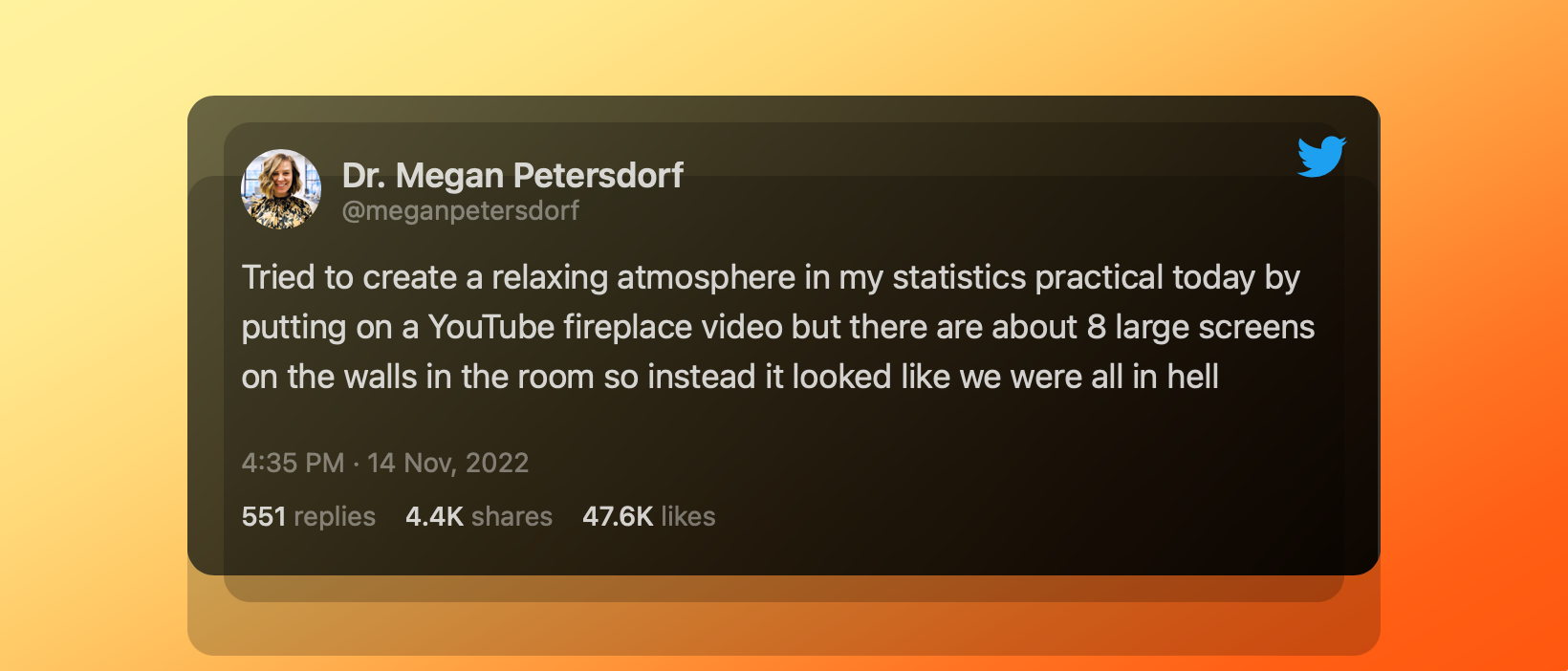
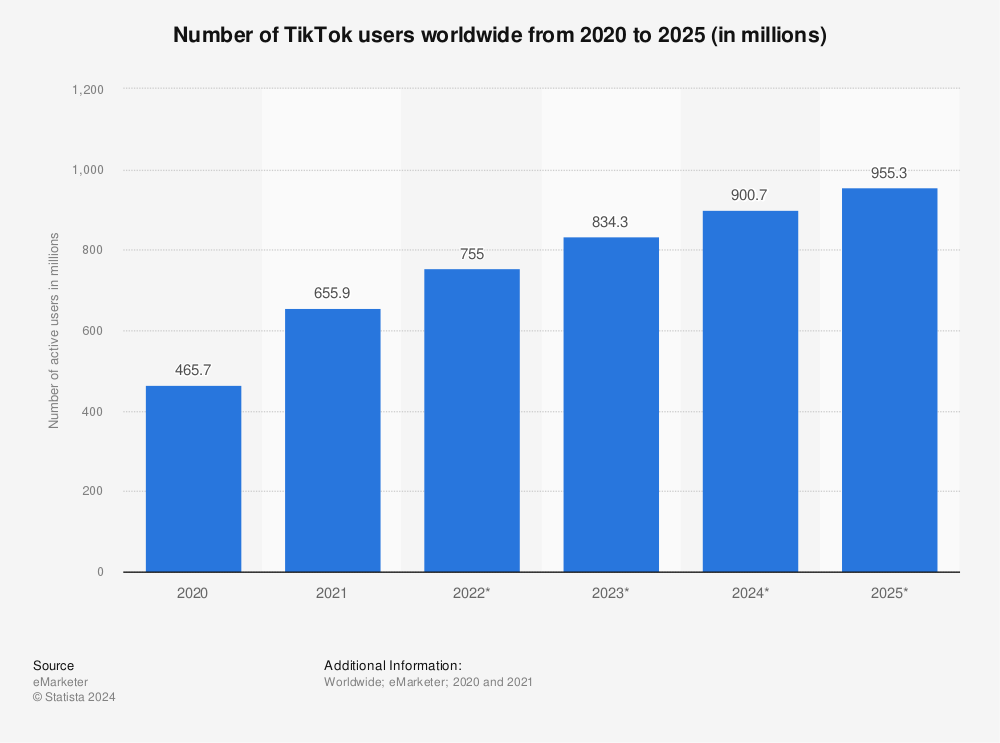














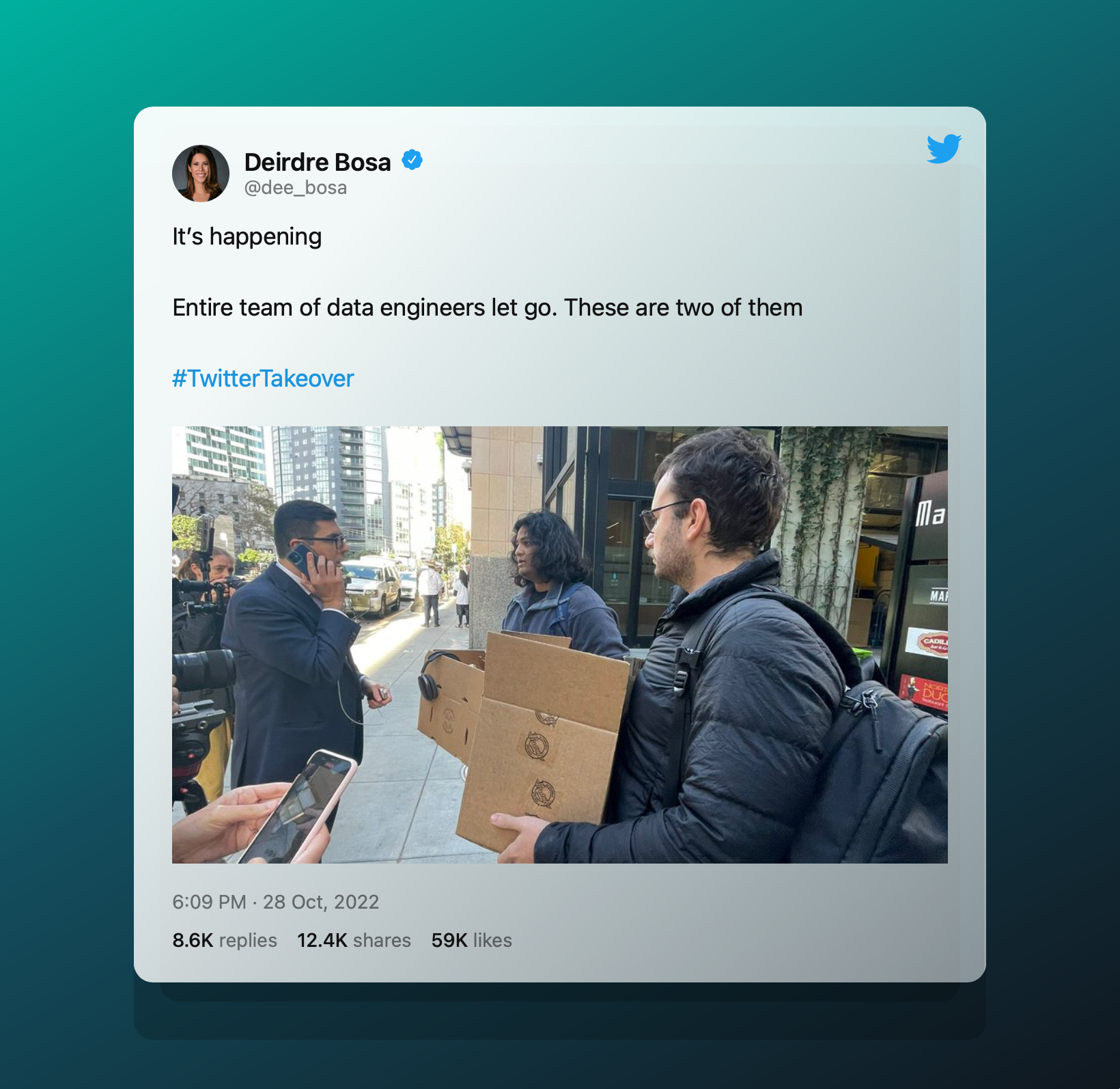
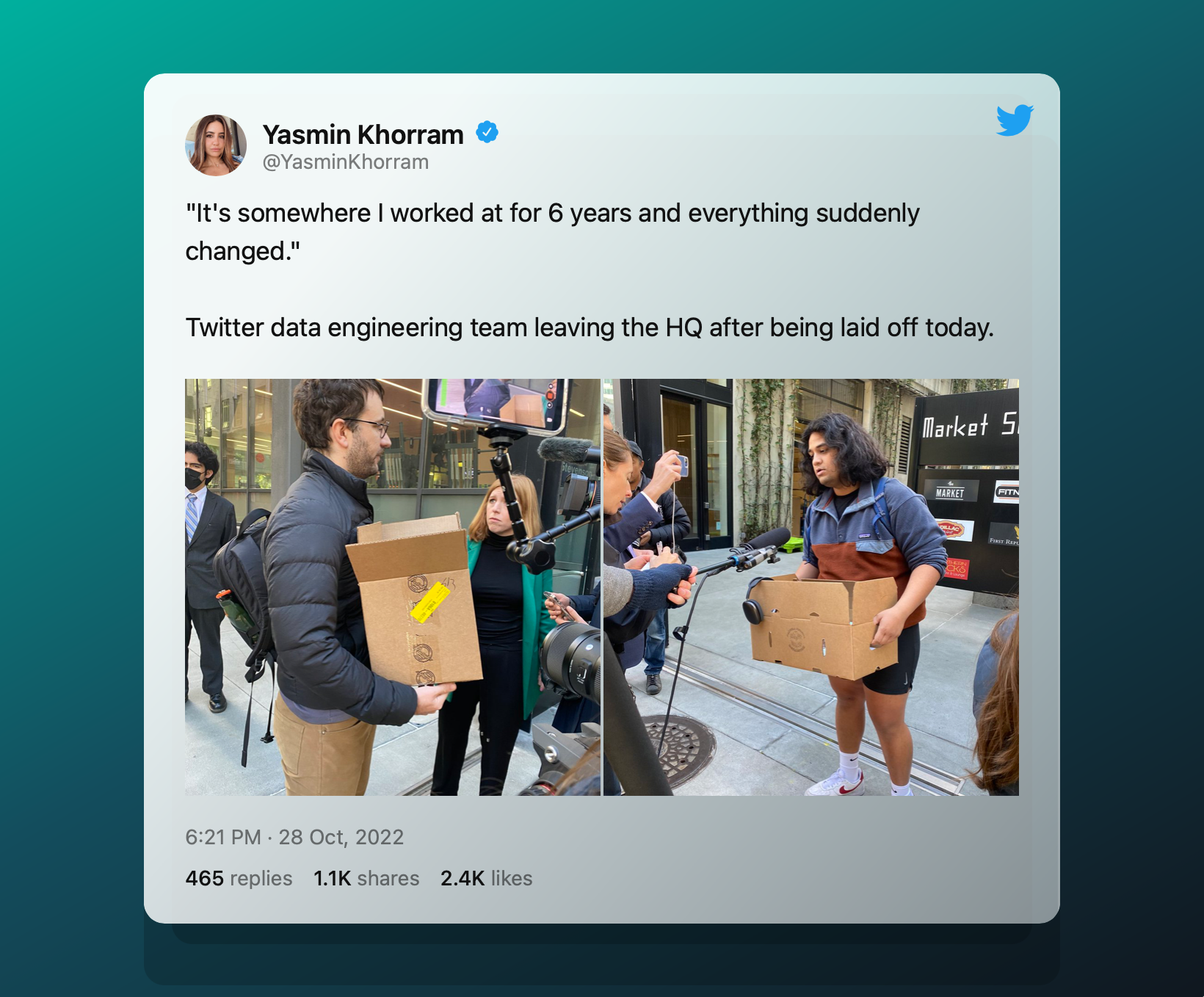
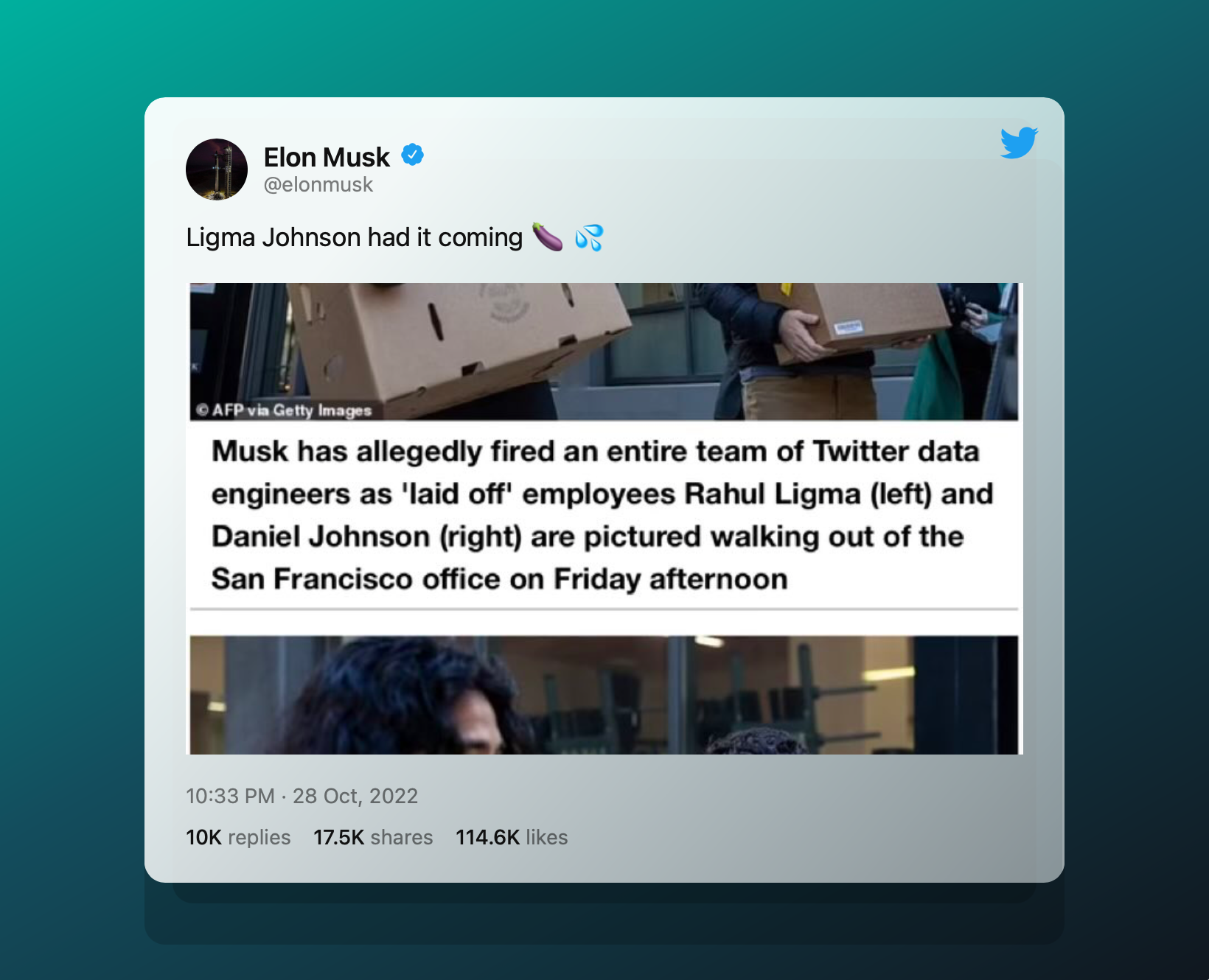






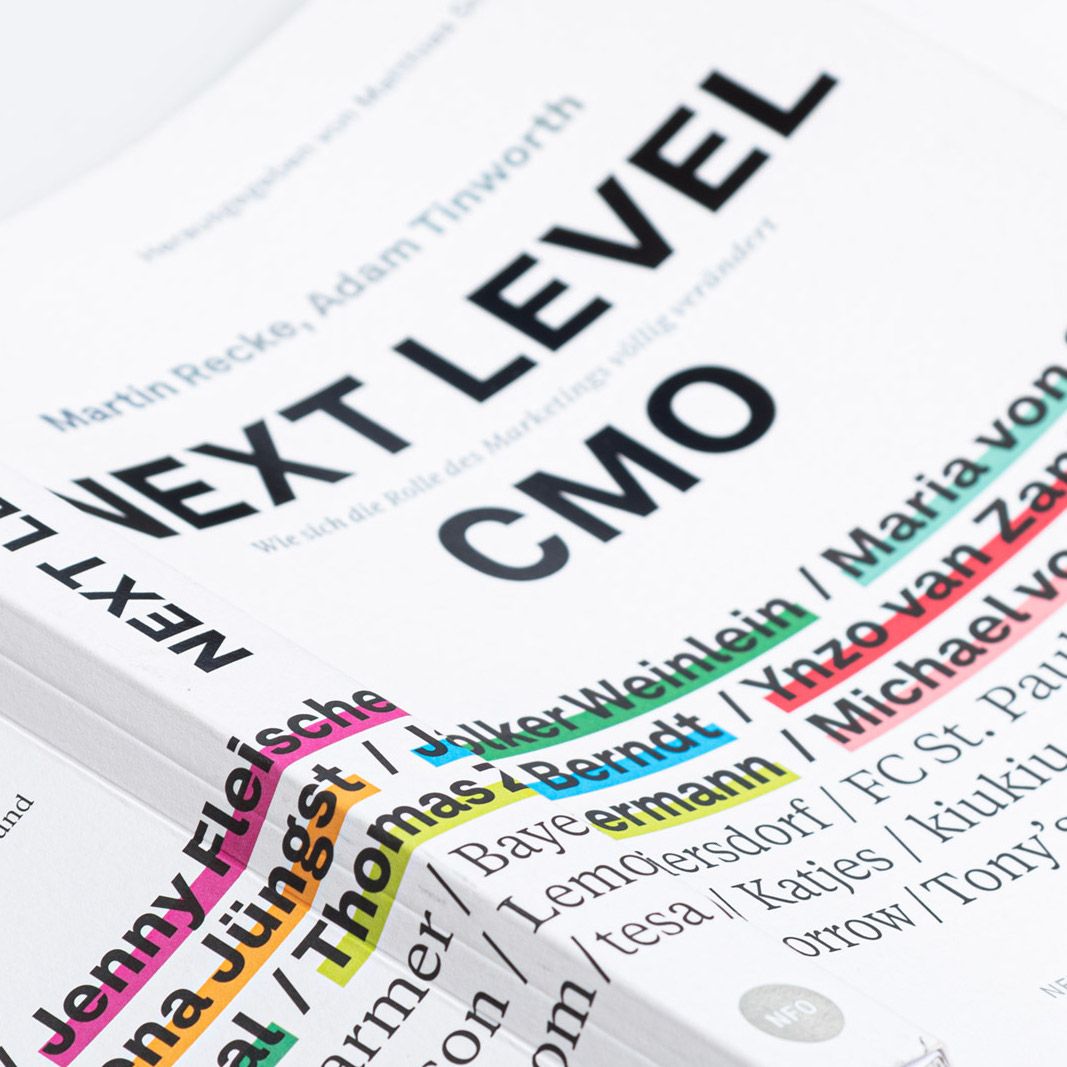

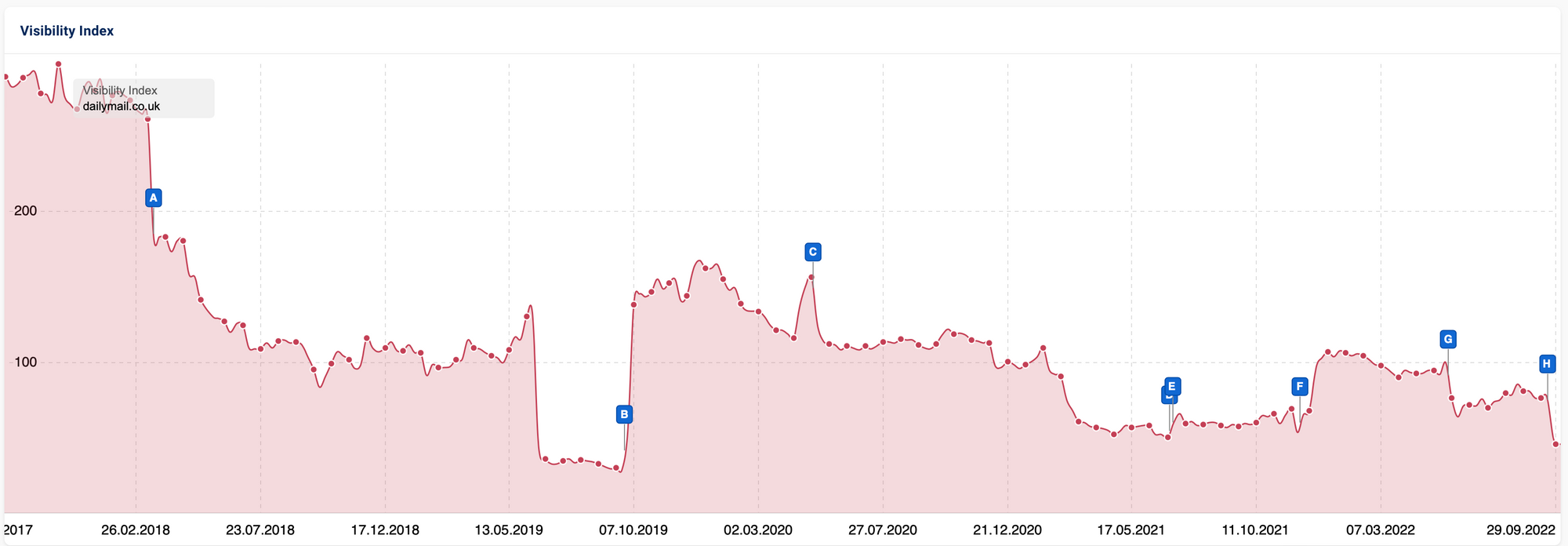

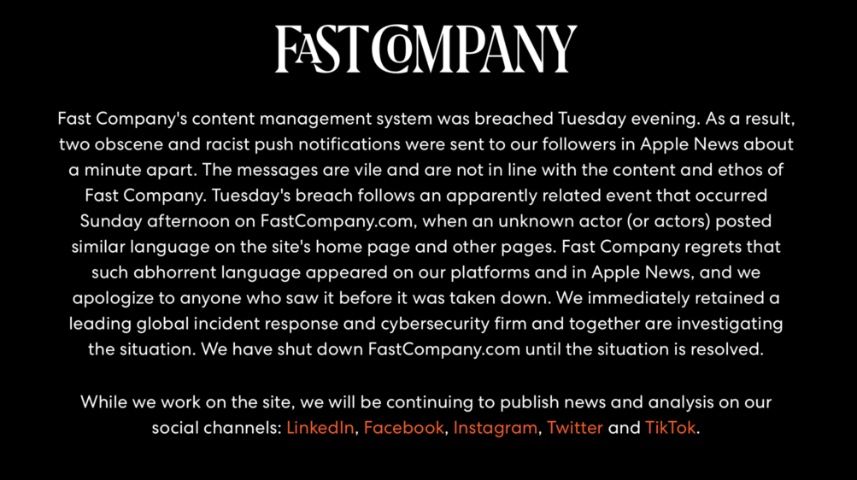


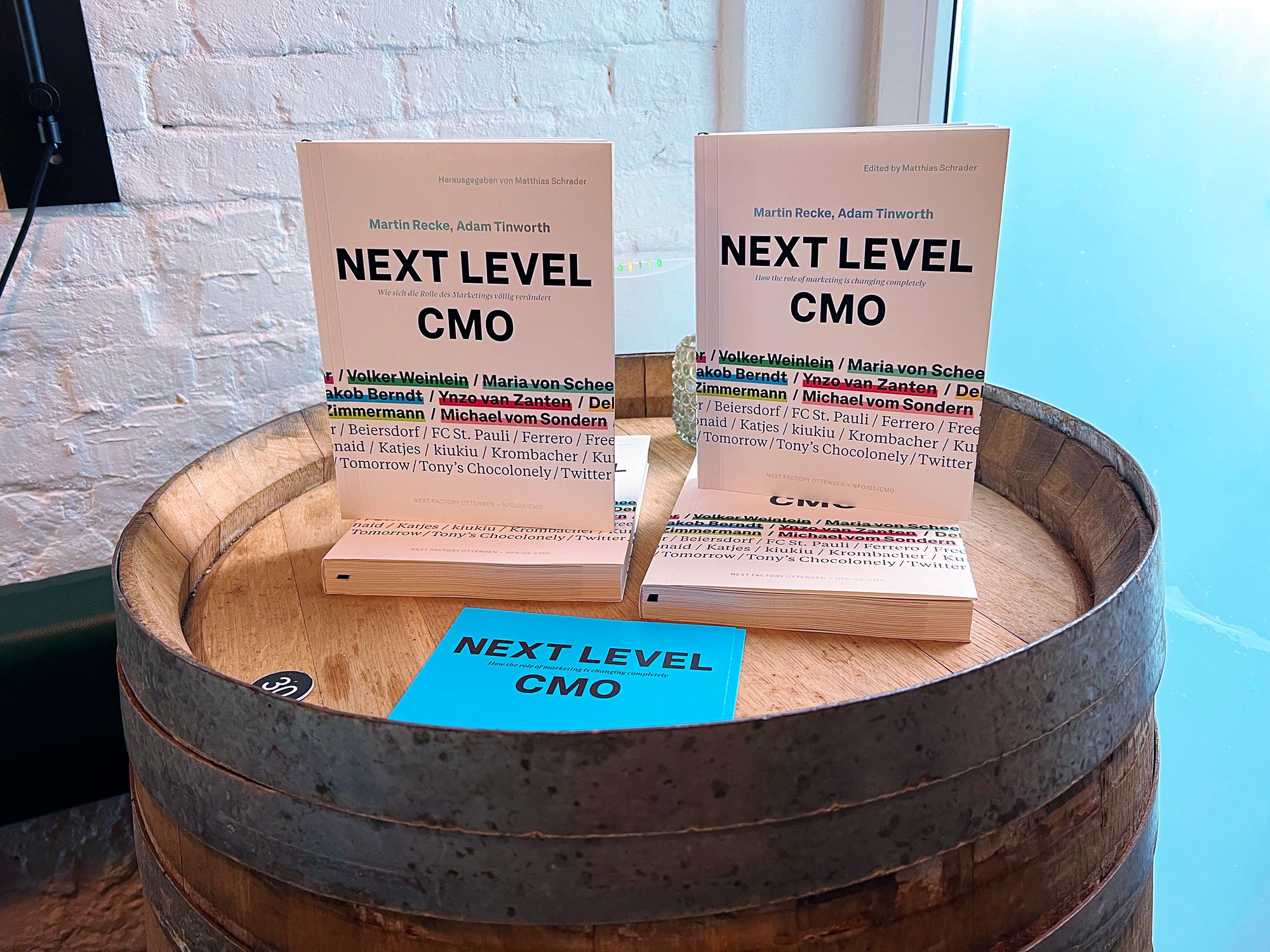

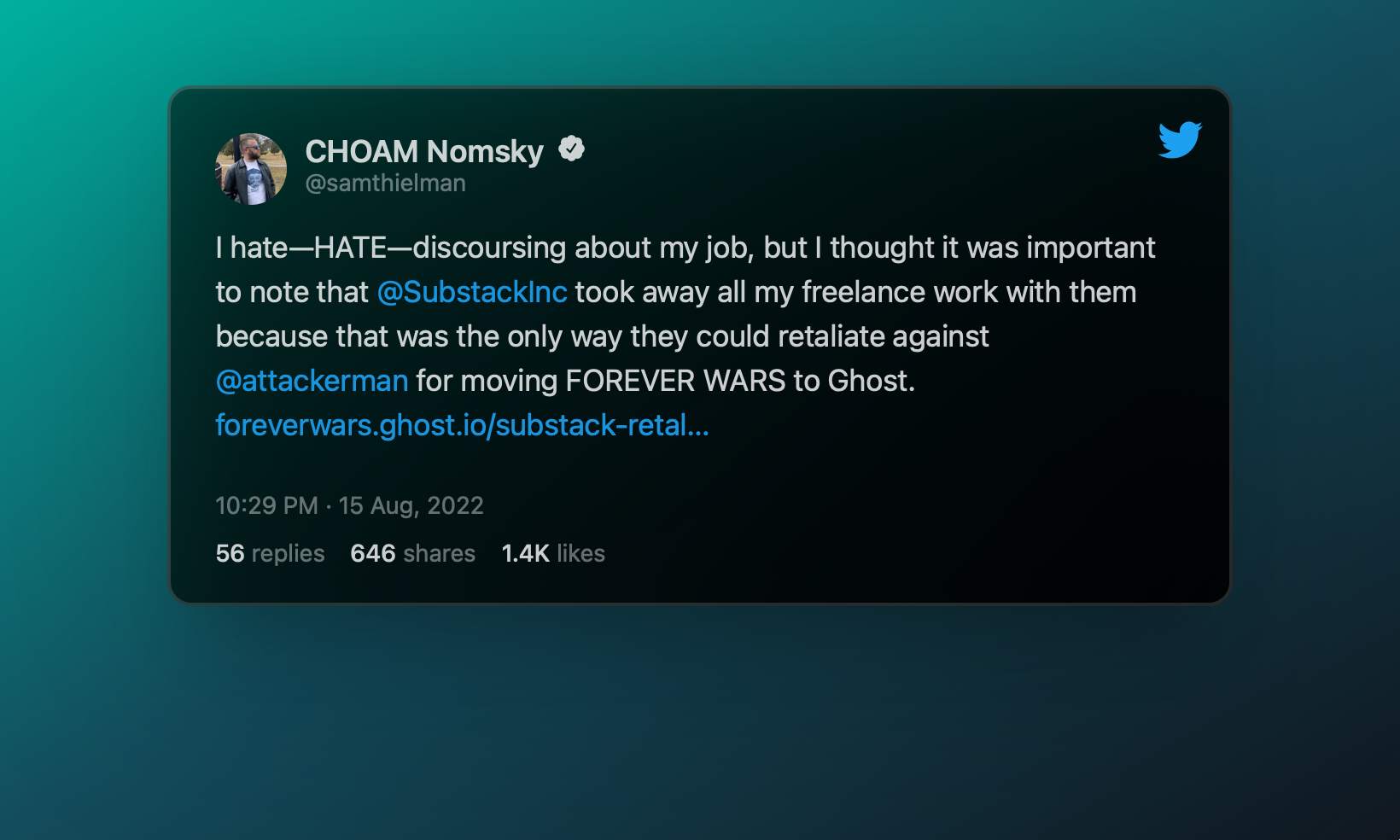
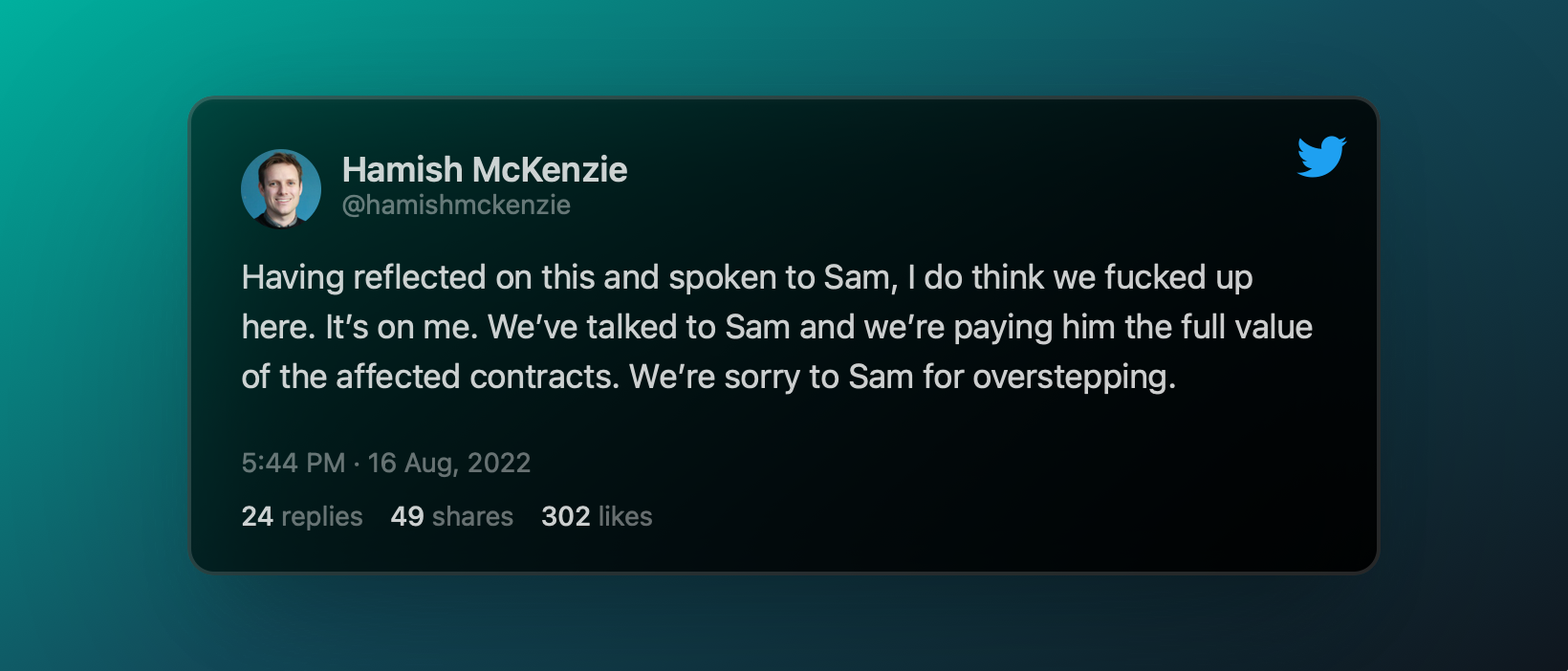
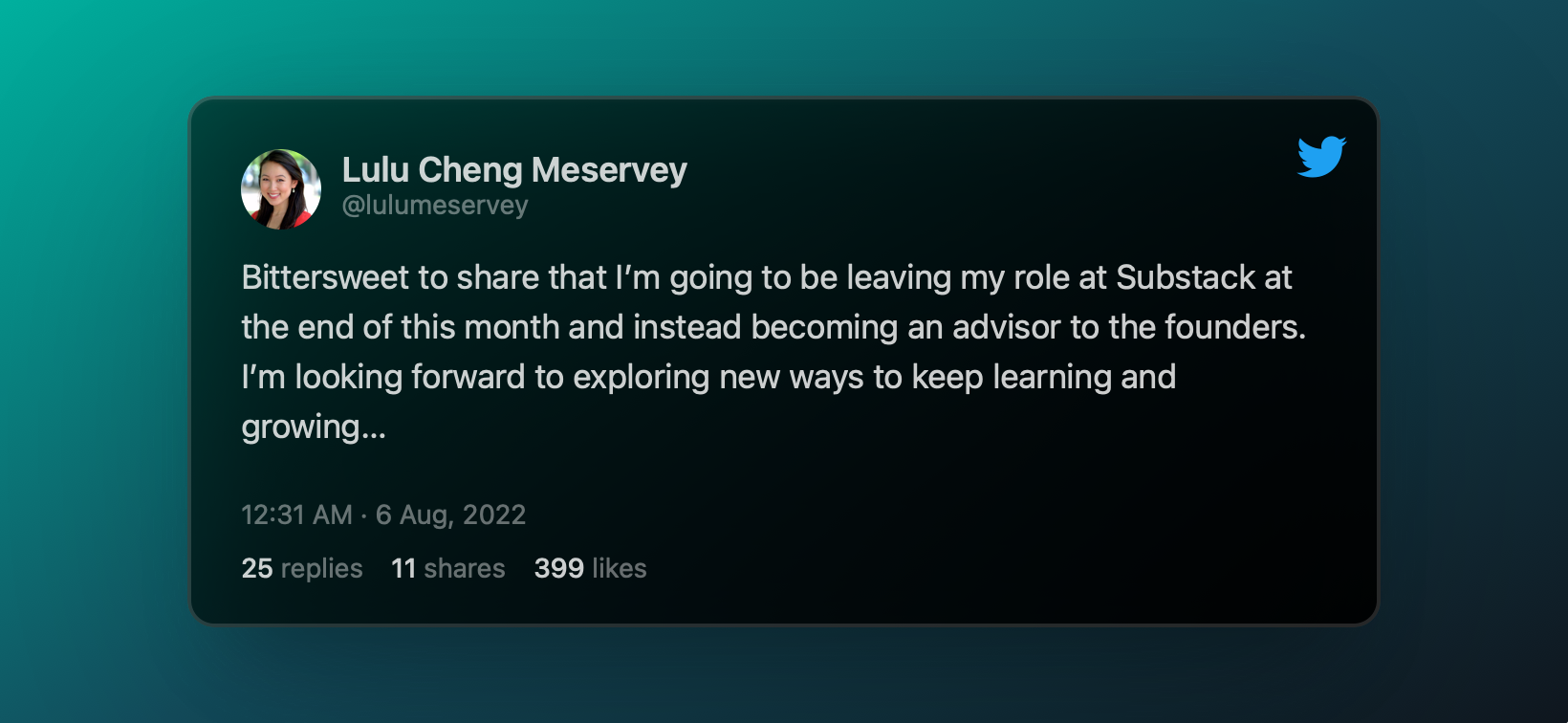
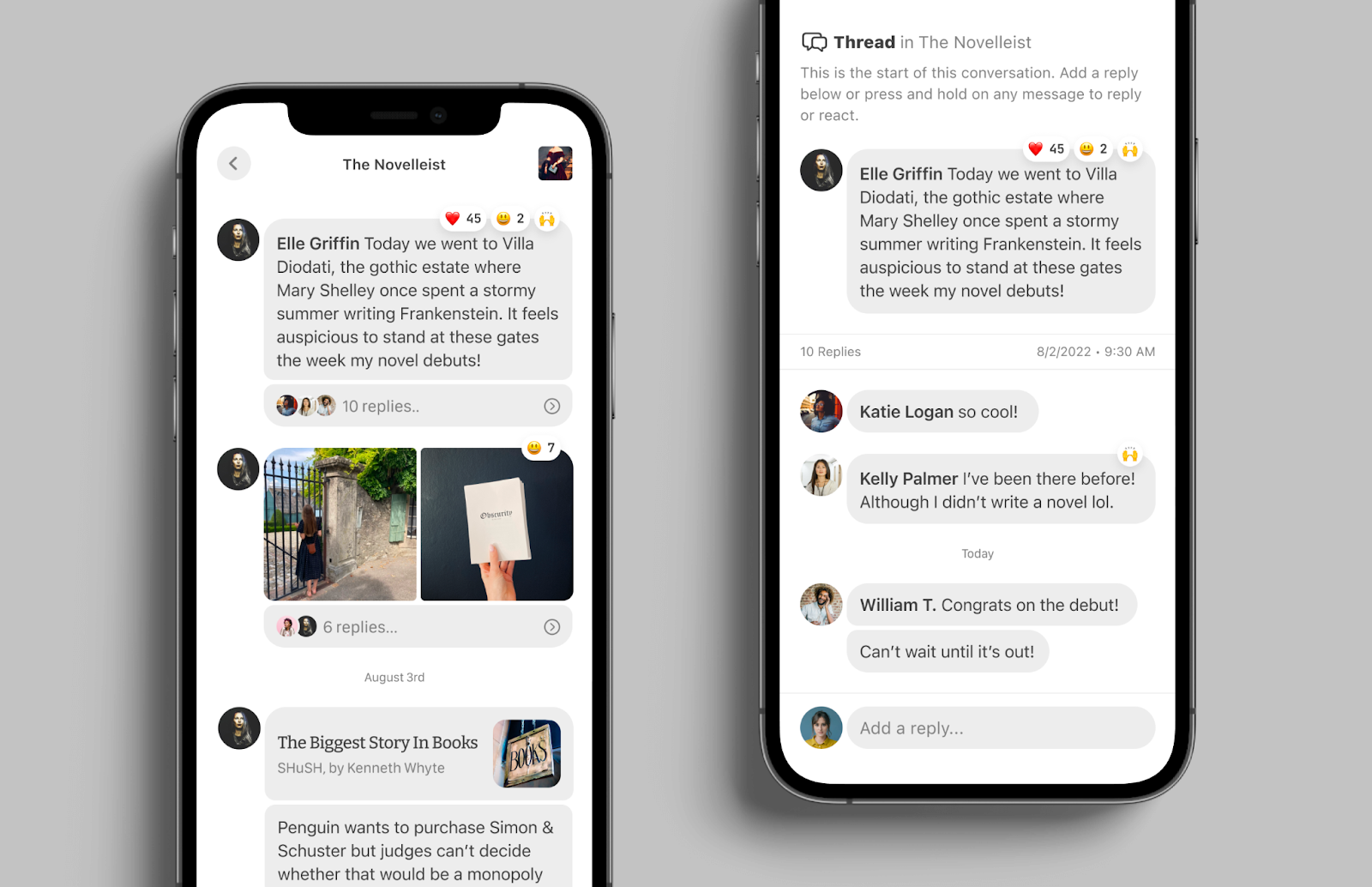

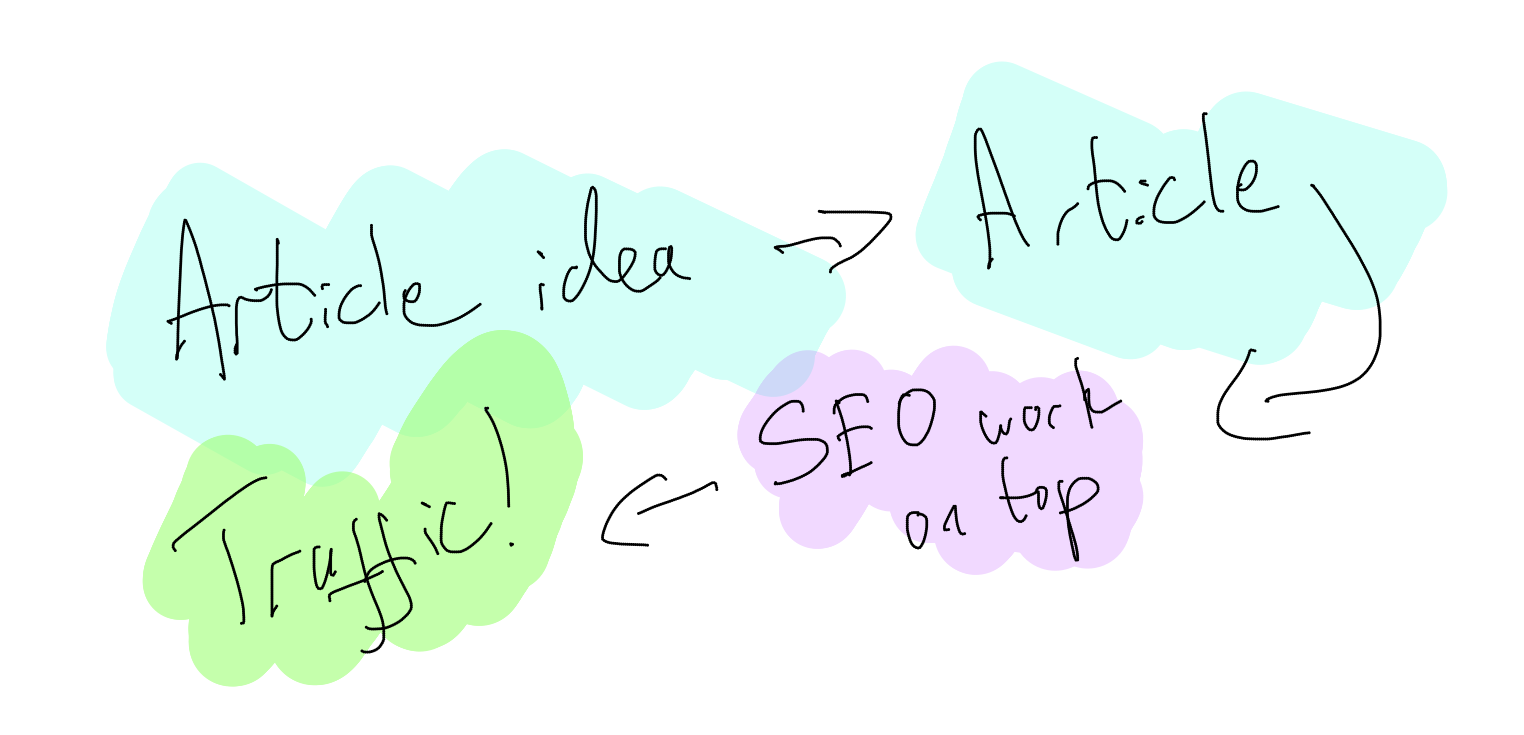
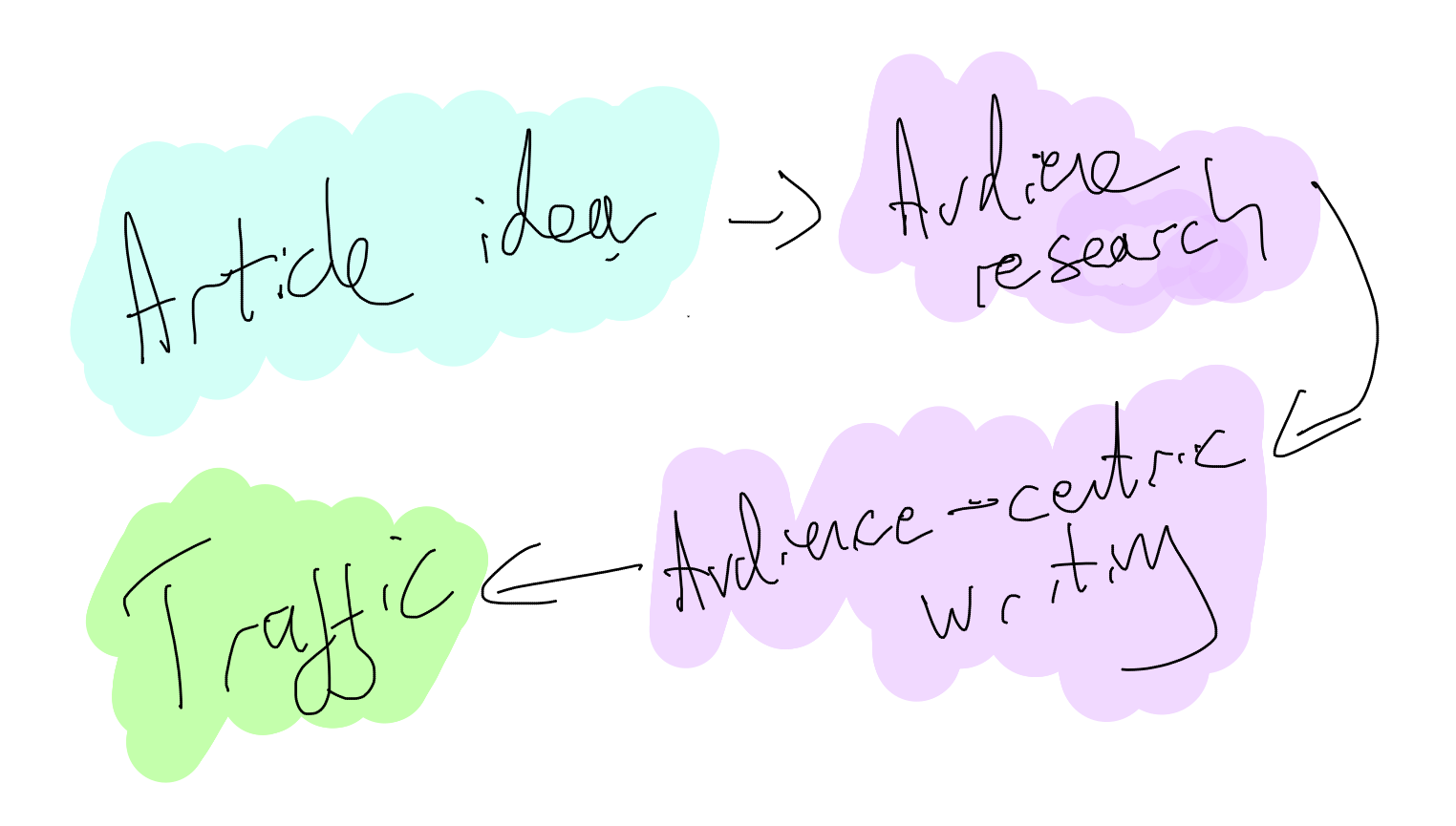
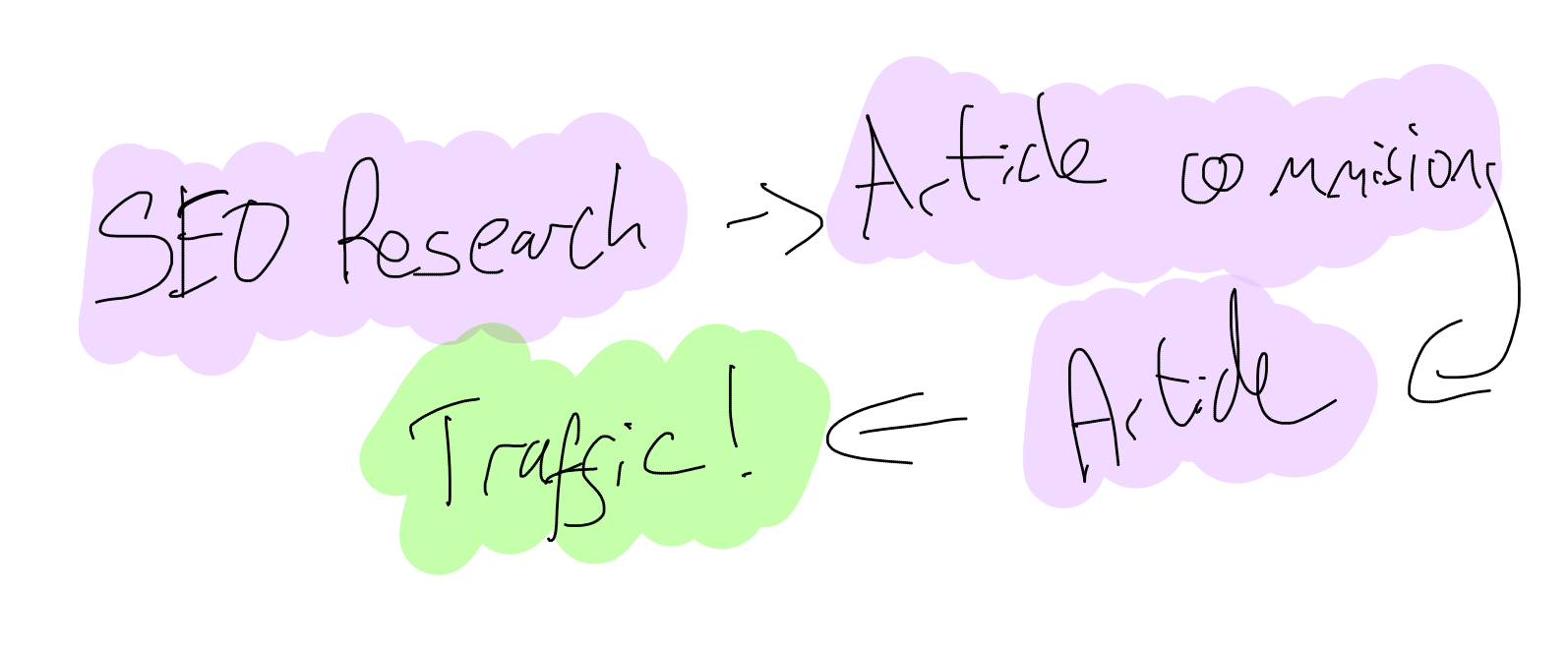



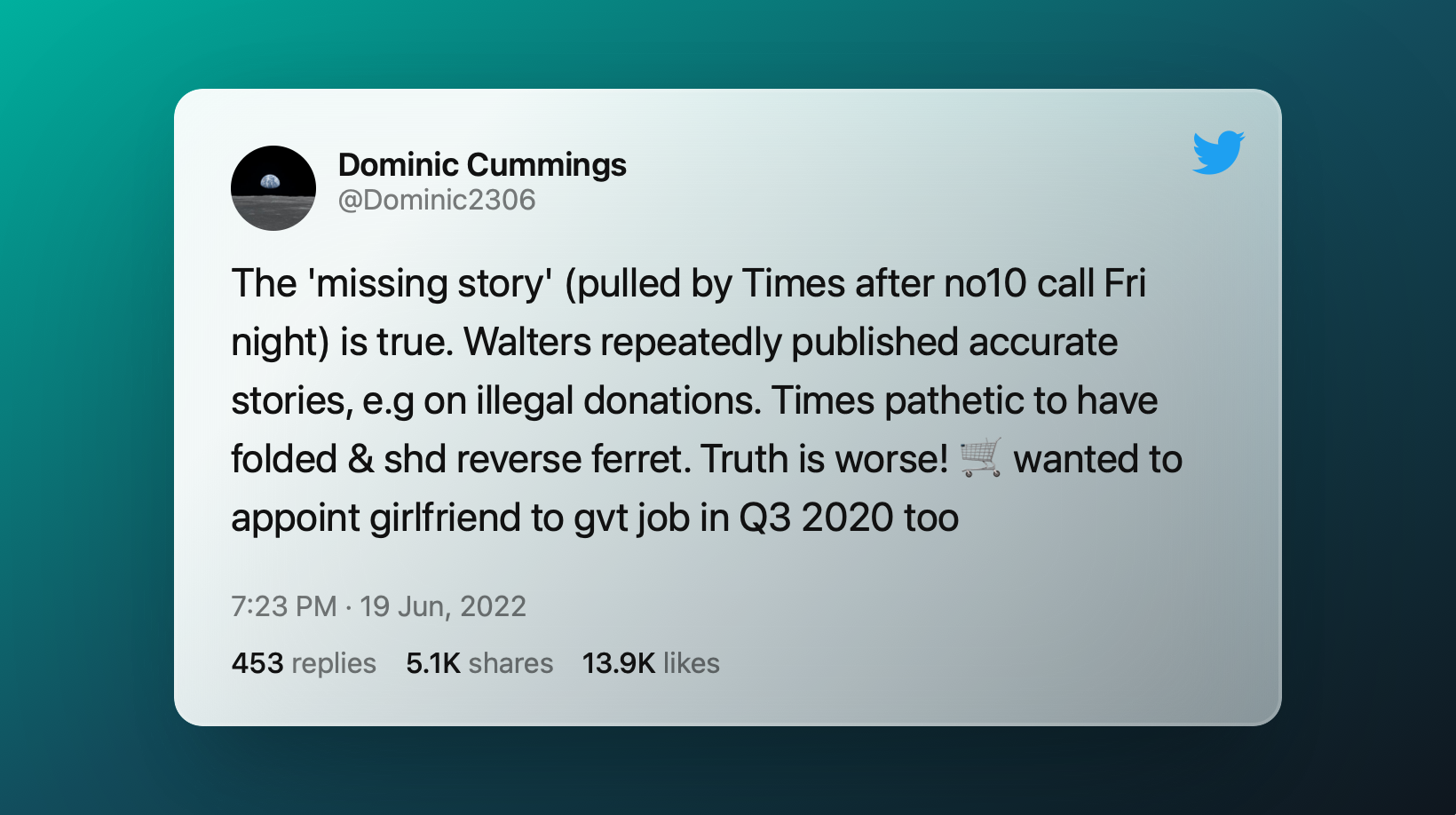
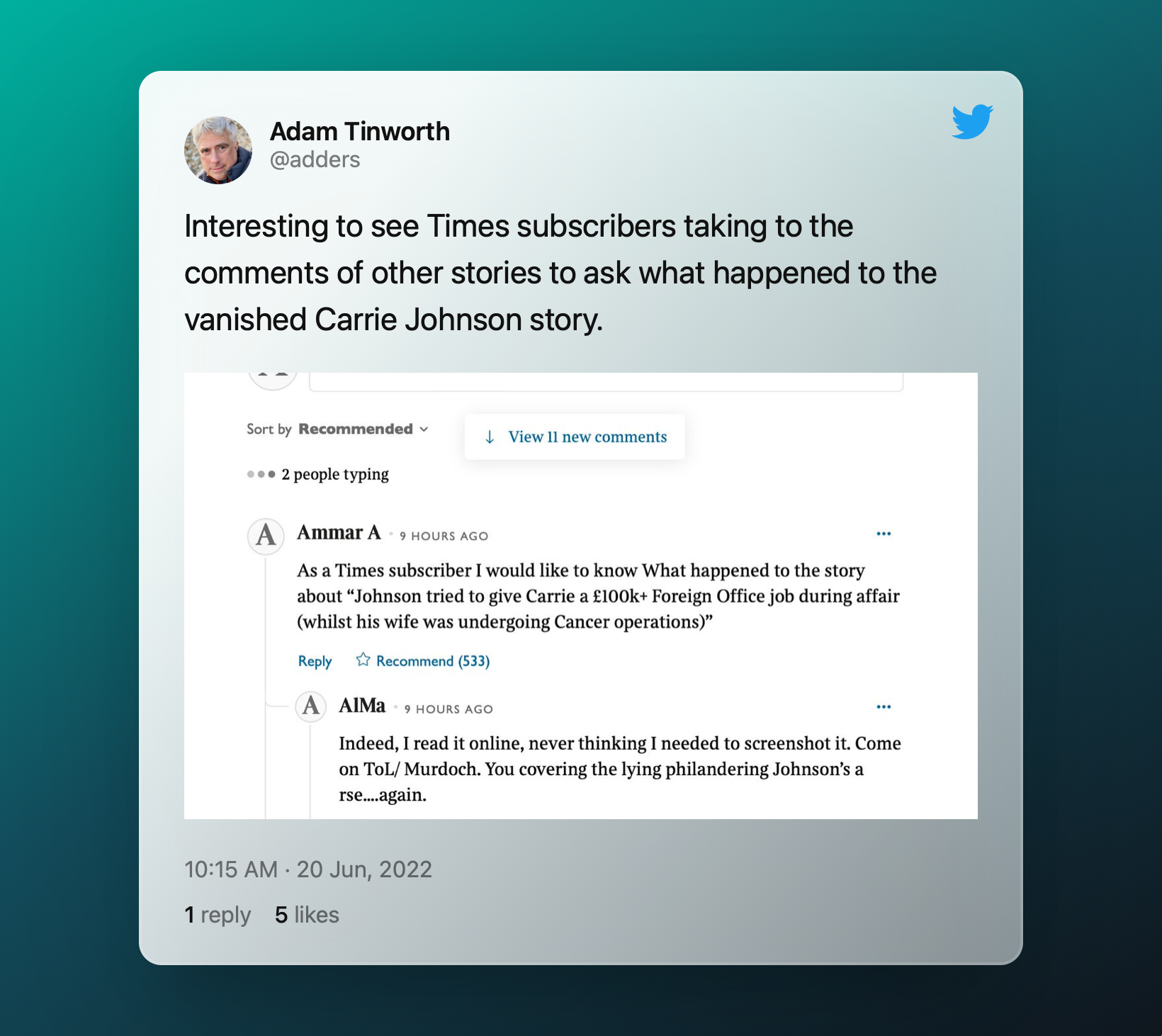
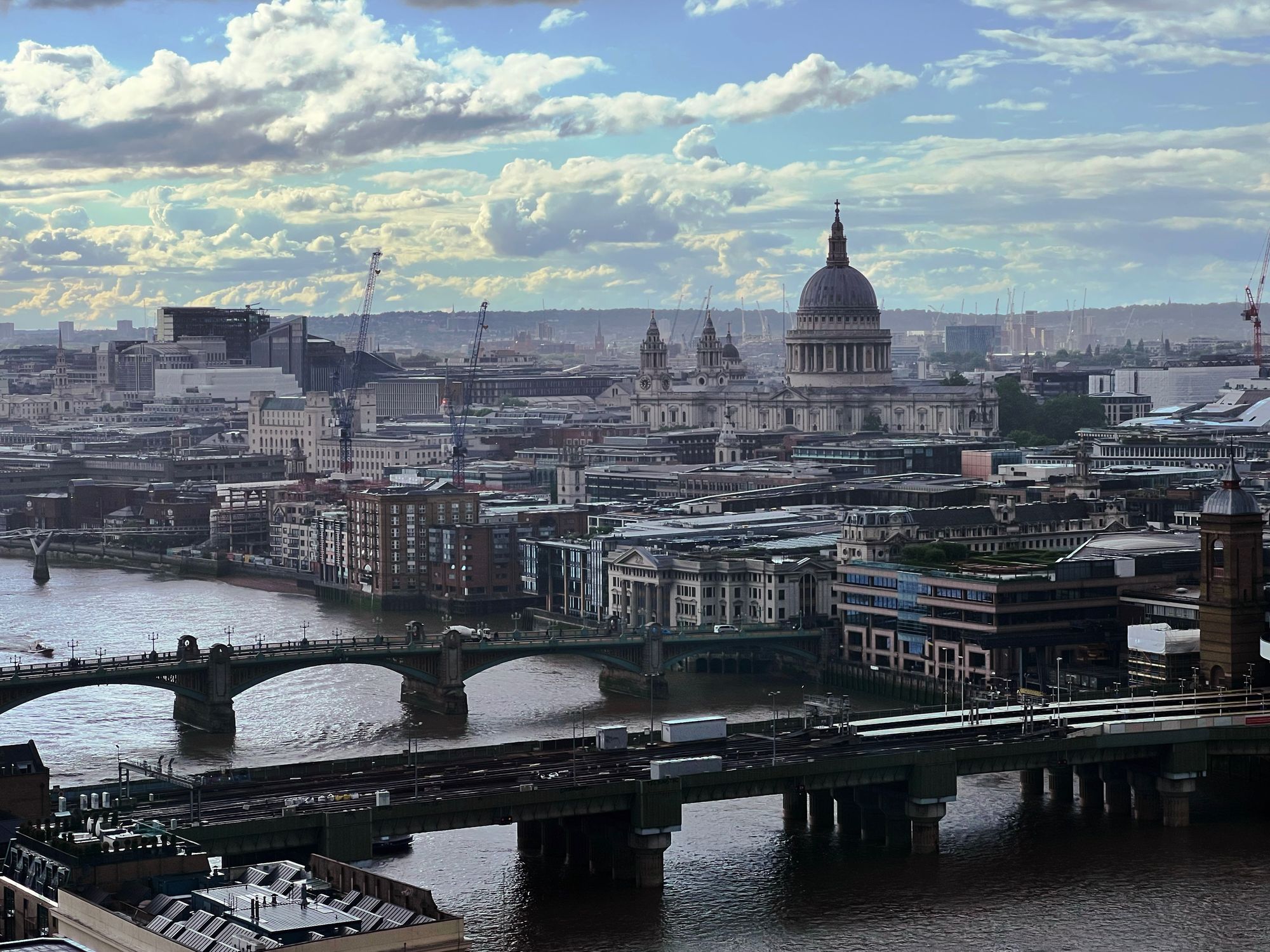
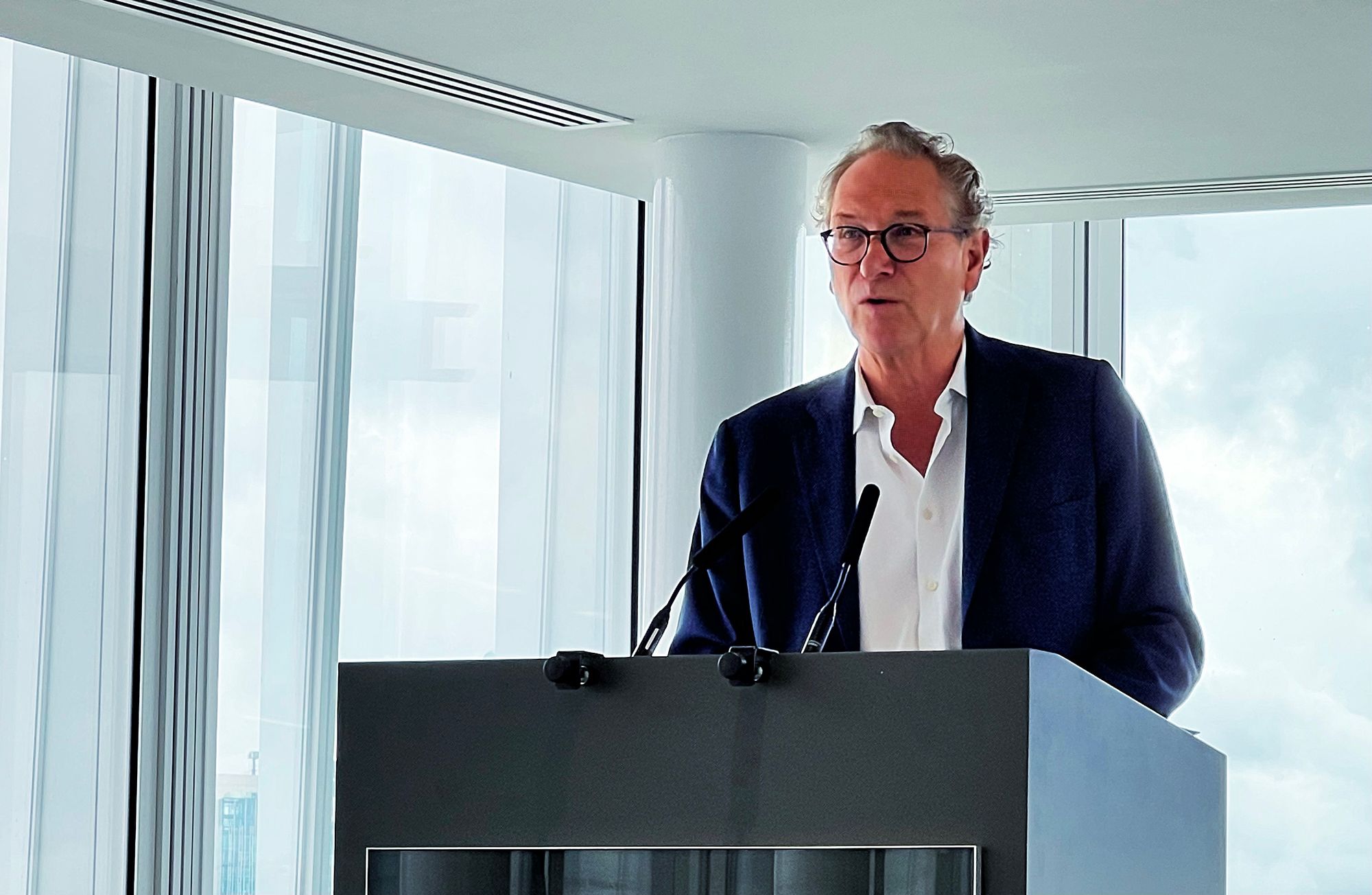
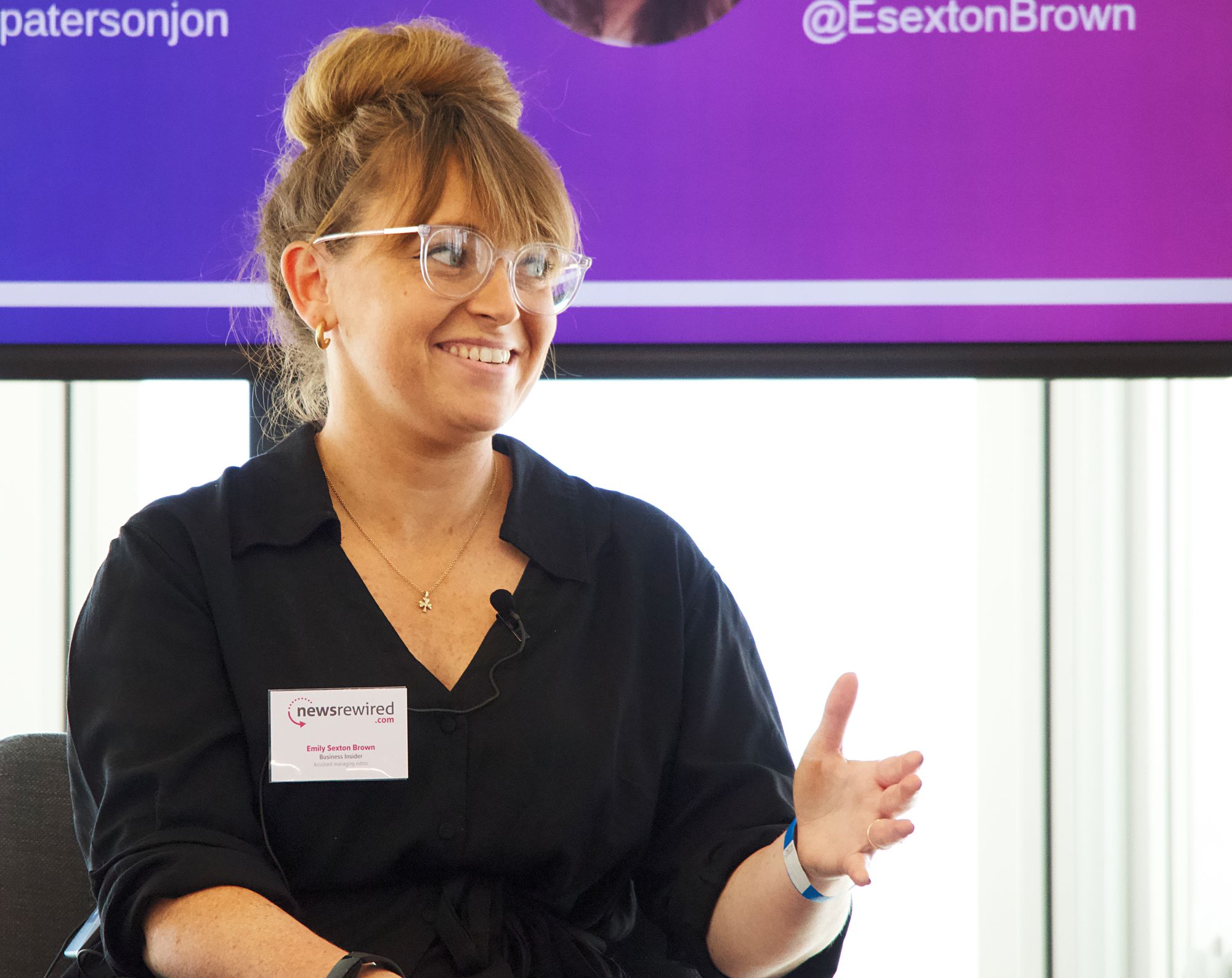
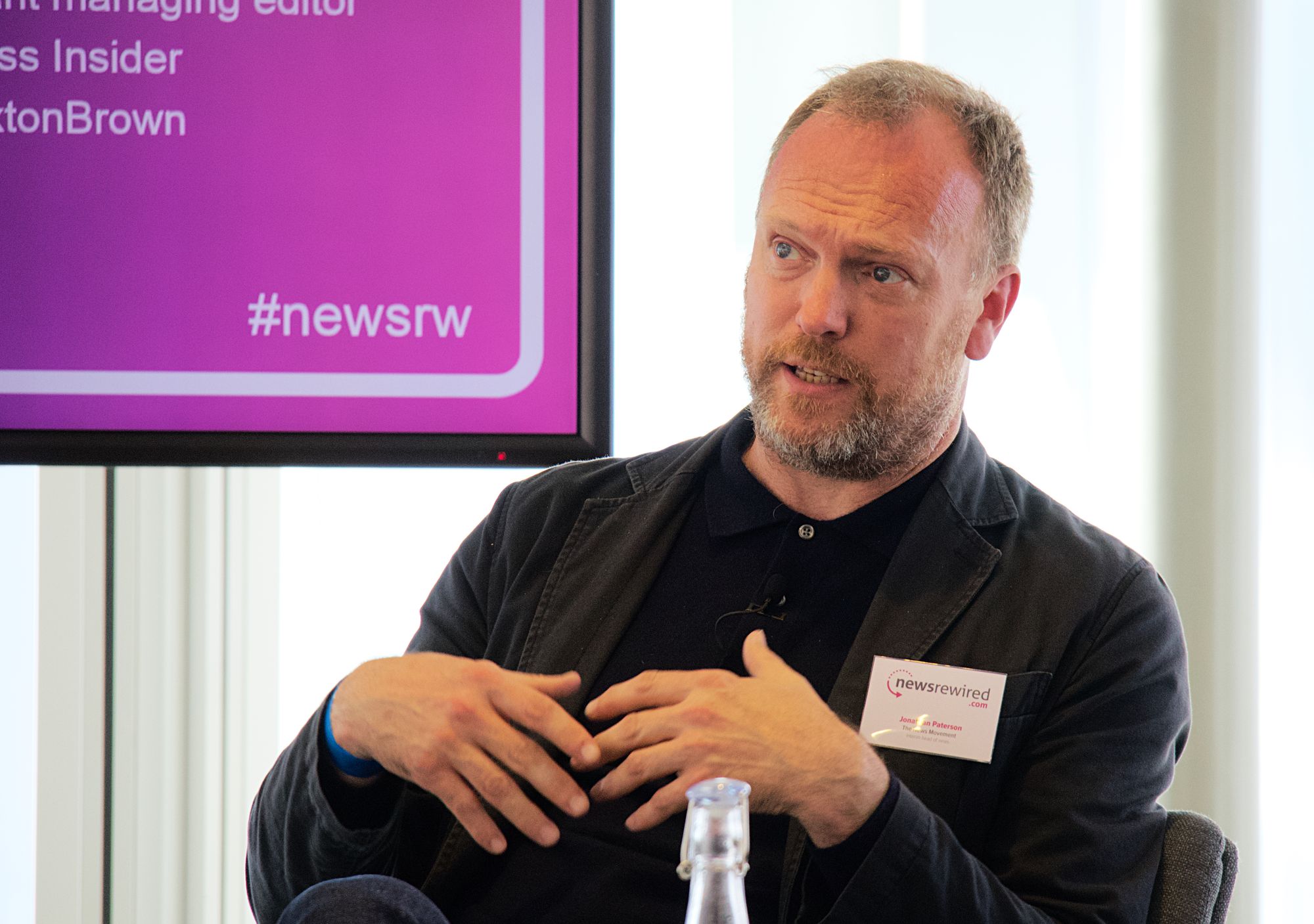
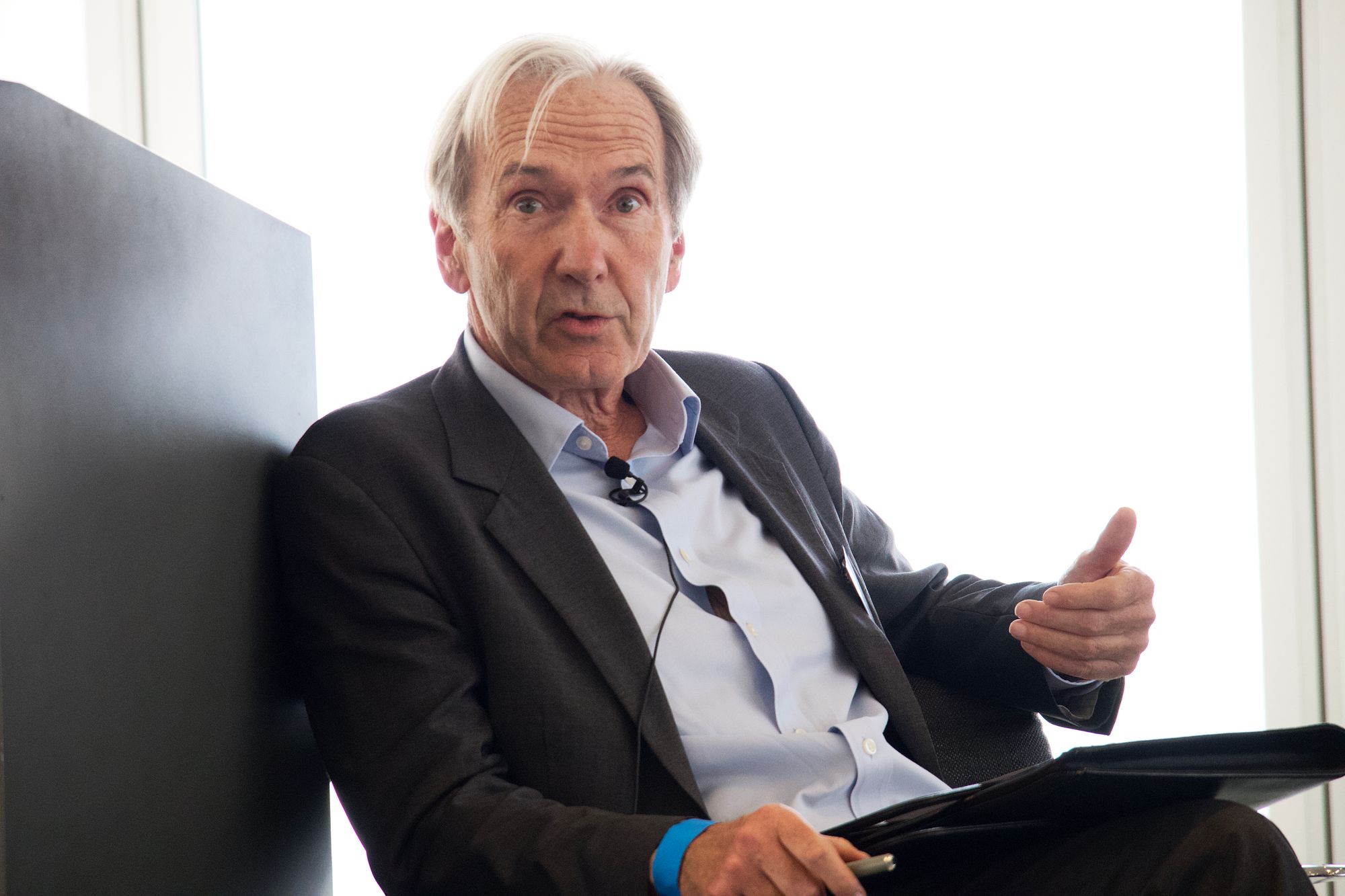
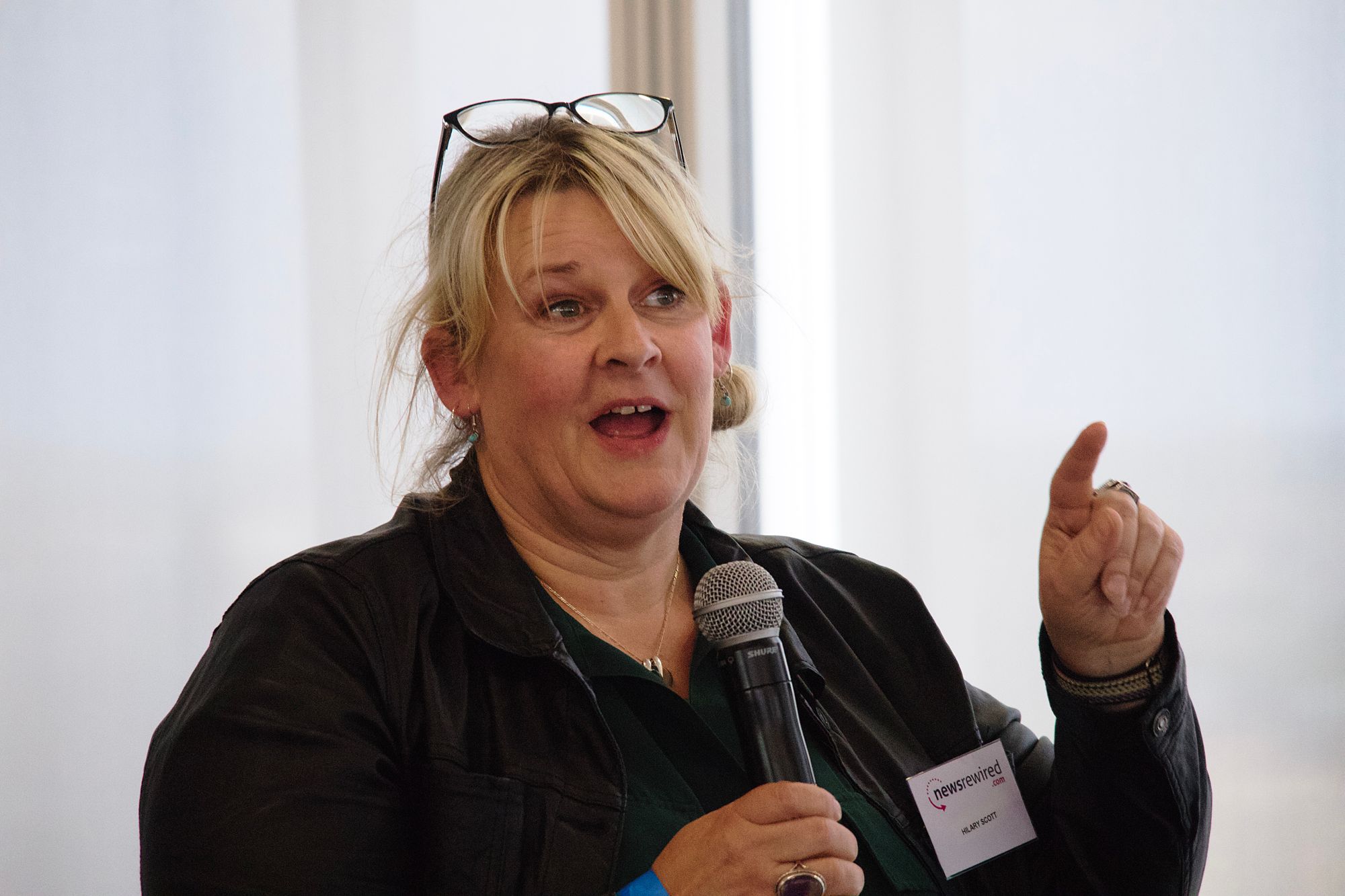
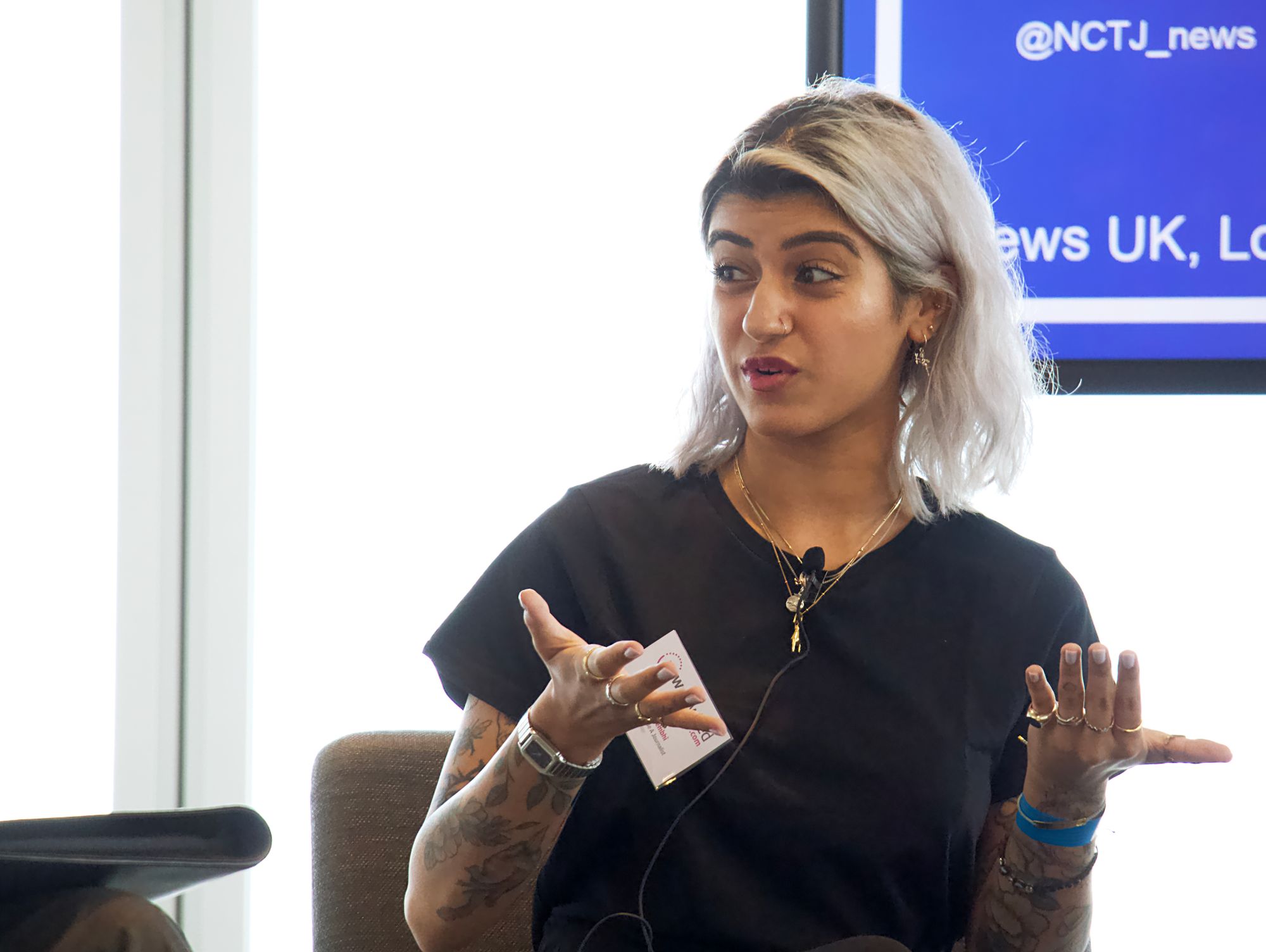

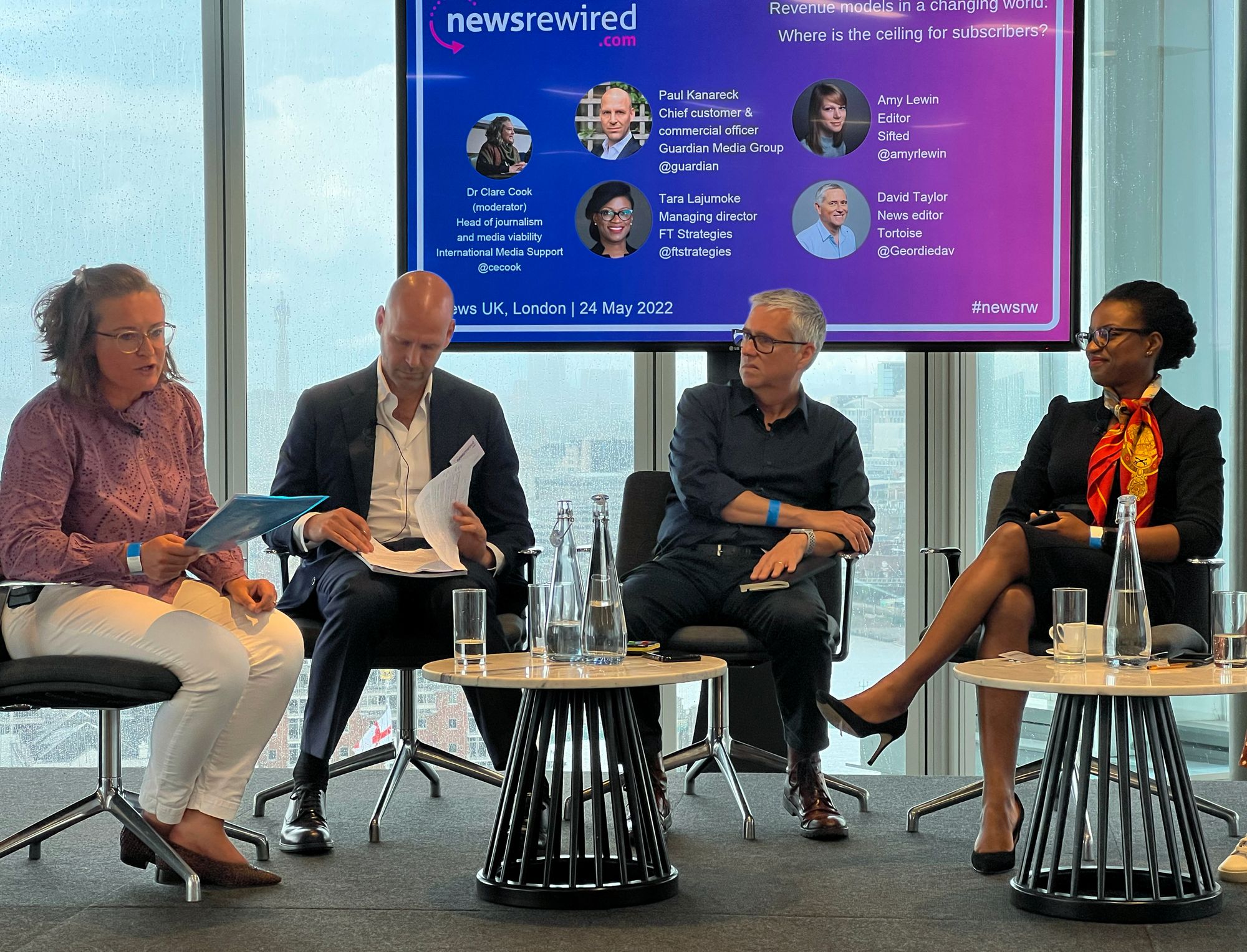

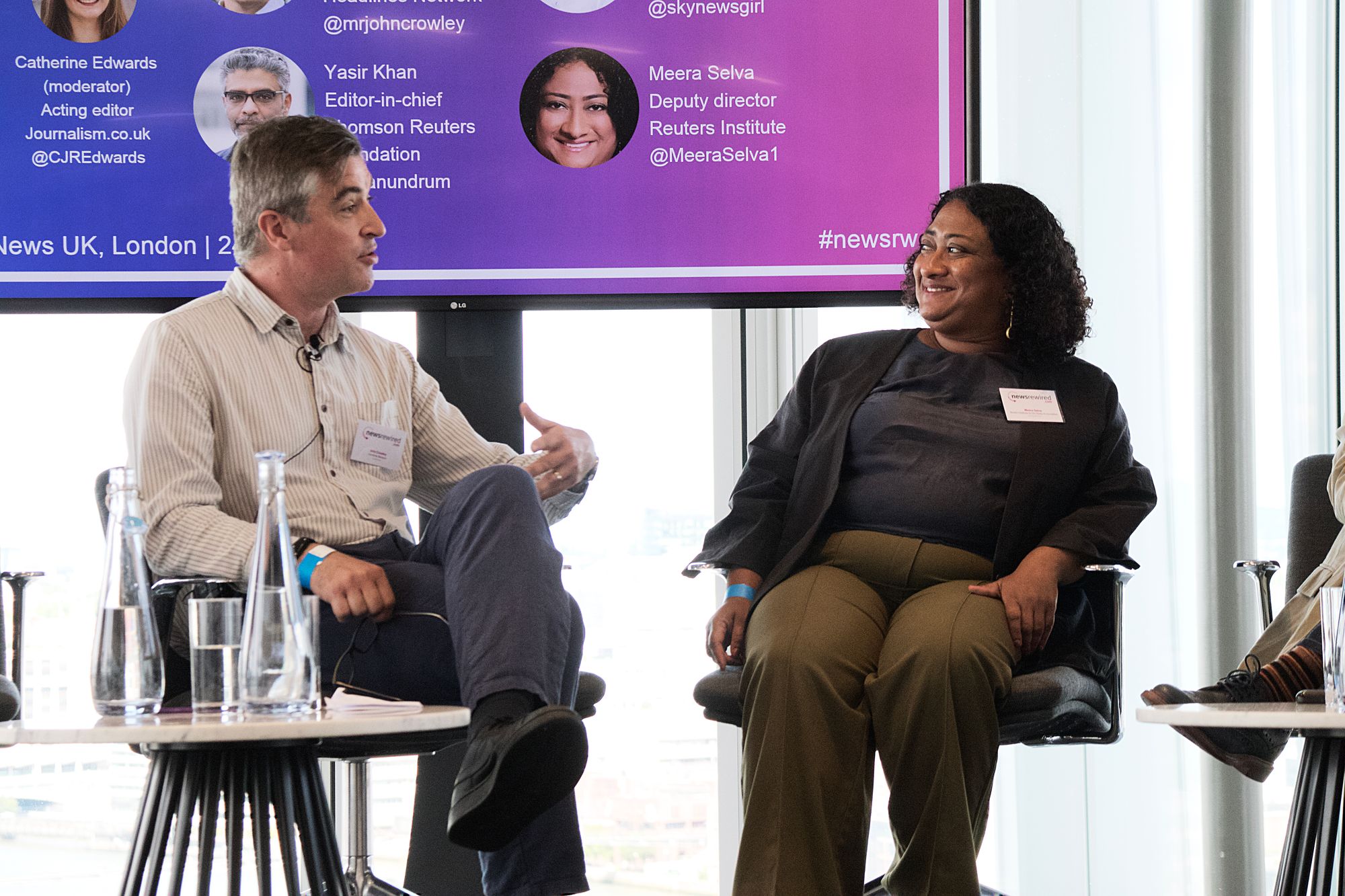
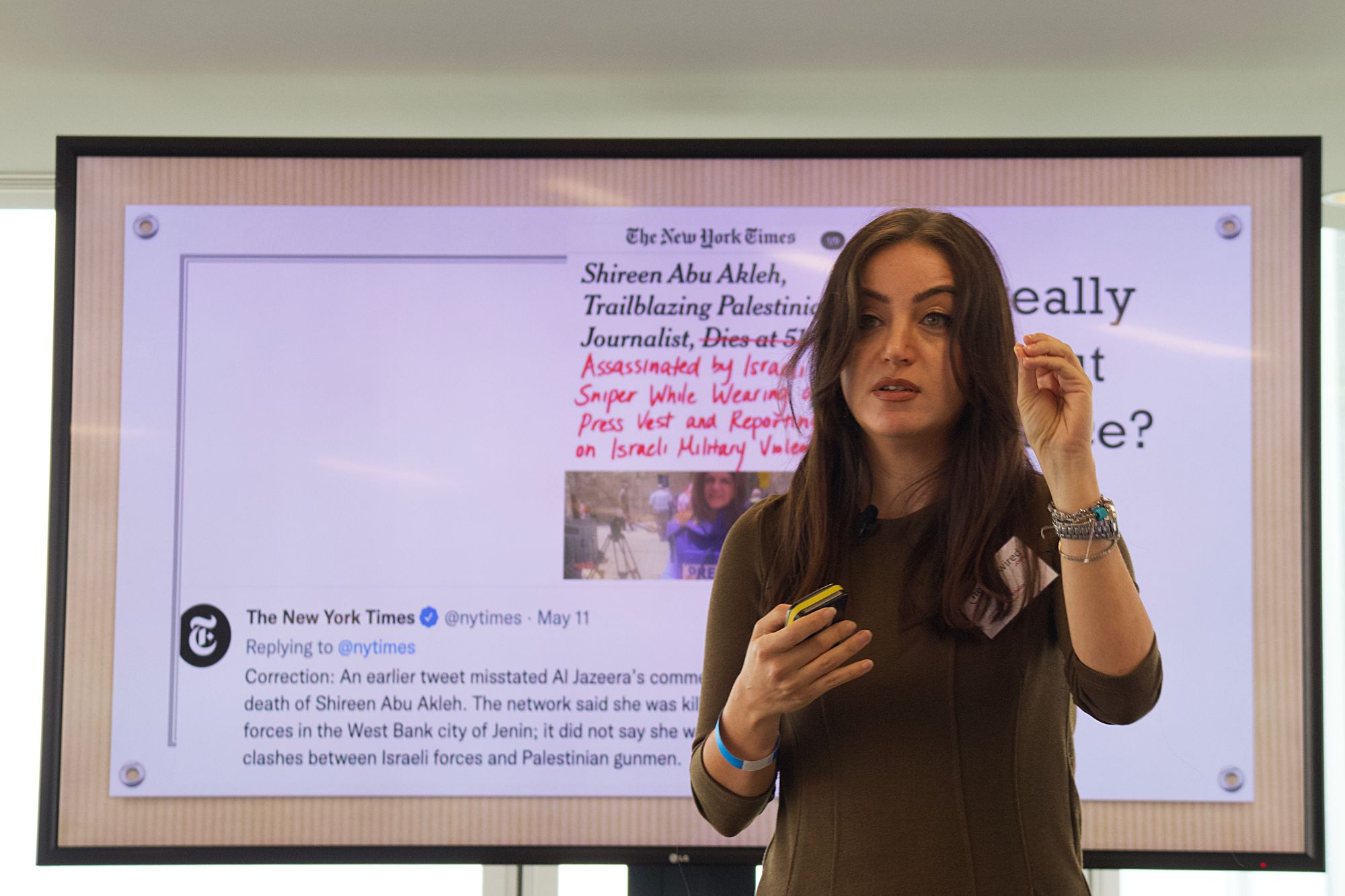


Lindsey Hilsum, a correspondent for Britain’s Channel 4 News, is one the most experienced conflict reporters covering the Ukraine war. But she never heads out without an electronic tracking device that allows editors to monitor her every move. She is in constant and nearly instantaneous contact w…![](https://www.cjr.org/wp-content/themes/cjr2017/_resources2015/img/favicon-152.png)Columbia Journalism ReviewJoel Simon![](https://www.cjr.org/wp-content/uploads/2022/03/AP_22060425612766-800x419.jpg?122376)](https://www.cjr.org/business%5Fof%5Fnews/for-journalists-ukraine-is-a-whatsapp-war.php?ref=onemanandhisblog.com) It's also worth remembering, that you can evaluate any digital tool against three main roles: - Content promotion - Story-finding and research - Networking and communications While some interesting work is being done with messaging apps and the first of those (promotion), it's for the latter two that they really shine. ## 2\. Reddit: your new SEO challenge Have you given any thought to your Reddit search strategy? Any at all? No? Well, you might need to. The site we once called a “social bookmarking” service, but which is probably better regarded as a platform for niche communities, is becoming [a star for certain searches](https://dkb.io/post/google-search-is-dying?utm%5Fsource=tldrnewsletter): > So how can we regain authenticity? What if you want to know what a genuine real life human being thinks about the latest Lenovo laptop? > You append “reddit" to your query (or hacker news, or stack overflow, or some other community you trust). > Google is dead. > Long live Google + “site:reddit.com”. While that's more about the weakness of Google (and the outsize success of search marketers on certain query categories), Reddit certainly seems to be leaning into the idea: [Reddit Continues the Process of Refining Its Search ResultsThe first iteration of its new mod notes feature was released.![](https://www.adweek.com/wp-content/uploads/2020/08/246x0w.png)AdweekDavid Cohen![](https://www.adweek.com/wp-content/uploads/2022/03/RedditModNotes-600x315.jpg)](https://www.adweek.com/media/reddit-continues-the-process-of-refining-its-search-results/?ref=onemanandhisblog.com) I suspect Reddit is due a serious re-evaluation in audience strategy circles. ## 3\. GIFs. GIFs everywhere. Let's face it: GIFs are a prehistoric format. Those of us who remember the 1990s web will recall when they were the *only* viable way of putting any video or animation on your homepage. They are old, clunky and bandwidth hogs: > GIF is a \*very\* inefficient file format for video. > > — Paul Ockenden (@PaulOckenden) [March 23, 2022](https://twitter.com/PaulOckenden/status/1506604435136561154?ref%5Fsrc=twsrc%5Etfw&ref=onemanandhisblog.com) And yet, they're still a central part of the way we communicate online (for a certain subset of “we” at least. [Apparently they're *passé* amongst Gen Z](https://www.vice.com/en/article/z3nzb4/gifs-are-for-boomers-now?ref=onemanandhisblog.com).) And so, Twitter, which has long supported really modern video formats, now allows you to create them within the app: > Ok GIFs aren’t new but what \*is new\* is the option to capture your own using the in-app camera on iOS. [pic.twitter.com/3Hl6q78e6s](https://t.co/3Hl6q78e6s?ref=onemanandhisblog.com) > > — Twitter Support (@TwitterSupport) [March 22, 2022](https://twitter.com/TwitterSupport/status/1506346203310612490?ref%5Fsrc=twsrc%5Etfw&ref=onemanandhisblog.com) Why would you do this, rather than just create a short video clip? Well, you might experiment with it for the reusability and viral potential of the GIF. But, as always, the true potential of new functionality only becomes clear when people start playing with it. It'll be interesting to see if they unleashes another wave of viral creativity on Twitter, or quickly becomes another forgotten piece of functionality buried in the app. I image you can come up with better than this: > adamreaction.gif [pic.twitter.com/mvCyKkB43X](https://t.co/mvCyKkB43X?ref=onemanandhisblog.com) > > — Adam Tinworth (@adders) [March 23, 2022](https://twitter.com/adders/status/1506609260540608517?ref%5Fsrc=twsrc%5Etfw&ref=onemanandhisblog.com) ### tl;dr: the Facebook-lite edition URL: https://onemanandhisblog.com/2022/03/newsletters-facebook-audience-engagement/ Last updated: 2022-03-11T15:10:05.000Z For once, Facebook doesn't seem to be the centre of attention, with big shifts like TikTok expanding to 10 minute videos, Twitter making more changes and some eye-opening moves from Reach dominating the news. Onwards to the links! ## Audience Engagement - 🧪 The [periodic table of community management](https://guild.co/blog/periodic-table-community-strategy/?ref=onemanandhisblog.com) - 😤 Metaverse [community management is going wrong already](https://www.vice.com/en/article/7kb7w4/being-a-facebook-metaverse-community-guide-seems-like-a-nightmare-job?ref=onemanandhisblog.com). - 📹 Using [social video to boost engaged time](https://whatsnewinpublishing.com/52-uptick-in-time-spent-on-site-why-one-millennial-publisher-turned-to-short-form-vertical-video/?ref=onemanandhisblog.com)… - 👹 A journalist [engages with a troll via email](https://www.holdthefrontpage.co.uk/2022/news/journalist-confronts-troll-over-click-baiting-scumbag-jibe/?ref=onemanandhisblog.com). This is absolutely NOT a scalable — or safe — approach. But it can be surprisingly effective. Twitter’s Joanna Geary did this years ago [in her *Birmingham Post* days](https://www.theguardian.com/commentisfree/2012/apr/12/noel-edmonds-day-i-met-troll?CMP=gu%5Fcom&ref=onemanandhisblog.com), and it made a difference. ## Business Models - 💸 Former client the [*FT* hits 1 m digital subscribers](https://pressgazette.co.uk/ft-hits-1m-paying-digital-subscribers/?ref=onemanandhisblog.com), with journalism now their biggest revenue stream. - 🔮 Three [very interesting predictions](https://www.ftstrategies.com/insights/top-three-predictions-for-the-news-publishing-industry-in-2022/?ref=onemanandhisblog.com) for news business models from the *FT*. - 👩🏽‍💻 Reach has a mixed bag of results, but is doing well in [getting readers to register](https://pressgazette.co.uk/reach-2021-results/?ref=onemanandhisblog.com). - 💰 Did Australia’s attempt to make [Google and Facebook pay publishers](https://www.wired.com/story/australia-media-code-facebook-google/?ref=onemanandhisblog.com) work? - 🛍 YouTube, king of monetisation, offering new ways to [make money from Shorts and shopping](https://www.theverge.com/2022/2/10/22925936/youtube-creators-feature-shopping-live-streaming-gifted-memberships?s=09&ref=onemanandhisblog.com). - 🌋 Are we at [peak subscription](https://www.theatlantic.com/health/archive/2022/03/why-subscriptions-are-hard-to-cancel/623885/?ref=onemanandhisblog.com)? (Probably not — but people will keep asking this question. - 👂🏼What podcasting’s best listeners [think of ads](https://tomwebster.media/what-podcastings-best-customers-think-of-podcast-ads/?ref=onemanandhisblog.com). ## Facebook - 👥 New tools for [managing groups](https://9to5mac.com/2022/03/09/facebook-groups-easier-to-manage/?ref=onemanandhisblog.com). QR codes could work very well for local groups — or even in *whisper* print publications? - 🚦 Facebook giving exemptions to Ukraines [urging violence against Russian invaders](https://www.reuters.com/world/europe/exclusive-facebook-instagram-temporarily-allow-calls-violence-against-russians-2022-03-10/?taid=622a703727d3f20001e221cf&utm%5Fcampaign=trueAnthem:+Trending+Content&utm%5Fmedium=trueAnthem&utm%5Fsource=twitter). ## Journalism Practice - 💨 Useful information from *The Guardian* about [their liveblogging approach](https://reutersinstitute.politics.ox.ac.uk/news/tips-guardian-live-blogging-and-covering-breaking-news-ukraine?ref=onemanandhisblog.com). - 📈 Reach [setting page view targets](https://www.holdthefrontpage.co.uk/2022/news/publisher-launches-new-minimum-page-view-targets-for-reporters/?ref=onemanandhisblog.com) for its staff (again). I have a post in progress about this one. - 🤑 Newsquest says that [“hundreds” of its journalists are getting page view bonuses](https://www.holdthefrontpage.co.uk/2022/news/publisher-says-hundreds-of-reporters-receive-page-view-target-bonuses/?ref=onemanandhisblog.com). - 🛑 Reach [carries on killing its offices](https://www.holdthefrontpage.co.uk/2022/news/publisher-closes-regions-last-working-newsroom-in-meeting-space-plan/?ref=onemanandhisblog.com) - 🏨 Some publishers using hoteling software to [manage how their workforce use office space](https://digiday.com/media/how-publishers-are-using-hoteling-software-to-manage-their-hybrid-workforces/?ref=onemanandhisblog.com). - 🧠 Reporting [sensitively on neurodiversity](https://www.journalism.co.uk/news/how-to-report-on-neurodiversity-accurately-and-ethically/s2/a901381/?ref=onemanandhisblog.com). ## Newsletters - 📧 Five tips for [making newsletters that stick](https://whatsnewinpublishing.com/5-tips-for-creating-newsletters-that-stick%EF%BF%BC/?ref=onemanandhisblog.com) (eeeew…) - 🎙 Interesting [Media Voices interview with Ryan Heafy](https://voices.media/designed-marketing-engine-cities-6am-city-hits-milestone-1-million-newsletter-subscribers?ref=onemanandhisblog.com) of newsletter-based local media company, 6am City. - 🔎 The Manchester Evening News launches a newsletter looking to [highlight stories which might get missed](https://medium.com/behind-local-news-uk/newsletter-aims-to-put-spotlight-on-issues-getting-lost-in-daily-news-cycle-f822eb4cff03?ref=onemanandhisblog.com). - 🔥Substack under fire *again* — this time for [profiting from COVID-19 misinformation](https://pressgazette.co.uk/campaign-group-chief-says-substack-profiting-from-misinformation-deaths/?ref=onemanandhisblog.com) - 🌍 How publishers are [using newsletters to reach international audiences](https://digiday.com/media/how-publishers-are-using-newsletters-to-reach-readers-and-attract-subscribers-internationally/?ref=onemanandhisblog.com). - 👓 I don’t know if you’ve heard, but [Substack has a reader app now](https://www.niemanlab.org/2022/03/substacks-google-reader-esque-app-is-part-of-media-ecosystem-based-on-different-laws-of-physics-company-says/?ref=onemanandhisblog.com). I wrote [about it](https://onemanandhisblog.com/2022/03/substacks-app-building-the-vc-moat/), too… > Don't take on The Mill 📉📉 [pic.twitter.com/eSqJa5QyiR](https://t.co/eSqJa5QyiR?ref=onemanandhisblog.com) > > — Joshi Herrmann (@joshi) [March 1, 2022](https://twitter.com/joshi/status/1498682652915814405?ref%5Fsrc=twsrc%5Etfw&ref=onemanandhisblog.com) ## Platforms - 🐣 The *NYT* looks at how [Twitter is reinventing itself](https://www.nytimes.com/2022/03/02/technology/twitter-platform-rethink.html?ref=onemanandhisblog.com). - 🎉 Here’s a round-up of the [new Twitter features coming](https://www.interhacktives.com/2022/02/16/new-twitter-features/?ref=onemanandhisblog.com). - 💪🏼 And this is a surprisingly useful guide to [actually using Twitter](https://thezvi.substack.com/p/how-to-best-use-twitter?s=r) better. - 🌅 [Social Media Image sizes](https://blog.hootsuite.com/social-media-image-sizes-guide/?ref=onemanandhisblog.com) cheat sheet - 🙈Trump Social, sorry, *Truth Social* [struggling out of the gates](https://www.wsj.com/articles/trumps-truth-social-launches-with-glitches-11645528246?ref=onemanandhisblog.com). - 🍿 [TikTok is going long](https://www.wired.com/story/tiktok-wants-longer-videos-like-not/?ref=onemanandhisblog.com), if you like it or not… - 🎦 Don’t [give up on Reels](https://bigtechnology.substack.com/p/its-way-too-early-to-count-out-instagram) just yet. > 1/ Stop saying TikTok is “usually just an app for memes and dancing, not serious issues.” Remember when TikTokers supposedly trolled a Trump rally? That was 21 months ago. > > TikTok's been a political tool for as long as it's been used by people who care about political issues. > > — Abbie Richards (@abbieasr) [March 7, 2022](https://twitter.com/abbieasr/status/1500956943728451589?ref%5Fsrc=twsrc%5Etfw&ref=onemanandhisblog.com) ## SEO - 👨🏻‍💻 Setting up [Google Publisher Centre](https://whatsnewinpublishing.com/how-to-set-up-google-publisher-center-news-and-discover-podcast-for-publishers/?ref=onemanandhisblog.com) - 🕵🏻‍♀️ Why does all the really interesting stuff end up on [the later pages of search result](https://christianheilmann.com/2021/12/20/the-web-starts-on-page-four/?ref=onemanandhisblog.com)s? - 💻 The [desktop version of the Core Web Vitals](https://whatsnewinpublishing.com/the-desktop-rollout-of-core-web-vitals-is-complete-how-can-publishers-optimize-site-performance/?ref=onemanandhisblog.com) rollout is done. ## Verification - 🔎 A nice summary of how journalists [are verifying Ukraine videos](https://www.washingtonpost.com/media/2022/03/02/ukraine-visual-forensics/?utm%5Fcampaign=When%20the%20Going%20Gets%20Weird...&utm%5Fmedium=email&utm%5Fsource=Revue%20newsletter) - 🤥 Scam pages are trying to capitalise on the [attention generated by the Ukraine invasion](https://www.inputmag.com/culture/ukraine-russia-war-pages-instagram-meme-scams?ref=onemanandhisblog.com) - ✋🏻 Facebook [blocking new Crowdtangle sign-ups](https://www.reuters.com/technology/meta-pauses-new-users-joining-analytics-tool-crowdtangle-2022-01-29/?ref=onemanandhisblog.com) - 🔬 Useful guide from the ever-excellent Bellingcat to [archiving content from Telegram](https://www.bellingcat.com/resources/how-tos/2022/03/08/how-to-archive-telegram-content-to-document-russias-invasion-of-ukraine/?ref=onemanandhisblog.com) > The lack of attention in big tech companies like [@Meta](https://twitter.com/Meta?ref%5Fsrc=twsrc%5Etfw&ref=onemanandhisblog.com) [@Twitter](https://twitter.com/Twitter?ref%5Fsrc=twsrc%5Etfw&ref=onemanandhisblog.com) [@Google](https://twitter.com/Google?ref%5Fsrc=twsrc%5Etfw&ref=onemanandhisblog.com) in terms of content moderation, verification and overall better signalling of trusted actors in smaller countries - in this case European - makes it that much harder to verify claims during this crisis. > > — Sofia Diogo Mateus (@sofiadmateus) [February 26, 2022](https://twitter.com/sofiadmateus/status/1497507893419065347?ref%5Fsrc=twsrc%5Etfw&ref=onemanandhisblog.com) --- ## The Big Read: We’re not storytellers Journaolism lecturer lazy cliché #378: “We are storytellers!” Well, maybe we're not, Maybe journalism is something different… [Why journalists should think twice about calling themselves “storytellers” in today’s partisan environmentJournalists often brand themselves as “storytellers” to signal their reporting expertise. But in new research, Brian Calfano, Jeffrey Blevins and Alexis Straka find that because of the …![](https://blogs.lse.ac.uk/favicon.ico)USAPP![](https://blogsmedia.lse.ac.uk/blogs.dir/58/files/2022/02/Story-typewriter-featured.jpg)](https://blogs.lse.ac.uk/usappblog/2022/02/25/why-journalists-should-think-twice-about-calling-themselves-storytellers-in-todays-partisan-environment/?ref=onemanandhisblog.com) ### Chaser: [Should journalists call themselves ‘storytellers’?Plus: On the ground with journalists in Mexico, the digital divide among investigative journalists, and why ESPN became politicized![](https://bucketeer-e05bbc84-baa3-437e-9518-adb32be77984.s3.amazonaws.com/public/images/28e4e9ad-457c-4e29-90e7-0bd1dc977c98/apple-touch-icon-1024x1024.png)RQ1Mark Coddington and Seth Lewis![](https://cdn.substack.com/image/fetch/w_1200,h_600,c_limit,f_jpg,q_auto:good,fl_progressive:steep/https%3A%2F%2Fbucketeer-e05bbc84-baa3-437e-9518-adb32be77984.s3.amazonaws.com%2Fpublic%2Fimages%2F4bf98a6e-aa0b-40e4-ae9e-63ac1ffac8de_256x256.png)](https://rq1.substack.com/p/should-journalists-call-themselves?r=2hwy&s=r&utm%5Fcampaign=post&utm%5Fmedium=email) --- ## The Big debate: do paywalls create a moral problem? This one really isn't going away any time soon. The more membership models we have, the more people are excluded from the high-quality news ecosystem. But there won't *be* a high-quality news ecosystsm without membership models. [The moral dilemma of paywalls: Why journalism will increasingly move into two different worldsBy Alexandra Borchardt, Medieninsider.com![](https://cdn-static-1.medium.com/_/fp/icons/Medium-Avatar-500x500.svg)MediumMedieninsider![](https://miro.medium.com/max/558/1*ItAktdrkB3v-Gm0-nvMYFw.png)](https://medieninsider.medium.com/the-moral-dilemma-of-paywalls-why-journalism-will-increasingly-move-into-two-different-worlds-95c2e1ddc552?ref=onemanandhisblog.com) --- ## Every “high petrol prices” news package This made me chuckle. Not quite as good as the [old Newswipe parody](https://www.youtube.com/watch?v=aHun58mz3vI&ref=onemanandhisblog.com), but getting there. ### Substack’s app: building the VC moat URL: https://onemanandhisblog.com/2022/03/substacks-app-building-the-vc-moat/ Last updated: 2022-03-09T17:38:02.000Z It was almost inevitable that, eventually, Substack would build an app. From the moment the [beta version of its web-based reader](https://on.substack.com/p/new-reader-homepage?s=r) appeared, you could pretty much start the countdown to the arrival of the mobile app. [Today, it arrived](https://on.substack.com/p/substackapp?s=r): 0:00 / 1× What is it? It’s basically like Google Reader was, a reading app for a diverse range of sites (or newsletters, in this case) and, indeed, one of Substack’s founders makes [that very point](https://twitter.com/hamishmckenzie/status/1501561280796135425?s=21&ref=onemanandhisblog.com): > I remember Google Reader. I remember how good it felt to be a thinking person who liked to read on the internet. I remember being able to follow my favorite writers and read them at length, where their arguments could be made calmly, where there was a point in aiming for beauty. However, there’s one massive difference he’s just glided over: instead of being for *any* blog or site with an RSS feed, his app is just for Substacks. Yeah, they’re Substacks now, rather than newsletters. And let’s look at why. 🌶️ Warning: this is a spicy hot take. This app has only been out for a few hours, so this post is based on early impressions and some quick extrapolation of the strategy behind it. ## Substack moves beyond newsletters One of the most interesting things in the initial set-up workflow is this: ![Turning off emails in the Substack app](https://storage.ghost.io/c/36/d8/36d823b7-59a1-4c8b-91bd-a54c64552596/content/images/2022/03/IMG_0526.jpeg) Turning off emails in the Substack app Once you turn on app notifications, the app lets you turn *off* emails. Yup. The hot newsletter platform lets you turn off the very thing it made its name with. All of a sudden, instead of being an email service, Substack becomes a content app on your phone or iPad. That’s a huge paradigm shift — and a big gamble for Substack. We all go to our email inboxes regularly, even if we don’t really want to. But this option turns your Substack-based newsletters into yet another app competing for your attention. Not everyone will turn this on. Not everyone will download the app. But, for the regular newsletter reader, it's a seductive option. For what it’s worth, I immediately switched to app notifications. I’m excited to have a slightly cleaner in-box, and not waste so much time filing emails into my (badly neglected) To Read folder… ## Life in the notifications It does mean that app-only users are probably going to be highly dependent on notifications to bring them into the app. Sure, the notifications are good: ![Substack notifications on my lockscreen](https://storage.ghost.io/c/36/d8/36d823b7-59a1-4c8b-91bd-a54c64552596/content/images/2022/03/IMG_0528.jpeg) Substack notifications on my lockscreen But they do run the risk of people see their newsletters less, if they're busy or not paying attention when their favourite “newsletters” arrive. It also makes the app much more dependent on the skill of the writers in crafting headlines that will grab attention in push notifications, which will be an interesting challenge for some. Probably not gonna tap on that second one up there… However, there’s also a lot to be gained here. If — *if* — this works out for Substack, it becomes less a newsletter company, and more a generalised content platform. It becomes less open, as it sucks people’s available attention into the app. If the notifications work, people might slip into a habit of opening the app, and just reading there, much as they do with Facebook. But these are all big “ifs”. ## Building an attention moat It always seemed unlikely the VCs backing Substack would be happy with it existing mainly in an open ecosystem like email. Well, now it has its app, and the beginnings of its own platform. That’s going to make the VCs happy. Why? Because if your audience is in their in-box, you can switch to [Ghost](https://ghost.org/?ref=onemanandhisblog.com) or [Revue](https://www.getrevue.co/?ref=onemanandhisblog.com) or [Buttondown](https://buttondown.email/?ref=onemanandhisblog.com) or [Beehiiv](https://www.beehiiv.com/?ref=onemanandhisblog.com) seamlessly, and lose nothing. If your audience is in Substack’s app, as a writer, you risk losing that audience’s attention by shifting. You are disincentivised to do so. It's a soft form of lock in, that will grow as the app usage grows — if it does. And so, as positive as the initial buzz is about the app, there are some *really* big questions in the air. Will it make the writers happy? Will it work for readers? It’s going to be interesting finding out. --- You can download the app for [iOS or iPad](https://apps.apple.com/gb/app/substack-reader/id1581650857?ref=onemanandhisblog.com), or register for information about the [forthcoming Android version](https://8g5zau8cti6.typeform.com/to/YPiI2mMg?ref=onemanandhisblog.com). ### Six journalists you should follow on International Women’s Day URL: https://onemanandhisblog.com/2022/03/six-journalists-you-should-follow-on-international-womans-day/ Last updated: 2022-03-09T14:54:03.000Z I always feel uncomfortable posting on [International Women's Day](https://www.un.org/en/observances/womens-day?ref=onemanandhisblog.com). Surely, of all the days of the year, this is one where we chaps should just shut the hell up? And then, when I saw [this work by my current students at City](https://twitter.com/interhacktives/status/1501183343932710915?s=21&ref=onemanandhisblog.com), I realised what should have been obvious all along: I should use the day to amplify female voices. There are far too many intelligent, skilled and insightful women on Twitter that aren't followed by nearly enough people, and whom you should follow *straight away*. Best of all, of course, this is a format that I can replicate every year. --- ### The rules - They must work in or around journalism. - I must find what they are doing genuinely inspiring or interesting - They must have fewer Twitter followers than me. ♀️ There are so many great women I can include on this list. Part of me feels terrible about having to pick just a selection — but time is short, I have to press publish sometime, and I have so many candidates for next year… --- ## Beth Ashton Beth was one of the very first students I taught at City, back in 2012, and she's gone on to a stellar career at the *Manchester Evening News*, *The Telegraph* and now as head of audience at *The Independent*. One thing that I've learnt in my near decade lecturing is that there's no better feeling that knowing one of your former students has eclipsed you; Beth has certainly done that. Not a high volume Tweeter, but she's worth following for a mix of audience stuff, rugby and general politics. [Follow @BethAshton](https://twitter.com/BethAshton?ref%5Fsrc=twsrc%5Etfw&ref=onemanandhisblog.com) ## Dr Glenda Cooper This is dangerously close to a suck-up, because I lecture for Glenda in some of the teaching I do at City, but she's one of the many women at City doing great work right now (including the head of the journalism department [Professor Mel Bunce](https://twitter.com/meljbunce?ref=onemanandhisblog.com)). Glenda's a researcher, head of the undergraduate course at City, the director of the [European Journalism Observatory](https://en.ejo.ch/?ref=onemanandhisblog.com), and is involved in initiatives like [News on Stage](https://newsonstage964645559.wordpress.com/?ref=onemanandhisblog.com). And [she's a novelist](http://www.creativewritingmatters.co.uk/2020-exeter-novel-prize.html?ref=onemanandhisblog.com), too. I suspect she doesn't actually sleep. [Follow @glendacooper](https://twitter.com/glendacooper?ref%5Fsrc=twsrc%5Etfw&ref=onemanandhisblog.com) ## Isabelle Roughol Isabelle has only come to my notice over the last couple of years, after she left LinkedIn, and started making waves as [a media artisan](https://onemanandhisblog.com/2020/11/17-years-as-a-media-artisan/). She's unfailingly thoughtful, generous and interesting, and her work gets ever better. She's absolutely worth your time on Twitter (she's one of two people on this list I assumed were followed by more people than me, until I checked.) And, in particular, right now she's looking for a job: > My gift to myself this IWD is getting over my social conditioning to toot my own horn and tell you I've decided to look for full-time employment again and you should definitely hire me. I'm really quite good at what I do. 👇 [https://t.co/sVpiXeZHJn](https://t.co/sVpiXeZHJn?ref=onemanandhisblog.com) > > — Isabelle Roughol (@iroughol) [March 8, 2022](https://twitter.com/iroughol/status/1501211655526572038?ref%5Fsrc=twsrc%5Etfw&ref=onemanandhisblog.com) I sincerely hope she'll be snapped up quickly by some lucky organisation. [Follow @iroughol](https://twitter.com/iroughol?ref%5Fsrc=twsrc%5Etfw&ref=onemanandhisblog.com) ## Pavan Mahal Another former student on the list, Pavan recently became distribution editor for *Insider*. She's been generous with her time with more recent generations of students, at least two of whom have gone to work with her. Follow her for good audience stuff, and the best of the work they're doing at *Insider*. [Follow @pavan\_mahal](https://twitter.com/pavan%5Fmahal?ref%5Fsrc=twsrc%5Etfw&ref=onemanandhisblog.com) ## Esther Kezia Thorpe I genuinely can't believe more people aren't following Esther. Both on her own, and as part of [the Media Voices team](https://voices.media/?ref=onemanandhisblog.com), she's one of the most interesting emerging voices in media commentary, and you really should just click the follow button below RIGHT NOW. I'll be honest. I don't always agree with Esther's takes — but they're *always* smart and insightful enough that they challenge me to refine and develop my own arguments. [Follow @EstherKeziaT](https://twitter.com/EstherKeziaT?ref%5Fsrc=twsrc%5Etfw&ref=onemanandhisblog.com) ## Erika Marzano I can't remember how I came across Erika and her work at Deutsche Welle, but she's consistently interesting, insightful, useful and fun on Twitter. Look, for example, at [this thread contextualising an interesting new hire](https://twitter.com/erika%5Fmarzano/status/1501226350136688641?ref=onemanandhisblog.com) from Twitter. And she's part of a panel on TikTok versus Reels at this year's International Journalism Festival: [TikTok vs Instagram ReelsTikTok is probably the biggest social media success story of the last few years, especially among young users. Few platforms have had the immediate impact that TikTok has among the Gen Z audience; they’ve taken to TikTok to be entertained, to interact with each other and to get the news.In a clear…![](https://www.journalismfestival.com/favicon.ico)International Journalism FestivalYasmina Al-Gannabi audience development manager Deutsche Welle![](https://www.festivaldelgiornalismo.com/pictures/logo_ijf.png?v=1.1)](https://www.journalismfestival.com/programme/2022/tiktok-vs-instagram-reels?ref=onemanandhisblog.com) [Follow @erika\_marzano](https://twitter.com/erika%5Fmarzano?ref%5Fsrc=twsrc%5Etfw&ref=onemanandhisblog.com) ### Report the Ukraine war – but give people an escape route from relentless horror URL: https://onemanandhisblog.com/2022/02/balancing-the-war-in-ukraine-with-other-journalistic-priorities/ Last updated: 2024-09-30T15:44:09.000Z *Be warned: I’m about to commit what some people might regard as journalistic heresy.* It’s impossible to ignore the situation in the Ukraine right now. Like most other people, I’m watching the events there with a mix of horror and fear, and with support for the Ukrainian people fighting for their freedom. But, like so many others, there’s little I can actually *do* with that information. I can throw a little money their way. But beyond that? I’m not even [a member of Anonymous](https://www.theguardian.com/world/2022/feb/27/anonymous-the-hacker-collective-that-has-declared-cyberwar-on-russia?ref=onemanandhisblog.com). There’s a problem with overwhelming people with frightening news that they can’t actually act on. And that’s what I want to talk about in today’s post. And then, for reasons I’ll get into below, we’ll move on to other topics for the rest of the week. --- ## Times of crisis can’t be all about the crisis The Ukrainian war is undoubtably a crisis. It’s brought us closer to a global war — and a nuclear one — than we’ve been in decades, and that’s some pretty scary shit right there. Numerous journalists are doing some great work reporting it — some at aignificant risk of losing their lives in the pursuit of truth. Even those sat safely at their desks outside Ukraine are having to process difficult, dark and often horrifying news. I don't envy them — but I'm glad this vital work is being done, and generally done well. I’ve compiled some of the guidance that’s been published to help journalists reporting on it below. But I want to discuss the rest of us. Those whose beat isn’t politics, or global diplomacy or war. The majority of journalists, in fact. Should we drop everything and focus on the war? No. In fact, we need to continue on as we were before, both for ourselves and for our readers. Now is the time to prove that we’ve [learnt one of the biggest lessons](https://onemanandhisblog.com/2020/03/why-we-need-more-than-just-good-coronavirus-reporting-right-now/) from the pandemic. Nobody — except, perhaps, a handful of journalists — can handle bad news constantly. And we’ve got a surfeit of bad news right about now. Just as the pandemic was easing off in some parts of the world: - Russia invaded the Ukraine - The IPCC issued its [bleakest warning yet on climate change](https://www.theguardian.com/environment/2022/feb/28/ipcc-issues-bleakest-warning-yet-impacts-climate-breakdown?ref=onemanandhisblog.com) In an ordinary week, the latter of the two would be enough to dominate headlines on its own. But, thanks to the former, it will fall somewhere down the agenda. Imminent nuclear apocalypse beats out less imminent environmental catastrophe. There’s an argument that things should be the other way around, but with a notable exception, that news priority judgement call has been made. > This is very interesting (thx [@andorand](https://twitter.com/andorand?ref%5Fsrc=twsrc%5Etfw&ref=onemanandhisblog.com) for the ht). > > NRK (National broadcaster in Norway) has been featuring three articles about the UN Climate report above the war in Ukraine: > > Obviously the story about Ukraine is very important, but climate change is the bigger story. [pic.twitter.com/tLPefE1wwn](https://t.co/tLPefE1wwn?ref=onemanandhisblog.com) > > — Thomas Baekdal (@baekdal) [February 28, 2022](https://twitter.com/baekdal/status/1498294822666440711?ref%5Fsrc=twsrc%5Etfw&ref=onemanandhisblog.com) These are not slow news days. This is more news than people can handle. Twitter has been a bit harrowing for the last few days, as the algorithm seems to be ignoring anything that isn’t Ukraine-related. This feeling of impending apocalypse hanging over is deeply familiar to some of us. ## Balancing awareness with the price of fear Those of you of an age with me — and by that, I mean deep middle age — will remember the 70s and 80s, and growing up feeling that nuclear annihilation could be only hours away. It’s a damn shame we’re back in that territory after a couple of decades away from that fear. I really hoped my daughters would be able to grow up without it, but it is what it is. You had, in the end, to push away the feeling that planning for the future was pointless because you could be dead in hours, and get on with life. There is no point in obsessing over something we can’t change and can’t impact. Today, we’re bombarding readers with repeated stories about the danger we’re all in with little effective route to countering it. It’s a great way to create some serious mental health issues. We already know that this feeling of a lack of agency has created mental health issues out of everything [from Brexit](https://www.mentalhealth.org.uk/news/millions-have-felt-powerless-angry-or-worried-because-brexit-results-our-new-poll?ref=onemanandhisblog.com) to [Climate Change](https://www.ucl.ac.uk/bartlett/news/2021/jul/climate-change-and-mental-health?ref=onemanandhisblog.com). The return of an immanent threat of nuclear war *will* fall into the same category. So, my fellow journalists, let’s not make that worse than it needs to be. ## Routes to different stories Let me be clear: I’m not arguing that there shouldn’t be very significant amounts of reporting on Ukraine, and that it should top the news agenda. *It should*. And that reporting must be done. It’s an inescapable reality of the war that there’s a major story out there that needs telling. As I said above, there are plenty of journalists doing that right now. But those of us doing audience work, editorial priority work and who are designing homepages and newsletters, need to act with caution and empathy. ### To push or not to push In particular, those who hold the keys of push notifications and email alerts, have to think a little more deeply before pressing “send”. Is this a piece of news that people *require* shoved in their face *right now*? Let’s look at two examples. This, from *The Guardian*: ![A push notification from The Guardian warning that Russia has gone to high nuclear alert.](https://storage.ghost.io/c/36/d8/36d823b7-59a1-4c8b-91bd-a54c64552596/content/images/2022/02/BAA84D88-5143-45EF-B4CC-D6ADABD5A339.jpeg) Very much an “oh, shit” notification. Something very scary, with not much context — but, at least, a call to action for more information. Compare with this from the *New York Times*: ![A push notification from the New York Times contextualising Russia’s nuclear threat. ](https://storage.ghost.io/c/36/d8/36d823b7-59a1-4c8b-91bd-a54c64552596/content/images/2022/02/7966F47A-67C5-49EA-AE6F-4110E68657B8.jpeg) Informative, clear and with less of an adrenaline-generating approach. I’m not saying one is right and one is wrong — but I am saying that one *will* scare people more than the other. Now yes, scaring people generates traffic — but it also [generates news avoidance](https://reutersinstitute.politics.ox.ac.uk/initial-surge-news-use-around-coronavirus-uk-has-been-followed-significant-increase-news-avoidance?ref=onemanandhisblog.com), as we found out during the pandemic. ### Balance your newsletters How about newsletters? While I was writing this, an email arrived from *The Telegraph*. Chris Evans, the editor, [highlighted six stories](http://m.email3.telegraph.co.uk/nl/jsp/m.jsp?c=%40EWY7qhpLoXss6T9tWARIA7FKYCsrDftURCbW%2BHVoo%2BA%3D&WT.mc%5Fid=e%5FDM1548338&WT.tsrc=email&etype=Edi%5FEdi%5FNew%5FReg&utmsource=email&utm%5Fmedium=Edi%5FEdi%5FNew%5FReg20220228&utm%5Fcampaign=DM1548338&ref=onemanandhisblog.com): - Four about Ukraine - One about the cost of living crisis - One about spring day trips That’s five relentlessly difficult stories, and one almost ridiculously fluffy story. (It involves *lambs*…). That’s not only making Ukraine all but the *only* story in town, it’s depriving journalists on the team working on other stories the chance for attention on their work at exactly the time that attention will be hard to come by. A spread of three Ukraine stories, two other serious stories (nothing on the IPCC, Chris?) and one lighter one would have made for a more audience-friendly balance. Despite that habitual drive in the newsroom towards throwing everything at the kind of story with the enthusiasm of [Chris Morris declaring “It’s war!”](https://www.youtube.com/watch?v=r3BO6GP9NMY&ref=onemanandhisblog.com), we still need to keep our eye on all the rest of the news and information people need. ### Build in escape routes So, give people an option to switch to other stories. If you’re a news publication, give readers clear routes to other parts of your site, rather than constantly pushing more variations of the Ukraine story at them. Make sure your recirculation links point to a range of stories, so you can keep people informed, without triggering news avoidance. Make it easy for them to take as much war coverage as they can manage — and then move on to other things. If you’re a B2B or consumer publication, acknowledge the war where it impacts your readers, but carry on with the rest of your work. Don’t force references into your stories where they’re not needed. Remember, people can throw themselves into their jobs or their hobbies as a reminder that life is worth living, even in the face of existential threats. Because, sometimes, giving people an escape is the most useful thing when news itself becomes nigh-inescapable. --- ## Resources for those covering the war in Ukraine [Tips for reporting on Russia’s invasion of UkraineEarly in the morning of Thursday, February 24, Russia launched a full-scale invasion of Ukraine, in what is the most significant military attack in Europe since World War II.![](https://ijnet.org/sites/default/files/favicons/apple-touch-icon.png)International Journalists' NetworkDevin Windelspecht![](https://ijnet.org/sites/default/files/styles/share_2_1/public/story/2022-02/yehor-milohrodskyi-syuhhPwu-hk-unsplash.jpg?h=88246544&itok=My6vwiif)](https://ijnet.org/en/story/tips-reporting-russias-invasion-ukraine?ref=onemanandhisblog.com) [Tools and resources for journalists covering the Ukrainian warIn the age of information warfare, journalists must take extra precautions when reporting breaking news. We rounded up resources for fact-checking and trauma reporting![](https://www.journalism.co.uk/newsite/images/favicon.png)Journalism.co.ukMarcela Kunova![](https://www.journalism.co.uk/assets/136/7382913178_6dda4d20ac_c.jpg)](https://www.journalism.co.uk/news/tools-and-resources-for-journalists-covering-the-ukrainian-war/s2/a906371/?ref=onemanandhisblog.com) [Some resources for following the invasion of UkraineLists, liveblogs, maps.Nieman LabLaura Hazard Owen![](https://www.niemanlab.org/images/ukraine-ap-photo-700x459.jpg)](https://www.niemanlab.org/2022/02/follow-war-ukraine/?ref=onemanandhisblog.com) ### A return, a warning, and a question URL: https://onemanandhisblog.com/2022/02/a-return-a-warning-and-a-question/ Last updated: 2022-02-28T12:19:24.000Z It's been quiet around here for the last few weeks. Here's why. ## The return It happened. Inevitably, as my wife has been warning me for years would happen eventually (and as a medical genomics lecturer with a PhD in immunology, she should know…), I got COVID-19\. In fact, my entire family got Covid, and have been isolating for a good part of the last fortnight. And yes, that means no children in school, and back to the lockdown-era days of trying to balance work and childcare. Given that I'm double vaccinated AND boosted, I had pretty mild symptoms — consistent with a middling cold. It pretty much bounced off my yougest, but my eldest daughter and my wife had a tougher time of it. Thankfully, we’re all over it now, and the girls are happily back in school. But it has meant that I’ve been working the bare minimum I needed to get existing commitments done for the last few weeks, and the blog fell by the wayside. My apologies. But that brings me to the… ## The Warning To try to kick my brain back into gear after a fortnight of COVID fug, I intend to write a piece every day this week. Next week, I hope to be back on the normal three times a week schedule. ## The Question Here’s my question for you: is there anything you’d like me to write about? Any aspect of media? Any question you’d like answered? Any recent news you’d like my analysis on? Hit the comments section below and let me know if you have anything. Or you can [drop me an email](mailto:adam@onemanandhisblog.com) if you prefer. While I have plenty of ideas of my own, it’s always more fun to write in response to a request from someone else… ### tl;dr: the “we don’t talk about audience” edition URL: https://onemanandhisblog.com/2022/02/tldr-the-we-dont-talk-about-audience-edition/ Last updated: 2022-03-09T09:43:57.000Z My daughters first saw *Encanto* with the Brownies and Rainbows back in the tail end of 2021, and so this household has been [not talking about Bruno](https://www.youtube.com/watch?v=bvWRMAU6V-c&ref=onemanandhisblog.com) (no, no, no) before it was cool. What we *do* talk about is the new subscribers here, thanks to *OM&HB's* prominent place in journalism.co.uk's [list of blogs by journalists, for journalists](https://www.journalism.co.uk/news/50-blogs-by-journalists-for-journalists/s2/a551846/?ref=onemanandhisblog.com). Hello, welcome aboard — and please do drop me a line to introduce yourself! For newcomers *tl;dr* is a weekly-ish dump of links that might be useful to people in audience engagement, engaged journalism or social media roles. It's an eclectic selection of what I think is useful — and some of the links may be weeks old. It just depends on how much time I've had to catch up on my reading. I hope, as ever, that you find them useful… --- ## Audience > When you ask the question “why do you spend time with our journalism?” thousands of times (& really listen to the answers), the results are rich. > > With examples of how we reflect these needs at [@TheAtlantic](https://twitter.com/TheAtlantic?ref%5Fsrc=twsrc%5Etfw&ref=onemanandhisblog.com) [@IsabelFattal](https://twitter.com/IsabelFattal?ref%5Fsrc=twsrc%5Etfw&ref=onemanandhisblog.com) [@mimbsy](https://twitter.com/mimbsy?ref%5Fsrc=twsrc%5Etfw&ref=onemanandhisblog.com) [@da\_fallon](https://twitter.com/da%5Ffallon?ref%5Fsrc=twsrc%5Etfw&ref=onemanandhisblog.com) [@nicolesjchung](https://twitter.com/nicolesjchung?ref%5Fsrc=twsrc%5Etfw&ref=onemanandhisblog.com) [https://t.co/lPozHMNzzF](https://t.co/lPozHMNzzF?ref=onemanandhisblog.com) [pic.twitter.com/Mo97YQbxqC](https://t.co/Mo97YQbxqC?ref=onemanandhisblog.com) > > — Emily Goligoski (@emgollie) [January 18, 2022](https://twitter.com/emgollie/status/1483526724272988164?ref%5Fsrc=twsrc%5Etfw&ref=onemanandhisblog.com) x - 👩🏻‍🔬 Some great insights from [audience work done by *The Atlantic*](https://building.theatlantic.com/weve-spent-two-years-studying-readers-listeners-needs-of-the-atlantic-2a84ff9a57d1?ref=onemanandhisblog.com). - 😮‍💨 Avoiding [community manager burnout](https://www.commsor.com/post/community-manager-burnout?ref=onemanandhisblog.com). Useful for anyone in an audience-facing role. - 👷🏼Here’s what it’s like as [a publisher’s online safety editor.](https://www.niemanlab.org/2022/01/this-is-what-its-like-to-be-a-media-companys-first-ever-online-safety-editor/?ref=onemanandhisblog.com) This feels like a job role more publishers should be exploring. - 😔 Some rather depressing research into [how little audience thinking has actually made its way into newsrooms](https://journalismresearchnews.org/professional-logics-in-journalism-and-the-role-of-social-media-audiences/?ref=onemanandhisblog.com). - 👩🏻‍🔬 Maybe [a data-centric approach](https://wan-ifra.org/2021/12/how-a-data-centric-approach-helps-increase-audience-engagement/?ref=onemanandhisblog.com) might help? ## Business ![](https://media.tenor.com/images/e414149e27eb2e6cb2fa33b5d36fa12b/tenor.gif) - 🤑 Brian Morrissey points out the obvious, but really well: it’s [much easier to target wealthy niches](https://therebooting.substack.com/p/the-rich-niche) than less well-off ones. (I am beginning to think that targeting folks in journalism might have been a strategic error.) - 😹 A nice piece of satire about the [clichés in use about entrepreneurial journalism](https://www.politico.com/news/magazine/2022/01/14/journalism-industry-entrepreneurial-spirit-cliche-527113?ref=onemanandhisblog.com). - 👍🏻 So, it’s nice to see *The Markup* explicitly trying to [reach out to readers outside the niche of the rich](https://www.axios.com/the-markup-nonprofit-tech-news-2021-revenue-9bb7a79e-afca-4b30-a791-1deed46b1eb4.html?ref=onemanandhisblog.com)… - 👮NewsGuard — which rates websites by trustworthiness — [is profitable, it claims](https://edition.cnn.com/2022/01/16/media/newsguard-startup-profit-expands/index.html?ref=onemanandhisblog.com). I must take another look — I remember playing with it when it launched, but haven’t touched it since. ## Facebook - 🙄 Oh, look, [another former Facebook exec is raising concerns](https://www.wsj.com/articles/facebooks-former-elections-boss-now-questions-social-medias-impact-on-politics-11641648561?st=gd9au8ydlsg1397&reflink=desktopwebshare%5Fpermalink&ref=onemanandhisblog.com) about the company. - 🤪And it appears to be becoming [a wasteland of reposted trivial memes](https://newsletters.theatlantic.com/galaxy-brain/618ad9942e822d00205a26b3/facebooks-vast-wasteland/?ref=onemanandhisblog.com). > videos are doing so badly on FB that it's almost not worth posting them > > — A Ukrainian troublemaker 🙋🏻‍♀️ (@Val\_Voshchevska) [January 13, 2022](https://twitter.com/Val%5FVoshchevska/status/1481627048430997504?ref%5Fsrc=twsrc%5Etfw&ref=onemanandhisblog.com) ## Instagram - ↕️ Instagram now [testing cloning TikTok’s vertical scrolling](https://9to5mac.com/2022/01/12/instagram-testing-stories-redesign-with-vertical-scrolling-in-its-app/?ref=onemanandhisblog.com)… - 💰It’s also [trialling creator subscriptions](https://techcrunch.com/2022/01/19/instagram-launches-early-test-of-creator-subscriptions-in-the-u-s/?utm%5Fcampaign=UA-39227834-1&utm%5Fmedium=email&utm%5Fsource=Revue%20newsletter&guccounter=1) in the US. - 👴🏼 Why BBC News is [focusing on Instagram, and not TikTok](https://pressgazette.co.uk/bbc-instagram-strategy-tiktok/?ref=onemanandhisblog.com). ## Newsletters - 🏦 Axios launches [Pro newsletters for $599 annually](https://www.adweek.com/media/axios-pro-deal-newsletters-launches-starting-at-599-annually/?utm%5Fcampaign=UA-39227834-1&utm%5Fmedium=email&utm%5Fsource=Revue%20newsletter). That’s entirely feasible if you’re targeting either wealthy individuals or, more likely, wealthy companies, who can absorb the cost. - 📧 A quick guide to what [Apple’s email tracking prevention](https://www.omeda.com/impact-of-apples-mail-privacy-protection/?oly%5Fenc%5Fid=6567F6018945H0Z&ref=onemanandhisblog.com) has done to open rates. - 🦠 Substack is proving [a lucrative home for anti-vaxxers](https://www.theguardian.com/technology/2022/jan/27/anti-vaxxers-making-at-least-25m-a-year-from-publishing-on-substack?ref=onemanandhisblog.com). - 🤭 The above link might explain why Substack felt the need to publish this: [Society has a trust problem. More censorship will make it worse](https://on.substack.com/p/society-has-a-trust-problem-more?r=2hwy&utm%5Fcampaign=post&utm%5Fmedium=email). ## Podcasts - 🤫 Weird. Some of Spotify’s big name signings [basically never make shows](https://podnews.net/article/missing-spotify-shows?ref=onemanandhisblog.com). - 🪲 Podcasts hosted on Anchor [may not play in some podcast apps](https://podknowspodcasting.co.uk/anchor-podcast-cant-listen/?ref=onemanandhisblog.com). - 🕵🏻‍♀️ More evidence that podcasts and investigative journalism go very well together — from [the UK local press](https://www.holdthefrontpage.co.uk/2021/news/journalists-legal-first-sparks-podcast-download-record/?ref=onemanandhisblog.com) ## Social Media - 🎞 A handy guide to [image sizes for social media](https://blog.hootsuite.com/social-media-image-sizes-guide/?ref=onemanandhisblog.com) from Hootsuite. - 📌 You should [be paying more attention to Pinterest](https://www.journalism.co.uk/news/why-publishers-should-pay-attention-to-pinterest/s2/a893449/?utm%5Fcampaign=UA-39227834-1&utm%5Fmedium=email&utm%5Fsource=Revue%20newsletter). I’ve been saying this for at least five years. ## Twitter - 📼 Who can record their Spaces? [Anyone can record their spaces](https://www.imore.com/twitter-now-letting-everyone-record-their-spaces?ref=onemanandhisblog.com)! - 🎙 This is how [newsrooms are experimenting with them](https://www.niemanlab.org/2022/01/how-newsrooms-are-experimenting-with-twitter-spaces/?ref=onemanandhisblog.com). Well, *US* newsrooms, at least. - 😳 Spaces are attracting [the wrong kinds of users](https://www.washingtonpost.com/technology/2021/12/10/twitter-turmoil-spaces/?ref=onemanandhisblog.com)… - ✔️🛑 And freelance journalists have had enough of [Twitter according them second class status](https://www.journalism.co.uk/news/new-campaign-challenges-twitter-to-explain-its-arbitrary-verification-of-freelance-journalists/s2/a884966/?ref=onemanandhisblog.com). - 🔍 Research into the behaviours of US adults on Twitter. Of note: > the most active 25% of U.S. adults on Twitter by tweet volume produced 97% of all tweets ## Video - ✋🏽 [YouTube shuts down most of its original content efforts](https://variety.com/2022/digital/news/youtube-original-content-group-shutdown-1235156299/?ref=onemanandhisblog.com). Oh, I’d love to know the politics of this. Who thought this was a good idea? What did they think they could achieve that their user content couldn’t? Did someone have ambitions to turn YouTube into Netflix? There’s such a good long-form feature to be written about this. --- ## Want more? Five more links I published to demonstrate something to my Audience Strategy students at City. [News Review: Instacash, more cash less dash for Tortoise, and Substack gets into videoSix stories from around the web that will inform your audience strategy.![](https://onemanandhisblog.com/favicon.png)One Man & His BlogAdam Tinworth![](https://storage.ghost.io/c/36/d8/36d823b7-59a1-4c8b-91bd-a54c64552596/content/images/2022/01/journalism-news-review.jpg)](https://onemanandhisblog.com/2022/01/news-review-instacash-more-cash-less-dash-for-tortoise-and-substack-gets-into-video/) --- ## The Big Read: The Fall of Politics For All Perhaps it's something about the people who I choose to follow on Twitter, but I laregly missed the Politics For All phenomenon. It was a popular Twitter account that tweeted out politics stories, with a sensational first tweet, and a link to the original story in the second tweet of the short thread. That was, most likely, to work around Twitter's new habit of down-ranking tweets with links in them, but it led to accusations that the account was basically stealing attention from the reporters who did the work in the first place. But it was incredibly popular in the interesection of journalism and politics Twitter, in the UK in particular. And then, one day Twitter killed the account. Here's what happened: [Why Did Politics For All Get Suspended? Inside the UK News Twitter AccountTeen admins, shady ads and an origin story that begins with Alex from Glasto – how exactly did PFA get so big, only to disappear so dramatically?![](https://vice-web-statics-cdn.vice.com/favicons/vice/coast-228x228.png)Moya Lothian-McLean![](https://video-images.vice.com/articles/61df13acbf2d5e0095b04069/lede/1642011811584-politics-for-all-illo3.jpeg?image-resize-opts=Y3JvcD0xeHc6MXhoO2NlbnRlcixjZW50ZXImcmVzaXplPTEyMDA6KiZyZXNpemU9MTIwMDoq)](https://www.vice.com/en/article/jgmjex/what-happened-to-politics-for-all?ref=onemanandhisblog.com) ### Bonus link Here's the founder of Politics For All's view on what happened: [What really happened to Politics For All | The SpectatorOn 2 January I woke up late to the sound of my phone buzzing continuously and a sense that something had gone badly wrong. The first message was from a friend. ‘Having a nice holiday?’ he wrote, above a screenshot of my political Twitter account covered in block letters: ‘Suspended.’ My reaction was…![](https://www.spectator.co.uk/android-chrome-192x192.png)The SpectatorNick Moar![](https://images.contentstack.io/v3/assets/bltf04078f3cf7a9c30/bltcaa18643b68399d1/61e945a596465f4b1220f2ee/My_project.jpg)](https://www.spectator.co.uk/article/what-really-happened-to-politics-for-all?ref=onemanandhisblog.com) 🤔 If nothing else, this suggests that you don't really need to understand *how* a network operates to be incredibly successful at farming attention from it. --- Until I grace your inboxes again, have fun — and do [send me any links](mailto:adam@onemanandhisblog.com) you think I should include. ![](https://media.tenor.com/images/5205bcab01aea778bffc847d139a2f69/tenor.gif) ### News Review: Instacash, more cash less dash for Tortoise, and Substack gets into video URL: https://onemanandhisblog.com/2022/01/news-review-instacash-more-cash-less-dash-for-tortoise-and-substack-gets-into-video/ Last updated: 2022-02-01T15:19:50.000Z A quick round-up of the week's audience strategy news, as presented to my students at City, at the first in-campus session with me of the year… ## Instacash The ‘gram wants in on that sweet creator economy revenue, following Twitter’s Super Follows, Substack, etc… [Instagram launches early test of creator subscriptions in the US – TechCrunchInstagram is giving creators more ways to make money with today’s launch of Instagram Subscriptions. The feature, which was spotted hitting the App Store back in November, is now officially in early testing with a small group of U.S. creators who will be able to offer their followers paid acc…![](https://techcrunch.com/wp-content/uploads/2015/02/cropped-cropped-favicon-gradient.png?w=192)TechCrunchSarah Perez![](https://techcrunch.com/wp-content/uploads/2022/01/instagram-subscriptions-2.jpeg?w=533)](https://techcrunch.com/2022/01/19/instagram-launches-early-test-of-creator-subscriptions-in-the-u-s/?utm%5Fcampaign=The%20Media%20Roundup%20from%20Media%20Voices&utm%5Fmedium=email&utm%5Fsource=Revue%20newsletter) ## Slow Money The “slow news” title takes £10m in additional funding. It made a loss of £8.5m last year, from 55,000 paying subscribers. [Tortoise completes £10m funding round with plans to pivot to podcastingNews start-up Tortoise has completed a £10m series A funding round which it says will help fund a pivot towards creating more audio journalism and events.![](https://pressgazette.co.uk/wp-content/uploads/2016/04/Press-Gazette-Twitter-Facebook-LOGO-300x300.jpg)Press GazetteTwitter![](https://pressgazette.co.uk/wp-content/uploads/2016/04/Tortoise-thinkin-28-June-2019-e1561725007894.jpg)](https://pressgazette.co.uk/tortoise-funding/?utm%5Fcampaign=The%20Media%20Roundup%20from%20Media%20Voices&utm%5Fmedium=email&utm%5Fsource=Revue%20newsletter) ## Video killed the newsletter star The newsletter platform launches native video for newsletters — following Ghost which [did the same before Christmas](https://ghost.org/changelog/video-cards/?ref=onemanandhisblog.com). 0:00 / 1× [Exclusive: Substack adding video to lure new creatorsThe move comes as Big Tech platforms muscle in on the creator economy.![](https://static.axios.com/img/axios-site/favicon-32x32.png)AxiosSara Fischer![](https://images.axios.com/t5zsyvyg4yVXy9iRg97eo9N4d0w=/0x0:1920x1080/1366x768/2022/01/24/1643054191663.jpg)](https://www.axios.com/substack-adding-video-lure-new-creators-00e7d88b-3187-41a2-9f95-120f00178489.html?utm%5Fcampaign=The%20Media%20Roundup%20from%20Media%20Voices&utm%5Fmedium=email&utm%5Fsource=Revue%20newsletter) ## Apple News News Apple News is now the UK’s most used news app… [Revealed: the most popular news apps in the UK rankedData from Ipsos iris reveals the most popular news apps in the UK for December. Apple News reaches the biggest audience; Mail Online has most engagement.![](https://pressgazette.co.uk/wp-content/uploads/2016/04/Press-Gazette-Twitter-Facebook-LOGO-300x300.jpg)Press GazetteTwitter![](https://pressgazette.co.uk/wp-content/uploads/2016/04/Apple-news-plus-magazines-iphone-screen-03252019-e1643203456860.jpg)](https://pressgazette.co.uk/most-popular-news-apps-apple-news-mail-online/?utm%5Fcampaign=The%20Media%20Roundup%20from%20Media%20Voices&utm%5Fmedium=email&utm%5Fsource=Revue%20newsletter) ## Illegal Analytics? Austrian data regulator says that the cookies from Google Analytics can breach GDPR… [Europe’s Move Against Google Analytics Is Just the BeginningAustria’s data regulator has found that the use of Google Analytics is a breach of GDPR. In the absence of a new EU-US data deal, other countries may follow.![](https://www.wired.co.uk/verso/static/wired/assets/favicon.ico)WIRED UKCondé Nast![](https://media.wired.co.uk/photos/61e744706e0778ad10beb4ad/16:9/w_1280,c_limit/security-google-analytics.jpg)](https://www.wired.co.uk/article/google-analytics-europe-austria-privacy-shield?ref=onemanandhisblog.com) ## Flocking NFTs Twitter is playing with two more enhancements to its service: [NFT user icons](https://help.twitter.com/en/using-twitter/twitter-blue-fragments-folder/nft?ref=onemanandhisblog.com) (look for the hexagons which distinguish them from the normal circular ones) and a close circle feature called your Flock… [Twitter’s experimental ‘Flock’ feature will let you share tweets with your closest friends – TechCrunchTwitter is still working on a feature that will give you a way to blast tweets that can only be seen by the friends you choose first revealed in July last year.![](https://techcrunch.com/wp-content/uploads/2015/02/cropped-cropped-favicon-gradient.png?w=192)TechCrunchMariella Moon![](https://techcrunch.com/wp-content/uploads/2021/10/twitter-2021-10-a.jpg?w=711)](https://techcrunch.com/2022/01/25/twitters-experimental-flock-feature-will-let-you-share-tweets-with-your-closest-friends/?utm%5Fsource=The%20Audience%20Agency&utm%5Fmedium=email&utm%5Fcampaign=12953503%5FDigital%20Snapshot%2026%20Jan%202022&utm%5Fcontent=Flock&dm%5Fi=1X0O,7PMZJ,3XQLYE,VFLPZ,1) ### Cummings and goings URL: https://onemanandhisblog.com/2022/01/cummings-and-goings/ Last updated: 2022-01-19T11:07:18.000Z Two years ago, I predicted that one of the interesting aspects of the Johnson government was that his chief advisor Dominic Cummings was [blogging about his plan](https://onemanandhisblog.com/2020/01/dominic-cummings-blogpost-direct-dialogue-and-its-threat-to-mainstream-political-journalism/): > Yes, Cummings is using his “personal blog” to make the job advert — but that’s giving him a control over the messaging that’s just not available through any other medium. He links extensively to his sources, and is direct about what working with him will be like — and the timescales involved. He is showing his working in public. He controls the narrative, and doesn’t have to depend on others to interpret and explain (or challenge) his ideas. Changing government in public? That was *interesting*. Not necessarily good, of course, but intriguing nonetheless. And then, he clammed up. In fact, he didn’t publish another post from the day I wrote that until he’d left government and [launched his own Substack](https://dominiccummings.substack.com/). And a very minor note in the [latest newsletter which is causing Johnson so many problems](https://dominiccummings.substack.com/p/parties-photos-trolleys-variants) is an explanation of why he clammed up. While explaining [the edited blogpost](https://fullfact.org/health/cummings-blog-coronavirus/?ref=onemanandhisblog.com) that people mocked him for (more on that in a second), he said: > I didn’t put a note on to this effect because the PM had asked me not to blog after Jan 2020 and I couldn’t face another stupid discussion with him, which is a good reminder to me of what I say so often to others: avoiding a tough discussion now will cause more problems later, grasp the nettle… So, basically, Johnson told Cummings to STFU, and he did so. And then COVID-19 hit, and they had more important things to worry about. Like eye tests. \[[1](#footnote1)\] A pity, though, as having had their thinking captured publicly during those early days would have been a fascinating historical record — and might have even opened the way for more detailed and cogent challenges to that thinking. ## The editor’s husband still dislikes the media… Most of the rest of the media is busy chasing around after the party allegations that comprise a substantial part of his post. I’ll leave that to them. What I’m interested in is his return to a favourite topic of his. He has a deep dislike of the media — rather ironically for a man married to *The Spectator*’s commissioning editor… For example, the point about the edited post clearly still rankles: > You will see many claims by the media that I altered what I wrote in one of my 2019 blogs. This is false. Not a single letter of what I wrote was edited. What I did was copy/paste over further information from the original Bulletin of Atomic Science piece on biolab safety that was relevant to covid. This is all about fine gradations of meaning, though. He clearly altered the *post,* but not *what he wrote*. So, he’s right from a certain point of view. ![](https://media.tenor.com/images/bf44e4314e86eecda41574681f183bb9/tenor.gif) And we have an explanation for why he didn’t flag the update, which would be considered good practice when doing something like this. It’s not the editing that’s the issue, it’s the lack of transparency. Note that Cummings is very much of the blogger school, though. The Substack post with the party revelations has also been updated with additional information a few times. This is a clash of views. Most news outlets still publish and forget. When something new happens, they publish a new story, rather than updating an old one. That’s print thinking transposed to digital. And so, through that mindset, editing looks like an attempt to deceive because it’s changed what many perceive to be a piece of writing, caught in a moment of time. Cummings is, for good or ill, more digital-focused, and knows the power of a single piece kept updated, and accumulating both social shares and inbound links — and thus search ranking. ## In which I find myself in unexpected agreement with Dominic Cummings He then goes on a short rant about the media coverage of COVID-19: > I’ve been very critical of how the political media has covered covid. Its ignorance about how power really works, its operation via constant-lemming-emotional-waves, its low ethical standards, its determination to ignore MANAGEMENT and issues like procurement even in a pandemic — all this and more have encouraged our MPs to be foolish and lowered the standards of public debate. And… well, I actually agree with him. One of the reasons I stopped watching the press conferences in the early days of the pandemic is that the questions were all, essentially, political. It took weeks before specialist reporters — the science journalists, the health system journalists, the medical and nursing press — got any airtime or chance to ask questions. Each organisation fronted its prominent political reporters, and so we got political questions. A mix of political questions for the PM and more specialist questions for the advisors would have made those conferences much more useful and informative. But no, we need to keep putting our big political reporting starts front and centre, don’t we? ### Will Burn-Murdoch appreciate the praise? However, Cummings does single out one journalist for praise: > So it’s only fair to point out rare examples of an old legacy media organisation doing something right. @jburnmurdoch has been generally excellent. If you read the FT on politics, you will read nonsense — their hacks make stuff up as much or more than the tabloids they sneer at. But you should follow him on data and covid. And that’s hard to argue with. John’s work has been superb. He’s a real credit to the [Interactive Journalism MA](https://www.city.ac.uk/prospective-students/courses/postgraduate/interactive-journalism?ref=onemanandhisblog.com) at City — he was a graduate from its very first year (2011/12) which was before I started teaching on it. Future Burn-Murdoch wannabes might want to consider my friend and colleague Glyn Mottershead’s [MA in Data Journalism instead](https://www.city.ac.uk/prospective-students/courses/postgraduate/data-journalism?ref=onemanandhisblog.com). Oh, and it's clear that Cummings reads at least one other graduate from City’s fine journalism degrees… > The is SW1 code for: leadership contest is imminent, sign up early if you want a seat in Cabinet, am on phone to donors & getting office set up, there has to be one non-brexit nutter in last 2 [https://t.co/bXlK7RbQZM](https://t.co/bXlK7RbQZM?ref=onemanandhisblog.com) > > — Dominic Cummings (@Dominic2306) [January 18, 2022](https://twitter.com/Dominic2306/status/1483406854575120386?ref%5Fsrc=twsrc%5Etfw&ref=onemanandhisblog.com) And one of the [few people he follows](https://twitter.com/Dominic2306/following?ref=onemanandhisblog.com) is City’s President, [Anthony Finkelstein](https://twitter.com/profserious?ref=onemanandhisblog.com)… Who knew that City was living rent-free in his head? ## The Future of the DomBlog It's clear that we can expect a steady drop of revelations from Cummings until Johnson is gone. And paying subscribers will probably continue to benefit from Cummings thinking for the foreseeable. Here's one question, though: has the attention, reporting and coverage around these “DomBombs” put an end to the idea of government figures doing more thinking in public? Or, if Cummings returns to Government under a new Tory leader, might this all start over again? --- 1. Turns out that the Barnard Castle controversy actually earned [itself a full Wikipedia page](https://en.wikipedia.org/wiki/Dominic%5FCummings%5Fscandal?ref=onemanandhisblog.com). ### SEO Q&A: suggested links and microsites URL: https://onemanandhisblog.com/2022/01/seo-qa-inbound-links-microsite-authority/ Last updated: 2022-01-18T14:56:52.000Z People spend a lot of time worrying about technical SEO, which is a complex and expansive subject. However, I often find that simple editorial and process decisions can have far more impact than playing around with metadata, and worrying about, say, crawl budgets. (If you don’t know what they are — don’t worry. You almost certainly don’t need to know.) So, I’m going to do something new: a reader Q&A. Why? Because I’ve had a couple of interesting questions from a reader and from a course attendee that I thought it would be worth highlighting. Both of these questions look technical, but are actually much more about the human side of SEO: doing things in a way that is sustainable, by making smart, informed decisions, and not making bad decisions that make your life harder down the road. Both questions have been lightly edited for clarity and to disguise their origin. --- ## Q: Should you add that link? *We occasionally get emails from people suggesting that we insert particular links in certain articles. Occasionally, these are clearly from people working as consultants for companies trying to promote a page or product, but other times they appear to be legitimate sources of information on the topic at hand. Would you advise against adding in any links that are suggested by people we don’t know, in the sense that we’ve never interacted with or heard from them before, or am I being too suspicious?* ### A: Probably not The danger here is that the request may be coming from an SEO link-builder. Building links to your site is still important in search, but as Google has clamped down on some of the more obvious ways of doing it, people are getting wilier. If you misjudge this, there is a risk you get penalised by Google for participating in link-building schemes. (You will be warned about this in search console, though.) My own approach is to be hyper-sceptical about these forms of request. I get two or three of them a week, and I think I’ve added a link maybe once or twice in the past decade. Almost always these requests are SEO hacking, *unless*: - they come within a couple of days of publication - they’re from somebody who genuinely appears to be connected with the work - the website they’re proposing you link to is clearly in your field. For example, when I did my list of [podcasts worth listening to](https://onemanandhisblog.com/journalism-podcasts/), I did get a few people requesting to be added, who were genuine podcast producers with good products. So, I added them, after a quick listen to a couple of their episodes. A rule of thumb would be, perhaps, if the page they asking you to add a link to is a resource directory or similar, then consider the request on its merits. If it’s a news story that’s missed a really obvious link to something useful — for example, if you’ve written about new research, but not linked to it — you’re probably OK. If it’s a random older article, be very, very wary. ## Q: One site or many? *I work for a unit within a university, with many subunits within our unit. The subunits often have their own funding and goals, and it is a challenge to work with them on a cohesive content strategy. My question is this: what happens to SEO when an entity has its own website versus setting up a sub-website on the university’s content management system? Does it have a better chance at visibility? Does it have a worse chance?* ### A: Keep it simple — as simple as you can The answer to your question is… depends. And this depends less on technical SEO than on editorial and IT practice. So, yes, we could dive into how SEO ranking accumulates. It accumulates across the site for particular subjects, sometimes called subject or domain authority. But it also accumulates to individual pages. Broadly speaking, if you have the subunit’s site as part of the university’s site, served off the same CMS, you gain all the benefits of the main URL’s “default” ranking for a particular subject. And you benefit from all the technical things, like all the URLs being submitted to Google in one sitemap. As long as it’s within the same URL structure, and on the same platform, Google will see it as being part of the bigger site, even if it looks visually like it sown site. Once you move to running something off two CMSes, you make your own life complicated. I can speak with some authority on this. On this site, the two operate areas — [onemandhisblog.com](https://onemanandhisblog.com/) and [microblog.onemanandhisblog.com](https://microblog.onemanandhisblog.com/?ref=onemanandhisblog.com) — are served from different CMSes — [Ghost](https://ghost.org/?ref=onemanandhisblog.com) and [micro.blog](https://micro.blog/?ref=onemanandhisblog.com) respectively. That forces me to keep on top of some technical issues might arise, like submitting two sitemaps to Google, for example. If you go even further, and launch a site on an entirely different domain with different URLs, then the subunit will be at a disadvantage compared to the main site. It will be building ranking all on its own, and won’t benefit from, for example, the general subject authority of the university nor the in-bound links to the main site. And it just stores up longer terms problems. Ate some point in the future, you *will* move CMSes. And the more different systems your site is split across, the more complex your life will be. And the more likely it is you hose your search ranking by doing something wrong in the move. In summary, I’d generally try to keep everything together on one site, under one domain, to benefit from all the collaborative work that goes into it. If the subunit *really* feels the need for a distinct identity, may I suggest that perhaps a newsletter would be the way to go? --- If your hunger for SEO insight is not yet sated, please consider joining us for a run of my Essential SEO course kicking off next month. [Sign up here](https://www.journalism.co.uk/vocational-skills-study/seo-for-media-professionals-a-practical-guide-to-getting-your-work-found2/s43/a733090/?ref=onemanandhisblog.com) If you have a question in the audience engagement and strategy field you'd like to me tackle, do drop me a line. [Send me a question](mailto:adam@onemanandhisblog.com) ### tl;dr: the return of the links URL: https://onemanandhisblog.com/2022/01/tldr-the-return-of-the-links/ Last updated: 2022-01-13T13:37:30.000Z A lot’s happened since I last did a tl;dr, so expect a mix of links from over the last six weeks below — and probably for the next couple of weeks as I play catch-up. Thanks for all the great feedback about this format, by the way. It’s clear many people find it useful, and that gives me an incentive to keep on going. --- ## Audience Engagement - 🤑 The power of [Audience Engagement for small publishers](https://whatsnewinpublishing.com/the-power-of-community-how-a-small-publisher-hit-50000-paying-members-through-audience-engagement/?ref=onemanandhisblog.com) - 🗣 An *audience* and a *community* [are NOT the same thing](https://jacobsmedia.com/the-difference-between-an-audience-and-a-community-and-what-it-means-for-broadcasters/?ref=onemanandhisblog.com)… - 👩🏽‍💻 A [metrics-centric take](https://wan-ifra.org/2021/12/how-a-data-centric-approach-helps-increase-audience-engagement/?ref=onemanandhisblog.com) from Australia. - 📉 The Trump Slump — social media engagement with news [fell off a cliff in the US](https://www.axios.com/media-ratings-traffic-2021-a6be4d72-ba5f-4f8a-ae3e-0872ecd87677.html?ref=onemanandhisblog.com). If US titles didn’t take the opportunity to convert drive-by readers into loyal ones in 2020, they’ve missed the boat. - 👥 Interesting, [holistic take on audience engagement from Scroll](https://wan-ifra.org/2022/01/audience-engagement-at-hybrid-model-digital-media-houses-tips-from-scroll/?ref=onemanandhisblog.com) in India. - 🔌 And we’re running my audience engagement course again soon. [Please sign up!](https://www.journalism.co.uk/vocational-skills-study/audience-engagement-strategies-/s43/a729370/?ref=onemanandhisblog.com) ## Business - 🍆 [Why Metropolis bought *Viz*](https://pressgazette.co.uk/metropolis-viz-cyclist-fortean-times/?ref=onemanandhisblog.com). Fnar Fnar. - 🎞 The AP is about to [start selling NFTs of historic photos](https://www.ap.org/press-releases/2022/ap-to-launch-nft-marketplace-built-by-xooa?ref=onemanandhisblog.com). I tend to agree with [Charles Arthur’s take on it](https://theoverspill.blog/2022/01/12/wordle-apps-app-store-copycats-start-up-1712/?ref=onemanandhisblog.com#cd1279ed45207d44501740a59312e537). - 🧑🏽‍⚖️ Lots of news outlets are [suing the duopoly](https://www.axios.com/1-local-newspapers-lawsuits-facebook-google-3c3dee3a-cce3-49ef-b0a2-7a98c2e15c91.html?ref=onemanandhisblog.com). ## Digital Culture - 😢 The quiet masochism of [obsessing over unfollowers](https://i-d.vice.com/en%5Fuk/article/93b3v7/who-unfollowed-me?ref=onemanandhisblog.com). - 😡 John Naughton’s thoughts about [polarisation online are worth your time](https://memex.naughtons.org/wednesday-12-january-2022/35312/?ref=onemanandhisblog.com). - 🤓 I’ve been an enthusiastic Pocket user for years. [Here’s what you should know about the app](https://pressgazette.co.uk/platform-profile-can-read-later-app-pocket-help-publishers-reach-more-engaged-readers/?ref=onemanandhisblog.com). - 👮🏻 Why [regulating algorithms is harder](https://themarkup.org/news/2022/01/04/why-its-so-hard-to-regulate-algorithms?ref=onemanandhisblog.com) than many assumed - 🎭 I’m normally sceptical of articles calling for an end to online anonymity — it doesn’t solve the problems people think it will, and creates others — but this is [a good set of suggestions](https://aeon.co/essays/curtailing-anonymity-is-a-first-step-to-reducing-online-abuse?ref=onemanandhisblog.com), full of nuance. Ending anonymity would be bad — but I think the time might have come to put limits on it. - 🦠 Trends are moving [more quickly than they used to online](https://www.vox.com/the-goods/22841564/internet-trends-tiktok-sea-shanties-bama-rush?ref=onemanandhisblog.com). But all your base are still belong to us. ## Instagram - 💃🏼 The [2022 Instagram Trend Report](https://about.instagram.com/blog/announcements/instagram-trends-2022/?utm%5Fsource=The%20Audience%20Agency&utm%5Fmedium=email&utm%5Fcampaign=12913614%5FDigital%20Snapshot%2011%20Jan%202022&utm%5Fcontent=Instagram%20Trend%20Report&dm%5Fi=1X0O%2C7OS7I%2C3XQLYE%2CVBZS7%2C1) — this makes me feel old. I mean, I *am* old, but this makes me *feel* it. - ⏰ The return of the chronological feed [is in testing](https://www.theverge.com/2022/1/5/22868889/new-instagram-chronological-feed-algorithm-tests?ref=onemanandhisblog.com). ## Journalism Culture - 🤝 Some useful thoughts [about peer mentoring](https://ijnet.org/en/story/why-horizontal-mentoring-key-freelance-journalists?ref=onemanandhisblog.com) in an industry so dependent on freelancers. - 💏 And some *really* clear ideas about addressing the [problem of trust in journalism here](https://ijnet.org/en/story/trust-me-im-journalist?ref=onemanandhisblog.com). - 🏘 And, surprise, surprise people [trust news produced locally](https://pressgazette.co.uk/survey-people-more-likely-to-trust-local-news-produced-on-patch-pay-average-of-1-30-month/?ref=onemanandhisblog.com) to them more than that from untouchable media figures elsewhere… ## Misinformation - 👨🏼‍🔬 China made [a fake scientist to spread disinformation](https://www.nbcnews.com/tech/tech-news/china-based-disinformation-operation-pushed-fake-swiss-scientist-faceb-rcna7255?ref=onemanandhisblog.com). - 🧑🏽‍🔬 The strange case of a Twitter scientist who died from COVID — [without ever existing in the first place](https://gizmodo.com/science-twitter-got-catfished-by-a-fake-professor-who-d-1844591277?ref=onemanandhisblog.com) ## Podcasting - 🎤 1 in 10 Brits [plans to launch a new podcast this year](https://podnews.net/press-release/acast-new-year?ref=onemanandhisblog.com). I am not one of them. - 🎈 So, yes, it’s just possible that podcasting is a bubble. [Here’s how to cope](https://onaudio.mattdeegan.com/p/coping-with-podcastings-bubble?ref=onemanandhisblog.com). ## Newsletters - 📧 Substack gets a [number of small quality-of-life improvements](https://on.substack.com/p/new-tools-layout-options?r=2g5j8&utm%5Fcampaign=post&utm%5Fmedium=email), including what any other platform would call a magazine theme. - 🔮 The Revue newsletter gathers up [some predictions for the year ahead](https://www.getrevue.co/profile/the%5Fweek%5Fin%5Fnewsletters/issues/newsletter-predictions-for-the-year-ahead-933775?ref=onemanandhisblog.com). - 🏘 Reach is doing interesting things with [local newsletters](https://www.holdthefrontpage.co.uk/2021/news/publisher-launches-new-political-title-after-revealing-newsletters-first-plan/?ref=onemanandhisblog.com). ## Twitter ![](https://media.tenor.com/images/d856e0e0055af0d726ed9e472a3e9737/tenor.gif) Twitter using the ban hammer: actual footage - 🛑 [Politcs for All is now politics for nobody](https://pressgazette.co.uk/why-twitter-has-suspended-news-aggregator-politiocs-for-all/?ref=onemanandhisblog.com), as Twitter has permanently suspended the account. Sensationalist takes, suspicious levels of follower growth and an [account based on other people’s work](https://blogs.lse.ac.uk/polis/2022/01/05/global-journalism-reborn-what-difference-does-it-make/?ref=onemanandhisblog.com)? Not to be mourned. - 🤷🏻‍♀️ This is one of the more [interesting exploration of context collapse on Twitter](https://ravenmagazine.org/magazine/twitter-the-intimacy-machine/?ref=onemanandhisblog.com) I’ve come across. I should write more about context collapse. ## Video ![](https://storage.ghost.io/c/36/d8/36d823b7-59a1-4c8b-91bd-a54c64552596/content/images/2022/01/rode-videomic-go-II-insitu-girl-yellow.jpg) - 🤥 YouTube has a long way to go on [dealing with misinformation](https://www.poynter.org/fact-checking/2022/an-open-letter-to-youtubes-ceo-from-the-worlds-fact-checkers/?ref=onemanandhisblog.com) — according to professional fact-checkers. - 🎙 I am in love with [the look of this microphone](https://www.rode.com/blog/all/introducing-the-videomic-go-ii?ref=onemanandhisblog.com). Will I buy one and do a review? I will! - 📺 [Social video time](https://www.socialmediatoday.com/news/new-report-finds-social-media-video-now-sees-as-much-consumption-time-as-tr/616657/?ref=onemanandhisblog.com) now equal to TV consumption time. US figures, but the trend is clear. - 🕺🏽And [TikTok got more traffic than Google](https://gizmodo.com/tiktok-got-more-traffic-than-freakin-google-in-2021-1848252058?ref=onemanandhisblog.com). ## Subscriber Bonus Links ### Not available to just anyone on the web. ## WTF - 👣 If you’re a prominent woman in media, you might want to [avoid putting photos of your feet on Instagram](https://www.spectator.co.uk/article/my-strange-encounter-with-foot-fetishists?ref=onemanandhisblog.com)… ## Satire is not dead Two men called Smith are off to [launch a new media venture](https://thefix.media/2022/01/10/ben-smiths-new-venture-and-the-deceptive-appeal-of-cosmopolitan-audiences/?ref=onemanandhisblog.com). This isn’t the press release — but it might as well be: > In so many ways, the global news industry is failing its audience. It’s time for a bunch of people currently occupying the highest echelons of that industry to reinvent it from the bottom up. [Read it all](https://theap.substack.com/p/announcement-the-ap-alex-pareene). But you might want [to read this first](https://www.news-future.com/p/notes-on-project-coda-and-the-mad?ref=onemanandhisblog.com), to understand what’s being satirised… And, finally, read [Charlie Beckett’s take on it all](https://blogs.lse.ac.uk/polis/2022/01/05/global-journalism-reborn-what-difference-does-it-make/?ref=onemanandhisblog.com). ## Just Enjoy - 🇬🇧 Lovely [multimedia feature of Britain from above](https://news.sky.com/story/britain-from-above-in-2021-a-drone-photographers-view-of-life-this-year-12500578?ref=onemanandhisblog.com#article) - 🦞 Whatever happened to [lobster guy Jordan Peterson](https://www.theatlantic.com/magazine/archive/2021/04/what-happened-to-jordan-peterson/618082/?ref=onemanandhisblog.com)? ## And Finally… > I recently went back to education and got a PhD in Virology from the University of Facebook. > > Delighted to work with them and share my experiences. [pic.twitter.com/RQaBl0EGH5](https://t.co/RQaBl0EGH5?ref=onemanandhisblog.com) > > — Cormac Moore (@TheCormacMoore) [December 15, 2021](https://twitter.com/TheCormacMoore/status/1471146647925231623?ref%5Fsrc=twsrc%5Etfw&ref=onemanandhisblog.com) ### Your favourite posts of 2021 URL: https://onemanandhisblog.com/2021/12/the-most-useful-posts-of-2021/ Last updated: 2022-01-27T22:48:23.000Z Some people like to end the year with long walks, time with family and a good wee dram of whisky. And I enjoy all of those things. But I also like to dive into my analytics, and see what posts really ticked your intellectual fancy over the past year. Below you’ll find this year’s top 10, culled for the first time from [Fathom Analytics](https://usefathom.com/?ref=onemanandhisblog.com). I made the decision a while back to remove Google Analytics, and just run more privacy-respecting analytics here, as I just don’t need Google’s level of detail for the way this site runs. A few things that jumped out to me: - For the second year in a row, the list is dominated by pieces published this year - Only three posts from [last year’s top 10](https://onemanandhisblog.com/2020/12/the-top-om-hb-posts-of-2020-10-to-6/) appear in this year’s list - Those are the only three posts that pre-date this year that appear in this list That has actually been a major change over the past few years — my top 10 used to be much more dominated by evergreen posts. That traffic is still there, so this isn’t about a decline in search traffic. Indeed, the other outlet I write for regularly is [all about the search traffic](https://nextconf.eu/2021/12/the-most-useful-insights-of-2021/?ref=onemanandhisblog.com)… No, the change is driven by more spikes of traffic to individual pieces over the last couple of years than I've seen in a decade. In particular, much of this traffic came from social and largely from Twitter. I wouldn’t go as far to say that they’re going viral — but I’m certainly getting more focused on riding the wave of attention again. ## 2021's Top 10 ### Counting down in reverse order… ## 10\. SEO: AMP’s days are numbered This post is barely more than a month old, and yet ranking in the top 10\. AMP — Accelerated Mobile Pages — have been a thorn in the side of the technical web publishing for far too long, and their continued decline is nothing but good news for most of us. Google News expert Barry Adams put its further decline as number one on his [list of predictions for 2022](https://www.seoforgooglenews.com/p/news-seo-predictions-for-2022?ref=onemanandhisblog.com), so I think we can start saving for the funeral… [AMP’s usefulness to news publishers is overSince 2014, publishers have felt obliged to publish Accelerated Mobile Pages to get good news search traffic. Those days may well be over.![](https://onemanandhisblog.com/favicon.png)One Man & His BlogAdam Tinworth![](https://storage.ghost.io/c/36/d8/36d823b7-59a1-4c8b-91bd-a54c64552596/content/images/2021/11/AMP-RIP.jpg)](https://onemanandhisblog.com/2021/11/seo-amps-days-are-numbered/) ## 9\. Apple’s much-needed MacBook Pro reverse ferret Another recent post — Apple’s massive revamp of its laptop line has made countless people very happy. No wonder — for many of us a MacBook is *the* critical tool in our work, be we journalists, marketers, or developers. The company many of us rely on making their products *substantially* better, by listening to users and reversing some poor decisions of the past, is just great news for so many creative people. No wonder this did well. For those of an audience engagement bent, this is the *only* post in the top 10 where Facebook was my top source of traffic. All the rest are Twitter or Google — bar the number one spot. But we’ll come back to that… [Apple’s much-needed MacBook Pro reverse ferretApple finally reverses the mistakes of half a decade of poor laptop design. And about bloody time.![](https://onemanandhisblog.com/favicon.png)One Man & His BlogAdam Tinworth![](https://storage.ghost.io/c/36/d8/36d823b7-59a1-4c8b-91bd-a54c64552596/content/images/2021/10/Apple_MacBook-Pro_Ports_10182021.jpg)](https://onemanandhisblog.com/2021/10/apples-astonishing-macbook-pro-reverse-ferret/) ## 8\. Ghost 3.0 has built-in membership and paywall tools to build engaged journalism sites Our first older, evergreen post in the top 10, this piece from 2019 dug into the launch of Ghost’s membership features. The team’s timing was impeccable — they got these out the door mere months before the pandemic hit and the shift to reader revenue became real right across the industry. And they were ready and waiting when the controversy around Substack built later in 2020, giving people an easy exit route. The platform, which is what I use to publish *OM&HB,* has reached version 4.32.0 since — after a *giant* [dump of new features](https://ghost.org/changelog/cardmas/?ref=onemanandhisblog.com) earlier in the month. I really need to have a good chat with the team and publish an update in 2022. [Ghost 3.0 is an elegant way of building membership sites for newsGhost 3.0 upgrades the content management system to a full membership platform, with the ability to easily add paid subscribers.![](https://onemanandhisblog.com/favicon.png)One Man & His BlogAdam Tinworth![](https://storage.ghost.io/c/36/d8/36d823b7-59a1-4c8b-91bd-a54c64552596/content/images/2019/10/ghost-3-0.jpg)](https://onemanandhisblog.com/2019/10/ghost-3-0-has-built-in-membership-and-paywall-tools-to-build-engaged-journalism-sites/) ## 7\. Matt Yglesias leaves Vox for Substack: is he doing a Newton or a Sullivan? We can’t make it through the top 10 without a Substack post, can we? If 2021 was the year of email, it was riding hard on the heels of the amount of publicity Substack managed to earn last year, though attracting big names to the platform. In the year since, we’ve actually [seen a few exit Substack](https://birchtree.me/blog/galaxy-brain-is-moving-to-the-atlantic/?ref=onemanandhisblog.com), so perhaps I should revisit the ideas in this piece. [Matt Yglesias leaves Vox for Substack: is he doing a Newton or a Sullivan?Another writer mired in controversy leaves a Vox Media publication to start his own newsletter. What’s happening here?![](https://onemanandhisblog.com/favicon.png)One Man & His BlogAdam Tinworth![](https://images.unsplash.com/photo-1473625247510-8ceb1760943f?ixlib=rb-1.2.1&q=80&fm=jpg&crop=entropy&cs=tinysrgb&w=2000&fit=max&ixid=eyJhcHBfaWQiOjExNzczfQ)](https://onemanandhisblog.com/2020/11/matt-yglesias-leave-vox-for-substack-is-he-doing-a-newton-or-a-sullivan/) ## 6\. Why did some publishers gain traffic from the Facebook outage? Ah, the great Facebook (and Instagram and WhatsApp…) outage of October 2021\. For some publishers, this was a bit of a nightmare, as their social traffic saw a catastrophic hit. But, for some publishers, their traffic actually crept up… The tl;dr version is this: Facebook sucks up a vast amount of people’s free attention. When they can’t focus on that, that attention finds other places to go. People need to remember: we *still* live in an attention economy, even if it’s not the buzzword it once was. [Why did the Facebook outage help some publishers?And how to make sure you’re on the winning side next time…![](https://onemanandhisblog.com/favicon.png)One Man & His BlogAdam Tinworth![](https://images.unsplash.com/photo-1628260412297-a3377e45006f?crop=entropy&cs=tinysrgb&fit=max&fm=jpg&ixid=MnwxMTc3M3wwfDF8c2VhcmNofDE0fHxzdXJwcmlzZXxlbnwwfHx8fDE2MzM0MjI0OTE&ixlib=rb-1.2.1&q=80&w=2000)](https://onemanandhisblog.com/2021/10/why-did-some-publishers-gain-traffic-from-the-facebook-outage/) ## 5\. Marcus Rashford, The Spectator hoax and the power of confirmation bias This is a bit of an odd one. Back in July, Marcus Rashford tweeted that *The Spectator* was about to do an exposé on him. That seemed… odd. *The Speccie* is many things, but an outlet for investigative journalism it is not. And then, some sort of explanation emerged — unlike the notional story, which never appeared. It was all a setup by a comedian, it appears. And there ended the story. I notice that the comedian has [locked her account](https://twitter.com/danniegruff%20?ref=onemanandhisblog.com) since, and the Substack where she published the story [never put out a second issue](https://sunbeamsoutofcucumbers.substack.com/?utm%5Fsource=substack&utm%5Fmedium=web&utm%5Fcampaign=substack%5Fprofile). And so, my post delving into what happened sits high in any Google searches for the situation. Interestingly, Rashford himself went on to [pen a piece for the magazine](https://www.spectator.co.uk/article/why-i-dont-stick-to-football?ref=onemanandhisblog.com). [Marcus Rashford, The Spectator hoax and the power of confirmation biasFor a story we know next to nothing about for sure, a Spectator piece that was never published has occupied a huge amount of media attention.![](https://onemanandhisblog.com/favicon.png)One Man & His BlogAdam Tinworth![](https://storage.ghost.io/c/36/d8/36d823b7-59a1-4c8b-91bd-a54c64552596/content/images/2021/08/i-want-to-believe.jpg)](https://onemanandhisblog.com/2021/08/marcus-rashford-the-spectator-hoax-and-the-power-of-confirmation-bias/) ## 4\. Want to read your iPad in the bath? An absolutely gratuitous SEO-bait article from 2014, it’s still delivering the traffic seven years on. And it’ll probably stay in the top 10 until Apple starts water-proofing their iPads… (Traffic picked up on this in March — I’m not quite sure why. I haven’t given it a freshness update since 2019\. Maybe it’s time…). This is the highest ranked evergreen article. The top three are all this year’s posts. [Want to read your iPad in the bath?Dropping your Apple tablet into the bath water is a lot more expensive that dropping a magazine. Does this sleeve solve the issue?![](https://onemanandhisblog.com/favicon.png)One Man & His BlogAdam Tinworth![](https://storage.ghost.io/c/36/d8/36d823b7-59a1-4c8b-91bd-a54c64552596/content/images/2019/12/Ipad-bath-condom2-thumb-640xauto-3455.jpg)](https://onemanandhisblog.com/2014/01/want%5Fto%5Fread%5Fyour%5Fipad%5Fin%5Fthe%5Fbath/) ## 3\. Rewarding good subscriber content is not the same as rewarding clickbait This felt like 2009 all over again — with me disagreeing with something published in *The Guardian*. Admittedly, it wasn’t Roy Greenslade (who had [his own interesting year](https://www.thetimes.co.uk/article/roy-greenslade-i-cheered-on-the-ira-from-fleet-street-you-just-didnt-read-all-about-it-vc3zbl6n9?ref=onemanandhisblog.com)…) I was picking a fight with any more. But it was still me picking apart a story that couldn’t actually stand up the point it was trying to make: that *The Telegraph* was rewarding journalists for clickbait. There’s a simple idea at the heart of this — rewarding journalists for producing content that boosts subscriber retention and/or loyalty is very different to “clickbait”, and suggesting it’s equivalent is not helpful. Having had the chance to speak to the people behind *The Telegraph*’s Stars system since, I’m confident that I was right on this. [The Telegraph’s approach to performance pay won’t reward clickbaitThe Telegraph’s plan to incentivise subscriber-friendly content doesn’t look like clickbait payments, whatever Twitter says![](https://onemanandhisblog.com/favicon.png)One Man & His BlogAdam Tinworth![](https://images.unsplash.com/photo-1605429202889-019db9ee234d?crop=entropy&cs=tinysrgb&fit=max&fm=jpg&ixid=MnwxMTc3M3wwfDF8c2VhcmNofDY5fHxtb25leXxlbnwwfHx8fDE2MTU4OTEwNDE&ixlib=rb-1.2.1&q=80&w=2000)](https://onemanandhisblog.com/2021/03/the-telegraphs-plan-incentive-subscriber-friendly-content-doesnt-look-like-clickbait-payemnts-whtever-twitter-says/) ## 2\. Apple closes down open rate tracking During Apple’s developer conference back in the early summer, a slide appeared that made me spit out my coffee. Apple was building email privacy into its products in a way that means that open rate tracking will become inaccurate. It’s since emerged that their privacy protection essentially means that your open rate *goes up* because all Apple users who have turned it on show as having opened the email immediately. But it’s still eroding open rate as a core measurement of email success. That this post ranked *so* high this year is a real indicator of how important email has become to news businesses. [Apple closes down open rate trackingApple is taking aim at one of the key newsletter metrics with software updates coming this autumn.![](https://onemanandhisblog.com/favicon.png)One Man & His BlogAdam Tinworth![](https://storage.ghost.io/c/36/d8/36d823b7-59a1-4c8b-91bd-a54c64552596/content/images/2021/06/open-rate-death.jpg)](https://onemanandhisblog.com/2021/06/apple-closes-down-open-rate-tracking/) ## 1\. Premature Blogging Death Notice And the most-read post of this year? By a factor of seven, it’s a short, annoyed post I wrote while my daughters were doing their martial arts class. Appropriately enough, for a site that’s *still* called *One Man & His Blog* after 18 years of publication, it’s about people casually referring to blogging as dead. Which is clearly isn’t. The reason that this post won so convincingly is simple: it got posted to Hacker News, where [a big conversation developed](https://news.ycombinator.com/item?id=29277294&ref=onemanandhisblog.com)… [Premature Blogging Death Notice #357Why do people keep trying to declare that blogging is dead?![](https://onemanandhisblog.com/favicon.png)One Man & His BlogAdam Tinworth![](https://images.unsplash.com/photo-1476370648495-3533f64427a2?crop=entropy&cs=tinysrgb&fit=max&fm=jpg&ixid=MnwxMTc3M3wwfDF8c2VhcmNofDM5fHxkZWF0aHxlbnwwfHx8fDE2MzQwNDg0NTI&ixlib=rb-1.2.1&q=80&w=2000)](https://onemanandhisblog.com/2021/10/premature-blogging-death-notice/) ## 2021 in retrospect And that’s it for 2021\. This has been a consolidation year for the site. It got off to a slow, slow start, thanks to UK schools closing in the third lockdown. I had to pick up the majority of the home schooling, so both my work and this site suffered. Since then, I've been consciously experimenting with formats, cleaning up my membership list — and I've been rewarded with a steady increase in members, open rates and traffic. I genuinely feel that the site is going into 2022 in a stronger position than it has been in years. Thank you all so much for reading, and particular thanks to the small but dedicated crew who are supporting the site financially. You have my deepest gratitude. I hope you all have a very Happy New Year. 🥳 See you in 2022! ### Happy Holidays URL: https://onemanandhisblog.com/2021/12/happy-holidays-2021/ Last updated: 2021-12-26T14:02:43.000Z Once upon a time, I lived in blissful ignorance of whom most of my readers actually were. They came in anonymously, via RSS or Twitter, and I knew nothing about them. Those days are long gone. Thanks to membership here, and increasingly sophisticated analytics packages (even if I use [privacy-protecting](https://usefathom.com/?ref=onemanandhisblog.com) [ones](https://plausible.io/?ref=onemanandhisblog.com)), I know that I have readers all over the world — and that I can no longer assume that you're all celebrating Christmas. So, wherever you are in the world, I'd love to wish you a happy holidays, and a merry Christmas to those who *do* celebrate it. I'm grateful to all of you for taking the time to read what I publish here, and for the feedback and conversations that have come about as a result. I've never been someone who can just write to please themselves — feedback from readers is what motivates me most. Thanks to everyone who has hit “reply” to send me some thoughts, or who has chatted to me on Twitter. ### 2021's Endgame I've been taking a few days off, but posting will kick off again before the end of 2021, with a review of the year, and a few other odds and ends planned. I hope you're having a wonderful time with those you love. Best wishes, *Adam* ![Adam Tinworth wearing a Santa hat](https://storage.ghost.io/c/36/d8/36d823b7-59a1-4c8b-91bd-a54c64552596/content/images/2021/12/52BBF23A-316E-402F-931B-CC379834207C_1_201_a.jpeg) ### What should your newsroom look like in the era of hybrid working? URL: https://onemanandhisblog.com/2021/12/what-should-your-newsroom-look-like-in-the-era-of-hybrid-working/ Last updated: 2024-09-30T15:43:57.000Z Late last week, the news that Future was trying to insist that its staff came into the office at least two days a week raised a few eyebrows. It seemed to run counter to the UK Government’s instruction that people should work from home “if they can”. As *The Guardian* reported: > The company said that working from home affected “business performance, creativity and teamwork”, despite beating its own forecasts and increasing revenues by almost a quarter in the last year. It “ideally” wants staff in at least two days a week from Monday to “benefit from collaboration”. Future has won some deserved praise recently, for [turning its fortunes around](https://pressgazette.co.uk/future-profits-timeline/?ref=onemanandhisblog.com), and managing that holy grail of business development: successfully integrating titles and business they’ve purchased. This seemed like an odd misstep from an organisation that seems unusually well-run for a publishing business. Worse, it smacked of “management by presence”, which is wholly unnecessary in publishing: if you’re not working, the lack of published pages (digital or physical) tends to be a dead give-away. To nobody’s great surprised, the negative publicity [led to a rapid reverse-ferret](https://www.theguardian.com/media/2021/dec/10/uk-magazine-firm-tells-staff-they-must-come-into-the-office-despite-omicron-future-publishing?ref=onemanandhisblog.com): > Future’s chief people officer, Hazel Boyle, wrote to all staff on Friday to “clarify that this is not a mandatory requirement”, in an email seen by the Guardian. She added that “if anyone does not feel comfortable coming in to work for whatever reason, then they are under no pressure to do so and should feel free to work from home instead”. ## Where should journalists work? The move was ill-judged, to say the least. Journalists have always been key workers through the pandemic, and allowed to carry on working even in the most stringent lockdowns. Most companies saw those exemptions for what then were: allowing journalists who *couldn’t* work from home — like broadcasters and some beat journalists — to get out there and keep the information flowing. However, the past 20 months or so have proven that we *can* produce newspapers, magazines, and websites remotely very successfully. We don’t *need* to come into the office at all to get the work done. Journalists are questioning, skeptical folks at the best of times. A company trying to lay down the law by forcing them to do something that is both unnecessary and, potentially, risky in the current climate was not a recipe for success. Most journalists are also aware that some companies have largely abandoned offices, [including Reach](https://pressgazette.co.uk/most-reach-journalists-work-home-after-covid-19-mail-online-prepares-return-newsroom/?ref=onemanandhisblog.com). There are plenty of ways of working successfully as a team without needing an office as the centre to hang that on. I profiled [a couple of such companies](https://nextconf.eu/2021/01/managing-without-presence-a-vital-skill-for-the-post-pandemic-world/?ref=onemanandhisblog.com) earlier in the year. So, if you’re going to say to hacks that they *need* to come into the office for “performance, creativity and teamwork”, they’re well within their rights to say “prove it”. ## Offices for creative hybrid working In the medium term, though, companies and managers who decide to hang on to office space, and want staff there most weeks, will need to rethink their approach. Getting people back in the office when the Omicron wave passes, as it inevitably will, needs to be more carrot than stick. Don’t tell people to come into the office, make them want to. It’s harder — but will build a much better relationship between you and your staff. And *that* produces “performance, creativity and teamwork”. The psychology here is simple: if people *know* that they don’t *need* to be in the office, you need to find ways to make them *want* to be in the office. That means making an office they want to come to, and creating opportunities and events for people to gather that they want to attend. And that might be easier than you think. Here are a few ideas from my past life as a real estate journalist to get you going: ### Design for interaction ![relaxing space](https://images.unsplash.com/photo-1505409859467-3a796fd5798e?crop=entropy&cs=tinysrgb&fit=max&fm=jpg&ixid=MnwxMTc3M3wwfDF8c2VhcmNofDEyMnx8d29ya3BsYWNlfGVufDB8fHx8MTYzOTQ4NTk3Ng&ixlib=rb-1.2.1&q=80&w=2000) Photo by [yann maignan](https://unsplash.com/@paris%5Finterieurs?utm%5Fsource=ghost&utm%5Fmedium=referral&utm%5Fcampaign=api-credit) / [Unsplash](https://unsplash.com/?utm%5Fsource=ghost&utm%5Fmedium=referral&utm%5Fcampaign=api-credit) I’ve been a long-term home worker. A decade ago, I decided to become my own boss, and join the ranks of the self-employed. It has many things to commend it, but one of the major downsides is loneliness. I genuinely miss having a team to interact with regularly, and if anything eventually pulls me back into a “real” job, it will be that. So, incentive one to bring people back into the office is **social interaction**. Now, most offices aren’t designed with social interaction in mind. It comes as a by-product of office layouts that are there to facilitate work. Given that most journalists can do their work with a laptop and a phone, the necessity of fixed desks and work positions is history. If you’re already accepting a hybrid working style, as even Future was, the need for assigned desks disappears. In fact, if you want the innovation that comes from casual encounters and random chats, then redesign your office around that. Break down those serried ranks of desks, and offer a mixture of communal desk space, and more informal, “clubhouse” type spaces. In essence, you’re inverting the standard model: design for interaction, with at-desk-work as a secondary consideration. 💡 Maybe — allow regular freelancers to use the space, too? If fewer people are coming in daily, allowing them to feel a part of the extended team might be good for everyone — and widen the pool of ideas for those creative interactions companies are seeking. (A quick, *ad-hoc* poll of people in the [Society of Freelance Journalists Slack](https://freelancesoc.org/?ref=onemanandhisblog.com) showed considerable enthusiasm for the idea). ### Design for privacy ![Desktop after work](https://images.unsplash.com/photo-1487017159836-4e23ece2e4cf?crop=entropy&cs=tinysrgb&fit=max&fm=jpg&ixid=MnwxMTc3M3wwfDF8c2VhcmNofDJ8fHByaXZhdGUlMjBvZmZpY2V8ZW58MHx8fHwxNjM5NDg2MDEw&ixlib=rb-1.2.1&q=80&w=2000) Photo by [Luca Bravo](https://unsplash.com/@lucabravo?utm%5Fsource=ghost&utm%5Fmedium=referral&utm%5Fcampaign=api-credit) / [Unsplash](https://unsplash.com/?utm%5Fsource=ghost&utm%5Fmedium=referral&utm%5Fcampaign=api-credit) A couple of decades ago I was a property journalist, specialising in corporate real estate and innovation around that. One of the things that shocked me the most was how poorly some core ideas around open-plan offices were actually implemented. In particular, the most thoughtful proponents of this approach to office design advocated three types of spaces in the same office: - Open plan working areas - Bookable meeting and team working space - Ad-hoc private office space Most implementations delivered the first, a little bit of the second, and none of the third, reserving private offices as a sign of status. Many of the people you want to lure back into the office are badly lacking **quiet, private workspace**. Younger journalists are often in house share situations, and might be literally working from the end of their beds. Even some mid-career journalists might be trying to find a workspace among kids and clutter and the challenges of family life. Offering truly private head-down-and-working space, where people can get a feature delivered, do interviews and edit hard will inevitably bring some people into the office. Some elements of journalism demand this sort of quiet focus. For decades, journalists have taken days working from home to facilitate that. Now, for some of them, the reverse needs to be true. Let’s give them quiet space to work when they need it — with the added attraction of more social spaces once they’re done. ### Design for cooperation ![Female electronics engineer in meeting with colleague](https://images.unsplash.com/photo-1581091870598-36ce9bad5c77?crop=entropy&cs=tinysrgb&fit=max&fm=jpg&ixid=MnwxMTc3M3wwfDF8c2VhcmNofDk1fHx0ZWFtd29ya3xlbnwwfHx8fDE2Mzk0ODYxNTA&ixlib=rb-1.2.1&q=80&w=2000) Photo by [ThisisEngineering RAEng](https://unsplash.com/@thisisengineering?utm%5Fsource=ghost&utm%5Fmedium=referral&utm%5Fcampaign=api-credit) / [Unsplash](https://unsplash.com/?utm%5Fsource=ghost&utm%5Fmedium=referral&utm%5Fcampaign=api-credit) Big projects are part of the way we operate. From new launches, to major redesigns, to coverage of big, big stories or events. Your offices require spaces that can function as “war rooms” for these sorts of occasions. Spaces teams can book for weeks or months, but not in perpetuity. These spaces need to be designed for creativity and expression, for physical manifestations of inspiration that make the experience so much better than yet another Zoom meeting. Whiteboards full of feature ideas and design concepts. Magnetic boards with images and lists and even page proofs. These need to be spaces where *good* managers can pull a team together, where they can co-create, and which, crucially, that they will *miss* when that particular project runs its course. They’re going to be somewhere between a big meeting room and a small open-plan office. And yes, you *do* have space to create these, if your staff aren’t coming in every day. Only once in my life have I experience a space like this. In was in the mid-2000s when RBI formed its editorial development team, and those early months of planning, coming up with ideas and working cross—functionally were some of the most inspiring in my career. I remember my wife’s amazement as I got up early to go to work early because I was *so* excited by what we were doing. A combination of the right spaces AND the right management style can deliver this. ## Rethinking how you manage creatives Journalism has become an oddity among the more creative industries. While you can find examples of many of the working styles I’ve just describe in agencies, marketing companies and creative studios, journalism spaces tend to be pedestrian — and all too often ruled by fear and diktat. As Future has just found out, those diktats will be harder to enforce, and as some companies get their working space sorted out, it’s going to become a competitive advantage in a tight talent market. This isn’t going to play out over weeks, but months and possibly even years. But already, the signs are there. I’ve done quite a bit of work connecting people in audience engagement with job opportunities recently, and pretty much every time, potential hires ask “how much remote working do they allow?”. And, if the answer is “none”, typically people just aren’t interested. The relationship between creative work and place has changed fundamentally, thanks to the pandemic and the digital tools we now have. Trying to carry on much as before, but with fewer days in the office, isn’t the best way to take advantage of this shift. Rethinking what your office is *for* most certainly is. ### 5 tweets worth your attention this week URL: https://onemanandhisblog.com/2021/12/5-tweets-worth-your-attention-this-week/ Last updated: 2021-12-10T12:35:45.000Z Happy news for me this week, as the Ghost platform that I use to publish this site finally gains the ability to [keep rich Twitter formatting in its newsletters](https://ghost.org/changelog/twitter-embeds/?ref=onemanandhisblog.com). So, to celebrate, here are five tweets that caught my attention recently, that you might enjoy — or even \* *gasp\** find useful. ## 1\. The BBC won't cover this! > Classic of the genre… [pic.twitter.com/IHXspyf9fH](https://t.co/IHXspyf9fH?ref=onemanandhisblog.com) > > — Paul McNamara (@PGMcNamara) [December 8, 2021](https://twitter.com/PGMcNamara/status/1468514193808760833?ref%5Fsrc=twsrc%5Etfw&ref=onemanandhisblog.com) For many of us the “why aren't the BBC/MSM/Newspapers covering this?” tweet is an annoying itch that you can never quite scratch away. This, however, is an absolute masterpiece of the clueless form. ## 2\. Amazing what you can do with an iPhone and its (wired) headphones > BBC reporter [@EmmaVardyTV](https://twitter.com/EmmaVardyTV?ref%5Fsrc=twsrc%5Etfw&ref=onemanandhisblog.com) has had to do her PTC for her report in the midst of [#StormBarra](https://twitter.com/hashtag/StormBarra?src=hash&ref%5Fsrc=twsrc%5Etfw&ref=onemanandhisblog.com) for the main BBC TV6 news bulletin on her phone after her crew’s broadcast camera stopped working in the atrocious weather. [#mojoftw](https://twitter.com/hashtag/mojoftw?src=hash&ref%5Fsrc=twsrc%5Etfw&ref=onemanandhisblog.com) [pic.twitter.com/aJIQ6TbxPq](https://t.co/aJIQ6TbxPq?ref=onemanandhisblog.com) > > — Marc Blank-Settle (@MarcSettle) [December 7, 2021](https://twitter.com/MarcSettle/status/1468288730054201346?ref%5Fsrc=twsrc%5Etfw&ref=onemanandhisblog.com) A storm wipes out the normal broadcast camera kit. So an iPhone, a cable clip inside the jacket and some wired headphones with a microphone on them does the job. ## 3\. Anatomy of the story of the week > Strongly advise [@cityjournalism](https://twitter.com/cityjournalism?ref%5Fsrc=twsrc%5Etfw&ref=onemanandhisblog.com) students to listen to [@BBCRadio4](https://twitter.com/BBCRadio4?ref%5Fsrc=twsrc%5Etfw&ref=onemanandhisblog.com)'s [#TheMediaShow](https://twitter.com/hashtag/TheMediaShow?src=hash&ref%5Fsrc=twsrc%5Etfw&ref=onemanandhisblog.com) where [@PippaCrerar](https://twitter.com/PippaCrerar?ref%5Fsrc=twsrc%5Etfw&ref=onemanandhisblog.com) & [@PaulBrandITV](https://twitter.com/PaulBrandITV?ref%5Fsrc=twsrc%5Etfw&ref=onemanandhisblog.com) talk to [@BBCRosAtkins](https://twitter.com/BBCRosAtkins?ref%5Fsrc=twsrc%5Etfw&ref=onemanandhisblog.com) abt the Downing Street party story. In-depth look at how stories are broken, protection of sources & ethical dilemmas [https://t.co/6uLlgZmaKw](https://t.co/6uLlgZmaKw?ref=onemanandhisblog.com) > > — Dr Glenda Cooper (@glendacooper) [December 8, 2021](https://twitter.com/glendacooper/status/1468668618254827521?ref%5Fsrc=twsrc%5Etfw&ref=onemanandhisblog.com) As [Glenda](https://www.city.ac.uk/about/people/academics/glenda-cooper?ref=onemanandhisblog.com) says, an essential listen on the dynamics that led to one of the stories that's dominating UK headlines this week. ## 4\. Who owns the .media (the dot is not a typo…) > I was curious, who actually owns the ".media" top level domain name? Well, turns out it's basically a bunch of opportunists ... and who has a partnership with Demand Media (Leaf Group) ... a company that doesn't really have a good reputation online. [https://t.co/RsFRTD60bX](https://t.co/RsFRTD60bX?ref=onemanandhisblog.com) [pic.twitter.com/PMFkNcLCpr](https://t.co/PMFkNcLCpr?ref=onemanandhisblog.com) > > — Thomas Baekdal (@baekdal) [November 24, 2021](https://twitter.com/baekdal/status/1463504399951712261?ref%5Fsrc=twsrc%5Etfw&ref=onemanandhisblog.com) If you buy a .media domain, who are you giving money to? [Baekdal](https://www.baekdal.com/?ref=onemanandhisblog.com) decided to find out… ## 5\. Why you should always check crops on your Twitter cards… > What’s a story for, she screams existentially. > > Thanks [@InPublishing](https://twitter.com/InPublishing?ref%5Fsrc=twsrc%5Etfw&ref=onemanandhisblog.com) for humouring my (data-informed) musings 🤙[https://t.co/ywUqENkI15](https://t.co/ywUqENkI15?ref=onemanandhisblog.com) > > — Taneth Autumn Evans (@TanethAutumn) [December 9, 2021](https://twitter.com/TanethAutumn/status/1468975953783234561?ref%5Fsrc=twsrc%5Etfw&ref=onemanandhisblog.com) The piece is worth reading. The Twitter card is… not exactly selling the story, now, is it? ## Bonus: Great story, amazing photo > As Angela Merkel leaves office, I get to share my favourite photograph again. > > In November 1990, a 36-year-old Merkel campaigns on the Baltic coast in Germany's first election after reunification. She reportedly drank five schnapps with them.[https://t.co/iiVe9vyVxY](https://t.co/iiVe9vyVxY?ref=onemanandhisblog.com) [pic.twitter.com/jDLkCfp14o](https://t.co/jDLkCfp14o?ref=onemanandhisblog.com) > > — Richard Hall (@\_RichardHall) [December 3, 2021](https://twitter.com/%5FRichardHall/status/1466840011467276297?ref%5Fsrc=twsrc%5Etfw&ref=onemanandhisblog.com) ### Substack targets the UK, and hires away Elle editor-in-chief URL: https://onemanandhisblog.com/2021/11/substack-targets-the-uk-and-hires-away-elle-editor-in-chief/ Last updated: 2021-11-30T10:30:06.000Z In the wee small hours of this morning, an email dropped into my inbox. Substack's Hamish McKenzie announced a focus on developing [their pool of publishers in the UK](https://on.substack.com/p/tell-the-british-were-coming?r=2sg9&utm%5Fcampaign=post&utm%5Fmedium=web&utm%5Fsource=copy): > Today, we’re starting a concerted push to bring more U.K.-based writers to Substack, helped by our new head of writer partnerships for the region, Farrah Storr. Storr, who is leaving her role as *Elle* editor-in-chief for the job, [is on Twitter](https://twitter.com/farrah%5Fstorr?ref=onemanandhisblog.com), where she hasn't posted in over a month, and Instagram, which is where she chose [to announce the move](https://www.instagram.com/p/CW5FVLzDxkE/?utm%5Fsource=ig%5Fweb%5Fcopy%5Flink). She mentions the difficulty of giving up a 22-year career in magazines, which included [a stint as editor of *Cosmo*](https://www.thetimes.co.uk/article/you-can-t-have-it-all-admits-cosmopolitan-editor-farrah-storr-kt89pqm37?ref=onemanandhisblog.com), but explains it thus: > But those of you who know and have worked with me will understand why the pull of helping ALL writers to be published and make money from that work was just too important to pass up. So for all of you who I have taught over the last few years, those who have had a burning idea that may not have been right for magazines or any of you who just want to unlock the writer inside of you, Substack means you can do just that. It's worth taking a moment to note that discussion of Substack in the US has tended to focus on the news/politics/opinion writer axis, but that the company's remit is much broader than that. Look, for example, at the [work they're doing in comics](https://www.hollywoodreporter.com/business/business-news/substack-marvel-dc-comics-writers-1235009529/?ref=onemanandhisblog.com) with ex-*Captain America* and *Amazing Spider-Man* writer Nick Spencer. ## Substack goes lifestyle? Choosing an ex-magazine journo to lead their UK expansion suggests a very different approach to the often “culture war”-centric stable of writers that have earned them both attention and controversy in the States. Perhaps that her job might be as much about expanding the company's reach in the lifestyle, fashion and consumer sectors as in the UK specifically. It'll certainly be interesting to watch. *The Times* is reporting that Storr has [already got a long list of people](https://www.thetimes.co.uk/article/writers-will-stack-up-says-new-british-boss-of-substack-c8867kfmt?ref=onemanandhisblog.com) she wants to lure to the platform: > “My feeling is this is not going to be a hard sell,” she said, claiming that a number of writers were seeking independence and the chance to strike up a “very close, intimate relationship” with readers. She also will write her own newsletter. And McKenzie confirmed to the newspaper that a pool of cash for Substack Pro type deals — essentially a big advance on the first year's likely profits — would be available to her. A few well-known British writers like [Laurie Penny were swift into the comments](https://on.substack.com/p/tell-the-british-were-coming/comment/3809376) on McKenzie's post to express interest. 2022 could be an interesting year in UK media circles. And it's also worth asking, where do Substack focus next? Other English-language markets like Australia, Canada and New Zealand? Or do they expand into different languages? The newsletter boom is showing no signs of slowing down yet. ### Getting tone of voice right on social media URL: https://onemanandhisblog.com/2021/11/getting-tone-of-voice-right-on-social-media/ Last updated: 2022-01-13T13:51:39.000Z There was an odd piece on *Vice* a couple of weeks ago, that claimed to explain [why tabloids talk so weirdly on social media](https://www.vice.com/en/article/4avz49/why-tabloids-talk-so-weirdly-on-social-media?ref=onemanandhisblog.com). It doesn’t, really. It gives the author’s *opinion* on why they do it, which is tangled up in a critique of previous poor behaviour from tabloids: > Nowadays, rather than explicit judgment, the tabloids now exercise a weird distance from their own content. Rather than calling a woman “fat”, the Daily Mail will say she “nearly spills” from her outfit. Instead of actually stating the house stance that women are immoral for getting plastic surgery, the tabloids post on social media about how “UNRECOGNISABLE” they are afterwards. “She looks so different!” the social posts read. It’s a type of plausible deniability, like a written-down version of a bitchy comment from an aunt, where nothing nasty is actually said, but the intent is clear: “You’re wearing that, are you?” A more honest headline on the piece would have been “Why I find the chatty tone of tabloids on social media uncomfortable based on their historical record of problematic attitudes”. But that won’t generate the same sort of click-through from social, will it? 😇 And, in fact, the piece doesn’t *actually* answer the question as to why they adopt this tone — because, knowing several people who work on, or who have worked on, social desks at the tabloids, they’re not doing it just to disguise some judgemental agenda, even if that might well still exist at the title as part of their editorial ethos. There’s a short answer and a longer answer to why they *really* do it. ## The short answer They’re doing it because *it works*. ## The longer answer It works because *tone of voice matters on social media*. Remember, most people are on these platforms to interact with friends, family, contacts, or acquaintances. They may *follow* brands and influencers, but they’re there to *interact* with other people — and often people they actually know. If you interrupt people’s scrolling experience with something that isn’t particularly human voice, they’ll keep on scrolling and just skip your post. It reads to them — at best — like an advert, and at worst like something irrelevant to their lives. We’ve seen this as a pattern again and again. It applies to Stories, too. Make them too slick, and people just swipe past them because they feel like adverts, not genuine content from other people. You *have* to match your voice on social media to the voice of the people you’re trying to reach. As Lauren puts it in that *Vice* piece: > There is, undoubtedly, something a bit off about it: the way the posts sound like they were written by a bot programmed with posts from the internet profiles of white Facebook mums and former Love Island contestants; the casual attempt at ordinary social media performance; … So… they’ve matched the voice of the target audience? That’s their *job*. In essence, the key part of this story is not that the social media accounts of the tabloids match the voice of their target audience. That’s just good Audience Engagement discipline. It’s that the author thinks that the tabloids are historically and currently bad, and that them talking like ordinary users doesn’t sit right with her. And that’s fair comment. This is squarely an opinion piece, which makes no attempt to explore the issue beyond the writer’s hot take on it. No social media experts or researchers were consulted in the preparation of that story. ## Focus on tone of voice However, there’s a reason that the students on one of the modules I teach at City are asked to focus on tone of voice in their work, and provide evidence of that. The ability to switch registers and tones is important if you want to work in this field. I have one former student who has worked at *Mail Online*, *The Economist*, the *Evening Standard*, *The Telegraph* and the *New Statesman*. These are clearly publications with very different readerships and therefore need very different tones of voice in their social media profiles. You’re likely to adopt a very different tone for register if you work on a national newspaper, instead of a consumer mag, or a B2B site. For the latter, you’re likely to be posting with a tone more akin to someone chatting to colleagues over a coffee. For the former, you want a tone of voice akin to the people you want to read your stuff. Even within a political spectrum, you’d expect a different tone of voice from *The Telegraph* and *The Express*. ## Being human Talking like a human being is a critical skill to using social media — and one that journalists and marketeers are not always good at. Sometimes the way we are trained encourages us to remove human voice in our work — and then we come across as uncomfortable and stiff when we try to put it back. But talking like the kind of human being you’re trying to reach is also a critical skill. You might not like what the tabloids produce — but there’s no doubt most of them are good at it. A quick glance at the Facebook pages of *The Sun* and *Vice* today and some back of the envelop maths shows an average engagement somewhat higher for the tabloid than for *Vice*. Tone of voice matters. And finding the right one is a skill. --- ## Update: not just the tabloids Amusingly, I logged into Facebook not long after posting this, and near the top of my feed was this post, which proves that this chummy/Facebook Mum tone of voice is far from exclusive to the tabloids: ![](https://storage.ghost.io/c/36/d8/36d823b7-59a1-4c8b-91bd-a54c64552596/content/images/2021/11/Screenshot-2021-11-29-at-14.25.16.png) Although, this is *really* just an excuse to stick the [late Nicholas Courtney](https://en.wikipedia.org/wiki/Nicholas%5FCourtney?ref=onemanandhisblog.com) on my blog. A vital part of classic *Doctor Who*. ### tl;dr #5: the catch-up edition URL: https://onemanandhisblog.com/2021/11/tldr-5-the-catch-up-edition/ Last updated: 2021-11-24T13:45:59.000Z Apologies for missing last week. A crunch point in my working life left me little time to do anything but prepare for, deliver and follow-up courses and lectures. Things are *just* starting to ease off, so, without further self-flagellation, let's get on with the latest catch-up reading. (I still have many, many browser tabs open awaiting my attention, so next week is likely to be a bumper edition, too.) --- ## Facebook - 🤬A compromise led to people encountering [more racist abuse](https://www.washingtonpost.com/technology/2021/11/21/facebook-algorithm-biased-race/?ref=onemanandhisblog.com) - 🇦🇪 Think Facebook has moderation problems in English? [You ain’t seen nothing yet…](https://restofworld.org/2021/facebook-is-bad-at-moderating-in-english-in-arabic-its-a-disaster/?ref=onemanandhisblog.com) ## SEO - 🏡 Google News adding [more features for local news](https://searchengineland.com/google-ads-local-news-features-to-search-giving-publishers-more-exposure-376067?ref=onemanandhisblog.com). - 🔎 Here’s [Google’s own announcement](https://blog.google/products/news/local-news-update-census-mapper/?ref=onemanandhisblog.com). - 🧑🏼‍💻 Author profile pages could be a [significant factor in what you rank for](https://thenextweb.com/news/google-news-thinks-i-cover-spiderman-because-algorithms-dumb?ref=onemanandhisblog.com) in Google News. - 🤥 Did you miss [my piece on AMP](https://onemanandhisblog.com/2021/11/seo-amps-days-are-numbered/)? Shame on you! ## Social Networks - 😵 Once [active Clubhouse communities](https://www.businessinsider.com/rise-and-fall-of-clubhouse-poster-child-pandemic-hype-2021-11?ref=onemanandhisblog.com) are shadows of their pandemic selves. - 💼 How [*Harvard Business Review*](https://whatsnewinpublishing.com/harvard-business-review-harnessed-linkedin-to-become-its-most-powerful-social-media-channel-heres-how/?ref=onemanandhisblog.com) used LinkedIn as an Audience Engagement tool. - 🤩 The [most-followed accounts on social platforms](https://www.axios.com/most-followers-social-media-tik-tok-cf5f46c9-d26e-468e-b81e-cbc8fea2a763.html?ref=onemanandhisblog.com). The key take-away here is that the secret to success starts with “be famous already”… ## Twitter - 🗣The top [25% of Twitter users produce 97% of all tweets](https://www.fastcompany.com/90697826/the-top-25-most-active-twitter-users-produce-97-of-all-tweets-while-most-of-us-just-lurk?partner=feedburner&utm%5Fsource=feedburner&utm%5Fmedium=feed&utm%5Fcampaign=feedburner+fastcompany&utm%5Fcontent=feedburner). - 🙈 But journalists are pulling away from it — [or wish they could](https://www.poynter.org/reporting-editing/2021/a-growing-group-of-journalists-has-cut-back-on-twitter-or-abandoned-it-entirely/?ref=onemanandhisblog.com). Interestingly, enthusiasm for the platform among the journalism students I teach declines year after year. - 😜 Poor timing — the platform is *finally* [getting interesting again](https://onezero.medium.com/after-years-asleep-at-the-wheel-twitter-is-trying-again-bb36c2421b67?ref=onemanandhisblog.com). ## Community Management - 🔨 How to [build great communities](https://messaging-custom-newsletters.nytimes.com/template/oakv2?campaign%5Fid=158&emc=edit%5Fot%5F20211116&instance%5Fid=45527&nl=on-tech-with-shira-ovide&productCode=OT®i%5Fid=99052261&segment%5Fid=74526&te=1&uri=nyt%3A%2F%2Fnewsletter%2F6cd2ee64-e6a7-5aa1-afca-17e3116997a4&user%5Fid=78ab332e965e5b7b10bc9c4d0a01817b&ref=onemanandhisblog.com) — it’s all in the admins and mods ## Misinformation - 👩🏼‍🔬 Confronting misinformation head on works — [if you are a trusted source](https://www.niemanlab.org/2021/11/address-dont-sidestep-health-misinformation-to-debunk-falsehoods-study-finds/?ref=onemanandhisblog.com) - 🦠 Social media creating [a “virus of lies”](https://www.theguardian.com/world/2021/nov/18/social-media-creating-virus-of-lies-says-nobel-winner-maria-ressa?ref=onemanandhisblog.com). Hard to argue with this. Her point about it creating alternative realities makes me wonder if we’re already living in a misinformation metaverse… - 👺 Scammers [posing as guest editors to publish fake academic papers](https://www.nature.com/articles/d41586-021-03035-y?ref=onemanandhisblog.com). - 💸 How [Google and Facebook are funding misinformation](https://www.technologyreview.com/2021/11/20/1039076/facebook-google-disinformation-clickbait/?ref=onemanandhisblog.com). No — it’s not intentional, but they’re creating the landscape that makes it pay. ## Podcasts - 🎙How podcasting works — and [why we should value its open nature](https://blog.james.cridland.net/the-unwritten-contract-between-podcast-publishers-and-apps-2d3e324762fc?ref=onemanandhisblog.com). - 🙄 Medium [buys an audio company](https://blog.medium.com/weve-acquired-knowable-to-accelerate-our-growth-and-bring-audio-to-medium-2b7898e06891?ref=onemanandhisblog.com). It should just rename itself “infinite pivot” immediately. - 🎧 [Make podcasts very short or very long](https://thefix.media/2021/11/15/understanding-the-evolving-audio-landscape/??ref=onemanandhisblog.com). This is just the “audience attention state” idea, first expressed as [the Quartz curve](https://www.onlydeadfish.co.uk/only%5Fdead%5Ffish/2014/10/the-quartz-curve.html?ref=onemanandhisblog.com): people like short, snappy, efficient information exchange, or in-depth, lean-back experiences. ## Research tips - 👩🏽‍💻 How to [manipulate URLs to find more information](https://www.osintme.com/index.php/2021/09/30/osint-me-tricky-thursday-8-url-manipulation/?ref=onemanandhisblog.com) - 📅 How to find the [creation date of Facebook accounts](https://www.getrevue.co/profile/craigsilverman/issues/how-to-find-the-creation-date-for-any-facebook-profile-845861?ref=onemanandhisblog.com) ## Journalism practice - ✈️ How a Brighton local journalist’s story [ended up on the nationals’ front pages](https://headlines-uk.medium.com/before-long-every-paper-in-the-country-was-running-my-local-front-page-story-27653a6a6b55?utm%5Fsource=onemanandhisblog&utm%5Fmedium=newsletter&utm%5Fcampaign=tldr&utm%5Fid=One+Man+%26+His+Blog) - 💬 Is there a structural problem [with how we report politics](https://www.thebigsmoke.com.au/2021/11/21/christchurch-was-a-wake-up-call-our-media-slept-through/?ref=onemanandhisblog.com)? - 🖱 There might not be [a clear model of which headlines will work](https://journalismresearchnews.org/impact-of-headline-writing-approach/?ref=onemanandhisblog.com) and which won’t… - ✍🏽 Some ways to avoid [waster words in your stories.](https://johnemcintyre.blogspot.com/2021/11/wasted-words-controversial.html?ref=onemanandhisblog.com) ## Business Models - 🧾 Let’s be clearer about who is actually [a subscriber](https://www.niemanlab.org/2021/11/a-rose-is-a-rose-is-a-rose-but-please-please-make-it-clear-to-your-readers-what-a-subscriber-is/?ref=onemanandhisblog.com). - 🙏🏻 30 Ukrainian journalists whose title closed are launching their own site and [funding it via Patreon](https://www.pressgazette.co.uk/kyiv-post-new-publication-kyiv-independent/?ref=onemanandhisblog.com). - 🇦🇺 In Australia, a tycoon is helping small publishers get [deals from Google like the big publishers have](https://www.reuters.com/markets/commodities/australian-mining-billionaire-help-publishers-strike-content-deal-with-google-2021-11-21/?ref=onemanandhisblog.com). Such a flawed system. - ☎️ In the US, pressure is growing on publishers to make it [as easy to unsubscribe as it is to subscribe](https://www.niemanlab.org/2021/11/the-end-of-click-to-subscribe-call-to-cancel-one-of-the-news-industrys-favorite-retention-tactics-is-illegal-ftc-says/?s=09&utm%5Fcampaign=The%20Media%20Roundup%20from%20Media%20Voices&utm%5Fmedium=email&utm%5Fsource=pocket%5Fmylist)… (Looking at *The Times* in the UK, among others, who force you to call up to cancel your subscription.) ## Consequences - 🧑🏻‍🚒 When the [social firehose gets pointed at you](https://www.garbageday.email/p/when-the-traffic-firehose-is-pointed?ref=onemanandhisblog.com)? Or… if it gets turned off. - 👩🏻‍⚖️ Is there no escape from bad deeds in the past — even if [committed in the midst of a mental health crisis](https://freddiedeboer.substack.com/p/i-would-like-closure-but-ill-take)? - 🎻 [Alex Jones loses by default](https://www.nytimes.com/2021/11/15/us/politics/alex-jones-sandy-hook.html?ref=onemanandhisblog.com) in remaining Sandy Hook defamation suits. No violin small enough for the Infowars guy. --- ## etc - 📔[Do magazine covers still matter in the digital age?](https://www.cjr.org/analysis/magazine-covers.php?utm%5Fcampaign=The%20Media%20Roundup%20from%20Media%20Voices&utm%5Fmedium=email&utm%5Fsource=Revue%20newsletter) Doesn’t really nail the key point, which is that they can do, if they have the potential to go viral on social as essentially a form of meme image. That’s what I’d be doing with cover commissions in the third decade of the 21st century. (But it has been nearly two decades since I commissioned a cover, so…) - 👨🏼‍🔧 Why publishers should [start experimenting with blockchain](https://whatsnewinpublishing.com/potentially-industry-changing-technology-why-publishers-should-start-experimenting-with-blockchain/?ref=onemanandhisblog.com). (I’d wait — this is in danger of becoming a distraction while people figure out the use case for the tech. Unless you have cash to burn, in which case, go for it. And hire me to consult on it. 🤓) --- ## The thought-provoking read ### The problem with the “creator economy” [Nadia Eghbal](https://nadiaeghbal.com/creator-economy?ref=onemanandhisblog.com): > When I imagine a cultural renaissance that inspires me, I think about working together to address unsolved questions, tugging on threads in conversations that need unraveling, creating enduring artifacts for generations to pore over and iterate upon. The “publish or perish” model that nudges people to rack up more followers is not the pinnacle of creative freedom; it’s indentured spiritual servitude. Challenging, to say the least. ### SEO: AMP’s days are numbered URL: https://onemanandhisblog.com/2021/11/seo-amps-days-are-numbered/ Last updated: 2021-11-22T14:05:42.000Z Google’s Accelerated Mobile Pages: a must-have for news sites looking to get significant search traffic on mobile, right? Until now, sure. For much of the past decade they have been a virtual *pre-requisite* for appearing in the news carousel, the new stories area of the main search results page. As Barry Adams [described it recently](https://www.seoforgooglenews.com/p/lets-talk-about-amp?ref=onemanandhisblog.com): > Since its inception in 2015, AMP has been force-fed to publishers. The arrangement was simple: adopt AMP or forego most of your mobile search traffic. Without having valid AMP versions of your articles, your content would be extremely unlikely to be shown in Google’s mobile Top Stories carousels. So, reluctantly, big publishers have had to throw resources at it, and smaller publishers have had to weigh the costs of implementation, versus the costs of losing that news search traffic. ## The beginning of AMP’s end Two things have changed: 1. With the introduction of Core Web Vitals as a ranking signal, Google [no longer requires AMP for inclusion](https://www.theregister.com/2021/06/28/google%5Famp%5Fcore%5Fweb%5Fvitals/?ref=onemanandhisblog.com) in the news carousel 2. It turns out that the [motivations for forcing AMP on publishers](https://searchengineland.com/google-throttled-amp-page-speeds-created-format-to-hamper-header-bidding-antitrust-complaint-claims-375466?ref=onemanandhisblog.com) may have been less than pure, after all… (All due credit to Malcolm Coles, then at *The Telegraph*, who I remember expressing deep scepticism about Google’s motivations and data justifying them at the time.) The amount of traffic going to non-AMP pages has left from single digit percentages to over 25%, [according to Adams](https://www.seoforgooglenews.com/p/lets-talk-about-amp?ref=onemanandhisblog.com). That’s changing the equation for many publishers. Maintaining both a good set of traditional pages that are well mobile-optimised AND AMP pages is developer overhead they can ill-afford. And with *good* mobile-friendly pages now ranking OK, it might be time to wind down AMP support, and reclaim that developer time and effort. ## Publishers abandoning AMP Some other events have occurred which suggest that people are doing just that: quietly abandoning AMP: - Twitter is stopping [showing the AMP version of webpages](https://searchengineland.com/twitter-rolls-back-amp-support-no-longer-sends-users-to-amp-pages-376168?ref=onemanandhisblog.com) - *Search Engine Land*, one of the big SEO blogs, is [killing AMP support on its site](https://searchengineland.com/why-were-turning-off-amp-pages-at-search-engine-land-376228?ref=onemanandhisblog.com) Here’s what triggered the change at *Search Engine Land*: > But, this August we saw a significant drop in traffic to AMP pages, suggesting that the inclusion of non-AMP pages from competing sources in Top Stories was taking a toll. Our own analytics showed that between July and August we saw a 34% drop in AMP traffic, setting a new baseline of traffic that was consistent month-to-month through the fall. When both a major social platform AND one of the biggest SEO blogs out there are saying “goodbye and good riddance” to the format, its days are clearly numbered. As [John Gruber put it](https://daringfireball.net/linked/2021/11/19/twitter-amp?ref=onemanandhisblog.com): > It took four years, but support for AMP is suddenly collapsing. Good riddance. ## What should I do? Simple advice: ### 1\. If you’re not publishing AMP Cross AMP off your to-investigate list. Concentrate instead on making your site perform better under the [Core Web Vitals metric](https://onemanandhisblog.com/2020/07/why-google-core-web-vitals-update-is-going-to-squeeze-medium-sized-publishers-hard/) — something I will return to in the coming weeks. There is *no* good reason to invest resources in developing out AMP if you don’t publish them on your site now. ### 2\. If you are publishing AMP It’s analytics time! Start carefully entering how your traffic to AMP pages is changing over time. If it’s on a downwards spiral, it’s time to think about removing support, and just switching to good, fast-loading mobile-friendly pages instead. And you are doing that already, right? If it’s negligible, just rip those AMPs out immediately. However, if your AMP traffic is both good and holding steady for now, leave things as they are, and maintain a watching brief. ### TL;DR Issue 4: Plagarism, Twitter goes blue, and a journalist gets punched in the face URL: https://onemanandhisblog.com/2021/11/seo-2/ Last updated: 2021-11-11T14:29:42.000Z It's a busy week, so let's stay true to the mission, cut the waffle, and get down to the links… ## SEO - 🛒 Google clearly feeling some pressure and trying to [recruit small businesses to defend it](https://www.nearmedia.co/does-the-gmb-rebranding-mean-more-or-less-than-google-say/?ref=onemanandhisblog.com)… - 👨🏼‍⚖️ Google wins a court case on privacy. [The Open Rights Group is not impressed](https://www.openrightsgroup.org/blog/google-vs-lloyd-uk-needs-collective-redress/?ref=onemanandhisblog.com). - 🗂 And it might end up [supporting IndexNow](https://searchengineland.com/google-is-testing-the-indexnow-protocol-for-sustainability-375932?ref=onemanandhisblog.com), a system for letting search engines know that there’s something new to index, which is used by Bing and Yandex. Shades of [PubSubHubub](https://en.wikipedia.org/wiki/WebSub?ref=onemanandhisblog.com) here. ## Instagram - 💻 I forgot to highlight this at the time: [Instagram now allows posting from desktop](https://www.interhacktives.com/2021/11/09/instagram-rolls-out-desktop-posting/?ref=onemanandhisblog.com). Could we have the iPad app next? - ⌛️It’s testing an [anti-doom scrolling feature](https://twitter.com/mosseri/status/1458468539812044803?ref%5Fsrc=twsrc%5Etfw&ref=onemanandhisblog.com). - 🤑 Are you ready to [pay your favourite Instagrammers](https://techcrunch.com/2021/11/08/instagrams-creator-subscriptions-nearing-launch-app-store-listing-reveals/?ref=onemanandhisblog.com) for extra content? ## Facebook - ‼️ It’s just [full of plagiarised content](https://www.wsj.com/articles/facebook-stolen-content-copyright-infringement-facebook-files-11636493887?ref=onemanandhisblog.com) - 👴🏽 And that might be contributing t[o its youth issue](https://www.platformer.news/p/how-plagiarism-explains-facebooks?token=eyJ1c2VyX2lkIjoxMTY1MzAsIl8iOiJpU3RHZCIsImlhdCI6MTYzNjYzNTg4NCwiZXhwIjoxNjM2NjM5NDg0LCJpc3MiOiJwdWItNzk3NiIsInN1YiI6InBvc3QtcmVhY3Rpb24ifQ.0VmmRfYh-LZgZrg9FMp-fnWX4-z3-yBpgNpBzIPd-sk&ref=onemanandhisblog.com). ## Twitter - 🌐 Twitter Blue is here — if your here is the United States, Australia, Canada, and New Zealand. - 🦔 Buried within it is a [reborn version of the much-missed Nuzzel](https://www.nytimes.com/2021/11/09/technology/twitter-blue-news-articles.html?ref=onemanandhisblog.com). - 🌆 It’s now showing [uncropped images on the web](https://www.imore.com/twitter-now-showing-full-sized-images-web?ref=onemanandhisblog.com). - 👨🏻‍💻 And it’s building out [a crypto/blockchain team](https://www.imore.com/twitter-dives-crypto-and-blockchains-new-hire-whole-new-team?ref=onemanandhisblog.com). ## Content Strategy - ✍🏽 *Vox* is [refining and refocusing its strategy](https://www.niemanlab.org/2021/11/vox-is-revamping-its-editorial-strategy-to-redefine-what-voxxy-means/?ref=onemanandhisblog.com). This is fascinating — it feels like a title that has, naturally, become a little wooly on its focus over time, setting some clear strategy about what’s next for it. It’s all in the execution, though… - 🤬 *The Verge* has had it with tech [off-the-record background briefings](https://www.theverge.com/press-room/22772113/the-verge-on-background-policy-update?ref=onemanandhisblog.com). - 👺 The truth is paywalled — but the [lies are so very free](https://www.currentaffairs.org/2020/08/the-truth-is-paywalled-but-the-lies-are-free/?ref=onemanandhisblog.com). - 🏴󠁧󠁢󠁥󠁮󠁧󠁿 [MyLondon seems to be working](https://www.holdthefrontpage.co.uk/2021/news/publisher-boasts-londons-most-visited-news-website-new-data-suggests/?ref=onemanandhisblog.com). Why? ## Audience Engagement - 🦄 OpenWeb, a comments and community platform, [hits tech unicorn status](https://www.axios.com/nytimes-openweb-tech-unicorn-0a55d6ae-79e5-43f9-a050-55fe2f1b3ffc.html?utm%5Fcampaign=UA-39227834-1&utm%5Fmedium=email&utm%5Fsource=Revue%20newsletter). A combination of good tech and good community management might well be the future of news-based communities. - 🙊 The [“comments good or bad” discourse](https://www.poynter.org/ethics-trust/2021/dont-read-the-comments-for-news-sites-it-might-be-worth-the-effort/?ref=onemanandhisblog.com) is back on. - 🤦 How NOT to do [customer service via social media](https://www.markwilson.co.uk/blog/2021/10/not-so-helpful-social-media-help.htm?ref=onemanandhisblog.com). ## Podcasting and Audio - 🎧 Short-form, personalised audio news [still struggling](https://www.niemanlab.org/2021/11/the-dream-of-customized-audio-news-isnt-working-out-at-least-not-yet/?ref=onemanandhisblog.com). Is this a solution searching for a problem? - 🎙[Axel Springer seen the future in audio](https://www.journalism.co.uk/news/axel-springer-is-betting-on-audio-for-long-term-sustainability/s2/a874646/?ref=onemanandhisblog.com). But it’s podcasts and discovery-led. - 🎤 Clubhouse might finally be finding its way as a community space for [recording audience participation podcasts](https://thenextweb.com/news/clubhouses-replay-feature-recording-analysis?ref=onemanandhisblog.com). ## YouTube - 👎🏻 [YouTube is hiding dislike counts by default](https://www.theverge.com/2021/11/10/22773299/youtube-dislike-button-hide-public-count-numbers-small-creator-protection?ref=onemanandhisblog.com). Some people in social media circles are upset by this, but I think it’s the right call. They’ve been over-weaponised for political and culture war purposes. Defensive design is necessary on social platforms. ## Newsletters - 📧 We haven’t [reached peak newsletter yet](https://www.politico.com/news/magazine/2021/11/03/we-havent-reached-peak-newsletter-not-by-a-long-shot-519207?ref=onemanandhisblog.com). (Did people ever talk about peak magazine or peak newspaper?) ## Diversity and Recruitment - 👨🏾‍🤝‍👨🏼 Interesting [interview with Eleanor Mills](https://www.journalism.co.uk/news/eleanor-mills-/s2/a873471/?ref=onemanandhisblog.com) about unbalanced news teams. - 🧑🏻‍🔬 And the Reuters Institute [have a new report out](https://reutersinstitute.politics.ox.ac.uk/changing-newsrooms-2021-hybrid-working-and-improving-diversity-remain-twin-challenges-publishers?ref=onemanandhisblog.com). (They sent me a preview copy — with about 15 hours until the embargo and a full day of lecturing ahead of me. Expect something tomorrow or over the weekend on it.) ## Life in Journalism - 🇵🇭 Profile of *Rappler*, [the investigative news outlet in the Philippines, under extreme government attack](https://restofworld.org/2021/maria-ressa-won-a-nobel-prize-the-toughest-times-for-her-newsroom-are-still-ahead/?utm%5Fcampaign=When%20the%20Going%20Gets%20Weird...&utm%5Fmedium=email&utm%5Fsource=Revue%20newsletter). - 😵 Meanwhile, the UK government is [slowly killing FOI](https://medium.com/behind-local-news-uk/is-the-government-condemning-foi-to-a-slow-death-with-41-cuts-in-real-funding-9e63fa646e47?ref=onemanandhisblog.com). - 🔥 Poor hack punched in the face [for filming an illegal fire](https://www.holdthefrontpage.co.uk/2021/news/reporter-punched-in-face-for-filming-youths-illegal-bonfire/?ref=onemanandhisblog.com). - 🤗 Has closing Reach’s offices [brought journalists closer to their communities](https://www.holdthefrontpage.co.uk/2021/news/office-closures-have-made-reporters-local-voices-and-faces-says-editorial-boss/?ref=onemanandhisblog.com)? --- ## Listen 👂🏼 Good podcast from Jacob at journalism.co.uk — I love the way he’s editing extracts from news:rewired sessions into these podcasts. This is a useful one on managing distributed teams. [Improving communication in a virtual newsroom - Newsrewired specialWorking from home has left many journalists feeling burnt out, isolated, and unable to contribute to meetings on Zoom. Learn how to change online conversations so everyone feels heard and valued![](https://www.journalism.co.uk/newsite/images/favicon.png)Journalism.co.ukJacob Granger![](https://www.journalism.co.uk/assets/183/rectpodcastlogo.png)](https://www.journalism.co.uk/podcast/improving-team-communication-within-virtual-work-newsrewired-special/s399/a873447/?ref=onemanandhisblog.com) --- ## Jobs - RCNi / *Nursing Standard* looking for an [audience engagement assistant](https://www.cisionjobs.co.uk/job/104970/rcni-audience-engagement-and-social-media-assistant/?ref=onemanandhisblog.com). - And the *FT* is looking for a [Social Media and SEO editor in New York](https://ft.wd3.myworkdayjobs.com/FT%5FExternal%5FCareers/job/New-York-40-hours/US-Social-Media-and-SEO-Editor%5FJR007653?ref=onemanandhisblog.com) --- ## &tc - Cory Doctorow is [not here for your NFT grift](https://pluralistic.net/2021/11/08/tina-v-tapas/?ref=onemanandhisblog.com#spoilsports-r-us) --- ## And Finally… This is an important story to me personally. The hotel that burned down was the place I was staying with my now-wife the weekend I proposed to her. But it’s also good to see organisations reflecting on coverage after the event. [DevonLive mark five years on from devastating day Exeter’s Royal Clarence hotel burned downThe memory of Exeter’s illustrious Royal Clarence and the day it burned to the ground is forever etched in the minds of the city![](https://cdn-static-1.medium.com/_/fp/icons/Medium-Avatar-500x500.svg)Behind Local News UKBehind Local News![](https://miro.medium.com/max/1200/1*HW_vHJKAOGN4toVpG22o3Q.jpeg)](https://medium.com/behind-local-news-uk/devonlive-mark-five-years-on-from-devastating-day-exeters-royal-clarence-hotel-burned-down-6f0c8c62f387?ref=onemanandhisblog.com) Phew. All done. Hope your week is going well. ### Coping with newsroom stress URL: https://onemanandhisblog.com/2021/11/coping-with-newsroom-stress/ Last updated: 2024-09-30T15:43:34.000Z The pandemic has thrown a new spotlight on stress in newsrooms — and across journalism in general. Not every journalist works in a newsroom — and even among those who do, their “newsroom” might now be virtual. Many publishers are trying to figure out how to adapt now that it’s been proven that people can do their jobs working from home. Some, like Reach, have [got rid of many of their offices](https://pressgazette.co.uk/most-reach-journalists-work-home-after-covid-19-mail-online-prepares-return-newsroom/?ref=onemanandhisblog.com). Others are pushing everyone to return. The majority of companies are muddling through with a hybrid model. But uncertainty breeds stress. “How do we get it right for the people who come into the office that can meet and interact and work with each other?” asks John Crowley, director of the [Headlines Network](https://headlines-network.com/?ref=onemanandhisblog.com), founded by [Hannah Storm](https://twitter.com/HANNAHSTORM6?ref=onemanandhisblog.com), which works for better mental health in the newsroom. “And those days that they are in, how do we make sure that people who aren't in work aren't feeling any kind of FOMO by being left out?” ## Distributed, not remote He’s not an advocate for remote working, preferring to consider it distributed working: choosing to work wherever’s most appropriate. It could be at home, or in the office, or wherever the story is. As a former digital editor at the *Wall Street Journal* and editor-in-chief of *International Business Times* UK, he’s had plenty of experience wrangling journalists. “I think the proof that distributed working works is a boon, but we need to accept that we may need to go back into a place where we all congregate together. Why? For those moments of serendipity where you can sit down and sort things out — or come up with new ideas.” But that tension isn’t just creating stress for staff, it’s creating headaches for newsroom leaders, too. ## Culture challenges “How do we create a good culture for our staff who are in that particular day? How do we create a good culture for *all* our staff?” says John. “This is incredibly stressful for the people coming back, but also for newsroom managers.” This is one of the reasons the Headline Network is running a series of [workshops about improving mental health in the media](https://headlines-network.com/f/announcing-our-free-workshop-dates-for-journalists-nove?ref=onemanandhisblog.com), which start this week. They have been divided up into different cohorts, including newsroom leaders and new managers. “We're also doing it for mid-career journalists," says John." You and I might call ourselves kind of mid-career, Adam. You might have kids. Likewise, you might have responsibility for your parents. You might have other things going on in your life.” And the workshops need to acknowledge the different life circumstances people are dealing with. ## Transforming the newsroom But there’s an underlying agenda here, one that’s more about allowing the industry to shift, rather than just aiding individual members. “First and foremost, the pandemic is a health emergency, and it continues to be one,” he says. “But it's also an opportunity for journalism to look at itself, hit the reset button, perhaps, and reinvent itself for a new era.” As with so many industries, it’s also accelerated digital transformation. “Instead of having five years to change the way we worked, it happened in five months, so there's been a kind of big bang,” says John. “I think what we need to sort out the way of working we want, as the table which was flipped up in the air comes back down again.” ### The downside of home working ![](https://storage.ghost.io/c/36/d8/36d823b7-59a1-4c8b-91bd-a54c64552596/content/images/2021/11/IMG_5971.JPG) John Crowley Working from home is no panacea, and for some people might actually be aggravating their stress. “As a young working parent, it can be great — but it can also be an albatross around your neck. You’ve spent time with your children, they're gone to bed at 8:00, and suddenly, you find yourself thinking ‘I can now work from 8pm until 11pm and kind of catch up’.” That’s not right. We need to be able to switch off. We all hated our commutes, but they acted as a clear demarkation between our working day and the rest of our lives. In a hybrid work situation, you lose that. “Commuting could actually be a signal that the day’s over, and it’s time to down tools, as we all used to when our parents and grandparents worked in factories” says John. “When the whistle blew, you knew it was the end of the day.” We don't have that signal now. We're just mixing the work and play we’re doing on our phones. ## The abandoned freelancers The stress on other groups is different. The pandemic abruptly deprived many freelancers of both regular social interaction and income, as they were stuck at home and contracts dried up. That was why John was one of the group that founded the [Society for Freelance Journalists](https://freelancesoc.org/?ref=onemanandhisblog.com) — an active Slack group for freelancers. “It was a situation where many people’s work had fallen off a cliff in March 2020 and at least having someone else say I'm in the same boat made it slightly easier to bear.” The past 20 months have been a brutal time right across the profession, with many journalists exposed to stress from failing business models, online harassment, vicarious trauma, job insecurity, and even macho news environments that were unsympathetic to people struggling with an unprecedented crisis. “You know, one journalist said in [the report that I did last year](https://drive.google.com/file/d/1KrkeWQdaAgXtIleWsYuuJctg3Qikk2Pj/view?ref=onemanandhisblog.com) that journalism in the time of COVID felt like they were stuck in a pandemic bubble. They just couldn't get any distance from it, and was working 12 hours days covering unremittingly bad news. It really took its toll.” ## A more sympathetic newsroom? Terms like “burnout” and “depression” spring to mind, but they carry very negative connotations in many newsrooms. “Being able to soak up pressure is seen as an integral part of being a journalist,” says John. “My colleague Hannah describes it as putting on an emotional flak jacket.” But an ability to escape and decompress is still vital. Journalists whose work was pretty safe normally found themselves going out and speaking to people in the midst of a pandemic, at risk to their health. It was a challenge they were unprepared for, unlike, say, war correspondents. “Look, we’re not comparing ourselves to first responders or anyone in health where they're actually treating people. But journalists are out there,” says John. “Do they elicit sympathy from the public? Probably not, and in some ways because of the actions of some of our so-called colleagues, that's justified. “But we're not looking for sympathy. We do need to practise our own self-care and be supported in that. No-one else is going to do it for journalists apart from journalists themselves.” ## Rethinking journalism working practices for the digital age ![Quiet Hustle](https://images.unsplash.com/photo-1460794418188-1bb7dba2720d?crop=entropy&cs=tinysrgb&fit=max&fm=jpg&ixid=MnwxMTc3M3wwfDF8c2VhcmNofDQ5fHxyZW1vdGUlMjB3b3JraW5nfGVufDB8fHx8MTYzNjM4MzcwNw&ixlib=rb-1.2.1&q=80&w=2000) Photo by [Hannah Wei](https://unsplash.com/@herlifeinpixels?utm%5Fsource=ghost&utm%5Fmedium=referral&utm%5Fcampaign=api-credit) / [Unsplash](https://unsplash.com/?utm%5Fsource=ghost&utm%5Fmedium=referral&utm%5Fcampaign=api-credit) And, ironically, the same situation that has created so much stress might have planted the seeds of the solution. “One of the unintended consequences of COVID is this kind of slightly strange hybrid situation, while it’s coming to an end, but lots of things are up for grabs,” explains John. “It's a real opportunity to wipe the slate, look at things and ask how we can do things better? “ One thing that does need to change is the excesses of newsroom culture. For generations, senior managers have instilled a certain aggressive culture in their staff, who then repeat the cycle. But that could be about to change. ### Newsroom bullying “I've seen people so-called nice people go in and be changed by that culture. I'm not saying that they didn't have a role in that, but they've turned into bullies themselves. It was just kind of a given that the demands of a high paced work environment does that, and they wouldn't call it bullying.” But the constant demand for copy, for exclusive, for explanations as to why competitors got the story first can very easily tip over into bullying. “It’s a culture of getting to the story first, breaking the exclusive, and then the management style that supports that. The way that's done is very macho. Very in your face,” says John. “And the people who were doing that and got to the top have almost traumatised themselves.” ## The war for journalistic talent The attrition of journalism businesses during the pandemic has not been as bad as many feared. And that means many businesses are recruiting again. “A huge amount of money is being spent on attracting young, diverse talent into the newsroom,” says John. “So you have this bright, shiny shopfront to attach the talent to broaden the representation and diversity of people who commit journalism.” Increasingly, though, as Gen Z enters the workplace, they’re not falling for it. “Knowing their feelings around mental well-being, and without making huge sweeping generalisations, I would say they won't put up with it as much as perhaps my generation would have done,” admits John. “They're going into, and they're saying well, no, there's that bright shiny shopfront that we walked in. And then inside, it's all horrible and toxic. And so, they leave. And go and do something more interesting.” ### Put your money where your opinion columns are “We’re so ready to preach to people about mental health through our news pages, and yet we need to hold ourselves to a higher standard,” And there’s a hard business reason for this, too. Hiring new talent is expensive. Retaining the talent you hired is much cheaper than having to keep hiring. And it almost certainly impacts the quality of the product in the long term: “If you've got a toxic culture here and loads of people are leaving, or taking days off, you're not going to produce great content, and that's why you need to address it.” --- ## Join the workshops: [Announcing our free workshop dates for journalists from NovemberHeadlines Network, a community for those who care about improving mental health in the media, is announcing the dates of its free workshops for UK journalists to support their wellbeing.![](https://img1.wsimg.com/isteam/ip/6ca5410e-ac1d-4642-b85f-b717e6a71453/headlines_logo_stacked.jpg/:/rs=w:180,h:180,m)Headlines NetworkHeadlines Network![](https://img1.wsimg.com/isteam/ip/6ca5410e-ac1d-4642-b85f-b717e6a71453/headlines_logo_stacked-0001.jpg)](https://headlines-network.com/f/announcing-our-free-workshop-dates-for-journalists-nove?ref=onemanandhisblog.com) ### TL;DR Issue 3: The “how the hell am I 50?” edition URL: https://onemanandhisblog.com/2021/11/tldr-issue-3-the-how-the-hell-am-i-50-edition/ Last updated: 2021-11-06T11:08:32.000Z This is a week designed to make me feel old. On Wednesday, I hit my [20th anniversary of blogging](https://microblog.onemanandhisblog.com/2021/11/04/today-its-exactly.html?ref=onemanandhisblog.com) (but not this blog — it will turn 20 in 2023). It’s slightly disturbing to think that many of the students I’m teaching now were pre-schoolers when I started in this game… And today, I hit my half century. “How did you get old, Adam?” “Slowly, and then suddenly…” While I head off to celebrate with my family, while trying not to weep over the brevity of life and the futility of existence, you can find meaning in some fine, hand-crafted artisanal links… --- ## Newsletters - 🐎*The Atlantic*’s new [stable of newsletters](https://www.theatlantic.com/subscriber-newsletters/?ref=onemanandhisblog.com) - 🧠 One of them is [Charlie Wurzel’s *Galaxy Brain,*](https://warzel.substack.com/p/galaxy-brain-is-moving) which is leaving Substack for the magazine. ## Facebook - 👯‍♂️ Big changes [coming to Groups](https://about.fb.com/news/2021/11/new-tools-in-facebook-groups/?ref=onemanandhisblog.com). - 🍼 Facebook is [losing a generation](https://www.theverge.com/22743744/facebook-teen-usage-decline-frances-haugen-leaks?ref=onemanandhisblog.com). - 👴🏻 Should it really be [trying to lure young people back?](https://voices.media/facebooks-obsession-youth-misplaced-key-success-aging-user-base/?ref=onemanandhisblog.com) - 👺 The Big Blue is shutting down [its facial recognition system](https://petapixel.com/2021/11/02/facebook-is-shutting-down-its-photo-face-recognition-system/?ref=onemanandhisblog.com). - 🕵️ Is it just getting ahead of growing concerns [about face recognition](https://www.engadget.com/facebook-shuts-down-face-recognition-171737198.html?ref=onemanandhisblog.com)? ## Twitter - 🔎 Improved [searching of a person’s Tweets](https://www.imore.com/twitter-rolls-out-improved-profile-searching-iphone?ref=onemanandhisblog.com), for your “finding off-colour tweets and cancelling people” convenience. ## Podcasts - 🎤 DMGT buys [podcast company Entale](https://www.dmgventures.co.uk/portfolio/dmgt-acquires-podcast-innovator-entale?ref=onemanandhisblog.com) - 💷 The BBC [paywalling its podcasts (via Apple)](https://9to5mac.com/2021/11/02/apple-podcasts-bbc-partnership/?ref=onemanandhisblog.com) outside the UK - 🛑 And Apple debuts [a podcast that’s exclusive to its app](https://9to5mac.com/2021/11/03/apple-debuts-first-standalone-original-podcast-the-true-crime-series-hooked/?ref=onemanandhisblog.com). The fragmentation of podcasting is proceeding apace, sadly. We *will* regret this down the line. ## Audience Engagement - 📲 Battle for the lock screen: [India edition](https://www.niemanlab.org/2021/11/is-the-smartphone-lock-screen-the-key-to-reaching-the-most-casual-news-consumers-this-indian-company-says-yes/?ref=onemanandhisblog.com) - 💼 Ben Green jumps from [JPIMedia to Reach](https://www.holdthefrontpage.co.uk/2021/news/editorial-boss-bids-farewell-to-publisher-after-16-years/?ref=onemanandhisblog.com) - 💰 Engaged journalism is a [revenue strategy](https://medium.com/engagement-at-kpcc/engaged-journalism-is-a-revenue-strategy-heres-why-2a0372f08d2e?ref=onemanandhisblog.com) ## SEO - 🇪🇸 Google News [returning to Spain](https://www.theverge.com/2021/11/3/22761041/google-news-relaunch-spain-payments-publishers-eu-copyright-directive?ref=onemanandhisblog.com) - 🤯 Google offering support for [indexing AND domain verification issues.](https://searchengineland.com/google-tool-for-reporting-domain-verification-and-user-management-issues-with-search-console-375714?ref=onemanandhisblog.com) \* *faints\** - 🚨 Another cunning wheeze by [the spammy end of SEO](https://futurism.com/fake-harvard-students?ref=onemanandhisblog.com). - 📽 I thought we already knew this: [Google recommends giving videos their own page](https://searchengineland.com/google-recommends-placing-videos-on-dedicated-pages-for-maximum-exposure-375746?ref=onemanandhisblog.com). ## Instagram - 🤝 Wow. Instagram *finally* restores [Twitter preview support](https://techcrunch.com/2021/11/03/instagram-brings-back-twitter-card-preview-support-for-posts/?ref=onemanandhisblog.com). No longer seen as a competitive threat? - 💃🏼🕺🏻 New sticker: “[Join In](https://techcrunch.com/2021/11/01/instagram-rolls-out-an-add-yours-sticker-in-stories-to-create-threads-users-can-respond-to/?guccounter=1&ref=onemanandhisblog.com)”, which looks a lot like TikTok’s duets. ## Etc - 🎞 Adobe working with news publishers on tools for [verifying image authenticity](https://www.niemanlab.org/2021/11/adobe-and-news-orgs-are-working-on-a-new-tool-that-could-identify-a-photos-origin-and-combat-misinformation/?ref=onemanandhisblog.com). - 😡 Interesting [profile of Mike Taibbi](https://nymag.com/intelligencer/2021/10/what-happened-to-matt-taibbi.html?utm%5Fsource=pocket&utm%5Fmedium=email&utm%5Fcampaign=pockethits#comments), which touches on the idea of what happens when the political world changes around a firebrand writer. ## The Big Read: Cancel Culture No, not *that* cancel culture. This is a long, and fascinating, list of the reasons people cancelled subscriptions: [Expensive, boring, and wrong: Here are all the news publications people canceled and whyFrom AdAge to the Wyoming Tribune Eagle.Nieman LabLaura Hazard Owen![](https://www.niemanlab.org/images/cancelled-700x420.jpg)](https://www.niemanlab.org/2021/10/expensive-boring-and-wrong-here-are-all-the-news-publications-people-canceled-and-why/?ref=onemanandhisblog.com) ### Links from Instagram Stories available to all URL: https://onemanandhisblog.com/2021/11/links-from-instagram-stories-available-to-all/ Last updated: 2021-11-29T14:15:18.000Z It finally happened. *Anyone* can drive traffic from Instagram stories. Up until recently, only accounts with over 10,000 followers — a high bar for smaller titles to reach — could access the “upwards swipe to open a link” gesture in Instagram. The same held true for the link sticker that replaced it. And then, a couple of weeks ago, people started losing access to the link sticker. Now we know why: Instagram was implementing a major transition — [it's available to everyone](Klaus Papenbrock). sFinally, smaller publishers have an option beyond “link in bio” to try and get some traffic out of the roach motel that is the 'gram. And, based on my testing, it works… ![](https://storage.ghost.io/c/36/d8/36d823b7-59a1-4c8b-91bd-a54c64552596/content/images/2021/11/Screenshot-2021-11-01-at-22.03.22-1.png) From the referrers in the analytics on one of my side-projects ## Using the Instagram link sticker So, head into Instagram and choose the stories option. Click on the stickers icon, and you get this: ![](https://storage.ghost.io/c/36/d8/36d823b7-59a1-4c8b-91bd-a54c64552596/content/images/2021/11/link-sticker-1.jpg) Hit the link sticker, and you get an URL field: ![](https://storage.ghost.io/c/36/d8/36d823b7-59a1-4c8b-91bd-a54c64552596/content/images/2021/11/IMG_8754-1.jpg) Obviously, your best bet is copying and pasting from the url of the page you want to link. I found this process a little temperamental — hopefully that will be ironed out. And so you get: ![](https://storage.ghost.io/c/36/d8/36d823b7-59a1-4c8b-91bd-a54c64552596/content/images/2021/11/IMG_8755-1.jpg) Click “Done” and you get the link sticker. The text doesn't seem to be customisable right now — it always shows the root domain of the URL you're linking to. And it looks like this: ![](https://storage.ghost.io/c/36/d8/36d823b7-59a1-4c8b-91bd-a54c64552596/content/images/2021/11/link-sticker-in-use-1.jpg) Obviously, you can combine it with other stickers to “sell” the click a little more: ![](https://storage.ghost.io/c/36/d8/36d823b7-59a1-4c8b-91bd-a54c64552596/content/images/2021/11/IMG_8757-1.jpg) ![](https://storage.ghost.io/c/36/d8/36d823b7-59a1-4c8b-91bd-a54c64552596/content/images/2021/11/IMG_8758-1.jpg) And there we have it! A real genuine chance for those of us outside the 10,000 follow club to generate traffic from the ’gram — and, most importantly, a chance to take some of that community we've developed on the ’gram and bring it into owned and operated spaces. ### Cross-posting to Facebook Cross-posting Stories to Facebook *does* work, with the link preserved in the Facebook version of the Story — in my experience at least. I've seen at least one report of it not working — so it might be worth double-checking. Sometimes when Meta (uggh) rolls out a feature like this, it takes time for all Facebook and Instagram accounts to be updated to support it. Certainly, my expectation is that this *will* work cross-app, as that seems consistent with the company's approach of building a common backend to its platforms. So, there we are. One of the biggest complaints about Instagram *finally* addressed. Would it be nice to have links in the grid? Of course! But this opens up the possibility of driving traffic from the 'gram to your site for everyone — and that changes the audience engagement dynamic considerably. --- If you or your team do something particularly successful with the new link stickers, I'd *love* to hear about it. ### Will the Metaverse save journalism? URL: https://onemanandhisblog.com/2021/10/meta-nonsense/ Last updated: 2021-11-08T16:28:13.000Z No. --- Now we've sorted that, enjoy this Metaverse/journalism discourse from the internets: > brb, pitching "Will the metaverse save journalism?" panels to all the media/journalism events of the next 18 months > > — Thomas Seymat (@tseymat) [October 28, 2021](https://twitter.com/tseymat/status/1453799102186246146?ref%5Fsrc=twsrc%5Etfw&ref=onemanandhisblog.com) ### Nobody would do this > I’ll buy a beer for the first person who writes the “Will the Metaverse Save Journalism?” Medium piece. > > — Aron Pilhofer (@pilhofer) [October 28, 2021](https://twitter.com/pilhofer/status/1453799491300036624?ref%5Fsrc=twsrc%5Etfw&ref=onemanandhisblog.com) ### Oh, wait, they did [Will the metaverse save journalism?No.![](https://cdn-static-1.medium.com/_/fp/icons/Medium-Avatar-500x500.svg)MediumBrad Heath![](https://miro.medium.com/proxy/1*kFrc4tBFM_tCis-2Ic87WA.png)](https://medium.com/@bradheath/will-the-metaverse-save-journalism-c4a47201ddfd?ref=onemanandhisblog.com) And they made the same bloody joke as me. Is there nothing new? ### We heard you liked the internet, so we put an internet inside your internet > Sorry but random metaverse thought - what's the future of journalism in the Facebook metaverse? Could it start recreating our news stories and articles in there via AR to enliven this vision of the metaverse as an "embodied internet"? > > — Liv McMahon (@liv\_mcmahon) [October 29, 2021](https://twitter.com/liv%5Fmcmahon/status/1454014279724773378?ref%5Fsrc=twsrc%5Etfw&ref=onemanandhisblog.com) ### Don't even joke about it > Metaverse-Ethics-in-Game-Journalism-Full-Self-Driving-Crypto-Make-America-Great-Again-NFT™️ > > — Eric (@ericmortensen) [October 28, 2021](https://twitter.com/ericmortensen/status/1453810591697670152?ref%5Fsrc=twsrc%5Etfw&ref=onemanandhisblog.com) ### Joke or accurate prediction? > In the metaverse you get to kill off democracy and journalism and public health for golden points [https://t.co/HhvxTH9Zgm](https://t.co/HhvxTH9Zgm?ref=onemanandhisblog.com) > > — Chris Taylor (@christaylor\_nyc) [October 28, 2021](https://twitter.com/christaylor%5Fnyc/status/1453794860167794692?ref%5Fsrc=twsrc%5Etfw&ref=onemanandhisblog.com) ### MetaListicles FTW > Eight ways the metaverse could 'transform journalism' > > Seven metaverse tools for journalists > > my blog died so I'll have to make this exclusive email content. sign up now > > — Dave Earley (@earleyedition) [October 22, 2021](https://twitter.com/earleyedition/status/1451346108651692035?ref%5Fsrc=twsrc%5Etfw&ref=onemanandhisblog.com) ### Oh, God, another one [Will the Metaverse save journalism?I’m writing this in the hope of winning a beer, But the answer’s easy. Because we’ve been here before.![](https://cdn-static-1.medium.com/_/fp/icons/Medium-Avatar-500x500.svg)MediumThomas Seymat![](https://miro.medium.com/max/1200/1*Fbhuq7JTxB1qxrFKGxe6xQ.jpeg)](https://medium.com/@tseymat/will-the-metaverse-save-journalism-a4ce044c948e?ref=onemanandhisblog.com) ### I almost hope this is true > Hot take: we're already in the Metaverse and all of our "Will X Save Journalism?" pieces are already written, and we should just really be hoping that no one pulls the plug. > > — David Smydra (@smydrad) [October 28, 2021](https://twitter.com/smydrad/status/1453801903645728780?ref%5Fsrc=twsrc%5Etfw&ref=onemanandhisblog.com) *(Enough Metaverse. Ed.)* ### TL;DR #2 — the plague house edition URL: https://onemanandhisblog.com/2021/10/tldr-2-the-plague-house-edition/ Last updated: 2021-11-08T16:28:02.000Z I could have easily filled this issue with material about Facebook — but apart from a few brief mentions at the beginning, I’m not going to. We know what we need to know: 1. Facebook is a bad company 2. Many of us still need it for reader acquisition, but we should be working hard to turn those relationships into direct ones, rather than mediated ones. What more do we need to know? ## Facebook - 👨🏻‍💻 The [Facebook Papers are largely from Workplace](https://www.platformer.news/p/the-facebook-papers-missing-piece?r=2g5j8&utm%5Fcampaign=post&utm%5Fmedium=web&utm%5Fsource=) — the company’s internal version of its product. So, we’re not seeing formal internal memos. We’re seeing the company’s staff thinking aloud. I’m not sure if that makes the revelations better or worse. - 📰 Living article listing [all the Facebook Papers reporting](https://www.protocol.com/facebook-papers?ref=onemanandhisblog.com). - 🤴🏼 The [problem at the heart of Facebook](https://nymag.com/intelligencer/2021/10/kara-swisher-on-mark-zuckerberg-facebook-papers.html?ref=onemanandhisblog.com), through the eyes of someone who has interviewed him repeatedly. - 🛠 [How to fix social media](https://www.thenewatlantis.com/publications/how-to-fix-social-media?ref=onemanandhisblog.com). Long. Worth it. ## Newsletters - 📧 Twitter now allows you to [subscribe to Revue newsletters](http://help.getrevue.co/en/articles/5652944-subscribing-to-your-newsletter-directly-from-tweets?ref=onemanandhisblog.com) directly from Tweets. - 🦠 How newsletters ended up as [a central source of COVID information](https://whatsnewinpublishing.com/newsletters-the-key-to-covid-news-dissemination-and-why-advertisers-should-care/?ref=onemanandhisblog.com). ## Publishing strategy - 🧓🏽 [Older Brits got more digital](https://www.inpublishing.co.uk/articles/44-of-brits-aged-60-plus-have-become-more-digital-during-the-pandemic-19002?utm%5Fcampaign=Vincent%20Peyregne%27s%20Newsletter&utm%5Fmedium=email&utm%5Fsource=Revue%20newsletter) during the pandemic. Time to revise your assumptions about the 60+ audience. - 💸 [Dynamic paywalls](https://thefix.media/2021/10/18/dynamic-paywalls-for-publishers/?utm%5Fcampaign=The%20Media%20Roundup%20from%20Media%20Voices&utm%5Fmedium=email&utm%5Fsource=Revue%20newsletter). Off-the-shelf software is emerging to allow publishers too use them without having to build them in-house. But should they? - 📱 [Should your title have an app?](https://thefix.media/2021/10/26/does-your-news-outlet-need-an-app/?ref=onemanandhisblog.com) Probably not — getting people to open the damn things is *hard*. But there are some reasons why it might work. ## Audience engagement - 📲 Four [non-Facebook strategies](https://www.journalism.co.uk/news/forget-facebook-four-publishers-share-tips-on-growing-audiences-on-other-social-platforms/s2/a870285/?ref=onemanandhisblog.com) for attracting readers. - 💬 I *love* this. [Text chats with fact-checkers](https://www.usatoday.com/story/news/2021/10/26/join-text-chat-usa-todays-expert-fact-checkers/8551649002/?ref=onemanandhisblog.com). ## SEO - 🚨 It's looking like [Google's motivations for pushing Accelerated Mobile Pages](https://www.theregister.com/2021/10/26/google%5Fdeliberately%5Fthrottled%5Fad%5Fload/?ref=onemanandhisblog.com) were less than pure. This could be a big scandal — but has been buried by the Facebook news. - 📰 [Best practices for syndicated content](https://www.seoforgooglenews.com/p/syndicated-content-seo?r=1fg2h&utm%5Fcampaign=post&utm%5Fmedium=web&utm%5Fsource=) - 👨🏾‍🔬 Good briefing on [topical (or *subject domain*) authority](https://wtfseo.substack.com/p/topical-authority-for-news-publishers?utm%5Fsource=substack&utm%5Fmedium=email&utm%5Fcontent=share&token=eyJ1c2VyX2lkIjoxMTY1MzAsInBvc3RfaWQiOjQyNzU4NDgyLCJfIjoib2hZazciLCJpYXQiOjE2MzUxNTY2MzMsImV4cCI6MTYzNTE2MDIzMywiaXNzIjoicHViLTI3NjA0MCIsInN1YiI6InBvc3QtcmVhY3Rpb24ifQ.EQND6v9VVHLtyaNO7jPThczrgDKfxPrB0LcVwPGYaIc). It seems likely that topical authority is increasingly more important than overall domain authority. ## Aggregators - 🌆 Apple News gets local in [three more US cities](https://9to5mac.com/2021/10/26/apple-news-expands-local-news-coverage-to-three-new-cities-in-the-us/?ref=onemanandhisblog.com) ## Analytics - 👨🏻‍🔬Reach bringing in external [analytics and data expertise](https://www.holdthefrontpage.co.uk/2021/news/john-lewis-data-chief-joins-publishers-board/?ref=onemanandhisblog.com) \-– at board level. - 📈 How to [overcome your metrics anxiety](https://www.journalism.co.uk/news/overcome-your-metrics-anxiety-how-to-develop-a-healthy-relationship-with-audience-data/s2/a870883/?ref=onemanandhisblog.com)… - 🔌 Or, of course, you could always join my well-reviewed analytics course which [kicks off on Tuesday](https://www.journalism.co.uk/vocational-skills-study/analytics-for-journalists/s43/a555836/?ref=onemanandhisblog.com)… ## Extremely Online - 😠 [Cancellation does work](https://freddiedeboer.substack.com/p/short-week-my-cancelation-was-quite?r=q7o19&utm%5Fcampaign=post&utm%5Fmedium=web&utm%5Fsource=) (until Substack comes calling…) ## Community management - 🎭 Twitter makes the [case for online anonymity](https://blog.twitter.com/content/blog-twitter/common-thread/en/topics/stories/2021/whats-in-a-name-the-case-for-inclusivity-through-anonymity.html?ref=onemanandhisblog.com). - ✋🏻 The design of comment sections [might be excluding female voices](https://www.fastcompany.com/90688891/comments-sections-have-a-sexism-problem-this-is-by-design?ref=onemanandhisblog.com). - 🤬 Interesting look at the [co-ordinated hate campaign on Twitter](https://www.buzzfeednews.com/article/ellievhall/bot-sentinel-meghan-markle-prince-harry-twitter?ref=onemanandhisblog.com) against the Duchess of Sussex. ## On Background - 🤔 [Why the Metaverse is a bad idea](https://www.theatlantic.com/technology/archive/2021/10/facebook-metaverse-name-change/620449/?ref=refind). - 👗 [Magazines were screwing up teens’ self-image](https://voices.media/instagrams-firing-line-magazine-media-lot-answer-body-image-debate/?utm%5Fcampaign=The%20Media%20Roundup%20from%20Media%20Voices&utm%5Fmedium=email&utm%5Fsource=Revue%20newsletter) long before the ‘gram came along. ## 🤦‍♂️ - 💰 [Publishers still experimenting with NFTs](https://www.adweek.com/media/publishers-continue-experiment-with-nft/?ref=onemanandhisblog.com). I’m sure the tech underlying them will prove useful in persistent virtual worlds, but this still looks fad-shaped to me. ## Quote of the Week [Mic Wright](https://brokenbottleboy.substack.com/p/scoop-derangement-syndrome-journalists): > That’s the natural end point of scoop culture: Breathlessly hyping your upcoming story as if it’s a trailer for a new TV show then announcing it’s about a woman’s violent death with a series of emoji. ### How do you tell Facebook and Google you’ve updated a story? URL: https://onemanandhisblog.com/2021/10/how-do-you-tell-facebook-and-google-youve-updated-a-story/ Last updated: 2021-10-27T08:08:59.000Z So, I wrote this last week, ready to post on Monday. But then, as the Facebook Papers and the revelations from them started rolling out, I pulled it. It felt a little bit, well, tasteless. Google, too, was caught in some unpleasant revelations (which I’ll come back to in tomorrow’s TL;DR), but which were rather buried by the sheer onslaught of Facebook reporting (there’s a consolidated [list of stories here](https://www.protocol.com/facebook-papers?ref=onemanandhisblog.com). And it keeps growing.) However, the reality is that search and social remain the two biggest discovery channels for most publications. To a first approximation, that equates to Facebook and Google for many titles. Should we be working to minimise our dependence on them? Sure. But that doesn’t change the reality of today’s situation. If you’re developing your audience, you’re going to be intersecting with these sites, wether you like it or not - thus it’s good to have as much control as you can. So, here’s one handy tool for each of them, which I always assume everyone knows about already, but which I have been repeatedly been proven wrong about. ## Facebook — Sharing debugger When someone first shares a link to Facebook, the site goes off and scrapes the page searching for metadata, to construct a link box. If it finds its own metadata standard — Open Graph — it uses that. If not, it’ll fall back on other metadata. And then it creates one of these: ![](https://storage.ghost.io/c/36/d8/36d823b7-59a1-4c8b-91bd-a54c64552596/content/images/2021/10/Image-26-10-2021--22-14.png) However, and here’s the issue: it *caches* that data, and any subsequent shares will use that initial information. What if the story’s changed, or the headline, or the photo? That’s where the [sharing debugger](https://developers.facebook.com/tools/debug/?ref=onemanandhisblog.com) comes into play. Stick the URL into the debugger and you get this: ![](https://storage.ghost.io/c/36/d8/36d823b7-59a1-4c8b-91bd-a54c64552596/content/images/2021/10/Image-26-10-2021--22-06.png) To force an update, click scrape again — and the information gets updated. ![](https://storage.ghost.io/c/36/d8/36d823b7-59a1-4c8b-91bd-a54c64552596/content/images/2021/10/Image-26-10-2021--22-07.png) In my experience, it can take a little while for the changes to appear everywhere, which is probably because of Facebook’s own caching infrastructure. But the link boxes *will* change. It’s a handy wee tool to keep bookmarked. ## Google — Search Console URL Inspector With Google, it’s a little more complicated. The tool you want is the URL Inspector. That’s part of Google’s Search Console. If you’re an independent creator, you’ll have to [register for it](https://developers.google.com/search/docs/beginner/get-started?ref=onemanandhisblog.com). If you’re working for a larger publication, you should be able to get access through whomever administered your site analytics, or similar. Seriously, if you’re responsible for growing audience in *any* capacity, you want access to this tool. Once you’re logged in, you can stick any URL from your site in the box at the top of the screen — and this is what you see: ![](https://storage.ghost.io/c/36/d8/36d823b7-59a1-4c8b-91bd-a54c64552596/content/images/2021/10/Image-26-10-2021--22-07-1.png) Updated your story, and Google not picking it up? Hit this button: ![](https://storage.ghost.io/c/36/d8/36d823b7-59a1-4c8b-91bd-a54c64552596/content/images/2021/10/Image-26-10-2021--22-08.png) Et voilà! ![](https://storage.ghost.io/c/36/d8/36d823b7-59a1-4c8b-91bd-a54c64552596/content/images/2021/10/Image-26-10-2021--22-08-1.png) Now, the re-indexing isn’t instant. It will take a while. But, it’ll probably be faster than just waiting for Google to find the updated page, unless you’re a very high-volume site which Google is indexing very frequently. (It can also serve as a useful hint that Google needs to be indexing you more frequently, and has served me well in that capacity more than once.) There you go — two handy little tools to keep your reader acquisition fresh and up-to-date. --- Looking for more advanced audience strategy guidance? why not sign up for the [audience engagement strategies course](https://www.journalism.co.uk/vocational-skills-study/audience-engagement-strategies-/s43/a729370/?ref=onemanandhisblog.com), kicking off this week, and running for four weeks: [Audience engagement strategiesThis online course taking place over four 90-minute Zoom sessions will bring you the latest thinking on audience development from across the journalism world — and beyond — in order to build a sustainable and realistic growth strategy for your publication![](https://www.journalism.co.uk/newsite/images/favicon.png)Journalism.co.uk![](https://www.journalism.co.uk/assets/149/Screen_Shot_2018-10-23_at_12.23.20.png)](https://www.journalism.co.uk/vocational-skills-study/audience-engagement-strategies-/s43/a729370/?ref=onemanandhisblog.com) ### TL;DR issue 1 URL: https://onemanandhisblog.com/2021/10/tldr-issue-1/ Last updated: 2021-10-21T21:13:56.000Z What is TL;DR? It stands for “[too long; didn’t read](https://dictionary.cambridge.org/dictionary/english/tldr?ref=onemanandhisblog.com)”, and is ancient internet slang. But it also acknowledges that journalists and other publishing types are busy people who don’t have time for reading a lot of extraneous material. I’ve experimented with a variety of aggregation formats here over the past couple of years, and the ones that get the most traction *tend* to be the short, snappy ones. Journalists do not want epic newsletters (even if they tend to write them). They're just too damn busy to read them. Deadlines: spoiling *everyone's* fun. 😇 This first few TL;DRs will be open to everyone. For the rest of the year, it will be for subscribers only. From January, it will be for *paid* subscribers only. (All assuming that the format works and that people like it…) I hope you enjoy it — and find it of value. --- ## Creator Economy - 🤑 The creator economy is only [making a handful of people rich](https://www.axios.com/creator-economy-revenue-content-b704fef1-af40-467b-91d3-88ed7e200cec.html?utm%5Fcampaign=organic&utm%5Fmedium=socialshare&utm%5Fsource=twitter) — early days yet, but indications are that this could be another situation where only a handful of the biggest names make a living from this, and they make an exceptional living at that. And the rest of us scrabble around after the table scraps… - 👷So maybe it [needs a middle class](https://hbr.org/2020/12/the-creator-economy-needs-a-middle-class?ref=onemanandhisblog.com). - 👾 Interview with [a Twitch streamer earning seven figures](https://www.fastcompany.com/90686794/pokimane-twitch-gamer-imane-anys?ref=onemanandhisblog.com)… I think she counts as one of the rich handful. ## Newsletters - 🤥 Ozy Media was using [some dubious techniques](https://www.forbes.com/sites/jemimamcevoy/2021/10/08/ex-ozy-media-employees-say-company-used-dubious-tactics-to-build-newsletter-following-raising-legal-questions/?sh=6c1283573dca&ref=onemanandhisblog.com) to goose its subscriber numbers… The worst is adding people back to lists *after* they unsubscribe. - 📧 Quartz goes back to its roots — [betting on newsletters for revenue](https://www.journalism.co.uk/news/quartz-focuses-on-newsletters-to-drive-its-membership/s2/a863260/?ref=onemanandhisblog.com) ## Reporting - 🤔 A [weird social media rebuttal technique](https://adambienkov.substack.com/p/how-the-governments-fake-news-rebuttal) from the UK government… - 🤦‍♂️ An American politician wants to prosecute a journalist [for viewing the source of a webpage](https://www.vice.com/en/article/jg8ynp/governor-wants-to-prosecute-journalist-who-clicked-view-source-on-government-site?ref=onemanandhisblog.com). Really, these people are regulating tech, which they clearly don’t understand. - 🛡[Online self-protection advice](https://ijnet.org/en/story/tips-help-journalists-protect-themselves-online?ref=onemanandhisblog.com) for journalists. It’s becoming clear that this needs to be part of *all* journalists’ training. - 👻 What to do if an [editor ghosts you](https://www.journalism.co.uk/news/what-to-do-when-an-editor-ghosts-you/s2/a867344/?ref=onemanandhisblog.com). I hope I never behaved this way, back when I was a features editor. ## Audience Engagement - 👨‍💻The [Community Engagement Ecosystem](https://www.feverbee.com/engagement-ecosystem/?ref=onemanandhisblog.com) — this is a useful guide from the ever-reliable FeverBee. ## TikTok - ☢️ TikTok's algorithm leads users from [transphobic videos to far-right rabbit holes](https://www.mediamatters.org/tiktok/tiktoks-algorithm-leads-users-transphobic-videos-far-right-rabbit-holes?ref=onemanandhisblog.com) - ☣️ Revealed: [anti-vaccine TikTok videos being viewed](https://www.theguardian.com/technology/2021/oct/08/revealed-anti-vaccine-tiktok-videos-viewed-children-as-young-as-nine-covid?ref=onemanandhisblog.com) by children as young as nine. We’re going to end up seeing the Facebook propaganda problem as “the good old days”, aren’t we? ## Platforms - 🎧 [Facebook adds an audio hub](https://techcrunch.com/2021/10/11/facebook-launches-a-audio-hub-in-the-u-s-for-podcasts-live-audio-and-short-form-clips/?ref=onemanandhisblog.com). It’s coming for podcasting… - ✋ Twitter lets you [stop people following you *without* blocking them](https://9to5mac.com/2021/10/11/twitter-testing-the-ability-to-remove-followers-without-blocking-them/?ref=onemanandhisblog.com). *Finally*. - 👂 It’s also rolling out a tab for its Spaces Clubhouse cl… uh… [audio room feature](https://www.engadget.com/twitter-spaces-tab-ios-rollout-093543514.html?ref=onemanandhisblog.com) - 💥 The ‘gram will [let you know when it’s down](https://www.theverge.com/2021/10/12/22722118/instagram-outages-service-down-notification-explanation?ref=onemanandhisblog.com). A way of reducing pressure on the servers during outages? - 👯‍♀️ It’s also adding [collaboration features for Reels](https://techcrunch.com/2021/10/19/instagram-is-adding-collabs-new-music-features-for-reels-desktop-posting-and-more/?ref=onemanandhisblog.com). - 📲 Using the [Stories format in journalism](https://ijnet.org/en/story/how-leverage-stories-format-your-journalism?ref=onemanandhisblog.com). - 😂 Donald Trump’s new [social media platform](https://www.dailydot.com/debug/trump-truth-media-platform-shuts-down-trolling/?ref=onemanandhisblog.com) is going well. Not. - 😳 And a museum has opened [an OnlyFans account](https://www.theguardian.com/artanddesign/2021/oct/16/vienna-museums-open-adult-only-onlyfans-account-to-display-nudes?ref=onemanandhisblog.com). They’ll be posting nudes, obviously. ## Podcasts - 🎧 Which countries have the most podcast listeners — [and why](https://thefix.media/2021/10/05/why-is-sweden-the-world-leader-in-podcast-listening/?ref=onemanandhisblog.com)? ## SEO - 📰 Google wants to [own more breaking news traffic](https://thenextweb.com/news/google-news-big-moments-breaking-news?ref=onemanandhisblog.com) - 👨‍💻 Updated guidance on [page titles](https://searchengineland.com/google-publishes-new-help-documents-on-controlling-titles-and-descriptions-in-search-375057?ref=onemanandhisblog.com) — SEO headlines, by any other name. - 📱 Google starting to roll out [endless scrolling for mobile search results](https://techcrunch.com/2021/10/14/google-modernizes-u-s-mobile-search-results-with-continuous-scrolling/?ref=onemanandhisblog.com). - 😬 And search rankings seem to be shifting around [a lot this year](https://searchengineland.com/google-search-results-are-more-volatile-this-year-than-last-year-says-data-provider-375409?ref=onemanandhisblog.com). ## CMSes - 📽 WordPress [adds paid video hosting](https://www.theguardian.com/technology/2021/oct/08/revealed-anti-vaccine-tiktok-videos-viewed-children-as-young-as-nine-covid?ref=onemanandhisblog.com) - 💌 Ghost adds member filtering and the ability to send [emails without publishing posts](https://ghost.org/changelog/email-without-publishing/?ref=onemanandhisblog.com) ## Newsroom Management - 🕵🏻‍♀️ [Getting agile to test theories](https://localmedia.org/2021/10/agile-methodology-in-the-newsroom-facebook-accelerator-case-study-with-native-news-online/?ref=onemanandhisblog.com) in the newsroom. - 🎤 Managing change — and [automating audio versions of articles](https://thefix.media/2021/10/12/digital-revolution-high-end-digitization-solutions-from-the-biggest-norwegian-daily/?ref=onemanandhisblog.com). - 🧑🏻‍🔬 The limits [of A/B testing](https://www.niemanlab.org/2021/10/how-a-b-testing-can-and-cant-improve-your-headline-writing/?ref=onemanandhisblog.com). ## WTF… - …is [going on with Facebook’s PR guy](https://www.inputmag.com/features/facebook-public-relations-andy-stone-twitter-whistleblower-controversy?ref=onemanandhisblog.com)? --- There you go. I hope you found that useful — feedback gratefully received. ### Apple’s much-needed MacBook Pro reverse ferret URL: https://onemanandhisblog.com/2021/10/apples-astonishing-macbook-pro-reverse-ferret/ Last updated: 2021-10-26T20:26:22.000Z I’ve been playing close attention to what Apple is doing for over a quarter of a century now. And, in all that time, I can’t remember such a dramatic reversal of direction as we saw today. The direction that the [MacBook Pro line took in 2016](https://daringfireball.net/2016/11/new%5Ftouch%5Fbar%5Fequipped%5Fmacbook%5Fpros?ref=onemanandhisblog.com) has been all but erased from the line-up. The [rightly maligned butterfly keyboard](https://www.wsj.com/graphics/apple-still-hasnt-fixed-its-macbook-keyboard-problem/?ref=onemanandhisblog.com) was [already gone](https://www.theverge.com/2020/5/4/21246223/macbook-keyboard-butterfly-magic-pro-apple-design?ref=onemanandhisblog.com), but today’s Apple Event essentially did away with *everything* characteristic about the MacBook between then and now: - The TouchBar: gone - The Webcam: back to 1080p - The Ports: HDMI and SD card slots back - Charging: MagSafe is back Today’s new announcements are not follow-ups to the last five years of laptops. They’re a return to, and modernisation of, the 2015 era-laptops. And that’s great news because the intermediate laptops were (with one exception) a fucking disaster. Crappy keyboards. No useful ports for getting photos into your device — or getting presentations out of them to a screen. A TouchBar that added to the cost of the device, but which even Apple itself didn’t seem to know what to do with. This was the laptop line that did what everyone accuses Apple of, but which it rarely *actually* does: putting form over function. ## The MacBook Pro’s lost years I kept my 2013 MacBook Pro as my main computer until late last year because I *really* didn’t want one of those laptops. I only gave in and bought one of the last of the old design — the M1-powered MacBook Pro — when it became clear that I really needed the extra power. The old workhorse was struggling to handle large Zoom training courses, which is how I make most of my money at the moment. And, to be honest, while I’m jealous of the new laptops, I wouldn’t have wanted to endure the last year with my older laptop. So, I made the right decision. But I know that on Wednesday, when I have to use a dongle to connect my MacBook to City’s lecturing pods, it’ll smart that little bit more. This matters: laptops are not design objects. They’re working devices that need to *perform*. When [Jony Ive resigned from Apple](https://www.wired.com/story/jony-ive-leaves-apple/?ref=onemanandhisblog.com), many of us wondered if this marked the beginning of a decline in Apple’s design. It’s beginning to look like it was the beginning of a renaissance, instead. ## The post-Ive era looks good This is pure speculation, but I think Ive *needed* Steve Jobs. He needed editing, and Jobs was the kind of brutal editor he thrived under. With Jobs gone, there was nobody left at Apple who could do that. And so, Ive’s worst instincts ran riot. With him gone, a talented but — crucially — less powerful design team are actually making products people like again. And so, even if there was nothing announced today that will make me get my credit card out, I’m delighted. I’m a writer, trainer, and consultant. Apple devices are the tools of my job. And, today, they proved that they’re committed to providing me with the tools I need, after half a decade going the wrong way. We’ll never get an apology from Apple — but in the end, it’s the kit that matters. And the kit is *finally* good again. Hallelujah. ### Writing headlines for search: the latest changes URL: https://onemanandhisblog.com/2021/10/writing-headlines-for-search-the-latest-changes/ Last updated: 2021-10-18T18:53:59.000Z What *is* Google up to with how it displays headlines in search results? Hold onto your hats, folks: we're going to get a wee bit technical here — but you can just jump to the end if you prefere, for a quick summary of what this means for you, day-to-day. Over the last couple of months, there have been concerns in SEO circles [that *something* was up](https://www.seroundtable.com/google-header-tags-instead-of-titles-31945.html?ref=onemanandhisblog.com): > I am seeing numerous complaints this morning that Google is showing header tags, H1s and H2s, instead of the meta title tags, for its search result snippets. I am seeing some public complaints on Twitter, but also in some of the private forums and emails. Rather than displaying the SEO headline people set in their publishing software (the page title) in search results, Google was showing headlines it pulled from other sources more often than it had been. This was a worrying development: it took away one of the few ways we can explicitly control how our work appears in Google search results. However, things aren’t as bad as they seemed at first. After a few days leaving us in the dark as to what it was up to, Google clarified what [was happening with a note](https://developers.google.com/search/blog/2021/08/update-to-generating-page-titles?ref=onemanandhisblog.com): > Last week, we introduced a new system of generating titles for web pages. Before this, titles might change based on the query issued. This generally will no longer happen with our new system. This is because we think our new system is producing titles that work better for documents overall, to describe what they are about, regardless of the particular query. So, the first change is that Google is no longer using the query to help inform its choice of Link Title. ## Link Titles are your SEO Headlines What the hell is the Link Title? Good question. Here’s a quick illustration: ![](https://storage.ghost.io/c/36/d8/36d823b7-59a1-4c8b-91bd-a54c64552596/content/images/2021/10/SEO-link-text.png) Clearer? The majority of the time, the Link Title will be *exactly* what you put in the SEO headline field of your CMS. However, if Google’s algorithm suggests that your choice of SEO headline (or absence of choice, if you don't bother filling in the SEO headline field) doesn’t reflect the subject of the article well, it will generate its own Link Title from a range of possible sources, including major subheads on the page, the text people use to link to you, and so on. As Google put it: > Also, while we've gone beyond HTML text to create titles for over a decade, our new system is making even more use of such text. In particular, we are making use of text that humans can visually see when they arrive at a web page. We consider the main visual title or headline shown on a page, content that site owners often place within


























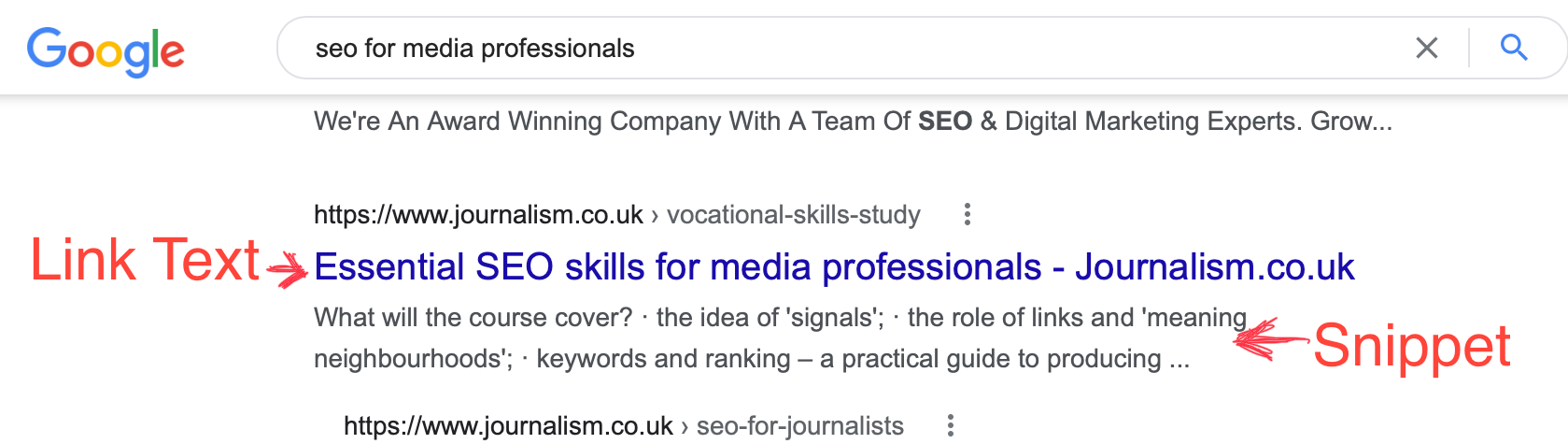
tags or other header tags, and content that's large and prominent through the use of style treatments. So: if your page title doesn't reflect the content of the page to Google's satisfaction, it will source an alternative title. Not ideal — because we lose control — but not disastrous, either. *An aside: this is another break between what you type into search results and what you see on the search engine results page, as Google shifts from keyword-driven search to machine-learning determined intent-based search.* ## Controlling your Link Titles So, here’s the good news: Google is still displaying *exactly* what you put in your [element 87% of the time](https://developers.google.com/search/blog/2021/09/more-info-about-titles?ref=onemanandhisblog.com). > Based on your feedback, we made changes to our system which means that title elements are now used around 87% of the time, rather than around 80% before. Despite the worries that Google is respecting the set page title less than it once was, for most of us it’s only likely to emerge in edge cases. Those situations are, frankly, more likely in e-commerce websites than other forms of editorial. The most probable case where this might kick in with journalistic content is if you create an SEO head that’s just too long. Then, Google is likely to step in and make its own determination of what it will display. While it’s hard to give an exact character count these days, due to the considerable variety of screen sizes in use, around 50 to 60 characters is a good rule of thumb to avoid this. Where possible, *you* want to control what appears in search results, not Google. So, on pages where you think good SEO traffic is likely, it’s absolutely still worth writing great SEO title text. Just keep it short, snappy and accurate. ## How about Snippets? Alongside the updated guidance on Link Text, Google also released [a new note about snippets](https://developers.google.com/search/docs/advanced/appearance/snippet?ref=onemanandhisblog.com). Here’s the key clarification: > Google will sometimes use the <meta name="description"> tag from a page to generate a snippet in search results, **if we think it gives users a more accurate description than would be possible purely from the on-page content**. (Emphasis mine.) Google will generally just generate the snippet from your page, but *might* use the Meta Description *if* its algorithms determine that it looks like a better result. ## What does this mean for me? - **Link Titles** default to what’s in the <title> tag in the page HTML, but are generated from other sources if Google determines there’s an issue with the provided <title>. Avoid this by making your SEO heads short, accurate and attractive to searchers. - Conversely, **Snippets** are generated from the text on the page by default, with Google only falling back on the <meta description> when the algorithm “feels” that it can’t generate something useful from the on-page text. ### **In short:** Concentrate on writing *superb* **Link Titles** (usually supported in your CMS as the SEO Head or similar). Then you have maximum control over the way your site will display in search results, and your best opportunity to “sell” the piece to searchers. The **Meta Description** *might* be worth filling in — but only if you have the time, and think that it might be hard for Google to extract relevant elements of the page. Generally: do it if you think this story is a great candidate for high or long-term SEO traffic, but it might not be worth your investment of time to do it on *every* story. ### Premature Blogging Death Notice #357 URL: https://onemanandhisblog.com/2021/10/premature-blogging-death-notice/ Last updated: 2023-12-05T09:38:44.000Z Oh, Lordy. Here we go again. This time it's Jacob Donnelly [of *A Media Operator:*](https://www.amediaoperator.com/newsletter/media-companies-looking-to-bring-newsletter-writers-in-house/?ref=onemanandhisblog.com) > Blogging, unfortunately, died out as social media took off. Why write a short blog post when you can just tweet your thoughts? This will be news to all the bloggers out there still successfully publishing things and getting read on the internet. This includes OG bloggers like [Gruber](https://daringfireball.net/?ref=onemanandhisblog.com) or [Kottke](https://kottke.org/?ref=onemanandhisblog.com). among more recent players in [fashion or the outdoors](https://www.bloglovin.com/?ref=onemanandhisblog.com). Hell, even sites like [Guido Fawkes](https://order-order.com/?ref=onemanandhisblog.com) are still essentially blogs. So, yes, it might not have gone through a podcast-style revival and reinvention into big business. But there's still plenty of blogging out there, and there's time yet for a revival. After all, newsletters are *older* than blogging, and their revival is only just building up its head of steam. Blogging may be less prominent than it was in the mid-2000s but, as people discover both the ownership problems inherent in social media, and the discoverability issues around newsletters, it's just about due for a revival, too. As the current wave of newsletter expand into websites for the SEO and discoverability benefits, the two mediums might end up pretty much one and the same. Ghost is a web platform that has evolved to support newsletters, Substack is going the other way. There's life in the old bloggers yet… ### Making climate crisis journalism better: the launch of the Oxford Climate Journalism Network URL: https://onemanandhisblog.com/2021/10/making-climate-crisis-journalism-better-the-launch-of-the-oxford-climate-journalism-network/ Last updated: 2022-01-13T13:51:23.000Z The climate crisis is one of the biggest challenges facing journalism. It has the potential to be a story that behaves exactly like the internet has done: it starts as a niche story with niche reporters, and ends up as something that impacts everything we report on, and regularly makes the front page. It took us far too long to adapt to digital to being an integral part of every beat. We can’t afford to make similar mistakes with the climate crisis because the stakes are so much higher. And so, it's fantastic news that today the Reuters Institute is launching the [Oxford Climate Journalism Network](https://reutersinstitute.politics.ox.ac.uk/oxford-climate-journalism-network?ref=onemanandhisblog.com), to help develop our coverage of this emerging crisis. Funded to the tune of £477,170 via a grant from the [European Climate Foundation](https://europeanclimate.org/?ref=onemanandhisblog.com), the network will provide members with access to subject-matter experts, professional forums, and original research to support and inform their reporting. ## Leading the discussion on Climate Crisis journalism As their press release puts it: > The focus of the network is not on individual pieces of reporting, but on working with hundreds of journalists and editors from all over the world to help them rethink and develop how journalism and the news media approach one of the defining issues of our time. It is a global network because the issue is global and because journalists everywhere can learn from one another, but it will also help participants think through the specific national and local dimensions of a crisis that affects all of us, but in very different ways. The project has two prominent co-founders: - The Reuters Institute’s Deputy Director [Meera Selva](https://reutersinstitute.politics.ox.ac.uk/people/meera-selva-1?ref=onemanandhisblog.com) - Visiting Fellow and Advisory Board Member [Wolfgang Blau](https://reutersinstitute.politics.ox.ac.uk/people/wolfgang-blau?ref=onemanandhisblog.com), who has been actively working on journalistic approaches to climate change It’s not often I take the time to write a post here based on a press release, and little else. But I think this is an *incredibly* important initiative that has the potential to create a globally effective boost to the sophistication and breadth of our climate reporting, looking at how it impacts all areas of society. Blau: > The accelerating climate crisis poses questions to all verticals of a news organisation, whether that is in their science, politics, business, culture, health, lifestyle, technology or sports journalism. And that’s the core point: this can’t be a niche story any more. It needs to be a factor inherent in the majority of our reporting. ## The structure of the Oxford Climate Journalism Network To give you a sense of how broadly this is being targeted, they are planning four core elements to the network: - Online courses for practising journalists that, over 6 months, will boost their contacts, networks, and understanding of the crisis. - Leadership programmes for senior editors and newsroom managers looking to make to climate crisis reporting central to their publication. - Journalist Fellowships for mid-career journalists to join the institute for specific research projects into the intersection of journalism and environmental factors. - Original academic research, exploring how people find, share and consume news about the climate crisis. ### Joining the Network Applications to join the Network are open to working journalists, both in-house and freelance. - You can start [your application to join the Network](https://oxford.onlinesurveys.ac.uk/oxford-climate-journalism-network-application?ref=onemanandhisblog.com) on the Reuters Institute site. - Learn [more about the Network](https://reutersinstitute.politics.ox.ac.uk/about-the-oxford-climate-journalism-network?ref=onemanandhisblog.com). ### Why did some publishers gain traffic from the Facebook outage? URL: https://onemanandhisblog.com/2021/10/why-did-some-publishers-gain-traffic-from-the-facebook-outage/ Last updated: 2021-10-29T11:24:44.000Z Facebook went down. News sites depend on Facebook for traffic. Therefore site traffic went down, right? Wrong. Many publishers saw a significant spike in traffic last night. But many didn't. Some saw some substantal declines. What's happening here? And what can you do about it? Happily, the outage has provided you with the perfect way of figuring out what your existing relationship is with Facebook — and what you can do about it. ### The Facebook relationship is a complicated one During the Facebook outage yesterday, I pointed out that it was [a big indicator of how dependent](https://onemanandhisblog.com/2021/10/single-point-of-facebook-failure/) we’ve let ourselves become on Facebook. However, Bostjan from Outbrain took issue with Jon’s summary of my piece: > Wrong angle. Traffic to publishers went \*up\* during outage, demonstrating that net effect is one of parasite, not distributer. > > — Bostjan Spetic (@igzebedze) [October 5, 2021](https://twitter.com/igzebedze/status/1445250600636231680?ref%5Fsrc=twsrc%5Etfw&ref=onemanandhisblog.com) We’re not, in fact, disagreeing. He’s just making a narrower point than I was. The rise in traffic to publisher sites doesn’t address, for example, the sudden silencing of WhatsApp as a comms tool. Nor does it account for people who lost access to internet services because they used their Facebook account as a login for other sites or apps. More to the point, the fact that some — but not all — sites benefited from the outage with a surge in traffic shouldn’t be a surprise. It’s intuitively obvious once you think about the attention dynamics of the internet. Remember: [content is no longer scarce, attention is](https://onemanandhisblog.com/2018/10/the-basics-of-digital-journalism-attention-and-atomisation/). When a whole bunch of people’s attention suddenly becomes free, it seeks a new outlet. ## The Facebook attention sponge Facebook is a massive, sophisticated attention sponge. It’s a powerful aggregator of people’s interests and connections that uses both a combination of tools — personal profiles, groups, pages — and platforms — WhatsApp, Instagram — to suck up as much of your available free time as it can. It’s aim, as a business, is to make sure one of those three apps is on your home screen, and that you habitually click one of them when you have a little spare attention to spend. If its algorithms are good enough, it can that capitalise on as much of that attention as it can by keeping you staring at your feed, while periodically showing you ads. Facebook’s mantra over “[engagement growth over all](https://daringfireball.net/linked/2021/10/04/haugen-facebook-60-minutes?ref=onemanandhisblog.com)” is really just about claiming as much attention as it possible can from the rest of the internet. That’s why publishers seeing Facebook mainly as a distribution channel is so dangerous: 1. It’s not — the organic reach of news is declining all the time 2. By helping Facebook bring people into its platform, you’re effectively helping them take your readers’ attention away ## Free attention = more traffic to publishers Yesterday, for six hours, that sponge suddenly disgorged its vast attention hoard back into the general internet. Some of it went offline, as people put down their phones in frustration. Quite a bit vanished into Twitter and alternative chat apps. But, as you would expect, quite a bit of it flowed into traditional publisher sites, [as Outbrain noted](https://www.outbrain.com/blog/traffic-surge-with-social-outage/?ref=onemanandhisblog.com): > Today, with readers looking for reasons why Facebook, Instagram, WhatsApp, and other platforms are down, or maybe simply trying to get to their daily dose of news, many of these publishers are seeing more than 40% week over week increases in traffic volume. Either way, publishers will likely be happy with the outcome. This shouldn’t be a surprise — because it’s happened before. Back went Facebook went down in 2018, [publishers also saw a surge in traffic](https://blog.chartbeat.com/2018/10/19/facebook-outage-reader-trends/?ref=onemanandhisblog.com): > What would the world look like without Facebook? Chartbeat had a glimpse into that on Aug. 3, 2018, when Facebook went down for 45 minutes and traffic patterns across the web changed in an instant. What did people do? According to our data, they went directly to publishers’ mobile apps and sites (as well as to search engines) to get their information fix. What both pieces are vague about is precisely *which* publishers benefitted from this outrush of free attention. I know for certain that a few audience editors were sweating last night, as they saw traffic rapidly drop away. Some of that will be down to market sector. The mainstream news sites will have done well, as people sought news on the outage. Tech sites explaining the outage were being well retweeted, so they probably benefited too. On the other side, B2B publications tend to be *much* less dependent on Facebook traffic, for example. I suspect many of them will have seen little impact one way or another. (I saw a surge in traffic, but that’s largely accountable to [yesterday’s piece](https://onemanandhisblog.com/2021/10/single-point-of-facebook-failure/) rather than the outage. I get very little Facebook traffic here, and so no discernible difference in the time between Facebook going down and my piece going up.) We can categorise publishers into four distinct groups, each of whom needs to act differently based on what they see in their analytics: ## What you should learn from your traffic during the Facebook outage ### Publishers whose traffic went up Good news: you are a **trusted brand**. You shouldn’t rest on your laurels, though. This incident shows that there is attention going to Facebook that could be coming to you instead. This strongly suggests that further time spent on attracting readers from Facebook is likely to have diminishing returns. You need to look at either: 1. Better ways of converting Facebook “drive-bys” into loyal readers, via methods including newsletters, apps, and podcasts. 2. Developing out a broader acquisition strategy that includes other social platforms as well as search Your task is now to capitalise on that evidenced trust by bringing readers into direct engagement with you, rather than Facebook-mediated engagement. You’re probably not going to break your readers of their Facebook platforms habit — but you can help install an additional, news-centric habit into their daily routines, too. 🏆 Your solution: **convert your readers to a direct relationship** ### Publishers whose traffic went down Bad news. You are **Facebook-dependent**. You need to get a strategy in place to address that. Likewise, you need to stop seeing Facebook as a distribution channel, and start seeing it as an acquisition channel. Focus on pages which are getting high levels of traffic from Facebook now it’s back up. How well linked are they to other pages on your site? Do you have prominent email capture calls-to-action on the pages? Your job is to take the traffic you get from Facebook — and make it loyal traffic. You might also want to look at your SEO: could you be doing more to reduce your dependence on Facebook? Could you invest more time in diversifying your social traffic away from Facebook to a broader range of sites? 🏆 Your solution: **broaden your acquisition channels** ### Publishers who saw no significant impact Congratulations! You are **Facebook-independent**. You’re in the easiest position. Your relationship with Facebook platforms isn’t critical to your business model, and so you don’t need to do anything urgently. That doesn’t mean that there’s no room to explore Facebook channels as part of an acquisition strategy, but make sure it *is* an acquisition strategy. Does it bring people to your site, and allows you to capture a set of them to more direct relationships, via apps, newsletters, or podcasts? 🏆 Your solution: **look for ways of harvesting attention from Facebook** ### Publishers who were platform native Terrible news. You only exist at **Facebook’s whim**. You are in the equivalent position as a YouTuber who has no source of income outside YouTube views: demonetisation or suspension of your account can kill your income. I suspect that scarcely any people who read this will be in that position. This is where many influencers are, though, and we did have a spate of “instagram-only” news sites some years back. They look like a terrible idea right now… YouTubers have known this for years — you need to built relationships with people which aren’t platform-dependent. Get your website sorted. Capture email addresses for newsletters. Anything you can do to evolve your relationship beyond a single platform must be yours priority. 😱 Your solution? **Diversification**. --- *If you found this useful, you’ll find a whole lot more relevant advice on my forthcoming audience engagement strategies course. [Book now](https://www.journalism.co.uk/vocational-skills-study/audience-engagement-strategies-/s43/a729370/?ref=onemanandhisblog.com)!* ### Single point of (Facebook) failure URL: https://onemanandhisblog.com/2021/10/single-point-of-facebook-failure/ Last updated: 2021-10-12T14:31:46.000Z Just in case you haven’t noticed, [all the major Facebook services have been down](https://9to5mac.com/2021/10/04/instagram-facebook-whatsapp-down/?ref=onemanandhisblog.com) for some hours now. Not just the big blue site itself, but also Instagram and WhatsApp, which not everyone realises is a Facebook property. Even my wife, who generally rejects all things social media, has noticed because she’s in several WhatsApp groups that have gone suddenly, blessedly quiet. Twitter, which is still very much up, despite a few wobbles earlier, is full of memes and dunks on Facebook. In fact, for once, it's quite fun to be there. However, given that some publications depend *heavily* on Facebook for their traffic, this could actually be serious for them. As the hours tick by, and the traffic isn’t coming, they will be getting nervous… Others rely on WhatsApp for co-ordinating journalists — this must be having a serious impact on their ability to communicate fluidly with remote staff. (I wonder how the hacks and politicians at the Tory Party Conference are managing with their central comms tools down…). And because not everything in the world is about journalism (\* *gasp\**), let’s remember that in some countries, WhatsApp [pretty much *is* the internet](https://www.economist.com/middle-east-and-africa/2019/07/18/how-whatsapp-is-used-and-misused-in-africa?ref=onemanandhisblog.com). > Not for nothing but in many places — including Israel and Palestine — WhatsApp is used as the de facto phone and text messaging platform. Ostensibly, a utility is down right now for millions of people. The billionth reason to break down and regulate Facebook. [https://t.co/tclzJVXkEZ](https://t.co/tclzJVXkEZ?ref=onemanandhisblog.com) > > — Abraham Gutman 🔥 אברהם גוטמן (@abgutman) [October 4, 2021](https://twitter.com/abgutman/status/1445124247005933573?ref%5Fsrc=twsrc%5Etfw&ref=onemanandhisblog.com) There may be more serious problems in store for those countries, if this turns into a long-term outage — and early indications are that it might. It seems to be [a problem with Facebook's Boundary Gateway Protocol](https://arstechnica.com/information-technology/2021/10/facebook-instagram-whatsapp-and-oculus-are-down-heres-what-we-know/?ref=onemanandhisblog.com), which may not be easy to resolve. So, it turns out that having three of the biggest services on the internet owned by the same company and run on the same infrastructure might not be the best idea in the world. It’s turned a resilient system into a fragile one. Everyone who has come to rely on this singular company’s services will be suffering tonight. And it’s our own damn fault. ## Happily locking ourselves in The internet was [built as a decentralised system](https://www.theregister.com/2021/08/11/decentralized%5Finternet/?ref=onemanandhisblog.com). It’s designed to route around points of failure. And in the early, more Wild West years, it boomed because of that. Our internet experience was a mess of websites and blogs and chat rooms and email discussion lists. But slowly, over time, that changed. Well-funded businesses [eschewed open protocols](https://thenextweb.com/news/open-standards-can-help-disrupt-facebook-messaging-monopoly?ref=onemanandhisblog.com), and locked up great chunks of human communication for their own financial benefit. And nobody has been better at that than Mark Zuckerberg. He’s slowly rebuilt the internet within his own walled garden, and many of us have followed him into there. We’ve allowed ourselves — both as businesses and as individuals — to become dependent on these centralised services. With that centralisation has come user convenience — but increased fragility. Anyone can send an email to anyone else. But WhatsApp being down has choked off a whole bunch of conversations. ## Paying the gatekeeper’s accidental price And tonight, many businesses are paying the price of falling for the Zuckerberg seduction. If you’re a retailer whose sales mainly come through Instagram — you’re losing money. If you’re an influencer who is paid for collabs on these platforms — well, you’re scheduled posts aren’t going to be doing you much good today. If you’re in the audience team of a publication heavily dependent on Facebook for traffic — I feel for you. But you’re also the architect of your own misfortune because you’ve let yourself become dependent on a single source of traffic *that you don’t control*. And rule 1 of audience strategy is this: > **diversify your acquisition and engagement channels as widely as you can**. ### It’s not just Facebook Now, it’s easy to dunk on Facebook. It’s been [something of a fortnight for it…](https://www.nytimes.com/2021/10/04/technology/facebook-files.html?ref=onemanandhisblog.com) But other platforms are just as bad. If you’re a successful YouTuber, or a publisher that earns substantial revenue from the platform, imagine YouTube going down for 12 hours. How much is that going to cost you in lost revenue? If your traffic is driven solely by search, imagine Google going down for half a day. How does that help you meet your targets? More realistically, imagine a major algorithm shift on the platform. That can — and has — killed businesses in the past, both on Facebook and on Google. And then think about how Substack is manoeuvring to make itself the central hub for all things newsletter, and think a little more about central points of failure… ## Diversification is sustainability For all the amusing dunking on Facebook happening on Twitter right now, there’s a serious lesson underlying today’s impact. Never, ever rely on a single company for your traffic, your community or your comms. Diversify the hell out of your reader acquisition and your reader engagement. Think of back-up channels and alternative ways of reaching people when something falls over. Whenever one tool — be it search, or social, or even newsletters — becomes too dominant, put time and effort into balancing your mix. A publication with a healthy mix of acquisition and engagement channels is a sustainable one. A business dependent on a single channel only exists at the whim of that platform — and of the skill of the technologists who run it. > To everyone whom I told that they shouldn’t rely solely on Facebook-owned services for traffic, community or comms, but who ignored me… [pic.twitter.com/RBilMwMwRe](https://t.co/RBilMwMwRe?ref=onemanandhisblog.com) > > — Adam Tinworth (@adders) [October 4, 2021](https://twitter.com/adders/status/1445118047698792451?ref%5Fsrc=twsrc%5Etfw&ref=onemanandhisblog.com) ### I miss deadlines. Would you? URL: https://onemanandhisblog.com/2021/09/i-miss-deadlines-would-you/ Last updated: 2021-09-21T13:14:43.000Z The following hand-crafted selection of links are not particularly new. Most of them have been hanging around in my tabs for the last couple of weeks while I get back up to cruising speed on the sea of journalistic consultancy. But they're all illustrative of trends you might find useful, so worth your time. Let's dive in. ## Newsletters could be the new B2B Around 20 years ago, I was working for *Estates Gazette*, and many of the subscribers to its premium online product viewed it mainly as a twice-a-day email. This was, admittedly, the age of the Blackberry as a status symbol. But it did open my eyes to the potential of a curated newsletter delivering the *right* information at the *perfect* time as a sellable journalistic format, especially to business audiences where the company will pay. A couple of decades later, the rest of the industry is catching up… [Vox Media Set to Acquire Podcasting Newsletter Hot Pod (EXCLUSIVE)Vox Media is acquiring Hot Pod, the independent news outlet focused on the podcasting industry, as part of a bid to expand offerings from its technology site, The Verge. Under part of a deal being …![](https://variety.com/wp-content/uploads/2018/06/variety-favicon.png?w=128)VarietyBrian Steinberg![](https://variety.com/wp-content/uploads/2021/09/NicholasQuah-OnAirFest.jpg?w=1024)](https://variety.com/2021/digital/news/vox-media-hot-pod-acquisition-nicholas-quah-1235057611/?utm%5Fcampaign=The%20Media%20Roundup%20from%20Media%20Voices&utm%5Fmedium=email&utm%5Fsource=Revue%20newsletter) This potential acquisition from Vox Media is interesting on two fronts: 1. It's a move from a largely consumer company into the B2B space 2. It's good evidence that a newsletter is a good way of starting a niche B2B brand at a low cost, and seeing if there's a market there. We'll see more newsletter acquisitions like this. The path from mainstream journalism to newsletters will not be a one-way street. --- ## Most newsletters will fail ### And especially media ones I've been a subscriber to [Simon Owen's newsletter](https://simonowens.substack.com/) for a while, it's often a good read, but sometimes it's reading it on a meta level that fascinates me. He's trying to make the newsletter his living — and he's struggling. One of the things he's been consistent about is that building his paying audience is tough. He's taken the plunge of cutting off a lot of his work to concentrate on growing the newsletter, and it's taken a while to start looking sustainable for him. *(I can't do the same: I'd be haunted by nightmares of the tear-stained faces of my daughters asking “Why can't we have dinner tonight, Daddy? Is it because your blogging isn't good enough, Daddy?”)* He's used that struggle as a springboard to examine the reality of life for mid-tier journalists trying to make it pay. [The gritty reality for Substack’s middle classStar journalists generate six figure revenue within weeks after launching on Substack, but that’s not the reality for most writers.![](https://bucketeer-e05bbc84-baa3-437e-9518-adb32be77984.s3.amazonaws.com/public/images/ab662f06-d21b-4fd8-aa0d-5774d1d018ed/apple-touch-icon-1024x1024.png)Simon Owens's Media NewsletterSimon Owens![](https://cdn.substack.com/image/fetch/w_1200,c_limit,f_jpg,q_auto:good,fl_progressive:steep/https%3A%2F%2Fbucketeer-e05bbc84-baa3-437e-9518-adb32be77984.s3.amazonaws.com%2Fpublic%2Fimages%2F0d541a87-be3b-4067-b33e-8b50023464ae_1200x671.png)](https://simonowens.substack.com/p/the-gritty-reality-for-substacks) I actually have a theory that trying to launch a paid newsletter for journalists is launching into a *terrible* market. Journalists are time-poor, and often overwhelmed with information. Why the hell would they pay for more information to add to their overwhelm? And so, the people who most want others to pay for content are among the least likely to pay for it themselves… I also wonder if too many journalism-related newsletters are targeted at the editor/publisher level, aiming to be a [*Stratechery*](https://stratechery.com/?ref=onemanandhisblog.com) of journalism, where the bigger market might be for more practical craft skills-type information. After all, most publishers are very pyramidal in structure, and the potential audience gets much smaller the higher up the pyramid you target. What do you think? What would *you* pay for, dear reader? --- ## Geeks are different Folks, I do a lot of training on analytics for journalists, and the vast majority of them are using Google Analytics. This is a useful reminder from [Plausible](https://plausible.io/?ref=onemanandhisblog.com) (a privacy-friendly analytics system I use here on *OM&HB*) that more geeky audiences are *significantly* more likely to block it as a tracking source: [58% of Hacker News, Reddit and tech-savvy audiences block Google AnalyticsIs Google Analytics still useful and how accurate are its stats? How much data is missing from Google Analytics due to adblockers and privacy-friendly browsers?![](https://plausible.io/assets/images/icon/favicon.png)Plausible AnalyticsMarko Saric![](https://plausible.io/uploads/blocking-google-analytics.png)](https://plausible.io/blog/google-analytics-adblockers-missing-data?ref=onemanandhisblog.com) A serious recommendation: if you write for a tech-savvy audience, try adding a non-Google analytics package to your site, and see what the difference in numbers looks like… --- ## Not so much a pivot to video, as an endless pirouette. While we're on the subject of media newsletters in the Stratechery mould, this is an interesting piece from *A Media Operator* about *Vice*'s struggles to get its content mix right in a profitability sense… [Vice Continues to Spiral With No End in Sight - A Media OperatorIn what can only be described as déjà vu, news came out while I was off that the deal Vice had been…![](https://www.amediaoperator.com/wp-content/uploads/fbrfg/apple-touch-icon.png)A Media Operator![](https://i1.wp.com/www.amediaoperator.com/wp-content/uploads/2020/12/amo-og.png?fit=2024%2C1012&ssl=1)](https://www.amediaoperator.com/newsletter/vice-continues-to-spiral-with-no-end-in-sight/?ref=onemanandhisblog.com) Interesting to note that *Vice World News* has lured [Sophia Smith Galer away from the BBC](https://www.pressgazette.co.uk/bbc-journalists-ben-hunte-and-sophia-smith-galer-join-vice-world-news/?ref=onemanandhisblog.com). She's well known for her TikTok work, and this implies that [Vice Media's pirouette to video](https://www.nytimes.com/live/2021/07/28/business/economy-stock-market-news/vice-media?ref=onemanandhisblog.com) is still spinning away. Gonna write about video tomorrow, folks. Be warned. Still time to unsubscribe… --- ## Substack keeps digging deeper moats Email is an open format, which is what makes newsletters so very appealing as an audience engagement tool. There's no pesky algorithm between us and our readers. That's a wee problem for the [copiously VC-funded Substack](https://techcrunch.com/2021/03/30/substack-confirms-65m-raise-promises-to-rapidly-expand-its-financial-backing-of-newly-independent-writers/?ref=onemanandhisblog.com), which would really like to build a protective “moat” around its publishers, to keep those VCs happy. Bearing that in mind, read this, and note how it's only about promoting other *Substack authors*, not those publishing using other platforms… [New ways to recommend and discover great writingWe’re taking the first of many steps to support writer collaboration within our product.![](https://bucketeer-e05bbc84-baa3-437e-9518-adb32be77984.s3.amazonaws.com/public/images/31585c04-97f0-42e1-84f0-a9b064b71d0b/apple-touch-icon-1024x1024.png)SubstackSubstack![](https://cdn.substack.com/image/fetch/w_1200,c_limit,f_jpg,q_auto:good,fl_progressive:steep/https%3A%2F%2Fbucketeer-e05bbc84-baa3-437e-9518-adb32be77984.s3.amazonaws.com%2Fpublic%2Fimages%2F759059b6-5eec-4641-9988-5e60c2a3b651_2400x1200.png)](https://on.substack.com/p/new-ways-recommend-discover) Lock in can be built in lots of small, subtle ways… --- ### Tweet of the day > Someone in a home decor DIY group said that Farrow & Ball paint is like the Waitrose of paint because it was paying too much for a mediocre product. People were furious. 838 comments later, 7 people have been blocked, 2 mods quit and the group has been made ‘private’. > > — Sofie Hagen (@SofieHagen) [September 7, 2021](https://twitter.com/SofieHagen/status/1435268190683205635?ref%5Fsrc=twsrc%5Etfw&ref=onemanandhisblog.com) --- ## Quote of the Day > Content is a magnet. Community is a moat. — Dru Riley, [trends.vc](https://www.indiehackers.com/post/how-i-built-a-paid-community-to-1-000-members-in-10-months-846157b5f2?ref=onemanandhisblog.com) --- ### Stress and burnout in post-pandemic journalism URL: https://onemanandhisblog.com/2021/09/stress-and-burnout-in-post-pandemic-journalism/ Last updated: 2021-10-29T11:24:32.000Z It’s been a good few weeks since I’ve darkened your screens. Why? I took a holiday. I *know*. How very dare I? And it wasn’t just a “holiday” — where I stare at my phone in a different location. It was a *proper* holiday. A holiday where I did very little — if any — work for three weeks. It has done me the world of good — and also made it clear to me that we have a growing epidemic to deal with in this industry; an epidemic of stress and burn-out. And we need to talk about that. But before I talk about the wider issues, if you’ll indulge me, I’m going to talk about me. ## One man (and his family) on holiday We went, initially, to the Isle of Wight. The campsite we’d planned on using had to cancel our stay due to flooding, and so we ended up finding a more basic alternative far to the west of the island. We were camping in a valley with no Wi-Fi, and the merest sniff of mobile phone signal. If you climbed the hill. And stood on a gate. This is the view from that very gate, in fact: ![A view of a bay on the west coast of the Isle of Wight. ](https://storage.ghost.io/c/36/d8/36d823b7-59a1-4c8b-91bd-a54c64552596/content/images/2021/09/IMG_7710.jpeg) The west coast of the Isle of Wight After a few days, I stopped fretting, and gave up on checking my email. And while the “what if someone wants to book a course” niggle continued, I started relaxing into it. Even when we returned to the wired world, I allowed myself to actually *be* on holiday, and ignore my devices as much as possible. When we headed off on our second trip, much more locally, I was relieved to find that the phone signal was all but non-existent there as well. ![A tent in the woods at Blackberry Wood campsite in Sussex. ](https://storage.ghost.io/c/36/d8/36d823b7-59a1-4c8b-91bd-a54c64552596/content/images/2021/09/IMG_8490.jpeg) Our home in the woods By halfway through that second trip, I began to feel like myself in a way I hadn’t for months. Lighter. Less burdened. Less anxious. My sense of humour came back. The words “West Country medicine” still bring my wife out in fits of giggles a week later. And no, I’m not going to explain that one. In fact, I hadn’t felt this good for *years*. And with that came the dawning realisation that I had been seriously, deeply burnt out. And I wasn’t even aware of it. I’d been too busy congratulating myself on surviving the pandemic financially, to realise the cost it had extracted in other ways. ## The pandemic stress accelerator Like many self-employed people, the pandemic was hard on me. Much of my work vanished in the spring of 2020, and I’ve been rebuilding my business since then. The two sets of schools closures were serious set-backs on that journey. I picked up more than half of the home-schooling responsibility, to help protect my wife’s job. Our daughters are at a one-form entry primary school, which meant virtually no online lessons at all, as the staff were too busy with the key worker and vulnerable children who were in school. So, I was spending more time teaching two sharp little girls than my normal spread of journalists and journalism students. And then spending all my evenings trying to what work I still had the energy for. We didn’t take a holiday *at all* in 2020, and these few weeks in late summer were my first proper break in two years. It’s no wonder I was burnt out. But I’m not writing about this for sympathy. I’m writing about this because burnout and mental health issues are becoming noticeably more common in the industry. One of the upsides of Twitter is that [continuous partial awareness](https://lindastone.net/2009/11/30/beyond-simple-multi-tasking-continuous-partial-attention/?ref=onemanandhisblog.com) of how other people’s lives are going. While some people are just machines of relentless self-promotion (in of itself, a cause of stress for others), many people are more honest, and do give glimpses into their struggles. ### Autonomy and agency In fact, I’m aware that I have it easier than many: I’m self-employed, so there’s no reason I can’t address how I work directly. The only boss I have to answer to is myself. (Or, more honestly, my wife…) Those who are in “proper” jobs have more of a challenge ahead of them. And the pressures are about to change dramatically. It looks like *most* journalism businesses will end up with some form of hybrid working system, part remote, part in the office, as we exit the pandemic. That’s both a possible boon to the industry — a topic I fully intend to return to — and a potential source of additional stress, which we can ill-afford. We’re at an inflection point in the way we work — and that’s a good time to start a conversation. ## Journalism burn-out This week, the American Press Institute has [written about burn-out](https://www.americanpressinstitute.org/publications/articles/journalism-managers-are-burned-out-is-it-time-for-a-work-redesign/?ref=onemanandhisblog.com) in the industry, starting with the story of a small-ish newsroom editor who was over-whelmed by the different roles he was expected to play, without any support. > The real-life example above (small details were changed to protect the editor) is a warning sign for a disturbing legacy of the past year: the departure of burned-out editors and managers in media. Some have been high-profile, especially among journalists of color; others were under the radar at small but essential local newsrooms across the country. Also problematic are the managers who aren’t in a financial position to quit their jobs and are battling extreme burnout in silence. One thing that’s troubled me as someone who has been lecturing to journalism students for around 15 years now, is the sheer number of them that get into the industry, do well, and then burn out and exit. We can’t afford to be losing that kind of talent. ## The Lockdown stress accelerator The pandemic has been an accelerator of many things, including the shift to remote works, and towards subscription revenue. But it’s also deepened the burnout crisis in the industry. My friend John Crowley ran a survey [into this last year:](https://www.johncrowley.org.uk/work-1/entry-03-8c3ap?ref=onemanandhisblog.com) > When asked directly about the coronavirus pandemic’s effect on their mood, 77% of respondents reported some kind of work-related stress which came during lockdown. Of these, 57% said lockdown-associated stress had affected their productivity. More than 44% said it had impacted their relationships with family and friends, and 59% said they had experienced moments of feeling depressed or anxious. This isn’t just an issue of lifestyle and relationships outside work. This is eating badly into people’s productivity at a time when most titles are struggling for resources. And yes, that’s a vicious circle right there: fewer resources means more stress which means more burn our which means lower productivity which means more stress… But at least now a hidden problem is becoming an open one. ## Acknowledging a toxic culture Look, journalism has never been a 9to5 kind of job. You work the hours needed to get the job done. We’re far from alone in that. But something we sometimes have in common with other industries is a certain pride in newsrooms being difficult environments, in the same way that, say, some chefs take pride in Michelin-starred kitchens being pretty toxic places to work. Back in the early days of my career, I reported on ITV’s exposure of abuse in the kitchen of L’Ortolan, under then head chef, John Burton-Race. (The magazine I worked for is long-closed and was never online, but *The Caterer* still has [a story up about it](https://www.thecaterer.com/archive/industry-fury-at-kitchen-violence?ref=onemanandhisblog.com), even if the publication date is wrong.) I've heard repeated horror stories from friends, collegues and students about how some newsrooms operate. They might not throw frying pans around, but the acceptance of bullying and abuse is there. Back when I started in journalism, you could walk away from the office. Unless I took my notebooks and a floppy disk home with me, I couldn’t work weekends. The internet has blurred the lines between work and home, and that distinction has slowly vanished with the advent of the smartphone, and then the pandemic-induced working from home culture. Freelancers, the most common form of self-employment in journalism, have always suffered from an inability to switch off. If you switch off, you're not working, and so not earning. There’s no reassurance of the salary hitting your bank account at the end of the month. Now, though, the problem is endemic throughout the industry — and it’s not helping anyone. Home is the office, and you can't escape work. It comes at you through nitifications, and bullying messages in chat apps, and constant, inescapable emails. *Nobody* works well like this. Employers aren’t getting value for money from burnt out staff, and neither are they laying the foundations for long-term business success. Staff are one of the — if not *the* — biggest cost of any publishing enterprise. Not looking after your financial investment isn’t good business sense, even if you have no ethical qualms of working people until they break. ## What we stand to gain Journalism businesses benefit from the deep knowledge some journalists develop through reporting on the same beats for years — or decades — but losing people from the industry due to burn out just helps erode the average levels of skills. This is a downwards spiral we need to pull out of. There are two phrases I often use in both my training and consulting work: - “Work smarter, not harder” - “Every publication needs to be looking much harder at what it needs to do *less* of, than what it needs to do *more* of” Those feel like good starting points for reassessing elements of journalistic practice in the coming months — especially as increasing numbers of businesses adopt hybrid working models. And so, I’m going to add another strand to what I write about here on OM&HB: managing workload in a journalism context. And, meanwhile, I’m trying to avoid slipping back into bad pandemic habits, and concentrate on doing things like post-work and school family swims… ![A mother and her daughters in the sea off the Sussex coast.](https://storage.ghost.io/c/36/d8/36d823b7-59a1-4c8b-91bd-a54c64552596/content/images/2021/09/GOPR3621.jpeg) The Tinworths in the sea. --- ## If you need help… If stress and burn out are becoming an issue in your newsroom, the Headlines Network are launching [a series of free workshops](https://headlines-network.com/f/announcing-the-launch-of-headlines-network-and-our-pilot-project?ref=onemanandhisblog.com) later in the year. [Headlines Network creates free workshops for journalists to support their mental healthA new initiative provides courses and resources for newsrooms to help them address stress and burnout![](https://www.journalism.co.uk/newsite/images/favicon.png)Journalism.co.ukMarcela Kunova![](https://www.journalism.co.uk/assets/180/brain-5868033_1280.jpg)](https://www.journalism.co.uk/news/headlines-network-to-support-mental-health-in-the-newsroom/s2/a846846/?ref=onemanandhisblog.com) ### Weekly Digest: the calm before the crisis URL: https://onemanandhisblog.com/2021/08/weekly-digest/ Last updated: 2021-08-12T14:06:02.000Z Do you remember when August was the silly season? Well, it hasn't been this year, has it? At the beginning of the week, we had some of the biggest news — if not THE biggest news — of the year: the terrifying new report from the IPCC on the climate crisis. Wolfgang Blau has done some fascinating work on what we, as journalists and other communicators, [should be doing about it](https://www.niemanlab.org/2021/07/if-youre-not-a-climate-reporter-yet-you-will-be-covid-19-coverage-offers-lessons-for-reporting-on-the-climate-crisis/?ref=onemanandhisblog.com). This is a topic I'm very passionate about — and impacted by right now, as our holiday next week has been cancelled due to unseasonable flooding. Expect me to return to the subject. (And let me know what you think we should be doing.) In the meantime, here's a selection of useful reading and watching for you, broken down into categories. I'm intending to do one of these a week during August — as my instinct is that people would prefer less email this month, rather than more. Do let me know if I'm off base with that… --- ## Audience Engagement - 📜 [How far do people scroll](https://whatsnewinpublishing.com/how-many-readers-actually-scroll-once-they-load-an-article/?utm%5Fcampaign=The%20Media%20Roundup%20from%20Media%20Voices&utm%5Fmedium=email&utm%5Fsource=Revue%20newsletter) — and how long do they read when they do? This is useful research, suggesting that calls to action and other points of engagement might be best placed at the end of articles. Also: there appears to be a written journalism version of the “three second rule” from social video: you only have a few seconds to sell your story to the reader, and encourage them to scroll. - 📉 The [COVID traffic bump is going into reverse](https://digiday.com/media/post-covid-traffic-declines-set-some-sites-back-two-years/?utm%5Fcampaign=UA-39227834-1&utm%5Fmedium=email&utm%5Fsource=Revue%20newsletter). We knew this was likely — we'll now see which publications have been working hardest to retain those extra readers. - 💃🏻 Given the importance of short, looping videos on TikTok and Instagram, some of these short videos from Apple are useful skills boosts: ## Misinformation - 🦠 The [YouTubers who blew the whistle on an anti-vax plot](https://www.bbc.co.uk/news/blogs-trending-57928647?ref=onemanandhisblog.com) — YouTubers as a generic category get blamed for a lot of misinformation. This is a nice corrective to that narrative. - 🤥 And yet, another [vaccine misinformation video is going viral](https://www.mediamatters.org/coronavirus-covid-19/new-plandemic-misinformation-video-has-earned-tens-millions-facebook?ref=onemanandhisblog.com). Pun intended. Love puns. Hate misinformation. - 🧑🏻‍🔬 People who trust science are more likely to [fall for misinformation presented in sciencey terms](https://digest.bps.org.uk/2021/08/10/people-who-trust-science-are-less-likely-to-fall-for-misinformation-unless-it-sounds-sciencey/?ref=onemanandhisblog.com)… Pseudoscience can be powerful. ## Newsletters - 🤑 The *NYT* is making [a bunch of its newsletters subscriber-only](https://www.nytimes.com/2021/08/11/technology/facebook-soccer-racism.html?ref=onemanandhisblog.com). It's far from the first to do this: in the UK, *The Times* and *The FT* already do. But it's interesting to note that newsletters have evolved beyond a website marketing tool into valuable products in their own right. - 🤔 [Substack has acquired Letter](https://on.substack.com/p/sit-right-down-and-write-yourself-a-letter), a “platform for written debate”. The platform had no existing business model, the announcement has no suggestion of integration, so this looks very much like an “acquihire” of the founders. - 🛠 A [useful round-up of newsletter tools](https://wondertools.substack.com/p/morenewsletters) from [Jeremy Caplan](https://wondertools.substack.com/people/332836-jeremy-caplan). Sent via Substack… - 👩🏽‍💻 [Five things we can learn from the Funke Mediengruppe newsletter transformation](https://thefix.media/2021/08/03/five-things-we-can-learn-from-the-funke-mediengruppe-newsletter-transformation/?ref=onemanandhisblog.com) — nothing revelatory, but some good general advice here. ## SEO - 📈 Some [ranking weirdness associated with an algorithm update](https://searchengineland.com/google-rankings-fluctuation-pages-are-dropping-and-reappearing-in-the-index-wednesdays-daily-brief-351155?ref=onemanandhisblog.com). Basically, don't panic if you're seeing a traffic drop — it should be temporary. - 🧑🏾‍🔧 One for the more techie folks: Using [Google Lighthouse to improve your technical SEO](https://www.cmswire.com/digital-marketing/making-sense-of-your-google-lighthouse-results/?utm%5Fsource=cmswire.com&utm%5Fmedium=web&utm%5Fcampaign=cm&utm%5Fcontent=all-articles-rss). - 🔗 This is a useful guide to [different internal linking strategies](https://www.portent.com/blog/seo/internal-pagerank-optimization-strategies.htm?ref=onemanandhisblog.com). The *best* internal linking strategy is putting good reader-focused links in stories as you publish them. But this is a useful way of focusing your efforts if you haven't done that. ## Platforms - **💰 Medium** is now giving [commission for referring members to the platform](https://blog.medium.com/evolving-the-partner-program-2613708f9f3c?ref=onemanandhisblog.com). You get a cut of their account fees for the life of the account. - **🤬 Instagram** has added some [new anti-abuse features](https://about.instagram.com/blog/announcements/introducing-new-ways-to-protect-our-community-from-abuse?ref=onemanandhisblog.com). - **🕵🏻‍♀️ Twitter** takes some rather [belated steps on misinformation](https://techcrunch.com/2021/08/02/twitter-partners-with-ap-and-reuters-to-address-misinformation-on-its-platform/?ref=onemanandhisblog.com). It looks like the curation team are going to take a bigger role in working with partners to highlight reliable reporting. - **🧑🏽‍🏫 Twitter** also has a new look, built around its own typeface and increased accessibility: > Notice anything different? > > Today, we released a few changes to the way Twitter looks on the web and on your phone. While it might feel weird at first, these updates make us more accessible, unique, and focused on you and what you’re talking about. > > Let’s take a deeper look. 🧵 [pic.twitter.com/vCUomsgCNA](https://t.co/vCUomsgCNA?ref=onemanandhisblog.com) > > — Twitter Design (@TwitterDesign) [August 11, 2021](https://twitter.com/TwitterDesign/status/1425505308563099650?ref%5Fsrc=twsrc%5Etfw&ref=onemanandhisblog.com) --- ## Worth checking out: Inkcap Journal *Inkcap Journal*, a newsletter by journalist Sophie Yeo on nature and conservation in the UK, is launching its membership offering. Sophie's hoping to start commissioning other journalists when the income reaches a sustainable level: [The future of Inkcap JournalSome major changes are afoot.![](https://www.inkcapjournal.co.uk/favicon.png)Inkcap JournalSophie Yeo![](https://www.inkcapjournal.co.uk/content/images/2021/08/6100188598_4e7b17fb1d_k.jpg)](https://www.inkcapjournal.co.uk/the-future-of-inkcap-journal/?ref=onemanandhisblog.com) --- ## Click-free targets Thought-provoking tweet from friend-of-the-blog Joanna Geary: > When I worked in news there was often a business imperative to promote your work for clicks. > > One of the things I really love about Curation is that our work isn't measured that way. It's usually not a good indicator for our goals. > > Sometimes we actively want to save a click. > > — Joanna Geary ⚡️ (@JoannaG) [August 3, 2021](https://twitter.com/JoannaG/status/1422690332194525190?ref%5Fsrc=twsrc%5Etfw&ref=onemanandhisblog.com) --- ## Finally: The reminder we all need I don't know about you, but I have a pretty cyclical relationship with imposter syndrome. I go through bad spells and good spells. (I'm going through a bad spell right now.) This is a useful reminder… [Actual impostors don’t get impostor syndrome | ZapierIf you want to know, one hundred percent, that you’re not an impostor, do something no impostor would ever do: out yourself. Here’s why.![](https://cdn.zapier.com/zapier/images/favicon.ico)ZapierJustin Pot![](https://images.ctfassets.net/lzny33ho1g45/1q3004JsPW2uepoZ1xdoIr/2a522a737d45b22f71a97196fc4d387d/automation-00-hero.png)](https://zapier.com/blog/actual-impostors-dont-get-impostor-syndrome/?ref=onemanandhisblog.com) ### Marcus Rashford, The Spectator hoax and the power of confirmation bias URL: https://onemanandhisblog.com/2021/08/marcus-rashford-the-spectator-hoax-and-the-power-of-confirmation-bias/ Last updated: 2021-10-05T12:30:05.000Z For the second time in a month, Media Twitter is alight with discussion of a rumoured smear of footballer and campaigner Marcus Rashford by *The Spectator,* a right-leaning British political magazine. The whole discussion is both full of confirmation-bias driven certainty and little provable fact at all. And, whichever way you look at it, it should raise concerns about the level of credulity and self-analysis of those journalists who are too invested in particular political viewpoints. There's a lesson for all of us in the [dangers of confirmation bias](https://blog.oup.com/2017/03/confirmation-bias-danger/?ref=onemanandhisblog.com) in that. Let's look at the story of this odd little saga. ## It started with a tweet One evening, England footballer Marcus Rashford, who has [become champion of free meals for disadvantaged children](https://www.bbc.co.uk/news/uk-politics-58091705?ref=onemanandhisblog.com), tweeted this: > Just heard [@spectator](https://twitter.com/spectator?ref%5Fsrc=twsrc%5Etfw&ref=onemanandhisblog.com) are planning to run a story on me tomorrow about how I have benefitted commercially in the last 18 months…To clarify, I don’t need to partner with brands. I partner because I want to progress the work I do off the pitch and…(1) > > — Marcus Rashford MBE (@MarcusRashford) [July 20, 2021](https://twitter.com/MarcusRashford/status/1417560450393329666?ref%5Fsrc=twsrc%5Etfw&ref=onemanandhisblog.com) Cue explosion on Twitter, as the cosy little circle of media and political types that dominate a subset of the discussion there leapt on this. The media's relationship with Twitter being what it is these days, outlets like *Bustle* were able to get [an entire article](https://www.bustle.com/entertainment/marcus-rashford-charity-work-spectator?ref=onemanandhisblog.com) out of a four tweet thread, with no corroborating information. ### Silence of The Spectator *The Spectator* itself has consistently not given [any response when asked for comment](https://www.theguardian.com/football/2021/jul/21/marcus-rashford-defends-charity-deals-the-spectator?ref=onemanandhisblog.com). And no article was every published. So, until yesterday, all we knew was: 1. Rashford was made aware of a possible *Spectator* story on him — but we don't know by whom. 2. That said piece has failed to appear in the *Spectator* either online or in print. I stayed away from the whole thing, feeling that there were a number of odd things about it, not least that *The Spectator* is an opinion, comment and analysis magazine, not an outlet for investigative journalism. When nothing emerged, I assumed someone writing for the mag had poked around a lead, found nothing, and dropped the story. That's how journalism works, right? ## The Gruff Bomb And then, this dropped: [What ever happened to that Spectator article about Marcus Rashford?You may recall the hoo-hah the other week about Marcus Rashford and a Spectator story. Rashford tweeted that the Spectator were preparing to run a story about him but strangely the story then never appeared. So what was it all about, and what happened to the story? Well I’ll have to take you back a …![](https://cdn.substack.com/icons/substack/apple-touch-icon-1024x1024.png)sunbeams out of cucumbersdannie grufferty![](https://cdn.substack.com/image/fetch/w_90,h_90,c_fill,f_auto,q_auto:good,fl_progressive:steep/https%3A%2F%2Fbucketeer-e05bbc84-baa3-437e-9518-adb32be77984.s3.amazonaws.com%2Fpublic%2Fimages%2F3788dbbb-9261-4c64-9fe6-c5cda53673a8_400x400.jpeg)](https://sunbeamsoutofcucumbers.substack.com/p/what-ever-happened-to-that-spectator) Grufferty is a comic, occasional satirist, and charity worker. She lays out in the post exactly how she set about pranking the magazine via its "Wokeyleaks" correspondent: > Wokeyleaks was asking for people to send in “anonymous” examples of “woke-culture war crimes” from workplaces, and other settings. *Lol, what losers,* I thought to myself (Can one think a lol? Remember, it was the second (or third?) lockdown and I was very bored). So I decided to amuse myself by sending them some fake stories. *Surely they wouldn’t take this seriously*, I mused, as I hammered out frankly ludicrous claims about the great and the good; and thought little more of it. It's worth noting that she offers no direct proof of her story: no screengrabs of correspondence, for example, just quotes from it. Certainly some details ring true, including this quote from her contact at the magazine: > *Spec doesn't really do investigative stuff so this is all a bit new to them.* That matches closely with my own thoughts, expressed above. And the timeline seems to work. Rashford's tweet was on a Tuesday. *The Spectator* distributes on a Thursday, presumably printing overnight Wednesday to Thursday. It's certainly possible that *The Spectator* itself was the source of Rashford being made aware of the story, as they reached out to do fact-checking and get a response from him before it went to press on the Wednesday. (But, says a little worried voice at the back of my head, would they really get that close to publishing a single-source story without any external corroboration *at all*? They surely can't have given the piece to a lawyer, because no media lawyer I've every worked with would ever let them run something like that…) That's the thing. Plausible as much of this account is, *we have no actual proof*. Hopefully some media reporters are working on that right now… Proof is a good thing in journalism. Just sayin'. ## The seduction of cognitive bias ![](https://storage.ghost.io/c/36/d8/36d823b7-59a1-4c8b-91bd-a54c64552596/content/images/2021/08/279F5F79-EA26-43A9-BAEE-FC708305C45E.jpeg) The rather ironic cover of today's Spectator. This whole thing is an exercise is showing up how dangerous cognitive bias is: - If *The Spectator* really got to the point of getting ready to publish such an obvious hoax, their own desire for it to be true must surely have played a part. - The response of Media Twitter is rife with a desperate belief that *The Speccie* was trying to smear Rashford, because they'd love people with differing views to be the bad guys. Mic Wright, for example, has gone full Fox Mulder with [his extensive and entertainingly vitriolic Substack piece on it](https://brokenbottleboy.substack.com/p/cummings-goings-and-rashford-decisions) this morning: > Again, knowing just what a combination of credulous and cruel \[Spectator editor\] Nelson and \[deputy\] Gray are, this exchange feels believable. Yes, he *wants to believe*. And he makes some good points along the way about the rather cosy relationship between the magazine and the current Tory administration, including the fact that its commissioning editor is married to one Dominic Cummings. He doesn't mention that its political editor is married to the lady who was [briefly the prime minister's spokesperson](https://www.independent.co.uk/news/uk/politics/allegra-stratton-boris-johnson-new-spokesperson-press-conference-b889549.html?ref=onemanandhisblog.com), though. And wait until you hear [who his best man was](https://www.tatler.com/article/spectator-magazine-social-web-links-to-tory-cabinet?ref=onemanandhisblog.com)… It's worth noting that Wright is no great fan of the self-proclaimed hoaxer either: > The ‘sting’ — poorly executed and hubristically recounted — has proved nothing. It caused Marcus Rashford more worry and gives *The Spectator* the chance to claim that it was the victim of a hoax which it stopped at the last moment. However, the fact that so many words (including these very ones you're reading right now, alas) and so much attention in the journalistic and politics worlds has been devoted to what was, at best, a story which was killed when it didn't stack up is troubling. It's all based, essentially, on one tweet and a single Substack post. No corroboration, no second sourcing, not even any screenshots of the *actual* emails from *The Spectator*. It's all based on what people *want* to be true, rather than what we *know* to be true. That's conformation bias, folks. And we should be better than that. > I was reticent to even retweet Jim Waterson's retweet of it because it's a bit flimsy as is. Don't want to get got like the Spectator got got > > — Chris Sutcliffe (@chrismsutcliffe) [August 6, 2021](https://twitter.com/chrismsutcliffe/status/1423560900531871745?ref%5Fsrc=twsrc%5Etfw&ref=onemanandhisblog.com) ## The results of the Attention Game are unpredictable And the net result seems to have been some unpleasant distraction for Rashford and… good for *The Spectator*? People who loathe it already will continue to do so. But others have started paying attention to it: > The outcome seems to have been: > > 1\. Lots of hassle for Marcus Rashford > 2\. Large gain in followers for the [@spectator](https://twitter.com/spectator?ref%5Fsrc=twsrc%5Etfw&ref=onemanandhisblog.com) (img 1) > 3\. Large spike in Google searches for 'the spectator' (img 2) > 4\. A proof point of some sort of dirty tricks campaign, which they foiled at the last minute [pic.twitter.com/B1e3mr3r04](https://t.co/B1e3mr3r04?ref=onemanandhisblog.com) > > — dan barker (@danbarker) [August 5, 2021](https://twitter.com/danbarker/status/1423345151313944579?ref%5Fsrc=twsrc%5Etfw&ref=onemanandhisblog.com) So, that seems to suggest that there's at least some people out there who would rather like a story exposing Rashford as more self-interested to be true. And are interested in following a title that might share that desire. They too want their biases confirmed. And they might end up going down the *Spectator’s* funnel and being converted into paying readers. So, if the aim of all the fuss was to make *The Spectator* look foolish, they might well end up crying their way to the bank. If anything, what we should all take away from this is that you should be *more* sceptical of new information than seems to match your biases, be it a story handed to you on a plate, or a tale of a magazine you dislike's foolishness. That nasty wee confirmation bias lurking in your skull will stop you questioning it as you would information that contradicts your beliefs. And you might well be taken in. Anyone working in the media needs that level of self-awareness in the current media ecosystem. --- **Disclosures**: - I've been a *Spectator* subscriber since 2016, when the Brexit vote made it plain to me that I didn't understand the UK right, and it was about time I did. Reading the *New Statesman* is like slipping on a cosy cardigan as it reflects my own views back at me. *The Spectator* is very much not that… - One recent student I've taught at City has [just joined the title](https://twitter.com/simmons%5F%5F/status/1417926540948541443?s=21&ref=onemanandhisblog.com). ### Lunchtime links: subs, Google News and the problem with Wikipedia URL: https://onemanandhisblog.com/2021/08/lunchtime-links-subs-google-news-and-the-problem-with-wikipedia/ Last updated: 2021-08-02T13:39:53.000Z ## Subscriptions. Subscriptions everywhere. Dear goodness, now LinkedIn is looking at a news offer in its subscription product. I wonder if we're heading towards a concentric circles model of content monetisation: 1. The inner circle: your direct subscribers 2. The middle circle: non-subscribers monetised through aggregators (Apple News, LinkedIn, etc…) 3. The outer circle: non-subscribers monetised through advertising. [LinkedIn looks to premium publishers as a way to drive subscriber revenueLinkedIn would like to broaden its premium membership, and it’s hoping that access to paywalled content from premium publishers will help.![](https://i1.wp.com/digiday.com/wp-content/uploads/2020/11/mstile-310x310-1.png?fit=180%2C180&zoom=2&quality=100&strip=all&ssl=1)DigidayMax Willens![](http://digiday.com/wp-content/uploads/2019/01/LinkedIn.jpg)](https://digiday.com/media/linkedin-looks-to-premium-publishers-as-a-way-to-drive-subscriber-revenue/?ref=onemanandhisblog.com) --- ## The Automated Google News Google News changed significantly a couple of years ago — but close enough to the pandemic that quite a few people failed to notice. This is a *really* good round-up of the technical implications of that — and how you can maximise your chances of appearing in Google News: _This post is for subscribers only._ ### Twitter Social Distancing URL: https://onemanandhisblog.com/2021/08/twitter-social-distancing/ Last updated: 2021-08-02T10:50:23.000Z On Saturday night, I deleted Twitter from my phone. This morning, I removed it from my iPad. For the rest of August, if I want to interact with Twitter, I’ll either have to open it on the web, or use my MacBook. August is going to be my month of Twitter social distancing. A decade ago (I’m approaching my 15th anniversary as a Twitter user) I loved Twitter. It was a great place to maintain low level regular contact with interesting people I knew. Even now, I have some great conversations on there from time to time. But something has changed. My Twitter timeline is more performative, more hostile, more aggressive. The journalism part of it is particularly bad. And I need a break from it. I’ll dig into some of my thoughts behind the reasons why in a later post — it’s partially drafted, but keeps growing, so I’ll use some of the time saved by not doom-scrolling through my feed to finish writing that. But the key point here is that Twitter has been having a notable deleterious effect on my mood and — occasionally — my self-confidence and even mental health. It’s not as bad as it was a year ago at the height of the pandemic, but it’s still there and still a problem. For the first time in two years, my family and I are heading off on a couple of weeks’ holiday this month. It’s just camping in the UK, but I’d really like the freedom to enjoy that experience without Twitter nagging me with notifications. I really don’t want to find myself mindlessly scrolling the feed in a quiet moment, just because it’s pretty much muscle memory now. I’ll still periodically check my DMs, and I’ll promote new posts there via Buffer. Some of my posts from [my notebook](https://microblog.onemanandhisblog.com/?ref=onemanandhisblog.com) are automatically pushed to Twitter, so I’ll still have a posting presence there. It just won’t be reading much, if at all. Come September, I’ll decide when or how to return to the platform. But for now, Twitter will be an adders-lite zone. ![](https://storage.ghost.io/c/36/d8/36d823b7-59a1-4c8b-91bd-a54c64552596/content/images/2021/08/5942FA46-6DF0-4E85-8B4D-4088D814713B.jpeg) Our lovely new tent, in which I'll be spending a chunk of this month. ### Are you tempted by shiny things syndrome? URL: https://onemanandhisblog.com/2021/07/are-you-tempted-by-shiny-object-syndrome/ Last updated: 2021-07-23T17:04:28.000Z Nick Petrie, late of *The Times* and now installed at Reuters, wrote a follow-up to both my post of yesterday and a [“journalism exit” Twitter thread](https://twitter.com/Sifter/status/1416023616093925389?s=20&ref=onemanandhisblog.com) from Alex Watson. Here's [what he had to say](https://nickpetrie.co/no-thing-can-save-journalism/?ref=onemanandhisblog.com): > Why do we have a constant fixation with [new and shiny things](https://www.niemanlab.org/2018/11/journalism-has-a-focus-problem-how-to-combat-shiny-things-syndrome/?ref=onemanandhisblog.com)? Whether that's Video (thanks Facebook), Google AMP, Google Discover, Podcasts, Newsletters, Listicles, Live video (thanks again Facebook), Instagram (thanks...) WhatsApp - well you get the idea. I'm old enough to remember when the shiny things were MySpace and Second Life… In recent years, it has been podcasts ([twice](https://onemanandhisblog.com/2018/09/the-guardian-squandered-its-institutional-knowledge-of-podcasts/)) and — most recently —newsletters. As Nick points out, this is yet another classic case of an endemic illness that has afflicted journalism for at least 15 years: > This problem was diagnosed as “Shiny Things Syndrome” by U.S. digital-born journalism veteran [Kim Bui](http://www.kimbui.com/?ref=onemanandhisblog.com), who said it “takes away from storytelling, and we risk forgetting who we are. That’s the biggest challenge.” This perfect encapsulation of the problem was brought to my attention by the wonderful Dr Julie Posetti [in her research](https://reutersinstitute.politics.ox.ac.uk/our-research/time-step-away-bright-shiny-things-towards-sustainable-model-journalism-innovation-era?ref=onemanandhisblog.com). ## Shiny things are more fun than reinvention For a long time, I believed this was a manifestation of the desire of many working journalists to carry on doing *exactly* what they were doing before. Give your traditional offering a wee bit of a digital gloss with a trendy new digital product, and then steady as she goes. The problem has been going on for far too long now for that to be the root cause. And so, my thinking is beginning to align with Nick's: this is increasing less about journalistic homeostasis, and more about avoiding the *really* hard work of rethinking what we do for a truly different age: > We need a fundamental and radical rethink of how we make sure publishers stay relevant and useful to readers/watchers/listeners in the future and we're tinkering around the edges looking for a silver bullet that will magically reset us to the glory days. All these shiny things are useful tools. They all have a place in our journalism toolbox. (Yes, [even live video](https://onemanandhisblog.com/2020/05/to-build-a-community-online-during-a-crisis-go-live/).) But, to stretch the metaphor a little, to make the most of new tools, you have to rethink your approach to the job in hand, rather than just using an electric screwdriver, rather than a manual one. ## Rethinking digital news products Here's the problem: the longer you leave it, the harder it gets. 15 years ago, we were struggling to manage the transition from a print-centric workflow, to a dual media one: print *and* web. And now? It's print and web and app and podcasts and video and newsletters and social native content and… There comes a time where the task becomes too big, and the only way to make the transition is to burn it all down and start again from first principles. And, if you reach that point, it's far more likely to be an insurgent competitor without the legacy cost overheads that makes the transition first. What worries me is that we're losing people like [Alex](https://thewiredjester.co.uk/about/?ref=onemanandhisblog.com) from journalism (he's off to Spotify), just at the time when we could do with them being at the heart of our product strategy. And we need to look hard at why we keep losing talented digital product people to other industries. --- ## Links worth your time ![](https://images.unsplash.com/photo-1619533603795-ebcba4a18ec9?crop=entropy&cs=tinysrgb&fit=max&fm=jpg&ixid=MnwxMTc3M3wwfDF8c2VhcmNofDF8fEhlYXIlMjBubyUyMGV2aWx8ZW58MHx8fHwxNjI3MDU0NDA4&ixlib=rb-1.2.1&q=80&w=2000) The BBC's new social media policy in action |. Photo by [Paulette Vautour](https://unsplash.com/@vautourp?utm%5Fsource=ghost&utm%5Fmedium=referral&utm%5Fcampaign=api-credit) / [Unsplash](https://unsplash.com/?utm%5Fsource=ghost&utm%5Fmedium=referral&utm%5Fcampaign=api-credit) - 🙉 **[Clubhouse Is The Big Stinker](https://ez.substack.com/p/clubhouse-is-the-big-stinker-that) That Nobody Wants To Talk About** — Remember all the fuss about Clubhouse six months ago? For now, at least, it appears the network effect isn't kicking in for the site. And it might never do, now that its key features are being cloned into other products. Another reminder of why rushing into a new platform is often [not a good use of time](https://onemanandhisblog.com/2021/07/fleets-were-fleeting-and-theres-a-lesson-in-that/). - 🕺🏼 [**Europe's Top 20 publishers on TikTok**](https://thefix.media/2021/07/20/europes-top-20-publishers-on-tiktok/??ref=onemanandhisblog.com) — seek within for ways of using the platform well (and, if we're honest, a few example of how not to use it…). *Mail Online*, the BBC and *The Telegraph* are the UK representatives on the list. - **👩🏼** [**A** ](https://www.pressgazette.co.uk/emily-maitlis-interview/?ref=onemanandhisblog.com)*[*Press Gazette*](https://www.pressgazette.co.uk/emily-maitlis-interview/?ref=onemanandhisblog.com)*[ **interview with Emily Maitlis**](https://www.pressgazette.co.uk/emily-maitlis-interview/?ref=onemanandhisblog.com) — most interesting to me is the material around the social media posts she's been reprimanded for. We're going through one of those periodic re-evaluations of how journalists should behave on the platforms. And the usual suspects are making hay [with the interview](https://order-order.com/2021/07/23/maitlis-turns-on-bbc-over-cummings-monologue-slapdown/?ref=onemanandhisblog.com). - [**Tumblr adds subscriptions**](https://www.theverge.com/2021/7/21/22586765/tumblr-subscription-blogs-post-plus?ref=onemanandhisblog.com). Because it's all about the creator economy now. The reaction of the existing Tumblr community has been… [less than great](https://techcrunch.com/2021/07/22/tumblr-community-lash-out-post-plus-subscription/?ref=onemanandhisblog.com). --- ## Appalling SEO pitch of the day *The first in an occasional series* From an email this morning: > I have Casino Gaming articles and after reviewing your website, I believe that the content we have created will be a great fit for your site. Our articles/content are 100% exclusive and unique. Yeah, journalism and gambling. Such a good mix… --- ## An interesting video on change Well worth the seven minutes it takes to watch. ### Newsletters: problems, potential and pop-ups URL: https://onemanandhisblog.com/2021/07/newsletters-problems-potential-and-pop-ups/ Last updated: 2021-07-22T14:05:26.000Z I don't know about you, but I'm getting a bit bored of both writing about newsletters *and* reading about them, too. It's not because newsletters aren't important — they are — but because too much of the discussion is failing to put them in perspective, and I basically want the hype bubble to burst so we can get on with the business of actually using the damn things productively. I should be so lucky. But before we put the topic on the back-burner for a bit, I have a handful of interesting links to share before we move on to other topics for a bit. ### Framing newsletters Two things can be simultaneously true: 1. Newsletters are a vital tool in the future of journalism 2. Newsletters are not *the* future of journalism The fact that I need to make that point shows up how much more clarity is needed in our discussions around newsletters. For some — the so-called “creator economy” types (I still prefer [Isabelle's term](https://www.borderlinepod.com/rise-of-the-media-artisan/?ref=onemanandhisblog.com) [media artisan](https://onemanandhisblog.com/2020/11/17-years-as-a-media-artisan/)), they are the main product they offer. For many of the rest of us, they are just another tool in our audience engagement toolbox. Your approach to a newsletter is going to vary significantly depending which side of that divide you live. And, for the most successful indie newsletter writers, they mights find themselves slowly becoming a more traditional media outlet, and crossing the divide again… ## Newsletter problems Brian Morrissey does a great job of articulating the problem with newsletters-as-sole-product approach. In a newsletter. Published via Substack. Oh, the irony. From the difficulties of building an audience, to the unpredictable vagaries of the spam filter, to a growing sense of email fatigue (just between you and me, I'm going to be doing a quite cull of the newsletters I subscribe to over August), he lays out the bumps in the road ahead. But he also lays out the solution: > The answer is the same as for many issues in digital publishing: diversify. Email is a great base for starting out, especially to test new ideas as a true minimally viable product, but if there’s one lesson in the last two decades of digital publishing it’s to have several sources of distribution and several sources of revenue. Hold that thought: we'll come back to it later on. [The problem with emailNewsletters have a lot of looming disadvantages![](https://cdn.substack.com/icons/substack/apple-touch-icon-1024x1024.png)The RebootingBrian Morrissey![](https://cdn.substack.com/image/fetch/w_1200,c_limit,f_jpg,q_auto:good,fl_progressive:steep/https%3A%2F%2Fbucketeer-e05bbc84-baa3-437e-9518-adb32be77984.s3.amazonaws.com%2Fpublic%2Fimages%2Fac369310-e3b6-4870-bd7d-0e45d14307d2_768x547.jpeg)](https://therebooting.substack.com/p/the-problem-with-email) ### The lonely media artisan ![lonely](https://images.unsplash.com/photo-1509923261489-fd580b2d9051?crop=entropy&cs=tinysrgb&fit=max&fm=jpg&ixid=MnwxMTc3M3wwfDF8c2VhcmNofDR8fGxvbmVseXxlbnwwfHx8fDE2MjY5NjI2Mjg&ixlib=rb-1.2.1&q=80&w=2000) I'm so alone. And ruggedly handsome. But also alone. — Photo by [Lukas Rychvalsky](https://unsplash.com/@lukas%5Frychvalsky?utm%5Fsource=ghost&utm%5Fmedium=referral&utm%5Fcampaign=api-credit) / [Unsplash](https://unsplash.com/?utm%5Fsource=ghost&utm%5Fmedium=referral&utm%5Fcampaign=api-credit) One important issue that he doesn't touch on, and one that's afflicted me at time is this: a solo newsletter (or website) is both a lonely endeavour, and one that tests your own sense of self-worth by having to constantly keep promoting yourself. You have to do it again, and again, and again. Keep that list growing, so more people convert, so you can actually make a living. And every single unsubscribe can feel both like a personal slight and a threat to your livelihood. And, for some of us, it's agonising. Others simply refuse to go there. *New York Magazine* art critic Jerry Saltz was offered a quarter of a million dollars to set up on Substack. He said “no”. And here's [the reason he gave](https://www.instagram.com/p/CRFKQz2pixA/?ref=onemanandhisblog.com): > I think it’s fishy to always be barking to your readers to subscribe. I think it is not my real work to write for “subscribers.” My only work is to write for the reader. Remember, being a media artisan means being your own editor, your own marketing team, your own sales department. You're even your own customer support. Some people will love that or, at least, see it as a fair trade-off. Others won't, and that's just one reason that indie newsletters will never kill off mainstream journalism — nor poach all the best talent. It's a difficult life, and it won't suit everyone. [The Art of the ShillIt seems to me that something important has been lost in the debate about newsletters and the rise of the “creator economy” upending…![](https://miro.medium.com/fit/c/152/152/1*sHhtYhaCe2Uc3IU0IgKwIQ.png)MediumM.G. Siegler![](https://miro.medium.com/max/1200/0*jKleEP_LAZdcmDSL)](https://mgs.blog/the-art-of-the-shill-8794d357e8fb?ref=onemanandhisblog.com) ## Newsletter potential However, just because people start solo doesn't mean that they need to stay solo. Matt Yglesias, co-founder of *Vox* and now Substack writer, is hiring for an assistant. It's a small reminder that a newsletter is a great way to start growing a publication that might grow into something bigger, as Morrissey suggested above, once the revenue is there. Note the publication is called *Slow Boring*, not *Matty's Newsletter*. Never name something you intend to grow with a constraining name like, oh, I dunno, *One Man & His Newsletter*, maybe? That would be daft. 🙄 [Slow Boring seeks researcherA paying job, full-time or part-time![](https://bucketeer-e05bbc84-baa3-437e-9518-adb32be77984.s3.amazonaws.com/public/images/886619a6-6fbb-4b2b-a1ab-cf25e43979c4/apple-touch-icon-1024x1024.png)Slow BoringMatthew Yglesias![](https://cdn.substack.com/image/fetch/w_1200,c_limit,f_jpg,q_auto:good,fl_progressive:steep/https%3A%2F%2Fbucketeer-e05bbc84-baa3-437e-9518-adb32be77984.s3.amazonaws.com%2Fpublic%2Fimages%2F95dbed8e-2980-4999-b043-a0a4be78f373_5200x3467.jpeg)](https://www.slowboring.com/p/slow-boring-seeks-researcher?ref=onemanandhisblog.com) ## Newsletters Pop-ups As I said earlier, we need more clarity in our discussions around newsletters. The sort of newsletters most publishers put out are very different products from those coming from the creator economy: the Substackerati and their ilk. Clearly, there's an overlap between the two, but there is one clear difference: - Creator economy newsletters *are* the product - Publishers newsletters are an offering within a wider product. So, if you're not building your entire income on a newsletter, you can have them come and go. You can have pop-up newsletters. Find an event which has a limited timespan, and will garner lots of attention, and launch a newsletter around it. Maybe sell ads, maybe get sponsorship. Or maybe use it as a sampling tool to drive conversions to another newsletter. My old blogging *compadre* Martin Belam, is doing one for *The Guardian*, as a break from [annoying the *Doctor Who* community](https://www.theguardian.com/tv-and-radio/2021/jul/20/exterminate-exterminate-why-its-time-for-doctor-who-to-die?ref=onemanandhisblog.com) he's so utterly part of: [Sign up for the Tokyo 2020 daily briefing: the best of the Olympics and ParalympicsRunning throughout the Olympics and Paralympics, a guide to the day’s highlights and the best that is yet to come![](https://static.guim.co.uk/images/favicon-32x32.ico)The Guardian![](https://i.guim.co.uk/img/media/3e38b0f12b5d2da6528310a71ee51d6b2eedd52c/0_0_5000_3000/master/5000.jpg?width=1200&height=630&quality=85&auto=format&fit=crop&overlay-align=bottom%2Cleft&overlay-width=100p&overlay-base64=L2ltZy9zdGF0aWMvb3ZlcmxheXMvdGctZGVmYXVsdC5wbmc&enable=upscale&s=aa880c17735a9642157385bd01a6a8aa)](https://www.theguardian.com/sport/2021/jul/12/sign-up-for-the-toyko-2020-daily-briefing-the-best-of-the-olympics-and-paralympics?ref=onemanandhisblog.com) Meanwhile, Craig Mod, who is very much part of the creator economy, but who would probably *hate* to be described that way, talks about his own experiments with them here: [Pop-up Newsletters, Great Photo Books, Olympic Level Ennui, Vaxxing — Roden newsletter issue 057Seasonality and work![](https://craigmod.com/images/favicons/favicon-196x196.png)![](https://craigmod.com/roden/img/057/057.jpg)](https://craigmod.com/roden/057/?ref=onemanandhisblog.com) Look, I'm bound to write about newsletters again. There's still plenty of work and experimentation to be done in this field. But there's also plenty of work to be done in engaged journalism, and community-building, and SEO and… You get the idea. *(Enough about newsletters. Ed.)* ### Fleets were fleeting, and there's a lesson in that URL: https://onemanandhisblog.com/2021/07/fleets-were-fleeting-and-theres-a-lesson-in-that/ Last updated: 2021-07-14T19:07:21.000Z Ah, Fleets. Twitter's own little Stories clone. How briefly we knew you. Born, ignored and died in a mere eight months. What a fleeti… No, even I can't bring myself to make the obvious joke. Twitter is [killing its Fleets product](https://www.theverge.com/2021/7/14/22577166/twitter-fleets-shuts-down-stories-clone?scrolla=5eb6d68b7fedc32c19ef33b4&ref=onemanandhisblog.com) from early next month. The [reasons they give](https://blog.twitter.com/en%5Fus/topics/product/2021/goodbye-fleets?ref=onemanandhisblog.com) are interesting: > Although we built Fleets to address some of the anxieties that hold people back from Tweeting, Fleets are mostly used by people who are already Tweeting to amplify their own Tweets and talk directly with others. Oh, lordy. The last thing we need is to give another outlet to those who already have Twitterrhoea. And a tweet from Twitter Support makes it clear that it was mainly *extremely* online Twitter users fleeting away: > We had planned for Fleets to help people feel comfortable joining the conversation in a low-pressure way, but it turns out Fleets were mainly used by those Tweeting the most. > > So now we're ready to explore other ways for people to share on Twitter. (2/4) > > — Twitter Support (@TwitterSupport) [July 14, 2021](https://twitter.com/TwitterSupport/status/1415364737349652480?ref%5Fsrc=twsrc%5Etfw&ref=onemanandhisblog.com) Finding new ways of drawing people into Twitter is a worthy ambition, and I wish their product team luck with it. One likely outcome is a more media-rich stream of tweets: > Most Fleets include media — people enjoy quickly sharing photos and videos to add to the discussion on Twitter. Soon, we’ll test updates to the Tweet composer and camera to incorporate features from the Fleets composer — like the full-screen camera, text formatting options, and GIF stickers. And, frankly, I'm glad not just to see Twitter killing the feature, but also making a public statement about doing so. I'm not going to beat about the bush: this is a good thing. Twitter tried something, it didn't work and they pulled the plug. More tech companies should pull misconceived features sooner. However, there are two lessons I think it's worth learning from this: ## 1\. Being a pioneer is a risky business One quote tweet caught my attention: > Can't make this up — I did a Fleets training today for our reporting team headed to Tokyo 🙃 [https://t.co/oWM5I1dnX5](https://t.co/oWM5I1dnX5?ref=onemanandhisblog.com) > > — Alex Ptachick (@alexptachick) [July 14, 2021](https://twitter.com/alexptachick/status/1415364646278770689?ref%5Fsrc=twsrc%5Etfw&ref=onemanandhisblog.com) Now, I've no way of knowing if *USA Today* was getting great engagement on its fleets. It's amazingly difficult to find Fleets from an account you're not following, so I'm not going to cast any aspersions on Alex's decision here. It might have been the right move for them. However, there's a good reason that I have only one slide on Fleets in all my training decks: it's just too soon. Use of new features on social networks builds over time. That's why Facebook often games the process by giving algorithmic weight to new features. You don't need to rush into making them a mainstream part of your engagement strategy. There's a very fine line to walk between gaining the advantage of being a first mover in an exploding space, and blowing valuable time on something that will never take off. Sure, play with a new feature when it emerges. Give it a try. See if you get value. But, unless you see compelling evidence that it's gaining traction with enough people to make it worth the investment of your time, wait and watch. My one slide on Fleets? There from a lecture on the Audience Strategy module of the MA in Interactive Journalism, one where I'm encouraging the students to play with and evaluate new tools. Part of the skill I was trying to teach was saying “not right now — I'll check again later” — if that's right for the audience you're trying to reach. Time is your most precious resource. Make sure you're spending it wisely ## 2\. Stories isn't the whole of the future ![Buzz Lightyear introduces Woody to Facebook's strategy](https://storage.ghost.io/c/36/d8/36d823b7-59a1-4c8b-91bd-a54c64552596/content/images/2021/07/stories-everywhere.jpg) One of the oddities of the internet is a repeated insistence that Thing X is the future of the internet. - “Video is the future of the internet” — part of it, sure. But words and pictures and audio are all still handy, too. - “VR is the future of the internet” — I've been hearing this since the 90s. I fully expect to be hearing it until I croak. - “Intranets are the future of the internet” — genuinely said to me in the mid-90s. - “Crypto is the future of the internet” — go away and never darken my door again, you digital age snake oil salesperson. Around a year ago, the received wisdom was that the Stories format, as pioneered by Snapchat and then ruthlessly cloned into Instagram and Facebook by Zuckerberg's coding counterfeiters, would be [part of every product](https://onemanandhisblog.com/2020/11/all-social-networks-are-not-becoming-the-same-heres-why/). Even [LinkedIn has them](https://www.linkedin.com/pulse/introducing-linkedin-stories-uk-katie-carroll/?ref=onemanandhisblog.com). (Have you ever watched one on LinkedIn? I offer very reasonably priced therapy if you did.) Twitter is the first to publicly retreat from them. And it's a great reminder that there is no one answer to the question “how to internet?”. There's more a single answer to that question than there is “what's the best way of doing art?” Diversity in human expression online is to be valued, and a world where all the social platforms were identical would be a poorer one. I look forward to seeing how Twitter answers that question in future, without merely copying others. That's Facebook's area of expertise. --- > What win I, if I gain the thing I seek? > A dream, a breath, a froth of fleeting joy. > > — William Shakespeare ### The four things that define a good newsletter URL: https://onemanandhisblog.com/2021/07/what-makes-a-great-publisher-newsletter/ Last updated: 2021-10-05T12:31:10.000Z What makes a great newsletter? We're still figuring that out, but there's enough good research and evidence out there about engaging people via email to make it clear I'm doing something very wrong. People *never* respond to mine like those over-excited folks in the lead image… Like many people who work in education and training, sometimes my courses amount to “do what I say, not what I do”. I was reminded of that during the first week of [my newsletters course](creating compelling newsletters), while I was describing the key characteristics of a successful newsletter. It dawned on me that *almost* every single characteristic I described of is entirely absent from the newsletter you get when you hit the “subscribe” button here. Let me explain exactly *how* I’m publishing a rubbish newsletter: ## Lack of regularity means lack of habit formation When is an email newsletter going to arrive? If it just turns up when it turns up, I have to really love it to leap straight to it in my crowded in-box. On the other hand, if I can rely on it being in my in-box at a particular time, I can build it into my routine. If I do that often enought, it becomes a habit — and thus I become a loyal reader. I read the [*Media Roundup* newsletter](https://www.getrevue.co/profile/MediaVoices?ref=onemanandhisblog.com) every morning over coffee because I can rely on it being there. I usually read through [Kevin Anderson’s newsletter](https://www.getrevue.co/profile/kevglobal?utm%5Fcampaign=OM&HB&ref=onemanandhisblog.com) early in the afternoon because that’s when it turns up. It's a great way of easing myself back into work after lunch. So, by failing to publish regularly, *OM&HB* misses the chance of becoming a habit in your reading. It's not a vital plank of your information day. Fail. ## No structure, no sense of familiarity An email that has a reliable structure — look at the excellent *[Dense Discovery](https://www.densediscovery.com/?ref=onemanandhisblog.com)* for example — becomes a familiar, comforting read. You know what to expect, and you know what your favourite bit of the email is, be it, for example, the cartoon halfway down, or the competition near the end. This is, simply, magazine thinking applied to newsletters. Readers can get familiar with newsletters in the same way they get familiar with magazines. Additionally, the structure serves to make it easier for me to create (or would, if I had one). Find three stories to link to, give context, and then publish? Easy! Should I do a piece of analysis, or a links round-up, or a piece of advice? Hard! By failing to adhere to any regular structure, *OM&HB* is both harder for me to create, and difficult for you, the reader, to get comfortable with. Fail. ## What’s your value proposition? The [*Vox Sentences* newsletter](https://www.vox.com/vox-sentences?ref=onemanandhisblog.com) is easy to understand: the most important news digested for you. [Matt Navarra’s *Geekout* newsletter](https://www.getrevue.co/profile/geekout?ref=onemanandhisblog.com) is truly *every* piece of social media news from the week just gone. If that’s what you want, you subscribe. Easy. *OM&HB* is… well, stuff around the intersection of journalism and publishing that I happen to find interesting. Basically, the core proposition is *probably* me, personally. If you value my insights into publishing, you subscribe. If you *truly* value them, you become a paid subscriber. If not, well… ## Who’s your audience? Am I writing for journalists? Members of the creator economy? Publishers? Publishing technology geeks? Um… maybe them all? That’s the problem: if *I* don't know who the “newsletter” is for, how can *they* know it’s for them? Contrast, if you will, with, say, the [*Politico* London Playbook](https://www.politico.eu/newsletter/london-playbook/?ref=onemanandhisblog.com): a morning email for those who are so deep in Westminster politics that a detailed guide to all the issues and events floating around each day is a must-subscribe to them. With a clear sense of the audience, the author can deliver a product that hits their needs exactly. --- So, yes, *OM&HB* by email is a crap newsletter, by *my own standards*. Now, I do have an excuse, or, at least, so I tell myself. I’m not *really* signing you up for a newsletter. You *actually* sign up for a blog post delivered in newsletter style. And, if you pay, to support my work and get access to subscriber-only posts and resources. None of that means that I couldn't do better than this, if I put my mind to it. Indeed, if you’re delivering newsletters as a key part of your job in publishing, marketing or journalism, you better be paying a whole bunch more attention to what I say than what I do. And, ironically enough, one of the best ways of doing that is by subscribing to my (crap) newsletter. ### Why audience strategy is vital for any publisher URL: https://onemanandhisblog.com/2021/07/why-audience-strategy-is-vital-for-any-publisher/ Last updated: 2026-03-11T10:04:40.000Z I was asked, in the closing moments of [a course](https://www.journalism.co.uk/seo-for-journalists/s336/?ref=onemanandhisblog.com) this week, how important SEO *actually* was to a particular title. That’s a good question, especially coming from someone who had just, along with their colleague, spent a not insignificant amount of money to attend the course. If I couldn’t answer it, it rather invalidates the four weeks of learning they’d just done… The answer is, of course, “yes, but it depends”, as it so often is. It depends on whether: - you want to be read - you want new people to find you - you have better strategies for finding people to read your journalism And that last line there is crucial. ## Build and they won’t come For those of you old enough to remember the 1989 Kevin Costner film *Field of Dreams*, please forgive me for abusing its catch-line: > “On the internet, build it, and they will **NOT** come.” There is so much [ruthless competition for attention](https://onemanandhisblog.com/2018/10/the-basics-of-digital-journalism-attention-and-atomisation/) on the internet, unless you have some strategy for getting your work to your potential readers, it will go unread. There’s a near limitless supply of other digital distractions to eat up people’s attention, and unless you’re prepared to fight for your slice of it, you’re doomed. Here’s an example. Today, for my own pleasure, I wrote two pieces: one on [my favourite coffee supplier moving on](https://microblog.onemanandhisblog.com/2021/06/30/steve-leighton-has.html?ref=onemanandhisblog.com), and one on [a beach picnic we did](https://walkingwithdaddy.com/a-drizzly-beach-picnic-for-2-minute-day/?ref=onemanandhisblog.com) at the weekend. I have no real audience engagement strategy for either site right now. And it shows. The pair of them were read, in total, by fewer people than will have opened the newsletter version of this post in the first 10 minutes after it is sent. *(In fact, it took less than five minutes )* Certainly, you could get all the readers of those two posts together outside, and not be breaking the current UK COVID-19 gathering rules. ## The necessity of an audience strategy Those of us who still have our roots in print (probably a big overlap with the folks who remember *Field of Dreams* here…) never *really* had to worry about our circulations back in the inky paper days, unless we reached the hallowed heights of editor or even — gulp — publisher. We wrote stuff, people edited it, others laid it out, and then it got printed, and distributed and people read it (probably). But that wasn’t *our* problem. That was the circulation department's responsibility, or the marketing team, or… That’s not true on the internet. Unless you’re one of the very few titles blessed with an audience engagement team, if you write, edit and publish something, chances are, unless you’re very lucky, basically nobody will read it. You need some mechanism to put that content in front of people, where they are *already* focusing their attention. You can optimise it for search, you can give it prominent home page placement, you can optimise it for social, and then share it, you can link it from your newsletter. But if you don’t do *something*, if you don’t have a strategy for getting your work to your audience, it’s doomed to end up as neglected data on a server somewhere, rarely troubling a human’s eyeballs. ## The hell of forgotten content In my time, I’ve seen national newspaper stories read by 7 people and videos that took two working days to produce that are watched by fewer than a dozen viewers. Think of all the time that is wasted on content that people just don’t actually read. This is far from a unique problem to journalism. It afflicts the marketing and PR industries, too. Hell, every member of the creator economy has to wrestle with it, as every tiny YouTube channel, low viewer Twitch streamer and paltry subscriber Substack newsletter writer knows. Why are so many of them abandoned? Because building an audience is *hard*, and all the time you spend doing it is time you aren’t spending creating. It’s demoralising. It can be, in fact, soul-crushing. So, to return to that initial question, is SEO actually important to a publication? Yes. The true “depends” at work here is the not if SEO is important to your title because it is, but only which stories are worth spending the time optimising, especially if you’re a small team. ## The two questions every content creator should ask To look at it another way, there are two questions you need to answer before you research or commission a piece: - Who will be interested in this — and why? - How will they find it? We’re not always good as an industry at remembering to ask the first question. I’m sure any journalist carries around the mild guilt (mixed with a little pleasure) of knowing that they’ve written a few pieces in their day that weren’t really for the reader at all. They were just written for the journalist’s own self-indulgence. But we’re terrible at asking the second question. Even in those businesses that have the blessing of an audience team, they’re too often pushed into the “pixie dust” role: trying to sprinkle magic social or SEO dust on top of existing articles. In online journalism — in online content creation generally — our time defines how much we can produce. How much better would we spend that time, if we invested just a wee bit of it in thinking about why our audience would care, and how they will find it, before we put finger to trackpad? Knowing how our audiences are likely to find a piece before we create it makes it much more likely that it will serve their need. So, yes, SEO is important. But only because an audience is important. Otherwise, we’re just howling into the digital void. ### Five articles you need to read this morning URL: https://onemanandhisblog.com/2021/07/five-articles-you-need-to-read-this-morning/ Last updated: 2021-07-01T06:31:59.000Z ## Facebook determined to kill the ‘gram It's not a site for beautiful images any more. It's a TikTok ”killer”. Oh, dear. [Facebook is testing drastic changes to Instagram to make it more like TikTokFacebook’s Head of Instagram said the service plans to start showing users full-screen, recommended videos in their feeds.![](https://www.cnbc.com/favicon.ico)CNBCSalvador Rodriguez![](https://image.cnbcfm.com/api/v1/image/106904963-1625079723841-gettyimages-1228818606-rafaelhenrique_30092020-4661.jpeg?v=1625079769)](https://www.cnbc.com/2021/06/30/facebook-tests-changes-to-instagram-would-make-it-more-like-tiktok.html?ref=onemanandhisblog.com) --- ## Sometimes anonymity isn't enough to stop social media ruining your life A transgender writer creates an award-winning short story, exploring attitudes to gender through the prism of sci-fi. And both sides in the culture war come for her. [A sci-fi writer got meta about gender. The internet responded by ruining her life.Isabel Fall’s sci-fi story “I Sexually Identify as an Attack Helicopter” drew the ire of the internet. A year later, she’s still picking through the wreckage.![](https://cdn.vox-cdn.com/uploads/hub/sbnu_logo_minimal/441/touch_icon_iphone_retina_1000_yellow.755.png)VoxEmily VanDerWerff![](https://cdn.vox-cdn.com/thumbor/BowO7MgfqWO36PQhNHFe1FDgm90=/0x111:5655x3072/fit-in/1200x630/cdn.vox-cdn.com/uploads/chorus_asset/file/22672794/GettyImages_840299164.jpg)](https://www.vox.com/the-highlight/22543858/isabel-fall-attack-helicopter?utm%5Fsource=digg&utm%5Fmedium=email) --- _This post is for subscribers only._ ### Digital News Report 2021: a good crisis for the media? URL: https://onemanandhisblog.com/2021/06/digital-news-report-2021-a-good-crisis-for-the-media/ Last updated: 2021-10-05T12:30:35.000Z The annual [Reuters Institute *Digital News Report*](https://www.reutersagency.com/en/reuters-community/digital-news-report-2021/?utm%5Fcampaign=Event%20DNR%202021%5FANNOUNCE%5FNEW%5FGLOB%5FB2B%5F21Q2&utm%5Fmedium=email&utm%5Fsource=Eloqua&utm%5Fcontent=B2B%20210623%20NEWS%20GLOB%20DIGITAL%20NEWS%20REPORT%20AWARE%20DNLD) launched [today](https://www.pressgazette.co.uk/trust-in-uk-news-reuters-institute-digital-news-report/?ref=onemanandhisblog.com). Its tenth edition might well prove to be one of the most pivotal because it’s the first to capture the changed wrought to the media industry by the Covid-19 pandemic. I’ll be unpicking and analysing the report in the coming days, but this morning Reuters held a virtual launch event for the report. Here are my notes both from the summary delivered by [Nic Newman](https://www.ox.ac.uk/news-and-events/find-an-expert/nic-newman?ref=onemanandhisblog.com), the report’s lead author, and from a fascinating panel discussion that followed. ## Nic Newman’s key findings ![Nic Newman presenting key findings from the Reuters Institute Digital News Report 2021](https://storage.ghost.io/c/36/d8/36d823b7-59a1-4c8b-91bd-a54c64552596/content/images/2021/06/IMG_7190.jpeg) Well, that was one hell of a year, wasn't it? Nic Newman did a good job of rounding up the key findings before the panel discussion kicked off. Some of the story was familiar: the pandemic has accelerated the decline of print. Online, it’s been more of a mixed bag. Some brands are up and some down, but large, trusted news brands did disproportionally well. There are strong signs of a consolidation of news power in a few big players. There’s some good news: globally, journalists aren’t the people the public are most worried about in the spread of false news, for example. Politicians are seen as being more responsible. ### Polarisation patterns in news Nic also talked briefly about the work they’ve done in polarisation in news. There are some notable disparities. People on the political right in the US and Germany feel news coverage is unfair, while in the UK it’s people on the left most likely to think it’s biased against them. Globally, young women feel coverage is less fair. And even within countries, there’s a marked geographical split. Trust in news decline markedly the further north you move in England, for instance. That looks like the consequence of a media industry so concentrated in London to me. And people are paying for news: 21% of people in the US, and 28% are paying in Norway. The UK is low at 8% — most people here are still reluctant to pay. > Fewer people pay for online news in the UK (8%) than in the US (21%), France (11%), Germany (9%), Ireland (16%), Italy (13%), Norway (45%), Spain (12%). The BBC effect... [#DNR21](https://twitter.com/hashtag/DNR21?src=hash&ref%5Fsrc=twsrc%5Etfw&ref=onemanandhisblog.com) > > — Sarah Marshall (@SarahMarshall) [June 23, 2021](https://twitter.com/SarahMarshall/status/1407622349730549760?ref%5Fsrc=twsrc%5Etfw&ref=onemanandhisblog.com) Norway is a fascinating outlier: 57% of subscribers pay for a local publication in Norway — while it’s just 3% in the UK! Some Norwegians are paying for both local and national news subscriptions. ## Panel Discussion ### Panel: - [Roula Khalaf](https://www.ft.com/roula-khalaf?ref=onemanandhisblog.com), editor, *Financial Times* - [Naja Nielsen](https://twitter.com/najanielsen2?lang=en&ref=onemanandhisblog.com), digital director, *BBC News* - [Rosalia Lloret](https://twitter.com/rlloret?lang=en&ref=onemanandhisblog.com), CEO, *elDiario.es* - [Alexandra Föderl-Schmid](https://twitter.com/foederlschmid?lang=en&ref=onemanandhisblog.com), deputy editor-in-chief, *Süddeutsche Zeitung* - **Chair**: [Ed Williams](https://www.edelman.co.uk/insights/ed-williams?ref=onemanandhisblog.com), president and CEO, Edelman EMEA ### Media in a pandemic age Roula Khalaf kicked off the discussion by harking back to the early days of the pandemic, a year ago, when they did see a collapse in circulation and advertising. The pandemic has reinforced that the future is digital — but without killing print, she suggested. Their weekend print sales *rose* and continue to rise. She suggests that the stable state is looking like a smaller weekday circulation, with a larger and growing circulation on weekends. This is quite fascinating: my instinct is that we’re seeing people choosing to retreat to print at weekends, as an escape from a working life that is entirely screen-centric. The pandemic has been going on long enough that this might very well become an established habit. Digital subs are also still strong at the *FT*, with a big jump in digital advertising, that was a surprise to Khalaf. ### Local resurgence ![An online panel discussion for the launch of the Reuters Institute Digital News Report](https://storage.ghost.io/c/36/d8/36d823b7-59a1-4c8b-91bd-a54c64552596/content/images/2021/06/IMG_7191.jpeg) Lloret described huge growth in traffic to their Covid-related pages. But their local coverage — from their 13 regional editions — was also significant, as people looked for information *specifically* about where they lived. This, coupled with the Norway figures above, suggests strongly to me that the problem isn’t the demand for local news — it’s the way we’re supplying it now. > During the pandemic our women readership grew, says [@rlloret](https://twitter.com/rlloret?ref%5Fsrc=twsrc%5Etfw&ref=onemanandhisblog.com) from [@eldiarioes](https://twitter.com/eldiarioes?ref%5Fsrc=twsrc%5Etfw&ref=onemanandhisblog.com) at [#DNR21](https://twitter.com/hashtag/DNR21?src=hash&ref%5Fsrc=twsrc%5Etfw&ref=onemanandhisblog.com) launch event - now 51% women whereas before it was more men than women - v interesting and it would be great to know more! > > — Emma Goodman (@Emmamagoodman) [June 23, 2021](https://twitter.com/Emmamagoodman/status/1407618455902244867?ref%5Fsrc=twsrc%5Etfw&ref=onemanandhisblog.com) A similar story of increased interest in local information emerged from Nielsen’s comments. “Before the pandemic, I had people asking me if news was still important,” she said. “The pandemic has changed that. Our awareness of the global struggle against the virus is down to journalism. We should be proud of ourselves.” BBC News has grown from being used by 30% of the population weekly to 40%. Younger people and non-traditional news readers have been among the new people added. There were half a billion visits to the BBC’s interactive showing cases by postcode. > “Digital can offer services that aren’t part of a traditional story. It can provide information that is really useful to *you*.” ### Two Tier News? There was an understandable caution about a news world dominated by a few, expensive big news players, which Newman’s research suggests is emerging. As Khalaf put it: “Are we moving into a world with a few dominant news organisations trusted by most, but which others are suspicious about, because of their power?” It appears to be the case — and that will leave out those who can’t afford those news sources. She saw some hope in the streaming TV model: if we do move into a world like video streaming where you get subscriptions to several services, you’re getting a broader range of views. The challenge is in reaching younger audiences and preparing them to be the subscribers of the future. “We have to go to them,” she said. The *FT* has a schools programme, which offers them free access. They have similar programmes for universities. They are also considering an “FT Select” app, which gives a smaller selection of news to a wider group of people, more cheaply. ### Audience Engagement growth One consistent theme was a need for an increased focus on audience engagement, as we switch to a reader revenue model. “We have to be present on social media,” said Khalaf. “Why do we have such a big audience engagement department? We need to be there. We have young journalists who are becoming stars, like [John Burn-Murdoch](https://www.ft.com/john-burn-murdoch?ref=onemanandhisblog.com). Data attracts young audiences. Cool, edgy video attracts young audiences. Podcasts are important for reaching people in the US.” This was echoed by Föderl-Schmid, who was adamant that we need to be more engaged with our readers — and that we can’t afford to be a one-way channel of communications. “We, as editors, need to answer questions from our readers,” she said. “It’s an important step to get our readers involved in our ecosystem, to keep them as readers and subscribers.” ### Facing the post-pandemic future Nielsen cautioned that the pandemic was not yet over: people have been and are still afraid for their lives in some countries. But that’s provided a damn good reason for them to look for information. And she found a lesson in that: > “We’ve not taken the readers’ needs seriously enough. We’ve not been willing enough to move the resources around to serve reader needs.” > We have to be more curious than ever before about the real needs of the audience - really knowing what they need and getting it to them when they need it, says [@NajaNielsen2](https://twitter.com/NajaNielsen2?ref%5Fsrc=twsrc%5Etfw&ref=onemanandhisblog.com) from [@BBCNews](https://twitter.com/BBCNews?ref%5Fsrc=twsrc%5Etfw&ref=onemanandhisblog.com) at [#DNR21](https://twitter.com/hashtag/DNR21?src=hash&ref%5Fsrc=twsrc%5Etfw&ref=onemanandhisblog.com) launch event > > — Emma Goodman (@Emmamagoodman) [June 23, 2021](https://twitter.com/Emmamagoodman/status/1407627050173796354?ref%5Fsrc=twsrc%5Etfw&ref=onemanandhisblog.com) Föderl-Schmid was optimistic about the future, and more so than she has been in recent years, despite the fall in circulation. “It was a good crisis for media companies because it really accelerated the trend to digital subscriptions,” she said. “Our challenge now is to keep those new readers — and to bring in new, young readers for the sake of our democracy.” Lloret concurred: > “This focus on reader revenue is going to continue, and that’s good. We can concentrate on the quality of content to convince readers to become subscribers.” > The Reuters [#DNR21](https://twitter.com/hashtag/DNR21?src=hash&ref%5Fsrc=twsrc%5Etfw&ref=onemanandhisblog.com) is as insightful as ever but this narrative from many on panel that the pandemic has been a "good crisis" for media is odd. Yes, trust and audiences are up but beyond heavily established media in tiny no. of markets, media revenues globally are in deep crisis. [https://t.co/j0LA43v45t](https://t.co/j0LA43v45t?ref=onemanandhisblog.com) > > — JamesMDeane (@JamesMDeane) [June 23, 2021](https://twitter.com/JamesMDeane/status/1407627662739247105?ref%5Fsrc=twsrc%5Etfw&ref=onemanandhisblog.com) --- You can: - [Download the *Digital News Report 2021*](https://reutersinstitute.politics.ox.ac.uk/sites/default/files/2021-06/Digital%5FNews%5FReport%5F2021%5FFINAL.pdf?ref=onemanandhisblog.com) direct from the Reuters Institute. - Explore it [through an interactive](https://reutersinstitute.politics.ox.ac.uk/digital-news-report/2021/interactive?ref=onemanandhisblog.com). - Listen to [a podcast about it](https://open.spotify.com/episode/2eJ1gqJjRFabqWYDX56Jwa?si=gTH4y-oCQZGW%5F7J74miMFA&dl%5Fbranch=1&ref=onemanandhisblog.com). - Or even watch this short video: ### The big shift in SEO URL: https://onemanandhisblog.com/2021/06/the-big-shift-in-seo/ Last updated: 2021-07-01T12:39:25.000Z Search has changed more in the last few years than in the previous decade. It's time to shift your thinking. _This post is for paying subscribers only._ ### A feast of audience engagement reading URL: https://onemanandhisblog.com/2021/06/a-feast-of-reading/ Last updated: 2021-06-22T09:00:40.000Z If you've ever been a freelancer, you will be familiar with the famine/feast cycle of the work-style. (If you've been or are a freelancer and you've only ever experienced the feast side of that equation, I hate you, but only because I'm jealous.) Happily, I'm passing through the feast side right now, and I'm pretty much well booked up until the summer. And last week, in particular, I barely had time to look up from my desk. However, that means a few things around the edges have been neglected — including my personal reading and writing. Having hit a few deadlines, I've actually had time to start going through my rather terrifying backlog of open tabs, and here are a few choice cuts that I've encountered so far that might be useful for you. They're broken down into topics for easy browsing --- ## SEO — death of AMP, Google News Showcase goes desktop A few people have asked me to write about the Core Web Vitals update that Google's implementing — I will get to that soon. However, in the meantime, here's one core (ho, ho) fact that you need to know: AMP ceases to be a requirement for appearing in the news carousel. The upside of this is that it might well now be better focusing developer time on making your mobile pages better, rather than building out AMP and the separate set of pages that requires. [Google AMP is dead! AMP pages no longer get preferential treatment in Google searchFrom the release of the page experience algorithm, there is no longer any preferential treatment for AMP in Google’s search results, Top Stories carousel and the Google News.![](https://plausible.io/assets/images/icon/favicon.png)Plausible AnalyticsMarko Saric![](https://plausible.io/uploads/google-amp-is-dead.png)](https://plausible.io/blog/google-amp?ref=onemanandhisblog.com) This is an interesting change. I still remain sceptical about how much traffic Google News (as opposed to the News element that gets extruded into the carousel) *actually* drives — but if you're seeing significant traffic from it, this is worth paying attention to: [Google News Showcase now available on desktop, adds enhanced panels on mobileIf your publishing site is lagging on desktop, make sure to give it some attention as this update could drive more desktop traffic,![](https://searchengineland.com/apple-touch-icon.png)Search Engine LandCarolyn Lyden![](https://searchengineland.com/figz/wp-content/seloads/2021/05/Google-news.jpg)](https://searchengineland.com/google-news-showcase-now-available-on-desktop-adds-enhanced-panels-on-mobile-348845?ref=onemanandhisblog.com) ## Instagram — the algorithm (somewhat) explained _This post is for subscribers only._ ### Apple closes down open rate tracking URL: https://onemanandhisblog.com/2021/06/apple-closes-down-open-rate-tracking/ Last updated: 2021-10-05T12:30:19.000Z Well, I’m not sure that I’ve ever written a blog post that dated as fast [as yesterday’s](https://onemanandhisblog.com/2021/06/an-engaged-newsletter-audience-is-better-than-a-big-one/). Apple is holding its annual developer conference WWDC online again this year, and it kicked off with a keynote yesterday. And guess what [they announced](https://www.apple.com/newsroom/2021/06/apple-advances-its-privacy-leadership-with-ios-15-ipados-15-macos-monterey-and-watchos-8/?ref=onemanandhisblog.com)? > In the Mail app, Mail Privacy Protection stops senders from using invisible pixels to collect information about the user. The new feature helps users prevent senders from knowing when they open an email, and masks their IP address so it can’t be linked to other online activity or used to determine their location. Translation: say goodbye to open rate tracking. Now, there has been a pushback against it for a while. Some email providers — [like Hey](https://www.hey.com/spy-trackers/?ref=onemanandhisblog.com) — already block the tracking pixels by default. [David Mattin](https://newworldsamehumans.substack.com/) reminded me of this when I was last cleaning up my list. Some people consider it a gross intrusion of privacy, and some a vital piece of intelligence on what your users like. I guess we know which side Apple has come down on. ## Secrets and Pixels ![Sound good, unless you're a newsletter publisher](https://storage.ghost.io/c/36/d8/36d823b7-59a1-4c8b-91bd-a54c64552596/content/images/2021/06/mail-privacy.jpg) Sound good, unless you're a newsletter publisher So, what’s actually happening here? Apple will be intelligently spotting and blocking the tracking pixels used to record opens in emails. When you open an emial with a pixel embedded, it's downloaded from the newsletter software provider's server, letting them know that the email was opened and, because the pixels are unqiue, by whom. Blocking that process will mean that email opens from anyone using the official mail apps on Apple devices will no longer show once they upgrade to the 2021 versions of the various operating systems. It will look to your newsletter software like users of those devices never open your emails. There’s a possibility that Apple won’t turn this on by default — but that seems unlikely [given their track record](https://onemanandhisblog.com/2021/04/apple-just-changed-the-ad-market-forever/) on this. Still, it’s worth remembering that this will *only* apply to people using Apple’s own mail apps. Using Gmail or the web or the Gmail app? Tracking will still work. Using Outlook? The Substackerati will still know if you’ve opened their email. Indeed, if your open tracking uses a system other than tracking pixels, it might still work — and no doubt, people will find ways of doing it, and then Apple will shut those down, too. And that means that a chunk of recorded opens are about to go away for most newsletter publishers. One of the single clearest signals of how well we’re meeting their needs will become ever more inaccurate. From some time in the Autumn, you’re going to have very little idea if people on Apple devices, and the iPhone in particular, I would imagine, are opening your emails. And, for most of us, that will be a significant chunk of our audience. So, if you follow my advice from yesterday, you’ll be unsubscribing iPhone users who might well be opening every single email you sent. You probably shouldn’t do that. So, uh, ignore what I said yesterday, if you’re reading this in late 2021 or later. ### What to do? So, some advice: 1. Clean up your mailing lists while you still can. 2. Look for other signals of email engagement: for example, you could use campaign tracking on links in emails. Now, you can probably work out some approximation of open rate tracking. Look at your web analytics, estimate what proportion of your audience aren’t using Apple devices, and scale the open rates based on that. But, yeah, open rate tracking is about to get very unwell. Ah, well. It was nice while it lasted. --- - Matt Taylor has a good piece looking at the [technical underpinning of what's probably happening.](https://tk.gg/posts/apple-mail-privacy-is-lazy?ref=onemanandhisblog.com) ### An engaged newsletter audience is better than a big one URL: https://onemanandhisblog.com/2021/06/an-engaged-newsletter-audience-is-better-than-a-big-one/ Last updated: 2021-06-08T08:09:23.000Z --- **UPDATE: 8th June 2021.** Apple just made a major announcement that changes some aspects of this post. From late 2021 Apple email clients will [no longer allow open rate tracking](https://onemanandhisblog.com/2021/06/apple-closes-down-open-rate-tracking/). --- [Om Malik](https://ckarchive.com/b/r8u8hohr892x?ref=onemanandhisblog.com) on rethinking his newsletter: > I don’t have anything to sell — my reward for writing and sharing is your time and attention. If I find that you have not read the last dozen emails sent to your inbox, I will assume you are not keen on what I have to say. You will automatically be unsubscribed. I am not interested in building the biggest community — only one that is thoughtful and engaged. While the first clause isn't true for me here — you *can* subscribe for extra content — the rest of it very much matches my philosophy. Inactive subscribers *do* get unsubscribed. I don't want to be cluttering up the in-boxes of people who really aren't particularly interested in what I have to say, and so, people who haven't opened emails in months do get quietly unsubscribed. *(It's worth noting that there's also a technical reason for doing that — too many unopened emails can lead some spam-filtering systems to decide that your newsletter is looking, well, spammy…)* In an age of information abundance, attention is precious. As long as people consider what I have to say worth their attention, I will be writing for them here is one form or another. But equally, I don't want to growth hack my way to big numbers, many of whom never care enough to open the email with any regularity. ## Adding a newsletter changes your site Delivering *OM&HB* as a newsletter after writing this damn site for 18 years has changed how I write it and think about it. Now it's a “push” medium (it comes to you), I spend more time thinking “how does this serve my readers?” than I used to. Back when the site was “just” a blog, I worried less about that. I wrote something interesting to me, and assumed people would share it around if they found it interesting. By giving me their email and granting me access to their inbox, people — you — have trusted me with a regular sliver of their — your — attention. I think it behoves those of us producing newsletters to think very carefully about that. That's a big affirmation of trust I've been granted. I don't have to send every post on the site as an email; at the time of writing I'm of two minds about whether this will go out as one. I need to be sure that the emails I *do* sent will be ones that you'll be glad you got — and you they don't get annoyed that I excluded some posts from the emails, too. ### Messy, human audiences ![a business woman who is stressed and frustrated](https://images.unsplash.com/photo-1621252179027-94459d278660?crop=entropy&cs=tinysrgb&fit=max&fm=jpg&ixid=MnwxMTc3M3wwfDF8c2VhcmNofDExfHxlbWFpbCUyMHN0cmVzc3xlbnwwfHx8fDE2MjMwNjQ1NTE&ixlib=rb-1.2.1&q=80&w=2000) Photo by [Elisa Ventur](https://unsplash.com/@elisa%5Fventur?utm%5Fsource=ghost&utm%5Fmedium=referral&utm%5Fcampaign=api-credit) / [Unsplash](https://unsplash.com/?utm%5Fsource=ghost&utm%5Fmedium=referral&utm%5Fcampaign=api-credit) This is messy, complex, human stuff, but we're writing for humans, and so we need to pay attention to it. Audiences are diverse things, and sometimes creating an audience is a careful and delicate negotiation between creator and consumer about what the right balance of attention, time and content will be. As the email in-box becomes a battleground for attention, *anyone* writing newsletters is going to have to think very hard about the value they are delivering, and the relationships they're building. I occasionally drop an email to people who unsubscribe asking why — often the reason they give is just email overwhelm, and the assumption that they'll come across anything good I write in other ways. That's a fair call. Hard to argue with that. But equally, when people give very specific reasons, that can be invaluable, if not easy, feedback. ## Refining your sense of audience Thinking about open rates and unsubscribe rates can help you refine that sense of what works for people in their in-box. But it won't tell you everything. That why having that level of qualitative feedback is vital, too. The two of them together will help you hone your sense of exactly what works in a newsletter, for the style of audience you are trying to reach. That doesn't mean that you can't go on publishing things that don't seem to work in newsletters, just that you'll have to find other ways of getting attention to them. And that's harder work than it is in a “push” medium, as a certain former president of the United States just found out. But that's fodder for another post. ### Journalism needs its own post-COVID inquiry URL: https://onemanandhisblog.com/2021/05/journalism-needs-its-own-post-covid-enquiry/ Last updated: 2021-06-23T10:52:30.000Z Yesterday's session with [former UK government advisor Dominic Cummings](https://www.politicshome.com/news/article/downing-street-braced-as-dominic-cummings-appears-in-front-of-mps-to-attack-boris-johnson-over-covid-response?ref=onemanandhisblog.com) before a seven-hour joint session of the Commons Heath, and Science and Technology committees dominated my Twitter feed, many of my podcasts and, if I was to be honest, a significant chunk of my own attention. Lurking in the background, but easily forgotten in the rush to cover and discuss the big UK politics story of the day, was that they were looking into how government made decisions that had consequences for the lives of *everyone* in the country. And, more to the point, that they were failing to make decisions in a way that quite possibly cost thousands of lives. It wasn't just today's story. It was something that was unpicking a period of time that had profound consequences for many. > Those of us who got Covid bad aren’t watching this stuff with Cummings as if it’s a Westminster soap opera. This is why we nearly died and thousands more did. > > — Michael Rosen 💙💙🎓🎓 (@MichaelRosenYes) [May 26, 2021](https://twitter.com/MichaelRosenYes/status/1397472182461140995?ref%5Fsrc=twsrc%5Etfw&ref=onemanandhisblog.com) How much of the reporting reflected that? Some sites rose to the challenge. For example, Kate Proctor [contextualised it well for PoliticsHome](https://www.politicshome.com/news/article/bereaved-covid19-families-describe-painful-and-bleak-listening-to-cummings-evidence-on-pandemic?ref=onemanandhisblog.com), as did [Robert Booth for *The Guardian*](https://www.theguardian.com/politics/2021/may/26/covid-bereaved-react-to-dominic-cummings-evidence?ref=onemanandhisblog.com). But pieces like these are still the exception, not the rule. Good journalism often requires walking a fine line between detaching yourself from the story enough to write it objectively, while also keeping in mind that we're talking about people with real lives and relationships. Often, those poor decisions we make when we stray onto the wrong side of the line stick in people's minds for years afterwards, eroding trust in what we do. Earlier in the week, I had an optician appointment. She asked me what I did — and when I talked about my work, she rapidly brought the subject around to [Milly Dowler](https://www.bbc.co.uk/news/uk-14017661?ref=onemanandhisblog.com) and the alleged hacking of her phone. That's a story about a (still unproven) offensively bad journalistic decision that's nearly two decades old, and yet resonates with people today. Yes, [*The Guardian* corrected that story](https://theconversation.com/why-the-guardians-correction-wont-change-your-mind-about-milly-dowler-4783?ref=onemanandhisblog.com), but nobody remembers *that* part (myself included, in fact — thanks to [Charlotte](https://twitter.com/charlotteahenry?s=21&ref=onemanandhisblog.com) for reminding me). The pursuit of the story does not justify everything in the minds of our audiences. And they do not forget when we make big mistakes. ## The story isn't everything [Charlotte Henry](https://contentisqueen.substack.com/p/how-journalism-failed-in-the-pandemic?r=2hwy&utm%5Fcampaign=post&utm%5Fmedium=email&utm%5Fsource=copy) wrote about the disconnection that can happen when journalists have their eye on the story, but not the people it can impact, in a recent edition of her newsletter: > While many journalists have worked exhausting hours in difficult circumstances to keep people informed about the COVID-19 pandemic, the glee with which too many others have relayed this ongoing dystopian nightmare is stomach-churning and disrespectful to readers and viewers. The journalists may be getting a thrill from covering 'the biggest story of their lifetime,' but those consuming it are often worried about their finances, their health, their future, their families... or just plain bored. This is, and was, counter-productive. Within months of the start of the pandemic, the Reuters Institute found evidence of [a surge in news avoidance](https://reutersinstitute.politics.ox.ac.uk/initial-surge-news-use-around-coronavirus-uk-has-been-followed-significant-increase-news-avoidance?ref=onemanandhisblog.com). It's not just the conspiracy theorist that believe we had a role in stoking fear. Many more people in the reality-based community will remember the time that bad news was coming at them relentlessly and inescabaly, when they badly needed distraction just to cope. We, for a while, failed them. ## Who is news for? Nearly a decade ago, Joanna Geary (now [a big-shot at Twitter](https://twitter.com/JoannaG?ref=onemanandhisblog.com)) [linked to a quote by Rupert Murdoch](http://www.joannageary.com/2012/02/01/rupert-murdoch-quotes/?ref=onemanandhisblog.com) of all people, that resonated with her then, and still resonates with me now: > “I can’t tell you how many papers I have visited where they have a wall of journalism prizes — and a rapidly declining circulation. This tells me the editors are producing news for themselves — instead of news that is relevant to their customers. A news organization’s most important asset is the trust it has with its readers — a bond that reflects the readers’ confidence that editors are looking out for their needs and interests.” (The [full submission is archived here](https://www.centreforjournalism.co.uk/blogs/rupert-murdoch-town-crier-bloggers-how-will-journalism-survive-internet-age-full-text?ref=onemanandhisblog.com).) I've been banging on about the dangers of serving a “platonic ideal of news” for, oh God, [over a decade](https://onemanandhisblog.com/2011/08/nostalgia%5Fis%5Fnot%5Fa%5Fviable%5Fapproach%5Fto%5Fjo/). But this is a very real example of how dangerous it can be. Getting seduced into the adrenaline rush of the biggest story of many of our lifetimes is easy. Remembering that we serve readers — real, living, human beings with emotional needs as well as informational ones — is hard. But if we're serious about the shift to reader revenue and membership models, we need to get much better at doing so. Those relationships are based on trust, and a sense that the jorunalists have the readers' best interests at heart. While the desperate need for information duringa. pandemic did lead to a subs boom in some quarters, maintaining those subscribers will require a very different set of journalism, as we edge towards the end of the pandemic. ## The self-inquiry into journalism in the pandemic ![](https://storage.ghost.io/c/36/d8/36d823b7-59a1-4c8b-91bd-a54c64552596/content/images/2021/05/9758940A-C526-47C7-A4FE-613AA30639EE_1_201_a.jpeg) I wonder if the industry is capable of doing what the UK system of government is trying to do right now: put itself through a period of self-examination about what it did and how it served the public during the pandemic. Some parts of the media will come out of it well. The much-maligned “trades” — the B2B sector — often rose to the challenge, getting the information their readers needed, or, in the case of the medical titles catering to doctors, nurses and health service professional, often leading the reporting on what was happening. Many consumer titles responded by forming communities, to help readers (and the mags themselves) survive the lockdown by focusing on the things they loved. But, I would argue, too many of the mainstream news titles were too slow to realise that many people couldn't cope with relentless bad news about hospitalisations and deaths being pushed at them in push notifications and newsletters, with no easy escape hatch. Many got there in the end, with the rise of “good news” newsletters, and more prominence for the COVID-free sections of the site. But let's see if we can take the time, once the pandemic passes, to figure out what we did wrong, and make sure we don't make the same mistakes again. --- ## Digital Journalism and Online Culture Talking of Cummings and his evidence, the tagline of this blog has long been “digital journalism and online culture”. If you ever wanted evidence of how entwined the two are, I present this for your edification: [Dominic Cummings References Spider-Man-Pointing Meme To ParliamentDominic Cummings has become a major political figure in British politics in recent years. Seen as the principal figure in the Vote Leave campaign over Brexit, and played by Benedict Cumberbatch in the subsequent Channel 4 drama, he was brought into government when Boris Johnson was elected Prime Min…![](https://www.bleedingcool.com/wp-content/uploads/2019/05/cropped-bccircle.jpg)Bleeding Cool News And RumorsRich Johnston![](https://bleedingcool.com/wp-content/uploads/2021/05/4C19D36D-CAF6-4144-BC20-4964ABD7E374-e1622035382154-1200x628.jpg)](https://bleedingcool.com/comics/dominic-cummings-references-spider-man-pointing-meme-to-parliament/?ref=onemanandhisblog.com) --- ## Quick Links - ❤️ Facebook now offering the ability to [hide like counts on both Facebook and Instagram](https://about.fb.com/news/2021/05/giving-people-more-control/?ref=onemanandhisblog.com). The “social proof” aspect of this feature has been instrumental to the growth of the platforms — but may be one of the single most damaging aspects of them. This does feel like too little, too late — and smacks a little of pulling up the ladder after themselves. - 🎤 Casey Newton talks to Instagram, who (unsurprisingly) [disagree with my take](https://www.platformer.news/p/instagrams-big-likes-anticlimax?r=2hwy&utm%5Fcampaign=post&utm%5Fmedium=email&utm%5Fsource=copy). - 🕵🏻‍♂️ Influencers are being [approached to spread misinformation about vaccines](https://www.theguardian.com/media/2021/may/25/influencers-say-russia-linked-pr-agency-asked-them-to-disparage-pfizer-vaccine?ref=onemanandhisblog.com). Easy to do, big reach, flies under a lot of people's radar. Chilling. - 👻 Lovely to see Isabelle move *Borderline* from Substack to Ghost, and create a [great new version of her site](https://www.borderlinepod.com/welcome-to-the-new-borderline/?ref=onemanandhisblog.com) in the process. --- ## Tweet of the Day > Another thought on Facebook [@OversightBoard](https://twitter.com/OversightBoard?ref%5Fsrc=twsrc%5Etfw&ref=onemanandhisblog.com): they made the same recommendations many have for years while receiving a 6-figure salary & are applauded. Scholars+activists undoubtedly helped educate & influence them. Many took risks to speak out, without making big $. Don’t @ me. > > — Yael Eisenstat (@YaelEisenstat) [May 8, 2021](https://twitter.com/YaelEisenstat/status/1391179498205425668?ref%5Fsrc=twsrc%5Etfw&ref=onemanandhisblog.com) --- The search box up the top of the page is (finally) live. You can now search through 18 years' worth of posts whenever the mood takes you! ![](https://storage.ghost.io/c/36/d8/36d823b7-59a1-4c8b-91bd-a54c64552596/content/images/2021/05/Screenshot-2021-05-26-at-15.02.24.png) Searching on One Man & His Blog --- ## Quote(s) of the Day [Freddie deBoer](https://freddiedeboer.substack.com/p/you-still-cant-sit-with-us?r=2hwy&utm%5Fcampaign=post&utm%5Fmedium=email&utm%5Fsource=copy) (Substacker, controversial (funny how often those two go together), has done at least [one Really Bad Thing](https://freddiedeboer.substack.com/p/statement), writes *really* interestingly) on the mainstream media backlash against the creator economy: > People who are not just not insiders but actively exiled are making a lot of money selling their opinions directly. Worse, precisely because of that bundling function of publications, many of those who are struggling to make ends meet with journalism careers do not have the kind of individual names that they could use to write independently. I think this drives much of the anti-Substack animosity, honestly. This, from the same piece, is also an astute observation: > I would add that the endless use of tired phrases (“when you are not mad,” “the friends we made along the way,” “thank you for coming to my TED talk”) is not generally undertaken to actually amuse. It indicates in-group status; it aligns one with a particular tribe. But either way, the experience for the reader is the same: most everybody in media uses very similar humor in a way that shrinks the possibility for surprise, which is an essential element of something being funny. It’s all the same shit. Thank you for coming to Freddie's TED talk. 😇 ### Five things worth reading this evening URL: https://onemanandhisblog.com/2021/05/five-things-worth-reading-this-evening/ Last updated: 2021-05-26T16:50:59.000Z ## For all its problems, the internet is good for us Ah, it's been a good long while since a link to a Jeff Jarvis post appeared on this site. However, I think he's right here. However much that internet has brought bad things into our life and society, it's still a net benefit (haha). Imagine how the last year would have looked *without* the internet… It's worth taking the time to remember that — and to think more about how we can preserve the good things while minimising the harms. [A thank-you note to the net — BuzzMachineI want to say something unpopular and provocative: I am grateful for the internet, especially this year, most especially amid the pandemic that still...![](https://buzzmachine.com/wp-content/uploads/cropped-gear-icon-192x192.png)BuzzMachineJeff Jarvis![](https://buzzmachine.com/wp-content/uploads/beyond-grateful-640x446.jpg)](https://buzzmachine.com/2021/05/25/a-thank-you-note-to-the-net/?ref=onemanandhisblog.com) ## A good example of a newsletter as a community around an individual _This post is for paying subscribers only._ ### Cultural jargon is still jargon URL: https://onemanandhisblog.com/2021/05/cultural-jargon-is-still-jargon/ Last updated: 2021-06-23T10:52:40.000Z I can't remember quite such an unsettled period in journalism in the 18 years I've been writing this blog. (Yes, this site is now old enough to go to university — which is rather ironic, given that I haven't set foot in the university where I *actually* teach in over a year now.) What to make of a plane being essentially [hijacked to detain an independent journalist](https://www.politico.eu/article/on-board-a-hijacked-plane-to-minsk/?ref=onemanandhisblog.com), for example? Let's be honest — you don't need my hot take on that. Geopolitical diplomacy and global journalistic freedom are well above my pay grade. However, it's clear that we are in a period of shifting business models, technology and cultural norms that might well impact on journalistic practice, and that's where I think we need to focus more of our attention. (We're back to the idea of “Trust, Tech and Tools” that I'd planned to explore this spring, before COVID shut the schools again…) But as we do that, we need to make sure that our conversations remain connected with the concerns of “real” people: those outside our own sphere of media debate. ## 61% of Brits have no idea what “cancel culture” is For example, there's some [interesting research from Kings in London](https://www.kcl.ac.uk/news/public-split-on-whether-woke-is-compliment-or-insult-and-unsure-what-culture-wars-means-despite-huge-surge-in-media-coverage?ref=onemanandhisblog.com) that suggests that the tight concerns of the media clique are not widely shared by the general public: > 72% report they have either never heard of the term “microaggressions” or have heard of them but know very little, while 61% say the same about both “cancel culture” and “identity politics”, and 54% are similarly unaware of “trigger warnings”. Now, I'm not denying the importance of discussions about equality, racism and politics. But it's notable that what we might call the jargon of the highly engaged and the extremely online might not be translating to the general public. ## The Culture Whats? For example, look at “culture wars”, a beloved term of op-ed writers and Substack grandees: > \[…\] tiny minorities associate culture wars with many of the sorts of issues that have been prominent in UK media coverage of this area: just over 1% link the term to the Black Lives Matter movement or debates over transgender issues, while under 1% make a connection to the removal of statues, for instance. Apparently writing in polarising terms about transgender rights is great for building a paying Substack following, and pretty terrible for connecting with the general public. And yet: > New media content analysis using the Nexis database shows there has been a huge surge in media coverage mentioning “culture wars” in recent years: 808 UK newspaper articles talked about culture wars anywhere in the world in 2020 – up from 106 in 2015\. Even more strikingly, the number of articles focusing on the existence or nature of culture wars *in the UK* has gone from just 21 in 2015 to 534 in 2020. ## The pause before the culture storm It feels like the UK, unlike perhaps the US, is still in a narrow window where these issues can be brought into a wider public discourse without generating the extreme polarisation we've seen elsewhere. And that presents us, as journalists, with a challenge: do we want to bring the tribal warfare of Twitter to the general public, or do we want to explore the underlying issues in more nuanced ways that might facilitate a more reasonable debate and political resolution? It's clear that some politicians would just love to import US-style polarisation to the UK (and other countries). Do we aid them? Or do we do out best to keep everyone informed? And, more to the point, this is perhaps a good reminder that the concerns of the Extremely Online of Twitter are very seductive to the journalists who live online there, but don't always match well with where the general public are, politically or culturally — or even linguistically. While it's still hard for journalists to avoid Twitter (and they probably shouldn't), it's also worth remembering the simple maxim: you are who you follow. If you lose yourself in the media clique, you'll end up with a distorted view of the world. ## Tinworth's Two Rules of Twitter 1. You are who you follow 2. You are who you amplify ## Quick Links - 💉 How did Facebook get on with weeding out anti-vaxxer groups? [Oh](https://thenextweb.com/news/facebook-said-it-would-stop-recommending-anti-vaccine-groups-it-didnt-syndication?ref=onemanandhisblog.com). - 📲 Snapchat's [new Studio app looks interesting](https://techcrunch.com/2021/05/20/snap-announces-story-studio-a-new-standalone-app-to-edit-stories/?ref=onemanandhisblog.com). Another one in a proliferating field of social media content creator apps. - 🤬 Paul Bradshaw has compiled some [useful guidance on dealing with online abuse](https://onlinejournalismblog.com/2021/05/24/here-are-8-ideas-for-helping-journalism-students-develop-strategies-to-deal-with-online-abuse/?ref=onemanandhisblog.com). - 🔬 Yet another excellent piece from Zeynep Tufecki, looking at how we've become [too quick to dismiss as yet unproven ideas](https://www.theinsight.org/p/checking-facts-even-if-one-cant?ref=onemanandhisblog.com). Science is a process, that sometimes plays out over years, and which can lead to what is “known” changing. - 🦠 A good chaser to the last link: some fantastic journalism on how scientists got it so wrong on aerosol spread of the novel coronavirus. Turns out it's all down to a bad conflation of two ideas 60 years ago, which became dogma… ## The new language of video This is a really useful breakdown of the new styles of edits that are coming to define social video. It's a *very* different language to traditional video. [25 Edits That Define the Modern Internet VideoAnd create the vocabulary for an absurd, ingenious art form.![](https://assets.nymag.com/media/sites/vulture/icon.196x196.png)VultureRebecca Alter![](https://pyxis.nymag.com/v1/imgs/b95/6a8/01f036e89538330bdd2c7fb4d2989a54e2-canon-lede.1x.rsocial.w1200.jpg)](https://www.vulture.com/2021/05/best-online-videos-tiktok-youtube-vine.html?ref=onemanandhisblog.com) ## We know what you did in lockdown This is one of the most powerful bits of filmmaking as journalism I've seen in a long time. If you click on nothing else in this email, click on this. *(You'll need about 20 minutes. Get yourself a drink first.)* ## And Finally The tech world keeps throwing itself at smart glasses of various sorts. And they keep failing. I can see why. As someone who has had to wear glasses since I was a pre-schooler, moving to contact lenses was one of the great joys of my life. I still remain sceptical that large numbers of people want to voluntarily wear them for a large chunk of time. Oh, and these ones look even more ridiculous than usual. [Snap’s new Spectacles let you see the world in augmented realitySnap announced augmented-reality Spectacles, the fourth generation of its headset. It uses dual waveguide displays to show AR Lens effects that you can record and upload to Snapchat.![](https://cdn.vox-cdn.com/uploads/chorus_asset/file/7395351/android-chrome-192x192.0.png)The VergeAlex Heath![](https://cdn.vox-cdn.com/thumbor/bVnD0JaWj9tQvpEkfUYN_Ie-mwc=/0x0:1920x1005/fit-in/1200x630/cdn.vox-cdn.com/uploads/chorus_asset/file/22528592/Spectacles_KatVHarris_Portrait.png)](https://www.theverge.com/2021/5/20/22445481/snap-spectacles-ar-augmented-reality-announced?ref=onemanandhisblog.com) ### Substack buys in community management expertise URL: https://onemanandhisblog.com/2021/05/substack-buys-in-community-management-expertise/ Last updated: 2021-10-05T12:29:47.000Z ### Why does a newsletter platform need community management skills? Substack has just bought a community management consulting firm. Why, you might reasonably ask, does a newsletter platform care about community management? Simple: one great way to *retain* subscribers is make them feel part of a community. If they stop paying, they lose access to the community, and their relationships with people within it. The intellect might get people to start paying, but the emotional connections keep them shelling out. Those of you who have been reading this site for over a decade will know that there's one very consistent theme in my work: we shouldn't just be building *audiences,* we should be building *communities* around our journalism. ### Journalism builds Community builds Subscriptions From my work with RBI's community editors in 2006 to the name of one of the modules I co-teach at City (with *Vogue*'s Sarah Marshall), *Social*, *Community and Multimedia Management*, the idea that the best journalistic brands generate communities around their journalism is critical to how I view the future of the profession. It looks like Substack is cottoning on to the idea. One big group of their writers are doing it for themselves: seven of the bigger names have a Discord called [Sidechannel](https://annehelen.substack.com/p/welcome-to-sidechannel). I have some reservations about it: it's going to be hard to manage at scale. But it does show a commitment to not just publishing *at* readers, but building a community *with* them. And some of the authors who are part of the group are doing that in other ways, too, like having open threads on topics. For example, Anne Helen Petersen does [a couple a week](https://annehelen.substack.com/p/friday-thread-what-is-rest/comments?token=eyJ1c2VyX2lkIjoxMTY1MzAsInBvc3RfaWQiOjM2NDAxMjgwLCJfIjoicXQza3UiLCJpYXQiOjE2MjA5ODcyMjcsImV4cCI6MTYyMDk5MDgyNywiaXNzIjoicHViLTI0NTAiLCJzdWIiOiJwb3N0LXJlYWN0aW9uIn0.1KzLct3v4rWgNfuL96hPEhvggzQmGqvzePhqCy2zcUA) on *Culture Study*. This is a great way of showing that you care about your readers as more than credit card numbers, and making them feel both involved and valued in the publication. I know it's *de rigeur* to mock “below the line” comments sections — but, if well managed, they can be invaluable. The “well-managed” is obviously doing a lot of work in the previous sentence — but it's at the heart of Substack's move. You need expertise to do it well. And Substack has just bought itself some of that. ### Substack acquires People & Company The platform itself now wants to support their users in developing community. Substack founder [Hamish McKenzie](https://blog.substack.com/p/growing-the-pie-for-writers?r=2hwy&utm%5Fcampaign=post&utm%5Fmedium=email&utm%5Fsource=copy): > To that end, I’m exceedingly happy to report that we’ve just acquired [People & Company](https://email.mg2.substack.com/c/eJwlUMtuhDAM%5FJrNrShvwiGHXvobyMReNiokKIQi%5Fr7ZRbJsy6PxaCZApTmXy295r-zdxnpt5BOd-0K1UmHHTmWM6LUQcuCctQ2FM47FfXwWohXi4ms5iG3HtMQANeb0JrjeccNe3qBxBJxMLwYkAT1Y3RsMg9SBmz7csnBgpBTI0x-VKydii3%5FVuu0P9f2QP63O8-w2yttCX5CwC3ltRxa95FJwI5QYRK9MJzpw01Nq9xQae6uknay2gdykHUejAjw0X2fZ7ce0Vwi%5F70-seEBYG3LC8hvTfMb6QkC8PmhzNra5HinWa6QE00J4m653dJ8YxpkSlRYpjlC9sJIPSmln5eBuky0VZZWxg3CsyWNurOSnJc%5F%5FQjmC5g), one of the leading authorities on community-building, to accelerate and celebrate writer success on Substack. (This is what one might call a buried lede.) Again, this is the VC money behind Substack at work, allowing them to buy people and expertise that will allow them to accelerate growth. They clearly see — rightly, to my mind — community development as an accelerator of growth. Many news businesses who have been developing membership models have discovered the same — it's easier to persuade people to buy into a community of like-minded folks, than just sell them content. But to do this on any scale requires skill and expertise. We have some sense of how they'll be deploying their new acqui-hires: > Bailey and People & Company community manager Katie O’Connell (author of a [book](https://www.amazon.com/dp/B07VMYTMS1/ref=dp-kindle-redirect?%5Fencoding=UTF8&btkr=1&ref=onemanandhisblog.com) about creating community around live music) are building an educational and support infrastructure for writers that will involve workshops, meetups ([here’s one next week](https://lu.ma/get-together?ref=onemanandhisblog.com)), [office hours](https://library.substack.com/p/writer-office-hours-/comments), training sessions, parties, and a hell of a lot more. And Kevin is building out Substack’s services for writers, including programs for [legal support](https://blog.substack.com/p/legal-support-for-substack-writers), health insurance, image libraries, and design. While these programs are starting off as pilots, we will make them more available and accessible to many more writers over time. It'll be interesting to see who Substack makes these new resources available to over time — and the impact they have. But this should serve as a reminder to all of us that, if we don't make a community out of our readers, someone else will. --- *Oh, before I forget, comments are switched back on here at OM&HB. You'll need to sign in with the email address you signed up with, but otherwise, have at it!* --- ## Quick Links - ✚ Clubhouse has [been using a “troll marker”](https://www.theatlantic.com/technology/archive/2021/05/clubhouse-has-blocking-problem/618867/?ref=onemanandhisblog.com) — the polar opposite of the blue verified tick. It's a visible warning that a user has been blocked by lots of other users. - ✔️ Twitter close to [relaunching verification](https://9to5mac.com/2021/05/13/twitter-reportedly-launching-its-long-awaited-new-verification-program-next-week/?ref=onemanandhisblog.com) (but, as many of you are aware, it's still been available via news partnerships). - 🤖 A fabulous [interactive about AI emotion detection](https://ig.ft.com/emotion-recognition/?ref=onemanandhisblog.com) from the *FT*. - 🌳 [This tool](https://www.thetimes.co.uk/article/woodland-plan-for-millions-of-trees-will-turn-farms-into-forest-3wsq0t0rm?utm%5Fsource=newsletter&utm%5Fcampaign=newsletter%5F140&utm%5Fmedium=email&utm%5Fcontent=140%5F13354969&CMP=TNLEmail%5F3145868%5F13354969%5F140) from *The Times*, showing where we could plant more trees is simple — but that probably hides *a lot* of work. - 👩🏻‍💻 JPIMedia hiring [“search and trends” writers](https://www.holdthefrontpage.co.uk/2021/news/ten-jobs-created-as-publisher-reveals-digital-workforce-investment/?ref=onemanandhisblog.com). - 🦅 I [wrote about ospreys,](https://walkingwithdaddy.com/natures-curious-storytelling-choices/?ref=onemanandhisblog.com) because that's a thing I do sometimes --- ## Quote of the Day [John Naughton](https://memex.naughtons.org/thursday-13-may-2021-2/33748/?ref=onemanandhisblog.com): > The only drawback I’ve discovered since we bought a Tesla last December is that people hold me personally responsible for Elon Musk, who is by any standards a flake of Cadbury proportions. --- ## Bonus Friday Video Something to kill a few minutes of Friday afternoon, taking in the beautiful scenery and the calm pace of life. BRB checking out “move to Iceland” site. --- ## And Finally… A little bit of *deep* newsletter context for you: [The Newsletter Boom, 300 Years before Substack | JSTOR DailySome journalists are turning to newsletters to get their work out. But they’re not hand-copying them onto folded paper, like people did in the 1600s.![](https://daily.jstor.org/wp-content/uploads/2017/12/cropped-new_daily_favicon-300x300.png)JSTOR DailyLivia Gershon![](https://daily.jstor.org/wp-content/uploads/2021/05/the_newsletter_boom_300_years_before_substack_1050x700.jpg)](https://daily.jstor.org/the-newsletter-boom-300-years-before-substack/?utm%5Fcampaign=When%20the%20Going%20Gets%20Weird...&utm%5Fmedium=email&utm%5Fsource=Revue%20newsletter) ### Six things I've learnt from newsletters in the last week URL: https://onemanandhisblog.com/2021/05/six-things-ive-learnt-from-newsletters-lately/ Last updated: 2021-07-01T12:39:42.000Z ## 1\. Newsletters aren't just about journalism [Ian Leslie](https://ianleslie.substack.com/p/bidens-bet): > I came across that passage via [Kevin Kwok](https://twitter.com/kevinakwok?ref=onemanandhisblog.com), one of my favourite online thinkers (as in not a professional writer, not attached to a media institution - the kind of mind I wouldn’t encounter without blogs and Twitter). This something we often miss in the debates about things like newsletters and journalism: these tools don't just empower journalists, they empower experts and interesting thinkers to publish directly. As Dave Winer put it many years ago, [sources go direct](http://scripting.com/stories/2009/05/15/sourcesGoDirect.html?ref=onemanandhisblog.com). ## 2\. Museums are media businesses now *Maxwell Museums* on the [National Gallery's five year strategic plan](https://maxwellmuseums.substack.com/p/national-gallery-goes-netflix?token=eyJ1c2VyX2lkIjoxMTY1MzAsInBvc3RfaWQiOjM1Nzg4MzEzLCJfIjoid2FPZTgiLCJpYXQiOjE2MjAxMjI0NjEsImV4cCI6MTYyMDEyNjA2MSwiaXNzIjoicHViLTQ5NzEyIiwic3ViIjoicG9zdC1yZWFjdGlvbiJ9.SVYqNAAPLEVqn0KFW7y0SCrtXPKyC4g7NNpCtOfv1wY&utm%5Fsource=substack&utm%5Fmedium=email&utm%5Fcontent=share): > The most eye-catching pledge is to transform them into a “digital media organisation” with a “radically bigger digital audience.” There’s even the suggestion they could reach 1 billion people by 2025 (hmmmm). Yup. Museums are getting into the media business, and will be fighting us for attention. Another pandemic-wrought change to the media landscape. I [did warn you](https://onemanandhisblog.com/2020/05/the-other-impact-of-covid-19-on-journalism-more-competition-for-attention/)… ## 3\. Am I still a journalist? [Anna Codrea-Rado](https://www.lance.media/p/am-i-still-a-journalist?ref=onemanandhisblog.com): > I want to be able to say I stay in journalism because I believe in the power of the fourth estate. And that I know that the business model will eventually work itself out because democracy will always need journalism. It’s earnest and it’s all true, but I also can’t in good faith pretend that’s the only reason. If I’m really honest with myself, I rattle around in this broken industry because I like being able to call myself a journalist. It’s a huge part of my identity – it’s what makes me, me. I still think of myself as a journalist. But there are many other words that could be more accurate at this point: trainer, lecturer, consultant… blogger. But I still love journalism, and most of my work revolves around it, so I call myself a journalist. Am I right to do so? ## 4\. The Facebook Oversight Board starts to flex its muscles [Alex Kantrowitz](https://bigtechnology.substack.com/p/the-facebook-oversight-board-is-making): > Instead of rubber-stamping this decision, or overturning it, the board came back to Facebook and essentially said, ‘We can’t find an indefinite suspension anywhere in your rulebook, so make some rules and come back to us.’ In doing so, it pointed out that some of Facebook’s most important content moderation decisions are made on the whims of its leadership, and it told the company to write better policy to prevent that from happening so often. Some useful analysis here of how the Facebook Oversight Board is trying to make itself more than the fig leaf that Zuckerberg and Clegg clearly want it to be. ## 5\. Newsletters can contain actual journalism Casey Newton has been probing into what happened during the [public implosion of tech star Basecamp](https://www.platformer.news/p/-how-basecamp-blew-up?ref=onemanandhisblog.com) by doing *actual journalism*: > This account is based on interviews with six Basecamp employees who were present at the meeting, along with a partial transcript created by employees. Collectively, they describe a company whose attempt to tamp down on difficult conversations blew up in its face as employees rejected the notion that discussions of power and justice should remain off limits in the workplace. As Charles Arthur [put it](https://theoverspill.blog/2021/05/05/basecamp-meeting-inside-details-start-up-1542/?ref=onemanandhisblog.com#413c4ae36b9d7f577768dcc991561268): > Newton is doing terrific work; one of the best around in terms of the contacts and context. ## 6\. Newsletters can take us behind the scenes of journalism Zeynep Tufecki's journalism has been one of the breakout successes of pandemic journalism. In the [latest issue of her newsletter](https://www.theinsight.org/p/the-few-sentences-that-explain-much?token=eyJ1c2VyX2lkIjoxMTY1MzAsInBvc3RfaWQiOjM2MTY2OTMxLCJfIjoiVlpGTEYiLCJpYXQiOjE2MjA2NDczNzAsImV4cCI6MTYyMDY1MDk3MCwiaXNzIjoicHViLTExODQiLCJzdWIiOiJwb3N0LXJlYWN0aW9uIn0.2wb4bxotfm3zBQvR7W3JZe%5FVncxZYseGMdH-caQ0u3M&ref=onemanandhisblog.com) she takes us deeper into the issues around [her *New York Times* piece](https://www.nytimes.com/2021/05/07/opinion/coronavirus-airborne-transmission.html?ref=onemanandhisblog.com): > The reasons for this delay go back more than a century, to the fight against (incorrect but prevalent) theories that blame miasma—noxious odors, especially from rotting organic material—for diseases. While trying to counter erroneous but millenia-long folk-beliefs, some of the founders of public health and the field of infectious control of diseases around the world made key errors and conflations around the turn of the 20th century. These errors essentially froze into tradition and dogma that went unchanged and uncorrected for more than a century, until a pandemic forced our hand. It's like the director's commentary for journalism. Love it. ### There's more to newspapers than news URL: https://onemanandhisblog.com/2021/05/theres-more-to-newspapers-than-news/ Last updated: 2021-05-07T13:06:16.000Z In the 1980s, family life in the Tinworth household was often quite chill on a Sunday. We “took” the *Sunday Times*, and part of the ritual was dividing up the sections amongst the family. I liked the features sections, my Mum the women's sections and the magazine. My brother was straight in on the *Funday Times* and he battled with my Dad over the sport. A newspaper, despite the name, is a lot more than news. And, if you want to build a sustainable, member revenue-driven business you *need* to understand that. Case in point, the *New York Times* subscriber growth is *down*, but the [source is shifting](https://www.axios.com/new-york-times-subscription-gains-non-news-products-0690d5ea-9d7f-4225-97ce-9822200da996.html?ref=onemanandhisblog.com): > New subscriber growth was weighted much more heavily this quarter towards non-news products than in any other previous quarter in the company’s history. A record 44% of The Times’ new digital subscribers came from non-core news products, like cooking, games and audio, last quarter. I remember some snark from one of the many (too many) media newsletters I subscribe to about the *NYT* putting so much emphasis on games — including [hiring an editorial director for them](https://www.nytco.com/press/everdeen-mason-joins-the-times-as-editorial-director-for-games/?ref=onemanandhisblog.com). It expressed a worry about newspaper losing their focus on, well, news. That missed the point: newspapers (and media generally) have always been about more than *just* news. As audience revenue matures as a business model, you'd do well to think about what connects with your members *emotionally* as well as *intellectually*. ### Also in NYT news _This post is for subscribers only._ ### Twitter is regenerating — time to start paying attention again URL: https://onemanandhisblog.com/2021/05/twitter-is-regenerating-time-to-start-paying-attention/ Last updated: 2021-10-05T12:29:35.000Z Twitter is still fundamentally the same product I started using nearly 15 years ago. The heart of the service is a stream of size-limited text messages from people you follow. Many of the innovations we’ve come to associate with the product — like @replies and retweets — were actually created by users. That timeline has been tweaked, you can shove more kinds of stuff into it now, and the sort of apps we use to access it have changed over the years. But it’s recognisably the same company, doing the same thing. That’s in the process of changing. Two pieces of news this week give us the outline of where it’s going, and I want to take a little time to dig into that, and why we should be paying attention. ### This week's Twitter news Here’s the key changes: - Twitter’s audio rooms are now available to [anyone with over 600 followers](https://blog.twitter.com/en%5Fus/topics/product/2021/spaces-is-here.html?ref=onemanandhisblog.com) - The company [has acquired Scroll](https://blog.twitter.com/en%5Fus/topics/company/2021/a-better-way-to-publish-and-read-on-twitter.html?ref=onemanandhisblog.com), a startup based around delivering a better, paid news reading experience to customers. They point towards a new vision of Twitter. The feed remains central to what it does, but around it are a set of tools that make it easier for users to consume articles and newsletters from creators, and to engage with them in other ways on the platform. Equally, creators who are good at building an audience and keeping their attention on the platform will have new ways to turn that attention into cold, hard cash. Many platforms have launched themselves off the back of the graph of connections we build on Twitter. Meerkat and Medium did it, and even Substack used high attention followers as a signal to reach out to people with Substack Pro deals. Now — finally — Twitter is getting in on that game itself. ## Going Live on Twitter ![](https://storage.ghost.io/c/36/d8/36d823b7-59a1-4c8b-91bd-a54c64552596/content/images/2021/05/1990s-going-live-logo.jpg) Twitter has made Spaces — its Clubhouse-like audio room feature — available to anyone with over 600 followers. This is exciting, as I finally get to play with it usefully. I have four Twitter accounts, and only one of them had access to the feature — the account I never use. This has potential as a great audience engagement tool, if you already have an active following on the bird site. Big news event happens, go live quickly and easily to discuss it with your followers, building that connection with them, and reinforcing your title as the go-to place for these discussions. The advantage that Twitter has here is that people are already on Twitter, and can easily jump into the session, by popping their headphones on. With Clubhouse, you have to actively move people over there. Right now, if you want to do more with your followers, generally you need to push them out of Twitter, and into another app (and yes, I’m counting the web as another app in that). Occasionally, that’s desirable — we build a lot of audience engagement on the ability to do that. But equally, we just want to quickly engage with our audience around a key topic — and this is a new tool for delivering that. ### The Clubhouse Question Meanwhile, Clubhouse’s hype bubble is deflating pretty quickly. Downloads have dropped from 10 m in February to [under a million in April](https://www.imore.com/clubhouse-was-downloaded-fewer-930000-times-april?ref=onemanandhisblog.com). That’s not as bad as it looks — at 10 m downloads a month, you run out of people pretty quickly. But equally, to see growth slowing as competitors emerge is something to watch. There is, of course, a serious question about the long-term future of the app. After all, the early mobile video live-streaming apps, Periscope and Meerkat, are long gone. Clubhouse could easily suffer the same fate. Look at it this way: for most people broadcast live video is a tool, not an app. If you want to go live, you go to Facebook or YouTube. However, if you want to build a community and become known for your streaming, you head to Twitch or Discord. That’s the way live audio is heading: for most of us, we’ll go live on Facebook, Twitter or LinkedIn, depending on where we have the connections, and who we’re trying to reach. Clubhouse will have to turn itself into the Twitch of the live audio space. ### Live audio: a tool and a destination? Meanwhile, I’m really looking forward to seeing what people do with Twitter spaces. Here in the UK, we’re in the midst of a big election day. It’s not a general election, but there are enough votes across the country that it’s going to be taken as a measure of the political landscape right now. I’m *really* hoping to see some interesting Spaces pop up late in the evening, and into tomorrow as the results come in. After all, nobody owns the intersection of journalism and politics like Twitter… ### An ironic diversion All of this, amusingly, puts Twitter back into the audio game. What do I mean by “back”? Well, the company that is now Twitter had its roots in a *podcasting startup* called Odeo, that was founded by Ev Williams after he sold Blogger to Google. I thoroughly recommend the book *[Hatching Twitter](https://amzn.to/3vM4tK1?ref=onemanandhisblog.com)* by Nick Bilton if you want to know that story. ## Twitter acquires Scroll and kills Nuzzel ![](https://storage.ghost.io/c/36/d8/36d823b7-59a1-4c8b-91bd-a54c64552596/content/images/2021/05/TwitterScroll-large.gif) Talking of Ev Williams, it’s clear since Twitter acquired the email platform Revue that it’s building towards a future as a marketplace. The main Twitter feed is a place where readers can discover creators *and* consume their work — and those creators can derive revenue from that. William’s Medium seemed like an obvious play to build value around a Twitter following, but after numerous pivots, the link between the two platforms is all but broken. Time for Twitter to do that itself. The news that Twitter has bought Scroll, a service that attempted to provide a better rendering experience and revenue to publishers, is a key step towards that revised vision of Twitter. It’s another piece of the toolset that will make it the best place for creators and consumers of written content to meet. This is all rather disconcerting: social media acquisitions used to be all about the team, or killing competition, but to see Twitter acquiring a coherent set of tools that could radically expand the utility of the core product? That’s new. ### News as part of your Twitter subscription Scroll was and is a good idea: charge readers $5 per month, and distribute that among partner publishers whose content they consume. Now, that’s going to be part of Twitter’s forthcoming subscription offering: > As a Twitter subscriber, picture getting access to premium features where you can easily read articles from your favourite news outlet or a writer’s newsletter from Revue, with a portion of your subscription going to the publishers and writers creating the content. This has some resonance with Apple News and similar services: it will be [egg white revenue for publishers](https://onemanandhisblog.com/2020/09/apple-news-plus-success-characterstics/). They’ll still want direct relationships with their most engaged readers, and to develop out their audience revenue models. But this is a way of deriving revenue from people who will never become your direct supporters. ### Publisher pushback Scroll couldn’t get enough traction with this idea on its own. As the Scroll blog post on the acquisition put it: > However, we’re not moving fast enough. Every journalist that loses their job, every newsroom sold to unworthy owners diminishes the great conversation of which we are a part. That is why, when Twitter approached us about accelerating our mission we began to get very, very excited. As [Om Malik suggests](https://om.co/2021/05/04/twitter-scrolls/?ref=onemanandhisblog.com), there’s still some resistance to the idea of these sorts of services: > A lot has to do with the media industry and its bureaucratic disfunction. The fact remains that destination viewing of media is becoming a habit only reserved for a fading generation of readers. Discovery, distribution, and consumption of media have taken on a different meaning. And believe it or not — Twitter is smack in the middle of this Venn diagram. This Twitter subscription offering is going to be *very* intriguing. ### Nuzzel: requiem for a power-user tool ![](https://storage.ghost.io/c/36/d8/36d823b7-59a1-4c8b-91bd-a54c64552596/content/images/2021/05/IMG_0727.jpeg) However, there is one casualty of the deal. Today, Nuzzel dies, and I mourn it. It was a simple idea, gracefully executed. Peek into the Twitter API (and LinkedIn and Facebook, too), look for links being shared by people you follow, and rank them by number of shares in your network. It was an insanely time-efficient way of catching up with important news, the 21st century equivalent of a cuttings service. On days when I didn’t have the time to pay attention to Twitter, it was invaluable to me: I could open it and find out which links were getting the most traction in my network, and quickly catch up on the things I needed to know. It made Twitter a valuable resource to me, even when I wasn’t reading or posting there much. And it’s dead. And I grieve. I’m far from alone. John Gruber [is mourning it, too](https://daringfireball.net/linked/2021/05/05/nuzzel?ref=onemanandhisblog.com): > It’s a remarkably effective way to find good articles. If I had to guess, I’d say I’ve posted thousands of linked list items here on Daring Fireball that discovered via Nuzzel over the years. He’s also rounded up some quote from tech industry types who will miss it. Two newsletters I used to read regularly — [Mathew Ingram](https://www.getrevue.co/profile/mathewi?ref=onemanandhisblog.com)’s and [Kevin Anderson](https://www.getrevue.co/profile/kevglobal?ref=onemanandhisblog.com)’s — were powered by it, but both have switched to Twitter-owned Revue — and a more manual and time-intensive caution process, I would imagine. However, there is a glimmer of hope. Here’s Tony Haile, CEO of Scroll, which had acquired Nuzzel some years ago, [on its future](https://blog.nuzzel.com/nuzzel-is-going-away-for-now/?ref=onemanandhisblog.com): > \[…\] Twitter has spun up an internal team of Nuzzel acolytes whose goal is to take the best of the Nuzzel experience and build it directly into Twitter. Nuzzel users who are interested in helping us define what that should look like or get early access to what we build should [sign up here](https://scroll.com/nuzzel?ref=onemanandhisblog.com). For some of us — the news power-users and creators — that would be a service worth the Twitter subscription fee on its own. ## Twitter quick links - 🎧 Oooh, [a podcast from Twitter research](https://blog.twitter.com/en%5Fus/topics/company/2021/i-wish-i-knew-podcast.html?ref=onemanandhisblog.com) - 😌 Is this an attempt by Twitter to bring [some social cooling](https://blog.twitter.com/en%5Fus/topics/product/2021/tweeting-with-consideration.html?ref=onemanandhisblog.com) to the platform? - 🌄 [Big pictures pretty](https://petapixel.com/2021/05/05/rejoice-twitter-finally-rolls-out-full-size-images-in-mobile-feeds/?ref=onemanandhisblog.com). ## And Finally… I have nothing useful to add to the Trump/Facebook/Oversight Board discussion. But this did make me laugh… > Today I’ll be mostly sifting through the many, many Trump/Oversight Board takes (good and bad) for a special edition of tomorrow’s newsletter. Please keep me in your thoughts at this tough time [https://t.co/SqnMyIVo5n](https://t.co/SqnMyIVo5n?ref=onemanandhisblog.com) > > — Ben Whitelaw (@benwhitelaw) [May 6, 2021](https://twitter.com/benwhitelaw/status/1390196457748193280?ref%5Fsrc=twsrc%5Etfw&ref=onemanandhisblog.com) ### Local news, for local people, by local creators (sponsored by Facebook) URL: https://onemanandhisblog.com/2021/05/local-news-for-local-people-by-local-creators-sponsored-by-facebook/ Last updated: 2021-05-04T12:21:05.000Z ## Where Substack leads, Facebook follows Hot on the heels of [Substack's local journalism initiative](https://onemanandhisblog.com/2021/04/six-thoughts-about-the-substack-local-initiative/), [Facebook arrives](https://www.facebook.com/journalismproject/apply-platform-independent-writers), bearing a big old stack of cash. This looks like great news if you're into rebuilding local news in the US — yes, this is a US-only initiative despite my distinctly British *League of Gentlemen* image above — from the ground up: > We’re committing $5 million to support local journalists interested in starting or continuing their work on our new platform for independent writers which you can learn more about [here](https://www.facebook.com/formedia/supporting-independent-voices). However, as a careful reading of the above quote will show, this is not a completely altruistic move (any more than Substack's is). Facebook *requires* you to use its tools as part of the deal. As always, I have questions about how portable Facebook-based subscriptions will be, and I'd always recommend that people take this money with their eyes firmly open to the degree to which it ties them a singular platform. _This post is for subscribers only._ ### Why newsletters won't kill newspapers URL: https://onemanandhisblog.com/2021/04/why-newsletters-wont-kill-newspapers/ Last updated: 2021-05-10T16:03:00.000Z If you watch the media world for long enough, you'll see a clear cycle: everything will first save and then kill journalism. Newsletters will be the saviour of journalism! No, they will be its destroyer! We're in the latter phase of that cycle right now, with one piece predicting that Substack pulling away the big name writers will undermine the business models of many newspapers. Personality columnists [sell subscriptions by making the publication distinct](https://slate.com/business/2021/04/substack-media-new-york-times-subscriptions-poaching.html?ref=onemanandhisblog.com), argues Will Oremus for *Slate*: > It’s those personalities that Substack is going after and poaching. By definition, the people thriving on Substack are the very sort whose work gets readers to pull out their credit cards and subscribe. The threat it poses to news, then, is best understood as an economic one. And that leaves media companies with two choices: find ways to compete with Substack or rethink what it is that they offer that Substack can’t or won’t. That's a possibility, for sure. But there are two things we should consider before we go down that line of thinking: - Is this really how things will play out? - Is it a bad thing if they do go that way? Let's explore those. ### We're very early in this game. At the moment, the game for Substack is to get its name out there, and define itself as *the* place to start a newsletter. Its technology is not particularly unique, not hard to replicate. You can do what it offers with [Ghost](https://ghost.org/?ref=onemanandhisblog.com), or [Buttondown](https://buttondown.email/?ref=onemanandhisblog.com), or [Revue](https://www.getrevue.co/?ref=onemanandhisblog.com). So, how is it spending its VC cash? To bring in big name writers that deliver huge publicity for them, and which have captured the newsletter mindshare for the Substack brand. Why do they need that mindshare? For their model to work, they're going to need a good number of big successes, and a bigger number of middling successes. And to get those, they're going to need a huge number of newsletters that never become profitable, or generate significant revenue. The more bets on the table, the more that will be winners. Yes, it's a funnel model: encourage more and more people in the top end of the funnel by making a big fuss of the successes at the bottom of it. It's worked for YouTube, where there are tens of thousands of creators desperately trying to get the success they see a handful achieving. Substack is accelerating that process by priming their model with people who have existing audiences likely to pay. So, yes, right now it's pundit-a-palooza. But that *should* shift over time, as people take the model and use it for more traditional journalism. For [all my reservations](https://onemanandhisblog.com/2021/04/six-thoughts-about-the-substack-local-initiative/) about their Substack Local initiative, it's clearly a move in the right direction. Newsletters are a great way of delivering journalism straight to paying subscribers at a low technical and audience development overhead. If it's all pundits, all the time, Substack and its competitors will have failed. ### Is this a bad thing? Even if Substack does end up top-slicing the best pundits — does that really matter? The blurring of reporting and opinion has not been a healthy one for trust in newspapers. The atomising effect of the web means that people no longer see opinion pieces in the context of a newspaper, they see them as individual web pages, with the news brand's name at the top. That erodes both the separation of news and opinion, and the sense of a diversity of views under one news umbrella. One well-shared piece all too easily becomes the newspaper's fixed view on a matter in some people's minds. This problem seems to be at least partially behind the *New York Times*'s [move away from the term “op-ed”](https://www.nytimes.com/2021/04/26/opinion/nyt-opinion-oped-redesign.html?ref=onemanandhisblog.com): > Editorials will still be called editorials, but the articles written by outside writers will be known as “Guest Essays,” a title that will appear prominently above the headline. That makes it much clearer what you're reading is not the view of the *NYT*. Could the same changes be coming to some of their columnists? Is punditry the sort of content that will keep growing your subscriber base? I've seen research that suggests not. So, perhaps this unbundling is a two-fold opportunity: - Step away from punditry as the defining characteristic of journalism - Free up money to convert casual readers into paying subscribers. ### Filling the talent pipeline And, for that matter, it might open up some room at the top for some new and emerging voices. As [Mandy Jenkins puts it](https://zombiejournalism.com/2021/04/losing-writers-to-substack-isnt-so-bad/?ref=onemanandhisblog.com) : > This might be a crazy thought, but what if this is a good thing? I’m sure these folks’ columns masquerading as reporting get good pageviews, or else they wouldn’t have gone independent. But so what? I would bet that every newsroom that has lost some superstar white dude has many more talented writers and interesting personalities in its ranks that could become big stars. Time to invest in your talent pipeline. _This post is for subscribers only._ ### Performative power versus persuasive dialogue on social media URL: https://onemanandhisblog.com/2021/04/performative-power-versus-persuasive-dialogue-on-social-media/ Last updated: 2021-05-14T11:00:47.000Z Ezra Klein's [latest podcast](https://www.nytimes.com/2021/04/27/opinion/ezra-klein-podcast-cancel-culture.html?ref=onemanandhisblog.com) is one of his best in his post-*Vox* period. He leads a discussion about the phenomenon of social media “cancellation” with two people who have been through the process. One was cancelled by the right, one by the left. And, despite the nature of the people he's talking to, you don't come out with anything as simplistic as “cancel culture is bad, m'kaaay…?”, but a really interesting delve into both the benefits and downsides of this form of group justice — or retribution — expressed through social media. One of the delights of podcasts is that, with a good discussion, you get the most obvious points out of the way early on, and then dive into the much more interesting weeds later. For example, here they pass through the rather pedestrian observation that “cancel culture” is a form of mob justice quickly, and then dig into the psychology and effectiveness of the technique in achieving political change. ### Performance versus persuasion In particular, they spend a lot of time examining the roles of performance and persuasion in social media pile-ons. In effect, (and yes, I'm over-simplifying here) once you have reached the pile-on, any attempt to persuade is out of the window; you're just punishing the deviation from the norm, and performing your own virtue, which leads to status within your own political tribe. Never underestimate humanity's ability to turn *anything* into an opportunity to display status and power. One of the more interesting ideas explored is that there's no room on social media to take someone quietly aside, and explore with them why something they've said might be causing problems. That opportunity for dialogue and persuasion is all too quickly lost in the face of the overwhelming power of performative punishment. ### Mmm… nuance It is a podcast full of nuance, which just delights me. I didn't come out with a simple sense of whether this behaviour was good or bad, but a deeper understanding of the dynamics at play, and a set of questions that I want to answer for myself through observation and research. We sometime focus on journalism as an answer to questions. But it's also worth noting that sometimes the best journalism raises questions you hadn't thought about, too. [Opinion | Shame, Safety and Moving Beyond Cancel CultureWhen is cancellation useful? And what other tools are available when it isn’t?![](https://www.nytimes.com/vi-assets/static-assets/apple-touch-icon-28865b72953380a40aa43318108876cb.png)NYTimesProduced by![](https://static01.nyt.com/images/2021/04/27/opinion/27ekshow-cancelculture-image/27ekshow-cancelculture-image-facebookJumbo.jpg)](https://www.nytimes.com/2021/04/27/opinion/ezra-klein-podcast-cancel-culture.html?ref=onemanandhisblog.com) ### An aside Ezra Klein's podcast is a great example of how difficult it can be to replace a key personality in some forms of media. I tried to be fair to *Vox* and continue subscribing to the podcast feed that used to be his, before he departed for the *NYT* but ended up unsubscribing after three or four episodes, because I just wasn't finding the particular exploratory tone I enjoy in his work. And so, inevitably, I followed him to his *NYT* feed. Maintaining an audience after a key personality departs is going to be a process of understanding *why* that product was popular beyond the personality, and then finding a way of delivering that same value with a different personality leading it. Not easy — but not impossible either. --- ## Telegraphing the success of a paywall ![](https://storage.ghost.io/c/36/d8/36d823b7-59a1-4c8b-91bd-a54c64552596/content/images/2021/04/christopher-bill-rrTRZdCu7No-unsplash.jpg) Photo by [Christopher Bill](https://unsplash.com/@umbra%5Fmedia?utm%5Fsource=unsplash&utm%5Fmedium=referral&utm%5Fcontent=creditCopyText) on [Unsplash](https://unsplash.com/s/photos/pounds?utm%5Fsource=unsplash&utm%5Fmedium=referral&utm%5Fcontent=creditCopyText) Remember all that fuss about *The Telegraph* considering [tying customer acquisition metrics to pay](https://onemanandhisblog.com/2021/03/the-telegraphs-plan-incentive-subscriber-friendly-content-doesnt-look-like-clickbait-payemnts-whtever-twitter-says/)? Well, they're clearly doing something right there: > The milestone of 600,000 paying subscribers was passed in March 2021, with the latest audited figure reaching 603,000 across print and digital as of the end of that month, as certified by PWC. It seems impossibly long ago that we were talking about whether paywalls would ever work for mainstream news. That question is comprehensively answered now, isn't it? However, the questions that raises, about how journalism is changed by an audience-supported business model, are only just being properly asked. --- ## Quick Links - 🎧 Spotify is rolling out its [own podcasts subscriptions offer](https://www.imore.com/spotify-begins-rolling-out-new-podcast-subscriptions-platform?ref=onemanandhisblog.com). New revenue sources: good. Fragmentation of podcasting: bad. - 📰 [news:rewired is back next month](https://www.newsrewired.com/?ref=onemanandhisblog.com)! You should go (virtually, of course). - 🧑🏼‍🍳 Did you know that recipe sites and blogs are a huge battleground? [Well, they are…](https://www.protocol.com/tech-vs-food-bloggers?ref=onemanandhisblog.com) --- ## Plug We're kicking off another run of my well-received (and deeply researched) newsletter course in July. I'd love you to join us: [Creating compelling newslettersThis four-week online course will give you the tools to create your own engaging online newsletter![](https://www.journalism.co.uk/newsite/images/favicon.png)Journalism.co.uk![](https://www.journalism.co.uk/assets/149/brett-jordan-LPZy4da9aRo-unsplash.jpg)](https://www.journalism.co.uk/vocational-skills-study/creating-compelling-newsletters-online-course/s43/a761215/?ref=onemanandhisblog.com) --- ## And Finally… > Can we please stop marketing journalism as long reads? Length is not a selling point. At least say in-depth or something. > > — Isabelle Roughol 🌍 www.borderlinepod.com 🌎 (@iroughol) [April 23, 2021](https://twitter.com/iroughol/status/1385536357200764928?ref%5Fsrc=twsrc%5Etfw&ref=onemanandhisblog.com) ### Apple just changed the ad market — forever URL: https://onemanandhisblog.com/2021/04/apple-just-changed-the-ad-market-forever/ Last updated: 2021-05-14T11:01:25.000Z I wouldn't normally start with a minor software update — but Apple's release of iOS 14.5 last night isn't minor for publishers. Once you install the upgrade, your phone (or iPad) stops [advertisers from tracking you between apps](https://www.theverge.com/2021/4/26/22403554/apple-ios-ipados-14-5-now-available-iphone-unlock-face-mask-app-tracking?scrolla=5eb6d68b7fedc32c19ef33b4&ref=onemanandhisblog.com) and websites by default: ![Apple's Do Not Track on the iPad](https://storage.ghost.io/c/36/d8/36d823b7-59a1-4c8b-91bd-a54c64552596/content/images/2021/04/IMG_0078.jpeg) You can go into that setting, switch it on, and you get asked, on per app basis, if you want to allow them to track your data, instead of blocking everything by default. Here's Apple's own explanation of the change: Whatever [Facebook says](https://www.facebook.com/business/help/331612538028890?id=428636648170202), this could well be a good thing for publishers. If they've got a good data strategy already, if they've invested in building a useful, definable audience, and if they've built ways of reliably reaching those audiences — they can now offer something many of the big ad networks will struggle to do. Happy times — if you're positioned to take advantage of the switch. ### 60% app revenue decline expected However, my opinion is clearly not universally shared. A group of German publishers is [taking Apple to court over it](https://www.ft.com/content/0a48d9aa-244b-4945-b2a0-01c68683544a?ref=onemanandhisblog.com): > A group of Germany’s largest media, tech and advertising companies have accused Apple of antitrust abuse as it introduces changes to the privacy settings of iPhones that they say will harm the ads market. Nine industry associations, representing companies including Facebook and Axel Springer, the owner of Bild, Die Welt and Insider, filed the complaint on Monday with Germany’s competition regulator. They're predicting a 60% decline in ad revenue from apps, and a need to app developers to switch to a paid model. Which seems, well, OK…? As Thomas put it: > \*sigh\* ... there is not a single reader in the world who agrees with this. — German media groups file Apple antitrust complaint as it makes privacy changes [https://t.co/tgdpqN1ysy](https://t.co/tgdpqN1ysy?ref=onemanandhisblog.com) > > — Thomas Baekdal (@baekdal) [April 26, 2021](https://twitter.com/baekdal/status/1386648852724342788?ref%5Fsrc=twsrc%5Etfw&ref=onemanandhisblog.com) It's a simple question, really: are you treating your audience as a valued set of subscribers, whom you have a relationship with? Or as a cohort of data points to be sold to whomever will pay? There's a spectrum between those two, of course, but where you sit on that spectrum will have a huge impact on how this affects you. --- ## SEO Newsletters A couple of good SEO newsletters worth your time: - [WTFSEO](https://wtfseo.substack.com/) — a weekly guide to the basics of editorial SEO - [SEO for Google News](https://www.seoforgooglenews.com/?ref=onemanandhisblog.com) — An occasional (and quite technical) look at optimising for Google News in particular. --- ## Quick Links - *✋🏻 The Guardian* is taking a [stand against Google's replacement](https://digiday.com/media/publishers-like-the-guardian-become-conscientious-floc-objectors-as-the-new-york-times-and-others-are-open-to-testing-the-controversial-tech/?ref=onemanandhisblog.com) for the tracking Apple is killing off. - 🕵🏻‍♂️ Facebook tried to keep its internal report into how the platform was involved in the attempted insurrection in the US. [So, Buzzfeed has published it](https://www.buzzfeednews.com/article/ryanmac/full-facebook-stop-the-steal-internal-report?ref=onemanandhisblog.com). - 🤮 Oh, God, no. Zoom is launching [some horrible skeuomorphic meeting room environment](https://venturebeat.com/2021/04/26/zoom-launches-immersive-view-to-unify-participants-in-the-same-virtual-room/?ref=onemanandhisblog.com). ## And Finally… This is a bleak look at how a small group of companies are both facilitating online reputation destruction and charging you to clear it up: [The Slander IndustryWho makes money from destroying reputations online?The New York TimesAaron Krolik and Kashmir HillApril 24, 2021![](https://static01.nyt.com/images/2021/04/23/us/online-slander-websites-promo-1619220438193/online-slander-websites-promo-1619220438193-facebookJumbo-v3.jpg)](https://www.nytimes.com/interactive/2021/04/24/technology/online-slander-websites.html?ref=onemanandhisblog.com) ### Apple launches paid podcasts — and a mobile journalism powerhouse URL: https://onemanandhisblog.com/2021/04/apple-launches-paid-podcasts-and-a-mobile-journalism-powerhouse/ Last updated: 2021-04-21T12:23:46.000Z ### Paid Podcasts arrive in Apple's Podcasts app Apple has been a huge proponent of podcasts for 15 years, without ever really getting deeply involved in shifting the model of what is a long-established open standard. That changes now. There's a new version of the Podcasts app that supports paid podcasts. Apple: > Starting today, creators in more than 170 countries and regions can offer premium [subscriptions](https://c.apple.com/r?v=2&la=en&lc=usa&a=hFMj0atgKxilW4DSxzLqIFkt3D0SGcTNQoFB8PLA3CjZV44T1inq%2Flmut0T%2FjBBAPrG%2BPzt3Ur0lLEegNZV5%2FO8u6Ij1mZv390GM1i9xS68%3D&ct=ac2H1B9B3N&ref=onemanandhisblog.com) on Apple Podcasts, which will be accessible to listeners next month. Creators set the pricing for each subscription, which are billed monthly by default, and define the benefits, such as ad-free listening, early or exclusive access to new series, or access to additional or archival content. Creators can also offer annual billing and provide free trials and sample episodes. On one level, yay for new ways of earning revenue. But let's be a little bit cautious about this. There's a real trade off here. **The benefits:** 1. Reduced friction — listeners can join your membership scheme with a couple of clicks. No more directing them to your website and signing them up there. 2. Simplicity — you don't need to “roll your own” membership offering. No more processing payments, and building custom RSS feeds. **The drawbacks:** 1. Apple only! You'll need a different solution for your Android listeners. 2. No use if a huge chunk of your listeners use Spotify or other podcast apps. 3. Apple takes 30% in the first year, and 15% thereafter. There's a good breakdown of the technical details — and some hints of where Apple might see this going in the near future — over at [*Podnews*](https://podnews.net/update/apple-podcast-subscriptions-hello?ref=onemanandhisblog.com). I've been a proponent of the paid podcasts idea [for some years now](https://onemanandhisblog.com/2019/01/chinas-paid-podcast-model/). It will be interesting to see if this accelerates the process. [Apple leads the next chapter of podcasting with Apple Podcasts SubscriptionsApple today unveiled Apple Podcasts Subscriptions, a global marketplace for creators to offer premium subscriptions on Apple Podcasts.Apple Newsroom![](https://www.apple.com/newsroom/images/product/apple-podcasts/Apple_iphone12-podcasts-codeswitch-theathletic-midnightmiracle_042021.jpg.og.jpg?202104210656)](https://www.apple.com/newsroom/2021/04/apple-leads-the-next-chapter-of-podcasting-with-apple-podcasts-subscriptions/?ref=onemanandhisblog.com) ### The new M1 iPad Pro is a MoJo powerhouse ![LumaFusion running on the 2021 iPad Pro](https://storage.ghost.io/c/36/d8/36d823b7-59a1-4c8b-91bd-a54c64552596/content/images/2021/04/apple_ipad-pro-spring21_m1-luma-fusion_04202021.jpg) The new iPad Pro is an *incredible* device for multimedia creators. It's now using the M1 chip — the exact same chip in the MacBook Pro I'm typing this post on right now, and which is one of the most powerful Macs ever produced. This handles several streams of 4k video with ease. And now, that's all in a tablet form factor. Apple are applying some cool machine learning stuff to their camera on the iPad, making it both a recording and editing powerhouse. Much like the new iMac, this seems like the first evidence of Apple learning from the pandemic age, and building machines ready for great video conferencing use. Centre Stage, which uses a new wide angle front-facing camera and intelligently pans and zooms to keep focus on people, will be useful for video conferencing, training and, yes, filming. Oh, and the big two mobile journalism apps — [LumaFusion](https://luma-touch.com/lumafusion-for-ios-2/?ref=onemanandhisblog.com) for editing and [FilmicPro](https://www.filmicpro.com/?ref=onemanandhisblog.com) for recording — both got screen time in the keynote, as did members of their team. LumaFusion has [a big update coming](https://www.facebook.com/LumaTouch/posts/4359032614114945) later in the year, which takes advantage of features in the new iPad. This device should challenge the assumption that you do quick editing on your phone, and switch to a Mac or PC for “real editing”. For journalists in the field, particularly, this might be the critical device you need. And, hey, Apple *actually* mentioned mobile journalism in the keynote. Validation. ### Mixed blessings I'm very much in two minds about the new Podcasts offering. New monetisation options are always good, but part of me worries about the erosion of the open standard that underlies podcasting. I'd have been more worried five years ago, when Apple had much more of a stranglehold on podcasts. But with Spotify now as big a player — and possibly bigger by some measures — there's less scope for a single company to undo the open nature of podcasting. This change is going to incremental, and a nice revenue boost for some creators, but not transformative. The new iPad Pros, on the other hand, are a spectacular new tool in the multimedia journalists' toolbox. I'm looking forward to getting my hands on one. ## Twitter is down-ranking your links I suspect most of us had observed this already, but it's nice to see it conformed: > One of the largest effects we observed is that Twitter’s curation algorithm greatly reduced exposure to external links. On average, 51% of tweets in chronological timelines contained an external link, compared to just 18% in the algorithmic timelines [Study Suggests Twitter’s Timeline Algorithm Buries External LinksHow does Twitter’s algorithm change what users see in their timelines? In a new research study from the Computational Journalism Lab, we present evidence of several shifts that result from Twitter’s…![](https://miro.medium.com/fit/c/152/152/1*sHhtYhaCe2Uc3IU0IgKwIQ.png)Technically SocialJack Bandy![](https://miro.medium.com/max/949/1*M3KFN7wBMBGyCBvEwR5l_Q.jpeg)](https://medium.com/technically-social/study-suggests-twitters-timeline-algorithm-buries-external-links-92cb5841082f?ref=onemanandhisblog.com) ## Quote of the Day > My newsletter is taking a break while it gears up for a reboot soon. I feel a bit lost though - I see something interesting and instinctively think 'I'll write about that in the newsletter tomorrow' and then remember I can't. > > — Martin SFP Bryant (@MartinSFP) [April 20, 2021](https://twitter.com/MartinSFP/status/1384515855686451200?ref%5Fsrc=twsrc%5Etfw&ref=onemanandhisblog.com) The best newsletters are habits on both ends: for the reader AND the creator. ### Forget a Clubhouse strategy. What's your live audio strategy? URL: https://onemanandhisblog.com/2021/04/forget-a-clubhouse-strategy-whats-your-live-audio-strategy/ Last updated: 2021-04-20T10:33:18.000Z A very long time ago, Steve Jobs told Dropbox’s founders that their app was a “[feature, not a product](https://techcrunch.com/2012/01/23/dld-2012-drew-houston-yes-steve-jobs-called-dropbox-a-feature/?ref=onemanandhisblog.com)”. That holds more true, it seems, for Clubhouse and its audio chatrooms. In a matter of months, Clubhouse has gone from buzzy startup, to a feature integrated into numerous platforms. [Downloads are falling](https://www.thewrap.com/clubhouse-monthly-downloads-plunge-72-percent/?ref=onemanandhisblog.com), and [interest is waning](https://www.cnbc.com/2021/04/19/clubhouse-buzz-is-already-fading-but-andreessen-horowitz-isnt-put-off.html?%5F%5Fsource=sharebar%7Ctwitter&par=sharebar&ref=onemanandhisblog.com). Last night, Facebook formally announced that they are [pushing into audio](https://www.platformer.news/p/5-takeaways-about-facebooks-pivot?ref=onemanandhisblog.com): - “Soundbites” are short-form audio tracks, available across all the company’s products. - Long-form audio: think Facebook’s take on Podcasts - Clubhouse-style live audio rooms. Facebook is far from alone in this. For example, Reddit has just launched [its audio rooms feature](https://9to5mac.com/2021/04/19/reddit-officially-debuts-its-new-talk-live-audio-clubhouse-competitor/?ref=onemanandhisblog.com). Twitter is slowly rolling [its version out to users](https://www.theverge.com/2021/3/10/22323767/twitter-spaces-april-release-date-plan?ref=onemanandhisblog.com). LinkedIn is [working on one](https://techcrunch.com/2021/03/30/linkedin-confirms-its-working-on-a-clubhouse-rival-too/?ref=onemanandhisblog.com), too. For those of us working on engaged journalism and community management, this is actually good news. It opens up a pretty easy way to do live events in places *where we already have a relationship with our readers*. This is the critical thing: if you’re a B2B title with a big following on LinkedIn, you can do chats there. If you’re a politics site, Twitter seems the obvious place. In essence, you’re no longer asking yourself “what’s my Clubhouse strategy?”, you’re asking “what’s my live audio strategy?”. For Clubhouse, the question will be: is there room for a tool that builds communities solely around audio? There might well be. Certain communities have [found themselves a comfortable home there](https://www.buzzfeednews.com/article/michaelblackmon/how-black-creators-have-made-clubhouse-their-own?ref=onemanandhisblog.com). But the platform — which doesn’t even have an Android app out yet — will need to move fast and be clever to stop the bigger players slowly squelching it. ## Google delays the Page Experience Update (again) _This post is for subscribers only._ ### Six thoughts about the Substack Local initiative URL: https://onemanandhisblog.com/2021/04/six-thoughts-about-the-substack-local-initiative/ Last updated: 2021-04-29T10:11:53.000Z While I was off having a nice Easter holiday day out with my wife and daughters, Substack, having been out of the news for a couple of days, made another bid for our attention, like an affectionate puppy that had been left on its own for too long. They’re about to [spend $1m on up to 30 local journalists](https://blog.substack.com/p/introducing-substack-local-for-a) or teams, to help them launch sustainable, newsletter-based local news operations. [These aren’t grants](https://www.niemanlab.org/2021/04/substack-will-spend-1-million-to-support-up-to-30-local-news-writers/?utm%5Fsource=Daily+Lab+email+list&utm%5Fcampaign=92d4fe2331-dailylabemail3&utm%5Fmedium=email&utm%5Fterm=0%5Fd68264fd5e-92d4fe2331-396354945) — they’re the same basic Substack Pro deals they’ve been offering to big names in journalism and related fields: a cash advance, but Substack takes 85% of the site revenue for the first year only, before reverting to their standard cut. Indeed, it’s possible that this initiative *might* actually make Substack money in the first year, especially given that they’re funding “up to 30” people from $1m. That could be as low as just over £30k per writer. That’s not a fabulous income to stake your future on. (And yes, that low level of funding makes Substack Local a bit more like Substack Not-Quite-As-Pro.) Here’s a few things that struck me about the initiative: ## 1\. It must be lovely to spend other people’s money. This isn’t Substack’s money *per se*. It’s VC money. Substack has taken [a bunch of investment](https://techcrunch.com/2021/03/30/is-substack-really-worth-650m/?ref=onemanandhisblog.com). Bear that in mind. VCs look for: - Growth - An exit We’re in the growth phase right now, and this initiative will help this, both by (hopefully) launching a number of profitable businesses, and by inspiring others to follow them. But always remember — you’re building a business on a platform that will require an exit… ## 2\. Even if it goes completely wrong, they’ve probably earned $1m worth of publicity from this. This initiative might not work. Local news is hard, and lots of people have lost fortunes on it. [Ghost tried something similar](https://onemanandhisblog.com/2017/01/ghost-journalism-partnership/) back in the day, and we heard very, very little about the outcomes. But even if it doesn’t work, these sorts of initiatives put Substack on the radar of *everybody* thinking about launching a member-supported publication. They’re another step towards being the *default* place to launch a new publication. Oh, and the next point will help with the marketing side, too… ## 3\. The judging panel is very talented and… slightly patronising? They have four talented, learned and experienced judges for the competition — and not one of them has extensive experience in local media. Anyone who has worked in local, consumer or B2B media will notice the underlying, and slightly patronising, idea that the big mainstream media folks know media better than the local folks. **Spoiler alert:** highly engaged, smaller scale media where the people you are writing *for* are the same people you are writing *about* is a very different game. There’s a danger that they’ll end up with the sort of journalists that Big Names like, rather than the sort that can actually engage with a local community. One might almost suspect that they were chosen for the name recognition and marketing value, rather than directly relevant experience. Would it really have been that hard to find one successful local media creator to put on the panel? ## 4\. Two weeks is kinda short notice. Even for a deadline-driven profession, this feels like a pretty short period of time to come up with an idea and get your ducks in a row for a decision that could change your life. But maybe I’m just old. ## 5\. Providing an editor and a designer is a smart move. I’ve been writing here for 18 years. There’s not been a single week that I haven’t wished for an editor. If I ever get enough paid subscribers to fund it, a freelance editor will be literally the first thing I spend money on. If you’re going to be doing news reporting on local communities, you *need* an editor, not least for the second pair of eyes that might keep you away from unnecessary legal trouble. And a designer changes the sorts of stories you can tell. These are smart additions to the initiative. They will help people build something professional in a year. ## 6\. This is actually quite a good idea. Newsletters *might* be the perfect delivery mechanism for local news. Sure, you need to put a bunch of thinking into your acquisition funnel — how you’re going to get people to put their email address in the box in the first place. And that probably means some decent SEO and social media skills (which don’t seem to be in the mentoring package on offer). But once you’ve got people subscribed, you have a much better chance of building an audience — and an engaged one that send you leads, if they merely have to press “reply” in their email to talk to you. --- So, despite my reservations on the balance between Substack’s own self-promotion and the actual journalism value of this, it’s probably a good thing. We need more experimental local news startups that aren’t merely trying to replicate what’s been lost, and this will help pump prime some of those. ### Google's shift towards quality (again) URL: https://onemanandhisblog.com/2021/04/googles-biases-towards-quality/ Last updated: 2021-04-15T08:54:12.000Z If you want affiliate revenue, you need to actually do the work… _This post is for paying subscribers only._ ### Is content moderation futile? And — if so — what should we do instead? URL: https://onemanandhisblog.com/2021/04/morning-conference-is-content-moderation-futile/ Last updated: 2021-04-14T12:13:06.000Z Leading tech thinker Benedict Evans has written an interesting post on the [inherent problems with content moderation online](https://www.ben-evans.com/benedictevans/2021/4/13/is-content-moderation-a-dead-end?ref=onemanandhisblog.com). All our efforts to “clean up” misinformation seem to be having less impact than we might like. Evans argues that this is an inherent property of the internet: > The internet is people: all of society is online now, and so all of society’s problems are expressed, amplified and channeled in new ways by the internet. This has resonance with the ideas danah boyd was exploring over a decade ago: that the internet is an amplifying mirror of humanity. As [she wrote in 2009](https://www.danah.org/papers/talks/PDF2009.html?ref=onemanandhisblog.com): > One thing to keep in mind about social media: the internet mirrors and magnifies pre-existing dynamics. And it makes many different realities much more visible than ever before. ### The internet as a city Evans likens the situation to a huge city: bringing all those people together has a positive impact in terms of innovation and creative mixing, but a downside in the opportunities for crime to build networks: > Anyone can find their tribe, and in the 90s this made AOL a way for gay people to meet, but the internet is also a way for Nazis or jihadis to find each other. One could also think of big European cities before modern policing — 18th century London or Paris were awash with sin and prone to mob violence, because they were cities. However, the parallel he’s drawing with cities is not exact. Online policing may *not* be the way forward: reengineering our online social spaces to minimise the opportunity for bad actors might be the way to go: > Hence, I wonder how far the answers to our problems with social media are not more moderators, just as the answer to PC security was not virus scanners, but to change the model — to remove whole layers of mechanics that enable abuse. So, for example, Instagram doesn’t have links, and Clubhouse doesn’t have replies, quotes or screenshots. Email newsletters don’t seem to have virality. ### The many vectors of misinformation The problem, though, is there are so many different vectors for misinformation to spread. For example, I now have a date for my first vaccine jab. In a moment of whimsy, I thought I’d head to Etsy to see if I could find a Bill Gates badge to wear for the occasion. And guess what the first result was? ![An anti-vaxxer mug on Etsy](https://storage.ghost.io/c/36/d8/36d823b7-59a1-4c8b-91bd-a54c64552596/content/images/2021/04/bill-gate-misinfo-mug.jpg) An anti-vaxxer mug on Etsy Is it possible to close enough vectors down that the ideas find it harder to spread? When people are printing misinformation on mugs (whether for political or financial reasons), is the problem just too pervasive now? Who is analysing the role of Etsy in misinformation spread? Or could this be something of a “misinformation vaccine”, and if we can use it to shut down enough transmission vectors, we reach a level of population misinformation immunity? It’s an interesting thought. --- ## Quick Links - Interesting research [into social media use in the Middle East](https://ijnet.org/en/story/social-media-middle-east-5-things-you-need-know?ref=onemanandhisblog.com). - Facebook’s [local news product is coming to the UK](https://www.holdthefrontpage.co.uk/2021/news/facebook-launches-new-tool-to-drive-traffic-to-regional-press-websites-embargo-05-01am-1304/?ref=onemanandhisblog.com). Hard to get too excited about this — when was the last time *you* went into the news area of Facebook? How much will they *actually* push into the feed? - *The Drum* is [more positive](https://www.thedrum.com/news/2021/04/13/facebook-moves-local-news-market-the-uk?ref=onemanandhisblog.com) — but increasing the revenue from local papers while increasing their dependence on Facebook for audience feels like a Faustian bargain to me. - Talking of Facebook and news — how much [impact did its Community News Project actually have](https://www.journalism.co.uk/news/-you-re-not-writing-the-hardest-hitting-stories-but-they-will-mean-something-to-someone-/s2/a811971/?ref=onemanandhisblog.com)? --- ## And finally… Facebook is busy making the sort of embarrassingly basic filtering errors that made sending emails about [Scunthorpe needlessly challenging](https://en.wikipedia.org/wiki/Scunthorpe%5Fproblem?ref=onemanandhisblog.com) 20 years ago: [Facebook takes down official page for the French town of BitcheBitche is a commune in the Moselle department of the Grand Est administrative region in northeastern France, ear Germany.![](https://uploads.dailydot.com/2020/03/cropped-favicon.png?fit=fit&h=192&ixlib=php-3.3.0&w=192)The Daily DotKahron Spearman![](https://uploads.dailydot.com/2021/04/Ville-de-Rohrbach.jpg?auto=compress%2Cformat&ixlib=php-3.3.0)](https://www.dailydot.com/unclick/bitche-facebook-french-town/?ref=onemanandhisblog.com) It wasn’t long ago that Facebook was suspending people for talking about [local Sussex beauty spot Devil’s Dyke](https://www.theargus.co.uk/news/19035197.facebook-labels-devils-dyke-hate-speech-error/?ref=onemanandhisblog.com). ### How newsletters will inevitably change media and the power of journalists URL: https://onemanandhisblog.com/2021/04/morning-conference-how-newsletters-will-change-media/ Last updated: 2021-05-14T11:01:37.000Z ## What the creator economy means for journalism Ben Smith has turned his *New York Times* lens [on the creator economy](https://www.nytimes.com/2021/04/11/business/media/substack-newsletter-competition.html?ref=onemanandhisblog.com). It’s quite a wide-ranging (and occasionally slightly unfocused) piece, looking at issues around the controversial writers who have found a home on Substack, as well as wider creator economy dynamic and economics. I think, though, this is the critical point: > This new ability of individuals to make a living directly from their audiences isn’t just transforming journalism. It’s also been the case for adult performers on OnlyFans, musicians on Patreon, B-list celebrities on Cameo. In Hollywood, too, power has migrated toward talent, whether it’s marquee showrunners or actors. This power shift is a major headache for big institutions, from The New York Times to record labels. Social media, from blogging onwards, has allowed writers to develop a much bigger personal following. Many big names in journalism, including Ezra Klein at the *New York Times*, made their name in blogging, before getting hired into traditional media. It used to be hard to monetise that following you had built directly and so, if you were sufficiently good, you got hired. ### Getting paid for your blo… uh… newsletter The key thing that has changed is the explosion of ways to get paid. While tipping mechanism like KoFi have their place, most modern newsletter platforms have monetisation built in — they have, in effect, integrated paywall tech. If you have a big enough audience (allowing for about a 10% conversion rate to paid), you can probably make a living from it. With 10,000 readers, you could bring in circa $5,000 a month, which many working journalists would be happy to earn. If you hit 100,000, you could be looking at $50,000 which precious few journalism jobs pay. Of course, the vast majority of people *won’t* earn that. And, frankly, those who already have big platforms via traditional media have a big advantage over the woman in the coffee shop writing her heart out. The news organisation has delivered them an audience — and they can take it with them. At the heart of this is a power rebalancing between star writers and media companies. That’s probably a good thing. However, it’s inevitable that tensions will arise. How happy are media companies going to be to nature talent that takes her audience with her? We've seen the first moves from publishers against this, with at least one newspaper asking its staff to get clearance before they launch a newsletter. That will continue. ### The challenges of the solo creator How many journalists actually want to live the solo creator lifestyle? The buzz of a newsroom (when we’re allowed back in them) is a powerful thing, and solo journalism can be lonely, as many freelancers can attest. Many independent creators (myself included) often show up how necessary editors are… And, lastly, how many niches are there that can sustain independent creators? There’s almost certainly more than we think — and many of them will surprise us — but there won’t be an infinite number. I have a feeling that the arrival of the subscription stack — the integration of publishing systems and membership tech — will be one of those transformative technologies for media that, to quote Bill Gates, we will over-estimated its impact over two years, and underestimate its impact over 10. [Why We’re Freaking Out About SubstackA company that makes it easy to charge for newsletters has captivated an anxious industry because it embodies larger forces and contradictions.![](https://www.nytimes.com/vi-assets/static-assets/apple-touch-icon-28865b72953380a40aa43318108876cb.png)NYTimes![](https://static01.nyt.com/images/2021/04/12/business/11BenSmith-print/11BenSmith-lede-facebookJumbo.jpg)](https://www.nytimes.com/2021/04/11/business/media/substack-newsletter-competition.html?ref=onemanandhisblog.com) ### On the viability of media-on-media newsletters I thought this aside in Ben Smith’s piece was telling: > I turned down an offer of an \[Substack\] advance well above my Times salary, in part because of the editing and the platform The Times gives me, and in part because I didn’t think I’d make it back — media types often overvalue media writers. He's right. I’ve been doing media writing here for 18 years (!) and the one thing that is clear is that the market for writing about media is limited, and not particularly lucrative. Yes, I offer paid subs here, and many of you reading this are those who *have* paid, for which I am grateful. But I’m an awfully long way from being able to make this my full-time gig and, to be honest, I enjoy my training, lecturing and consulting work far too much to give it up. So, for many (with [a few exceptions](https://www.baekdal.com/?ref=onemanandhisblog.com)), I’d expect media criticism to be an additional source of income, not the main one. And I’m happy with that. ## Quick Links - 📈 Good piece from Medialyte about [“Impact Points”](https://www.medialyte.xyz/impact-points/?ref=onemanandhisblog.com), a set of metrics *Insider* uses. They look interesting and thoughtful — can we stop the reflexive suspicion of anything that looks like metrics, please? - 👿 Newsroom still haven’t figured out how [to protect their journalists online](https://www.niemanlab.org/2021/04/the-front-page-4-9-newsrooms-still-havent-figured-out-what-to-do-when-their-journalists-are-harassed-online/?ref=onemanandhisblog.com). (This is one thing to consider before you go solo — are you ready to deal with angry people without corporate support?) - 🍿 A discussion about [Flipboard group magazines](https://www.dropbox.com/s/0pawg7rnoof3a54/Group%20Magazine%20Coffee%20Curator%20Chat.mp4?dl=0&ref=onemanandhisblog.com). --- ## A request I’m going to write two different things about home/remote/office working in the coming week. I’d *really* love to [hear your thoughts](mailto:adam@onemanandhisblog.com) about it, particularly in a journalism context. --- ## And Finally… Hibaq, one of this academic year’s students on the MA Interactive Journalism course at City, has written for *The Guardian* about how it feels when people mangle the pronunciation of her name: [Having a hard time pronouncing my name? Let me help you | Hibaq FarahAfter Thandiwe Newton revealed she’d used an anglicized version of her name for 30 years, here’s my guide to getting names right![](https://static.guim.co.uk/images/favicon-32x32.ico)The GuardianHibaq Farah![](https://i.guim.co.uk/img/media/63edc0384c06c40ab28a5b19aa376286ab9f0bf4/0_147_4480_2687/master/4480.jpg?width=1200&height=630&quality=85&auto=format&fit=crop&overlay-align=bottom%2Cleft&overlay-width=100p&overlay-base64=L2ltZy9zdGF0aWMvb3ZlcmxheXMvdGctb3BpbmlvbnMucG5n&enable=upscale&s=9e0b97f4449cb9a2ef37c0a70d4ab306)](https://www.theguardian.com/lifeandstyle/2021/apr/09/thandiwe-newton-names-hard-to-pronounce-guide?utm%5Fterm=Autofeed&CMP=twt%5Fgu&utm%5Fmedium&utm%5Fsource=Twitter#Echobox=1617983592) ### Sunday Supplement: trees, mental health, Alistair Campbell and more URL: https://onemanandhisblog.com/2021/04/sunday-supplement-trees-mental-health-alistair-campbell-and-more/ Last updated: 2021-05-14T11:01:47.000Z --- ## Campbell, mental health and trees Three things I didn't expect to find combined in one podcast: Alistair Campbell, metal health and the Woodland Trust. And yet, here we are, because [the latest Woodland Walks podcast](https://www.woodlandtrust.org.uk/blog/2021/04/alastair-campbell-podcast/?ref=onemanandhisblog.com) combines all three. I can't help wondering if someone who is so very online as Campbell, yet who struggles with his mental health, is being impacted by the sheer volume of negativity he experiences [on Twitter](https://twitter.com/campbellclaret?ref=onemanandhisblog.com). I am very much here for this sort of discussion: I have noted both the deleterious effect on my own mental health of Twitter during the pandemic (although the worst experience I had was actually on Facebook, which I probably should write about at some point), and the profound benefit time in nature has for me. Worth a listen: [Apple Podcasts](https://podcasts.apple.com/gb/podcast/hampstead-heath-with-alastair-campbell/id1463807504?i=1000516476439&ref=onemanandhisblog.com) ⎢ [Spotify](https://open.spotify.com/episode/0ApZ6JupIghroDifvsyucA?ref=onemanandhisblog.com) ⎢ [Google Podcasts](https://podcasts.google.com/feed/aHR0cHM6Ly93b29kbGFuZHRydXN0LmxpYnN5bi5jb20vcnNz/episode/NWM5NTE1MzQtZDQwZC00Y2NkLWEzZGItM2IzNzRlNGU3YWI1?sa=X&ved=0CAUQkfYCahcKEwj41%5FT7gvbvAhUAAAAAHQAAAAAQBA&ref=onemanandhisblog.com) --- ## Performative Authenticity It's perhaps the easiest and least insightful charge to throw at Instagram influencers that they are *performing* authenticity rather than *living* it. Yet, at heart, humans are still animals and we still perform for key reasons — status, reproduction — naturally. *Psyche* has taken an interesting deep dive on what's driving these behaviours, that will be of interest to anyone who has to intersect with social media in their job: > Performative authenticity is tied to economic success and social prestige, which means – and this is a further paradoxical feature – that your specialness and self-realisation have to be performed. In order for people to distinguish themselves, they must seek attention and visibility, and positively affect others with their self-representations, personal characteristics and quality of life. In doing so, they have to take great care that their performance isn’t perceived as staged. To be ‘authentic’ – genuine – they have to give the impression that they’re just being themselves. The effort has to appear effortless, otherwise it will backfire. [When your authenticity is an act, something’s gone wrong | Psyche IdeasAuthenticity has changed from an inward gaze to a social display. Can we reconcile the performance with the real thing?![](https://psyche.co/apple-touch-icon.png)PsycheChemically Imbalanced: Everyday Suffering, Medication, and Our Troubled Quest for Self-Mastery![](https://epsilon.psyche.co/images/55f67ca5-e184-468b-bc05-64882a1879c5/2700x1530.jpg)](https://psyche.co/ideas/when-your-authenticity-is-an-act-somethings-gone-wrong?utm%5Fsource=Aeon+Newsletter&utm%5Fcampaign=273b84921e-EMAIL%5FCAMPAIGN%5F2021%5F03%5F30%5F06%5F31&utm%5Fmedium=email&utm%5Fterm=0%5F411a82e59d-273b84921e-70584401) --- 20 classic novel that were [brutalised by critics on their first release](https://www.mentalfloss.com/article/55592/really-harsh-early-reviews-20-classic-20th-century-novels?ref=onemanandhisblog.com). Gives me hope people will *finally* appreciate my work when I'm gone. 😉 --- Antony Mayfield's rather good newsletter *[Antonym](https://antonym.substack.com/)* hasn't arrived yet today. Maybe if you subscribe, it'll encourage him to get on it. --- ## The problem with online “debates” Interesting piece from Tom Chivers about the fact that so many online discussions seem trapped in an endless loop of hellish disagreement: in many cases there're not actually talking about the same thing. “Cancel culture” is a good example of this: as a phrase it's so vague and used in so many different ways that it's not longer possible to have a useful discussion about the behaviours that people lump together under its label once the label itself is used. As Chivers puts it: > It’s as though we’ve decided to argue at length over whether, say, tables are real — only for one participant in the debate to define a “table” as “a glowing green icosahedron, 30 metres on each side, levitating mysteriously above the Bay of Biscay”, and then explain why there is “zero evidence” tables exist. *(with apologies to [Martin](https://martinbelam.com/?ref=onemanandhisblog.com) for linking to “the cow site”)* [Nobody will win the Culture Wars - UnHerdToday’s ‘cancel culture’ debates are designed to fail![](https://unherd.com/wp-content/uploads/2019/09/cropped-favicon-192x192.jpg)UnHerdTom Chivers![](https://unherd.com/wp-content/uploads/2021/04/GettyImages-1218203717-1.jpg)](https://unherd.com/2021/04/nobody-will-win-the-culture-wars/?ref=onemanandhisblog.com) --- ## A great rule of thumb for Twitter The above link came from Ian Leslie's newsletter *[The Ruffian](https://ianleslie.substack.com/)*. The same issue contains this gem about how to assess which scientists will deliver the most value on Twitter: > This is where Twitter, for all its flaws, comes into its own, if you’re doing it right. After a while, you can work out, not just who the real experts are, but who are the experts who can actually *think*, who aren’t beholden to an ideology or narrative or to celebrity; who get their deepest satisfaction from seeing things clearly. I acquired a rule of thumb: the scientists who get the most followers and retweets are the ones I trust least. [What have we learned?Lessons from the pandemic![](https://bucketeer-e05bbc84-baa3-437e-9518-adb32be77984.s3.amazonaws.com/public/images/0c107ea4-e32c-46d9-b210-1a07a5c1b86a/apple-touch-icon-1024x1024.png)The RuffianIan Leslie![](https://cdn.substack.com/image/fetch/w_1200,c_limit,f_jpg,q_auto:good,fl_progressive:steep/https%3A%2F%2Fbucketeer-e05bbc84-baa3-437e-9518-adb32be77984.s3.amazonaws.com%2Fpublic%2Fimages%2Ffc62dde4-d981-463f-a908-98a32cde20ee_700x412.jpeg)](https://ianleslie.substack.com/p/what-have-we-learned) --- It occurs to me that a desire for interesting, cogent debate online — and the sheer difficulty of achieving it — have been an underlying theme in my work for the last little while. I am so very desperate to start meeting and talking with people in person again, but I'm still (just) too young for the jab… --- ![Two girls walking on a path at Woods Mill nature reserve](https://storage.ghost.io/c/36/d8/36d823b7-59a1-4c8b-91bd-a54c64552596/content/images/2021/04/IMG_0534.jpeg) Walking with my daughters at Woods Mill --- ## When social media comes after you with torches and pitchforks 20 years ago, I would probably have loved to be internet famous. Now, I can't think of anything worse. One misstep, one poorly considered tweet — and you're on *their* radar. The people who have a poor sense of proportional response. The hateful ones. This account of experiencing the worst of that is chilling: > Here’s what it feels like. You can turn your phone off. Your internet off. But you cannot escape. If the door knocks, you freeze. If a man on the street stares at you too long, your throat swells with fear and you wonder if you can kick him hard enough to get away. At the grocery store a man smiles and you wonder if he’s being nice or if he’s the plumber in town who wrote you an email about his dick. A lady says “hi” at the bookstore and is she the one who emailed to call you a “slut” because of the outfit you wore on television one time? The worst of it? Sometimes the only “crime” they've committed is possessing an opinion while female or black. [When the Mob ComesAn interview with author Talia Lavin about online harassment and what you can do about it![](https://bucketeer-e05bbc84-baa3-437e-9518-adb32be77984.s3.amazonaws.com/public/images/40656ce7-1c8f-438b-b197-6180d3970b40/apple-touch-icon-180x180.png)Men Yell at Melyz![](https://cdn.substack.com/image/fetch/w_1200,c_limit,f_jpg,q_auto:good,fl_progressive:steep/https%3A%2F%2Fbucketeer-e05bbc84-baa3-437e-9518-adb32be77984.s3.amazonaws.com%2Fpublic%2Fimages%2Fa19c761d-8d14-4fff-87a6-30d5e243bb62_486x864.png)](https://lyz.substack.com/p/when-the-mob-comes) --- ## Emergent brand-supported media I'm working on a long piece on what I'm calling “journalistic negative space”, which is a typically pretentious way of thinking about opportunities for journalism in spaces we don't normally think about. One of the interesting side-effects of my growing biophilia and desire to spend time in nature is realising just how much good media is being supported by the outdoors brands. In the absence of traditional media providing the kind of content people want, an alliance of bloggers, filmmakers and Instagram community builders is filling the space. This is a lovely wee short film supported by a non-alcoholic spirits brand: ### Freelancers and pandemic mental health And then there's this compelling story of a freelance photographer's battle with mental health during the lockdown, which I found via the [blog of outdoor clothing brand Finisterre](https://finisterre.com/blogs/broadcast/the-ripple-effect?ref=onemanandhisblog.com): --- I seem to have done that classic feature-writing thing of starting with an issue — mental health — and coming back to it in my conclusion. I hope you're been able to take some time for your own mental health this weekend. Thanks for reading. ### Morning Conference: The Recirculation System URL: https://onemanandhisblog.com/2021/04/morning-conference-the-recirculation-system/ Last updated: 2021-04-09T11:56:22.000Z “Recirculation” is the sort of fancy word that most journalists, quite rightly, turn their noses up at. It’s a horrible piece of jargon for a simple idea: getting people to reading more stuff once they arrive at our sites. However, it remains a significant challenge in many newsrooms. All too often, I come across pieces with not a single internal link or other means of encouraging people to explore what we have to offer. Conversely, sometimes the reverse is true: the page is so plastered with links to newsletters, podcasts and other stories, it looks like the site has no confidence in the actual article people are reading. Finding a happy medium is critical — especially for membership model sites, which need to push people towards enough of a habit that they’ll convert. ### The mobile recirculation challenge And so, this piece from Chartbeat, is useful stuff, especially in terms of thinking about *mobile* strategies, rather than desktop ones: > Reader scroll patterns on mobile devices differ from their desktop counterparts — how you show the depth of your content is critical to keeping them engaged in these experiences. Worth taking some time out with a cup of tea to dig into this and, in particular, to following a lot of the links (which will create recirculation on the Chartbeat site… see how that works? 😜) [Refining your Recirculation strategy for long-term loyalty | Chartbeat BlogPreviously, we addressed the importance of forming a Recirculation strategy and using experimentation to encourage deeper reading, while also outlining the internal barriers that can accompany the audience engagement hurdles...![](https://4ehuia1v75h912e6wht7ul1m-wpengine.netdna-ssl.com/wp-content/uploads/2017/10/cropped-android-chrome-512x512-192x192.png)Chartbeat BlogNick Lioudis![](http://blog.chartbeat.com/wp-content/uploads/2021/01/Chartbeat-Reader-Journey-Recirculation-Loyalty-800px.gif)](https://blog.chartbeat.com/2021/04/07/recirculation-strategy-reader-loyalty/?ref=onemanandhisblog.com) ## New Google Update If you run product reviews, you need to know about this: [Google announces product reviews algorithm updateGoogle has released a new quality algorithm update that promotes outstanding product reviews.![](https://searchengineland.com/apple-touch-icon.png)Search Engine LandBarry Schwartz![](https://searchengineland.com/figz/wp-content/seloads/2016/01/google-shopping-products1b-ss-1920.jpg)](https://searchengineland.com/google-product-reviews-algorithm-update-347568?ref=onemanandhisblog.com) Reviews are a highly competitive category, but a very search-friendly one. If you’re running them, and especially if you’re using affiliate links as a revenue source, it’s worth watching this. ## Quick Links - 🔥 Don’t use [Wix to make your website](https://ma.tt/2021/04/wix-dirty-tricks/?ref=onemanandhisblog.com). Seriously. - 🔭 My City colleague [Dr Glenda Cooper is the new director of the European Journalism Observatory.](https://en.ejo.ch/specialist-journalism/ejo-welcomes-new-director?ref=onemanandhisblog.com) Really interested to see what she does with this great resource. - 🇺🇸 Some useful data [about social media use in US adults](https://www.pewresearch.org/internet/2021/04/07/social-media-use-in-2021/?ref=onemanandhisblog.com) from the Pew Research Centre. Great if you’re doing audience work in the US, but bear in mind that patterns vary from country to country. - 🤦🏼‍♂️ In a final sign of the collapse of civilization, [Facebook is to label satire stories with a “satire” tag](https://www.theverge.com/2021/4/8/22373291/facebook-label-news-feed-page-posts-fan-satire-public-official?ref=onemanandhisblog.com). Have we really fallen this low? ## Jobs Corner - The Bureau of Investigative Journalists is looking for [an environment reporter](https://www.thebureauinvestigates.com/blog/2021-04-08/were-hiring-apply-to-be-our-environment-reporter?ref=onemanandhisblog.com) and a [US health correspondent](https://www.thebureauinvestigates.com/blog/2021-04-08/were-hiring-apply-to-be-our-us-health-correspondent?ref=onemanandhisblog.com). Talk about chunky beats… - Reach expanding its “Live” brand and creating [50 new jobs](https://medium.com/behind-local-news-uk/reach-announces-7-new-live-brands-plus-expansions-creating-50-new-jobs-b84d5a89db47?ref=onemanandhisblog.com) in the process. ## And Finally This is beautiful, and thought-provoking: Have a great weekend. ### Morning Conference: Core Web Vitals are coming for your search traffic URL: https://onemanandhisblog.com/2021/04/morning-conference-core-web-vitals-are-coming-for-your-search-traffic/ Last updated: 2021-04-11T12:26:32.000Z A quick reminder: there’s a major new signal coming to Google search from May 2021\. That’s next month at the time of writing. Time to start thinking about it, if you aren’t already doing so. Admittedly, most publishers won’t notice an *immediate* impact, but as time goes on, the impact *will* be felt by everyone, so the sooner you get on this, the better. Here’s what we know: - Core Web Vitals will become a ranking signal from sometime next month - It’s basically a measure of the user-friendliness of your pages - The change will not be dramatic at first - The impact of the change will grow over time, as the weight of the signal is increased So, why should you pay attention? _This post is for paying subscribers only._ ### Morning Conference: blogrolls, audience engagement and the discovery problem URL: https://onemanandhisblog.com/2021/04/morning-conference-blogrolls-audience-engagement-and-the-discovery-problem/ Last updated: 2021-04-07T10:55:05.000Z Isabelle Roughol [reminded me](https://twitter.com/iroughol/status/1379393907776184325?s=21&ref=onemanandhisblog.com) yesterday that Substack has just added the ability to add [blogrolls to your newsletter](https://blog.substack.com/p/new-homepage-links), just as Medium did. It’s clear that 2001’s must have blog accessory is suddenly big news. Why? Well, blogrolls were an early solution to the biggest problem in online media: *discovery*. How do people find you? How do you keep people coming back? That’s the problem the whole discipline of audience engagement is trying to solve, and it’s one that online content creators have grappled with since the dawn of the internet. ### A discovery engine _This post is for subscribers only._ ### Morning Conference: turn those damn comments off (now that you can) URL: https://onemanandhisblog.com/2021/04/morning-conference-facebook-comments-control/ Last updated: 2021-04-06T10:29:39.000Z I hate writing about Facebook. It squats obscenely at the heart of so much online communications like a digital Jabba the Hutt, slobbering and growing fat on the misery of others. Sadly, though, as long as it remains important in gathering traffic and attention, we're going to have to keep an eye on it. And, occasionally, it does something useful. [For example](https://about.fb.com/news/2021/03/more-control-and-context-in-news-feed/?ref=onemanandhisblog.com): > Now, you can [control](https://www.facebook.com/help/1625371524453896) your commenting audience for a given public post by choosing from a menu of options ranging from anyone who can see the post to only the people and Pages you tag. The ability to control who can leave comments — if anyone — is critical to any kind of community management strategy. Facebook has been notably lacking in this area for years, probably because comments drive engagement, and that's all that matters to them. Groups posters and admins have had the ability to turn off comments, and this effectively extends that ability to people's own profiles. And it works fine: _This post is for subscribers only._ ### Morning Conference: what the Unsplash sale and the Substack investment mean for you URL: https://onemanandhisblog.com/2021/03/morning-conference-what-the-unsplash-sale-and-the-substack-investment-mean-for-you/ Last updated: 2021-03-31T09:11:07.000Z Well, some people got richer yesterday and, let's face it, it wasn't us. Here's how their immense good fortune likely impacts us. ## 1\. Getty Images acquires Unsplash There's a pretty good chance that you use Unsplash. Over the past five years, it's become the principal source of free photography for many cash-strapped publications. I have regularly used Unsplash images here, and elsewhere. However, the independent company has now been [acquired by Getty Images](https://unsplash.com/blog/unsplash-getty/?ref=onemanandhisblog.com). Getty is the giant in this space, and don't have a great reputation for the [way they deal with publishers](https://micro.blog/ReaderJohn/11251775?ref=onemanandhisblog.com). ### Why you should worry If you're a publisher who relies on Unsplash for imagery, I'd start looking at alternatives. There's a [whole FAQ on the acquisition](https://help.unsplash.com/en/articles/5097983-unsplash-getty-images-faq?ref=onemanandhisblog.com) that tries to reassure the Unsplash community that nothing will change. However, anyone who has spent any time watching how corporate acquisitions play out will know that every paragraph in that really needs a “for now” appended. At some point, someone in Getty is going to look at how Unsplash competes with its paid offerings, and the changes *will* start. ### The upside? If you're a professional photographer, this could be the start of some good news… ## 2\. Substack gets a $65m investment round Axios [got the exclusive](https://www.axios.com/substack-andreessen-horowitz-newsletter-36cb98ea-a7b3-43b1-883a-fa45586eaad4.html?ref=onemanandhisblog.com), but Substack followed up pretty quickly with their own update: the platform has [a chunky new VC funding round](https://blog.substack.com/p/investing-in-writers?token=eyJ1c2VyX2lkIjoxMTY1MzAsInBvc3RfaWQiOjM0NTEyMjMzLCJfIjoiclFSeFYiLCJpYXQiOjE2MTcxODAzOTksImV4cCI6MTYxNzE4Mzk5OSwiaXNzIjoicHViLTg3ODA1Iiwic3ViIjoicG9zdC1yZWFjdGlvbiJ9.qwGBGAvVR6gOgaHcF2KSekSzYa5vXKwLHfGXCdYqOlA). Good news for the Substack team, of course, but how about the rest of us? _This post is for subscribers only._ ### Morning Conference: avoid this SEO trap URL: https://onemanandhisblog.com/2021/03/morning-conference-avoid-this-seo-trap/ Last updated: 2021-03-30T10:30:36.000Z Sometimes, when you're really deep in a subject, it's easy to forget that something that is familiar and explicable to you can seem bewildering to someone who doesn't have to live and breathe, say, SEO. For example, Marcela, the editor of journalism.co.uk, tweeted this out yesterday: > Dear editor, > > I want you to advertise our product but you have to make it look like an article, add a dofollow link, don't mention it's sponsored and preferably I don't want to pay unless I have to, and then it's like £20. > > No. > > — Marcela Kunova (@MarcelaKunova) [March 29, 2021](https://twitter.com/MarcelaKunova/status/1376484012353589249?ref%5Fsrc=twsrc%5Etfw&ref=onemanandhisblog.com) And followed it up with this: > My reply (if I have time) goes like: we are a trusted publication for a reason and everything you're asking for is precisely not it (in a more civilised format). > > But, I mean, anyone else? These requests proliferate, I'm just bewildered. > > — Marcela Kunova (@MarcelaKunova) [March 29, 2021](https://twitter.com/MarcelaKunova/status/1376487953057333252?ref%5Fsrc=twsrc%5Etfw&ref=onemanandhisblog.com) If you're not aware, this is all about SEO. Getting links from high quality sites to your own is still fundemental to ranking well in Google — and if you can't get good sites, volume of links will go some way to addressing that. And that leads to emails like the ones Marcela's been receiving. ### Spray and pray linkbuilding As volume of links will do the job, many linkbuilders take a “spray and pray” approach to getting them. They build or buy an email list of website owners, and just send out a huge volume of emails, asking for links. Sometimes they offer to buy them. I get several every week. Here's the exact wording from a recent one: > Hey, We're interested in purchasing a link insert on your website. We're happy to discuss terms that include: > - Inserting a link onto your existing page of yours (as long as it's relevant piece of content, of course). > - Our link needs to be permanent & do-follow > - Our link can't be labelled 'sponsored' or 'guest-post' (or anything similar) > Please let us know your price. Serious buyer. Chat soon. (That *faux* affable “chat soon” particularly irritates me…) They *know* that the vast majority of receipents will say “no”, or just delete the email. But enough people will say “yes” to make it worth their while. If I agreed to all the offers that came my way, I could easily add a few hundred quid extra onto my monthly income. But it just wouldn't be worth the price I'd pay in traffic. Here's why. _This post is for subscribers only._ ### Morning Conference: asking the right questions URL: https://onemanandhisblog.com/2021/03/asking-good-questions-journalism/ Last updated: 2021-03-29T09:17:15.000Z ### What the US press should have asked Joe Biden Journalism is, basically, a profession built around asking really good questions, listening to the answers, and creating something interesting from them. Even the best opinion writing is derived from that. And so, it's a constant source of frustration when journalists prove themselves unable to do it. I could rant, at length, about the poor quality of the questioning during the early UK government press conferences a year ago, as the pandemic started to bite. However, I was stunned over the weekend when I saw on Twitter that *not a single reporter* asked US President Joe Biden about the pandemic. Luckily, the insightful Zeynep Tufecki is here with a masterclass in constructing good questions they could have asked: [Ten Questions the Press Should Have Asked President BidenA socially distant press conference shouldn’t mean distance from the most important story![](https://bucketeer-e05bbc84-baa3-437e-9518-adb32be77984.s3.amazonaws.com/public/images/5b8e6eea-e41f-44ce-b6bc-3efb15007258/apple-touch-icon-1024x1024.png)Insightzeynep![](https://cdn.substack.com/image/fetch/w_1200,c_limit,f_jpg,q_auto:good,fl_progressive:steep/https%3A%2F%2Fbucketeer-e05bbc84-baa3-437e-9518-adb32be77984.s3.amazonaws.com%2Fpublic%2Fimages%2Ff5340a35-c37a-480a-aa31-7249ebbd2310_1200x675.jpeg)](https://zeynep.substack.com/p/ten-questions-the-press-should-have) As a paid-up member of the Tufecki fan club, [this is fantastic news](https://journalism.columbia.edu/zeynep-tufekci-join-columbia-newmark-center?ref=onemanandhisblog.com): she'll be teaching at the Columbia Journalism School. We need more thinkers like her influencing the way we do this. _This post is for paying subscribers only._ ### Morning Conference: how to counter news avoidance URL: https://onemanandhisblog.com/2021/03/morning-conference-how-to-counter-news-avoidance/ Last updated: 2021-03-26T11:54:33.000Z Plus some interesting links on revenue, and a 5 minute summary of where the net went wrong. _This post is for paying subscribers only._ ### Morning Conference: All this has happened before, all this will happen again URL: https://onemanandhisblog.com/2021/03/morning-conference-all-this-has-happened-before-all-this-will-happen-again/ Last updated: 2021-03-25T09:09:59.000Z Medium is pivoting again? *yawn* There's an argument going on over ownership of a journalist's work on other platforms? Quelle surprise. _This post is for paying subscribers only._ ### Morning Conference: AI good, Facebook bad URL: https://onemanandhisblog.com/2021/03/morning-conference-ai-good-facebook-bad/ Last updated: 2021-03-24T09:42:14.000Z An LSE-led initiative attempts to get ahead of the curve, while we're all still paying the price of letting Facebook get out of hand _This post is for paying subscribers only._ ### Morning Conference: Freelance support, SEO updates and yet more on Substack URL: https://onemanandhisblog.com/2021/03/morning-conference-freelance-support-seo-updates-and-yet-more-on-substack/ Last updated: 2021-03-23T09:06:48.000Z ## Supporting Freelancers in the post-pandemic world I'm not sure how many of my readers are freelancers (and I feel a bit guilty about that, because I feel I *should* know that sort of information about my audience), but if you are a freelancer, this is for you. The Society of Freelance Journalists is getting more formal and organised, a year after it was founded: > Twelve months later, the Society of Freelance Journalists, as we are now known, has grown to almost 1,500 members all over the world. In the last year, our community has gone from strength to strength. We’ve partnered with the European Journalism Center on [a series of workshops](https://journalismassembly.com/tracks?ref=onemanandhisblog.com) and contributed to a [House of Lords report](https://publications.parliament.uk/pa/ld5801/ldselect/ldcomuni/176/17602.htm?ref=onemanandhisblog.com) on the future of UK journalism. As we mark our first birthday, we’re excited to announce another milestone: SFJ is now a bona fide Community Interest Company. Read on to find out why this matters: [🎂 The Society of Freelance Journalists turns one — and we’re updating our statusLike many good ideas, it began with conversation and coffee. When I first sat down — virtually — with Laura Oliver, John Crowley and Caroline Harrap, the UK was three days away from its first…![](https://miro.medium.com/fit/c/152/152/1*sHhtYhaCe2Uc3IU0IgKwIQ.png)The Society of Freelance JournalistsAbigail Edge![](https://miro.medium.com/max/1200/1*7sj1pIpecAi6eD7rHVP1jQ.jpeg)](https://medium.com/society-of-freelance-journalists/the-society-of-freelance-journalists-turns-one-and-were-updating-our-status-1581079e1752?ref=onemanandhisblog.com) Born of the bleak times during the early pandemic, the Society was invaluable in helping me find some work to tide me over during the first lockdown when my income dried up. As more of the industry relies on freelancers every year, finding new ways of supporting each other is going to be vital. If you're a freelancer, consider joining the SFJ — it's free! ## Quick SEO Round-up - **🔍 Last year [⅔ of searches ended up without a click](https://sparktoro.com/blog/in-2020-two-thirds-of-google-searches-ended-without-a-click/?ref=onemanandhisblog.com)**. If you're doing SEO optimisation, then optimise for complex intents. If you're still optimising purely based on keywords, you're toast. - **🕵🏻‍♂️ Google's new more privacy-friendly ad targeting might be** [**more PR than a genuine commitment to privacy**](https://www.wired.com/story/google-floc-age-privacy-theater/?ref=onemanandhisblog.com)**.** Gosh, gee whiz, what a surprise. - **🎦 Some updated** [**guidance on video SEO**](https://developers.google.com/search/blog/2021/03/new-resources-for-video-seo?hl=en&ref=onemanandhisblog.com)**.** - **👨🏻‍💻 Some more info on [how Google uses keywords in URLs](https://www.seroundtable.com/google-words-url-very-light-weight-factor-31081.html?ref=onemanandhisblog.com)**. The take-away from this is that you should sweat this if you want to rank quickly for a breaking news story, but otherwise not worry too much. - **🔌 Hey, new date for** [**my popular SEO course**](https://www.journalism.co.uk/vocational-skills-study/seo-for-media-professionals-a-practical-guide-to-getting-your-work-found2/s43/a733090/?ref=onemanandhisblog.com)**!** ## Other Quick Links - 📧 A new newsletter [by journalists of colour for journalists of colour](https://www.poynter.org/from-the-institute/2021/introducing-the-collective-a-newsletter-for-passing-the-mic-on-the-path-to-equity/?ref=onemanandhisblog.com). - 💰 One writer with a Substack deal [lays out his financials](https://freddiedeboer.substack.com/p/financial-transparency?token=eyJ1c2VyX2lkIjoxMTY1MzAsInBvc3RfaWQiOjM0MTcyNjA0LCJfIjoiclFSeFYiLCJpYXQiOjE2MTY0NTA4NjYsImV4cCI6MTYxNjQ1NDQ2NiwiaXNzIjoicHViLTI5NTkzNyIsInN1YiI6InBvc3QtcmVhY3Rpb24ifQ.2%5FoYG-3V8i4BEVp4tsHmwuHJesH8htzUiU3lk3m3U2I). $45,000 upfront, but he's got over 1000 monthly subscribers already… - 📈 Some things the US press successfully [got better at](https://pressthink.org/2021/03/if-youre-worried-that-journalists-have-learned-nothing-from-the-trump-years/?ref=onemanandhisblog.com) during the Trump presidency. - 🤖 Here's what journalists [need to know about SXSW 2021](https://www.interhacktives.com/2021/03/19/sxsw-2021-lineup-digital-journalism/?ref=onemanandhisblog.com). ### Morning Conference #3: Substack is a "con" and the NYT lost control of its culinary fans URL: https://onemanandhisblog.com/2021/03/morning-conference-3-substack-is-a-con-and-teen-vogue/ Last updated: 2021-03-19T07:29:59.000Z It's been a fraught week in media. And that's without getting to the BBC news about BBC News. _This post is for paying subscribers only._ ### How do we make independent publishing more diverse? URL: https://onemanandhisblog.com/2021/03/diversity-in-newsletters-and-independent-publishing/ Last updated: 2021-04-15T23:14:23.000Z Why are so many well-known newsletter writers white and male? Where’s the diversity in independent publishing? Journalism.co.uk held a [panel discussion on that lack of diversity](https://www.journalism.co.uk/news-events-awards/event-the-lack-of-diversity-in-independent-publishing/s14/a802617/?ref=onemanandhisblog.com), and these are my quasi-liveblogged notes from a useful and insightful discussion. --- **Host**: [Marcela Kunova](https://twitter.com/marcelakunova?lang=en&ref=onemanandhisblog.com), editor, journalism.co.uk **Panel:** - [Isabelle Roughol](https://twitter.com/iroughol?ref=onemanandhisblog.com), producer of the independent newsletter and podcast [Borderline](https://borderlinepod.com/?ref=onemanandhisblog.com) - [Qin Xie](https://twitter.com/qinxiesays?ref=onemanandhisblog.com), journalist and producer of [Money Talk](https://moneytalk.substack.com/) - [Thomas Baekdal](https://twitter.com/baekdal?ref=onemanandhisblog.com), independent media analyst and publisher of [Baekdal Plus](https://www.baekdal.com/?ref=onemanandhisblog.com). --- Not all women struggle as independent creators, and not all men succeed, says Marcela, kicking off the event. But just because there are exceptions doesn’t mean there isn’t a rule. The trend is of the independent creator is growing — but the most prominent and talked about journalists are white, male and based in the US. Is the lack of diversity in journalism is a structural problem? Well, if so, independent journalism should fix it. But very few women are making a living at it, compared to the men — why is that? ### Isabelle Roughol, Borderline Isabelle left her corporate role at LinkedIn at the end of January 2020, feeling that she had accomplished as much as she could there. She’s always been happier creating things than running them — she likes building the railroads, not managing the trains. She’d been freelance once before, a decade ago, but this time she had confidence born of her time at LinkedIn — which had also left her with a financial cushion. Borderline is a business — but not yet a profitable one. ### Qin Xie, Money Talk Qin started her newsletter while furloughed in early 2020\. Lots of journalists were losing their jobs, and as acting travel editor at *The Independent* at a time when travel had abruptly stopped, she had to rethink her career. She had a background in personal finance, and the subject didn’t clash with her day job, so it seemed like a good topic for a newsletter. It would be a great way to move into being an independent creator. These things take a while to build up and be profitable, so she never expected an overnight success. When she went back to work, she could do the newsletter alongside her day job. But it was paid from the start. Because some people signed up for a year, she really felt she *needed* to keep delivering. Now her contract at the *Indy* has finished, she has the time to build it up to an independent business. Having the time to do it full time makes it more likely that you will succeed, she suggests — but then you need to pay the bills. So, for her, it has been very much a side-hustle. It has opened other doors, but it’s nowhere near a stage where she can stop writing or other people. She loves her day job, unlike many people who start a side-hustle because they aren’t happy with it. ### Thomas Baekdal, Baekdal Plus He started his first online magazine in the late 90s, he started something online in 2003 which failed. And in 2004, he started Baekdal Plus. Even with 1 million visitors a month, he didn’t get enough advertising revenue. So, in December 2010, he launched a paid subscription site for media trends and media analysis. He didn’t think his former job was going anywhere, so the site *had* to be his future. It took a *very* long time to build up — three years before he was profitable. ## Fear of failure ![A panel discussion on independent creators with Isabelle Roughol, Marcela Kunova, Qin Xie and Thomas Baedkal](https://storage.ghost.io/c/36/d8/36d823b7-59a1-4c8b-91bd-a54c64552596/content/images/2021/03/diversity-panel-2.jpg) Marcela quoted from her conversations with [Penelope Jones](https://twitter.com/penelopejones?ref%5Fsrc=twsrc%5Egoogle%7Ctwcamp%5Eserp%7Ctwgr%5Eauthor&ref=onemanandhisblog.com), of [My So-Called Career](https://mysocalledcareer.com/?ref=onemanandhisblog.com), who was due to be on the panel, but who had to pull out. She suggested that the first thing you have to do to build a business is to take it seriously. You can’t set yourself up for success without doing so. On the other hand, there’s nothing wrong with having a portfolio career. You *know* when you are successful — it’s what you define it to be. There’s a fear of failure, or embarrassment, of having to close it and admit that you have failed. That fear of failure may be higher among women, suggested Marcela, and the pressure on women to succeed is higher. It’s really hard for women to fail. Isabelle said she was in agony when she decided to leave LinkedIn. She felt, in part, that she was failing all women. Failure is a constant presence — the trick is to manage it as a sting that motivates you, not something that becomes paralysing. Borderline is her full business — but it’s also a platform for other things, too. Her mind couldn’t be satisfied doing only one thing. The best sign of success is feedback from the community, and the sense is that it is something they need. Thomas, on the other hand, didn’t feel the same way. Is he afraid about failure? No. Does he have anxiety about it? Yes. Every day. To him, not changing is the bigger problem. It is much more frightening than failure. On the other hand, he doesn’t believe you should try to fail as much as possible. You should never try to fail. ## Fear of success Qin isn’t suffering fear of the pressures that come with success (yet). Yes, there is the fear of people thinking that the newsletter not good enough, or delivering enough value. She joined the [Ycombinator](https://www.ycombinator.com/?ref=onemanandhisblog.com) [startup school](https://www.startupschool.org/?ref=onemanandhisblog.com), and they have lots of metrics for success and advice on how to frame it. For example, they say you can launch your product again and again because you’re always refining it for the audience. However, Isabelle has imposter syndrome in abundance. She’s caught herself downplaying her work, and she’s had girlfriends tell her to stop doing that. They reassure her that what she’s doing with Borderline is good stuff. For women, the extra scrutiny that comes with success is very hard. If a Twitter thread goes viral, well, here come the trolls, she suggested. And when you write about immigration, things are worse. Thomas also suffers with imposter syndrome. He came from outside the media industry, which doesn’t help. The first time he was commissioned by a big publisher to analyse their strategy was scary. ## Diversity and safety online You can’t be what you can’t see: you need to believe there’s a space to you, said Marcela. That’s why it’s important we see gender and racial diversity ion those who are succeeding. We need both profound diversity *and* inclusion. There are plenty of women in tabloids, but the way they are portrayed… They need the same space, voice, and platform as anyone else, she said. Online harassment affects women, women of colour and women journalists of colour disproportionally. Any place where you register for payments, you need to register you address — and for many freelancers, that’s your home address. And that puts you in danger. Thomas’s address is visible on Google. It was only a few years that he started to worry about that. However, he has female friends who created pseudonyms to interact online because they’d suffered so much harassment. But he never had to think about it. Since a bad experience with a particular reader, Isabelle has had to be very cautious. She’s ended up slowing down her business growth because that caution holds back promotion efforts on personality-driven media. Qin doesn’t need to give out her address, thankfully — Substack gives a default, but if she ever needed to, she’d go for a PO Box or similar. The type of subject you write about makes a different — politics, tech and so attracts people who will track you down. The creator economy is very personality-based, said Isabelle. You need to give more of yourself to build a relationship with your audience. And that’s good because you do get friends and good acquaintances, but you become more and more careful when you have bad experiences. ## The Time Problem ![Talking independent publisher diversity](https://storage.ghost.io/c/36/d8/36d823b7-59a1-4c8b-91bd-a54c64552596/content/images/2021/03/diversity-panel.jpg) As a solo creator, there is no staff to delegate to. How do the panelists handle time pressure? Qin sees a side-hustle is a good way to learn new things and develop your skills, as long as it’s not so close to your work that there’s a conflict of interest. She allowed herself a set amount of time for her newsletter, and she’s stuck to that. She has made changes to timings, though. The delivery slot was Sunday mornings, but that put too much pressure on her Saturdays. She’s happier since she switched to Sunday evenings. Isabelle is a great believer in learning in public and getting customer feedback. It’s really helpful to get that feedback earlier on, and adapt that to the time you can give to it. She needs to find and book guests, record the interview, and then edit it — it’s a bonkers project to do, as it’s highly time-consuming. A newsletter is easier. Thomas’s main value is his 30- to 40-page reports — so the only way he’s found to manage his time is to not have a deadline. Things come out when they’re done. And *he* does it full time. Qin points out that you have to do your marketing, and Thomas added the fact that you have to do your own customer support, too. That all eats up time. ## The loneliness of the long-distance independent creator I had the chance to ask a question, so I asked about managing the loneliness of being an independent creator. It’s something I’ve struggled with over nine years in self-employment, and I was interested to see how the others handled it. Thomas has the beginnings of a team: a copy-editor, and she’s the best hire he’s ever made — it’s wonderful to have someone else to look over things, he said. The lack of a team means you are constantly stressed, though. Isabelle is completely on her own. She is starting to think maybe she needs an accountant, or a website editor, to handle things she’s not an expert in, and which are not a good use of her time. She’s a bit paranoid about the lack of secondary fact-checking. She does find talking on Twitter with people helps, and having people in her network she can call on for advice. Qin talks to people who do similar things quite a lot, and she feels she does have a network of people she can seek help from. It’s about reaching out to people who can support you in your work. ## Advice for would-be independent creators **Qin**: You can adapt your business again and again **Thomas**: Focus a lot on what makes you unique, special, and different from all the others out there. **Isabelle**: Just start. Put a stake in the ground. Build your platform, build that email list and control your own destiny. Be in charge. ### Morning Conference #2: revamped already URL: https://onemanandhisblog.com/2021/03/morning-conference-2-revamped-already/ Last updated: 2021-03-18T06:54:59.000Z A style guide for reporting on statistics, Facebook clamps down on groups, and driving subscriptions with podcasts. Your morning briefing is here. _This post is for paying subscribers only._ ### Morning Conference #1 URL: https://onemanandhisblog.com/2021/03/morning-conference-is-here/ Last updated: 2021-03-17T06:59:59.000Z The first issue of the daily newsletter for OM&HB subscribers. _This post is for paying subscribers only._ ### Rewarding good subscriber content is not the same as rewarding clickbait URL: https://onemanandhisblog.com/2021/03/the-telegraphs-plan-incentive-subscriber-friendly-content-doesnt-look-like-clickbait-payemnts-whtever-twitter-says/ Last updated: 2021-04-15T23:14:36.000Z There’s [a *Guardian* article blowing up on Twitter](https://www.theguardian.com/media/2021/mar/15/daily-telegraph-plans-link-journalists-pay-article-popularity?ref=onemanandhisblog.com) at the moment, thanks to a simple tweet from Marina Hyde: > This is a truly atrocious idea [https://t.co/gvcdAXSZvq](https://t.co/gvcdAXSZvq?ref=onemanandhisblog.com) > > — Marina Hyde (@MarinaHyde) [March 15, 2021](https://twitter.com/MarinaHyde/status/1371537011526529026?ref%5Fsrc=twsrc%5Etfw&ref=onemanandhisblog.com) Are we really going back a decade to the discussion about clickbait payments? Well, actually and thankfully, we’re not because nobody is reading the detail of what’s quoted in the piece, and *The Guardian* has framed it unhelpfully. Let’s look at what we *actually* know. ## Subscriber conversion not clickbait There's a problem with *The Guardian* framing it as linking pay with article popularity. There's little evidence for it provided in the piece. Even within the extracts of the letter quoted in the piece *The Telegraph*'s Chris Evans is clearly *not* talking about clickbait, or even traffic: > Evans said: “It seems only right that those who attract and retain the most subscribers should be the most handsomely paid,” and noted that working out the details would be “complicated” so that “we’re not ready to do that … yet”. Notice nothing in that quote specifies traffic: just retaining and attracting *subscribers*. I’ve been working with paywalled sites for nearly 25 years, and those measures are way more indicative of such sites’ success than raw traffic, much of which will never convert to paying subscribers. Given the article’s determination to make a clickbait point, I’m sure they would have used a direct quote which supported that angle if it existed. So, I’m assuming it doesn’t. ## A sensible proposal filtered through the Twitter meat-grinder In that context, tweets like this are witty but not terrible useful in the debate: > Clicksand > > — Charlotte Edwardes (@chedwardes) [March 15, 2021](https://twitter.com/chedwardes/status/1371587068854468611?ref%5Fsrc=twsrc%5Etfw&ref=onemanandhisblog.com) But then, Twitter is a machine for destroying nuance and replacing it with outrage. The discussion of the piece there is full of performative outrage at incentivising clickbait, and precious little discussion of the nuance of trying to encourage journalists to write pieces that contribute to a subscriber-based business model. With any system of this type, the devil is in the details. There’s a long and ignoble history in the digital journalism trade of talking a better game on analytics and performance-related pay than we actually play. And the staff are right to be sceptical about *how* this will be implemented. But equally, the management are *right* to cautiously explore this route. ## Clickbait rarely helps a paywall I’m much less worried about this leading to clickbait than the Twitter commentariat. Clickbait is common, easy to replicate, and available everywhere — you really don’t need to pay for it. *The Sun*’s [short-lived paywall experiment](https://www.bbc.co.uk/news/business-34679817?ref=onemanandhisblog.com) proved that nicely. Conversely, the role of breadth of journalism in keeping readers subscribing has been a key element in the success of, say, *The Times*. Generally, speaking, that which attracts and converts readers can be quite different from what keeps them subscribing. In that context, there should be a path to assuaging worries like this: > Another said: “I’d call the mood mutinous. If you’re writing royal stories or big political news or coronavirus stuff or you’re famous then you’re going to get huge numbers. Most reporters are at the mercy of editors and it’s not their fault if they’re getting assigned boring things — and now that’s going to affect their pay packet.” ### Managing the analytics and pay relationship The success of a system like this will also depend on numerous factors, including training and coaching the journalists, to help them understand the key skills they need to adapt their commissioning and writing to serving paying or potential subscribers rather than the drive-by outrage market. *(And this isn’t a self-interested remark — it’s been half a decade since I did any training work for the Telegraph and the key staff who hired me have all left.)* It also requires more active management, checking in with the journalist, and helping them shape their work in a way that contributes usefully to these goals. And it requires editors who can actually manage people, rather than just tell them what to do. It will also mean an enhanced role for the audience team, who will have a critical role in helping get the right content commissioned — and the right promotion done of that content. There are a huge number of moving parts to get a system like this working. ## Promise — but many pitfalls ahead On the other hand, yes, there’s plenty of scope for this to go badly wrong, demoralise the journalists, and undermine the title. But there’s also scope for it to facilitate a more audience-centric culture, to build more profound relationships with paying members and to leave high traffic, low-value clickbait behind, as it rarely supports a paywall usefully. Indeed, even a bonus structure that rewarded people who deliver measurable subscriber retention or acquisition would be less likely to go wrong. Anything that can get journalists thinking about delivering value to paying readers, rather than massaging their egos by writing high-traffic but low-value stories is a good thing. In that conversation, comments like this from the NUJ general secretary are just not helpful: > Stanistreet said: “The Telegraph’s plan to introduce clickbait scoring to pay and reward journalists is crass and shows scant regard for the importance of diverse quality journalism. For a publisher that purports to have high journalistic standards at its core, this is a foolish move that will undermine its reputation and massively demoralise the journalists whose work is at the heart of the business.” The attempt to brand *any* attempt to link journalists’ pay to some element of performance as “clickbait” just undermines any useful discussion of news sustainability — especially for paywalled sites. ## Paywall management is tough Eight years ago, I co-delivered a training course for senior editors at the *Financial Times*, and one of our key remits was to get them thinking about how *subscribers* read the site. We were to wean them off big traffic stories that converted few new subscribers, and did little to retain existing ones. This is a conversation any title with a paywall needs to be having. Does that conversation need to be linked to pay? No. Is there a benefit in doing so? Of course. You get more of the behaviour you incentivise. And that means, obviously, you have to be meticulous about *exactly* what you incentivise. --- **Update*: an earlier version of this piece described Michelle Stanistreet as the president of the NUJ. She is, of course, the general secretary. Thanks to [Martin Cloake](https://twitter.com/martincloake?s=21&ref=onemanandhisblog.com) for the correction, and the reminder of why everyone needs good sub-editors.* ### On the Harry & Meghan interview and the UK press URL: https://onemanandhisblog.com/2021/03/on-the-harry-meghan-interview-and-the-uk-press/ Last updated: 2021-03-09T10:28:29.000Z Well, this wasn't how I expected to break my homeschool-driven blogging fast, but them's the breaks. The Sussexes had some [serious things to say about the UK media](https://www.bbc.co.uk/news/uk-56324215?ref=onemanandhisblog.com) in their interview with Oprah. Here's a few of the more telling responses: [John Naughton](https://memex.naughtons.org/monday-8-march-2021/33182/?ref=onemanandhisblog.com): > But the interview confirms two things we knew already. One is that the British Royal family is a dysfunctional tribe on an Olympic scale. The other is that British tabloid culture is vicious, racist, and xenophobic to a pathological degree. [The Society of Editors](https://www.societyofeditors.org/soe%5Fnews/uk-media-not-bigoted-soe-responds-to-sussexes-claims-of-racism/?ref=onemanandhisblog.com): > The UK media is not bigoted and will not be swayed from its vital role holding the rich and powerful to account following the attack on the press by the Duke and Duchess of Sussex, the Society of Editors has commented. [Paul Wiltshire](https://www.glos.ac.uk/staff/profile/paul-wiltshire/?ref=onemanandhisblog.com): > The [@EditorsUK](https://twitter.com/EditorsUK?ref%5Fsrc=twsrc%5Etfw&ref=onemanandhisblog.com) does an amazing job in defending media freedom. But to pretend that bigotry and racism isn't alive and well on the front pages of too many of our news titles does a huge disservice to journalism and the majority of journalists. [https://t.co/OonsaysJyV](https://t.co/OonsaysJyV?ref=onemanandhisblog.com) > > — Paul Wiltshire (@Paulwiltshire) [March 8, 2021](https://twitter.com/Paulwiltshire/status/1369059068288073728?ref%5Fsrc=twsrc%5Etfw&ref=onemanandhisblog.com) [Jess Brammer](https://www.huffingtonpost.co.uk/author/jess-brammar?ref=onemanandhisblog.com): > I considered not saying anything about this because I’m aware I won’t make myself popular with my peers but i’m just going to stand up and say it: I don’t agree with statement from my industry body that it is “untrue that sections of UK press were bigoted” [https://t.co/HZfYzLY6ym](https://t.co/HZfYzLY6ym?ref=onemanandhisblog.com) > > — Jess Brammar (@jessbrammar) [March 8, 2021](https://twitter.com/jessbrammar/status/1368967509429338116?ref%5Fsrc=twsrc%5Etfw&ref=onemanandhisblog.com) Steven Barnett's piece, written before the interview, is [worth reading, too](https://theconversation.com/meghan-and-harrys-oprah-interview-why-british-media-coverage-could-backfire-156424?ref=onemanandhisblog.com). And as for me? This looks like an unforced error from the Society of Editors, which had some reasonable points to make about press freedom, but equally just made an awful lot of young, talented journalists who have lived experience of racism in British journalism feel unsupported by one of the major and most respected trade bodies. ### Audience Engagement = Audience Respect URL: https://onemanandhisblog.com/2021/02/audience-engagement-audience-respect/ Last updated: 2021-05-14T11:01:09.000Z Journalism, as a profession, seems to be deeply resistent to incorporating certain ideas into its practice. 15 years ago, when I first moved into editorial development, we talked endlessly about using the internet — then largely blogs and forums — to expose more of our processes to readers. And, of course, to involve them in our journalism. It worked. It built trust with our readers that could be usefully converted into subscriptions. A decade and a half on, we're still *talking* about it. We've even given it a fancy new name — engaged journalism — and we write playbooks and think pieces on it. And yet, it still really hasn't penetrated the big institutions of journalism, and that's creating problems. ## Why is this NOT news? To take an example from the weekend, last Friday the High Court of England and Wales decided that the government [illegally failed to publish details](https://www.theguardian.com/society/2021/feb/19/matt-hancock-acted-unlawfully-failing-publish-covid-contracts-high-court?ref=onemanandhisblog.com) of billions of pounds worth of pandemic procurement contracts within the correct timeframe. People — largely on Twitter — asked *why* this was coming below the latest piece of Royal drama on most news sites, and *why* it faded as a story so quickly. This wasn't the standard “You won't see this in the mainstream media!” complaint — which is usually (a) untrue and (b) used by borderline conspiracy theorists. This was a genuine question of news judgement that seemed at odds with a significant chunk of the audience. In [the Monday edition of his newsletter](https://www.getrevue.co/profile/bigrevolution/issues/big-revolution-why-is-this-not-news-397310?utm%5Fcampaign=Issue&utm%5Fcontent=view%5Fin%5Fbrowser&utm%5Fmedium=email&utm%5Fsource=Big+Revolution) Martin Bryant muses on the reaction of many newsrooms to this: > I won’t judge on which side is right here, but I will say that by quickly moving on from the story, news outlets are fostering a growing sense of distrust of journalists. It really does behove editors to be sensitive to these complaints from the public. These aren’t just silly people who don’t understand news, getting worked up about nothing; they are the audience, and they deserve respect. He's hit on something here: there is a thread in journalism that believes that the audience is there to be *served* and to *consume*, but is not there to be *listened to*. It's almost never expressed in terms that blunt, but there is a real sense that sometimes the audience is secondary to some abstract sense of serving NEWS. ## To respect is to explain Martin doesn't argue that editors should let their audience dictate their newslist. Instead, he's just calling for [a little respect](https://www.youtube.com/watch?v=OD3WOKLTRyQ&ref=onemanandhisblog.com): > That doesn’t mean editors should make a big deal out of stories that don’t deserve it. It’s just that when there’s significant outcry about editorial choices, they should run prominent explainers about why that hotly debated story isn’t being given more prominence. This, I think, is the point. If you want to build trust — a relationship — with an audience, you have to be prepared to explain yourself. Some sectors of journalism are quite good at this. Consumer mags often explain editorial choices and mistakes on their letters page, for example. More deeply embedding this in the way we work across all sectors — even the lofty heights of the national and international news outlets — could go a long way to addressing our on-going trust crisis. ### The skill of making emailing spinach go viral URL: https://onemanandhisblog.com/2021/02/the-skill-of-making-emailing-spinach-go-viral/ Last updated: 2021-02-14T14:45:44.000Z Do you remember this story about emailing spinach that went viral for a few days? [Scientists have taught spinach to send emails | LivingIt sounds too weird to be true, but engineers at MIT have developed nanotechnology which can be embedded in plants.![](https://static.euronews.com/favicons/living-favicon-192x192.png)livingMarthe de Ferrer![](https://static.euronews.com/articles/stories/05/34/15/24/1000x563_cmsv2_3fd60037-1db1-5824-ad49-152b70243366-5341524.jpg)](https://www.euronews.com/living/2021/02/01/scientists-have-taught-spinach-to-send-emails-and-it-could-warn-us-about-climate-change?ref=onemanandhisblog.com) This piece indeed went viral, but not *unexpectedly* so. The author of the piece, [Marthe de Ferrer](https://twitter.com/MarthedeFerrer?ref%5Fsrc=twsrc%5Egoogle%7Ctwcamp%5Eserp%7Ctwgr%5Eauthor&ref=onemanandhisblog.com), has written about the experience and the planning of it in her new newsletter: *[Let's Get Social](https://letsgetsocial.substack.com/p/so-i-accidentally-on-purpose-made)*. [Let’s Get SocialDelving deeper into the weird and wonderful world of social media.![](https://bucketeer-e05bbc84-baa3-437e-9518-adb32be77984.s3.amazonaws.com/public/images/e3f21bee-0740-436a-a4e0-7657a60d1864/apple-touch-icon-1024x1024.png)Marthe de Ferrer![](https://cdn.substack.com/image/fetch/w_256,c_limit,f_auto,q_auto:good,fl_progressive:steep/https%3A%2F%2Fbucketeer-e05bbc84-baa3-437e-9518-adb32be77984.s3.amazonaws.com%2Fpublic%2Fimages%2F6916fa67-d61f-4cb2-955b-b0c504ff02f7_429x429.png)](https://letsgetsocial.substack.com/?r=2hwy&utm%5Fcampaign=pub&utm%5Fmedium=web&utm%5Fsource=copy) And what's fascinating in her account is the degree to which people both judged the whole article by the headline, but also the way that they assumed the fact it went viral was an accident: > One person in the publisher’s comms team tweeted that she felt sorry for me as I was most likely underpaid and stressed, which is why I chose that headline. Much as I love public patronising speculation about my salary and mental wellbeing, we chose that headline as a team because we know what works. We know how to sell a heavy science-based story to a non-specialist readership. And, clearly, we know how to do it well. The assumption that every newsroom is full of isolated, under-paid publishing peons is a troubling one. Yes, it has roots in the reality of *some* newsrooms, but it's far from universal. And, clearly, the *Euronews* team are doing a great job of both: 1. Thinking of *how* to sell a story 2. Doing that collaboratively ## Selling a story as an editorial team Back to Marthe: > Much as I would like to take sole credit for this entire affair, every headline we craft at my main work (shout out again to Euronews Living + Travel) is a joint effort. And, given that last year I delivered an SEO course for the team Marthe is part of, this paragraph made me happy: > We forensically consider the SEO potential, and we know what we’re doing. So when someone emailed me on Wednesday to ask if I realised that I had “*accidentally gone viral*”, I wasn’t overly impressed that they thought I didn’t know and that the entire event was random blind luck. Of course, nobody can *guarantee* that something will go viral. But putting the time in to think through both *where* and *how* you can bring attention to your journalism is always time well-spent: - Is it an answer to a problem or question people will search for? - Is it something that people will respond to with an emotional reaction, and so a good candidate for social? - If not, can you find other ways of selling it via newsletters or homepage placement? A good rule of thumb for internet publishing is (to misquote an old film): *Build it — and they will *not* come*. ## Winning your share of attention In an attention-poor environment, publishing alone is not enough. Understanding how to bring attention to a story is critical, otherwise all your work is just so many electrons on a server somewhere. People are quick to throw the “clickbait” label on any catchy headline, but that's unfair. Clickbait is a headline which over-promises and under-delivers in a deceptive way. There's an equal and opposite crime: writing headlines so very boring that nobody finds or reads the fascinating reporting underneath it. Learning to walk the line between the two is a critical skill for online journalism. ### Why you should subscribe to Nick Petrie's Evolving Newsroom URL: https://onemanandhisblog.com/2021/01/why-you-should-subscribe-to-nick-petries-evolving-newsroom/ Last updated: 2021-01-31T11:34:25.000Z Here's a confession: I'm jealous of Nick Petrie. One of the things I was looking forward to this year was starting an interview series on this blog. And then the Prime Minister announced that he was closing the schools and, as a father of primary school age children, I realised that the time needed to do those had just evaporated. Pfft. Gone. Meanwhile, Nick, the cad, has got his weekly interview series up and running, and it's *good*. It's called *[Evolving Newsroom](https://evolvingnewsroom.substack.com/)*, and focuses on people doing new an interesting jobs in newsrooms. So far, he's interviewed: - [Karen Johnson](https://evolvingnewsroom.substack.com/p/karen-johnson-bloomberg-product-1), head of product innovation & research at *Bloomberg Media* - [Ashley Kirk](https://evolvingnewsroom.substack.com/p/ashley-kirk-guardian-visual-projects-2), visual projects editor at *The Guardian* (and a former Interhacktive) - [Felicitas Sánchez](https://evolvingnewsroom.substack.com/p/felisitas-sanchez-user-advocate-quartz-week3), former user advocate at *Quartz.* - [Anna Lombardi](https://evolvingnewsroom.substack.com/p/anna-lombardi-data-interactive-week4), a data and interactive journalist at *The Times* and *Sunday Times* What's so exciting and interesting to me about this series is that it focuses on people doing day-to-day work in newsrooms, rather than the higher level strategic and business angle. In an era where we see people launching newsletter after newsletter aiming to be the “[*Stratechery*](https://stratechery.com/?ref=onemanandhisblog.com) of media” (which will be a challenge because, as this week's [weekly article proved](https://stratechery.com/2021/publishing-is-back-to-the-future/?ref=onemanandhisblog.com), *Stratechery* is the *Stratechery* of media…), having more people focusing on the emerging processes within journalism practice is desperately needed. For example, today's interview with Anna is a really good look at both what working as a data journalist involves, but also what core skills are needed to really thrive in that role. For example: > From a technical point of view I think an improved proficiency in R and a better acquaintance with softwares to analyse and map geographical data (e.g. QGIS) have both proved really handy in my daily work. But also: > That is why wherever possible we also try to place our readers at the centre of the story by shaping statistics around them: you may be interested in knowing the number of ICU beds available in all British hospitals, but you’re much more likely to care about the situation in your local one. No matter what platform or tool you use, it is people that bring your journalism to life. So, if you're really interested in where journalism is headed, and how the way we work is changing and adapting, do head over to *Evolving Newsroom* and [pop in your email address](https://evolvingnewsroom.substack.com/subscribe). ## Back to the blog But, wait. There's more. Nick also [has a blog up and going](https://nickpetrie.co/?ref=onemanandhisblog.com), too. His most recent post is a good summary of why journalism struggles to innovate, but also weighs well the [costs of trying to be an innovator](https://nickpetrie.co/opportunity-choosing-different-news-product/?ref=onemanandhisblog.com). December's post was a corker, too, picking at the ideas of speed in a newsroom, and why that might not be the right way to think of things: > I think for modern newsrooms trying to create the best possible product experiences what we are actually interested in is ****learning quickly** and ****making better decisions**. So, go enjoy Nick's work. It's a really useful contribution to reinvigorating the online debate about journalism practice. And we need that. ### Seven lessons in the future of digital journalism URL: https://onemanandhisblog.com/2021/01/seven-lessons-in-the-future-of-digital-journalism/ Last updated: 2021-01-27T13:13:35.000Z Last week, I kicked off a brand new module for City's [Masters in Interactive Journalism](https://www.city.ac.uk/study/courses/postgraduate/interactive-journalism?ref=onemanandhisblog.com): Audience Strategy. As part of the module, I'll be expecting students to paying attention to what's happening elsewhere in media, so they can learn from it. And, to lead by example, I gave them a short presentation on seven stories that could impact their thinking, as I'll be doing again this Friday From the week after, they'll be doing it… However, having done the work, I thought these seven lessons might be of more general interest. Here they are: ## Lesson 1: Look outside the your home territory We can be very narrow in our view of competition sometimes, both in terms of style of media, and geography. I've been lucky enough to be a judge in the[ WAN-IFRA Asia awards](https://wan-ifra.org/2020/12/south-asian-digital-media-awards-2020-winners-announced/?ref=onemanandhisblog.com) for the last couple of years, and the work going on in India, in particular, is fascinating. This move by Twitter, to take one of its least discussed products and integrate it into a growing regional platform to help it gain reach is interesting — and shows the way that Twitter could develop in future. [Twitter is bringing Moments to Indian social app Dailyhunt – TechCrunchFive years after its launch, Twitter Moments is growing beyond the American social networking platform. On Monday, Twitter said it had partnered with Dailyhunt to bring Moments to the Indian social app. Dailyhunt app now has a dedicated tab called “Twitter Moments India” to showcase curated tweets p…![](https://techcrunch.com/wp-content/uploads/2015/02/cropped-cropped-favicon-gradient.png?w=192)TechCrunchManish Singh![](https://techcrunch.com/wp-content/uploads/2021/01/GettyImages-1201428120.jpg?w=600)](https://techcrunch.com/2021/01/17/twitter-moments-dailyhunt-india/?utm%5Fcampaign=Big%20Revolution&utm%5Fmedium=email&utm%5Fsource=Revue%20newsletter) ## Lesson 2: Big publishers often struggle to listen to expertise You've got to feel sorry for the head honchos at many publishers. They fought and struggled and competed their way to the top of these organisations, only to find that whole new sets of skills are needed to thrive in the modern media ecosystem. Sometimes, they hire well and listen to their hires. Sometimes they hire well and fail to listen. That's what appears to have happened here. [Condé Nast Entertainment wanted a major podcast network, but the producers say they got burned insteadContract podcast editors and producers released a letter outlining steps they think media companies should take to ensure that audio teams are valued.![](https://cdn.vox-cdn.com/uploads/chorus_asset/file/7395351/android-chrome-192x192.0.png)The VergeAshley Carman![](https://cdn.vox-cdn.com/thumbor/OjURajjV6i8bEJRgyQwY9CTBt5Y=/0x114:1593x948/fit-in/1200x630/cdn.vox-cdn.com/uploads/chorus_asset/file/22229399/cne.jpg)](https://www.theverge.com/2021/1/12/22225859/conde-nast-entertainment-podcast-editors-producers-letter?ref=onemanandhisblog.com) ## Lesson 3: Opinion columnists are like explosives: powerful, but dangerous I have a longer piece brewing on this, but I'm increasingly convinced that opinion columnists are a dangerous luxury for news brands. Yes, they bring traffic. But they also bring reputational damage. That *The Telegraph* let someone like Toby Young, with *no relevant expertise at all* opine so damagingly on something so very important is a serious editorial failure. But we should be asking deeper questions about the role of the professional hot take merchant in an age of [atomised content](https://onemanandhisblog.com/2018/10/the-basics-of-digital-journalism-attention-and-atomisation/). After all, many readers [can't tell option and reporting apart](https://theconversation.com/journalists-believe-news-and-opinion-are-separate-but-readers-cant-tell-the-difference-140901?ref=onemanandhisblog.com). Can we afford this provocative luxury any more? [Daily Telegraph rebuked over Toby Young’s Covid columnPress watchdog says claims were ‘significantly misleading’ as newspaper told to publish correction![](https://static.guim.co.uk/images/favicon-32x32.ico)The GuardianArchie Bland![](https://i.guim.co.uk/img/media/1d640314bf447b58ceae1bb242fac9fb443219eb/0_241_3069_1840/master/3069.jpg?width=1200&height=630&quality=85&auto=format&fit=crop&overlay-align=bottom%2Cleft&overlay-width=100p&overlay-base64=L2ltZy9zdGF0aWMvb3ZlcmxheXMvdGctZGVmYXVsdC5wbmc&enable=upscale&s=7df8bfc562be6830f2e0c301a5d7e011)](https://www.theguardian.com/media/2021/jan/14/daily-telegraph-rebuked-over-toby-youngs-herd-immunity-covid-column?ref=onemanandhisblog.com) ## Lesson 4: Journalism involves hard choices Do we ignore anti-vaxxers, preventing people being exposed to their rhetoric? Or do we refuse to publish them, possibly fuelling the conspiracy theorist's sense that they're being persecuted for truth telling. There's no perfect answer: but there might be a correct one. [How should newsrooms respond to anti-vaccine comments and letters?In an editorial published on the websites of a number of papers, including the Stroud News and Journal and the Gazette series in Gloucestershire, editor Michael Purton said the seriousness of the…![](https://miro.medium.com/fit/c/152/152/1*sHhtYhaCe2Uc3IU0IgKwIQ.png)Behind Local News UKBehind Local News![](https://miro.medium.com/max/800/1*eKSwMj_gK63ljeBKs__FZg.jpeg)](https://medium.com/behind-local-news-uk/how-should-newsrooms-to-respond-to-anti-vaccine-comments-and-letters-250ead356352?ref=onemanandhisblog.com) ## Lesson 5: Cognitive biases are powerful Mere fact-checking is not enough. Some people will change their views when exposed to challenging facts. Some… won't. (I wrote in [depth about this](https://onemanandhisblog.com/2021/01/trump-qanon-and-the-limits-of-the-viral-metaphor-to-describe-online-communities/) last week.) [QAnon believers struggle with inauguration.As President Biden took office, some QAnon believers tried to rejigger their theories to accommodate a transfer of power.![](https://www.nytimes.com/vi-assets/static-assets/apple-touch-icon-28865b72953380a40aa43318108876cb.png)NYTimes![](https://static01.nyt.com/images/2021/01/20/business/20distortions-qanon/20distortions-qanon-facebookJumbo.jpg)](https://www.nytimes.com/2021/01/20/technology/qanon-inauguration.html?smid=tw-share&ref=onemanandhisblog.com) ## Lesson 6: Don't write off tech too quickly People have been writing off Facebook Instant Articles for a while now. But this experiment shows that they might well be worth a fresh look. [Liverpool Echo Facebook Instant Articles boost reach - Press GazetteAn experiment conducted the Liverpool Echo found that Facebook Instant Articles get seen by almost a third more readers than stories not using the format.![](https://www.pressgazette.co.uk/wp-content/uploads/2016/04/Press-Gazette-Twitter-Facebook-LOGO-300x300.jpg)Press GazetteCharlotte Tobitt![](https://www.pressgazette.co.uk/wp-content/uploads/2021/01/WhatsApp-Image-2021-01-13-at-16.49.45-1-e1610556790144-4.jpg)](https://www.pressgazette.co.uk/liverpool-echo-facebook-instant-articles-experiment-format-grows-reach-by-third/?utm%5Fcampaign=The%20Media%20Roundup%20from%20Media%20Voices&utm%5Fmedium=email&utm%5Fsource=Revue%20newsletter) ## Lesson 7: Journalism is surprisingly herd-like Forbes has form for piling into a trendy space. Its contributor network was essentially bringing blogging into their editorial product, using external contributors paid by traffic. And now they're doing the same for newsletters. Potentially quite lucrative for both parties involved — but could it carry the [same reputation risk](https://www.cjr.org/innovations/newsrooms%5Fboost%5Ftraffic.php?ref=onemanandhisblog.com) that the contributor network has? [Exclusive: Forbes launches massive expansion of paid newslettersForbes will hire 20-30 writers with big followings to help get the platform up and running.![](https://static.axios.com/img/axios-site/favicon-32x32.png)AxiosSara Fischer![](https://images.axios.com/qHuTDbQopNDPkpGyWVVoxQM7W40=/0x0:706x397/1366x768/2021/01/19/1611067671503.png)](https://www.axios.com/forbes-paid-newsletter-subscriptions-ab423ae1-0b90-4863-acad-40a373adce80.html?utm%5Fcampaign=The%20Media%20Roundup%20from%20Media%20Voices&utm%5Fmedium=email&utm%5Fsource=Revue%20newsletter) ### The Ghost of future publishing systems URL: https://onemanandhisblog.com/2021/01/the-ghost-of-future-publishing-systems/ Last updated: 2021-01-26T15:12:20.000Z I wonder how many people can claim to have been sent a penknife by a blog platform — twice? Just before Christmas, I receive an unexpected package from [Ghost](https://ghost.org/?ref=onemanandhisblog.com) — the team behind the content management system I use to run this site. Inside, as you can see, was a penknife. And this message came with it: ![](https://storage.ghost.io/c/36/d8/36d823b7-59a1-4c8b-91bd-a54c64552596/content/images/2021/01/C9AAB763-770A-48DB-968B-32B472EC180B.jpeg) You see, there was an not-very-hidden meaning behind the gift, which I can best illustrate thus: ![A Movable Type penknife above a Ghost penknife.](https://storage.ghost.io/c/36/d8/36d823b7-59a1-4c8b-91bd-a54c64552596/content/images/2021/01/9D3B9910-9826-424D-9CA4-B39E9BB830AF.jpeg) Two penkinves from different ages of blogging. A few months back, somebody posted on the Ghost forum suggesting that Ghost produced some merch. I commented, suggesting that I would be up for that, as my [blog platform merch is getting rather old](https://forum.ghost.org/t/i-3-ghost-do-you-have-merch/18208/3?ref=onemanandhisblog.com). (I also had a Blogger hoodie, long claimed and worn to death by my wife.) I'm guessing [John](https://twitter.com/johnonolan?lang=en&ref=onemanandhisblog.com), or another member of the team, took note… I must have had the Movable Type 4 penknife you see above for well over a decade. That version of the early blog platform launched [back in 2007](https://onemanandhisblog.com/2007/08/movable%5Ftype%5F4%5Fis%5Fhere%5Fand%5Fi%5Fmean%5Fhere/), when I was leading blog development for publisher RBI. ## A brief history of blog platforms (and how penknives fit in) For those who haven't followed blog platform development obsessively for over two decades (which, I'm guessing, is *everyone* apart from me), MT was one of the earlier blog platforms, and briefly the dominant one before the rise of WordPress. MT4 was released during the phase when Movable Type had fallen seriously behind WordPress in market penetration, and was trying to reinvent itself as a commercially-orientated CMS, applicable to many different uses: there were pseudo-forum and social network add-ons, for example. The move didn't really work out for MT, and it was eventually [flogged off to its Japanese subsidiary](https://www.movabletips.com/2010/09/movable-type-and-six-apart-live-on-in-japan.html?ref=onemanandhisblog.com). (In that, it fared better than stable mate Vox, [which was shut down entirely](https://onemanandhisblog.com/2010/09/lessons%5Ffrom%5Fthe%5Fdeath%5Fof%5Fvox/) , and the domain name sold to, well, *Vox*.) In the years since, Ghost has risen as a good challenger CMS to WordPress (amongst others) when you want a tool that can do one particular kind of thing well: member-supported engaged publishing. And this rather makes the point, doesn't it? ![](https://storage.ghost.io/c/36/d8/36d823b7-59a1-4c8b-91bd-a54c64552596/content/images/2021/01/91E9D920-9F11-4B73-905E-9C580A06A18C.jpeg) Bloat is rarely a good thing in a software product. And yes, I'm looking at you, Instagram. The penknife works great, by the way. I used it to open a big bag of bird seed in a homeschooling break earlier. ### Trump, QAnon and the limits of the “viral” metaphor to describe online communities URL: https://onemanandhisblog.com/2021/01/trump-qanon-and-the-limits-of-the-viral-metaphor-to-describe-online-communities/ Last updated: 2021-01-20T13:21:31.000Z The last few months have made it very plain that there are limits to how far the “viral” metaphor will go online. The best part of a year living with a true viral pandemic has reminded us what viral *really* means. And last week’s assault on the US Capitol makes it very plain that misinformation is *not* a virus, at leas, or in the way that we now all understand. Yes, when Richard Dawkins coined the phrase “meme” and described his concept of viral spread of ideas, he was certainly on to something. Ideas *do* spread like virus, incubating in hosts, and then spreading to others. But the metaphor is not exact. Unlike viruses, ideas that spread viral create *communities* and that’s where their true danger lies. A biological viral infection is something your immune system fights off, and you live, or it fails to fight it off, and you die. A mimetic infection lodges in your brain, and binds you to others, in a community, with the memetic ideas as the social object you bind around. And it’s harder to cure a community than it is to cure an idea. ## It’s hard to kill a community Look, nobody really needs a middle-aged Brit’s take on the Capitol riots. But in the billions of pixels of writing around it that the last week has generated, I have noted one very distinct trend: to attribute the situation to a mix of misinformation, social media and Trump. This is an information channel problem, that we must fix. That approach is very much a continuation of the narrative of information flows that’s developed around misinformation and polarisation: the information, and those who generate it, are responsible for the problem. Cut off the information flow, and the problem goes away, right? Well, no. QAnon is now a *community*, and that’s what will make it so very difficult to stop. By booting these people off the mainstream platforms, you do take away reach: you go some way to slowing the spread of the memetic infection. But you don’t do anything to cure the infection, nor do you take away the ability of QAnon advocates to gather. They don’t need the mainstream platforms for that. You see, the QAnon movement wasn’t born on any of those networks: it was born on the 4chan anonymous message board. The central figure of “Q” — who may actually be a group of people — [started posting there](https://www.theatlantic.com/magazine/archive/2020/06/qanon-nothing-can-stop-what-is-coming/610567/?ref=onemanandhisblog.com), and that’s where the cult began. The community formed around the Q drops, and has persisted as repeated and focused efforts to shut 4chan — and its more offensive spin off 8chan — have succeeded. Once a community has formed, it can move. It is not dependent on the host platform. Qanon will continue, in forums, on message board, on Discord servers, in messaging app chats: anywhere people can build a community online is where the community can thrive. ## Misinformation ideology as social object The idea of Q and the war against the corrupt elite that Q philosophy espouses is a social object that the community has gathered around. That community has forged bonds and relationships that will persist during the clampdown on their activities, and which might actually be strengthened — that sense of shared oppression can bring people together in compelling way. In any reasonable estimation, cutting off Trump and the most egregious QAnon groups from mainstream platforms merely retards the growth of the movement, rather than countering it. And to understand why, you need to understand the role Trump and the social media platforms play in this. ### Trump Trump himself is now merely another social object that the QAnon community gathers around. In fact, the social object is less Trump himself, and more the *idea* of the crusader Trump that is central to the QAnon ideology. When the real Trump strays from the boundaries of the conceptual Trump, his [followers assume deception](https://www.dailydot.com/debug/trump-supporters-video-deepfake/?ref=onemanandhisblog.com). There is a communal sense of him as their leader, even if it doesn’t match to the reality of the man. Presented with evidence to the contrary, they reject it, and seek to rationalise it away. ### Social Media Much of the mainstream debate is about the big platforms we already know: Facebook, Twitter, YouTube, *et al*. They have been rapidly deplatforming Trump. But they’re too late, and they might not even be doing the most effective thing. Given, as we discussed above, the major social platforms weren’t central to the creation of Qanon, what has their role been? Recruitment and amplification. Where these platforms excel is in putting this extremist content next to much more mainstream content, and thus algorithmically greasing the tradition from mainstream political positions, to more extreme ones, without the new convert having to hunt out the more obscure places that the ideology grew. They are engines of acceleration and growth. So, yes, there is a value in driving these fringe ideologies off the major platforms. They slow their growth. It’s the social distancing of viral misinformation. ## This is a social issue, not merely a technology one However, we won’t really start to address the problems that led us there, until we start seeing it as a community issue, rather than as an information one. Once the misinformation is out there, and people are bonding around it, you’re too late to kill it by cutting of the information flow: the community has formed. It will generate its own information and media internally, and use that to grow instead. To borrow from the viral metaphors again, what you have to do is isolate those communities as quickly as you can, to prevent spread of memetic infection, and then work on cleaning the infection itself. In many cases, the only way to do that is to try and help separate people from the toxic community, and help them reintegrate into more normal information spheres. And, right now, we have no idea how to do that. ## Deprogramming online cultists I suspect we have a lot to learning from people who work on cult deprogramming here. Alex Kantrowitz published an interview with cult deprogrammer Rick Alan Ross just before Christmas, that’s [a valuable read in this context](https://onezero.medium.com/cult-deprogrammer-rick-alan-ross-on-nxivm-qanon-and-what-makes-us-vulnerable-62f6c709562c?ref=onemanandhisblog.com): > [The online cult members](https://onemanandhisblog.com/p/0f2b606c-e1e7-4a88-bd7c-0fce4e594cbd/) go to the YouTube channel, the web platform of the group and they become completely consumed with the information that the group is putting out online. And this is to the exclusion of any other information to balance it. And so in a sense, they cocoon themselves online and it’s very hard to penetrate that. And it can become a reinforcing wall that is built around an individual that we don’t see, but they live in it on a daily basis. This is the reason that the internet is so powerful at creating these movements: it’s easy to slip into self-reinforcing bubbles of like-minded people, who support and validate each other in their views. You can create worlds for yourself where you never have to face the cognitive dissonance of engaging socially (as opposed to argumentatively) with someone who holds very different views from you. ## Complex problems don’t yield to simple solutions This is a complex problem, born out of a potent brew of social isolation, technological development and intentional bad actors. And, as with most complex problems, simple solutions won’t have much of an impact. Yes, getting the most extreme beliefs off mainstream platforms will help, but it won’t cure the problem. If anything, we need to work harder at social inoculation: what’s the human version of vaccination? How do we make people less vulnerable to conspiracy thinking and cults? At one level, a little more human kindness will help. The fewer people who feel alone and isolated, the small the recruiting pool in the early days of these movements. Equally, we need to pay an awful lot more attention to what’s happening in out-of-the way corners of the internet. People laughed at QAnon as a weird expression of internet culture, just as they did predecessor movements like Gamergate and the Incel movements. We have form for this. We didn’t take the reporting on state-sponsored misinformation seriously enough early enough, and, despite it being well-reported in the mid 2010s, it was left to run unchecked, and stoke polarisation in many countries. We have to get better at this. Likewise, we have to spot these movements earlier, and start acting to counter them more quickly, rather than writing yet more “ho, ho, isn’t the internet storage?” articles. ## Can we nip dangerous misinformation-based ideologies in the bud? By the time an extreme idea has become a social object, and a community has formed around it, you’re too late. The momentum is building. We need to be better at countering this in the early days. And that’s a societal problem as much as a governmental one. But there’s also a challenge for journalism here: what are we amplifying, and why are we amplifying it? Like the social platforms we’re quick to criticise, we are amplification engines, too. What role have we played in normalising dangerous, extreme and delusional ideas? That’s a hard and challenging question to answer. Which is what so many are keen to pin the blame solely on the social platforms. Yes, they bear culpability. But the problem is broader and deeper than them. They’re just an excellent amplifying mirror. ### Catch-up Digital Digest #1: revenue, vaccines and more URL: https://onemanandhisblog.com/2021/01/catch-up-digital-digest-1/ Last updated: 2021-01-05T22:48:13.000Z Welcome to the 2021. Let's catch-up. Or try to, at least. _This post is for paying subscribers only._ ### The most popular OM&HB posts of the year: the top 5 URL: https://onemanandhisblog.com/2020/12/the-most-popular-posts-of-the-year-5-to-1/ Last updated: 2020-12-30T11:55:59.000Z Welcome back, pop pickers, to the second half of the year's countdown of top posts. Will the coveted number one slot go to young and hungry fresh content, or will one of the stalwart evergreen pieces have delivered the goods? Let's find out… --- ## #5 — Ghost 3.0 has built-in membership and paywall tools to build engaged journalism sites This is a slightly meta post: a blog hosted on Ghost using its membership features, writing about Ghost's membership features. It reminds me of the old days of the 2000s when a lot of blogging was about blogging: metablogging as we called it. This is another SEO-driven success, picking up a good chunk of people who are interesting in using Ghost as a membership publishing platform. I could probably make more of this page, if I tried. I just need to work out *how*. [Ghost 3.0 is an elegant way of building membership sites for newsGhost 3.0 upgrades the content management system to a full membership platform, with the ability to easily add paid subscribers.![](https://onemanandhisblog.com/favicon.png)One Man & His BlogAdam Tinworth![](https://storage.ghost.io/c/36/d8/36d823b7-59a1-4c8b-91bd-a54c64552596/content/images/2019/10/ghost-3-0.jpg)](https://onemanandhisblog.com/2019/10/ghost-3-0-has-built-in-membership-and-paywall-tools-to-build-engaged-journalism-sites/) ## #4 — Spotify is trying to become podcasting's gatekeeper. We mustn't let them. Ah, a post from the Before Times. But still a relevant one, I think. Spotify is one of the companies manoeuvring to dominate an open standard: podcasting. Arguably, we're seeing the same happening with Substack and newsletters. And, again, arguably we're seeing traditional media aiding this process by focusing on *companies* rather than *media forms*. This is a story that's likely to keep recurring next year — and quote possibly beyond. [Spotify is trying to become podcasting’s gatekeeper. We musn’t let them.While Spotify’s acqusition of The Ringer is good news for the journalists involved, it’s part of a worrying trend in podcasting![](https://onemanandhisblog.com/favicon.png)One Man & His BlogAdam Tinworth![](https://storage.ghost.io/c/36/d8/36d823b7-59a1-4c8b-91bd-a54c64552596/content/images/2020/02/sara-kurfess-wXU9yeANElg-unsplash.jpg)](https://onemanandhisblog.com/2020/02/spotify-is-trying-to-become-podcastings-gatekeeper-we-musnt-let-them/) ## #3 — Want to read your iPad in the bath? If you've ever heard me bang on about the value of evergreen content, well, this is an example. This is a six year old post, which I SEOed the hell out of, and which drives traffic to this day. It's not particularly useful traffic, but as someone who consults and trains in SEO, it's nice to have a few things I can practice on. And this is one of them. I freshened it up this year, and saw a small uptick in traffic again. One thing's for sure: lots of people want to read their iPads in the bath. [Want to read your iPad in the bath?Dropping your Apple tablet into the bath water is a lot more expensive that dropping a magazine. Does this sleeve solve the issue?![](https://onemanandhisblog.com/favicon.png)One Man & His BlogAdam Tinworth![](https://storage.ghost.io/c/36/d8/36d823b7-59a1-4c8b-91bd-a54c64552596/content/images/2019/12/Ipad-bath-condom2-thumb-640xauto-3455.jpg)](https://onemanandhisblog.com/2014/01/want%5Fto%5Fread%5Fyour%5Fipad%5Fin%5Fthe%5Fbath/) ## #2 — Journalists: do NOT upgrade to IOS14 today This is… Well, it's a little depressing, frankly. There's nothing insightful or analytical here. It just went viral on social media, and delivered a huge hit of traffic. The only major problem was that very little of this traffic was useful to me. No notable uptick in subscribers. Very little uptick in traffic after the bubble passed. Classic “drive-by” traffic that's a little value to a site that's not monetised through advertising. Ah, well. Let's hope the #1 slot is a bit better. [Journalists: do NOT upgrade to iOS14 todayApple’s big iOS and iPad update arrives today. You do NOT want to install it today, if you use your iPhone or iPad for your journalism.![](https://onemanandhisblog.com/favicon.png)One Man & His BlogAdam Tinworth![](https://storage.ghost.io/c/36/d8/36d823b7-59a1-4c8b-91bd-a54c64552596/content/images/2020/09/Apple_ios14-app-library-screen_06222020-1.jpg)](https://onemanandhisblog.com/2020/09/journalists-do-not-upgrade-to-ios14-today/) ## #1 — Matt Yglesias leaves Vox for Substack This post had twice the traffic of the number 2 slot. It, essentially, did a month's worth of my average traffic all by itself. It was the perfect storm of a couple of high profile Tweeters sharing it, and excellent SEO, delivering a massive slab of traffic. And, of course, it's been about that mediasphere topic of the year: Substack. This feels like a fitting “winner” neatly encapsulating some of the key issues in independent media as we head into 2021. [Matt Yglesias leaves Vox for Substack: is he doing a Newton or a Sullivan?Another writer mired in controversy leaves a Vox Media publication to start his own newsletter. What’s happening here?![](https://onemanandhisblog.com/favicon.png)One Man & His BlogAdam Tinworth![](https://images.unsplash.com/photo-1473625247510-8ceb1760943f?ixlib=rb-1.2.1&q=80&fm=jpg&crop=entropy&cs=tinysrgb&w=2000&fit=max&ixid=eyJhcHBfaWQiOjExNzczfQ)](https://onemanandhisblog.com/2020/11/matt-yglesias-leave-vox-for-substack-is-he-doing-a-newton-or-a-sullivan/) --- And there we have it. Thanks for reading in 2020 folks — and see you in 2021\. Things can only get better… ### The top OM&HB posts of 2020: #10 to #6 URL: https://onemanandhisblog.com/2020/12/the-top-om-hb-posts-of-2020-10-to-6/ Last updated: 2021-12-31T19:01:15.000Z In these, the dying days of the hell year, it seems right to maintain at least one tradition from previous years: my quick traffic review of the year. If you've been trained by me on [SEO](https://www.journalism.co.uk/vocational-skills-study/seo-for-media-professionals-a-practical-guide-to-getting-your-work-found2/s43/a733090/?ref=onemanandhisblog.com) or [content strategy](https://www.journalism.co.uk/vocational-skills-study/digital-content-strategies/s43/a698180/?ref=onemanandhisblog.com) — or even [analytics](https://www.journalism.co.uk/vocational-skills-study/analytics-for-journalists/s43/a555836/?ref=onemanandhisblog.com) — you'll know how much value I place on long-term views of metrics. And yes, I apply that to my own site. So here's the first of two parts, that between them will chart the top 10 posts by traffic this year. I've also tried to draw out some useful lessons and give you some insight into my thinking. I hope you find it useful. --- ## #10 — Kevin Systrom's blog is all about coronavirus and maths I am amused to see this down at the bottom of our top ten. This is the most gratuitous piece I wrote this year. I noted a sudden surge in search traffic to some [very old posts of mine](https://onemanandhisblog.com/tag/kevin-systrom/) about Kevin Systrom, the co-founder of Instagram, mainly for phrases like “Kevin Systrom blog”. It turned out that he'd launched a blog. So I wrote a quick hot take on it, SEO optimised it to within an inch of its life… …and it worked. There are two lessons here: 1. I still know my SEO stuff 2. I really should apply it for more useful purposes [Kevin Systrom’s blog - is all about coronavirus and mathsInstagram’s co-founder has remerged with a blog - but he’s not writing about what you might expect.![](https://onemanandhisblog.com/favicon.png)One Man & His BlogAdam Tinworth![](https://storage.ghost.io/c/36/d8/36d823b7-59a1-4c8b-91bd-a54c64552596/content/images/2020/04/systrom-blog.png)](https://onemanandhisblog.com/2020/04/kevin-systroms-blog/) ## #9 — What the new newsletters can learn from the early days of blogging Oh, this was a good one. I'm proud of it (unlike #10). And I really ought to write a follow-up: one for my 2021 ideas list. In the months since this was published, the connections between blogging and the new newsletters have become more and more obvious. It's more than a little troubling to me that what we used to call the blogosphere is being recreated within the semi-walled (fenced?) garden of Substack. But the parallels are undeniable. [Newsletter growth: an easy lesson from the early days of bloggingToday’s newsletters look more and more like the early days of blogging - but with one missing ingredient.![](https://onemanandhisblog.com/favicon.png)One Man & His BlogAdam Tinworth![](https://images.unsplash.com/photo-1581349437898-cebbe9831942?ixlib=rb-1.2.1&q=80&fm=jpg&crop=entropy&cs=tinysrgb&w=2000&fit=max&ixid=eyJhcHBfaWQiOjExNzczfQ)](https://onemanandhisblog.com/2020/07/what-the-new-newsletters-can-learn-from-the-early-days-of-blogging/) ## #8 — Dominic Cummings’ blogpost, direct dialogue and its threat to mainstream political journalism Oh, this was another good one. (The advantage of having the memory of a goldfish when it comes to my own writing is that it is sometimes a pleasant surprise when I reread old work.) This piece was largely wrong as it turned out, but it was hard to see that when I wrote it back in January. Who knew that Cummings would become better known for a couple of ill-judged drives in the midst of a pandemic, and an unceremonious firing towards the end of the year? Had the world not taken a COVID handbrake turn, things might have played out more like I predicted. There might yet be evergreen content potential in this one — it all depends if "Classic Dom" decides to blog again… [Dominic Cummings’ blogpost, direct dialogue and its threat to mainstream political journalismThe Prime Minster’s Chief Special Advisor outlined a new vision for the civil service in a blogpost — and with it, a new way of communicating policy, in way we need to pay attention to.![](https://onemanandhisblog.com/favicon.png)One Man & His BlogAdam Tinworth![](https://storage.ghost.io/c/36/d8/36d823b7-59a1-4c8b-91bd-a54c64552596/content/images/2020/01/48369250336_5d611189ce_k.jpg)](https://onemanandhisblog.com/2020/01/dominic-cummings-blogpost-direct-dialogue-and-its-threat-to-mainstream-political-journalism/) ## #7 — Digital News Report 2020: the trust crisis and its solutions Oh, here's a surprise. I hadn't realised how well this one did. One of the joys of the last couple of years has been getting on the press list for the [Reuters Institute](https://reutersinstitute.politics.ox.ac.uk/?ref=onemanandhisblog.com) and getting advance copies of some of their reports. (Admittedly, sometimes only about 12 hours in advance, which can be challenging to act on.) This was one of the two biggies that Nic Newman shepherds to fruition every year, and I spent a lot of time picking through the report to draw out the threads that most applied to my work in engaged journalism and audience growth. And people clearly appreciated the effort. Looking forward to doing more of this in 2021\. There's increasing amounts of good research out there, and drawing it together and publicising it to people who might not otherwise encounter it is something I want to concentrate on. Oh, and [trust in journalism](https://onemanandhisblog.com/2020/12/lets-talk-about-trust-in-journalism-2/) is one of my themes for 2021, too. [Digital News Report 2020: the trust crisis and its solutions2020′s edition of the Reuters Institute Digital News Report is dominated, as you would expect, with the changes wrought by the pandemic. But there’s an underlying trends that’s worth focusing on.![](https://onemanandhisblog.com/favicon.png)One Man & His BlogAdam Tinworth![](https://storage.ghost.io/c/36/d8/36d823b7-59a1-4c8b-91bd-a54c64552596/content/images/2020/06/IMG_8830.JPG)](https://onemanandhisblog.com/2020/06/resuters-digital-news-report-2020/) ## #6 — General Election 2019: the news media failed profoundly — but not in the way you think It's back to the Reuters Institute well again, this time for their research into media coverage of the 2019 General Election, that happened about three decades ago… This *really* shows the value of serious research in informing the discussion about the future of journalism — and in debunking the assumptions we make in media discussion circles. It's perhaps a sign of how central political reporting is to news journalism generally that this piece out-performed the one above, but not by much. That's grounds for hope. [Everything you think about the 2019 election and the media is wrongReuters Institute research shows that most of what we believe about the general public and politics news is wrong — and that we are profoundly failing to engage them.![](https://onemanandhisblog.com/favicon.png)One Man & His BlogAdam Tinworth![](https://images.unsplash.com/photo-1580810957428-305fa89509c4?ixlib=rb-1.2.1&q=80&fm=jpg&crop=entropy&cs=tinysrgb&w=2000&fit=max&ixid=eyJhcHBfaWQiOjExNzczfQ)](https://onemanandhisblog.com/2020/02/general-election-politics-media-failure-reuters/) --- It's interesting that the bottom half of the top ten is all pieces written this year. That's unusual for me, a big fan of evergreen content. Will that hold true for the top five? Ready for the top five? The very top post was recent — and did more traffic than all these posts *put together*. I'm such a tease. [The most popular OM&HB posts of the year: the top 5In the second half of OM&HB’s look back on the year, we count down the top five most trafficked posts of the year.![](https://onemanandhisblog.com/favicon.png)One Man & His BlogAdam Tinworth![](https://images.unsplash.com/photo-1533563505784-67329816bc05?crop=entropy&cs=tinysrgb&fit=max&fm=jpg&ixid=MXwxMTc3M3wwfDF8c2VhcmNofDF8fG51bWJlciUyMDV8ZW58MHx8fA&ixlib=rb-1.2.1&q=80&w=2000)](https://onemanandhisblog.com/2020/12/the-most-popular-posts-of-the-year-5-to-1/) ### Best wishes for a better year to you all URL: https://onemanandhisblog.com/2020/12/best-wishes-for-a-better-year-to-you-all/ Last updated: 2020-12-28T20:48:13.000Z It's about this time of year that I traditionally put out a “Happy Christmas” post. And, indeed, I'd like to wish a very Happy Christmas season to anyone who celebrates it. However, one surprising aspect of turning on Ghost's membership features this year is realising how international my audience is — so it's possible that some of you don't celebrate Christmas at all. So, um, Happy Holidays? Wonderful Winterval? I'm over-thinking this, aren't I? ### Good riddance to 2020 I think the one thing we can agree on is that 2020 was a bit of a rubbish year, and we'll all be happy to see the back of it. With vaccine needles going into arms, the light at the end of the pandemic tunnel is in sight — even if it's an unknown distance away. And so, I can quite genuinely wish you all a happier and better 2021\. Because it will, eventually, be better than things are now. This has been a rough year for me, but not as rough as it has been for many. That said, having the majority of my work vanish in March, and the slow process of rebuilding my income since then has been challenging. It pushed me into launching paid membership here before I was truly ready. However, those of you who were my early adopters have my eternal thanks. Because of your faith in me, I have a growing base here to help build something that will help support everyone working to do more engaged publishing in 2020\. I have some interesting plans for the year ahead, and I hope you'll stick with me through them. I've taken the last week off to enjoy some more time with my family, and I'm only working part time this week. Look for a couple of quick review of the year posts before the year is done — and then a more regular schedule from January 4th. Once again, thanks for reading — and I hope you and yours have a wonderful and healthy end of the year, and a much improved 2021. **Adam** ![Adam Tinworth on Shoreham Beach](https://storage.ghost.io/c/36/d8/36d823b7-59a1-4c8b-91bd-a54c64552596/content/images/2020/12/IMG_5811.jpeg) Nothing like a beach walk to blow the cobwebs away ### Why print still matters URL: https://onemanandhisblog.com/2020/12/why-print-still-matters/ Last updated: 2020-12-20T13:08:10.000Z [Kai Branch](https://www.densediscovery.com/issues/117?ref=onemanandhisblog.com) on the reason he still publishes a magazine in the digital age: > Take newsletters for example: I believe we’re currently in the volatile phase of the [hype cycle](https://en.wikipedia.org/wiki/Hype%5Fcycle?ref=onemanandhisblog.com) where everyone – startups, publishers, VCs – is trying to get a slice of the pie. I find this gold rush mentality and the FOMO that comes with it pretty exhausting – even just as a bystander. > The print world serves as a kind of refuge from that feeding frenzy. In a field where success usually means ‘breaking even’, I think what motivates print publishers most is the belief that they have something meaningful to contribute to their chosen niche. I have, increasingly, taken to [reading print magazines again](https://onemanandhisblog.com/2020/09/subscribed-three-essential-magazines/) for exactly that reason — including Kai's own excellent magazine, *[Offscreen](https://www.offscreenmag.com/?ref=onemanandhisblog.com)*. Which print magazines do you still love? ### Let's talk about trust in journalism URL: https://onemanandhisblog.com/2020/12/lets-talk-about-trust-in-journalism-2/ Last updated: 2020-12-17T14:59:02.000Z As things slow down on the training and consulting side in the run-up to Christmas, I've been putting a lot of thought into where to take this blog next year. There are three themes that have leapt out at me: **trust**, **tech** and **technique**, as I [mentioned on Tuesday](https://onemanandhisblog.com/2020/12/social-digital-coffee-break-lets-amplify-the-experts/). I'll come back to tech later — I'm not interested in the same sort of platforms coverage that everyone is doing, but more in how the tools we use *shape* journalism. But trust is uppermost in my mind right now: so many of the challenges we face in communications businesses are wrapped up in trust issues. And trust issues are, in turn, deeply wrapped up in journalistic technique issues. I'm clearly not alone in this. As part of *Nieman Lab*'s annual jamboree of predictions, Tanya Cordrey wrote about the slow, but quite significant, [decline in trust in journalism](https://www.niemanlab.org/2020/12/declining-trust-forces-publishers-to-claim-or-disclaim-values/?ref=onemanandhisblog.com): > News publishers ignore this decline in trust at their peril. The idea that a news publisher should be seen as unbiased and neutral automatically is no longer the case. We have reached a tipping point where the first news organizations will begin to tackle the decline in trust overtly. The crisis is significant enough that the Reuters Institute is [devoting research time](https://reutersinstitute.politics.ox.ac.uk/what-we-think-we-know-and-what-we-want-know-perspectives-trust-news-changing-world?ref=onemanandhisblog.com) to the issue, and came up with some quite concerning findings: > There is no single ‘trust in news’ problem, but rather multiple challenges involving both the supply of news and demand for information. Different segments of the public, as well as journalists and researchers, hold different beliefs about how journalism works and sometimes conflicting views about what they expect from it. Sometimes, you can blow trust in a big way, like [misleading your crowd-funding supporters](https://www.theguardian.com/media/2019/apr/30/the-correspondent-apologizes-for-us-office-screw-up-after-fundraising-26m?ref=onemanandhisblog.com), and thus turning your biggest advocates into betrayed critics. And sometimes you can blow it slowly and progressively over time. However, there's also a lack of attention to the detail of standards and disclosures, which is fine, until it suddenly isn't. You become aware of an undisclosed conflict-of-interest and it changes your perception of a title's trustworthiness from then on. ## The Spectator, not A Disclosure For example, I started reading *The Spectator* back in 2016, when the Brexit vote made it clear to me that I didn't really understand the politics of the right in the UK. The magazine and its website seemed like a useful way of popping my own little filter bubble. In the four years or so I've been a regular reader, I gained no idea that their political editor James Forysth (also a *Times* columnist), was married to [Allegra Stratton](https://www.standard.co.uk/insider/who-is-allegra-stratton-press-secretary-downing-street-b49328.html?ref=onemanandhisblog.com), former journalist, and now the prime minister's press secretary. It was only when I started researching her that I stumbled across this fact. And then, in a rare burst of synchronicity, I stumbled across [this by Mic Wright](https://brokenbottleboy.substack.com/p/how-do-i-know-what-boris-is-thinking?r=1ihr8&utm%5Fcampaign=post&utm%5Fmedium=web&utm%5Fsource=twitter): > That’s why James Forsyth, political editor of The Spectator — the magazine which used to be edited by the Prime Minister — writes columns about that Prime Minister while his wife, Allegra Stratton, works as the PM’s official spokesman, and his best man — a school friend, and godfather to his children — is Chancellor of the Exchequer. These connections are known to those within the bubble but never — as would be the case in US journalism — explicitly declared under the author’s byline. Four years of reading (and listening) to Forsyth talking about politics — and never once were those relationships declared. It's vital contextual information to understand his emotional connections and relationships — especially when he's writing opinion pieces rather than straight reporting. (If I'd been a *Tatler* reader, I'd have [learnt all this much earlier](https://www.tatler.com/article/spectator-magazine-social-web-links-to-tory-cabinet?ref=onemanandhisblog.com).) Yet, Forsyth is all over the national press, with nary a declaration of these personal connections. Now, he's a professional. He could — and probably would — claim that he can separate his personal relationships from his work. But the lack of disclosure seeds mistrust, if you have to find out about it in other ways. And, I note, that *[The Spectator](https://www.spectator.co.uk/article/its-not-morally-right-to-keep-borrowing-at-these-levels-rishi-sunaks-plan-to-fix-the-uk-economy?ref=onemanandhisblog.com)*['s festive interview with his buddy the Chancellor](https://www.spectator.co.uk/article/its-not-morally-right-to-keep-borrowing-at-these-levels-rishi-sunaks-plan-to-fix-the-uk-economy?ref=onemanandhisblog.com) was not conducted by him. So, at one level we have a journalistic elite moving in tight social circles with the politicans they report on. For most people, though, this is almost politics and journalism as soap opera. How often do they meet the journalists in question? The worrying thing is that they're more likely to have met their local MP, particualrly at election time, than they are any TV journalists. And even local journalists are thin on the ground. I've met my MP, [Tim Loughton](https://www.timloughton.com/?ref=onemanandhisblog.com), multiple times. I've yet to meet a single journalist from the *[Shoreham Herald](https://www.shorehamherald.co.uk/?ref=onemanandhisblog.com)*. ## Distance breeds contempt Most people reading this will know many journalists, because they work in journalism, PR or marketing in some way. But how many people outside our world actually *know* any journalists? I can't think of any in my personal social circle that I didn't meet through my work in some way. I only met working journalists once or twice in my childhood — when I was photographed with my Mum and brother in a paddling pool for a Manchester local paper during the 1976 heatwave, and then a few years later when I was photographed photographing the chief scout: ![A young Cub Scout taking a photo of the Chief Scout in the 1980s in Scotland. ](https://storage.ghost.io/c/36/d8/36d823b7-59a1-4c8b-91bd-a54c64552596/content/images/2020/12/tempImageGLaJTz.gif) A local newspaper photo of me when I was a Cub taking a photo of the Chief Scout. The catastrophic decline of local journalism, and the centralisation of local journalists in larger regional cities, means that fewer and fewer people ever meet a working journalist. They have no opportunity to learn to trust them, to know them as individuals. Instead, they perceive journalists through the filter of the national newspaper and TV elite, with their cosy relationships with politicians, and their London-centric lifestyles. The trade magazine sector has, in the past, also been a useful route to building trust. I was lucky enough to have a job in the late 90s that involved me travelling to different parts of the country, and profiling the commercial property markets there. Quite often, I was the very first journalist some regional property specialists had ever met, and sometimes had to put them at their ease, as they were quite visibly nervous. But, if I treated them fairly, a relationship would build. That job, as with so many others, is long gone. ## Rebuilding trust from the ground up So, any attempt to rebuild trust in journalism can't just be a top-down effort. We need more journalists on the ground, interacting with real people in a fair and honest way. That's why startups like [nub.news](https://nub.news/index.html?ref=onemanandhisblog.com) are so interesting to me, because they put a named journalist or two into the individual towns they cover, reconnecting reporters with local people, and hopefully building up trust. In the US we now have the [Tiny News Collective](https://www.poynter.org/locally/2020/collaborative-between-journalism-groups-seeks-to-start-500-local-newsrooms-in-three-years/?ref=onemanandhisblog.com) trying to build the same sorts of relationships. The pandemic has taught us we can work from home. The next step, as vaccination loosens regulation, should be getting journalists working *remotely* — wherever their audience are. It always baffled me that, for example, *Farmers Weekly* journalists spent so much time in an office block in suburban Sutton, and not out amongst their audience. With a laptop and a phone, journalists can work anywhere, and the more time they spend interacting with people, and the less time they spend in an office, the better. Obviously, that doens't apply to *all* journalists. Data journalism, for example, is very much a desk-based pursuit. But, for the rest of us, we should spend less time in the company of our peers, and more time in the company of people we are reporting on — and for. ## Re-engaging the audience Digitally, we need to start making the words “audience engagement” mean more than just “audience growth”. We can connect with more people more quickly online than we can do in person, but that means committing to *real* interaction and dialogue, and not just promotion of content. The work of the good folks at the [Engaged Journalism Accelerator](https://engagedjournalism.com/?ref=onemanandhisblog.com) is an excellent starting point here. Tanya's piece that I mentioned earlier also has some intriguing suggestions: > So, in 2021, a handful of publishers will likely look at their roadmap and dedicate a certain percentage of tech and product team resources to build, test, and learn about trust: How it is won, lost, and perceived. > This will not be a one-off project but instead the creation of a permanent product and tech Trust teams. Just as almost all sizeable publishers today have audience teams, almost all will have trust teams and trust dashboards within five years. She goes on to acknowledge that this is not just a product and tech issue — it so very clearly isn't — but an editorial one, too. But her suggestion is important. For trust to matter, for trust to grow, it has to be central in what we do. We need to have some measure of it, we need to build it into how we appraise our work — and how we reward our managers. And yes, tech can help with that process. We're going to need all the help we can get. ## The clickbait bill is coming due For years we've got away with abusing trust, with playing fast and loose with our sources, our suaidnece and our stories, and the price for that is coming due. No, it's not been all of us. It's never been all of us. But it's been *enough* of us. From the worst excesses of tabloid journalism in the print era, to the appalling, unethical churnalism of the clickbait era, we've too often squandered trust on the altar of circulation and profits. This was short term gain, for deep long term pain. Those actions are both undermining our future profitability, but also opening the door for new competition. We opened up the way for the hyper-partisan websites, and the pure misinformation vendors. It's so much cheaper and easier to produce a site by aping the appearance of traditional media, without actually doing *any* journalistic research. And when people don't trust the “MSM” (mainstream media), then the psychological weaknesses we all share mean that we're likely to put our faith in sites that reinforce our own prejudices. And that should remind us of yet another challenge: the intentional misinformation merchants. People are actively trying to subvert trust in journalism, so they can promote their own messages instead. This is true from political parties to state-sponsored misinformation operations. We might have helped start erode the trust in journalism, but many people are quite happy to help that process along. ## Trust as a principle, not a team This isn't going to be the job of a trust team. This needs to be *everybody*'s job. There's an exact parallel with audience engagement here. A team like that should be the centre of expertise, not the sole practiotioners of audience engagement. Indeed, I suspect that any trsut intiatives will be born out of the audience teams — they're the ones already working on the coalface of this mine. Just as we've seen audience engagement grow into something more sophisticated than just a mix of social media and SEO, so too can we see the smartest, sharpest outlets evolve that thinking towards something more fundamentally rooted in building trust between us and our audience. How that for a challenge for 2021? ### Social & Digital Coffee Break: let's amplify the experts URL: https://onemanandhisblog.com/2020/12/social-digital-coffee-break-lets-amplify-the-experts/ Last updated: 2020-12-15T14:41:55.000Z ## When the BMJ and the HSJ hit the front pages One of the things that has heartened me a little during this hell year has been some of the big nationals starting to amplify the voices of specialist journalists, rather than just ripping off their stories. And so it's good to see today that two specialist publications are all [over the mainstream news sites](https://www.thetimes.co.uk/edition/news/coronavirus-scrap-christmas-easing-or-many-more-will-die-warn-medics-twncxhzqw?utm%5Fsource=newsletter&utm%5Fcampaign=newsletter%5F102&utm%5Fmedium=email&utm%5Fcontent=102%5F11526198&CMP=TNLEmail%5F120896%5F11526198%5F102) because they came together to call for a reversal of the UK's Christmas policy for Coronavirus: > Today, in the first joint editorial for 100 years, *The* *BMJ* (formerly the British Medical Journal) and the *Health Service Journal* call the Christmas relaxation “a major error” that would wipe out 20 years of progress in bringing down waiting times. Quite a few of the national write-ups have failed to do the decent thing and *actually link to the editorials*, so I've done that for you: [Covid 19: Christmas relaxation will overwhelm servicesTo protect the NHS, the UK government must abandon plans for household mixing Since the UK’s first lockdown in March, the government has had one (perhaps only one) consistent message—protect the NHS. Now, with the number of hospital patients with covid-19 again on the rise, and a third wave almost …![](https://www.bmj.com/content/371/%E2%80%9D/sites/default/themes/bmj/the_bmj/img/icon.png%E2%80%9D/)The BMJMcLellan Alastair, Godlee Fiona.![](https://www.bmj.com/sites/default/files/sites/defautl/files/attachments/bmj-article/2020/12/coronavirus_chritsmas_london_pa-57092397.jpg)](https://www.bmj.com/content/371/bmj.m4847?ref=onemanandhisblog.com) [Government must stop household mixing this Christmas: a joint call by The BMJ and HSJSince the UK’s first lockdown in March, the government has had one (perhaps only one) consistent message - protect the NHS, write Alastair McLellan of HSJ and Fiona Godlee of The BMJ.![](https://www.hsj.co.uk/magazine/dest/graphics/favicons/apple-touch-icon-precomposed.png)Health Service JournalAlastair McLellan![](https://d3e6tmgg461bic.cloudfront.net/Pictures/1024x536/9/4/1/3048941_McLellan-Alastair.jpg)](https://www.hsj.co.uk/comment/government-must-stop-household-mixing-this-christmas-a-joint-call-by-the-bmj-and-hsj/7029159.article?ref=onemanandhisblog.com) The pandemic is a story where it is genuinely time for the mainstream, non-specialist reporters to stop hogging attention and use their incredible platforms to focus the attention on the expert reporters who understand and can report on the topics in great depth. This sort of co-operation between non-competitive parts of the industry would do wonders for the general trust levels in journalism, if done well. But it will require a massive mindset shift — and possibly letting go of some rather over-inflated egos… ## You are who you follow More grist for the trust mill: some interesting analysis of which accounts BBC journalists choose to follow: [What the BBC can learn from its journalists’ use of Twitter | Tom MillsIn the first quantitative study of 90 BBC journalists on the platform, we examined to whom reporters pay most attention, says sociologist Tom Mills![](https://static.guim.co.uk/images/favicon-32x32.ico)The GuardianTom Mills![](https://i.guim.co.uk/img/media/01be562a256ba33d848ecee3a2b6bbf331fa71e8/158_0_3814_2289/master/3814.jpg?width=1200&height=630&quality=85&auto=format&fit=crop&overlay-align=bottom%2Cleft&overlay-width=100p&overlay-base64=L2ltZy9zdGF0aWMvb3ZlcmxheXMvdGctb3BpbmlvbnMucG5n&enable=upscale&s=c4c933dbd5823045a5a6d75385329a22)](https://www.theguardian.com/commentisfree/2020/dec/02/bbc-journalists-twitter-study-reporters?ref=onemanandhisblog.com) ## Harassed for being a female journalist on the internet This is troubling but, sadly, not unexpected reading: > An alarmingly high number of women journalists are now targets of online attacks associated with orchestrated digital disinformation campaigns. The impacts include self-censorship, retreat from visibility, an increased risk of physical injury, and a serious mental health toll. The main perpetrators? Anonymous trolls and political actors. 73% of respondents had experienced inline violence, but an even more worrying 20% said they'd experienced offline violence in incidents whose root was online. Facebook was the least safe platform, interestingly. And, if the basic human decency of supporting women through this isn't enough for employers, there's a significant impact on productivity of those impacted by harassment — with 2% leaving journalism entirely. [Online violence, fueled by disinformation and political attacks, deeply harms women journalistsThis research was co-written by Julie Posetti, Nermine Aboulez, Kalina Bontcheva, Jackie Harrison and Silvio Waisbord. An alarmingly high number of women journalists are now targets of online attacks associated with orchestrated digital disinformation campaigns. The impacts include self-censorship,…![](https://ijnet.org/sites/default/files/favicons/apple-touch-icon.png)International Journalists' NetworkJulie Posetti![](https://ijnet.org/sites/default/files/styles/share_2_1/public/story/2020-12/UNESCOonlineviolence.jpg?h=6bf984be&itok=lFZrxWmH)](https://ijnet.org/en/story/online-violence-fueled-disinformation-and-political-attacks-deeply-harms-women-journalists?ref=onemanandhisblog.com) ## Tool of the Day: Typefully A great wee tool for composing tweets and Twitter threads without all that noisy tweeting going on in your eye line: [TypefullyWrite great Twitter threads.![](https://typefully.app/icon/android-icon-192x192.png)![](https://typefully.app/card.png)](https://typefully.app/?ref=producthunt) ## Quick Links - 🧑🏾‍💼 [New features for Facebook Group admins](https://www.adweek.com/digital/facebook-adds-new-features-for-group-admins/?fbclid=IwAR2msoI1Xqp7kF9C0MiYGFvQllo9HtI8a0gsu3qcvfhcjfhLYKrdkAkkkVA&ref=onemanandhisblog.com) (who need all the help they can get, as they're doing a lot of unpaid labour in keeping Facebook free of misinformation). - 📱 What's the new iPhone capable of when [used with Filmic Pro and a gimbal](https://9to5mac.com/2020/12/14/iphone-12-diary-a-first-video-test-with-filmic-pro-and-a-smooth-x-gimbal/?ref=onemanandhisblog.com#more-681478)? - 🦉 [I read this](https://community.rspb.org.uk/ourwork/b/natureshomemagazine/posts/local-groups-find-new-ways-to-connect?ref=onemanandhisblog.com), and all I can think of is how specialist journalism failed to provide spaces for people like this to connect, so more of our share of attention bleeds away elsewhere. - 🚑 I'm not convinced that [getting a paramedic fired](https://www.dailydot.com/irl/new-york-post-onlyfans-emt-dox/?ref=onemanandhisblog.com) because she made some money on the side with a salacious OnlyFans account is in the public interest. It's clearly a story — but decisions like this don't engender trust. - 👩🏼‍⚕️ The [WSJ doubles down](https://www.wsj.com/articles/the-biden-team-strikes-back-11607900812?ref=onemanandhisblog.com) on that eye-rolling piece that Dr Jill Biden should drop the “Dr” because she has a non-medical PhD. My wife has a PhD in immunology, but is not a medic, and I saw how much time, effort and intelligence went into getting that. This is just embarrassing. ### Why Substack's evolution is beginning to worry me URL: https://onemanandhisblog.com/2020/12/why-substacks-evolution-is-beginning-to-worry-me/ Last updated: 2020-12-10T22:21:26.000Z Let's be honest. I'm nearly as tired of writing about Substack as I am writing about Facebook. Yes, email is great and fabulous and crucial to the future of journalism and yes, I want to write a whole lot more about that. But email and Substack are not synonyms. And yet… Substack is certainly riding two waves successfully at the same time: 1. The rebirth of newsletters 2. The shift to membership models And this combination makes this your essential listen over the next few days, if you want to understand how publishing is evolving: [‎Decoder with Nilay Patel: Can Substack CEO Chris Best build a new model for journalism? on Apple PodcastsNilay Patel talks to Chris Best, cofounder and CEO of Substack, the subscription newsletter startup that’s taken the media industry by storm over the past few months.The conversation explores how Substack’s business model could potentially impact the media industry, but also dives into the basic qu…Apple Podcasts![](https://is5-ssl.mzstatic.com/image/thumb/Podcasts114/v4/81/3b/a8/813ba8f9-4301-7afa-3815-1b25f6e69ee8/mza_878994413038911565.png/1200x630wp.png)](https://podcasts.apple.com/gb/podcast/can-substack-ceo-chris-best-build-a-new-model-for-journalism/id1011668648?i=1000501710354&ref=onemanandhisblog.com) Nilay Patel interviews [Substack CEO Chris Best](https://twitter.com/cjgbest?ref=onemanandhisblog.com), and actually gives him a decent grilling, highlighting many of the challenges and oddities of the business model. What makes it *fascinating*, though, is that Patel digs deeper on the [Substack Defender offering](https://blog.substack.com/p/legal-support-for-substack-writers), and ends up highlighting some key points that the original blog post didn’t focus on, for understandable reasons: - You have to apply to be in the program, and can be rejected - Even once you’re in the program, you have to apply for help with individual actions, and can be rejected - There’s a cap of $1m on legal fees, although the reserve the right to go beyond that While Best sells it as a “start small and scale up” approach, he also indicates that one route forward might be it becoming a paid offering — an additional revenue source for the company, acting as a form of legal insurance. ### Using Defender to build a moat On one level, this is sensible: it allows SubStack to provide legal aid to those most worthy of it, while not exposing themselves to too much risk around the provocateurs and simple untruth merchants who will gravitate towards the platform. On another, picking and choosing who you support can give you some big PR wins at a fairly low risk. But this idea of bundling in things like defence costs was one of the more compelling aspects of the percentage cut model, and if it ends up being a cost *on top* of that, it continues to make Substack look like quite an expensive way to grow a membership model. ([This discussion](https://twitter.com/mathewi/status/1336436932797198342?s=21&ref=onemanandhisblog.com) illustrates that well, I think.) There’s some other interesting stuff in the interview: they are planning to allow authors to come together to create bundled subscriptions, in a “bottom up” way, which will be nice. Oh, and they’re [building out a reader](https://www.theverge.com/2020/12/8/22162587/substack-reader-app-newsletter-chris-best-interview?ref=onemanandhisblog.com) — a single place you can go to read *all* your Substack newsletters. And that’s the one thing that really worries me about all this. ### Let's not build the Facebook of newsletter We *don’t* want Substack to become the Facebook of independent journalism. While that would be great for the writers there, and for the platform and its VC backers, it would put yet another gatekeeper between us and our readers, just as Google and Facebook have done. Those two chokeholds on reader attention have not worked out great for journalism, so we should hestate before allowing that to happen again. We’re drifting towards the idea that newsletters = Substack, and that’s just as dangerous as search = Google or social networks = Facebook. Let’s not repeat the mistakes of the past, and help another company grow to the point where it can dictate terms to us. I hope that's not where Substack is aiming, and certainly they're say — and doing — largely the right things. For now, Substack remains a good player in the ecosystem. You can move your content, your mailing list and your subscriptions easily out of the product and move them elsewhere. They're not trapping you on the platform, and that encourages them to stay competitive. The forthcoming reader app is the first erosion in that — moving people from an open system to a more proprietary one. The next warning sign will be any of the three elements of portability going away. If that happens, we'll know they're going for the attention bottleneck landgrab. Meanwhile, we need to talk as much about competitors and alternative routes to creating compelling newsletters as we do Substack. --- ## Ghostly Opens Talking of which, [Ghost](https://ghost.org/changelog/?ref=onemanandhisblog.com) just added open rates to its beta email and membership functionality. Right now, it’s only per email, which is useful, and means I no longer feel like I’m publishing into the dark. The number on the first email wasn't as bad as I feared it could be — but not as good as I'd like it to be. But I'll need a little more data before I can really act. Open rates at the member level would be handy, too. I’ve no interest in seeing *who* opens which issue, and who clicks which links. It can be mildly creepy when Revue gives me that granular level of detail, particularly about people I know. But I would like to be able to weed out completely inactive subscribers, for example. I’m aware that my email list here isn’t particularly “clean”, that's probably contributing to a lower open rate than I'd like and a cleanup sometime soon would be good. But I need the metrics to allow that to happen. Over to you, Ghostly ones. --- ## A short “breaking” news digest Two stories that I shouldn’t let pass without note today: - **Breaking up Facebook:** The [US makes the first moves to break up Facebook](https://www.nytimes.com/2020/12/09/technology/facebook-antitrust-monopoly.html?ref=onemanandhisblog.com). This is going to be a slow-burner, but it’s certainly worth paying attention to. The [bipartisan support in the US](https://daringfireball.net/linked/2020/12/09/facebook-antitrust-hammer-comes-down?ref=onemanandhisblog.com) is quite something in the current political environment. - **Unbreaking news is broken:** Something I’m likely to come back to: [*The Correspondent* is dead](https://www.niemanlab.org/2020/12/the-correspondent-de-correspondents-english-language-site-is-shutting-down/?ref=onemanandhisblog.com), less than a couple of years after raising $2.6m in crowd-funding. It’s almost a Platonic ideal of pretending to do audience engagement without actually committing to it. ### PressPad: diversifying media during a pandemic URL: https://onemanandhisblog.com/2020/12/presspad-diversifying-media-during-a-pandemic/ Last updated: 2020-12-09T12:48:55.000Z A little over a year ago, I wrote about [PressPad’s crowdfunding campaign](https://onemanandhisblog.com/2019/11/diverse-journalism-is-better-journalism-so-please-back-presspad/) to help develop their service that connects aspiring journalists to mentors and hosts in cities where they’re looking to work, or do work experience. A year on, the organisation is [back at the crowdfunding window](https://www.journalism.co.uk/news/presspad-launches-15k-crowdfunding-campaign-in-response-to-covid-19-hardships/s2/a770497/?ref=onemanandhisblog.com), and once again I’m going to encourage you to support them. The reason they’ve had to come back to crowd-funding is, perhaps, not surprising. And yes, it’s the virus. The pandemic put pay to many plans. Ironically, I decided that 2020 was going to be the year that we entertained more as a family — and we’ve ended up spending most of the year not allowed to let non-residents into our house. And that’s the same problem that hit PressPad. How on earth do you keep a system designed for connecting would-be journalists on work experience with mentors and hosts? ## The Pandemic age of PressPad Clearly, the obvious person to ask is [Olivia Crellin](https://twitter.com/OliviaCrellin?ref%5Fsrc=twsrc%5Etfw%7Ctwcamp%5Eembeddedtimeline%7Ctwterm%5Eprofile%3AOliviaCrellin&ref%5Furl=https%3A%2F%2Foliviacrellin.com%2Fshowreel%2F&ref=onemanandhisblog.com), the co-founder of PressPad. Speaking to her on the phone is quite an experience. Her enthusiasm for her subject comes out in fast and voluminous words, and the half hour we have set aside before her next meeting flies by. But then, you wouldn’t give up a huge chunk of your time — [and income](https://www.theguardian.com/money/2019/dec/21/i-got-76000-in-debt-setting-up-a-scheme-to-help-media-interns?ref=onemanandhisblog.com) — to do something like this if you weren’t passionate about it. And she admits that the initial impulse, back in the spring, was to put the whole system into hibernation, ready to bring it back to life when hosting became possible again. Most of the corporate partnerships they'd agreed vanished or were put on hold, as newsrooms closed their doors to outsiders – and then to their staff. However, PressPad had [won a grant from Nesta](https://www.nesta.org.uk/feature/future-news-pilot-fund/?ref=onemanandhisblog.com) as part of the Future News Pilot Fund, and it came with pre-conditions. They had to do *something* — and thus was launched [PressPad Remote](https://presspad.co.uk/press-pad-remote-lockdown-coronavirus-journalism/?ref=onemanandhisblog.com), a series of online sessions that gave aspiring journalists the opportunity to learn key skills online, and prepare themselves for the opportunities that will arise once the pandemic recedes. Here, I detect the first note of caution from Crellin: she’s aware that other people make their living training people, and that setting up free courses would seem to be treading on their toes. As someone who makes a significant proportion of my income from training people, I’m inclined to think she’s worrying unnecessarily, but it’s indicative of a general concern to do no harm to others’ incomes at a precarious time in the industry, while not closing down opportunities for for aspring journalists. The first season ran between April and July of this year, and PressPad says that it aided “a minimum” of 7,800 people during that period. That’s one reason they’re coming back for more money: so they can do that again, continue helping aspiring journalists, and pay fairly the people running it for their time. Currently, PressPad is a social enterprise, but not a charity. They are working through the (slow) process of becoming one with the Charity Commission at the moment. ## The post-pandemic PressPad However, with vaccination under way in the UK, they’ve also got an eye on returning to their original mission, and have got a platform to run the mentoring and hosting connections under development. They are working with a firm called [Yalla](https://www.yallacooperative.com/?ref=onemanandhisblog.com). It’s a fellow social enterprise, based out of London and Berlin, and works with developers in Gaza. They’ve been [building out the platform](https://www.yallacooperative.com/presspad?ref=onemanandhisblog.com) that will connect hosts and mentors with young journalists — and which will handle issues like DBS checks and payment. “Working with Yalla gets work to people who need it, and gives us a platform for less than we would have paid otherwise,” Crellin says. They explored off-the-shelf platforms, but didn't find what they needed at a price that was sustainable. That word — “sustainable” — comes up a lot in our conversation. The idea of people getting paid fairly is evidently important to her. She alludes to it many times, and with an edge that might be borne of a bad experience after the last crowdfunder, when a colleague took to Twitter to [criticise the way PressPad was operating](https://twitter.com/The%5FCrox/status/1222272958145667078?ref=onemanandhisblog.com). “Look, everyone has a right to voice concern,” says Crellin. “But good luck doing this for free sustainably. And it needs to be sustainable, so we can carry on providing opportunities.” ## The multi-tier model The need to charge people for accommodation is important, as the organisation [explained in a press release back in January](https://presspad.co.uk/a-note-on-our-upcoming-funding-model/?ref=onemanandhisblog.com). The organisation needs to continue to fund itself, while offering bursaries, so that people who can’t afford to pay for the accommodation can still access working opportunities. But Crellin hopes that companies will also help fund the accommodation for trainees or people on placements. “Diversity needs to be a real line in companies' budgets, not just something they do for charity or PR,” she says. Any profits the enterprise makes will go into a bursary pot that will allow those who really can’t afford to access the service to be supported through placements. Crellin also notes that the £20 to £30 per night they aim for on the accommodation fees is well below what people could access any other way, safely, given the background checks that PressPad runs on hosts, and the mentoring that comes with it. It’s not purely an accommodation offer, it’s an accommodation **and** mentoring offer. It allows people from affluent middle-class backgrounds outside London to access these opportunities affordably, while helping support a system that will aid people from lower income backgrounds, too. ## Diversifying media is a work in progress Journalists are a prickly, competitive and often hyper-critical bunch, so it’s no wonder that Crellin occasionally slows down, and picks her way around the interview pitfalls that she sense I’m leading her towards. And she’s right to. If you’re asking people to put their hands in their pockets, you have to be *really* clear about what they’re doing so to support. That’s a lesson well learnt. Crellin and the team have [clarified the offer considerably](https://presspad.co.uk/how-it-works/?ref=onemanandhisblog.com), and sharpened up the messaging to prevent a recurrence of the problems earlier in the year. For example, this is where the crowdfunding money is going: ![](https://storage.ghost.io/c/36/d8/36d823b7-59a1-4c8b-91bd-a54c64552596/content/images/2020/12/1606849218_4_-1-.png) And the time since has made it obvious that these sorts of schemes *are* needed. A summer of racial discontent in the US has spilled over internationally, and has made plain how much work is still to be done in addressing diversity in newsrooms. On a personal level, the more diverse the newsroom — or group of students — I work with, the more interesting and challenging their journalism is. Journalism is *always* at its best when it comes from a broad range of perspectives and experiences, rather than a narrow range of them. And that’s why I think that the tightrope Crellin and the team are walking, on providing opportunities sustainably, while treating everyone involved fairly, is worth supporting. 28% of the people who attended the last round of PressPad remote identified as BAME. ![](https://storage.ghost.io/c/36/d8/36d823b7-59a1-4c8b-91bd-a54c64552596/content/images/2020/12/1606849274_3_-1-.png) They're reaching the right people. They just need help to carry on doing so. --- You can [back the crowdfunder here](https://www.crowdfunder.co.uk/bring-presspadremote-back?ref=onemanandhisblog.com). The deadline is early on the morning of the 16th December, UK time — so, knowing journalists, treat it as the evening of the 15th. ### Attack of the clones: all social networks are NOT becoming the same URL: https://onemanandhisblog.com/2020/11/all-social-networks-are-not-becoming-the-same-heres-why/ Last updated: 2020-11-30T22:14:49.000Z It’s been quite a few weeks for cloning. Twitter cloned the [Stories format into Fleets](https://blog.twitter.com/en%5Fus/topics/product/2020/introducing-fleets-new-way-to-join-the-conversation.html?ref=onemanandhisblog.com) (which I actually quite enjoy), while Snapchat is cloning [TikTok-style functionality into its product](https://www.snap.com/en-GB/news/post/introducing-spotlight-on-snapchat/?ref=onemanandhisblog.com). Oh, and [Spotify is also cloning Stories](https://www.theverge.com/2020/11/30/21726183/spotify-stories-playlist-snapchat-instagram-christmas-hits?ref=onemanandhisblog.com), following Instagram and LinkedIn. As John Gruber [put it](https://daringfireball.net/linked/2020/11/30/spotify-stories?ref=onemanandhisblog.com), Stories are this “year’s featuritis fad”. Stories, as a format, was launched by Snapchat back in 2013\. It’s a form that has taken a long time to reach ubiquity. Three years elapsed before Instagram cloned it, and it’s taken another four years to reach fad status. The broader accusation, though, though is that all social networks are becoming the same. Axios [summed it up with this chart:](https://www.axios.com/social-media-companies-look-same-tiktok-stories-snapchat-spotlight-2dd1da51-cf45-4f6b-a0ab-0db79f6b7793.html?ref=onemanandhisblog.com) ![](https://storage.ghost.io/c/36/d8/36d823b7-59a1-4c8b-91bd-a54c64552596/content/images/2020/11/Screenshot-2020-11-30-at-21.58.27.png) And at first glance, they *do* appear to be all gravitating towards a single set of functions. Maybe all the social networks *are* becoming the same. ## The Functional Fallacy *WIRED* [made the same argument](https://www.wired.com/story/social-media-giants-look-the-same-tiktok-twitter-instagram/?ref=onemanandhisblog.com): > Companies are always eyeing their competitors to see what works; that’s just market research. But copycatting on social media has led to platforms that look suspiciously similar, with fewer things that set them apart. It’s harder to know what any given platform is for when they all do the same thing. There’s only one problem with this idea, though, and it’s that a set of functional characteristic inherently determines the tone and texture of the product. This is a *very* tech way of viewing social networks: as a set of functionality. I have a good example of why that’s not the case, one that many of you might be familiar with: magazines. ## Magazines all look the same! I mean, c’mon, look at them: folded paper, stuck together, under some sort of cover. Usually, they have short stuff near the beginning and the end of the issue, and longer stuff in the middle. They have some sort of listing of contents, and some adverts, and maybe letters from my readers. Oh. My. Goodness. ALL MAGAZINES ARE THE SAME. Except, well, they’re not, are they? The tone, the writers, the audience, and the style of content all add up to make radically different products within the same functionality set. Some estimates suggest that between 30% and 40% of the web is [running on WordPress](https://w3techs.com/technologies/details/cm-wordpress?ref=onemanandhisblog.com) — but that homogenous functionality set doesn’t make all those websites the identical. And the same will apply to the social networks: what will determine their character is now not the functions, but the experience. And the experience is determined by… *the community*. ## Facebook cloned Livejournal People often forget that the earliest versions of Facebook were, essentially, a simplified riff on Livejournal — the blogging platform I started on, and where Mark Zuckerberg was a user. It wasn’t the “friendship” functionality that made Facebook successful. Livejournal had *exactly* the same functionality -— and, in fact, had a newsfeed (its Friends Page) before Facebook did. No, what made the difference was the *community* that Zuckerberg launched against: his university. And then other Ivy League universities. He built it progressively through circles of exclusivity that develop tightly interlinked communities, bringing the network effect into play. So, yes, the standard feature set of social networks is developing nicely. The platforms are converging on a broad set of mutual features. They are converging in the same way that page layout software and content management systems have tended to converge. And so, those features cease to define the platform: the users those platforms serve and the things they build do. And you know that already, don’t you? ## The Social Network is defined by the Networks it attracts Twitter is where those obsessed by journalism and politics hang out. Instagram is where people go to show off their lifestyles and (occasionally) creativity. TikTok is where people do creative, fun things to music. Facebook is where you get to hang out with your old school friends, your racist uncle and the mad variety of your geographically local community in one place. Of course there's more to each of those platforms than that. Each of them has *communities* plural, not a single user base. The competition to host and keeping hosting them is where the next battle begins, as the networks begin to reach user saturation point. As the platforms converge, cultivating the community they want to attract is going to become key to their survival. Cloning features is, essentially, a protectionist move, trying to reduce the reasons that people feel the need to go elsewhere for the compelling new sharing tools. Every time they do that, they run the risk of taking their network with them. Now functional cloning is established as a default behaviour in the social space, we’ll see the true battleground emerging in managing and preserving the communities that live on those platforms. This is the social platforms maturing into a limited number of highly competitive large organisations. This is the end of the beginning. ### Essential evergreen content, the Substack revenue question and the future of student media: this week’s key links URL: https://onemanandhisblog.com/2020/11/essential-evergreen-content-the-substack-revenue-question-and-the-future-of-student-media-this-weeks-key-links/ Last updated: 2020-11-27T11:46:46.000Z ## Put your stock in evergreen content Over the years, I've come to realise that one of the characteristics of a media company that is approaching digital maturity is understanding what the right balance is between: - stock (evergreen) content - flow (newsy, time-specific) content This equation is informed by their audience, their subject matter and their business model, of course. But it's still an under-discussed and ill-understood topic. Many journalists struggle with it: they became journalists to do *news*, dammit. Planning for long term content decisions, which deliver traffic in a steady river rather than a short-lived torrent is something that does not come naturally to them. And the fact that news reporting tends to be the route to the editor's chair exacerbates the problem. I *really* need to write more about these issues, but this excellent piece from David Tvrdon catches some of the issues nicely: [The content struggle: Play the long game or chase short term gainHow to balance between investing in the long game of evergreen content and chasing the short-term gain of peak news events![](https://i0.wp.com/thefix.media/wp-content/uploads/2019/07/flaticon.-black.png?fit=116%2C116&ssl=1)The FixDavid Tvrdon![](https://i0.wp.com/thefix.media/wp-content/uploads/2020/11/morgan-housel-X_fbh4Utwk4-unsplash.jpg?fit=4400%2C2800&ssl=1)](https://thefix.media/2020/11/13/content-struggle-evergreen-long-game-vs-peak-news-short-term-gain/?ref=onemanandhisblog.com) ## What are the biggest Substack writers earning? Guzey has done some back of the envelope calculations. The numbers show why so many people will think it worth taking a roll of the dice on going solo. One thought: for all the talk of subscriptions fatigue, there's only one writer on that list I'm likely to pay for. Maybe two at a real push. And that suggests that we're far from saturation yet, because there are plenty of unfulfilled niches. [The most we can say about earnings of Substack’s top writers - Alexey GuzeySubstack (a) brands itself as a “place for independent writing” where the writers can “start a newsletter” and “make money from subscriptions”. Most recently, Substack was in the news for becoming the new home of several famous journalists who (often with a scandal) left the publications they were w…Alexey GuzeyAlexey Guzey](https://guzey.com/substack-earnings/?ref=onemanandhisblog.com) ### Will newsletter stars get sucked in by big media's gravity? **Steven Levy** takes a [more sceptical look at the newsletter boom](https://www.wired.com/story/plaintext-the-tenuous-promise-of-the-substack-dream/?ref=onemanandhisblog.com). His argument is that most big newsletter writers will go back to big news organisations when the right offer comes in: > I suspect that in the long run, star writers like Newton or the former *Rolling Stone* scribe Matt Taibbi, another Substack luminary, will eventually rejoin bigger publications, just as orbiting objects in space are inevitably sucked in by Earth’s gravity. Among other things, it’s simply more fun to communicate with potentially millions of readers as opposed to a few thousand paying customers. Well, maybe. I suspect the combination of control and independence will be seductive for some, and hard to give up. And I, personally at least, find the idea of writing for a few thousand highly engaged and communicative readers *much* more interesting than writing for millions of "drive-bys". ## When the influencer façade crumbles An influencer couple who have built a business on telling others how to make their relationship successful… are getting divorced. Let's be honest: I didn't particularly enjoy the tone of this piece. It's got far too much *schadenfreude* about it to be comfortable reading. But it does give some insight into the realities that lurk behind the *façade* of what the author describes as “curated authenticity”. One might even describe it as “highly selective authenticity”. [Rachel Hollis, Mommy Blogger and Relationship Coach Is Getting A DivorceIn case you missed it, women are shook because mommy blogger (turned lifestyle guru and relationship coach) Rachel Hollis just announced that she and her husband of nearly 20 years are getting a…![](https://miro.medium.com/fit/c/152/152/1*sHhtYhaCe2Uc3IU0IgKwIQ.png)Honestly YoursShannon Ashley![](https://miro.medium.com/max/1200/1*fODtDTRpg_rajjQaSOmx0Q.jpeg)](https://medium.com/honestly-yours/rachel-hollis-mommy-blogger-and-relationship-coach-is-getting-a-divorce-4ae26b998ec4?ref=onemanandhisblog.com) ## The death of print student newspapers? Boy, do I have mixed feelings on this story: [Death of student newspapers could thwart efforts to diversify the industryHalf of student titles could cease publication this year amid slashed funding. For budding journalists with no friends and family in the industry, this could severely impact their chances to start a professional career![](https://www.journalism.co.uk/newsite/images/favicon.png)Journalism.co.ukBen Warner![](https://www.journalism.co.uk/assets/1/6280037291_33e94316ee_b.jpg)](https://www.journalism.co.uk/news/death-of-student-newspapers-could-thwart-efforts-to-diversify-the-industry-/s2/a772041/?ref=onemanandhisblog.com) On one hand, you wouldn't be reading these words without student print media. I began my career on Imperial's *[Felix](http://www.felixonline.co.uk/?ref=onemanandhisblog.com),* before going on to edit Queen Mary's *[Cub](http://cubmagazine.co.uk/?ref=onemanandhisblog.com)*. On the other hand, I find the idea that an inability to publish *print newspapers* as a barrier to building a journalistic career frankly wrong. That's what's under threat here: the ability to put out print editions. The costs of running a digital student newspaper are negligible compared to the costs of running the presses. Digital media skills are hugely in demand, so if the funding isn't there for print, throw yourselves up a really good WordPress or Ghost site, and go from there. **In fact, here's an offer**: if you're running a student newspaper and want some free training for your team via Zoom on basic SEO, social and audience engagement skills, [drop me a line](mailto:adam@onemanandhisblog.com). ## Rebuilding local radio from podcasts upwards This is a great and inspiring watch: ## Lifestyle pitches wanted Talking of lifestyle writing, a recent client are looking for pitches. They're a delightful team, and I recommend give them a pitch… > Getting to work with talented writers, reporters and journalists around the world is one of the best parts of my job. > > Pitch us now!! [https://t.co/tXSi0YqkpC](https://t.co/tXSi0YqkpC?ref=onemanandhisblog.com) > > — Marthe de Ferrer (@MarthedeFerrer) [November 23, 2020](https://twitter.com/MarthedeFerrer/status/1330970007233318914?ref%5Fsrc=twsrc%5Etfw&ref=onemanandhisblog.com) Getting to train lovely people is the best part of my job. ## Quick Links - 🔫 What [happened to The Drudge Report](https://www.tabletmag.com/sections/news/articles/matt-drudge-logs-off?ref=onemanandhisblog.com)? Looks like it might be Drudge-less. - 👴🏻 widely linked, but absolutely worth reading if you haven't seen it already: [What Facebook fed the Baby Boomers](https://www.nytimes.com/2020/11/24/opinion/facebook-disinformation-boomers.html?ref=onemanandhisblog.com) - 😤 On a related note: [The political news in 173 people's Facebook feeds](https://www.niemanlab.org/2020/11/how-much-political-news-do-people-see-on-facebook-i-went-inside-173-peoples-feeds-to-find-out/?ref=onemanandhisblog.com). I've had “control chips in vaccines”, “all COVID tests are wrong” and “the World Economic Forum wants to reset the world” in my Facebook feed (normally via comments). How about you? - 🚆 A reminder that [local news means, well, ](https://www.pressgazette.co.uk/how-the-seattle-times-sold-71000-digital-subscriptions-people-just-love-to-read-about-bridges-and-tunnels/?ref=onemanandhisblog.com)*[local](https://www.pressgazette.co.uk/how-the-seattle-times-sold-71000-digital-subscriptions-people-just-love-to-read-about-bridges-and-tunnels/?ref=onemanandhisblog.com)*[ news](https://www.pressgazette.co.uk/how-the-seattle-times-sold-71000-digital-subscriptions-people-just-love-to-read-about-bridges-and-tunnels/?ref=onemanandhisblog.com). - ⛓ And we come full circle: [link posts out-performing photos in the Facebook feed](https://whatsnewinpublishing.com/publishers-could-be-missing-out-on-valuable-reach-and-traffic-links-posts-outperform-photo-posts-on-facebook-study-finds/?ref=onemanandhisblog.com). ### Social & Digital coffee break: 3 stories in 3 sentences URL: https://onemanandhisblog.com/2020/11/social-digital-coffee-break-the-three-big-stories-explained-in-three-sentences/ Last updated: 2020-11-20T12:55:46.000Z ## Three big media stories, explained in three sentences ![](https://storage.ghost.io/c/36/d8/36d823b7-59a1-4c8b-91bd-a54c64552596/content/images/2020/11/IMG_5548-1.jpeg) ![](https://storage.ghost.io/c/36/d8/36d823b7-59a1-4c8b-91bd-a54c64552596/content/images/2020/11/IMG_5549.jpeg) 1. [**Buzzfeed has bought the rump of Huffpost**](https://www.wsj.com/articles/buzzfeed-to-acquire-huffpost-in-stock-deal-with-verizon-media-11605808800?mod=djemalertNEWS&ref=onemanandhisblog.com). The high volume, mainstream news and entertainment segment is fiercely competitive and low margin. Very few players will survive and consolidation is inevitable. This says nothing about the viability of pure play digital media startups. 2. **[Twitter has rolled out Fleets worldwide](https://www.theverge.com/2020/11/17/21570368/twitter-fleets-disapeating-tweets-stories-launch-available-now?ref=onemanandhisblog.com)**. This is the exact same "stories" product that Snapchat innovated, and Facebook has cloned into Insta and the main app. Everyone will complain and tell us how pointless it is, and in a year people will be using it productively. 3. [**Google will no longer make AMP a pre-requisite**](https://themarkup.org/google-the-giant/2020/11/19/as-antitrust-pressure-mounts-google-to-pull-back-benefit-to-news-sites-that-adopted-its-preferred-mobile-technology?ref=onemanandhisblog.com) for news carousel placement from next May. The only part of this story that is *actually* news is the date — we've known this is coming for six months ([I wrote about it](https://onemanandhisblog.com/2020/07/why-google-core-web-vitals-update-is-going-to-squeeze-medium-sized-publishers-hard/) for members back in July). Bex has [a good take on the consequences](https://econsultancy.com/preparing-google-page-experience-update-core-web-vitals-optimisation-marketing-seo/?ref=onemanandhisblog.com) — and I'll have my piece ready next week. There you go. Now let's get on with some fun stuff. ## Matt Yglesias sub-substacks Vox So, last week I did a month's worth of traffic in a couple of hours, thanks to my [piece on *Vox* co-founder Matt Yglesias](https://onemanandhisblog.com/2020/11/matt-yglesias-leave-vox-for-substack-is-he-doing-a-newton-or-a-sullivan/) joining the Substackarati. He's now written a long piece explaining *why* he left, which manages not to be a direct attack on his former colleagues, while certainly having that flavour about it. It's a worthwhile read — but I guarantee it will make some of you angry, and possibly for quite disparate reasons. [What’s wrong with the mediaThe young/urban/educated bubble in an era of growing polarization![](https://bucketeer-e05bbc84-baa3-437e-9518-adb32be77984.s3.amazonaws.com/public/images/886619a6-6fbb-4b2b-a1ab-cf25e43979c4/apple-touch-icon-1024x1024.png)Slow BoringMatthew Yglesias![](https://cdn.substack.com/image/fetch/h_600,c_limit,f_auto,q_auto:good,fl_progressive:steep/https%3A%2F%2Fbucketeer-e05bbc84-baa3-437e-9518-adb32be77984.s3.amazonaws.com%2Fpublic%2Fimages%2Fce695ac4-18ca-4c53-a705-9cfd4bf75644_1616x1168.png)](https://www.slowboring.com/p/whats-wrong-with-the-media?ref=onemanandhisblog.com) ## Today in "Oh, FFS" Publishing 101: don't let your advertising sales people undermine your editorial credibility. 🤦🏼‍♂️ [For $25K, you can publish climate denial in The Washington PostShould newspapers profit from spreading factual inaccuracies about deadly threats?![](https://bucketeer-e05bbc84-baa3-437e-9518-adb32be77984.s3.amazonaws.com/public/images/274ee599-fbcd-40ba-9db7-b3e5102623b5/apple-touch-icon-1024x1024.png)HEATEDEmily Atkin![](https://cdn.substack.com/image/fetch/h_600,c_limit,f_auto,q_auto:good,fl_progressive:steep/https%3A%2F%2Fbucketeer-e05bbc84-baa3-437e-9518-adb32be77984.s3.amazonaws.com%2Fpublic%2Fimages%2Fa14d5a84-24f1-45cc-9094-fde0942809ce_1173x773.png)](https://heated.world/p/for-25k-you-can-publish-climate-denial?ref=onemanandhisblog.com) ## Facebook: a huge PR effort around a dark, sucking moral vacuum Facebook doesn't care. Facebook cares about looking like it cares, though. [Facebook Knows That Adding Labels To Trump’s False Claims Does Little To Stop Their SpreadInternal data shows that labels on President Trump’s posts decrease reshares by about 8%. They still account for some of the most engaging posts on the platform.![](https://www.buzzfeednews.com/static-assets/img/apple-touch-icon.089c9565b06f3817e65e1202343d2ca2.png)BuzzFeed NewsCraig Silverman![](https://img.buzzfeed.com/buzzfeed-static/static/2020-11/17/1/campaign_images/dc2ffa0996cc/facebook-knows-that-adding-labels-to-trumps-false-2-10133-1605575252-8_dblbig.jpg?resize=1200:*)](https://www.buzzfeednews.com/article/craigsilverman/facebook-labels-trump-lies-do-not-stop-spread?ref=onemanandhisblog.com) ## Meme, explained If you saw this tweet from me: > I might lose followers over this, but it needs to be said. I find it disrespectful when people don’t stand for the national anthem. As soon as you hear “We're no strangers to love, you know the rules and so do I.” you need to be OUT of your fucking seat. > > — Adam Tinworth (@adders) [November 13, 2020](https://twitter.com/adders/status/1327395523356221441?ref%5Fsrc=twsrc%5Etfw&ref=onemanandhisblog.com) This will explain what was going on: [New meme mocks people who get upset over national anthem protestsA new joke format mocking people who get upset when others don’t stand during the national anthem is sweeping Twitter.![](https://www.dailydot.com/wp-content/uploads/2020/03/cropped-favicon-192x192.png)The Daily DotRachel Kiley![](https://uploads.dailydot.com/2020/11/national_anthem_meme.jpg?fm=pjpg&ixlib=php-3.3.0)](https://www.dailydot.com/unclick/national-anthem-meme/?ref=onemanandhisblog.com) ## Quick Links - 🎞 A reminder of the [dangers of getting “free” images](https://www.computerweekly.com/news/252488167/Automated-image-recognition-How-using-free-photos-on-the-internet-can-lead-to-lawsuits-and-fines?ref=onemanandhisblog.com) from the internet wrong. - 💸 Good piece from Gary on the challenges ahead for journalists [looking to make money from newsletters](https://medium.com/swlh/why-journalists-may-have-a-big-problem-with-making-money-through-newsletters-88a5e25af5b9?ref=onemanandhisblog.com). - 🥊 An [eye-opening battle between Disney and a well-known (and terminally ill) sci-fi writer](https://www.theguardian.com/books/2020/nov/19/sstar-wars-author-disney-royalties-alan-dean-foster?fbclid=IwAR3p6Ki-IHUe%5FWA4r4gNGaZXJaKG45KKcI02ZVwBY43na5SDhRuX%5FTPPO2U&ref=onemanandhisblog.com) that could have *huge* copyright implications. - 🗞 Another deep dive on [the Substackarati](https://www.cjr.org/special%5Freport/substackerati.php?ref=onemanandhisblog.com) ## Tweet of the Week > The new Instagram layout [pic.twitter.com/eXAyHeDsGA](https://t.co/eXAyHeDsGA?ref=onemanandhisblog.com) > > — Three UK (@ThreeUK) [November 19, 2020](https://twitter.com/ThreeUK/status/1329417159672520714?ref%5Fsrc=twsrc%5Etfw&ref=onemanandhisblog.com) ## Hope Let's end the (working) week on a positive note. *The Atlantic*'s coverage of the pandemic has been exceptional, and this piece captures why we should face the long, dark and isolated winter ahead with hope. Back at the beginning of the summer, we had no idea if we'd get a viable vaccine. Now, it's looking increasingly likely we'll get multiple, extremely effective ones. For the first time, I feel like we can start talking about the end of the pandemic and what happens afterwards. There are difficult times ahead — but we can finally see how they might end. [The End of the Pandemic Is Now in SightA year of scientific uncertainty is over. Two vaccines look like they will work, and more should follow.![](https://cdn.theatlantic.com/_next/static/images/apple-touch-icon-152x152-aafde20dd981a38fcd549b29b2b3b785.png)The AtlanticSarah Zhang![](https://cdn.theatlantic.com/thumbor/DrNGjYFw7nl60Ova38tEDVjnIps=/0x780:1535x1579/960x500/https://cdn.theatlantic.com/assets/media/img/mt/2020/11/GettyImages_50390051/original.jpg)](https://www.theatlantic.com/health/archive/2020/11/vaccines-end-covid-19-pandemic-sight/617141/?fbclid=IwAR3gWVFxRptpYkt8V44fzCGdKNMjjCldZui1JL7d-6mLYsvYx2uHrpTylqU&ref=onemanandhisblog.com) ### Matt Yglesias leaves Vox for Substack: is he doing a Newton or a Sullivan? URL: https://onemanandhisblog.com/2020/11/matt-yglesias-leave-vox-for-substack-is-he-doing-a-newton-or-a-sullivan/ Last updated: 2020-11-13T20:54:16.000Z Another big name US journalist has quit his job to set up a Substack newsletter. The question is this: is he doing a Newton or a Sullivan? ### Doing a Newton While I'm over-simplifying a little, to do a **Newton** is to be [like Casey Newton](https://onemanandhisblog.com/2020/09/casey-newton-leaves-verge-for-substack/): building an engaged audience through popular journalism, and leveraging that to start building your own thing. ### Doing a Sullivan To do a **Sullivan** is to leave for Substack because you no longer feel welcome in the media institutions you were once part of, confident that you have enough readers that will follow you, [as Andrew Sullivan did](https://nymag.com/intelligencer/2020/07/andrew-sullivan-see-you-next-friday.html?ref=onemanandhisblog.com). Glenn [Greenwald was a clear example](https://www.nytimes.com/2020/10/29/business/media/glenn-greenwald-leaving-intercept.html?ref=onemanandhisblog.com) of a Sullivan, for example. ## The Harpers question So, which is this latest defection? > Hey folks, some personal news. > > Co-founding [@voxdotcom](https://twitter.com/voxdotcom?ref%5Fsrc=twsrc%5Etfw&ref=onemanandhisblog.com) with [@ezraklein](https://twitter.com/ezraklein?ref%5Fsrc=twsrc%5Etfw&ref=onemanandhisblog.com) & [@MelissaBell](https://twitter.com/MelissaBell?ref%5Fsrc=twsrc%5Etfw&ref=onemanandhisblog.com) has been one of the great adventures of my life but after 6+ years on the job I’ve decided it’s time for me to move on to something new that I’m really excited about. > > — Matthew Yglesias 🍦 (@mattyglesias) [November 13, 2020](https://twitter.com/mattyglesias/status/1327279949569536002?ref%5Fsrc=twsrc%5Etfw&ref=onemanandhisblog.com) I'm calling this one as a Sullivan, and here's why: Yglesias had clearly caused tension at the site he co-founded by signing the *Harpers* letter on free speech earlier in the year. He was called out by a member of staff, who said that his signature on the letter made her feel unsafe: > I sent a version of this to the editors of Vox. (I have redacted some bits that are internal to Vox and shouldn’t be aired publicly.) [pic.twitter.com/splNNSMivd](https://t.co/splNNSMivd?ref=onemanandhisblog.com) > > — Emily VanDerWerff 🙋‍♀️ (@emilyvdw) [July 7, 2020](https://twitter.com/emilyvdw/status/1280580388495097856?ref%5Fsrc=twsrc%5Etfw&ref=onemanandhisblog.com) While it's impossible to know exactly what happened within the organisation, there was [plenty of reporting about the issue](https://spectator.us/why-are-vox-writers-so-keen-on-censorship/?ref=onemanandhisblog.com), and the tension was evident in one of Ezra Klein's podcasts when the internal debate over the situationwas mentioned. There was a tone, a stress, to Klein's voice I've never heard before or since on the podcast. It's also worth noting that *New York Magazine,* which was Sullivan's former home, is [owned by Vox Media](https://www.nytimes.com/2019/09/24/business/media/vox-buys-nymag.html?ref=onemanandhisblog.com), who also owns (obviously) *Vox*. I'm not the only one to see the controversy that erupted over Yglesias and that letter as the root problem that led to this move: > It is depressing that life for folks like [@mattYglesias](https://twitter.com/mattyglesias?ref%5Fsrc=twsrc%5Etfw&ref=onemanandhisblog.com) is increasingly untenable at left-of-center publications like Vox. > > It's all the more exciting that we are, collectively, creating new spaces for interesting thinkers to be themselves. > > Please support Matt! [https://t.co/diE0gvBBth](https://t.co/diE0gvBBth?ref=onemanandhisblog.com) > > — Yascha Mounk (@Yascha\_Mounk) [November 13, 2020](https://twitter.com/Yascha%5FMounk/status/1327295693766225922?ref%5Fsrc=twsrc%5Etfw&ref=onemanandhisblog.com) I'm not going to do anything crass like claiming that Yglesias is being silenced, as some are doing, because clearly he isn't. He'll take an audience with him to Substack, and he'll more than likely make a decent living there. Not everything will be behind the paywall, and his other pieces will no doubt circulate around politics Twitter. But something interesting is happening here, beyond this one move. ## A resurgent Indie Media What I find fascinating about this is that people on the Sullivan end of the equation are often people who were indie bloggers back in the early 2000s, and are essentially returning to their roots (although, admittedly, Sullivan was a journalist before he was a blogger, and has thus been through this cycle twice.) What's changed in the last 10 years that means that the welcome they found in the traditional media has now evaporated? There's a dynamic here beyond the rise of the newsletter, and it will be very interesting to see how that develops over time. At some point, bundling of these friendly-to-each-other voices into a form of loosely aggregated newsletter “magazine” seems quite possible. An alternative form of media is emerging — and it will continue to develop if the financial support for it exists amongst readers. And I suspect it does. The Substack story is only beginning. *([Thanks to Esther](https://twitter.com/estherkeziat/status/1327293375754727426?s=21&ref=onemanandhisblog.com) for bringing this to my notice.)* --- *If you want to follow Yglesias to Substack, his newsletter is called [Slow Boring](https://www.slowboring.com/p/welcome-to-slow-boring?ref=onemanandhisblog.com).* ### The two reasons why most newsletters will fail URL: https://onemanandhisblog.com/2020/11/the-two-reasons-why-most-newsletters-will-fail/ Last updated: 2020-11-13T13:53:06.000Z Like any good gold rush, people aren't paying enough attention to the details of what makes newsletters work. And that will lead to many flaming out. Here's why. _This post is for paying subscribers only._ ### 17 years as a media artisan URL: https://onemanandhisblog.com/2020/11/17-years-as-a-media-artisan/ Last updated: 2022-03-08T23:31:50.000Z I rather love the idea of people publishing sites, podcasts or newsletters solo being “media artisans”, as [defined by Isabelle Roughol](https://www.borderlinepod.com/rise-of-the-media-artisan/?ref=onemanandhisblog.com): > Artisans are independent professionals. They usually work alone. They can take on an apprentice or collaborate with others, but it’s a gathering of individualities, not a corporation. That is the most obvious feature of this new media model. Journalists have through circumstances (times are tough) or through choice (I was that crazy one) severed ties with larger employers and become their own boss. That describes perfectly what I’ve been doing here for [all these years](https://onemanandhisblog.com/2020/03/engaged-reading-digest-17th-birthday-edition/). It’s reshaped my career twice. First, when I transitioned from a features editor to RBI’s head of blog development, and then again, when it enabled me to transition to media consultant and trainer in 2012, when my daughter was about to be born. I’m in the process of a third transition now, with a growing base of paying subscribers here. ## Beyond the prosaic is the artisanal I do occasionally toy with the idea of changing this blog’s name. After all, if Martin can abandon something as exquisitely quirky as “[currybet](http://www.currybet.net/?ref=onemanandhisblog.com)” for the much more prosaic “[martinbelam.com](https://martinbelam.com/?ref=onemanandhisblog.com)”, surely I can give up on the [terrible pun](https://en.wikipedia.org/wiki/One%5FMan%5Fand%5FHis%5FDog?ref=onemanandhisblog.com) that’s been the name of this site since early last decade? Isabelle’s idea, though, encapsulates perfectly why I named the site this back in 2003: the incredible potential of one person and a digital publishing platform to create something new. Then, it was (web)blogs. Today, it’s newsletters. And given that *they* date back nearly 40 years, it might yet be blogs again… So, I think I'll stay with it. An artisanal name for an artisanal blog… ## One person and their tool… Back to Isabelle: > Nothing is more valuable to an artisan than her tools. They fascinate me, lined up like soldiers over a workbench. The twelve different ones it takes to bind a simple notebook; the absinthe spoon, the berry spoon and the bonbon spoon, all slotted in different ways; the hollow needle that revolutionised medicine… There’s something in this. The tool has *always* made a massive difference to me. This blog has been on four different CMSes over the years: 1. Blogger 2. Movable Type 3. WordPress 4. Ghost I’ve only really enjoyed using two of those: Movable Type and Ghost. A true artisan, as she so rightly says, deeply cares about their tools. And it does delight me that we’re seeing a proliferation of tools again, from [Ghost](https://ghost.org/?ref=onemanandhisblog.com) to [micro.blog](https://micro.blog/?ref=onemanandhisblog.com), to [Substack](https://substack.com/?ref=onemanandhisblog.com) and [Revue](https://www.getrevue.co/?ref=onemanandhisblog.com) and so many more. The explosion of tools is inextricably intertwined with the explosion of artisan creators. We will inevitably go through a consolidation phase again, but I think I can say, with some confidence, that after nearly 20 years, the media artisan is here to stay. ### Social & Digital coffee break: Quartz's future crystallises URL: https://onemanandhisblog.com/2020/11/social-digital-coffee-break-quartzs-future-crystallises/ Last updated: 2020-11-10T14:56:01.000Z ## The Quartz market Last week, as I was preparing my materials for the [new newsletter course](https://www.journalism.co.uk/vocational-skills-study/creating-compelling-newsletters-online-course/s43/a761215/?ref=onemanandhisblog.com) I'm leading, I found myself looking at that morning's *Quartz* daily brief — and realising that it was a shadow of its former self. The key characterstics that made it such a compelling reading in the early 2010s had been lost somewhere along the way, so I dug a 2013 edition out of my archives and used that instead. That, in a nutshell, is the problem with the current *Quartz*: it's stuck in the trough of irrelevancy that too many publications fall into and die. It doesn't have enough scale to be a true attention trawler, gathering big enough volumes of people to monetise easily. But equally, it is no longer in a clearly defined niche, that people find compelling. Its ruthless focus on the role that it played iun the business community's day has been diluted, and so, it's much harder to understand *why* you should read — or subscribe to — *Quartz*. Making a decision one way or another on scale versus niche will be critical to the survival of the title (and I'm [not alone in thinking that](https://www.amediaoperator.com/p/quartz-going-independent-again-now?r=2hwy&utm%5Fcampaign=post&utm%5Fmedium=email&utm%5Fsource=copy)). That's the challenge for the aging innovator, which is under new ownership: its CEO and editor-in-chief: [Uzabase Agrees to Sell Business News Site QuartzCEO Zach Seward, Editor in Chief Katherine Bell will buy Quartz from parent company![](https://s.wsj.net/media/wsj_apple-touch-icon-180x180.png)The Wall Street JournalLukas I. Alpert![](https://images.wsj.net/im-257043/social)](https://www.wsj.com/articles/uzabase-agrees-to-sell-business-news-site-quartz-11604890781?mod=djemalertNEWS&ref=onemanandhisblog.com) Yes, it's a management buy-out, with a hunt for additional investment underway. Right now, the plan is to stick with the membership model: > Mr. Seward said there were no plans to alter the site’s current business model. In which case, the future of *Quartz* will be decided by their content and engagement strategy. I remain hopeful. I was a huge fan of the early years of *Quartz*, and perhaps the return to private ownership will encourage them to do less “me too” content, and more innovative experiments, like [the urban fiction I mentioned](https://onemanandhisblog.com/2020/10/social-digital-coffee-break-escaping-the-facebook-shadow/) a couple of weeks ago. Their manifesto is promising: [Join our mission to make business better as Quartz goes independentThis is an important moment in the life of our company, and we want to share it with all of you, our readers.![](https://cms.qz.com/wp-content/uploads/2020/04/qz-icon.jpg?quality=75&strip=all&w=180&h=180&crop=1)QuartzZachary M. Seward![](https://cms.qz.com/wp-content/uploads/2020/11/MBB-post-social.jpg?quality=75&strip=all&w=1200&h=630&crop=1)](https://qz.com/1930012/join-our-mission-to-make-business-better-as-quartz-becomes-an-independent-media-company/?ref=onemanandhisblog.com) I'll be watching with interest. ## The Must Read ### Content is Product and Product is Content Take some time to kick back and read this. Dmitry has done some useful work here, joining the dots between tech and editorial. Product roles are the next wave of critical new newsroom jobs after audience engagement roles. This explains why: [Content is Product and Product is Content: why deeper alignment is the only way forwardIn digital publishing, editorial and tech used to belong to different universes before they slowly started to merge - via ‘bridge’ functions - for the benefit of audiences. The full synergy of these two disciplines leads to better delivery and internal alignment, supports a better focus across publi![](https://static-exp3.licdn.com/scds/common/u/images/logos/favicons/v1/favicon.ico)Dmitry Shishkin![](https://media-exp1.licdn.com/dms/image/C4D12AQEWxzEKXiZIPA/article-cover_image-shrink_720_1280/0?e=1609977600&v=beta&t=TC3bxHyZ5zbbW9oLGeGGDNuAcNSDp5wQkJ4I50-r6rg)](https://www.linkedin.com/pulse/content-product-why-deeper-alignment-only-way-forward-dmitry-shishkin/?ref=onemanandhisblog.com) ## What happends when you dump the comments? Some interesting research: Here's the [summary page](https://mediaengagement.org/research/comment-changes/?ref=onemanandhisblog.com) and [link to the full report](https://mediaengagement.org/wp-content/uploads/2020/10/News-Comments-What-Happens-When-They%E2%80%99re-Gone-or-When-Newsrooms-Switch-Platforms.pdf?ref=onemanandhisblog.com). As we get more serious about on-site community again, this sort of work is invaluable. ## Adstack You know how Substack was designed around finding a paying audience rather than relaying on advertising? Some big newsletters are starting to turn to… …advertising. The more things change… [The curious emergence of the Substack advertisementHow advertising found its way onto an ad-free platform.![](https://bucketeer-e05bbc84-baa3-437e-9518-adb32be77984.s3.amazonaws.com/public/images/c14dd71d-473f-4f56-ae8c-8ce9204f0220/apple-touch-icon-1024x1024.png)MedialyteMark Stenberg![](https://cdn.substack.com/image/fetch/h_600,c_limit,f_auto,q_auto:good,fl_progressive:steep/https%3A%2F%2Fbucketeer-e05bbc84-baa3-437e-9518-adb32be77984.s3.amazonaws.com%2Fpublic%2Fimages%2F984b2450-ef85-4e24-8785-fb7e3ec8084d_550x711.jpeg)](https://medialyte.substack.com/p/the-curious-emergence-of-the-substack) ## Jobs Corner My, there are some fantastic jobs out there at the moment. [We’re hiring: Apply to be our Bureau Local EditorThe Bureau Local is looking for a senior editor to take over the editorial direction and output of our small but ambitious team![](https://www.thebureauinvestigates.com/apple-touch-icon.png?v=PYEwjPlayy)The Bureau of Investigative JournalismMegan Lucero![](https://assets2.thebureauinvestigates.com/uploads/_socialSharing/JD-Web-017.jpg?mtime=20200306124137)](https://www.thebureauinvestigates.com/blog/2020-10-14/were-hiring-apply-to-be-our-bureau-local-editor?ref=onemanandhisblog.com) [The Wall Street Journal’s Digital Experiences & Strategy Unit is Hiring!We are creating a team focused on engagement, and expanding our mobile experiences and storytelling teams.![](https://miro.medium.com/fit/c/152/152/1*sHhtYhaCe2Uc3IU0IgKwIQ.png)WSJ DXSLouise Story![](https://miro.medium.com/max/1200/1*0-Eo2VBxa140UwKid1md_w.png)](https://medium.com/the-wall-street-journal/the-wall-street-journals-digital-experiences-strategy-unit-is-hiring-4b284101edd?ref=onemanandhisblog.com) [Audience Engagement EditorDods Group is looking for a talented journalist to create a figurehead subscription product and improve its online impact across publishing titles The House and PoliticsHome![](https://www.journalism.co.uk/newsite/images/favicon.png)journalism.co.uk![](https://www.journalism.co.uk/assets/155/2009_DODS_outlined.jpg)](https://www.journalism.co.uk/media-jobs/audience-engagement-editor/s75/a766220/?ref=onemanandhisblog.com) ## Quick Links - 🔓Which messenger apps leak your data — and which might be [a secure way of talking with sources](https://arstechnica.com/information-technology/2020/10/study-shows-which-messengers-leak-your-data-drain-your-battery-and-more/?utm%5Fcontent=bufferc0c90&utm%5Fmedium=social&utm%5Fsource=twitter&utm%5Fcampaign=buffer)? - 📱Something that didn't occur to me during the last Apple keynote, but which seems obvious now: the new Magsafe charger on the iPhone will open up a whole new world of [accessories for mobile journalism](https://www.imore.com/moment-launches-line-magsafe-mounts-photo-and-video-creation?ref=onemanandhisblog.com). - 📲 Talking of the new iPhone, here's [a gloriously illustrated review of its photographic capabilities](http://austinmann.com/trek/iphone-12-pro-camera-review-glacier?ref=onemanandhisblog.com). - ␡ When should you [unpublish a story](https://www.journalism.co.uk/news/unpublishing-who-decides-what-news-should-last-forever-/s2/a766559/?ref=onemanandhisblog.com)? My bias is owards keeping the public record intact (which is why you'll find 17 years of archives here…), but Marcela draws together some good arguments. - 💰 How to get the dosh to [launch your new magazine](https://internationalmagazinecentre.com/housty-i-have-a-great-idea-for-a-magazine-should-i-self-publish-or-seek-an-investor/?ref=onemanandhisblog.com). (The easiest way to make a small fortune in magazines, is to start with a big fortune…) ## Chaser: why is social media like potatoes? Both are marginally bad for teenagers' mental health… [How the Media Turns Bad Research Into Terrible ClickbaitWhen you look at the actual research, it turns out that the effect of social media on teen depression is extremely small. Specifically, social media can explain 0.36 percent of teen depression…![](https://miro.medium.com/fit/c/152/152/1*sHhtYhaCe2Uc3IU0IgKwIQ.png)MediumNir Eyal![](https://miro.medium.com/max/1200/0*Wdv4T2DskKmH5UtU)](https://nireyal.medium.com/how-the-media-turns-bad-research-into-terrible-clickbait-af4555e69b54?ref=onemanandhisblog.com) ### Should you turn your video cam on in online training? URL: https://onemanandhisblog.com/2020/10/should-you-turn-your-video-cam-on-in-online-training/ Last updated: 2020-10-29T12:33:30.000Z Like many people who deliver training, I've been doing so [exclusively online](https://onemanandhisblog.com/digital-journalism-training/) for the past six months, and it's likely to be that way until next spring at the very earliest. That includes my lecuring at City's journalism department, which is all being delivered online this term, raising the rather sad prospect that I might never meet some of this year's Interhacktives in person. Given that, I read this piece on [making the most of your journalism course](https://www.journalism.co.uk/news/a-journalism-student-s-survival-guide-to-online-lectures/s2/a764222/?ref=onemanandhisblog.com) in these conditions with interest. There is one section that I disagreed with slightly: > ### Put your camera on > > During face-to-face lectures, obviously no one is worried about showing their face but there is something about staring at a webcam that makes students want to run a mile. But putting your camera on means that the lecturer will be able to see that you are concentrating, which makes you more likely to get involved in discussions and avoid distractions. For me, at least, it's not just about concentration. If I can see your face, I can see if you're puzzled, and so I can explain something more clearly. I can see if you're getting tired, which means I can change the tone of the teaching, or switch to a small group exercise. I can see if you're getting distracted, and change things up to draw you back in. The feedback between tutor and tutee is vital to great training, of any kind. If you break that on the tutee end, you might as well just attend a webinar passively. I never *insist* people have the cameras on, but I do value it when they do. I think it makes the experience better for everyone. ## Training is not the same as a meeting That said, I do think part of the problem is that the pandemic has turned *everything* into a video call, when often a good, old fashioned audio call would do just as well. As Holly Brockwell pointed out a few weeks ago, jumping routinely to video meetings puts an unfair burden on women in particular: > Could I politely request that men -- who are by society's rules allowed to look exactly like they do in bed -- think a bit before asking women, who are expected to have their hair and makeup done, to do video meetings and calls? > > — Holly Brockwell (@holly) [October 15, 2020](https://twitter.com/holly/status/1316749999682793474?ref%5Fsrc=twsrc%5Etfw&ref=onemanandhisblog.com) And yes, [“Zoom fatigue” is a real phenomenon](https://www.bbc.com/worklife/article/20200421-why-zoom-video-chats-are-so-exhausting?ref=onemanandhisblog.com) (I speak as someone who spent seven hours in Zoom yesterday). Let's use video calling when it adds vaue, and avoid it when it doesn't. ### Social & Digital coffee break: escaping the Facebook shadow URL: https://onemanandhisblog.com/2020/10/social-digital-coffee-break-escaping-the-facebook-shadow/ Last updated: 2020-10-29T11:21:36.000Z ## One Big Read: Facebook's tactical bias As the globe watches the USA anxiously — one of the few electoral events that genuinely impacts the rest of the world — this is a good read on how, in its attempt to stay "in" with the ruling party, Facebook intentionally manipulated the media landscape. The reflex reaction I've seen from many people is that Something Must Be Done about Facebook. But I can't help feeling that this should be a rallying cry for us to do more to connect *directly* with audiences, without relying on such an untrustworthy intermediate: [Facebook manipulated the news you see to appease Republicans, insiders saySources tell us the platform tweaked its code to help right-wing publishers and throttle sites like Mother Jones![](https://www.motherjones.com/wp-content/uploads/2017/09/cropped-favicon-512x512.png?w=192)Mother JonesMonika Bauerlein![](https://www.motherjones.com/wp-content/uploads/2020/10/20201019_zuck-scales_2000.jpg?w=1200&h=630&crop=1)](https://www.motherjones.com/media/2020/10/facebook-mother-jones/?ref=onemanandhisblog.com) ## Return of the Sub The journalism business will eventually regret the wholesale cull of subs it had indulged in over the last 15 years. When they bring both the normal sub-editing rigour AND some core digital skills, they can be an invaluable part of the newsroom — and create a quality differentiation for your site. And some organisations are beginning to wake up to this fundamental truth: [Telegraph Media Group to pull production out of PA and return in-houseThe move sees Telegraph Media Group bringing its print subbing back in-house less than four years after outsourcing the work to PA.![](https://www.pressgazette.co.uk/wp-content/uploads/2016/04/Press-Gazette-Twitter-Facebook-LOGO-300x300.jpg)Press GazetteCharlotte Tobitt![](https://www.pressgazette.co.uk/wp-content/uploads/2020/10/Telegraph-front-page-15-oct-e1602751882869.png)](https://www.pressgazette.co.uk/telegraph-media-group-production-pa-return-in-house/?ref=onemanandhisblog.com) Talking of those digital skills, here's an interesting insight into how the sub role could evolve to harness new technology: [Sub-editing the machine: the new role for journalists in the age of AIEvery journalist knows that at the heart of any efficient newsroom are sub-editors. It’s not a glamorous role and sadly, they are often the first in line when cuts come. But subs do much more…![](https://i1.wp.com/blogsmedia.lse.ac.uk/blogs.dir/19/files/2019/10/cropped-lse-logo-blogs-1.jpg?fit=192%2C192&ssl=1)Polis![](https://i2.wp.com/blogsmedia.lse.ac.uk/blogs.dir/19/files/2020/10/kinzen.jpg?fit=1200%2C675&ssl=1)](https://blogs.lse.ac.uk/polis/2020/10/20/sub-editing-the-machine-the-new-role-for-journalists-in-the-age-of-ai/?ref=onemanandhisblog.com) ## New approaches to journalism I probably need to write a deeper piece on this, but one of the disappointments of the digital transition is that, to a very large extent, we're still putting old wine in new bottles. The story formats we use today don't look fundamentally different from those of 25 years ago. One of the deep problems with our formats becoming so formulaic is that those formulas are easy to copy, and misinformation and propaganda sites can appropriate the veneer of respectability that's imbued in the format. We really need to shake up *how* we tell our stories, and I've come across a couple of interesting examples recently. The recent [Hacks/Hackers London](https://www.hackshackersldn.co.uk/?ref=onemanandhisblog.com) session on *Quartz's* climate change journalism is absolutely worth your time: And here's the project that they're talking about: [Welcome to Green HavenAs the world begins to feel the acute effects of climate change, some hometowns will become uninhabitable. These are stories of how governments and thinkers are anticipating mass migration’s effects on society, and planning to make our new climate havens more sustainable.![](https://cms.qz.com/wp-content/uploads/2020/04/qz-icon.jpg?w=180&h=180&crop=1&strip=all&quality=75)Quartz![](https://cms.qz.com/wp-content/uploads/2020/08/Social.jpg?quality=75&strip=all&w=1200&h=630&crop=1)](https://qz.com/se/green-haven/?ref=onemanandhisblog.com) And while we're on the idea of using fiction in journalism, this is fun but useful: [New children’s book helps introduce ideas of constructive journalism at homeNegative news can affect kids as well as adults and lead to sadness or anxiety. ‘Little Ruffle and the world beyond’ aims to help families have discussions about what they see on the news![](https://www.journalism.co.uk/newsite/images/favicon.png)Journalism.co.ukJacob Granger![](https://www.journalism.co.uk/assets/1/Untitled-1.1.jpg)](https://www.journalism.co.uk/news/new-children-s-book-helps-introduce-ideas-of-constructive-journalism-at-home/s2/a762650/?ref=onemanandhisblog.com) ## Newsletters Ah, newsletters. The overnight success story that took two decades… 😉 They remain a critical tool in building direct relationships with readers, without mediation via Facebook and Google. But they're also increasingly becoming a business in their own right. This piece from Mark at newsletter platform Revue is a useful dive into the economics of newsletters: [How much is your newsletter worth?Hello newsletter friends,Mark from Revue here, filling you in on an exciting week in newsletters.We seem to have entered the next level, where successful newsletters get acquired for large amounts, and marketplaces spring up for creators to buy and sell them.Hope you enjoy this issue about who and f…![](https://d3jbm9h03wxzi9.cloudfront.net/assets/favicon-84fc7f228d52c2410eb7aa839e279caeaa491588c7c75229ed33e1c7f69fe75d.ico)Revue![](https://s3.amazonaws.com/revue/issue_images/images/000/142/787/original/issue_image_285518.jpg?1603197209)](https://www.getrevue.co/profile/the%5Fweek%5Fin%5Fnewsletters/issues/how-much-is-your-newsletter-worth-285518?utm%5Fcampaign=Issue&utm%5Fcontent=view%5Fin%5Fbrowser&utm%5Fmedium=email&utm%5Fsource=The+week+in+newsletters) Meanwhile current newsletter platform darling Substack continues to build out its technology. One big barrier to adoption has been the fact that you couldn't use your own domain name with the service. That's risky, because it makes it harder for you to migrate off it if needed in future. Well, they've changed that — but they want $50 to do it. My guess as to the reason for that relatively high price is that setting up DNS to redirect domain names is tricky and technical. They want to discourage casual users from doing it, because of the potential support overheads, while making it cost-effective for them to support more serious users. Still, a positive move. [New! Add a custom domain to your SubstackCustom domains are now available on Substack. Many writers have told us they’d like to use custom domains to build a home for their newsletters, so we’re excited to finally bring this feature to everyone.![](https://bucketeer-e05bbc84-baa3-437e-9518-adb32be77984.s3.amazonaws.com/public/images/2230874a-27df-422c-b386-7d529491472b/apple-touch-icon-1024x1024.png)SubstackSubstack Blog![](https://cdn.substack.com/image/fetch/w_256,c_limit,f_auto,q_auto:good,fl_progressive:steep/https%3A%2F%2Fbucketeer-e05bbc84-baa3-437e-9518-adb32be77984.s3.amazonaws.com%2Fpublic%2Fimages%2F6ab2b940-eb2d-4cbe-be2e-47255292e847_1000x1000.png)](https://blog.substack.com/p/new-add-a-custom-domain-to-your-substack?r=2hwy&utm%5Fcampaign=post&utm%5Fmedium=email&utm%5Fsource=copy) ### Learn to create better newsletters And, just a quick reminder: my brand new newsletters course, built out of nearly a decade of working with news organisations on newsletter strategy, kicks off next week: [Creating compelling newslettersThis four-week online course will give you the tools to create your own engaging online newsletter![](https://www.journalism.co.uk/newsite/images/favicon.png)Journalism.co.uk![](https://www.journalism.co.uk/assets/149/brett-jordan-LPZy4da9aRo-unsplash.jpg)](https://www.journalism.co.uk/vocational-skills-study/creating-compelling-newsletters-online-course/s43/a761215/?ref=onemanandhisblog.com) ## Tool Time Adobe had its big annual event last week, and made some significant announcements. This is really interesting, both for photographers looking to protect their art, but also for journalists doing verification work: [New Photoshop ‘Content Attribution’ Tool Tracks Edit History and Prevents Photo TheftSomewhere in the mountain of announcements that Adobe dropped this morning—including major updates for both Photoshop and Lightroom—the company found time![](https://petapixel.com/wp-content/themes/petapixel-2017/assets/img/apple-touch-icon.png)PetaPixelDL Cade![](https://petapixel.com/assets/uploads/2020/10/attribution_closeup.jpg)](https://petapixel.com/2020/10/20/adobe-unveils-content-attribution-tool-that-tracks-edit-history-and-prevents-photo-theft/?ref=onemanandhisblog.com) And this is a big leap forwards in computational photography: [All the new AI-powered features Adobe announced for its creative suiteAdobe is holding its virtual conference, Max, today, and it has announced a ton of updates to its products, from Photoshop to Illustrator and Premier Pro to Fresco. A lot of these features such as Sky Replacement in Photoshopped are powered by Adobe’s Sensei AI technology. So, here’s the round-up of…![](https://cdn0.tnwcdn.com/wp-content/themes/cyberdelia/assets/icons/favicon-194x194.png?v=1600181429)The Next WebIvan Mehta![](https://img-cdn.tnwcdn.com/image/neural?filter_last=1&fit=1280%2C640&url=https%3A%2F%2Fcdn0.tnwcdn.com%2Fwp-content%2Fblogs.dir%2F1%2Ffiles%2F2020%2F10%2FPhotoshop-AI.jpg&signature=53290b73b483dd9bb6b50e32c5db18cc)](https://thenextweb.com/neural/2020/10/20/all-the-new-ai-powered-features-adobe-announced-for-its-creative-suite/?ref=onemanandhisblog.com) ### Edit video like text One of the sad consequences of the pandemic is that this year, I'm not teaching students to edit video — all my lecturing is being done remotely, and one of the in-house team has taken on the editing training. Video editing is a very different thought process and skill set from text editing — but Descript is bringing the two together. It started as a tool that allowed you to edit podcasts by editing a transcript of the audio — but now they've extended that approach to video. I'm looking forward to having a play with it when I get a little bit more time. [Introducing Descript Video & Screen RecorderLike it or not, video has become an essential part of how we communicate. And while it’s gotten easier to capture and share video, editing remains difficult, slow, and non collaborative. As of today…![](https://cdn-images-1.medium.com/fit/c/152/152/1*8I-HPL0bfoIzGied-dzOvA.png)DescriptAndrew Mason![](https://miro.medium.com/max/1200/1*L1FqTliJcw04RTzpC7PVDw.png)](https://medium.com/descript/introducing-descript-video-screen-recorder-2b195dbff85f?ref=onemanandhisblog.com) ## Update Last week, I mentioned that the Membership Puzzle Project was open to a new round of applicants. They've expanded their geographic criteria, so it might be worth taking another look: [We’ve expanded eligibility for the Membership in News Fund![](https://gallery.mailchimp.com/f4bb2df98a2b6feec526e6726/images/c8ab763d-f0fc-49df-b611-0e423070a930.png)](https://mailchi.mp/membershippuzzle/weve-expanded-eligibility-for-the-membership-in-news-fund?e=2f0564f0a9&ref=onemanandhisblog.com) ## Job Corner This is a fantastic job opportunity for someone with audience engagement skills: [Digital Account Manager (Maternity Cover)Condé Nast is a global media company, home to iconic brands including Vogue, The New Yorker, GQ, Glamour, AD, Vanity Fair and Wired, among many others. The company’s award-winning content reaches...![](https://condenastuk.avature.net/portal/5/favicon.ico)Careers![](https://condenastuk.avature.net/portal/5/images/logo/Cond%C3%A9%20Nast,%20HQ.png)](https://condenastuk.avature.net/careers/JobDetail/Digital-Account-Manager-Maternity-Cover/2318?ref=onemanandhisblog.com) ## Finally… I'm off on more adventures with my children. I hope you're having a good day, wherever you are. ![](https://storage.ghost.io/c/36/d8/36d823b7-59a1-4c8b-91bd-a54c64552596/content/images/2020/10/GOPR2959.jpeg) ### Social & Digital Coffee Break: Google tools, social media stats and free money URL: https://onemanandhisblog.com/2020/10/social-digital-coffee-break-google-tools-social-media-stats-and-free-money/ Last updated: 2020-10-20T13:58:02.000Z ## Reach for Readly ![Reach’s newspapers on the Readly app](https://storage.ghost.io/c/36/d8/36d823b7-59a1-4c8b-91bd-a54c64552596/content/images/2020/10/84a845d4e907c578_org.jpg) Readly, the bundled news and mags digital subscription service, has [added four Reach newspapers to its offer](https://news.cision.com/readly/r/readly-expands-its-portfolio-of-uk-newspapers-with-reach-plc-adding-four-titles,c3215417?ref=onemanandhisblog.com): The *Daily Express, Daily Mirror, Sunday Express* and *Sunday Mirror.* A bunch of consumer mags are also (re)joining it: *Country Life, Horse & Hound, Wallpaper* and *Decanter.* There's a lot of skepticism out there about this style of product, which includes Apple News, but they certainly have the potential to grow revenue, as long as you have a viable additive strategy — “this is a way of getting revenue from people who wouldn't be regular readers” — that has built into it ways of making your core target audience direct subsribers: what can you offer them that isn't just the content in the app? I suspect that these products *could* be a slow-burn success over time — but there won't be a lot of winners, if any. ## Mmmm…Social Media Stats Lots of lovely crunchy goodness in a [new global social media snapshot](https://thenextweb.com/growth-quarters/2020/10/20/more-than-50-of-humans-in-the-world-use-social-media-heres-what-you-need-to-know/?ref=onemanandhisblog.com). I'm not going to attempt to summarise it here; if you need to know this level of data, dive in. However, I do want to highlight this chart: ![](https://storage.ghost.io/c/36/d8/36d823b7-59a1-4c8b-91bd-a54c64552596/content/images/2020/10/06-Social-Platform-Ranking-DataReportal-20201018-Digital-2020-October-Statshot-Report-Slide-50.png) There won't be an awful lot of surprises for most of you reading this about the top end, but the bottom of the chart might be unexpected. It's interesting how (relatively) small Twitter use is, isn't it? It's below Pinterest, and only just above Quora. But I bet most people have a Twitter strategy, but not one for the other two sites… [Digital 2020: October Global Statshot — DataReportal – Global Digital Insights<p>DataReportal offers hundreds of free reports packed with data, insights, and trends to help you make more informed decisions.</p>![](https://images.squarespace-cdn.com/content/v1/5b79011d266c077298791201/1536555634821-H8A9TQWVQR4SVZEL5HPD/ke17ZwdGBToddI8pDm48kAf-OpKpNsh_OjjU8JOdDKBZw-zPPgdn4jUwVcJE1ZvWQUxwkmyExglNqGp0IvTJZUJFbgE-7XRK3dMEBRBhUpwkCFOLgzJj4yIx-vIIEbyWWRd0QUGL6lY_wBICnBy59Ye9GKQq6_hlXZJyaybXpCc/favicon.ico?format=100w)DataReportal – Global Digital InsightsSimon Kemp![](http://static1.squarespace.com/static/5b79011d266c077298791201/5b83a6bf8a922d0800280b26/5f8bd0c3c64e7e57c6053f30/1603186710432/00+Cover.png?format=1500w)](https://datareportal.com/reports/digital-2020-october-global-statshot?ref=onemanandhisblog.com) ## Google Tools for Journalists Google has launched its journalist studio, which is basically a front end for a couple of interesting tools: - [**The Common Knowledge Project**](https://commonknowledge.appspot.com/?ref=onemanandhisblog.com) — a (US-only) tool that builds charts from local data using the [Data Commons](https://www.datacommons.org/?ref=onemanandhisblog.com), an open data project. Potentially very useful to local journalists. Let's hope they have something similar coming to the UK and other countries. - [**Pinpoint**](https://journaliststudio.google.com/pinpoint/about?ref=onemanandhisblog.com) **—** this is the really interesting one right now. It allows you to use advanced search techniques across libraries of documents and audio you upload into the tool. It's using AI-powered tech, as well as doing text recognition and audio transcription. As a way of extracting stories from big sets of files, this could be invaluable. [Journalist StudioA collection of tools to empower journalists to do their work more efficiently, creatively, and securely![](https://gweb-journalist-studio.uc.r.appspot.com/images/hero.jpg)](https://journaliststudio.google.com/?ref=onemanandhisblog.com) ## My next two courses I'm terrible at selling my own work, which is not good for my ability to feed my children… So, here goes. Two courses, starting at the beginning of next month, one well-established, and one brand-spanking new. Please do check them out: ### Well-established [Online content strategy for journalistsA four-week online course to help you navigate questions around timing, format and content styles in the digital age![](https://www.journalism.co.uk/newsite/images/favicon.png)Journalism.co.uk![](https://www.journalism.co.uk/assets/132/online_content_copy.jpg)](https://www.journalism.co.uk/vocational-skills-study/digital-content-strategies/s43/a698180/?ref=onemanandhisblog.com) ### Brand-spanking new [Creating compelling newslettersThis four-week online course will give you the tools to create your own engaging online newsletter![](https://www.journalism.co.uk/newsite/images/favicon.png)Journalism.co.uk![](https://www.journalism.co.uk/assets/149/brett-jordan-LPZy4da9aRo-unsplash.jpg)](https://www.journalism.co.uk/vocational-skills-study/creating-compelling-newsletters-online-course/s43/a761215/?ref=onemanandhisblog.com) ## Want help building a membership scheme? Looking to launch a membership model, but in need of advice and funding? Then I have good news for you: the Membership Puzzle Project has opened another round of the Membership in News Fund. They are, in particular, looking for applications from these countries. > Nigeria, South Africa, Kenya, Zimbabwe, Mexico, Brazil, Argentina, Colombia, Georgia, Ukraine, Poland, India, and Myanmar. However, strong applications from other [countries where MDIF works in Latin America, Africa, Asia, and Eastern Europe](https://membershippuzzle.us15.list-manage.com/track/click?u=f4bb2df98a2b6feec526e6726&id=c221924801&e=2f0564f0a9&ref=onemanandhisblog.com) are also eligible. I know there are people from some of those countries reading, so get applying, folks… [The Membership in News Fund — The Membership Puzzle ProjectThe Membership in News Fund is now accepting applications from Latin America, Africa, Asia, and Eastern Europe.![](https://images.squarespace-cdn.com/content/v1/58cfa917d2b85767b5778f0a/1490282358108-I0PXIC7S5ZB37JPK9948/ke17ZwdGBToddI8pDm48kJycfsYb1urLU93EpFqOTQmoCXeSvxnTEQmG4uwOsdIceAoHiyRoc52GMN5_2H8Wp7zww8OjRrqjaM7_0x6HDLp42EP6IAa5vAmscK3sHI4MkNL5tmfZ3otlI9yi1IzH2Q/favicon.ico)The Membership Puzzle Project![](http://static1.squarespace.com/static/58cfa917d2b85767b5778f0a/t/5f8719b0b18b731b3710c88a/1602689460964/corres_design_illustrations_spend_money-03-07-07.png?format=1500w)](https://membershippuzzle.org/fund?ref=onemanandhisblog.com) ## Quick Links - ⌚️ [Useful interview with the founder of Hodinkee](https://www.amediaoperator.com/p/podcast-ben-clymer-on-building-media?r=2hwy&utm%5Fcampaign=post&utm%5Fmedium=email&utm%5Fsource=copy), the niche site for watch enthusiasts. - 👩🏻‍💻 Useful, but faintly depressing, analysis of [what works if you want to make money on Medium](https://simonowens.substack.com/p/a-medium-writer-made-49k-in-september): basically, produce a huge amount of content as easily as you can, and hope that the editors promote it. - ☢️ The round-up of [early (as in early 2010s) criticism of Facebook](https://onezero.medium.com/to-understand-facebook-today-read-its-earliest-critics-ca2ca15480ab?ref=onemanandhisblog.com) is just 👌🏼. Many of us were sounding warnings, but people just didn't take it seriously, until too late. - 🤓 *The Atlantic* has had a great pandemic (if that isn't an oxymoron…), and [this is a very readable account of it](https://digiday.com/media/inside-the-atlantics-triumphant-and-tumultuous-run-during-the-coronavirus-pandemic/?ref=onemanandhisblog.com). - 🍆 This seems like [an unwise thing to do on a Zoom call](https://www.theguardian.com/media/2020/oct/19/jeffrey-toobin-zoom-call-new-yorker-suspended?ref=onemanandhisblog.com)… 🤦🏼‍♂️ ## ### Poor story construction can spread COVID-19 misinformation URL: https://onemanandhisblog.com/2020/10/how-poor-story-construction-can-spread-covid-19-misinformation/ Last updated: 2020-10-19T10:12:49.000Z Journalism can be 100% accurate — and yet still be misleading. The way we structure our stories can impact what information people take away from them. If you construct a story that is full of accurate information *in the wrong place*, you run the risk of people coming away unintentionally misinformed. This applies far beyond just journalism, of course. *How* we structure information is as important to effective communication and *what* we include. COVID-19 is serious enough without reporting emerging research in a way that scares people unnecessarily. In an era rife with *intentional* misinformation, adding unintentional miscommunication to the pile helps no-one. ## SARS-CoV-2 on surfaces For example, take this piece from *The Times*: [Virus can live 28 days on phone screensThe virus that causes Covid-19 can survive for almost a month on surfaces such as bank notes and mobile phone screens, according to scientists.Researchers in Australia have concluded that the![](https://www.thetimes.co.uk/d/img/icons/icon_1_5x-a13ee0bf9a.png)The TimesKaya Burgess![](https://www.thetimes.co.uk/imageserver/image/%2Fmethode%2Ftimes%2Fprod%2Fweb%2Fbin%2F0e5febcc-0bff-11eb-ac14-2688f9fd3309.jpg?crop=5338%2C3003%2C0%2C278&resize=685)](https://www.thetimes.co.uk/edition/news/virus-can-live-28-days-on-phone-screens-5tlnfn9wd?ref=onemanandhisblog.com) Alarming, right? The story is this: Australian researchers have discovered that the virus remains viable (my immunologist wife likes to remind me that viruses aren’t “alive” *per se*) on surfaces like banknotes and phones in the right conditions: > Researchers in Australia have concluded that the Sars-CoV-2 virus can withstand 28 days on certain surfaces in the right conditions. This is several times longer than previously thought, with past studies claiming that it could survive for a maximum of about six days. OK. Scary stuff. But… The phrase “in the right conditions” is doing an awful lot of work in paragraph two. It really is. What are those “conditions”? ## Burying a critical fact Let’s leap to the penultimate paragraph, where we learn something quite significant: > The Australian researchers conducted their analysis in the dark because it is known that ultraviolet light harms the virus. In. The. Dark. Because UV degrades the virus’s viability. You know, the thing that’s found in, say, *sunlight*. ## You can’t rely on people reading to the end We know that most people don’t read to the end of stories, so we can assume that the majority of readers won’t ever learn that piece of information. So, they’ll go away with the mistaken impression that the virus that causes COVID-19 can remain viable on bank notes for a month, under normal usage conditions, which isn't the case. The BBC avoids making this mistake with the same story: [Covid virus ‘survives for 28 days’ in lab conditionsResearchers find SARS-Cov-2 survives for longer than thought - but only under certain conditions.![](https://www.bbc.co.uk/news/BBC%20News)BBC NewsBBC News![](https://ichef.bbci.co.uk/news/1024/branded_news/17C54/production/_114846379_wipephone.jpg)](https://www.bbc.co.uk/news/health-54500673?ref=onemanandhisblog.com) They explain the UV issue in the third sentence, and then contextualise the actual risk. It’s an important finding — the virus is clearly more robust than influenzas, for example. But *The Times* piece runs the severe risk of the majority of readers coming away with the wrong impression. The story doesn’t mean what they think it does because a critical fact is buried away in the penultimate par. I get why it happens: putting that information up front weakens the story. But, if you have to bury a critical fact to make a story stronger, boy, have you chosen the wrong angle. I bet I’ll be seeing people in Facebook groups frantically talking about it surviving on surfaces for a month, thanks to the headlining and story construction of these reports. Wash your hands. Don’t touch your face unnecessarily. Worry more about aerosol transmission. And don't bury critical facts in understanding your story in the penultimate par. 😷 ### Members only: more on YouTube and news, and other reader feedback URL: https://onemanandhisblog.com/2020/10/members-only-more-on-youtube-and-news-and-other-reader-feedback/ Last updated: 2020-10-15T21:19:50.000Z Reader feedback on recent posts, and some plans for the future of this site. _This post is for paying subscribers only._ ### Metamorphosis of the Journalist URL: https://onemanandhisblog.com/2020/10/learning-to-love-niche-publishing/ Last updated: 2020-10-14T14:14:59.000Z In today’s round-up of good internet reading, we learn to love the niche, look (again( at newsletters, and get attention hacking _This post is for subscribers only._ ### Understanding Editorial Newsletters: a brief guide URL: https://onemanandhisblog.com/2020/10/understanding-editorial-newsletters-a-brief-guide/ Last updated: 2020-10-13T12:24:35.000Z Newsletters are the new hotness. They are all over the journalism world right now, largely based on the growing excitement about the potential of the individual newsletter created by a well-known journalist, who ends up becoming a self-sustaining media node through subscriptions. I don’t deny that this is an exciting development, and one we should be celebrating. However, the hype aroud them, as so often happens with future of journalism moments, is in danger of falling foul of [“bright, shiny thing” syndrome](https://reutersinstitute.politics.ox.ac.uk/our-research/time-step-away-bright-shiny-things-towards-sustainable-model-journalism-innovation-era?ref=onemanandhisblog.com). We need to step back from the trees, and see the wood as a whole. And there’s more to newsletters than a famous journalist getting a big pay cheque straight from his audience. (And its *does* seem to be largely men — why is that?) ## The Newsletter Auteur There are a number of reasons why the growth of what we might call the *auteur* newsletter is going to be constrained, exciting though it is. I’ve written more than once about the discovery problems that are likely to emerge. More than that, there are a number of challenges that will stand in the way of their growth: - Not everybody wants to be a solo creator. It’s lonely, demanding work, and can be demoralising. The worst thing about sending out a new newsletter is the unsubscribes that follow, and that can be brutal. Now, imagine that newsletter is your only source of income… - Some journalism is just better done better in teams - Subscription fatigue is real, and will constrain the growth of the market especially as the financial impact of the pandemic continues to bite - Even some early successes will fade quickly, as the harsh reality of maintaining a publication on its own, and the impact of subscriber churn, becomes felt Are newsletters the future of journalism? Of course not. There will be some notable successes, many will fail, and some will sit somewhere in the middle. I have a membership option here, but I have no realistic ambition of it being my sole source of income, just continuing its growth into a comfortable additional source of income. Will newsletters be a part of the publishing ecosystem? Yes, of course. Pioneers like [Ben Thompson](https://stratechery.com/?ref=onemanandhisblog.com) and [Bill Bishop](https://sinocism.com/?ref=onemanandhisblog.com) have shown how this can be done over the last few years — but you might want to note that both are essentially B2B publications. People will find niches, content formats and styles that work, and the journalism world will be richer for it. ### New Newsletter Platforms It’s almost disingenuous to call platforms like SubStack a newsletter platform: they are more complex than that. The emergent brand of newsletter platforms are built around the individual creator model, but work by bundling together three components: - A content management system - A newsletter delivery system - A membership management system The pioneers in this space had to build their own stack out of disparate components, using things like WordPress and Memberful, but as the model become more successful it was inevitable that others would move into the space with more integrated offers. I’ve broken down the [key characteristics of three platforms](https://onemanandhisblog.com/newsletter-platforms/), and Medium and WordPress are all moving into this space as well. The best way to think of these platforms is as **emergent content management systems, with built-in subscriptions and audience engagement tools**. The fact that so many platforms see newsletters as critical to their functional offering is indicative of the wider trend, that the “star journalist” newsletter hype is obscuring. The trees in my earlier metaphor are those indy newsletter stars, but the wood is the sheer power of the newsletter as an engagement form. Newsletters are far more than just a tool for individual creators to build an audience: *they’re a central plank of any sensible audience engagement strategy.* ## Newsletter as audience engagement strategy My worry is that the hype we’ve seen in recent weeks about the “star journalist” newsletter will obscure the wider role newsletters play in the publishing ecosystem. Their critical importance is that they are a (largely) unmediated medium: there’re no algorithm sitting between you and your audience deciding what they see. (The small exception here is Gmail which indeed has some algorithmic work sorting your email — it’s one of the reasons I don’t use it.) So, from an audience development point of view, newsletters are a critical tool in moving readers acquired via the main algorithmic methods — search and social — and potentially allowing them to come into a direct relationship with a publisher. Instead of hoping that we surface in the searches or feeds, we aim to drop into their inboxes with a useful, curated set of information that progressively builds both trust between them and our publication, and which establishes itself as a habit in their lives. ### The Pioneer: Quartz Daily Brief *Quartz* — which nowadays seems to have acquired the adjective “troubled” — led the way here over half a decade ago, with the launch of their [effective morning briefing](https://qz.com/emails/daily-brief/?ref=onemanandhisblog.com). It was a masterclass in an editorial product perfectly built for its original business-centric audience: - It was **timely**, delivered *exactly* when they needed it: before 6am in their financial time zone - It was a time-efficient **aggregation** of everything they needed to know - It was **comprehensive** — linking out to more than just *Quartz* sources - It was **completable** — giving subscribers the feeling that they were up-to-date ## Curation Models This curation model is still playing out well. For example, Matt Navarra’s [Social Media Geek Out newsletter](https://www.getrevue.co/profile/geekout?ref=onemanandhisblog.com) is a big link and analysis dump in a single weekly newsletter, but which allows social media managers to catch-up on all the tactical and strategic information they need to remain on top of their jobs. That format won’t work for everyone, though. The Media Voices team have found that [shorter, more frequent newsletters](https://voices.media/7-things-weve-learned-launching-daily-newsletter/?ref=onemanandhisblog.com) deliver results for them — but their audience is different, being targeted at journalists with a publisher/business of news edge. They’re very much in the “morning briefing” style, though. ## Newsletter Strategy Considerations As you start thinking about a newsletter strategy, here are some key things to think about: ### Timing When suits your readers? When do they have a [“news moment”, as Sarah Marshall](https://www.niemanlab.org/2020/01/the-year-to-learn-about-news-moments/?ref=onemanandhisblog.com) would term it, that you can usefully deliver something into their in-box? Do they want a morning roundup? Some evening analysis and contextualisation? A weekly catch-up? ### Habit Clearly, this is deeply tied into the point above; get the timing right, and you allow people to develop a habit of reading the newsletter. For example, there’s a couple of newsletters that arrive late Friday afternoon, which I save to read during my [daughters’ martial arts class](http://www.scrivenmartialarts.co.uk/?ref=onemanandhisblog.com), and which I get annoyed by if they’re NOT ready for me then. (Newsletters have much in common with podcasts in this regard.) ### Niche One effective use of newsletters is to develop a closer relationship with a niche of your audience. For example, you might be running a general hospitality magazine, but want to build closer relationship with a segment of your audience: say restaurant sommeliers (this example feels… odd during the pandemic, but I love the hospitality business, which is where I started my journalism career, and would love to see it bounce back, so stick with me on this…). Even if your CMS doesn’t give you an easy way to personalise the site to a particular interest, you can develop newsletter streams for each niche within your broader brand, and get subscribers to signup for the newsletter that most closely matches their own interests. ### Format A good newsletter has similarities with a good magazine: you become familiar with its format, and you learn which sections you enjoy and which you don’t. What stories are going to grab the recipient's attention, and make them want to open it? What delights down the newsletter are going to keep them reading, rather than browsing the first few sections and deleting? [*Dense Discovery*](https://www.densediscovery.com/?ref=onemanandhisblog.com) — a well-named newsletter — does this really well, and I saw a [good talk on newsletter format](https://onemanandhisblog.com/2019/10/newsletters-how-to-connect-communities/) last year. ### Voice Many of the new wave of newsletters have a distinct “human voice” — a named person writing an introduction at the beginning. Many don’t. Different audiences appreciate different approaches. Some just like the information delivered as efficiently as possible, others prefer the sense of a human writing directly to them. The former group are focused on **utility**, the second on **insider connection**. ## The Next Newsletter It’s fairly bizarre that I started this piece with the assertion that newsletters are the new hotness. After all, email is as old as I am. And yet, it’s only in the last few years, as the industry as a whole has become aware of the risks of outsourcing all our audience growth to Google and Facebook, that we’ve really started re-evaluating our relationship with it as a medium. There’s still plenty of work to be done in building newsletters that are editorial products in their own right, or which are a critical engagement component of a bigger editorial product. I’m always fairly surprised when I’m doing engagement consultancy or training for a client, and they mention that they don’t have a newsletter. There’s enough compelling evidence out there that they can make a significant difference to your business. It’s worth investing the time in getting the starter right. --- *If you're intested in learning more about newletter strategy, I'm running an online training course and workshop in conjunction with journalism.co.uk next month. [You can still grab a place](https://www.journalism.co.uk/vocational-skills-study/creating-compelling-newsletters-online-course/s43/a761215/?ref=onemanandhisblog.com) — it should be a fun, interesting series of sessions.* ### The need for intelligent skepticism, proved through links URL: https://onemanandhisblog.com/2020/10/the-need-for-intelligent-skepticism-proved-through-links/ Last updated: 2020-10-09T10:37:49.000Z ## Curate your comments — or don't bother This is a really excellent piece exploring some of the issues around maintaining the value of reader comments without exposing you and your community to the most vile problems that can emerge. I've shifted position on this over the years, from thinking comments should be the default, to believing that you should only open comments if you're prepared to invest time and people in managing them properly. If you want an example of how toxic comments can be, look at the responses on any *Spectator* article that strays from a conventional right wing position. This article, though targeted at the US election, is applicable much more widely. [Don’t let your comments undermine democracy - Coral by Vox MediaAs a news organization, it is essential that you have an appropriate comments strategy alongside the rest of your elections coverage.![](https://coralproject.net/wp-content/uploads/2019/09/cropped-coral_logo_mark-192x192.png)Coral by Vox Mediaandrew![](https://coralproject.net/wp-content/uploads/2020/10/ivotedstickers_1-1024x683.jpg)](https://coralproject.net/blog/election-night-comments/?ref=onemanandhisblog.com) ## Beware the Otter (AI) This tweet by *Buzzfeed*'s misinformation expert [Jane Lytvynenko](https://www.buzzfeednews.com/article/janelytvynenko?ref=onemanandhisblog.com) is worth noting: > If you're a reporter using Otter for transcription, be careful with which convos you upload. This is from their Privacy Policy: [https://t.co/Vh23JjUKrI](https://t.co/Vh23JjUKrI?ref=onemanandhisblog.com) [pic.twitter.com/t7EVpRnB8f](https://t.co/t7EVpRnB8f?ref=onemanandhisblog.com) > > — Jane Lytvynenko (@JaneLytv) [October 7, 2020](https://twitter.com/JaneLytv/status/1313840563725238275?ref%5Fsrc=twsrc%5Etfw&ref=onemanandhisblog.com) I've used [Otter](https://otter.ai/?ref=onemanandhisblog.com) for transcribing videos and talks, and found it valuable. But for anyone dealing with confidential sources, this should raise significant concerns. ## Facebook finally acts Well, now, these are interesting, when put together: [Facebook removes Trump post over false Covid-19 claim for first timeVideo in which Trump wrongly said kids were ‘almost immune’ from illness also prompted Twitter to ban president’s re-election campaign account![](https://static.guim.co.uk/images/favicon-32x32.ico)The GuardianJulia Carrie Wong![](https://i.guim.co.uk/img/media/b0b39b8b2919b5f9987739e603f0a2f046b3d65f/0_181_5480_3290/master/5480.jpg?width=1200&height=630&quality=85&auto=format&fit=crop&overlay-align=bottom%2Cleft&overlay-width=100p&overlay-base64=L2ltZy9zdGF0aWMvb3ZlcmxheXMvdGctZGVmYXVsdC5wbmc&enable=upscale&s=69e4ea66e9d65a47aa589c585aaec338)](https://www.theguardian.com/technology/2020/aug/05/facebook-donald-trump-post-removed-covid-19?ref=onemanandhisblog.com) [Facebook bans QAnon across its platformsPro-Trump group QAnon’s rebranding as an anti-child trafficking movement is “tying up resources with ridiculous conspiracy theories,” NBC News reporter Brandy Zadrozny explains.![](https://nodeassets.nbcnews.com/cdnassets/projects/ramen/favicon/nbcnews/all-other-sizes-PNG.ico/android-icon-192x192.png)NBC News![](https://media2.s-nbcnews.com/j/newscms/2020_41/3414936/200925-qanon-al-0852_de7f6d29a97bacbc6429b6ca5fbf5f64.nbcnews-fp-1200-630.jpg)](https://www.nbcnews.com/tech/tech-news/facebook-bans-qanon-across-its-platforms-n1242339?ref=onemanandhisblog.com) [Facebook bans troll accounts linked to conservative group Turning Point USAFacebook has banned 200 accounts linked to coordinated inauthentic behavior by conservative activist Charlie Kirk’s group Turning Point USA and an advertising firm. The group used fake accounts to praise Donald Trump and criticize Joe Biden.![](https://cdn.vox-cdn.com/uploads/chorus_asset/file/7395351/android-chrome-192x192.0.png)The VergeAdi Robertson![](https://cdn.vox-cdn.com/thumbor/wbIoDpMZy3dsYeYpSGWLoVqCSwk=/0x146:2040x1214/fit-in/1200x630/cdn.vox-cdn.com/uploads/chorus_asset/file/15948799/wjoel_180319_2394_facebook_006.0_1.jpg)](https://www.theverge.com/2020/10/8/21507822/facebook-turning-point-usa-coordinated-inauthentic-behavior-troll-farm-ban-election-trump?ref=onemanandhisblog.com) For so much activity to happen in just a few days, and targeting the one end of the political spectrum that Facebook has tended to be hands-off with, is telling. Something is in the air, and Facebook is shifting to protect itself. As Alex Hern [put it in his newsletter](https://alexhern.substack.com/p/trump-censored?token=eyJ1c2VyX2lkIjoxMTY1MzAsInBvc3RfaWQiOjgxMDQwMjgsIl8iOiJRb3o5eiIsImlhdCI6MTYwMjIzOTgyNiwiZXhwIjoxNjAyMjQzNDI2LCJpc3MiOiJwdWItMjQ1NjciLCJzdWIiOiJwb3N0LXJlYWN0aW9uIn0.qGYuilxYM4ygidTafEpNL5EXMnYp7IzwrVEh-mV8BFY): > I think Mark Zuckerberg made a calculated gamble, that staying on the right side of the Republican Party would protect Facebook from suffering at the hands of regulation it did not want. And I think the company is now starting to make a similar calculation: that it needs to begin severing those links. While you should never count your presidential chickens, Biden has been consistently ahead in polling in the US. If he wins, the easy ride that Facebook has given the less reality-based cohort of the US right might come back to haunt it. And if Hern is right, and I rather suspect he *is*, then this should concern us all. A single company is using its power to manipulate the political landscape in its favour, through allowing the spread of outright propaganda. This is… troubling. Casey Newton proposes an alternative take, that Facebook is acting now to [head off the worst problems](https://www.platformer.news/p/why-did-facebook-ban-qanon-now?token=eyJ1c2VyX2lkIjoxMTY1MzAsInBvc3RfaWQiOjg1Mjk5MDcsIl8iOiJRb3o5eiIsImlhdCI6MTYwMjIzNjcyOSwiZXhwIjoxNjAyMjQwMzI5LCJpc3MiOiJwdWItNzk3NiIsInN1YiI6InBvc3QtcmVhY3Rpb24ifQ.WlK%5F%5FZPB0SJD-%5F3aOXZrACJ3KG88tSTLvoDe0pd34bo&ref=onemanandhisblog.com) likely to arise when the election result is announced, and most likely contested. I don't think we have to choose between these explanations. Both are probably aspects of the same revised approach. ## Quick Links - 💃🏻 TikTok now [#2 most popular app](https://www.cnbc.com/2020/10/06/tiktok-passes-instagram-as-second-most-popular-social-app-for-us-teens.html?ref=onemanandhisblog.com) amongst US teens. As Charles Arthur [points out](https://theoverspill.wordpress.com/tiktok-american-teens-tops-start-up-1409?ref=onemanandhisblog.com#4010c6bb85cc9b20fdd4ebaacd9a5e92): “TikTok’s algorithm, though, is clearly the first wave of an entirely new sort of app: it generates its network purely from what you’re interested in, not who you know.” - 🕵🏼‍♂️ Talking of TikTok, they've formed a fact-checking partnership with AFP in the Asia-Pacific region. ([Thanks to Corinne](https://twitter.com/corinne%5Fpodger/status/1314008318596116480?s=21&ref=onemanandhisblog.com) for that link.) - 🇺🇸 Talking of fact-checking, First Draft have launched a [US election misinformation dashboard](https://firstdraftnews.org/dashboard-insights/?ref=onemanandhisblog.com). It's *lovely*. - 🗞 [A worthwhile piece by Rasmus Nielsen](https://twitter.com/corinne%5Fpodger/status/1314008318596116480?s=21&ref=onemanandhisblog.com) giving context for the current state of news journalism. Nothing new or surprising in there, but it's well-articulated and a useful summary — which betrays its roots as an opening keynote for a conference. ## Photo Chaser We had the most *gorgeous* sunset yesterday evening: ![A stunning sunset over Shoreham-by-Sea](https://storage.ghost.io/c/36/d8/36d823b7-59a1-4c8b-91bd-a54c64552596/content/images/2020/10/IMG_5188.jpeg) ### News Impact: TikTok trends and new formats for journalism URL: https://onemanandhisblog.com/2020/10/tiktok-trends-new-storytelling-formats-and-facebook-posting-times/ Last updated: 2020-10-06T21:44:28.000Z This morning was the first session of the latest News Impact Summit, one of my favourite series of journalism events. Over the last couple of years, I've happily travelled to [Paris, Cardiff and Birmingham](https://onemanandhisblog.com/tag/news-impact-summit/) to attend these. Today, though, I travelled no further my living room, as the event has been pandemically pushed online and my wife has possession of the study… And, given the topic of this week's sessions is audience engagement, how could I ignore it? Due to school runs and the like, I missed the first couple of sessions with my City co-tutor Condé Nast's Sarah Marshall and *The Economist*’s Kevin Young. The sessions will be available on YouTube later, so I’ll have to catch up with them then. Handily, Kevin has provided his own summary of his session: > Thank you to everyone who tuned in! These were my five tips at the end of the [#NISAudience](https://twitter.com/hashtag/NISAudience?src=hash&ref%5Fsrc=twsrc%5Etfw&ref=onemanandhisblog.com) session: > > • Find your USP, and shout about it > • Treat social as your shop window > • Identify quality audiences > • Follow the data to find and keep them > • Maximise your team’s efficiency [pic.twitter.com/UJPPur18f8](https://t.co/UJPPur18f8?ref=onemanandhisblog.com) > > — Kevin Young (@ImKevinYoung) [October 6, 2020](https://twitter.com/ImKevinYoung/status/1313406082191110145?ref%5Fsrc=twsrc%5Etfw&ref=onemanandhisblog.com) And Laura spotted this useful insight: > Great analogy from [@ImKevinYoung](https://twitter.com/ImKevinYoung?ref%5Fsrc=twsrc%5Etfw&ref=onemanandhisblog.com) \- thinking of social channels like radio stations. Ppl dip in and out of Twitter so you can play more of your "greatest hits", for example. [#NISAudience](https://twitter.com/hashtag/NISAudience?src=hash&ref%5Fsrc=twsrc%5Etfw&ref=onemanandhisblog.com) > > — LauraOliver (@LauraOliver) [October 6, 2020](https://twitter.com/LauraOliver/status/1313392386479972352?ref%5Fsrc=twsrc%5Etfw&ref=onemanandhisblog.com) ## TikTok Trends A great panel on the new social media hotness: - [Elise Johnson](https://twitter.com/eliserwjohnson1?lang=en&ref=onemanandhisblog.com), head of social media at *The Telegraph* (and a former student of mine) - [Julie Lelièvre](https://twitter.com/JulieLelievre?ref=onemanandhisblog.com), head of audience and editorial development at *Le Monde* - [Patrick Weinhold](https://twitter.com/patweinhold?ref=onemanandhisblog.com), head of social media at *Tagesschau*. - **Moderator**: [Francesco Zaffarano](https://twitter.com/FraZaffarano?ref=onemanandhisblog.com), editor in chief at *WILL* (another former student — Sarah and I are clearly doing something right…) There was a good amount of granular information in these talks. One message that came through fairly clearly (possibly because I was listening for it) was that TikTok is not going to be sending you direct traffic back to your website. If your monetisation model depends on people hitting the site, TikTok is **not** going to help you out. So, why are people there? Well, broadcasters with a public service remit like Tagesschau or the BBC need to be there, if they're to fulfil that remit. TikTok is where you will find young people, and if you want to get some news to them, head on over and start the Bytedance. For everyone else, particularly those with a more commercial imperative, it comes down to how important a mix of brand recognition and audience to you. Many people have used these sorts of platforms to play the long game, hoping that readers engaged here will eventually become subscribers. One of Young's former colleagues at *The Economist* made this [point about Snapchat](https://onemanandhisblog.com/2017/04/economist-plays-platform-game/) years ago. ### Secrets of TikTok success For all of the panelists success was neither about repurposing existing material, nor about following "best practice" by copying other TikTok stars. It was about iterative experimentation: - Experiment - Measure - Learn - Refine - Repeat Yes, you can learn from what others are doing, and you'd be foolish not to pay attention, but on young platforms, new formats and approaches develop all the time — and there's no reason why your team can't lead the way on that. That said, there's one big challenge to TikTok that we're not used to thinking about on the internet: reach is highly regional, as a discussion on Twitter pointed up: > I have noticed how "geographical" the community is under each creator (exception made for celebrities or previously known influencers), even when the language is English or there's no language at all and that's all because of the algorithm I believe which is highly localized > > — Erika Marzano (@erika\_marzano) [October 6, 2020](https://twitter.com/erika%5Fmarzano/status/1313414775515250688?ref%5Fsrc=twsrc%5Etfw&ref=onemanandhisblog.com) And that's without addressing the black box that is the TikTok algorithm, and the fact that a minor tweak to that can destroy your reach instantly. Elise made the point more than once that TikTok was part of their engagement strategy, but far from the heart of it. ### The TikTok Trust Temptation Indeed, there was a consistent message that you might not get traffic, and you might not get a community, but it's worth experimenting there for the potential relationship you can start developing with a younger audience, if you can justify the expenditure of time. *(It's worth noting that all the panelists were from big organisations with substantial teams. That time cost/benefit ratio will play out different for smaller organisations and teams)* One point that I think is critical, and which I was surprised not to see more directly addressed, was the humanising of the team. Elise, for example, made the point that *The Telegraph*'s TikToks are largely produced by the in-house social media team. That means that those folks are becoming the face of *The Telegraph* for a new generation. If you squint and look at this from a slight angle, they're becoming micro-influencers — and what they're selling is not skincare products, but trust in news journalism. When you have a relationship with a person through these social platforms, you have trust. And trust is one of our biggest problems right now, as the next speaker made clear. ## We desperately need new ways of telling stories [Shirish Kulkarni](https://newsimpact.io/speakers/ShirishKulkarni?ref=onemanandhisblog.com)'s session was billed as a workshop, a description that was almost entirely inaccurate. It was somewhere between a polemic and a provocation, and all the better for it. He introduced a fascinating new story format, which he explains better than I can, so I'll link or embed the session video as soon as it's available. But his core underlying ideas are worth exploring: ### 1\. We're caught in a trap News innovation is struggling because we've lost sight of the purpose of journalism. It's about informing people, allowing them to live better lives and make better decisions. It is not about serving some abstract platonic news ideal. I've often articulated this as the "tyranny of print" — the brutal demands of the print deadline or broadcast slot necessitating standard formats that allow timely production. Digital explodes those constraints, and yet we still stay wedded to those formats. ### 2\. New formats need new people The lack of diversity of most newsrooms is still shocking. Plenty of lip-service is paid to it, but change is painfully slow. A diversity of view points allows us to both come up with new ideas, but also to connect better with our audiences. We have some serious trust problems, and we aren't going to deal with them by having the same old bunch of middle-aged white guys cosying up to the same bunch of predictable politicians. Indeed, the Reuters Institute *Digital News Report* made it plain that most people see politicians as a [major source of untrustworthy information](https://onemanandhisblog.com/2020/06/resuters-digital-news-report-2020/) — so why do we make them central to so much of our reporting? ### 3\. Context matters Yes, one of my [favourite issues](https://onemanandhisblog.com/2020/09/engagement-in-an-age-of-declining-press-freedom/). We focus too much on a narrow slice of time: the present, the now. Journalism at its best connects the past, present and future in ways that are meaningful to our audience. The classic inverted pyramid story is perfect for encapsulating the now — but we need other formats to tell truly meaningful, contextualised stories. ### 4\. Platforms are not innovation Just shovelling your content onto new platforms is not innovation. Finding new ways of telling stories and connecting with audiences on new platforms is. Fascinating and thought-provoking stuff. You can find more about his work here: [News Storytelling Solutions for a Better JournalismThese are the notes from my Clwstwr Cipolygon webinar on 17th June 2020, where we shared the results of our research project into journalism and News Storytelling. In this talk, I addressed how what…![](https://cdn-images-1.medium.com/fit/c/152/152/1*8I-HPL0bfoIzGied-dzOvA.png)MediumShirish Kulkarni![](https://miro.medium.com/max/1200/0*hAl09N-6wuzh1y_r)](https://medium.com/@shirishmonnow/news-storytelling-solutions-for-a-better-journalism-20a0936ce258?ref=onemanandhisblog.com) - The [News Impact Summit: Audienc](https://newsimpact.io/summits/news-impact-summits-online-audience-first?ref=onemanandhisblog.com)e First continues tomorrow [on YouTube](https://www.youtube.com/user/ejcnettube/featured?ref=onemanandhisblog.com), and you can follow the [discussion on Twitter](https://twitter.com/search?q=%23NISAudience&src=typeahead%5Fclick&ref=onemanandhisblog.com). --- ## The Facebook posting frequency trap A useful summary of some research into organic research and posting frequency on Facebook. Here's the key finding: > For example, they examined data for 2 top news publishers and observed that for both, posts spaced less than 10 minutes apart resulted in decreased Facebook referral traffic. The decline in traffic was particularly steep on posts spaced less than 5 minutes apart The sweet spot seems to be about every 40 minutes. [Facebook is secretly penalizing publishers, new research reveals | What’s New in Publishing | Digital Publishing NewsFacebook’s hidden penalization algorithm was revealed in new research published by Echobox, the AI-powered social publishing platform. The study, entitled Facebook’s penalization algorithm revealed: How Facebook secretly penalizes publishers, pulls back the veil on one of the biggest secrets in soc…![](https://whatsnewinpublishing.com/wp-content/uploads/2018/03/WNIP_MARK.png)What’s New in Publishing | Digital Publishing NewsWNIP![](https://whatsnewinpublishing.com/wp-content/uploads/2020/09/screen_2x-1-11.jpg)](https://whatsnewinpublishing.com/facebook-is-secretly-penalizing-publishers-new-research-reveals/?ref=onemanandhisblog.com) --- ## Quick Links - Instagram is [basically just a home shopping app now](https://gizmodo.com/instagram-is-becoming-a-glorified-home-shopping-network-1845275048?ref=onemanandhisblog.com). - It's also about to [start labelling accounts from state-controlled media](https://thenextweb.com/plugged/2020/10/06/instagram-begins-to-label-posts-from-state-controlled-media/?ref=onemanandhisblog.com). This is a good thing. - Oh, and [it's just turned 10](https://techcrunch.com/2020/10/05/instagrams-10th-birthday-release-introduces-a-stories-map-custom-icons-and-more/?utm%5Fcampaign=Big%20Revolution&utm%5Fmedium=email&utm%5Fsource=Revue%20newsletter)… - Marc Blank-Settle has produced his annual definitive guide to the [journalism-relevant features in the new version of iOS](https://www.bbc.co.uk/academy/en/articles/art20201001095533358?ref=onemanandhisblog.com). ### Twitter, death threats and civility: rethinking journalism on social media URL: https://onemanandhisblog.com/2020/10/twitter-death-threats-and-civility-rethinking-joruanlism-on-social-media/ Last updated: 2020-10-05T12:29:53.000Z Twitter thinks celebrating the potential death of a president is a Bad Thing, and should lead to consequences for your account: ![](https://storage.ghost.io/c/36/d8/36d823b7-59a1-4c8b-91bd-a54c64552596/content/images/2020/10/twitter-on-threats.png) Which is all fine and lovely and perfectly sensible and clearly in the cause of more civilised debate online and should be welcomed… Except, well, they’ve been allowing death threats on the service for (checks notes)… years? > You’re going to need to hire more staff because I and every other woman on this platform has a bit of a backlog for you. [https://t.co/IR1viLsLcM](https://t.co/IR1viLsLcM?ref=onemanandhisblog.com) > > — Brianna Wu (@BriannaWu) [October 3, 2020](https://twitter.com/BriannaWu/status/1312369679743299587?ref%5Fsrc=twsrc%5Etfw&ref=onemanandhisblog.com) Twitter would have got a lot more kudos for this announcement if it hadn’t taken the life-threatening illness of the most polarising US president in living memory to trigger it. An understandable [backlash is underway](https://www.theguardian.com/technology/2020/oct/03/twitter-faces-backlash-over-abuse-policy-in-wake-of-trump-illness?ref=onemanandhisblog.com). ### Three tiers of Twitter users It’s perhaps one of the most disappointing aspects of Twitter that it has moved from being a service that could amplify *anyone*’s voice, if they had interesting things to say, into one with a clearly hierarchical nature: - We, the *hoi polloi* are at the bottom - The “blue tick” verified users are a stratum above - There are a handful of super-users, Trump included, around whom policy is made, and for whom existing rules are often ignored or altered. So, good that they’re doing this, but excuse me (and pretty much the rest of journalism and politics Twitter) if we’re sceptical that this will actually make any difference to the threats received by anyone but the most prominent of users. Indeed, Twitter’s inconsistency on this policy is hardly new. It dates back [at least six years](https://www.washingtonpost.com/news/the-intersect/wp/2014/09/09/twitter-takes-death-threats-seriously-at-least-when-theyre-directed-at-its-own-employees/?ref=onemanandhisblog.com). Twitter *needs* to delete *any* death threat or similar reported to it, if it has any hope of clearing up the hell-site it has become. The challenges it faces, though, are ones of declining civility in online discourse. ## Belam’s Big Box of hate mail Martin Belam’s post from the weekend [sums up the experience of many journalists](https://martinbelam.com/2020/fanmail/?ref=onemanandhisblog.com) who write about political stories, and whose social media profiles are easily discoverable: > I’ve been called a “simpleton”, an absolute shill for the Leftist mob, a moronic wanker, a fucking imbecile and someone signed off simply “you are an idiot”. Nice of the mother-in-law to get in touch, etc etc… > Someone else tracked down my personal Facebook to message me that my reporting and that of another journalist showed that we must be “spreading your assholes open for your boyfriends”. One of the reasons I still tend to post most things I Have Opinions About to my blog, rather than Twitter, is that, while they’ll reach fewer people, they’ll be people with the intelligence and patience to engage with more in-depth issues, and consider nuance. And I don’t fancy death threats. (Yes, this does mean that I’m contributing to [the spiral of silence](https://fs.blog/2020/09/spiral-of-silence/?ref=onemanandhisblog.com).) Blogging is hardly perfect, but because it takes more effort to do than to fling your brain meats onto Twitter or Facebook, it *tends* to promote slower, more measured debate. And that means that the quick mob mentality social effects don't kick in nearly as easily. Which does rather force us to conder why the profession wrote off these slower forms for the quick hit of social media reinforcement so very quickly. ## Journalism’s corruption of blogging On Friday, I felt an old anger, one that hasn’t been stoked in me for ages, when I came across [this piece of nonsense](https://www.rjionline.org/stories/newsletters-may-be-reaching-their-limits-but-theres-hope-beyond-the-inbox?ref=onemanandhisblog.com) on a journalism site looking at the rise of newsletters: > The reason no one talks about “blogging” anymore is that, for what blogs were good at — sending your personal views on the news (or some other topic) to a dedicated audience — other tools offered simpler, more effective tools for doing just that, most notably social networks. Why go through the trouble of setting up your own blog and slogging through a cumbersome back-end CMS when you can just create an account on Twitter and start sharing hot takes in a couple of minutes? I could easily devote a whole post to a good, old-fashioned [fisking](https://dictionary.cambridge.org/dictionary/english/fisking?ref=onemanandhisblog.com) of this piece, but, really, who has the time? The key problem here is Pete Pachal’s equation of blogs with “sharing hot takes”. That manages to do two things which he, presumably, did not intend to do: 1. Shows up how little he understood the blogosphere that was (and the blogosphere that *is*) 2. Shows exactly how Twitter went bad. When journalists with big followings slide over there to share their spicy hot take, nothing but polarisation emerges. ## Opinions are over-rated Speed and quality are not easy bedfellows, and when you create environments that promote both speed and a lack of nuance, you create a hostile polarised environment. The old days of blogging did encourage speed, but they also allowed for nuance and, critically, opened you to the possibility of error. This was a good thing: being open to your ideas being proved wrong through challenge and debate is the sign of a civilised and open mind. Here’s [Andrew Sullivan quoting Ezra Klein](https://andrewsullivan.substack.com/p/reality-ends-the-reality-show?r=2hwy&utm%5Fcampaign=post&utm%5Fmedium=email&utm%5Fsource=copy) on his post-blogging journalistic career: > It’s harder and harder to learn; harder and harder to be wrong. And I worry that the end result of that is getting really bad at the job. … I miss the idea in blogging that you could be wrong, that you could be uncertain. *(Quote is from an episode of the [Ezra Klein Show](https://www.vox.com/conversations/2016/12/19/13952578/ta-nehisi-coates-ezra-klein?ref=onemanandhisblog.com), which is a routinely excellent listen.)* Let’s rewind 15 years, to when I was establishing myself as head of blogging for a business publisher. One of my key insights then was that writing a blog did not equate to suddenly having your own opinion column. A blog was there to be *useful* — to share more casually interesting things with your readers as a supplement to your mainstream reporting, not a replacement for it. ## It’s better to be useful than opinionated If you are going to express opinion, rather than add context, then make sure you have something valuable to add, and that you have some genuine level of expertise. (The traffic figures on the opinion-centric blog posts of journalists fresh to a particular beat when compared to their more experienced colleagues was instructive on this point.) Instead, bias your work towards being useful. Share good links, give insight into news, draw connections between disparate sources. Make links, and help the reader navigate an ever-expanding information ecosystem. Twitter, at its best, still functions in that way: - here’s an interesting link - here’s a useful fact - here's some missing context - here’s a fun moment from my life That sense of a fun interplay between useful and social is what makes the dynamic work. But, in terms of platform or follower growth, it doesn’t have a patch on heading over there and vomiting your spicy hot take on the world. ## Resist the lure of the hot take The problem is the more we, as journalists or other communications professionals, participate in and reward that behaviour, the more we normalise it in others. I fight this battle in myself. You might catch a glimpse of just such an internal battle I’ve been fighting in [my post from earlier](https://onemanandhisblog.com/2020/10/schadenfreude-as-a-personal-indulgence-not-a-public-performance/). In this context, I’m less hostile to initiatives like the [one underway at the BBC](https://uk.reuters.com/article/uk-britain-bbc/new-bbc-boss-says-staff-should-not-air-their-views-on-social-media-idUSKBN25U2CE?ref=onemanandhisblog.com) than many are. Journalism has strayed too far into the wilds of opinion and partisan behaviour. We need to navigate our way back to a more useful position, without losing that sense of openness and transparency that social media has, at times, brought to our profession. It’s easy to blame the platforms for the increased polarisation of our debate. And they *should* be shouldering much of the blame. We do, though, need to assess our own role in driving this abandonment of civility, and think how we might regain… …the high ground. ![](https://storage.ghost.io/c/36/d8/36d823b7-59a1-4c8b-91bd-a54c64552596/content/images/2020/10/tenor.gif) --- ## A public notebook Talking of blog as notebook, I’m trying a wee experiment with Substack this week. I’m sending out daily emails that are, more-or-less, my notebook and thoughts in public. Very old school blogging. Now, if you’re getting this via email, you probably don’t want even more of me in your in-box, but just in case, you can go subscribe here: [One Man’s Commonplace Book](https://adders.substack.com/). Not sure how long the experiment will last. I’m not a fan of SubStack’s interface, and I’m not good at following through side-projects on platforms I don’t enjoy, but I figure I need to be more familiar with its mechanics, so an experiment is justified. ### Schadenfreude as a personal indulgence, not a public performance URL: https://onemanandhisblog.com/2020/10/schadenfreude-as-a-personal-indulgence-not-a-public-performance/ Last updated: 2020-10-05T10:45:37.000Z [Tiffany Watt-Smith](https://onemanandhisblog.com/p/612f6960-6b28-4c2f-b9f6-cb460a5f34bc/%28https://twitter.com/drtiffwattsmith?lang=en%29), author of *[Schadenfreude: The Joy of Another’s Misfortune](https://amzn.to/34t9YB4?ref=onemanandhisblog.com)*, on [reacting to Trump’s Covid-19 diagnosis](https://onemanandhisblog.com/p/612f6960-6b28-4c2f-b9f6-cb460a5f34bc/%28https://www.persuasion.community/p/is-it-wicked-to-feel-glee-because%29): > Face-to-face, it’s much harder to confess to your schadenfreude. Online, it is incredibly easy. So this mob sense can evolve fast and at no cost. I encourage people to take a breath and pause before being triumphant and gleeful on Facebook or Twitter—that’s the moment when it rolls out of private experience into something that has serious consequences. We don’t need to externalise every thought. It’s utterly human and understandable to feel *schadenfreude* at Trump’s illness and the seductive irony of it. But expressing that thought just fuels the polarisation that’s poisoning politics. Some thoughts are best enjoyed internally, as a guilty secret… ### Facebook launches new Groups tools, and Google spends lobbying money on journalism URL: https://onemanandhisblog.com/2020/10/facebook-launches-news-groups-tools-and-google-spends-lobbying-money-on-journalism/ Last updated: 2020-10-02T13:30:36.000Z ## Facebook adds useful new Groups tools Hold on to your hats, folks. I'm about to say nice things about Facebook. For a couple of years now, the big action on Facebook hasn't been on Pages (unless you're willing to pay for reach), but in Groups. This is a mixed bag — a lot of toxicity can get hidden away in closed groups, and thus Facebook doesn't take nearly as much stick for it as it does for the public stuff… So, both a good PR initiative and an anti-regulation move. On the other hand, groups are genuinely useful as community engagement spaces, and these tools should make life for group admins significantly easier: [Supporting Online Communities When They’re Needed Most - About FacebookToday we’re hosting the Facebook Communities Summit digitally, sharing product updates and educational resources for community leaders.![](https://about.fb.com/wp-content/themes/fbcorp/assets/images/apple-touch-icon-1024x1024-precomposed.png)About FacebookFidji Simo, Head of Facebook App![](https://about.fb.com/wp-content/uploads/2020/10/NRP-Facebook_Communities_Summit_thumbnail.jpg?w=1200)](https://about.fb.com/news/2020/10/supporting-online-communities/?ref=onemanandhisblog.com) This one looks particularly handy: > To start, a new “Admin Assist” tool will help Facebook Group administrators better moderate posts by automatically declining posts that use certain keywords. I'm intrigued by the possibilities that open up with Prompts, which are designed to encourage conversations with photos. It's merely productising an existing practice, but there's nothing wrong with that. I've [never been a fan of Facebook](https://onemanandhisblog.com/2018/02/facebook-never-loved-journalism-time-break/), but it is an inescapable part of our landscape for the time being — and these tools are thoughtful and look useful. [TechCrunchFacebook is introducing a suite of new features for Facebook Groups, the private social networking product now used by over 1.8 billion people every month. At the company’s digitally hosted Facebook Communities Summit today, Facebook detailed a set of upcoming tools aimed at those who run Groups, wh…![](https://techcrunch.com/wp-content/uploads/2015/02/cropped-cropped-favicon-gradient.png?w=192)TechCrunchSarah Perez![](https://techcrunch.com/wp-content/uploads/2019/07/facebook-app.jpg?w=640)](https://techcrunch.com/2020/10/01/facebook-groups-to-gain-suite-of-new-tools-for-managing-discussions-surfacing-public-content/?ref=onemanandhisblog.com) ## Google invests in anti-regulation lobbying Look, I know everyone is terribly excited by Google throwing money at journalism, but frankly it's (a) peanuts for them, and (b) is so clearly as much about dodging regulation, and avoiding being seen as the bad guy like Facebook, that it's hard to get much enthusiasm for it. Anyway, here's the news: [Google is paying publishers more than $1 billion to create and curate high-quality contentIt’s Google’s biggest financial commitment to the news industry in its history.![](https://static.axios.com/img/axios-site/favicon-32x32.png)AxiosSara Fischer![](https://images.axios.com/p3M31hgp_NIZgzm5DWWuG0aNIEI=/fit-in/1366x1366/2020/10/01/1601520489268.jpg)](https://www.axios.com/google-will-spend-1-billion-to-pay-publishers-for-news-showcase-501feeae-0e3e-4822-8711-1c64052e27f1.html?ref=onemanandhisblog.com) I'm uncomfortable with the way these investments tend to prop up the existing players rather than make it easier for smaller, more innovative media outlets to participate. As Peter Houston put it in [this morning's ](https://www.getrevue.co/profile/MediaVoices/issues/friday-2nd-october-google-to-pay-publishers-more-than-1-billion-to-create-and-curate-282480?utm%5Fcampaign=Issue&utm%5Fcontent=view%5Fin%5Fbrowser&utm%5Fmedium=email&utm%5Fsource=The+Media+Roundup+from+Media+Voices)*[Media Roundup](https://www.getrevue.co/profile/MediaVoices/issues/friday-2nd-october-google-to-pay-publishers-more-than-1-billion-to-create-and-curate-282480?utm%5Fcampaign=Issue&utm%5Fcontent=view%5Fin%5Fbrowser&utm%5Fmedium=email&utm%5Fsource=The+Media+Roundup+from+Media+Voices)*: > We’re generally happy when the tech giants put money back into journalism, but… this new money is an extension of the existing news licensing program and the bit that’s problematic about that is that the money is restricted to 'select’ publishers. We’d still like to see a fix that works for everyone. *Absolutely*. Have a thread by Emily Bell as a chaser: [Thread by @emilybell on Thread Reader AppThread by @emilybell: Google’s extension of $1bn to the news industry (maybe) over 3 years represents c 3x it’s current rate of global expenditure on supporting the news industry. Or lobbying against regulation dep...…![](https://threadreaderapp.com/android-chrome-192x192.png)Thread Readeremily bell![](https://threadreaderapp.com/images/screenshots/thread/1311969095043239936.jpg)](https://threadreaderapp.com/thread/1311969095043239936.html?ref=onemanandhisblog.com) Money quote: > The glaring issue often ignored by those funded by Google (in the press and academic research), is how these interventions potentially make very little difference to long term sustainability for newsrooms, but a lot of difference to the progress - or not - of regulation > > — emily bell (@emilybell) [October 2, 2020](https://twitter.com/emilybell/status/1311969098990051328?ref%5Fsrc=twsrc%5Etfw&ref=onemanandhisblog.com) If you're lucky enough to work for some of the companies that will benefit from this, then, well, take the money — but figure out how to use it in a way that will grow your audience, allowing you to be sustainable without charity from the big tech companies. Don't let them trap you in a cycle of dependence. - An example of how to [take this money ethically](https://onemanandhisblog.com/2019/11/taking-google-and-facebook-s-money-ethically/) - My concerns about the impact of [accepting money from Google & Facebook](https://onemanandhisblog.com/2018/05/news-funding-google-facebook-reputation-trust/). ## Beware Platforms Bearing Gifts This is just *terrific* analysis of the issues involved. Thanks to Mathew Ingram [for the link](https://twitter.com/mathewi/status/1311711785163124740?s=21&ref=onemanandhisblog.com). [Beggars and Choosers — Center for Journalism & LibertyConsider Google and Facebook’s contradictory behavior toward journalism: They pledge financial support to bolster quality news but fail to reform their anticompetitive business models and harmful data privacy violations, which continue to disrupt journalism’s ability to pay for itself.![](https://images.squarespace-cdn.com/content/v1/5efcb64b1cf16e4c487b2f61/1593712127677-HQIHSDF45ZU40RV6NDXN/ke17ZwdGBToddI8pDm48kACCocsRtsSeC8W62ws-PE6oCXeSvxnTEQmG4uwOsdIceAoHiyRoc52GMN5_2H8Wp2LfeKRWJliTlXywE-FX3ZAwVkR6OIE57Rkbes9vCBqEohUduJ6zFYafcWq-7NK9YQ/favicon.ico)Center for Journalism & LibertyNikki Usher![](http://static1.squarespace.com/static/5efcb64b1cf16e4c487b2f61/5efe2cdea09c523cbf83b700/5f74aa7afd06183a796d9629/1601567365582/Money_Red_iStock.jpg?format=1500w)](https://www.journalismliberty.org/publications/beggars-and-choosers-facebook-google?ref=onemanandhisblog.com) ## Micro.blog hits 2.0 The other blog platform I use, micro.blog, just released a major update. It's a profoundly different product to Ghost, which I use to publish these very words you're reading now, which is why I find it useful for [more passing thoughts, and casual shares](https://microblog.onemanandhisblog.com/?ref=onemanandhisblog.com). Nice to see a diverse range of innovation in the blog platform/CMS space, which was in danger of becoming an effective WordPress monopoly. [Micro.blog News - Press Release: Micro.blog 2.0 Makes It Easier to Customize Your BlogMicro.blog 2.0 Makes It Easier to Customize Your Blog, Adds Bookmark Archiving and Highlighting to PremiumAustin, TX – September 29, 2020 – Micro.blog released version 2.0 of its blogging and social engagement platform. The new version has redesigned the interface to make it easier to edit posts, c…![](https://micro.blog/manton/favicon.png)](https://news.micro.blog/2020/09/29/press-release-microblog.html?ref=onemanandhisblog.com) ### Quick Links - 🔥 [Hot or Not shaped the social web as we know it](https://mashable.com/feature/hotornot-history-20-year-anniversary/?europe=true&utm%5Fcontent=bufferd33e1&utm%5Fmedium=social&utm%5Fsource=facebook&utm%5Fcampaign=buffer&fbclid=IwAR1l4ooLQHFpw-WlD0OM64cl9kpzTw%5FLPLVjDQ7j0NAIxj1pSOEWCJZHeEs): worth remembering that [Facemash](https://www.washingtonpost.com/news/the-switch/wp/2018/04/11/channeling-the-social-network-lawmaker-grills-zuckerberg-on-his-notorious-beginnings/?ref=onemanandhisblog.com), Zuckerberg's pre-Facebook site, was pretty much a rip-off of this. - 👨‍👨‍👧‍👦 The art of [retention is community-building](https://whatsnewinpublishing.com/publishers-have-attracted-more-readers-during-the-pandemic-and-seen-subscriptions-boom-the-art-of-retention-through-community-building/?ref=onemanandhisblog.com) — some useful lessons here from outside journalism. We would do well to pay more attention to the engagement work being done outside our bubble. - 📊 [Using data journalism to find local stories](https://www.journalism.co.uk/news/-mass-customisation-of-neighbourhood-data-could-be-the-key-to-sustain-hyperlocal-news/s2/a761694/?ref=onemanandhisblog.com) — this is an interesting model for using code to find story leads, which jounalists then follow-up. Not *the* answer to saving local news, but possible *part* of an answer - 💰 Why the big newspapers are [wrong about subscriptions](https://www.tbray.org/ongoing/When/202x/2020/09/25/Subscription-Overload?ref=onemanandhisblog.com) — money quote: > Looking at this, I think I see an immature market; which is to say, the mapping between price and value is not orderly. ### “Hey, Guys”: the latest on YouTube, Facebook oversight and more URL: https://onemanandhisblog.com/2020/09/hey-guys-the-latest-on-youtube-facebook-oversight-and-more/ Last updated: 2020-09-29T21:59:12.000Z ## Are we underestimating YouTube as a news conduit? As I write this, I'm revising (and revising and revising) my slides for my first two lectures at [City](https://www.city.ac.uk/about/schools/arts-social-sciences/journalism?ref=onemanandhisblog.com) this year. All Zoom, of course, with no plans for me to meet this year's cohort in person this side of Christmas. So, it's handy to get some timely research on where people get their news, prior to my session on news video trends. Sadly, COVID-19 plans mean that someone else will be teaching the hands-on video work. I'll be doing the context and theory. And part of that context is that YouTube often gets forgotten, as it isn't really seen as social media. It's worth remembering that it's arguably the second biggest search engine in the world. [Many Americans Get News on YouTube, Where News Organizations and Independent Producers Thrive Side by SideVideos from independent news producers are more likely to cover subjects negatively and discuss conspiracy theories.![](https://www.journalism.org/wp-content/uploads/sites/8/2018/09/favicon_128x128.png?w=128)Pew Research Center's Journalism ProjectGalen Stocking![](https://www.journalism.org/wp-content/uploads/sites/8/2020/09/PJ_20.09.28_youTube_featured.png)](https://www.journalism.org/2020/09/28/many-americans-get-news-on-youtube-where-news-organizations-and-independent-producers-thrive-side-by-side/?ref=onemanandhisblog.com) [A quarter of US adults now get news from YouTube, Pew Research study finds – TechCrunchAround a quarter of U.S. adults, or roughly 26%, say they get news by watching YouTube videos, according to a new study from Pew Research Center, which examined the Google-owned video platform’s growing influence over news distribution in the U.S., as well as its consumption. The study, not surprisi…![](https://techcrunch.com/wp-content/uploads/2015/02/cropped-cropped-favicon-gradient.png?w=192)TechCrunchSarah Perez![](https://techcrunch.com/wp-content/uploads/2018/11/youtube-ios.jpg?w=712)](https://techcrunch.com/2020/09/28/a-quarter-of-u-s-adults-now-get-news-from-youtube-pew-research-study-finds/?ref=onemanandhisblog.com) ## Who oversees the oversight board? Facebook loves to tell a good story, and then not actually *do* anything. For example, it set up an independent oversight board — which won't actually go into effect until after the US presidential election, although it might start meeting next month. No rush, eh, Mark? And so, some of the company's fiercest critics have launched their own alternative oversight board: the [Real Facebook Oversight Board](https://the-citizens.com/real-facebook-oversight/?ref=onemanandhisblog.com). It's going to meet online, publically, once a week. Casey Newton characterises it as [an art project or stunt](https://www.theverge.com/interface/2020/9/29/21472092/real-facebook-oversight-board-stunt-activism-limitations?ref=onemanandhisblog.com) (maybe he's the only one allowed to lead negative coverage of Facebook now? 😇). It feels more like a way of keeping Facebook's missteps firmly in the news, and making it harder for the networking behemoth to move the story on. It reminds me a little of the [Independent SAGE](https://www.independentsage.org/?ref=onemanandhisblog.com) group in the UK, set up as a public-facing alternative to the closed-doors scientific advisory group the government rely on. And that shouldn't be a surprise — the same group, [The Citizens](https://the-citizens.com/r?ref=onemanandhisblog.com), is behind [both](https://www.independentsage.org/independent-sage/?ref=onemanandhisblog.com). [While Facebook works to create an oversight board, industry experts formed their ownClint Watts tells Chuck Todd he is concerned about “how the social media companies can try and quell” misinformation regarding the election and voting.![](https://nodeassets.nbcnews.com/cdnassets/projects/ramen/favicon/nbcnews/all-other-sizes-PNG.ico/android-icon-192x192.png)NBC NewsOlivia SolonOlivia Solon is a tech investigations editor for NBC News in San Francisco.![](https://media4.s-nbcnews.com/j/newscms/2020_39/3414511/200923-carole-cadwalladr-2019-ac-1137p_9e8fb8e0f89907623757d349bacd7fb5.nbcnews-fp-1200-630.jpg)](https://www.nbcnews.com/tech/tech-news/facebook-real-oversight-board-n1240958?ref=onemanandhisblog.com) ## Useful Virtual Event Stuff There's some useful advice in here — better than most of the generic pablum doing the rounds about online events, certainly. [Lessons on Running Virtual Events From Nonprofit News Organizations (SSIR)With the COVID-19 pandemic forcing civil society groups of all types to take fundraisers online, nonprofit news outlets’ efforts with virtual, discussion-based events can provide additional ideas for any organization seeking to foster community and maintain financial viability.![](https://images.ssireview.org/apple-touch-icon.png)Jake Batsell![](https://ssir.org/images/blog/Jake-Batsell-covid-nonprofit-news-events-737x737.jpg)](https://ssir.org/articles/entry/lessons%5Fon%5Frunning%5Fvirtual%5Fevents%5Ffrom%5Fnonprofit%5Fnews%5Forganizations?ref=onemanandhisblog.com) ## Quick hits - 🕵️‍♀️ [The seven habits of successful journalists](https://onlinejournalismblog.com/2020/09/28/the-7-habits-of-successful-journalists-starting-with-curiosity/?ref=onemanandhisblog.com) — a new academic year curtain raiser from Paul Bradshaw - ⌨ More [on the SubStack boom](https://www.axios.com/pandemic-spurs-journalists-to-go-it-alone-via-email-613ca2d5-e8d5-4235-9582-48cc028e9d8b.html?ref=onemanandhisblog.com) from *Axios* - 🇺🇸 The ["cockamamie TikTok deal fails on every measure"](https://www.ft.com/content/4a6b243a-511e-4e36-adf1-6656cdd877c4?ref=onemanandhisblog.com). - 🇮🇳 Messaging app Telegram is the new [misinformation conduit in India](https://www.thequint.com/news/webqoof/fake-news-on-telegram-is-fuelling-hate-in-india?mc%5Fcid=0af7af415b&mc%5Feid=42007651d5&ref=onemanandhisblog.com). - 🇬🇧 One perspective on the spat between [Twitter campaigners, *The Spectator* and the Co-op](https://www.spectator.co.uk/article/the-spectator-the-co-op-and-cancel-culture-a-cautionary-tale?ref=onemanandhisblog.com) ### When less journalism is more URL: https://onemanandhisblog.com/2020/09/when-less-journalism-is-more/ Last updated: 2020-09-28T21:22:05.000Z There is a truth to digital age publishing that is so obvious, that I’m almost embarrassed to put finger to keyboard to type it: *In an attention-poor age, we need to be more thoughtful about what we publish. Adding to our readers’ over-saturated content diets without good reason isn’t helping them or us.* I’ve written about this many times down the years this site has existed, but for all that, people still seem vaguely surprised when a publisher or researcher reaffirms the truth of it. A case in point: Dr Joy Jenkins’s new [research into local news models](https://reutersinstitute.politics.ox.ac.uk/publish-less-publish-better-pivoting-paid-local-news?ref=onemanandhisblog.com), and this rather excellent quote: > Nice-Matin’s Sophie Casals said that to produce high-quality paid content, journalists need time and managerial support. As she put it, ‘Publish less, but publish better’. ## Publish less, publish better Now, to be fair here, the reason we’ve taken so long to absorb this idea was twofold: - More than one early digital media guru promoted the idea that we should switch from asking “why publish this?” To “why not publish this?” back in the mid-2000s. They were wrong then, and are still wrong now. - As ad rates fell, publishers needed more page views to deliver the same revenue — and often more content was the only obvious way they could deliver that. However, both approaches ignore one critical idea. There are two scarce resources that you have to get into balance: 1. Your time 2. The reader’s attention **Your time** is a scarce resource because it’s the defining factor which decides how much an organisation publishes. Publishing is low cost or free, so the constraining factor is either your staff’s time, or your resources to buy freelancer time. **The reader’s attention** is scarce because an abundance of information and entertainment creates a poverty of attention. I [wrote about this at length two years ago](https://onemanandhisblog.com/2018/10/the-basics-of-digital-journalism-attention-and-atomisation/), and you can see similar concepts explored in this video: ## The content trawlers ![Trawler going to sea in rough weather.](https://images.unsplash.com/photo-1564697392981-cbd29c3370e0?ixlib=rb-1.2.1&q=80&fm=jpg&crop=entropy&cs=tinysrgb&w=2000&fit=max&ixid=eyJhcHBfaWQiOjExNzczfQ) Photo by [Lawrence Hookham](https://unsplash.com/@hookie1001?utm%5Fsource=ghost&utm%5Fmedium=referral&utm%5Fcampaign=api-credit) / [Unsplash](https://unsplash.com/?utm%5Fsource=ghost&utm%5Fmedium=referral&utm%5Fcampaign=api-credit) One of the things that baffles me is that over the digital era most organisations still see this as an opportunity to publish MOAR CONTENT. Now, this can work, if you function as an attention trawler: throw out vast nets of highly search and social optimised content, and, if you produce it cheaply enough, you can monetise the attention you gather. The problem is that only a handful of massive players can make that work, and the margins are desperately tight. It’s a lucrative game, but one only a few really big players can play. For the rest of us, we need to ensure each piece of journalism is doing a job. That’s why knowing the value and role of your journalism in your business is so important. If you’re spending the majority of your precious valuable time producing content you *know* aids your readers and the business, you’re in a good place. ## Saving local journalism with analytics And, as local journalism is pushed towards the brink of extinction in many countries, some players are starting to learn the hard attention lessons: > Many interviewees have embraced a shift from the daily rush to produce a constant flow of online news to an emphasis on ‘lean back’ content, as Westfalenpost editor Jost Lubben described. They are making a trade-off decision here: do I produce a high volume of short-lived “flow” content, or a low volume of long-lived “stock” content, which might deliver higher rewards (in terms of traffic or conversions) when measured over long periods of time? One of the things that I find fascinating in this report is looking at the ways people have articulated this idea, and worked it into their editorial processes. For example: > The Westfalenpost staff underwent a similarly transformative process that aimed to unite workflows to better reach online target groups. Deputy Editor-in-Chief Anne Krum said the most important step was to create new editorial dashboards and heat maps showing how well content performs and its effectiveness in drawing users to the website and creating new subscribers, which alerts editors to assign more of those types of stories. Too many newsrooms are still wedded to just tracking the effectiveness of their success through page views. Not all page views are created equal. To use a personal example, [my iOS14 warning](https://onemanandhisblog.com/2020/09/journalists-do-not-upgrade-to-ios14-today/) was the most-read story here for months, by a margin. But I gained virtually no subscribers. However, [Thursday’s piece](https://onemanandhisblog.com/2020/09/better-tools-for-better-online-communities/) saw a notable uptick in subscriptions. Gratifying though those big numbers were, they didn’t actually grow my audience in any meaningful way. The samller, but more engaged audience I brought in last week was more valuable. ## Do you understand the value of your journalism? So, yes, you can publish less, and publish better. But first you need to understand what content is actually delivering value to your publication, and you aren’t going to do that, unless you’re using your analytics to examine much, much more than just your most popular pieces of content each week. In an age where people are bombarded by “content”, we need to be very sure in a concrete, articulated way what value our work is producing. If you understand that, you can measure your success — and start making smart decisions about how you should spend your time. --- Today’s post was inspired by the excellent research by [Dr Joy Jenkins](https://twitter.com/joyjenkins?lang=en&ref=onemanandhisblog.com) for the Reuters Institute for the Study of Journalism. Here it is online: [Publish less, but publish better: pivoting to paid in local newsHere’s how local and regional newspapers around Europe have adapted their editorial and business strategies to remain sustainable in the digital media environment.![](https://reutersinstitute.politics.ox.ac.uk/themes/custom/reuters/favicon.ico)Reuters Institute for the Study of JournalismDr Joy Jenkins![](https://reutersinstitute.politics.ox.ac.uk/sites/default/files/styles/feature_box/public/2020-09/rts395zt_layout_-_comp_0.jpg.jpeg?itok=V6PAUidU)](https://reutersinstitute.politics.ox.ac.uk/publish-less-publish-better-pivoting-paid-local-news?ref=onemanandhisblog.com) Or you can [download it as a PDF](https://reutersinstitute.politics.ox.ac.uk/sites/default/files/2020-09/Jenkins%5FPivoting%5Fto%5FPaid%5Fin%5FLocal%5FNews%5FFINAL.pdf?ref=onemanandhisblog.com) The information within is applicable far beyond the local news sector. It's really worth your time. ### Better tools for better online communities URL: https://onemanandhisblog.com/2020/09/better-tools-for-better-online-communities/ Last updated: 2020-09-24T11:50:47.000Z Five quick links about online abuse of local journalists, Facebook’s attempt to cleanse its groups, and some community-centric publishing tools. _This post is for subscribers only._ ### Casey Newton's shift to Substack shows how newsletters are changing URL: https://onemanandhisblog.com/2020/09/casey-newton-leaves-verge-for-substack/ Last updated: 2021-03-29T09:25:50.000Z ## Casey's path from Verge to Substack. The media news of the day is about a big name journalist from the digital sector — Casey Newton of Vox Media’s *The Verge —* is [heading off to Substack to launch his new publication](https://onezero.medium.com/casey-newton-on-leaving-the-verge-for-substack-and-the-future-of-tech-journalism-974a646375fa?ref=onemanandhisblog.com). And he’s timed it beautifully for the massive peak of attention he’s generated around [a new story about how awful Facebook is](https://www.theverge.com/21444203/facebook-leaked-audio-zuckerberg-trump-pandemic-blm?ref=onemanandhisblog.com). 👌🏻 At some level, it’s a beautiful media moment of the digital age. The first big interview with him is on Medium, of course. He's moving from an online-only pub to his own indie publication. This is the future of journalism developing before our eyes. But aspects of this should make us nervous, too. There are four broader points worth examining. Let’s dive in. _This post is for paying subscribers only._ ### Get some audio in your engagement strategy URL: https://onemanandhisblog.com/2020/09/get-some-audio-in-your-engagement-strategy/ Last updated: 2020-09-22T13:26:01.000Z ## Audio's Advantage Danish site *Zetland* has been a favourite of mine, since I saw their [editor-in-chief speak at a conference](https://onemanandhisblog.com/2017/04/zetland-journalism-profitable-community-service/) a few years ago. (Remember those days, so very long ago, when we used to *go* to conferences? Crazy times.) They've talked before about [their success with audio versions](https://onemanandhisblog.com/2018/05/zetlands-audio-stories-are-outperforming-its-written-ones/) of their journalism, but [this is remarkable reinforcement](https://www.journalism.co.uk/news/-campfire-like-audio-articles-the-key-to-zetland-s-membership-growth/s2/a761252/?ref=onemanandhisblog.com) of that: > This strategy has proved effective during the coronavirus pandemic, attracting at one point around 2,000 members in a three-week period. Their audio articles have a better retention rate than their traditional web ones. If you want to be read, be listened to… ### Journalists or writers? And that reminds me of a question that has long been in my head: are we *journalists* or *writers*? I'd argue that the difference is important — and, in fact, I did so when one of my students [interviewed me earlier in the year](http://www.interhacktives.com/2020/09/13/adam-tinworth-multimedia-communication-storytelling/?ref=onemanandhisblog.com): > At my heart I’m not really a videographer or a photographer, I am a journalist. But I am a journalist as opposed to a writer. And I think that’s quite an important distinction; a lot of journalists are hard writers, are word people, whereas I like telling stories, and there are multiple ways we can tell a story. Even when I was in print I was always very interested in the visual side of my journalism as well as the written side, and \[the\] magazines I worked for and sections I edited tended to be very visual . When I was commissioning magazine features I used to have the art editor or the art director of the section with us. \[…\] We tended to develop illustration ideas in parallel with the story, and not in sequence with the story. We tend to concentrate too much on the output form, and not enough on the input. Journalism is a process, a craft, that can be give rise to multiple different forms of output from the same process. Let me explain. ### Fit the form to the story, not the other way around The transition to digital means that, whatever branch of journalism we hail from, all the major media forms are available to us: audio, video, text, images, and so on. - How do we best get the information our readers want or need to them? - What form of media suits both the story *and* the potential audience? These are questions we don't ask ourselves nearly enough. Getting the answer right can make a significant difference. ### BBC's odd audio move All of which makes the BBC's [recent move](https://www.theguardian.com/media/2020/sep/13/radio-reporters-to-be-axed-by-bbc-and-told-to-reapply-for-new-roles?ref=onemanandhisblog.com) rather puzzling: > But now the BBC plans to axe all its national radio reporters and ask them to reapply for a smaller number of jobs as television, radio and digital reporters, rather than as dedicated audio journalists. Many fear it is not just the end of their careers but the premature end of an era for the BBC. And: > “In practice,” she added, “people’s time won’t be spread equally across platforms. There are likely to be some who do the majority of their reporting for radio, for example.” The BBC remains confident “listeners will still hear lots of carefully crafted radio reports and packages”, she said. This feels like a very 2009 move. We were doing this sort of thing with the editorial teams at RBI back then; redefining them by beat, rather than by output type. But we also quickly realised that you needed specialists in particular styles of output, too, because you can't realistically expect every journalist to be skilled in every media form. This is what Paul Bradshaw articulated as the ["flying zombie laser shark" problem](https://www.asbpe.org/blog/2011/12/12/adam-tinworth-on-the-rise-of-new-and-social-media/?ref=onemanandhisblog.com). You end up having to retreat slightly from the ideal position, to allow people to concentrate on their specialisms, even if they do other things as well. My gut feeling is that the BBC will probably end up not terribly far from where it started, with many people mainly working on radio and podcasts, but with a wider remit, too. Perhaps this is an exercise to remove from the payroll those who can't look *beyond* audio, whom can always be deployed as freelancers when needed. All in all, it feels like a lot of bad feeling for very little strategic gain. ### An in-ear members' club Let's finish a more positive example: I've often come close to unsubscribing to the daily *Stratechery* email, because the volume is just so high. But when Ben Thompson [added podcasts for members](https://stratechery.com/2020/the-daily-update-podcast/?ref=onemanandhisblog.com) — not new content, just the emails read out — all of a sudden I *could* keep up. If I hadn't managed to read the email during the working day, I could catch up while cooking or doing the washing up. Through adding the same material in a different format, Thompson stopped me churning away. I'd listen to that, if I were you. *(Sorry, I can never resist ending with a terrible pun…)* ### Further reading [Audio articles help Zetland gain 2,000 new members during lockdownFour in five features by the Danish slow journalism outlet are consumed as reporter-narrated audio stories that ‘have that campfire feel to them’ rather than as written content, fuelling success of its membership programme![](https://www.journalism.co.uk/newsite/images/favicon.png)Journalism.co.ukJacob Granger![](https://www.journalism.co.uk/assets/1/campfire.1.jpg)](https://www.journalism.co.uk/news/-campfire-like-audio-articles-the-key-to-zetland-s-membership-growth/s2/a761252/?ref=onemanandhisblog.com) [Adam Tinworth: Multimedia for communication, not just storytelling - InterhacktivesFrom video to interactives and drone footage, journalists have an extensive toolbox to tell powerful stories and engage with their community.![](http://www.interhacktives.com/wp-content/uploads/2019/02/cropped-Logo-condensed-1-192x192.png)InterhacktivesIoanna Toufexi![](http://www.interhacktives.com/wp-content/uploads/2020/09/adam-with-background-700x451.png)](http://www.interhacktives.com/2020/09/13/adam-tinworth-multimedia-communication-storytelling/?ref=onemanandhisblog.com) [Radio reporters to be axed by BBC and told to reapply for new rolesCritics fear end of an era because of plans to make audio journalists work across media platforms![](https://assets.guim.co.uk/images/favicons/fee5e2d638d1c35f6d501fa397e53329/152x152.png)the GuardianVanessa Thorpe![](https://i.guim.co.uk/img/media/9c91f33a1e3e83037bf1d3e14fd2142a3e5bbb8f/0_163_5192_3116/master/5192.jpg?width=1200&height=630&quality=85&auto=format&fit=crop&overlay-align=bottom%2Cleft&overlay-width=100p&overlay-base64=L2ltZy9zdGF0aWMvb3ZlcmxheXMvdG8tZGVmYXVsdC5wbmc&enable=upscale&s=9c65d69fc5bac812f006eb53756e02e7)](https://www.theguardian.com/media/2020/sep/13/radio-reporters-to-be-axed-by-bbc-and-told-to-reapply-for-new-roles?ref=onemanandhisblog.com) --- ## Can you argue that clean energy is a vote winner? Friend of the blog John Crowley is doing a series of “as told to” first-person pieces for *The Times*, as part of an interesting series on the US election. He's looking to interview an expert, commentator, analyst or journalist who is happy to argue that clean energy will be a vote winner. If that sounds like you, [drop him a line](mailto:john.crowley@news.co.uk). --- ## Alexa, play my podcasts Talking of audio, Amazon Music is following Spotify into the podcast space. It's probably the same motivation as the other music streamer: every music track played costs them money, but every podcast play is free (or part of a fixed cost, for their own exclusives.) [Amazon Music now has podcastsAmazon Music now has podcasts in its app. The catalog includes more than 70,000 shows, including exclusive titles. People can listen for free so long as they have a Prime subscription.![](https://cdn.vox-cdn.com/uploads/chorus_asset/file/7395351/android-chrome-192x192.0.png)The VergeAshley Carman![](https://cdn.vox-cdn.com/thumbor/H1gVe3G46eNcfw2CsbxtXEccVpE=/0x218:2594x1576/fit-in/1200x630/cdn.vox-cdn.com/uploads/chorus_asset/file/21885020/amazonmusicpodcasts.jpg)](https://www.theverge.com/2020/9/16/21439531/amazon-music-podcasts-prime-titles?ref=onemanandhisblog.com) You can read [Amazon Music's FAQs](https://artists.amazonmusic.com/frequently-asked-questions?ref=onemanandhisblog.com#listarticle-7) or [submit your podcast](http://click.msg.amazonmusic.com/?qs=9c8ade103c9ce8dcbf05bfc76a3b4092739b15cc8c0d8c55b53fd97bfcb30f06e3a3b3169cba1c4d61364b857727f1a0c342a4cbcc796072&ref=onemanandhisblog.com). --- ## Facebook 🥰 hashtags For a long time, the conventional wisdom has been that hashtags are a waste of time, or even damaging to reach, on Facebook. But the site is now much more aggressively promoting them. Time to engineer some hashtag reach experiments on the platform? ![](https://storage.ghost.io/c/36/d8/36d823b7-59a1-4c8b-91bd-a54c64552596/content/images/2020/09/Screenshot-2020-09-21-at-21.15.40.png) --- ## How TikTok "sees" So, the US TikTok download ban did not happen over the weekend, but the fight over the algorithm continues. This is a really useful read in understanding how TikTok is actually operating. [Seeing Like an Algorithm — Remains of the Day![](https://images.squarespace-cdn.com/content/v1/4ff36e51e4b0d277e953e394/1346363603733-WLPVGNB0R1OBKEPLU5WC/ke17ZwdGBToddI8pDm48kJycfsYb1urLU93EpFqOTQmoCXeSvxnTEQmG4uwOsdIceAoHiyRoc52GMN5_2H8Wp7zww8OjRrqjaM7_0x6HDLp42EP6IAa5vAmscK3sHI4MkNL5tmfZ3otlI9yi1IzH2Q/favicon.ico)Remains of the DayEugene Wei![](http://static1.squarespace.com/static/4ff36e51e4b0d277e953e394/t/5f6476a2b76aab47ab9b9566/1600649935669/IMG_1164.PNG?format=1500w)](https://www.eugenewei.com/blog/2020/9/18/seeing-like-an-algorithm?ref=onemanandhisblog.com) --- ## Quick Links - 🤡 Casey Newton has a good summary of the [weekend's TikTok shenanigans](https://www.getrevue.co/profile/caseynewton/issues/tiktok-s-weekend-of-ekejechbecehggedkrrnikldebgtkjkddhfdenbhbkuk-279085?utm%5Fcampaign=Issue&utm%5Fcontent=view%5Fin%5Fbrowser&utm%5Fmedium=email&utm%5Fsource=The+Interface) - A useful research note on [COVID misinformation and YouTube](https://comprop.oii.ox.ac.uk/wp-content/uploads/sites/93/2020/09/YouTube-misinfo-memo.pdf?mc%5Fcid=4368df47f3&mc%5Feid=42007651d5&ref=onemanandhisblog.com). - 💸 This looks like an [interesting event on online misinformation](https://www.westminsterforumprojects.co.uk/conference/Tackling-fake-news-and-online-misinformation?ref=onemanandhisblog.com)— but at £190 (+VAT) for an online morning event? Outside what I can justify, sadly. - 📩 An [interesting presentation on newsletter writing](https://projector.com/story/8fa326cf-ddd7-4ef4-972a-a7430feb8e00?scene=d8b4cc65&utm%5Fcampaign=99%5Fwords&utm%5Fmedium=email&utm%5Fsource=newsletter&utm%5Fterm=2020-09-22), which captures some of the differences between doing it as a personal passion and as a job. - 📚 I'm struggling with the fact that, for the first time in eight years, I might not meet the new class of [Interhacktives](http://www.interhacktives.com/?ref=onemanandhisblog.com) face-to-face. But here's a useful list of seven tips to make the most of [remote college education as a journalism student](https://www.journalism.co.uk/news/seven-tips-for-journalism-students-to-ace-their-courses/s2/a761259/?ref=onemanandhisblog.com). ### And finally… If you missed my Apple News+ piece from a couple of weeks back, *What's New In Publishing* has republished it: [The secret of Apple News+ success? Knowing your content and your audience | What’s New in Publishing | Digital Publishing NewsWhat does a fried egg have to do with the Wall Street Journal and Apple News+? It’s all about your most important content… Apple News+ is a strange product, even by the standards of news aggregators. It was rapidly built out of Apple’s acquisition of Texture, but then, Apple has form in this area. A…![](https://whatsnewinpublishing.com/wp-content/uploads/2018/03/WNIP_MARK.png)What’s New in Publishing | Digital Publishing NewsContributor![](https://whatsnewinpublishing.com/wp-content/uploads/2020/09/IMG_4998.jpeg)](https://whatsnewinpublishing.com/the-secret-of-apple-news-success-knowing-your-content-and-your-audience/?ref=onemanandhisblog.com) ### British journalism still has a serious equality problem URL: https://onemanandhisblog.com/2020/09/british-journalism-still-has-a-serious-equality-problem/ Last updated: 2020-09-18T13:32:30.000Z [Women in Journalism](https://womeninjournalism.co.uk/?ref=onemanandhisblog.com) undertook some [research into equality in journalism](https://womeninjournalism.co.uk/lack-diversity-british-newsrooms/?ref=onemanandhisblog.com), that was conducted back in July. And the results make for incredibly depressing reading: > ****Not a single story by a Black reporter appeared on the front page of a UK newspaper**. And in that time only six front page stories were written by BAME reporters. Three BAME men wrote four of the stories (Vikram Dodd of the Guardian wrote two), and two were written by BAME women, Kana Inagaki in the Financial Times and Hanna Geissler of the Daily Express). The graphical representations makes it clear that a handful of papers are doing much of the work here: ![A graph showing the percentage of newspaper front page stories written by BAME journalists](https://storage.ghost.io/c/36/d8/36d823b7-59a1-4c8b-91bd-a54c64552596/content/images/2020/09/Screenshot-2020-09-16-at-14.23.25.png) Still, at least the UK media is on top of gender balance, right? Uh, about that… > - Out of the 174 front-page bylines counted, just one in four went to women. > - Out of the 111 people quoted on the front pages, just 16% were women. That’s one in six. Only 25% of front page stories were by women. Now, there are a couple of things that are worth bearing in mind here: - This is a very print-centric, traditional media view of the world. Is the balance different in online media? - Are women and BAME journalists better represented in other sections of the newspaper? Those issues would be worth looking into. But this is still pretty damn grim news in 2020\. ### Minuscule progress in journalism gender equality The lack of progress in gender equality is particularly stark when you factor in [this from Jane Martinson](https://www.theguardian.com/commentisfree/2020/sep/17/diverse-world-british-newspapers-white-news-media?ref=onemanandhisblog.com): > Eight years ago, I led a similar [project](https://womeninjournalism.co.uk/wp-content/uploads/2018/02/Seen%5Fbut%5Fnot%5Fheard1.pdf?ref=onemanandhisblog.com) looking into the number of women in journalism. In 2012, 78% of all front page bylines were male; now, after not just lawsuits but much high-profile outrage and the #MeToo movement, it’s 75% Those eight years are the period of time I've been teaching at City, and I've seen some amazingly talented women and BAME students come through the door (including one who has [sadly passed on](https://www.bbc.co.uk/news/uk-england-london-51965462?ref=onemanandhisblog.com)). Many of them have done incredibly well. One of my main areas of focus is audience development, and female former students are now in significant senior positions at *[The Independent](https://www.linkedin.com/in/esashton/?originalSubdomain=uk&ref=onemanandhisblog.com)*, *[The Telegraph](https://twitter.com/eliserwjohnson1?ref%5Fsrc=twsrc%5Egoogle%7Ctwcamp%5Eserp%7Ctwgr%5Eauthor&ref=onemanandhisblog.com)* and *[Metro](https://www.linkedin.com/in/sophiemurraymorris/?originalSubdomain=uk&ref=onemanandhisblog.com)*, amongst others. But, equally, I've taught many students whose eye was firmly on the news, who had talent, skill and commitment to spare, and the idea that they are incapable of landing front page stories is clearly nonsense. What the hell is impeding progress for them? ### The Usual (Editing) Suspects Martinson (who also teaches at City) again: > In an increasingly diverse world, the media has remained dominated by three overlapping rings of power: overwhelmingly [pale, male and posh](https://www.theguardian.com/media/media-blog/2018/apr/29/journalism-class-private-education?ref=onemanandhisblog.com). In the two years since I wrote a piece headlined that way, it seems little has changed. Indeed. And my opinion on this is… Actually, no. I'm just going to **shut right up** here. I'm pale, male and posh; a middle-aged white guy, from a fairly privileged background. (Yes, I went to the [same private school](https://www.dollaracademy.org.uk/?ref=onemanandhisblog.com) as [the current editor](https://twitter.com/FraserNelson?ref%5Fsrc=twsrc%5Egoogle%7Ctwcamp%5Eserp%7Ctwgr%5Eauthor&ref=onemanandhisblog.com) of *The Spectator*, a publication once edited by \*checks notes\* Boris Johnson…) My relevant experience is as close to non-existent as to make it irrelevant. So, for once, I just need to shut up and listen. If you're got experiences to share, or ideas of what's holding back progress here, I'd love to hear them. If you've a public opinion to share, there's a comments section right down there ⬇, and if you'd rather talk off-the-record [here's my email](mailto:adam@onemanandhisblog.com). My DMs are open on Twitter, as well. I'd love to publish some people's experiences sometime next week. Do get in contact. - [Download the full report](http://womeninjournalism.co.uk/wp-content/uploads/2020/09/WIJ-2020-full-report.pdf?ref=onemanandhisblog.com) ### Further Reading [‘Black women are invisible’ – how a new survey on journalism diversity told us what we already knew | gal-demA new week-long diversity survey from WIJ has found that Black voices and stories are still not seen as important by the media.![](https://gal-dem.com/wp-content/themes/gal-dem/build/imgs/favicons/android-icon-192x192.png)gal-demShakeena Johnson![](https://gal-dem.com/wp-content/uploads/2020/09/maxresdefault-1.jpg)](https://gal-dem.com/how-a-new-survey-on-journalism-diversity-told-us-what-we-already-knew/?ref=onemanandhisblog.com) [New research finds dearth of women and BAME voices on front pages and in prime time news coverage - Press GazetteThe UK’s 11 biggest newspapers failed to feature a single bylined black journalist on their front pages across one week in July, according to new research. Women in Journalism also discovered that just six of 174 bylines were for a journalist of BAME (black, Asian or minority ethnic) background – th…![](https://www.pressgazette.co.uk/wp-content/uploads/2016/04/Press-Gazette-Twitter-Facebook-LOGO-300x300.jpg)Press GazetteCharlotte Tobitt![](https://www.pressgazette.co.uk/wp-content/uploads/2020/05/Lockdown-newspapers-stand-PRESS-GAZETTE-scaled-e1589557859801-800x608.jpeg)](https://www.pressgazette.co.uk/new-research-finds-dearth-of-women-and-bame-voices-on-front-pages-and-in-prime-time-news-coverage/?ref=onemanandhisblog.com) ## Quick Links - 👩🏽‍🏫 This is a [usefully educational quiz](https://spotthetroll.org/?ref=onemanandhisblog.com), where you try to determine which accounts are real and which are misinformation actors. Worth sharing around. - 💬 The [integration of Facebook's messaging backend](https://www.axios.com/facebook-launches-business-suite-to-link-messaging-apps-ee7a1271-f4ff-4784-a094-40d46b02a2b9.html?ref=onemanandhisblog.com) across its products continues apace. - 😡 [Internal dissent is growing at Facebook](https://www.wsj.com/articles/facebook-to-curb-internal-debate-over-sensitive-issues-amid-employee-discord-11600368481?ref=onemanandhisblog.com). This is about the only thing bar government intervention that could force the company to start behaving better. - 📲 TikTok (and WeChat) could be [blocked in the US](https://www.reuters.com/article/us-usa-tiktok-ban-exclusive-idUSKBN2691QO?utm%5Fcampaign=Geekout%20Newsletter&utm%5Fmedium=email&utm%5Fsource=Revue%20newsletter) by the end of the weekend… - 👩🏻‍💻 A misleading headline on this, but some interesting thoughts [on WordPress as a journalism CMS](https://medium.com/the-business-of-content/news-publishers-keep-abandoning-wordpress-for-other-cms-platforms-here-why-they-shouldnt-ae7e48cf1244?ref=onemanandhisblog.com). ### Journalism needs members, not readers URL: https://onemanandhisblog.com/2020/09/journalism-needs-members-not-readers/ Last updated: 2020-09-17T13:59:34.000Z Members and subscribers are not the same thing. We're at a moment of inflection in journalism, and understanding the difference might be crucial. _This post is for subscribers only._ ### Journalists: do NOT upgrade to iOS14 today URL: https://onemanandhisblog.com/2020/09/journalists-do-not-upgrade-to-ios14-today/ Last updated: 2020-09-16T09:28:38.000Z Apple announced last night that iOS14 (and iPadOS 14) would be available today — probably early evening UK time. I don't usually say this, but I strongly recommend you *don't* upgrade if your iPhone or iPad is central to your workflow. This is an unusual situation, and it's really important that you don't rush to upgrade. Here's why: ### Apple's short notice release shock Although the new operating systems have been through their normal beta process, Apple traditionally gives app developers a week's notice of the release, and gives them access to the golden master (GM) build of the operating system. That allows them to build their app using the final version of the development tools, test it against the final version, and submit it to the App Store approval process. This time, Apple didn't give developers a week's notice. *They gave them 24 hours.* That means that many, and possibly even a majority, of iOS14-compatibility updates will not be available for your apps. Many will work fine, despite that. Some will not. You DO NOT want to hit a bug right in the middle of a critical interview, or a piece of filming, or anything vital to getting your reporting out there. *(Quite why Apple seems to intent on pissing off its developers at the moment is quite beyond me.)* ### Good upgrade advice I'd hold off to the weekend at least, if you can. And it's generally good advice to hang on for the iOS14.1 release, which will probably only be six to eight weeks out. I know the new shiny is so very tempting — I've been running the iPadOS 14 Beta on my iPad Pro for over a month now — but if you rely on your kit to get your job done, play it safe. Don't believe me? Here's the BBC's mojo mastermind Marc: > This is now today and it’s very good advice. I’ve seen lots of tweets from developers and others that their apps - as well as bits of iOS 14 itself - are just not ready. [https://t.co/tGsH0Js8ju](https://t.co/tGsH0Js8ju?ref=onemanandhisblog.com) > > — Marc Blank-Settle (@MarcSettle) [September 16, 2020](https://twitter.com/MarcSettle/status/1306122757764251648?ref%5Fsrc=twsrc%5Etfw&ref=onemanandhisblog.com) And here's the makers of FilmicPro, the video app must-have for iOS: > Attention Creatives: We will be updating our app portfolio to [#iOS14](https://twitter.com/hashtag/iOS14?src=hash&ref%5Fsrc=twsrc%5Etfw&ref=onemanandhisblog.com) all this week. If you are in the middle of mission critical work, we suggest staying on iOS 13 until the weekend to minimize any possible complications. Thank you! [pic.twitter.com/xez0x9Kngy](https://t.co/xez0x9Kngy?ref=onemanandhisblog.com) > > — FiLMiC Pro || Firstlight || DoubleTake (@FiLMiCPro) [September 15, 2020](https://twitter.com/FiLMiCPro/status/1306000817288142848?ref%5Fsrc=twsrc%5Etfw&ref=onemanandhisblog.com) Play it safe, folks. Ignore the upgrade rush. You know it makes sense. ### On engagement metrics and Facebook malignancy URL: https://onemanandhisblog.com/2020/09/on-engagement-metrics-and-facebook-malignancy/ Last updated: 2020-09-15T13:05:49.000Z Today's thesis: engagement metrics are unfairly maligned, but Facebook deserves every piece of criticism thrown at it. _This post is for subscribers only._ ### LinkedIn, TikTok and the dawn of the algorithm wars URL: https://onemanandhisblog.com/2020/09/linkedin-tiktok-and-the-dawn-of-the-algorithm-wars/ Last updated: 2022-05-23T18:35:59.000Z Friday’s [piece on Apple News+](https://onemanandhisblog.com/2020/09/apple-news-plus-success-characterstics/) hasn’t met with universal agreement: > You raise some good points about the WSJ, but I don't necessarily agree with you! Some points like this: "we would \*hope\* to graduate to a paid WSJ subscription over time". Hope is great but a year on, what's that funnel ACTUALLY looking like? > > — Esther Kezia Thorpe (@EstherKeziaT) [September 12, 2020](https://twitter.com/EstherKeziaT/status/1304716076685701120?ref%5Fsrc=twsrc%5Etfw&ref=onemanandhisblog.com) *(Follow the thread for Esther's points of disagreement and my responses)* I maintain that the underlying principle is right: it’s never wise to write digital tools off as failure until they are actually shut down (RIP Google+). We need as wide range of audience acquistion points as we can manage. The fewer we have, the more dependent we are on tech companies whose values do not align with ours. History makes it clear that it's unwise to write products off, especially ones as young as Apple's offering. For a long time my go-to example of this was Reddit. Over a decade ago, it was written off as the site eclipsed by Digg. But Reddit remains a cultural force, and who visits Digg these days? ## The LinkedIn Renaissance LinkedIn is shaping up to be another good example. It’s the oldest of the social networks, pre-dating both Twitter and Facebook, and yet is often written off by social media professionals. [This morning’s issue of Marie Dollé’s *In Bed With Social* newsletter](https://maried.substack.com/p/linkedin-from-the-capitoline-hill) is a case in point: > History repeats itself: like Amazon, Craigslist, eBay or, right now, Reddit — it's time to unbundle. LinkedIn shares the splendors and miseries of all these tech giants. Its digital platform has reached a climax, stimulating and training a plethora of new competitors — competition that intends to devour pieces of the existing platform by positioning itself in specific verticals, creating a user experience or business model much more adapted to the unique attributes of that vertical. This is precisely what threatens LinkedIn. Sure, one day those giants will fall. But today is (probably) not that day. Her list of interesting startups is worth keeping an eye on, but the network effect is powerful, and it is difficult to dislodge people from a well-populated network. I suspect LinkedIn will remain a social behemoth for a while to come. More to the point, LinkedIn appears to be proving an effective additional source of audience conversion for one publication: *The Economist*: > Of social platforms, LinkedIn is the publisher’s third-biggest subscription driver. The amount of organic traffic that LinkedIn refers back to The Economist site — where people can register to access several articles before subscribing — has doubled year over year. And subscriptions to The Economist generated organically from LinkedIn have tripled year-on-year, although it wouldn’t say from what base. No figures, as usual, but the thing worth noting here is that *The Economist* is clearly working on a diverse range of acquisition sources; LinkedIn is number three on that list. This reinforces my point on Friday: a smart publication casts its net widely for new sources of subscribers. If you don’t, you’re in hock to the whims of a single company and its algorithmic will. ### Habit-forming stories There’s some useful detail about *The Economist*’s social team’s approach, too: > The Economist’s social editors, a team of nine who work across all social platforms and are based in London and New York, select nine stories to go out on LinkedIn each day, scheduled for similar times to help build audience habit. Worth your time: [How The Economist has tripled the number of subscribers driven by LinkedIn - DigidayBehind Facebook and Twitters, LinkedIn is the third most effective social channel for driving subscribers — and it’s growing the fastest.![](https://digiday.com/wp-content/themes/digiday/static/images/favicons/favicon-196x196.png)DigidayLucinda Southern![](https://i0.wp.com/digiday.com/wp-content/uploads/2020/05/SubsMountain-copy.jpg?fit=1440%2C600&ssl=1)](https://digiday.com/media/how-the-economist-has-tripled-the-number-of-subscribers-driven-by-linkedin/?ref=onemanandhisblog.com) --- ## Pay to link coming to Instagram? While we’re on the subject of algorithmic control, Instagram is a perfect example of their algorithm having a vice-like hold on the user’s attention, and not allowing anyone else to benefit. No links in captions, hence no traffic, bar the little you can garner with a plaintive cry of “link in bio”. That might be about to change — [for a price](https://www.protocol.com/facebook-pay-for-instagram-links-patent?ref=onemanandhisblog.com). > This patent outlines a payments function where when you to put a URL in a caption, a pop-up appears asking if you'd like to pay $2 for the ability to activate the link. That sounds like it could get very costly if you'd want to add links to every post, but this is probably welcome news to Facebook investors. And it *might* be worth it for publishers. But it’s another example of algorithmic control of attention turning into a bottleneck that the tech companies can charge you to pass through. --- ## TikTok: the first battle in the algorithm wars Finally, I don’t really have a lot to add to [the TikTok “sale” story](https://www.bbc.co.uk/news/technology-54148684?ref=onemanandhisblog.com). Rather than actually *selling* TikTok, Bytedance appears to have agreed a technology partnership. It’ll be interesting to see if this is enough to assuage Trump’s concerns (although one rather suspects that as long as he can *claim* it as a win, he’ll be happy). But, with Bytedance and China making it absolutely plain that the TikTok secret sauce — the algorithm — isn’t up for sale, this is clearly merely an opening salve. Whoever controls the algorithms, controls how people see the world. People used to mock social media as being “photos of people’s lunch”. And now it’s a geopolitical battleground. As I said, never be too quick to dismiss digital tools. ### The secret of Apple News+ success? Knowing your content and your audience URL: https://onemanandhisblog.com/2020/09/apple-news-plus-success-characterstics/ Last updated: 2020-09-11T21:27:10.000Z Apple News+ is a strange product, even by the standards of news aggregators. It was rapidly built out of Apple’s [acquisition of Texture](https://onemanandhisblog.com/2018/03/apples-acquisition-of-texture-and-what-it-might-mean-for-the-ios-news-ecosystem/), but then, Apple has form in this area. A very long time ago, iTunes was rebuilt out an app [called Soundjam](https://www.macworld.com/article/1002145/11soundjam.html?ref=onemanandhisblog.com), and then it had a music store, and various other stores, built on top of it. That alone should give us pause. Apple upended an industry 15 years ago, on some fairly odd software. And yes, Apple News is not a perfect, shining example of Apple UI. And it’s unlikely to ever be an iTunes-level success. But it is part of Apple’s big services revenue push, and they’re pushing it forwards with [some integrations](https://appleinsider.com/articles/20/09/08/smart-banners-point-to-apple-news-instead-of-publisher-apps-in-ios-14?ref=onemanandhisblog.com) in this autumn’s big software updates. Oh, and unlike, say, Facebook and Twitter, it actually *does* push money to publishers. So, why are publishers so very determined to hate it? When we *know* some publishers are doing well out of it, might it not make more sense to figure out *how* to make it work for you? ## The Doom of Apple News+ Esther Kezia Thorpe’s recent piece for *What’s New in Publishing* is a classic of the genre. It captures perfectly[ many publishers’ view on Apple News+](https://whatsnewinpublishing.com/apple-news-was-deeply-flawed-from-the-start-is-there-really-a-future-for-publishers-on-the-platform/?ref=onemanandhisblog.com). Firstly, the headline does not beat about the bush: > Apple News+ was deeply flawed from the start. Is there really a future for publishers on the platform? Doom. DOOM. **DOOOOM**. Flawed product, no future. Alas. Alack. And the conclusion does not hold back, either: > Apple News+ is not a failure of paid-for content. It’s a product failure, designed by people who don’t understand the complexities of the publishing industry. Yikes. ## Where’s the WSJ in all this? The only problem being, that just a week before, [I’d read this](https://nypost.com/2020/08/12/wall-street-journal-will-stick-by-apple-news-news-corp-ceo/?ref=onemanandhisblog.com): > News Corp. will continue to allow tech giant Apple to disseminate its news articles through the Apple News platform because the arrangement is helping introduce new readers to The Wall Street Journal, CEO Robert Thomson said. Not bad for a product failure. A major paywalled financial newspaper considers it a useful revenue and audience acquisition source? There must be something more to this than product failure. And the *WSJ* is not alone. I’m aware of other publishers doing well from the platform, but who are reluctant to make too much noise about it. So, what’s going on here? Why the polarisation around [this mediocre product](https://onemanandhisblog.com/2020/08/whos-afraid-of-the-small-average-apple-news/)? ## Understanding the WSJ’s content model Could there be a particular characteristic of the *WSJ*’s content that makes it a better match for the Apple News+ model than the people Esther talked to? Oh, yes. One clue is in the fact that the *WSJ*, much like the *Financial Times,* is as much as B2B title for the financial industry as it is a mainstream newspaper. In fact, you could characterise it as having, broadly, two sets of content: 1. mainstream news and features journalism 2. the core financial journalism. With that context, look at this quote: > “That Apple News partnership allows us to focus on that **tier of content** and bring in a **significantly new audience** that we would hope to graduate to a paid WSJ subscription over time,” Thomson said in an earnings call last week. “And it is a **genuinely different audience**. It’s actually, of late, more women than men. For The Wall Street Journal ­itself, it’s more men than women.” *(Emphasis mine.)* ## The Fried Egg model ![fried eggs](https://images.unsplash.com/photo-1521513919009-be90ad555598?ixlib=rb-1.2.1&q=80&fm=jpg&crop=entropy&cs=tinysrgb&w=2000&fit=max&ixid=eyJhcHBfaWQiOjExNzczfQ) Photo by [wenping wang](https://unsplash.com/@wifecooky?utm%5Fsource=ghost&utm%5Fmedium=referral&utm%5Fcampaign=api-credit) / [Unsplash](https://unsplash.com/?utm%5Fsource=ghost&utm%5Fmedium=referral&utm%5Fcampaign=api-credit) That phrase —“tier of content” — is the give-away here. This is a “fried egg” model. There are two distinct audiences: - The egg yolk is the *WSJ*’s traditional audience: financial sector and business people, who are willing to pay for a full WSJ sub. These are the core audience, and the content they value is the publication’s crown jewels. - The egg white is *other* people, a mix of potential *WSJ* subscribers, and people who might be interested in elements of the paper’s reporting, but not the whole package. Framed in that way, the News+ deal is offering two advantages to the *WSJ*: 1. The ability to monetise their general reporting, features and lifestyle content via people who wouldn’t consider being *WSJ* subscribers. It’s extra money for existing content without cannibalising your core audience. 2. The ability to start bringing in new subscribers, who wouldn’t have considered the *WSJ* but find they like what they read in Apple News+. Like I said, a fried egg strategy: monetise a non-core audience, and move some of them into becoming subscribers in that creamy, protein rich yolk. ## Upselling the News+ reader You can see that in action on *WSJ* pages in News+. Every few articles you consume you get a call-to-action: ![](https://storage.ghost.io/c/36/d8/36d823b7-59a1-4c8b-91bd-a54c64552596/content/images/2020/09/wsj-subs-apple-news-.jpeg) ![](https://storage.ghost.io/c/36/d8/36d823b7-59a1-4c8b-91bd-a54c64552596/content/images/2020/09/wsj-podcast-news.jpeg) ![](https://storage.ghost.io/c/36/d8/36d823b7-59a1-4c8b-91bd-a54c64552596/content/images/2020/09/wsj-calendars-apple-news.jpeg) Right there we can see three different ways that you can start moving readers into a more direct relationship with the brand: - a subscription (obviously) - a podcast - a calendar One of those is a direct conversion, the other two indirect ones that move the potential subscriber that bit closer to closing the deal. It seems likely to me that the *WSJ* sees the direct revenue as incidental (but welcome), while it’s the audience growth they’re actually after. ## Could you make Apple News+ work? So, let’s look at the characteristics that make this work: - Core content not in Apple News+ - Non-core content there, and earning additional revenue - Access to new audiences, and multiple opportunities to move them up the engagement pathway If I was a B2B title with a level on potential consumer interest — aviation, hospitality, beauty, even farming — I’d be taking a serious look at this. They’re the classic kinds of publication that have core content that’s valuable enough for people to pay for, but also some content that crosses over into more general consumer interest as well. You can both monetise some of that content, and use News+ as a filtering mechanism, building a funnel to acquire subscribers. The problem here, I suspect, is that most publishers don’t actually know what their core content *is*. What’s the “nice to have” stuff, and what’s the stuff that *really* matters, that people will pay for? Unless you understand that, you’re not in position to make that fried egg into a nutritious subscriber meal. ## What is your “crown jewel” content? Conversely, if you really understand your content dynamics, you’re in a better position to take advantage of a fried egg strategy like this. For example, this is the reason that the *Financial Times* has some [weekend-based subscription packages](https://subs.ft.com/spa3%5Fweekendx?segmentId=f41acb70-e0cf-a8af-0be8-fa591da55ba1&ref=onemanandhisblog.com), looking to attract people who enjoy their lifestyle and features reporting, but don’t need the rest of it. You could contrast this with the statement in the WNiP piece: > Even if the bundles are enough to tempt a wave of new subscribers, not enough of the money will get back to publishers to make it worth it. Sure. But what if the potential is *not* as a major revenue source in its own right, but as a showcase for your content, and a possibility to find new readers out there? In that sense, it’s a bit like Facebook or Twitter — a shopfront for your journalism, but one *you get paid for*. If I may be as bold as to rewrite Esther’s conclusion: *Apple News+ is not a failure of product design. It’s a publishing failure, limited by publishers without the imagination to understand their own content and audience engagement strategies.* There’s currently over 1 billion active iOS users worldwide. Now, only a fraction of those will use Apple News or subscribe to Apple News+. But a fraction of a very large number still tends to be a very large number. That’s a huge surface for audience development work, with the right strategy, that we can ill-afford to ignore. ### When journalists go wil… uh, solo (and other useful links) URL: https://onemanandhisblog.com/2020/09/when-journalists-go-wil-uh-solo-and-other-useful-links/ Last updated: 2020-09-10T13:57:35.000Z Entrepreneurial journalism, growing subs and the GoPro surprise: 6 useful links _This post is for subscribers only._ ### Subscribed: three magazines I love URL: https://onemanandhisblog.com/2020/09/subscribed-three-essential-magazines/ Last updated: 2020-09-10T11:47:09.000Z It became very clear early in lockdown that this was going to be a brutal time for magazines. Even if some newsagents were still open, people weren't routinely passing through and picking up a mag as they did so. Even though my own financial position was under pressure, I made the decision to support the magazines I really enjoy via subscriptions. And so, this morning, the post arrived with a poodle-killing\* "thump", and to my delight, I had three new issues to enjoy. Here's what arrived, and why I subscribe to them. ## Country Walking ![Country Walking magazine in the grass](https://storage.ghost.io/c/36/d8/36d823b7-59a1-4c8b-91bd-a54c64552596/content/images/2020/09/IMG_7479.jpeg) The one of these I've been subscribed to longest. For a long time, this was a kind of outdoor porn for me, giving a glimpse into a life I couldn't quite live. As I'm able to get out and walking with my daughters more, it's become less of an essential read — but I enjoy a couple of the columnists, and am reluctant to unsubscribe just yet. - [*Country Walking* Magazine](https://www.livefortheoutdoors.com/magazines?ref=onemanandhisblog.com) ## For ![For: Magazine](https://storage.ghost.io/c/36/d8/36d823b7-59a1-4c8b-91bd-a54c64552596/content/images/2020/09/IMG_7475.jpeg) This is one of those high-quality, high-price, infrequent schedule indie magazines I've become fond of in recent years. (City's proximity to [magCulture](https://magculture.com/?ref=onemanandhisblog.com) fed my addiction, but I'll be going cold turkey this autumn, as all my lecturing will be delivered online.) It's notionally a magazine about people who are making the world a better place, but it's the perfect blend of words, images and design that make it so enjoyable. But that's what a magazine should be, isn't it? [Issue 1](https://formagazine.org/products/issue-one-maturing?ref=onemanandhisblog.com) came out a couple of years ago. I loved it and subscribed. Two years on, I got issue 2\. Looking forward to sitting down with this one over a good cup of coffee over the weekend. I don't want to rush it. It might be *years* before I get another one… - [*For* magazine](https://formagazine.org/?ref=onemanandhisblog.com) ## Standart ![Standart magazine - an indie magazine for coffee lovers](https://storage.ghost.io/c/36/d8/36d823b7-59a1-4c8b-91bd-a54c64552596/content/images/2020/09/IMG_7474.jpeg) *Standart* is one of two coffee-centric magazines I subscribe to. Yes, I'm that much of a coffee snob. The mag [redesigned last issue](https://standartmag.com/blogs/journal/behind-the-scenes-standart-issue-19-cover?ref=onemanandhisblog.com), and looks great. It's a really wide look at the people who produce, sell, brew and consume coffee, with a global scale. An issue always leaves me feeling better informed. And, rather unfortunately given the current circumstances, it often gives me the desire to travel to other cities to experience new coffee shops. Ah, well. At least it comes with a great bag of coffee: ![A free bag of Origin Coffee Roasters coffee with Standart magazine](https://storage.ghost.io/c/36/d8/36d823b7-59a1-4c8b-91bd-a54c64552596/content/images/2020/09/IMG_7473.jpeg) - [*Standart* magazine](https://standartmag.com/?ref=onemanandhisblog.com) --- *\* A “real poodle-killer” was a phrase we often used in my Estates Gazette days to describe a really big issue. Back then, it was a perfect-bound weekly, often of quite impressive thickness.* ### Cancel Culture afterlife: Glinner and Substack URL: https://onemanandhisblog.com/2020/09/cancel-culture-afterlife-glinner-and-substack/ Last updated: 2020-09-09T22:39:48.000Z Where do you go, if you've been banned from Twitter? Off to the newsletter platform, to start building an audience - and a revenue stream - there. _This post is for paying subscribers only._ ### Weaning media off its social addiction URL: https://onemanandhisblog.com/2020/09/weaning-media-off-its-social-media-addiction/ Last updated: 2020-09-08T13:43:18.000Z Kicking the social media traffic fix, plus links on the tricks of pseudoscience and the future of media. _This post is for subscribers only._ _Includes the latest 500 public posts. Use `/sitemap.xml` for the complete archive of public content._