

The Revised Audience Canvas
Working with this editorially-focused evolution of the persona idea

The Audience Canvas is a tool for creating personas of audience members in a way that's useful for audience development work, rather than product development. (Let's acknowledge that those two overlap and then move on.)
The original work was done by Nic Newman and Sarah Marshall:
 Jacob Granger
Here, I'm going to talk you through my slightly revised version that I've been using for the last few years.
Download a copy
Column 1: Who
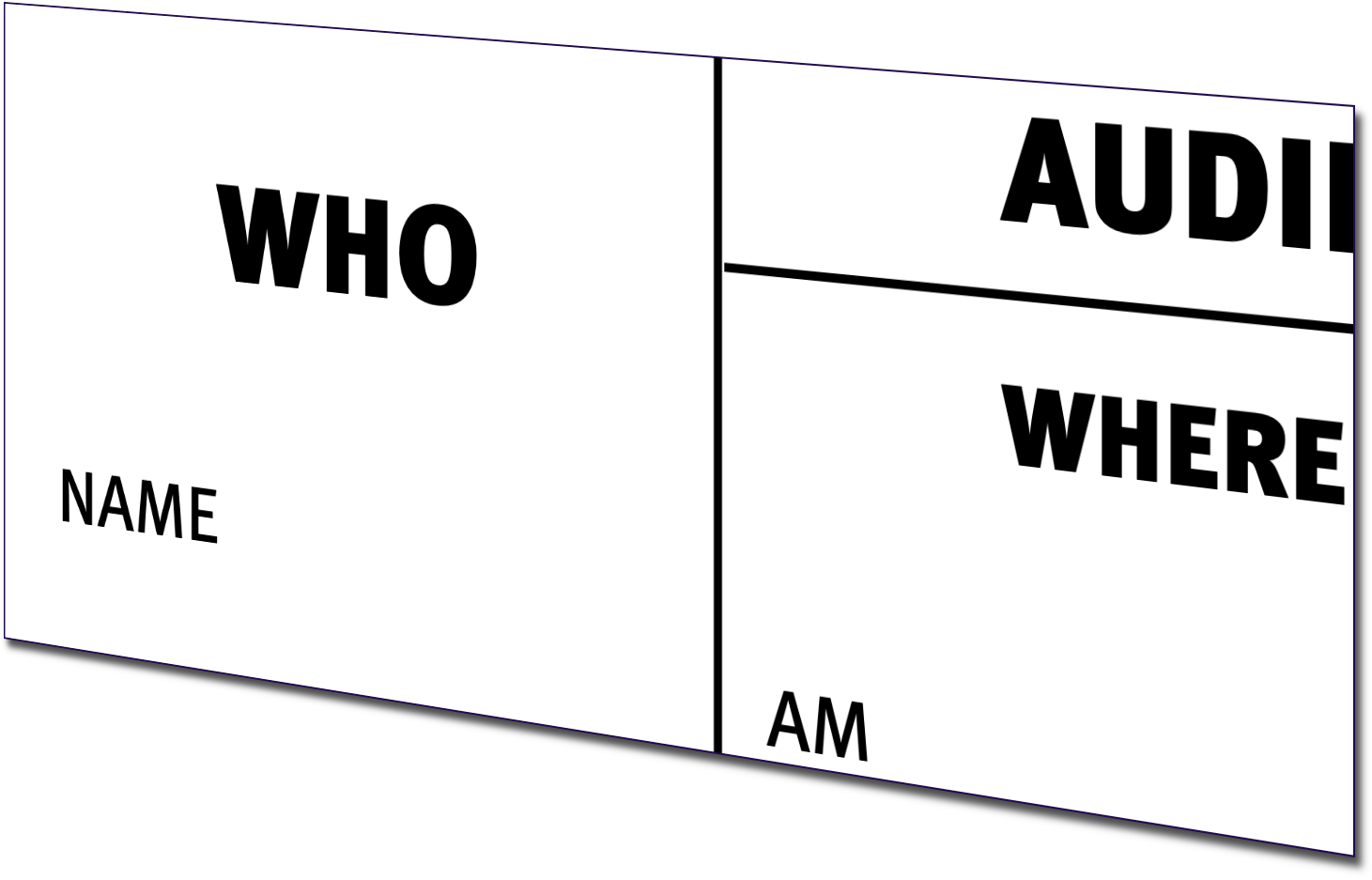
Personalising the audience
The point of this column is to give an abstract audience member a human face. When you're having discussions around editorial projects, it's easier to get a sense of likely reactions from the audience if you think about an individual, not an abstract sgement. “What would Karima think of this?” is easier to engage with that “What would our mothers-returning-to-work segment think off this?”
Where possible, you should base the characteristics in this column on audience research, from traditional questionnaires or market research, to using demographic datasets online.
In the end, thought, there's always going to be a little bit of imagination involved here. And that's fine.
Column 2: Where
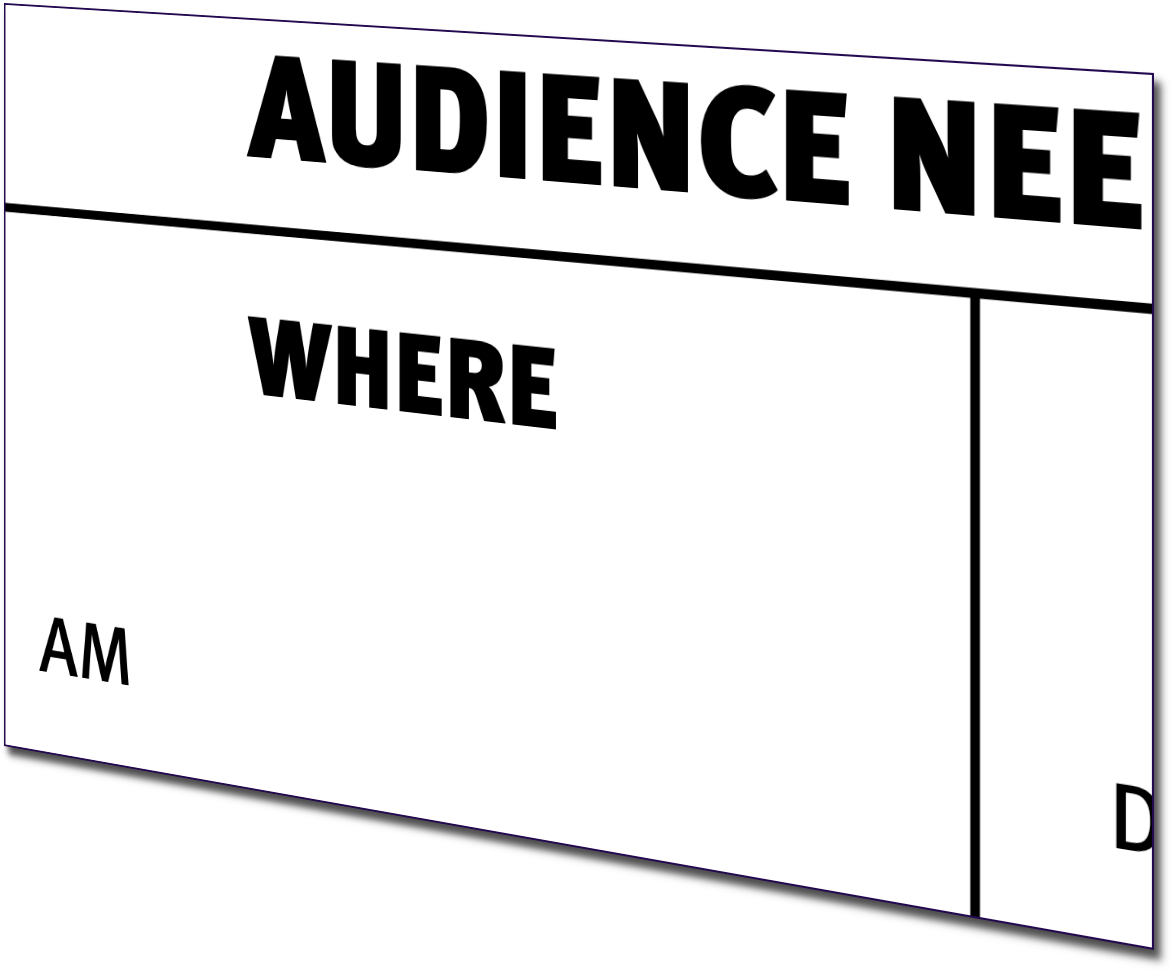
Their day's rhythm
This column is all about exploring how they live a typical day. What are they doing, where, and when?
This can be largely predictable – for an average 9 to 5 office worker, for example, but can quickly change when you think about people in other professions or life roles. For example, city traders get up very early, and often consume financial information very early in the morning to prepare for their day's trading. Publicans have pipe cleaning, and deliveries to manage. Many caring professions involve being on the move all day.
The key idea we're exploring in this column is when the audience member has available attention for our work. That's a combination of available time, a desire for something we produce, and the opportunity to consume it.
Column 3: How
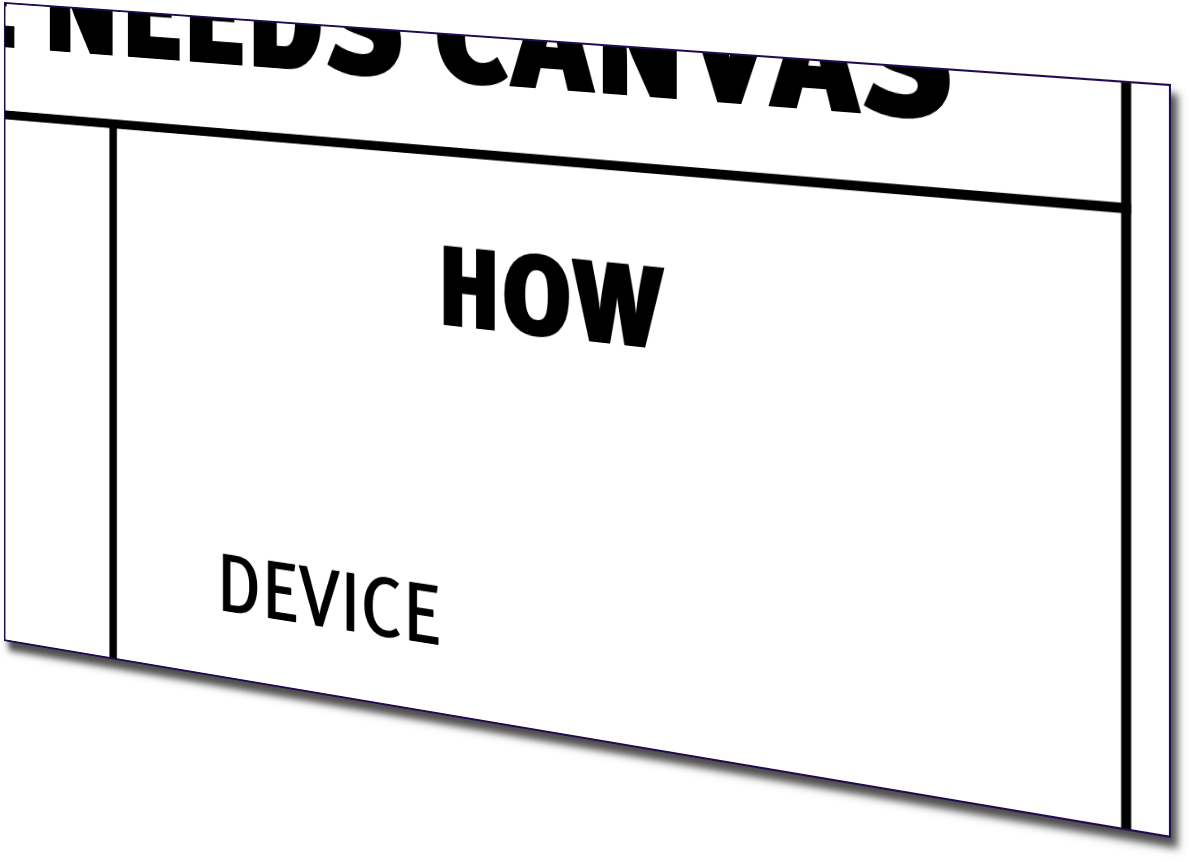
Their use of technology
Now we start thinking about how we're going to reach them. Largely, we're thinking about what devices and which platforms we're going to get to them on. For example, during the working day, that classic 9-to-5er I mentioned earlier might well be sat in front of their work PC, and diving in and out of their email, so a newsletter is the prefect way to reach them. A harried mother might be snatching moments on her phone between playdates and shopping trips. A farmer might be using his phone during the day, but kicking back on a tablet when the sun sets. A surveyor who is on the road much of the day might well spend a lot of time listening to podcasts in her car during the day.
Also, what social media platforms do they use? Is a hairdresser browsing TikTok between clients? Does a banker ignore social during the day, but jump on LinkedIn and WhatsApp chats in the evening? This sort of thought process makes building an engagement strategy much, much more focused.
The key thing is to focus on the formats and places that our target audience member is already giving their attention to.
Column 4: What

What information they want or need
The last column is where we start to translate all of this into something that is editorially useful. What sort of editorial do they want and need during the day – and what other things can we provide? For example, the farmer I mentioned earlier might want information and news updates during the day, in mobile-friendly formats, but crave connection in the evenings, so to enter a social space, like a forum or social media group.
Try to think about both the information the need and the information they want. This is a combination of satisfying them both intellectually (“I need this journalism to be informed about what matters to me”) and emotionally (“I enjoy this journalism because either entertains or provokes me, or makes me feel connected to a community”).
And then think about how often they need it. For example, teachers may not need news about their profession daily, but they might want links to practical guidance and lesson support more frequently. Put yourself in their shoes as you fill this in, rather than thinking from a journalist's perspective.