

A new threat for newsletters?
The simplicity of the in-box is a thing of the past. Can we handle categorisation?

One of the problems of spending too long in a profession like journalism is that, eventually, you stop being normal. I’m trying not to be rude to you, my beloved readers, but, well, the fact you signed up for a newsletter about journalism and tech and online culture suggests something. And it’s that you’re sitting up the far end of at least one bell curve, and possibly more.
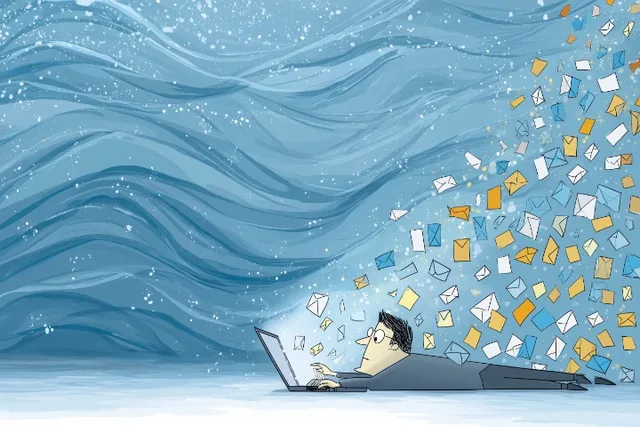
Here’s why I’m thinking about this: Yesterday was my (quasi) first day back after the Easter break. I was part working, and part keeping an eye on my younger daughter, whose school had an inset day, much to my elder daughter’s disgust. And, as is often the way, I spent much of it scything through email. This year, my in-box has got seriously out of hand. People are not hearing back from me, and I miss important emails because the sheer volume is overwhelming.
In a mix of may acute awareness of a need for desperate measures, and sheer post-bank holiday procrastination, I’ve been using Apple’s new mail categorisation to try to make sense of things. That’s meant investing some time in teaching it what’s promotional emails, what’s transactional – and what’s what they call “updates”. And it’s the latter that’s most interesting to me because it’s where my newsletters live now.
And this is where I get to be a reader again, rather than a publisher.
The newsletter problem people don’t talk about
I love email newsletters, both as a reader and a publisher. But, as a reader, sifting them out of my inbox has always been a challenge. One of the things I explore when I do newsletter training is that a key skill in creating a great newsletter is that you have to find a way of shifting the reader’s mindset from triage to reading. And, speaking as somebody who spent much of yesterday triaging email, that’s a challenge not to be under-estimated.
Now, could Apple following Gmail into this categorisation approach actually help us? Yes, I know this seems counter-intuitive. More than a few people have been predicting a newsletter apocalypse, as our finely-honed missives disappear into a different tab, never to be read again.
But, this afternoon, I’ve found myself switching into the updates tab as a reward. Once I’ve cleared down a chunk of emails-I-have-to-action, a painful task at the best of times, I reward myself with a bit of time in the updates tab. I've made the switch from triage to reading before I open a single email. This could — could — be good. If it works. And people use it. It's certainly been working for me.
The email folder of doom
To be fair, I’ve tried to do this manually in the past. I have a folder in my email called “To Read”. It’s the worst named folder I’ve ever created because nothing in there ever gets read. It’s where email newsletters go to die. There are — no joke — 3,264 issues of newsletters in there as I write this. It’s clear my old system wasn’t working. Maybe this new one will…
So, here’s where that lack of normalcy comes into play. As a newsletter consumer, the “normal” end of the spectrum, I’m gasping for tools like this. As a newsletter publisher, the less “normal” end, I’m profoundly worried. A substantial number of my subscribers use Apple devices. Are my open rates and click-throughs about to take a dive?
However, we need to accept that whatever we might like readers to do, they will act in their own best interests. And so, we have to adapt to the world they create, rather than wishing really, really hard that the old days come back. This site of mine hasn't survived 22 years by not changing along the way. The same will be true of the newsletter boom. It'll flatten out, it'll change, and it'll evolve. But I don't think the underlying principle of seeking direct connection with our audience without mediation through the tech platforms is a flawed one. I think it's essential.
Finding our way to our audience
And so, we once again find ourselves at the mercy of tech companies and their users. First Google, then Apple, started pushing our newsletters out of the “main” inbox and into a secondary one. And then their users start adopting these tools.
Newsletters have been such a strong theme of the past decade simply because they have given us that glorious direct connection with our readers. But, now, a form of algorithm is sneaking its way into that relationship. And that’s without even considering the way Substack is quite trying to turn “newsletters” into a thing that happens in their app, not in your mail client. The simplicity of newsletters is being eroded even as they become more important.
And so, we have to do what we always have to do in this ever-shifting digital landscape: work with what we’re given, while keeping our eyes out for what happens next. And, as ever, what happens next won’t be taken seriously, until long after we should have done so.
As one frustrated fediverse evangelist put it from Perugia:
This is our reality:
- make the most of what’s in front of us
- try to avoid falling into the traps of the past (looking at you, here, Facebook)
- keep a constant look out for what’s next, even if it’s not fully baked just yet.
And maybe we should be listening a little harder to people like Saskia.