The Top 10 posts on OM&HB in 2025
What caught your eye and kept you reading in 2025?

If you've ever done any strategy or analytics training with me, you'll know that I bang on about looking at your analytics over the long term, not just a week or a month. Why? Because it shows you the long-term trends, not just the short-term hits.
And so, happily eating my metaphorical dogfood, this year, as every year, I start January by looking back on what worked here on One Man & His Blog. And then I turn a list of the top 10 most read into a blog post. (I also look at what didn't work, but that is not for public consumption…)
So here, pop-pickers, is the 2025 top 10 in reverse order.
10: Dunning-Kruger ❤️ Mark Zuckerberg
May 2025
The Facebook founder once described Twitter as “a clown car that drove into a gold mine”. Mark, sometimes it takes one to know one. Thanks to the amazing book Careless People I spent a lot of time thinking about the early days of Facebook back in the spring, with the insights I got from it allowing me to complete a jigsaw in my head of what Facebook actually is, and was. And how sometimes people don't take into account the role of luck and timing in success.
Key quote:
Mark is, essentially, a dictator within Facebook, thanks to the unique shareholding structure, but he has little to no understanding of how normal human relationships operate, as he’s led a profoundly unusual life since his late teens.
 Adam Tinworth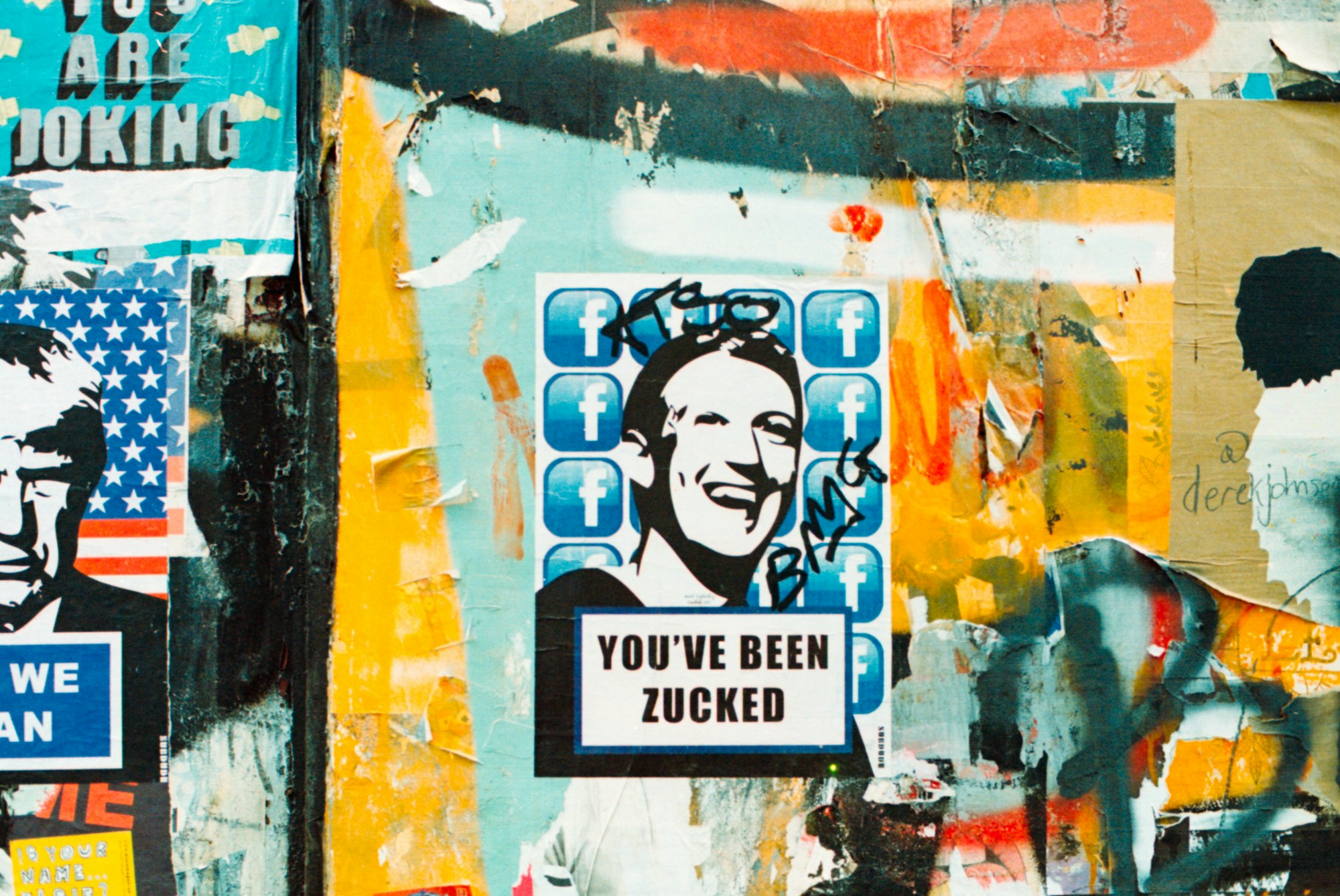
9: Trust in me, just in me…
April 2025
This was an interesting one to find in the top 10, given a piece I'm working on for later in the week. It's been a consistent theme for years now that people do not trust journalists and journalism. And the profession, as a whole has its head in the sand about the problem.
And that's one reason why some people are choosing to listen to AI slop over us…
Key quote:
Journalists presume trust. Creators establish it.
 Adam Tinworth
8: Are Substackers the baddies?
January 2024
Context for the headline:
Substack has been both an incredible engine for written and audio culture, and a source of much controversy. I've been cautious about them since at least 2020, and I'm not getting any less so. The company made some moves that annoyed many in 2025.
But this piece wasn't actually about that. It was about the power dynamics of external forces trying to decide who should be allowed to publish on a platform.
Key quote:
At least some of the people who are defending Substack aren’t doing it because they are like or are defending Nazis. They have the much more reasonable concern that they might be next. Substack has become a comfortable and profitable home for professional journalists and others who have been forced off other platforms for views or reporting that are considered unacceptable by certain political groupings.
 Adam Tinworth
7: The haunting of the Fediverse
August 2025
This is a pleasant surprise. Ghost 6.0 was a major upgrade to the publishing platform I use right here, with built-in analytics and, more significantly, the ability to integrate with the Fediverse. Right now, most of you will have no idea what that final clause means. And that's something I want to change in 2026.
Spoilers.
Key quote:
If you want a vague point of reference, think of the social ecosystem Substack has built around publications on that platform – but built on open standards instead, with the potential to reach much bigger audiences.
 Adam Tinworth
6: The exponential wave is coming for you and your job
June 2025
Ah, my annual analysis of the Reuters Institute Digital News Report. Seven months on, I completely stand by this piece. As 2026 dawns, it's clear that we'll look back on 2025 as the end of the transitional era of journalism, and the beginning of its complete transformation. And, as ever, the DNR captured that moment in time perfectly.
Key quote:
News is not an abstract art. It is a service performed for the benefit of a population. If they don’t find it beneficial, we are at fault, not them. This, coupled with us failing to adapt to format shifts, is the most difficult challenge lurking at the heart of the report. And it’s been there for some years. But, it seems, we would rather not focus on it because it involves reworking the way we think about the journalistic process.
 Adam Tinworth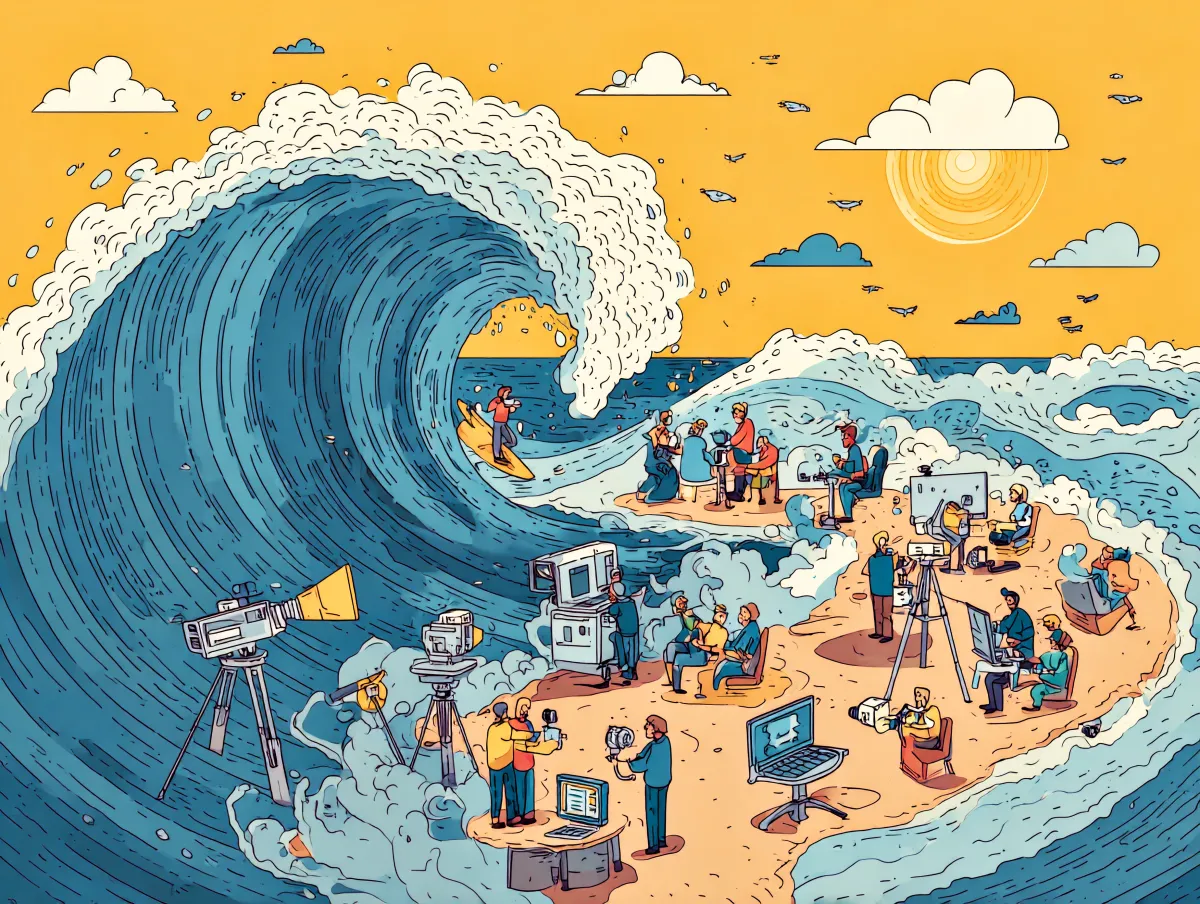
5: All hail Shrimp Jesus
April 2024
Oh, how I miss the innocent days of 2024, when ridiculous slop was the main thing AI was bringing to the content table. It's easy to forget how fast both the uses and the threats that AI brings to the table have proliferated and magnified in the past 18 months or so, and it's interesting to see this time capsule still bringing in the traffic. Why? SEO, baby, SEO. It's not – yet – dead, and has still been a signifiant source of traffic for me through 2025, as you'll see as we climb the dizzy heights of the top 5.
Key quote:
The more I look, the more convinced I am that we need to be taking a much more sceptical look at the claims for AI, scything through the breathless Silicon Valley hype, to find where the value might actually be. And, of course, where the threats are.
 Adam Tinworth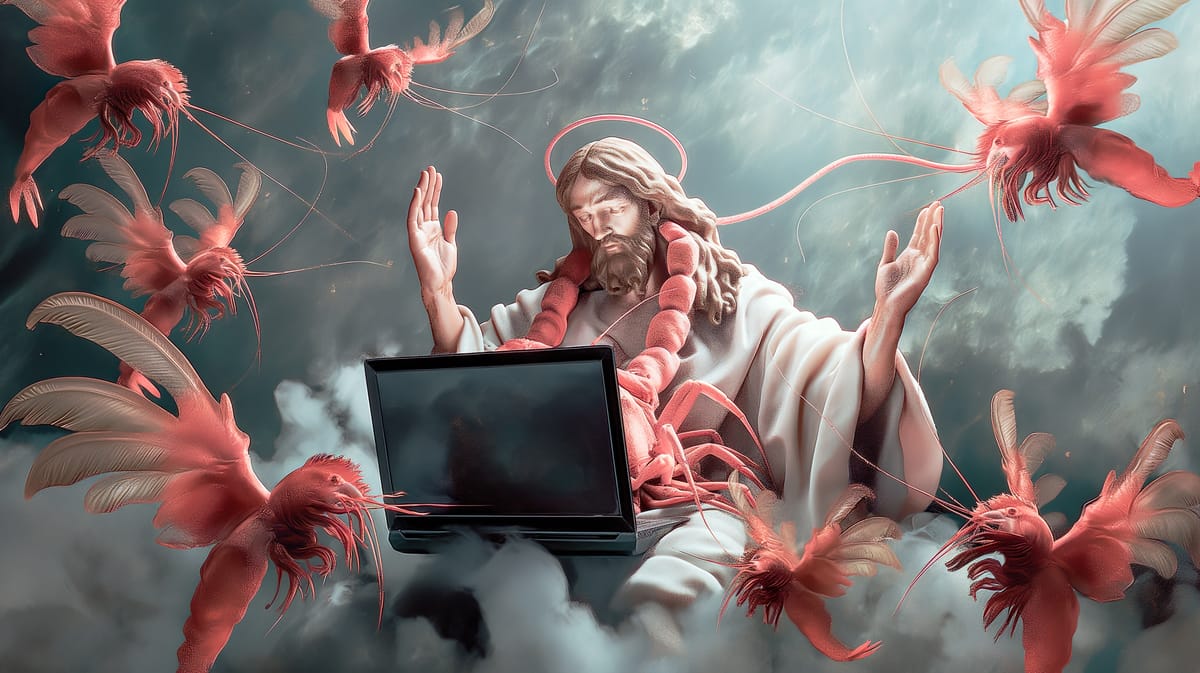
4: The salty path to Mumsnet
July 2025
It's not often I get traffic from forums these days. But if you're going to get eyeballs from one, Mumsnet sends the numbers. The relaunched, Tortoise-owned Observer broke this great story about the lies behind the book (and now film) The Salt Path, and I promptly used it as an excuse to expound on my favourite subject, attention.
And somebody who posts on Mumsnet noticed, and posted a link to it in a long discussion thread on the topic. #numbers followed, making this my most read piece written in 2025. The top 3 are all older than that…
Key quote:
It’s also a clear example to me of the public appetite for a story that’s new and interesting, rather than breaking news (in the traditional sense) in its own right. I remain convinced that we, as an industry, still overvalue the new in the sense of “breaking news” and don’t understand how compelling “new to me and fascinating” can be to the audience.
 Adam Tinworth
3: Traffic reLoaded
February 2023
A wee bit of nostalgia for my early days in journalism as a student magazine editor, and a young journalist trying to stir things up (a tendency I've never quite escaped), is still doing good numbers, having become an evergreen SEO hit.
However, this placing was no thanks to Kathleen Stock, who quoted from the piece in an Unherd article, without actually linking to it. Bad form, Kathleen, bad form. Especially as you were rather rude:
One enthusiastic blogger describes it as “swashbuckling, provocative, exciting writing … aimed at men, but not in a patronising, lowest common denominator way”. (Inspired by loaded, he also describes himself as having gone on “to create the gonzo school of property journalism during my time at Estates Gazette”.)
I haven't seen the word “blogger” used in that patronising way in a long time.
Key quote:
So, I went the other way with Cub: scurrilous, provocative and often downright silly: it was a fun magazine, rather than a self-important newspaper. I was once threatened with court action (and more) by a kebab shop owner thanks to our reporting. Many of the union sabbaticals openly hated it and, in one memorable incident, actually intercepted it on the way to the printers, and replaced a story with one of their own. We intercepted it on the way back, put a leaflet in each copy with the missing story and an explanation of the censorship…
 Adam Tinworth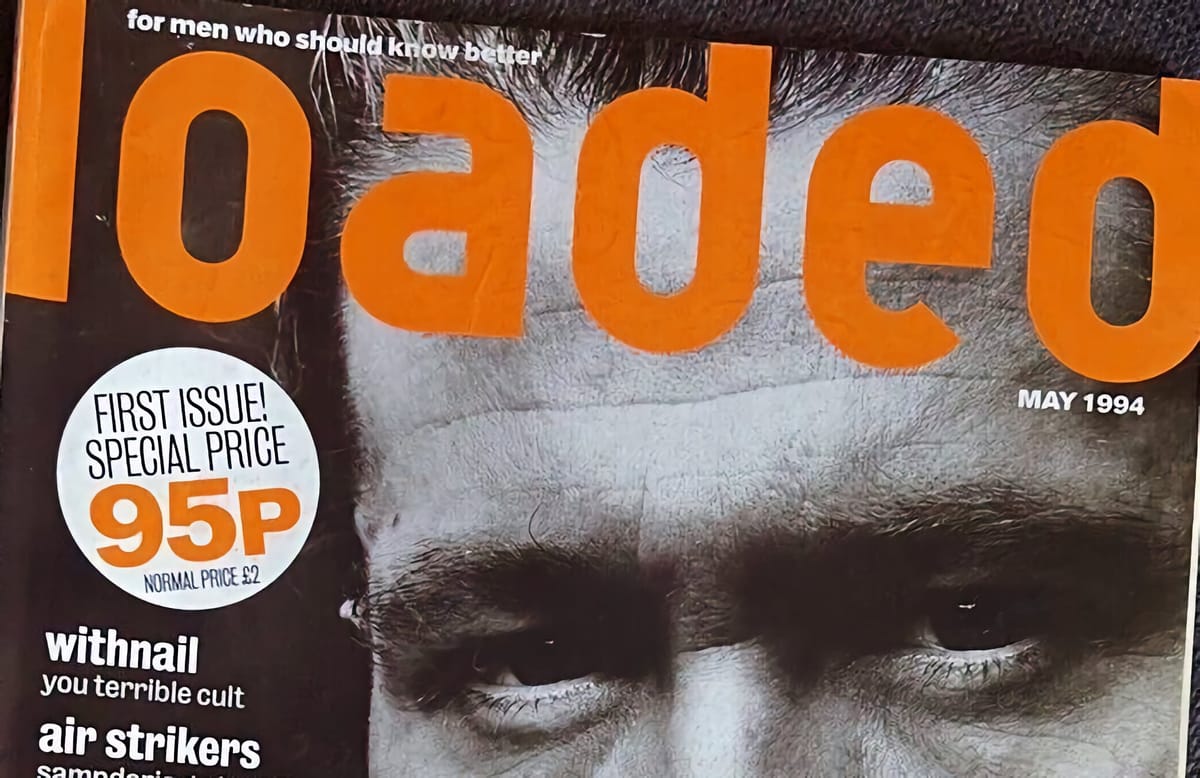
2: Audience Engagement: two words that still matter
November 2024
Oh, I'm happy to see this so near the top. It gives me the tiniest spark of hope that the journalism world can avoid destroying its audience relationships yet again by chasing the AI rabbit down the hole into the tech bros' Dystopialand. I'm still having problems persuading students that Audience Engagement matters, but the industry is getting the idea - and the students do, too, once they start looking at the job market…
Key quote:
And to loop back to Isabella’s justified outrage, if you’re filling your site with AI-generated content, without talking to your readers, without asking them what they want, and how they feel about it, you're making that relationship harder to maintain. Too many of the sites who complain about their collapse in Google traffic have got sucked into the trap of thinking about SEO as an entity in its own right. Instead, they should be thinking of it as a branch of audience work built on the idea of thinking your way into the head of the searcher, and delivering what they’re looking for.
 Adam Tinworth
1: Bluesky good, Substack bad
November 2024
Another SEO win, bringing in three times the traffic of the nearest competitor. Why? It picks up search traffic from both halves of the headline, which I'd be incredibly smug about if I'd actually done it intentionally. But never mind. I'll still take the accidental win.
A year on, not much has changed. Bluesky is still growing, but hasn't completely broken out into the mainstream yet. And people are still worried about Substack.
But what's most interesting to me, given the current AI shift, is the question of 2026's top post. Will that be driven by search, or are the days of the big Google hit as dead as the days when we prayed for a Slashdot link…?
Key quote:
The last exodus like this I remember was people “leaving” Facebook wholesale for Google+. Friends put “moved to G+” banners on their Facebook accounts — and then took them down months later as they crawled back. Will this be similar? Perhaps — but I doubt it.
 Adam Tinworth