

Journalism isn’t dying
The crumbling edifice of traditional media means the growth of emerging media is more important than ever.

Less than a week after massive layoffs at the Washington Post which have sent shockwaves through the media world, this seems like a strange thing to say, but journalism is not dying. In fact, it’s in no danger of dying. It's being reborn all around us, right now.
What is happening is that a lot of the old journalism businesses are failing, the Washington Post among them. That is, unfortunately, inevitable. We are still living through the biggest revolution in media since the invention of the printing press. It was always going to be the case that some businesses wouldn’t be able to adapt what they do fast enough or well enough to survive this era of exponential change. If you’re one of the people “downsized” that is little comfort. Believe you me, I’ve been there.
And, hard though this may be to swallow, this culling is a good thing – or will be, in the long term. We need some old journalism businesses to burn down to create room for new ones to thrive. Their deaths will create room in people’s attention, and availability in people’s wallets.
The zombie of local journalism
Much of the traditional local press in the UK, for example, is in a dreadful state. Trying to read a story on my local news site is an exercise in frustration because of the sheer volume of ads on the page. For example:

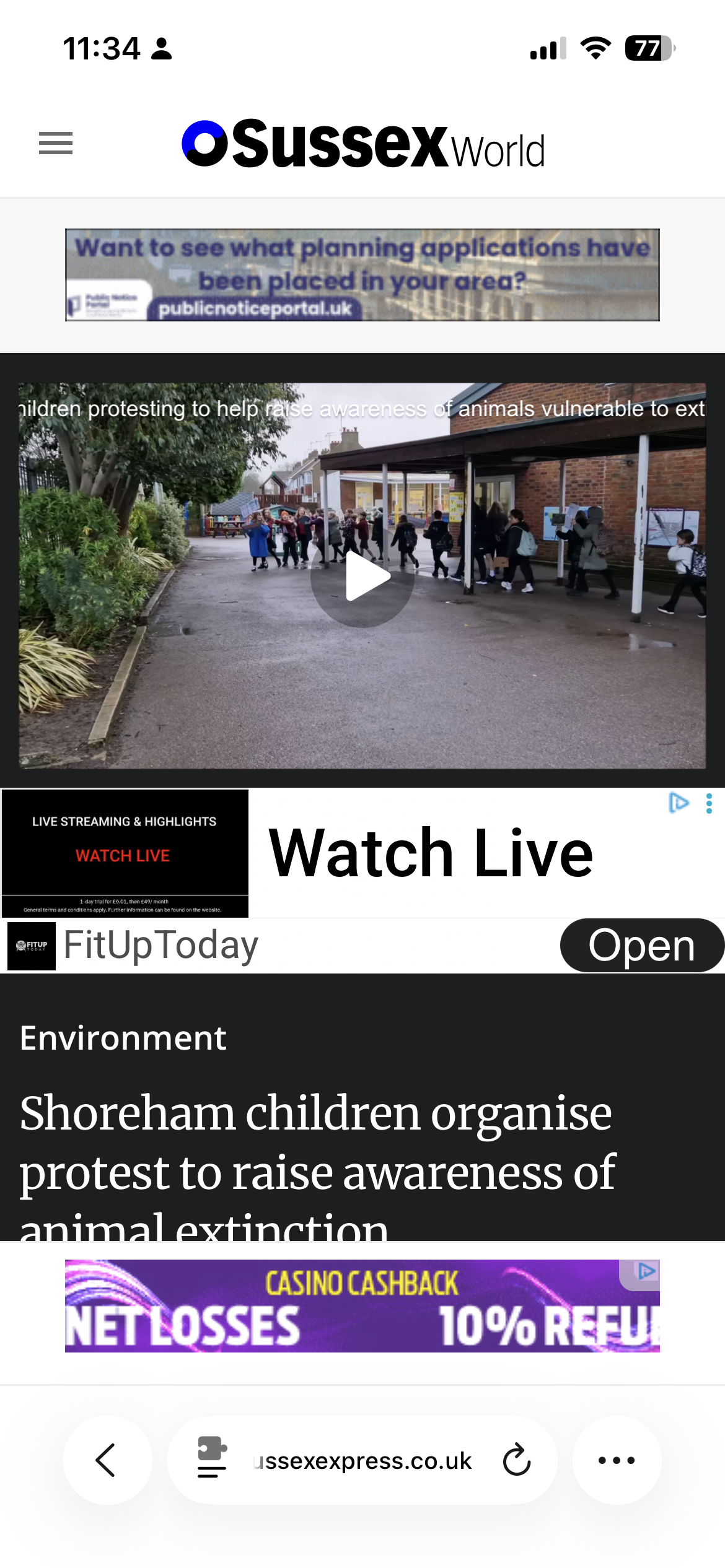
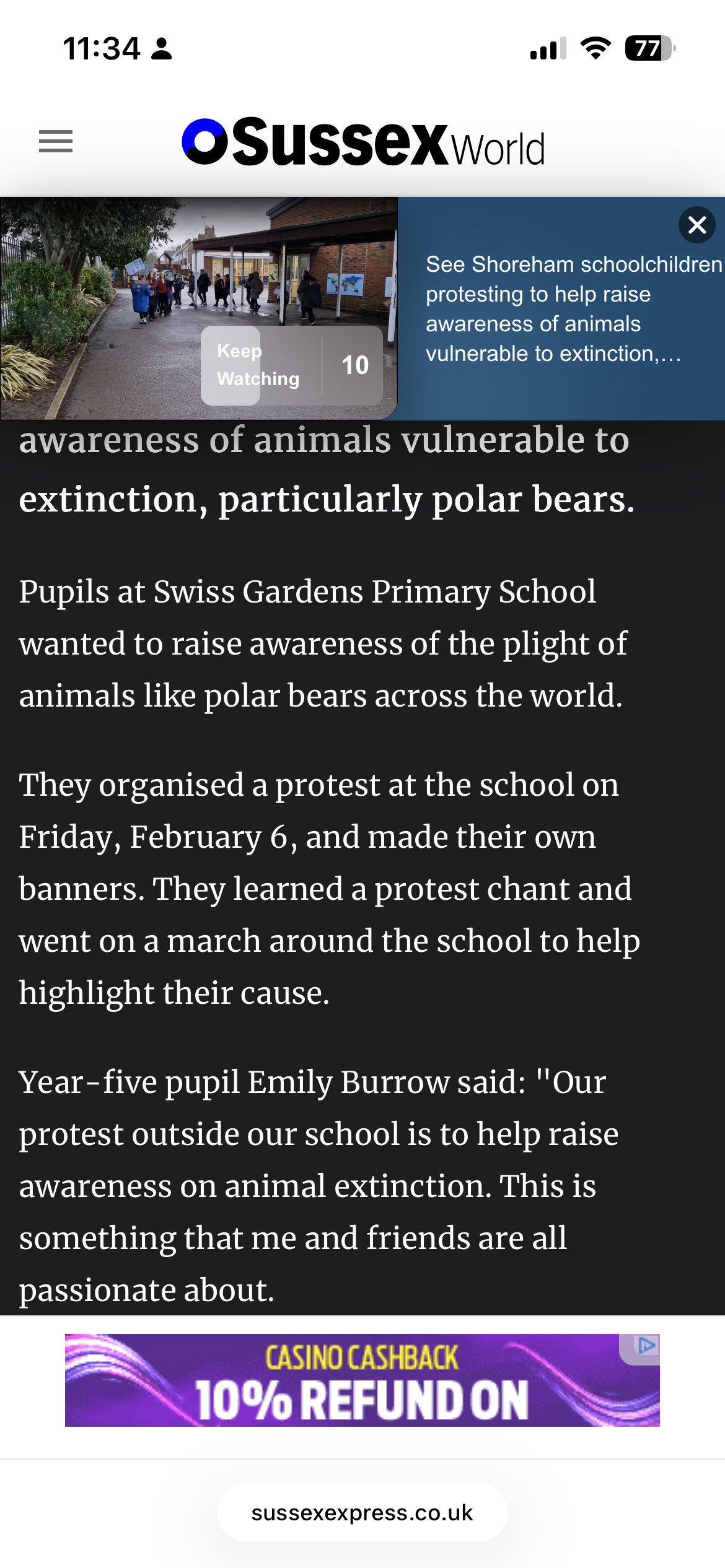

That this ad-encrusted mockery of what was once the Shoreham Herald still lurches through the web like a content zombie is not doing anything for local democracy or my understanding of what’s happening where I live.
I can learn more about the political life of coastal Sussex from going to a local Facebook group – but there I have to dig through the political disinformation and unfounded opinions that foul that space. Both are occupying attention that could be more usefully given to a local news start-up that experiments with new business models off a low cost base.
Why some existing news brands need to burn
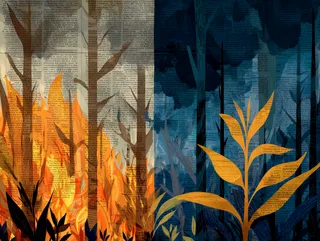
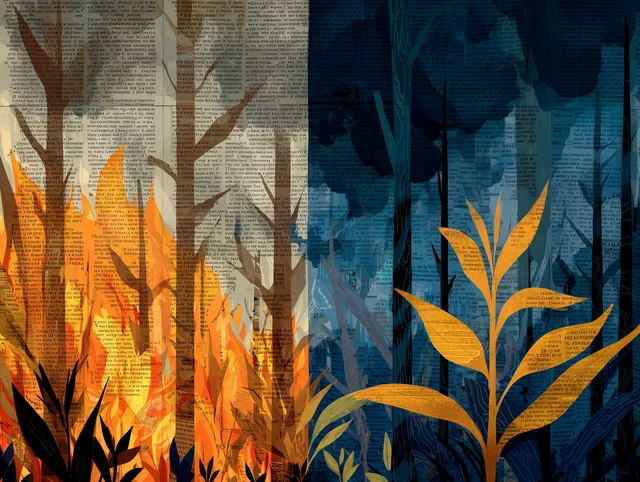
Maybe because I’m a tree-hugging hippie at heart, but I like the metaphor of natural forest fires for this process. They are existing, well-established phenomena that allow for cycles of rebirth:
Small, low-intensity fires help rejuvenate forests and are overall beneficial for conservation.
Sure, if these fires get out of control, we get wildfires. They're increasingly common, due to poor forestry management, monocultural commercial growing and, of course, the climate crisis. They are a serious problem to the environment, not a boon to a natural rebirth cycle – and yes, that is a danger in the context of journalism, which has its own dead wood in the shape of a proliferation of legacy titles with failed business models, unwisely propped up for political gain. Let's not lose sight of that.
But there are already signs of that regrowth happening, where we have had these small fires. I've been watching the growth of the site now called the Greenwich Wire for over a decade, for example. In the UK, we often cite the range of local city titles created by Mill Media as a leading example, and we can cast our eyes over the Atlantic ocean at what’s happening there. Ghost consultant (the publishing platform – she’s not advising from beyond the veil of death) Cathy Sarisky just blogged about how some of her clients are funding their local news sites:
 Cathy Sarisky, Ghost Expert
Rebuilding the mainstream media
But small local sites will not be enough on their own. We’ll need to grow larger businesses to join those that survive the transition to truly fulfil all the roles journalism needs to perform. One of the key points my colleague Ayala Panievsky makes in her book (and in the talk she gave here at City St George’s) is that the emergent media cannot support the sorts of investigations that the big organisations do - and we need both still.
Moreover, the emergent media organisations are vulnerable to external financial pressure. Mill Media, for example, is facing a potentially ruinous lawsuit from someone they’ve written about:
Freelance journalist Cormac Kehoe is also being sued personally for £250,000 in libel damages alongside editor Joshi Herrmann and publisher Mill Media Ltd.
The publisher of newsletter-based local news website The Londoner has been hit with a flurry of legal letters since writing about the alleged activities of Claudio De Giovanni.
But that doesn’t mean that small local outlets are doomed. To the untrained eye, Mill looks like a group of small-time newsletters. But there’s a parent company in the background that has raised money from investors, and hired some people who know exactly what they’re doing on investigations:
Mill Media is delighted to announce Cameron Barr, the former Senior Managing Editor of The Washington Post, has joined the company as Investigations Editor. His appointment signals our ambition to become a leading centre of investigative journalism in the UK.

We’ve already seen Mill Media start to build a new form of national newsroom. They did a joint investigation across many of its titles late last year that gave us a hint of what a distributed national newsroom might look like:
Editor’s note: Today’s weekend read is a bit unusual: a collaborative effort with our colleagues at our sister Mill Media publications across the country. It pulls together the reporting we’ve all done on a big topic: the appearance of flags up and down the land. We thought it would be interesting to pool the in-depth local reporting we’ve done in five UK cities to try to give you a better picture of the people behind an influential movement.
Rather than a centralised newsroom, probably in London, they have distributed newsrooms in regional cities, largely focusing on local news, but pooling their resources on national stories. That doesn’t mean that this court case won’t be nerve-wracking for the team. But it does mean that the company isn’t quite the minnow that can be frightened into silence by someone with a bit of cash to spend on lawyers.
Here comes emerging media
I don’t know about you, but I find that exciting. This is emerging media starting to grow into established media: the potential for it to become one of the big players of the future is apparent, if far from guaranteed.
And that’s not the only way a new media ecosystem might emerge. We might well see smaller businesses start to clump together for protection and efficiencies. Damon Kiesow explored this future in a post about journalism shrinking, with themes similar to this one:
And what happens as soon as collaborators start pooling funds to protect against a shared risk? They are going to want to get aligned on a few editorial standards, maybe a shared copyeditor, or some other editorial review process—not as a means of control but of mutually assured economic survival.
At that point, sharing other front- and back-office functions is just sensible: fundraising, ad sales, marketing, maybe HR if revenues increase enough to have staff. Next thing you know, there is a group of five news organizations (née independent journalists) operating as one (not entirely traditional) newsroom.
If you watch the fallout of decaying established media brands, you start to see how this regenerative process happens. Shoots emerge, some thrive, and together, they start to create a new ecosystem in the ashes of the old. The wildfire creates the fertile ground for new businesses to thrive.
From emerging media to established media
As Carole Cadwalladr, late of The Observer, and now part of the team behind The Nerve, put it in a piece for Press Gazette:
You can’t rebuild the Washington Post overnight but you can try. Beehiiv, the newsletter platform we use, put us on their media collective programme which includes paying for our monthly legal cover (in the US it also provides a medical insurance stipend). Mostly, we’re excited and proud to be part of a growing independent network that’s led by journalists and that understands why a free and independent press matters now more than ever.
The Nerve team were all at The Observer, and left during its sale to Tortoise. Not quite as dramatic a change in an established media brand as the Washington Post one, but still one that has birthed new independent media. The Nerve, while having taken some support from donors and Beehiiv to get going, is aiming for reader revenue as a core source of its income, as are so many titles in this space.
And that’s at the heart of this change. The old revenue models are broken. The internet has completely disrupted ad revenue. Having a big money sugar daddy (or mommy) is a gamble that hasn’t worked out well for the Washington Post. To quote Cadwalladr again:
Solidarity on a terrible day. A craven tech bro has sold you out.
In the end, we need new business models, and a big part of that will be audience support. And that's the crucial element: the tech is there, ready, waiting. Beehiiv, Ghost, Substack (ick) et al all provide you with cheap and easy ways to publish, and to take money from subscribers.
Let a thousand flowers blossom in the garden of journalism.
Journalism from the ashes
And so, I reiterate that journalism isn’t dying: it’s rebuilding in the ashes of the digital wildfire that has swept through the business model of the old, established media businesses. Emerging media will take a while to find its feet. The business models that will allow it to both thrive and survive external attacks are still being worked out.
Journalism isn’t dying.
It’s just become a more fluid, more experimental, more ground-level business than ever before. And that’s both exciting, and terrifying, as those old assurances of corporate jobs slowly fade away.
This is a remarkable time to be in journalism, if you’re excited about the very process of journalism as a service provided to readers, as that link is closer than it has been in centuries. But it’s going to be a terrible time for you if you want to deliver journalism down to the masses from your corporate tower of power. Those towers are crumbing faster than ever.


