

Can local news act as democratic defence?
Disinformation is undermining our democracies. Can we bolster them with media literacy or with a revitalised local news sector? A panel at the UK Media Freedom Forum discussed…

It's not a co-incidence that the collapse in local news has seen a collapse in the trust in journalism. Removing the only journalists most people would see with any frequency in the flesh from the ecosystem has done untold harm to the public's understanding of who and what journalists are.
But is the harm much, much deeper than that?
A panel on the last afternoon of the UK Media Freedom Forum set out to explore the potential of a revitalised local news sector – or media literacy education – to reverse democratic backsliding.
Chair:
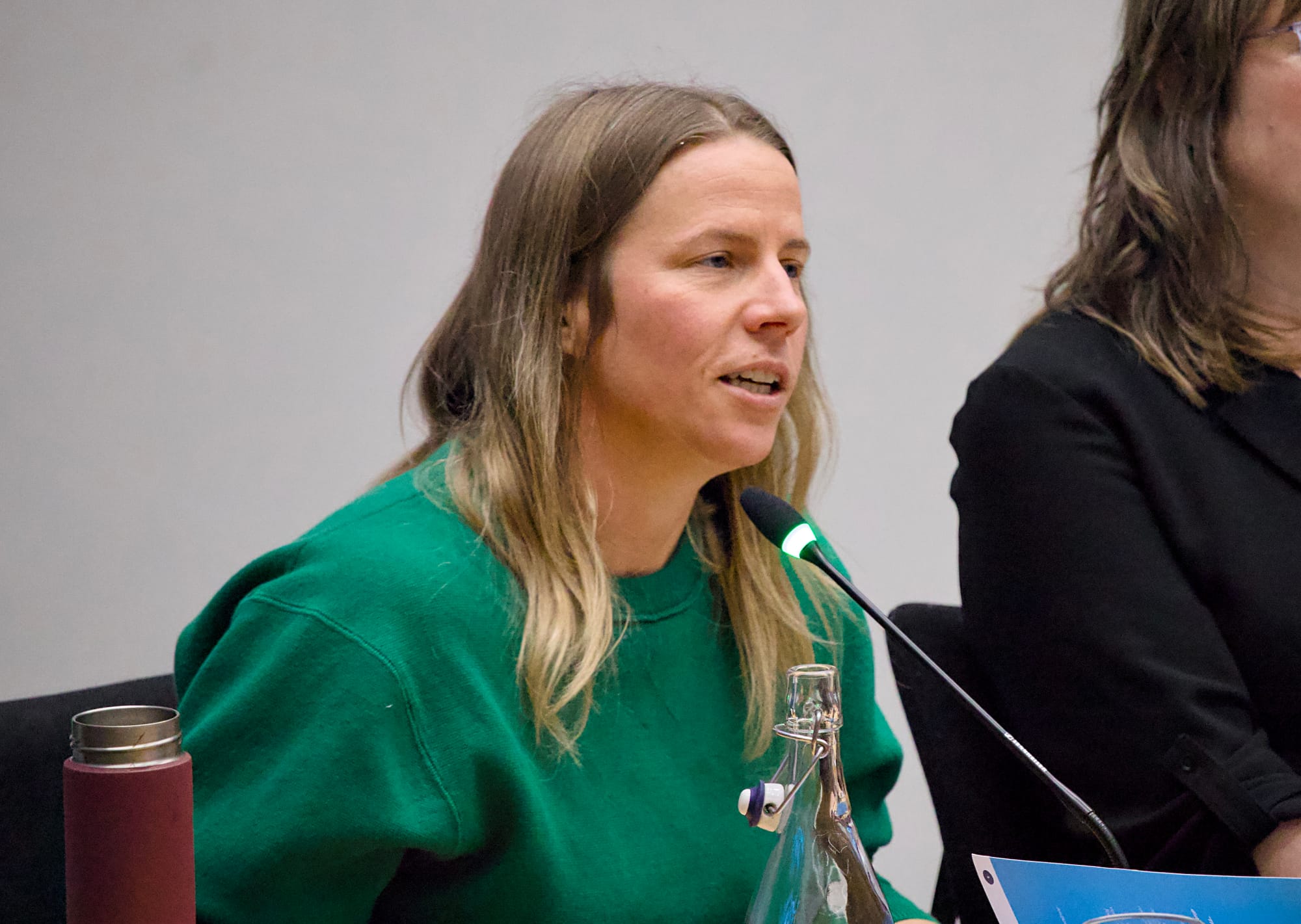
Professor Mel Bunce, director, Centre for Journalism and Democracy, City St George's, University of London
Panel:
- Katja Pehrman, ambassador for Human Rights and Disability Inclusion of Finland, co-chair of the Media Freedom Coalition
- Meera Selva, chief executive, Internews Europe
- Franz Wild, CEO and editor-in-chief, The Bureau of Investigative Journalism
- Rebecca Whittington, online safety editor, Reach PLC
Katja Pehrman: the Finnish path to media literacy
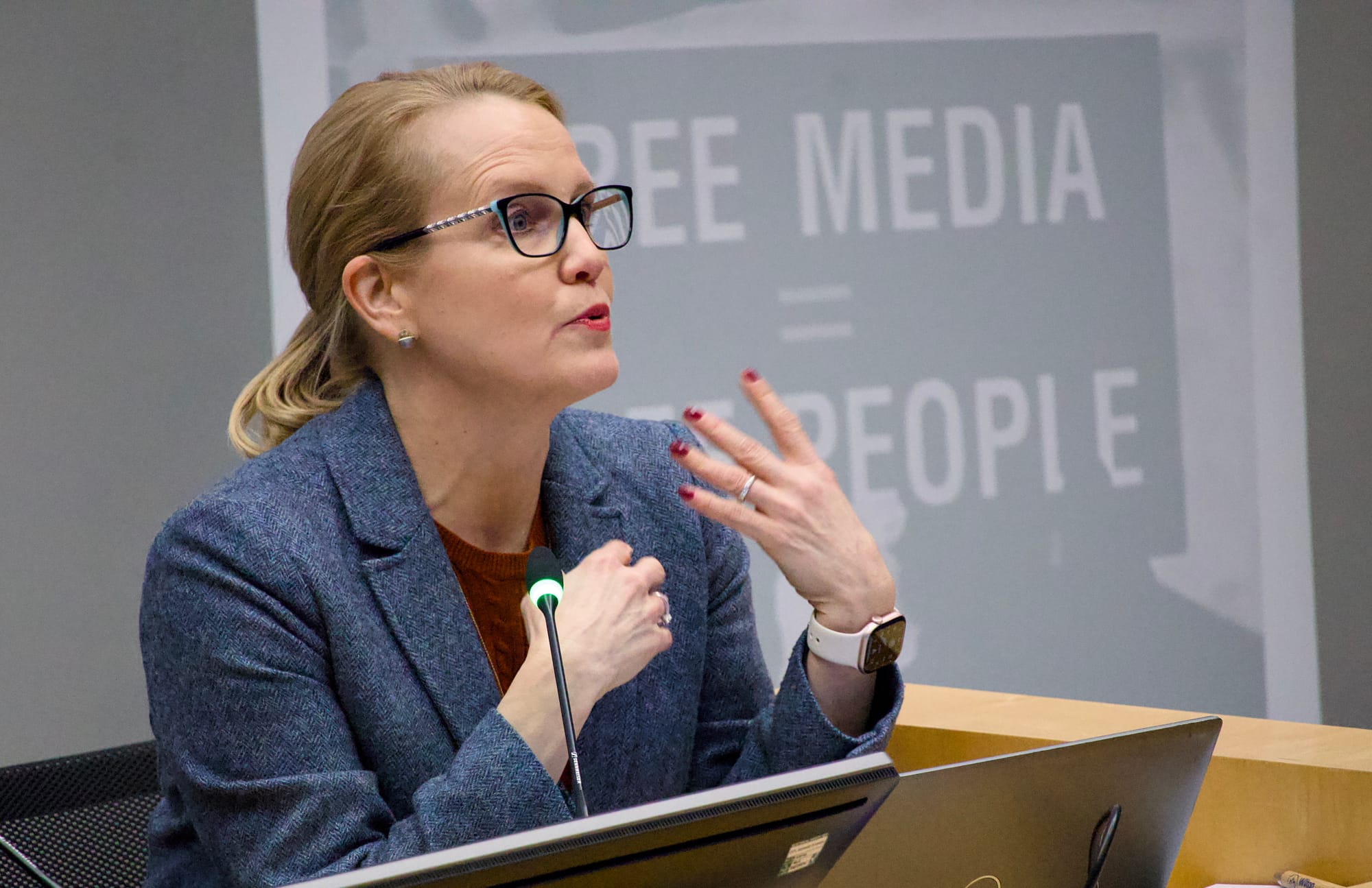
Katja Pehrman kicked off by talking through the Finnish system for media literacy. This has its roots in the 1970s, and is a systemic approach to creating a media literate society. But it needs to be constantly updated.
It’s not just an educational programme, it’s a democratic defence. Media literacy is now a requirement for democratic societies.
Meera Selva: informed citizens are empowered citizens
Meera Selva works for a non-for-profit that has been engaged for 40 years in non-democracies, or back-sliding democracies. They have a concept of the seven things citizens need to make good decisions in democracy or in life. These are:
- Good information
- Safe access to that information
- Legal protection of that
- Plurality of providers of information
- Safety of the information providers
- Critical thinking
- Sustainable media sector
Internews have a number of technology programmes, all of which have their roots in ways of keeping women safe in digital spaces. It’s crucial that it is seen as normal that women can participate in digital life.
The withdrawal of funding from the US is leading to the slow death of some independent media organisations globally. Where they die, more politically motivated replacements rise, funded by Russia, Turkey, and their ilk. So, they’re trying to figure out how to do this work with less money, and how to make the most of the donors they do have. It’s important to get people to understand the digital information spaces they’re operating in — inlacing journalists and content producers themselves.
Franz Wild: Audiences are seeking niche communities
Franz Wild published a story about how London PR firms were using paid Wikipedia editors on behalf of their clients. Elon Musk’s fans on X picked this up, and used it to denigrate Wikipedia, and praise Musk’s Grokipedia – and Musk noticed:
— Elon Musk (@elonmusk) March 4, 2026
The media landscape is fragmenting, and consumers are becoming more interested in niche outlets. Audiences are clustering around them — that’s kind of a good thing, as long as those organisations have the technical and legal support to do it. Local media is a huge part of that. Much as we’re all absorbed in this online world, we want to come back to reality. Outlets that give a sense of community are flourishing.
If you’re focused around a city or a location, you’re far more able to engender that sense of community. They used to have a network of local journalists — but it collapsed during COVID as the funding disappeared. So, they’re trying to rebuild the whole thing. They just did a project in Southwark, where they turned community concerns into an investigation — but it’s really resource intensive.
We’ve seen the rise of the Substack generation — hyperlocals run by one or two people. They will grow. There is hope there.
Rebecca Whittington: The local news death spiral
Rebecca Whittington’s PhD in 2020 was around digital tools and how that impacted journalistic and brand identity in local news. It identified real challenges: the people who were doing real local reporting were focused on print, while the digitally focused journalists were looking at the viral, and that was often more national or international stories. The lack of digital skills for the print-focused local journalists meant that when their stories went online, they never had the chance to thrive and grow.
That led to a decreasing value and relevance of these formerly local sites to the areas they actually served. In other words, we need to give local news the same sort of treatment we do more national news. Increasing that insider information – the single journalist in court, in council meetings – recognises the real value to audiences via local news remains challenging. But the challenges are bigger than they were in 2020. And AI stealing information and giving it to audiences for free is a real problem.
Personal abuse of journalists online is commonplace. Much of it is mindless, but it is exhausting. Not all media freedom threats happen on the world stage. Keeping attention on how abuse, defamation, doxxing and misogyny impact on the dissemination of information is a real challenge. For far too long, the industry has seen this as “just part of the job”. When abuse is being delivered anonymously online by people who could be at the school gates, or in the supermarket with them…no wonder journalists are looking over their shoulders. Councils are blocking journalists from access to meetings.
The admirable part of this is that journalists keep going.
AI is being used to make misinformation look as if it came from major news brands. FOIs are increasingly being ignored or rejected without good reasons. Overall, the picture is pretty bleak.
Hope in the bleak media landscape
There is hope: the growing hyperlocals are one example, as is the BBC’s local democracy reporter scheme. Their reporting is being made available to all participants in the schemes. There has been real pushback from councillors to journalists giving them scrutiny. But increasingly, councillors are expecting them to be there again, and even welcoming their presence.
And audiences are starting to recognise the value of local news in different formats.
Q&A
Is AI all bad?
“It’s not a for or against situation. It’s about each newsroom figuring out where it’s useful — it’s great at processing huge amounts of data,” said Franz.
Meera points out is that can be very useful in small newsrooms, particularly in terms of translation and other pinch points.

When giants fall, they create a news vacuum. What can we do?
“Established media has failed to maintain their traditional role, so the hope is more in the startups,” said Franz. “The overheads can be very low. How do you ensure that these participants are also upholding the standards we expect? But then, there are big, big outlets also failing there.”


