mobile
Jacob Gjørtz: rethinking stories for mobile storytelling
Can we really expect a story format designed for print newspaper to survive into the digital age? Jacob Gjørtz thinks not - and he has an alternative.
mobile
Can we really expect a story format designed for print newspaper to survive into the digital age? Jacob Gjørtz thinks not - and he has an alternative.

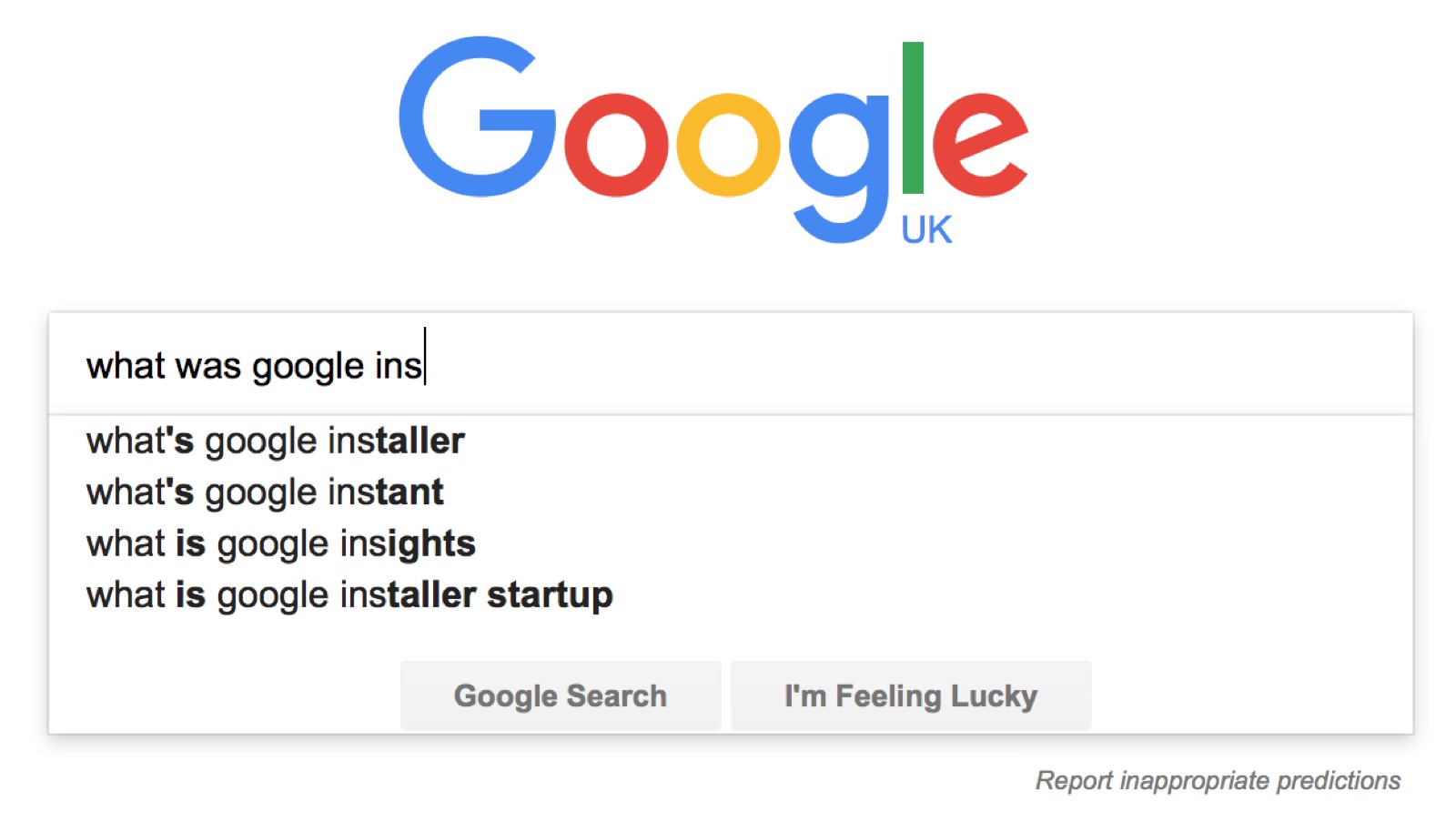
Google Instant — the feature where your search results appear as you type your query — has been killed off [http://searchengineland.com/google-dropped-google-instant-search-279674]: > After launching Google Instant — Google’s method of showing search results as you type them — several years ago, Google has removed the feature from search effective today.
Google is going to make its forthcoming mobile search index its primary dataset [http://searchengineland.com/google-divide-index-giving-mobile-users-better-fresher-content-261037] : > Google is going to create a separate mobile index within months, one that will be the main or “primary” index that the search engine uses to respond to queries. A separate desktop
mobile
Understanding Google’s Accelerated Mobile Pages [https://www.smashingmagazine.com/2016/02/everything-about-google-accelerated-mobile-pages/] Google’s new fast mobile format – Accelerated Mobile Pages or AMPs – are due to go live today. The above link is a good resource for understanding what they’re about – and why you should care.
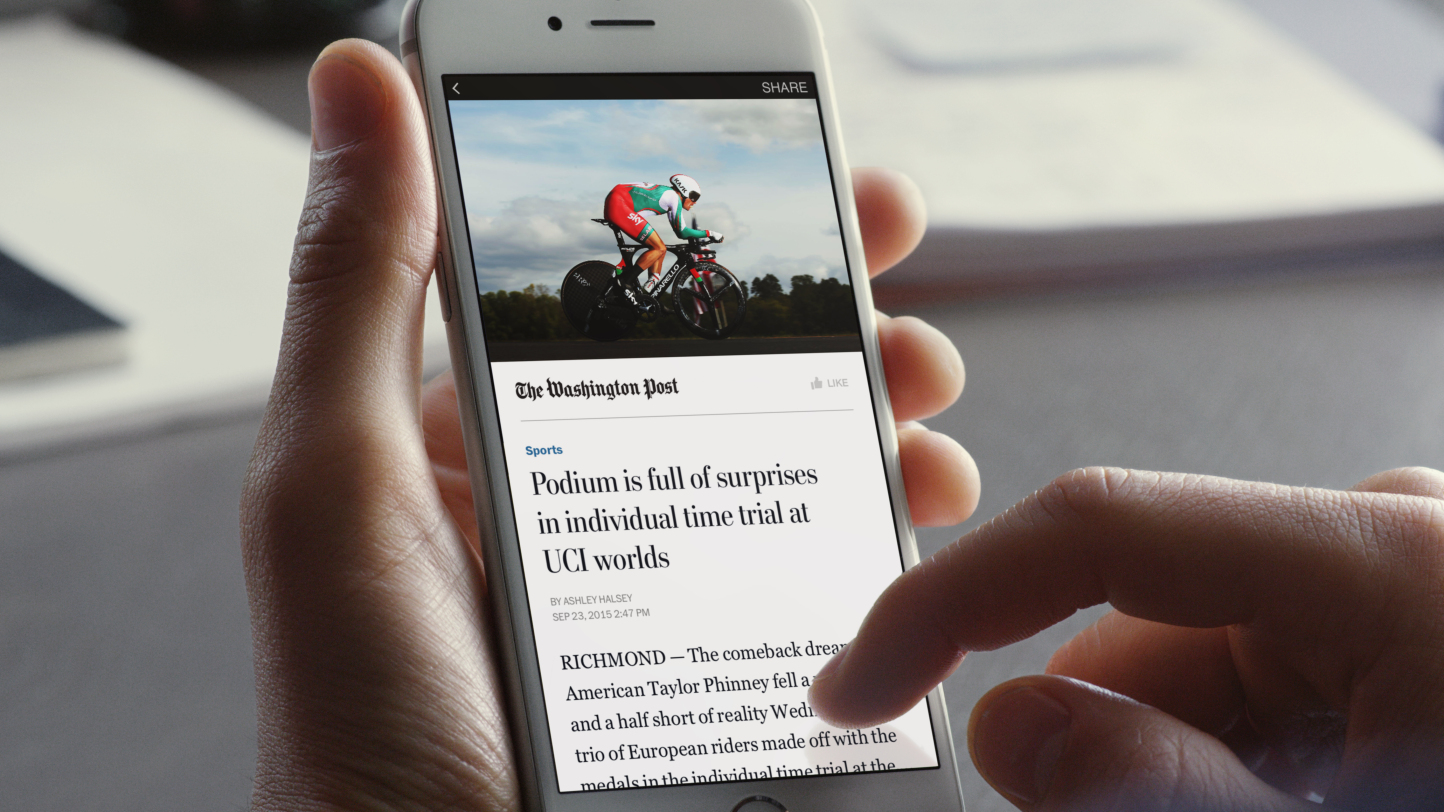
Interesting news from the folks at Facebook – Instant Articles for all [http://media.fb.com/2016/02/17/opening-up-instant-articles/]: > We’re excited to announce that on April 12th at Facebook’s F8 conference, we will be opening up the Instant Articles program to all publishers—of any size, anywhere
mobile
Catalina Albeanu reporting on the National Readership Survey results [https://www.journalism.co.uk/news/nrs-most-of-national-audience-now-mobile-only-at-4-uk-newspapers/s2/a566249/] : > Some 56.9 per cent of Independent readers access the title only from their smartphones or tablets, followed by 53.2 per cent at the Daily Mirror, 51.5 per cent
mobile
Another day, another Quartz announcement, this time about their site design [http://qz.com/415916/whats-new-on-the-ever-evolving-qz-com/] (which is in continuous evolution): > Still, sometimes we make enough changes all at once that it’s worth pointing them out and, as we’ve done in the past, explaining our intent. There’
business models
The mobile problem [http://adage.com/article/digital/publishers-stare-sh-t-mobile-moment/297017/]: > Last year, mobile constituted 60% of time spent on digital, up from 53% in 2013, according to ComScore. Yes, this mobile explosion is helping goose traffic at media sites. But they’re failing to monetize it quickly enough, resulting
When you Google your site do you see something like this? Let’s make that a little clearer: If you don’t, you have a problem. As of 21st April 2015 (the day this post is being published), Google isn’t just highlighting mobile-friendly sites in search results – it’s
david carr
There’s a fascinating piece from David Carr on the New York Times website today, looking at the relationship between Facebook and news publishers [http://www.nytimes.com/2014/10/27/business/media/facebook-offers-life-raft-but-publishers-are-wary.html?referrer=&_r=1] . But it needs to be read with caution. Some parts of
David Ho [http://www.twitter.com/davidho] is the editor for mobile, tablets and emerging technology, The Wall Street Journal. This is a liveblog of his talk at news:rewired. David is not an alien from the planet Tech – he’s a reporter, but he has a background in coding
mobile
[https://i0.wp.com/www.onemanandhisblog.com/content/images/2014/07/mobile-mobile.jpg] Frédéric Filloux did a useful round-up of the current state of play of news on mobile devices [http://www.mondaynote.com/2014/07/06/mobile-facts-to-keep-in-mind-part-1/]. This is of particular note: > According to Flurry Analytics, apps now