


FT Strategies: the path to resilient content in an AI world
It's time to take a long, hard look at your content, and work out what's valuable, and what's going to be killed by AI, says the FT Strategies team


Closing out the 2025 Future of Media Technology conference was a session on content resilience in an AI world. Or, to put it more simply, how to survive the AI attention apocalypse…
Adriana Whiteley, director, FT Strategies

How do you increase business resilience in the world of AI? It is quite interesting how the British see the word “resilience”. In most places people think about sandbags, batteries for troches and bottled water. In Britain, it’s as much about the attitude in the face of it: the “keep calm and carry on” thing. That’s great for a t-shirt, but not if you’re trying to do anything about it.
The armada is coming, so you need to make your business resilient. But we are at the beginning of the curve, and a painful point is coming, when revenue is down and there is cheaper competition. Suddenly, a publisher in Estonia can publish in English at scale. Automated personalisation is coming at scale. A lot of content isn’t unique and will be replaced.
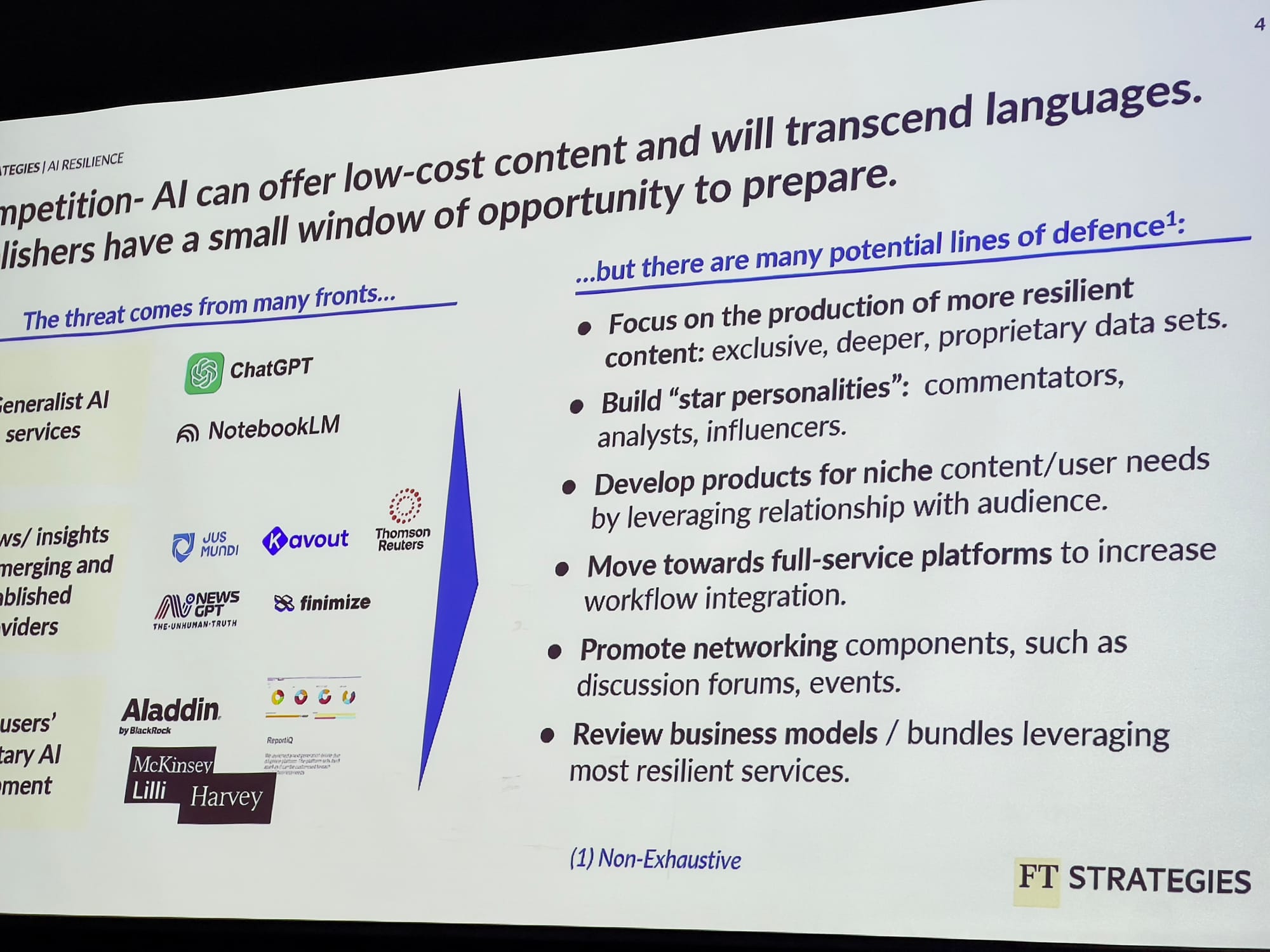
You have a window of opportunity to build new products and relationships while you have an audience. Once you lose the audience, you’ll find it much harder to get it back.
So, look at how replicable your content is. But you also need to keep working on a healthy top end of the funnel.
Sam Gould, AI lead, FT Strategies

The previous panel made a clear case for blocking. But now is a good time to prepare for what might unfold in the future. AI interfaces are disrupting how readers find our content.
Stack Overflow traffic has collapsed. All the queries that I would have once taken to Stack Overflow are fully solved by ChatGPT. More and more people are taking queries to chat interfaces. But we are seeing rises in referrals from AI sources. It’s a small but growing channel. But, it’s hard to build a strategy around this, as any tweak in the product could impact referrals.
Younger audiences are going to AI interfaces — but clicks from AI can be higher value. There could be some very interesting segments coming from these channels.
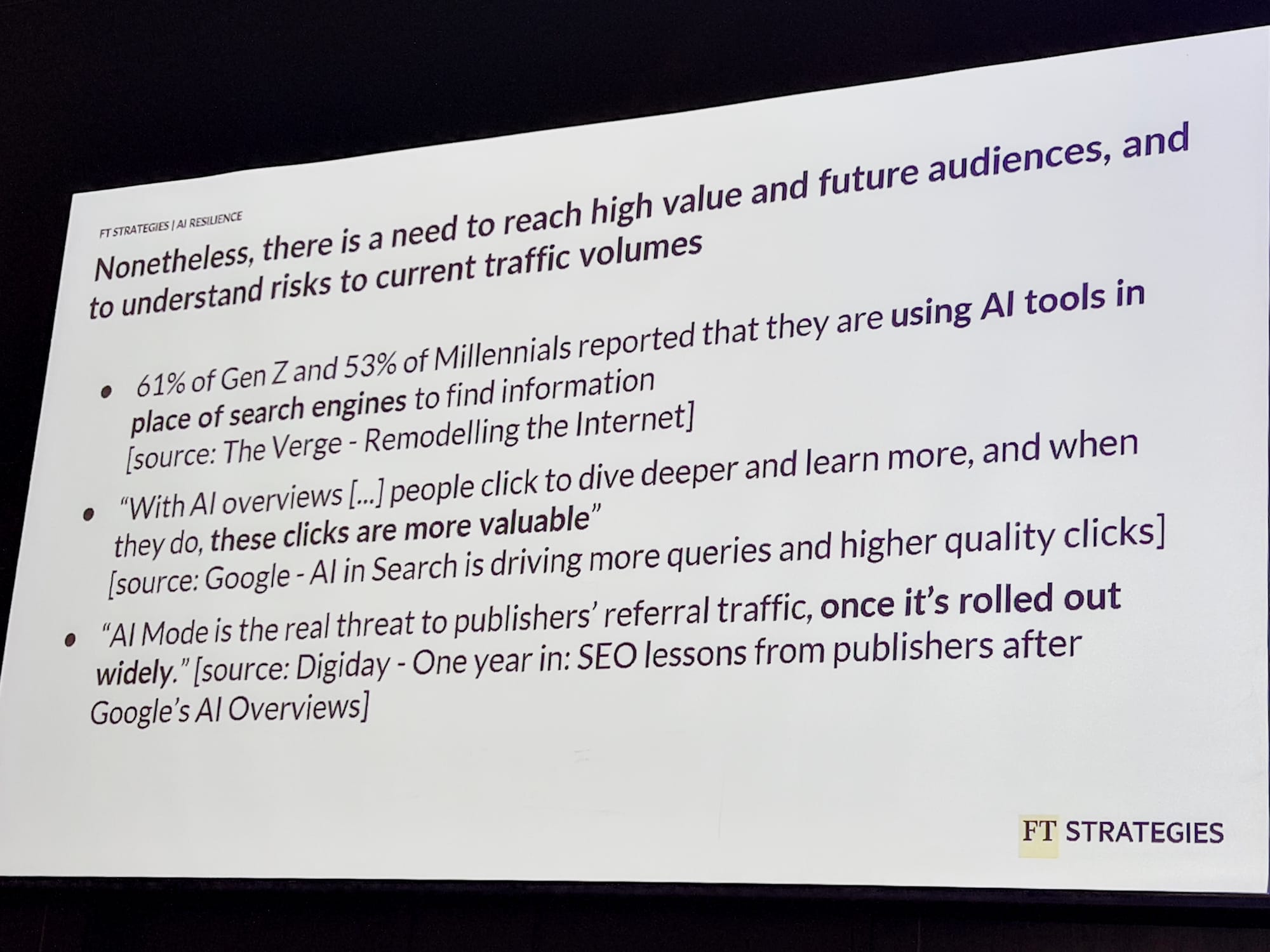
Publishers should look into the user perspective. What are the user needs being addressed by your current content? What are the searches that lead to people landing out your content? What’s the intent? And to what degree can AI do that? That tells you what content is most exposed to AI risk.
And then you need to work out how to optimise for AI-SEO if it makes sense. But you need a feedback loop to monitor if these tactics are working.
Publicly available structured data for general audiences will be the first impacted. They’ll get there on unstructured data. Think about what is unique data.


