

The real AI Opportunity
In the rush to “keep up” with emerging technology, some publishers are missing the real opportunity

In between marking, tax return work and planning a shift in direction for some of my work, I've been trying to deepen my knowledge of AI and how it can fit into workflows, practically and without undermining our reader relationships. This matters. AI is here to stay, we can't uninvent it, so we need to figure how and where it can be useful. But sometimes, the focus on the technology can blind us to the true opportunity of the moment.
Chris Sutcliffe, co-founder of Media Voices, managed to perfectly sum up the opportunity being missed by so many publishers right now:
Trust in news producers is still low across the board. Now is the perfect time for news businesses to shout about how they're still doing shoe leather journalism, writing it all up manually, and how that shows how much they value their audiences. It's a selling point! 'We value you enough to take the time to do this properly, so please value us enough to pay for it'.

That this opportunity is being squandered baffles me. AI is neither expensive nor hard to use. It is borderline ubiquitous, as the tech companies force it down users' gullets, like foie gras producers force-feeding geese. So, using it gives you no competitive edge on its own. Indeed, by using AI to generate content, all you're doing is training your readers to think of your content as something generic that anyone can produce.
Just as the Internet, blogging and social media unleashed a torrent of content unlike any humanity had seen before, AI will turn that torrent into a Tsunami. Why the hell would you join in?
This is the point I was making with the “reverse centaur” reference last week. Use AI to enhance your USP, not to replace it. Be a centaur, not a reverse centaur. And, for most journalistic publishers, your people, their research, their adherence to facts and their writing skills remain what sets you apart from the endless sea of content out there.
Other industries are grasping this point.
Content for the content god, slop for the slop throne
If I might make a slightly offbeat point of comparison (but one Chris will probably appreciate), Games Workshop – you know, the Warhammer people – get this. At their results a couple of weeks ago, the massive miniature company announced this:
Games Workshop has banned its employees from using AI in its content or designs as the fantasy games specialist seeks to protect the intellectual property that has propelled its rise to the FTSE 100.
The group, which makes games and miniatures based around the tabletop fantasy Warhammer, said on Tuesday it was taking a “very cautious” approach to the technology and had set an internal policy limiting its use.
Kevin Rountree, chief executive, said he was not an artificial intelligence expert but added: “We do have a few senior managers that are: none are that excited about it yet.”
What that company understands is that a company whose business is based around creativity – building, painting, kitbashing models – tends to attract people who appreciate creativity. And those people are unlikely to value raw materials generated by AI in the way that they do the work of human creators.
The FT comments section gets it, too:
This is surely the way of the future: firms that value human creativity will command a premium over slop factories. Well done GW and may more firms make similar proclamations.
And:
The God Emperor of Mankind abhorred AI, who are we to disagree? Jokes aside and given the strong feelings among GW’s fanbase on this issue, this feels like an eminently sensible move, and a bold one.
God bless you, fellow FT-reading geek.
The human as competitive differentiator
Now, apply that back to journalism.
AI is already so ubiquitous there are, for examples, whole subreddits devoted to figuring out if things are AI.
Fiance's coworker showed her this photo of her boyfriend. We think she is getting scammed.
byu/ColeIsRegular inisthisAI
(I'm considering setting “two hours browsing this subreddit” as a task for students on a new module next year, as the verification skills on show are often truly impressive.)
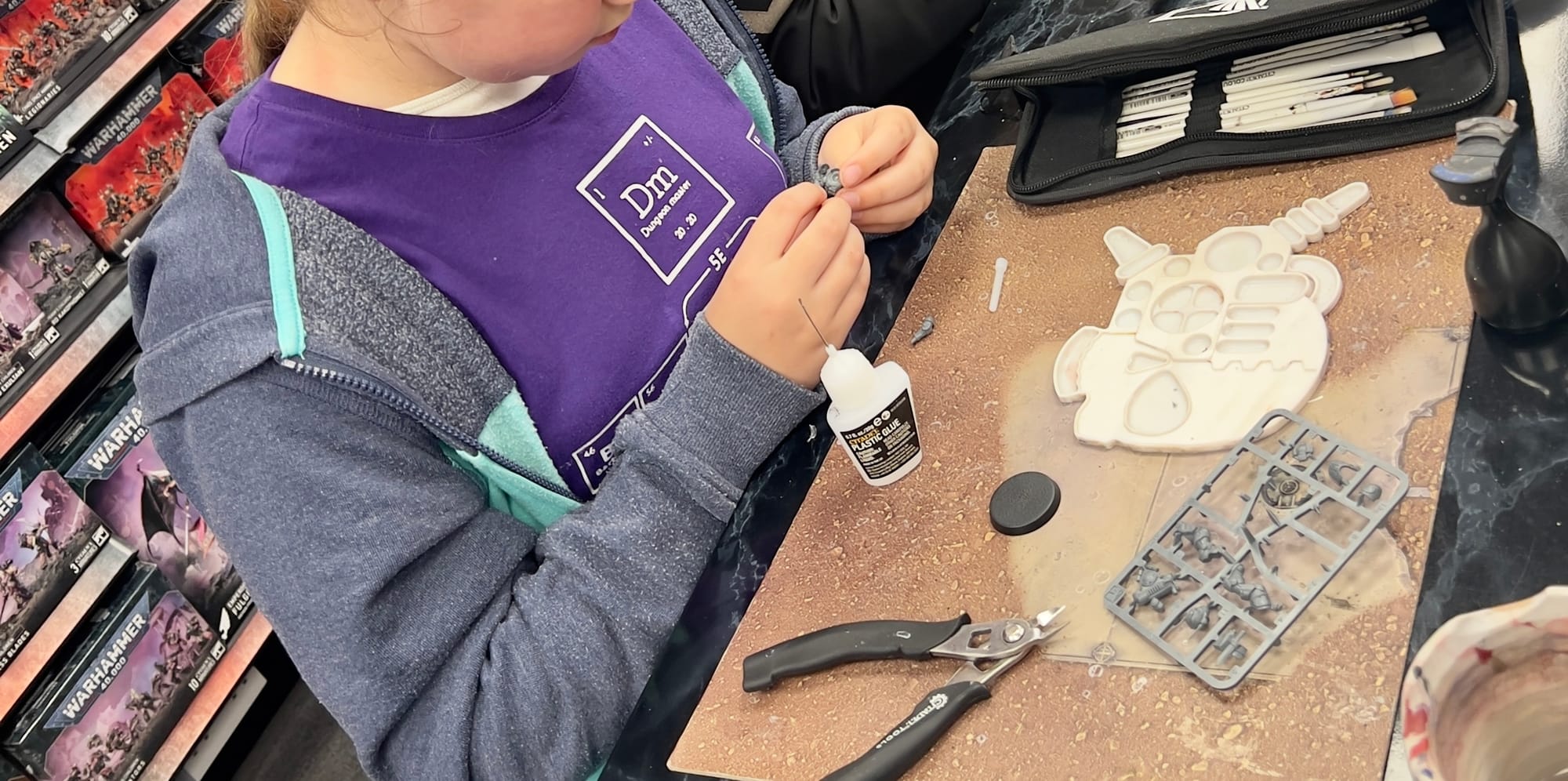
By generating your core content with AI, you start to erode your relationship with your audience. It's a truism of audience strategy work that people form relationships with people, not with brands. So, for example, Warhammer or The Rest Is History are brands, which are social objects that people gather around to form relationships with each other. But the presenters of the podcast are real people that audiences form parasocial relationships with. In the case of Warhammer, the social relationships (as I've discovered, having been dragged back into the hobby by my younger daughter) are with fellow players, and the shop staff who run events and give lessons.
By generating journalistic copy with AI, you are breaking the core bond between creator and audience. You're turning your core product into a commodity. Now, for a while people might treat your (lessened) brand as a social object, and gather around it as a community. But the bonds between each other will be stronger than those between the community and the brand. And they can head off and do their own thing, without you.
And then your audience is gone.
The Climate Change comparison
In many ways, I see publishers' rush into AI generated content as being like tech companies and their rush into AI technology. LLMs and diffusion models are hungry for energy and water, and are making it far less likely that the tech giants will hit their climate goals.
Similarly, just as the publishing industry is waking up again to the value of community and audience, we're in danger of squandering the good work done and the relationships we're building on the altar of AI. We're so scared of screwing up another technology transition, that we're screwing up our audience relationships instead.
That's not to say that we should ignore AI. That would be equally stupid. But we need to be smarter about where it delivers value, and where we can safely find efficiencies with it. And, having had a frustrating few days trying to work some new AI tools into my own workflows, that might take more work than people are prepared for.


