

New pathways into journalism
A Substack missive from a former student gave me pause for thought


I do like to keep up with former students’ work. But once in a while, that can be troubling to my mental equanimity. Certainly it was last month, when I was flicking through my emails. I spotted the latest newsletter from an MA Newspaper graduate – Isolde Walters – in which she had some negative things to say about her time here at City (as it was then).
Now, I didn't take that criticism personally. I was but a humble visiting lecturer back then, who only taught her for 20 hours of a full Master’s. I was a small drop in the ocean of her learning. But it always saddens me when any student I’ve taught leaves their time at City St Georges’ unhappy with what they got for their outlay – and especially someone as talented and sparky as I remember Isolde being. She was in a very strong cohort, full of some big personalities and talents. For example, she was a contemporary of the late David Knowles, although he was on the MA Interactive, rather than MA Newspaper.
Here’s what she said:
To the uninitiated, City is probably the best journalism school in the UK. I’m not sure it merits that reputation and it certainly isn’t selective - if you can pony up the cash for the masters, you’re in - but many, many successful journalists have happened to go through City. It becomes something of a self-perpetuating loop: the alumni heavyweights help out recent leavers and those recent leavers clamber up to become heavyweights who then go on to help recent leavers etc. An old boys’ network of sorts.
A few things worth noting here:
- Because of the way that UK universities are funded right now, there is always pressure to take as many students as we can. As far as I can see – and I have no direct role in recruitment – City St George’s does a good job of walking the line between taking as many students as possible within the constraints of the number of staff we have, and making sure that the people we take have both the abilities and the interest needed to make it through the course and take away value from it. It’s certainly not true that everyone who applies and who can stump up the money gets offered a place.
- The self-perpetuating loop she describes is absolutely accurate. I mentally call it the alumni flywheel. There’s a reason it works that I’ll come back to because I think it’s important. But yes, we take a very great deal of pride in the fact that we maintain good relationships with our alumni, that they comes back as guest and visiting lecturers, and that working relationships develop between them and recent graduates. So, again, yes, that is an old students’ network. (Given the number of our graduates who are female these days, I can’t quite accept the “old boys” framing.) But – and this is an essential and big but* – the moment we stop turning out graduates who are newsroom-ready, that flywheel stops turning. Our graduates hire our graduates because they know they can rely on them to be skilled, committed, and ready to work without handholding.
Although, looking to the future, I do think one of the most important paragraph’s in Isolde’s post is this:
I did Newspaper Journalism - and shouldn’t have. Newspaper was the most prestigious one. But I really should have gone for Magazine Journalism which focusses on the things I enjoy and am good at: long form writing, features etc. I am not a news hound, never have been and never will be. Even my papa told me to ‘do the one you actually want to do’.
And yes, I suspect she’s right. If I’d done an MA before I went into journalism, I’d have regretted taking the MA Newspaper rather than MA Magazine. I’ve always been a long-form/features/multimedia guy, not a newshound.
The future of journalism education
The world has changed a lot in the decade since Isolde graduated. That shift is why that paragraph of Isolde's has been living rent-free in my head since I read it a couple of weeks ago. It sums up a challenge that really is uppermost in my mind going into the 26/27 academic year — because there is no more MA Newspaper. Our final graduates from that Masters have just completed their degrees.
Instead, we’re teaching the first year of our new MA Journalism, with a very marked uptick in numbers. And it will be – and has to be – more than MA Newspaper with the serial numbers filed off. That’s a significantly more challenging thing for those of us in the teaching team, led by the very capable Paul Solman, to approach in 2026 than it was in 2016 – or even in 1995 when I was entering journalism. The old news/features/subs split looks incredibly simple compared to today’s multi-axis journalism world, with short and long form both mattering across word, images, video, and audio – and multimedia aggregations of those.
And, perhaps, one of our ongoing challenges in journalism academia will be helping students navigate that. We need to be able to welcome people interested in a career in journalism, and help them find their way into the style of journalism that is going to suit them. And, of course, where they can do financially sustainable work that matters.
Check back with me in a year. I might have a better idea of how that will look by then…
Anyway, you should read Isolde's whole piece. It's a really fascinating look at how it's felt to be a young(ish) journalist navigating the last decade in the media world:
 Isolde Walters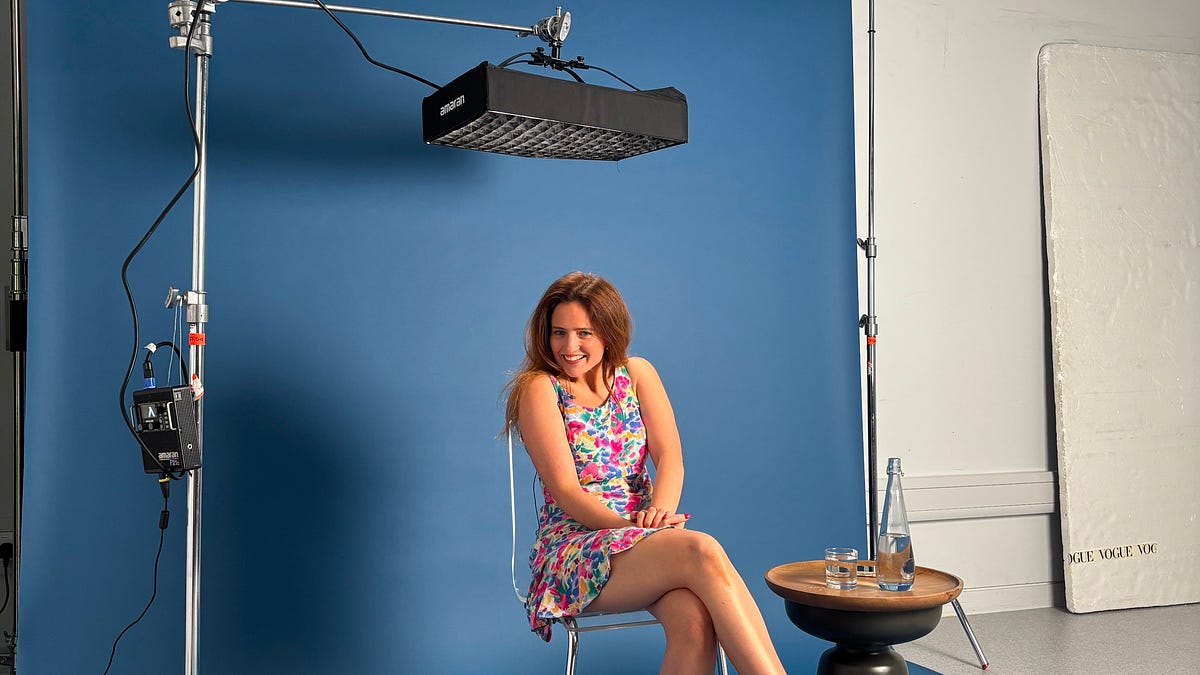
*Yes, my sense of humour is informed by my 11 year old. Thanks for noticing.


