Digital News Report 2026: the year that everything changes
2026 is the year where social platform come to dominate news distribution – and video platforms in particular. What does that mean for traditional journalism businesses?

Earlier this week, the annual Reuters Institute Digital News Report, and so I dragged myself out of my bed at an ungodly hour to get to Canary Wharf for 9am. But it was worth it. Hearing the discussion around a report that proves that we have crossed a tipping point on how people find their news is a good trade for the couple of hours of sleep I lost.
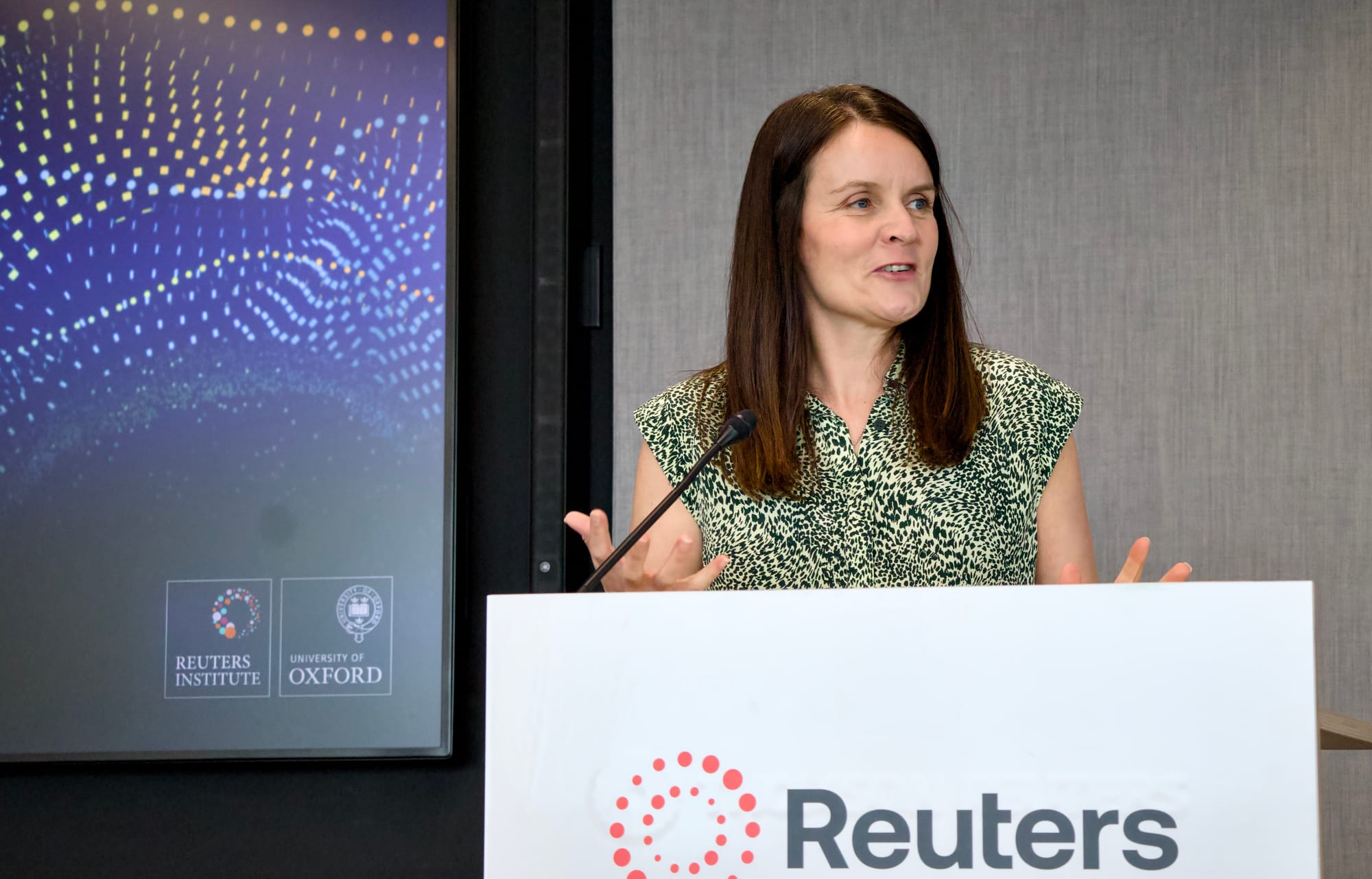


Jo Webster, Rebecca Vincent and Mitali Mukarjee
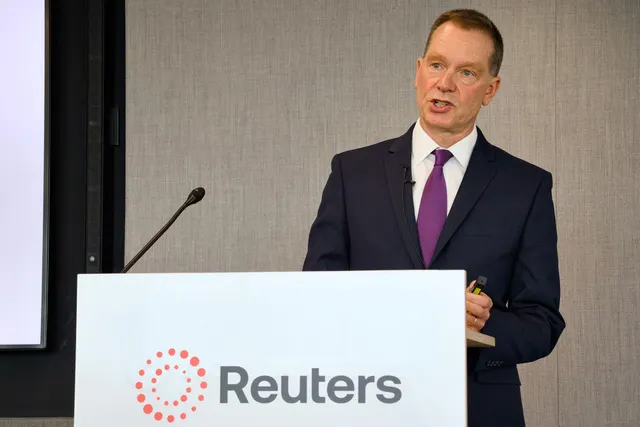
After the usual scene setting from Reuters employees like Joanna Webster, global editor, agency news strategy and Rebecca Vincent, director of innovation and insight, as well as Mitali Mukarjee, director of the Reuters Institute, the new lead author Jim Egan took the stage to talk about the core changes in the report.
Jim Egan: the platformisation of news

It’s easy to get lost in the details of the data of the report, but as lead author Jim Egan pointed out as he introduced the findings, there’s lots of instability in the data this year. And that underpins it as a year of some dramatic changes after a more stable few years preceding it.
However, he was clear on the key message: the platformisation of news. Indirect discovery of reporting via third-party social media platforms is now the dominant vector. I suspect that will a surprise for most people reading this, but for different reasons. It was only a few years ago that I felt compelled to write about the fact that social media isn’t dead because that seemed to be the received wisdom in the industry. And indeed, it isn’t. It’s dominating news discovery. Our perspective was skewed by the shift in platforms and the drop in referral traffic from social media.
For others – probably the younger readers, it’s a surprise that it hasn’t been the dominant mode of discovery until now. And, of course, one clear result of this that the younger generation will be most attuned to is the rise of what we’re calling “news creators” as a major force in the journalism world.
The declining web
As Egan went on to explain, this in is the context of another significant drop in trust in journalism after a few more stable years. And news is becoming less central to people’s lives. They’e abandoning websites as they once abandoned newspapers.
“There’s a drift away from traditional sources to platforms – shifting away from owned digital properties, which are now behaving like traditional formats,” said Egan. “They are no longer the preferred sources of news for any age group.”
However, interestingly, and revealingly, trust in individual news brands is holding up quite well. Understanding why and which brands are making this work for them is like to be a critical skill for navigating the next decade in journalism.
Podcasts, TV, and AI
News podcasts are not growing significantly (apart from Australia). That’s not podcasts generally — just news ones. Is that a question of saturation, or of formats? Something to watch.
The pivot point between TV and social media as key sources of news appears to be around 35, with the older cohort more likely to get news from the TV. Worryingly, news disengagement is growing, particularly among the younger generation. More people under 35 were not consuming any Iran news at all than were following it. And ⅓ of under-35s in the US are not using TV or web-delivered news at all.
Use of chatbots has gone from 7% to 10%, and usage of chatbots in the UK is among the lowest in the world- 4%. Audiences not really found a single use they love for news from AI chatbots. The reach of UK news brands hasn’t changed much. But in the US, there are big drops for some news brands.
Trust
29 of 48 markets are seeing drops in trust. And there are other indications of a nervous audience in the data, including growing concerns about fake news. News avoidance is up — 48% globally, 50% in the UK. It’s more marked among women.
“People are more concerned about the trustworthiness of the general news ecosystems, but still trust existing news brands — even if their relationship is more elongated,” said Egan.
Trust in news generally is higher than that that found on social media or AI. UK trust levels in brands have barely changed. In the US, trust in some major news brands has gone down more than general trust events have – a symptom of the very charged political environment of the US right now.
Video
Pretty much all growth in online video is going to third-party platforms. Publishers are losing both market share and seeing absolute terms decline in video traffic. And it’s not all about short form and mobile-friendly video.
Younger people are doing more longer form consumption on YouTube. And the TV set is taking on a new role — as container for YouTube or other apps. Linear, broadcast TV might be dying as a format, but the device itself might have a bright future ahead.
Creators
I think myself pretty close to this space, but even I was surprised to hear that a quarter of respondents globally are using news creators as part of their regular news diet. In some countries, the percentage is much higher. For example, in Thailand, that’s nearly half of people using news creators.
Reassuringly, only 13% of people globally are finding news creators to meet all their news needs. But they seem to be playing a complementary role in the news diet: creator usage seems to drive people to use the established brands more.
Thankfully, only 3% of people globally are relying exclusively on creators. Creators are easier to understand and more entertaining — but less trusted. But the more people use them, they prefer them. So we can’t ignore this emerging trend.
News Values
One unexpected piece of good news from Egan: the percentage of people who prefer news to support their point of view has gone down! However, UK audiences are very unhappy with how we are covering stories — and that’s not true of every country. In Norway, people are generally happy about stories.
I’m genuinely beginning to wonder if we’re reaching the limit of tricking traditional wine into new digital bottles, and the UK media needs to more throughly reinvent itself.
Public service news? Only 37% of people thought it was positive for society. Political leanings play a big role. Mostly, the left are more positive about public service news, than the right. Not a surprise — but good to see it clearly in the data.
Paying for news
Some quick figures:
- 17% pay for online news globally.
- 10% in the UK.
- ⅔ are doing so via recurring payments rather than other methods.
Why do they pay? Unique, distinctive content is still the fundamental attraction. But it’s not just about personal benefit — there’s a strong signal that people will pay to support outlets that share their values.
Panel Discussion
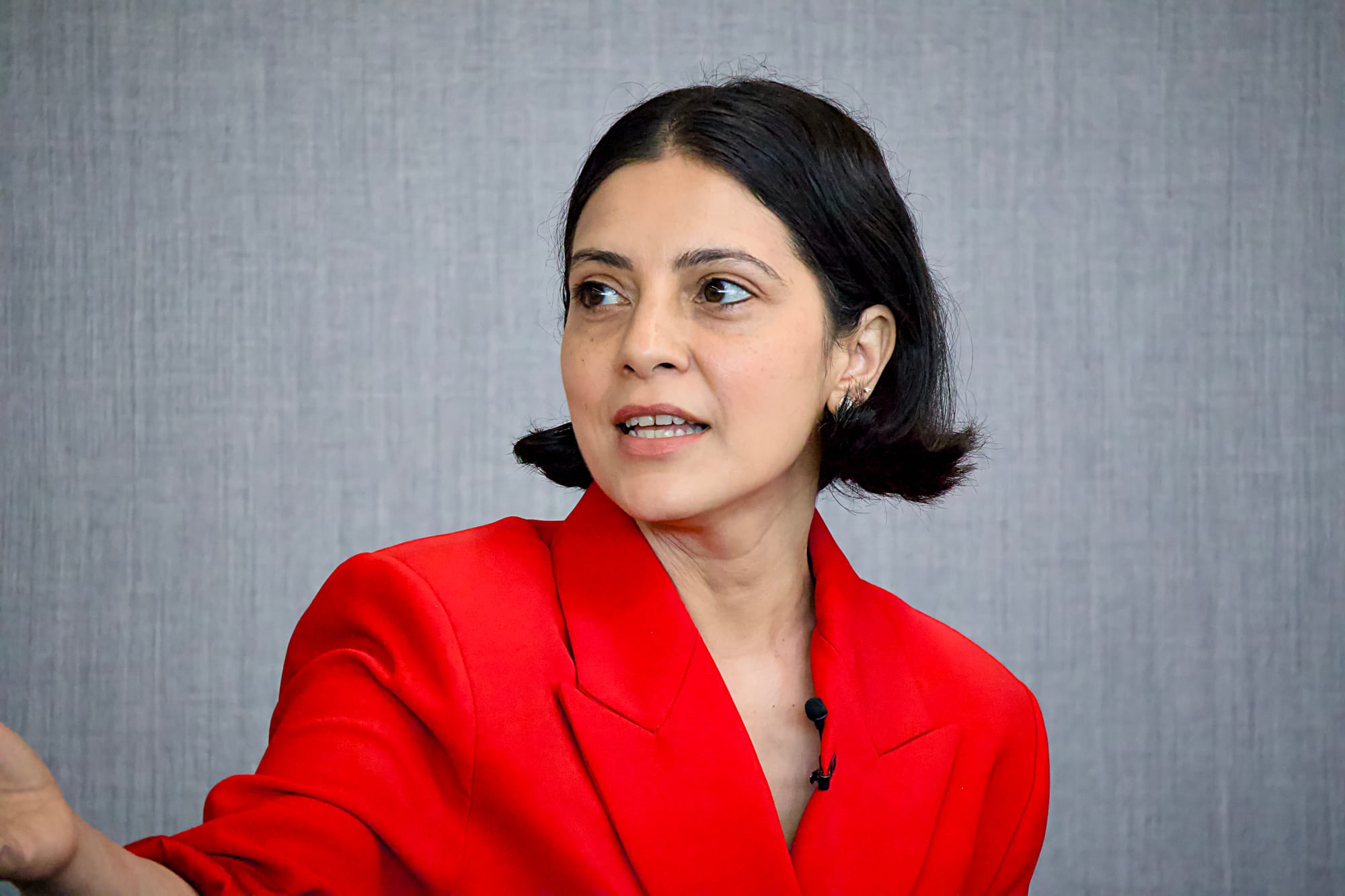
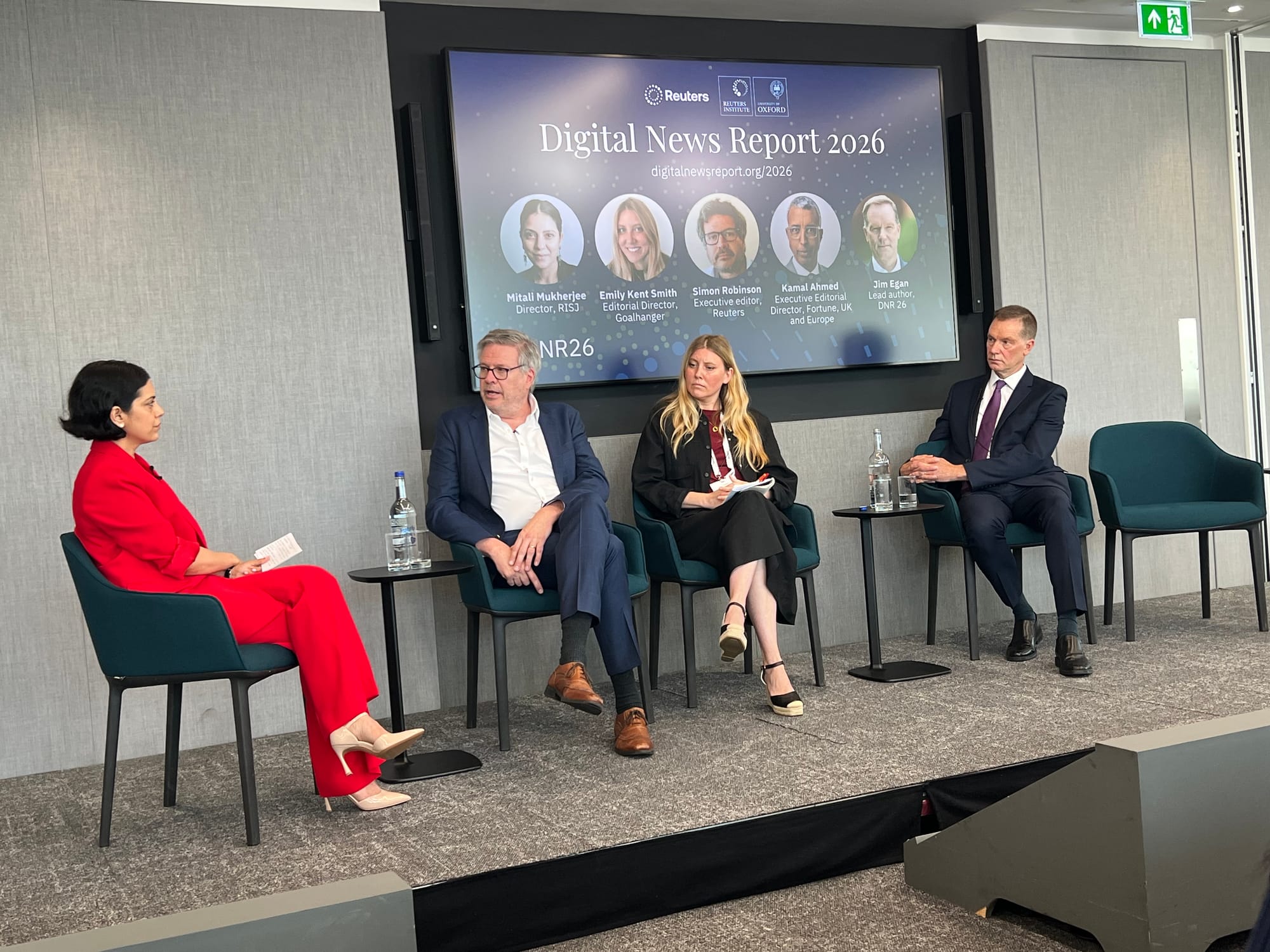
The launch event concluded with a panel discussion, chaired by Mitali Mukarjee.
The Panel
- Simon Robinson, executive editor, Reuters
- Emily Kent Smith, editorial director, Goalhanger
- Jim Egan, lead author, Digital News Report
- Kamal Ahmed, executive editorial director, Fortune UK & Europe
On the platformisation of news

Simon Robinson: Many websites saw this coming. Most large traditional newsrooms produce content for the platforms. The content remains theirs. But this has massive implications for revenue — if you’re not driving audiences to your platforms, it’s harder to make money. The industry has seen this coming and has adapted — but it’s not perfect.
Kamal Ahmed: It’s about understanding our audience and what creates value for them. The Fortune 500 index started in 1955 — it was a really clear proposition to our audience and an example of full-service provision. We see newsletters as a way of giving our communities specific material for them specifically. It’s a tool that allows us to differentiate our audiences. And we’re emphasising that it’s human made: journalists spend time meeting people, talking to people. And we have an understanding of how our audiences want to consume. Social media is just one channel — but it’s a very difficult one to monetise. But events, newsletters, and magazines are where real value is. And that events part… is really where value is created.
Robinson: The great hope is that is you build audiences on platforms, and when they get a job they’ll subscribe. I don’t think that will happen now in the way it has traditionally. They won’t start watching the evening news — so we need to figure out how to deliver for them in a way that works for the companies, too.
Redefining journalism
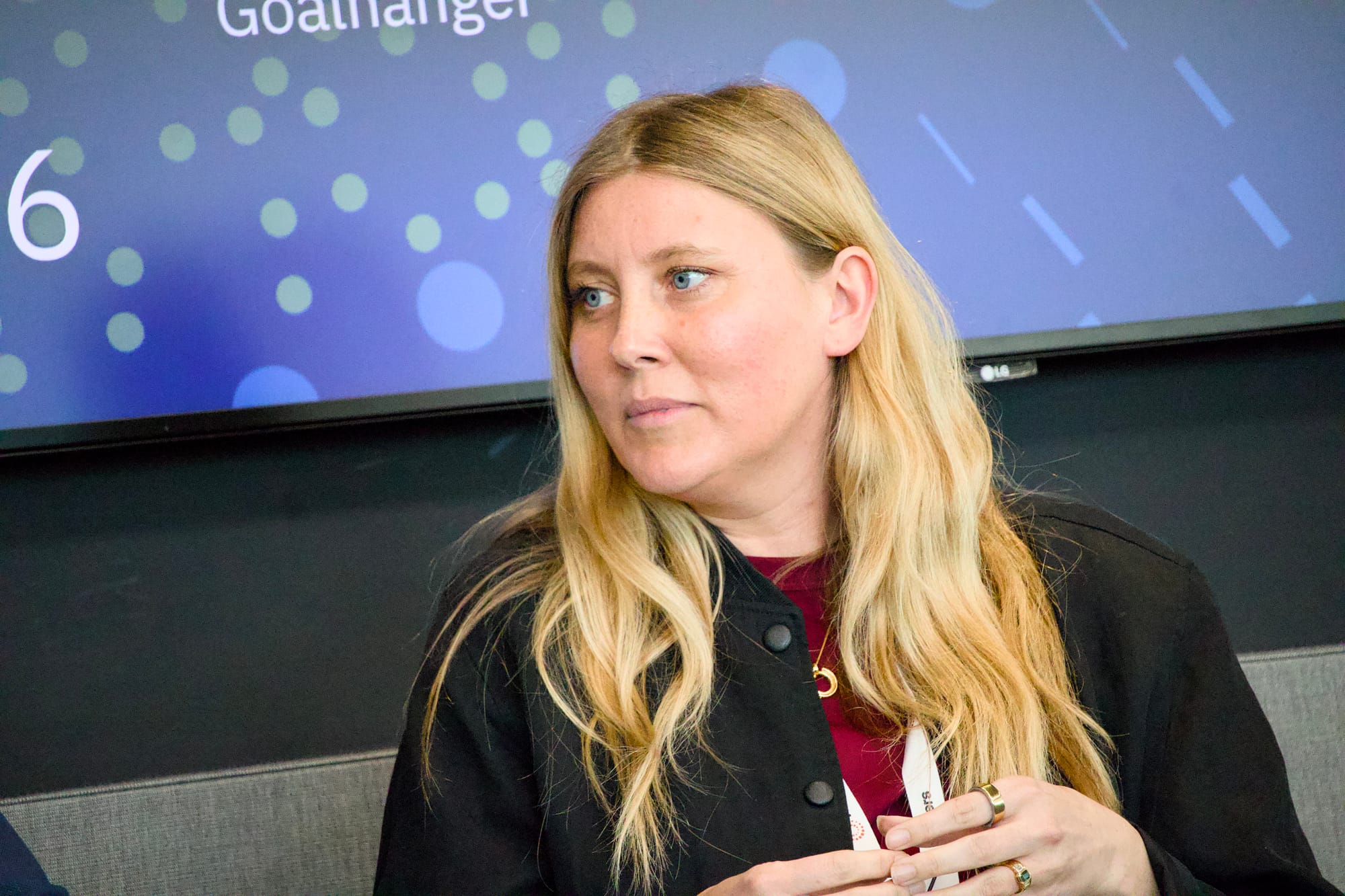
Emily Kent Smith: What is journalism? People listening to The Rest is History are incredibly informed — but are not news junkies. A lot of the ideas behind Goalhanger podcasts are offbeat — they probably won’t be commissioned by traditional companies.
Goalhanger is making money with membership models, and other things like the members-only Rest is History festival and t-shirts. One of their (highest tier) Athelstan members said that they support the podcast because it “feels like I’m having a pint with two great professors”.
She joined partially to launch their newsletter strand. Their success has come from bringing experts together to comment on things, including news events. The key is depth, expertise, and intimacy.
Responding to news creators
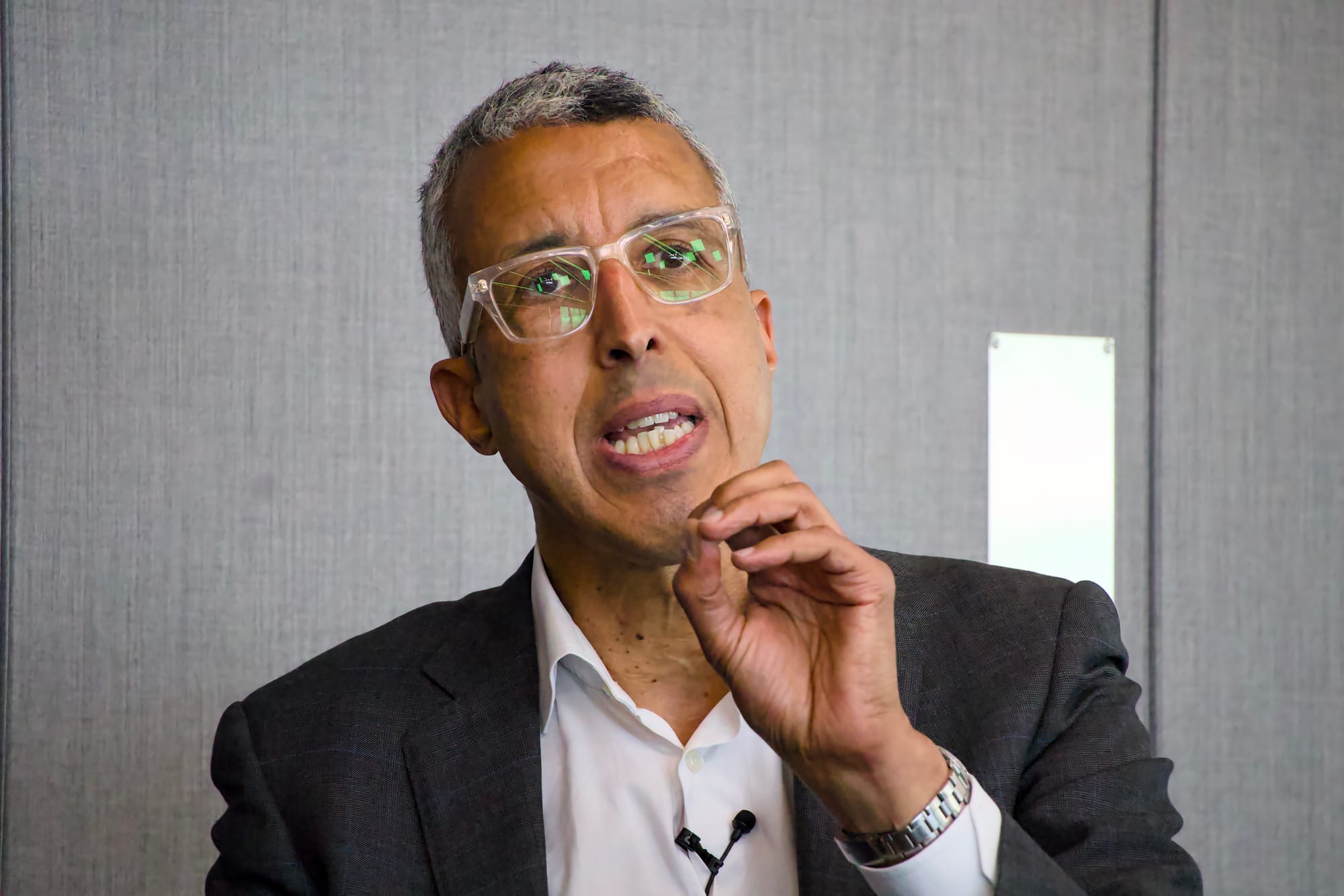
Ahmed: We have a very specific audience — c-suite, or those aspiring to be them. We do get deep engagement via the written word. But it would be silly to ignore video. We do have video podcasts. We are looking at different ways of creating value for the audience.
But it’s also about expertise and how you want it and when you want it. Our audiences are very PC-based — and are not really scrolling for news when they’re on their phone. We’re about high-value moments when they come to Fortune. How do we transfer the engagement on short form on their phone into engagement with long form conversations? And how do we do it in a way that gets more than 50 views a week…
Robinson: It’s particularly challenging for a newsroom like Reuters that was a B2B operations and has only moved into the consumer approach in the last few years. How do we do it without undermining our values, when there are individuals, who are out there in this space, who are much more opinionated? We really need to get better at that consumer space — but we’re moving pretty quickly.
There is an absolute tension between the way creators approach news — often building off the reporting of mainstream organisations. They’re not in Iran, but they’re using video created by journalists there. They’re doing it in a more entertaining way — but the audience trusts it less. So, the challenges are to maintain our own journalistic standards, but to be more entertaining and relatable.

Jim Egan: Such strong polarisation of views is making life harder and harder for public service media. They don’t have the luxury of focusing on a niche — they need to serve everybody. It is extremely hard as you see these polarising forces starting to tear countries apart.
Leaning into humanity in an age of AI
Robinson: Reuters benefits from being part of Thompson Reuters, which has heavily invested in AI. You’ll see a bifurcation between news which is easily scrapeable — like financial reporting, where we should invest in AI to deliver that, and more human-centred news reporting, which we’ll have the human time freed up to invent in. Our broad strategy is to use AI to automate as much as possible and then invest in the human stuff.
Kent Smith: We’re human-led, based on personalities and depth, and there’s no intention of using AI in an audience-facing way. And audiences are looking for authenticity and depth from us in a way they can’t elsewhere. They want to see Rory Stewart work out what his thinks about something in real time.
“News” is used as too broad a term. We need to rethink about what “news’ is versus what being informed is.
Robinson: Do Goalhanger employees count as journalists? I think they should be.
Kent Smith: People do want to spend time being informed — but not necessarily with “news”.
Egan: The data tells a tough story. People are nervous and worried. We should remember that people are concerned - and they are alive to what is happening. They need news organisations to make sense of it all. Given the hyper-competitive environment on social media, you could argue that news is actually doing quite well despite the range of more entertaining options so easily available.
Kent Smith: People are finding news on one platforms, and coming to us for analysis. The sense of authenticity is important — as well as the sense of what they know and don’t know. Creators are good at this, whereas traditional media reaches too quickly for the answer. People do feel let down, and that leaves a space for alternative media.
Explore the Report