

The Economist in the age of AI
Luke Bradley Jones on why The Economist is less exposed to Ai risk than many, how they're preparing anyway – and why they're on Substack

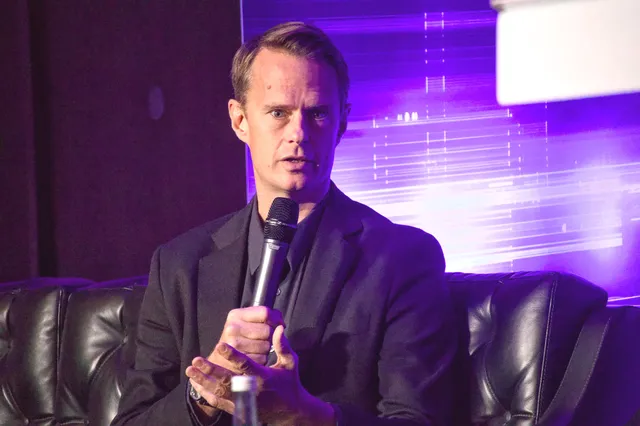
Luke Bradley-Jones, president, The Economist
The theme hanging over the whole conference was the impact of AI on both journalism and, most significantly, on our business models. And the first session dived right into that, with Press Gazette editor-in-chief Dominic Ponsford asking Bradley-Jones about it. He replied that the evidence suggests that publishers in general are seeing a fall in traffic from Google worldwide — although, he suggests, The Economist is less exposed to this than most. “It’s not been a big part of our customer acquisition,” he said. “But we are preparing for the post-search world regardless.”
The Economist’s survival strategy
Bradley-Jones outline his “three Bs” strategy for surviving the AI age:
- Differentiation — what they offer is unique, and can’t be found elsewhere. The human-curated “artisanal” journalism — including the video product.
- Direct relationship with customer — “create good reasons for people to interact with us”. And they’re blocking the AI crawlers. How do you ensure that the customer leave wanting more? AI can help with that.
- Discovery — creating bridges and entry points into the brand. Increasing brand marketing. They’re investing in their social presence. And they’re looking at distribution partnerships, for example with Notebook LLM. And they’ve launched a newsletter on Substack.
“We’re not the first, but we’re part of the early wave of publishers using Substack,” he said. “We see it as an opportunity to nurture a niche audience.”
It’s a newsletter on data journalism, and they see an audience for that sort of reporting on Substack. As none of their existing readers only read that style of article, so they believe that there’s no risk of cannibalisation. The last two weeks’ issues will be free, everything older will be paywalled, via Substack’s own system. The hope is that it will draw in new audiences and become its own, separate revenue stream.
Substack does offer a direct relationship with those customers — but we have their email addresses.
“Yes, we lose 10% to Substack, but we lose money to subscribers that come through Apple and Android.”
The named Economist journalist
They’re also using the other classic mid-funnel play, podcasts, as a tool for building deeper and habitual engagement from their audience. And they’re now looking at expanding that to video, with their experts giving a human take on core subjects.
“It’s an interesting space for us because we’ve never had bylines on our print product, but now we’re creating strong relationships between our senior journalists and our customers.”
He’s not trying to build personalities that are bigger than The Economist brand — he still very much believes in the “hive mind” view of the title. But he does think you can add nuance, flavour and colour through these direct relationships.
What’s stopping their key journalists just leaving and setting up their own newsletter? It’s partly a matter of time. Their core journalists are already writing newsletters, doing video, appearing on podcasts, as well as their core journalism work. They only have so much time.
The AI-conomist
What he’s not doing is licensing Economist content to the big AI companies:
“Why would you licence your content to a competitor? If you look at these AI platforms, they’re end destinations, they’re not looking at sending links onwards. We’re not under any illusions that AI is going to be a source of traffic.”
However, they are working with Notebook LLM. He suggests that isn’t really an LLM in the way we think of it — it’s a useful research tool, and which can allow people to access their journalism in another way now it’s been trained on their work. “It’s shifting the way people access our journalism,” he said.
And they have a lab internal looking at how, in the agentic AI future, The Economist remains one of the few apps people will still have on their phones.
Discovery beyond digital
As for discovery — they’re finding very traditional brand marketing approaches working for them. Linear radio and TV are delivering better results than podcast marketing, for example. And they use out-of-home advert marketing in a targeted way. Right now, traditional channels are performing better for them.
Creating compelling propositions
Bradley Jones thinks we have sacred cows to kill. We need to be taking a hard look at our output, and think about what is unique, and what will be easy for AI to replicate:
“You have to look at your proposition and take a really hard, brutal look at what you continue doing, and what you don’t. Just because it worked in the past, doesn’t mean it will continue to do so.”
Background
- Press Gazette piece on The Economist and AI
- The Economist Group appoints Luke Bradley-Jones President, The Economist


