


The ever-evolving face of social video
If you're still stuck in the “it's all kids dancing” mindset, you're slipping way behind the times…


One of the useful aspects of spending half my week as a journalism lecturer is the way it forces me to keep abreast of current developments across digital journalism. Take, for example, social video. We're working on it with our first year undergraduates right now, and will be exploring it in a podcast context with the MA Podcasting students soon.
That forces me to look around at the current state of the art. And it's impressive how far we've come in only a few short years.
For example, this is from The Times, and their columnist, Fraser Nelson, late of the Spectator's editor's chair (which is now being warmed by one Michael Gove.):
A simple idea:
- Get your columnist to narrate a condensed version of their column on camera, with good lighting
- Use stock footage as B-roll to illustrate the points
- Add some animated data visualisations
Et voilá - a short, compelling and very visual social video on a news theme. We're an awfully long way from the early days of the Washington Post's very interesting, but often painfully Dad dancing in tone, TikTok experiments. We have several years of proof right now that you can do more serious pieces in vertical video formats. And that shouldn't be a surprise - we saw very much the same with the square social video formats in the mid- to late-2010s. They started light and trivial but, as the format developed, got more serious.
What does social video “quality” mean?
There's a good piece from DW's Erika Marzano riffing on the new Pew Research Centre Social Media & News Factsheet. This, in particular, caught my eye:
At Deutsche Welle (DW), we've seen this shift firsthand. When a major event breaks, an attack, a court verdict, a global protest, the first post isn't a polished video. It's often a still image, or a short carousel summarising what's happening, sometimes with a link for more context.
That first post isn't about production quality. It's about presence.
If your newsroom isn't visible in the first hour, you're invisible in the conversation that follows. Data shared by TikTok itself during one of its News Summits organised for media outlets consistently shows that audience interest peaks between 30 and 120 minutes after an event. Miss that window, and the algorithm will push someone else's version of the story.
This a new manifestation of an old idea: that there's more than one form of journalism, depending on where you are in the news cycle.
What Erika is describing here is the classic “breaking news” moment, where speed and accuracy are more important than classic production values. You spend an hour editing something to perfection? You just missed the attention window for that story.
The Fraser Nelson video embedded above is very different — that's more of a explainer/opinion piece, where the potential window for attention is much longer. And which might, for example, gain more traction as a YouTube short than on TikTok or Reels.
He's not convinced that he'll be doing videos regularly, but I heartily endorse what Fraser said in his newsletter:
But I don’t think the format is inherently inane: you have 200 words, 90 seconds, and you have to hone your argument and use them well. If you can reduce the Bible to a word, you can fit an op-ed into a TikTok. So in a era where arguments or our day are made or lost in the medium of short-form video, I thought it worth entering the arena - to see how columns adapt (or don’t).
Format, not platform
Vertical video is a format which needs to be customised to both platform and to audience attention availability. And, after half a decade, we're finally beginning to get that message.
I'm really looking forward to seeing what our students, for whom this is a central format in their media consumption, produce, when they start bringing their growing journalism skills to bear on their videos…
 Erika Marzano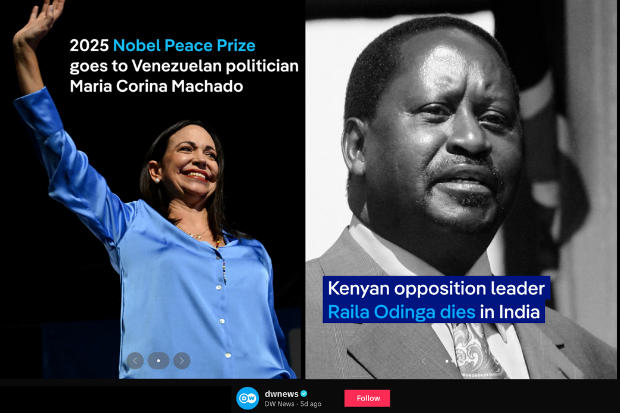
Need more insights on social video?
My colleague, Matt Capon, produces an excellent newsletter (yay!) on social video, which you can subscribe to via LinkedIn (boo!).
Should you need more persuasion than my recommendation alone, you could try these sample issues:
- Journalist or Creator? Increasingly, that is not the question…
- Trump’s TikTok Deal: Is Gen Z’s Newsfeed Now in the Hands of Media Moguls?
- TikTok, Trust and the Newsroom: Young People Don’t Hate News — They Just Want It to Make Sense


