


Community on news sites: 2006 versus 2026
Have we managed to learn anything in two decades?

Exciting news from the Audiencers Festival, which I’ve always wanted to attend, but never had my applications accepted, about a project one of my former students is involved with – although not everyone agrees, as you’ll see.
Over to Charlotte Tobitt at Press Gazette:
Wired is launching a new forum-style app which lets readers interact with its editorial team.
The app, said to be launching “very soon”, is set to feature forums on which subscribers can interact with Wired journalists about the title’s key coverage areas across tech and politics.
Arielle Goldstein, audience development manager at Wired, said the app will serve as a “community power play” and is one of several ways the brand is aiming to keep readers on its own platforms rather than social media.
This is an interesting experiment. Another step forwards in the news business’s careful return to owned community building, rather than handing everything over to the social platforms, right?
Well, journalist and former Guardian technology editor Charles Arthur doesn’t think so:
Oh, sure, the thing every journalist absolutely wants more than anything else in the world is to have readers directly contacting them in a forum to tell them what they thought of what they wrote, and interacting with each other to discuss the content. More. Than. Anything.
So, yeah, not universally welcomed as an idea.
The community backlash
I’m a dedicated reader of Charles’s (mostly) daily newsletter, The Overspill. It’s an invaluable source of compelling links with some analysis. But, for once, I’m going to take issue with his commentary. Why? Well, to give you an idea, he asks some questions which I can answer, in part:
And has the Audience Development Manager (who one suspects has not done a lot of direct interacting with that audience) considered how the forum is going to be moderated and who is going to pay for that?
Arielle has spent a couple of years as a community editor at The Telegraph, which has pivoted hard into community as part of its membership revenue strategy. So yes, she’s worked in an environment where professional moderation is needed, and the costs and tech involved are known.
Has she spent as long interacting with the WIRED audience? No. She’s relatively new to the position. But Condé Nast’s audience strategy is under the aegis of Sarah Marshall, who has been in the trenches for the best part of 20 years, so knows what she’s doing…
Does she not know the history of what happened to comments on news sites?
She should do. She’s had to sit through several of my lectures on this topic, and survived to tell the tale. Arielle is a graduate of one of our journalism Masters at City St George’s, and she took my Audience Strategy elective, which goes into the history and challenges of community management at scale, as part of the module.
Community versus comments
This is a terrible idea. How long do we give it to survive from launch – six months? Nine?
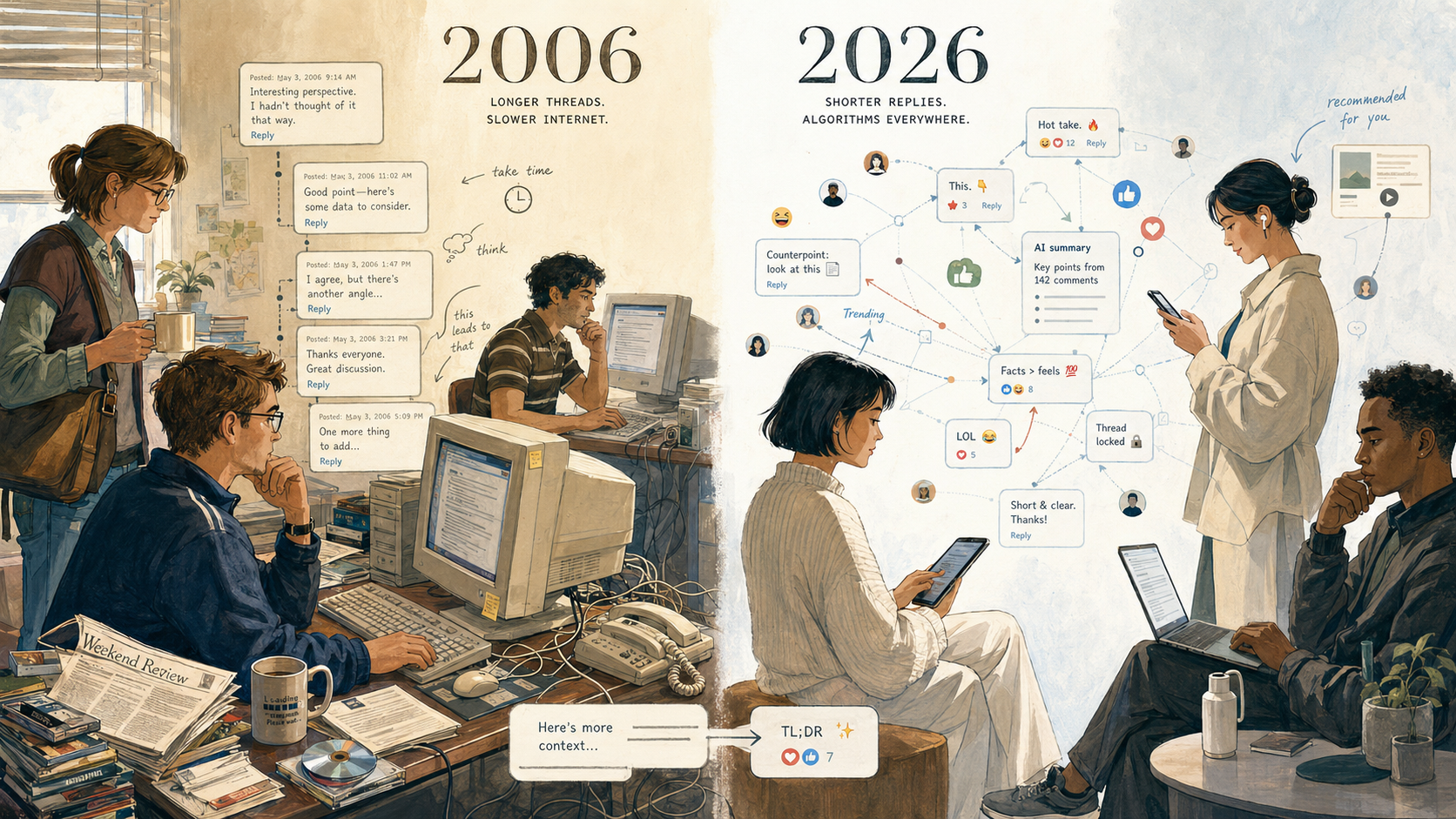
Maybe. Certainly, there is a chance it will fail. But there is a big – not transformative, but still big – difference between the community efforts of 20 years ago and those of today. And it's that today’s efforts usually prioritise paying members over free “drive by” commenting.
To go back to the Press Gazette piece:
“So you might be thinking to yourself, can’t people just go to Reddit for that? The answer is no, because our journalists aren’t hanging out on Reddit. They will be in the app, they will be able to answer your questions in the app, and really drive discussion.”
She added that this means a paid subscription will offer a “rapport with the subject matter expert who you’ve been reading for years, and who you want to continue to build a relationship with”.
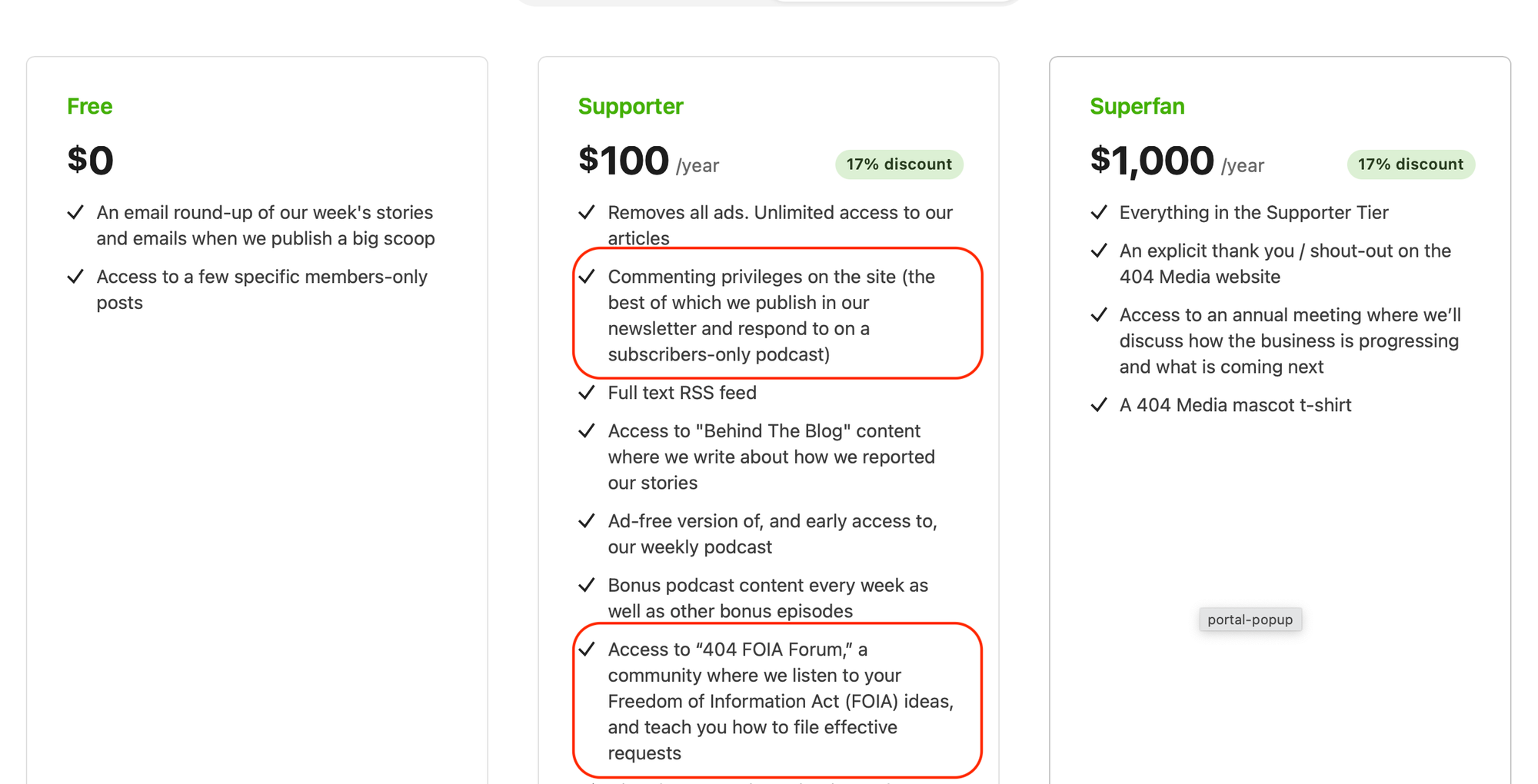
So, yes, this is a community offer for paid members. That’s a very different ball game from the old days of comments, when it was open to anyone with an email address. This is an increasingly common approach. You’ll often find sites like 404 Media adopting this approach. They even tout it as a benefit of membership:
The problem of pay-to-access community
In essence, you swap one problem for another. With “open to all” community building, you tend to get the difficulties of scale. The volume and toxicity of comments are difficult to manage. With “paid members only”, you have the issue of getting any activity at all. You’re working with a much smaller pool of potential community members, and that means you have fewer conversations starters and regular users. Success or failure comes down to the efforts of the team in developing and building community, not just commenting.
So this effort could fail: but it’s just as likely to fail through a lack of interaction than a surfeit of it…


