

Two examples of why publishers need to own their audience relationships
When other businesses get between us and our readers, we become vulnerable to their decisions.

If you’ve been reading me for any length of time, you’ll know I’m obsessed with publishers, publications, and journalists owning their relationships with audiences, not “borrowing” them from platforms and other businesses. I usually frame that in terms of the benefits – but how about the threats of not doing it?
Right now, there are two swords of Damocles dangling over publishers – one physical, one digital; one UK-based, one global – that could destroy titles and businesses that haven’t truly absorbed this idea. And the publishers have no impact on the chances of that sword falling.
Let’s go physical and local first.
UK Magazines after TG Jones
This first came to my attention because, of all things, a recommended post on Facebook. This may be the first time the Facebook algorithm has delivered me something unexpected and useful. It was from a group (which I’m not a member of) called The Mighty World of British Comics, and it seems to be where aging fans and creators of UK comics from the Beano to things like 2000AD hang out.
And they’re worried:
Does anyone realise that if TG Jones, goes under in the UK.........magazines and comics, will collapse? They are the only UK retailer for mags and comics left in the UK.
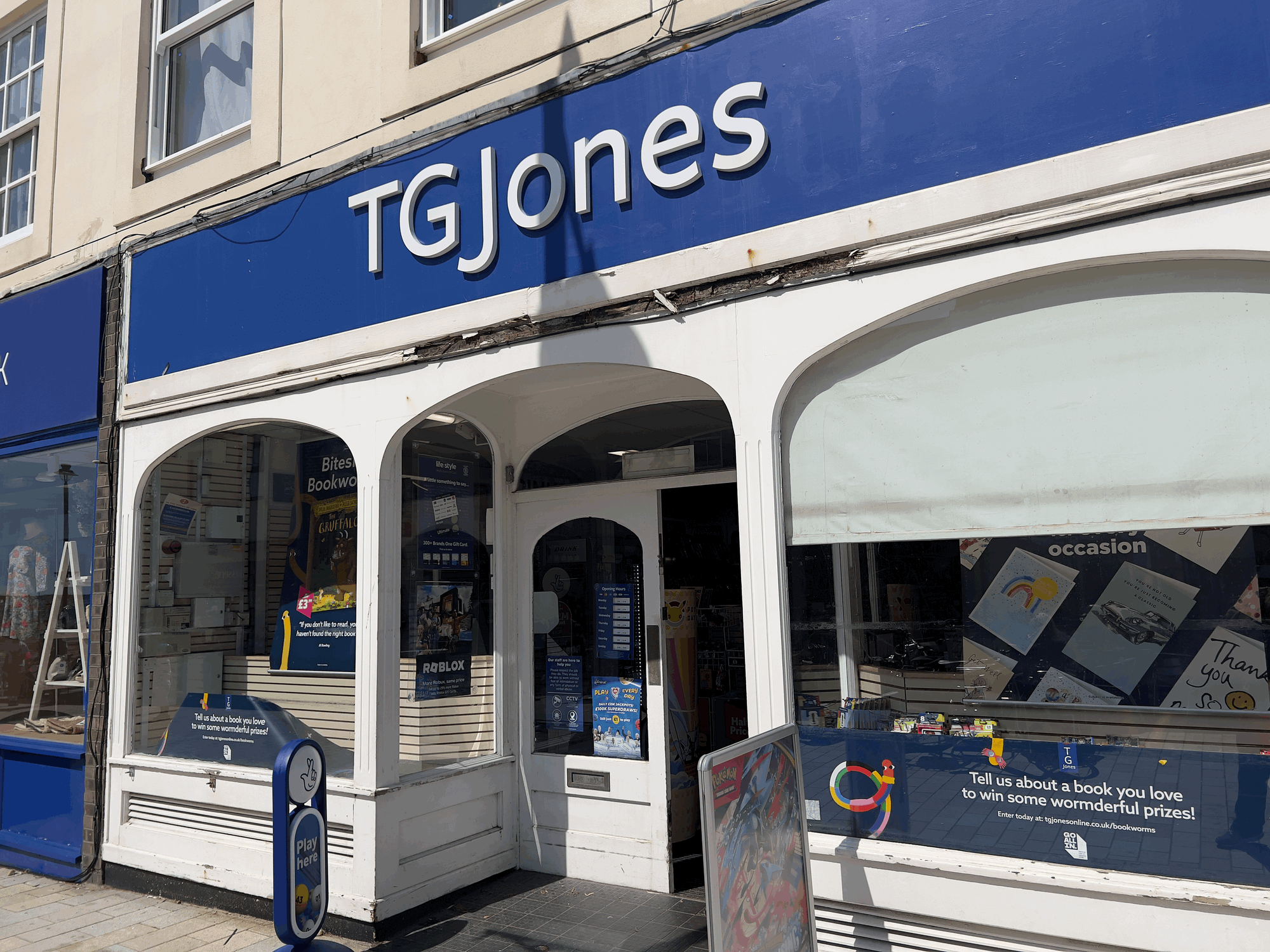
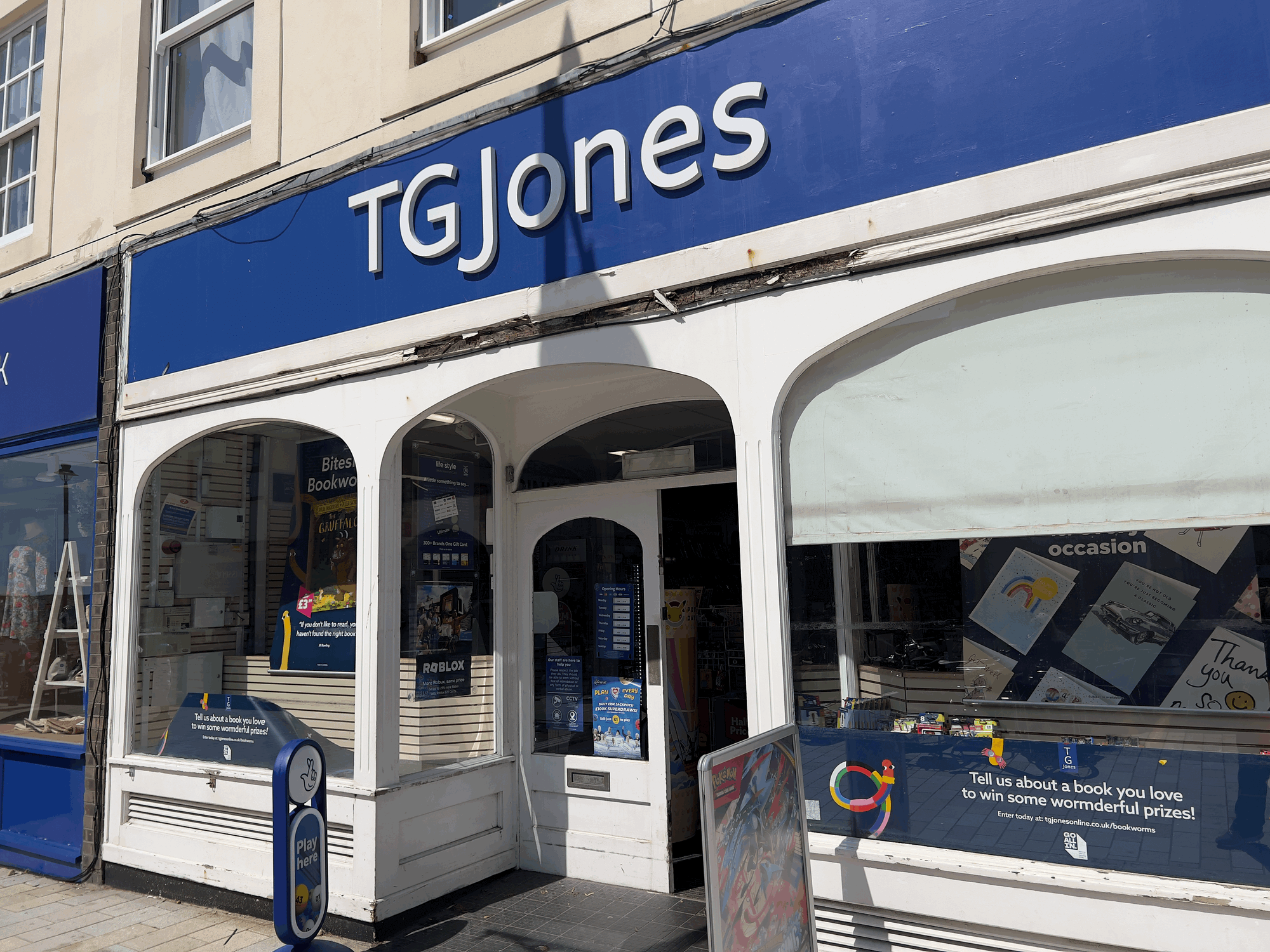
For non-UK readers, TG Jones is the new name for the high street branches of the venerable newsagents WH Smiths. A couple of years ago, the original company sold off everything bar the transport hub shops, and the new venture capital owners rebranded it to the mind-numbingly generic TG Jones.
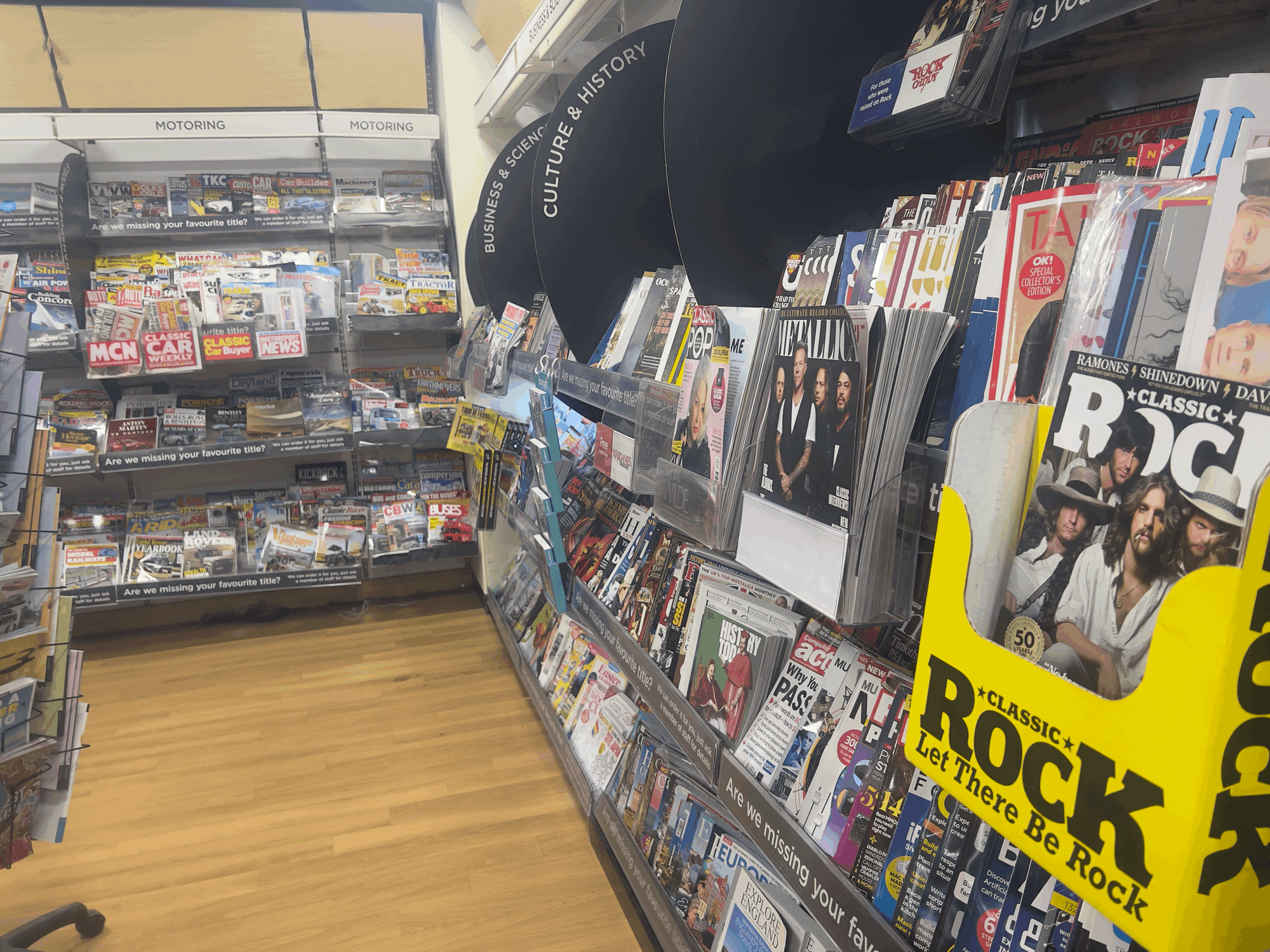
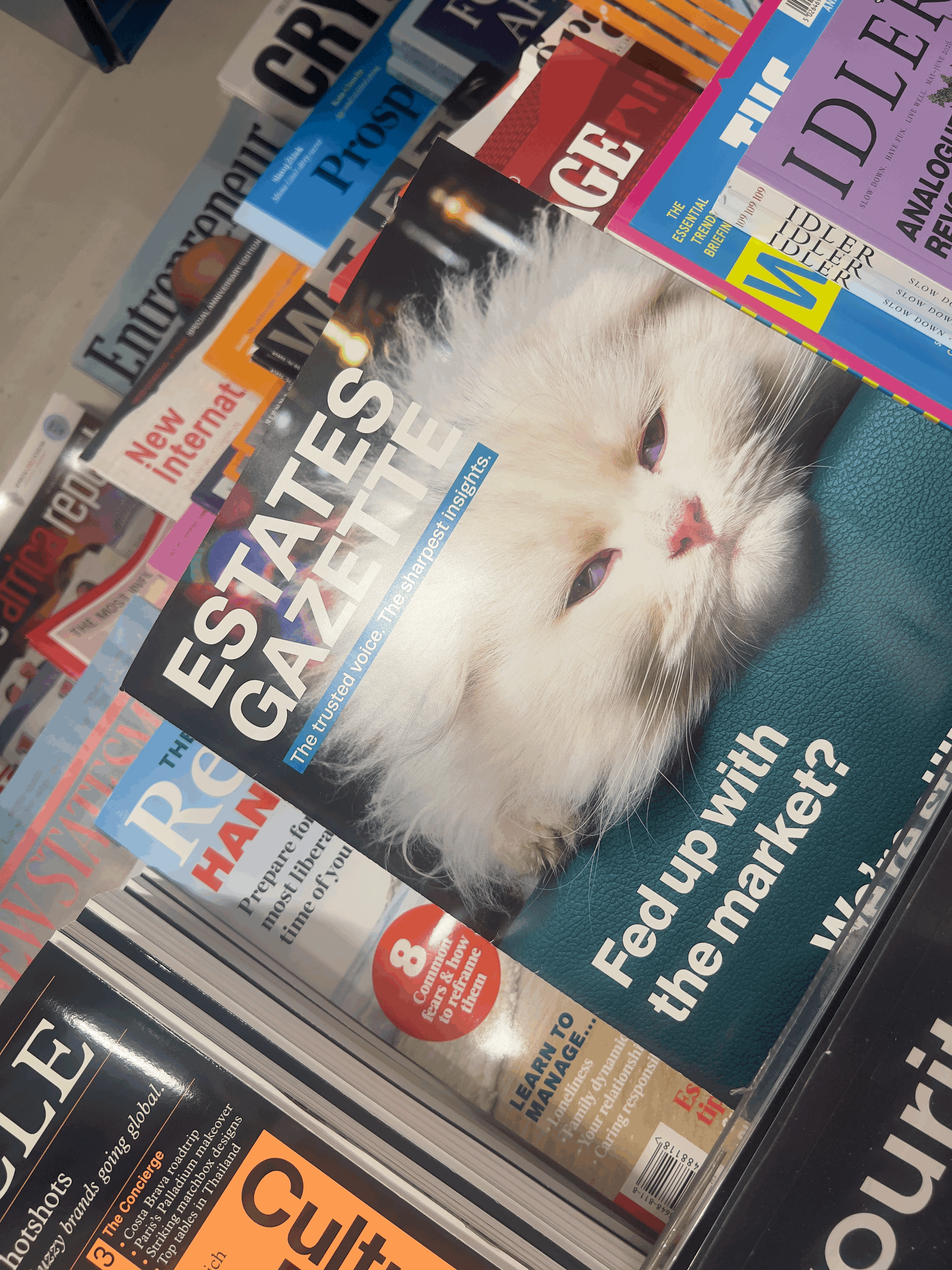

TG Jones in Worthing and Shoreham-by-Sea
Magazine discovery under threat
That acquisition hasn’t gone well:
TG Jones will likely go into administration at the end of June if a wide-scale restructuring plan, involving the restructuring of its financial, leasehold and supply obligations, is not legally sanctioned, The Bookseller understands.
This could be a serious blow for the UK magazine industry. Supermarkets have been reducing their selection of mags for years.
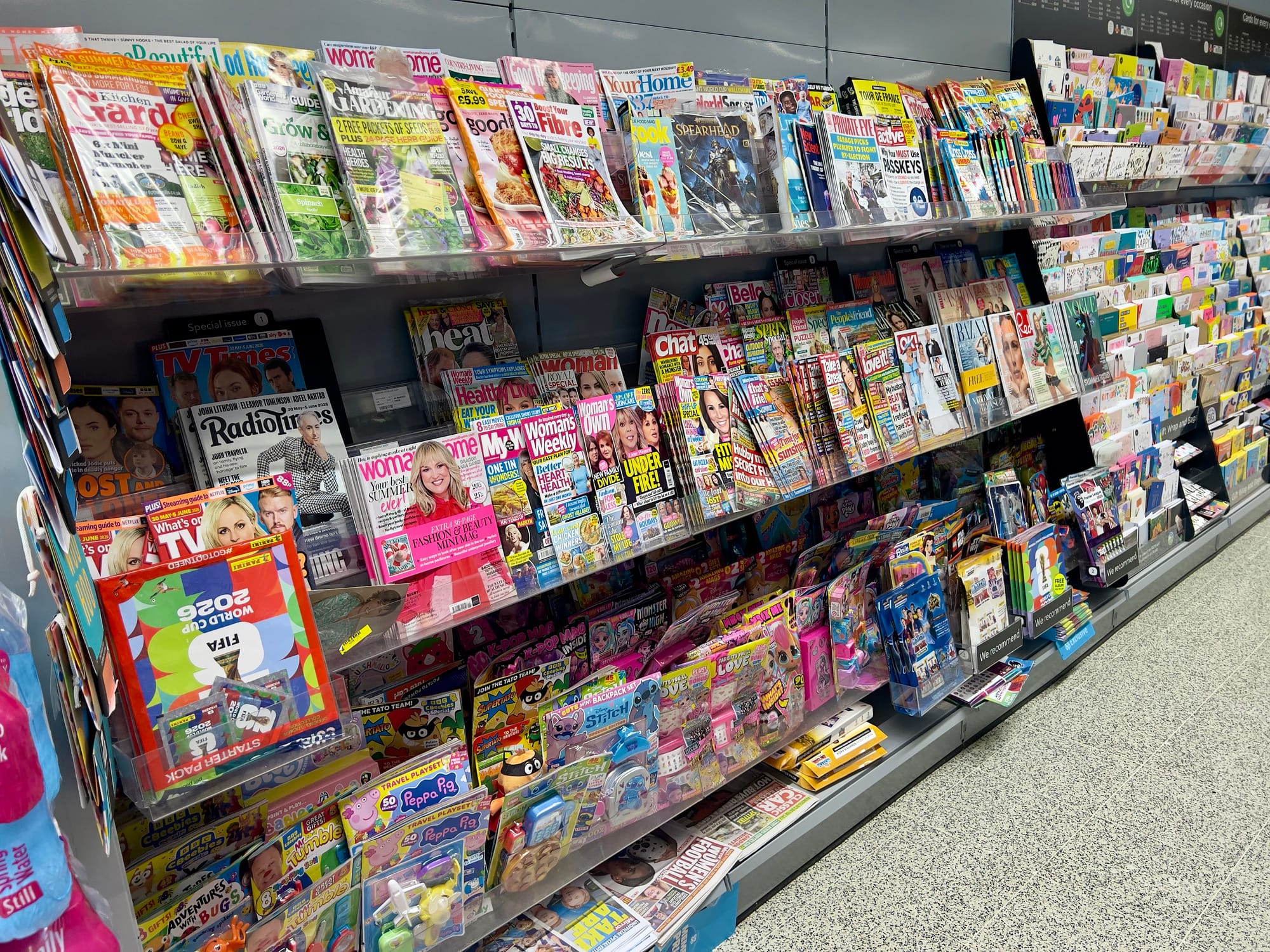
The number of newsagents that still have a significant range of titles is vanishingly small — most are basically convenience stores these days. The major discovery channel for UK magazines might be about to implode. If the company does go down – or even if they drastically decrease their number of shops – publishers face both short-term hits from the loss of sales, and longer-term declines as discovery erodes.
Magazines can survive and throve as subscription businesses, but that’s only going to get harder if their major discovery channel all but disappears from physical shops. Frankly, many magazine publishers need much, much better digital presences than they do now, if they want to survive a TG Jones collapse.
And they may only have a month.
Google breaks its contract with the web
“Google Zero” is the latest panic gripping the publishing industry, in its endless oscillation from sticking its head in the sand over new tech, and then completely over-reacting when it does pay attention. It’s the idea that, as Google gets ever more focused on AI as the core mode of its search engine, traffic to websites will crash. I’m skeptical that things will be that extreme, but let’s assume, for now, that this is a major risk.
In that case, if you still reply on SEO as a major component of your discovery, you might need a change of underwear:
The era of the “ten blue links” is officially over.
See? I’ll wait while you change.
OK, here’s some detail:
Instead of returning a simple list of links, Google Search will drop users into AI-powered interactive experiences at times. Google is also introducing tools that can dispatch “information agents” to gather information on a user’s behalf, along with tools that let users build personalized mini apps tailored to their needs.
Here’s a Google video outlining the change:
Now, look, the smart money has already been reducing reliance on SEO as a major audience acquisition vector, let alone a key monetisation approach. But this is only going to increase the downwards pressure on traffic from search.
Publishers need to own their audience relationships
We’re always going to use other channels – ones we don’t own – as part of the discovery mechanism of our publications. But we need to be incredibly careful when one vector becomes dominant. The slow collapse of the UK newstrade has left TG Jones on outsized player – and this is a threat. And the monopolistic power of Google over search has made it equally dangerous.
Where are the vulnerabilities in your audience acquisition model?


