

Buzzfeed
The predictable villain at the heart of digital media's woes
For all the discussion about venture capital, and ad rates, and other scapegoats for tough time digital media's going through - a familiar company carries some of the blame.
Buzzfeed
For all the discussion about venture capital, and ad rates, and other scapegoats for tough time digital media's going through - a familiar company carries some of the blame.
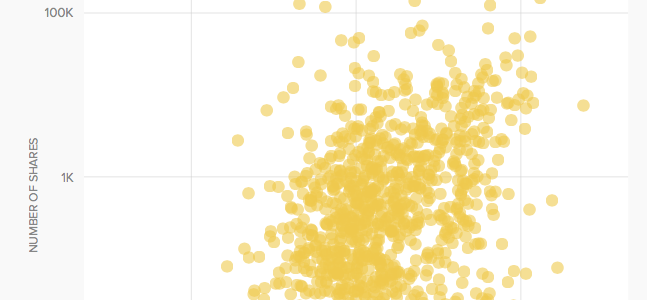
Chartbeat have been diving deep on the data [http://blog.chartbeat.com/2017/04/11/do-people-actually-read-what-they-share-on-social-channels/] and the answer is… > While there is a small positive correlation between shares and total engagement, the relationship between the two is quite weak. For stories that attracted 1000 shares on Facebook, the
content strategy
MG Siegler [http://parislemon.com/post/111101766802/can-snapchat-bend-content-to-its-will]: > True power is when media creates content explicitly for a network, rather than simply repackaging it. A useful insight. A lot of work has been done over the last decade on workflows and tech for pushing the same content through multiple
Buzzfeed
There’s a rather famous graph of Buzzfeed’s traffic kicking around. I’ve used it a bunch of times in lectures and training, and it looks like this: There’s a crucial point where the Google referral traffic drops sharply for a while. Jonah Peretti, Buzzfeed founder and CEO,
clickbait
Really nice Twitter graphic from the FT communities team. A good “tease” of the clickthrough: > Love this quote from @JananGanesh [https://twitter.com/JananGanesh] on the desperate attempts to keep Scotland from voting Yes http://t.co/XowUeoZ3Kt pic.twitter.com/ITkW05WxSK [http://t.co/ITkW05WxSK] — Esther Bintliff (@estherbintliff)
Another reminder of the dangers of building your business on one company’s platform [http://recode.net/2014/08/31/why-building-a-web-business-built-on-facebook-is-so-scary/] : Those are Gawker’s figures – and why did that valley happen? > Read and his co-workers think that this is the result of some algorithm changes Facebook made in
algorithms
The Facebook game has changed, and anyone who is surprised hasn’t been paying attention. Social@Ogilvy published research showing that the reach of posts from brand pages on Facebook has been plummeting [https://social.ogilvy.com/facebook-zero-considering-life-after-the-demise-of-organic-reach/] , something borne out by the couple of pages I have a hand
[https://i1.wp.com/www.onemanandhisblog.com/content/images/2012/09/steven-gradidge.jpg] Steven Gradidge, White Hat Media [http://www.whitehatmedia.com] Search and social have finally come together. They’re hugging. Ahh. That’s the premise of Steven Gradidge [http://www.twitter.com/stevengradidge]‘s talk at the Brighton
search engines
Mashable [http://mashable.com/2012/05/09/the-atlantic-social-over-seo-strategy/] : > “Sixteen months ago we received the same number of monthly referrals from search as social. Now 40% of traffic comes from social media,” Scott Havens, senior vice president of finance and digital operations at The Atlantic Media Company, said in a
This post by Sarah Marshal from the Guardian Changing Media Summit [http://blogs.journalism.co.uk/2012/03/21/social-predicted-to-overtake-search-as-guardian-traffic-driver/] makes interesting reading in conjunction with my post yesterday [http://www.onemanandhisblog.com/archives/2012/03/google_targets_seo_over-optimisation_-_s.html] : > Six months ago months ago Google
infuence
So, to reach the public through social media, you target influencers, right? Wrong [http://adage.com/article/digitalnext/content-shared-close-friends-influencers/233147/] : > Our data show that online sharing, even at viral scale, takes place through many small groups, not via the single status post or tweet of a few influencers. While
BBC
Liveblog of a panel debate about social media from news:rewired in February 2012